


Autofluorescence
View on Wikipedia
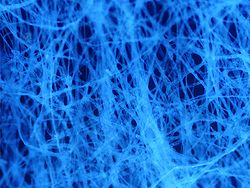
Autofluorescence is the natural fluorescence of biological structures such as mitochondria and lysosomes, in contrast to fluorescence originating from artificially added fluorescent markers (fluorophores).[1]
The most commonly observed autofluorescencing molecules are NADPH and flavins; the extracellular matrix can also contribute to autofluorescence because of the intrinsic properties of collagen and elastin.[1]
Generally, proteins containing an increased amount of the amino acids tryptophan, tyrosine, and phenylalanine show some degree of autofluorescence.[2]
Autofluorescence also occurs in non-biological materials found in many papers and textiles. Autofluorescence from U.S. paper money has been demonstrated as a means for discerning counterfeit currency from authentic currency.[3]
Microscopy
[edit]
Autofluorescence can be problematic in fluorescence microscopy. Light-emitting stains (such as fluorescently labelled antibodies) are applied to samples to enable visualisation of specific structures.
Autofluorescence interferes with detection of specific fluorescent signals, especially when the signals of interest are very dim — it causes structures other than those of interest to become visible.
In some microscopes (mainly confocal microscopes), it is possible to make use of different lifetime of the excited states of the added fluorescent markers and the endogenous molecules to exclude most of the autofluorescence.

In a few cases, autofluorescence may actually illuminate the structures of interest, or serve as a useful diagnostic indicator.[1]
For example, cellular autofluorescence can be used as an indicator of cytotoxicity without the need to add fluorescent markers.[4]
The autofluorescence of human skin can be used to measure the level of advanced glycation end-products (AGEs), which are present in higher quantities during several human diseases.[5]
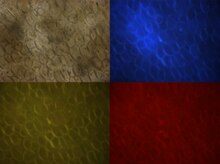
Optical imaging systems that utilize multispectral imaging can reduce signal degradation caused by autofluorescence while adding enhanced multiplexing capabilities.[6]
The super resolution microscopy SPDM revealed autofluorescent cellular objects which are not detectable under conventional fluorescence imaging conditions.[7]
Autofluorescent molecules
[edit]Molecule Excitation
(nm)Fluorescence
(nm) PeakAnimals (Zoae)FungiPlantsReferenceNAD(P)H 340 450 Z F P [8] Chlorophyll 465–665 673–726 P Collagen 270–370 305–450 Z [8] Retinol 500 Z F P [9] Riboflavin 550 Z F P [9] Cholecalciferol 380–460 Z [9] Folic acid 450 Z F P [9] Pyridoxine 400 Z F P [9] Tyrosine 270 305 Z F P [2] Dityrosine 325 400 Z [2] Excimer-like
aggregate
(collagen)270 360 Z [2] Glycation adduct 370 450 Z [2] Indolamine Z Lipofuscin 410–470 500–695 Z F P [10] Lignin
(a polyphenol)335–488 455–535 P [11] Tryptophan 280 300–350 Z F P Flavin 380–490 520–560 Z F P Melanin 340–400 360–560 Z F P [12]
- Substances luminous in animal tissue are, by taxonomic inclusion, also luminous in human tissue.
See also
[edit]References
[edit]- ^ a b c Monici, M. (2005). "Cell and tissue autofluorescence research and diagnostic applications". Biotechnology Annual Review. 11: 227–256. doi:10.1016/S1387-2656(05)11007-2. ISBN 9780444519528. PMID 16216779.
- ^ a b c d e Menter, Julian M. (2006). "Temperature dependence of collagen fluorescence". Photochemical & Photobiological Sciences. 5 (4): 403–410. doi:10.1039/b516429j. PMID 16583021. S2CID 34205474.
- ^ Chia, Thomas; Levene, Michael (17 November 2009). "Detection of counterfeit U.S. paper money using intrinsic fluorescence lifetime". Optics Express. 17 (24): 22054–22061. Bibcode:2009OExpr..1722054C. doi:10.1364/OE.17.022054. PMID 19997451.
- ^ Fritzsche, M.; Mandenius, C.F. (September 2010). "Fluorescent cell-based sensing approaches for toxicity testing". Anal Bioanal Chem. 398 (1): 181–191. doi:10.1007/s00216-010-3651-6. PMID 20354845. S2CID 22712460.
- ^ Gerrits, E.G.; Smit, A.J.; Bilo, H.J. (March 2009). "AGEs, autofluorescence and renal function". Nephrol. Dial. Transplant. 24 (3): 710–713. doi:10.1093/ndt/gfn634. PMID 19033250.
- ^ Mansfield, James R.; Gossage, Kirk W.; Hoyt, Clifford C.; Levenson, Richard M. (2005). "Autofluorescence removal, multiplexing, and automated analysis methods for in-vivo fluorescence imaging". Journal of Biomedical Optics. 10 (4): 041207. Bibcode:2005JBO....10d1207M. doi:10.1117/1.2032458. PMID 16178631. S2CID 35269802.
- ^ Kaufmann, R.; Müller, P.; Hausmann, M.; Cremer, C. (2010). "Imaging label-free intracellular structures by localisation microscopy". Micron. 42 (4): 348–352. doi:10.1016/j.micron.2010.03.006. PMID 20538472.
- ^ a b Georgakoudi, I.; Jacobson, B.C.; Müller, M.G.; Sheets, E.E.; Badizadegan K.; Carr-Locke, D.L.; et al. (2002-02-01). "NAD(P)H and collagen as in vivo quantitative fluorescent biomarkers of epithelial precancerous changes". Cancer Research. 62 (3): 682–687. PMID 11830520.
- ^ a b c d e Zipfel, W.R.; Williams, R.M.; Christie, R.; Nikitin, A.Y.; Hyman, B.T.; Webb, W.W. (2003-06-10). "Live tissue intrinsic emission microscopy using multiphoton-excited native fluorescence and second harmonic generation". Proceedings of the National Academy of Sciences of the United States of America. 100 (12): 7075–7080. Bibcode:2003PNAS..100.7075Z. doi:10.1073/pnas.0832308100. PMC 165832. PMID 12756303.
- ^ Schönenbrücher, Holger; Adhikary, Ramkrishna; Mukherjee, Prasun; Casey, Thomas; Rasmussen, Mark; Maistrovich, Frank; et al. (2008). "Fluorescence-based method, exploiting lipofuscin, for real-time detection of central nervous system tissues on bovine carcasses". Journal of Agricultural and Food Chemistry. 56 (15): 6220–6226. doi:10.1021/jf0734368. PMID 18620407.
- ^ Donaldson, Lloyd; Williams, Nari (February 2018). "Imaging and spectroscopy of natural fluorophores in pine needles". Plants. 7 (1): 10. doi:10.3390/plants7010010. PMC 5874599. PMID 29393922.
- ^ Gallas, James M. & Eisner, Melvin (May 1987). "Fluorescence of melanin-dependence upon excitation wavelength and concentration". Photochemistry and Photobiology. 45 (5): 595–600. doi:10.1111/j.1751-1097.1987.tb07385.x. S2CID 95703924.
Autofluorescence
View on GrokipediaBasic Principles
Definition and Overview
Autofluorescence refers to the natural emission of light by biological tissues, cells, or molecules when excited by light of a shorter wavelength, occurring without the introduction of external fluorophores.[7] This endogenous phenomenon arises from intrinsic fluorophores present in living organisms, distinguishing it from exogenous fluorescence, which requires the addition of synthetic dyes or genetically encoded proteins such as green fluorescent protein (GFP).[1] The observation of autofluorescence dates back to the early 20th century, with the earliest microscopic reports attributed to Hans Stübel in 1911, who noted fluorescence in biological samples using ultraviolet excitation at Jena University.[8] Further advancements in the 1910s and 1920s, including work by Otto Heimstädt on plant tissues, highlighted its potential in microscopy, while recognition in animal tissues expanded in the 1950s through studies by Britton Chance characterizing metabolic cofactors' emissions.[9][10] Autofluorescence is ubiquitous across living organisms, contributing to background signals in imaging and serving as a marker of cellular health in plants (e.g., via chlorophyll), animals (e.g., via lipofuscin), and microbes (e.g., via flavins).[3] At its core, the process involves electrons in fluorophores absorbing excitation energy to reach higher states, followed by relaxation that emits photons at longer wavelengths—a phenomenon known as the Stokes shift.[11]Mechanism of Autofluorescence
Autofluorescence arises from the absorption of photons by endogenous molecules, promoting electrons from the ground singlet state (S₀) to an excited singlet state (S₁) through a quantum mechanical process governed by the Franck-Condon principle. Following excitation, rapid vibrational relaxation occurs within the S₁ state, typically on the picosecond timescale, before the electron returns to S₀, emitting a photon as fluorescence. This emission is delayed relative to absorption due to non-radiative relaxation processes, resulting in a red-shifted spectrum. The energy transitions involved are illustrated by the Jablonski diagram, which depicts the electronic and vibrational energy levels of a fluorophore. In this diagram, absorption promotes the molecule to higher vibrational levels of S₁, followed by internal conversion to the lowest vibrational level of S₁. From there, fluorescence emission returns the electron to S₀ vibrational levels; alternative pathways include intersystem crossing to the triplet state (T₁), leading to delayed phosphorescence, though this is minor in biological autofluorescence due to the short lifetimes of endogenous fluorophores. A key feature of this process is the Stokes shift, defined as the difference between the emission wavelength (λ_em) and excitation wavelength (λ_ex): Δλ = λ_em - λ_ex.[12] In biological autofluorescence, this shift typically ranges from 20 to 100 nm, arising from solvent reorganization and vibrational relaxation that lower the emission energy relative to absorption.[12] The intensity of autofluorescence is modulated by several factors, including the quantum yield (φ), defined as the ratio of emitted photons to absorbed photons, which varies; for example, ~0.13 for tryptophan and ~0.02 for free NADH (increasing to ~0.05 when protein-bound).[13] The fluorescence lifetime (τ), the average time the molecule spends in the excited state before emission, typically falls between 0.4 and 5 ns for these molecules.[13] Environmental conditions further influence these parameters; for instance, pH variations can alter the protonation state of fluorophores like tryptophan, affecting quantum yield, while molecular oxygen quenches fluorescence through collisional deactivation or photoinduced electron transfer.[14] Photochemical reactions play a minor role in autofluorescence by contributing to quenching mechanisms, such as photooxidation where excited fluorophores react with oxygen to form non-fluorescent products, or through Förster resonance energy transfer to nearby quenchers that dissipates excitation energy non-radiatively.[14]Endogenous Fluorophores
Common Autofluorescent Molecules
Autofluorescence in biological tissues primarily originates from endogenous molecules that are integral to cellular function but exhibit fluorescence as a secondary property due to their aromatic or conjugated structures. These include metabolic cofactors, amino acids, structural proteins, and pigments, which vary in abundance and distribution across cell types and organisms. In animals, autofluorescence is prominent in tissues like skin, eyes, and brain, while plants show elevated levels due to photosynthetic pigments. Concentrations of these molecules influence the intensity of autofluorescent signals, with typical intracellular ranges spanning micromolar to millimolar levels depending on the metabolic state and tissue type. Reduced nicotinamide adenine dinucleotide (NAD(P)H), encompassing both NADH and NADPH, and flavin adenine dinucleotide (FAD) are crucial metabolic cofactors that serve as indicators of cellular energy production and redox balance. NADH and NADPH, generated as byproducts of glycolysis, the tricarboxylic acid cycle, and biosynthetic pathways, are predominantly located in mitochondria and the cytoplasm, where they act as electron donors; their typical intracellular free concentrations are approximately 1-10 μM, though total pools can reach 0.1-1 mM in active cells.[15] FAD, a coenzyme in flavoproteins involved in oxidation-reduction reactions and electron transport, is similarly distributed in mitochondria and cytoplasm at concentrations of 10-100 μM, reflecting oxidative metabolic activity. These cofactors are ubiquitous in eukaryotic and prokaryotic cells, with signal strength varying by metabolic demand, such as higher NAD(P)H in glycolytic tissues. NAD(P)H exhibits autofluorescence with nearly identical spectral properties for NADH and NADPH, often analyzed together in redox imaging.[16] Tryptophan, an essential amino acid and precursor to neurotransmitters like serotonin, contributes to autofluorescence via its indole ring within proteins. It is dispersed throughout the nucleus, cytoplasm, and extracellular proteins, with typical cellular concentrations of 50-500 μM tied to overall protein synthesis rates. This molecule's fluorescence arises incidentally from its structural role in enzymes and structural proteins, and its levels are consistent across organisms that utilize protein-based biology, though they fluctuate with dietary intake and protein turnover. Collagen and elastin, as extracellular matrix components, are major autofluorescent contributors in connective tissues. Collagen provides structural support and tensile strength in skin, tendons, and bone, while elastin confers elasticity to dynamic structures like blood vessels, lungs, and skin; both are synthesized by fibroblasts and accumulate extracellularly without specific intracellular concentrations, as they are not cytosolic. In humans and other vertebrates, these proteins drive strong autofluorescence in dermal and vascular tissues, with abundance varying by species and age—higher in long-lived mammals. Lipofuscin, often termed the "age pigment," is a heterogeneous byproduct of oxidative damage and lysosomal degradation that accumulates in lysosomes of post-mitotic cells such as neurons, cardiomyocytes, and retinal pigment epithelial cells. It forms from undigested cellular residues and lipids, serving no primary functional role but marking cellular aging and oxidative stress; its levels increase progressively with age and in pathological conditions like neurodegeneration, where it contributes to tissue autofluorescence in the brain and eyes. Concentrations are variable and tissue-specific, starting low in youth but rising to detectable aggregates in older organisms across species. Porphyrins, including protoporphyrin IX, are intermediates in heme biosynthesis essential for oxygen transport in hemoglobin and myoglobin. They are primarily located in mitochondria and cytoplasm of erythroid and hepatic cells, with low baseline concentrations of 0.1-10 μM that can elevate in metabolic disorders; their fluorescence is a incidental property of the porphyrin ring structure. These molecules are present in all oxygen-dependent organisms, from mammals to invertebrates, though accumulation is more pronounced in disease states. In photosynthetic organisms like plants and algae, chlorophyll and lignin dominate autofluorescence. Chlorophyll is localized exclusively in chloroplasts where it captures light for photosynthesis at concentrations of 1-5 mM. This pigment's role is central to energy conversion, making plant tissues far more autofluorescent than animal counterparts, with emission influenced by environmental light and photosynthetic efficiency; variations occur across plant species, highest in green leaves. Lignin, a complex polymer in cell walls, provides structural rigidity and exhibits autofluorescence used to assess lignification and cell wall properties in plant tissues.[17]Spectral Properties
Autofluorescent molecules exhibit characteristic excitation and emission spectra primarily in the ultraviolet and visible ranges, enabling their detection but also complicating separation due to overlaps. For instance, tryptophan is excited at approximately 280 nm and emits around 350 nm, while NADH shows excitation near 340 nm with emission peaking at 450-460 nm. FAD, in contrast, has excitation at about 450 nm and emission at 530-535 nm. These profiles span the UV-visible spectrum, with broad bands that often overlap, such as the emission tail of tryptophan extending into NADH's excitation range and NADH's emission overlapping with FAD's in the green region.[18][19][20] The emission spectra of these fluorophores typically have full widths at half maximum (FWHM) of 50-100 nm, contributing to significant spectral overlap in imaging applications. NADH's emission band, for example, spans roughly 420-480 nm (FWHM ~60 nm), allowing partial bleed-through into adjacent detection channels. In multi-label fluorescence imaging, this overlap—exacerbated by autofluorescence from multiple endogenous sources—leads to crosstalk, where signal from one fluorophore contaminates another's channel, reducing specificity.[19][21][22] Spectral properties are sensitive to environmental factors, including pH and quenchers. For NADH, emission peaks can blue-shift under acidic conditions (pH <5), with the spectrum shifting by up to 10-20 nm due to protonation effects, alongside reduced fluorescence lifetime. Quenching occurs via interactions with heavy metals, which generate reactive oxygen species that oxidize NADH, or directly by molecular oxygen through reactive quenching pathways, diminishing emission intensity. These shifts and quenching alter the effective quantum yield, linking back to the underlying relaxation mechanisms in autofluorescence.[19][23][24] Two-photon excitation enhances autofluorescence imaging by using longer wavelengths (700-900 nm), reducing scattering and enabling deeper tissue penetration while exciting the same emission profiles as single-photon methods. For NADH, efficient two-photon excitation occurs at 710-780 nm, producing the characteristic blue emission without significant spectral alteration. This approach minimizes phototoxicity and autofluorescence from shallower layers.[25][26]| Fluorophore | Excitation Peak (nm) | Emission Peak (nm) | Quantum Yield (approximate, free form) |
|---|---|---|---|
| Tryptophan | 280 | 350 | 0.13 [27] |
| NADH | 340 | 450-460 | 0.02 [28] |
| FAD | 450 | 530-535 | 0.03 [29] |