Hubbry Logo
BiertanBiertanMain
Open search
Biertan
Community hub
Biertan
logo
8 pages, 0 posts
0 subscribers
Be the first to start a discussion here.
Biertan
Biertan
from Wikipedia

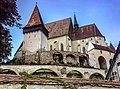
Biertan (German: Birthälm; Transylvanian Saxon dialect: Birthälm/Bierthalmen/Bierthalm; Hungarian: Berethalom) is a commune in Sibiu County, Transylvania, Romania. The commune is composed of three villages: Biertan, Copșa Mare (German: Gross-Kopisch; Hungarian: Nagykapus), and Richiș (German: Reichesdorf; Hungarian: Riomfalva), each of which has a fortified church.

Key Information

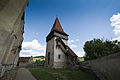
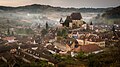
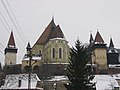
Biertan is one of the most important Saxon villages with fortified churches in Transylvania, having been on the list of UNESCO World Heritage Sites since 1993. The Biertan fortified church was the seat of the Evangelical Lutheran Bishop in Transylvania between 1572 and 1867.

The route of the Via Transilvanica long-distance trail passes through all three villages in the commune.[3]

Geography

[edit]

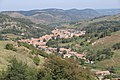
The commune is situated on the Transylvanian Plateau, at an altitude of 388 m (1,273 ft), on the banks of the rivers Biertan and Vale. It is located in the north of Sibiu County, 21 km (13 mi) east of Mediaș and 66 km (41 mi) northeast of the county seat, Sibiu.

History

[edit]

The first documentary testimony about the village dates from 1283 in a document about the taxes paid by the inhabitants of 7 villages and so it is believed to have been founded sometime between 1224 and 1283 by Transylvanian Saxons. The village settlement quickly developed into an important market town and by 1510 Biertan supported a population of about 5,000 people. Between 1468 and the 16th century a small fortified church (German: Kirchenburg/Wehrkirche) was constructed and developed. After the medieval period, the settlement declined in importance with the rise of neighbouring Sighișoara (German: Schäßburg), Sibiu (German: Hermannstadt), and Mediaș (German: Mediasch).

In the Romanian census of 1930, Biertan had 2,331 inhabitants, of whom 1,228 were Transylvanian Saxons. During World War II many men were conscripted into the Romanian army and later on forcefully drafted in the Waffen-SS. After the war, many Transylvanian Saxons were deported from the region to labour camps in the former Soviet Union (USSR). During communism, many left for West Germany. Following the collapse of communism in 1990, many more left for Germany.

Today the whole commune has a population of about 2,500 and the village of Biertan alone has about 1,600 people. It is one of the most visited villages in Transylvania, being the historically important place of the annual reunion of the Transylvanian Saxons, many of whom now live in Germany.

Festivals

[edit]

The "Luna Plină" ("Full Moon") Horror and Fantasy Film Festival takes place in Biertan. It is the only film festival in Romania focused exclusively on fantasy movies.[4]

Natives

[edit]

Demographics

[edit]

According to the 2011 census, Romanians made up 73.8% of the population, Roma made up 17.9%, Germans (more specifically Transylvanian Saxons) made up 4.6%, and Hungarians made up 3.6%.[5]

[edit]

See also

[edit]

References

[edit]
[edit]
Revisions and contributorsEdit on WikipediaRead on Wikipedia
from Grokipedia

Biertan is a commune in , central , within the historical region of , best known for its late Gothic constructed by ethnic German Transylvanian Saxon settlers in the . The church, featuring three concentric rings of defensive walls, towers, and bastions, exemplifies the architectural adaptations made by Saxon communities to protect against invasions during the medieval period, while also serving as a central and refuge for the local population.
Originally initiated in Romanesque style in the and later rebuilt in Gothic form, the Biertan complex functioned as the seat of the Transylvanian Saxon Evangelical Lutheran bishopric until , underscoring its religious and administrative importance in the Saxon ecclesiastical structure. Designated a in 1993 as part of the "Villages with Fortified Churches in ," the structure highlights the cultural landscape shaped by Saxon colonization and fortification efforts from the 13th to 16th centuries, with Biertan representing one of the most elaborate examples due to its multi-layered defenses and preserved medieval features, including an ingenious 19-lock door mechanism that earned an award at the 1900 Exposition. As of the 2021 census, Biertan village had a population of 1,175, reflecting a decline from historical peaks dominated by —such as 1,228 out of 2,331 total residents in 1930—due to emigration following and communist-era policies, with current demographics primarily comprising (around 74% in 2011) alongside Roma, remaining , and . The commune's legacy endures through its fortified heritage, which continues to draw scholarly and touristic interest for insights into medieval strategies and the enduring impact of Saxon engineering in .

Geography and Setting

Location and Physical Features

Biertan is a commune in the northern part of , in central , , approximately 80 kilometers north of the city of . Its geographic coordinates are approximately 46°08′N and 24°31′E . The settlement lies at an elevation of about 380 meters above within the . The terrain consists of a setting along the Biertan River, a left of the Târnava Mare, surrounded by fertile rolling hills that support and . The landscape features characteristic undulating hills and valleys of the region, with the prominently situated on a central hill overlooking the village.

Climate and Natural Resources

Biertan exhibits a temperate typical of the , characterized by cold, snowy winters and warm, moderately humid summers. Annual average temperatures hover around 9.7°C, with January means of -2°C (ranging from lows of -16°C in extremes) and July peaks near 19°C (highs up to 31°C). Precipitation averages 629 mm yearly, concentrated in the wetter period from late spring to early autumn, supporting seasonal while occasional droughts affect yields. The region's natural resources center on fertile and brown soils ideal for arable farming, including cereals, vegetables, potatoes, and —a Saxon-introduced practice yielding local wines from hillside vineyards. Surrounding oak and forests supply timber and sustain hotspots with diverse flora and fauna, while pastures support such as sheep and cattle integral to traditional highland economies. Subsurface assets in broader encompass salt mines and minor reserves, though Biertan's rural focus prioritizes surface renewables over extraction.

Historical Development

Origins and Saxon Settlement

Biertan was established as a settlement by during the 13th century, amid the broader colonization efforts in the region under the medieval . The village's first documented mention occurs in 1283, recorded as Bierthal or Birthälm in contemporary sources, marking it as one of the earliest Saxon-founded communities in . The , ethnic Germans primarily from the and regions, began migrating to the area in waves starting in the mid-12th century, invited by Hungarian King Géza II (r. 1141–1162) to repopulate lands depopulated by Mongol invasions and to provide defensive expertise against nomadic threats. Biertan emerged within this context as a fortified agrarian outpost, leveraging the Saxons' skills in , , and stone masonry to develop self-sustaining communities organized under the Universitas Saxorum, a semi-autonomous Saxon assembly granting privileges like market rights and judicial autonomy. Early settlement patterns in Biertan followed the linear village model typical of Saxon , with homesteads aligned along a central axis leading to a communal church, emphasizing communal defense and ecclesiastical centrality from inception. While the precise founding date remains uncertain—estimates range from the early to mid-13th century—the 1283 reference aligns with the consolidation phase post-initial colonization, during which Biertan received privileges elevating its status beyond a mere village.

Fortification and Church Construction

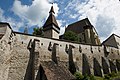
The Biertan , constructed primarily between 1486 and 1524, represents one of the final major fortified ecclesiastical buildings erected by Transylvanian Saxon communities amid escalating threats from Ottoman forces. Built in late Gothic style using stone and brick, the structure comprises a three-nave hall church dedicated to the Virgin Mary, featuring rib-vaulted ceilings and serving as the last such design completed in the . The fortifications evolved in phases, with three concentric rings of defensive walls designed for layered : the outermost square , predating the current church and fitted with four towers and arrow slits for archers; the central oval wall, erected concurrently with the church construction and strengthened by arched stone buttresses along with additional guard towers; and the innermost wall, developed during the 16th to 17th centuries, which includes multiple specialized towers such as the four-storey with parapets, gate tower, , prison tower, and bacon tower topped by red pyramid spires. These elements, totaling nine towers overall, enabled the complex to shelter up to 300 villagers and during sieges, reflecting adaptive Saxon in response to regional insecurities under the Kingdom of . This progressive , spanning the 15th to 17th centuries, transformed the original site—first documented in 1402—into a self-sufficient stronghold, prioritizing defensive resilience over ornamental excess while integrating the church as the central . The design's emphasis on modular walls and towers facilitated rapid reinforcement, drawing on collective Saxon labor and resources without reliance on external military aid.

Episcopal Seat and Ottoman Era

In 1572, following the adoption of by the during the , the of Biertan was designated as the seat of the Evangelical (Lutheran) Bishop of , a role it fulfilled until 1867. This status positioned Biertan as the preeminent ecclesiastical and cultural hub for the Saxon communities, housing the bishop's residence and overseeing diocesan affairs across the region. The bishopric reinforced the church's administrative functions, including the ordination of clergy and the preservation of Lutheran doctrine amid confessional tensions with Catholic Habsburg influences. During the Ottoman era, operated as a semi-autonomous principality under Ottoman from 1541 to 1699, paying tribute while maintaining internal privileges for the "Three Nations" (, Hungarians, and Székelys). Biertan's fortifications, expanded in the late 15th and early 16th centuries with multiple defensive rings, bastions, and towers capable of sheltering up to 1,300 villagers, served as a critical refuge against Ottoman raids and Tatar incursions that periodically threatened settlements in the Carpathian foothills. The bishopric's presence enhanced the site's strategic value, enabling leaders to sustain and religious practices despite the geopolitical volatility, including alliances with Ottoman-backed princes and resistance to imperial Habsburg centralization. No major sieges are recorded at Biertan itself, but its robust defenses exemplified the ' self-reliant strategy of fortifying churches rather than distant urban centers. The episcopal tenure coincided with Transylvania's gradual shift from Ottoman vassalage to Habsburg incorporation after , during which Biertan continued to symbolize Saxon ecclesiastical independence until the bishopric relocated to in 1867 amid Austro-Hungarian administrative reforms. This period underscored the church's dual role in spiritual leadership and communal defense, contributing to the enduring cultural cohesion of the .

Post-World War II Decline and Emigration

Following the end of World War II in 1945, Biertan suffered initial demographic losses as part of the broader deportation of ethnic Germans from Romania to Soviet labor camps. In January and February 1945, Soviet occupation forces targeted Transylvanian Saxon males aged 18-45 and some women for forced labor in the Donbas region and Siberia, with estimates indicating up to 30,000 Transylvanian Saxons deported overall, including from rural communities like Biertan where able-bodied men were conscripted or interned. Mortality rates during these deportations reached 15-20% due to harsh conditions, disease, and malnutrition, exacerbating the wartime conscription losses among Romanian-allied Saxon forces. Under the communist regime established in 1947, Biertan's Saxon population faced further erosion through discriminatory policies including the , which expropriated larger Saxon-owned farms without compensation, and forced collectivization that dismantled traditional communal land management. These measures, coupled with restrictions on German-language education and cultural institutions, fostered economic hardship and cultural suppression in predominantly Saxon villages like Biertan, contributing to declining birth rates and early voluntary departures. By the 1956 census, Romania's ethnic German population had fallen to approximately 245,000 from over 360,000 in 1948, reflecting national trends mirrored locally in Transylvanian Saxon strongholds. The most precipitous decline occurred through organized emigration to , enabled by bilateral agreements starting in 1967 under Nicolae Ceaușescu, who permitted exits in exchange for payments from the German government—often 8,000-10,000 Deutsche Marks per emigrant. Between 1968 and 1989, over 200,000 ethnic Germans, including tens of thousands of , left , with Biertan experiencing a similar exodus as families sought better opportunities and ethnic incentives. This accelerated after the 1989 revolution, reducing the Saxon share in villages like Biertan from 50-80% in the early to under 5% by the , leaving behind depopulated homes and a shift to Romanian and Roma majorities.

The Fortified Church

Architectural Characteristics

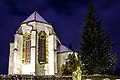
The Biertan fortified church exemplifies Late Gothic architecture, constructed primarily between 1486 and 1524 as a hall church with three of equal height and no , preserving its original design as the last such structure built in . Erected on the site of an earlier Romanesque first documented in 1402, the church adopts a compact rectangular form to fit the constrained hilltop terrain, constructed using local stone and brick for durability. Its nave ceiling features a net vault, an intricate evolution of rib vaulting characteristic of advanced Late Gothic techniques, enhancing both structural integrity and aesthetic complexity. Interior elements reflect contemporaneous craftsmanship, including transitional-style furnishings such as the altar table, inlaid choir stalls, and baptismal fonts, integrated during the church's completion phase. The sanctuary houses Transylvania's largest wooden , comprising 28 panels depicting biblical scenes in painted and carved limewood, assembled between 1523 and 1524 to complement the Gothic framework. Defensive architectural integrations, like the wooden encircling the upper church perimeter, underscore the dual ecclesiastical and fortification role, though primarily structural rather than ornamental. The overall design prioritizes functionality and defense, with minimal ornamental excess, aligning with Saxon building traditions amid regional threats.

Defensive Mechanisms and Innovations

The Biertan fortified church is enclosed by three concentric rings of defensive walls, constructed progressively from the 14th to the 16th century to provide layered protection against invasions, particularly from Ottoman forces. The outermost wall, dating to the 14th century, features four towers, while subsequent rings added reinforcing arches and additional fortifications integrated with the church's construction between 1486 and 1524. These walls, reaching heights of approximately 10.7 meters (35 feet), form an oval perimeter connected by nine gate towers that facilitated controlled access and defensive firing positions. Key defensive towers include the four-story equipped with parapets and machicolations for dropping projectiles, the for signaling, the Gate Tower guarding the main entrance, and the Bacon Tower for storing preserved meats during prolonged sieges. The inner incorporates three additional towers, a for enfilade fire, and a fortified gate tower, enhancing close-quarters defense. Above the , a dedicated defensive level with battlements allowed archers to repel attackers from elevated positions. Innovations in the design emphasized self-sufficiency and tactical depth; the multi-ring system enabled villagers to retreat inward while maintaining food stores in wall-integrated chambers, sustaining populations for weeks or months. A covered linked the rings, permitting safe movement under cover during assaults, while bastions and horseshoe-shaped towers optimized coverage. This configuration rendered the complex nearly impregnable in , with no successful conquests recorded.

The Matrimonial Reconciliation Chamber

The Matrimonial Reconciliation Chamber, located within the Biertan fortified church, served as a mandatory confinement space for Saxon Lutheran couples seeking divorce from the 16th century until the 19th century. During Biertan's tenure as the seat of the Transylvanian Lutheran bishopric, spanning approximately 300 years from 1572 to 1867, couples petitioning the bishop for separation were required to spend time isolated in this small stone room to foster reconciliation. The chamber's door featured a complex lock with 19 interlocking mechanisms, operable only by four specific keys held by church officials, ensuring secure containment. Couples were locked inside for up to two weeks, provided with minimal furnishings including a single bed, table, chair, plate, spoon, and fork to compel close interaction and shared resources. Some accounts extend the duration to six weeks for particularly contentious cases, during which the pair received one meal per day delivered through a small . This austere environment, devoid of distractions, aimed to resolve marital discord through enforced proximity and reflection, reflecting the community's strict Lutheran values against dissolution of except in extreme circumstances like . The practice demonstrated high efficacy, with local records indicating only one divorce granted among couples subjected to the chamber over the 300-year period, as reported by 21st-century priest Ulf Ziegler. This near-universal reconciliation rate underscores the cultural and religious emphasis on marital permanence in the Transylvanian Saxon community, where was rare even by medieval standards. The chamber remains preserved as a historical feature of the church, occasionally referenced in modern discussions of relationship preservation, though no longer in active use.

Cultural and Social Life

Saxon Traditions and Heritage Preservation

The Transylvanian Saxons in Biertan maintained a distinctive social structure through the Nachbarschaft system, a mutual aid network that organized community life around neighborhood groups. Originally comprising 11 such groups in Biertan, the system required newlyweds to join upon marriage, involving an initiation ritual with a basket of pastries and five liters of wine; members provided support for house-building, illnesses, and burials, with men aged 16 to 70 obligated to contribute at least four workdays annually under the leadership of a Nachbarvater. Fines enforced participation, recorded in protocol books and paid into communal funds. This framework, alongside Lutheran ecclesiastical traditions centered on the —which served as the seat of the Evangelical Bishopric from 1572 to 1867—fostered resilience against external pressures, including Ottoman incursions and later communist policies. By the 1980s, only eight Nachbarschaften remained, with the last dissolving in 1996 amid mass Saxon emigration to following the 1989 ; however, parish records, including statutes, membership lists, and event protocols dating to 1860, preserve detailed accounts of these practices. Heritage preservation efforts emphasize architectural and cultural continuity, with Biertan's medieval settlement pattern, family farmsteads, and Saxon houses retaining their late medieval form, unmarred by major war damage. Inscribed on the World Heritage List in 1993 as part of Transylvania's villages with , Biertan exemplifies Saxon land-use systems and defensive architecture that encapsulated communal self-reliance. Restoration initiatives, supported by organizations like the , have sustained the , while traditional crafts such as and persist in local ateliers, though practiced increasingly by non-Saxons amid demographic shifts.

Local Festivals and Customs

Biertan maintains a shaped by its Transylvanian Saxon origins and subsequent Romanian influences, manifesting in customs centered on community gatherings, craftsmanship, and seasonal celebrations that emphasize rural self-sufficiency and ethnic pluralism. Traditional households, built in Transylvanian style with motifs of wine and geometry, serve as venues for ongoing customs including the demonstration of artisanal product-making, such as cheese and preserves, alongside fairs and workshops that preserve Saxon and Romanian techniques. These practices reflect a historical emphasis on fortified communal life, where festivals reinforce social bonds through shared labor and feasting, often incorporating local with homemade wines paired to simple, hearty meals like bean soups and roasts. The village hosts the annual Sachsentreffen, or GetTogether of , typically on the second or third Saturday in , drawing emigrants and descendants to Biertan for reunions that honor Saxon dialect, folk songs, and dances amid the setting. This event underscores enduring customs of diaspora return and heritage transmission, with participants engaging in discussions on village and collective meals featuring regional specialties. The Multicultural Transylvania Festival, held in mid-August—such as August 18–20 in 2023—blends ethnic traditions through activities like children's workshops, hiking on Via Transilvanica trails, farmers' markets, and gastronomy contests showcasing Saxon, Romanian, Hungarian, Roma, Armenian, and Ukrainian dances, songs, and crafts. Performances include live demonstrations of traditional attire and , promoting of interethnic rooted in 's historical diversity. Medieval festivals in Biertan recreate 15th–16th-century Saxon daily life with craft stalls, period music, and feasts, allowing visitors to experience customs like blacksmithing and baking in wood-fired ovens, directly tied to the village's fortified past. Complementing these, European Heritage Days—observed September 20–21, as in 2024—feature concerts blending nu jazz and classical elements within the church, paired with local finger foods and afterparties, to celebrate multicultural routes and Saxon architectural legacy. Biertan also hosts Romania's premier horror and festival, emphasizing narrative through screenings in the medieval ambiance, though it draws more tourists than locals for traditional observance. These events collectively sustain of and communal vigilance, adapted from historical defense practices to modern cultural preservation.

Viticulture and Culinary Traditions

Viticulture in Biertan traces its origins to the 12th-13th century settlement by , who terraced the surrounding hills to establish vineyards, adapting techniques such as the Roman stake method inspired by the . These efforts capitalized on the area's hilly terrain and , making wine a vital economic staple; it served as currency for church construction, taxes, and trade, with documented value increases over centuries. The ' resilience was evident in combating in the late 19th century through grafting European vines onto American rootstock, led by locals like Caspari and , who developed nurseries that supplied vines across Europe. The Târnave region encompassing Biertan specializes in white wines, with key varieties including Fetească Regală (locally known as Daneșană), Fetească Albă, , , and , yielding crisp, aromatic styles with high acidity. Traditional production emphasized small-scale, hands-on methods, though devastation and post-World War II Saxon emigration led to decline; Biertan's terraces are largely inactive today, with limited village-scale production persisting in nearby areas like Richiș using noble varieties and heritage tools. Culinary traditions in Biertan preserve Saxon influences through hearty, farm-based dishes utilizing local organic ingredients, such as products, , sausages, and introduced by , often paired with Târnave wines like Neuburger or Fetească Regală. Signature preparations include sour apple soup, a Saxon staple, and boiled pike in Armenian style, served in restored traditional houses alongside meats from black buffalo or Bazna pigs. These meals reflect a fusion of German-rooted simplicity with regional adaptations, emphasizing preservation of self-sufficient farming practices amid historical migrations.

Demographics and Population Dynamics

Historical Ethnic Composition

Biertan, known historically as Birthälm to , was established as a German-speaking settlement in the late by Saxon colonists invited to by Hungarian kings to fortify and develop the region. The village served as a key ecclesiastical center, hosting the seat of the Saxon Evangelical Lutheran bishopric from 1572 to 1867, which reinforced its predominantly Saxon character. Early records indicate a near-exclusive Saxon population; in 1532, Biertan recorded 343 households, the largest in the local Saxon administrative district known as the Zwei Stühle. By the late , a small Romanian minority had emerged alongside the majority. In 1698, the population comprised 164 Saxon households and 14 Romanian ones; this ratio shifted modestly by 1723 to 159 Saxon and 20 Romanian households. These figures reflect the Saxons' role as the founding and dominant ethnic group, with likely serving in agrarian or peripheral roles within the fortified village structure. Hungarian presence remained negligible, consistent with patterns in core enclaves of southern . The 20th century brought gradual demographic shifts prior to . The 1930 Romanian census recorded a total population of 2,331, with numbering 1,228, or approximately 53 percent, indicating a persistent but eroding majority amid rural Romanian influxes. Remaining residents included and smaller numbers of Roma and others, though exact breakdowns for non-Saxons are less documented in available records. This composition underscored Biertan's status as a Saxon stronghold until wartime disruptions, including of Saxon men into the Romanian , foreshadowed accelerated decline. Post-1945, the ethnic structure transformed radically due to Soviet deportations of ethnic to labor camps, where an estimated 30 percent of Transylvanian Saxon men perished, followed by waves of to . By the late , Saxons constituted a tiny fraction, supplanted by and Roma, reflecting broader patterns of minority exodus in Transylvanian Saxon villages rather than assimilation or natural . The commune of Biertan has experienced a steady in recent decades, reflecting broader rural depopulation trends in . According to data, the commune's resident population fell from 2,995 in 2002 to 2,590 in 2011 and further to 2,239 in 2021, marking an approximate 13.5% decrease over the 2011–2021 period. The village of Biertan itself accounted for 1,175 residents in the 2021 , with an annual population change of -2.2% from 2011 to 2021. This downturn stems primarily from negative natural increase—characterized by birth rates below replacement levels and rising mortality among an aging populace—and persistent net outmigration. In Biertan, low rates (5.57‰ in 2021) have failed to offset these losses, contributing to a decline exceeding 8% in the commune between 2011 and 2021. While as a whole has maintained a relatively favorable compared to national averages, with positive net migration since 2006 until recent disruptions, rural localities like Biertan in the Târnava Mare Corridor have bucked this trend due to youth to urban centers or abroad and limited economic opportunities. The ethnic composition has shifted dramatically since the late 20th century, accelerating the overall decline. Historically dominated by , Biertan saw mass emigration of this group to following the 1989 revolution, reducing their share from a majority to a small minority and resulting in a Romanian-majority with subdued community cohesion. This exodus, combined with Romania's post-communist economic transitions, has left many rural Saxon villages, including Biertan, with underutilized housing and shrinking labor forces, though tied to the offers partial mitigation. Projections suggest continued shrinkage absent policy interventions to retain young residents or attract returnees.

Impact of Migration and Policy

The mass emigration of Transylvanian Saxons from Biertan, as part of broader post-1989 trends in , profoundly altered the village's demographic structure. Between and 1991, nearly 200,000 ethnic Germans, including many from Saxon villages like Biertan, relocated to amid economic uncertainty and facilitated programs. This exodus reduced the Saxon share of Transylvania's population from around 200,000 in to under 50,000 by the mid-1990s, with Biertan exemplifying the near-total departure of its founding ethnic group. German government policies, treating Saxons as Auslandsdeutsche (ethnic Germans abroad), provided resettlement support and financial incentives, accelerating the outflow. Romanian policies under had earlier enabled limited through exit fees paid to the state, totaling payments for over 220,000 ethnic by 1989. Post-revolution removed barriers, but contributed to rural depopulation; Biertan's commune fell from approximately 2,500 in the early to 1,175 by the 2021 , reflecting a -2.2% average annual decline since 2011 driven by out-migration. The ethnic composition shifted toward and Roma, with remaining comprising a negligible fraction, leading to challenges in maintaining traditional community governance and language use. EU accession in 2007 exacerbated rural outflows through labor mobility, though tied to Biertan's UNESCO-listed has partially offset economic pressures from depopulation. Minority protection policies under Romanian law and frameworks have supported limited Saxon returns and cultural initiatives, but have not reversed the overall demographic decline or ethnic homogenization.

Economy and Contemporary Preservation

Agricultural and Tourism-Based Economy

Biertan's economy relies heavily on small-scale agriculture, characterized by mixed subsistence farming typical of rural Transylvania, including crop cultivation such as grains, vegetables, and fruits, alongside livestock rearing for dairy and meat production. The commune's hilly terrain and Târnava Mare River valley support traditional viticulture, historically positioning Biertan as a wine production hub with vineyards spanning local slopes; however, systematic abandonment followed the 1990 political shifts, reducing output until recent revival efforts by figures like agronomist Ladislau Rosenberg, who has initiated studies and plantings of indigenous varieties such as Fetească Albă and Riesling. Current production remains modest, integrated into broader Sibiu County viticulture yielding over 50,000 hectoliters annually across 1,200 hectares regionally, with local outputs sold via farm cooperatives or direct markets. Tourism has emerged as a complementary pillar, leveraging the 15th-century fortified Evangelical church—a since 1993—to attract visitors, with annual tourist numbers reaching 55,000 in 2016 and stabilizing around 35,000–40,000 by 2019 amid post-communist improvements. This influx supports initiatives, including wine tastings at nearby cellars, homestays in restored Saxon houses, and guided tours of medieval sites, generating income through entry fees (approximately 5–10 RON per visitor), souvenir sales, and seasonal festivals that blend Saxon customs with local cuisine featuring plum brandy () and fermented sausages. Economic diversification via these channels has mitigated rural depopulation, though challenges persist from limited modern amenities and seasonal visitor fluctuations, with peak arrivals in summer tied to Transylvanian road accessibility from (25 km away).

Restoration Projects and Challenges

The fortified church in Biertan underwent a significant restoration campaign in , during which the roof was replaced to address deterioration from centuries of exposure. Further interventions occurred after the , which caused cracks in the vaults and the loosening or falling of ribs in multiple sections, necessitating structural repairs. Restoration works addressing this damage took place between 1983 and 1989, though they were constrained by limited resources under Romania's communist regime at the time. These efforts stabilized the structure but left the church requiring additional maintenance, as noted in the 1990 nomination dossier. Ongoing preservation as part of the -listed Villages with Fortified Churches has involved sporadic projects focused on consolidation, such as reinforcing arches damaged in the 1977 event. The has supported conservation initiatives for the Evangelical church, emphasizing the retention of original elements like 16th-century painted pews amid broader efforts to combat decay. While specific recent funding for Biertan is less documented than for neighboring sites, EU programs have allocated millions for Transylvanian fortified churches, including potential extensions benefiting Biertan's status through enhancements. Challenges in preservation stem primarily from resource scarcity and environmental factors, with post-1977 repairs hampered by insufficient funding and expertise during economic constraints. Demographic shifts, including the mass of the original Transylvanian Saxon after 1990, have reduced local capacity, leaving maintenance reliant on a diminished and external aid. has highlighted the need for stronger landscape protection around the site to prevent encroachment that could undermine its cultural integrity, amid Romania's historically lax enforcement of heritage regulations. Ongoing risks include seismic vulnerability in a region prone to earthquakes and gradual neglect from underfunding, though revenue provides some offset.

References

Add your contribution
Related Hubs
User Avatar
No comments yet.