


Community hub
Recent from talks
Contribute something
Nothing was collected or created yet.
Cannibalism
View on Wikipedia

Cannibalism is the act of consuming another individual of the same species as food. Cannibalism is a common ecological interaction in the animal kingdom and has been recorded in more than 1,500 species.[1] Human cannibalism is also well documented, both in ancient and in recent times.[2]
The rate of cannibalism increases in nutritionally poor environments as individuals turn to members of their own species as an additional food source.[3] Cannibalism regulates population numbers, whereby resources such as food, shelter and territory become more readily available with the decrease of potential competition. Although it may benefit the individual, it has been shown that the presence of cannibalism decreases the expected survival rate of the whole population and increases the risk of consuming a relative.[3] Other negative effects may include the increased risk of pathogen transmission as the encounter rate of hosts increases.[4] Cannibalism, however, does not—as once believed—occur only as a result of extreme food shortage or of artificial/unnatural conditions, but may also occur under natural conditions in a variety of species.[1][5][3]
At the ecosystem level, cannibalism is most common in aquatic settings, with a cannibalism rate of up to 0.3% amongst fish.[6][7] Cannibalism is not restricted to carnivorous species: it also occurs in herbivores and in detritivores.[vague][5] Sexual cannibalism normally involves the consumption of the male by the female individual before, during or after copulation.[3] Other forms of cannibalism include size-structured cannibalism and intrauterine cannibalism. Behavioral, physiological and morphological adaptations have evolved to decrease the rate of cannibalism in individual species.[3]
Benefits
[edit]In environments where food availability is constrained, individuals can receive extra nutrition and energy if they use members of their own species, also known as conspecifics, as an additional food source. This would, in turn, increase the survival rate of the cannibal and thus provide an evolutionary advantage in environments where food is scarce.[8] For example, female Fletcher's frogs lay their eggs in ephemeral pools that lack food resources. Therefore, in order to survive, tadpoles within the same clutch are forced to consume each other and exploit their conspecifics as the only available source of nutrition. A study conducted on another amphibian, the wood frog, tadpoles showed that those that exhibited cannibalistic tendencies had faster growth rates and higher fitness levels than non-cannibals.[9] An increase of size and growth would give them the added benefit of protection from potential predators such as other cannibals and give them an advantage when competing for resources.[3]
The nutritional benefits of cannibalism may allow for the more efficient conversion of a conspecific diet into reusable resources than a fully herbaceous diet; as herbaceous diets may consist of excess elements which the animal has to expend energy to get rid of.[10] This facilitates faster development; however, a trade-off may occur as there may be less time to ingest these acquired resources. Studies have shown that there is a noticeable size difference between animals fed on a high conspecific diet which were smaller compared to those fed on a low conspecific diet.[10] Hence, individual fitness could only be increased if the balance between developmental rate and size is balanced out, with studies showing that this is achieved in low conspecific diets.[10]
In some insects, cannibalism is used to control population. In confused flour beetles, population density is lowered by cannibalism when crowding occurs.[11]
Cannibalism regulates population numbers and benefits the cannibalistic individual and its kin as resources such as extra shelter, territory and food are freed, thereby increasing the fitness of the cannibal[8] by lowering crowding effects. However, this is only the case if the cannibal recognizes its own kin as this will not hinder any future chances of perpetuating its genes in future generations. The elimination of competition can also increase mating opportunities, allowing further spread of an individual's genes.[12]
Costs
[edit]Animals which have diets consisting of predominantly conspecific prey expose themselves to a greater risk of injury and expend more energy foraging for suitable prey as compared to non-cannibalistic species.[3]
Predators often target younger or more vulnerable prey.[13] However, the time necessitated by such selective predation could result in a failure to meet the predator's self-set nutritional requirements.[14] In addition, the consumption of conspecific prey may also involve the ingestion of defense compounds and hormones, which have the capacity to impact the developmental growth of the cannibal's offspring.[10] Hence, predators normally partake in a cannibalistic diet in conditions where alternative food sources are absent or not as readily available.
Failure to recognize kin prey is also a disadvantage, provided cannibals target and consume younger individuals. For example, a male stickleback fish may often mistake their own "eggs" for their competitor's eggs, and hence would inadvertently eliminate some of its own genes from the available gene pool.[3] Kin recognition has been observed in tadpoles of the spadefoot toad, whereby cannibalistic tadpoles of the same clutch tended to avoid consuming and harming siblings, while eating other non-siblings.[15]
The act of cannibalism may also facilitate trophic disease transmission within a population, though cannibalistically spread pathogens and parasites generally employ alternative modes of infection.[4]
Diseases transmitted through cannibalism
[edit]Cannibalism can potentially reduce the prevalence of parasites in the population by decreasing the number of susceptible hosts and indirectly killing the parasite in the host.[16] It has been shown in some studies that the risk of encountering an infected victim increases when there is a higher cannibalism rate, though this risk drops as the number of available hosts decreases.[16] However, this is only the case if the risk of disease transmission is low.[4] Cannibalism is an ineffective method of disease spread as cannibalism in the animal kingdom is normally a one-on-one interaction, and the spread of disease requires group cannibalism; thereby it is rare for a disease to have evolved to rely solely on cannibalism to spread. Usually there are different means of transmission, such as with direct contact, maternal transmission, coprophagy, and necrophagy with different species.[4] Infected individuals are more likely to be consumed than non-infected individuals, thus some research has suggested that the spread of disease may be a limiting factor to the prevalence of cannibalism in the population.[16]
Some examples of diseases transmitted by cannibalism in mammals include the human disease Kuru which is a prion disease that degenerates the brain.[4] This disease was prevalent in Papua New Guinea where tribes practiced endocannibalism in cannibalistic funeral rituals and consume the brains infected by these prions.[17] It is a cerebellar dysfunctional disease which has symptoms including a broad-based gait and decreased motor activity control; however, the disease has a long incubation period and symptoms may not appear until years later.[17]
Bovine spongiform encephalopathy, or mad cow disease is another prion disease which is usually caused by feeding contaminated bovine tissue to other cattle.[18] It is a neurodegenerative disease and could be spread to humans if the individual were to consume contaminated beef. The spread of parasites such as nematodes may also be facilitated by cannibalism as eggs from these parasites are transferred more easily from one host to another.[4]
Other forms of diseases include sarcocystis and iridovirus in reptiles and amphibians; granulosus virus, chagas disease, and microsporidia in insects; stained prawn disease, white pot syndrome, helminthes and tapeworms in crustaceans and fish.[4]
Foraging dynamics
[edit]Cannibalism may become apparent when direct competition for limited resources forces individuals to use other conspecific individuals as an additional resource to maintain their metabolic rates.[3] Hunger drives individuals to increase their foraging rates, which in turn decreases their attack threshold and tolerance to other conspecific individuals. As resources dwindle, individuals are forced to change their behaviour which may lead to animal migration,[19] confrontation, or cannibalism.[3]
Cannibalism rates increase with increasing population density as it becomes more advantageous to prey on conspecific organisms than to forage in the environment.[3] This is because the encounter rate between predator and prey increases, making cannibalism more convenient and beneficial than foraging within the environment. Over time, the dynamics within the population change as those with cannibalistic tendencies may receive additional nutritional benefits and increase the size ratio of predator to prey.[20] The presence of smaller prey, or prey which are at a vulnerable stage of their life cycle, increases the chances of cannibalism occurring due to the reduced risk of injury.[21] A feedback loop occurs when increasing rates of cannibalism decreases population densities, leading to an increased abundance of alternative food sources; making it more beneficial to forage within the environment than for cannibalism to occur.[3] When population numbers and foraging rates increase, the carrying capacity for that resource in the area may be reached, thus forcing individuals to look for other resources such as conspecific prey.
Sexual cannibalism
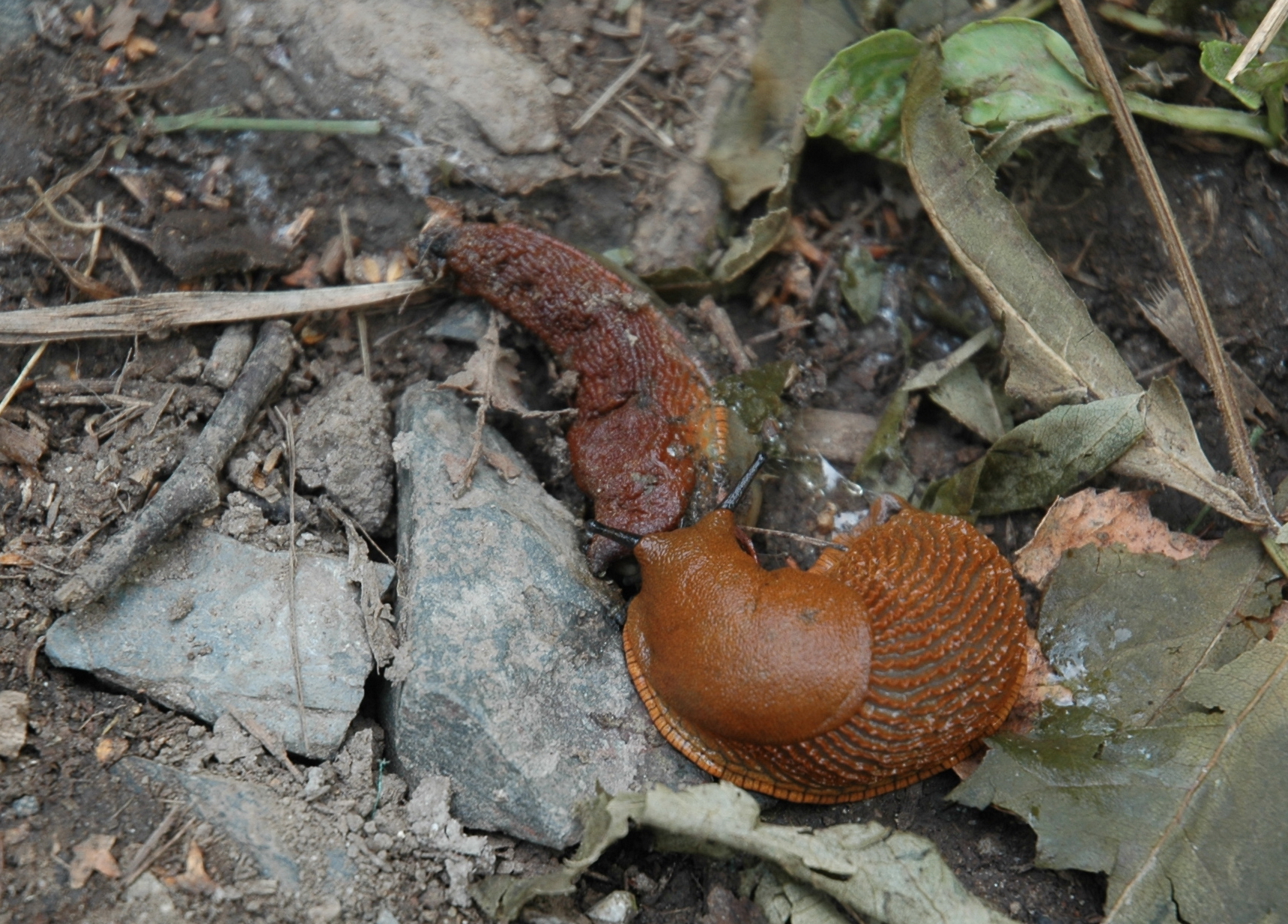
[edit]Sexual cannibalism is present largely in spiders and other invertebrates, including gastropods.[3] This refers to the killing and consumption of conspecific sexual partners during courtship, and during or after copulation. Normally, it is the female which consumes the conspecific male organism, though there have been some reported cases of the male consuming the adult female, however, this has only been recorded under laboratory conditions.[3][22][23] Sexual cannibalism has been recorded in the female redback spider, black widow spider, praying mantis, and scorpion, among others.
In most species of spiders, the consumption of the male individual occurs before copulation and the male fails to transfer his sperm into the female.[3] This may be due to mistaken identity such as in the case of the orb weaving spider which holds little tolerance to any spider which is present in its web and may mistake the vibrations for those of a prey item.[3] Other reasons for male consumption before mating may include female choice and the nutritional advantages of cannibalism.[24] The size of the male spider may play a part in determining its reproductive success as smaller males are less likely to be consumed during pre-copulation; however, larger males may be able to prevent the smaller ones from gaining access to the female.[24] There exists a conflict of interest between males and females, as females may be more inclined to turn to cannibalism as a source of nutritional intake while the male's interest is mostly focused on ensuring paternity of the future generations.[3] It was found that cannibalistic females produced offspring with greater survival rates than non-cannibalistic females, as cannibals produced greater clutches and larger egg sizes.[25] Hence, species such as the male dark fishing spider of the family Dolomedes self-sacrifice and spontaneously die during copulation to facilitate their own consumption by the female, thereby increasing the chance of survivorship of future offspring.[26]
Sexual dimorphism has been theorised to have arisen from sexual selection as smaller males were captured more easily than larger males; however, it is also possible that sexual cannibalism only occurs due to the difference in size between male and females.[3] Data comparing female and male spider body length shows that there is little support for the prior theory as there is not much correlation between body size and the presence of sexual cannibalism. Not all species of spiders which partake in sexual cannibalism exhibit size dimorphism.[3]
The avoidance of sexual cannibalism is present in males of certain species to increase their rate of survival, whereby the male uses cautionary methods to lower the risk of his consumption.[3] Male orb weaving spiders would often wait for females to moult or to finish eating before attempting to initiate mating, as the females are less likely to attack.[3] Males which are vulnerable to post-copulation consumption may gather mating thread to generate a mechanical tension which they could use to spring away after insemination, while other spiders such as the crab spider may tangle the female's legs in webs to reduce the risk of the female capturing him.[3] Male choice is common in mantids whereby males were observed to choose fatter females due to the reduced risk of attack and were more hesitant to approach starved females.[27]
Size-structured cannibalism
[edit]
Size-structured cannibalism is cannibalism in which older, larger, more mature individuals consume smaller, younger conspecifics. In size-structured populations, (where populations are made of individuals of various sizes, ages, and maturities), cannibalism can be responsible for 8% (Belding's ground squirrel) to 95% (dragonfly larvae) of the total mortality,[1] making it a significant and important factor for population[28] and community dynamics.[29]
Size-structured cannibalism has commonly been observed in the wild for a variety of taxa. Vertebrate examples include chimpanzees, where groups of adult males have been observed to attack and consume infants.[30][31][32]
Filial cannibalism
[edit]Filial cannibalism is a specific type of size-structured cannibalism in which adults eat their own offspring.[33] Although most often thought of as parents eating live young, filial cannibalism includes parental consumption of stillborn infants and miscarried fetuses as well as infertile and still-incubating eggs. Vertebrate examples include pigs, where cannibalistic piglet savaging occurs at a rate of about 0.3% and is considered to be an abnormal behavior. However, consumption by the sow of already dead piglets that were stillborn or accidentally crushed occurs at a much higher rate and is considered normal.[34][35]
Filial cannibalism is particularly common in teleost fishes, appearing in at least seventeen different families of teleosts.[36] Within this diverse group of fish, there have been many, variable explanations of the possible adaptive value of filial cannibalism. One of these is the energy-based hypothesis, which suggests that fish eat their offspring when they are low on energy as an investment in future reproductive success.[33] This has been supported by experimental evidence, showing that male three-spined sticklebacks,[33][37][38] male tessellated darters,[39] and male sphinx blenny fish[40] all consume or absorb their own eggs to maintain their physical conditions. In other words, when males of a fish species are low on energy, it might sometimes be beneficial for them to feed on their own offspring to survive and invest in future reproductive success.
Another hypothesis as to the adaptive value of filial cannibalism in teleosts is that it increases density-dependent egg survivorship. In other words, filial cannibalism simply increases overall reproductive success by helping the other eggs make it to maturity by thinning out the numbers. Possible explanations as to why this is so include increasing oxygen availability to the remaining eggs,[41] the negative effects of accumulating embryo waste,[42] and predation.[42]
In some species of eusocial wasps, such as Polistes chinensis, the reproducing female will kill and feed younger larvae to her older brood. This occurs under food stressed conditions in order to ensure that the first generation of workers emerges without delay.[43] Further evidence also suggests that occasionally filial cannibalism might occur as a by-product of cuckoldry in fish. Males consume broods, which may include their own offspring, when they believe a certain percentage of the brood contains genetic material that is not theirs.[37][44]
It is not always the parent that cannibalizes the offspring; in some spiders, mothers have been observed to feed themselves to their brood as the ultimate provision from mother to children, known as matriphagy.[45]
The dinosaur Coelophysis was once suspected to practice this form of cannibalism but this turned out to be wrong, although Deinonychus may have done so. Skeletal remains from subadults with missing parts are suspected of having been eaten by other Deinonychus, mainly full-grown adults.
Infanticide
[edit]Infanticide is the killing of a non-adult animal by an adult of the same species. Infanticide is often accompanied by cannibalism. It is often displayed in lions; a male lion encroaching on the territory of a rival pride will often kill any existing cubs fathered by other males; this brings the lionesses into heat more quickly, enabling the invading lion to sire his own young. This is an example of cannibalistic behaviour in a genetic context.
In many species of Lepidoptera, such as Cupido minimus and the Indianmeal moth, the first larvae to hatch will consume the other eggs or smaller larvae on the host plant, decreasing competition.[46][47]
Intrauterine cannibalism
[edit]Intrauterine cannibalism is a behaviour in some carnivorous species, in which multiple embryos are created at impregnation, but only one or two are born. The larger or stronger ones consume their less-developed siblings as a source of nutrients.
In adelphophagy or embryophagy, the fetus eats sibling embryos, while in oophagy it feeds on eggs.[48][49]
Adelphophagy occurs in some marine gastropods (calyptraeids, muricids, vermetids, and buccinids) and in some marine annelids (Boccardia proboscidia in Spionidae).[50]
Intrauterine cannibalism is known to occur in lamnoid sharks[51] such as the sand tiger shark, and in the fire salamander,[52] as well as in some teleost fishes.[49] The Carboniferous period chimaera, Delphyodontos dacriformes, is suspected of having practiced intrauterine cannibalism, also, due to the sharp teeth of the recently born (or possibly aborted) juveniles, and the presence of fecal matter in the juveniles' intestines.[53]
Protection against cannibalism
[edit]Animals have evolved protection to prevent and deter potential predators such as those from their own kind.[3] Many amphibian eggs are gelatinous and toxic to decrease edibility. Often, adults would lay their eggs in crevices, holes, or empty nesting sites to hide their eggs from potential conspecific predators which tend to ingest the eggs for an additional nutritional benefit or to get rid of genetic competition. In amphibians, the development of non-aquatic egg deposition has helped increase the survival rates of their young by the evolution of viviparity or direct development.[3] In bees, worker policing occurs to prohibit worker reproduction, whereby workers cannibalize other worker laid eggs.[54] Queen laid eggs have a different scent than worker laid eggs, allowing workers to differentiate between the two, allowing them to nurture and protect queen laid eggs rather than cannibalising them.[54] Parental presence at nesting sites is also a common method of protection against infanticide committed by conspecific individuals, whereby the parent exhibits defensive displays to ward off potential predators. Parental investment in newborns are generally higher during their early stages of development whereby behaviours such as aggression, territorial behaviour, and pregnancy blocking become more apparent.[3]
Morphological plasticity helps an individual account for different predation stresses, thereby increasing individual survival rates.[55] Japanese brown frog tadpoles have been shown to exhibit morphological plasticity when they are in a high stress environment where cannibalism between tadpoles and more developed individuals were present. Shifting their morphology plays a key role in their survival, creating bulkier bodies when put into environments where more developed tadpoles were present, to make it difficult for the individuals to swallow them whole.[55] Diet shifts between different stages of development have also evolved to decrease competition between each stage, thereby increasing the amount of food availability so that there is a decreased chance that the individuals will turn to cannibalism as an additional food source.[3]
See also
[edit]References
[edit]- ^ a b c Polis, G. A. (1981). "The Evolution and Dynamics of Intraspecific Predation". Annual Review of Ecology and Systematics. 12 (1): 225–251. Bibcode:1981AnRES..12..225P. doi:10.1146/annurev.es.12.110181.001301. S2CID 86286304.
- ^ Goldman, Laurence, ed. (1999). The Anthropology of Cannibalism. Greenwood Publishing Group. ISBN 978-0-89789-596-5.[page needed]
- ^ a b c d e f g h i j k l m n o p q r s t u v w x y z Elgar, M.A. and Crespi, B. J. (1992). Cannibalism: Ecology and Evolution Among Diverse Taxa. Oxford: Oxford University Press. ISBN 978-0-19-854650-4.[page needed]
- ^ a b c d e f g Rudolf, V. H.; Antonovics, J. (2007). "Disease transmission by cannibalism: Rare event or common occurrence?". Proceedings. Biological Sciences. 274 (1614): 1205–1210. doi:10.1098/rspb.2006.0449. PMC 2189571. PMID 17327205.
- ^ a b Fox, L. R. (1975). "Cannibalism in Natural Populations". Annual Review of Ecology and Systematics. 6 (1): 87–106. Bibcode:1975AnRES...6...87F. doi:10.1146/annurev.es.06.110175.000511.
- ^ Rudolf, Volker H. W. (2007). The Influence of Cannibalism and Size Structure on the Dynamics of Aquatic Communities. University of Virginia. p. 2. Archived from the original on 16 April 2021. Retrieved 23 February 2019.
Cannibalism is a common ecological interaction in the animal kingdom, and it is ubiquitous in aquatic and terrestrial food webs [...].
- ^ Peake, Tracey (2 June 2022). "Fish cannibalism is rare in the wild, study finds". phys.org. Retrieved 26 February 2024.
- ^ a b Snyder WE, Joseph SB, Preziosi RF, Moore AJ (2000). "Nutritional Benefits of Cannibalism for the Lady Beetle Harmonia axyridis (Coleoptera: Coccinellidae) When Prey Quality is Poor". Environmental Entomology. 29 (6): 1173–1179. doi:10.1603/0046-225X-29.6.1173.
- ^ Jefferson DM, Hobson KA, Demuth BS, Ferrari MC, Chivers DP (2014). "Frugal cannibals: how consuming conspecific tissues can provide conditional benefits to wood frog tadpoles (Lithobates sylvaticus)". Die Naturwissenschaften. 101 (4): 291–303. Bibcode:2014NW....101..291J. doi:10.1007/s00114-014-1156-4. PMID 24535171. S2CID 16645034.
- ^ a b c d Simpson, Jenna; Joncour, Barbara; Nelson, William Andrew (2018). "Low levels of cannibalism increase fitness in an herbaceous tortrix moth". Behavioral Ecology and Sociobiology. 72 (2): 25. Bibcode:2018BEcoS..72...25S. doi:10.1007/s00265-018-2439-0. S2CID 3373220.
- ^ Mahfoud, Nawal & Kafu, Ali & Maghrabi, Hassan. (2016). Study of the Cannibalistic Cohorts Among the Various Life Stages of Confused Flour Beetle Tribolium confusum DuVal (Coleoptera: Tenebrionidae) Under Laboratory Conditions. 19. 11–27.
- ^ Nishimura, K.; Isoda, Y. (2004). "Evolution of cannibalism: Referring to costs of cannibalism". Journal of Theoretical Biology. 226 (3): 293–302. Bibcode:2004JThBi.226..293N. doi:10.1016/j.jtbi.2003.09.007. PMID 14643643.
- ^ Quinn, J . L.; Cresswell, Will (January 2004). "Predator hunting behaviour and prey vulnerability". Journal of Animal Ecology. 73 (1): 143–154. Bibcode:2004JAnEc..73..143Q. doi:10.1046/j.0021-8790.2004.00787.x.
- ^ Chapman, J.W. (May 1999). "Fitness consequences of cannibalism in Spodoptera frugiperda (fall armyworm)". Behavioral Ecology. 10 (3): 298–303. doi:10.1093/beheco/10.3.298.
- ^ Pfennig, David W.; Reeve, Hudson K.; Sherman, Paul W. (1993). "Kin recognition and cannibalism in spadefoot toad tadpoles". Animal Behaviour. 46: 87–94. doi:10.1006/anbe.1993.1164. S2CID 53175714.
- ^ a b c Van Allen, B. G.; Dillemuth, F. P.; Flick, A. J.; Faldyn, M. J.; Clark, D. R.; Rudolf VHW; Elderd, B. D. (2017). "Cannibalism and Infectious Disease: Friends or Foes?". The American Naturalist. 190 (3): 299–312. doi:10.1086/692734. hdl:1911/97826. PMID 28829639. S2CID 3905739.
- ^ a b Prusiner, Stanley B. (2008). "Reflections on kuru". Philosophical Transactions of the Royal Society B: Biological Sciences. 363 (1510): 3654–3656. doi:10.1098/rstb.2008.4024. PMC 2735541.
- ^ Finberg, Karin E. (2004). "Mad cow disease in the United States: An update on bovine spongiform encephalopathy and variant Creutzfeldt-Jakob disease". Clinical Microbiology Newsletter. 26 (15): 113–118. doi:10.1016/j.clinmicnews.2004.07.001.
- ^ Milner-Gulland, E.J., Fryxell, J.M. & Sinclair, A.R.E. (2011). Animal Migration: A Synthesis. Oxford: Oxford University Press. ISBN 978-0-19-956899-4[page needed]
- ^ Brose, U.; Ehnes, R. B.; Rall, B. C.; Vucic-Pestic, O.; Berlow, E. L.; Scheu, S. (2008). "Foraging theory predicts predator-prey energy fluxes". Journal of Animal Ecology. 77 (5): 1072–1078. Bibcode:2008JAnEc..77.1072B. doi:10.1111/j.1365-2656.2008.01408.x. PMID 18540967.
- ^ Daly B, Long WC (2014). "Inter-cohort cannibalism of early benthic phase blue king crabs (Paralithodes platypus): alternate foraging strategies in different habitats lead to different functional responses". PLOS ONE. 9 (2) e88694. Bibcode:2014PLoSO...988694D. doi:10.1371/journal.pone.0088694. PMC 3928282. PMID 24558414.
- ^ Kenwyn Blake Suttle (1999). "The Evolution of Sexual Cannibalism". University of California, Berkeley. Archived from the original on 12 December 2015. Retrieved 14 July 2007.
- ^ Min-Li Tsai & Chang-Feng Dai (2003). "Cannibalism within mating pairs of the parasitic isopod Ichthyoxenus fushanensis". Journal of Crustacean Biology. 23 (3): 662–668. doi:10.1651/C-2343.
- ^ a b Elgar MA, Fahey BF (1996). "Sexual cannibalism, competition, and size dimorphism in the orb-weaving spider Nephila plumipes Latreille (Araneae: Araneoidea)". Behavioral Ecology. 7 (2): 195–198. doi:10.1093/beheco/7.2.195.
- ^ Welke, Klaas W.; Schneider, Jutta M. (2012). "Sexual cannibalism benefits offspring survival". Animal Behaviour. 83: 201–207. doi:10.1016/j.anbehav.2011.10.027. S2CID 53149581.
- ^ Schwartz, Steven K.; Wagner, William E.; Hebets, Eileen A. (2016). "Males Can Benefit from Sexual Cannibalism Facilitated by Self-Sacrifice". Current Biology. 26 (20): 2794–2799. Bibcode:2016CBio...26.2794S. doi:10.1016/j.cub.2016.08.010. PMID 27720621.
- ^ Kadoi M, Morimoto K, Takami Y (2017). "Male mate choice in a sexually cannibalistic species: male escapes from hungry females in the praying mantid Tenodera angustipennis". Journal of Ethology. 35 (2): 177–185. doi:10.1007/s10164-017-0506-z. PMC 5711982. PMID 29225403.
- ^ Claessen, D.; De Roos, A. M.; Persson, L. (2004). "Population dynamic theory of size-dependent cannibalism". Proceedings. Biological Sciences. 271 (1537): 333–340. doi:10.1098/rspb.2003.2555. PMC 1691603. PMID 15101690.
- ^ Rudolf, V. H. (2007). "Consequences of stage-structured predators: Cannibalism, behavioral effects, and trophic cascades". Ecology. 88 (12): 2991–3003. Bibcode:2007Ecol...88.2991R. doi:10.1890/07-0179.1. PMID 18229834.
- ^ Arcadi, Adam Clark; Wrangham, Richard W. (1999). "Infanticide in chimpanzees: Review of cases and a new within-group observation from the Kanyawara study group in Kibale National Park". Primates. 40 (2): 337–351. doi:10.1007/BF02557557. S2CID 24050100.
- ^ Wilson, Michael L.; Wallauer, William R.; Pusey, Anne E. (2004). "New Cases of Intergroup Violence Among Chimpanzees in Gombe National Park, Tanzania". International Journal of Primatology. 25 (3): 523–549. doi:10.1023/B:IJOP.0000023574.38219.92. S2CID 9354530.
- ^ Watts, David P.; Sherrow, Hogan M.; Mitani, John C. (2002). "New cases of inter-community infanticide by Male Chimpanzees at Ngogo, Kibale National Park, Uganda". Primates. 43 (4): 263–270. doi:10.1007/BF02629601. PMID 12426461. S2CID 7621558.
- ^ a b c Rohwer, Sievert (1978). "Parent Cannibalism of Offspring and Egg Raiding as a Courtship Strategy". The American Naturalist. 112 (984): 429–440. doi:10.1086/283284. S2CID 84519616.
- ^ Mccune, Kathy (25 August 2021). "Do Pigs Eat Their Own Babies?". Family Farm Livestock. Archived from the original on 28 March 2024. Retrieved 28 March 2024.
- ^ Li, Yuzhi (23 October 2014). "Normal and Abnormal Behaviors of Swine Under Productions Conditions". Pork Information Gateway. Archived from the original on 28 March 2024. Retrieved 28 March 2024.
- ^ Manica, A. (2002). "Filial cannibalism in teleost fish". Biological Reviews of the Cambridge Philosophical Society. 77 (2): 261–277. doi:10.1017/s1464793101005905. PMID 12056749. S2CID 44376667.
- ^ a b Mehlis, M.; Bakker, T. C.; Engqvist, L.; Frommen, J. G. (2010). "To eat or not to eat: Egg-based assessment of paternity triggers fine-tuned decisions about filial cannibalism". Proceedings. Biological Sciences. 277 (1694): 2627–2635. doi:10.1098/rspb.2010.0234. PMC 2982036. PMID 20410042.
- ^ Mehlis, M.; Bakker, T. C.; Frommen, J. G. (2009). "Nutritional benefits of filial cannibalism in three-spined sticklebacks (Gasterosteus aculeatus)". Die Naturwissenschaften. 96 (3): 399–403. Bibcode:2009NW.....96..399M. doi:10.1007/s00114-008-0485-6. PMID 19066836. S2CID 18562337.
- ^ Dewoody, J. A.; Fletcher, D. E.; Wilkins, S. D.; Avise, J. C. (2001). "Genetic documentation of filial cannibalism in nature". Proceedings of the National Academy of Sciences. 98 (9): 5090–5092. Bibcode:2001PNAS...98.5090D. doi:10.1073/pnas.091102598. PMC 33168. PMID 11309508.
- ^ Kraak, S. B. M. (1996). "Female preference and filial cannibalism in Aidablennius sphynx (Teleostei, Blenniidae); a combined field and laboratory study". Behavioural Processes. 36 (1): 85–97. doi:10.1016/0376-6357(95)00019-4. PMID 24896420. S2CID 8149384.
- ^ Payne, A. G.; Smith, C.; Campbell, A. C. (2002). "Filial cannibalism improves survival and development of beaugregory damselfish embryos". Proceedings. Biological Sciences. 269 (1505): 2095–2102. doi:10.1098/rspb.2002.2144. PMC 1691142. PMID 12396483.
- ^ a b Klug, Hope; Lindström, Kai; St. Mary, Colette M. (2006). "Parents Benefit from Eating Offspring: Density-Dependent Egg Survivorship Compensates for Filial Cannibalism". Evolution. 60 (10): 2087–2095. doi:10.1554/05-283.1. PMID 17133865. S2CID 198158357.
- ^ Kudo K, Shirai A (2012). "Effect of food availability on larval cannibalism by foundresses of the paper wasp Polistes chinensis antennalis". Insectes Sociaux. 59 (2): 279–284. doi:10.1007/s00040-011-0217-3. S2CID 702011.
- ^ Gray, Suzanne M.; Dill, Lawrence M.; McKinnon, Jeffrey S. (2007). "Cuckoldry Incites Cannibalism: Male Fish Turn to Cannibalism when Perceived Certainty of Paternity Decreases". The American Naturalist. 169 (2): 258–263. doi:10.1086/510604. PMID 17211808. S2CID 12929615.
- ^ "Meet the spider mom that makes a meal of herself | WTF!? | Earth Touch News". Earth Touch News Network. Archived from the original on 24 August 2019. Retrieved 24 August 2019.
- ^ Eeles, Peter. "Small Blue". UK Butterflies. Archived from the original on 6 June 2017. Retrieved 11 November 2017.
- ^ Boots, Michael (1998). "Cannibalism and the stage-dependent transmission of a viral pathogen of the Indian meal moth, Plodia interpunctella". Ecological Entomology. 23 (2): 118–122. Bibcode:1998EcoEn..23..118B. doi:10.1046/j.1365-2311.1998.00115.x. S2CID 86589135.
- ^ Lodé, Thierry (2001). Les stratégies de reproduction des animaux [Reproduction Strategies in Animal Kingdom]. Paris: Eds Dunod Sciences. ISBN 2-10-005739-1.
- ^ a b Crespi, Bernard; Christina Semeniuk (2004). "Parent-Offspring Conflict in the Evolution of Vertebrate Reproductive Mode". The American Naturalist. 163 (5): 635–654. doi:10.1086/382734. PMID 15122484. S2CID 13491275.
- ^ Thomsen, Olaf; Collin, Rachel; Carrillo-Baltodano, Allan (2014). "The Effects of Experimentally Induced Adelphophagy in Gastropod Embryos". PLOS ONE. 9 (7) e103366. Bibcode:2014PLoSO...9j3366T. doi:10.1371/journal.pone.0103366. PMC 4114838. PMID 25072671..
- ^ Hamlett, William C.; Allison M. Eulitt; Robert L. Jarrell; Matthew A. Kelly (1993). "Uterogestation and placentation in elasmobranchs". Journal of Experimental Zoology. 266 (5): 347–367. doi:10.1002/jez.1402660504.
- ^ Stebbins, Robert C.; Nathan W. Cohen (1995). A Natural History of Amphibians. Princeton, NJ: Princeton University Press. p. 9. ISBN 978-0-691-10251-1.
- ^ Lund, R. (1980). "Viviparity and intrauterine feeding in a new holocephalan fish from the Lower Carboniferous of Montana". Science. 209 (4457): 697–699. Bibcode:1980Sci...209..697L. doi:10.1126/science.209.4457.697. PMID 17821193. S2CID 36858963.
- ^ a b Santomauro, G.; Oldham, N. J.; Boland, W. & Engels, W. (2004). "Cannibalism of diploid drone larvae in the honey bee (Apis mellifera) is released by odd pattern of cuticular substances". Journal of Apicultural Research. 43 (2): 69–74. Bibcode:2004JApiR..43...69S. doi:10.1080/00218839.2004.11101114. S2CID 83892659.
- ^ a b Kishida, O.; Trussell, G. C.; Nishimura, K. & Ohgushi, T. (2009). "Inducible Defenses in Prey Intensify Predator Cannibalism". Ecology. 90 (11): 3150–3158. Bibcode:2009Ecol...90.3150K. doi:10.1890/08-2158.1. hdl:2115/44963. PMID 19967870. S2CID 1353778.
Further reading
[edit]

- Schutt, Bill (2017). Cannibalism: A Perfectly Natural History. Chapel Hill, NC: Algonquin Books. ISBN 978-1-61620-743-4.
| Carnivores |
|  | ||||||
|---|---|---|---|---|---|---|---|---|
| Herbivores | ||||||||
| Cellular | ||||||||
| Others | ||||||||
| Methods | ||||||||
| By type | |
|---|---|
| In humans | |
| In animals | |
| In fiction | |
| Related concepts | |

| International | |
|---|---|
| National | |
| Other | |
