Hubbry Logo
CeibaCeibaMain
Open search
Ceiba
Community hub
Ceiba
logo
8 pages, 0 posts
0 subscribers
Be the first to start a discussion here.
Ceiba
Ceiba
from Wikipedia

Ceiba
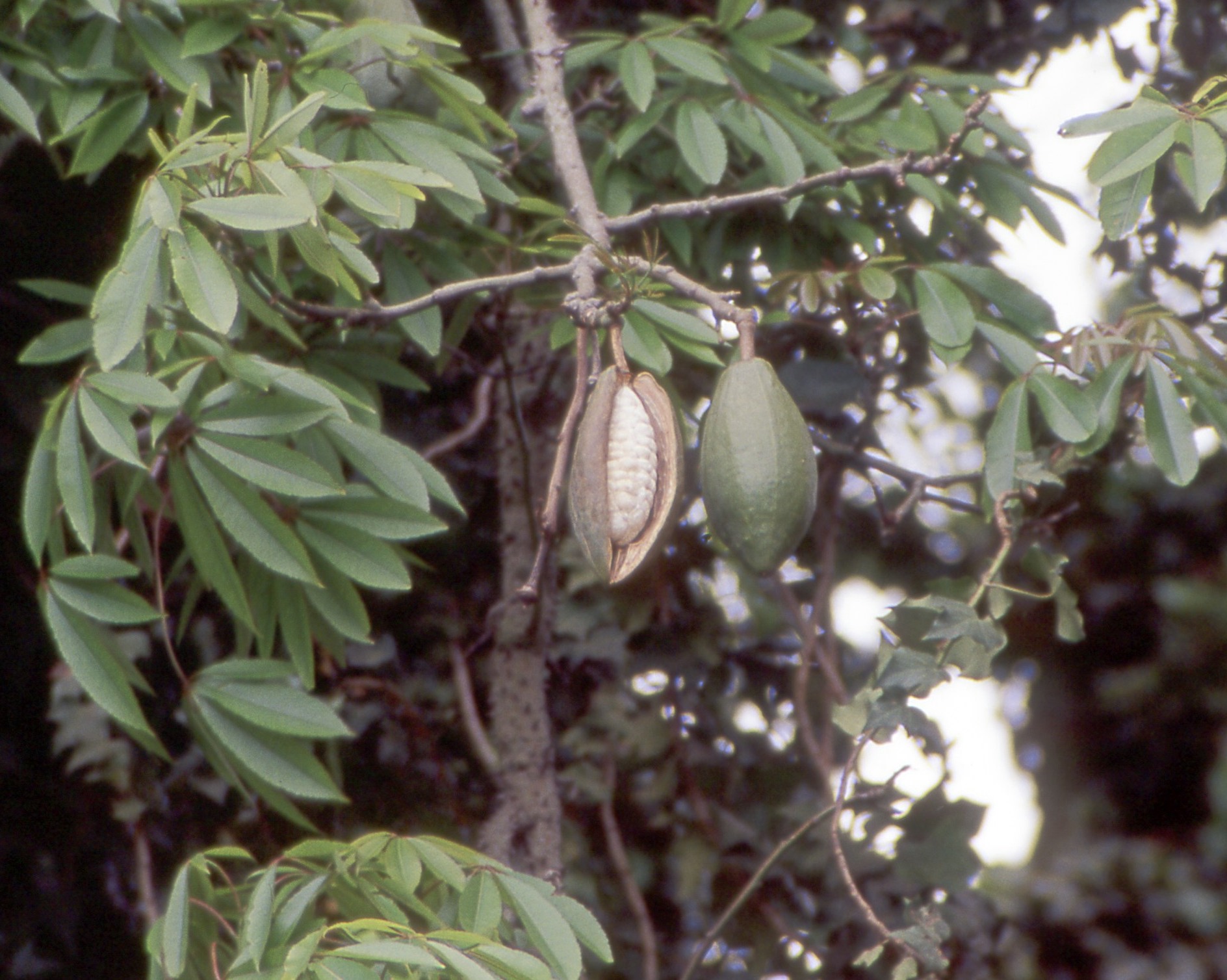
Ceiba pentandra leaves and fruit
Scientific classification Edit this classification
Kingdom: Plantae
Clade: Tracheophytes
Clade: Angiosperms
Clade: Eudicots
Clade: Rosids
Order: Malvales
Family: Malvaceae
Subfamily: Bombacoideae
Genus: Ceiba
Mill.[1]
Species[2]

21, see text

Synonyms[2]
  • Campylanthera Schott & Endl. (1832)
  • Chorisia Kunth (1822)
  • Eriodendron DC. (1824)
  • Erione Schott & Endl. (1832)
  • Gossampinus Buch.-Ham. (1827)
  • Xylon L. (1758), nom. illeg.

Ceiba is a genus of trees in the family Malvaceae, native to tropical and subtropical areas of the Americas (from Mexico and the Caribbean to northern Argentina) and tropical West Africa.[3] Some species can grow to 70 m (230 ft) tall or more, with a straight, largely branchless trunk that culminates in a huge, spreading canopy, and buttress roots that can be taller than a grown person. The best-known, and most widely cultivated, species is kapok, Ceiba pentandra, one of several trees known as kapok. Ceiba is a word from the Taíno language meaning "boat" because Taínos use the wood to build their dugout canoes.[4][5]

Ceiba species are used as food plants by the larvae of some Lepidoptera (butterfly and moth) species, including the leaf-miner Bucculatrix ceibae, which feeds exclusively on the genus.

Recent botanical opinion incorporates Chorisia within Ceiba and puts the genus as a whole within the family Malvaceae.[3]

Culture and history

[edit]

The tree plays an important part in the mythologies of pre-Columbian Mesoamerican cultures. In addition, several Amazonian tribes of eastern Peru believe deities live in Ceiba tree species throughout the jungle. The Ceiba, or ya’axché (in the Mopan Mayan language), symbolised to the Maya civilization an axis mundi which connects the planes of the Underworld (Xibalba) and the sky with that of the terrestrial realm. This concept of a central world tree is often depicted as a Ceiba trunk. The unmistakable thick conical thorns in clusters on the trunk were reproduced by the southern lowland Maya of the Classical Period on cylindrical ceramic burial urns or incense holders.

Ceiba speciosa in Lahore, Pakistan

Modern Maya still often respectfully leave the tree standing when harvesting forest timber.[6] The Ceiba tree is represented by a cross and serves as an important architectural motif in the Temple of the Cross Complex at Palenque.[7]

Ceiba Tree Park is located in San Antón, in Ponce, Puerto Rico. Its centerpiece is the historic Ceiba de Ponce, a 500-year-old Ceiba pentandra tree associated with the founding of the city.[8][9] In the surroundings of the legendary Ceiba de Ponce, broken pieces of indigenous pottery, shells, and stones were found to confirm the presence of Taino Indians long before the Spaniards that later settled in the area.[10] In 1525, Spanish Conquistador Hernán Cortés ordered the hanging of Aztec emperor Cuauhtemoc from a Ceiba tree after overtaking his empire.[11] The town of Chiapa de Corzo, Chiapas, Mexico was founded in 1528 by the Spanish around La Pochota, Ceiba pentandra, according to tradition. Founded in 1838, the Puerto Rican town of Ceiba is also named after this tree. The Honduran city of La Ceiba founded in 1877 was named after a particular Ceiba tree that grew down by the old docks. In 1898, the Spanish Army in Cuba surrendered to the United States under a Ceiba, which was named the Santiago Surrender Tree, outside of Santiago de Cuba.

Ceiba is also the national tree of Guatemala. The most important Ceiba in Guatemala is known as La Ceiba de Palín Escuintla which is over 400 years old. In Caracas, Venezuela there is a 100-year-old ceiba tree in front of the San Francisco Church known as La Ceiba de San Francisco and is an important element in the history of the city. The towering specimen near the town of Sabalito, Costa Rica, is a relict tree called "la ceiba" by residents and a survivor of one of the highest terrestrial rates of tropical deforestation.[12]

Ceiba pentandra produces a light and strong fiber (kapok) used throughout history to fill mattresses, pillows, tapestries, and dolls. Kapok has recently been replaced in commercial use by synthetic fibers. The Ceiba tree seed is used to extract oils used to make soap and fertilizers. The Ceiba continues to be commercialized in Asia, especially in Java, Malaysia, Indonesia and the Philippines.

Ceiba pentandra is the central theme in the book titled, The Great Kapok Tree by Lynne Cherry. Ceiba insignis and Ceiba speciosa are added to some versions of the hallucinogenic drink Ayahuasca.

Pablo Antonio Cuadra, a Nicaraguan poet, wrote a chapter about the Ceiba tree. He used it as a symbol of the Nicaraguan ancestral roots, a cradle for the nation, and source [further explanation needed] during the people's exile.[13]


Species

[edit]
Distribution

As of November 2025, Plants of the World Online accepts 21 species:[2]

[edit]

References

[edit]
[edit]
Revisions and contributorsEdit on WikipediaRead on Wikipedia
from Grokipedia
Ceiba is a of large trees in the Bombacoideae of the mallow family , consisting of approximately 10 to 18 primarily native to seasonally dry tropical forests in the and , with some introductions to and other regions. These emergent canopy trees typically reach heights of 30 to 70 meters, featuring straight trunks up to 3 meters in diameter supported by prominent buttress roots, and in many species, young trunks armed with conical spines that deter herbivores. Their large, hermaphroditic flowers, often white or pink and emitting nocturnal scents, are primarily pollinated by bats and moths, while the capsular fruits release seeds embedded in lightweight, water-resistant kapok fibers derived from lignified cellulose. Prominent species include , the kapok tree, valued for its fiber used in buoyancy aids, insulation, and stuffing prior to synthetic alternatives, and , known for its showy pink flowers and spiny trunk, cultivated ornamentally in subtropical areas..pdf) Ecologically, Ceiba species play key roles in tropical ecosystems by providing habitat, dispersing via wind and animals, and stabilizing soils in riparian zones, though threatens some populations. Culturally, trees like C. pentandra symbolize the in Mesoamerican and African traditions, underscoring their longstanding human associations beyond utilitarian uses.

Taxonomy and Classification

Etymology and Nomenclature

The genus name Ceiba derives from the Spanish ceiba, which in turn originates from the word ceyba (or a cognate Arawakan term), referring to the prominent tropical tree used by for constructing dugout canoes. This linguistic root reflects the tree's cultural significance among pre-Columbian societies in the , where it was valued for its lightweight, durable wood. Common names for trees in the genus include kapok tree (from the Malay kápas, meaning , alluding to the floss-like fibers in the seed pods) and silk-cotton tree, emphasizing the silky texture of those fibers used historically for stuffing mattresses and flotation devices. Regional variants persist, such as ceiba in Spanish-speaking areas and paineira in for certain species, underscoring the tree's widespread recognition across . In , the genus Ceiba was initially overshadowed by (applied broadly to cotton-like trees) and later Chorisia in early 19th-century classifications, but it was re-established for Neotropical by Karl Moritz Schumann in his 1886 and 1890 monographs on the Bombacaceae family. This revival distinguished American Ceiba from taxa, aligning with phylogenetic differences now confirmed within the subfamily Bombacoideae.

Phylogenetic Position

The genus Ceiba is classified in the subfamily Bombacoideae of the family Malvaceae, within the order Malvales. This positioning reflects taxonomic revisions driven by molecular phylogenetic studies from the 1990s onward, which integrated DNA sequence data (e.g., from chloroplast genes rbcL, atpB, and ndhF) with morphological characters to demonstrate that the former family Bombacaceae—traditionally delimited by traits such as palmate leaves, campanulate calyces, and indehiscent or capsular fruits with woolly seeds—is phylogenetically nested within Malvaceae sensu lato. The Angiosperm Phylogeny Group (APG) systems, particularly APG II (2003) and subsequent updates, formalized Bombacoideae as a monophyletic subfamily, supported by maximum parsimony and likelihood analyses showing strong bootstrap values (>90%) for this embedding. Within Bombacoideae, Ceiba occupies a derived position in a predominantly Neotropical , closely allied with genera such as Pachira and , based on multi-gene phylogenies incorporating nuclear ribosomal ITS and markers. A 2016 comprehensive analysis of the subfamily resolved Ceiba as sister to a -inclusive group, with shared synapomorphies including syncarpous gynoecia (carpels fused into a single compound ovary) and malvaceous pollen characterized by echinoid or spinulose exine sculpturing, traits that distinguish Bombacoideae from other subfamilies like . These relationships are robust to analytical methods, including , and refute earlier paraphyletic interpretations of Bombacaceae derived solely from morphology. Diagnostic features reinforcing Ceiba's placement include the combination of valvate sepals, monadelphous stamens fused into a tube, and capsular fruits with disseminules bearing persistent trichomes, which align with Bombacoideae's core morphology while embedding it causally within Malvaceae's broader diversification of syncarpous flowering . Species-level phylogenies, such as a 2021 study using targeted loci, further affirm Ceiba's and its stable subfamily assignment without necessitating further realignments.

List of Species

The genus Ceiba consists of 18 accepted species of trees, all endemic to neotropical regions from southward to northern and . These species were delineated in taxonomic revisions separating them from related genera such as , with serving as the type species. The accepted species are:
  • Ceiba aesculifolia (Kunth) Britten & Baker
  • Ceiba boliviana Britten & Baker f.
  • Ceiba chodatii (Hassl.) Ravenna
  • Ceiba crispiflora (Kunth) Ravenna
  • Ceiba erianthos (Cav.) K.Schum.
  • Ceiba glaziovii (Kuntze) K.Schum. (proposed synonym of C. pubiflora)
  • Ceiba insignis (Kunth) P.E. Gibbs & Semir
  • Ceiba jasminodora (A.St.-Hil.) K.Schum.
  • Ceiba lupuna P.E. Gibbs & Semir
  • Ceiba pentandra (L.) Gaertn.
  • Ceiba pubiflora (A.St.-Hil.) K.Schum. (proposed synonym of C. glaziovii)
  • Ceiba rubriflora Carv.-Sobr. & L.P.Queiroz
  • Ceiba samauma (Mart.) K.Schum.
  • Ceiba schottii Britten & Baker f.
  • Ceiba soluta (Donn. Sm.) Ravenna
  • Ceiba speciosa (A.St.-Hil.) Ravenna
  • Ceiba trischistandra (A.Gray) Bakh.
  • Ceiba ventricosa (Nees & Mart.) Ravenna

Morphology and Biology

Physical Structure

Ceiba species are large deciduous or semi-deciduous trees known for their imposing physical form, typically reaching heights of 60 to 70 meters with trunk diameters up to 3 meters above the buttresses. The trunks are supported by extensive, plate-like buttress roots that extend horizontally up to 10 meters or more, anchoring the tree in shallow tropical soils. These trunks are often cylindrical and branchless for much of their length in species like C. pentandra, while in others such as C. speciosa, they exhibit a swollen, bottle- or gourd-shaped base. Young trunks and branches bear conical spines or prickles, which may diminish with age, and thornless variants occur in cultivated C. pentandra. The bark transitions from greenish in juveniles to grayish in mature trees. Leaves are palmate-compound, digitate with 5 to 9 oblong leaflets each up to 20 cm long, arranged alternately on the branches. The reproductive structures include large, campanulate flowers and oblong, woody capsular fruits measuring 15 cm or more in length. These capsules contain numerous seeds embedded in a mass of fine, silky floss known as kapok, a water-resistant fiber composed primarily of cellulose (approximately 38% α-cellulose) and lignin (14%). The floss imparts buoyancy to the seeds, aiding dispersal, and constitutes the bulk of the fruit's internal volume.

Growth and Physiology

Ceiba species demonstrate rapid juvenile growth characteristic of pioneer trees in tropical environments, with annual height increments of 2 to 4 meters in the initial years under favorable conditions. Seedlings can achieve heights of up to 60 cm within their first year, facilitating quick establishment in disturbed habitats. This fast growth rate enables mature trees to reach heights exceeding 50 meters, though rates slow after the early phases. Physiologically, Ceiba trees exhibit adaptations for resilience in variable tropical climates, including via extensive deep systems that access subsurface water and a habit that sheds leaves during dry periods to minimize losses. Seedlings further employ high sapwood capacity to endure , while thick bark provides and fire resistance. The production of milky sap serves as a biochemical defense, containing irritants and toxins that deter herbivores and pathogens. These trees thrive in well-drained, tropical soils with levels ranging from 6.0 to 7.5, showing preferences for loamy or sandy substrates that prevent waterlogging while supporting expansion. Nutrient demands are moderate, with optimal growth in fertile sites amended by , though established individuals demonstrate adaptability to nutrient-poor conditions through efficient uptake mechanisms. Fertilization in cultivation typically involves 300-600 kg per of balanced mixes to sustain .

Ecology and Distribution

Native Habitats

The genus Ceiba is predominantly native to the Neotropics, with 17 of its 18 species occurring naturally from through to northern , including the and extending to regions like , , and . These trees inhabit a range of lowland environments, primarily seasonally dry tropical forests, moist tropical forests, and riverine floodplains, where they often emerge as emergent canopy species. Ceiba pentandra, the most widespread species, extends its native range from southern to the northern half of , with populations also documented in , likely resulting from ancient transatlantic dispersal rather than recent introduction. Species such as are confined to subtropical and tropical dry forests in eastern , including parts of , , , and . Elevations typically remain below 1500 meters, with optimal growth in areas featuring distinct wet and dry seasons that influence phenological cycles. Ceiba species tolerate mean annual temperatures of 20–30°C and annual ranging from 1000 to 2000 mm, with a critical dry period essential for flowering and fruit maturation. They exhibit resilience to periodic and flooding, thriving in well-drained soils of floodplains while avoiding strong winds that could damage their tall, buttressed trunks. This adaptation to seasonal climates underscores their dominance in disturbed or successional habitats within these biomes, where they facilitate forest regeneration through pioneer growth strategies.

Ecological Interactions

Ceiba species, such as C. pentandra, act as keystone trees in neotropical rainforests, where their emergent stature and pagoda-like crowns create nontrophic niches supporting communities that harbor diverse , birds, and mammals. These structures facilitate habitat partitioning, enabling species like fruit bats and arboreal to exploit canopy resources unavailable in layers. The tree's fibrous fruits indirectly aid by providing flotation for wind-borne propagation, sustaining forest regeneration cycles. Mutualistic interactions underpin Ceiba's trophic role, with chiropterophilous flowers of C. pentandra drawing nectar-feeding bats that transfer pollen across fragmented landscapes, as observed in urbanized Yucatán populations where bat visitation correlates with fruit set. In C. speciosa, large floral displays attract avian and insect visitors in suburban matrices, bolstering local pollinator networks amid habitat loss. Seed dispersers, including wind and occasional vertebrates, leverage the kapok floss for extended range, though primary dispersal remains anemochorous. Buttressed roots of mature Ceiba individuals enhance soil anchorage in flood-prone , mitigating along riverbanks and promoting retention that fosters growth. High aboveground biomass in plantations—reaching 38.7 tons of carbon per hectare after 12 years for C. pentandra—underscores their contribution to carbon pools, with emergent forms amplifying sequestration via elevated . In introduced wet tropical regions, Ceiba exhibits casual establishment without widespread dominance, as evidenced by C. speciosa populations in Mediterranean suburbs reliant on adventitious dispersers but failing to invade intact vegetation.

Reproduction

Flowering and Pollination

Flowers of Ceiba species are typically large, hermaphroditic, and exhibit nocturnal , opening in the evening and lasting one to two nights, which aligns with their for chiropterophily and sphingophily. Flowering occurs synchronously across populations following leaf fall, often during the , with trees producing numerous blooms in a brief, intense period that enhances attraction and opportunities. Individual flowers secrete substantial volumes, averaging around 310 μl per flower in C. pentandra, contributing to total tree-level production exceeding 200 liters per season in wet forest settings. Primary pollinators include phyllostomid bats, such as those in the genus Artibeus, and hawkmoths, which are drawn to the flowers' white-to-reddish coloration, strong odor, and copious nectar; these vectors deposit pollen on stigmas while foraging nocturnally. Experimental exclusions demonstrate low fruit set in the absence of these specialists, with bats proving more efficient than secondary visitors like bees, hummingbirds, or diurnal insects due to their capacity for long-distance pollen transfer. In regions lacking specialized nectarivorous bats, generalized pollinators may partially compensate, but reproductive success remains reduced. Most Ceiba species exhibit late-acting self-incompatibility (LSI), a post-zygotic mechanism where self-pollen tubes reach ovules but fail to yield viable embryos, enforcing despite apparent fertilization success. This system, documented in species like C. speciosa and C. chodatii, results in near-zero selfed fruit set (self-incompatibility index approaching 1.0) and sustains in fragmented habitats. Techniques such as bud pollination or delayed selfing do not overcome LSI, underscoring its robustness against .

Fruit Development and Dispersal

Ceiba species produce capsular fruits that develop post-pollination over a period of 2 to 3 months until maturation. In Ceiba pentandra, fruits attain full size approximately 30 days after flowering, with kapok fiber formation occurring between days 30 and 70, and ripeness achieved around day 80. These woody capsules, typically 10-20 cm long, contain 100-200 seeds embedded within a mass of fine, silky floss derived from the endocarp. Mature capsules dehisce along longitudinal lines, releasing the floss-entangled seeds in a manner synchronized with dry, windy conditions to facilitate dispersal. The kapok floss, lightweight and buoyant, enables anemochorous dispersal by wind, with seeds capable of traveling substantial distances, often exceeding 100 meters from the parent tree, depending on and direction. The floss's hydrophobic properties also support hydrochorous dispersal across bodies. Ceiba seeds exhibit viability for several months when stored under cool, dry conditions, though can reduce longevity. Germination rates under optimal moist, shaded environments range from 50% to 85%, with pre-treatments such as acid or mechanical shaking enhancing success to 70-85% by overcoming imposed by the hard seed coat. This dispersal strategy evolutionarily benefits Ceiba by promoting and reducing , as wind-borne seeds bypass the densely shaded beneath mature trees and establish in distant canopy gaps or open habitats where light penetration favors survival.

Human Utilization

Economic and Industrial Applications

The kapok fiber obtained from the seed pods of serves as a primary economic product, with a satisfactory annual yield of approximately 450 kg per and yields up to 700 kg per considered excellent under optimal conditions. This lightweight, buoyant fiber has been historically utilized for stuffing mattresses, pillows, cushions, and insulation materials due to its low density and moisture resistance. During , kapok was extensively employed in life vests and flotation devices for its superior , outperforming cork in some applications. Production of kapok fiber peaked in the mid-20th century but declined sharply after the 1950s with the advent of synthetic alternatives like , which offered greater durability and lower cost. Global kapok fiber market value was estimated at USD 762.8 million in 2024, with projections for growth to USD 1203.9 million by 2033 at a CAGR of around 5%, driven by demand for natural, biodegradable materials in eco-textiles, sustainable , and . Seeds of yield an oil averaging 1,280 kg per , used industrially in production, as a , and in fertilizers, though its tendency to rancidity limits broader applications. The timber, despite being soft and perishable, finds use in manufacturing, lightweight , packaging crates, and traditionally for carving canoes in regions like and . Recent research from 2020 onward highlights kapok's potential in sustainable technologies, including extraction of nanofibers via TEMPO oxidation and mechanical processes for reinforcing recycled papers and enhancing mechanical properties. Studies in 2024-2025 have explored kapok-derived porous for oil absorption in spill cleanup and as additives in biocomposites, underscoring its renewability and high cellulose content (over 90% in some fibers).

Traditional and Medicinal Uses

In various indigenous traditions of tropical regions, decoctions of Ceiba pentandra stem bark have been employed as a diuretic, aphrodisiac, and remedy for headaches and type II diabetes. Similarly, bark preparations of C. pentandra are used to alleviate stomach ailments, diarrhea, hernia, gonorrhea, heart conditions, edema, fever, asthma, and rickets. Fresh leaves of the species are compressed to counteract dizziness, while boiled root extracts address edema. For Ceiba speciosa, a Brazilian species, aqueous extracts from the stem bark are traditionally prepared as teas to lower cholesterol, triacylglycerides, and blood glucose levels, aligning with broader ethnopharmacological applications of the genus in Brazil for diabetes management. Pharmacological investigations provide partial empirical validation for these uses, particularly through studies demonstrating and activities in C. pentandra extracts, attributed to and other polyphenolic compounds that inhibit pro-inflammatory pathways such as . Bark decoctions exhibit wound-healing properties and membrane stabilization effects, supporting traditional applications, though human clinical trials remain scarce and inconclusive. Antidiabetic claims, including α-glucosidase inhibition by C. pentandra bark, show promise in preclinical models but lack robust randomized controlled evidence. Toxicity assessments of C. pentandra extracts indicate low acute risk, with LD50 values exceeding 5000 mg/kg in models, yet caution is advised due to potential irritancy from latex-like sap components in related and untested long-term effects. These findings underscore the distinction between anecdotal ethnobotanical reports and validated bioactivity, with further rigorous trials needed to confirm efficacy and safety.

Cultural and Symbolic Importance

Mesoamerican Traditions

In Maya cosmology, the Ceiba tree, referred to as Yaxché in Yucatec Maya, functioned as the sacred or , linking the (), the earthly realm, and the heavens. This conceptualization positioned the Ceiba at the center of the , with its extensive roots penetrating the underworld, its trunk supporting the terrestrial world, and its branches extending into the celestial domain. Archaeological evidence from Maya , including depictions on stelae and pottery, portrays the Ceiba as a cosmic pillar, often adorned with serpents or deities emerging from its trunk, underscoring its role in creation myths. The , a K'iche' Maya text transcribed in the 16th to 18th centuries but preserving pre-Columbian narratives, describes a primordial —interpreted by scholars as the Ceiba—where divine figures interacted, symbolizing the origin of human sustenance and cosmic order. Ethnohistorical records indicate that individual Ceiba trees or groves served as sacred sites for rituals, where shamans invoked visions and communed with ancestors through ceremonies involving and offerings. These practices reflected the tree's perceived centrality in facilitating passage between realms, as evidenced by its frequent association with cenotes and caves in ritual contexts. Early Spanish colonial chroniclers, such as those documenting 16th-century practices, noted the Maya's reverence for massive Ceiba trees as focal points of , integral to ceremonies affirming communal and cosmic harmony. These accounts, drawn from indigenous testimonies, highlight the tree's unchallenged ecological and ritual prominence prior to evangelization efforts, with no contemporary records disputing its preeminence in Mesoamerican indigenous .

Other Global Perspectives

In the Caribbean, particularly among Afro-descended communities influenced by West African spiritual traditions transported via the transatlantic slave trade, Ceiba pentandra holds associations with ancestral spirits and protective forces rather than a cosmic axis mundi. In Haitian Vodou, the tree symbolizes Loko, a lwa (spirit) governing herbal knowledge and ritual purity, serving as a conduit for divine communication during ceremonies; practitioners view its massive form as a dwelling for supernatural entities, though this role emphasizes localized mediation over universal cosmology. Similarly, in Afro-Cuban Regla de Ocha and Palo traditions, the ceiba—termed "Tree of Brotherhood"—represents fraternity and justice, often planted near crossroads or cemeteries to ward off malevolent duppies (restless dead) or invoke ancestor aid, reflecting syncretic adaptations where African tree veneration merged with practical site selection for shade and visibility rather than inherent shamanic universality. In West Africa, where C. pentandra is indigenous alongside its Neotropical range, cultural roles lean toward emblematic utility over profound mysticism; for instance, in , historic cotton trees marked gathering sites for liberated slaves in circa 1792, symbolizing emancipation through their enduring presence rather than metaphysical properties. features the tree on its and since in 1968, denoting national resilience amid tropical landscapes, yet this iconography prioritizes botanical prominence and historical continuity over ritual depth. Such attributions, while evocative, stem from observable ecological dominance—vast canopies providing communal shade—and lack evidence of the layered worldview seen in Mesoamerican lore, underscoring pragmatic reverence tied to survival and identity formation. Introduced to via colonial trade routes by the 19th century for kapok extraction, C. pentandra evokes minimal , functioning chiefly as an economic staple for stuffing and insulation; in regions like and , local narratives occasionally liken its towering form to resilience against monsoons, but these are anecdotal extensions of its physical sturdiness, not embedded spiritual systems. Unlike romanticized portrayals of pan-indigenous wisdom, Asian adoptions reveal causal adaptations to material needs— yields averaging 500-1000 kg per mature —without verifiable shamanic parallels, highlighting how transplanted accrue symbolic weight proportional to utility rather than transcultural essence.

Cultivation, Threats, and Conservation

Cultivation Practices

Ceiba trees, particularly C. pentandra and C. speciosa, are propagated primarily through seeds or vegetative methods. Seeds of C. pentandra exhibit high rates, often sown directly into polythene bags measuring 20 cm x 10 cm, with daily watering leading to germination completion within 15 days. Vegetative propagation via cuttings is common, using segments 5–8 cm in and 1.2–1.8 m long from 2–3-year-old orthotropic branches of C. pentandra, which root effectively; semi-hardwood cuttings and air layering also succeed, especially in autumn and winter. techniques enable clonal of superior C. pentandra varieties for enhanced fiber yield traits. C. speciosa similarly propagates from seeds or cuttings, supporting ornamental . Cultivation requires tropical or subtropical climates with no frost exposure, as C. pentandra suffers damage below freezing temperatures and C. speciosa loses foliage below 27°F (–3°C), though it tolerates brief dips to 20°F (–7°C). Full sun and well-drained soils, such as sandy loams or deep permeable loams with pH 4.7–6.9, are essential; heavy clays or laterites are unsuitable. In and plantations, trees are spaced 8–12 m apart to accommodate mature canopies reaching 30–50 m in height, aligning with 10–15 m recommendations for optimal growth and yield. Commercial kapok production occurs in plantations across (e.g., ) and , where C. pentandra is planted on farmers' plots or dedicated sites with minimal maintenance, including twice-yearly fertilization and irrigation focused on drainage. C. speciosa is widely cultivated ornamentally in regions like and for its rapid early growth and showy flowers.

Environmental Impacts and Criticisms

Ceiba species, particularly C. pentandra, support biodiversity by hosting epiphytes, birds, , and mammals on their expansive branches and trunks, while their deep roots stabilize soil in erosion-prone areas during heavy rains. These traits enable ecosystem restoration in human-degraded , as the trees' cellulose-rich fibers and overall structure promote habitat recovery without requiring intensive inputs. In non-native or urban settings, however, Ceiba trees present management challenges; for instance, the extensive roots of C. speciosa can uplift and damage , necessitating removal or mitigation in developed areas. The kapok floss from seed pods, while biodegradable, has drawn complaints of skin irritation and allergic reactions in some users, with studies documenting in up to 17% of tested individuals and accumulation of dust mite allergens over time. Conservation assessments rate C. pentandra as Least Concern globally by IUCN criteria, reflecting wide distribution and reproductive capacity, yet localized threats from and persist, underscoring the need for sustainable harvesting of fibers to avoid depletion in source regions. Critics argue that ornamental introductions of exotic Ceiba species in subtropical zones prioritize over native , potentially exacerbating in disturbed sites, though of widespread invasiveness remains limited. Mature specimens in urban landscapes also pose felling risks due to structural instability from age or storms, as large canopies increase wind vulnerability and require specialized removal to prevent or injury.

References

Add your contribution
Related Hubs
User Avatar
No comments yet.