


Community hub
Recent from talks
Contribute something
Nothing was collected or created yet.
Nicaragua
View on Wikipedia
Nicaragua,[d] officially the Republic of Nicaragua,[e] is the geographically largest country in Central America, comprising 130,370 km2 (50,340 sq mi). With a population of 7,142,529 as of 2024,[15] it is the third-most populous country in Central America after Guatemala and Honduras.
Key Information


Nicaragua is bordered by Honduras to the north, the Caribbean Sea to the east, Costa Rica to the south, and the Pacific Ocean and shares maritime borders with El Salvador to the west and Colombia to the east. Nicaragua's largest city and national capital is Managua, the fourth-largest city in Central America, with a population of 1,055,247 in 2020. Nicaragua is known as "the breadbasket of Central America" due to having the most fertile soil and arable land in all of Central America.[16][17] Nicaragua's multiethnic population includes people of mestizo, indigenous, European, and African heritage. The country's most spoken language is Spanish, though indigenous tribes on the Mosquito Coast speak their own languages and English. The mixture of cultural traditions has generated substantial diversity in folklore, cuisine, music, and literature, including contributions by Nicaraguan poets and writers such as Rubén Darío.
Originally inhabited by various indigenous cultures since ancient times, the region was conquered by the Spanish Empire in the 16th century. Nicaragua gained independence from Spain in 1821. The Mosquito Coast followed a different historical path, being colonized by the English in the 17th century and later coming under British rule. It became an autonomous territory of Nicaragua in 1860 and its northernmost part was transferred to Honduras in 1960. Since its independence, Nicaragua has undergone periods of political unrest, dictatorship, American occupation and fiscal crisis, as well as the Nicaraguan Revolution of the 1960s and 1970s and the Contra War of the 1980s.
Though nominally a unitary presidential republic, Nicaragua has experienced significant democratic backsliding since 2007 under the presidency of Daniel Ortega, resulting in large protests in 2018 and a subsequent crackdown. Following the 2021 election, it has been widely described as an authoritarian dictatorship.[18][19][20] It is a developing country and has the second lowest GDP per capita (nominal) and fourth lowest GDP per capita (PPP) among Latin American and Caribbean countries. In 2024, Nicaragua was ranked as the second-most corrupt country in Latin America, after Venezuela, by the Corruption Perceptions Index.
Known as the "land of lakes and volcanoes",[21][22] Nicaragua is also home to the Bosawás Biosphere Reserve, the second-largest rainforest of the Americas.[23] The biological diversity, warm tropical climate and active volcanoes have made Nicaragua an increasingly popular tourist destination.[24][25] Nicaragua is a founding member of the United Nations[26] and is also a member of the Non-Aligned Movement,[27] Bolivarian Alliance for the Peoples of Our America,[28] and Community of Latin American and Caribbean States.[29]
Etymology
[edit]
It was previously believed that the name Nicaragua was coined by Spanish colonists based on the name Nicarao,[30] who was a cacique of a powerful Nahua tribe encountered by the Spanish conquistador Gil González Dávila during his entry into southwestern Nicaragua in 1522. This theory held that the etymology of Nicaragua was formed from Nicarao and agua (Spanish for 'water'), referring to the two large lakes that are found, Lake Nicaragua and Lake Managua. There are also several other bodies of water within the country, such as the Río Coco and San Juan River.[31]
This etymology is considered to be outdated by most historians. In 2002, it was discovered that the real name of the cacique was Macuilmiquiztli and not Nicarao.[32][33][34][35] Western Nicaragua was known as Nicānāhuac by the Nicaraos, which most historians now believe is the true etymology of "Nicaragua". It means "here lies Anahuac" in Nahuatl and is a combination of the words "Nican" (here),[36] and "Ānāhuac", which is a combination of the words "atl" (water) and "nahuac", a locative meaning "surrounded". Therefore the literal translation of Nicanahuac is "here surrounded by water", fitting the theory that the etymology refers to the large bodies of water in and around the country, the Pacific Ocean, lakes Nicaragua and Xolotlan, and the rivers and lagoons.[37][38][39][40][41][42][43]
Additional theories about the country's name comes from any of the following Nahuatl words: nican-nahua, which means "here are the Nahuas"; and nic-atl-nahuac, the longer form of Nicanahuac meaning "here by the water" or "surrounded by water".[39][30][31][44][45]
History
[edit]Pre-Columbian history
[edit]
Paleo-Indians first inhabited what is now known as Nicaragua as far back as 12,000 BCE.[46] In later pre-Columbian times, Nicaragua's indigenous people were part of the Intermediate Area,[47]: 33 between the Mesoamerican and Andean cultural regions, and within the influence of the Isthmo-Colombian Area. Nicaragua's central region and its Caribbean coast were inhabited by Macro-Chibchan language ethnic groups such as the Miskito, Rama, Mayangna, and Matagalpas.[47]: 20 They had coalesced in Central America and migrated both to and from present-day northern Colombia and nearby areas.[48] Their food came primarily from hunting and gathering, but also fishing and slash-and-burn agriculture.[47]: 33 [49][50]: 65
At the end of the 15th century, western Nicaragua was inhabited by several indigenous peoples related by culture to the Mesoamerican civilizations of the Aztec and Maya, and by language to the Mesoamerican language area.[51] The Chorotegas were Mangue language ethnic groups who had arrived in Nicaragua from what is now the Mexican state of Chiapas sometime around 800 CE.[44][50]: 26–33 The Nicarao people were a branch of Nahuas who spoke the Nawat dialect and also came from Chiapas, around 1200 CE.[52] Prior to that, the Nicaraos had been associated with the Toltec civilization.[50]: 26–33 [52][53][54][55]
Both Chorotegas and Nicaraos originated in Mexico's Cholula valley,[52] and migrated south.[50]: 26–33 A third group, the Subtiabas, were an Oto-Manguean people who migrated from the Mexican state of Guerrero around 1200 CE.[56]: 159 Additionally, there were trade-related colonies in Nicaragua set up by the Aztecs starting in the 14th century.[50]: 26–33
Spanish colonial era (1523–1821)
[edit].jpg)

In 1502, on his fourth voyage, Christopher Columbus became the first European known to have reached what is now Nicaragua as he sailed southeast toward the Isthmus of Panama.[47]: 193 [50]: 92 Columbus explored the Mosquito Coast on the Atlantic side of Nicaragua[57] but did not encounter any indigenous people. 20 years later, the Spaniards returned to Nicaragua, this time to its southwestern part. The first attempt to conquer Nicaragua was by the conquistador Gil González Dávila,[58] who had arrived in Panama in January 1520.
In 1522, González Dávila ventured to the area that later became the Rivas Department of Nicaragua.[47]: 35 [50]: 92 There he encountered an indigenous Nahua tribe led by chief Macuilmiquiztli, whose name has sometimes been erroneously referred to as "Nicarao" or "Nicaragua". The tribe's capital was Quauhcapolca.[59][60][61] González Dávila conversed with Macuilmiquiztli thanks to two indigenous interpreters who had learned Spanish, whom he had brought along.[62]
After exploring and gathering gold[59][47]: 35 [50]: 55 in the fertile western valleys, González Dávila and his men were attacked and driven off by the Chorotega, led by chief Diriangén.[59][63] The Spanish tried to convert the tribes to Christianity; Macuilmiquiztli's tribe was baptized,[59][50]: 86 but Diriangén was openly hostile to the Spaniards. Western Nicaragua, at the Pacific Coast, became a port and shipbuilding facility for the Galleons plying the waters between Manila, Philippines and Acapulco, Mexico.[64]
In 1524, the first Spanish permanent settlements were founded.[58] That year, the conquistador Francisco Hernández de Córdoba founded two of Nicaragua's main cities: Granada on Lake Nicaragua, and then León, west of Lake Managua.[47]: 35, 193 [50]: 92 Córdoba soon built defenses for the cities and fought against incursions by other conquistadors.[50]: 92 Córdoba was later publicly beheaded for having defied his superior, Pedro Arias Dávila.[47]: 35 Córdoba's tomb and remains were discovered in 2000 in the ruins of León Viejo.[65]
The clashes among Spanish forces did not impede their destruction of the indigenous people and their culture. The series of battles came to be known as the "War of the Captains".[66] Pedro Arias Dávila was a winner;[47]: 35 although he lost control of Panama, he moved to Nicaragua and established his base in León.[67] In 1527, León became the capital of the colony.[50]: 93 [67] Through diplomacy, Arias Dávila became the colony's first governor.[65]
Without women in their parties,[50]: 123 the Spanish conquerors took Nahua and Chorotega wives and partners, beginning the multiethnic mix of indigenous and European stock now known as "mestizo", which constitutes the great majority of the population in western Nicaragua.[51] Many indigenous people were killed by European infectious diseases, compounded by neglect by the Spaniards, who controlled their subsistence.[58] Many other indigenous peoples were captured and transported as slaves to Panama and Peru between 1526 and 1540.[47]: 193 [50]: 104–105
In 1610, the Momotombo volcano erupted, destroying the city of León.[68] The city was rebuilt northwest of the original,[67][68] which is now known as the ruins of León Viejo. During the American Revolutionary War, Central America was subject to conflict between Britain and Spain. British navy admiral Horatio Nelson led expeditions in the Battle of San Fernando de Omoa in 1779 and on the San Juan River in 1780, the latter of which had temporary success before being abandoned due to disease.
Independent Nicaragua (1821–1909)
[edit]

The Act of Independence of Central America dissolved the Captaincy General of Guatemala in September 1821, and Nicaragua soon became part of the First Mexican Empire. In July 1823, after the overthrow of the Mexican monarchy in March of the same year, Nicaragua joined the newly formed United Provinces of Central America, a country later known as the Federal Republic of Central America. Nicaragua definitively became an independent republic in 1838.[69]
The early years of independence were characterized by rivalry between the Liberal elite of León and the Conservative elite of Granada, which often degenerated into civil war, particularly during the 1840s and 1850s. Managua rose to undisputed preeminence as the nation's capital in 1852 to allay the rivalry between the two feuding cities.[70][71] Following the start of the California Gold Rush in 1848, Nicaragua provided a route for travelers from the eastern United States to journey to California by sea, via the San Juan River and Lake Nicaragua.[47]: 81
Invited by the Liberals in 1855 to join their struggle against the Conservatives, the American adventurer and filibuster William Walker set himself up as President of Nicaragua after conducting a farcical election in 1856; his presidency lasted less than a year.[72] Military forces from Costa Rica, Honduras, El Salvador, Guatemala, and Nicaragua itself united to drive Walker out of Nicaragua in 1857,[73][74][75] bringing three decades of Conservative rule.[citation needed]
Great Britain, which had claimed the Mosquito Coast as a protectorate since 1655, delegated the area to Honduras in 1859 before transferring it to Nicaragua in 1860. The Mosquito Coast remained an autonomous area until 1894. José Santos Zelaya, President of Nicaragua from 1893 to 1909, negotiated the integration of the Mosquito Coast into Nicaragua. In his honor, the region became "Zelaya Department".[citation needed]
Throughout the late 19th century, the United States and several European powers considered various schemes to link the Pacific Ocean to the Atlantic by building a canal across Nicaragua.[76]
United States occupation (1909–1933)
[edit]In 1909, the United States supported the forces rebelling against President Zelaya. U.S. motives included differences over the proposed Nicaragua Canal, Nicaragua's potential to destabilize the region, and Zelaya's attempts to regulate foreign access to Nicaraguan natural resources. On 18 November 1909, U.S. warships were sent to the area after 500 revolutionaries (including two Americans) were executed by order of Zelaya. The U.S. justified the intervention by claiming to protect U.S. lives and property. Zelaya resigned later that year.[citation needed]
In August 1912, the President of Nicaragua, Adolfo Díaz, requested the secretary of war, General Luis Mena, to resign for fear he was leading an insurrection. Mena fled Managua with his brother, the chief of police of Managua, to start an insurrection. After Mena's troops captured steam boats of an American company, the U.S. delegation asked President Díaz to ensure the safety of American citizens and property during the insurrection. He replied he could not, and asked the U.S. to intervene in the conflict.[77][78]
U.S. Marines occupied Nicaragua from 1912 to 1933,[47]: 111, 197 [79] except for a nine-month period beginning in 1925. In 1914, the Bryan–Chamorro Treaty was signed, giving the U.S. control over a proposed canal through Nicaragua, as well as leases for potential canal defenses.[80] After the U.S. Marines left, another violent conflict between Liberals and Conservatives in 1926 resulted in the return of U.S. Marines.[81]

From 1927 to 1933, rebel general Augusto César Sandino led a sustained guerrilla war against the regime and then against the U.S. Marines, whom he fought for over five years.[82] When the Americans left in 1933, they set up the Guardia Nacional (national guard),[83] a combined military and police force trained and equipped by the Americans and designed to be loyal to U.S. interests.[citation needed]
After the U.S. Marines withdrew from Nicaragua in January 1933, Sandino and the newly elected administration of President Juan Bautista Sacasa reached an agreement that Sandino would cease his guerrilla activities in return for amnesty, a land grant for an agricultural colony, and retention of an armed band of 100 men for a year.[84] However, due to a growing hostility between Sandino and National Guard director Anastasio Somoza García and a fear of armed opposition from Sandino, Somoza García ordered his assassination.[83][85][86]
Sacasa invited Sandino for dinner and to sign a peace treaty at the Presidential House on the night of 21 February 1934. After leaving the Presidential House, Sandino's car was stopped by National Guard soldiers and they kidnapped him. Later that night, Sandino was assassinated by National Guard soldiers. Later, hundreds of men, women, and children from Sandino's agricultural colony were murdered.[87]
Somoza dynasty (1936–1979)
[edit]Republic of Nicaragua | |||||||
|---|---|---|---|---|---|---|---|
| 1936–1979 | |||||||
.svg) | |||||||
| Capital | Managua | ||||||
| Common languages | Spanish | ||||||
| Government | Unitary presidential republic under a hereditary military dictatorship | ||||||
| President | |||||||
• 1936–1937 | Carlos Alberto Brenes (acting) | ||||||
• 1937–1947 1950–1956 | Anastasio Somoza García | ||||||
• 1947 | Leonardo Argüello Barreto | ||||||
• 1947 | Benjamín Lacayo Sacasa (acting) | ||||||
• 1947–1950 | Víctor Manuel Román y Reyes | ||||||
• 1950 | Manuel Fernando Zurita (acting) | ||||||
• 1956–1963 | Luis Somoza Debayle | ||||||
• 1963–1966 | René Schick | ||||||
• 1966 | Orlando Montenegro Medrano (acting) | ||||||
• 1966–1967 | Lorenzo Guerrero | ||||||
• 1967–1972 1974–1979 | Anastasio Somoza Debayle | ||||||
• 1979 | Francisco Urcuyo (acting) | ||||||
| Legislature | National Congress of Nicaragua | ||||||
| Historical era | Interbellum World War II Cold War | ||||||
• Government forces take control of Managua | 31 May 1936 | ||||||
| 9 June 1936 | |||||||
| 8 December 1936 | |||||||
| 2 February 1947 and 15 August 1947 | |||||||
| 21 May 1950 | |||||||
• Somoza García assassinated | 29 September 1956 | ||||||
| 24‐25 October 1956 | |||||||
| 3 February 1957 | |||||||
• Nicaraguan Revolution begins | 19 July 1961 | ||||||
| 3 February 1963 | |||||||
| 23 December 1972 | |||||||
• Sandinista's seizure of power | 18 July 1979 | ||||||
| Population | |||||||
• 1979 | 3,164,525[88] | ||||||
| |||||||
.svg)
.svg)


Nicaragua has experienced several military dictatorships, the longest being the hereditary dictatorship of the Somoza family, who ruled for 43 nonconsecutive years during the 20th century.[89] The Somoza family came to power in 1937 partly as a result of a U.S.-engineered pact in 1927 that stipulated the formation of the Guardia Nacional to replace the marines who had long reigned in the country.[90] Somoza García slowly eliminated officers in the national guard who might have stood in his way, and then deposed Sacasa and became president on 1 January 1937, in a rigged election.[83]
In 1941, during the Second World War, Nicaragua declared war on Japan (8 December), Germany (11 December), Italy (11 December), Bulgaria (19 December), Hungary (19 December) and Romania (19 December). Only Romania reciprocated, declaring war on Nicaragua on the same day (19 December 1941).[91] No soldiers were sent to the war, but Somoza García confiscated properties held by German Nicaraguan residents.[92] In 1945, Nicaragua was among the first countries to ratify the United Nations Charter.[93]
On 29 September 1956,[94] Somoza García was shot to death by Rigoberto López Pérez, a 27-year-old Liberal Nicaraguan poet. Luis Somoza Debayle, the eldest son of the late president, was appointed president by the congress and officially took charge of the country.[83] He is remembered by some as moderate, but after only a few years in power died of a heart attack. His successor as president was René Schick Gutiérrez, whom most Nicaraguans viewed "as nothing more than a puppet of the Somozas".[95] Somoza García's youngest son, Anastasio Somoza Debayle, often referred to simply as "Somoza", became president in 1967.
An earthquake in 1972 destroyed nearly 90% of Managua, including much of its infrastructure.[96] Instead of helping to rebuild the city, Somoza Debayle siphoned off relief money. The mishandling of relief money also prompted Pittsburgh Pirates star Roberto Clemente to personally fly to Managua on 31 December 1972, but he died en route in an airplane accident.[97][98] Even the economic elite were reluctant to support Somoza, as he had acquired monopolies in industries that were key to rebuilding the nation.[99]
The Somoza family was among a few families or groups of influential firms which reaped most of the benefits of the country's growth from the 1950s to the 1970s. When Somoza was deposed by the Sandinistas in 1979, the family's worth was estimated to be between $500 million and $1.5 billion.[100]
Nicaraguan Revolution (1961–1990)
[edit]

In 1961, Carlos Fonseca looked back to the historical figure of Sandino, and along with two other people, one of whom was believed to be Casimiro Sotelo, who was later assassinated, founded the Sandinista National Liberation Front (FSLN).[83] After the 1972 earthquake and Somoza's apparent corruption, the ranks of the Sandinistas were flooded with young disaffected Nicaraguans who no longer had anything to lose.[101]
In December 1974, a group of the FSLN, in an attempt to kidnap U.S. ambassador Turner Shelton, held some Managuan partygoers hostage after killing the party's host, former agriculture minister Jose Maria Castillo, until the Somoza government met their demands for a large ransom and free transport to Cuba. Somoza granted the demand, and then subsequently sent his national guard out into the countryside to look for the kidnappers, who were described by opponents as terrorists.[102]
On 10 January 1978, Pedro Joaquín Chamorro Cardenal, the editor of the national newspaper La Prensa and ardent opponent of Somoza, was assassinated.[103] It is alleged that the planners and perpetrators of the murder were at the highest echelons of the Somoza regime.[103]
The Sandinistas forcefully took power in July 1979, ousting Somoza, and prompting the exodus of the majority of Nicaragua's middle class, wealthy landowners, and professionals, many of whom settled in the United States.[104][105][106] The Carter administration decided to work with the new government, while attaching a provision for aid forfeiture if it was found to be assisting insurgencies in neighboring countries.[107] Somoza fled the country, and eventually ended up in Paraguay, where he was assassinated in September 1980, allegedly by members of the Argentinian Revolutionary Workers' Party.[108]
In 1980, the Carter administration provided $60 million in aid to Nicaragua under the Sandinistas, but the aid was suspended when the administration obtained evidence of Nicaraguan shipment of arms to El Salvadoran rebels.[109] Most people sided with Nicaragua against the Sandinistas.[clarify][110]
Contras (1981–1990)
[edit]
In response to the Sandinistas, various rebel groups collectively known as the "Contras" were formed to oppose the new government. The Reagan administration ultimately authorized the CIA to help the Contra rebels with funding, weapons, and training.[112] The Contras operated from camps in the neighboring countries of Honduras to the north and Costa Rica to the south.[112]
They engaged in a systematic campaign of terror among rural Nicaraguans to disrupt the social reform projects of the Sandinistas. Several historians have criticized the Contra campaign and the Reagan administration's support for the Contras, citing the brutality and numerous human rights violations of the Contras, alleging that health centers, schools, and cooperatives were destroyed by rebels,[113] and that murder, rape, and torture occurred on a large scale in Contra-dominated areas.[114] The U.S. also carried out a campaign of economic sabotage, and disrupted shipping by planting underwater mines in Nicaragua's port of Corinto,[115] an action condemned by the International Court of Justice as illegal.[116] The court also found that the U.S. encouraged acts contrary to humanitarian law by producing the manual Psychological Operations in Guerrilla Warfare and disseminating it to the Contras.[117] The manual, among other things, advised on how to rationalize killings of civilians.[118] The U.S. also sought to place economic pressure on the Sandinistas, and the Reagan administration imposed a full trade embargo.[119]
The Sandinistas were also accused of human rights abuses including torture, disappearances and mass executions.[120][121] The Inter-American Commission on Human Rights investigated abuses by Sandinista forces, including an execution of 35 to 40 Miskitos in December 1981,[122] and an execution of 75 people in November 1984.[123]
In the Nicaraguan general elections of 1984, which were judged by at least one visiting 30-person delegation of NGO representatives to have been free and fair,[124] the Sandinistas won the parliamentary election and their leader Daniel Ortega won the presidential election.[125] The Reagan administration criticized the elections as a "sham" based on the claim that Arturo Cruz, the candidate nominated by the Coordinadora Democrática Nicaragüense, comprising three right wing political parties, did not participate in the elections. However, the administration privately argued against Cruz's participation for fear that his involvement would legitimize the elections, and thus weaken the case for American aid to the Contras.[126]
In 1983 the U.S. Congress prohibited federal funding of the Contras, but the Reagan administration illegally continued to back them by covertly selling arms to Iran and channeling the proceeds to the Contras in the Iran–Contra affair, for which several members of the Reagan administration were convicted of felonies.[127] The International Court of Justice, in regard to the case of Nicaragua v. United States in 1986, found, "the United States of America was under an obligation to make reparation to the Republic of Nicaragua for all injury caused to Nicaragua by certain breaches of obligations under customary international law and treaty-law committed by the United States of America".[128] During the war between the Contras and the Sandinistas, 30,000 people were killed.[129]
Post-war (1990–2018)
[edit]


In the 1990 Nicaraguan general election, a coalition of anti-Sandinista parties from both the left and right of the political spectrum led by Violeta Chamorro, the widow of Pedro Joaquín Chamorro Cardenal, defeated the Sandinistas. The defeat shocked the Sandinistas, who had expected to win.[130]
Exit polls of Nicaraguans reported Chamorro's victory over Ortega was achieved with a 55% majority.[131] Chamorro was the first woman president of Nicaragua. Ortega vowed he would govern desde abajo (from below).[132] Chamorro came to office with an economy in ruins, primarily because of the financial and social costs of the Contra War with the Sandinista-led government.[133] In the 1996 general election, Daniel Ortega and the Sandinistas of the FSLN lost again, this time to Arnoldo Alemán of the Constitutional Liberal Party (PLC).
In the 2001 elections, the PLC again defeated the FSLN, with Alemán's Vice President Enrique Bolaños succeeding him as president. However, Alemán was convicted and sentenced in 2003 to 20 years in prison for embezzlement, money laundering, and corruption;[134] liberal and Sandinista parliament members combined to strip the presidential powers of President Bolaños and his ministers, calling for his resignation and threatening impeachment. The Sandinistas said they no longer supported Bolaños after U.S. Secretary of State Colin Powell told Bolaños to distance from the FSLN.[135] This "slow motion coup d'état" was averted partially by pressure from the Central American presidents, who vowed not to recognize any movement that removed Bolaños; the U.S., the OAS, and the European Union also opposed the action.[136]
Nicaragua briefly participated in the Iraq War in 2004 as part of the Plus Ultra Brigade, a military contingent of mixed personnel.[137]
Before the general elections on 5 November 2006, the National Assembly passed a bill further restricting abortion in Nicaragua.[138] As a result, Nicaragua is one of five countries in the world where abortion is illegal with no exceptions.[139]
Legislative and presidential elections took place on 5 November 2006. Ortega returned to the presidency with 37.99% of the vote. This percentage was enough to win the presidency outright, because of a change in electoral law which lowered the percentage requiring a runoff election from 45% to 35% (with a 5% margin of victory).[140] Nicaragua's 2011 general election resulted in the re-election of Ortega, with a landslide 62.46% of the vote. In 2014 the National Assembly approved changes to the constitution allowing Ortega to run for a third successive term.[141]
In November 2016, Ortega was elected for his third consecutive term (his fourth overall). International monitoring of the elections was initially prohibited, and as a result the validity of the elections has been disputed, but observation by the OAS was announced in October.[142][143] Ortega was reported by Nicaraguan election officials as having received 72% of the vote. However, the Broad Front for Democracy (FAD), having promoted boycotts of the elections, claimed that 70% of voters had abstained (while election officials claimed 65.8% participation).[144]
In April 2018, demonstrations were held to oppose a decree increasing taxes and reducing benefits in the country's pension system. Local independent press organizations documented at least 19 dead and over 100 missing in the ensuing conflict.[145] A reporter from NPR spoke to protestors who explained that while the initial issue was the pension reforms, the uprisings that spread across the country reflected many grievances about the government's time in office, and that the fight is for President Ortega and his vice president, his wife, to step down.[146]
24 April 2018 marked the day of the greatest march in opposition of the Sandinista party. On 2 May 2018, university student leaders made a public announcement giving the government seven days to set a date and time for a dialogue that was promised to the people due to the recent events of repression. The students also scheduled another peaceful protest march on that same day. As of May 2018, estimates of the death toll were as high as 63, many of them student protesters, and the wounded totalled more than 400.[147]
Following a working visit from 17 to 21 May, the Inter-American Commission on Human Rights adopted precautionary measures aimed at protecting members of the student movement and their families after testimonies indicated the majority of them had suffered acts of violence and death threats for their participation.[148] In the last week of May, thousands who accuse Mr. Ortega and his wife of acting like dictators joined in resuming anti-government rallies after attempted peace talks have remained unresolved.[149] Open suppression of political dissent and more militarized policing began in April 2018, but the onset of repression was gradual.[150] On 12 October 2024, Nicaragua broke ties with Israel in response to the ongoing Gaza war, condemning Israel's leaders as "fascist" and "genocidal".[151]
Geography
[edit]
Nicaragua occupies a landmass of 130,967 km2 (50,567 sq mi), which makes it slightly larger than England. Nicaragua has three distinct geographical regions: the Pacific lowlands – fertile valleys which the Spanish colonists settled, the Amerrisque Mountains (North-central highlands), and the Mosquito Coast (Atlantic lowlands/Caribbean lowlands).
The low plains of the Atlantic Coast are 97 km (60 mi) wide in areas. They have long been exploited for their natural resources.
On the Pacific side of Nicaragua are the two largest freshwater lakes in Central America—Lake Managua and Lake Nicaragua. Surrounding these lakes and extending to their northwest along the rift valley of the Gulf of Fonseca are fertile lowland plains, with soil highly enriched by ash from nearby volcanoes of the central highlands. Nicaragua's abundance of biologically significant and unique ecosystems contribute to Mesoamerica's designation as a biodiversity hotspot. Nicaragua has made efforts to become less dependent on fossil fuels, and it expects to acquire 90% of its energy from renewable resources by 2020.[152][153]
Nicaragua was one of the few countries that did not enter an INDC at COP21.[154][155] Nicaragua initially chose not to join the Paris Climate Accord because it felt that "much more action is required" by individual countries on restricting global temperature rise.[152] In October 2017, Nicaragua made the decision to join the agreement.[156][157][158] It ratified this agreement in November 2017.[159]
Nearly one fifth of Nicaragua is designated as protected areas like national parks, nature reserves, and biological reserves. The country had a 2019 Forest Landscape Integrity Index mean score of 3.63/10, ranking it 146th globally out of 172 countries.[160] Geophysically, Nicaragua is surrounded by the Caribbean Plate, an oceanic tectonic plate underlying Central America, and the Cocos Plate. Since Central America is a major subduction zone, Nicaragua hosts most of the Central American Volcanic Arc. On 9 June 2021, Nicaragua launched a new volcanic supersite research in strengthening the monitoring and surveillance of the country's 21 active volcanoes.
Pacific lowlands
[edit].jpg)

In the west of the country, these lowlands consist of a broad, hot, fertile plain. Punctuating this plain are several large volcanoes of the Cordillera Los Maribios mountain range, including Mombacho just outside Granada, and Momotombo near León. The lowland area runs from the Gulf of Fonseca to Nicaragua's Pacific border with Costa Rica south of Lake Nicaragua. Lake Nicaragua is the largest freshwater lake in Central America (20th largest in the world),[161] and is home to some of the world's rare freshwater sharks (Nicaraguan shark).[162] The Pacific lowlands region is the most populous, with over half of the nation's population.[163]
The eruptions of western Nicaragua's 40 volcanoes, many of which are still active, have sometimes devastated settlements but also have enriched the land with layers of fertile ash. The geologic activity that produces vulcanism also breeds powerful earthquakes. Tremors occur regularly throughout the Pacific zone, and earthquakes have nearly destroyed the capital city, Managua, more than once.[164]
Most of the Pacific zone is tierra caliente, the "hot land" of tropical Spanish America at elevations under 610 metres (2,000 ft). Temperatures remain virtually constant throughout the year, with highs ranging between 29.4 and 32.2 °C (85 and 90 °F). After a dry season lasting from November to April, rains begin in May and continue to October, giving the Pacific lowlands 1,016 to 1,524 millimetres (40 to 60 in) of precipitation.[164]
Good soils and a favourable climate combine to make western Nicaragua the country's economic and demographic centre. The southwestern shore of Lake Nicaragua lies within 24 kilometres (15 mi) of the Pacific Ocean. Thus the lake and the San Juan River were often proposed in the 19th century as the longest part of a canal route across the Central American isthmus. Canal proposals were periodically revived in the 20th and 21st centuries.[164][165] Roughly a century after the opening of the Panama Canal, the prospect of a Nicaraguan ecocanal remains a topic of interest.[166][167][168][169]
In addition to its beach and resort communities, the Pacific lowlands contains most of Nicaragua's Spanish colonial architecture and artifacts. Cities such as León and Granada abound in colonial architecture; founded in 1524, Granada is the oldest colonial city in the Americas.[170][needs update]
North-central highlands
[edit]
Northern Nicaragua is the most diversified region producing coffee, cattle, milk products, vegetables, wood, gold, and flowers. Its extensive forests, rivers and geography are suited for ecotourism.
The central highlands are a significantly less populated and economically developed area in the north, between Lake Nicaragua and the Caribbean. Forming the country's tierra templada, or "temperate land", at elevations between 610 and 1,524 metres (2,000 and 5,000 ft), the highlands enjoy mild temperatures with daily highs of 23.9 to 26.7 °C (75 to 80 °F). This region has a longer, wetter rainy season than the Pacific lowlands, making erosion a problem on its steep slopes. Rugged terrain, poor soils, and low population density characterize the area as a whole, but the northwestern valleys are fertile and well settled.[164]
The area has a cooler climate than the Pacific lowlands. About a quarter of the country's agriculture takes place in this region, with coffee grown on the higher slopes. Oaks, pines, moss, ferns and orchids are abundant in the cloud forests of the region.
Bird life in the forests of the central region includes resplendent quetzals, goldfinches, hummingbirds, jays and toucanets.
Caribbean lowlands
[edit]This large rainforest region is irrigated by several large rivers and is sparsely populated. The area has 57% of the territory of the nation and most of its mineral resources. It has been heavily exploited, but much natural diversity remains. The Rio Coco is the largest river in Central America; it forms the border with Honduras. The Caribbean coastline is much more sinuous than its generally straight Pacific counterpart; lagoons and deltas make it very irregular.[citation needed]
Nicaragua's Bosawás Biosphere Reserve is in the Mosquitia region, part of which is located in the municipality of Siuna; it protects 7,300 square kilometres (1,800,000 acres) of Mosquitia's forest – almost 7% of the country's area – making it the largest rainforest north of the Amazon in Brazil.[171]
The municipalities of Siuna, Rosita, and Bonanza, known as the "Mining Triangle", are located in the region known as the North Caribbean Coast Autonomous Region, in Mosquitia. Bonanza still contains an active gold mine owned by HEMCO. Siuna and Rosita do not have active mines but panning for gold is still very common in the region.[citation needed]
Nicaragua's tropical east coast is very different from the rest of the country. The climate is predominantly tropical, with high temperature and high humidity. Around the area's principal city of Bluefields, English is widely spoken along with the official Spanish. The population more closely resembles that found in many typical Caribbean ports than the rest of Nicaragua.[172]
A great variety of birds can be observed including eagles, toucans, parakeets and macaws. Other animal life in the area includes different species of monkeys, anteaters, white-tailed deer and tapirs.[173]
Flora and fauna
[edit]
Nicaragua is home to a rich variety of plants and animals. Nicaragua is located in the middle of the Americas and this privileged location has enabled the country to serve as host to a great biodiversity. This factor, along with the weather and light altitudinal variations, allows the country to harbor 248 species of amphibians and reptiles, 183 species of mammals, 705 bird species, 640 fish species, and about 5,796 species of plants.
The region of great forests is located on the eastern side of the country. Rainforests are found in the Río San Juan Department and in the autonomous regions of RAAN and RAAS. This biome groups together the greatest biodiversity in the country and is largely protected by the Indio Maíz Biological Reserve in the south and the Bosawás Biosphere Reserve in the north. The Nicaraguan jungles, which represent about 9,700 square kilometres (2.4 million acres), are considered the lungs of Central America and comprise the second largest-sized rainforest of the Americas.[174][175]
There are currently 78 protected areas in Nicaragua, covering more than 22,000 square kilometres (8,500 sq mi), or about 17% of its landmass. These include wildlife refuges and nature reserves that shelter a wide range of ecosystems. There are more than 1,400 animal species classified thus far in Nicaragua. Some 12,000 species of plants have been classified thus far in Nicaragua, with an estimated 5,000 species not yet classified.[176]
The bull shark is a species of shark that can survive for an extended period of time in fresh water. It can be found in Lake Nicaragua and the San Juan River, where it is often referred to as the "Nicaragua shark".[177] Nicaragua has recently banned freshwater fishing of the Nicaragua shark and the sawfish in response to the declining populations of these animals.[178]
Government and politics
[edit] | This section needs additional citations for verification. (September 2017) |
.jpg)

Politics of Nicaragua takes place in a framework of a presidential representative democratic republic, whereby the President of Nicaragua is both head of state and head of government, and of a multi-party system. Executive power is exercised by the government. Legislative power is vested in both the government and the national assembly. The judiciary makes up the third branch of government.
Since Daniel Ortega's election in 2006, liberal democratic norms and individual rights in practice have deteriorated, a process known as democratic backsliding.[179] Parties other than the ruling FSLN have been repressed through arbitrary arrest and detention of opposition candidates and activists. Most government jobs de facto require membership in the FSLN. Opposition media has been repressed through arrests of journalists and seizure of broadcasting and printing materials.[180]
Between 2007 and 2009, Nicaragua's major political parties discussed the possibility of going from a presidential system to a parliamentary system. It was argued[by whom?] that the reason for this proposal was to find a legal way for President Ortega to stay in power after January 2012, when his second and last government period was expected to end. Ortega was re-elected to a third term in November 2016, and a fourth in 2021; both elections were tainted by credible reports of large-scale fraud, voter intimidation, and politically motivated arrests of opposition party leaders. Independent observers were barred from the polls. The OAS, United States, and European Union all described the 2021 election as a "sham" due to these issues.[181][182]
In November 2024, the government presented a partial constitutional reform that established sweeping government changes.[183] The reform defined Nicaragua as a revolutionary socialist state with the flag of the Sandinista National Liberation Front as a national symbol, disallowed transgressions against the "principles of security, peace, and wellbeing established in the Constitution", and declared opponents to these as "traitors to the homeland", whether inside or outside national territory. This reform also increased presidential powers by establishing a co-presidency capable of "coordinating" with other "state organs" such as the legislature, judiciary, and executive. Among other changes, the reform increases the presidential term from 5 to 6 years, establishes a voluntary civilian police as "an auxiliary body in support of the National Police", and limits any speech or religious practices that "violate public order" and constitutional principles.[184]
The reform has been widely criticized by the OAS and opposition figures as officializing repressive practices, eliminating checks and balances, and establishing a "bicephalous dictatorship".[183] It has been condemned as "the most flagrant violation of human rights" since "it is about the constitution".[183] The OAS further criticized the reform as "illegitimate" and as an "aberrant form of institutionalization a matrimonial dictatorship".[183] Other outlets, including the Uruguayan Diálogo Político, have condemned the reforms as installing a totalitarian government.[5]
The partial constitutional reform was passed in the first hearing on November 2024 and the second hearing on January 2025 where the legislature discussed and ratified it on an article-by-article basis, completing its passage by the end of the month.[citation needed]
Administrative divisions
[edit].png)
Nicaragua is a unitary republic. For administrative purposes it is divided into 15 departments (departamentos) and two self-governing regions (autonomous communities) based on the Spanish model. The departments are then subdivided into 153 municipios (municipalities). The two autonomous regions are the North Caribbean Coast Autonomous Region and South Caribbean Coast Autonomous Region, often referred to as RACCN and RACCS, respectively.[185]
|


Foreign relations
[edit]Nicaragua pursues an independent foreign policy. Nicaragua is in territorial disputes with Colombia over the Archipelago de San Andrés y Providencia and Quita Sueño Bank and with Costa Rica over a boundary dispute involving the San Juan River.
Since 2019, human rights in Nicaragua have been rated not free.
On 12 October 2022, Nicaragua voted against condemning Russia for its invasion of Ukraine.[186]
Military
[edit]The Nicaraguan Armed Forces consist of various military contingents. Nicaragua has an army, navy and an air force. There are roughly 14,000 active duty personnel, which is much less compared to the numbers seen during the Nicaraguan Revolution. Although the army has had a rough military history, a portion of its forces, which were known as the national guard, became integrated with what is now the National Police of Nicaragua. In essence, the police became a gendarmerie. The National Police of Nicaragua are rarely, if ever, labeled as a gendarmerie. The other elements and manpower that were not devoted to the national police were sent over to cultivate the new Army of Nicaragua.
The age to serve in the armed forces is 17 and conscription is not imminent. As of 2006[update], the military budget was roughly 0.7% of Nicaragua's expenditures.
Law enforcement
[edit]
The National Police of Nicaragua Force (in Spanish: La Policía Nacional Nicaragüense) is the national police of Nicaragua. The force is in charge of regular police functions and, at times, works in conjunction with the Nicaraguan military, making it an indirect and rather subtle version of a gendarmerie.[citation needed] However, the Nicaraguan National Police work separately and have a different established set of norms than the nation's military.[citation needed] According to a recent U.S. Department of State report, corruption is endemic, especially within law enforcement and the judiciary, and arbitrary arrests, torture, and harsh prison conditions are the norm.[187]
Nicaragua has one of the lowest intentional homicide rates in Central America, according to the United Nations Development Program, with a homicide rate of 11 per 100,000 inhabitants as of 2021.[188]
Economy
[edit]

Nicaragua is one of the poorest countries in the Americas,[189][190][191] only ahead of Haiti in terms of nominal per capita GDP. Its gross domestic product (GDP) in purchasing power parity (PPP) in 2023 was estimated at US$56.7 billion.[192] In 2020, agriculture represented 15.5% of GDP, the highest percentage in Central America.[193] Remittances account for over 15% of its GDP. Almost one billion dollars are sent annually to the country by Nicaraguans living abroad.[194] The economy grew at a rate of about 4% in 2011.[10] By 2019, given restrictive taxes and a civil conflict, it recorded a negative annual growth rate of −3.9%.
The restrictive tax measures put in place in 2019 and a political crisis over social security negatively affected the country's weak public spending and investor confidence in sovereign debt. In 2020, due to the COVID-19 outbreak, GDP growth fell to −1.8%. In the ensuing 3 years, it rose again to an average of 9.35%.[195]
In 2010, 48% of the population of Nicaragua lived below the poverty line,[196] and 79.9% of the population lived with less than $2 per day.[197] In 2008, 80% of the indigenous people, who make up 5% of the population, lived on less than $1 per day.[198]
According to the World Bank, Nicaragua ranked as the 123rd out of 190 best economy for starting a business.[199] In 2007, Nicaragua's economy was labelled "62.7% free" by the conservative think tank Heritage Foundation, with high levels of fiscal, government, labor, investment, financial, and trade freedom.[200] It ranked as the 61st freest economy, and 14th (of 29) in the Americas. Nicaragua was ranked 124th in the Global Innovation Index in 2024.[201]
In March 2007, Poland and Nicaragua signed an agreement to write off 30.6 million dollars, which was borrowed by the Nicaraguan government in the 1980s.[202] Inflation reduced from 33,500% in 1988 to 9.45% in 2006, and the foreign debt was cut in half.[203]
Nicaragua is primarily an agricultural country; 28% of its workforce is employed in agriculture[204] and 60% of its total exports, which annually yield approximately US$300 million.[205] Nearly two-thirds of the coffee crop comes from the northern part of the central highlands, in the area north and east of the town of Estelí.[164] Tobacco, grown in the same northern highlands region as coffee, has become an increasingly important cash crop since the 1990s, with annual exports of leaf and cigars in the neighborhood of $200 million per year.[206]
Soil erosion and pollution from the heavy use of pesticides have become serious concerns in the cotton district. Yields and exports have both been declining since 1985.[164] Today most of Nicaragua's bananas are grown in the northwestern part of the country near the port of Corinto; sugarcane is also grown in the same district.[164] Cassava, a root crop somewhat similar to the potato, is an important food in tropical regions. Cassava is also the main ingredient in tapioca pudding.[164]
Nicaragua's agricultural sector has benefited because of the country's strong ties to Venezuela. It is estimated that Venezuela will import approximately $200 million in agricultural goods.[207] In the 1990s, the government initiated efforts to diversify agriculture. Some of the new export-oriented crops were peanuts, sesame, melons, and onions.[164]
Fishing boats on the Caribbean side bring shrimp as well as lobsters into processing plants at Puerto Cabezas, Bluefields, and Laguna de Perlas.[164] A turtle fishery thrived on the Caribbean coast before it collapsed from overexploitation.[164]
Mining is becoming a major industry in Nicaragua,[208] contributing less than 1% of gross domestic product (GDP). Restrictions are being placed on lumbering due to increased environmental concerns about destruction of the rain forests. But lumbering continues despite these obstacles; indeed, a single hardwood tree may be worth thousands of dollars.[164]
During the war between the Contras and the government of the Sandinistas in the 1980s, much of the country's infrastructure was damaged or destroyed.[209] Transportation throughout the nation is often inadequate. For example, it was until recently impossible to travel all the way by highway from Managua to the Caribbean coast. A new road between Nueva Guinea and Bluefields was completed in 2019 and allows regular bus service to the capital.[210] The Centroamérica power plant on the Tuma River in the Central highlands has been expanded, and other hydroelectric projects have been undertaken to help provide electricity to the nation's newer industries.[164] Nicaragua has long been considered as a possible site for a new canal that could supplement the Panama Canal, connecting the Caribbean Sea (and therefore the Atlantic Ocean) with the Pacific Ocean.
Nicaragua's minimum wage is among the lowest in the Americas and in the world.[211][212][213][214] Remittances are equivalent to roughly 15% of the country's gross domestic product.[10] Growth in the maquila sector slowed in the first decade of the 21st century with rising competition from Asian markets, particularly China.[164] Land is the traditional basis of wealth in Nicaragua, with great fortunes coming from the export of staples such as coffee, cotton, beef, and sugar. Almost all of the upper class and nearly a quarter of the middle class are substantial landowners.
A 1985 government study classified 69.4 percent of the population as poor on the basis that they were unable to satisfy one or more of their basic needs in housing, sanitary services (water, sewage, and garbage collection), education, and employment. The defining standards for this study were very low; housing was considered substandard if it was constructed of discarded materials with dirt floors or if it was occupied by more than four persons per room.
Rural workers are dependent on agricultural wage labor, especially in coffee and cotton. Only a small fraction hold permanent jobs. Most are migrants who follow crops during the harvest period and find other work during the off-season. The "lower" peasants are typically smallholders without sufficient land to sustain a family; they also join the harvest labor force. The "upper" peasants have sufficient resources to be economically independent. They produce enough surplus, beyond their personal needs, to allow them to participate in the national and world markets.

The urban lower class is characterized by the informal sector of the economy. The informal sector consists of small-scale enterprises that utilize traditional technologies and operate outside the legal regime of labor protections and taxation. Workers in the informal sector are self-employed, unsalaried family workers or employees of small-enterprises, and they are generally poor.
Nicaragua's informal sector workers include tinsmiths, mattress makers, seamstresses, bakers, shoemakers, and carpenters; people who take in laundry and ironing or prepare food for sale in the streets; and thousands of peddlers, owners of small businesses (often operating out of their own homes), and market stall operators. Some work alone, but others labor in the small talleres (workshops/factories) that are responsible for a large share of the country's industrial production. Because informal sector earnings are generally very low, few families can subsist on one income.[215]
Like most Latin American nations Nicaragua is also characterized by a very small upper-class, roughly 2% of the population, that is very wealthy and wields the political and economic power in the country that is not in the hands of foreign corporations and private industries. These families are oligarchical in nature and have ruled Nicaragua for generations and their wealth is politically and economically horizontally and vertically integrated.
Nicaragua is currently a member of the Bolivarian Alliance for the Americas, also known as ALBA. ALBA has proposed creating a new currency, the Sucre, for use among its members. In essence, this means that the Nicaraguan córdoba will be replaced with the Sucre. Other nations that will follow a similar pattern include: Venezuela, Ecuador, Bolivia, Honduras, Cuba, Saint Vincent and the Grenadines, Dominica and Antigua and Barbuda.[216]
Nicaragua is considering construction of a canal linking the Atlantic to the Pacific Ocean, which President Daniel Ortega has said will give Nicaragua its "economic independence".[217] Scientists have raised concerns about environmental impacts, but the government has maintained that the canal will benefit the country by creating new jobs and potentially increasing its annual growth to an average of 8% per year.[218] The project was scheduled to begin construction in December 2014,[219] however the Nicaragua Canal has yet to be started.[220]
Tourism
[edit]


By 2006, tourism became the second-largest industry in Nicaragua.[221] Previously, tourism had grown about 70% nationwide during a period of 7 years, with rates of 10%–16% annually.[222] The increase and growth led to the income from tourism to rise more than 300% over a period of 10 years.[223] The growth in tourism has also positively affected the agricultural, commercial, and finance industries, as well as the construction industry. President Daniel Ortega has stated his intention to use tourism to combat poverty throughout the country.[224] The results for Nicaragua's tourism-driven economy have been significant, with the nation welcoming one million tourists in a calendar year for the first time in its history in 2010.[225]
Every year about 60,000 U.S. citizens visit Nicaragua, primarily business people, tourists, and those visiting relatives.[226] Some 5,300 people from the U.S. reside in Nicaragua. The majority of tourists who visit Nicaragua are from the U.S., Central or South America, and Europe. According to the Ministry of Tourism of Nicaragua (INTUR),[227] the colonial cities of León and Granada are the preferred spots for tourists. Also, the cities of Masaya, Rivas and the likes of San Juan del Sur, El Ostional, the Fortress of the Immaculate Conception, Ometepe Island, the Mombacho volcano, and the Corn Islands among other locations are the main tourist attractions. In addition, ecotourism, sport fishing and surfing attract many tourists to Nicaragua.
According to the TV Noticias news program, the main attractions in Nicaragua for tourists are the beaches, the scenic routes, the architecture of cities such as León and Granada, ecotourism, and agritourism particularly in northern Nicaragua.[222] As a result of increased tourism, Nicaragua has seen its foreign direct investment increase by 79.1% from 2007 to 2009.[228]
Nicaragua is referred to as "the land of lakes and volcanoes" due to the number of lagoons and lakes, and the chain of volcanoes that runs from the north to the south along the country's Pacific side.[21][22][229] Today, only 7 of the 50 volcanoes in Nicaragua are considered active. Many of these volcanoes offer some great possibilities for tourists with activities such as hiking, climbing, camping, and swimming in crater lakes.
The Apoyo Lagoon Natural Reserve was created by the eruption of the Apoyo Volcano about 23,000 years ago, which left a huge 7 km-wide crater that gradually filled with water. It is surrounded by the old crater wall.[230] The rim of the lagoon is lined with restaurants, many of which have kayaks available. Besides exploring the forest around it, many water sports are practiced in the lagoon, most notably kayaking.[231]
Sand skiing has become a popular attraction at the Cerro Negro volcano in León. Both dormant and active volcanoes can be climbed. Some of the most visited volcanoes include the Masaya Volcano, Momotombo, Mombacho, Cosigüina and Ometepe's Maderas and Concepción.
Ecotourism aims to be ecologically and socially conscious; it focuses on local culture, wilderness, and adventure. Nicaragua's ecotourism is growing with every passing year.[232] It boasts a number of ecotourist tours and perfect places for adventurers. Nicaragua has three eco-regions (the Pacific, Central, and Atlantic) which contain volcanoes, tropical rainforests, and agricultural land.[233] The majority of the eco-lodges and other environmentally-focused touristic destinations are found on Ometepe Island,[234] located in the middle of Lake Nicaragua just an hour's boat ride from Granada. While some are foreign-owned, others are owned by local families.
Demographics
[edit]| Population[235][236] | |||
|---|---|---|---|
| Year | Pop. | ||
| 1850[237] | 300,000 | ||
| 1950 | 1,300,000 | ||
| 2000 | 5,000,000 | ||
| 2021 | 6,850,000 | ||

According to a 2014 research published in the journal Genetics and Molecular Biology, European ancestry predominates in 69% of Nicaraguans, followed by African ancestry in 20%, and lastly indigenous ancestry in 11%.[238] A Japanese research of "Genomic Components in America's demography" demonstrated that, on average, the ancestry of Nicaraguans is 58–62% European, 28% Native Nicaraguan, and 14% African, with a very small Near Eastern contribution.[239]
Non-genetic data from the CIA World Factbook establish that from Nicaragua's 2016 population of 5,966,798, around 69% are mestizo, 17% white, 5% Native Nicaraguan, and 9% black and other races.[10] This fluctuates with changes in migration patterns. The population is 58% urban as of 2013[update].[240]
The capital Managua is the biggest city, with an estimated population of 1,042,641 in 2016.[241] In 2005, over 5 million people lived in the Pacific, Central and North regions, and 700,000 in the Caribbean region.[242]
There is a growing expatriate community,[243] the majority of whom move for business, investment or retirement from across the world, such as from the United States, Canada, Taiwan, and European countries; the majority have settled in Managua, Granada and San Juan del Sur.
Many Nicaraguans live abroad, particularly in Costa Rica, the United States, Spain, Canada, and other Central American countries.[244][failed verification]
Nicaragua has a population growth rate of 1.5% as of 2013[update].[245] This is the result of one of the highest birth rates in the Western Hemisphere:[citation needed] 17.7 per 1,000 as of 2017.[246] The death rate was 4.7 per 1,000 during the same period according to the United Nations.[247]
Largest cities
[edit]| Rank | Name | Department | Pop. | ||||||
|---|---|---|---|---|---|---|---|---|---|
| 1 | Managua | Managua | 1,042,641 | ||||||
| 2 | León | León | 206,264 | ||||||
| 3 | Masaya | Masaya | 176,344 | ||||||
| 4 | Matagalpa | Matagalpa | 158,095 | ||||||
| 5 | Tipitapa | Managua | 140,569 | ||||||
| 6 | Chinandega | Chinandega | 135,154 | ||||||
| 7 | Jinotega | Jinotega | 133,705 | ||||||
| 8 | Granada | Granada | 127,892 | ||||||
| 9 | Estelí | Estelí | 126,290 | ||||||
| 10 | Puerto Cabezas | RACCN | 113,534 | ||||||
Ethnic groups
[edit]The majority of the Nicaraguan population is composed of mestizos, roughly 69%, while 17% of Nicaragua's population is white,[248] with the majority of them being of Spanish descent, while others are of German, Italian, English, Danish or French ancestry.
Black Creoles
[edit]About 9% of Nicaragua's population is black and mainly resides on the country's Caribbean (or Atlantic) coast. The black population is mostly composed of black English-speaking Creoles who are the descendants of escaped or shipwrecked slaves; many carry the name of Scottish settlers who brought slaves with them, such as Campbell, Gordon, Downs, and Hodgson. Although many Creoles supported Somoza because of his close association with the United States, they rallied to the Sandinista cause in July 1979, only to reject the revolution soon afterwards in response to a new phase of "westernization" and imposition of central rule from Managua.[249] There is a smaller number of Garifuna, a people of mixed West African, Carib and Arawak descent. In the mid-1980s, the government divided the Zelaya Department – consisting of the eastern half of the country – into two autonomous regions and granted the black and indigenous people of this region limited self-rule within the republic.
Indigenous population
[edit]The remaining 5% of Nicaraguans are indigenous, the descendants of the country's original inhabitants. Nicaragua's pre-Columbian population consisted of many indigenous groups. In the western region, the Nahuas (Nicarao people) were present along with other groups such as the Chorotega people and the Subtiabas (also known as Maribios or Hokan Xiu). The central region and the Caribbean coast of Nicaragua were inhabited by indigenous peoples who were Macro-Chibchan language groups that had migrated to and from South America in ancient times, primarily what is now Colombia and Venezuela.[250][251]
These groups include the present-day Matagalpas, Miskitos, Ramas, as well as Mayangnas and Ulwas who are also known as Sumos.[252][47]: 20 In the 19th century, there was a substantial indigenous minority, but this group was largely assimilated culturally into the mestizo majority. The Garifuna are also present, mainly on the Caribbean Coast. They are a people of mixed African and Indigenous descent.[253]
Immigration
[edit]Relative to its population, Nicaragua has not experienced large waves of immigration. The number of immigrants in Nicaragua, from other Latin American countries or other countries, never surpassed 1% of its total population before 1995. The 2005 census showed the foreign-born population at 1.2%, having risen a mere 0.06% in 10 years.[242]
In the 19th century, Nicaragua experienced modest waves of immigration from Europe. In particular, families from Germany, Italy, Spain, France and Belgium immigrated to Nicaragua, particularly the departments in the Central and Pacific region.
Also present is a small Middle Eastern-Nicaraguan community of Syrians, Armenians, Jewish Nicaraguans, and Lebanese people in Nicaragua. This community numbers about 30,000. There is an East Asian community mostly consisting of Chinese. The Chinese Nicaraguan population is estimated at 12,000.[254] The Chinese arrived in the late 19th century but were unsubstantiated until the 1920s.
Diaspora
[edit]The Civil War forced many Nicaraguans to start lives outside of their country. Many people emigrated during the 1990s and the first decade of the 21st century due to the lack of employment opportunities and poverty. The majority of the Nicaraguan Diaspora migrated to the United States and Costa Rica. Today one in six Nicaraguans live in these two countries.[255]
The diaspora has seen Nicaraguans settling around in smaller communities in other parts of the world, particularly Western Europe. Small communities of Nicaraguans are found in France, Germany, Italy, Spain, Norway, Sweden and the United Kingdom. Communities also exist in Australia and New Zealand. Canada, Brazil and Argentina host small groups of these communities. In Asia, Japan hosts a small Nicaraguan community.
Due to extreme poverty at home, many Nicaraguans are now living and working in neighboring El Salvador, a country that has the US dollar as its currency.[256][257]
Languages
[edit]
Nicaraguan Spanish has many indigenous influences and several distinguishing characteristics. For example, some Nicaraguans have a tendency to replace /s/ with /h/ when speaking. Although Spanish is spoken throughout, the country has great variety: vocabulary, accents and colloquial language can vary between towns and departments.[258]
Nicaraguan Sign Language emerged in the 1970s and 1980s among deaf children as the first special education schools brought them together, and its emergence became of particular interest to linguists as an opportunity to directly observe the creation of a language.[259][260][261]
On the Caribbean coast, indigenous languages, English-based creoles, and Spanish are spoken. The Miskito language, spoken by the Miskito people as a first language and some other indigenous and Afro-descendants people as a second, third, or fourth language, is the most commonly spoken indigenous language. The indigenous Misumalpan languages of Mayangna and Ulwa are spoken by the respective peoples of the same names. Many Miskito, Mayangna, and Sumo people also speak Miskito Coast Creole, and a large majority also speak Spanish. Fewer than three dozen of nearly 2,000 Rama people speak their Chibchan language fluently, with nearly all Ramas speaking Rama Cay Creole and the vast majority speaking Spanish. Linguists have attempted to document and revitalize the language over the past three decades.[262]
The Garifuna people, descendants of indigenous and Afro-descendant people who came to Nicaragua from Honduras in the early twentieth century, have recently attempted to revitalize their Arawakan language. The majority speak Miskito Coast Creole as their first language and Spanish as their second. The Creole or Kriol people, descendants of enslaved Africans brought to the Mosquito Coast during the British colonial period and European, Chinese, Arab, and British West Indian immigrants, also speak Miskito Coast Creole as their first language and Spanish as their second.[263]
Religion
[edit].jpg)
Religion plays a significant role in Nicaraguan culture and is afforded special protections in its constitution. Religious freedom (which has been guaranteed since 1939) and religious tolerance are officially promoted by the government, but, in recent years, the Catholic Church and the regime led by Daniel Ortega have been in open conflict. The latter has been accused of using the police to harass clergy (including bishops),[264] closing down Catholic media outlets, and arresting members of the clergy (including Bishop Rolando Alvarez of the Diocese of Matagalpa).
Nicaragua has no official state religion. Catholic bishops are expected to lend their authority to important state occasions, and their pronouncements on national issues are closely followed. They can be called upon to mediate between contending parties at moments of political crisis.[265] In 1979, Miguel D'Escoto Brockman, a priest who had embraced Liberation Theology, served in the government as foreign minister when the Sandinistas came to power. The largest denomination, and traditionally the religion of the majority, is the Catholic Church. It came to Nicaragua in the 16th century with the Spanish conquest and remained, until 1939, the established faith.
The number of practicing Catholics has been declining, while membership of evangelical Protestant groups and the Church of Jesus Christ of Latter-day Saints (LDS Church) has been growing rapidly since the 1990s. There is a significant LDS missionary effort in Nicaragua. There are two missions and 95,768 members of the LDS Church (1.54% of the population).[266] There are also strong Anglican and Moravian communities on the Caribbean coast in what once constituted the sparsely populated Mosquito Coast colony. It was under British influence for nearly three centuries. Protestantism was brought to the Mosquito Coast mainly by British and German colonists in forms of Anglicanism and the Moravian Church. Other kinds of Protestant and other Christian denominations were introduced to the rest of Nicaragua during the 19th century.
Popular religion revolves around the saints, who are perceived as intercessors between human beings and God. Most localities, from the capital of Managua to small rural communities, honor patron saints, selected from the Catholic calendar, with annual fiestas. In many communities, a rich lore has grown up around the celebrations of patron saints, such as Managua's Saint Dominic (Santo Domingo), honored in August with two colorful, often riotous, day-long processions through the city. The high point of Nicaragua's religious calendar for the masses is neither Christmas nor Easter, but La Purísima, a week of festivities in early December dedicated to the Immaculate Conception, during which elaborate altars to the Virgin Mary are constructed in homes and workplaces.[265]
Buddhism has increased with a steady influx of immigration.[267]
Although Jews have been living in Nicaragua since the 18th century, the Jewish population is small, numbering less than 200 people in 2017. Of these, 112 were recent converts who claimed Sephardic Jewish ancestry.[268]
As of 2007, approximately 1,200 to 1,500 Nicaraguan residents practiced Islam, most of them Sunnis who are resident aliens or naturalized citizens from Palestine, Libya, and Iran or natural-born Nicaraguan descendants of the two groups.[269]
Education
[edit]The adult literacy rate in 2005 was 78.0%, the lowest literacy rate in Central America.[270]
Primary education is free in Nicaragua. A system of private schools exists, many of which are religiously affiliated and often have more robust English programs.[271] As of 1979, the educational system was one of the poorest in Latin America.[272] One of the first acts of the newly elected Sandinista government in 1980 was an extensive and successful literacy campaign, using secondary school students, university students and teachers as volunteer teachers: it reduced the overall illiteracy rate from 50.3% to 12.9% within only five months.[273] This was one of a number of large-scale programs which received international recognition for their gains in literacy, health care, education, childcare, unions, and land reform.[274][275] The Sandinistas also added a leftist ideological content to the curriculum, which was removed after 1990.[164] In September 1980, UNESCO awarded Nicaragua the Soviet Union sponsored Nadezhda Krupskaya award for the literacy campaign.[276]
Health
[edit]Although Nicaragua's health outcomes have improved over the past few decades with the efficient utilization of resources relative to other Central American nations, healthcare in Nicaragua still confronts challenges responding to its populations' diverse healthcare needs.[277]
The Nicaraguan government guarantees universal free health care for its citizens.[278] However, limitations of current delivery models and unequal distribution of resources and medical personnel contribute to the persistent lack of quality care in more remote areas of Nicaragua, especially among rural communities in the Central and Atlantic region.[277] To respond to the dynamic needs of localities, the government has adopted a decentralized model that emphasizes community-based preventive and primary medical care.[279]
Gender equality
[edit]Nicaragua's gender equality ranks high among countries in Latin America.[280] When it came to global rankings regarding gender equality, the World Economic Forum ranked Nicaragua at number twelve in 2015,[280] and in its 2020 report Nicaragua ranked number five, behind only northern European countries.[281]
Nicaragua was among the many countries in Latin America and the Caribbean to ratify the Convention on the Elimination of All Forms of Discrimination against Women, which aimed to promote women's rights.[282]
In 2009, a Special Ombudsman for Sexual Diversity position was created within its Office of the Human Rights Ombudsman. And, in 2014, the Health Ministry banned discrimination based on gender identity and sexual orientation.[283] Nevertheless, discrimination against LGBTQ individuals is common, particularly in housing, education, and the workplace.[187]
The Human Development Report ranked Nicaragua 106 out of 160 countries in the Gender Inequality Index (GII) in 2017. It reflects gender-based inequalities in three dimensions – reproductive health, empowerment, and economic activity.[284]
Culture
[edit]
Nicaraguan culture has strong folklore, music and religious traditions, deeply influenced by European culture but also including Indigenous Nicaraguan sounds and flavors. Nicaraguan culture can further be defined in several distinct strands. The Pacific coast has strong folklore, music and religious traditions, deeply influenced by Iberian Peninsula Europeans. It was colonized by Spain and has a similar culture to other Spanish-speaking Latin American countries. The indigenous groups that historically inhabited the Pacific coast have largely been assimilated into the mestizo culture.
The Caribbean coast of Nicaragua was once a British protectorate. English is still predominant in this region and spoken domestically along with Spanish and indigenous languages. Its culture is similar to that of Caribbean nations that were or are British possessions, such as Jamaica, Belize, the Cayman Islands, etc. Unlike on the west coast, the indigenous peoples of the Caribbean coast have maintained distinct identities, and some still speak their native languages as first languages.
Music
[edit]
Nicaraguan music is a mixture of indigenous and Spanish influences. Musical instruments include the marimba and others common across Central America. The marimba of Nicaragua is played by a sitting performer holding the instrument on his knees. He is usually accompanied by a bass fiddle, guitar and guitarrilla (a small guitar like a mandolin). This music is played at social functions as a sort of background music.
The marimba is made with hardwood plates placed over bamboo or metal tubes of varying lengths. It is played with two or four hammers. The Caribbean coast of Nicaragua is known for a lively, sensual form of dance music called Palo de Mayo which is popular throughout the country. It is especially loud and celebrated during the Palo de Mayo festival in May. The Garifuna community (Afro-Amerindian) is known for its popular music called Punta.
Nicaragua has international influence in music. Bachata, Merengue, Salsa and Cumbia have gained prominence in cultural centres such as Managua, León and Granada. Cumbia dancing has grown popular with the introduction of Nicaraguan artists, including Gustavo Leyton, on Ometepe Island and in Managua. Salsa dancing has become extremely popular in Managua's nightclubs. With various influences, the form of salsa dancing varies in Nicaragua. New York style and Cuban Salsa (Salsa Casino) elements have gained popularity across the country.
Dance
[edit]Dance in Nicaragua varies depending upon the region. Rural areas tend to have a stronger focus on movement of the hips and turns. The dance style in cities focuses primarily on more sophisticated footwork in addition to movement and turns. Combinations of styles from the Dominican Republic and the United States can be found throughout Nicaragua. Bachata dancing is popular in Nicaragua. A considerable amount of Bachata dancing influence comes from Nicaraguans living abroad, in cities that include Miami, Los Angeles and, to a much lesser extent, New York City. Tango has also surfaced recently in cultural cities and ballroom dance occasions.
Literature
[edit]
The origin of Nicaraguan literature can arguably be traced to pre-Columbian times. The myths and oral literature formed the cosmogenic view of the world of the indigenous people. Some of these stories are still known in Nicaragua. Like many Latin American countries, the Spanish conquerors have had the most effect on both the culture and the literature. Nicaraguan literature has historically been an important source of poetry in the Spanish-speaking world, with internationally renowned contributors such as Rubén Darío who is regarded as the most important literary figure in Nicaragua. He is called the "Father of Modernism" for leading the modernismo literary movement at the end of the 19th century.[286] Other literary figures include Carlos Martinez Rivas, Pablo Antonio Cuadra, Alberto Cuadra Mejia, Manolo Cuadra, Pablo Alberto Cuadra Arguello, Orlando Cuadra Downing, Alfredo Alegría Rosales, Sergio Ramirez Mercado, Ernesto Cardenal, Gioconda Belli, Claribel Alegría and José Coronel Urtecho, among others.[287]
The satirical drama El Güegüense was the first literary work of post-Columbian Nicaragua. It was written in both Nicarao and Spanish.[56]: 21 It's regarded as one of Latin America's most distinctive colonial-era expressions and as Nicaragua's signature folkloric masterpiece. El Güegüense is a work of resistance to Spanish colonialism that combined music, dance and theatre.[286] The theatrical play was written by an anonymous author in the 16th century, making it one of the oldest indigenous theatrical/dance works of the Western Hemisphere. In 2005 it was recognized by UNESCO as "a patrimony of humanity".[288] After centuries of popular performance, the play was first published in a book in 1942.[289]
Media
[edit]For most Nicaraguans radio and TV are the main sources of news. There are more than 100 radio stations and several TV networks. Cable TV is available in most urban areas.[290]
The Nicaraguan print media are varied and partisan, representing pro and anti-government positions. Publications include La Prensa, El Nuevo Diario, Confidencial, Hoy, and Mercurio. Online news publications include Confidencial and The Nicaragua Dispatch.
Cuisine
[edit]

Nicaraguan cuisine is a mixture of Spanish food and dishes of a pre-Columbian origin.[291] Traditional cuisine changes from the Pacific to the Caribbean coast. The Pacific coast's main staple revolves around local fruits and corn, the Caribbean coast cuisine makes use of seafood and the coconut.
As in many other Latin American countries, maize is a staple food and is used in many of the widely consumed dishes, such as the nacatamal, güirila, and indio viejo. Maize is also an ingredient for drinks such as pinolillo and chicha as well as sweets and desserts. In addition to corn, rice and beans are eaten very often.
Gallo pinto, Nicaragua's national dish, is made with white rice and small red beans that are cooked individually and then fried together. The dish has several variations including the addition of coconut milk or grated coconut on the Caribbean coast. Most Nicaraguans begin their day with gallo pinto. Gallo pinto is most usually served with carne asada, a salad, fried cheese, plantains or maduros.
Many of Nicaragua's dishes include indigenous fruits and vegetables such as jocote, mango, papaya, tamarindo, pipian, banana, avocado, yuca, and herbs such as cilantro, oregano and achiote.[291]
Traditional street food snacks found in Nicaragua include "quesillo", a thick tortilla with soft cheese and cream, "tajadas" (deep-fried plantain chips), "maduros" (a sautéed ripe plantain), and "fresco" (fresh juices such as hibiscus and tamarind commonly served in a plastic bag with a straw).[292]
Nicaraguans have been known to eat guinea pigs,[293] known as cuy. Tapirs, iguanas, turtle eggs, armadillos and boas are also sometimes eaten, but because of extinction threats to these wild creatures, there are efforts to curb this custom.[291]
Sports
[edit]
Baseball is the most popular sport in Nicaragua. Although some professional Nicaraguan baseball teams have recently folded, the country still enjoys a strong tradition of American-style baseball.
Baseball was introduced to Nicaragua during the 19th century. In the Caribbean coast, locals from Bluefields were taught how to play baseball in 1888 by Albert Addlesberg, a retailer from the United States.[294] Baseball did not catch on in the Pacific coast until 1891 when a group of mostly college students from the United States formed "La Sociedad de Recreo" (Society of Recreation) where they played various sports, baseball being the most popular.[294]
Nicaragua has had its share of MLB players, including shortstop Everth Cabrera, pitcher Vicente Padilla, and pitcher Jonathan Loáisiga, but the most notable is Dennis Martínez, who was the first baseball player from Nicaragua to play in Major League Baseball.[295] He became the first Latin-born pitcher to throw a perfect game, and the 13th in the major league history, when he played with the Montreal Expos against the Dodgers at Dodger Stadium in 1991.[296]
Boxing is the second-most popular sport in Nicaragua.[297] The country has had world champions such as Alexis Argüello and Ricardo Mayorga as well as Román González. Recently, football has gained popularity. The Dennis Martínez National Stadium has served as a venue for both baseball and football. The first ever national football-only stadium in Managua, the Nicaragua National Football Stadium, was completed in 2011.[298]
Nicaragua's national basketball team had some recent success as it won the silver medal at the 2017 Central American Games.[299] They will be taking part in the FIBA AmeriCup for the first time when Nicaragua hosts in 2025.
Nicaragua featured national teams in beach volleyball that competed at the 2018–2020 NORCECA Beach Volleyball Continental Cup in both the women's and the men's sections.[300]
See also
[edit]
.svg)
Notes
[edit]- ^ As shown on the Córdoba (bank notes and coins).[1]
- ^ Since 2025, Nicaragua is defined by the constitution as a revolutionary, socialist state based on Christian values, socialist ideals, and solidary practices. This has been attested by multiple sources.[5][6]
- ^ Nicaragua's government has been described as totalitarian or authoritarian by multiple sources.[5][7][8][9]
- ^ /ˌnɪkəˈrɑːɡwə, -ˈræɡ-, -ɡjuə/ ⓘ; Spanish: [ni.kaˈɾa.ɣwa] ⓘ
- ^ Spanish: ⓘ
References
[edit]- ^ Banco Central de Nicaragua Archived 24 September 2010 at the Wayback Machine
- ^ "Nicaragua". The World Factbook. Central Intelligence Agency. 19 June 2023. Archived from the original on 20 March 2021. Retrieved 4 July 2023.
- ^ The Latin American Socio-Religious Studies Program / Programa Latinoamericano de Estudios Sociorreligiosos (PROLADES) Archived 12 January 2018 at the Wayback Machine PROLADES Religion in America by country
- ^ "CENSO DE POBLACIÓN 2005" (PDF). 2015. Retrieved 4 April 2015.[permanent dead link]
- ^ a b c Lira, Elvira Cuadra (4 December 2024). "Arquitecturas autocráticas: del Estado policial al Estado totalitario en Nicaragua". Diálogo Político (in Spanish). Archived from the original on 20 December 2024. Retrieved 20 January 2025.
- ^ swissinfo.ch, S. W. I. (14 January 2025). "Parlamento de Nicaragua comienza a reformar la Constitución que da un poder total a Ortega". SWI swissinfo.ch (in European Spanish). Archived from the original on 17 February 2025. Retrieved 21 January 2025.
- ^ Awadalla, Cristina (23 March 2023). "Authoritarian Populism and Patriarchal Logics: Nicaragua's Engendered Politics". Social Politics: International Studies in Gender, State & Society. 30 (2). Oxford University Press (OUP): 701–723. doi:10.1093/sp/jxad006. ISSN 1072-4745.
- ^ Córdoba, José de (25 October 2022). "U.S. Imposes Sanctions on Nicaragua's Authoritarian Regime". WSJ. Archived from the original on 3 September 2023. Retrieved 3 September 2023.
- ^ "Nicaragua: Freedom in the World 2023 Country Report". Freedom House. 30 May 2019. Archived from the original on 3 September 2023. Retrieved 3 September 2023.
- ^ a b c d "Nicaragua". CIA World Factbook. Archived from the original on 20 March 2021. Retrieved 9 May 2007.
- ^ "Nicaragua". The World Factbook (2025 ed.). Central Intelligence Agency. Retrieved 14 May 2025.
- ^ a b c d "World Economic Outlook Database, October 2024 Edition. (Nicaragua)". IMF.org. International Monetary Fund. 10 October 2024. Retrieved 9 November 2024.
- ^ "GINI index (World Bank estimate)". data.worldbank.org. World Bank. Archived from the original on 22 May 2020. Retrieved 7 March 2019.
- ^ "Human Development Report 2025" (PDF). United Nations Development Programme. 6 May 2025. Archived (PDF) from the original on 6 May 2025. Retrieved 6 May 2025.
- ^ "Nicaragua Population 1950–2024". Archived from the original on 24 August 2024. Retrieved 24 August 2024.
- ^ "Yara expands presence in Central America". 23 February 2018. Archived from the original on 11 February 2025. Retrieved 8 March 2025.
- ^ "Nicaragua's Great Leap Forward". 8 May 2008.
- ^ Mendoza, Yubelka; Kitroeff, Natalie (7 November 2021). "Nicaragua Descends Into Autocratic Rule as Ortega Crushes Dissent". The New York Times. ISSN 0362-4331. Archived from the original on 17 February 2025. Retrieved 5 January 2025.
- ^ Córdoba, José de (6 November 2021). "Nicaragua Veers to Dictatorship as President Holds Election the U.S. Calls 'Sham'". Wall Street Journal. ISSN 0099-9660. Archived from the original on 4 March 2025. Retrieved 5 January 2025.
- ^ Naím, Moisés (19 November 2021). "Why dictators love elections". EL PAÍS English. Retrieved 5 January 2025.
- ^ a b Brierley, Jan (15 October 2017). "Sense of wonder: Discover the turbulent past of Central America". Daily Express. Archived from the original on 18 June 2022. Retrieved 27 October 2017.
- ^ a b Wallace, Will; Wallace, Camilla (10 April 2010). "Traveller's Guide: Nicaragua". The Independent. Archived from the original on 18 June 2022. Retrieved 27 October 2017.
- ^ Peter (16 February 2019). "12 largest rainforests in the world and where to find them". Atlas & Boots. Archived from the original on 3 June 2021. Retrieved 3 June 2021.
- ^ Dicum, G (17 December 2006). "The Rediscovery of Nicaragua". Travel Section. New York: TraveThe New York Times. Archived from the original on 10 May 2011. Retrieved 26 June 2010.
- ^ Davis, LS (22 April 2009). "Nicaragua: The next Costa Rica?". Mother Nature Network. MNN Holdings, LLC. Archived from the original on 11 May 2011. Retrieved 26 June 2010.
- ^ Kurtas, Susan. "Research Guides: UN Membership: Founding Members". research.un.org. Archived from the original on 4 July 2019. Retrieved 26 June 2022.
- ^ Vanden, Harry E.; Morales, Waltraud Queiser (1985). "Nicaraguan Relations with the Nonaligned Movement". Journal of Interamerican Studies and World Affairs. 27 (3): 141–161. doi:10.2307/165603. ISSN 0022-1937. JSTOR 165603. Archived from the original on 26 June 2022. Retrieved 26 June 2022.
- ^ "A Guide to ALBA". Americas Quarterly. Archived from the original on 26 June 2022. Retrieved 26 June 2022.
- ^ "CELAC | CELAC INTERNATIONAL". 16 February 2018. Archived from the original on 11 July 2022. Retrieved 26 June 2022.
- ^ a b "¿Por qué los países de América Latina se llaman como se llaman?" [Why do Latin American countries call themselves as they are called?]. Ideal (in Spanish). 29 July 2015. Archived from the original on 25 February 2021. Retrieved 12 April 2017.
- ^ a b Sánchez, Edwin (16 October 2016). "El origen de "Nicarao-agua": la Traición y la Paz". El Pueblo Presidente (in Spanish). Archived from the original on 1 August 2017. Retrieved 3 July 2017.
- ^ "Nicarao"
- ^ "Encuentro"
- ^ Sánchez, Edwin (3 October 2016). "De Macuilmiquiztli al Güegüence pasando por Fernando Silva" [From Macuilmiquizli to Güegüence through Fernando Silva]. El 19 (in Spanish). Archived from the original on 14 April 2023. Retrieved 12 April 2017.
- ^ Silva, Fernando (15 March 2003). "Macuilmiquiztli". El Nuevo Diario (in Spanish). Archived from the original on 12 April 2017. Retrieved 12 April 2017.
- ^ "Nahuatl Dictionary: Nican". Archived from the original on 10 June 2024. Retrieved 8 March 2025.
- ^ "Origin of the names of the Latin American countries". 8 February 2017.
- ^ "The curious story of the origin of the names of Latin American countries". 16 February 2022.
- ^ a b "Nicaragua". 4 November 2024.
- ^ "Nahuatl Dictionary". Archived from the original on 19 November 2024. Retrieved 8 March 2025.
- ^ "Etymology of Nicaragua". Archived from the original on 10 June 2024. Retrieved 8 March 2025.
- ^ "Nicaraguan place names" (PDF). Archived from the original (PDF) on 10 June 2024. Retrieved 19 October 2024.
- ^ "From Brazil to Bolivia and Costa Rica: Explanations about Latin American country names". Telegrafi. 31 May 2018. Archived from the original on 28 February 2025. Retrieved 8 March 2025.
- ^ a b Solórzano, Carla Torres (18 September 2010). "Choque de lenguas o el mestizaje de nuestro idioma" [Clash of languages or the mixing of our language]. La Prensa (in Spanish). Archived from the original on 12 April 2017. Retrieved 26 July 2021.
- ^ "La raíz nahuatl de nuestro lenguaje" [The Nahuatl root of our language]. El Nuevo Diario (in Spanish). 10 August 2004. Archived from the original on 12 August 2017. Retrieved 3 July 2017.
- ^ Dall, Christopher (1 October 2005). Nicaragua in Pictures. Twenty-First Century Books. pp. 66–67. ISBN 978-0-8225-2671-1.
- ^ a b c d e f g h i j k l m Pérez-Brignoli, Héctor; translated by Sawrey A., Ricardo B.; Sawrey, Susana Stettri de (1989). A Brief History of Central America (2nd ed.). Berkeley: University of California Press. ISBN 978-0520060494.
- ^ Gloria Helena Rey, "The Chibcha Culture – Forgotten, But Still Alive" Archived 20 February 2012 at the Wayback Machine, Colombia, Inter Press Service (IPS) News, 30 November 2007, accessed 9 November 2010
- ^ "Nicaragua: VI History". Encarta. 13 June 2007.
- ^ a b c d e f g h i j k l m n Newson, Linda A. (1987). Indian survival in colonial Nicaragua (1st ed.). Norman [OK]: University of Oklahoma Press. ISBN 978-0806120089.
- ^ a b "Nicaragua: Precolonial Period". Library of Congress Country Studies. Archived from the original on 22 September 2008. Retrieved 29 June 2007., interpretation of statement: "the native peoples were linguistically and culturally similar to the Aztec and the Maya"
- ^ a b c Campbell, Lyle (1 January 1985). The Pipil Language of El Salvador. Walter de Gruyter. pp. 10–12. ISBN 978-3-11-088199-8.
- ^ Fowler, WR Jr. (1985). "Ethnohistoric Sources on the Pipil Nicarao: A Critical Analysis". Ethnohistory. 32 (1). Columbus, Ohio: 37–62. doi:10.2307/482092. ISSN 0014-1801. JSTOR 482092. OCLC 62217753.
- ^ Brinton, Daniel G. (1887). "Were the Toltecs an Historic Nationality?". Proceedings of the American Philosophical Society. 24 (126): 229–230. JSTOR 983071.
- ^ von Humboldt, Alexander; Poynter, J. Ryan; Altamirano Rayo, Giorleny D; Kraft, Tobias (25 January 2013). Views of the Cordilleras and Monuments of the Indigenous Peoples of the Americas: A Critical Edition. University of Chicago Press. p. 92. ISBN 978-0-226-86509-6.
- ^ a b Campbell, Lyle (1997). American Indian languages : the historical linguistics of Native America. New York: Oxford University Press. ISBN 0-19-509427-1.
- ^ "Letter of Columbus on the Fourth Voyage". American Journey. Archived from the original on 3 April 2007. Retrieved 9 May 2007.
- ^ a b c "Nicaragua: History". Encyclopædia Britannica. Archived from the original on 10 June 2008. Retrieved 21 August 2007.
- ^ a b c d "Encuentro del cacique y el conquistador" [Encounter of the cacique and the conqueror]. El Nuevo Diario (in Spanish). 4 April 2009. Archived from the original on 7 May 2017. Retrieved 17 May 2017.
- ^ Healy, Paul; Pohl, Mary (1980). Archaeology of the Rivas Region, Nicaragua. Wilfrid Laurier Univ. Press. p. 21. ISBN 978-0-88920-094-4.
- ^ Dyck, Erika; Fletcher, Christopher (6 October 2015). Locating Health: Historical and Anthropological Investigations of Place and Health. Routledge. p. 107. ISBN 978-1-317-32278-8.
- ^ Sánchez, Edwin (16 September 2002). "No hubo Nicarao, todo es invento" [There was no Nicarao, it's all invented]. El Nuevo Diario (in Spanish).
- ^ "The Spanish Conquest". Library of Congress. Archived from the original on 22 September 2008. Retrieved 21 August 2007.
- ^ Making the First Global Trade Route: The Southeast Asian Foundations of the Acapulco–Manila Galleon Trade, 1519–1650 (Page 163) Archived 17 November 2021 at the Wayback Machine Citing Andre Gschaedler, "Mexico and the Pacific, 1540 – 1565: The Voyage of Villabos and Legazpi and the Preparations Made for Them," (Ph.D. dissertation, Columbia University, 1954), 40.
- ^ a b "Nicaragua Briefs: An Historic Find". Envío. Central American University – UCA. Archived from the original on 12 July 2017. Retrieved 21 August 2007.
- ^ Duncan, David Ewing (1995). Hernando de Soto – A Savage Quest in the Americas – Book II: Consolidation. New York: Crown Publishers.
- ^ a b c Whisnant, David E. (9 November 2000). Rascally Signs in Sacred Places: The Politics of Culture in Nicaragua. Univ of North Carolina Press. pp. 30–32. ISBN 978-0-8078-6626-9. Archived from the original on 5 February 2024. Retrieved 24 May 2017.
- ^ a b Bergoeing, Jean Pierre (18 May 2015). Geomorphology of Central America: A Syngenetic Perspective. Elsevier Science. pp. 68–69. ISBN 978-0-12-803185-8. Archived from the original on 5 February 2024. Retrieved 25 May 2017.
- ^ Smith, RS (1963). "Financing the Central American federation, 1821–1838". The Hispanic American Historical Review. 43 (4): 483–510. doi:10.2307/2509898. JSTOR 2509898.
- ^ Cybriwsky, Roman Adrian (23 May 2013). Capital Cities around the World: An Encyclopedia of Geography, History, and Culture. ABC-CLIO. p. 177. ISBN 978-1-61069-248-9. Archived from the original on 5 February 2024. Retrieved 27 May 2017.
- ^ "Managua". La Prensa (in Spanish). 9 March 2006. Archived from the original on 11 November 2013. Retrieved 24 May 2017.
Fue elevada a ciudad en 1846 y salomónicamente declarada capital de la República en 1852, para dirimir el viejo conflicto entre las urbes coloniales de León (occidente) y Granada (oriente) que rivalizaban por ejercer la hegemonía política de Nicaragua.
- ^ "Gobernantes de Nicaragua". Ministerio de Educación. 9 December 2012. Archived from the original on 9 October 2012. Retrieved 29 August 2020.
- ^ Walker, W (1860). The War in Nicaragua. New York: S.H. Goetzel & Company.
- ^ Juda, F (1919). "California Filibusters: A History of their Expeditions into Hispanic America (excerpt)". The Grizzly Bear. XXI (4): 3–6, 15, 19. Archived from the original on 2 August 2009. Retrieved 20 July 2011.
- ^ Baker, CP (2001). "The William Walker Saga". Moon Handbooks: Costa Rica (4th ed.). New York: Avalon Travel Publishing. p. 67. ISBN 978-1-56691-608-0.
- ^ Colquhoun, AR (1895). The key of the Pacific: the Nicaragua canal. Westminster, England: Archibald Constable and Company.
- ^ Foreign Relations of the United States. 1912. p. 1032.
- ^ Langley, Lester D. (2002). The Banana Wars: United States Intervention in the Caribbean, 1898–1934. Wilmington: SR Books. p. 64. ISBN 978-0-8420-5047-0. Archived from the original on 5 February 2024. Retrieved 5 February 2024.
- ^ "US violence for a century: Nicaragua: 1912–33". Socialist Worker. Archived from the original on 27 September 2007. Retrieved 21 August 2007.
- ^ "Bryan–Chamorro Treaty". Encyclopædia Britannica. Archived from the original on 27 February 2008. Retrieved 21 August 2007.
- ^ "General Augusto C. Sandino: The Constitutional War". ViaNica. Archived from the original on 22 August 2007. Retrieved 21 August 2007.
- ^ Vukelich, D. "A Disaster Foretold". The Advocacy Project. Archived from the original on 3 April 2007. Retrieved 9 May 2007.
- ^ a b c d e "The Somoza years". Encyclopædia Britannica. Archived from the original on 19 June 2008. Retrieved 21 August 2007.
- ^ "Biographical Notes". Archived from the original on 31 December 2006. Retrieved 9 May 2007.
- ^ "History of U.S. Violence Across the Globe: Washington's War Crimes (1912–33)". 16 December 2001. Archived from the original on 14 November 2006. Retrieved 9 May 2007.
- ^ Solo, T (7 October 2005). "Nicaragua: From Sandino to Chavez". Dissident Voice. Archived from the original on 5 April 2007. Retrieved 9 May 2007.
- ^ "The Somoza Dynasty" (PDF). University of Pittsburgh. p. 1. Archived from the original (PDF) on 10 November 2006. Retrieved 9 May 2007.
- ^ Population, total – Nicaragua | Data World Bank
- ^ Colburn, Forrest D. (26 March 2012). "Nicaragua, Forlorn". World Policy Journal. 29 (Spring 2012): 91–100. doi:10.1177/0740277512443806. Archived from the original on 6 May 2012. Retrieved 31 May 2012.
- ^ Model, David (2005). Lying for Empire: How to Commit War Crimes With a Straight Face. Common Courage Press.
- ^ Goldstein, Erik (2005) Wars and Peace Treaties: 1816 to 1991. Routledge. p. 218. ISBN 9781134899111
- ^ "El asalto de Somoza a los alemanes" (in Spanish). 6 January 2005. Archived from the original on 12 October 2007. Retrieved 13 July 2007.
- ^ "Charter of the United Nations and Statute of the International Court of Justice" (PDF). San Francisco: United Nations. 26 June 1945. p. 49. Archived (PDF) from the original on 16 January 2013. Retrieved 21 July 2011.
- ^ "SOMOZA'S NATION CALLED HIS FIEF; Rule of Nicaraguan General, Beginning With 1935 Coup, Was Seldom Challenged PRESIDENT FIRST IN '37 Graduate of Business School in U.S., He Acquired Great Wealth During Regime". New York Times TimesMachine. 30 September 1956. Archived from the original on 5 February 2024. Retrieved 8 November 2021.
- ^ Leonard, TM (2003). "Against all odds: U.S. policy and the 1963 Central America Summit Conference". Journal of Third World Studies. p. 11. Archived from the original on 28 June 2009. Retrieved 9 May 2007.
- ^ "Headline: Nicaragua Earthquake". Vanderbilt Television News Archive. 16 December 1972. Archived from the original on 10 May 2011. Retrieved 24 May 2007.
- ^ "Roberto Clemente". National Baseball Hall of Fame. Archived from the original on 8 March 2022. Retrieved 8 March 2022.
- ^ "Roberto Clemente – Bio". The National Baseball Hall of Fame. Archived from the original on 27 April 2007. Retrieved 9 May 2007.
- ^ "A Battle Ends, a War Begins". TIME. 11 September 1978. Archived from the original on 30 September 2007. Retrieved 21 August 2007.
- ^ Annis, B (1993). "Nicaragua: Diversification and Growth, 1945–77". The Library of Congress. Archived from the original on 7 April 2023. Retrieved 25 September 2012.
- ^ "The Sandinistas and the Revolution". Grinnell College. Archived from the original on 6 February 2007. Retrieved 9 May 2007.
- ^ Constable, Pamela; Valenzuela, Arturo (1991). A Nation of Enemies: Chile Under Pinochet. W. W. Norton & Company. p. 150. ISBN 978-0-393-30985-0.
- ^ a b "History of Nicaragua: The Beginning of the End". American Nicaraguan School. Archived from the original on 20 May 2006. Retrieved 4 August 2007.
- ^ Nordheimer, Jon (29 July 1987). "Nicaraguan Exiles Find A Place In The Sun: Miami". The New York Times. Archived from the original on 24 October 2023. Retrieved 27 May 2017.
- ^ Wilkinson, Tracy (7 August 1988). "Families Struggle to Maintain Life Style : Sandinista Rule Not Easy on Middle Class". Los Angeles Times. Archived from the original on 5 February 2024. Retrieved 27 May 2017.
- ^ Wicker, Tom (29 July 1983). "In The Nation; The Sandinista Puzzle". The New York Times. Archived from the original on 24 October 2023. Retrieved 27 May 2017.
- ^ Pastor, Robert (2001). Exiting the Whirlpool: U.S. Foreign Policy Toward Latin America and the Caribbean. Westview Press. ISBN 978-0-8133-3811-8.
- ^ "Timeline: Nicaragua". Stanford University. Archived from the original on 26 April 2006. Retrieved 9 May 2007.
- ^ U.S. HALTS ECONOMIC AID TO NICARAGUA Archived 24 October 2023 at the Wayback Machine, New York Times, 2 April 1981
- ^ Mary C. Waters, et al. The New Americans : A Guide to Immigration Since 1965. Harvard University Press, 2007. EBSCOhost, https://search-ebscohost-com.lpclibrary.idm.oclc.org/login.aspx?direct=true&db=nlebk&AN=282331&site=ehost-live Archived 5 February 2024 at the Wayback Machine.
- ^ Gonzalez, Victoria; Kampwirth, Karen (2001). Radical Women in Latin America: Left and Right (PDF).
- ^ a b "Nicaragua: Growth of Opposition, 1981–83". Ciao Atlas. Archived from the original on 12 January 2013. Retrieved 21 August 2007.
- ^ LaRamee, Pierre; Polakoff, Erica (1999). The Undermining of the Sandinista Revolution. New York: Palgrave Macmillan. pp. 141–205. ISBN 9780333751992.
- ^ Chomsky, Noam (1985). Turning the Tide. Boston, MA: South End Press.
- ^ Truver, SC. "Mines and Underwater IEDs in U.S. Ports and Waterways..." (PDF). p. 4. Archived from the original (PDF) on 28 April 2008. Retrieved 21 August 2007.
- ^ Summary of the Order Archived 7 November 2007 at the Wayback Machine of the International Court of Justice of 10 May 1984
- ^ "...Finds that the United States of America, by producing in 1983 a manual entitled "Operaciones sicológicas en guerra de guerrillas", and disseminating it to Contra forces, has encouraged the commission by them of acts contrary to general principles of humanitarian law." As seen at: International Court of Justice 1986, (9)
- ^ "In the case of shooting "a citizen who was trying to leave the town or city in which the guerrillas are carrying out armed propaganda or political proselytism," the manual suggests that the Contras "...explain that if that citizen had managed to escape, he would have alerted the enemy." As seen at: Sklar 1988, p. 179
- ^ "US Policy: Economic Embargo: The War Goes On". Envío. Central American University – UCA. Archived from the original on 21 June 2007. Retrieved 21 August 2007.
- ^ Moore, John Norton (1987) The Secret War in Central America. University Publications of America. p. 143. ISBN 978-0890939611
- ^ Miranda, Roger and Ratliff, William (1993) The Civil War in Nicaragua. Transaction. p. 193. ISBN 9781412819688
- ^ "OAS Study Says Miskito Indians Suffered Abuse From Sandinistas". The Washington Post. Archived from the original on 2 December 2020. Retrieved 21 July 2021.
- ^ "Annual Report 1992–1993". Inter-American Commission on Human Rights. 12 March 1993. Archived from the original on 12 November 2013. Retrieved 30 March 2009.
- ^ "NICARAGUAN VOTE:'FREE, FAIR, HOTLY CONTESTED'". The New York Times. 16 November 1984. p. 30. Archived from the original on 1 July 2017. Retrieved 2 December 2023.
- ^ "1984: Sandinistas claim election victory". BBC News. 5 November 1984. Archived from the original on 29 June 2019. Retrieved 18 May 2012.
- ^ Taubman, Philip (21 October 1984). "KEY AIDES DISPUTE U.S. ROLE IN NICARAGUAN VOTE". The New York Times. p. 12. Archived from the original on 31 May 2023. Retrieved 2 December 2023.
- ^ Baker, D (5 March 2007). The United States since 1980 (The World Since 1980). Cambridge, UK: Cambridge University Press. p. 101. ISBN 978-0-521-86017-8.
- ^ "Case concerning military and paramilitary activities in and against Nicaragua (Nicaragua v. United States of America), International Court of Justice, Order of 26 september 1991" (PDF). Archived from the original (PDF) on 24 September 2015. Retrieved 5 November 2008.
- ^ The PRIO Battle Deaths Dataset, 1946–2008, Version 3.0: Documentation of Coding Decisions by Bethany Lacina
- ^ O'Grady, M. "Ortega's Comeback Schemes Roil Nicaragua". Retrieved 9 May 2007.[dead link]
- ^ "Was February 25 a 'triumph'? National Review v. 42". Tulane University. Archived from the original on 1 September 2006. Retrieved 9 May 2007.
- ^ "El Sandinista Daniel Ortega se convierte de nuevo en presidente de Nicaragua". El Mundo (in Spanish). 8 November 2006. Archived from the original on 1 November 2023. Retrieved 9 May 2007.
- ^ Dennis, G (December 1993). "Social conditions of Nicaragua". The Library of Congress. Archived from the original on 22 September 2008. Retrieved 9 May 2007.
- ^ "Nicaragua: Political profile". Archived from the original on 18 September 2006. Retrieved 9 May 2007.
- ^ Thompson, G (5 April 2005). "Old Foe of U.S. Trying for a Comeback in Nicaragua". The New York Times. Archived from the original on 24 October 2023. Retrieved 2 April 2023.
- ^ "Nicaragua 'creeping coup' warning". BBC News. 30 September 2005. Archived from the original on 10 April 2023. Retrieved 9 May 2007.
- ^ "Spanish defense minister: No more troops for Iraq". Deseret News. Associated Press. 29 April 2004. Archived from the original on 17 January 2024. Retrieved 17 January 2024.
- ^ Frazier, JB (18 November 2006). "Nicaraguan President Signs Abortion Ban". The Washington Post. Archived from the original on 18 July 2021. Retrieved 25 May 2007.
- ^ Boseley, S (11 June 2010). "Nicaragua refuses to lift abortion ban". The Guardian. Archived from the original on 25 February 2017. Retrieved 15 December 2016.
- ^ "Bolaños Will Move To The National Assembly After All". Envío Magazine. 2006. Archived from the original on 4 February 2007. Retrieved 9 May 2007.
- ^ Gibney, James (30 January 2014). "Nicaragua's Revolution Heads Toward Dictatorship". Bloomberg. Archived from the original on 22 February 2014. Retrieved 4 February 2014.
- ^ Geoff, Thale. "As Nicaragua's Election Draws Near, Concerns Grow Over Abuse of Power". WOLA. Archived from the original on 13 January 2018. Retrieved 13 January 2018.
- ^ "OAS Mission in Nicaragua Recommends Integral Electoral Reform". Organization of American States. 7 November 2016. Archived from the original on 14 January 2018. Retrieved 13 January 2018.
- ^ "Nicaragua's Ortega re-elected president". BBC News. 7 November 2016. Archived from the original on 25 December 2017. Retrieved 12 September 2017.
- ^ Cerda, Arlen (22 April 2018). "Los muertos de la represión que Daniel Ortega oculta". Confidencial (in Spanish). Archived from the original on 26 April 2018. Retrieved 25 April 2018.
- ^ Kahn, Carrie (23 April 2018). "Nicaragua Withdraws Social Security Changes That Sparked Unrest". NPR. Archived from the original on 6 June 2018. Retrieved 31 May 2018.
- ^ Garvin, Glenn (2 May 2018). "In Nicaragua, the political battle is moving from the streets to the negotiating table". Miami Herald. Archived from the original on 14 June 2018. Retrieved 2 May 2018.
- ^ "CIDH condena nuevos hechos de violencia en Nicaragua". www.oas.org (in Spanish). Organization of American States. Inter-American Commission on Human Rights. 25 May 2018. Archived from the original on 28 May 2018. Retrieved 26 May 2018.
- ^ "Nicaraguan protesters call on Ortega to go". BBC News. BBC. 27 May 2018. Archived from the original on 27 May 2018. Retrieved 27 May 2018.
- ^ Dammert, Lucía, and Mary Fran T. Malone. "From Community Policing to Political Police in Nicaragua." European Review of Latin American and Caribbean Studies / Revista Europea de Estudios Latinoamericanos y Del Caribe, no. 110, 2020, pp. 79–99. JSTOR, https://www.jstor.org/stable/26979875 Archived 25 November 2023 at the Wayback Machine. Accessed 25 Nov. 2023.
- ^ "Nicaragua breaks diplomatic relations with Israel". Reuters. 11 October 2024. Retrieved 29 March 2025.
- ^ a b "Why isn't Nicaragua in the Paris agreement?". BBC News. 3 June 2017. Archived from the original on 10 October 2018. Retrieved 27 October 2017.
- ^ "Nicaragua: a renewable energy paradise in Central America". World Bank. 25 October 2013. Archived from the original on 28 October 2017. Retrieved 27 October 2017.
- ^ Nussbaum, Alex; Krukowska, Ewa; Carr, Mathew (8 December 2015). "Carbon Markets Are Making a Slow, But Steady, Comeback". Bloomberg.com. Archived from the original on 2 October 2017. Retrieved 17 February 2016.
- ^ "INDCs as communicated by Parties". unfccc.int. Archived from the original on 13 February 2016. Retrieved 9 December 2015.
- ^ "Nicaragua to join Paris climate accord, leaving US and Syria isolated". The Guardian. 23 October 2017. Archived from the original on 21 November 2017. Retrieved 4 December 2017.
- ^ Stack, Liam (24 October 2017). "Only U.S. and Syria Now Oppose Paris Climate Deal, as Nicaragua Joins". The New York Times. Archived from the original on 5 December 2017. Retrieved 4 December 2017.
- ^ Noack, Rick (24 October 2017). "Being outside the Paris climate deal: Something now only the U.S. and Syria agree on". The Washington Post. Archived from the original on 11 December 2017. Retrieved 4 December 2017.
- ^ "Paris Agreement – Status of Ratification". United Nations. Archived from the original on 14 January 2018. Retrieved 13 January 2018.
- ^ Grantham, H. S.; et al. (2020). "Anthropogenic modification of forests means only 40% of remaining forests have high ecosystem integrity – Supplementary Material". Nature Communications. 11 (1): 5978. Bibcode:2020NatCo..11.5978G. doi:10.1038/s41467-020-19493-3. ISSN 2041-1723. PMC 7723057. PMID 33293507.
- ^ "Large Lakes of the World". factmonster.com. Archived from the original on 29 March 2017. Retrieved 25 May 2007.
- ^ "The Nature Conservancy in Nicaragua". nature.org. Archived from the original on 5 April 2007. Retrieved 25 May 2007.
- ^ Censo de Asentamientos del Pacífico Urbano de Nicaragua (PDF) (Report) (in Spanish). Universidad Centroamericana. 24 April 2015. p. 15. Retrieved 26 April 2025.
- ^ a b c d e f g h i j k l m n o "Nicaragua."[permanent dead link] Encyclopedia Americana. Grolier Online. (200–11–20)[date missing] [1][permanent dead link](subscription required)
- ^ "TED CASE: Nicaragua Canal Proposal". american.edu. Archived from the original on 11 January 2012. Retrieved 16 July 2011.
- ^ Muñoz, Néfer (2001). "An 'Eco-Canal' across Nicaragua". Accents. Granada, Nicaragua: Tierramérica. Archived from the original on 10 May 2011. Retrieved 20 July 2011.
- ^ "Proyecto "Construcción del Puerto Monkey Point"". Proyectos (in Spanish). Managua: Empresa Portuaria Nacional. 2009. Archived from the original on 11 May 2011. Retrieved 20 July 2011.
- ^ Alvarez, Gustavo (18 February 2008). "Empresas de seis países interesadas en Monkey Point". elnuevodiario.com.ni (in Spanish). Managua: El Nuevo Diario. Archived from the original on 13 July 2010. Retrieved 20 July 2011.
- ^ Álvarez Hidalgo, Wendy (7 July 2010). "Harán puerto Monkey Point". laprensa.co.ni (in Spanish). Managua: La Prensa. Archived from the original on 13 August 2011. Retrieved 20 July 2011.
- ^ White, RL (24 August 2004). "Pittsburghers find once war-ravaged country is a good place to invest". Post Gazette. Archived from the original on 16 May 2007. Retrieved 9 May 2007.
- ^ "Bosawas Bioreserve Nicaragua". Archived from the original on 11 May 2011. Retrieved 25 May 2007.
- ^ Trudgill, Peter; Watts, Richard J., eds. (2002). Alternative Histories of English. Routledge. p. 35. ISBN 9780415233569.
English-speaking protestants formed the majority of the population until about 1900...indigenous anglophones still form about 85 per cent of the population, which also includes non-anglophone Black Caribs...At least at the level of arolectal Whites, the accent is rhotic though obviously Caribbean....England established a protectorate over the local Miskito Indians, who the region is named after, and the area was a British dependency from 1740 to 1786. In Nicaragua the British founded the principal Miskito coast city of Bluefields... There are about 30,000 native speakers of English in this area of Nicaragua who look to Bluefields as their centre... The English of the anglophone Corn Islands is also typically Caribbean.
- ^ "Nicaraguan Animal Guide". Vianica. Archived from the original on 24 October 2023. Retrieved 17 August 2018.
- ^ Rogers, Tim (15 May 2013). "In Latin America's Second Largest Rainforest, an Indigenous Tribe Fights for Its Land". Time. Archived from the original on 26 April 2018. Retrieved 3 August 2017.
- ^ Connor, Liz (17 November 2016). "10 reasons why you should visit Nicaragua". Evening Standard. Archived from the original on 5 December 2020. Retrieved 3 August 2017.
- ^ "National Parks and Protected Areas of Nicaragua". Archived from the original on 2 August 2017. Retrieved 17 February 2016.
- ^ "Nicaragua". The Nature Conservancy. Archived from the original on 5 April 2007. Retrieved 17 February 2016.
- ^ "Nicaragua bans freshwater shark fishing amid dwindling population numbers". UnderwaterTimes.com. Archived from the original on 24 February 2016. Retrieved 17 February 2016.
- ^ Perelló, Lucas; Navia, Patricio (August 2022). "Changes in support for Nicaragua's Sandinista National Liberation Front during democratic backsliding". Politics. 42 (3): 426–442. doi:10.1177/0263395720961999.
- ^ "Freedom in the World 2024: Nicaragua". Freedom House. Archived from the original on 19 June 2024. Retrieved 8 August 2024.
- ^ Sesin, Carmen (8 November 2021). "'Rigged': Criticism mounts of Nicaragua's 'sham' elections under Ortega". NBC News. Archived from the original on 12 May 2023. Retrieved 7 May 2022.
- ^ Blinken, Anthony. "New Sanctions Following Sham Elections in Nicaragua". White House. Archived from the original on 23 May 2022. Retrieved 7 May 2022.
- ^ a b c d "Nicaragua: Ortega presenta una reforma constitucional con la que su esposa será copresidenta y ambos controlarán los 3 poderes del Estado". BBC News Mundo (in Spanish). 20 November 2024. Archived from the original on 26 February 2025. Retrieved 19 January 2025.
- ^ Human Rights Watch (8 December 2024), "Nicaragua: Events of 2024", Share this via Facebook, archived from the original on 22 February 2025, retrieved 19 January 2025
- ^ "Background and socio-economic context" (PDF). p. 9. Archived from the original (PDF) on 15 October 2006. Retrieved 9 May 2007.
- ^ "A New U.N. Vote Shows Russia Isn't as Isolated as the West May Like to Think". Time. 13 October 2022. Archived from the original on 11 August 2023. Retrieved 2 December 2023.
- ^ a b "Nicaragua". United States Department of State. Archived from the original on 30 October 2023. Retrieved 22 June 2020.
- ^ "Intentional homicides (per 100,000 people) – Nicaragua". Archived from the original on 22 May 2024. Retrieved 22 May 2024.
- ^ "Nicaragua – Country Brief". web.worldbank.org. Archived from the original on 3 October 2014. Retrieved 18 March 2010.
- ^ "Rank Order – GDP – per capita (PPP)". CIA World Factbook. Archived from the original on 24 April 2013. Retrieved 9 May 2007.
- ^ "Social indicators: Per capita GDP". United Nations. Archived from the original on 30 April 2007. Retrieved 9 May 2007.
- ^ "GDP, PPP (current international $) – Nicaragua". World Bank. 2023. Retrieved 31 March 2025.
- ^ "Field Listing :: GDP – composition, by sector of origin — The World Factbook – Central Intelligence Agency". www.cia.gov. Archived from the original on 11 November 2020. Retrieved 5 May 2019.
- ^ "Migration Information Source – Remittance Trends in Central America". Migrationinformation.org. April 2006. Archived from the original on 10 February 2014. Retrieved 26 June 2010.
- ^ "GDP growth (annual %) – Nicaragua". World Bank. Retrieved 31 March 2025.
- ^ "Programa de las Naciones Unidas para el Desarrollo – Noticias – La pobreza se arraiga en el país". Pnud.org.ni. Archived from the original on 11 May 2011. Retrieved 26 June 2010.
- ^ "Human Development Report 2009 – Countries' shares of total stock of migrants in Africa (%)". Hdrstats.undp.org. Archived from the original on 21 February 2009. Retrieved 26 June 2010.
- ^ Silva, JA. "NICARAGUA: Name and Identity for Thousands of Indigenous Children". IPS. Archived from the original on 11 September 2008. Retrieved 12 September 2008.
- ^ "Economy Rankings: Doing Business". World Bank. Archived from the original on 10 December 2020. Retrieved 4 January 2014.
- ^ "Index Of Economic Freedom: Nicaragua". Heritage.org. Archived from the original on 26 October 2007. Retrieved 2 November 2007.
- ^ World Intellectual Property Organization (2024). Global Innovation Index 2024. Unlocking the Promise of Social Entrepreneurship. Geneva. p. 18. doi:10.34667/tind.50062. ISBN 978-92-805-3681-2. Archived from the original on 12 December 2024. Retrieved 22 October 2024.
{{cite book}}:|website=ignored (help)CS1 maint: location missing publisher (link) - ^ "Poland forgives nearly 31 million dollars of debt owed by Nicaragua". People's Daily Online. 21 March 2007. Archived from the original on 16 January 2013. Retrieved 9 May 2007.
- ^ "Nicaragua:Economy". U.S. State Department. Archived from the original on 21 January 2017. Retrieved 2 November 2007.
- ^ "Employment in agriculture (% of total employment) – Nicaragua". World Bank. 2023. Retrieved 31 March 2025.
- ^ "General Information – Nicaragua: Economy". Archived from the original on 28 August 2011. Retrieved 4 January 2014.
- ^ "Tobacco Sector Exceeds Expectations – CentralAmericaData :: The Regional Business Portal". www.centralamericadata.com. Archived from the original on 22 April 2022. Retrieved 22 December 2017.
- ^ Sánchez, E (29 March 2010). "Nicaragua Plans to Sell Over $200 Million to Venezuela – CentralAmericaData :: The Regional Business Portal". CentralAmericaData. Archived from the original on 11 May 2011. Retrieved 26 June 2010.
- ^ Dan Oancea: "Mining In Central America" Archived 16 January 2013 at the Wayback Machine
- ^ Tartter, JR. "The Nicaraguan Resistance". Country Studies. Library of Congress. Archived from the original on 24 October 2023. Retrieved 2 November 2007.
- ^ "Nicaragua completes Bluefields-Nueva Guinea highway". Bnamericas. 2 May 2019. Archived from the original on 7 April 2022. Retrieved 20 August 2021.
- ^ PBS Now Politics CAFTA Archived 8 March 2013 at the Wayback Machine. (PDF). Retrieved on 2 May 2012.
- ^ Raphaelidis, Leia Sewing Discontent in Nicaragua: The Harsh Regime of Asian Garment Companies in Nicaragua. Multinational Monitor. 1 September 1997
- ^ Sarah Anderson Walmart Pay Gap. wakeupwalmart.com. 15 April 2005
- ^ Dean, ANU College of Asia & the Pacific. "Home" (PDF). ANU College of Asia & the Pacific. Archived from the original on 5 July 2010. Retrieved 3 May 2019.
- ^ "Nicaragua – SOCIETY". Mongabay.com. Menlo Park, CA, US: Mongabay. Archived from the original on 27 April 2013. Retrieved 3 May 2014.
CITATION: Federal Research Division of the Library of Congress. The Country Studies Series. Published 1988–1999.
Original source: Merrill, Tim (1994). Nicaragua. Country Studies. Washington, DC: Federal Research Division, U.S. Library of Congress. ISBN 978-0-8444-0831-6. OCLC 30623751. Retrieved 3 May 2014.{{cite book}}:|website=ignored (help) - ^ "Primera prueba del sucre en enero – LA PRENSA — EL Diario de los Nicaragüenses". Laprensa.com.ni. 16 June 2010. Archived from the original on 16 January 2010. Retrieved 26 June 2010.
- ^ "Nicaragua canal construction 'will not begin until 2015'". BBC News. bbc.co.uk. 4 January 2014. Archived from the original on 5 January 2014. Retrieved 4 January 2014.
- ^ Howard, Brian Clark (22 February 2014). "Nicaraguan Canal Could Wreck Environment, Scientists Say". National Geographic. National Geographic Society. Archived from the original on 2 March 2014. Retrieved 26 May 2018.
- ^ "Nicaragua, Chinese tycoon say canal work to start in 2014". The Nation. 13 January 2014. Archived from the original on 13 January 2014. Retrieved 14 January 2014.
- ^ "Four Years Later, China-Backed Nicaragua Canal Struggles to Take Off the Ground". PanAm Post. 8 May 2017. Archived from the original on 23 August 2017. Retrieved 24 December 2017.
- ^ "Travel And Tourism in Nicaragua". Euromonitor International. Archived from the original on 14 June 2010. Retrieved 9 May 2007.
- ^ a b Alemán, G. "Turismo en Nicaragua: aportes y desafios parte I". Canal 2 (in Spanish). Archived from the original on 17 July 2007. Retrieved 29 July 2007.
- ^ "A Dynamic Economy: Dynamic Sectors of the Economy; Tourism". ProNicaragua. Archived from the original on 27 September 2007. Retrieved 1 August 2007.
- ^ Carroll, Rory (7 January 2007). "Ortega banks on tourism to beat poverty". Guardian Unlimited. London. Archived from the original on 7 June 2007. Retrieved 12 August 2007.
- ^ "Nicaragua exceeds one mn foreign tourists for first time". Sify. Archived from the original on 17 October 2018. Retrieved 18 January 2019.
- ^ "Background Note: Nicaragua; Economy". U.S. State Department. Archived from the original on 21 January 2017. Retrieved 9 May 2007.
- ^ "Ministry of Tourism of Nicaragua". INTUR. Archived from the original on 13 May 2007. Retrieved 9 May 2007.
- ^ Acan-Efe (27 March 2009). "Foreign investment Increases by 79.1% in Nicaragua – CentralAmericaData :: The Regional Business Portal". CentralAmericaData. Archived from the original on 11 May 2011. Retrieved 26 June 2010.
- ^ Parker, Nick (1 August 2012). "Can Nicaragua deliver on huge potential?". CNN Travel. Archived from the original on 22 April 2022. Retrieved 27 October 2017.
- ^ "Volcanoes in Nicaragua: Apoyo Volcano". ViaNica. Archived from the original on 29 October 2012. Retrieved 12 August 2007.
- ^ "Activities in and around the Apoyo Lagoon". ViaNica. Archived from the original on 22 August 2007. Retrieved 12 August 2007.
- ^ "Nicaraguan Ecotourism". Nicaragua.com. Archived from the original on 16 July 2007. Retrieved 12 August 2007.
- ^ "Nicaragua Travel Guide – Overview". World Travel Guide. Archived from the original on 7 August 2007. Retrieved 12 August 2007.
- ^ "Ometepe Island Information – Everything About Traveling To Ometepe Island In One Place!". ometepeislandinfo.com. Archived from the original on 6 March 2017. Retrieved 5 March 2017.
- ^ "World Population Prospects 2022". United Nations Department of Economic and Social Affairs, Population Division. Retrieved 17 July 2022.
- ^ "World Population Prospects 2022: Demographic indicators by region, subregion and country, annually for 1950–2100" (XSLX) ("Total Population, as of 1 July (thousands)"). United Nations Department of Economic and Social Affairs, Population Division. Retrieved 17 July 2022.
- ^ Haven, John (1856). "Maps of Nicaragua, North and Central America". Library of Congress. Retrieved 12 May 2025.
- ^ Mauro Salzano, Francisco; Sans, Mónica (2014). "Interethnic admixture and the evolution of Latin American populations". Genetics and Molecular Biology. 37 (1 (suppl)): 151–170. doi:10.1590/s1415-47572014000200003. PMC 3983580. PMID 24764751.
- ^ "Genomic Components in America's demography". Archived from the original on 7 March 2021. Retrieved 8 January 2018.
- ^ "Urban population (% of total)". World Bank. Archived from the original on 2 March 2017. Retrieved 26 June 2015.
- ^ Anuario Estadístico 2015 (PDF) (Report). INIDE. February 2016. p. 52. Archived from the original (PDF) on 15 December 2017. Retrieved 1 December 2017.
- ^ a b "VIII Censo de Poblacion y IV de Vivienda" (PDF). Instituto Nacional de Estadística y Censos (in Spanish). October 2005. Archived from the original (PDF) on 24 August 2007. Retrieved 7 July 2007.
- ^ "Expatriates of Nicaragua". Nicaragua.com. Archived from the original on 14 July 2007. Retrieved 30 July 2007.
- ^ Migration Information Source – El Salvador: Despite End to Civil War, Emigration Continues Archived 15 February 2014 at the Wayback Machine. Migrationinformation.org. Retrieved on 29 April 2011.
- ^ "Population growth (annual %)". World Bank. Archived from the original on 19 June 2016. Retrieved 26 June 2015.
- ^ "Nicaragua Birth rate – Demographics". www.indexmundi.com. Archived from the original on 7 April 2022. Retrieved 2 December 2023.
- ^ "Crude death rate – the United Nations". UNData. Archived from the original on 27 June 2015. Retrieved 26 June 2015.
- ^ "Nicaragua – People and Society". The World Factbook. Central Intelligence Agency. Archived from the original on 20 March 2021. Retrieved 20 August 2021.
- ^ Baracco, L (2005). "From Acquiescence to Ethnic Militancy: Costeno Responses to Sandinista Anti-Imperialist Nationalism". Nicaragua: The Imagining of a Nation. From Nineteenth-Century Liberals to Twentieth-Century Sandinistas. New York: Algora Publishing.
- ^ Zúñiga, Alejandro (11 January 2008). "Vestiges of Ancient Indigenous Language Still Found Today in Matagalpa's Northern Highlands". The Tico Times. Archived from the original on 22 April 2022. Retrieved 20 August 2021.
- ^ Urban, Matthias. "¿La Costa Pacífica de América Central y América del sur Como Zona de Difusión Lexical?: Primeras Aproximaciones" (PDF). ALFAL 2014. Archived (PDF) from the original on 30 January 2022. Retrieved 20 August 2021.
- ^ "Indigenous peoples in Nicaragua". IWGIA. Archived from the original on 27 April 2022. Retrieved 20 August 2021.
- ^ "Garifuna". World Directory of Minorities and Indigenous Peoples. Minority Rights Group International. 19 June 2015. Archived from the original on 28 January 2022. Retrieved 20 August 2021.
- ^ "Nicaragua: People groups". Joshua Project. Archived from the original on 13 February 2007. Retrieved 26 March 2007.
- ^ "The Nicaragua case_M Orozco2 REV.doc" (PDF). Archived from the original (PDF) on 11 May 2011. Retrieved 26 June 2010.
- ^ "El Salvador inicia plan para regularizar a nicaragüenses residentes". El Nuevo Diario. 18 May 2011. Archived from the original on 6 July 2012. Retrieved 19 February 2012.
- ^ Lazo, Flor (28 August 2011). "Nicaragüenses se acogen a programa". La Prensa Gráfica. Archived from the original on 27 April 2014. Retrieved 19 February 2012.
- ^ "Aqui Nicaragua Documentary, Program by Carlos Fernando Chamorro. Programa Inaugural de Aqui Nicaragua, Idiosincracia Nicaragüense" (in Spanish). YouTube. 27 February 2008. Archived from the original on 28 October 2021. Retrieved 26 June 2010.
- ^ "LADR About NSL". www.columbia.edu. Archived from the original on 24 October 2023. Retrieved 24 April 2022.
- ^ "Evolution: Library: Birth of a Language". www.pbs.org. Archived from the original on 7 April 2023. Retrieved 24 April 2022.
- ^ Kocab, Annemarie; Senghas, Ann; Snedeker, Jesse (November 2016). "The emergence of temporal language in Nicaraguan Sign Language". Cognition. 156: 147–163. doi:10.1016/j.cognition.2016.08.005. PMC 5027136. PMID 27591549.
- ^ "Turkulka". Archived from the original on 27 April 2015. Retrieved 23 April 2015.
- ^ "Languages of Nicaragua". Ethnologue. Archived from the original on 15 January 2013. Retrieved 9 May 2007.
- ^ ACN (24 May 2022). "Nicaragua bishop on hunger strike to protest police harassment". ACN International. Archived from the original on 21 November 2022. Retrieved 21 November 2022.
- ^ a b Dennis, G. "Nicaragua: Religion". Country Studies. Library of Congress. Archived from the original on 2 January 2020. Retrieved 30 October 2007.
- ^ "Nicaragua – Facts and Statistics". Mormon Newsroom. Archived from the original on 28 June 2019. Retrieved 26 May 2017.
- ^ Con Todo el Poder de la Informmación – El Nuevo Diario – Managua, Nicaragua Archived 13 May 2011 at the Wayback Machine. Archivo.elnuevodiario.com.ni. Retrieved on 29 April 2011.
- ^ Dolsten, Josefin (2 August 2017). "Tiny Nicaraguan Community Doubles in Size as 112 Convert". Times of Israel. Archived from the original on 30 December 2021. Retrieved 30 December 2021.
- ^ International Religious Freedom 2007 Archived 24 July 2008 at the Wayback Machine (Released October 2007, covers period of June 2006 to May 2007)
- ^ "National adult literacy rates (15+), youth literacy rates (15–24) and elderly literacy rates (65+)". UNESCO Institute for Statistics. Archived from the original on 29 October 2013. Retrieved 22 July 2013.
- ^ Liu, D (6 December 2006). "Nicaragua's new gov't to enforce free education". CHINA VIEW. Archived from the original on 28 December 2006. Retrieved 9 May 2007.
- ^ Gilbert, D. "Nicaragua: Education". Country Studies. Library of Congress. Archived from the original on 2 January 2020. Retrieved 2 July 2007.
- ^ Hanemann, U. "Nicaragua's Literacy Campaign". UNESCO. Archived from the original on 3 July 2007. Retrieved 2 July 2007.
- ^ "Historical Background of Nicaragua". Stanford University. Archived from the original on 22 April 2017. Retrieved 9 May 2007.
- ^ "Nicaragua Pre-election Delegation Report". Global Exchange. Archived from the original on 30 September 2006. Retrieved 9 May 2007.
- ^ Arrien, JB. "Literacy in Nicaragua" (PDF). UNESCO. Archived (PDF) from the original on 19 October 2017. Retrieved 1 August 2007.
- ^ a b Angel-Urdinola D, Cortez R, Tanabe K. (2008). Equity, Access to Health Care Services and Expenditures on Health in Nicaragua. Health, Nutrition and Population of the World Bank.
- ^ Sequeira M, Espinoza H, Amador JJ, Domingo G, Quintanilla M, and de los Santos T. (2011). The Nicaraguan Health System. PATH.
- ^ Birn AE, Zimmerman S, Garfield R. (2000). To decentralize or not to decentralize, is that the question? Nicaraguan health policy under structural adjustment in the 1990s. International Journal of Health Services, 30, 111–28.
- ^ a b Piper, Alan T. (May 2018). "An investigation into the reported closing of the Nicaraguan gender gap". Mpra Paper. Archived from the original on 1 November 2018. Retrieved 31 October 2018.
- ^ "Global Gender Gap Report" (PDF). Geneva: World Economic Forum. 2020. p. 9. Archived (PDF) from the original on 17 December 2019. Retrieved 20 August 2021.
- ^ "Americas and the Caribbean". UN Women. Archived from the original on 29 November 2018. Retrieved 27 November 2018.
- ^ "Nicaragua's rainbow revolutionaries". Washington Blade: Gay News, Politics, LGBT Rights. 18 December 2018. Archived from the original on 26 June 2020. Retrieved 22 June 2020.
- ^ "Human development indices and indicators: 2018 statistical update" (PDF). 19 September 2018. doi:10.18356/9a42b856-en. S2CID 240203402. Archived (PDF) from the original on 21 November 2022. Retrieved 14 November 2022.
{{cite journal}}: Cite journal requires|journal=(help) - ^ "Traditional Nicaraguan Costumes: Mestizaje Costume". ViaNica.com. Archived from the original on 24 October 2023. Retrieved 21 November 2007.
- ^ a b "Showcasing Nicaragua's Folkloric Masterpiece – El Gueguense – and Other Performing and Visual Arts". Encyclopedia.com. Archived from the original on 16 December 2007. Retrieved 3 August 2007.
- ^ "Nicaragua, Eternal Land of Poets". Elcomercio.pe. Archived from the original on 25 February 2016. Retrieved 26 June 2010.
- ^ "Native Theatre: El Gueguense". Smithsonian Institution. Archived from the original on 6 December 2007. Retrieved 3 August 2007.
- ^ "El Güegüense o Macho Ratón". ViaNica. Archived from the original on 21 February 2021. Retrieved 3 August 2007.
- ^ "Country profile: Nicaragua". BBC News. 2 September 2009. Archived from the original on 3 June 2010. Retrieved 20 May 2010.
- ^ a b c "Try the culinary delights of Nicaragua cuisine". Nicaragua.com. Archived from the original on 16 October 2015. Retrieved 8 May 2006.
- ^ Gleeson, Bridget (15 April 2016). "How to eat like a Nicaraguan". Lonely Planet. Archived from the original on 29 May 2018. Retrieved 27 May 2018.
- ^ Gritzner, Charles F. (2010). Nicaragua. Infobase Publishing. ISBN 9781604136197. Archived from the original on 5 February 2024. Retrieved 27 October 2020.
- ^ a b Villa, B. "LA HISTORIA DEL BÉISBOL EN LATINOAMERICA: Nicaragua". Latino Baseball (in Spanish). Archived from the original on 2 July 2007. Retrieved 29 July 2007.
- ^ Washburn, G. "'El Presidente' happy in new job". Major League Baseball. Archived from the original on 12 October 2007. Retrieved 21 August 2007.
- ^ "Baseball's Perfect Games: Dennis Martinez, Montreal Expos|. Also, Everth Cabrera who MLB debut was in 2009 season with San Diego Padres". The BASEBALL Page.com. Archived from the original on 13 November 2006. Retrieved 21 August 2007.
- ^ "Salon de la Fama: Deportes en Nicaragua" (in Spanish). Archived from the original on 26 September 2007. Retrieved 30 July 2007.
- ^ "Building for tomorrow in Belize and Nicaragua". FIFA. Archived from the original on 24 June 2011. Retrieved 4 January 2014.
- ^ Panama win men's basketball gold at Central American Games in Managua Archived 21 March 2022 at the Wayback Machine Michael Pavitt (insidethegames.biz), 7 December 2017. Accessed 14 August 2020.
- ^ "Continental Cup Finals start in Africa". FIVB. 22 June 2021. Archived from the original on 7 August 2021. Retrieved 7 August 2021.
Additional sources
[edit] This article incorporates public domain material from U.S. Bilateral Relations Fact Sheets. United States Department of State.

External links
[edit] Definitions from Wiktionary
 Media from Commons
 News from Wikinews
 Quotations from Wikiquote
 Texts from Wikisource
 Textbooks from Wikibooks
 Resources from Wikiversity
 Travel information from Wikivoyage


Government
[edit]
Other
[edit]- Visit Nicaragua Archived 28 September 2007 at the Wayback Machine
- The State of the World's Midwifery – Nicaragua Country Profile Archived 12 May 2013 at the Wayback Machine


| International | |
|---|---|
| National | |
| Geographic | |
| Artists | |
| People | |
| Other | |

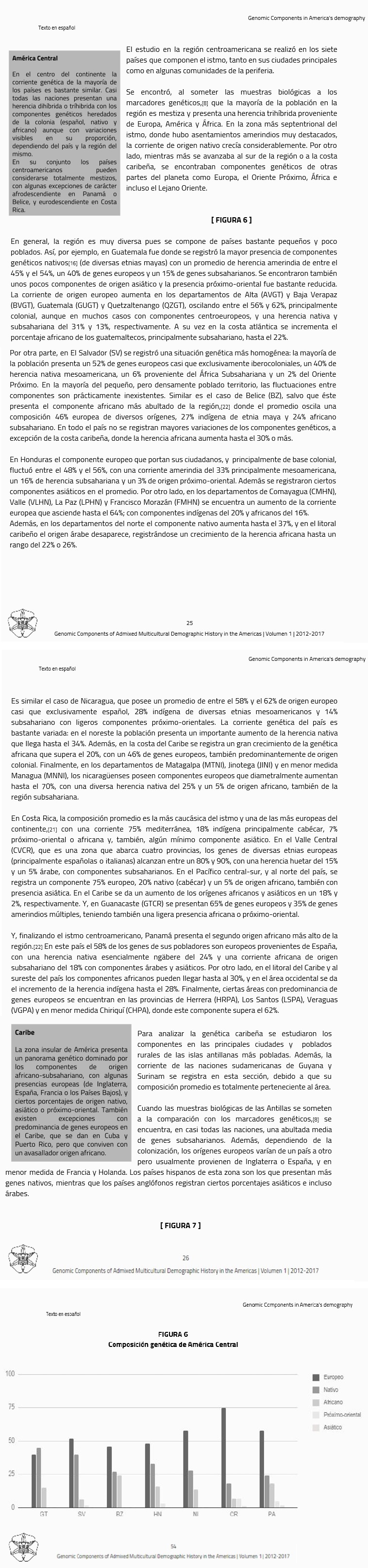

Nicaragua
View on GrokipediaEtymology and National Symbols
Name Origin
The name "Nicaragua" originates from Nicarao, the title or name of a cacique who led a Nahua-speaking indigenous group residing near present-day Lake Nicaragua during the early 16th century, appended with the Spanish term agua ("water") to denote the region's extensive lakes and rivers.[7][8] Spanish explorers first encountered the area in 1522 and applied this hybrid designation, which colonial chroniclers later formalized in maps and records.[7][9] The Nicarao people's Nahua linguistic roots trace to migrations from central Mexico, influencing local nomenclature prior to European contact.[10][8]Flag, Coat of Arms, and Anthem
The national flag of Nicaragua consists of three equal horizontal stripes of cobalt blue, white, and cobalt blue, with the national coat of arms centered on the white stripe.[11] The design was first adopted on September 4, 1908, and officially recognized on August 27, 1971.[12] The blue stripes symbolize the Pacific Ocean and Caribbean Sea bordering the country, as well as qualities like justice, loyalty, and vigilance, while the white stripe represents peace, purity, and prosperity.[13] The flag's proportions are 3:5.[14] The coat of arms of Nicaragua features a triangular frame inscribed with "Republica de Nicaragua" at the top and "America Central" at the bottom, enclosing five green volcanoes rising from two blue seas, topped by a rainbow and a Phrygian cap on a pole.[11] Originally adopted on August 21, 1823, as the coat of arms of the United Provinces of Central America, it underwent modifications and was standardized for Nicaragua in its current form by 1971.[12] The five volcanoes represent the five member states of the former federation, the seas denote the Pacific and Atlantic Oceans, the rainbow signifies peace and hope, the triangle equality, and the liberty cap freedom.[15] The national anthem, "Salve a ti, Nicaragua" ("Hail to thee, Nicaragua"), has lyrics written by Salomón Ibarra Mayorga and music attributed to Luis Abraham Delgadillo, drawing from an earlier melody.[16] It was approved on October 20, 1939, and officially adopted on August 25, 1971.[17] The anthem's text celebrates the end of civil strife, invoking themes of unity, glory, and eternal sovereignty over Nicaraguan soil.[16]History
Pre-Columbian Societies
The territory of modern Nicaragua formed part of the Greater Nicoya cultural region, which encompassed western Nicaragua, northwestern Costa Rica, and adjacent areas, serving as a crossroads for cultural exchanges between Mesoamerica and lower Central America over thousands of years. Archaeological evidence indicates human occupation dating back at least 6,000 years, with Paleo-Indian presence suggested by sites like Acahualinca, where fossilized footprints preserved in volcanic ash provide direct testimony to early inhabitants around 2,000–6,000 BCE.[18] These early societies transitioned to sedentary lifestyles in the Pacific lowlands and lake basins, developing agriculture based on maize, beans, and squash, alongside fishing and hunting.[19] In the Pacific and central regions, known archaeologically as the Sapoá period (circa 800–1350 CE) and Ometepe period (1350–1522 CE) within Greater Nicoya, communities organized into hierarchical chiefdoms influenced by migrations from central Mexico. Groups such as the Chorotega, who arrived around 800 CE from southern Mesoamerica, and Nahua-speaking Nicarao, who settled the southwestern shores of Lake Cocibolca (modern Lake Nicaragua) by the late 15th century, built mound-based villages with adobe structures, plazas, and ceremonial centers.[20][21] These societies produced distinctive polychrome ceramics, stone sculptures, and petroglyphs, as seen on Ometepe Island, reflecting artistic and ritual practices including ancestor veneration and possible ball games akin to Mesoamerican traditions.[22] Urn burials containing flexed human remains, often adorned with animal motifs, from sites like a 1,000-year-old cemetery near Lake Managua, indicate beliefs in post-mortem continuity and ritual feasting.[23] The Atlantic coast and interior highlands hosted distinct groups with stronger ties to South American Chibchan linguistic and cultural spheres, including the Miskito, Sumo (Mayangna), and Rama, who practiced slash-and-burn horticulture, riverine fishing, and semi-nomadic hunting rather than intensive agriculture.[24] These eastern societies maintained smaller, kin-based polities without the monumental architecture of the west, though evidence of trade in jade, obsidian, and marine shells connected them to broader networks.[25] Overall, pre-Columbian Nicaragua lacked centralized states or writing systems, relying on oral histories and iconography for social cohesion, with population estimates reaching tens of thousands by European contact in 1522.[19] Archaeological interpretations draw from ethnohistoric accounts by Spanish chroniclers, tempered by excavations revealing local innovations rather than direct Mesoamerican colonies, though postclassic migrations introduced metallurgical techniques like gold lost-wax casting by the 14th century.[26] Sites such as those along Lake Cocibolca yield artifacts linking to distant influences, including ceramic "puppets" suggesting ritual ties across Central America.[27] This diversity underscores Nicaragua's role as a peripheral yet dynamic zone in pre-Columbian Americas, where environmental adaptations—volcanic soils for farming in the west, tropical forests in the east—shaped resilient, adaptive societies.[28]Colonial Rule and Independence Struggles (1523–1850)
The Spanish conquest of Nicaragua commenced in 1522 with Gil González Dávila's expedition from Panama, which traversed the Pacific coast, encountered indigenous groups such as the Chorotega and Nicarao, and reportedly baptized around 30,000 natives while seeking gold.[29] Competition arose with Pedrarias Dávila, governor of Panama, who dispatched Francisco Hernández de Córdoba in 1523; Córdoba subdued local resistance led by cacique Diriangén, whose forces numbered several thousand but lacked unity and superior arms, leading to defeat near present-day León.[29] By 1524, Córdoba had founded Granada on the northwestern shore of Lake Nicaragua and León near Lake Managua, marking the establishment of enduring Spanish footholds despite internal conquistador rivalries that ended with Córdoba's execution in 1526.[29] The native population, estimated in the hundreds of thousands across diverse chiefdoms, suffered catastrophic decline during the initial decades—dropping by over 90% due to Old World diseases like smallpox, to which they had no immunity, compounded by warfare, forced labor under the encomienda system, and enslavement for export to Panama and Peru.[29] Sporadic indigenous uprisings occurred, particularly among Miskito groups on the Mosquito Coast who evaded full subjugation through alliances with British settlers and pirates, but Pacific-region peoples like the Chorotega were largely pacified by the 1530s.[30] Nicaragua fell under the Captaincy General of Guatemala within the Viceroyalty of New Spain, administered loosely due to scant mineral wealth; the economy pivoted to subsistence agriculture, cattle ranching on vast haciendas, and later exports of cacao and indigo, with indigenous labor coerced via tribute and repartimiento.[30] Colonial governance emphasized ecclesiastical control, with friars from orders like the Mercedarians and Franciscans establishing missions to consolidate conversion and extract labor, though Bourbon reforms in the late 18th century—intending centralized efficiency—imposed higher taxes and trade monopolies via the Real Consulado in Guatemala, spurring resentment among creole elites.[30] The Pacific ports of Granada and León grew as rival hubs, with Granada oriented toward conservative, agrarian interests and León toward liberal, clerical influences, foreshadowing post-independence cleavages.[31] Caribbean regions remained semi-autonomous, with Miskito kings maintaining de facto sovereignty under British protection, resisting Spanish incursions until formal cessions in the 1780s.[30] Independence movements gained traction amid Enlightenment ideas and Napoleonic disruptions in Spain; minor revolts erupted in Nicaragua in 1811–1812, with León insurgents briefly seizing the city before suppression by Guatemalan royalists, reflecting elite discontent over trade restrictions rather than broad popular uprising.[31] Full separation came on September 15, 1821, when Nicaragua adhered to the Act of Independence of Central America proclaimed in Guatemala City, dissolving ties to Spain without violence in the province.[31] Initially annexed to Agustín de Iturbide's Mexican Empire in 1822, Nicaragua joined the United Provinces of Central America in 1823 after Mexico's republican turn, a federation plagued by federalist-centralist debates and economic woes.[31] Post-federation struggles intensified as Nicaragua seceded in 1838 amid civil strife, with liberal forces from León clashing against Granada's conservatives over church lands, free trade, and presidential powers; by 1845, liberal Fruto Chamorro's victory in Granada escalated factional warfare, drawing British and U.S. interests toward the transit route across the isthmus linking Lakes Managua and Nicaragua to the San Juan River.[31] These conflicts, rooted in colonial-era regionalism and lacking unified leadership, hindered stable governance, setting the stage for foreign interventions by 1850.[31]19th-Century Instability and US Interventions (1850–1933)
Following independence from the Central American Federation in 1838, Nicaragua descended into recurrent civil strife dominated by factional conflicts between Liberal elites centered in León, who advocated secularism, free trade, and federalism, and Conservatives based in Granada, who favored clerical influence, protectionism, and central authority.[32] This rivalry fueled at least a dozen major civil wars and coups between 1840 and 1893, exacerbating economic stagnation and foreign debt accumulation, as power alternated through violence rather than stable institutions.[33] The instability invited external adventurism, notably the 1855 invasion by American filibuster William Walker, who allied with the Liberal faction against Conservatives, landing 56 men at Realejo in June and capturing Granada by October 1855.[34] Walker declared himself president on July 12, 1856, issuing decrees to legalize slavery—contrary to U.S. policy—and confiscate church lands to fund his regime, aiming to establish a slave-based colony as a base for further Central American conquests.[34] A coalition of Nicaraguan forces, Costa Rica, and other states, supported indirectly by U.S. naval actions against Walker's supply lines, defeated him; he surrendered to a U.S. Navy vessel on May 1, 1857, and was later executed by Honduran authorities on September 12, 1860.[34] The Walker episode intensified domestic divisions but temporarily unified Nicaraguans against foreign incursion, though Conservative dominance persisted until Liberal general José Santos Zelaya seized power in a 1893 coup, initiating a 16-year dictatorship focused on infrastructure like railroads and ports, funded partly by European loans to counterbalance U.S. influence.[35] Zelaya's resistance to U.S. economic dominance, including taxes on American mining and banana firms, and his execution of two U.S. mercenaries captured aiding Liberal rebels in 1909, prompted President William Howard Taft to dispatch warships on November 18, 1909, signaling support for regime change.[35] Zelaya resigned on December 21, 1909, paving the way for Conservative Adolfo Díaz's provisional presidency, recognized by the U.S. in 1910 amid ongoing unrest.[35] A Liberal uprising in 1912 threatened Díaz's government and U.S. interests, including a proposed canal route and loans from American banks; in response, U.S. forces landed 100 Marines on August 4, 1912, expanding to over 2,000 by September to secure ports, suppress rebels, and enforce the Knox-Cattler Treaty for financial oversight.[35][36] The occupation stabilized Díaz's rule through supervised elections and debt restructuring but entrenched U.S. control over customs revenues, with Marine numbers fluctuating but maintaining a legation guard until full withdrawal on August 4, 1925.[35] Renewed Liberal-Conservative clashes in 1926, including the occupation of Managua by rebels, prompted U.S. reintervention with 6,000 Marines by 1928, who trained the Nicaraguan National Guard under Anastasio Somoza and conducted counterinsurgency via aerial bombings and road-building in the northern Segovia mountains.[37] Sandino, a former Liberal officer disillusioned with U.S.-backed Conservatives, launched guerrilla resistance in 1927 with 30 followers, growing to thousands by emphasizing nationalist appeals against "Yankee imperialism" and drawing international leftist sympathy, though his forces inflicted limited casualties—killing about 200 Marines over six years—while U.S. operations cost $12 million annually at peak.[38]Sandino's tactics, including ambushes on patrols and avoidance of pitched battles, prolonged the conflict despite U.S. technological superiority, eroding domestic support for occupation amid Great Depression pressures.[38] Under President Herbert Hoover's Good Neighbor Policy, Marines withdrew in January 1933 after rigging elections for Guard-favorable candidate Juan Bautista Sacasa, leaving the National Guard to combat Sandino, who signed a peace accord on February 2, 1933, but was assassinated on February 21, 1934, by Guard elements, marking the effective end of direct U.S. military involvement.[37] The interventions, justified officially as stabilizing finances and preventing European footholds, secured U.S. commercial access but fostered long-term resentment and institutional reliance on the Guard, precursor to the Somoza era.[35]
Somoza Dictatorship and Economic Modernization (1933–1979)
Following the withdrawal of U.S. Marines in January 1933, Anastasio Somoza García, as chief director of the newly formed Guardia Nacional, consolidated control over Nicaragua's military and political apparatus.[39] He orchestrated the resignation of Liberal President Juan Bautista Sacasa in June 1936 through pressure and threats, paving the way for his fraudulent election as president in December 1936, taking office on January 1, 1937.[40] Somoza García ruled directly until 1947 and then indirectly through puppet presidents until his assassination on September 21, 1956, maintaining a dictatorship characterized by suppression of opposition via the Guardia Nacional, which evolved into a personal army loyal to the Somoza family.[39] Power transitioned to Somoza's sons: Luis Somoza Debayle served as president from 1956 to 1963, followed by a brief period of civilian rule under René Schick, before Anastasio Somoza Debayle assumed the presidency in 1967, ruling intermittently until 1979 amid rigged elections and National Guard enforcement.[39] The regime's political control relied on electoral manipulation, censorship, and brutal repression, including the 1934 assassination of rebel leader Augusto César Sandino and subsequent purges, fostering a climate of fear that stifled dissent from liberals, communists, and nationalists.[41] Despite periodic constitutional facades, such as a new 1939 constitution granting expanded executive powers, the Somozas operated a de facto dynasty, with the family amassing wealth through state contracts and land expropriations.[39] Economically, the Somoza era saw modernization through promotion of export-oriented agriculture, particularly cotton, coffee, and beef, which drove average annual GDP growth of around 5% from the 1950s to early 1970s, outpacing many Latin American peers.[42] Infrastructure investments, including highways, ports, and irrigation projects funded partly by U.S. aid and loans, facilitated this expansion; for instance, cotton production surged from 11,000 tons in 1940 to over 150,000 tons by 1970, positioning Nicaragua as a regional leader.[39] The regime encouraged foreign investment and established institutions like the Central Bank in 1961, contributing to urbanization and a growing middle class, though benefits skewed toward elites connected to the Somozas, who controlled up to 20% of arable land and key industries.[43] However, this growth masked deep inequalities, with over 50% of rural Nicaraguans in poverty by the 1970s and Gini coefficients exceeding 0.5, reflecting land concentration and limited wealth redistribution.[44] Corruption permeated the regime, as the Somozas diverted public funds and aid into family enterprises, such as airlines and banks, eroding public trust.[45] The December 23, 1972, Managua earthquake, magnitude 6.2, killed approximately 10,000 and destroyed 75% of the capital, yet Somoza Debayle's government misappropriated much of the $200 million in international relief for regime loyalists and reconstruction favoring elites, rather than broad recovery, intensifying opposition from business groups and the church.[46] This scandal, alongside stagnant wages and repression, sowed seeds for the revolutionary coalition that toppled the dynasty in 1979.[47]Sandinista Revolution, Contra War, and Socialist Experiment (1979–1990)
The Sandinista National Liberation Front (FSLN) overthrew Anastasio Somoza Debayle on July 17, 1979, after a final offensive that captured Managua, prompting Somoza to flee to Paraguay where he was assassinated in 1980.[48] The FSLN, drawing inspiration from Augusto Sandino's earlier resistance, formed a five-member junta of national reconstruction, including non-Sandinista figures initially, to govern amid widespread support from diverse Nicaraguan sectors disillusioned with the Somoza dynasty's corruption and repression. This revolution ended 46 years of Somoza family rule, marked by U.S.-backed authoritarianism since 1933, but quickly aligned the new regime with Cuban and Soviet support, receiving military aid and advisors. The Sandinista government pursued socialist reforms, nationalizing Somoza-linked industries, banks, and foreign trade in 1979–1980, while enacting agrarian reform that redistributed about 20% of arable land to cooperatives and state farms by 1985.[49] A literacy crusade in 1980 mobilized 100,000 volunteers, reducing illiteracy from approximately 50% to 13% within months, though critics noted its use for ideological indoctrination.[50] Health and education expanded, but central planning led to inefficiencies; by the mid-1980s, hyperinflation exceeded 300% annually, GDP per capita declined 20–30%, and shortages plagued urban areas due to mismanagement, war disruptions, and U.S. economic pressures including a 1985 trade embargo.[51] The Contra War erupted in 1981 as U.S. President Ronald Reagan, viewing the Sandinistas as a Soviet proxy exporting revolution, authorized CIA funding for Nicaraguan exiles—primarily former National Guardsmen and disaffected peasants—forming the Contras based in Honduras and Costa Rica.[52] U.S. aid totaled over $100 million by 1984, bypassing congressional Boland Amendments via the Iran-Contra affair, where arms sales to Iran funded Contras covertly.[52] The conflict, lasting until 1990, caused 30,000–50,000 deaths, including civilians targeted by Contra attacks on infrastructure and Sandinista forced relocations of Atlantic Coast indigenous groups, displacing 250,000 Miskito and others amid reports of executions and torture by government forces.[53] The International Court of Justice ruled in 1986 that U.S. mining of Nicaraguan harbors violated international law.[52] Despite military successes against Contras, economic collapse and war fatigue prompted the Sandinistas to hold elections in February 1990 under international observation, as per 1987 Central American peace accords.[52] FSLN candidate Daniel Ortega, then president since 1985, lost to Violeta Chamorro of the U.S.-backed National Opposition Union (UNO) coalition, which secured 54.8% of the vote to Ortega's 40.9%, with UNO winning 51 of 92 assembly seats.[54] The peaceful transition marked the end of the socialist experiment, though Sandinistas retained control of military and key institutions initially, leading to tensions.[55] Human rights under Sandinistas included suppression of opposition media and arbitrary detentions, with Amnesty International documenting thousands of political prisoners by 1986.[56]Post-Conflict Liberalization and Economic Recovery (1990–2006)
Following the electoral defeat of the Sandinista government in February 1990, Violeta Chamorro assumed the presidency on April 25, implementing policies aimed at national reconciliation, demobilization of opposing forces, and economic stabilization after a decade of civil war and socialist policies that had led to hyperinflation exceeding 13,000% annually by 1987.[57][58] Chamorro's administration pursued liberalization measures, including the privatization of over 100 state-owned enterprises out of approximately 350, the deregulation of prices and trade, and fiscal austerity to restore macroeconomic balance, reversing extensive nationalizations and central planning that had distorted markets and deterred investment.[59][60] These reforms succeeded in slashing inflation from 3,004% in 1990 to single digits by 1992, though initial contractions in GDP occurred as subsidies were eliminated and inefficient industries restructured.[61] Economic recovery gained momentum in the mid-1990s, with real GDP growth averaging around 4% annually from 1994 onward, driven by export-oriented agriculture, remittances from Nicaraguans abroad, and foreign aid tied to structural adjustments.[62][63] Poverty rates, which hovered near 70% in the early 1990s amid war devastation and policy failures, began a gradual decline to about 50% by the mid-2000s, supported by increased social spending under internationally monitored programs, though inequality persisted due to uneven access to land and credit post-reform.[64] The government secured debt relief through the Heavily Indebted Poor Countries Initiative in 2000, freeing resources for infrastructure and human capital investment, while attracting modest foreign direct investment in sectors like textiles and bananas. A major setback occurred with Hurricane Mitch in October-November 1998, which caused damages estimated at $1.5 billion—equivalent to 70% of GDP—destroying infrastructure, crops, and displacing over 100,000 people, particularly in rural areas already vulnerable from prior conflicts.[65] International aid exceeding $1 billion facilitated reconstruction, but the disaster exacerbated poverty temporarily and highlighted deficiencies in disaster preparedness under liberalized governance structures reliant on private sector resilience. Under President Arnoldo Alemán (1997-2002), neoliberal policies continued with emphasis on export promotion and public works, yet widespread corruption eroded gains, as Alemán's administration faced accusations of embezzling hundreds of millions in public funds.[66] Enrique Bolaños, elected in 2001, prioritized anti-corruption efforts, securing Alemán's conviction in 2003 for embezzlement involving over $100 million, which bolstered institutional credibility and enabled further reforms like tax modernization and trade agreements.[66] By 2006, cumulative growth had rebuilt much of the war-torn economy, with per capita GDP rising from under $500 in 1990 to around $1,000, though structural challenges like dependence on commodities and remittances limited diversification. Critics from leftist perspectives, often aligned with former Sandinista elements, attributed persistent inequality to market-oriented shifts, but empirical data indicate that pre-1990 command economy mismanagement and conflict were primary causal factors in prolonged underdevelopment, with liberalization providing the necessary framework for sustained, if modest, recovery.[67][63]Ortega's Return, Electoral Manipulation, and Authoritarian Turn (2007–2025)
Daniel Ortega of the Sandinista National Liberation Front (FSLN) returned to the presidency following the November 5, 2006, general election, securing 38.07% of the vote against Eduardo Montealegre's 29%, avoiding a runoff under Nicaragua's electoral rules requiring a 35% threshold with a 5% lead.[68][69] Inaugurated on January 10, 2007, Ortega's victory ended 17 years of opposition rule, facilitated by a 1999 FSLN-PLC pact that divided institutional control despite ideological differences.[70] This alliance, led by Ortega and former president Arnoldo Alemán, enabled FSLN influence over the Supreme Electoral Council (CSE) and judiciary, setting the stage for power consolidation.[71] By 2009, constitutional amendments and judicial appointments under Ortega's influence removed barriers to indefinite re-election, with the Supreme Court of Justice—packed with FSLN loyalists—ruling in 2011 to lift term limits despite the 1987 Constitution's prohibition on consecutive terms.[72] In the November 6, 2011, election, Ortega won with 75.57% amid opposition boycotts and irregularities noted by observers, including discrepancies in voter rolls and media bias favoring the FSLN.[73][70] The 2014 constitutional reforms further entrenched executive dominance, allowing immediate re-election and expanding Ortega's control over appointments in electoral, judicial, and oversight bodies.[74] Ortega secured a third term in the November 6, 2016, election with 72.1% of the vote, appointing his wife Rosario Murillo as vice president and running mate, while opposition fragmentation and CSE decisions barring rivals like Eduardo Montealegre contributed to the outcome.[75][76] International observers, including the EU mission, reported uneven playing fields, with state resources used for FSLN campaigning and limited opposition access to media. Electoral manipulation escalated in the lead-up to the November 7, 2021, vote, where authorities arrested over 40 opposition figures, including seven presidential aspirants, on charges of treason and money laundering, effectively eliminating competition.[77][78] Ortega claimed 75.87% victory per CSE tallies, but major opposition coalitions boycotted, denouncing the process as fraudulent due to preemptive detentions and CSE bias; while some analyses question direct ballot stuffing evidence, the systemic disqualification of candidates and voter intimidation substantiated claims of non-competitive elections.[79][80] The April 2018 protests, initially sparked by proposed social security reforms, evolved into widespread demands for Ortega's resignation, met with a violent crackdown by police and pro-government paramilitaries that resulted in at least 325 deaths, over 2,000 injuries, and thousands detained, according to human rights documentation.[81][82] This repression, involving extrajudicial killings and torture, marked a decisive authoritarian turn, prompting over 100,000 exiles and the shuttering of independent media and NGOs under laws retroactively applied.[83][84] Post-2018, the regime subordinated the legislature and judiciary, closing over 1,500 civil society organizations by 2023 and enacting laws criminalizing dissent, such as the 2020 Foreign Agents Law and 2021 Sovereignty Law, which facilitated arbitrary arrests and media censorship.[85] By 2024-2025, Ortega and Murillo pursued constitutional reforms approved in January 2025, establishing a co-presidency with indefinite terms, centralized command over security forces, and expanded surveillance powers, effectively dismantling separation of powers.[86][87] These changes, passed by the FSLN-dominated National Assembly without debate, further isolated Nicaragua internationally, including withdrawal from the OAS in 2022 amid election criticisms.[88] Repression extended transnationally, with UN experts documenting harassment of exiles and relatives in 2025, alongside ongoing arbitrary detentions exceeding 200 political prisoners.[89][90] While regime supporters cite poverty reduction programs as justification, empirical data on rising emigration—over 800,000 since 2018—and economic stagnation under sanctions underscore the costs of institutional erosion.[91][92]Geography and Environment
Topography and Regions
Nicaragua's topography is characterized by a diverse array of landforms, including coastal plains, volcanic mountain chains, large freshwater lakes, and interior highlands, earning it the moniker "land of lakes and volcanoes."[93][94] The country spans approximately 130,373 square kilometers, with its terrain transitioning from narrow Pacific coastal plains in the west to broad Caribbean lowlands in the east, interrupted by a central spine of rugged mountains and active volcanoes.[95] Most of the population resides in the western Pacific lowlands, which feature fertile volcanic soils surrounding Lakes Managua and Nicaragua.[96] The three primary physiographic regions are the Pacific Lowlands, Central Highlands, and Caribbean Lowlands. The Pacific Lowlands form a narrow, drier strip along the western coast, extending from the Gulf of Fonseca in the north to the San Juan River in the south, with elevations generally below 610 meters and pockmarked by over a dozen volcanoes, some reaching heights of up to 1,738 meters.[97][96] This region includes the Maribio volcanic chain, where peaks like San Cristóbal (1,845 meters) dominate the landscape near the city of León.[94] Inland, the Central Highlands rise to form a cooler, wetter plateau of dissected valleys and low mountains, with the highest elevations in the departments of Matagalpa and Jinotega, where peaks exceed 1,700 meters.[96] This area serves as a divide between the Pacific and Atlantic watersheds, featuring coffee-growing slopes and the origins of rivers like the Coco and San Juan. Two massive lakes dominate the central depression: Lake Managua (1,025 square kilometers) and Lake Nicaragua (8,264 square kilometers), the latter being Central America's largest lake, containing freshwater sharks and volcanic islands such as Ometepe, formed by twin volcanoes Concepción (1,610 meters) and Maderas (1,394 meters).[93][98] The Caribbean Lowlands, comprising nearly half the country's area, consist of flat, swampy plains and low hills, with minimal elevation changes and extensive rainforests, including the vast Río San Juan wetlands near Costa Rica and the Huéhuete highlands in the south.[97][94] This eastern region, historically known as the Mosquito Coast, features broader rivers like the Coco (the longest in Central America at 780 kilometers) and limited mountain ranges, such as the isolated peaks near Puerto Cabezas, contrasting sharply with the volcanic west.[99]Climate and Natural Disasters
Nicaragua possesses a tropical climate marked by two primary seasons: a dry period from December to April, particularly pronounced in the Pacific lowlands, and a rainy season from May to November influenced by monsoon winds.[100] [101] Average annual temperatures hover consistently between highs of 32–33°C (90–91°F) and lows of 22°C (72°F), with minimal seasonal variation due to the country's equatorial proximity.[102] Precipitation totals average around 1,222 mm yearly in central-western regions, though the Caribbean coast receives substantially more—often exceeding 3,000 mm—owing to higher humidity and orographic effects from the central highlands.[103] [104] Under the Köppen-Geiger classification, Nicaragua predominantly features Aw (tropical savanna) climates in the west and center, transitioning to Af (tropical rainforest) along the eastern Caribbean lowlands, reflecting gradients in rainfall and vegetation.[105] These patterns support diverse ecosystems but exacerbate vulnerability to extreme weather, as the rainy season amplifies flood risks while the dry season heightens drought potential in Pacific zones.[106] The nation faces recurrent natural disasters stemming from its Pacific Ring of Fire position and Caribbean hurricane exposure. Volcanic hazards are prominent, with 19 active volcanoes; eruptions like Momotombo's in 1606 displaced populations and reshaped settlements, including the relocation of León.[107] Seismic activity has inflicted severe urban damage, as in the 6.2-magnitude 1972 Managua earthquake, which killed 5,000–11,000 and leveled 75% of the capital, or the 1931 event that similarly razed Managua.[108] [109] Hurricanes and associated floods represent the deadliest threats, striking the Caribbean and northern Atlantic coasts. Hurricane Mitch in October 1998 triggered catastrophic flooding and landslides, claiming over 3,000 lives in Nicaragua, displacing 368,000, and causing damages worth 45% of GDP through destroyed infrastructure and agriculture. Later storms include Hurricane Felix in 2007, with winds up to 260 km/h killing nearly 100; Hurricane Otto in November 2016, the first direct southern hit in over 160 years, resulting in 10 deaths and widespread evacuations; and consecutive Hurricanes Eta and Iota in November 2020, which together affected over 500,000 and inflicted $742 million in losses.[110] [111] [112] A 1992 tsunami off the Pacific coast, triggered by a 7.7-magnitude earthquake, drowned 170 and left 13,500 homeless.[113] These events underscore Nicaragua's exposure, with 10% of territory at high risk, compounded by deforestation and poverty that amplify impacts.[114]Biodiversity and Conservation Challenges
![Volcanic peaks of Concepción and Maderas on Ometepe Island, exemplifying Nicaragua's diverse volcanic ecosystems][float-right] Nicaragua hosts significant biodiversity, encompassing rainforests, cloud forests, wetlands, and volcanic ecosystems across its Pacific and Caribbean regions. The country is home to approximately 20,301 species of flora and fauna, including 6,014 plant species and over 7,590 vascular plants, with 0.5% endemism among the latter.[115][116] Vertebrate diversity includes 1,112 land species, of which 13 are endemic, alongside high numbers of birds (over 700 species), reptiles, amphibians, and mammals such as jaguars, tapirs, and spider monkeys.[117] Key biodiversity hotspots include the Bosawás Biosphere Reserve and Indio Maíz Biological Reserve, which harbor threatened species like the Central American tapir and various orchids.[118] The National System of Protected Areas (SINAP) covers 74 sites, spanning about 22% of the land area and including 66 terrestrial and 8 coastal-marine zones totaling over 2.3 million hectares.[115][117] These areas aim to safeguard ecosystems, but coverage of Key Biodiversity Areas (KBAs) varies, with 34 KBAs identified and mean protection around 67.9% via other effective area-based conservation measures.[119] Despite these designations, enforcement remains inconsistent, particularly in remote Caribbean regions. Deforestation poses the primary anthropogenic threat, with Nicaragua losing 144,000 hectares of natural forest in 2024 alone, equivalent to 81 million tons of CO₂ emissions, and exhibiting the highest percentage loss of primary forest globally at 4.7%.[120][121] Between 1983 and 2015, over half of forest cover vanished, driven by pasture expansion for cattle ranching, which has more than doubled.[122] Up to 80% of deforestation is illegal, facilitated by corruption among local officials and inadequate oversight.[123] Agriculture, logging, and mining exacerbate habitat fragmentation, with illegal cattle ranching invading indigenous territories in reserves like Bosawás and Indio Maíz, displacing communities and endangering species such as jaguars and pumas.[118][124] Post-2018 political repression has curtailed NGO monitoring and indigenous advocacy, allowing unchecked incursions that link to international markets for beef and timber.[125] Over 130 plant species are threatened per IUCN listings, alongside vulnerable fauna like the Nicaraguan spiny-tailed iguana and Geoffroy's spider monkey.[126] Conservation efforts face systemic obstacles, including government prioritization of extractive industries over enforcement and limited international cooperation amid Nicaragua's alliances with non-Western powers.[127] Indigenous-led initiatives in the Mosquito Coast promote sustainable management, but violence against defenders and impunity hinder progress, underscoring the need for stronger legal adherence and anti-corruption measures to mitigate biodiversity loss.[128][129]Government and Politics
Constitutional Framework and Power Concentration
The Constitution of Nicaragua, promulgated on January 9, 1987, following the Sandinista National Liberation Front's (FSLN) overthrow of the Somoza dictatorship, establishes a unitary republic with a presidential system, separation of powers among executive, legislative, and judicial branches, and provisions for popular sovereignty through elections and referenda.[130] It initially limited presidential terms to two non-consecutive five-year periods and emphasized social rights, mixed economy principles, and protections against foreign intervention. Subsequent amendments, particularly under President Daniel Ortega's return to power in 2007, have progressively eroded checks and balances, concentrating authority in the executive. The 1995 reforms, negotiated during a period of FSLN opposition, adjusted economic policies toward liberalization but retained core structures.[131] By 2014, with the FSLN controlling the National Assembly, reforms abolished presidential term limits—previously reinstated in 2009 via a Supreme Court ruling aligned with Ortega—allowing indefinite re-election and granting the president extensive decree powers, including over foreign policy, national security, and appointments to autonomous institutions like the electoral council.[72][92] Post-2018 protests, which prompted violent crackdowns, accelerated further centralization. Reforms in 2020–2021 expanded executive control over the judiciary, enabling the president to appoint Supreme Court justices without legislative confirmation after purging opposition-aligned magistrates in 2012 and 2016.[132] The legislature, dominated by FSLN loyalists holding over 70 of 92 seats since 2009 elections marred by irregularities, has approved these changes with near-unanimity, effectively subordinating the branches to executive will.[92] In November 2024, additional reforms—ratified by January 2025—altered over 100 constitutional articles, formalizing Vice President Rosario Murillo's co-presidential role alongside Ortega, authorizing military intervention in civilian policing, and permitting the stripping of citizenship from designated "traitors to the homeland," a category broadly applied to dissidents.[86][133] These measures, passed without opposition debate, institutionalize dynastic succession ambitions and absolute executive discretion, transforming the framework into one enabling de facto absolutism while nominally preserving republican forms.[134] Independent observers, including the UN and Organization of American States, have documented this as enabling unchecked repression and electoral manipulation, with the FSLN's institutional capture preventing meaningful separation of powers.[133][132]Executive Branch and Leadership Under Ortega-Murillo
Daniel Ortega assumed the presidency on January 10, 2007, after winning the 2006 election with 38% of the vote, marking his return to power following the Sandinista defeat in 1990.[4] Under his leadership, the executive branch has centralized authority, with Ortega wielding extensive decree powers, including the ability to appoint ministers, ambassadors, and security chiefs without legislative oversight.[135] Rosario Murillo, Ortega's wife and a key Sandinista figure, was sworn in as vice president on January 10, 2017, rapidly assuming de facto control over daily governance, media messaging, and cultural policies through her oversight of the Communication and Citizenship Council.[91] Constitutional amendments ratified on January 29, 2014, eliminated presidential term limits, previously set at two non-consecutive terms, thereby permitting Ortega's re-elections in 2011, 2016, and 2021 amid documented irregularities.[136] These changes, passed by the FSLN-controlled National Assembly with a 64-25 vote, were justified by Ortega's allies as necessary for policy continuity but criticized by opponents as enabling perpetual rule.[137] In November 2024, further reforms proposed by Ortega extended presidential terms from five to six years starting in 2027 and formalized Murillo's elevation to "co-president," replacing the traditional executive branch with a dual leadership model that consolidates decision-making in their hands.[138] The 2025 constitutional overhaul, approved without opposition on January 30, 2025, grants the co-presidents authority to coordinate legislative, judicial, electoral, and oversight bodies, effectively subordinating state institutions to executive directive.[139] This includes veto power over laws, direct command of the National Police and Army—evident in Murillo's 2024 decree purging disloyal officers—and the issuance of binding "presidential agreements" on economic and security matters.[140] Such mechanisms have facilitated rapid policy shifts, including expropriations of private assets and alignments with non-Western allies, while insulating the regime from accountability.[87] Ortega and Murillo's leadership style emphasizes personal loyalty over institutional norms, with family members like son Laureano Ortega Murillo holding informal roles in diplomacy and investment promotion.[141] Critics, including international observers, attribute this dyadic structure to dynastic ambitions, as it positions Murillo as a potential successor and integrates their children into state functions, diverging from Nicaragua's 1987 constitution's original separation of powers.[134] Empirical indicators of concentration include the executive's monopoly on budget execution—controlling over 90% of public spending by 2023—and the absence of independent cabinet checks, fostering a patronage system tied to FSLN allegiance.[142]Legislature and Judiciary Subordination
The National Assembly of Nicaragua, the unicameral legislature, has been dominated by the Frente Sandinista de Liberación Nacional (FSLN) since the party's electoral victories, particularly following the 2021 elections where it secured an absolute majority of seats amid widespread allegations of fraud and opposition suppression.[92] This dominance has rendered the Assembly an extension of the executive branch led by President Daniel Ortega and Vice President Rosario Murillo, routinely approving legislation that expands executive authority without substantive debate or opposition input.[143] For instance, on November 22, 2024, the Assembly unanimously passed constitutional reforms establishing a co-presidency between Ortega and Murillo, effectively merging executive roles and subordinating legislative functions to their personal control.[144] Further reforms ratified on January 30, 2025, extended presidential and legislative terms to six years, eliminated term limits for key positions, and redefined state institutions to prioritize "popular power" aligned with FSLN ideology, all without dissent in the FSLN-controlled body.[86] This legislative subordination facilitates the executive's consolidation of power, as the Assembly has enacted laws enabling the persecution of critics, including the 2020 reforms stripping citizenship from over 300 opposition figures and the 2023 amendments declaring the FSLN flag a national symbol.[145] Independent oversight bodies, such as the Comptroller General, have been similarly co-opted, with appointments rubber-stamped by the legislature to ensure alignment with executive directives rather than constitutional checks and balances.[146] Critics, including international observers, argue this structure transforms the legislature into a tool for dynastic rule, prioritizing Ortega-Murillo family interests over representative governance.[87] The judiciary in Nicaragua exhibits profound subordination to the executive, with judicial appointments and operations dictated by FSLN loyalty rather than legal merit or independence. Supreme Court justices and lower court judges are nominated by the executive and confirmed by the FSLN-dominated National Assembly, fostering a system where political allegiance supersedes judicial impartiality; as of 2024, over 90% of magistrates are reported to be FSLN affiliates.[5] This control was entrenched through reforms like the 2010 executive decree extending judicial tenures indefinitely, allowing Ortega to retain loyalists beyond term limits.[146] Subsequent 2017 penal code changes centralized criminal procedures, enabling judges to deny bail or trials based on executive-favored criteria, often applied to suppress dissent.[147] The judiciary has functioned as a mechanism of repression, convicting opposition leaders on fabricated charges without due process; for example, between 2018 and 2023, it processed over 2,000 politically motivated cases, including those against protesters from the 2018 uprising, with convictions rates exceeding 95% in state-controlled courts.[148] Purges of non-compliant judges, such as the 2023 dismissal of dozens accused of insufficient loyalty, underscore this dynamic, blurring lines between judicial authority and executive paramilitary enforcement.[149] Constitutional reforms in 2024-2025 further codified this by granting the co-presidency direct oversight of judicial appointments, effectively eliminating separation of powers and enabling the regime to wield the courts for silencing media, NGOs, and electoral challengers.[150] Reports from bodies like the Inter-American Commission on Human Rights highlight how this subordination perpetuates impunity for regime abuses while targeting perceived threats, rendering the judiciary a compliant arm of authoritarian control.[146]Electoral System and Fraud Allegations
Nicaragua's electoral system is overseen by the Supreme Electoral Council (CSE), an autonomous body constitutionally responsible for administering presidential, legislative, and municipal elections, as well as voter registration and vote counting.[151] The president and vice president are elected jointly by plurality vote in a single nationwide constituency for five-year terms, with no explicit runoff provision, allowing a candidate to win with less than 50 percent of the vote.[152] The unicameral National Assembly comprises 92 seats: 70 elected via proportional representation from 20 departmental and two autonomous region constituencies, 20 from a national compensatory list to ensure proportionality, and two reserved for the previous president and runner-up.[153] Elections occur every five years concurrently, with universal suffrage for citizens aged 16 and older, though military and police personnel were barred from voting until constitutional changes in 2021.[154] Since Daniel Ortega's return to power in 2007, the CSE has been dominated by appointees loyal to the ruling Sandinista National Liberation Front (FSLN), with magistrates selected by the FSLN-controlled National Assembly, effectively subordinating the electoral authority to the executive.[155] Electoral reforms in 2020–2021, passed without opposition input, further centralized control, including provisions allowing the CSE to disqualify candidates and parties arbitrarily under vague national security pretexts.[132] Fraud allegations have intensified post-2006, particularly in municipal elections on November 9, 2008, where the FSLN was accused of ballot stuffing, voter intimidation, and altering tally sheets in over 100 municipalities, leading to opposition claims of a stolen victory and subsequent violent protests suppressed by pro-government mobs.[156][157] In the 2011 presidential election, Ortega secured 75.6 percent amid disputes over inflated voter rolls and discrepancies in precinct-level counts, with independent monitors like Etica y Transparencia reporting irregularities in up to 20 percent of polling stations.[158] The 2016 election saw Ortega win 72.4 percent after 2014 constitutional amendments removed term limits, but critics highlighted the disqualification of opposition figures and CSE bias in party accreditation, fostering a non-competitive field.[75] The 2021 vote, where Ortega claimed 75.9 percent with reported turnout below 50 percent, drew widespread condemnation for pre-election repression: over 40 opposition leaders, including seven potential presidential aspirants, were imprisoned on fabricated charges, all viable challengers were barred, and independent media silenced, rendering the process devoid of democratic legitimacy according to the Organization of American States (OAS) General Assembly resolution adopted by 25 member states.[159][160] The U.S. State Department and Human Rights Watch corroborated these findings, citing manipulated voter lists exceeding registered voters by hundreds of thousands and lack of transparent observation.[145][161] While pro-government sources have disputed technical fraud evidence in earlier contests, the institutional capture of the CSE and systematic exclusion of opposition since 2018 have undermined electoral integrity, as evidenced by Nicaragua's withdrawal from the OAS in 2023 amid ongoing scrutiny.[80][162]Human Rights Abuses and Repression Mechanisms
The 2018 protests in Nicaragua, initially sparked by proposed pension reforms on April 18, escalated into widespread anti-government demonstrations against President Daniel Ortega's administration, prompting a violent crackdown by national police and pro-government paramilitary groups that resulted in over 300 deaths, thousands of injuries, and hundreds of arbitrary arrests.[81] [163] Human Rights Watch documented systematic use of torture and ill-treatment against detainees, including beatings, electric shocks, and sexual violence, often in unofficial facilities known as "el Chipote."[81] The Inter-American Commission on Human Rights reported at least 325 killings by state forces during the repression from April to December 2018.[163] Repression mechanisms intensified post-2018, with the regime employing a centralized police apparatus and paramilitary shock troops to suppress dissent, alongside judicial subordination enabling politically motivated prosecutions.[145] [164] The judiciary, controlled by Ortega loyalists, has facilitated the conviction of opponents on fabricated charges such as "terrorism" or "treason," with trials lacking due process, as noted in UN expert reports.[89] Arbitrary detentions surged ahead of the 2021 elections, targeting opposition figures, journalists, and activists, leading to over 1,600 political prisoners by late 2021 according to Amnesty International.[165] Censorship and control of information represent core repression tools, with authorities shutting down more than 50 independent media outlets since 2018 and forcing over 200 journalists into exile or imprisonment.[166] [167] The regime has also dismantled civil society by closing over 5,600 NGOs by 2025, including 1,500 in a single August 2024 decree, often under pretexts of regulatory non-compliance, affecting humanitarian, religious, and advocacy groups.[91] [168] Ongoing abuses include forced exiles and nationality deprivations, with 222 political prisoners released and deported to the United States in February 2023 under "Operation Nica Welcome," followed by 135 sent to Guatemala in September 2024, many stripped of citizenship.[169] [170] Between February 2023 and September 2024, courts ordered the denationalization of 452 individuals, exacerbating statelessness among critics.[171] Since October 2023, over 200 religious leaders have faced expulsion or bans from return, amid broader attacks on indigenous communities involving displacement and violence by pro-government armed groups.[91] [165] UN reports from 2024 highlight a "seriously deteriorated" human rights situation, with repression extending transnationally against exiles.[172] In January 2026, Nicaragua's Interior Ministry announced the release of approximately 30 political prisoners, including former Pantasma mayor Oscar Gadea Tinoco, following a demand from the U.S. Embassy, as confirmed by independent monitors.[173]Foreign Policy Shifts and Alliances
Since Daniel Ortega returned to power in 2007, Nicaragua's foreign policy has pivoted from alignment with Western institutions toward partnerships with authoritarian states, prioritizing ideological affinity and economic support amid domestic repression and international sanctions.[174] This shift reflects Ortega's strategy to counter U.S. influence, evidenced by Nicaragua's withdrawal from the Organization of American States (OAS) on November 19, 2023, following a 2022 announcement triggered by OAS condemnation of electoral fraud and human rights violations.[175] [176] Relations with the United States have deteriorated sharply, marked by U.S. sanctions on regime officials since 2018 and threats of trade suspension under CAFTA-DR, which Ortega has publicly denounced as exploitative.[177][178] Nicaragua deepened ties with China in December 2021 by severing diplomatic relations with Taiwan and adopting the "One China" policy, securing infrastructure loans and military equipment pledges, including army supplies announced in May 2025.[179][180] Despite canceling a $50 billion inter-oceanic canal project with a Chinese firm in 2024 due to transparency issues, cooperation persists in sectors like wheat imports and defense.[181] Alliances with Russia have expanded since 2020, encompassing defense pacts signed in recent years, cyber monitoring assistance, and trade deals with Russian-occupied Ukrainian territories authorized in September 2025 by Ortega's son Laureano.[182][183] In July 2025, Ortega claimed Russian and Chinese military backing against potential invasion, underscoring reliance on these powers for regime security.[180] Ideological solidarity with Venezuela under Nicolás Maduro has reinforced Nicaragua's participation in forums like ALBA, while ties to Iran and North Korea involve diplomatic exchanges and limited economic projects, aligning with Ortega's consolidation of authoritarian networks.[184] Nicaragua expressed interest in joining BRICS in September 2023 to diversify partnerships beyond Western-led bodies.[185] These alignments provide material aid—such as Russian wheat (46% of bilateral projects) and buses—offsetting Western isolation, though they expose Nicaragua to geopolitical risks tied to partners' aggressions, like Russia's Ukraine invasion.[186]Military and Security
Armed Forces Structure
The Nicaraguan Armed Forces, officially designated as the Ejército de Nicaragua, operate as a unified command structure under the constitutional authority of the President, who holds the position of Jefe Supremo and exercises direct oversight through the Ministry of Defense.[187] The Comandancia General, led by Army Chief of Staff General Julio César Avilés Castro since his appointment in 2007 and reaffirmed on February 21, 2025, manages operational and administrative functions, with loyalty to the executive emphasized through promotions and reforms favoring regime-aligned officers.[188] This centralized hierarchy prioritizes internal security over external defense capabilities, reflecting post-1979 Sandinista reorganization patterns adapted under the current administration.[189] The forces are divided into three core branches: the Ground Force (Fuerza Terrestre), which constitutes the majority of personnel and handles territorial defense and counterinsurgency; the Naval Force (Fuerza Naval), focused on coastal patrol and riverine operations; and the Air Force (Fuerza Aérea), limited to transport, reconnaissance, and utility helicopters without fixed-wing combat aircraft.[190] Special operations fall under the Comando de Operaciones Especiales, an elite unit trained for rapid response and integrated with ground elements. Active personnel total approximately 12,000 as of 2020, with ground forces comprising around 10,000 organized into brigades such as one special brigade (two battalions), one mechanized infantry brigade (including armored, mechanized, and artillery battalions), and regional commands for logistics and engineering.[191][192] Naval assets include patrol vessels and small craft for littoral defense, while air units rely on aging Soviet-era helicopters like Mi-17s and transport planes such as An-26s, with no modern fighters.[193] In March 2025, legislative reforms created the Patriotic Military Reserve, a new paramilitary-style reserve force embedded within the Army structure to augment regular units for territorial control and rapid mobilization, comprising volunteers sworn in under hooded anonymity to enhance regime security apparatus.[194] Concurrently, rank reforms elevated the hierarchy by introducing colonel general and admiral grades, narrowing promotion bottlenecks at senior levels to reinforce command loyalty amid documented involvement in domestic repression.[195][196]Internal Security Apparatus and Paramilitary Groups
The Nicaraguan National Police (Policía Nacional de Nicaragua, NNP) serves as the primary internal security apparatus, constitutionally designated as an apolitical institution tasked with protecting citizens and maintaining public order.[197] In practice, under President Daniel Ortega's administration, the NNP operates as a centralized force subordinate directly to the executive, following a 2023 constitutional amendment that explicitly placed it under presidential command.[198] This structure has enabled extensive surveillance, arbitrary detentions, and suppression of dissent, with the force restructured multiple times to enhance loyalty to Ortega and Vice President Rosario Murillo, including layered personal security protocols.[199] The United States sanctioned the NNP in March 2020 for its role in violent repression against civilians.[200] Complementing the NNP are informal paramilitary groups, often referred to as "turbas" or pro-government armed civilians, including Sandinista youth militants and motorcycle-riding enforcers known as motorizados. These groups, armed with state-provided weapons and operating in coordination with police, have been deployed to intimidate and attack opposition protesters, particularly during the 2018 crisis sparked by social security reforms on April 18, 2018.[201] Rights organizations documented their involvement in coordinated assaults that resulted in over 300 deaths, widespread torture, and disappearances, with Amnesty International describing a deliberate strategy of lethal force and terror instillation from May to September 2018.[202][81] Ortega has denied directing these groups, but evidence from eyewitness accounts and video footage indicates police facilitation, including joint roadblocks and shared logistics.[201] Post-2018, these paramilitary elements persist in a broader apparatus of control, integrated into neighborhood surveillance networks disguised as "citizen committees" since August 2023, enabling pervasive monitoring and preemptive repression.[203] United Nations experts in February 2025 highlighted an expansive intelligence system under Ortega-Murillo that targets perceived threats through these hybrid forces, sustaining a police state dynamic with over 90% of citizens reporting feelings of constant surveillance.[89] This fusion of formal police and irregular groups has facilitated the arbitrary arrest of thousands of opposition figures, journalists, and activists, with U.S. State Department reports noting ongoing abuses including beatings, sexual violence, and forced exile as of 2024.[204]Historical Role in Conflicts
, a Marxist-Leninist guerrilla group founded in 1961 and named after Sandino, overthrew Anastasio Somoza Debayle amid widespread uprisings triggered by a 1978 assassination and earthquake mismanagement.[208] With Cuban and Soviet support, Sandinista forces, numbering about 5,000 combatants, captured Managua on July 19, 1979, after Somoza fled, resulting in an estimated 30,000–50,000 deaths during the insurgency.[50] The FSLN established a junta, nationalized key industries, and implemented literacy campaigns, but aligned with Soviet bloc states, prompting U.S. concerns over regional export of revolution.[207] The Sandinista government faced a U.S.-backed counterinsurgency known as the Contra War from 1981 to 1990, with Contras—initially ex-Somoza National Guardsmen based in Honduras and Costa Rica—receiving CIA training, arms, and over $100 million in U.S. aid by 1986 despite congressional restrictions like the Boland Amendments.[209] Nicaraguan forces, reorganized as the Sandinista Popular Army, conducted offensive operations into Honduras and supported Salvadoran guerrillas, escalating cross-border clashes; the war caused approximately 30,000 deaths and displaced hundreds of thousands.[210] U.S. President Ronald Reagan viewed the conflict as a bulwark against communism, funding Contras covertly via the Iran-Contra affair, which involved illegal arms sales to Iran to bypass bans.[52] Nicaragua's role extended to proxy support for leftist movements in El Salvador and Guatemala, contributing to the Central American crisis, but economic strain and military attrition led to Sandinista electoral defeat in 1990.[211] Post-war demobilization reduced active military size from 70,000 to under 15,000 by 1994, shifting focus to internal security.[212]Economy
Structure and Key Sectors
Nicaragua's economy exhibits a mixed structure characterized by a dominant services sector in terms of GDP contribution, alongside significant reliance on agriculture for employment and exports, and a smaller but export-oriented industrial base. In 2023, services accounted for approximately 56% of GDP, reflecting activities in commerce, transportation, and tourism, while agriculture contributed 15.34% to GDP but employed about 28.7% of the workforce as of 2021.[213][214][215] Industry, encompassing manufacturing, mining, and utilities, comprised around 21% of GDP in recent estimates, with light manufacturing and mineral extraction as focal points.[216] This sectoral distribution underscores vulnerabilities to commodity price fluctuations and weather events, given agriculture's outsized role in rural livelihoods despite its shrinking GDP share.[217] Agriculture remains a cornerstone sector, producing key exports such as coffee (the second-largest after gold), bananas, sugar cane, beef, and basic grains like corn and beans, which together represent over 75% of merchandise exports.[218] The sector's output is concentrated in the Pacific lowlands and western highlands, with coffee cultivation spanning 150,000 hectares and generating $500 million annually in peak years, though yields are hampered by outdated practices and climate variability. Livestock rearing, particularly cattle for beef exports valued at $400 million in 2022, employs much of the rural informal workforce, which constitutes 75% of agricultural labor. Fisheries and aquaculture add modest value, focusing on shrimp and tilapia, but face sustainability challenges from overexploitation.[219] The industrial sector is modestly developed, relying on assembly-based manufacturing in free trade zones (maquilas), which produced apparel, textiles, and plastics for U.S. markets under CAFTA-DR, employing over 100,000 workers as of 2022. Food and beverage processing, tied to agricultural inputs, accounts for much of domestic industry, while mining—primarily gold from open-pit operations in the northeast—contributed $1.2 billion in exports in 2023, representing 30% of total merchandise outflows. Utilities, including hydroelectric power from sources like the Coco River, support energy-intensive activities but suffer from intermittent shortages due to inadequate infrastructure investment.[220][221] Services drive overall growth through informal commerce, remittances (equaling 25% of GDP in 2023), and recovering tourism, which drew 1.5 million visitors pre-2018 unrest but has since stabilized at lower volumes focused on eco-tourism sites like Lake Nicaragua. Financial intermediation and transport logistics, bolstered by ports in Corinto and Managua's international airport, facilitate trade, though the sector's expansion masks high informality rates exceeding 60% of employment.[6][222]| Sector | Approximate % of GDP (2023) | Approximate % of Employment |
|---|---|---|
| Agriculture | 15% | 29% |
| Industry | 21% | 19% |
| Services | 56% | 53% |
State Interventionism and Market Distortions
The Nicaraguan government under President Daniel Ortega has pursued extensive state interventionism since returning to power in 2007, including nationalizations and expropriations that undermine private property rights and deter investment. In December 2019, the National Assembly approved the nationalization of DNP Petronic, a major gas station chain, following U.S. sanctions on related entities.[223] Similarly, in 2020, the government seized the electricity distribution companies Disnorte and Dissur, transferring them to state control amid disputes over unpaid debts. By March 2023, authorities revoked the legal registration of 19 leading business chambers and expropriated their assets, further eroding the private sector's autonomy.[224][225] Price controls and subsidies represent additional mechanisms of distortion, artificially suppressing costs in key sectors while imposing fiscal burdens. The regime maintains longstanding controls on transport fares and sets maximum retail prices for petroleum products, alongside gasoline subsidies that exacerbate budget deficits. These policies, as noted in an IMF assessment, contribute to inefficient resource allocation by discouraging supply responses and fostering parallel markets. Historical interventions, such as consumer subsidies on food in earlier periods, similarly led to demand surges outpacing supply, resulting in shortages due to constrained producer incentives.[226][227][42] Such measures correlate with Nicaragua's low ranking in economic freedom metrics, reflecting systemic distortions from weak rule of law and government overreach. In the 2025 Index of Economic Freedom, the country scores 54 out of 100, placing it 126th globally, with particularly deficient marks in government integrity and property rights due to arbitrary seizures and corruption. Monetary freedom is undermined by interventions that distort prices, including subsidies and controls, which inflate fiscal spending and hinder market signals. These practices have limited private sector growth, with expropriations reducing formal investment opportunities and channeling economic activity toward regime-aligned entities.[228][229][225]Recent Growth, Remittances, and Vulnerabilities (2023–2025)
Nicaragua's economy experienced moderate growth from 2023 to 2025, with real GDP expanding by approximately 4.4% in 2023, slowing to around 3.6% in 2024, and projected at 3.0-4.0% for 2025 according to the Central Bank of Nicaragua, though international estimates like those from the IMF and World Bank suggest slightly lower figures of about 3.1% for 2025 driven by private consumption and remittances.[230][231][232] This rebound followed the sharp contraction of over 2% in 2020 amid the COVID-19 pandemic and built on post-2018 crisis recovery, but growth remained constrained by limited foreign direct investment, U.S. sanctions restricting access to international financing, and a reliance on informal sectors.[233][234] Remittances played a pivotal role in sustaining this expansion, reaching $5.2 billion in 2024—equivalent to 29% of GDP—and constituting the highest remittance-to-GDP ratio in the Western Hemisphere, up from 26.1% in 2023.[135][235] These inflows, primarily from Nicaraguan migrants in the United States, boosted household consumption and private investment, offsetting weaknesses in exports and tourism while helping narrow the trade deficit in 2023.[235][230] However, official data from the government-controlled Central Bank of Nicaragua may overstate vibrancy, as independent analyses highlight underreported informal activities and potential statistical manipulation amid political repression, which deters transparent reporting.[236] Key vulnerabilities persisted, including extreme dependence on remittances, which expose the economy to external shocks such as U.S. immigration policy changes or economic downturns in host countries that could reduce flows by up to 5-10% annually.[237][238] Public external debt hovered at around 50% of GDP in 2025, largely concessional from multilateral lenders but strained by falling net external financing (0.7% of GDP in 2024) and sanctions limiting commercial borrowing.[6][230] Ongoing emigration, driven by political instability, has fueled remittances but caused labor shortages and brain drain in skilled sectors, while subdued formal investment—exacerbated by governance risks and property rights uncertainties—hinders diversification beyond agriculture and low-value services.[239] The IMF has flagged downside risks from slower remittance growth and potential commodity price volatility, underscoring the economy's fragility despite short-term stability.[234]Poverty, Inequality, and Policy Failures
Nicaragua exhibits persistent poverty, with approximately 24.9% of the population living below the national poverty line as of recent assessments, particularly concentrated in rural areas where 40% of residents depend on agriculture vulnerable to weather shocks and limited market access.[240] World Bank data, derived from government surveys, reports a decline in extreme poverty to 12.5% at the $3.65 per day line (2017 PPP) by 2023, attributing this to remittance inflows and construction activity, though independent analyses question the reliability of these figures given state control over data collection and suppression of dissenting economic reporting.[6] [241] In 2024, surveys indicated that 86.8% of households could not afford a basic goods basket amid rising prices, underscoring a gap between official narratives of progress and lived hardships exacerbated by inflation and informal employment dominance.[242] Income inequality remains elevated, with a Gini coefficient of 46.2 recorded in 2014—the most recent comprehensive household survey year—reflecting uneven distribution where urban elites and regime-connected firms capture gains while rural and informal workers lag.[243] [244] Later estimates place it around 46.7 as of 2019, higher than regional peers like Costa Rica (45.8), driven by concentrated wealth in state-favored sectors and limited upward mobility due to educational and credit barriers.[245] [246] Policy choices under the Ortega administration, including selective subsidies and crony allocations, have perpetuated this disparity, as evidenced by the top 20% holding disproportionate income shares amid stagnant real wages for the bottom quintile.[247] Key policy failures stem from state interventionism that distorts markets and deters investment, such as widespread expropriations of private enterprises following the 2018 protests, which triggered capital flight and a 6% GDP contraction that year.[248] [249] Financial mismanagement, including turning the social security system's surplus into deficits through unsustainable payouts to loyalists, has eroded fiscal buffers and fueled corruption concentrated in the ruling family, as documented in governance indexes ranking Nicaragua second-most corrupt in Latin America.[249] [74] Nepotistic control over institutions blurs public-private lines, prioritizing regime allies over broad-based growth, while anti-private-sector measures like arbitrary regulations and union coercion suppress entrepreneurship, leading to reliance on remittances (over 20% of GDP) as a crutch rather than structural reforms.[248] [250] These dynamics manifest in vulnerabilities like high underemployment (around 30%) and multidimensional poverty affecting nutrition and sanitation, with rural-urban divides amplified by inadequate infrastructure investment despite reported GDP growth of 3.6% in 2024.[240] [6] Emigration, accelerated by repression, serves as a pressure valve but hollows out labor forces and remittances mask underlying stagnation, as informal "boom" sectors like street vending fail to generate sustainable jobs or productivity gains.[250] Absent property rights enforcement and rule of law, policies favor short-term political patronage over long-term human capital development, perpetuating a cycle where inequality entrenches elite capture and poverty hampers national resilience to external shocks.[74][251]Demographics
Population Dynamics and Migration
Nicaragua's population reached an estimated 7,142,529 in 2024, with projections indicating a rise to 7,237,313 by 2025, reflecting an annual growth rate of approximately 1.33%.[252] This growth stems primarily from a total fertility rate of 2.26 children per woman in 2024, above the replacement level of 2.1, coupled with declining infant mortality rates that have contributed to a youthful demographic structure, where 28% of the population is aged 0-14.[253][254] However, natural increase is offset by substantial outward migration, resulting in a net migration rate that has turned negative since the 2018 socio-political crisis, with independent estimates suggesting annual population losses equivalent to 1-2% through emigration in recent years.[255][256] Emigration accelerated dramatically after April 2018, when widespread protests against the Ortega-Murillo government were met with lethal repression, including over 300 deaths and thousands of arbitrary detentions, prompting a mass exodus of dissidents, professionals, and youth seeking safety and economic opportunity.[255] By 2023, Nicaraguan emigration equated to roughly 2% of the total population and 4% of the working-age cohort, marking the largest outflow since the Cold War era, driven by ongoing authoritarian measures such as the 2021 reconfiguration of electoral institutions to entrench Sandinista control and the exile of opposition figures.[256][257] Primary destinations include Costa Rica, hosting over 200,000 Nicaraguan refugees and asylum-seekers by 2024 (83% of its total such population), the United States via irregular border crossings, and Spain for those with historical ties.[258] This brain drain has depleted skilled labor in sectors like healthcare and education, exacerbating domestic shortages while remittances—reaching levels supporting economic stability—inflow from emigrants mitigate some fiscal strain but do not reverse demographic imbalances.[259] In-migration remains minimal, consisting largely of regional returnees and transient flows through Nicaragua as a corridor for extra-continental migrants from Asia and Africa, facilitated by lax visa policies under Ortega that generate revenue but strain local resources.[91] Net migration trends from 2023 to 2025 indicate continued outflows, with over 300,000 departures recorded since 2022, fueled by persistent political persecution and economic stagnation rather than pull factors abroad, as evidenced by IOM monitoring of northern border flows into Costa Rica.[260] Government data, controlled by the ruling Frente Sandinista de Liberación Nacional (FSLN), often underreports emigration to portray stability, contrasting with UNHCR and IOM figures that highlight protection risks for returnees facing retaliation.[261] These dynamics have shifted Nicaragua's age structure toward slight aging in urban areas, with urbanization rates climbing to over 60% amid rural depopulation, underscoring how regime-induced instability causally drives population redistribution over organic growth.[262]Ethnic and Linguistic Composition
Nicaragua's ethnic composition reflects a history of Spanish colonization, indigenous populations, and African slave imports, resulting in a majority mestizo population of mixed European and Amerindian descent estimated at 69% of the total populace.[1] Whites, primarily of Spanish, German, Italian, and other European descent, constitute approximately 17%, concentrated in urban areas like Managua and León.[263] Black and Afro-descendant groups, including Creoles of mixed African and European ancestry and Garifuna communities, account for about 9%, largely residing on the Caribbean coast where they trace origins to 19th-century Jamaican laborers and earlier slave populations.[1] Indigenous peoples form roughly 5%, with higher concentrations in autonomous regions along the Atlantic littoral.[263]| Ethnic Group | Percentage | Primary Regions |
|---|---|---|
| Mestizo | 69% | Pacific coast, central highlands |
| White | 17% | Urban centers (e.g., Managua) |
| Black/Afro-descendant | 9% | Caribbean coast (RAAN, RAAS) |
| Indigenous | 5% | Atlantic autonomous regions |
Religion and Social Cohesion
Nicaragua's population is predominantly Christian, with estimates indicating that approximately 50 percent identify as Catholic and 41 percent as Protestant, primarily evangelicals, as of 2024.[4] This near-even split reflects significant evangelical growth over recent decades, with evangelicals comprising around 38-43 percent of the population according to surveys like CID-Gallup and Joshua Project data.[267][268] About 6 percent are unaffiliated, and smaller groups include Jehovah's Witnesses and other minorities totaling under 2 percent.[269] Over 80 percent of Nicaraguans overall profess Christianity, contributing to a highly religious society where faith influences daily life, family structures, and community networks.[270] Religious institutions have historically served as key providers of social services, including education, healthcare, and charity, fostering cohesion in a country marked by poverty and inequality.[271] The Catholic Church, once dominant, played roles in social movements, such as through liberation theology during the 1970s revolution, which mobilized communities around themes of justice and solidarity.[272] Evangelical churches, expanding rapidly since the 1980s, have similarly built grassroots networks, often emphasizing personal salvation and community support, which help mitigate social fragmentation in rural and urban poor areas.[273] These groups traditionally promote values like family unity and mutual aid, reinforcing social bonds amid economic hardships. However, state-religious tensions since the 2018 protests have undermined this cohesive role, as the Ortega-Murillo regime perceives independent religious leaders—particularly Catholic clergy—as threats to its authority.[271] The government has arrested, exiled, or harassed dozens of priests and seminarians, closed over 25 Catholic organizations and 240 evangelical churches by 2024, and documented 222 cases of religious freedom violations including surveillance and prohibitions on public worship.[274][271][275] President Ortega publicly denounced bishops as "Satan's" in 2023, escalating retribution tied to the Church's mediation in anti-regime demonstrations.[276] This repression fragments social cohesion by eroding trust in religious institutions as neutral arbiters, driving clergy into exile and limiting their peacebuilding capacity, as seen in failed Vatican-mediated efforts.[277] While evangelicals face growing targeting, their decentralized structure may allow partial resilience compared to the hierarchical Catholic Church.[278] Overall, these dynamics prioritize regime survival over societal unity, weakening religion's stabilizing influence.[271]Society and Social Issues
Education System and Literacy
Nicaragua's formal education system comprises pre-primary, primary, secondary, and tertiary levels, with primary education mandatory for children aged 6 to 12 and spanning six grades.[279] Secondary education extends five years, divided into a basic cycle of three years (ages 12-15) followed by a diversified cycle of two years (ages 15-17), often including technical tracks lasting up to three years.[280] Higher education includes approximately 48 universities, though many private institutions have faced state intervention since 2018.[281] The system operates on a calendar year from January to December, with public education provided free of charge across all levels under the current administration.[282] The adult literacy rate, defined as the percentage of individuals aged 15 and above able to read and write a simple statement, reached 82.4 percent as of the latest available data from 2015, per UNESCO Institute for Statistics figures compiled by the World Bank.[283] Youth literacy (ages 15-24) is higher, exceeding 90 percent in recent estimates, reflecting gains from historical initiatives.[284] These rates trace back to the 1980 National Literacy Crusade under the Sandinista regime, which deployed over 300,000 mostly youthful volunteers to rural areas, slashing the illiteracy rate from about 50 percent to 12.9 percent in under a year and earning a UNESCO literacy prize.[285] Independent evaluations affirmed the campaign's short-term success in basic skill acquisition, though long-term retention varied due to follow-up program disruptions amid civil conflict.[286] Despite formal literacy progress, educational quality remains low, evidenced by high dropout rates—only around 30 percent of students complete sixth grade—and Nicaragua's status as having Latin America's highest out-of-school population and lowest graduation rates.[279][287] The country does not participate in international benchmarks like PISA, but regional assessments such as SERCE (2006) placed Nicaraguan primary students below Latin American averages in reading and math proficiency.[288] World Bank analyses highlight severe learning poverty, with over half of primary completers unable to read a simple text, linked to inadequate teacher training and resource shortages.[289] Under President Daniel Ortega's rule since 2007, the government allocates roughly 18 percent of its budget to education, funding free access while emphasizing ideological alignment in curricula.[281] However, post-2018 civic unrest, authorities have dismissed teachers critical of the regime, seized autonomous universities like the Central American University in 2023, and imposed reforms curbing academic independence, exacerbating brain drain and stifling research output.[290][291][292] Funding dipped by 0.65 percent of GDP from 2020 to 2021 amid economic pressures, contributing to persistent infrastructure deficits and uneven rural access.[293] Independent observers attribute quality stagnation to politicization over merit-based reforms, contrasting official claims of excellence with empirical indicators of underperformance.[294]Healthcare Access and Outcomes
Nicaragua's healthcare system is predominantly public, administered by the Ministry of Health (MINSA), providing free or subsidized services to citizens through a network of hospitals, health centers, and community-based programs. The system emphasizes primary care and preventive measures, with efforts to expand coverage since the Sandinista government's return to power in 2007, including model family health homes (CASAs) for community-level interventions. However, chronic underfunding, with health expenditure remaining below 5% of GDP, limits infrastructure and supply chains.[295][296][297] Access disparities persist, particularly in rural areas where over 40% of the population resides, often relying on understaffed clinics or community health workers due to limited transportation and facility proximity. Urban centers like Managua offer better-equipped hospitals, but nationwide shortages of medicines and equipment affect both sectors, exacerbated by supply chain inefficiencies and economic sanctions. Doctor-to-patient ratios remain low, with physician migration driven by inadequate wages—averaging under $500 monthly—contributing to vacancies in public facilities. Political repression has further strained the workforce, as over 300 health professionals were dismissed following 2018 protests and COVID-19 critiques, with authorities targeting those documenting government underreporting of cases.[298][299][300] Health outcomes show mixed progress amid data reliability concerns from opaque reporting. Life expectancy at birth reached 75 years in 2023, up from 72 in 2000, reflecting gains in vaccination and maternal care, with 97% of births occurring in facilities. Infant mortality declined to approximately 15 per 1,000 live births by recent estimates, though rural rates exceed urban figures due to access barriers. Non-communicable diseases like hypertension and diabetes burden the system, while vector-borne illnesses such as dengue persist, with outbreaks in 2023-2024 straining resources. Government claims of universal coverage contrast with independent assessments highlighting out-of-pocket expenses averaging 20-30% of health costs, disproportionately affecting the poor.[301][302][303]| Indicator | Value (Recent) | Source |
|---|---|---|
| Life Expectancy at Birth | 75 years (2023) | World Bank[301] |
| Infant Mortality Rate | ~15 per 1,000 live births (2022 est.) | World Bank[304] |
| Health Expenditure (% GDP) | <5% | WHO[302] |