Hubbry Logo
Double actDouble actMain
Open search
Double act
Community hub
Double act
logo
8 pages, 0 posts
0 subscribers
Be the first to start a discussion here.
Double act
Double act
from Wikipedia

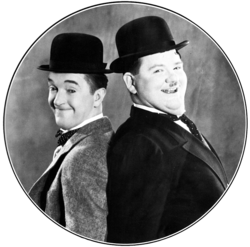
Laurel and Hardy

A double act (also known as a comedy duo) is a form of comedy originating in the British music hall tradition,[1] and American vaudeville, in which two comedians perform together as a single act, often highlighting differences in their characters' personalities. Pairings are typically long-term, in some cases for the artists' entire careers.[2] Double acts perform on the stage, television and film.

The format is particularly popular in the United Kingdom where successful acts have included Peter Cook and Dudley Moore (Cook's deadpan delivery contrasted with Moore's buffoonery), Flanagan and Allen,[3] Morecambe and Wise, The Two Ronnies, and French and Saunders, Armstrong and Miller, and Mitchell and Webb.[4][5] The tradition is also present in the United States with acts like Wheeler & Woolsey, Abbott and Costello, Gallagher and Shean, Burns and Allen, and Lyons and Yosco. The British-American comedy double act Laurel and Hardy has been described as the most popular in the world.[6]

Format

[edit]

Humor is often derived from the uneven relationship between two partners, usually of the same gender, age, ethnic origin, and profession but drastically different in terms of personality or behavior; each one serves as a foil to the other. Typically, one member of the duo—the "straight man", "feed", "dead wood", or stooge—is often portrayed as reasonable and serious, while the other one—the funny man, "banana man", or comic—is portrayed as funny, less educated or less intelligent, silly, or unorthodox, although there are also double acts in which neither partner is the straight man or even both.[7]When the audience identifies primarily with one character, the other is often referred to as a comic foil. The term "feed" comes from the way a straight man sets up jokes and then "feeds" them to his partner.[citation needed]

Despite the names often given to the roles, the straight man is not always humorless, nor is it always the comic who provides the act's humor. Sometimes the straight man gets laughs through sarcastic reactions to the comic's antics, such as Stewart Lee's deadpan, reasoned reactions to Richard Herring's ridiculous antics in their pairing. When the straight man serves no specific comic purpose, but acts as a device to make the comic look good, he is known as a stooge. Sometimes considered a derogatory term, "stooge" began to fall out of use by the 1930s with The Three Stooges. Most often the humor in a double act comes from the way the two personalities play off of each other, rather than from the individual players. In many successful acts the roles are interchangeable.

History

[edit]

Early development

[edit]
Lyons and Yosco, vaudeville act and ragtime composers from the 1910s

The model for the modern double act began in the British music halls and the American vaudeville scene of the late 19th century. Here, the straight man was needed to repeat the lines of the comic because audiences were noisy. A dynamic soon developed in which the straight man was a more integral part of the act, setting up jokes for the comic to deliver a punch line. Popular draws included acts like George Burns and Gracie Allen (who initially operated with Burns as the comic but quickly switched roles when Gracie's greater appeal was recognized), Abbott and Costello, Flanagan and Allen, Gallagher and Shean, Smith and Dale, and Lyons and Yosco. The dynamic evolved, with Abbott and Costello using a modern and recognizable formula in routines such as Who's on First? in the 1930s and Flanagan and Allen using "cross talking".

Gallagher and Shean, a popular vaudeville act of the 1920s

Though vaudeville lasted into the 1930s, its popularity waned because of the rise of motion pictures. Some failed to survive the transition to movies and disappeared. By the 1920s, double acts were beginning to attract worldwide fame more readily through the silent era. The comedy was not derived from "cross-talk" or clever verbal exchanges, but through slapstick routines and the actions of the characters.

The first double act to gain worldwide fame through film was the Danish duo Ole & Axel, who made their first film together in 1921. The latter half of the same decade introduced to the world the inimitable team of Laurel and Hardy. The pair had never worked together on stage (they did as of 1940), though both had worked in vaudeville—Stan Laurel with Charlie Chaplin as part of Fred Karno's Army and Oliver Hardy as a singer. Laurel could loosely be described as the comic, though the pair were one of the first not to fit the mold in the way that many double acts do, with both taking a fairly equal share of the laughs. The pair first worked together as a double act in the 1927 film Duck Soup. The first Laurel and Hardy film was called Putting Pants on Philip though their familiar characters had not yet been established. The first film they both appeared in was Lucky Dog in 1921. Laurel and Hardy adapted well to silent films, both being skilled at slapstick, and their nonverbal interplay with each other and the audience became famous—Laurel's cry and Hardy's downtrodden glances to the camera whenever something went wrong—and were carried over to their later talkies. They were one of the few silent acts who made a successful transition to spoken word pictures in the 1930s, showing themselves to be equally adept at verbal wordplay.

1940s–1960s

[edit]
Martin and Lewis

Laurel and Hardy released Saps at Sea, in 1940; it was their final film for long-term producer and collaborator Hal Roach. Later their popularity declined. In 1940s America the double act remained a cinema draw, developing into the "buddy movie" genre, with Abbott and Costello making the transition from stage to screen and the first of Bob Hope and Bing Crosby's Road to... series in 1940. Further acts followed. For example, the first pairing of Dean Martin and Jerry Lewis occurred in 1946. About the same time The Bickersons became popular on radio. Mel Brooks and Carl Reiner started their 2000 Year Old Man recordings and subsequent television appearances in 1961. The genre has continued to exist in cinema while making a successful transition to radio and later TV via The Smothers Brothers and Rowan and Martin's Laugh In.

In Britain, double acts were confined to theatres and radio until the late 1950s, when double acts such as Morecambe and Wise and Mike and Bernie Winters slowly began the transition to TV on variety shows such as Sunday Night at the London Palladium. These acts came into their own in the mid- to late-1960s. When Morecambe and Wise teamed up with writer Eddie Braben, they began to redefine what was meant by a double act, with Wise, the straight man, being developed into a comic character in his own right. They provided the link between music hall and modern comedy for double acts.[8] As the two leading double acts of the day, Morecambe and Wise and the Winters brothers enjoyed a playful rivalry—the Winters mocked the slight edge Morecambe and Wise had over them in popularity, while Morecambe, when asked what he and Wise would have been if not comedians, replied "Mike and Bernie Winters".

A series of black-and-white films based on Don Camillo and Peppone characters created by the Italian writer and journalist Giovannino Guareschi were made between 1952 and 1965. These were French-Italian coproductions, and starred Fernandel as the Italian priest Don Camillo and Gino Cervi as Giuseppe 'Peppone' Bottazzi, the Communist Mayor of their rural town. The titles are: The Little World of Don Camillo (1952), The Return of Don Camillo (1953), Don Camillo's Last Round (1955), Don Camillo: Monsignor (1961), and Don Camillo in Moscow (1965). The movies were a huge commercial success in their native countries. In 1952, Little World of Don Camillo became the highest-grossing film in both Italy and France,[9] while The Return of Don Camillo was the second most popular film of 1953 at the Italian and French box office.[10]

Franco and Ciccio

Franco and Ciccio were a comedy duo formed by Italian actors Franco Franchi (1928–1992) and Ciccio Ingrassia (1922–2003), particularly popular in the 1960s and 1970s. Their collaboration began in 1954 in the theater field, and ended with Franchi's death in 1992. The two made their cinema debuts in 1960 with the film Appuntamento a Ischia. They remained active until 1984 when their last film together, Kaos, was shot, although there were some interruptions in 1973 and from 1975 to 1980.[11] Together, they appeared in 112 films.[12] They acted in films certainly made in a short time and with few means, such as those shot with director Marcello Ciorciolini, sometimes even making a dozen films in a year, often without a real script and where they often improvised on the set. Also are the 13 films directed by Lucio Fulci, who was the architect of the reversal of their typical roles by making Ciccio the serious one, the sidekick, and Franco the comic one.[13] They also worked with important directors such as Pier Paolo Pasolini and the Taviani brothers. Considered at the time as protagonists of B movie, they were subsequently reevaluated by critics for their comedy and creative abilities, becoming the subject of study.[14][15] The huge success with the public is evidenced by the box office earnings, which in the 1960s, represented 10% of the annual earnings in Italy.[16]

Throughout the 1960s and 1970s, the traditional formula was shunned by The Two Ronnies, who completely dispensed with the need for a straight man, and Peter Cook and Dudley Moore, two Oxbridge-educated comedians who used the double act to deliver satire and edgy comedy.

1970s

[edit]
Terence Hill and Bud Spencer

Internationally the most popular double act of the 1970s was the Italian duo Terence Hill and Bud Spencer. The team had already made three straight westerns together during the 1960s but turned their act towards slapstick in their fourth (They Call Me Trinity, 1970), with massive success.

Light entertainment in Britain in the 1970s was dominated by Morecambe and Wise, who enjoyed impressive ratings, especially on their Christmas specials. Although Mike and Bernie Winters's popularity declined, The Two Ronnies' success grew while Peter Cook and Dudley Moore sporadically produced acclaimed work, in particular, their controversial recordings as Derek and Clive from 1976 to 1978.

The mid-to-late 1970s saw a resurgence in American double acts. Blazing Saddles (1974) featured a memorable performance by Mel Brooks and Harvey Korman (who later teamed up again in Brooks's 1981 follow-up History of the World, Part I). Saturday Night Live, first broadcast in 1975, provided an outlet for comedians to appear in sketches as double acts and continues to do so. It was here that Dan Aykroyd and John Belushi honed their characters The Blues Brothers, who were soon pulled to fame in the 1980 buddy movie of the same name. Gene Wilder and Richard Pryor also embarked on a string of successful buddy films in the 1970s. Cheech & Chong also gained massive popularity during this time.

Occasionally, the straight-man/funny-man dynamic appeared in unexpected contexts between characters not normally thought of as comics. This often appeared in the James T. Kirk (William Shatner)/Mr. Spock (Leonard Nimoy) relationship in several episodes of the original Star Trek series.

1980s

[edit]

Morecambe and Wise had dominated British light entertainment throughout the 1970s, but their presence waned in the early 1980s. When Morecambe died moments after finishing a solo show in 1984 (his last words were 'I'm glad that's over'), the best-loved double act in British comedy came to an end, and several new acts emerged. The two distinct groups could not have been more different.

In the wake of Not the Nine O'Clock News, The Young Ones and the breakthrough onto television of "alternative comedy" came French and Saunders; Fry and Laurie; Rik Mayall and Ade Edmondson; Hale and Pace; and Smith and Jones. These edgier comics were brasher and crude—comedy's answer to punk rock.[8] They developed the satire and vulgarity of Peter Cook and Dudley Moore rather than the more gentle humour of Morecambe and Wise and The Two Ronnies. In fact, Smith and Jones showed blatant disregard for their predecessors, openly mocking the Two Ronnies (this may have been a factor in Ronnie Barker's decision to retire from comedy in the late 1980s[8]).

1990s–present day

[edit]

The early 1990s saw comedy become "the new rock and roll"[8] in Britain; this was inherent in the work of Newman and Baddiel and Punt and Dennis on The Mary Whitehouse Experience. Newman and Baddiel, in particular, symbolized this rock and roll attitude by playing the biggest ever British comedy gig at Wembley Arena. With this came tension. Newman and Baddiel fell out with Punt and Dennis, not wishing to share screen time with them, and then with each other. David Baddiel went on to form another successful double act with Frank Skinner.

The 1990s also saw the introduction of one of comedy's strangest yet most successful double acts in Reeves and Mortimer. They at the same time deconstructed light entertainment[8] and paid homage to many of the classic double acts (Vic Reeves would even do an Eric Morecambe impression on Vic Reeves Big Night Out). They simultaneously used very bizarre, idiosyncratic humour and traditional double act staples (in later years they became increasingly reliant on violent slapstick).

Another double act that emerged in the mid to late 1990s was Lee & Herring, who combined a classic clash of personalities (downbeat and rational Lee contrasting with energetic, childish Herring) with very ironic, often satirical humour.

Also appearing in the latter half of the decade were Adam and Joe, whose low-budget, self-produced Channel 4 series The Adam and Joe Show was a very sharp combination of TV and movie parodies and satirical looks at various elements of youth culture.

Indian cinema also had its share of the double act, with Tamil cinema comedians Goundamani and Senthil teaming up for several films throughout the decade, similarly Kota Srinivasa Rao and Babu Mohan in Telugu cinema.

Key & Peele

The British duo Mitchell and Webb are another successful double act from the 2000s onwards, having multiple sketch shows on both radio and TV as well as starring in the award-winning sitcom Peep Show.

For over 20 years, Australians Hamish Blake and Andy Lee have worked together as Hamish & Andy, having multiple successful TV shows and a very popular radio show and podcast.

Most of the most successful double acts in the early 2000s take their inspiration from the odder strain of double-act comedy spearheaded by Reeves and Mortimer. Matt Lucas and David Walliams, who had previously worked with Reeves and Mortimer, also took inspiration from the Two Ronnies. The Mighty Boosh also played with the formula but essentially remained traditional at their roots. Another popular current light entertainment/presenting comedy act is Ant & Dec, who are a very basic yet effective example of a double act.

Rhett & Link and Smosh, internet based duos

In early 2012, comedians Keegan-Michael Key and Jordan Peele appeared in a sketch comedy TV show titled Key & Peele airing on Comedy Central.

Many modern-day YouTube channels follow this format. Some examples include Smosh, Dan and Phil, the Game Grumps, and Rhett and Link of the YouTube channel Good Mythical Morning.

United Kingdom

[edit]
Mitchell and Webb

In its British form, the two actors would usually be composed of a "straight man" or "feed" and a "comic." The purpose of the feed is to set up jokes for the comic. This would rely heavily on comic timing.

Morecambe and Wise are arguably the quintessential British double act. They followed the traditional formula with Eric Morecambe as the comic and Ernie Wise as the feed. Other British acts such as The Two Ronnies, Hale and Pace, Vic and Bob, French and Saunders, Mitchell and Webb, Fry and Laurie, Ant & Dec, Punt and Dennis, Lee and Herring, Armstrong and Miller, Peacock and Gamble and Dick and Dom display the role of "comic" and "straight man" in a less obvious, largely interchangeable way or are dispensed with altogether. More obvious British examples of the comic-feed dynamic are Cannon and Ball, Little and Large or the children's entertainers The Chuckle Brothers, where the straight man acted largely as a humourless set up for the comic.

Peter Cook and Dudley Moore were perhaps the first double act to go against the grain as turned their double act into a complex analysis of their relationship. In many of the sketches (especially the Pete and Dud exchanges) Cook played the domineering know-it-all (who knows nothing) and Moore the put-upon dimwit (who also knows nothing).

This dominance was accentuated by the difference in height between the two, and the speed of Cook's mind, which meant that he could ad lib and force Moore to corpse in a Pete and Dud dialogue, leaving him helpless to respond. As the partnership progressed into the often-improvised Derek and Clive dialogues, these light-hearted attempts to make Moore laugh became, as a result of Cook's growing insecurity and alcoholism, aggressive attacks on the defenseless Moore. Carrying the tradition of going against the grain of traditional double acts, when the partnership dissolved in the late 1970s, it was Cook whose career stalled due to boredom, alcoholism and lack of ambition, while Moore went on to become one of Hollywood's most unlikely leading men.

Sitcoms

[edit]

The double act has become a popular theme in British sitcoms. One of the earliest examples of this was the relationship between Tony Hancock and Sid James in the Galton and Simpson series Hancock's Half Hour. James played a down-to-earth character while Hancock was pompous and had delusions of grandeur, and the comedy was derived from the two playing off each other's characteristics.

A common trend in sitcoms is to place the double act in a situation where they are forced together through uncontrollable circumstance. In another Galton and Simpson production, Steptoe and Son, a son, with great ambition, was forced to live with his elderly, manipulative father as a rag and bone man. The comedy derives from the way the characters interact in their tempestuous relationship. The series also has more heart-rending moments as the son despairs at his inability to escape his needy, selfish, grasping father.

Porridge saw "an habitual criminal", Fletcher (played by Ronnie Barker, already famous for his comedy partnership with Ronnie Corbett) and a young, naive, first-time prisoner, Lennie Godber. The two would bicker but endured a relationship of mutual respect. Barker also formed a partnership with David Jason in Open All Hours, with Jason playing Granville while Barker played Albert Arkwright. Many don't see this as a comedy duo, but the straight-man element coupled with Barker's funny-man antics on the show are still compressed into the script.

Rik Mayall and Ade Edmondson combined their success in sitcoms (The Young Ones) and as a double act (The Dangerous Brothers) in 1991 when they created Bottom. Their characters are a pair of sad, pathetic losers forced together by their mutual hopelessness. However, unlike earlier examples of such, the characters in Bottom absolutely hate each other, exacerbating their despair. This often leads to slapstick violence, such as hitting each other with frying pans. Mayall and Edmonson have said Bottom aimed to be more than just a series of toilet gags—it was meant to be a cruder cousin to plays like Waiting for Godot about the pointlessness of life.

Other popular double acts in British sitcoms include complex relationships involving status and superiority themes: in Dad's Army, the social climbing envy of Captain George Mainwaring, to his right-hand man (Sergeant Arthur Wilson) who is of higher status than him; and in Red Dwarf, the working class everyman Dave Lister to the middle class but socially-awkward Arnold Rimmer. However, the most prominent double act is that of an intelligent person and his inferior sidekick, such as Basil and Manuel of Fawlty Towers, Blackadder and Baldrick of Blackadder, or Ted and Father Dougal of the Irish sitcom Father Ted.

In recent years, double acts as sitcoms appear to have gone full circle, as illustrated by the cult success of The Mighty Boosh. For the relationship between the two main characters this series uses a formula very similar to that between Sid and Tony in Hancock's Half Hour – that of an arrogant character whose best friend can see his faults and keeps him grounded. A similar dynamic is used in Peep Show in which the characters of Mitchell and Webb were adapted for the sitcom formula. In this case both characters have a degree of egotism. The difference between the pair is the free-spirited, uneducated and selfishness of Jeremy and the intellectual arrogance but shyness of Mark.

U.S. and Canada

[edit]
Abbott and Costello

In the United States and Canada, the tradition was more popular in the earlier part of the 20th century with vaudeville-derived acts such as Laurel and Hardy, Abbott and Costello, Burns and Allen, Jackie Gleason and Art Carney, Wheeler & Woolsey, and Lyons and Yosco and continuing into the television age with Martin and Lewis, Kenan & Kel, Bob and Ray, the Smothers Brothers, Wayne and Shuster, Allen and Rossi, Jack Burns and Avery Schreiber, Rowan and Martin, Mike Nichols and Elaine May, the Wayans Brothers, Stewie Griffin and Brian Griffin from Family Guy and Shawn and Gus in Psych. The series I Love Lucy was known for its double acts, and Lucille Ball served as foil to both her husband Desi Arnaz and to Vivian Vance. Vance could also serve as foil to William Frawley when the situation required. Vance and Ball would again serve as a double act in their next series The Lucy Show. More recently, the model has been largely supplanted by that of the "buddy movie" genre, which has introduced several notable comedy partnerships not formally billed as a single "act" in the traditional manner. The earliest example of such a team may have been Bob Hope and Bing Crosby; later examples include Gene Wilder and Richard Pryor, Burt Reynolds and Dom DeLuise, Dan Aykroyd and John Belushi, Corey Haim and Corey Feldman, David Spade and Chris Farley and child stars Drake Bell and Josh Peck. Based on the gag-man/straight-man concept, "Stoner" duos like Cheech & Chong, Jay & Silent Bob, and Harold & Kumar have also proven quite popular with audiences. The double act format can also be used in presenting noncomedic information in an entertaining manner, such as Savage/Hyneman pair of the Discovery Channel's MythBusters (which Savage stated was unintentional when they began the series but naturally grew into a double act as the result of their own conflicting personalities).[17] From 2006 to 2010, Apple used the double-act formula successfully in its popular series of I'm a Mac/And I'm a PC ads with John Hodgman and Justin Long.

Italy

[edit]
Cochi e Renato in 1972
Ric e Gian in 1972
Ficarra e Picone at the 2010 Giffoni Film Festival

In Italy the tradition was more popular in the late part of the 20th century with Battaglia & Miseferi, Cochi e Renato, Ficarra e Picone, Fichi d'India, Gigi e Andrea, Katia & Valeria, Lillo & Greg, Pio e Amedeo, and Ric e Gian. Cochi e Renato were childhood friends, and they grew accustomed to perform together in front of an audience of friends and relatives.[18][19] Their professional debut took place in 1965 in the small cabaret club Cab 64 in Milan, where they performed along with Lino Toffolo and Bruno Lauzi.[18] They were also joined by Enzo Jannacci and Felice Andreasi with whom they formed the comedy ensemble Motore, who had a good success in Milan.[18] The couple became first known in the late 1960s thanks to the RAI innovative variety shows Quelli della domenica (1968) and È domenica, ma senza impegno (1969).[18][19] Characterized by a peculiar comic verve, filled with paradoxical and surreal moods, their popularity increased in the early 1970s with the variety show Il poeta e il contadino and with the participation with the musical show Canzonissima.[18][19] The couple began to crack in 1974, when Renato started devoting himself to a full-time film career.[18] After a long separation, Cochi e Renato reunited in 2000s for a series of television and stage projects.[18] Cochi e Renato were also very active as singer-songwriters (often with the collaboration of Enzo Jannacci), and they had several commercial hits;[20][21] their most successful song is "E la vita la vita", which reached the first place at the Italian charts in 1974.[18][21]

Ric e Gian met in an avanspettacolo at the Teatro Maffei in Turin, where Ric worked as a dancer and Gian was the sidekick of the actor Mario Ferrero.[19] They then decided to performing together as Jerry e Fabio and worked in various theaters, nights and cabarets in Northern Italy as well as at the Crazy Horse in Paris.[19][22] Noted by film producer Angelo Rizzoli, they renamed themselves Ric e Gian in 1962 and made their film debut in Ischia operazione amore (1966).[19] Starting from the late 1960s, the couple gained popularity thanks to their participation in several prime time RAI variety shows.[19] In the mid-1970s they focused on theatre, and between late 1970s and early 1980s their popularity revamped thanks to a number of Antenna 3 and Fininvest television shows they took part in.[19][22] In 1987 the couple split to pursue some solo projects, before briefly reuniting between 2002 and 2006 for a number of stage shows and plays.[22]

Gigi e Andrea started performing together in small theaters, cabarets and hostelries in Bologna in the second half of the 1970s.[23][24] They debuted in 1978 on the Rai 1 variety show Io e la Befana.[19] The year before they had appeared for the first time on TV in A modo mio, directed by Memo Remigi. In the 1980s, the couple starred and co-starred in several comedy films which were usually badly received by critics but of commercial success.[23][25] The same period, their presence on the small screen also became more intense, especially on Fininvest variety shows and television films.[23][19] In the 1990s, having reached a more than respectable success, the couple split in order to pursue solo projects.[23][19]

Ficarra e Picone started in 1993 along with Salvatore Borrello as a comedy trio, performing together on stage as "Chiamata Urbana Urgente".[26] In 1998, the two remaining members began to use their surnames: Ficarra & Picone.[26] In 2000, Ficarra e Picone made their film debut with Ask Me If I'm Happy by Aldo, Giovanni & Giacomo, and two years later they made the first film as main actors, Nati stanchi.[26] On 25 April 2005, Ficarra and Picone were the TV anchor-men four episodes of Striscia la notizia to which they collaborated from 27 March 2006 up to 5 December 2020.[27] In 2007 they debuted as directors alongside Gianbattista Avellino with the film Il 7 e l'8, for which they were nominated to David di Donatello for Best New Director[28] and to Silver Ribbon in the same category.[29] Also in 2007 they were featured as comic characters in the story Zio Paperone e il rapimento teatrale (trad. Uncle Scrooge and the Theatrical Kidnapping), published in the issue 2678 of Topolino.[18][30]

China

[edit]

In China, xiangsheng (also known as crosstalk) is a traditional comedic performance usually in the form of a dialogue between two performers.

Japan

[edit]

In Japan the manzai tradition parallels that of the double act. Here there is a distinguished straight man (tsukkomi) and funny man (boke) and the humor consists of quick slapstick jokes, comical stories and social misunderstandings.[31]

Germany

[edit]

In Germany Tünnes and Schäl (since 1803/1850s), two Cologne puppet theater characters, fit to the concept of fool and straight man.

During WWII Tran and Helle appeared in a number of short films to deter Germans from actions detrimental to Germany's war effort or security.

Between 1950 and 1980, the most popular comedy duo of East Germany, Herricht & Preil, ran a very successful double act; Hans-Joachim Preil is the straight man and Rolf Herricht is the comic.

Notable examples

[edit]

References

[edit]
Revisions and contributorsEdit on WikipediaRead on Wikipedia
from Grokipedia
A double act, also known as a comedy duo, is a performance format featuring two comedians who collaborate to generate humor through their interpersonal dynamics, often characterized by contrasting personalities and an uneven partnership. This structure typically involves one performer serving as the straight man or feed, who sets up scenarios and delivers setup lines, while the other acts as the comic or foil, responding with punchlines and exaggerated reactions to heighten the comedy. The humor arises from the tension between these roles, blending conflict, camaraderie, and relatable misunderstandings. The double act originated in the 19th century amid the British music hall tradition and American vaudeville, where pairs of performers entertained audiences in variety shows with sketches, songs, and physical comedy. Early examples included acts like Burns and Allen, with George Burns as the straight man to Gracie Allen's whimsical illogic, which propelled them to stardom in vaudeville, radio, and film during the early 20th century. By the mid-20th century, the format transitioned to cinema and television, exemplified by Laurel and Hardy, who appeared in 107 films combining slapstick and verbal wit, establishing the duo as a cornerstone of silent and sound-era comedy. In the United Kingdom, double acts flourished on television from the 1950s onward, with icons like Morecambe and Wise drawing record audiences—up to 28 million viewers—for their 1970s Christmas specials featuring musical numbers and celebrity guests. Other influential British pairs, such as French and Saunders, brought a female perspective to sketch comedy in the 1980s and 1990s through six series and specials that parodied pop culture. Across the Atlantic, Abbott and Costello popularized routines like "Who's on First?" in films and radio, solidifying the straight man-comic dynamic in American entertainment. Over time, the double act has evolved to include more fluid role reversals and diverse pairings, as seen in modern collaborations like Mitchell and Webb's Peep Show (2003–2015), which explored psychological depth alongside absurd sketches. This adaptability has ensured the format's enduring appeal, influencing genres from sitcoms to stand-up specials and highlighting themes of friendship and rivalry in comedy.

Definition and Format

Core Concept

A double act refers to a pair of performers, typically comedians, who collaborate to create humor through their verbal and physical interplay, relying on contrast in personalities, precise timing, and mutual reactions to generate laughs. This format highlights the interdependence of the duo, where each partner's contributions amplify the other's, distinguishing it from solo acts that depend on individual delivery or larger ensembles that diffuse focus across multiple participants. The term "double act" emerged as slang in British theater around the early 20th century, first recorded in 1905 to describe a joint performance by two entertainers in variety shows. Rooted in live performance traditions, double acts originated in 19th-century music halls and vaudeville stages, where pairs honed routines that exploited their shared stage presence for comedic effect. This duality allowed for spontaneous yet structured exchanges, evolving from informal pairings into a staple of entertainment that emphasized collaborative timing over isolated feats. At its core, the double act serves to produce comedy through the inherent tensions between partners, such as conflicting perspectives, exaggerated responses, or absurd escalations that arise from their interaction. Iconic pairs like Laurel and Hardy exemplified this by turning everyday mishaps into humorous conflicts born of their contrasting styles.

Roles and Dynamics

In a double act, the archetypal roles typically consist of the straight man, also known as the feed or foil, who serves as the rational and often exasperated partner responsible for setting up jokes by providing logical setups and reactions, and the funny man, who delivers the punchlines through chaotic, exaggerated, or absurd responses that subvert expectations. The straight man embodies order and societal norms, acting as a grounding force that highlights the funny man's deviations from reality, while the funny man introduces the comedic disruption through unconventional behavior or viewpoints. The dynamics between these roles rely heavily on contrast and interplay to generate humor, including precise timing where the straight man avoids interrupting the funny man's delivery to allow punchlines to land effectively, and physical differences such as height, build, or appearance that visually amplify the opposition between rationality and chaos. For instance, variations in height or body shape create a visual juxtaposition that underscores personality clashes, with the straight man often portrayed as more composed or authoritative and the funny man as disheveled or impulsive, fostering a power imbalance where the straight man's aspirations are repeatedly thwarted for comedic effect. This imbalance, rooted in the funny man's subversion of the straight man's plans, drives the routine's tension through a push-pull between expected norms and surprising absurdity. Variations in these roles include interchangeable positions, where partners fluidly switch between straight and funny duties to maintain unpredictability, as seen in early vaudeville examples where both members could adapt to either role. Modern acts often incorporate gender dynamics, with the straight man role performed by women or non-binary performers, emphasizing that the archetype is inclusive and focuses on relational contrast rather than fixed gender assignments. Psychologically, the straight man facilitates audience identification by voicing relatable common-sense reactions to the funny man's antics, positioning them as a surrogate for viewers' expectations and enhancing emotional investment in the humor. The funny man's role then delivers surprise through unexpected twists, creating relief and laughter via the contrast, while the duo's overall selflessness—prioritizing the partner's success—strengthens the interpersonal bond that resonates with audiences.

Common Formats and Routines

Double acts typically employ a variety of formats across different media, including live stage sketches that originated in music halls and vaudeville theaters, where performers engage audiences directly through short, self-contained comedic pieces. Radio dialogues represent another foundational format, relying on verbal interplay without visual elements to build humor through voice modulation and timing, as seen in early broadcast shows that adapted stage material for audio audiences. Television sitcoms and specials expanded these into episodic series or holiday programs, often incorporating recurring characters and audience interaction via laugh tracks. Film series, meanwhile, allowed for extended narratives and visual spectacle, turning brief routines into feature-length comedies that emphasized ensemble dynamics. Central to these formats are recurring routines that exploit the duo's contrasting roles for comedic effect. Interruption gags involve the straight man delivering setup lines only for the comic to disrupt with unexpected responses, creating escalating frustration and surprise. Misunderstanding dialogues build humor through layered confusion, where one performer misinterprets the other's words, leading to absurd escalations in logic or situation, as in signature routines featuring name-based wordplay that spirals into total incomprehension. Physical chases incorporate slapstick elements, with performers pursuing each other in exaggerated, props-assisted sequences that highlight clumsiness and timing. Verbal cross-talk, or rapid-fire banter, features overlapping dialogue and one-upmanship, often parodying everyday conversations or authority figures to underscore the duo's unequal partnership. Over time, double act routines have evolved from rigidly scripted performances, common in early stage and vaudeville eras, to incorporate improvised elements that allow for spontaneous audience responses and ad-libs, enhancing replayability in live settings. This shift reflects broader changes in comedy, where initial reliance on memorized patter gave way to flexible structures in radio and television, enabling performers to adapt gags on the fly while maintaining core dynamics. Adapting routines to different media has required adjustments to preserve comedic impact; for instance, verbal-heavy cross-talk from stage translates effectively to radio but gains depth on screen through close-ups on facial reactions, while physical chases and sight gags—such as prop mishaps or visual puns—thrive in film, where editing and camera angles amplify chaos without the constraints of live timing. In television sitcoms, misunderstanding routines often extend into multi-episode arcs, building on initial confusions for ongoing narrative humor, whereas film series emphasize spectacle in chases to suit cinematic pacing. This translation ensures that the inherent tension between partners remains the driving force, regardless of medium.

Historical Development

Early Origins

The origins of the double act can be traced to ancient theatrical traditions, particularly in Greek and Roman comedy, where paired characters provided comic interplay through wit, deception, and role contrasts. In Greek New Comedy, exemplified by Menander's works (c. 342–290 BCE), stock duos such as the young lover (adulescens) and the clever slave (servus callidus) drove plots involving romantic intrigue and social satire, emphasizing everyday human follies. These archetypes influenced Roman playwrights like Plautus (c. 254–184 BCE), who amplified the humor in adaptations; for instance, in Pseudolus, the slave Pseudolus and his young master Callidorus form a dynamic duo, with the slave's scheming outwitting authority figures to resolve the plot. Similarly, in Miles Gloriosus, the slave Palaestrio collaborates with others to mock the boastful soldier Pyrgopolynices, highlighting the servant's resourcefulness against the master's pomposity. Such interactions established foundational dynamics of contrasting personalities—one naive or authoritative, the other sly and subversive—that prefigured later double acts. In medieval Europe, comic precedents evolved through jester pairs in courtly and folk entertainments, drawing from Roman comic actors (mimi and scurrae) who performed satirical skits. Jesters, often working in duos, used physical comedy, wordplay, and mockery of the elite to entertain nobility, as seen in informal pairings of fools and minstrels who exaggerated social hierarchies for laughs. These performances, rooted in wandering troupes and festival farces, maintained the ancient tradition of duo-based humor while adapting to feudal contexts, where one jester might play the straight man to the other's antics. The 19th century saw these traditions converge with emerging popular forms, notably through commedia dell'arte archetypes that persisted in European street theater and influenced global comedy. Harlequin (Arlecchino), the acrobatic servant from Bergamo, and Pierrot (derived from Pedrolino), the naive white-clad clown, formed archetypal duos embodying mischief and pathos, with Harlequin's agility contrasting Pierrot's gullibility in improvised routines. In America, blackface minstrel shows from the 1830s onward featured comic duos and small ensembles performing satirical sketches on plantation life, often with one performer as the dim-witted end man bantering against the interlocutor. Circus clown pairs, emerging late in the century, paired the elegant whiteface clown with the bumbling auguste, relying on physical gags and role reversal for broad appeal in traveling spectacles. The rapid urbanization of the industrial era amplified demand for affordable, relatable entertainment in burgeoning cities, fostering the shift from sporadic folk duos to structured comic pairs in emerging venues like saloons and early theaters. This need for quick-witted, duo-driven routines to engage factory workers and migrants laid essential groundwork for the formalized double acts of the late 19th century, bridging ancient archetypes with modern professionalization. Beyond the West, duo-based comic storytelling appeared in East Asian traditions, providing parallel precedents. In early Chinese opera, particularly the Tang dynasty's canjun xi (adjutant plays, c. 7th–10th centuries), two performers enacted humorous dialogues where a jester ridiculed a corrupt officer, using verbal sparring to expose official hypocrisy. Similarly, Japanese kyōgen theater (developed from the 14th century) featured master-servant pairs, such as Tarōkaja and Jirōkaja, whose exaggerated conflicts and role reversals—mirroring modern tsukkomi (straight man) and boke (fool)—delivered farce through domestic absurdities.

Vaudeville and Music Hall Era

The Vaudeville and Music Hall Era marked the professionalization of double acts within Western variety theater from the late 19th to early 20th century. In the United States, vaudeville circuits like Keith-Albee, established in the late 1880s by Benjamin F. Keith and Edward F. Albee, revolutionized the industry by creating a network of theaters across the U.S. and Canada that promoted "polite" entertainment free of crude elements. This system standardized bookings through the United Booking Office in 1906, allowing duos to tour regionally and nationally for extended contracts, fostering economic stability and the development of comedy pairs as staple attractions. By the 1890s to 1930s, these circuits elevated double acts from local performers to national stars, emphasizing short, polished routines in urban venues. In the United Kingdom, music halls from the 1890s to 1920s similarly propelled double acts through lively, audience-interactive formats. Performers like Florrie Forde, a prominent Australian-born singer who arrived in London in 1897, often paired with emerging talents to create dynamic ensembles. Forde notably collaborated with and helped form the duo of Bud Flanagan and Chesney Allen in the 1920s, including in revues such as The Non-Stops (1930), whose blend of comedy and song became a music hall hallmark. These pairings emphasized communal sing-alongs and sketches, drawing working-class crowds to venues like the Camberwell Palace. A key innovation of this era was the standardization of the straight man and funny man roles in double acts, rooted in vaudeville and music hall traditions. The straight man, typically the more composed partner, set up jokes through logical responses, while the funny man delivered absurd reactions or physical comedy, creating contrast and timing essential for short sketches. Exemplars included George Burns and Gracie Allen, who teamed in the 1920s after Burns's early vaudeville struggles; Allen's initial straight role reversed to become the dizzy comic foil, propelling their routines to nationwide popularity and influencing later media comedy. Similarly, Bud Abbott and Lou Costello formalized their partnership in 1936 on the burlesque- vaudeville circuit, with Abbott as the sharp straight man to Costello's bumbling antics; their iconic "Who's on First?" routine preserved vaudeville patter, achieving massive impact through refined timing and slapstick. The era peaked in the 1920s but declined sharply in the 1930s due to the advent of talking films, which offered cheaper, more accessible entertainment. Synchronized sound, introduced experimentally in 1926 and widespread by 1929, transformed theaters from live variety houses to cinema venues, effectively ending the half-century vaudeville tradition as audiences shifted to films featuring former acts.

Post-War Boom (1940s–1960s)

Following World War II, double acts experienced a significant resurgence in radio, serving as a primary source of escapist entertainment for audiences navigating economic recovery and social readjustment. The comedy duo Abbott and Costello exemplified this dominance with their weekly radio program, which aired from 1942 to 1949 on NBC and later ABC, featuring signature routines like "Who's on First?" that captivated millions and topped popularity polls during the decade. Their fast-paced banter and physical comedy provided light relief, reflecting the era's demand for humor amid wartime rationing and post-war uncertainties. Similarly, The Jack Benny Program, a staple of 1940s radio, incorporated duo dynamics through interactions between Benny and his valet Rochester (Eddie Anderson), blending verbal sparring with ensemble sketches to sustain high listenership. The advent of television in the 1950s marked a breakthrough for double acts, adapting stage and radio formats to visual storytelling while emphasizing suburban family dynamics for post-war audiences seeking normalcy. The Honeymooners (1955–1956), starring Jackie Gleason as Ralph Kramden and Art Carney as Ed Norton, portrayed a working-class duo whose bungled schemes and loyal friendship influenced the blueprint for domestic sitcoms, highlighting tensions and joys of blue-collar life. Likewise, I Love Lucy (1951–1957) showcased Lucille Ball and Desi Arnaz as the zany couple Lucy and Ricky Ricardo, pioneering the three-camera setup and live-audience format that amplified duo chemistry and became a template for marital comedy pairs. These shows captured the era's cultural shift toward escapist narratives of everyday mishaps, offering audiences a humorous escape from Cold War anxieties and the pressures of suburban conformity. In film, established and emerging double acts drove box-office success, extending vaudeville-rooted routines into feature-length escapism that resonated with post-war optimism. Laurel and Hardy sustained their popularity through 1940s releases like The Dancing Masters (1943) and Nothing but Trouble (1944), which, despite shorter runtimes, grossed millions and appealed to families with their timeless slapstick. The duo of Dean Martin and Jerry Lewis burst onto the scene in the late 1940s, with their debut film My Friend Irma (1949) launching a string of 16 hits through the 1950s, including The Stooge (1952) and Scared Stiff (1953), making them the decade's top comedy team by earnings. These films emphasized mismatched partnerships—Martin's suave straight man contrasting Lewis's manic antics—mirroring societal themes of reintegration and light-hearted rebellion. This boom also facilitated the global spread of American double acts, particularly through entertainment for Allied forces during and after WWII, introducing their humor to European audiences via USO tours and troop screenings. Abbott and Costello contributed significantly, performing in service comedies like Buck Privates (1941) and supporting war bond drives that reached soldiers across Europe, fostering early international fandom. Post-war, Laurel and Hardy's films gained renewed traction in Europe, where restrictions had limited access during the conflict, helping cement double acts as a universal form of comedic relief.

Television and Film Expansion (1970s–1990s)

In the 1970s, double acts expanded into film through counterculture comedy, with Cheech Marin and Tommy Chong emerging as pioneers of stoner humor that captured the era's rebellious spirit. Their improvisational style, featuring mismatched characters like the laid-back Pedro and the eager Anthony, blended music, drugs, and social satire in live performances that transitioned to albums and movies. The 1978 film Up in Smoke, their debut feature, became a cult hit by portraying aimless adventures amid marijuana culture, setting a template for taboo-breaking duos that influenced subsequent genre films. Building on post-war television foundations of mismatched pairings, the 1980s saw double acts thrive in sitcom remakes and action-comedy films. The Odd Couple received an updated ABC adaptation in The New Odd Couple (1982–1983), starring Demond Wilson as the slovenly Oscar Madison and Ron Glass as the fastidious Felix Ungar, emphasizing clashing personalities in an all-Black cast that refreshed the odd-couple dynamic for diverse audiences. In film, buddy cop movies like Lethal Weapon (1987) popularized high-stakes duos, with Mel Gibson's volatile Martin Riggs contrasting Danny Glover's steady Roger Murtaugh, blending humor, action, and emotional growth to redefine screen partnerships. The 1990s witnessed double act elements bleeding into ensemble formats, where core pairings drove narratives amid larger casts. In Seinfeld (1989–1998), Jerry Seinfeld and Jason Alexander's portrayal of Jerry and George Costanza formed a central duo of lifelong friends, relying on sarcastic banter and mutual scheming to highlight everyday absurdities, elevating their interplay as the show's comedic engine. Similarly, Wayne's World (1992) and its 1993 sequel adapted Mike Myers and Dana Carvey's Saturday Night Live sketches into films, where the exuberant Wayne Campbell and shy Garth Algar embodied geeky camaraderie through pop culture riffs and improvisational energy. Despite these successes, double acts faced challenges from the rise of single-star vehicles, as individual comedians like Eddie Murphy in Beverly Hills Cop (1984) and Jim Carrey in Ace Ventura (1994) dominated box offices, often sidelining interdependent pairings in favor of solo showcases that prioritized star power over duo synergy. Fame's toxicity also strained partnerships, leading to splits when one partner's ambitions outpaced the other's, as seen in various comedy collaborations fracturing under success pressures. Technological shifts bolstered double act longevity through cable television's proliferation of niche channels and VHS's home viewing revolution. Cable outlets like HBO and MTV aired syndicated reruns of duo-driven sitcoms, exposing new generations to classics and sustaining cultural relevance. VHS tapes, widespread by the late 1970s, enabled "time shifting" for recording episodes, while the 1984 Supreme Court ruling affirmed fair use, ultimately increasing revenues via rentals and extending the popularity of shows like The Odd Couple through accessible replays.

Contemporary Evolution (2000s–Present)

In the 2000s, double acts began transitioning into reality television and animated formats, where collaborative dynamics drove innovative storytelling. Creators Trey Parker and Matt Stone, through their work on South Park, exemplified this evolution by blending sharp satire with voice acting and writing as a tight-knit duo, producing episodes that critiqued contemporary culture in real-time. Their partnership highlighted how double acts could sustain long-form animation series, influencing subsequent animated comedies with duo-led improvisation and rapid production cycles. The 2010s marked a resurgence of double acts in streaming series and online platforms, revitalizing the format amid the decline of traditional broadcast sketches. Shows like Key & Peele showcased Jordan Peele and Keegan-Michael Key's equal-footed interplay, moving from Comedy Central sketches to broader cultural commentary that resonated on streaming services. Similarly, Brooklyn Nine-Nine featured buddy dynamics such as Jake Peralta and Charles Boyle, whose exaggerated bromance provided comic relief in ensemble narratives, adapting double act tropes to diverse workplace settings on networks like Fox and later NBC and streaming. YouTube pairs like Smosh (Ian Hecox and Anthony Padilla) pioneered sketch comedy tailored for digital audiences, evolving from viral videos to multi-platform content that emphasized collaborative absurdity. Digital media profoundly influenced double acts through viral memes, podcasts, and social media collaborations, democratizing access and fostering global reach. True crime comedy podcasts, such as My Favorite Murder hosted by Karen Kilgariff and Georgia Hardstark, combined conversational banter with storytelling, attracting millions by humanizing dark topics through duo chemistry. Platforms like TikTok introduced duet features that enabled quick collaborative sketches, allowing duos to remix trends and build followings organically, as seen in short-form content from emerging pairs. This shift prioritized immediacy and shareability, contrasting with earlier TV foundations by amplifying user-generated humor. Inclusivity trends reshaped double acts, with diverse gender, ethnic, and queer representations challenging the historically male, straight-laced mold. Duos like Abbi Jacobson and Ilana Glazer in Broad City centered female and LGBTQ+ perspectives, portraying authentic friendships that subverted traditional roles and gained traction on Comedy Central before streaming. Key & Peele similarly broke barriers as a Black comedy pair, using sketches to address race and identity with nuance, contributing to broader representation in late-night and digital comedy. These acts reflected industry pushes for equity, as noted in efforts to empower underrepresented voices in Hollywood. Contemporary challenges for double acts include balancing short-form social media demands with long-form narratives, alongside post-2020 adaptations to hybrid formats. TikTok's algorithm favors bite-sized clips, pressuring duos to condense routines that traditionally rely on escalating interplay, potentially diluting depth for virality. The COVID-19 pandemic accelerated online shifts, with livestreamed improv specials like Middleditch & Schwartz on Netflix demonstrating how duos could maintain live energy virtually. Hybrid live-online acts, blending in-person events with digital broadcasts, have since become standard, allowing global audiences while navigating technical and intimacy hurdles.

Regional Variations

United Kingdom

The double act has been a cornerstone of British entertainment since the 19th century, evolving from the raucous music halls where duos like Flanagan and Allen honed their interplay of straight man and comic foil, often laced with dry wit and subtle class satire that poked fun at social hierarchies without overt confrontation. This format thrived under the BBC's influence, which prioritized polished, audience-friendly broadcasts that amplified the understated humor inherent to British cultural sensibilities, distinguishing it from more bombastic international styles. The transition from music hall stages to television in the mid-20th century solidified the double act's prominence, with Eric Morecambe and Ernie Wise emerging as enduring staples from the 1950s through the 1980s. Their BBC series, The Morecambe and Wise Show, drew massive audiences—peaking at over 28 million viewers for Christmas specials in the 1970s—through routines blending physical comedy, musical parodies, and guest star sketches that showcased their seamless dynamic of Morecambe's chaotic energy against Wise's composed exasperation. This era marked a golden age for double acts, as their work exemplified the BBC's role in elevating variety traditions into national pastimes, fostering a legacy of light-hearted escapism amid post-war austerity. In sitcoms, the double act format dominated British screens by exploring interpersonal tensions through class satire, as seen in Steptoe and Son (1962–1974), where Wilfrid Brambell's curmudgeonly rag-and-bone man Albert clashed with Harry H. Corbett's aspirational son Harold in a gritty portrayal of working-class entrapment. Similarly, Porridge (1974–1977) highlighted the mentor-protégé duo of Ronnie Barker's wily inmate Fletcher and Richard Beckinsale's naive cellmate Godber, using prison life to satirize authority and resilience with sharp, observational dialogue that underscored BBC's commitment to socially reflective comedy. These series exemplified how double acts drove narrative depth, turning generational and hierarchical conflicts into relatable humor. Radio sustained the tradition through improvisational pairings, notably in BBC Radio 4's I'm Sorry I Haven't a Clue (1972–present), where teams of two comedians—such as Tim Brooke-Taylor and Graeme Garden—engaged in absurd games like "One Song to the Tune of Another," relying on quick-witted banter and double entendres to create spontaneous duo chemistry. The show's longevity reflects the BBC's nurturing of verbal agility in double-act formats, keeping the spirit of music hall alive in audio sketches that prioritize linguistic satire over visuals. Contemporary double acts continue this evolution, adapting to sketch shows and introspective narratives; David Mitchell and Robert Webb's Peep Show (2003–2015) innovated with point-of-view filming to capture the awkward flatmate dynamic of anxious Mark and slacker Jez, blending cringe comedy with class commentary on modern urban life.) Likewise, Dawn French and Jennifer Saunders, who debuted their BBC sketch series in 1987, brought female perspectives to the format through parodies of pop culture and gender roles, their rapport—rooted in 1970s drama school collaborations—infusing dry wit with affectionate satire that challenged male-dominated comedy norms.

United States and Canada

In the United States and Canada, double acts have evolved through a blend of vaudeville roots and commercial media dominance, emphasizing high-production films, television variety, and improvisational formats that highlight interpersonal banter and cultural contrasts. This North American tradition prioritizes accessible humor in large-scale entertainment, often integrating action elements and diverse pairings to appeal to broad audiences. Unlike more script-bound European styles, these acts frequently draw from improvisational techniques and Hollywood's star-driven system, fostering duos that embody buddy dynamics in comedic scenarios. During Hollywood's golden age in the mid-20th century, Bob Hope and Bing Crosby exemplified the double act in their "Road" film series, producing seven movies from 1940 to 1962 that combined musical numbers, ad-libbed banter, and parody of adventure tropes. These films, starting with Road to Singapore, featured the duo as wisecracking companions on exotic journeys, often with Dorothy Lamour as their romantic foil, and grossed millions while defining the buddy comedy formula through competitive yet affectionate interplay. Their chemistry, honed from radio appearances, influenced subsequent pairings by blending verbal sparring with light-hearted escapism, making the series a cornerstone of Paramount Pictures' output. Television variety shows amplified double acts in the post-war era, with the Smothers Brothers—Tom and Dick—hosting The Smothers Brothers Comedy Hour on CBS from 1967 to 1969, where their folk-infused sketches satirized social norms through sibling rivalry and absurd routines. The show, which drew 20-30 million viewers per episode at its peak, showcased their act as a mix of music and comedy, pushing boundaries with anti-war and civil rights humor that led to its controversial cancellation. In Canada, exports like Second City Television (SCTV) from 1976 to 1984 introduced duos such as Bob and Doug McKenzie, portrayed by Rick Moranis and Dave Thomas, whose "Great White North" sketches mocked Canadian stereotypes with beer-fueled antics, gaining U.S. syndication and cult status for bridging national identities. Buddy comedies in film franchises further hybridized action and humor, as seen in the Rush Hour series (1998-2007), where Jackie Chan and Chris Tucker played mismatched detectives— a disciplined Hong Kong inspector and a brash LAPD officer—tackling crimes amid martial arts sequences and cultural clashes. The trilogy, directed by Brett Ratner, earned over $800 million worldwide, popularizing the action-comedy hybrid by emphasizing physical comedy and ethnic banter to subvert stereotypes. This format, rooted in 1980s precedents like Lethal Weapon, continues to drive North American cinema, blending high-stakes chases with duo-driven wit. Stand-up and improvisational scenes, particularly through Chicago's Second City theater founded in 1959, have shaped modern double acts by training performers in spontaneous interplay. Keegan-Michael Key and Jordan Peele met at Second City in the early 2000s, developing their partnership through revues that honed character-driven sketches, leading to their Comedy Central series Key & Peele (2012-2015), which amassed over 200 million views across episodes for its incisive social commentary. This improv legacy, influencing alumni like Tina Fey and Steve Carell, underscores how North American double acts prioritize adaptability and ensemble origins over rigid scripting. Cultural traits in U.S. and Canadian double acts often reflect ethnic diversity, with pairings like Tim Reid and Tom Dreesen—the first Black-white comedy team in the late 1960s—touring clubs to address racial tensions through observational humor, paving the way for inclusive representations. Duos such as the Lucas Brothers (Keith and Kenny), identical twins from Newark who rose in the 2010s, incorporate urban Black experiences into stand-up, while Williams and Ree blend Native American and Caucasian perspectives in politically charged routines. These acts frequently merge with action-comedy hybrids, as in Rush Hour, and appear in late-night TV sketches on shows like Saturday Night Live, where diverse pairs deliver quick-witted segments that amplify cultural dialogues in mainstream outlets.

Continental Europe

In Continental Europe, double acts have evolved from historical theatrical forms such as Italy's commedia dell'arte and Germany's cabaret tradition, emphasizing improvisation, satire, and physical comedy while adapting to multilingual contexts and political commentary. These performances often thrive in festival circuits that promote cross-cultural humor, allowing duos to navigate linguistic diversity through visual gags and universal themes. Post-World War II developments saw a resurgence of satirical double acts, using humor to critique social norms and authority, particularly in cabaret venues that served as outlets for subtle dissent. In Italy, the commedia dell'arte tradition, which featured symmetrical pairs of stock characters like zanni servants and lovers for improvised scenarios, laid the foundation for modern double acts that blend verbal wit with physicality. This influence persists in contemporary television sketches, where duos draw on archetypal roles to explore everyday absurdities and social satire. Ficarra e Picone, a prominent pair active since the 1990s, exemplify this by performing sketch comedy on shows like Striscia la notizia, incorporating rapid banter and regional dialects reminiscent of commedia's ensemble dynamics. Their work highlights Italy's emphasis on duo-driven narratives that critique consumer culture and politics through exaggerated personas. Germany's cabaret scene, revitalized after World War II as a platform for political humor, fostered double acts that targeted bureaucratic rigidity and postwar reconstruction. Satirists like Loriot (Vicco von Bülow) created duo sketches featuring a hapless husband and exasperated wife, using deadpan delivery to mock German formality and everyday frustrations. These post-1945 routines, often broadcast on television, employed subtle exaggeration to navigate censorship while commenting on societal order, influencing later cabaret pairs in venues like Berlin's Die Distel. Loriot's collaborations, such as in animated shorts and stage bits, underscored the duo format's role in therapeutic satire, earning him recognition as a master of observational comedy. France's café-théâtre movement of the 1960s and 1970s nurtured double acts rooted in absurdity and wordplay, emerging from intimate venues where performers tested material on diverse crowds. Groups like Les Inconnus, though a trio, popularized duo-like pairings within sketches that parodied media and authority, emphasizing surreal humor in television specials from the 1980s onward. This style, inspired by earlier café-théâtre duos such as Jacques Poiret and Michel Serrault in plays like La Cage aux Folles, focused on mismatched partners highlighting human folly. French acts often incorporated political undertones, using linguistic puns and physical comedy to satirize bureaucracy and social norms during festival runs in Paris and Avignon. In other regions, such as the Netherlands and Scandinavia, double acts have gained popularity through family-oriented television and film, blending adventure with light satire. The Dutch duo Bassie & Adriaan, active from the 1970s to the 1990s, portrayed a clown-acrobat pair in adventure series involving chases and mishaps, appealing to children with slapstick while subtly poking at authority figures. In Scandinavia, the Danish-Norwegian Olsen-banden films (1968–1998) featured a core comedic trio often functioning as duo dynamics between leader Egon Olsen and sidekick Benny, satirizing criminal incompetence in 14 installments that became cultural staples. These works reflect shared continental traits like adaptable humor for broadcast and festivals, where political jabs at inequality are delivered through ensemble interplay rather than overt confrontation.

Asia

In Asia, double acts in comedy have evolved distinctly across cultures, often emphasizing harmony, role complementarity, and adaptation to local media landscapes, reflecting collectivist values that prioritize relational dynamics over individual spotlight. These pairings frequently draw from traditional folk forms, blending verbal banter, physical humor, and social commentary to navigate cultural norms around propriety and community. Unlike Western models focused on sharp conflict, Asian double acts commonly highlight mutual support and resolution, fostering audience empathy through exaggerated contrasts in personality or status. In China, the er ren zhuan (two-person skit) tradition, originating in the northeastern region during the late Qing dynasty, represents a foundational form of folk double act comedy characterized by rhythmic dialogue, song, and dance that satirizes rural life and human follies. Performed by a duo where one typically plays the naive or cunning rural character and the other the wiser urban counterpart, er ren zhuan evolved from local storytelling and opera influences into a bawdy, improvisational style that gained national prominence through television in the reform era. A pivotal figure in this transition was Zhao Benshan, who, starting in the 1980s, adapted er ren zhuan sketches for CCTV's Spring Festival Gala, pairing with performers like Song Dandan to reach millions and commercialize the form via his Benshan Media studio, which has produced several comedic TV series by the 2010s. These acts often balance vulgar humor with moral undertones, evolving from village stages to urban theaters and online platforms, where duos like Zhao and his protégé Xiao Shenyang continue to tour internationally, blending tradition with modern satire on urbanization. Japan's manzai, a rapid-fire stand-up comedy duo format dating back to the Heian period (794–1185) as ritualistic new year blessings but formalized in the Edo era (1603–1868) through vaudeville-like performances, features the boke (the "fool" who delivers absurd or misguided statements) and tsukkomi (the "straight man" who retorts with sharp corrections, often physically). This dynamic, honed by the Yoshimoto Kogyo agency since the 1910s, emphasizes collaborative timing and escalating absurdity to critique everyday social norms, with the tsukkomi's interruptions serving as a cultural mechanism for restoring order and harmony. Notable modern duos include Downtown (Hitoshi Matsumoto as boke and Masatoshi Hamada as tsukkomi), whose 1980s–1990s TV sketches on shows like Downtown no Gaki no Tsukai ya Arahende!! popularized manzai's blend of slapstick and wordplay, influencing anime tropes and earning them enduring status as comedy icons through sold-out national tours. The form's adaptability is evident in its integration into rakugo storytelling and contemporary media, where duos maintain gender norms but increasingly feature female performers challenging traditional roles since the 2000s. In India, double acts in Bollywood and regional cinema trace roots to traditional theater forms like Tamil Nadu's Therukoothu folk dramas and Maharashtra's Tamasha, where paired clowns (vidushaka) used mime, puns, and physical comedy to lampoon societal hierarchies, influencing Hindi film duos from the 1950s onward. These pairings often position one actor as the bumbling sidekick to the other's suave lead, amplifying comic relief through exaggerated mimicry and cultural references. Johnny Lever, emerging in the 1990s post-liberalization era, epitomized this as a versatile comic foil, frequently partnering with stars like Shah Rukh Khan in films such as Baazigar (1993) and Karan Arjun (1995), where his rapid impressions and dance-infused antics drew from street performances to humanize dramatic narratives and contribute to their commercial success. Regional influences persist in South Indian cinema, with duos like Brahmanandam and Ali in Telugu films echoing Tamasha's improvisational energy, adapting to pan-Indian audiences via dubbed releases and emphasizing familial bonds in humor. South Korea's double acts thrive in variety shows and K-dramas, adapting 1960s golden-age comedy film tropes of mismatched buddies—often a tough, hyper-masculine figure paired with a hapless everyman—into ensemble formats that highlight relational tension for laughs. In programs like Running Man (2010–present), pairings such as host Yoo Jae-suk (the witty instigator) and Kim Jong-kook (the stern enforcer) form recurring duos during missions, leveraging their contrasting physiques and personalities for physical comedy and team banter that has sustained viewership over 700 episodes. This mirrors K-drama sidekicks, like the bickering detectives in Signal (2016), where duos underscore themes of loyalty amid crisis, drawing from chogyeokja (comic relief) traditions in 1970s films to balance melodrama with levity. Across these traditions, Asian double acts share traits of cultural harmony, where the duo's interplay resolves discord to affirm social cohesion, often extending to idol group spin-offs like Japan's Arashi subgroups or Korea's BTS variety skits, and animated manga duos such as boke-tsukkomi pairs in Gintama, which parody real-life dynamics for broader appeal.

Notable Double Acts

Pioneers and Classics

One of the earliest influential double acts in American vaudeville was Weber and Fields, formed by Joseph Weber and Lew Fields, who met as schoolboys on New York's Lower East Side in the 1880s. They developed a roughhouse comedy style featuring brawling characters like Mike and Myer, debuting professionally in 1885 and refining routines such as "The Pool Room" and "The Horse Race" during 1892–1895. Their peak came in the late 1890s through early 1900s, when they produced and starred in over a dozen Broadway musicals, becoming the dominant musical comedy team of the era by blending slapstick with ethnic humor. The duo disbanded in 1904 amid financial disputes but reunited in 1912 for vaudeville tours, continuing intermittently until the 1930s; their 30-year partnership ended due to Fields' health issues in 1941. Weber and Fields innovated the "Dutch act" persona, emphasizing physical comedy and verbal sparring that influenced subsequent vaudeville pairs, while their Broadway productions helped elevate variety acts to mainstream theater status. A cornerstone of silent film comedy, Laurel and Hardy—Stan Laurel and Oliver Hardy—emerged as a duo in 1927 under Hal Roach Studios, though they had appeared together in shorts since 1921. Laurel, a British music hall veteran, played the dim-witted innocent, while Hardy portrayed the pompous straight man, debuting in "The Lucky Dog" and hitting their stride with films like "The Music Box" (1932). Their peak spanned the late 1920s to mid-1940s, producing over 100 shorts and features that grossed millions and defined visual gags through synchronized slapstick. The act wound down after 1940s feature films due to studio changes and health concerns, with Hardy’s death in 1957 effectively ending any revival attempts. Laurel and Hardy revolutionized physical comedy by perfecting "tit-for-tat" escalation and fine-tuned timing, inspiring generations of filmmakers from Charlie Chaplin to modern animators in the mechanics of visual humor. Transitioning comedy to radio and television, Abbott and Costello—Bud Abbott and Lou Costello—formed in 1936 after meeting in burlesque circuits, with Abbott as the sharp straight man and Costello the childlike foil. They broke through via the 1938 Kate Smith Hour on radio, peaking in the 1940s with hits like the "Who's on First?" routine and films such as "Buck Privates" (1941), which earned $4 million and starred in 36 movies overall. Their television series from 1952–1954 sustained popularity amid vaudeville's decline. The duo disbanded in 1957 following contract disputes and Costello's heart issues, with Costello dying in 1959. Abbott and Costello innovated rapid-fire wordplay integrated with slapstick, setting benchmarks for broadcast comedy that influenced teams like Burns and Allen and enduring through syndication. The post-war era saw Martin and Lewis—Dean Martin and Jerry Lewis—debut in 1946 at Atlantic City's 500 Club, combining Martin's suave crooner persona with Lewis's manic physicality after meeting in 1944. They skyrocketed in the late 1940s to mid-1950s, starring in 16 films like "My Friend Irma" (1949) and topping nightclub and TV ratings as the highest-paid act. Tensions over creative control led to their 1956 disbandment after a final Colgate Comedy Hour appearance. Martin and Lewis refreshed the double act by merging nightclub cool with chaotic energy, boosting Hollywood musicals and paving the way for improvisational styles in acts like The Smothers Brothers.

Modern and Influential Pairs

In the late 20th and early 21st centuries, double acts evolved to incorporate diverse perspectives and multimedia formats, with pairs like French and Saunders exemplifying innovative female-led sketch comedy on British television. Dawn French and Jennifer Saunders met in 1978 while studying at the Royal Central School of Speech and Drama, initially collaborating in underground comedy scenes before launching their BBC sketch series French and Saunders in 1987, which ran for six series and featured satirical takes on pop culture, celebrities, and films through elaborate parodies. Their work, including specials mimicking artists like Madonna and Björk, highlighted a fresh female viewpoint in a male-dominated field, paving the way for subsequent women-led ensembles such as Smack the Pony. The duo's cultural influence extended beyond television, inspiring generations of female comedians with their blend of sharp wit and unapologetic friendship, though they scaled back joint projects in the 2000s to pursue solo careers before reuniting for anniversary specials in 2017. Similarly, Penn & Teller represented a magic-comedy hybrid that demystified illusions while infusing them with irreverent humor, transforming live performance norms since their formation in 1975 but gaining widespread acclaim in the 1980s. Penn Jillette and Teller (born Raymond Joseph Teller) began performing together in San Francisco's experimental theater scene, combining Penn's verbose explanations with Teller's silent sleight-of-hand to expose tricks and critique pseudoscience. Their off-Broadway show debuted in 1985, leading to Las Vegas residencies and a PBS special, Penn & Teller Go Public, in 1985, where they revolutionized magic by revealing methods and merging it with comedy to emphasize skepticism. Over decades, their enduring partnership has influenced contemporary illusionists by prioritizing transparency and entertainment, maintaining a Las Vegas show that has run continuously since 2001 and earned them a lasting impact on skepticism advocacy. Entering the 2010s, digital platforms amplified double acts like Key & Peele, whose sketch comedy addressed racial dynamics through incisive, biracial perspectives. Keegan-Michael Key and Jordan Peele, both with mixed-race backgrounds, first collaborated on Mad TV in 2004 before creating their Comedy Central series Key & Peele in 2012, which aired until 2015 and featured viral sketches on stereotypes, politics, and identity, such as the "Substitute Teacher" parody. Their formation stemmed from Chicago's improv scene, where they honed racially aware humor that pushed boundaries without alienating audiences, earning critical acclaim for combating bigotry through laughter. The duo's cultural influence is evident in their sketches' role in mainstreaming discussions on race, with the series inspiring post-2015 projects like Peele's horror films and Key's acting roles, though they have reunited sporadically for live tours and specials. On YouTube, Rhett & Link's Good Mythical Morning (GMM) duo showcased long-form collaborative content, evolving from childhood friendship into a multimedia empire. Rhett McLaughlin and Link Neal, who met in elementary school in North Carolina, began posting comedy sketches online in 2006 after leaving engineering jobs, launching the daily talk show GMM in 2012 to test myths and explore absurd topics with hosts' banter. As of November 2025, GMM has amassed over 19.4 million subscribers, spawning Mythical Entertainment in 2017 with ventures into books, tours, and merchandise, demonstrating cross-media success in the digital age. Their influence lies in normalizing extended online duos, blending education with humor to build loyal communities, and they continue active collaboration without disbandment. Modern double acts often emphasize diversity, as seen in female partnerships like Tina Fey and Amy Poehler, who broke barriers in improv-derived comedy across TV, film, and awards hosting. Fey and Poehler met in Chicago's improv theater in the 1990s, with Poehler joining Saturday Night Live in 2001, building on Fey's earlier tenure there since 1997, where their on-screen chemistry shone in sketches and co-hosting the Golden Globes from 2013 to 2015, using wit to critique industry sexism and diversity gaps. Their cross-media triumphs include Fey's 30 Rock and Poehler's Parks and Recreation, alongside joint films like Sisters (2015) and Wine Country (2019), highlighting supportive female dynamics that influenced inclusive comedy norms. This diversity extends to LGBTQ+ representation in pairs, fostering broader cultural resonance. Contemporary trends in double acts include fluid disbandments for solo pursuits followed by strategic reunions, reflecting media fragmentation. For instance, French and Saunders paused regular work post-1990s for individual stardom but reunited for live tours and TV specials, while Key & Peele shifted to separate careers after 2015 yet collaborated on projects like the 2019 Toy Story 4 cameo. Such patterns allow pairs to adapt to streaming and social media, maintaining relevance through occasional joint ventures amid evolving entertainment landscapes.

References

Add your contribution
Related Hubs
User Avatar
No comments yet.