Hubbry Logo
Comic operaComic operaMain
Open search
Comic opera
Community hub
Comic opera
logo
8 pages, 0 posts
0 subscribers
Be the first to start a discussion here.
Comic opera
Comic opera
from Wikipedia
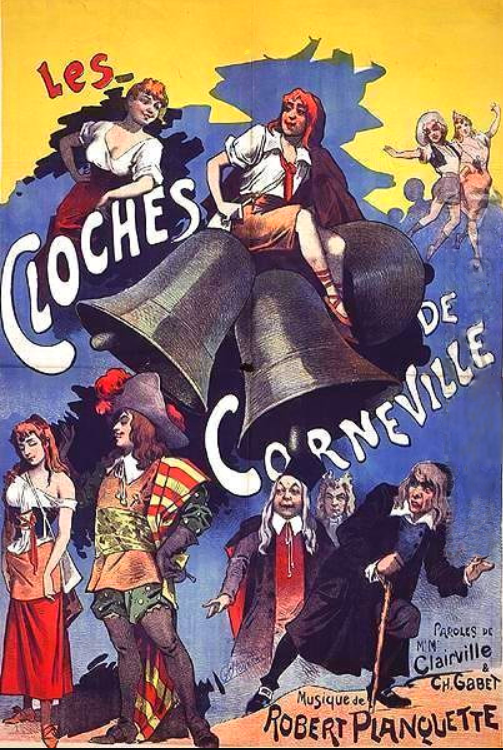
brightly coloured theatre poster depicting the major characters of the opera
Poster for original production of Les cloches de Corneville

Comic opera, sometimes known as light opera, is a sung dramatic work of a light or comic nature, usually with a happy ending and often including spoken dialogue.

Forms of comic opera first developed in late 17th-century Italy. By the 1730s, a new operatic genre, opera buffa, emerged as an alternative to opera seria. It quickly made its way to France, where it became opéra comique, and eventually, in the following century, French operetta, with Jacques Offenbach as its most accomplished practitioner.

The influence of Italian and French forms spread to other parts of Europe. Many countries developed their own genres of comic opera, incorporating the Italian and French models along with their own musical traditions. Examples include German singspiel, Viennese operetta, Spanish zarzuela, Russian comic opera, English ballad and Savoy opera, North American operetta and musical comedy.

Italian opera buffa

[edit]
oil painting of head and torso of young white man with medium length dark hair
Rossini, circa 1810–1815

In late 17th-century Italy, light-hearted musical plays began to be offered as an alternative to weightier opera seria (17th-century Italian opera based on classical mythology). Il Trespolo tutore (1679) by Alessandro Stradella was an early precursor of opera buffa. The opera has a farcical plot, and the characters of the ridiculous guardian Trespolo and the maid Despina are prototypes of characters widely used later in the opera buffa genre.

The form began to flourish in Naples with Alessandro Scarlatti's Il trionfo dell'onore (1718). At first written in Neapolitan dialect, these works became "Italianized" with the operas of Scarlatti, Pergolesi (La serva padrona, 1733), Galuppi (Il filosofo di campagna, 1754), Piccinni (La Cecchina, 1760), Paisiello (Nina, 1789), Cimarosa (Il matrimonio segreto, 1792), and then the great comic operas of Mozart and, later, Rossini and Donizetti.

At first, comic operas were generally presented as intermezzi between acts of more serious works. Neapolitan and then Italian comic opera grew into an independent form and became the most popular form of staged entertainment in Italy from about 1750 to 1800. In 1749, thirteen years after Pergolesi's death, his La serva padrona swept Italy and France, evoking the praise of such French Enlightenment figures as Rousseau.

In 1760, Niccolò Piccinni wrote the music to La Cecchina to a text by the great Venetian playwright, Carlo Goldoni. That text was based on Samuel Richardson's popular English novel, Pamela, or Virtue Rewarded (1740). Many years later, Verdi called La Cecchina the "first true Italian comic opera" – that is to say, it had everything: it was in standard Italian and not in dialect; it was no longer simply an intermezzo, but rather an independent piece; it had a real story that people liked; it had dramatic variety; and, musically, it had strong melodies and even strong supporting orchestral parts, including a strong "stand-alone" overture (i.e., you could even enjoy the overture as an independent orchestral piece). Verdi was also enthusiastic because the music was by a southern Italian and the text by a northerner, which appealed to Verdi's pan-Italian vision.

The genre was developed further in the first half of the 19th century by Gioachino Rossini in his works such as The Barber of Seville (1816) and La Cenerentola (1817) and by Gaetano Donizetti in L'elisir d'amore (1832) and Don Pasquale (1843), but declined in the mid-19th century, despite Giuseppe Verdi's Falstaff staged in 1893.

French opéra comique and operetta

[edit]
Poster for a 19th-century production of Orpheus in the Underworld

French composers eagerly seized upon the Italian model and made it their own, calling it opéra comique. Early proponents included the Italian Egidio Duni, François-André Philidor, Pierre-Alexandre Monsigny, André Grétry, François-Adrien Boïeldieu, Daniel François Auber and Adolphe Adam. Although originally reserved for less serious works, the term opéra comique came to refer to any opera that included spoken dialogue, including works such as Cherubini's Médée and Bizet's Carmen that are not "comic" in any sense of the word.

Florimond Hervé is credited as the inventor of French opéra bouffe, or opérette.[1] Working on the same model, Jacques Offenbach quickly surpassed him, writing over ninety operettas. Whereas earlier French comic operas had a mixture of sentiment and humour, Offenbach's works were intended solely to amuse. Though generally well crafted and full of humorous satire and grand opera parodies, plots and characters in his works were often interchangeable. Given the frenetic pace at which he worked, Offenbach sometimes used the same material in more than one opera. Another Frenchman who took up this form was Charles Lecocq.

German singspiel and Viennese operetta

[edit]

The singspiel developed in 18th-century Vienna and spread throughout Austria and Germany. As in the French opéra comique, the singspiel was an opera with spoken dialogue, and usually a comic subject, such as Mozart's Die Entführung aus dem Serail (1782) and The Magic Flute (1791). Later singspiels, such as Beethoven's Fidelio (1805) and Weber's Der Freischütz (1821), retained the form, but explored more serious subjects.

19th century Viennese operetta was built on both the singspiel and the French model. Franz von Suppé is remembered mainly for his overtures. Johann Strauss II, the "waltz king", contributed Die Fledermaus (1874) and The Gypsy Baron (1885). Carl Millöcker a long-time conductor at the Theater an der Wien, also composed some of the most popular Viennese operettas of the late 19th century, including Der Bettelstudent (1882), Gasparone (1884) and Der arme Jonathan (1890).

After the turn of the 20th century, Franz Lehár wrote The Merry Widow (1905); Oscar Straus supplied Ein Walzertraum ("A Waltz Dream", 1907) and The Chocolate Soldier (1908); and Emmerich Kálmán composed Die Csárdásfürstin (1915).

Spanish zarzuela

[edit]

Zarzuela, introduced in Spain in the 17th century, is rooted in popular Spanish traditional musical theatre. It alternates between spoken and sung scenes, the latter incorporating dances, with chorus numbers and humorous scenes that are usually duets. These works are relatively short, and ticket prices were often low, to appeal to the general public. There are two main forms of zarzuela: Baroque zarzuela (c. 1630–1750), the earliest style, and Romantic zarzuela (c. 1850–1950), which can be further divided into the two subgenres of género grande and género chico.

Pedro Calderón de la Barca was the first playwright to adopt the term zarzuela for his work entitled El golfo de las sirenas ("The Gulf of the Sirens", 1657). Lope de Vega soon wrote a work titled La selva sin amor, drama con orquesta ("The Loveless Jungle, A Drama with Orchestra"). The instruments orchestra was hidden from the audience, the actors sang in harmony, and the musical composition itself was intended to evoke an emotional response. Some of these early pieces were lost, but Los celos hacen estrellas ("Jealousies Turn Into Stars") by Juan Hidalgo and Juan Vélez, which premiered in 1672, survives and gives us some sense of what the genre was like in the 17th century.

In the 18th century, the Italian operatic style influenced zarzuela. But beginning with the reign of Bourbon King Charles III, anti-Italian sentiment increased. Zarzuela returned to its roots in popular Spanish tradition in works such as the sainetes (or Entr'actes) of Don Ramón de la Cruz. This author's first work in this genre was Las segadoras de Vallecas ("The Reapers of Vallecas", 1768), with music by Rodríguez de Hita.

Single act zarzuelas were classified as género chico (the "little genre" or "little form") and zarzuelas of three or more acts were género grande (the "big genre" or "big form"). Zarzuela grande battled on at the Teatro de la Zarzuela de Madrid, but with little success and light attendance. In spite of this, in 1873 a new theater, the Teatro Apolo, was opened for zarzuela grande, which shared the failures of the Teatro de la Zarzuela, until it was forced to change its program to género chico.

Russian comic opera

[edit]

The first opera presented in Russia, in 1731, was a comic opera (or "commedia per musica"), Calandro, by an Italian composer, Giovanni Alberto Ristori. It was followed by the comic operas of other Italians, like Galuppi, Paisiello and Cimarosa, and also Belgian/French composer Grétry.

The first Russian comic opera was Anyuta (1772). The text was written by Mikhail Popov, with music by an unknown composer, consisting of a selection of popular songs specified in the libretto. Another successful comic opera, The miller who was a wizard, a cheat and a matchmaker, text by Alexander Ablesimov (1779), on a subject resembling Rousseau's Devin, is attributed to Mikhail Sokolovsky. Ivan Kerzelli, Vasily Pashkevich and Yevstigney Fomin also wrote a series of successful comic operas in the 18th century.

In the 19th century, Russian comic opera was further developed by Alexey Verstovsky who composed more 30 opera-vaudevilles and 6 grand operas (most of them with spoken dialogue). Later, Modest Mussorgsky worked on two comic operas, The Fair at Sorochyntsi and Zhenitba ("The Marriage"), which he left unfinished (they were completed only in the 20th century). Pyotr Tchaikovsky wrote a comic opera, Cherevichki (1885). Nikolai Rimsky-Korsakov composed May Night 1878–1879 and The Golden Cockerel 1906–1907.

In the 20th century, the best examples of comic opera by Russian composers were Igor Stravinsky's Mavra (1922) and The Rake's Progress (1951), Sergey Prokofiev's The Love for Three Oranges (1919) and Betrothal in a Monastery (1940–1941, staged 1946), and Dmitri Shostakovich's The Nose (1927–1928, staged 1930). Simultaneously, the genres of light music, operetta, musical comedy, and later, rock opera, were developed by such composers as Isaak Dunayevsky, Dmitri Kabalevsky, Dmitri Shostakovich (Opus 105: Moscow, Cheryomushki, operetta in 3 acts, (1958)), Tikhon Khrennikov, and later by Gennady Gladkov, Alexey Rybnikov and Alexander Zhurbin.

The 21st century in Russian comic opera began with the noisy premieres of two works whose genre could be described as "opera-farce": Tsar Demyan (Царь Демьян) – A frightful opera performance. A collective project of five authors wrote the work: Leonid Desyatnikov and Vyacheslav Gaivoronsky from St. Petersburg, Iraida Yusupova and Vladimir Nikolayev from Moscow, and the creative collective "Kompozitor", which is a pseudonym for the well-known music critic Pyotr Pospelov. The libretto is by Elena Polenova, based on a folk-drama, Tsar Maksimilyan, and the work premiered on June 20, 2001, at the Mariinski Theatre, St Petersburg. Prize "Gold Mask, 2002" and "Gold Soffit, 2002".

The Children of Rosenthal (Дети Розенталя), an opera in two acts by Leonid Desyatnikov, with a libretto by Vladimir Sorokin. This work was commissioned by the Bolshoi theatre and premiered on March 23, 2005. The staging of the opera was accompanied by juicy scandal; however it was an enormous success.

English ballad and Savoy opera

[edit]

England traces its light opera tradition to the ballad opera, typically a comic play that incorporated songs set to popular tunes. John Gay's The Beggar's Opera was the earliest and most popular of these. Richard Brinsley Sheridan's The Duenna (1775), with a score by Thomas Linley, was expressly described as "a comic opera".[2][3]

By the second half of the 19th century, the London musical stage was dominated by pantomime and musical burlesque, as well as bawdy, badly translated continental operettas, often including "ballets" featuring much prurient interest, and visiting the theatre became distasteful to the respectable public, especially women and children. Mr. and Mrs. Thomas German Reed, beginning in 1855, and a number of other Britons, deplored the risqué state of musical theatre and introduced short comic operas designed to be more family-friendly and to elevate the intellectual level of musical entertainments. Jessie Bond wrote,

The stage was at a low ebb, Elizabethan glories and Georgian artificialities had alike faded into the past, stilted tragedy and vulgar farce were all the would-be playgoer had to choose from, and the theatre had become a place of evil repute to the righteous British householder.... A first effort to bridge the gap was made by the German Reed Entertainers.[4]

Scene from H.M.S. Pinafore, 1886 Savoy Theatre souvenir programme

Nevertheless, an 1867 production of Offenbach's The Grand Duchess of Gerolstein (seven months after its French première) ignited the English appetite for light operas with more carefully crafted librettos and scores, and continental European operettas continued to be extremely popular in Britain in the 1860s and 1870s, including Les Cloches de Corneville, Madame Favart and others into the 1880s, often adapted by H. B. Farnie and Robert Reece.[3] F. C. Burnand collaborated with several composers, including Arthur Sullivan in Cox and Box, to write several comic operas on English themes in the 1860s and 1870s.

In 1875, Richard D'Oyly Carte, one of the impresarios aiming to establish an English school of family-friendly light opera by composers such as Frederic Clay and Edward Solomon as a countermeasure to the continental operettas, commissioned Clay's collaborator, W. S. Gilbert, and the promising young composer, Arthur Sullivan, to write a short one-act opera that would serve as an afterpiece to Offenbach's La Périchole. The result was Trial by Jury; its success launched the Gilbert and Sullivan partnership. "Mr. R. D'Oyly Carte's Opera Bouffe Company" took Trial on tour, playing it alongside French works by Offenbach and Alexandre Charles Lecocq. Eager to liberate the English stage from risqué French influences, and emboldened by the success of Trial by Jury, Carte formed a syndicate in 1877 to perform "light opera of a legitimate kind".[5] Gilbert and Sullivan were commissioned to write a new comic opera, The Sorcerer, starting the series that came to be known as the Savoy operas (named for the Savoy Theatre, which Carte later built for these works) that included H.M.S. Pinafore, The Pirates of Penzance and The Mikado, which became popular around the world. The D'Oyly Carte Opera Company continued to perform Gilbert and Sullivan almost continuously until it closed in 1982.

The Gilbert and Sullivan style was widely imitated by their contemporaries (for example, in Dorothy), and the creators themselves wrote works in this style with other collaborators in the 1890s. None of these, however, had lasting popularity, leaving the Savoy Operas as practically the sole representatives of the genre surviving today. Only recently, some of these other English light operas have begun to be explored by scholars and to receive performances and recordings.

North American operetta and musical comedy

[edit]
A "toy soldier" from Babes in Toyland, 1903

In the United States, Victor Herbert was one of the first to pick up the family-friendly style of light opera that Gilbert and Sullivan had made popular, although his music was also influenced by the European operetta composers. His earliest pieces, starting with Prince Ananias in 1894, were styled "comic operas", but his later works were described as "musical extravaganza", "musical comedy", "musical play", "musical farce", and even "opera comique". His two most successful pieces, out of more than half a dozen hits, were Babes in Toyland (1903) and Naughty Marietta (1910).[6]

Others who wrote in a similar vein included Reginald de Koven, John Philip Sousa, Sigmund Romberg and Rudolf Friml. The modern American musical incorporated elements of the British and American light operas, with works like Show Boat and West Side Story, that explored more serious subjects and featured a tight integration among book, movement and lyrics.

In Canada, Oscar Ferdinand Telgmann and George Frederick Cameron composed in the Gilbert and Sullivan style of light opera. Leo, the Royal Cadet was performed for the first time on 11 July 1889 at Martin's Opera House in Kingston, Ontario.

The line between light opera and other recent forms is difficult to draw. Several works are variously called operettas or musicals, such as Candide and Sweeney Todd, depending on whether they are performed in opera houses or in theaters. In addition, some recent American and British musicals make use of an operatic structure, for example, containing recurring motifs, and may even be sung through without dialogue. Those with orchestral scores are usually styled "musicals", while those played on electronic instruments are often styled rock operas.

Notes

[edit]
[edit]
Revisions and contributorsEdit on WikipediaRead on Wikipedia
from Grokipedia
Comic opera, also known as light opera, is a genre of opera characterized by humorous or satirical plots, comedic characters, and typically happy endings, often blending sung musical numbers with spoken dialogue to create an accessible and entertaining form of musical theater. Developed in Europe during the 17th century, it emerged as a lighter counterpart to the more grandiose and serious opera seria, appealing to broader audiences through relatable themes of everyday life, social satire, and mistaken identities. The genre encompasses several national variants, each with distinct stylistic features shaped by cultural contexts. In , opera buffa ("comic opera") arose in the early from short intermezzi—humorous interludes performed between acts of —evolving into full-length works that emphasized witty ensembles, patter songs, and characters from lower social classes, often using local dialects for authenticity. Originating in cities like and , opera buffa gained popularity among working-class audiences for its tongue-in-cheek approach to class dynamics and human follies. In , opéra comique developed around the same period from performances at Parisian fairs, defined by its alternation of self-contained arias and spoken dialogue, initially focusing on light-hearted narratives but later incorporating more varied dramatic elements. Other forms include the German and English , which similarly integrated spoken text and popular tunes to broaden opera's reach. Key composers and works exemplify the genre's enduring appeal and evolution. Early highlights include Pergolesi's La serva padrona (1733), a seminal intermezzo-turned-opera buffa that satirizes master-servant relations. advanced the form with The Marriage of Figaro (1786), blending comedy with subtle social critique through intricate ensemble scenes and memorable arias. Gioachino Rossini's (1816) showcased rapid-fire and , while Gaetano Donizetti's The Elixir of Love (1832) and (1843) highlighted romantic misunderstandings and buffo roles like the comic bass. In the French tradition, influenced later works, though the genre's spoken elements persisted even in pieces with deeper themes, paving the way for 19th-century . These operas remain staples in modern repertoires, valued for their rhythmic vitality, vocal agility, and ability to entertain while reflecting societal norms.

Introduction

Definition and Scope

Comic opera, also known as light opera, is a of musical theater characterized by humorous or light-hearted plots, relatable everyday characters, and accessible, tuneful designed for broad appeal. Emerging from late 17th-century precursors and fully developing in the as a counterpoint to the more grandiose and serious , it emphasizes entertainment through and rather than tragic depth or mythological grandeur. The form typically features ensemble numbers that highlight and comic interplay, prioritizing witty and situations over extended solo arias, though musical expression remains integral to advancing the narrative. The scope of comic opera encompasses several national subgenres that share core elements of levity and accessibility but vary in structure and cultural inflection. These include , with its roots in satirical interludes and focus on buffoonish characters; , distinguished by spoken dialogue interspersed with musical numbers and often light-hearted subjects; , incorporating folk-like tunes and spoken sections for a more feel; and the later , a shorter, more sentimental variant emphasizing romance and . This genre deliberately excludes purely spoken plays or non-operatic forms like modern musical theater, maintaining a balance between sung music and dramatic action to ensure its operatic identity. Performances generally last two to three hours, allowing for concise storytelling within an evening's entertainment. Historically, comic opera flourished across from the 18th to the 19th centuries, serving as a populist alternative to elite serious and reflecting bourgeois tastes amid social changes. While its core developed in this period, adaptations persisted into the , influencing lighter theatrical traditions without fully merging into contemporary genres.

Historical Context

Comic opera emerged in early 18th-century , particularly in , as a response to the dominance of elaborate , evolving from short comic intermezzi performed between acts to provide lighter relief. These intermezzi, influenced by the improvisational traditions of , addressed everyday characters and situations in local dialects, appealing to audiences seeking more accessible entertainment amid the high costs and formality of serious opera. Key early milestones include the 1709 shift at ' Teatro dei Fiorentini to comic productions and Giovanni Battista Pergolesi's (1733), which gained independence as a full genre. The genre rose during the Enlightenment, catering to expanding middle-class audiences in public theaters like Venice's Teatro San Cassiano (opened 1637), which democratized access beyond aristocratic patronage. It reflected bourgeois values through relatable themes of love, marriage, and , while employing to critique aristocratic excess and rigid hierarchies, as seen in works like Niccolò Piccinni's La buona figliuola (1760). By the mid-18th century, comic opera had gained widespread popularity across Europe, reaching its height around 1750-1800 before evolving into in the , which was fueled by industrialization's , urban expansion, and the proliferation of theaters across Europe, which made performances more affordable and widespread for the rising . The spread accelerated in the 1750s through itinerant Italian troupes touring Europe, introducing opera buffa to cities like Paris, London, and Vienna via adaptations such as Pergolesi's La finta cameriera (1737), fostering cultural exchange and local variants. These companies, forming stable groups by the 1740s, capitalized on growing demand for entertaining, relatable spectacles. However, by the late 19th century, comic opera faced decline under the influence of Richard Wagner's grandiose, through-composed music dramas, which prioritized mythic depth and musical continuity over the number-based structures and humor of lighter forms, associating the latter with outdated popular entertainment. A revival occurred in the 20th century through modern stagings of classics by composers like Mozart and Rossini, alongside new works such as Igor Stravinsky's The Rake's Progress (1951), reaffirming its satirical and accessible appeal in opera houses worldwide.

Musical and Theatrical Elements

Musical Features

Comic opera distinguishes itself through its emphasis on accessible and light musical structures, prioritizing simple melodies and folk-like tunes that evoke everyday speech and popular song traditions over the intricate counterpoint typical of serious opera. These melodies often feature short phrases in major keys, with disjunct lines and a rhythmic vitality that conveys energy and humor, as seen in the allegro tempos driving energetic scenes. Such simplicity ensures broad appeal, allowing audiences to follow the action without demanding specialized musical knowledge. A hallmark of the genre is the prevalence of ensemble numbers, such as duets and quartets, which facilitate comic interplay among characters through overlapping voices and rapid exchanges, culminating in multi-sectional finales that heighten dramatic tension through collective musical chaos. Harmonic progressions remain straightforward, supporting the text rather than overwhelming it, while occasional songs introduce rapid-fire vocal delivery for humorous effect, often in syllabic settings that mimic breathless conversation. Dialogue integration varies by tradition: Italian opera buffa employs recitativo secco to advance the plot fluidly, whereas French incorporates spoken dialogue to blend theatrical naturalism with song. Orchestration in comic opera is typically modest, relying on a small ensemble of strings, winds, and continuo for accompaniment, eschewing heavy until the to maintain a , transparent texture that underscores the vocal focus. Over time, the genre evolved from the flexible arias and ensembles of 18th-century , which abandoned rigid forms for more dramatic variety, to the 19th-century 's incorporation of dance rhythms like waltzes, polkas, and marches, reflecting Viennese influences and broadening popular accessibility.

Dramatic and Staging Conventions

Comic opera plots frequently center on mistaken identities, romantic entanglements, and social satire, creating lighthearted narratives that poke fun at societal norms and human follies. These stories draw heavily from the improvisational traditions of , emphasizing quick-witted resolutions to comedic dilemmas. Characters embody archetypes such as the clever servant, who outsmarts authority figures, and the pompous noble, whose pretensions invite ridicule, amplifying humor through exaggerated personality traits. The dramatic structure of comic opera typically unfolds in acts that open with lively overtures setting a playful tone and conclude with expansive finales, where numbers build to chaotic revelations of plot twists. Disguises play a key role in advancing the action, enabling like chases and slaps that heighten the of misunderstandings. These elements, supported by musical ensembles that layer multiple voices to mirror dramatic confusion, underscore the genre's blend of text and sound in service of comedy. Staging conventions prioritize accessibility and exaggeration, using simpler sets to evoke everyday locales like bourgeois homes or village squares, which ground the satire in relatable realism. Performers employ broad, exaggerated gestures and facial expressions inherited from commedia dell'arte to convey comic exaggeration, often incorporating lazzi—impromptu comic routines—for spontaneous humor. Audience engagement is fostered through asides and direct address, allowing characters to confide in viewers and blurring the line between stage and spectators. Unlike tragic opera's emphasis on and downfall, comic opera adheres to conventions of happy endings and moral resolutions, where conflicts dissolve into harmonious reconciliations that restore . These conclusions typically involve marriages or alliances that affirm over vice, providing optimistic closure to the genre's satirical explorations.

Italian

Origins in the 18th Century

The origins of Italian opera buffa trace back to the 17th-century traditions of commedia dell'arte, a form of improvised popular comedy that featured stock characters, physical humor, and satirical social commentary, which influenced the lighthearted tone and character archetypes of early comic operas. These roots further evolved through Baroque intermezzos, short comic interludes performed between the acts of serious operas (opera seria) to provide relief from their elevated drama; by the early 18th century, these pieces had developed in Naples under Hapsburg rule, incorporating dialects, lazzi (comic routines), and simple musical structures that emphasized word-music unity and rhetorical humor. By the 1730s, s began transitioning into independent full-length comic operas, establishing as a distinct primarily in and , where it gained traction as an accessible alternative to the aristocratic . A pivotal milestone was Pergolesi's (1733), originally composed as a two-part intermezzo to his Il prigioniero superbo and premiered on September 5, 1733, at the Teatro San Bartolomeo in ; this work quickly achieved widespread popularity, with at least 24 productions across in its first decade, and is credited with solidifying opera buffa's comic realism and everyday narratives. This emergence was facilitated by the growth of public theaters and a shift from exclusive courtly support to broader bourgeois involvement, reflecting societal changes toward and wider audience access. In , the pioneering Teatro San Cassiano (opened 1637) exemplified this transition by funding productions through box-owner investments and ticket sales, appealing to a merchant class and diverse public. In , venues like the Teatro San Bartolomeo hosted early buffa works, paving the way for the grand Teatro San Carlo (opened 1737), which further democratized by accommodating bourgeois patrons alongside . Early typically adopted a two-act format, with ensembles and arias that advanced the plot continuously, and centered on lower-class characters known as buffi—such as cunning servants and bumbling masters—who embodied relatable and humor derived from class reversals. These elements, including simple melodies, repetitive phrases, and parodies of serious opera conventions, distinguished buffa from its seria counterpart and appealed to emerging middle-class sensibilities.

Major Composers and Works

One of the earliest and most influential figures in opera buffa was , whose La serva padrona (1733) marked a pivotal development from comic interludes to a standalone comic genre. This work, featuring a clever maid outwitting her master in a on class and marriage, achieved widespread popularity across and helped establish the form's emphasis on witty ensembles and accessible melodies. Building on this foundation, contributed significantly with Il barbiere di Siviglia (1782), a comic opera that premiered at the Imperial Court in St. Petersburg and became one of the era's most performed works, satirizing aristocratic pretensions through the scheming barber Figaro's antics. Paisiello's score highlighted rapid tempos and lively duets, influencing subsequent buffa composers by blending Neapolitan vigor with refined orchestration. Domenico Cimarosa further elevated the genre with (1792), premiered at Vienna's on 7 February 1792, where it was so successful that Leopold II ordered an immediate repetition after the first performance, and it received acclaim for its intricate plotting around a hidden that exposes family hypocrisies. The opera's ensemble finales, showcasing overlapping voices to heighten comedic chaos, exemplified buffa's growing complexity in depicting social on matrimony and class distinctions. Gioachino Rossini reached the zenith of with works like (1813), a that premiered in and introduced his signature crescendo rossiniano—a dynamic build-up in orchestral and vocal forces that amplified humorous tension. Rossini's innovations, including faster tempos and elaborate ensemble pieces, infused comedy with dramatic vitality, influencing later through his 30-plus buffa scores that spread via performances in the . These operas often satirized and class hierarchies, using stock characters like the cunning servant to critique societal norms while prioritizing melodic exuberance over moralizing. By the post-1830s period, opera buffa began to decline as influences from French grand opéra—emphasizing spectacle and historical drama—absorbed its comedic elements, leading to hybrid forms that overshadowed pure buffa traditions.

French Traditions

Opéra Comique

Opéra comique emerged in the early 18th century from performances at the Parisian fairs, particularly the Foire Saint-Germain and Foire Saint-Laurent, where theatrical troupes combined music, pantomime, and spoken dialogue to create lighthearted, satirical entertainments. These fairs operated outside the monopoly of the Académie Royale de Musique, which held exclusive rights to fully sung operas; to circumvent this restriction, fairground companies incorporated mandatory spoken sections, distinguishing their works from the continuous singing of Italian opera buffa. Initially known as opéras comiques en vaudevilles, these pieces drew heavily from vaudeville traditions, adapting pre-existing popular tunes to new lyrics for comedic effect, often parodying serious opera or depicting everyday follies. By the mid-18th century, the genre had matured into a more structured form, blending arias, ensembles, and spoken while emphasizing relatable characters from bourgeois life rather than mythological or aristocratic figures. Composers like François-André Philidor contributed significantly with works such as Tom Jones (1765), an based on Henry Fielding's , which featured witty and musical numbers exploring themes of romance and social intrigue. Following the of 1789, shifted toward moral tales and patriotic narratives, reflecting Enlightenment ideals of , , and , as the genre became a vehicle for promoting civic values in a post-monarchical society. This evolution is evident in Luigi Cherubini's Les deux journées (1800), a work with spoken that dramatized themes of liberty and rescue, aligning with post-revolutionary ideals. In the early 19th century, composers such as , Ferdinand Hérold, and Daniel Auber further developed the genre through works like Boieldieu's (1825), blending romance, adventure, and light drama while preserving spoken elements. The characteristics of centered on its alternation of recitative-like spoken prose with self-contained musical numbers, fostering a realistic portrayal of ordinary emotions and conflicts, often infused with humor, , and . roots persisted in early examples through the reuse of familiar melodies, but by the , composers increasingly composed original scores, incorporating romantic orchestration while retaining the spoken that grounded the drama in everyday . Themes frequently revolved around domestic life, romantic entanglements, and emerging patriotic sentiments, appealing to a broad middle-class audience seeking accessible . The primary institution for opéra comique, the Théâtre de l'Opéra-Comique, traces its origins to 1715 when the fair theaters were unified under this name, surviving regulatory challenges and the Revolution to become a cornerstone of French musical theater. In the early 19th century, the company operated from the first Salle Favart, inaugurated in 1783, and by 1820 had established a stable presence with renewed seasons, solidifying its role in presenting the genre's maturing repertoire amid romantic influences. This venue hosted key premieres that bridged comic traditions with more dramatic expressions, ensuring opéra comique's prominence through the mid-19th century.

Operetta Development

Operetta emerged in during the 1850s as a vibrant, escapist genre under the Second Empire of , building on the lighter traditions of but emphasizing melodic frivolity and satire. , often credited as its pioneer, gained prominence with his opéra bouffe Orphée aux enfers in 1858, a satirical take on that premiered at the Bouffes-Parisiens theater he founded. This work and subsequent successes like La belle Hélène (1864) at the Théâtre des Variétés marked operetta's rise, reflecting the era's prosperity and cultural exuberance in . Offenbach composed over 100 operettas, many staged at the Théâtre des Variétés, which became a hub for the genre's development. Key features of French operetta included more continuous musical flow compared to spoken interludes in earlier forms, integrated dance elements such as the —famously featured in Orphée aux enfers—and themes of fantasy, romance, and social critique amid the excesses of Second Empire society. These elements created an escapist allure, blending witty librettos with lively orchestration to satirize mythology, politics, and bourgeois life, often performed in intimate Parisian venues that enhanced their intimate, theatrical charm. Following Offenbach's dominance, successors like Charles Lecocq carried the genre forward, achieving acclaim with works such as Le cœur et la main (1882), an in three acts that exemplified operetta's melodic elegance and romantic plots. Lecocq's compositions, influenced by Offenbach, maintained the form's popularity through the late , though none rivaled the master's output in scale or impact. By the 1880s, French operetta's influence spread internationally, inspiring English comic operas like those of and early American musical forms that adapted its satirical and melodic style. However, the genre declined after 1900 as realism in theater gained prominence, shifting audience tastes toward more grounded narratives and away from operetta's fantastical , exacerbated by political upheavals like the Franco-Prussian War's aftermath.

German and Austrian Forms

Singspiel

Singspiel emerged in the 1750s in and as a distinctly German form of comic opera, drawing significant influence from the English tradition through translations and adaptations that emphasized spoken in the vernacular language. This structure made the genre accessible to a broader audience, particularly the emerging , by avoiding the recitatives and elaborate vocal techniques of seria, instead alternating natural spoken German with musical numbers to reflect everyday speech patterns and . By the late , performances often occurred in suburban theaters, such as 's (opened 1787), which catered to non-elite patrons seeking affordable, relatable entertainment outside the courtly venues. Pioneering works exemplified the Singspiel's lighthearted yet instructive tone, with Johann Adam Hiller's Der Teufel ist los, oder Die verwandelten Weiber (1766) marking a foundational success as an adaptation of the English The Devil to Pay. Composed with librettist Christian Felix Weisse, this piece featured magical and plots infused with moral lessons on domestic harmony and virtue, aligning with Enlightenment ideals of rational entertainment. Hiller's subsequent Singspiele, numbering around twelve, further popularized the form through simple strophic arias, lively choruses, and the integration of familiar folk and , which required minimal vocal training from performers and resonated with audiences' cultural familiarity. These elements created a folk-inspired simplicity that distinguished Singspiel from more sophisticated continental operas, fostering a sense of communal participation in the theater. As the genre evolved, Singspiel served as a crucial precursor to Romantic opera by gradually incorporating more dramatic depth and orchestral complexity while retaining its dialogue-based framework. Wolfgang Amadeus Mozart's (1782) exemplifies this hybrid development, blending conventions with Turkish and elevated musical expression to achieve widespread acclaim at Vienna's , thus bridging 18th-century comic traditions toward the narrative intensity of 19th-century works like Carl Maria von Weber's .

Viennese Operetta

Viennese operetta emerged in the mid-19th century as a distinct form of comic opera, centered in Vienna's , where it quickly became a staple of the city's cultural life. This genre built upon the foundations of earlier traditions by incorporating more sophisticated musical and dramatic elements. The rise was propelled by local composers responding to the popularity of French imports, leading to a golden age that emphasized elegance and dance. , known as the "Waltz King," epitomized this development with his operetta Die Fledermaus (1874), premiered at the , which marked the pinnacle of the form through its infectious melodies and witty . Initially receiving a modest reception, it soon achieved widespread acclaim and remains one of the most frequently performed operettas worldwide. Musically, Viennese operetta is characterized by lyrical waltzes and polkas, drawing directly from Strauss's expertise in , which infused the works with rhythmic vitality and grace. These pieces often feature full , including prominent sections that add a festive, robust to the ensembles and overtures. Dramatically, the plots revolve around mistaken identities and romantic entanglements within , blending with sentimental romance to create lighthearted , as seen in Die Fledermaus's tale of a revenge prank unraveling at a masked ball. This focus on upper-class frivolity distinguished it from the sharper social critiques in French operetta, prioritizing nostalgic charm over biting humor. Key composers extended this legacy into the early 20th century, with ushering in a "silver age" through works like (1905), which premiered in and captured themes of longing and amid the waning . Lehár's operettas evoked the empire's multicultural splendor and romantic ideals, reflecting a cultural yearning as political decline loomed. and Lehár together defined the genre's core, with their scores blending operatic arias, duets, and choral numbers into seamless entertainment. Viennese operetta reached its peak popularity in the late 19th and early 20th centuries, thriving as escapist fare during before fading in the interwar years due to , political upheaval, and the empire's dissolution in 1918. Postwar productions increasingly served as nostalgic tributes to Habsburg , but the genre waned by amid rising American musical influences. Its enduring appeal led to influential adaptations in , such as Ernst Lubitsch's 1934 Hollywood version of starring and , which preserved the operettas' glamour for new audiences.

Spanish Zarzuela

Early Forms and Evolution

The origins of zarzuela trace back to the early 17th century in , emerging as courtly entertainments that blended spoken , , and dance within the vibrant tradition of the comedia nueva. , a leading playwright of the , contributed to these early forms with works like La selva sin amor (text written around 1620 and premiered in 1627 at the court of Philip IV), which featured Italian-style adapted to Spanish verse and marked one of the first experiments in sung theatrical pieces in . This hybrid format, performed in royal settings such as Madrid's palaces, incorporated poly-metric verse plays with musical interludes, laying the groundwork for zarzuela's characteristic alternation between spoken dialogue and song, though it remained more operatic in its initial fully sung structure. By the 18th century, zarzuela underwent a significant shift as it transitioned from exclusive court performances to public theaters in Madrid, coinciding with the Bourbon dynasty's ascension in 1700 and the influx of Italian artistic influences. Under Bourbon rule, Italian opera dominated Spanish stages, prompting zarzuela composers to integrate elements like arias and ensembles while preserving distinctly Spanish folk traditions, such as regional dances and vernacular humor, to appeal to broader audiences. This evolution maintained zarzuela's national character amid foreign pressures, with public venues like the theaters of the Cruz and Príncipe fostering a more accessible form that retained its roots in Spanish literary and musical customs despite the prevailing Italianate styles. The brought a revival of , particularly after the , as spurred renewed interest in indigenous genres following the and the loss of Spanish colonies. This period saw the development of género chico, a short one-act format designed for urban audiences in 's burgeoning theaters, emphasizing light-hearted themes of local customs, everyday romance, and social satire to reflect the lives of the . A pivotal event occurred in 1856 with the opening of the Teatro de la Zarzuela in , which formalized the genre's distinction from full opera through regulations supporting spoken dialogue and popular songs, thereby establishing zarzuela as a uniquely Spanish comic theater form dedicated to national expression rather than elite operatic traditions.

Key Features and Examples

Zarzuela in the late 19th and early 20th centuries is characterized by its alternation between spoken dialogue and musical numbers, including operatic arias, popular songs such as cuplés (humorous or sentimental couplets), and folk dances like seguidillas, which infuse the genre with lively Spanish rhythms and regional flavors. These elements often incorporate regional dialects and costumbrista depictions of everyday life, with guitar accompaniment enhancing the folkloric authenticity in certain scenes, particularly those drawing on influences. Prominent examples from this period include Francisco Asenjo Barbieri's El barberillo de (1874), a three-act género grande set in Madrid's working-class neighborhood, blending comedy, romance, and patriotic themes through its vibrant choral and dance sequences. Ruperto Chapí contributed significantly with works like La revoltosa (1897), a one-act género chico piece that captures the spirited antics of Madrid's lower classes in a setting, emphasizing relatable characters and catchy melodies that resonated with urban audiences. These compositions highlight 's focus on Madrid's working-class milieu, using local slang and humor to portray daily struggles and joys. During the Bourbon Restoration (1874–1931), served as a mirror to Spanish identity, fostering national cohesion through consumer-oriented entertainment that celebrated regional customs and critiqued social norms without overt political confrontation. The género grande format, typically spanning two or three acts for a more expansive narrative, allowed for grander orchestrations and historical or exotic plots, distinguishing it from the lighter, single-act género chico. While the genre's core flourished between 1900 and the 1930s with innovative works blending tradition and modernity, it underwent adaptations during the Franco regime (1939–1975), where performances were often censored or repurposed to align with nationalist , preserving its popularity despite ideological constraints.

Other National Traditions

English Ballad and Savoy Opera

The English tradition of comic opera emerged prominently in the 18th century with the , a genre that parodied the grandeur of by incorporating spoken dialogue and popular tunes set to new satirical lyrics. John Gay's , premiered on 29 January 1728 at the Theatre Royal, in , exemplifies this form, using over 60 familiar ballads, folk songs, and parodied opera airs arranged by Johann Christoph Pepusch to mock , , and the hypocrisy of the elite by drawing parallels between London's underworld and the ruling class. This work's innovative structure—alternating prose scenes with simple, accessible songs—directly challenged the elaborate recitatives and arias of contemporary , making comic opera more relatable to English audiences and establishing a blueprint for native theatrical . achieved immediate success, running for 62 performances in its initial season, an extraordinary run that outstripped most serious operas of the era and prompted revivals, including a second-season production by a touring known as "The Lilliputians." Its biting commentary on figures like further amplified its cultural resonance, influencing subsequent English comic forms by prioritizing wit and social critique over musical complexity. In the , the Savoy operas refined this satirical vein through the enduring partnership of librettist and composer , who collaborated on 14 comic operas from 1871 to 1896 under producer , with many premiering at the purpose-built after its 1881 opening. Their works, such as H.M.S. Pinafore (premiered 25 May 1878 at the Opera Comique, ) and The Pirates of Penzance (premiered 31 December 1879 at the Fifth Avenue Theatre, New York, followed by in 1880), employed spoken dialogue interspersed with tuneful, original scores to deliver "" humor that inverted social norms and lampooned British institutions, the empire, class structures, and bureaucracy. These operas' features—witty lyrics, melodic ensembles, and patter songs—built on ballad opera's accessibility while elevating the music to a more sophisticated level, often adapting folk-like rhythms without directly borrowing tunes, to sustain extended runs and broad appeal. alone amassed 571 performances in its initial production, while achieved 363 in after its transatlantic debut, collectively surpassing 100 performances per major work and sparking international touring. By the , their popularity led to widespread unauthorized productions in America, prompting D'Oyly Carte to establish official U.S. tours that profoundly shaped American musical theater, introducing satirical comic opera to a new audience and influencing later Broadway developments.

Russian Comic Opera

Russian comic opera emerged in the mid-19th century, building on the foundations laid by Mikhail Glinka, whose operas A Life for the Tsar (1836) and Ruslan and Lyudmila (1842) incorporated Russian folk elements into a national style that inspired subsequent composers. Alexander Dargomyzhsky advanced this tradition with Rusalka (The Water Nymph), premiered in 1856, an opera based on Alexander Pushkin's unfinished tale, emphasizing dramatic realism and natural speech patterns in recitative, influencing later nationalists. This piece foreshadowed the innovative approaches of later nationalists. Key examples of Russian comic opera include Modest Mussorgsky's The Fair at Sorochyntsi (1874–1880), an unfinished three-act work based on Nikolai Gogol's story of peasant romance and supernatural mischief, which premiered posthumously in 1917 (completed by others) and exemplifies folk-infused humor. Nikolai Rimsky-Korsakov contributed through comic operas like May Night (1880), a work with supernatural comedy and folk tunes, and comic interludes in operas like The Golden Cockerel (1909), a satirical fairy-tale piece critiquing autocracy with whimsical orchestration and exaggerated characters, reflecting his mastery of Russian fantastical narratives. Characteristic features of Russian comic opera during this period involved the integration of authentic folk songs and dances to evoke , often alongside spoken dialogue reminiscent of European traditions, as seen in the vaudeville-influenced works of earlier figures like Alexey Verstovsky. Themes centered on peasant life, fairy tales, and everyday satire, aligning with the nationalist ethos of the "Mighty Five" composers—Mussorgsky, Rimsky-Korsakov, and their circle—who prioritized over Western forms to assert a distinctly Russian musical voice. Despite these innovations, Russian comic opera remained less developed and prolific compared to Italian buffa traditions, with production largely confined to St. Petersburg's imperial theaters, such as the Mariinsky (opened 1860), from the 1860s through the 1910s, where nationalist works gained traction amid growing cultural autonomy.

North American Operetta and Musical Comedy

The introduction of comic opera to began in the late through touring productions of English works, particularly the Savoy operas of , which arrived in New York as early as 1879 with and revitalized interest in light musical theater amid competition from continental imports. These tours, often unauthorized at first due to , established a foundation for American adaptations by blending satirical wit with accessible melodies, drawing large audiences and inspiring local companies to stage English-language . Building briefly on English roots from and Savoy traditions, North American forms quickly incorporated vernacular elements to appeal to diverse immigrant populations in urban centers like New York. A pivotal figure in this adaptation was Irish-born composer , whose 1910 operetta Naughty Marietta fused European with Irish-American stylistic influences, such as lilting folk-inflected tunes and spirited numbers, creating a distinctly hybrid American sound. Set in colonial New Orleans, the work exemplified the genre's shift toward exoticized locales while emphasizing melodic accessibility and vocal demands that required trained singers, marking it as a bridge between imported and emerging U.S. musical forms. Herbert's contributions, produced at venues like the New York Theatre, helped solidify operetta's commercial viability on Broadway by the early 20th century. By the 1920s, American operetta evolved into musical comedy, integrating jazz and ragtime rhythms that infused earlier European structures with syncopated energy and urban flair, as seen in Jerome Kern's Show Boat (1927), a semi-operetta that advanced plot-driven narratives over star-centric spectacle. This production, with its score blending operatic arias, blues-inflected songs like "Ol' Man River," and ragtime elements, reflected themes of immigration, racial dynamics, and riverboat urban life, performed at the Ziegfeld Theatre with elaborate choruses that highlighted communal immigrant experiences. Key features included star vehicles for performers like Helen Morgan, lavish ensemble choruses evoking bustling cityscapes, and narratives exploring assimilation and social mobility, often influenced by Yiddish theater's exuberant musical comedies that cross-pollinated with mainstream Broadway through shared immigrant talent and Yiddish-inflected humor. The New York Hippodrome, known for its massive spectacles accommodating thousands, hosted early operetta revues like Hip-Hip-Hooray (1915), amplifying these trends with grand-scale productions that merged chorus lines and scenic extravagance. Pure operetta declined by the 1930s as economic pressures from the favored cheaper, jazz-infused musical comedies and talking films, which siphoned audiences and resources from elaborate stage productions. This shift marked the genre's transformation into modern musical theater, though its legacy persisted in Broadway's integrated storytelling and melodic traditions.

Legacy and Influence

Transition to Modern Musical Theater

The transition from comic opera to modern musical theater during the 1920s–1940s was exemplified by Rodgers and Hammerstein's Oklahoma! (1943), which integrated operatic plot structures with innovative elements to advance and character development. Drawing from the lineage of comic opera, the production featured sweeping romantic anthems and evolved characters through song, setting a standard for cohesion where every aspect—, , and choreography—served the central story. Similarly, Leonard Bernstein's (1956) paid direct homage to the comic tradition, satirizing societal optimism through Voltaire's with a blend of philosophical , ensemble , and eclectic musical numbers like "Glitter and Be Gay." Core influences from comic opera shaped modern musicals via ensemble numbers and the integrated book-music format, where songs seamlessly extend to propel the plot. This evolution stemmed from European operetta imports to Broadway, emphasizing narrative unity over standalone tunes, as seen in the shift from lighthearted revues to dramatic wholes. Economic pressures of the further propelled this revival, with Hollywood's studio adapting 1930s operettas into escapist films like Naughty Marietta (1935) and Maytime (1937), starring and ; these productions revitalized the genre and drove MGM's 1937 profits to match those of all other major studios combined. By mid-century, comic opera's elements facilitated global adaptations, particularly in and , where Viennese and Savoy traditions merged with local idioms to form hybrid musical theaters. These forms often engaged themes, confronting racial prejudice and imperial legacies, as in Rodgers and Hammerstein's South Pacific (1949), which critiqued Western over Pacific islanders amid wartime romance. By the 1950s, the distinct term "comic opera" waned, fully absorbed into the expansive "musical" category as post-war works prioritized realistic integration over operetta's lighter conventions.

Contemporary Comic Opera

In the late 20th and early 21st centuries, major opera houses have sustained interest in comic opera through regular revivals of classic works, particularly those by Rossini. has featured prominent productions such as Il barbiere di Siviglia in 2025, directed by Annabel Arden with a focus on the opera's comedic class dynamics and musical sparkle, and in 2024, emphasizing witty ensemble interactions. Similarly, the has revived Rossini's Il barbiere di Siviglia multiple times, including a 2025 production conducted by Giacomo Sagripanti with a star cast led by Aigul Akhmetshina as Rosina, highlighting the work's effervescent style. These efforts form part of broader Rossini cycles at both venues, which have included over a dozen productions since the 1980s to preserve and reinterpret the composer's comic legacy. Film and television adaptations have further extended accessibility, such as the Metropolitan Opera's 1986 live broadcast of Johann Strauss II's , directed by Otto Schenk and featuring , which captured the operetta's New Year's Eve revelry for a wider audience via . Contemporary composers have innovated within comic opera by blending traditional forms with modern themes and genres, often incorporating humor to address current social issues. Jake Heggie's operas, such as Dead Man Walking (2000), integrate dramatic tension with lighter, satirical moments to explore ethical dilemmas, marking a shift toward more approachable narratives in American opera. A notable example is Covid fan tutte (2020), a comedic adaptation of Mozart's by conductor and soprano Karita Mattila at the Finnish National Opera, which humorously reimagines the plot amid pandemic isolation, using spoken dialogue and minimalist staging to satirize lockdown absurdities. This work exemplifies genre-blending by fusing conventions with contemporary elements, performed live but also adapted for streaming to reach global viewers. Global extensions of comic opera have emerged in non-Western contexts, particularly in , where new works draw on local cultural motifs while adopting operatic structures. Huang Ruo's (scheduled world premiere 2027 at Seattle Opera), with by , is a comic opera that reimagines Ang Lee's 1993 film, blending Taiwanese wedding traditions with satirical commentary on identity and family expectations through lively ensembles and . The accelerated digital stagings worldwide, enabling virtual performances of comic operas. Despite these advancements, contemporary comic opera faces challenges in balancing with perceptions of , particularly for post-1950 non-Western forms that remain underrepresented in major repertoires. High production costs and traditional venues often reinforce an image of as exclusive, deterring diverse audiences, as noted in discussions of how lavish stagings alienate potential newcomers. Efforts to counter this include initiatives and hybrid formats, yet global examples like Asian-infused works still struggle for mainstream integration, highlighting the need for broader programming to reflect .

References

Add your contribution
Related Hubs
User Avatar
No comments yet.