Hubbry Logo
Data loggerData loggerMain
Open search
Data logger
Community hub
Data logger
logo
8 pages, 0 posts
0 subscribers
Be the first to start a discussion here.
Data logger
Data logger
from Wikipedia
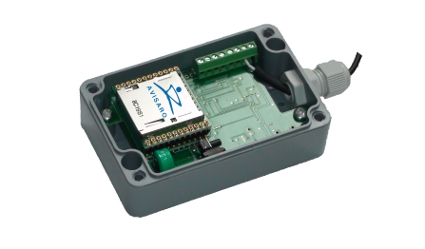
Data logger Cube storing technical and sensor data

A data logger (also datalogger or data recorder) is an electronic device that records data over time or about location either with a built-in instrument or sensor or via external instruments and sensors. Increasingly, but not entirely, they are based on a digital processor (or computer), and called digital data loggers (DDL). They generally are small, battery-powered, portable, and equipped with a microprocessor, internal memory for data storage, and sensors. Some data loggers interface with a personal computer and use software to activate the data logger and view and analyze the collected data, while others have a local interface device (keypad, LCD) and can be used as a stand-alone device.

Data loggers vary from general-purpose devices for various measurement applications to very specific devices for measuring in one environment or application type only. While it is common for general-purpose types to be programmable, many remain static machines with only a limited number or no changeable parameters. Electronic data loggers have replaced chart recorders in many applications.

One primary benefit of using data loggers is their ability to automatically collect data on a 24-hour basis. Upon activation, data loggers are typically deployed and left unattended to measure and record information for the duration of the monitoring period. This allows for a comprehensive, accurate picture of the environmental conditions being monitored, such as air temperature and relative humidity.

The cost of data loggers has been declining over the years as technology improves and costs are reduced. Simple single-channel data loggers can cost as little as $25, while more complicated loggers may cost hundreds or thousands of dollars.

Data formats

[edit]

Standardization of protocols and data formats has been a problem but is now growing in the industry and XML, JSON, and YAML are increasingly being adopted for data exchange. The development of the Semantic Web and the Internet of Things is likely to accelerate this present trend.

Instrumentation protocols

[edit]

Several protocols have been standardized including a smart protocol, SDI-12, that allows some instrumentation to be connected to a variety of data loggers. The use of this standard has not gained much acceptance outside the environmental industry. SDI-12 also supports multi-drop instruments. Some data logging companies support the MODBUS standard. This has been used traditionally in the industrial control area, and many industrial instruments support this communication standard. Another multi-drop protocol that is now starting to become more widely used is based upon CAN-Bus (ISO 11898). Some data loggers use a flexible scripting environment to adapt to various non-standard protocols.

Data logging versus data acquisition

[edit]

The terms data logging and data acquisition are often used interchangeably. However, in a historical context, they are quite different. A data logger is a data acquisition system, but a data acquisition system is not necessarily a data logger.

  • Data loggers typically have slower sample rates. A maximum sample rate of 1 Hz may be considered to be very fast for a data logger, yet very slow for a typical data acquisition system.
  • Data loggers are implicitly stand-alone devices, while typical data acquisition systems must remain tethered to a computer to acquire data. This stand-alone aspect of data loggers implies onboard memory that is used to store acquired data. Sometimes this memory is very large to accommodate many days, or even months, of unattended recording. This memory may be battery-backed static random access memory, flash memory, or EEPROM. Earlier data loggers used magnetic tape, punched paper tape, or directly viewable records such as "strip chart recorders".
  • Given the extended recording times of data loggers, they typically feature a mechanism to record the date and time in a timestamp to ensure that each recorded data value is associated with a date and time of acquisition to produce a sequence of events. As such, data loggers typically employ built-in real-time clocks whose published drift can be an important consideration when choosing between data loggers.
  • Data loggers range from simple single-channel input to complex multi-channel instruments. Typically, the simpler the device the less programming flexibility. Some more sophisticated instruments allow for cross-channel computations and alarms based on predetermined conditions. The newest data loggers can serve web pages, allowing numerous people to monitor a system remotely.
  • The unattended and remote nature of many data logger applications implies the need for some applications to operate from a DC power source, such as a battery. Solar power may be used to supplement these power sources. These constraints have generally led to ensuring that the devices they market are extremely power efficient relative to computers. In many cases, they are required to operate in harsh environmental conditions where computers will not function reliably.
  • This unattended nature also dictates that data loggers must be extremely reliable. Since they may operate for long periods nonstop with little or no human supervision and may be installed in harsh or remote locations, it is imperative that so long as they have power, they will not fail to log data for any reason. Manufacturers go to great lengths to ensure that the devices can be depended on in these applications. As such data loggers are almost completely immune to the problems that might affect a general-purpose computer in the same application, such as program crashes and the instability of some operating systems.

Applications

[edit]
Data logger application for weather station at P2I LIPI

Applications of data logging include:

  • Unattended weather station recording (such as wind speed / direction, temperature, relative humidity, solar radiation).
  • Unattended hydrographic recording (such as water level, water depth, water flow, water pH, water conductivity).
  • Unattended soil moisture level recording.
  • Unattended gas pressure recording.
  • Offshore buoys for recording a variety of environmental conditions.
  • Road traffic counting.
  • Measure temperatures (humidity, etc.) of perishables during shipments: Cold chain.[1]
  • Measure variations in light intensity.
  • Measuring temperature of pharmaceutical products, medicines and vaccines during storage
  • Measuring temperature and humidity of perishable products during transportation to ensure cold chain is maintained
  • Process monitoring for maintenance and troubleshooting applications.
  • Process monitoring to verify warranty conditions
  • Wildlife research with pop-up archival tags
  • Measure vibration and handling shock (drop height) environment of distribution packaging.[2]
  • Tank level monitoring.
  • Deformation monitoring of any object with geodetic or geotechnical sensors controlled by an automatic deformation monitoring system.
  • Environmental monitoring.
  • Vehicle testing (including crash testing)
  • Motor racing
  • Monitoring of relay status in railway signaling.
  • For science education enabling 'measurement', 'scientific investigation' and an appreciation of 'change'
  • Record trend data at regular intervals in veterinary vital signs monitoring.
  • Load profile recording for energy consumption management.
  • Temperature, humidity and power use for heating and air conditioning efficiency studies.
  • Water level monitoring for groundwater studies.
  • Digital electronic bus sniffer for debug and validation

Examples

[edit]
  • Black-box (stimulus/response) loggers:
    • A flight data recorder (FDR) is a piece of recording equipment used to collect specific aircraft performance data. The term may also be used, albeit less accurately, to describe the cockpit voice recorder (CVR), another type of data recording device found on board aircraft.
    • An event data recorder (EDR) is a device installed by the manufacturer in some automobiles which collects and stores various data during the time-frame immediately before and after a crash.
    • A voyage data recorder (VDR) is a data recording system designed to collect data from various sensors on board a ship.
    • A train event recorder is a device that records data about the operation of train controls and performance in response to those controls and other train control systems.
    • An accident data recorder (ADR) is a device for triggering accidents or incidents in most kind of land vehicles and recording the relevant data. In automobiles, all diagnostic trouble codes (DTCs) are logged in engine control units (ECUs) so that at the time of service of a vehicle, a service engineer will read all the DTCs using Tech-2 or similar tools connected to the on-board diagnostics port, and will come to know problems occurred in the vehicle. Sometimes a small OBD data logger is plugged into the same port to continuously record vehicle data.
    • In embedded system and digital electronics design, specialized high-speed digital data logger help overcome the limitations of more traditional instruments such as the oscilloscope and the logic analyzer. The main advantage of a data logger is its ability to record very long traces, which proves very useful when trying to correct functional bugs that happen once in while.
    • In the racing industry, Data Loggers are used to record data such as braking points, lap/sector timing, and track maps, as well as any on-board vehicle sensors.
  • Health data loggers:
    • The growing, preparation, storage and transportation of food. Data logger is generally used for data storage and these are small in size.
    • A Holter monitor is a portable device for continuously monitoring various electrical activity of the cardiovascular system for at least 24 hours.
    • Electronic health record loggers.
  • Other general data acquisition loggers:
    • An (scientific) experimental testing data acquisition tool.
    • Ultra Wideband Data Recorder, high-speed data recording up to 2 Giga Samples per second.

Future directions

[edit]

Data Loggers are changing more rapidly now than ever before. The original model of a stand-alone data logger is changed to one of a device that collects data but also has access to wireless communications for alarming of events, automatic reporting of data, and remote control. Data loggers are beginning to serve web pages for current readings, e-mail their alarms, and FTP their daily results into databases or direct to the users. Very recently, there is a trend to move away from proprietary products with commercial software to open-source software and hardware devices. The Raspberry Pi single-board computer is among others a popular platform hosting real-time Linux or preemptive-kernel Linux operating systems with many

  • digital interfaces like I2C, SPI, or UART enable the direct interconnection of a digital sensor and a computer,
  • and an unlimited number of configurations to show measurements in real-time over the internet, process data, plot charts, and diagrams...

See also

[edit]

References

[edit]
Revisions and contributorsEdit on WikipediaRead on Wikipedia
from Grokipedia
A data logger, also known as a datalogger or data recorder, is a compact, cost-effective electronic device designed to automatically monitor and record physical parameters such as , voltage, current, , , or over extended periods, typically using built-in sensors or external inputs connected to a digital processor for and retrieval. Data loggers trace their origins to early manual and mechanical recording methods, such as 19th-century chart recorders that used ink pens to trace data on rotating paper drums for . Electronic data loggers emerged in the late , replacing cumbersome chart systems with more flexible, rugged, and portable digital alternatives capable of storing data electronically without physical media. By the 1980s and 1990s, advancements in microprocessors and personal computers integrated data loggers into broader (DAQ) systems. Modern data loggers, evolving since the 2000s, incorporate wireless connectivity (e.g., , , ), , and high-resolution sampling, enabling real-time remote monitoring and analysis across diverse applications. Key features of data loggers include variable sampling rates (typically 1–100 samples per second per channel), support for multiple input types like analog voltage (0–10 V), current loops (4–20 mA), thermocouples, and digital pulses, and storage capacities ranging from kilobytes in internal memory to gigabytes via USB or SD cards, allowing recording durations from hours to years depending on configuration. They often operate on low-power batteries for field deployment or external power for fixed installations, with user interfaces varying from simple LCD displays to advanced software for visualization and data export in formats like CSV or . Common types encompass standalone single-channel units for basic tracking, multi-channel systems (4–32 channels, expandable to 100+) for complex setups, and specialized variants such as loggers for , GPS-enabled devices for location-based logging, or mixed-signal loggers combining electrical and environmental measurements. Data loggers are widely applied in industries requiring precise, unattended , including for air quality and seismic activity, in and HVAC systems, cold chain management for pharmaceuticals and food transportation to ensure temperature compliance, and research in , automotive testing, and biomedical fields for tracking variables like strain or . Their reliability in harsh conditions—such as for outdoor use or high-shock resistance for industrial environments—makes them indispensable for compliance with standards like FDA regulations for or ISO guidelines for .

Fundamentals

Definition and Purpose

A data logger is an electronic device that automatically records data from sensors or instruments at set intervals, typically storing it in internal for later . It functions as a self-contained system with a built-in processor and predefined software, enabling the capture of measurements such as voltage, , current, or strain without requiring continuous connection to a computer. The primary purpose of a data logger is to facilitate long-term, unattended monitoring of physical parameters like , , voltage, or in environments where continuous human observation is impractical, such as remote field sites or industrial processes. This capability supports applications in scientific research, , and by providing reliable, timestamped records for subsequent analysis and trend identification. Key characteristics of data loggers include their portability and battery-operated design, which allow deployment in diverse locations without reliance on external power sources, as well as a self-contained architecture that minimizes setup complexity. They are engineered to handle multiple input channels, accommodating both analog signals (e.g., from thermocouples) and digital inputs (e.g., pulse counts), thereby supporting simultaneous monitoring of various parameters. In a basic workflow, data loggers process sensor inputs through signal conditioning to prepare raw signals for digitization, followed by timestamped recording in non-volatile memory, and conclude with offline retrieval via interfaces like USB for analysis. This sequence ensures data integrity over extended periods, often spanning days to months.

Historical Development

The origins of data logging trace back to the 19th century with the development of mechanical chart recorders, which provided the first automated means of graphically recording physical phenomena over time. A seminal invention was the kymograph, created by German physiologist Carl Ludwig in 1847, designed primarily to capture physiological data such as and muscular motion by inscribing traces on a rotating drum covered with soot-coated paper. This device revolutionized scientific observation by enabling real-time, continuous recording, supplanting manual notations and laying foundational principles for later technologies. By the mid-20th century, analog methods advanced significantly with the adoption of recorders in the , particularly for geophysical applications like seismic surveys where large volumes of field data needed to be captured remotely. These systems allowed for multi-channel analog storage, improving upon mechanical recorders by offering greater portability and capacity, though they remained susceptible to noise and degradation. The transition to digital logging began in the late with the emergence of transistor-based electronic data loggers, which digitized signals for more precise and programmable recording, reducing reliance on analog media and enabling basic in . Key milestones in the included the integration of microprocessors, which transformed data loggers into intelligent, standalone devices capable of real-time and control. For instance, Campbell Scientific introduced the CR5 Digital Recorder in 1975, the first commercial battery-operated digital data logger using logic for low-power, modular operation in . The marked a pivotal shift to solid-state , such as early non-volatile RAM and , which replaced bulky magnetic tapes with compact, reliable storage that resisted mechanical failure and environmental hazards, facilitating deployment in harsher field conditions. From the through the , rapid driven by advances in integrated circuits allowed data loggers to shrink from bulky enclosures to handheld or embeddable units, while the addition of wireless interfaces like and early enabled remote data retrieval without physical connections. This era also benefited from , which predicted the doubling of transistors on chips approximately every two years, exponentially increasing storage capacities from kilobytes in early models to gigabytes by the mid-, thus supporting longer deployment periods and higher sampling rates. In the 2010s and into the 2020s, data loggers evolved further by incorporating (IoT) connectivity and cloud integration for seamless data uploading, yet retained core standalone functionality through enhanced battery life and ruggedized designs suitable for autonomous operation up to 2025. This progression emphasized within devices, allowing preprocessing before optional cloud synchronization, thereby balancing reliability in remote settings with modern data ecosystem demands.

Components and Architecture

Hardware Elements

The core hardware elements of a data logger revolve around a , typically a low-power or , which manages , processing, and storage tasks. For instance, the MSP430FR5969, a 16-bit RISC operating at up to 16 MHz with 64 KB of non-volatile FRAM, is commonly employed in ultralow-power designs to enable efficient operation at voltages between 1.8 V and 3.6 V. Many contemporary data loggers incorporate ARM-based , such as those in systems, for their optimized performance in handling multichannel while minimizing . Integral to this setup is an (ADC), often with resolutions ranging from 12 to 24 bits to capture precise measurements; examples include the 12-bit, 14-channel ADC in MSP430-based loggers achieving 200 ksps at low current draw, or 24-bit ADCs supporting up to 16 single-ended inputs for high-fidelity signal detection. Sensors and input interfaces form the frontline for data capture, supporting a variety of transducers such as thermocouples (e.g., Type J or K), resistance temperature detectors (RTDs) in 2-, 3-, or 4-wire configurations, and strain gauges via setups. These inputs often employ to handle multiple channels efficiently, with capabilities for 8 to 16 differential or up to 100 single-ended channels in modular systems, allowing simultaneous monitoring of diverse signals like voltage (±2 V to ±30 V), current (±20 mA), and frequency. Compatibility extends to specialized sensors, including SDI-12 digital interfaces and 4-20 mA current loops, ensuring versatility across environmental and industrial applications. Power management in data loggers prioritizes longevity and reliability, frequently relying on battery-powered operation with alkaline D-cells or coin cells like the CR2032, which can sustain >5 years of intermittent logging in low-duty-cycle modes. External DC supplies (8-32 V) or AC adapters (10-23 VAC) provide alternatives, with automatic switching to internal batteries during outages; low-power sleep modes further extend runtime, such as up to 4 weeks on six D-cells for continuous acquisition. Enclosures are designed for durability in harsh conditions, featuring modular, weatherproof casings with LCD displays and LED indicators, often rated for rugged field deployment though specific IP ratings vary by model. Storage hardware ensures data retention without external connectivity, utilizing internal non-volatile memory like 4 MB battery-backed SRAM or 64 KB FRAM for thousands of samples, with expansion options via such as SD cards or legacy PCMCIA slots supporting up to 250,000 readings. A typical circuit in data loggers preprocesses outputs to enhance accuracy, incorporating amplifiers for gain (e.g., up to 1000 for strain gauges or 200 for thermocouples to boost millivolt signals to volts) and low-pass filters (e.g., 3-pole Butterworth at 50 Hz cutoff) to attenuate noise while complying with anti-aliasing requirements. For thermocouples, this includes differential amplification with cold-junction compensation and bias resistors (e.g., 10 kΩ), while RTDs use precision reference resistors (e.g., 1000 Ω) in four-wire setups to eliminate lead resistance errors, and strain gauges employ Wheatstone bridges with subtractor circuits for balanced excitation.

Software and Interfaces

Firmware in data loggers consists of embedded software that controls core operations, including the scheduling of recordings through mechanisms such as time-based sampling or event-triggered acquisition. Time-based sampling typically operates at fixed intervals, ranging from 1 Hz for low-frequency monitoring to 1 kHz for high-speed applications, ensuring consistent capture over time. Event-triggered recording, in contrast, initiates only upon detection of predefined conditions like threshold exceedances, optimizing storage and power usage by avoiding unnecessary samples. This , often based on real-time operating systems or schedulers like UNIX adaptations, manages task prioritization to handle multiple channels without loss. Configuration software for data loggers is typically PC-based or mobile applications that allow users to set operational parameters prior to deployment. These tools enable adjustments to sampling rates, alarm thresholds for critical events, and trigger conditions via wired interfaces like USB or wireless connections such as . For instance, Electronics' EasyLog software supports setting scales, alarms, and power-saving modes through a Bluetooth-enabled interface. Similarly, Onset's HOBOware provides configuration for multi-channel loggers via USB on Windows devices, while HOBOconnect enables Bluetooth-based setup for compatible models on mobile devices. This software often includes graphical interfaces for channel mapping and validation, ensuring accurate setup without requiring deep programming knowledge. Data retrieval from data loggers involves proprietary or that facilitates downloading stored logs, often exporting them in formats like CSV for further processing. Tools such as Liquid Instruments' Moku software allow conversion of binary logs to CSV, HDF5, or MATLAB-compatible files, enabling seamless integration with analysis environments. Python libraries and APIs, like those provided with CSS Electronics' CANedge loggers, support automated data extraction and scripting for large-scale processing, including timestamp synchronization. For advanced users, integration with via native file support or imc FAMOS software permits direct import for visualization and statistical analysis, preserving metadata during transfer. These interfaces prioritize ease of use, with drag-and-drop functionality for batch exports. User interfaces in modern data loggers provide on-site and remote access to status and controls, enhancing usability in field deployments. Many devices feature LCD displays for real-time viewing of current readings, battery status, and alarm indicators, allowing quick checks without external tools. Post-2010 developments have introduced mobile apps for and Android, such as Campbell Scientific's LoggerLink, which enable wireless setup, real-time monitoring, and parameter adjustments via or TCP/IP connections. Dewesoft's DewesoftM app, for example, supports live data streaming and configuration on tablets, bridging on-device displays with cloud-accessible dashboards for hybrid interfaces. These interfaces often include intuitive menus and graphs to minimize training requirements. Security features in data logger software protect sensitive logged data and system integrity, particularly in connected environments. Encryption of stored data, using standards like AES-256, safeguards recordings against unauthorized access during retrieval or transmission. updates delivered over-the-air (OTA) incorporate signed binaries and secure boot mechanisms to prevent tampering, as implemented in devices like the CANedge2 series. OTA processes typically employ encrypted channels (e.g., TLS) for delivery, ensuring updates are authenticated and rolled back if corrupted, which is critical for remote deployments in industrial settings. These measures comply with IoT security best practices, reducing risks from cyber threats without compromising operational efficiency.

Operational Principles

Data Acquisition Process

The data acquisition process in a data logger begins with capturing raw signals from sensors and proceeds through conditioning, , timestamping, and initial buffering before triggering storage. This sequence ensures accurate representation of physical phenomena, such as or voltage fluctuations, while mitigating common artifacts like electrical . The hardware elements, such as analog-to-digital converters (ADCs), enable this process, with software orchestration handling the sequencing via programmable instructions. Signal input involves receiving analog signals from connected sensors through dedicated terminals, often requiring conditioning to prepare them for accurate . Raw signals are typically filtered to remove environmental noise, such as 50/60 Hz interference from power lines, using notch filters. Additional conditioning employs programmable-gain amplifiers (PGAs) to scale signal amplitudes and excitation circuits for sensors like thermistors, applying equations such as the Steinhart-Hart model for . These steps prevent distortion and ensure compatibility with the logger's input range, which commonly spans from ±0.1 V to ±10 V. Sampling and conversion follow, where the conditioned analog signal is digitized using an ADC, often of the sigma-delta type with rates varying from 1 Hz to several kHz or higher depending on the application. To faithfully reconstruct the signal and avoid aliasing—where higher frequencies masquerade as lower ones—the sampling frequency fsf_s must satisfy the Nyquist theorem: fs2fmaxf_s \geq 2f_{\max}, with fmaxf_{\max} denoting the signal's maximum frequency component. For instance, signals up to 200 kHz bandwidth require fsf_s above 400 kHz, supplemented by anti-aliasing filters to attenuate out-of-band components. The resulting digital values undergo basic processing, such as averaging or offset correction, in a sequential manner per scan interval. Each acquired data point is timestamped using an integrated (RTC) for temporal precision, essential in applications tracking event sequences. The RTC, battery-backed for reliability, typically achieves resolutions of 1 ms and accuracies on the order of ±1-2 seconds per day, which can be improved through external such as GPS. Timestamps are appended during the scan, accounting for minor skews from processing delays. Error handling is embedded throughout to detect and mitigate faults, ensuring data integrity without halting operations. Built-in diagnostics monitor for issues like sensor faults, overrange conditions (flagged as NaN values), or open inputs via range checks and input reversal techniques. A watchdog timer oversees system stability, resetting the logger on crashes or voltage surges, while a status table logs events such as skipped scans or excessive resets (>10 in a short period), prompting user intervention. These mechanisms, including common-mode rejection often exceeding 60-100 dB, maintain measurement reliability. The overall process flow traces from signal input through terminals, to conditioning and ADC conversion, digital filtering, temporary buffering in memory, and a storage trigger based on scan completion or event thresholds. This pipeline operates in a continuous loop, with throughput limited by instruction complexity and hardware capabilities.

Storage Mechanisms

Data loggers employ both volatile and non-volatile memory to manage captured data effectively. Volatile memory, such as static random-access memory (SRAM) or RAM, serves as a temporary buffer for incoming data during acquisition, requiring continuous power or battery backup to retain information; for instance, internal lithium batteries in devices like those from Campbell Scientific maintain SRAM contents during brief power interruptions. In contrast, non-volatile memory, including electrically erasable programmable read-only memory (EEPROM) and NAND flash, provides persistent storage without power dependency, enabling long-term retention of logged data in modern digital loggers. Storage capacity in data loggers is determined by factors including the number of channels, sampling rate, data resolution (bytes per sample), and logging duration, with a common calculation for required storage given by: total storage (bytes) = channels × samples per second × bytes per sample × duration (seconds). For example, a single-channel logger sampling at 1 Hz with 2 bytes per sample over 24 hours requires approximately 172 KB. This ensures sufficient space before memory limits are reached, often specified in terms of maximum data points (e.g., 16,000 points), where maximum logging time = data points × measurement interval. To optimize storage, data loggers incorporate compression techniques such as , which stores differences between consecutive data values rather than full values, particularly effective for slowly varying signals in environmental or applications. This method, applied in of arrays, reduces transmission and storage needs by leveraging spatial and temporal correlations, achieving compression ratios that can improve efficiency by up to 48% when combined with general-purpose algorithms like . Data retrieval from loggers varies by design, including serial download via interfaces, where the device connects to a PC COM port for direct transfer using . Wireless methods, such as or , enable remote access without physical connections, common in telemetry-enabled loggers for field deployments. Alternatively, direct ejection of removable memory cards, like SD or microSD, allows offline extraction by inserting the card into a reader, supporting capacities up to 64 GB in some systems. Ensuring involves cyclic redundancy checks (CRC), which append a to data blocks for detecting transmission or storage errors, commonly used in embedded systems to verify block integrity during read/write operations. mechanisms, such as redundant storage arrays or duplicated flash sectors, provide to prevent total loss. Key limitations include overwrite risks, addressed by "fill and stop" modes that halt recording upon full memory versus ring memory that cycles and overwrites oldest data; users select based on needs to avoid unintended loss. Battery-backed real-time clocks (RTCs) mitigate power-loss scenarios by automatically switching to a source (e.g., coin cell battery) upon main power failure, preserving timestamps and preventing desynchronization without interrupting ongoing logs.

Standards and Interoperability

Data Formats

Data loggers utilize a range of standardized and proprietary formats to encode recorded data, ensuring compatibility with analysis tools while optimizing for storage and retrieval. Text-based formats, such as (CSV) and (TXT), are widely adopted for their simplicity and human readability, storing numerical sensor readings and associated identifiers in delimited lines that can be directly imported into spreadsheet applications like . Binary formats, exemplified by Campbell Scientific's TOB1, employ compact packing of data values to reduce file sizes, making them suitable for resource-constrained deployments where large volumes of data are collected over extended periods. These binary structures typically require manufacturer-specific software, such as LoggerNet's Split utility, for conversion to readable forms. Metadata is integral to these formats, often embedded in file headers to provide context for the recorded data. Headers commonly include sensor calibration coefficients, measurement units (e.g., volts, ), processing details (e.g., averages or maximums), and timestamps formatted according to the standard, such as "2025-11-10T14:30:00Z" for precise across multiple loggers. In Campbell Scientific's TOA5 text format, for instance, the header spans multiple lines detailing station information, field names, units, and data types, enabling automated interpretation without external documentation. Standardization initiatives enhance by defining common schemas for data exchange. The IEEE 1451 family of standards introduces Electronic Data Sheets (TEDS), which store metadata—including identification, curves, and physical characteristics—in a digital memory chip integrated with the , allowing plug-and-play connectivity independent of the logger hardware. XML-based formats further support this by providing extensible, self-describing structures; Campbell Scientific's CSIXML, for example, organizes table data into tagged elements with attributes for timestamps, values, and metadata, facilitating integration with diverse software ecosystems. While text formats like CSV excel in ease of use and broad accessibility—requiring no specialized decoding—they generate larger files due to ASCII encoding of numbers and delimiters. Binary formats, by contrast, achieve 2-10 times smaller file sizes for numerical datasets through efficient byte-level representation, though this compactness comes at the cost of reduced portability and the need for conversion tools. These trade-offs influence format selection based on application needs, such as field portability versus archival efficiency. The evolution of data logger formats reflects advancing computational capabilities and demands. Early systems in the late relied on fixed-width text formats for straightforward on limited hardware, but the saw a transition to self-describing formats like TOA5 and IEEE 1451-compliant TEDS, incorporating embedded metadata to automate and analysis in networked environments. This shift, driven by standards bodies and vendors like Campbell Scientific, enabled scalable handling in multi-device setups without manual reconfiguration.

Communication Protocols

Data loggers employ a variety of protocols to interface with industrial sensors and facilitate data transfer. RTU, a protocol defined in the Modbus Application Protocol Specification V1.1b3, is widely used over interfaces for connecting multiple sensors in industrial environments, enabling master-slave configurations for reliable data exchange. USB 2.0 and provide high-speed options for downloading logged data to computers, with USB 2.0 supporting transfer rates up to 480 Mbps in high-speed mode as specified in the Universal Serial Bus Revision 2.0. Wireless protocols offer flexibility for remote data logger deployments. (BLE), outlined in the Bluetooth Core Specification version 6.2 (as of November 2025), enables short-range communication (typically up to 100 meters) with low power consumption, ideal for portable data loggers in field applications. , a low-power protocol based on , supports multi-device networks for sensor integration in energy-constrained setups. For longer distances, LoRaWAN provides low-power, wide-area connectivity, achieving ranges of up to 10 km in open areas as demonstrated in regional parameter specifications for EU868 and US915 bands. Network-based protocols integrate data loggers into broader IoT ecosystems. , an OASIS standard lightweight publish/subscribe messaging protocol optimized for IoT, allows efficient data transmission from loggers to brokers over TCP/IP, supporting constrained devices with minimal overhead. HTTP and facilitate direct uploads to cloud services, with incorporating TLS for secure data transfer as recommended in IETF guidance for IoT RESTful architectures. Reliability in these protocols is enhanced through handshaking mechanisms. ACK (acknowledgment) and NAK (negative acknowledgment) signals, as implemented in RTU for error detection and retransmission, ensure during transfers by confirming receipt or requesting resends. Security features, particularly for wireless options, include TLS to protect against and tampering, aligning with IETF profiles for IoT TLS 1.3 deployments. Many data loggers maintain with legacy systems through support for in multi-drop configurations, allowing up to 32 devices on a single bus as per the TIA/EIA-485 standard, facilitating integration with older industrial sensors without requiring full upgrades.

Comparisons and Distinctions

Versus Data Acquisition Systems

Data loggers and (DAQ) systems both serve to capture and record from sensors, but they differ fundamentally in design and operation. Data loggers are self-contained, standalone devices optimized for offline, long-term recording without requiring continuous connection to a host , storing internally on such as flash cards. In contrast, DAQ systems rely on integration with a host computer or network for real-time data processing and , often using interface cards like PCI or USB modules to stream directly to software for immediate visualization and control. This standalone nature makes data loggers ideal for autonomous operation, while DAQ systems emphasize dynamic, interactive handling. The scope of applications further highlights these distinctions, particularly in sampling rates and data handling. Data loggers typically support low-speed logging for extended periods, such as 1 sample per minute over months, suited to monitoring gradual changes like environmental conditions. DAQ systems, however, excel in high-speed capture of transient events, achieving rates up to 1 MS/s per channel for applications requiring precise timing, such as vibration analysis or automotive testing. Regarding cost and complexity, data loggers are generally more affordable and simpler, with basic models ranging from $50 to $500 and featuring minimal user interfaces, often battery-powered for portability. DAQ systems, by comparison, start at around $1,000 and involve greater complexity, including specialized software like for configuration and analysis, making them more expensive (often $4,000+) but versatile for expandable setups. Use cases reflect these characteristics: data loggers are preferred in remote or field settings where power and connectivity are limited, such as environmental monitoring in agriculture or wildlife tracking. DAQ systems dominate in controlled laboratory or industrial environments needing real-time feedback, like quality control in manufacturing. In recent evolutions, hybrid devices have emerged, with modern data loggers incorporating DAQ-like elements, such as USB DAQ modules that enable both standalone logging and PC-connected high-speed acquisition, bridging the gap for flexible deployments.

Versus Supervisory Control and Data Acquisition (SCADA)

Data loggers and Supervisory Control and Data Acquisition () systems serve distinct roles in industrial data management, with representing centralized architectures designed for both monitoring and active control of large-scale processes, often integrating programmable logic controllers (PLCs) or remote terminal units (RTUs) to supervise operations across facilities. In contrast, data loggers function as decentralized, standalone devices primarily dedicated to passive data recording without any inherent control capabilities, capturing measurements such as sensor readings at predefined intervals for later retrieval and analysis. SCADA systems operate at an enterprise scale, enabling real-time alarms, human-machine interface (HMI) dashboards, and operator interventions across entire plants or distributed sites, which supports immediate decision-making in dynamic environments like utilities or . Data loggers, however, are suited for isolated deployments where post-hoc analysis suffices, such as logging environmental parameters in remote locations without the need for instantaneous feedback, emphasizing simplicity and cost-effectiveness over comprehensive oversight. In terms of networking, relies on robust, high-bandwidth protocols like , OPC UA, , and to facilitate continuous data exchange and remote commands between field devices and central servers. Data loggers typically employ optional, low-bandwidth connections, such as dial-up modems or intermittent , prioritizing minimal infrastructure for autonomous operation rather than persistent integration. Reliability in SCADA is achieved through redundancy mechanisms, including failover servers and synchronized data networks, ensuring uninterrupted operation during component failures in mission-critical settings. Data loggers, by design, emphasize durable standalone performance in harsh conditions, with internal storage buffering data against communication disruptions without relying on centralized backups. Data loggers can serve as edge subsystems within frameworks, functioning as RTUs to collect localized data via protocols like or before transmission to the supervisory layer, bridging passive recording with broader control needs.

Applications

Industrial and Engineering Uses

In manufacturing environments, data loggers are widely employed for monitoring on assembly lines to enable , particularly for critical components like motors. These devices capture real-time data from rotating machinery, allowing operators to detect anomalies such as imbalance, misalignment, or bearing before failures occur, thereby minimizing unplanned and extending lifespan. For instance, portable or fixed data loggers are integrated into production lines to log , , and metrics, facilitating that predicts needs when combined with threshold-based alerts. In the sector, data loggers play a pivotal role in tracking by recording key parameters such as levels, power output, and environmental factors like over extended periods, often spanning years. This long-term logging helps utilities and installers assess system efficiency, identify degradation in photovoltaic modules—typically 0.5-1% annually—and optimize yield under varying conditions, such as shading or dust accumulation. High-resolution loggers, equipped with pyranometers for solar measurement, enable the calculation of ratios, ensuring installations meet expected returns on by correlating output data with to flag underperformance early. Engineering applications leverage data loggers for structural integrity assessments, including bridge strain gauging during load tests to evaluate material stress and . Strain gauge-based loggers, often configured in setups, measure microstrain from applied loads—such as simulated traffic via truck weights—recording data at rates up to 100 Hz to capture dynamic responses and validate design limits against standards like AASHTO. Similarly, in building systems, data loggers monitor HVAC efficiency by logging airflow, pressure differentials, and energy consumption, revealing inefficiencies like duct leaks or improper zoning, which can result in 20-30% air loss and higher energy costs. These insights support retrofits that enhance system performance while reducing energy use. Data loggers are essential in management for pharmaceuticals, vaccines, and food transportation, ensuring compliance during storage and shipping to maintain product . Single-use or reusable loggers track temperatures from -200°C to +100°C, alerting to excursions that could spoil perishables or degrade drugs, complying with standards like FDA 21 CFR Part 11 and GDP guidelines. For example, Bluetooth-enabled loggers provide real-time visibility in , reducing waste and supporting in global supply chains. In automotive testing, data loggers record parameters like , strain, and emissions during development and durability tests. Multi-channel systems capture data from networks and sensors at high speeds (up to 1 MHz), aiding in performance optimization, crash analysis, and validation on test tracks or dynos. As of 2025, integration with ADAS (Advanced Driver-Assistance Systems) testing has expanded their use in autonomous prototyping. A notable involves the deployment of data loggers on offshore oil rigs for continuous pressure monitoring in blowout preventers (BOPs), a practice intensified following the 2010 Deepwater Horizon incident, which highlighted gaps in real-time well control data. Post-incident regulations from the Bureau of Safety and Environmental Enforcement mandated enhanced logging of annulus and wellbore pressures, using ruggedized subsea data loggers to record fluctuations at depths up to 12,500 feet, enabling early detection of kicks or influxes that precede s. Systems like GE's iBox integrate with existing rig dataloggers to provide prognostic alerts, reducing risks by analyzing pressure trends and automating shutdown sequences when thresholds are exceeded. Overall, these industrial uses of data loggers contribute to compliance with standards like ISO 9001 by providing verifiable records of process parameters, supporting audits, and demonstrating consistent performance in controlled environments. Automated ensures for manufacturing , where deviations in monitored variables can be linked to production outcomes, helping organizations maintain certification through documented evidence of preventive actions and continuous improvement.

Scientific and Environmental Monitoring

Data loggers play a crucial role in environmental monitoring by autonomously recording parameters such as rainfall, wind speed, and temperature in remote weather stations, enabling the collection of long-term datasets for climate analysis. For instance, HOBO data loggers from Onset are deployed in networks operated by the National Oceanic and Atmospheric Administration (NOAA), including applications for measuring water temperatures in marine environments like lobster traps and coastal ecosystems. These devices provide high-resolution data with minimal bias, with accuracy typically around ±0.2°C from 0° to 50°C for temperature readings. In scientific research, data loggers facilitate tracking through integrated GPS collars that record location, movement, and behavioral data for conservation. Companies like Advanced Telemetry Systems (ATS) offer GPS loggers with or connectivity, allowing continuous location fixes for animals in terrestrial and marine habitats without frequent human intervention. Similarly, Lotek Wireless provides archival and satellite-based systems for monitoring avian and aquatic , contributing to studies on migration patterns and use. Data loggers are also essential in laboratory and field experiments measuring greenhouse gases, such as (CO2) and (CH4), to quantify emissions in controlled or natural settings. Researchers at developed an Arduino-based logger using low-cost components to simultaneously record CO2, CH4, , and levels, providing reliable data for flux measurements in . These tools enable precise, continuous sampling that supports investigations into atmospheric composition and responses to climate stressors. In biomedical research, data loggers monitor physiological parameters like , , and activity in clinical trials and wearable studies. Portable loggers integrated with sensors enable long-term tracking of patient vitals, supporting telemedicine and drug efficacy testing while ensuring data privacy under HIPAA. As of 2025, their use in remote health monitoring has grown with IoT connectivity for real-time analysis in pandemics or chronic disease management. Long-term deployments of data loggers have been instrumental in monitoring temperatures since the 1990s, aiding the study of bleaching events driven by . The Evaluation and Monitoring Project (CREMP) in has paired temperature loggers with reef sites since 1996, capturing data to correlate heat anomalies with bleaching occurrences. Organizations like the Coral Reef Alliance utilize HOBO underwater loggers to assess thermal resilience in reefs, informing adaptive strategies against global warming impacts. In climate monitoring, data loggers contribute to expansive archives that often span terabytes when aggregated across networks, providing the foundational datasets for predictive modeling of environmental trends. Weather observation systems, enhanced by logger networks, generate high-volume data streams that align with big data principles, including vast storage needs for velocity and variety in analysis. As of 2025, deployments in smart city environmental sensors have expanded their role in urban climate resilience planning. Collaborative projects integrate data loggers into large-scale environmental initiatives, such as monitoring stations, where rugged devices withstand extreme conditions to track thaw and atmospheric changes. Beadedstream's D505 loggers, equipped with sensors, are deployed in resilience studies to monitor ground and air temperatures continuously. Similarly, LSI LASTEM's Alpha Log systems operate in polar weather stations, transmitting data every ten minutes to support international efforts in polar .

Advancements

Emerging Technologies

Recent advancements in data loggers have increasingly incorporated (IoT) connectivity and to enable seamless remote data uploads and real-time processing. Low-power wide-area networks (LPWAN) such as LoRaWAN and NB-IoT have gained prominence for their ability to support efficient, long-range transmission of small data packets from remote sensors, reducing latency and power consumption in applications like . integration allows data loggers to perform preliminary analysis on-device, minimizing bandwidth needs and enhancing data privacy by processing insights locally before cloud transmission. Artificial intelligence (AI) and (ML) enhancements are transforming data loggers through on-device capabilities for and predictive alerting. Neural networks embedded in modern loggers analyze streams in real time to identify deviations, such as equipment faults, enabling proactive maintenance without constant cloud reliance. For instance, ML models trained on historical logged data can forecast failures by detecting subtle patterns, as demonstrated in industrial systems. These on-device implementations leverage low-power processors to run lightweight algorithms, supporting applications in across and healthcare. Miniaturization efforts have led to ultra-compact data loggers suitable for wearable biomedical applications, with devices weighing under 1 gram. Biosymbiotic wearables, fabricated via with flexible , achieve weights of 250–550 mg and thicknesses of 0.9–3 mm, allowing continuous, imperceptible monitoring of biosignals like and strain. These personalized designs, created from 3D body scans, integrate data logging for high-fidelity recording over days, supporting chronic health tracking without batteries. Custom 3D-printed enclosures further enable tailored placements, enhancing accuracy in dynamic environments like motion. Sustainability initiatives in data logger emphasize renewable power sources and eco-friendly materials to minimize environmental impact. Solar-powered models, such as the LOGR series, incorporate photovoltaic inputs for self-sustaining operation in remote solar resource assessments, optimizing use through programmable outputs and reducing reliance on disposable batteries. Recyclable variants like the Tapp logger use paper-based construction from , featuring lithium-free batteries and no plastics, which cuts e-waste by up to 90% while complying with RoHS directives for hazardous substance restrictions. In the 2020s, integration has enabled data loggers to support high-data-rate streaming for real-time applications. Devices like the FlashLink NOW / logger facilitate continuous transmission of temperature and location data during transit, leveraging 's low latency and high bandwidth for global shipment monitoring. Similarly, the LT5GEO cellular logger streams multimodal data including GPS and shock metrics at rates suitable for first-mile in . technology has emerged for tamper-proofing logged data, ensuring integrity through immutable ledgers that prevent unauthorized alterations. In systems, decentralizes records to eliminate single points of failure, providing verifiable audit trails for compliance in sectors like and healthcare.

Challenges and Future Directions

One major challenge for data loggers is maintaining battery life in extreme environmental conditions, such as high or low temperatures, which can degrade performance and reduce operational duration. For instance, lithium-ion batteries used in such devices experience a 15% decrease in charging power at -10°C compared to 20°C, and exposure to temperatures above 40°C risks and instability. Another key issue is managing data overload in networked systems, where IoT-connected data loggers generate exponential volumes of information that can overwhelm storage and capabilities, particularly at petabyte scales in urban or industrial deployments. In environments, thousands of endpoints produce high-velocity data that strains bandwidth and requires and compression to mitigate bottlenecks. Connected data loggers face significant risks from cyberattacks, including remote exploitation of network interfaces that could inject false data or compromise physical in critical applications. These vulnerabilities arise from limited built-in management features, such as inadequate patching or , making devices susceptible to unauthorized access. Solutions like zero-trust models address this by enforcing continuous validation of device integrity and least-privilege access, thereby reducing breach impacts in IoT ecosystems. Looking ahead, quantum sensors promise ultra-precise logging capabilities, offering superior accuracy and stability over conventional sensors in measuring parameters like , with lower error rates across ranges from -10°C to 40°C. By 2030, AI-driven autonomous networks are expected to integrate with data loggers for self-managing IoT operations, using on historical data to optimize performance and handle millions of devices efficiently. Regulatory gaps persist in establishing global standards for data privacy in IoT data loggers, with needs for extensions to frameworks like GDPR to cover device-specific risks such as data encryption and transparency. Current guidelines emphasize compliance with ISO 27001 and similar standards to enforce secure data handling, but industry-wide adoption remains inconsistent. Ongoing research focuses on advancements to extend data logger autonomy, such as piezoelectric and solar mechanisms that power low-energy IoT nodes without batteries, enabling task scheduling for intermittent sources. Additionally, integration with digital twins allows simulation of real-time logged data from IoT sources, creating virtual models for predictive optimization and bottleneck identification in .

References

Add your contribution
Related Hubs
User Avatar
No comments yet.