
_IMG_1048_ShiftN.jpg/250px-Dübendorf_-_Gemeindeverwaltung-Stadthaus_(alt)_IMG_1048_ShiftN.jpg)


_IMG_1048_ShiftN.jpg/2000px-Dübendorf_-_Gemeindeverwaltung-Stadthaus_(alt)_IMG_1048_ShiftN.jpg)
Community hub
Recent from talks
Contribute something
Nothing was collected or created yet.
Dübendorf
View on WikipediaDübendorf is a municipality in the district of Uster in the canton of Zürich in Switzerland.
Key Information

_IMG_1048_ShiftN.jpg)


It is a suburb of Zürich in Switzerland with a population of about 30,000 (2021). It is the fourth largest city in the canton, after Zürich, Winterthur, and Uster.
History
[edit]
Artifacts have been discovered in the Dübendorf municipality, with the earliest dating back to prehistoric times. These include isolated relics from the Stone and Bronze Ages, as well as known burial sites. However, the original graves have been destroyed, leaving only the grave goods, which are estimated to be from approximately 1400 to 700 BCE.
Dübendorf is first mentioned in 946 as Tuobilindorf.[2] In the 8th century, it is likely that the village and the church were already under the ownership of the Reichenau Abbey situated on Lake Constance. This monastery held a significant position as the primary landowner in Dübendorf for an extended period and also wielded legal authority. Additionally, there is evidence of a forgotten castle site known as the "Schyterburg," believed to have been constructed in the 10th or 11th century, located within Dübendorf's municipal boundaries.
On the northeastern side of the Adlisberg the ruins of the Dübelstein castle are situated; from 1487 to 1489 the home of Hans Waldmann, former mayor of the city of Zürich. After Waldmann's execution in 1489, all his possessions fell to the city of Zürich. Dübelstein Castle went up in flames in 1615. The ruined mound, which is a listed building and open to the public, with the remains of its foundations excavated and restored in 1942/43, was sold to the Pro Waldmannsburg association in 1998 for the symbolic price of one Swiss franc.[3]
Geography
[edit]
Dübendorf has an area of 13.6 km2 (5.3 sq mi). Of this area, 37.6% is used for agricultural purposes, while 19.5% is forested. Regarding the rest of the land, 41.9% is settled (buildings or roads) and the remainder (1%) is non-productive (rivers, glaciers or mountains).[4] In 1996[update] housing and buildings made up 29.6% of the total area, while transportation infrastructure made up the rest (12.3%).[5] Of the total unproductive area, water (streams and lakes) made up 1% of the area.
The city is situated roughly 10 km (6.2 mi) north east of Zürich. It is bisected by the Glatt river which runs from the Greifensee (Lake Greifen) which lies directly to the southeast. Dübendorf is located in the Glatt Valley (German: Glattal). Dübendorf is located on the northern side of the Adlisberg, as well, on a terrace on the northern side of the city of Zürich the hamlets Gockhausen and Geeren.
Demographics
[edit]
Dübendorf has a population (as of 31 December 2020) of 29,907.[6] As of 2007[update], 28.2% of the population was made up of foreign nationals. As of 2008[update] the gender distribution of the population was 49.2% male and 50.8% female. Over the last 10 years the population has grown at a rate of 10.5%. Most of the population (as of 2000[update]) speaks German (81.8%), with Italian being second most common ( 4.5%) and Serbo-Croatian being third ( 2.1%).
In the 2007 election the most popular party was the SVP which received 39.1% of the vote. The next three most popular parties were the CSP (17.5%), the SPS (16.1%) and the FDP (10.4%).
The age distribution of the population (as of 2000[update]) is children and teenagers (0–19 years old) make up 19.1% of the population, while adults (20–64 years old) make up 67.6% and seniors (over 64 years old) make up 13.3%. In Dübendorf about 73.6% of the population (between age 25-64) have completed either non-mandatory upper secondary education or additional higher education (either university or a Fachhochschule).[4] There are 10,786 households in Dübendorf.[5]
As of 2008[update] there were 7,733 Catholics and 7,553 Protestants in Dübendorf. In the 2000 census, religion was broken down into several smaller categories. From the census[update], 39.2% were some type of Protestant, with 37.1% belonging to the Swiss Reformed Church and 2.1% belonging to other Protestant churches. 33.6% of the population were Catholic. Of the rest of the population, 6% were Muslim, 9.4% belonged to another religion (not listed), 4.6% did not give a religion, and 12.4% were atheist or agnostic.[5]
The historical population is given in the following table:[2]
| Year | Population |
|---|---|
| 1467 | c. 225 |
| 1634 | 553 |
| 1710 | 1,031 |
| 1850 | 2,018 |
| 1900 | 2,544 |
| 1950 | 6,750 |
| 1970 | 19,639 |
| 2000 | 22,216 |
| 2010 | 24,607 |
| 2017 | 27,800 |
For more up-to-date population figures: http://www.duebendorf.ch/de/portrait/portraitfacts/factsbevoelkerung/
Industry
[edit]
Dübendorf is the home of two research institutions that are part of the Swiss Federal Institute of Technology domain (ETH-Bereich):
- Empa
- Empa is a materials science and technology research institution with 5 programs: Nanotechnology, Adaptive Materials Systems, The Healthy Human, Materials for Energy Technology and Technosphere - Atmosphere.
- Eawag
- Eawag is the Swiss Federal Institute of Aquatic Science and Technology. There are a variety of topics researched at Eawag: Applied Aquatic Ecology, Chemical Pollutants, Environmental Engineering, Environmental Microbiology, Environmental Toxicology, Fish Ecology and Evolution, Limnology, Surface Waters, Systems Analysis/Integrated Assessment and Modeling, Urban Water Management, Water and Agriculture, Water and Sanitation in Developing Countries (SANDEC), and Water Resources and Drinking Water.
Givaudan, producer of flavors and fragrances, has a part of its R&D department located in Dübendorf. Hewlett-Packard's main Switzerland office is in Dübendorf.[7]
The Aeromedical Center of the Swiss Air Force and the headquarters of the virtual reality aviation simulation company Loft Dynamics (formerly VRM Switzerland) are located in Dübendorf.[8]
Dübendorf has an unemployment rate of 3.09%. As of 2005[update], there were 196 people employed in the primary economic sector and about 31 businesses involved in this sector. 2410 people are employed in the secondary sector and there are 234 businesses in this sector. 11663 people are employed in the tertiary sector, with 897 businesses in this sector.[4] As of 2007[update] 76.1% of the working population were employed full-time, and 23.9% were employed part-time.[5]
Education
[edit]![[icon]](https://en.wikipedia.org/wiki/File:Wiki_letter_w_cropped.svg) | This section needs expansion. You can help by adding to it. (April 2015) |
The Primarschulverwaltung Dübendorf serves primary school students.[9] The Sekundarschule Dübendorf-Schwerzenbach serves secondary level students.[10] The Kantonsschule Uster in Uster has gymnasium education and serves Dübendorf.[11]
The Lycée Français Marie Curie de Zürich (LFZ), a French international school, is located on four campuses in the municipality.[12]
The Bildungslandschaft Dübendorf starts with early childhood. It organizes a wide range of information, meeting and educational opportunities for families and subsidizes playgroup places. It is important to sensitize all parents to the fact that the first four years of life are central to the educational biography.
Through the Bildungslandschaft, stakeholders from the pre-school, social, health, integration and school sectors also network with each other. This creates a sustainable network around young children with the aim of giving them a fair chance of a good education.
Places of interest
[edit]
The town of Dübendorf is quite small and easy to get around on foot. Crossing from one side of the city to the other can be done within a half hour of casual walking. Apart from the city center and the river, an interesting place to visit is the museum of military aviation, displaying not just various military planes, but also various demonstration material (for instance, how helicopter control systems function) and two of the last original Junkers Ju 52 vintage aircraft in flying condition, which are used to provide sightseeing trips.
Transport
[edit]Dübendorf is served by both rail and bus links with the Zürich center (10 min), Winterthur (via Stettbach, 20 min) and other places in the canton of Zürich. Dübendorf railway station is a stop of the Zürich S-Bahn on the lines S9 and S14 and is a 13-minute (S9) ride from Zürich Hauptbahnhof. Stettbach railway station is a stop of the S-Bahn Zürich on the lines S3, S9, S11, and S12.
The military airport hosts one of the Rega bases. It currently is no longer used as the base of military jets.
Gallery
[edit]-
 Bahnhofstrasse and inner city as seen from Dübendorf train station
 -
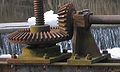 Technical solutions of the Glatt floodgates
 -
 Swiss Air Force's P-51 Mustang in the Dübendorf museum of military aviation
 -
 Junkers Ju 52 of the JU-AIR airline


Twin town
[edit] Dunavarsány, Hungary (2022)

Notable people
[edit]
- Hans Waldmann (1435–1489), Mayor of Zurich, a military leader and Squire of Dubelstein
- Wilhelm Meyer-Lubke (1861–1936), philologist of the Neogrammarian school of linguistics
- Oskar Bider (1891–1919 in Dübendorf), aviation pioneer
- Ruedi Walter (1916–1990), comedian and actor[13][14]
- Peter von Matt (1937–2025), philologist and author, lived in Dübendorf
- Guerino Mazzola (born 1947), mathematician, musicologist, jazz pianist and author
- Michael Lammer (born 1982) a retired professional tennis player, lives in Dübendorf
- Leandra Columberg (born 1999), Swiss politician[15]
See also
[edit]References
[edit]- ^ "Arealstatistik Standard - Gemeinden nach 4 Hauptbereichen" (in German). Federal Statistical Office. Retrieved 13 January 2019.
- ^ a b Dübendorf in German, French and Italian in the online Historical Dictionary of Switzerland.
- ^ Verein pro Waldmannsburg
- ^ a b c Swiss Federal Statistical Office Archived January 5, 2016, at the Wayback Machine accessed 14-Aug-2009
- ^ a b c d Statistics Zürich (in German) accessed 4 August 2009
- ^ "Ständige und nichtständige Wohnbevölkerung nach institutionellen Gliederungen, Geburtsort und Staatsangehörigkeit". bfs.admin.ch (in German). Swiss Federal Statistical Office - STAT-TAB. 31 December 2020. Retrieved 21 September 2021.
- ^ Hewlett-Packard (Schweiz) GmbH
- ^ Snowden, Scott (7 February 2024). "Virtual reality flight simulation 'hub' opens at Santa Monica Airport". Santa Monica Daily Press. Retrieved 29 December 2024.
- ^ Home page (Archive). Primarschulverwaltung Dübendorf. Retrieved on 23 April 2015. "Usterstrasse 16 8600 Dübendorf"
- ^ "Kontakt." Sekundarschule Dübendorf-Schwerzenbach. Retrieved on 23 April 2015. "Sekundarschule Dübendorf-Schwerzenbach Schulverwaltung Neuhausstrasse 23 8600 Dübendorf"
- ^ "Kantonsschule Uster" (Archive). Commune of Dübendorf. Retrieved on 23 April 2015.
- ^ "Our Campuses." Lycée Français Marie Curie de Zürich. Retrieved on 21 April 2015. "Ursprungstrasse 10 - CH-8044 Gockhausen - Zürich" (official address) and "Auenstrasse 10 - CH-8600 Dübendorf -Stettbach" (nursery) and "Im Tobelacker 22 - CH 8044 Gockhausen / Zürich" (primary) and "Ursprungstrasse 10 - CH-8044 Gockhausen / Zürich" (secondary) and "Stettbachstrasse 6 - CH-8600 Dübendorf - Stettbach" (lycée annex)
- ^ IMDb Database retrieved 20 December 2018
- ^ Michael Gautier (2013-04-03). "Walter, Ruedi" (in German). HDS. Retrieved 2015-09-23.
- ^ Probst, Joel (19 June 2019). "Leandra Columberg (Juso) ist mit 19 schon Kantonsrätin" [Leandra Columberg (Juso) is Already a Cantonal Councilor at 19]. Blick (in German). Retrieved 8 May 2024.
External links
[edit] Media related to Dübendorf at Wikimedia Commons
- Official website (in German)
- Dübelstein in German, French and Italian in the online Historical Dictionary of Switzerland.
Municipalities in the Uster District, Switzerland | ||
|---|---|---|
 | ||
| International | |
|---|---|
| National | |
| Geographic | |
| Other | |

Dübendorf
View on GrokipediaHistory
Origins and medieval period
Archaeological evidence indicates early human activity in the Dübendorf area, with finds from the Stone Age and Bronze Age suggesting prehistoric settlement.[5] A Roman road is known to have passed through the region from Stettbach via Hermikon to Uster, evidencing connectivity during the Roman period.[5] The locality was first documented in 946 as "Tuobilindorf," marking the earliest written reference to the settlement.[5] During the High Middle Ages, Dübendorf emerged as a notable site with religious and defensive structures. The Lazariterkirche in Gfenn, dedicated to Saint Lazarus, was founded in the early 13th century, circa 1200–1225, likely under the patronage of Vogt Rudolf III von Rapperswil following his 1217 pilgrimage to the Holy Land.[6] Associated with the Lazariter Order—originating around 1130 amid the Crusades and formalized as a knightly order by 1244—the church served as part of a monastery and leper hospital.[6] Its first documentary mention dates to 1250, when two Zürich citizens sold land to the "pious brothers of the St. Lazarus hospital in Gfenn."[6] By 1326, the male convent had ceased, with nuns assuming management; in 1368, it was led by Meisterin Bertha von Hünenberg.[6] The facility supported a medieval route from Zürich through Stettbach, Wil, and Gfenn toward Pfäffikon, facilitating regional travel and trade.[6] Defensive architecture also characterized the period, with Burg Dübelstein constructed around the mid-13th century on an artificially scarped rock spur on the northeastern slope of the Adlisberg.[5][7] This talus slope castle, initially featuring a mighty keep, served local nobility; the Dübelstein family, its namesake, died out in the 14th century, after which it passed to the Hofstetters.[8] In 1487, Zürich's mayor Hans Waldmann acquired the property, integrating it into his estates until his execution in 1489 amid political turmoil.[5] These developments reflect Dübendorf's role within the feudal landscape of the Zürich region, balancing ecclesiastical care, strategic fortification, and administrative oversight under Habsburg and local influences.[5]Industrialization and 20th century
The economic ascent of Dübendorf commenced in the first half of the 19th century with the founding of multiple spinning mills along the Glatt River, harnessing its water power for textile production amid Switzerland's broader proto-industrialization in cotton and machinery.[5] This shift from agrarian dominance facilitated initial factory establishments, aligning with regional trends in the Zürich Oberland where water-driven mills proliferated before mechanized expansion.[5] Critical infrastructure enhancements accelerated industrialization: the canalization of the Glatt River, undertaken from 1850 to 1895, mitigated flooding and enabled reliable hydropower and transport for mills and emerging factories, while the Zürich–Uster railway line, opened on December 6, 1856, integrated Dübendorf into national trade networks, spurring goods movement and commuter influx.[5] These developments transformed the locality from rural hamlets into a burgeoning industrial node in the Glattal valley, with population growth reflecting factory labor demands, though precise early figures remain sparse beyond cantonal aggregates showing Zürich's industrial workforce surging post-1850.[5] In the 20th century, aviation emerged as a pivotal sector, catalyzed by the construction of Dübendorf Airfield in 1910 on moors reclaimed between Dübendorf and Wangen-Brüttisellen, initially as a civilian facility but swiftly repurposed for military use from 1914 amid World War I preparations.[5] Serving as Switzerland's primary aerodrome until Zurich Airport's expansion in 1948, it hosted early Swiss aviation milestones, including pilot training and aircraft manufacturing, fostering ancillary industries like maintenance and engineering firms.[5] Chemical production also took root, exemplified by the Chemische Fabrik Flora AG's initiation of synthetic musk xylene manufacturing in July 1900, later integrated into Givaudan's operations, capitalizing on the site's logistical advantages. During the interwar period and World War II, the airfield's role intensified as a Swiss Air Force hub, supporting neutrality through interceptor squadrons and interning Allied and Axis pilots, with over 1,000 aircraft landings recorded by 1945, including damaged bombers; this bolstered local employment in aviation support without direct combat involvement.[5] Post-1945, while deindustrialization pressures loomed nationally, Dübendorf's proximity to Zürich sustained mixed manufacturing, though aviation's military emphasis persisted, with the base hosting squadrons like Fliegerstaffel 11 until recent reallocations.[5] By mid-century, these sectors had cemented Dübendorf's identity as an aviatics and light industry center, distinct from heavy manufacturing declines elsewhere in Switzerland.[5]Post-WWII development and recent growth
Following the end of World War II, Dübendorf's airfield, which had served as a key internment and repair site for Allied and Axis aircraft during the conflict, shifted focus after the 1948 opening of Zurich Airport (Kloten), which took over civil aviation operations previously handled at Dübendorf since 1919.[10] The site became a primary Swiss Air Force base during the Cold War, accommodating helicopters such as the Aérospatiale Alouette II and III, along with jet fighters including de Havilland Vampires and Venoms, supporting Switzerland's neutral defense posture amid regional tensions.[11] This military emphasis coexisted with broader suburban expansion in the Glatt Valley, driven by Switzerland's post-war economic miracle, which featured sustained GDP growth averaging over 4% annually from 1950 to 1973 and fueled migration to Zurich's periphery. Population surged amid this industrialization and housing boom, rising from approximately 6,750 residents in 1950 to around 10,000 by 1957 and doubling to 20,000 by 1970, reflecting nationwide urbanization trends where agricultural land converted to residential and light industrial uses.[12] The arrival of federal research institutions accelerated this: the Swiss Federal Laboratories for Materials Science and Technology (Empa) relocated its main campus to Dübendorf in 1962 to accommodate expanding materials testing and engineering research, followed by the Swiss Federal Institute of Aquatic Science and Technology (Eawag) establishing its headquarters there in 1970 to advance water and environmental studies.[13][14] These ETH Domain affiliates drew skilled workers and fostered tech-oriented development, transforming former farmland into a mixed-use suburb integrated with Zurich's transport network. In recent decades, Dübendorf has sustained above-average growth as part of the Flughafenregion Zürich, with population increasing 30% since 2005 to an estimated 32,571 in 2024, outpacing cantonal averages due to its strategic location near Zurich Airport and rail links.[15] Urban planning has emphasized infill and retrofitting of post-suburban zones in the Glatt Valley, including mixed-use projects like the Forum Chriesbach high-tech center and Westhof sustainable housing complex completed in 2024, balancing residential expansion with green infrastructure.[16][17] The Empa-Eawag "co-operate" campus expanded significantly from 2021, adding laboratory buildings for robotics and sustainability research, underscoring Dübendorf's evolution into a hub for innovation amid controlled densification to manage groundwater recharge and flood risks in the urbanizing valley.[18][19] The airfield's military operations wound down by the 2010s, enabling potential repurposing for civilian or research uses that further support economic vitality.[20]Geography
Location and administrative divisions
Dübendorf is a municipality located in the upper Glatt Valley of the canton of Zürich, Switzerland, approximately 9 kilometers east of Zürich city center.[15] Its geographical coordinates are roughly 47°24′N 8°37′E.[21] The area encompasses outlying districts on the northern slope of the Adlisberg hill and forms part of the Zürich metropolitan region.[15] Administratively, Dübendorf belongs to the Uster District (Bezirk Uster) within the canton of Zürich, the largest canton in Switzerland by population.[22] The municipality borders Wallisellen to the north, Wangen-Brüttisellen and Schwerzenbach to the east, Uster and Greifensee to the southeast, Fällanden to the south, and Zürich to the west. Within Dübendorf, the territory is divided into several internal districts or quarters, including Dübendorf (central), Gfenn, Hermikon, Stettbach, Gockhausen, Geeren, and Dübelstein, which serve statistical and planning purposes.[15] These divisions reflect the municipality's urban expansion and integration of formerly separate settlements into a cohesive administrative unit.[15]
Physical geography and hydrology
Dübendorf occupies a position on the Swiss Plateau within the Glatt Valley, characterized by relatively flat alluvial terrain at an average elevation of 440 meters above sea level. The landscape features gentle slopes and low relief, with elevations ranging from approximately 430 to 500 meters, shaped by glacial and fluvial deposits from the last Ice Age. Underlying soils consist primarily of sandy loam, loam, clayey loam, and sandy gravel, which support both agricultural remnants and urban infrastructure amid progressive impervious surface coverage.[23][24][25] The Glatt River delineates the northern boundary of the municipality, serving as its principal surface water body and a key component of the regional hydrology. This 35-kilometer-long tributary of the Rhine was straightened and channelized in the late 19th century to mitigate flooding risks on the surrounding plains. Tributaries such as the Chriesbach stream feed into the Glatt, facilitating ecological connectivity and contributing to groundwater recharge, though urbanization has notably diminished infiltration rates by increasing runoff from sealed surfaces.[26][27][28][29] Watershed management in Dübendorf integrates flood protection measures, including river engineering, with efforts to restore natural stream dynamics for biodiversity and water quality enhancement. The area's groundwater systems, influenced by the permeable substrates, remain vital for local supply but face pressures from land-use intensification, prompting studies on recharge variability across urban and peri-urban zones.[29]Climate
Dübendorf has a temperate oceanic climate classified as Cfb under the Köppen system, featuring mild summers, cool winters, and precipitation distributed fairly evenly across the year, though with a slight peak in early summer.[30] This regime is typical of the Swiss Plateau in the canton of Zürich, moderated by proximity to the Alps and Lake Greifen, which contribute to relatively stable temperatures without extreme continental swings.[31] Average temperatures at Dübendorf Air Base, a key local measurement site, range from a January mean high of 3.3°C (38°F) and low of -2.2°C (28°F) to a July mean high of 24.4°C (76°F) and low of 13.9°C (57°F).[31] Extremes rarely drop below -8.9°C (16°F) or exceed 30.6°C (87°F), reflecting the protective influence of surrounding topography against severe frosts or heatwaves. Winters are cold enough for occasional snow cover, with snowfall peaking in December at an average of 6.4 cm (2.5 inches), while summers remain comfortable, seldom feeling oppressively humid due to low muggy days (fewer than 2% of the year).[31] Precipitation averages approximately 1000 mm (39.5 inches) annually, with June recording the highest monthly total at about 117 mm (4.6 inches) and February the lowest at 53 mm (2.1 inches).[31] The wetter season spans late April to late August, with over 38% of days featuring significant rain, often from convective showers influenced by föhn winds or frontal systems from the Atlantic. Cloud cover varies modestly, clearest in July (about 40% overcast) and most persistent in November (61% overcast), while prevailing westerly winds average 8-11 km/h (5-7 mph), peaking in March.[31]| Month | Mean High (°C) | Mean Low (°C) | Avg. Rainfall (mm) |
|---|---|---|---|
| January | 3.3 | -2.2 | ~60 |
| February | 5.0 | -2.2 | 53 |
| March | 10.0 | 1.1 | ~70 |
| April | 14.4 | 4.4 | ~80 |
| May | 18.9 | 8.3 | ~100 |
| June | 22.2 | 12.2 | 117 |
| July | 24.4 | 13.9 | ~100 |
| August | 23.3 | 13.3 | ~100 |
| September | 19.4 | 10.6 | ~90 |
| October | 13.9 | 6.1 | ~80 |
| November | 8.3 | 1.7 | ~70 |
| December | 3.9 | -1.1 | ~70 |
Demographics
Population statistics and trends
As of 31 December 2023, Dübendorf's resident population stood at 31,186, marking an increase of 597 individuals from the previous year.[32] This figure represents the official count of inhabitants by civil domicile, consistent with Swiss municipal reporting standards. The municipality's population density, based on its 13.62 km² area, was approximately 2,290 persons per km² in 2023.[33] Population growth has been steady and accelerating in recent years, driven primarily by net migration inflows associated with its status as a Zürich suburb and employment hubs in aviation and technology. From 2021 to 2023, the annual growth rate averaged around 1.8-2%, with the population rising from 30,337 to 31,186.[32] Preliminary data for 2024 indicate further expansion to approximately 32,200 residents, sustaining a compound annual growth rate of about 2.2% over the 2020-2024 period.[32] [33] Historical trends show long-term expansion from a base of around 28,667 in 2018, reflecting broader regional urbanization in the Glattal area.[34] Between 2000 and 2015, the population increased by 18.4%, underscoring resilience amid Switzerland's overall demographic shifts toward suburban concentration.[35] Projections from cantonal sources align with continued moderate growth, tempered by land constraints and infrastructure capacity.[36]| Year (31 Dec.) | Population |
|---|---|
| 2021 | 30,337 |
| 2022 | 30,589 |
| 2023 | 31,186 |
| 2024 (est.) | 32,200 |
Migration patterns and diversity
Dübendorf's population growth has been predominantly migration-driven, with net inflows contributing the majority of annual increases amid low natural population change typical of Switzerland. From 2020 to 2024, the resident population rose from 29,685 to 32,200, reflecting an average annual growth of about 1% primarily from positive migration balances.[32] In 2023 alone, the population expanded by 597 to 31,186, exceeding the canton of Zürich's average and aligned with urban-suburban pull factors near Zürich's economic centers.[37] Foreign nationals comprise 37.5% of Dübendorf's population as of 2024, totaling 12,185 individuals, a figure higher than the national average of approximately 26% and indicative of the municipality's role as a commuter and employment hub.[38] This share has trended upward from 28.2% in 2007, driven by inflows of skilled labor tied to local industries like aviation, research at the Dübendorf site of ETH Zürich, and proximity to Zürich Airport.[33] Migration patterns show high residential mobility, with annual inflows and outflows each exceeding 10% of the population in comparable Swiss municipalities, but Dübendorf maintains a positive net migration due to job opportunities outweighing departures. The foreign population is predominantly European, mirroring national trends where EU/EFTA nationals form the bulk of residents. In 2018 data for Dübendorf, 67% of foreigners originated from EU or EFTA states, 17% from other European countries, and 16% from Asia, Africa, or elsewhere, patterns sustained by economic migration rather than asylum or family reunification.[39] Recent breakdowns indicate significant cohorts from EU non-core states (approximately 3,000), non-EU Europe (around 2,000), Asia (over 1,000), and smaller shares from Africa and other regions, attracting professionals in high-tech and aviation sectors.[33] Out-migration is balanced by return moves or relocations within Switzerland, while naturalizations remain modest, with federal data showing Switzerland-wide rates supporting integration of long-term EU migrants.[40] This composition underscores causal links to labor demand, with minimal evidence of non-economic drivers dominating local inflows.Government and administration
Municipal structure and governance
Dübendorf's municipal governance comprises a legislative Gemeinderat and an executive Stadtrat, as defined in the local adaptation of the Canton of Zürich's Gemeindeordnung. The Gemeinderat, consisting of 40 members elected by proportional representation for a four-year term, serves as the legislative body, approving budgets, ordinances, and major policies while overseeing the executive.[41][42] The current legislative period runs from 2022 to 2026.[43] The Stadtrat, with seven members including the Stadtpräsident, functions as the executive, responsible for strategic planning, policy implementation, and daily administration. Members are elected directly and each heads specific departments, such as planning and finance. André Ingold of the Swiss People's Party (SVP) has served as Stadtpräsident since 2018.[42][44] The Stadtrat sets priorities through a performance program and ensures coordination with the Gemeinderat and public.[43] The city administration supports the Stadtrat and underwent reorganization effective January 1, 2024, to address population growth and enhance efficiency. Departments are now directly managed by Stadtrat members for political, substantive, and personnel oversight. The Geschäftsleitung, the top operational body, was reduced from four to three members: the Stadtpräsident, head of city planning, and head of finance and properties. A new staff unit for steering and development was established under the Stadtpräsident to focus on long-term management.[45]Political landscape and elections
The municipal government of Dübendorf comprises the Stadtrat, a six-member executive body led by the Stadtpräsident, and the Gemeinderat, a 40-member legislative council elected by proportional representation every four years.[41] The Stadtrat handles executive functions, including policy implementation and administration, while the Gemeinderat legislates on local matters such as zoning, taxes, and infrastructure.[43] Dübendorf exhibits a conservative political orientation relative to other Zürich canton municipalities, with the Schweizerische Volkspartei (SVP) maintaining the largest presence in the Gemeinderat at 10 seats, followed by the Grünliberale Partei (GLP) with 8, the Sozialdemokratische Partei (SP) with 7, FDP.Die Liberalen with 5, Die Mitte with 5, the Grüne with 3, and the EVP with 1.[46] [47] The SVP's Stadtpräsident, André Ingold, has led the executive since the 2022 elections, reflecting the party's influence on fiscal conservatism and infrastructure priorities like opposing excessive traffic restrictions.[48] This right-leaning profile has earned Dübendorf descriptions as the canton's "last right-wing city," amid broader urban leftward shifts, with SVP-backed initiatives on speed limit reductions passing locally in 2023 (54.23% approval) and 2025 (60.14% approval).[49] [50] [51] The most recent municipal elections occurred on March 27, 2022, with a second round on May 15 for certain seats, marking a "super election day" across 147 Zürich communes where green parties gained ground canton-wide but SVP secured the Dübendorf presidency for the first time.[52] [53] The next elections are scheduled for 2026, with parties like FDP campaigning for expanded liberal representation in the Gemeinderat.[54] Voter turnout and outcomes underscore local priorities on low taxes and controlled urban growth, contrasting with progressive trends in neighboring areas.[49]Economy
Primary economic sectors
The primary economic sector in Dübendorf, encompassing agriculture, forestry, and related activities, plays a marginal role in the local economy, consistent with the municipality's suburban character and proximity to urban Zurich. Employment in this sector totaled 165 persons in 2021, representing a small fraction of overall jobs amid dominance by tertiary and secondary industries. Agriculture dominates the primary sector, focusing on regional staples such as dairy production, horticulture, and crop cultivation suited to the Glattal plain's fertile soils. As of 2024, 14 persons were employed in agricultural operations, supported by 14 active farms in 2022.[55] These enterprises benefit from cantonal subsidies and direct payments under Switzerland's agricultural policy, which prioritize food security and landscape maintenance, though output remains limited by land constraints and urbanization pressures. Forestry contributes modestly through woodland management on approximately 20% of the municipal area, yielding timber and supporting biodiversity initiatives, but employs few dedicated workers.[56] No significant mining, fishing, or other extractive activities occur, reflecting the absence of natural resources beyond agrarian land. The sector's value added is dwarfed by high-tech and service industries, with primary activities sustained more for environmental and cultural preservation than economic output.[57]Research and high-tech industry
Dübendorf is home to the Empa, the Swiss Federal Laboratories for Materials Science and Technology, a federal research institute under the ETH Domain that specializes in applied materials research and development, providing solutions for industrial challenges in areas such as sustainable technologies and nanotechnology.[58] Empa collaborates closely with industry partners to translate scientific advancements into practical applications, emphasizing interdisciplinary approaches to address global issues like energy efficiency and advanced manufacturing.[59] Adjacent to Empa is the Eawag, the Swiss Federal Institute of Aquatic Science and Technology, another ETH Domain institution focused on water research, including environmental technologies, water resource management, and aquatic ecosystem protection.[4] The two institutes share a joint campus in Dübendorf, which has expanded significantly since 2020 with new laboratory and multifunctional buildings to support collaborative research and innovation.[60] This campus, known as "co-operate," serves as a hub linking academic research with business applications, particularly in cleantech and sustainable engineering.[61] The Switzerland Innovation Park Zurich, located at Dübendorf Airfield, functions as a key incubator for high-tech enterprises, fostering synergies between research institutions like Empa and Eawag and private sector firms in fields such as robotics, mobility, space technologies, aviation, and advanced manufacturing.[62] Established to bridge science and industry, the park hosts startups and scale-ups, contributing to Switzerland's reputation as a leader in precision engineering and emerging technologies; as of 2024, it includes facilities supporting over 50 companies and research projects.[62] Notable high-tech entities in Dübendorf include CTsystems AG, a startup specializing in dielectric elastomer actuators for applications in sensors and soft robotics.[63] In September 2024, the University of Zurich's Space Hub opened its European headquarters at the Innovation Park, enhancing Dübendorf's role in aerospace research and commercialization by integrating university expertise with local high-tech infrastructure.[64] These institutions and clusters drive economic growth through knowledge transfer, with Empa and Eawag alone employing over 1,000 researchers and staff as of 2023, generating spin-offs and patents that bolster the region's high-tech ecosystem.[58][4]Aviation and defense contributions
Dübendorf serves as the site of Dübendorf Air Base, the peacetime operational headquarters of the Swiss Air Force, facilitating command, control, and logistical support for national air defense operations.[65] The base supports regular search and rescue missions using helicopters and hosts training activities that sustain hundreds of military personnel and civilian contractors, contributing to local employment in aviation maintenance, engineering, and support services.[65] Historically, the airfield originated as a key site for Swiss military aviation, with the Swiss Army establishing its first aircraft fleet there by 1915 amid early 20th-century developments in powered flight. The Swiss Confederation acquired the 2.3 square kilometers of land in 1927 for 380,000 Swiss francs, solidifying its role in building a domestic air force capable of airspace surveillance and neutrality enforcement, as demonstrated during World War II interceptions of foreign aircraft. This legacy underpins ongoing defense contributions, including the maintenance of combat-ready assets and integration with modern surveillance systems like the PC-7 team for peacetime air policing.[66] The Flieger Flab Museum, located on the air base grounds, preserves over 40 aircraft and artifacts documenting Swiss military aviation and anti-aircraft defense history, drawing international visitors and generating tourism revenue while educating on technological advancements from biplanes to jets.[67] JU-AIR, a foundation operating historic aircraft such as the Junkers Ju 52, bases its fleet at Dübendorf, offering heritage flights that blend civilian aviation with military heritage and support ancillary economic activity through passenger operations and maintenance.[65] These elements collectively bolster Dübendorf's economy by anchoring a cluster of specialized jobs in aerospace logistics and fostering synergies with nearby high-tech research, though the base's military primacy limits full civilian commercialization.[68]Employment metrics and fiscal health
Dübendorf supports a high level of local employment, with approximately 20,605 full-time equivalent positions recorded in the municipality as of recent statistics, predominantly in the tertiary sector including research, administration, and services, alongside contributions from secondary industries such as manufacturing and aviation-related activities.[69] The employment rate benefits from proximity to Zürich's economic hub and institutions like Empa and the Dübendorf Airfield, fostering low structural unemployment that mirrors the cantonal average of around 2.5% in 2024.[70] Fiscal health remains robust, characterized by prudent budgeting and positive net assets. As of December 2018, the municipality held net assets of 83 million CHF, reflecting disciplined financial management.[71] The 2024 budget projects a modest surplus of 0.10 million CHF while maintaining a competitive municipal tax multiplier of 78%, underscoring fiscal conservatism amid population growth and infrastructure demands.[72] Implementation of a debt brake mechanism further safeguards against excessive borrowing, aligning with cantonal guidelines to prevent deficit spending.[73] The 2023 annual accounts confirmed ongoing stability, with revenues supporting investments without straining liquidity.[74]Infrastructure
Transport networks
Dübendorf is integrated into the Zürich Transport Network (ZVV), which coordinates rail, tram, and bus services across the canton, enabling efficient public transport connectivity.[75] The system's zonal structure facilitates travel within defined areas using unified ticketing, with Dübendorf falling into core zones proximate to Zürich.[76] The primary rail hub is Dübendorf railway station, operated by Swiss Federal Railways (SBB) on the Wallisellen–Uster–Rapperswil line. It accommodates S-Bahn lines such as S3 and S9, offering high-frequency services to Zürich Hauptbahnhof in 12-15 minutes and onward connections to Winterthur and other destinations.[77] [78] Approximately 78 trains daily link Dübendorf to Zürich, underscoring the station's role in regional commuting.[78] Tram and bus operations are handled by Verkehrsbetriebe Glattal (VBG), which manages the Glattalbahn light rail and over 50 bus lines in the Glattal region. The Glattalbahn provides direct extensions to Zürich Airport and integrates with SBB at stations like Stettbach and Wallisellen, enhancing access to aviation facilities and the broader network.[79] [80] Local buses supplement these services, connecting residential areas to the town center and rail nodes. Tickets for all ZVV services must be purchased in advance, as no sales occur onboard trains or buses.[81] Road infrastructure supports private vehicle use, with Dübendorf linked to the A1 motorway for rapid access to Zürich (about 10 minutes) and national routes, though public transport remains the prioritized mode in line with Swiss urban planning emphasizing reduced car dependency.[82]Airfield and aviation facilities
Dübendorf Air Base, known as Militärflugplatz Dübendorf (ICAO: LSMD), has served as a Swiss Air Force installation since 1914, marking it as one of the earliest military aviation sites in Switzerland.[83] Initially developed as an airfield in 1910 northeast of Zurich, it expanded to support both military and civilian operations by 1919, accommodating early civil airlines alongside defense activities.[83] Today, it functions primarily as the main base for Air Transport Wing 3, under Air Base Command 2 in Alpnach, conducting daily helicopter flights with Eurocopter AS332 Super Puma, AS532 Cougar, and EC635 models for transport, search and rescue, and training missions.[65] The base hosts specialized units including Air Transport Squadrons 3 and 4, the PC-7 aerobatic display team for precision training demonstrations, and facilities for parascout operations using Pilatus PC-6 aircraft.[65] It also supports federal air transport services and the Swiss Federal Office of Topography's (swisstopo) survey aircraft, alongside maintenance workshops for pilot and parascout equipment.[65] Rega, Switzerland's air-rescue service, operates a base there with Airbus H145 helicopters, enabling rapid response within 15 minutes across operational areas.[84] JU-Air, a heritage aviation operator, has been based at the airfield since 1983, flying Junkers Ju 52 aircraft for scenic and commemorative flights.[85] Adjacent to active operations, the Air Force Center (formerly Flieger-Flab-Museum) occupies historic hangars on the base grounds, exhibiting over 40 restored aircraft, simulators, and artifacts chronicling Swiss military aviation and air defense history from World War II era fighters like the Messerschmitt Bf 109 to modern systems.[67] The facility supports public education on aviation heritage while integrating with ongoing base functions, including occasional research flights such as parabolic campaigns for microgravity simulation.[86]
Utilities and urban planning
The water supply in Dübendorf is managed by the Genossenschaft Wasserversorgung Dübendorf (WVD), a cooperative established in 1894 that delivers high-quality drinking water to the municipality's residents, businesses, and industries in sufficient quantities and appropriate pressure.[87] Municipal regulations governing water supply were updated via a verordnung enacted on June 8, 2020, and effective from October 22, 2020, outlining operational standards and infrastructure maintenance.[88] Wastewater treatment is handled regionally at the ARA Neugut facility, which processes effluent from Dübendorf alongside neighboring areas, supported by underground infrastructure integrating sewer lines with other utilities like gas and electricity conduits.[89] Waste management falls under the municipal public works department's Entsorgung division, which coordinates collection, disposal, and recycling, aligning with cantonal standards for abfall and abwasser.[90] Urban planning in Dübendorf emphasizes internal development (Innenentwicklung) to accommodate population growth of approximately 50% over the past two decades, prioritizing compact zoning near the airport and airfield while integrating transport hubs like the Dübendorf station area through the Syntheseplan Testplanung, which aims to enhance mobility and mixed-use spaces.[91][92] The Stadtplanung department oversees spatial aspects of city development, including zoning guidelines, building regulations, and coordination with cantonal plans for reserve zones like Werlen assigned to settlement areas to meet housing demands.[93] Key projects under the 2022–2026 Legislaturprogramm include the development of a new indoor swimming pool at Oberdorf, a multi-purpose cultural center at Obere Mühle, and a sports facility at Dürrbach, alongside a comprehensive traffic concept for integrated infrastructure.[94] Sustainability drives recent initiatives, with Dübendorf designated as an Energiestadt committed to net-zero emissions by 2050, supporting cantonal and federal energy and climate goals through collaborations like Empa's Urban Energy Systems projects for efficient district heating and cooling.[95] A 2023 climate ideas competition yielded funded projects such as Urban Eden for green urban spaces, Naschgarten Sonnenberg for edible landscapes, and Chriesbachbiodivers for biodiversity enhancement along watercourses, set for implementation by 2026.[94] Flood risk management along the Glatt River incorporates restoration efforts and the Fil Bleu Glatt corridor project, featuring a continuous recreational path and technical floodgates to mitigate urbanization-induced recharge variability and pluvial flooding.[96][25] These measures reflect causal linkages between land-use changes, groundwater dynamics, and resilient infrastructure, informed by local research from institutions like Eawag.[97]Education
Compulsory education system
In Dübendorf, compulsory education follows the Canton of Zürich's Volksschule model, which mandates 11 years of schooling from age 4 to 15, comprising two years of kindergarten, six years of primary education, and three years of lower secondary education. This public system is free for all children resident in the municipality and emphasizes equal opportunities regardless of background. Attendance is enforced by cantonal law, with exemptions rare and requiring approval for alternatives like private schooling. Kindergarten begins at age 4 and focuses on foundational social and cognitive development through play-based learning. Primary education, delivered via the Primarschule Dübendorf network, covers grades 1 through 6 and operates across multiple facilities including Birchlen, Dorf, Sonnenberg, Stägenbuck, and Zwicky. These sites collectively serve approximately 1,950 students in 68 primary classes and 29 kindergarten departments, supported by over 100 teaching and specialist staff. Instruction prioritizes core subjects such as languages, mathematics, and sciences, with integration programs for students with special needs or non-native speakers. Lower secondary education occurs at the Sekundarschule Dübendorf-Schwerzenbach, a three-tiered system (Sekundarstufe A for advanced academic tracks, B for general, and C for basic with vocational emphasis) spanning grades 7 through 9. This institution educates around 750 students across three locations—Grüze 1-4, Grüze 5-7, and Stägenbuck—with more than one-third from migrant backgrounds. Class sizes average 20-25, and support includes school social work for behavioral and integration challenges, as well as the LIFT program, which annually places 20 students in practical work experiences to bridge to vocational training. Recent initiatives, such as tablet distribution to all secondary students since 2019, aim to enhance digital literacy. While public schools predominate, parents may fulfill compulsory attendance via accredited private institutions like the Christliche Schule Dübendorf, though the vast majority opt for the municipal system. Enrollment data reflect steady growth tied to population increases, prompting facility upgrades such as the ongoing renovation of Stägenbuck announced in 2025.Vocational and adult education
Dübendorf participates in Switzerland's dual vocational education and training (VET) system, where apprentices combine workplace learning with part-time vocational school attendance, typically leading to a Federal VET Diploma after three or four years. Local employers, including research institutions, offer apprenticeships in fields such as laboratory technology, information and communication technology (ICT), and administration. The Swiss Federal Laboratories for Materials Science and Technology (Empa), headquartered in Dübendorf, provides training in ten professions across its sites, emphasizing practical skills in materials science, engineering, and related technical areas to prepare apprentices for specialized roles in innovation-driven industries.[98] Similarly, the Swiss Federal Institute of Aquatic Science and Technology (Eawag), also based in Dübendorf, trains apprentices as laboratory technicians (EFZ) in chemistry and biology specializations, commercial employees in service and administration, and ICT specialists, fostering expertise in environmental and water-related sciences.[99] The municipality supports vocational entry through initiatives like the Lehrlingswesen program, which includes specialized apprenticeships in maintenance services such as Werkdienst (workshop), Hausdienst (housekeeping), and sports facility operations, aiding integration for young trainees. Career guidance is available via facilities like the Lernstube Dübendorf, offering free courses with childcare, resume workshops, and computer access to assist in apprenticeship searches and skill-building. Regional coordination falls under the Berufsbildung Region Mitte, ensuring alignment with cantonal standards for over 250 recognized professions nationwide.[100][101] Adult education in Dübendorf emphasizes lifelong learning and integration, with the Weiterbildungskurse Dübendorf (WBK) providing a diverse array of continuing education courses tailored to residents and Glattal region participants, including language training, professional development, and citizenship preparation. The municipality's course offerings complement this, featuring specialized programs such as certified building caretaker training (Hauswart:in with federal diploma), fitness classes, and German courses for naturalization, often held at local venues to promote accessibility. Integration-focused adult programs, like those from Academia Integration near Stettbach station, deliver language and cultural courses for immigrants, supporting workforce participation. Sector-specific providers, including the GEBIZ health education center and FM Academy for facility management, offer advanced certifications in therapeutic practices and operational skills, reflecting Dübendorf's focus on practical, employment-oriented adult upskilling.[102][103][104]Science and research institutions
Empa: Materials science advancements
Empa, headquartered in Dübendorf, specializes in application-oriented materials science, developing innovative solutions for energy, health, environment, and manufacturing challenges through nanoscale design, advanced processing, and characterization techniques.[58] Its research integrates experimental and computational methods, such as density functional theory simulations for catalysis and nanomaterials, to predict and optimize material properties at the atomic level.[105] In materials characterization, Empa employs state-of-the-art electron microscopy and X-ray-based methods, alongside hard X-ray photoelectron spectroscopy (HAXPES) to analyze surface functionalization, microelectronics, and energy conversion materials, enabling precise insights into interfaces critical for device performance.[106][107] Nanostructured materials research focuses on architectures that harness quantum effects from reduced dimensions, supporting applications in sensors and flexible electronics.[108] Notable advancements include the 2025 development of CO₂-storing concrete incorporating carbon pellets, which earned recognition in the Building Award for sustainable construction materials.[109] Researchers have also produced optic fibers embeddable in textiles for real-time patient monitoring in hospitals, advancing wearable health technologies.[110] In ceramics, Empa achieved a breakthrough with dark-red bezels for luxury watches, demonstrating high-temperature processing for aesthetic and functional durability.[110] For energy applications, Empa's process routes innovate in electrochemical conversion, including solid oxide fuel cells and water-in-salt electrolytes for aqueous flow batteries, as recognized by awards like the 2023 Electrochemical Society Battery Division prize.[111][112] The institute's Coating Competence Center advances thin-film technologies for solar cells, batteries, and sensors.[58] In 2024, Empa published over 800 peer-reviewed papers and secured 5 patents, underscoring its output in translating research to industrial impact.[113] Spin-offs like MycoSolutions exemplify commercialization, offering fungal-based, non-toxic protection for wood and plants.[114]Eawag and collaborative projects
The Swiss Federal Institute of Aquatic Science and Technology (Eawag), part of the ETH Domain, maintains its headquarters in Dübendorf at Überlandstrasse 133, employing approximately 450 staff members focused on water-related research, including ecology, engineering, and resource management.[115][4] Eawag's Dübendorf campus hosts laboratories, administrative facilities, and the Forum Chriesbach building for offices, seminars, and training, alongside specialized infrastructure like the FLUX multifunctional building opened for research, teaching, and further education in aquatic sciences.[115][116] Eawag collaborates extensively with Empa, another ETH Domain institute in Dübendorf, through the NEST modular research platform launched in 2014, which serves as an experimental hub for sustainable building technologies, digital fabrication, and urban water solutions.[117][118] The DFAB HOUSE project, integrated into NEST and completed in 2019, exemplifies this partnership with ETH Zurich, demonstrating robotic construction and digital planning for energy-efficient housing while incorporating Eawag's expertise in water-efficient systems and environmental monitoring.[119][120] Broader collaborations include joint initiatives with Empa, Paul Scherrer Institute (PSI), and WSL under the ETH Domain, enhanced since 2023 to bridge research with practical applications in environmental innovation, alongside partnerships with ETH Zurich and EPFL for interdisciplinary projects on urban water pollution modeling and nutrient recovery.[121] Locally, Eawag has supported Dübendorf's Chriesbach renaturation project since 2010, extending cycle paths and restoring aquatic habitats in coordination with municipal and federal funding.[122] These efforts emphasize empirical testing of water treatment technologies and ecosystem restoration, prioritizing data-driven outcomes over policy-driven narratives.[123]Economic and societal impacts
The research institutions in Dübendorf, particularly Empa and Eawag, contribute substantially to the local economy through high-skilled employment and innovation ecosystems. Empa, with its primary campus in Dübendorf, employs around 1,000 scientists, engineers, technical, and administrative staff across its sites, many concentrated in the municipality, fostering a cluster of expertise in materials science.[124] Eawag, headquartered in Dübendorf, maintains a workforce exceeding 500 personnel focused on aquatic sciences, supporting ongoing research mandates and third-party projects that generate additional revenue streams.[125] These institutions attract federal and external funding, with Empa securing nearly CHF 70 million in third-party contributions in 2024 alone, which sustains operations and stimulates economic activity via procurement and collaborations.[113] Technology transfer initiatives amplify economic effects by bridging research to industry and entrepreneurship. Empa facilitates spin-offs and start-ups, accumulating 37 such ventures in its incubators by 2024, with approximately four new ones emerging annually, including two typically from Empa researchers; these entities commercialize innovations in areas like sustainable materials and sensors, enhancing regional competitiveness.[113][126] Eawag complements this through patenting, licensing, and partnerships that apply aquatic research to practical solutions, such as water infrastructure optimization, indirectly bolstering sectors like environmental consulting and utilities.[127] As part of the ETH Domain, these efforts contribute to broader Swiss prosperity by driving productivity gains and knowledge spillovers, though localized GDP multipliers remain tied to Dübendorf's integration with the Zurich economic hub.[128] Societally, Empa and Eawag advance sustainability and public welfare via evidence-based solutions to environmental challenges. Empa's work on resource-efficient materials and energy systems informs policies for circular economies and climate mitigation, exemplified by projects assessing material flows in Swiss consumption and developing technologies for atmospheric carbon capture.[129][130] Eawag's research harmonizes ecological, economic, and social interests in water management, providing assessments that shape national strategies for biodiversity preservation and pollution control, such as evaluating human impacts on ecosystems and pesticide effects on health.[131][132] Both institutions engage in decision-making frameworks that promote sustainable societal transitions, including outreach for policy and public understanding, thereby enhancing resilience against resource scarcity and environmental degradation.[133]Culture and society
Landmarks and historical sites
Dübendorf preserves remnants of its medieval heritage through sites like the Burgruine Dübelstein, a castle ruin dating to the mid-13th century constructed on an artificially scarped rock spur on the northeast slope of the Adlisberg. Originally held by the Lords of Dübendorf, documented from the early 12th century, the castle was acquired in 1487 by Hans Waldmann, the influential mayor of Zürich from 1483 to 1489, who used it as a residence during his political peak.[134][135] The structure was destroyed around 1615 and later excavated and partially restored in 1942–1943, with the site now maintained by the Verein Pro Waldmannsburg to commemorate its historical significance.[134] The Obere Mühle, an historic mill along the Glatt River, exemplifies early industrial architecture repurposed for modern cultural use. Operational as a grain mill for centuries, the building was converted into a cultural center in 1990 by the Stiftung Obere Mühle, hosting exhibitions, theater, music performances, and community events while preserving its original milling features like the large water wheel.[136] In the district of Gfenn, the Lazariterkirche, a 13th-century church originally associated with the Order of Saint Lazarus, stands as one of Dübendorf's oldest religious structures, reflecting the area's ties to medieval charitable and leper care institutions.[5] These sites collectively highlight Dübendorf's evolution from a feudal settlement under noble and ecclesiastical influence to its current suburban character.Community events and traditions
Dübendorf residents observe the Swiss National Day on August 1 annually, a tradition commemorating the founding of the Swiss Confederacy in 1291. Local celebrations, organized by the Verschönerungsverein Dübendorf and the municipality, typically occur at the Obere Mühle cultural venue, beginning around 17:30 with communal dining (Festwirtschaft), beverages, speeches by local officials, musical performances, and culminating in bonfires (Höhenfeuer) and fireworks visible across the Glattal region.[137][138] As part of broader Zürich-area customs, the community may participate in pre-Lenten Fasnacht activities, though without a distinct local guild-based procession like Zürich's Sechseläuten; instead, smaller-scale masked gatherings and regional parades draw residents.[139] Other seasonal observances include Advent markets and yuletide lighting displays along Bahnhofstrasse, fostering neighborly gatherings amid the town's suburban setting.[140] These events emphasize communal solidarity and Swiss federal identity, with attendance often exceeding several hundred locals, reflecting Dübendorf's blend of urban proximity to Zürich and preserved small-town cohesion. No uniquely indigenous festivals beyond national observances are documented in municipal records.[141]Sports and recreation
Dübendorf maintains several public sports facilities overseen by Sport- und Freizeitanlagen Dübendorf AG, which operates seasonal venues for swimming, ice sports, and casual games. The Freibad Oberdorf provides an outdoor pool for recreational swimming during summer, equipped with areas for leisure and family use.[142] The Kunsteisbahn Im Chreis functions as a covered ice rink supporting figure skating, hockey, and public sessions, alongside a dedicated curling hall utilized by the local Curling Club Dübendorf.[143] [144] Tennis and minigolf facilities at the Im Chreis complex include multiple courts for racket sports and an 18-hole minigolf course set amid greenery, catering to both competitive play and family outings.[143] Football pitches at sites like Buen, Zelgli, and Dürrbach accommodate training and matches for amateur teams, with the Dürrbach area designated for potential expansion into a regional hub featuring up to eight full-sized fields and seven smaller ones as part of a 2011 masterplan to address capacity constraints.[143] Local sports clubs foster community participation across disciplines, including FC Dübendorf for soccer, BC Dübendorf for basketball, Leichtathletik Club Dübendorf for track and field events, Bogenschützen Dübendorf for archery, and Ikigaido Karate for martial arts training.[145] Adult-oriented groups like Sport & Fun offer mixed sessions in unihockey, volleyball, and basketball for participants over 20.[146] Aviation-related recreation draws enthusiasts to the Flieger-Flab-Museum at the historic Dübendorf airfield, where visitors access flight simulators replicating Swiss Air Force aircraft for interactive piloting experiences.[147] The site's legacy as a military base supports ongoing general aviation activities, enhancing options for aviation hobbyists in the region.[148]Notable people
Wilhelm Meyer-Lübke (30 January 1861 – 4 October 1936) was a Swiss philologist and Romance linguist renowned for his work on the comparative grammar of Romance languages, including the influential Romanisches etymologisches Wörterbuch. Born in Dübendorf, he studied at universities in Zürich, Bonn, and Paris before becoming a professor in Vienna, Leipzig, and Bonn.[149] Jürgen Brodwolf (born 14 March 1932) is a Swiss sculptor and object artist known for his "Tubenfiguren" (tube figures), which explore human forms through everyday materials like brushes and tiles, often blending abstraction with figuration. Born in Dübendorf, he trained in drawing and lithography before developing his signature style in the late 1950s, exhibiting internationally and influencing post-war European sculpture.[150][151]References
- https://www.[researchgate](/page/ResearchGate).net/publication/363845188_100_Jahre_Givaudan_in_Dubendorf_1_Ein_Jahrhundert_fur_Geruch_und_Geschmack_100_Years_Givaudan_in_Duebendorf_Switzerland