


Community hub
Recent from talks
Contribute something
Nothing was collected or created yet.
Dynamometer
View on Wikipedia | This article needs additional citations for verification. (June 2011) |

A dynamometer or "dyno" is a device for simultaneously measuring the torque and rotational speed (RPM) of an engine, motor or other rotating prime mover so that its instantaneous power may be calculated, and usually displayed by the dynamometer itself as kW or bhp.
In addition to being used to determine the torque or power characteristics of a machine under test, dynamometers are employed in a number of other roles. In standard emissions testing cycles such as those defined by the United States Environmental Protection Agency, dynamometers are used to provide simulated road loading of either the engine (using an engine dynamometer) or full powertrain (using a chassis dynamometer). Beyond simple power and torque measurements, dynamometers can be used as part of a testbed for a variety of engine development activities, such as the calibration of engine management controllers, detailed investigations into combustion behavior, and tribology.

In the medical terminology, hand-held dynamometers are used for routine screening of grip and hand strength, and the initial and ongoing evaluation of patients with hand trauma or dysfunction. They are also used to measure grip strength in patients where compromise of the cervical nerve roots or peripheral nerves is suspected.
In the rehabilitation, kinesiology, and ergonomics realms, force dynamometers are used for measuring the back, grip, arm, and/or leg strength of athletes, patients, and workers to evaluate physical status, performance, and task demands. Typically the force applied to a lever or through a cable is measured and then converted to a moment of force by multiplying by the perpendicular distance from the force to the axis of the level.[1]
Principles of operation of torque power (absorbing) dynamometers
[edit].jpg)
An absorbing dynamometer acts as a load that is driven by the prime mover that is under test (e.g. Pelton wheel). The dynamometer must be able to operate at any speed and load to any level of torque that the test requires.
Absorbing dynamometers are not to be confused with "inertia" dynamometers, which calculate power solely by measuring power required to accelerate a known mass drive roller and provide no variable load to the prime mover.
An absorption dynamometer is usually equipped with some means of measuring the operating torque and speed.
The power absorption unit (PAU) of a dynamometer absorbs the power developed by the prime mover. This power absorbed by the dynamometer is then converted into heat, which generally dissipates into the ambient air or transfers to cooling water that dissipates into the air. Regenerative dynamometers, in which the prime mover drives a DC motor as a generator to create load, make excess DC power and potentially - using a DC/AC inverter - can feed AC power back into the commercial electrical power grid.
Absorption dynamometers can be equipped with two types of control systems to provide different main test types.
Constant force
[edit]The dynamometer has a "braking" torque regulator - the power absorption unit is configured to provide a set braking force torque load, while the prime mover is configured to operate at whatever throttle opening, fuel delivery rate, or any other variable it is desired to test. The prime mover is then allowed to accelerate the engine through the desired speed or RPM range. Constant force test routines require the PAU to be set slightly torque deficient as referenced to prime mover output to allow some rate of acceleration. Power is calculated based on rotational speed x torque x constant. The constant varies depending on the units used.
Constant speed
[edit]If the dynamometer has a speed regulator (human or computer), the PAU provides a variable amount of braking force (torque) that is necessary to cause the prime mover to operate at the desired single test speed or RPM. The PAU braking load applied to the prime mover can be manually controlled or determined by a computer. Most systems employ eddy current, oil hydraulic, or DC motor produced loads because of their linear and quick load change abilities.
The power is calculated as the product of angular velocity and torque.
A motoring dynamometer acts as a motor that drives the equipment under test. It must be able to drive the equipment at any speed and develop any level of torque that the test requires. In common usage, AC or DC motors are used to drive the equipment or "load" device.
In most dynamometers power (P) is not measured directly, but must be calculated from torque (τ) and angular velocity (ω)[citation needed] values or force (F) and linear velocity (v):
- or
- where
- P is the power in watts
- τ is the torque in newton metres
- ω is the angular velocity in radians per second
- F is the force in newtons
- v is the linear velocity in metres per second


Division by a conversion constant may be required, depending on the units of measure used.
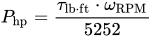
For imperial or U.S. customary units,
- where
- Php is the power in horsepower
- τlb·ft is the torque in pound-feet
- ωRPM is the rotational velocity in revolutions per minute
For metric units,
- where
- PW is the power in Watts (W)
- τN·m is the torque in Newton metres (Nm)
- ω is the rotational velocity in radians/second (rad/s)
- ω = ωRPM . π / 30

Detailed dynamometer description
[edit]
A dynamometer consists of an absorption (or absorber/driver) unit, and usually includes a means for measuring torque and rotational speed. An absorption unit consists of some type of rotor in a housing. The rotor is coupled to the engine or other equipment under test and is free to rotate at whatever speed is required for the test. Some means is provided to develop a braking torque between the rotor and housing of the dynamometer. The means for developing torque can be frictional, hydraulic, electromagnetic, or otherwise, according to the type of absorption/driver unit.
One means for measuring torque is to mount the dynamometer housing so that it is free to turn except as restrained by a torque arm. The housing can be made free to rotate by using trunnions connected to each end of the housing to support it in pedestal-mounted trunnion bearings. The torque arm is connected to the dyno housing, and a weighing scale is positioned so that it measures the force exerted by the dyno housing in attempting to rotate. The torque is the force indicated by the scales multiplied by the length of the torque arm measured from the center of the dynamometer. A load cell transducer can be substituted for the scales in order to provide an electrical signal that is proportional to torque.
Another means to measure torque is to connect the engine to the dynamo through a torque sensing coupling or torque transducer. A torque transducer provides an electrical signal that is proportional to the torque.
With electrical absorption units, it is possible to determine torque by measuring the current drawn (or generated) by the absorber/driver. This is generally a less accurate method and not much practiced in modern times, but it may be adequate for some purposes.
When torque and speed signals are available, test data can be transmitted to a data acquisition system rather than being recorded manually. Speed and torque signals can also be recorded by a chart recorder or plotter.
Types of dynamometers
[edit]In addition to classification as absorption, motoring, or universal, as described above, dynamometers can also be classified in other ways.
A dyno that is coupled directly to an engine is known as an engine dyno.
A dyno that can measure torque and power delivered by the power train of a vehicle directly from the drive wheel or wheels without removing the engine from the frame of the vehicle), is known as a chassis dyno.
Dynamometers can also be classified by the type of absorption unit or absorber/driver that they use. Some units that are capable of absorption only can be combined with a motor to construct an absorber/driver or "universal" dynamometer.
Types of absorption units
[edit]- Eddy current (absorption only)
- Magnetic powder brake (absorption only)
- Hysteresis brake (absorption only)
- Electric motor/generator (absorb or drive)
- Fan brake (absorption only)
- Hydraulic brake (absorption only)
- Force lubricated, oil shear friction brake (absorption only)
- Water brake (absorption only)
- Compound dyno (usually an absorption dyno in tandem with an electric/motoring dyno)
Eddy current type absorber
[edit]Eddy current (EC) dynamometers are currently the most common absorbers used in modern chassis dynos. The EC absorbers provide a quick load change rate for rapid load settling. Most are air cooled, but some are designed to require external water cooling systems.
Eddy current dynamometers require an electrically conductive core, shaft, or disc moving across a magnetic field to produce resistance to movement. Iron is a common material, but copper, aluminum, and other conductive materials are also usable.
In current (2009) applications, most EC brakes use cast iron discs similar to vehicle disc brake rotors, and use variable electromagnets to change the magnetic field strength to control the amount of braking.
The electromagnet voltage is usually controlled by a computer, using changes in the magnetic field to match the power output being applied.
Sophisticated EC systems allow steady state and controlled acceleration rate operation.
Powder dynamometer
[edit]A powder dynamometer is similar to an eddy current dynamometer, but a fine magnetic powder is placed in the air gap between the rotor and the coil. The resulting flux lines create "chains" of metal particulate that are constantly built and broken apart during rotation, creating great torque. Powder dynamometers are typically limited to lower RPM due to heat dissipation problems.
Hysteresis dynamometers
[edit]Hysteresis dynamometers use a magnetic rotor, sometimes of AlNiCo alloy, that is moved through flux lines generated between magnetic pole pieces. The magnetisation of the rotor is thus cycled around its B-H characteristic, dissipating energy proportional to the area between the lines of that graph as it does so.
Unlike eddy current brakes, which develop no torque at standstill, the hysteresis brake develops largely constant torque, proportional to its magnetising current (or magnet strength in the case of permanent magnet units) over its entire speed range.[2] Units often incorporate ventilation slots, though some have provision for forced air cooling from an external supply.
Hysteresis and Eddy Current dynamometers are two of the most useful technologies in small (200 hp (150 kW) and less) dynamometers.
Electric motor/generator dynamometer
[edit]Electric motor/generator dynamometers are a specialized type of adjustable-speed drive. The absorption/driver unit can be either an alternating current (AC) motor or a direct current (DC) motor. Either an AC motor or a DC motor can operate as a generator that is driven by the unit under test or a motor that drives the unit under test. When equipped with appropriate control units, electric motor/generator dynamometers can be configured as universal dynamometers. The control unit for an AC motor is a variable-frequency drive, while the control unit for a DC motor is a DC drive. In both cases, regenerative control units can transfer power from the unit under test to the electric utility. Where permitted, the operator of the dynamometer can receive payment (or credit) from the utility for the returned power via net metering.
In engine testing, universal dynamometers can not only absorb the power of the engine, but can also drive the engine for measuring friction, pumping losses, and other factors.
Electric motor/generator dynamometers are generally more costly and complex than other types of dynamometers.
Fan brake
[edit]A fan is used to blow air to provide engine load. The torque absorbed by a fan brake may be adjusted by changing the gearing or the fan itself, or by restricting the airflow through the fan. Due to the low viscosity of air, this variety of dynamometer is inherently limited in the amount of torque that it can absorb.
Force lubricated oil shear brake
[edit]An oil shear brake has a series of friction discs and steel plates similar to the clutches in an automobile automatic transmission. The shaft carrying the friction discs is attached to the load through a coupling. A piston pushes the stack of friction discs and steel plates together, creating shear in the oil between the discs and plates and applying a torque. Torque can be controlled pneumatically or hydraulically. Force lubrication maintains a film of oil between the surfaces to eliminate wear. Reaction is smooth down to zero RPM without stick-slip. Loads up to hundreds of thermal horsepower can be absorbed through the required force lubrication and cooling unit. Most often, the brake is kinetically grounded through a torque arm anchored by a strain gauge which produces a current under load fed to the dynamometer control. Proportional or servo control valves are generally used to allow the dynamometer control to apply pressure to provide the program torque load with feedback from the strain gauge closing the loop. As torque requirements go up there are speed limitations.[3]
Hydraulic brake
[edit]The hydraulic brake system consists of a hydraulic pump (usually a gear-type pump), a fluid reservoir, and piping between the two parts. Inserted in the piping is an adjustable valve, and between the pump and the valve is a gauge or other means of measuring hydraulic pressure. In simplest terms, the engine is brought up to the desired RPM and the valve is incrementally closed. As the pumps outlet is restricted, the load increases and the throttle is simply opened until at the desired throttle opening. Unlike most other systems, power is calculated by factoring flow volume (calculated from pump design specifications), hydraulic pressure, and RPM. Brake HP, whether figured with pressure, volume, and RPM, or with a different load cell-type brake dyno, should produce essentially identical power figures. Hydraulic dynos are renowned for having the quickest load change ability, just slightly surpassing eddy current absorbers. The downside is that they require large quantities of hot oil under high pressure and an oil reservoir.
Water brake-type absorber
[edit]The hydraulic dynamometer (also referred to as the water brake absorber)[4] was invented by British engineer William Froude in 1877 in response to a request by the Admiralty to produce a machine capable of absorbing and measuring the power of large naval engines.[5] Water brake absorbers are relatively common today. They are noted for their high power capability, small size, light weight, and relatively low manufacturing costs as compared to other, quicker reacting, "power absorber" types.
Their drawbacks are that they can take a relatively long period of time to "stabilize" their load amount, and that they require a constant supply of water to the "water brake housing" for cooling. Environmental regulations may prohibit "flow through" water, in which case large water tanks are installed to prevent contaminated water from entering the environment.
The schematic shows the most common type of water brake, known as the "variable level" type. Water is added until the engine is held at a steady RPM against the load, with the water then kept at that level and replaced by constant draining and refilling (which is needed to carry away the heat created by absorbing the horsepower). The housing attempts to rotate in response to the torque produced, but is restrained by the scale or torque metering cell that measures the torque.

Compound dynamometers
[edit]In most cases, motoring dynamometers are symmetrical; a 300 kW AC dynamometer can absorb 300 kW as well as motor at 300 kW. This is an uncommon requirement in engine testing and development. Sometimes, a more cost-effective solution is to attach a larger absorption dynamometer with a smaller motoring dynamometer. Alternatively, a larger absorption dynamometer and a simple AC or DC motor may be used in a similar manner, with the electric motor only providing motoring power when required (and no absorption). The (cheaper) absorption dynamometer is sized for the maximum required absorption, whereas the motoring dynamometer is sized for motoring. A typical size ratio for common emission test cycles and most engine development is approximately 3:1. Torque measurement is somewhat complicated since there are two machines in tandem - an inline torque transducer is the preferred method of torque measurement in this case. An eddy-current or waterbrake dynamometer, with electronic control combined with a variable frequency drive and AC induction motor, is a commonly used configuration of this type. Disadvantages include requiring a second set of test cell services (electrical power and cooling), and a slightly more complicated control system. Attention must be paid to the transition between motoring and braking in terms of control stability.
How dynamometers are used for engine testing
[edit]Dynamometers are useful in the development and refinement of modern engine technology. The concept is to use a dyno to measure and compare power transfer at different points on a vehicle, thus allowing the engine or drivetrain to be modified to get more efficient power transfer. For example, if an engine dyno shows that a particular engine achieves 400 N⋅m (295 lbf⋅ft) of torque, and a chassis dynamo shows only 350 N⋅m (258 lbf⋅ft), one would know that the drivetrain losses are nominal. Dynamometers are typically very expensive pieces of equipment, and so are normally used only in certain fields that rely on them for a particular purpose.
Types of dynamometer systems
[edit]

A 'brake' dynamometer applies variable load on the prime mover (PM) and measures the PM's ability to move or hold the RPM as related to the "braking force" applied. It is usually connected to a computer that records applied braking torque and calculates engine power output based on information from a "load cell" or "strain gauge" and a speed sensor.
An 'inertia' dynamometer provides a fixed inertial mass load, calculates the power required to accelerate that fixed and known mass, and uses a computer to record RPM and acceleration rate to calculate torque. The engine is generally tested from somewhat above idle to its maximum RPM and the output is measured and plotted on a graph.
A 'motoring' dynamometer provides the features of a brake dyno system, but in addition, can "power" (usually with an AC or DC motor) the PM and allow testing of very small power outputs (for example, duplicating speeds and loads that are experienced when operating a vehicle traveling downhill or during on/off throttle operations).
Types of dynamometer test procedures
[edit]There are essentially 3 types of dynamometer test procedures:
- Steady state: where the engine is held at a specified RPM (or series of usually sequential RPMs) for a desired amount of time by the variable brake loading as provided by the PAU (power absorber unit). These are performed with brake dynamometers.
- Sweep test: the engine is tested under a load (i.e. inertia or brake loading), but allowed to "sweep" up in RPM, in a continuous fashion, from a specified lower "starting" RPM to a specified "end" RPM. These tests can be done with inertia or brake dynamometers.
- Transient test: usually done with AC or DC dynamometers, the engine power and speed are varied throughout the test cycle. Different test cycles are used in different jurisdictions. Chassis test cycles include the US light-duty UDDS, HWFET, US06, SC03, ECE, EUDC, and CD34, while engine test cycles include ETC, HDDTC, HDGTC, WHTC, WHSC, and ED12.
Types of sweep tests
[edit]- Inertia sweep: an inertia dyno system provides a fixed inertial mass flywheel and computes the power required to accelerate the flywheel (the load) from the starting to the ending RPM. The actual rotational mass of the engine (or engine and vehicle in the case of a chassis dyno) is not known, and the variability of even the mass of the tires will skew the power results. The inertia value of the flywheel is "fixed", so low-power engines are under load for a much longer time and internal engine temperatures are usually too high by the end of the test, skewing optimal "dyno" tuning settings away from the optimal tuning settings of the outside world. Conversely, high powered engines commonly complete a "4th gear sweep" test in less than 10 seconds, which is not a reliable load condition[citation needed] as compared to operation in the real world. By not providing enough time under load, internal combustion chamber temperatures are unrealistically low and power readings - especially past the power peak - are skewed to the low side.
- Loaded sweep, of the brake dyno type, includes:
- Simple fixed load sweep: a fixed load - of somewhat less than the output of the engine - is applied during the test. The engine is allowed to accelerate from its starting RPM to its ending RPM, varying at its own acceleration rate, depending on power output at any particular rotational speed. Power is calculated using (rotational speed x torque x constant) + the power required to accelerate the dyno and engine's/vehicle's rotating mass.
- Controlled acceleration sweep: similar in basic usage as the (above) simple fixed load sweep test, but with the addition of active load control that targets a specific rate of acceleration. Commonly, 20fps/ps is used.
- Controlled acceleration rate: the acceleration rate used is controlled from low power to high power engines, and overextension and contraction of "test duration" is avoided, providing more repeatable tests and tuning results.
A "sweep test" will almost always be suspect, as many "sweep" users ignore the rotating mass factor, preferring to use a blanket "factor" on every test on every engine or vehicle. Simple inertia dyno systems aren't capable of deriving "inertial mass", and thus are forced to use the same (assumed) inertial mass on every vehicle tested.
Using steady state testing eliminates the rotating inertial mass error of a sweep test, as there is no acceleration during this type of test.
Transient test characteristics
[edit]Aggressive throttle movements, engine speed changes, and engine motoring are characteristics of most transient engine tests. The usual purpose of these tests are vehicle emissions development and homologation. In some cases, the lower-cost eddy-current dynamometer is used to test one of the transient test cycles for early development and calibration. An eddy current dyno system offers fast load response, which allows rapid tracking of speed and load, but does not allow motoring. Since most required transient tests contain a significant amount of motoring operation, a transient test cycle with an eddy-current dyno will generate different emissions test results. Final adjustments are required to be done on a motoring-capable dyno.
Engine dynamometer
[edit]
An engine dynamometer measures power and torque directly from the engine's crankshaft (or flywheel), when the engine is removed from the vehicle. These dynos do not account for power losses in the drivetrain, such as the gearbox, transmission, and differential.
Chassis dynamometer (rolling road)
[edit]
A chassis dynamometer, sometimes referred to as a rolling road,[6] measures power delivered to the surface of the "drive roller" by the drive wheels. The vehicle is often strapped down on the roller or rollers, which the car then turns, and the output measured thereby.
Modern roller-type chassis dyno systems use the "Salvisberg roller",[7] which improves traction and repeatability, as compared to the use of smooth or knurled drive rollers. Chassis dynamometers can be fixed or portable, and can do much more than display RPM, power, and torque. With modern electronics and quick reacting, low inertia dyno systems, it is now possible to tune to best power and the smoothest runs in real time.
Other types of chassis dynamometers are available that eliminate the potential for wheel slippage on old style drive rollers, attaching directly to the vehicle's hubs for direct torque measurement from the axle.
Motor vehicle emissions development and homologation dynamometer test systems often integrate emissions sampling, measurement, engine speed and load control, data acquisition, and safety monitoring into a complete test cell system. These test systems usually include complex emissions sampling equipment (such as constant volume samplers and raw exhaust gas sample preparation systems) and analyzers. These analyzers are much more sensitive and much faster than a typical portable exhaust gas analyzer. Response times of well under one second are common, and are required by many transient test cycles. In retail settings it is also common to tune the air-fuel ratio using a wideband oxygen sensor that is graphed along with the RPM.
Integration of the dynamometer control system with automatic calibration tools for engine system calibration is often found in development test cell systems. In these systems, the dynamometer load and engine speed are varied to many engine operating points, while selected engine management parameters are varied and the results recorded automatically. Later analysis of this data may then be used to generate engine calibration data used by the engine management software.
Because of frictional and mechanical losses in the various drivetrain components, the measured wheel brake horsepower is generally 15–20 percent less than the brake horsepower measured at the crankshaft or flywheel on an engine dynamometer.[8]
History
[edit]The Graham-Desaguliers Dynamometer was invented by George Graham and mentioned in the writings of John Desagulier in 1719.[9] Desaguliers modified the first dynamometers, and so the instrument became known as the Graham-Desaguliers dynamometer.
The Regnier dynamometer was invented and made public in 1798 by Edmé Régnier, a French rifle maker and engineer.[10]
A patent was issued (dated June 1817)[11][12] to Siebe and Marriot of Fleet Street, London for an improved weighing machine.
Gaspard de Prony invented the de Prony brake in 1821.
Macneill's road indicator was invented by John Macneill in the late 1820s, further developing Marriot's patented weighing machine.
Froude Ltd, of Worcester, UK, manufactures engine and vehicle dynamometers. They credit William Froude with the invention of the hydraulic dynamometer in 1877, and say that the first commercial dynamometers were produced in 1881 by their predecessor company, Heenan & Froude.
In 1928, the German company "Carl Schenck Eisengießerei & Waagenfabrik" built the first vehicle dynamometers for brake tests that have the basic design of modern vehicle test stands.
The eddy current dynamometer was invented by Martin and Anthony Winther around 1931, but at that time, DC Motor/generator dynamometers had been in use for many years. A company founded by the Winthers brothers, Dynamatic Corporation, manufactured dynamometers in Kenosha, Wisconsin until 2002. Dynamatic was part of Eaton Corporation from 1946 to 1995. In 2002, Dyne Systems of Jackson, Wisconsin acquired the Dynamatic dynamometer product line. Starting in 1938, Heenan & Froude manufactured eddy current dynamometers for many years under license from Dynamatic and Eaton.[13]
See also
[edit]- Dynamometer car for railroad usage
- Engine test stand dynamometer for engines e.g., combustion engines
- Force gauge
- Fuel economy in automobiles
- Hand strength dynamometer
- Machine-tool dynamometer
- Universal testing machine
Notes
[edit]- ^ Robertson, D. Gorden E. "Dynamometry". University Ottawa. Archived from the original on 16 November 2009.
- ^ "Hysteresis Brakes and Clutches" (PDF). Magtrol Inc. US. October 2019. Retrieved 2 January 2023.
- ^ "Slashing Test Time with Oil Shear Brake". Industrial Equipment News. Archived from the original on 24 September 2015. Retrieved 22 July 2015.
- ^ "Hydraulic Dynamometers - Froude". Froude | Dynamometer Manufacturer. 24 December 2017. Retrieved 1 September 2023.
- ^ "History | About Us". Froude Hoffmann. Retrieved 1 September 2023.
- ^ "Rolling Road Dyno". Tuning Tools. Archived from the original on 3 December 2016. Retrieved 3 August 2012.
- ^ "United States Patent: D798762 - Watch strap link". uspto.gov. Retrieved 7 April 2018.
- ^ John Dinkel, "Chassis Dynamometer", Road and Track Illustrated Automotive Dictionary, (Bentley Publishers, 2000) p. 46.
- ^ Burton, Allen W. and Daryl E. Miller, 1998, Movement Skill Assessment
- ^ Régnier, Edmé. Description et usage du dynamomètre, 1798.
- ^ Hebert, Luke (7 April 2018). "The Engineer's and Mechanic's Encyclopædia: Comprehending Practical Illustrations of the Machinery and Processes Employed in Every Description of Manufacture of the British Empire". Kelly. Retrieved 7 April 2018 – via Google Books.
- ^ "The Monthly Magazine". R. Phillips. 7 April 2018. Retrieved 7 April 2018 – via Google Books.
- ^ Winther, Martin P. (1976). Eddy Currents. Cleveland, Ohio: Eaton Corporation.
References
[edit]
- Winther, J. B. (1975). Dynamometer Handbook of Basic Theory and Applications. Cleveland, Ohio: Eaton Corporation.
- Martyr, A.; Plint, M. (2007). Engine Testing - Theory and Practice (Fourth ed.). Oxford, UK: ELSEVIER. ISBN 978-0-08-096949-7.
Dynamometer
View on GrokipediaFundamentals
Definition and Purpose
A dynamometer is a device designed to measure force, torque, or power, particularly in mechanical systems such as engines, motors, or drivetrains, where it often simulates variable loads to evaluate performance.[9][10] The term originates from the Greek words "dynamis," meaning power or force, and "metron," meaning measure, reflecting its role as an instrument for quantifying mechanical energy; it entered English usage in the early 19th century, borrowed from French "dynamomètre."[11][12] The primary purposes of a dynamometer include quantifying rotational torque and power output from prime movers, simulating realistic loads to assess efficiency and durability during operation, and calibrating machinery to ensure compliance with performance standards in engineering applications.[9][2] These functions enable precise evaluation of mechanical systems without real-world deployment, supporting development in automotive, aerospace, and industrial sectors.[13] Dynamometers typically express torque in units such as newton-meters (Nm) or pound-feet (lb-ft), power in kilowatts (kW), horsepower (hp), or brake horsepower (bhp), and force in newtons (N), depending on the system's scale and regional standards.[14][15] Unlike a simple torque wrench, which applies and measures static torque for fastening tasks, a dynamometer captures dynamic, rotational power under varying operational loads, providing comprehensive data on system behavior.[16]Principles of Operation
Dynamometers operate on the fundamental principle that mechanical power is the product of torque and angular velocity , expressed as , where and represents rotational speed in revolutions per second.[17] This relationship allows dynamometers to quantify power output by independently measuring torque and speed, typically through integrated sensors that capture these parameters during operation. Torque is often transduced via strain gauges or load cells that detect deformation or force in the drive shaft, while speed is measured using encoders or tachometers that track rotational pulses.[18] The interaction of key components, such as the rotor (which rotates with the drive shaft) and stator (a stationary housing that provides resistance), facilitates this transduction by converting mechanical interaction into measurable electrical or mechanical signals, ensuring precise synchronization between the prime mover and the dynamometer.[18] Dynamometers function in two primary modes: absorption and transmission. In absorption mode, the dynamometer acts as a load device that converts the mechanical energy from the prime mover into heat or electrical energy, dissipating it without further transmission, which is essential for controlled testing environments.[18] Transmission dynamometers, in contrast, measure power in-line by assessing torque and speed as energy passes through the system to an external load, without significant absorption or dissipation by the dynamometer itself.[19] Efficiency in these systems depends on energy dissipation methods, such as friction in mechanical brakes or eddy currents in electromagnetic setups, where induced currents in conductive materials generate opposing magnetic fields to resist rotation and convert kinetic energy to thermal losses.[18] Measurement accuracy is further influenced by factors like inertia compensation, which accounts for rotational inertia effects from the dynamometer's own components—such as windage and bearing friction losses—to correct torque readings and prevent errors in dynamic tests.[20] Operational testing modes include constant force (or constant torque) and constant speed configurations, each tailored to specific measurement objectives. In constant force mode, the dynamometer maintains a fixed torque load, permitting speed to vary naturally, which is particularly useful for mapping torque curves across the operating range of the prime mover.[17] Conversely, constant speed mode holds rotational speed (RPM) constant by dynamically adjusting torque, simulating real-world load conditions; this is governed by the relation , allowing power to be controlled through torque variation at a steady angular velocity.[18] Sensors integrated into the rotor-stator assembly play a critical role here, providing real-time feedback for control systems to adjust resistance and maintain the desired mode, while compensating for inertial effects ensures that transient accelerations do not skew steady-state measurements.[20]Types of Dynamometers
Absorption Dynamometers
Absorption dynamometers measure the torque and power output of engines or motors by applying a braking force that opposes rotation, converting mechanical energy into heat or other non-mechanical forms without transmitting power further along a drivetrain. These devices typically consist of a rotor connected to the test subject and a stator or housing that generates resistance, with torque calculated from the applied load and rotational speed. They are widely used in performance testing due to their ability to simulate real-world loads while dissipating energy efficiently, often requiring cooling systems to manage heat generation.[2][21] Eddy current absorbers operate on the principle of electromagnetic induction, where a rotating conductive rotor within a magnetic field induces eddy currents that create opposing drag forces proportional to the square of the rotational speed. The torque in these systems is given by the relation , where is the magnetic field strength, is the rotor radius, is the angular velocity, and is the resistivity of the rotor material; this allows precise control via adjustable magnetic fields from electromagnets or permanent magnets. Water-cooled variants handle higher powers by dissipating heat from the induced currents, making them suitable for high-speed applications like automotive engine testing, though they provide no torque at zero speed.[21][22][23] Hysteresis dynamometers utilize the magnetic hysteresis effect in a rotating rotor made of specialized alloys, where permanent magnets or electromagnets in the stator create a constant drag torque that remains independent of speed due to energy losses in the material's magnetization cycle. This frictionless braking provides high accuracy and stability, with torque adjusted by varying the excitation current to control the magnetic field strength, enabling full torque even at standstill. They are ideal for low- to medium-power tests, such as small motors, with power capacities up to 150 kW, and offer long service life without brushes or contact wear.[21][24][25] Powder, or magnetic particle, dynamometers employ a fine magnetic powder contained between the rotor and stator; when a magnetic field is applied via coils, the particles align into chains that transmit and resist torque through adjustable friction, providing smooth loading from zero speed. Torque control is achieved by varying the field strength, resulting in low inertia and precise response, though heat dissipation limits their use to medium torques and lower speeds. These systems excel in applications requiring high starting torque, such as geared motor testing, with capacities from 5 N·m to 1,200 N·m.[21][26][27] Fan brakes generate resistance through aerodynamic drag on rotating blades or paddles that force air movement, creating a simple, low-cost absorption method where torque increases with speed due to higher airflow resistance. While effective for basic endurance testing of engines, they are noisy, less precise for quantitative measurements, and primarily speed-dependent, making them suitable for fatigue assessments rather than high-accuracy power evaluation.[28][25] Water brake absorbers, also known as hydraulic dynamometers, produce drag by immersing a rotor in water within a stator housing, where rotation churns the fluid to create viscous shear and momentum exchange that converts power to heat, with load adjusted via water flow valves. This design offers high power handling, up to 2,500 kW or more, through inherent cooling from water circulation, though response times are slower due to fluid dynamics. They are commonly used for large engines, like diesel or marine types, providing economical wide-range testing.[22][25][2]Transmission Dynamometers
Transmission dynamometers measure torque and power by allowing the mechanical energy to pass through the device to a load or secondary system, rather than dissipating it primarily as heat or friction within the dynamometer itself. These devices are inserted into the driveline, where they capture data on torque and rotational speed during transmission, enabling precise evaluation of power output without interrupting the flow of energy.[2][13] Torque in transmission dynamometers is typically measured using strain gauges mounted on the rotating shaft or an in-line torque transducer, which detect elastic deformation proportional to the applied torque. In electrical configurations, generators convert the mechanical power into electrical output, where torque is derived from the generated current and voltage, often combined with speed measurements from encoders. This setup ensures the power is transmitted onward, such as to a test load or back into a power supply system.[29][30] Electric transmission dynamometers commonly employ AC or DC motor-generator units that function bidirectionally: as motors to apply controlled loads during acceleration simulations or as generators to quantify power during motoring tests. Modern regenerative variants convert mechanical energy back into electrical power, feeding it to the grid or a battery, which enhances operational efficiency by recycling over 80% of the energy and reducing the need for extensive cooling systems. These systems are particularly valued in high-power applications like engine and transmission testing.[13][31][32] Belt or rope transmission dynamometers represent a mechanical approach, where power from the prime mover is conveyed via a flexible belt or rope looped around pulleys to a secondary driven shaft or absorber. Torque is calculated from the difference in tension between the tight and slack sides of the belt, measured using load cells or scales, allowing the full power to transmit to the load while capturing performance data. Historically prominent in early engine testing, these remain in use for low-technology or educational setups due to their simplicity.[33][34] Transmission dynamometers offer advantages such as superior accuracy in steady-state torque measurements, owing to direct in-line sensing that minimizes external influences, and in regenerative electric models, the ability to return energy to the power grid for cost savings and sustainability. However, they require precise calibration to account for potential slip in belt systems or misalignment in shaft couplings, which can introduce measurement errors if not properly managed.[2][13][31]Compound and Hybrid Dynamometers
Compound and hybrid dynamometers integrate two or more absorption or transmission units to achieve broader operational capabilities, such as expanded torque and speed ranges, beyond what single-unit systems can provide. These systems typically combine different dynamometer types, like eddy-current and magnetic powder brakes, or electric motoring units with water brakes, allowing for seamless operation across diverse testing conditions. By leveraging the strengths of each component—such as high-speed performance from one unit and low-speed torque from another—these setups enable more versatile engine and powertrain evaluations.[35] A representative example is the tandem dynamometer, which pairs an eddy-current dynamometer for mid-to-high speed torque absorption with a magnetic powder dynamometer for full torque at zero speed. This combination, mounted in-line on a common base with an electromagnetic clutch, supports torque ranges from 5 N·m to 1,200 N·m and speeds up to 8,000 rpm, with power absorption up to 140 kW. Another example involves hybrid electric-water brake systems, where AC motoring dynamometers integrate with water brakes to handle high-power electric vehicle (EV) testing, providing both absorption and regenerative modes for simulating real-world drivetrain behaviors.[35][36] Key benefits include improved response times through low-inertia configurations, where an electric motor offsets the inertia of a primary brake unit, enabling precise low-speed testing without compromising peak power measurements. These systems also reduce overall inertia and support multi-mode operation, such as absorption for motoring tests and regeneration for energy recovery, which can lower operational costs by recapturing power—potentially saving thousands annually in high-volume testing. Additionally, the broader operational envelope allows for testing across varied conditions without multiple standalone setups, enhancing efficiency in performance and durability assessments.[36][37] Design considerations focus on synchronization between units, often achieved via electromagnetic clutches or integrated control systems that switch modes based on speed thresholds—for instance, engaging the powder brake at low speeds and the eddy-current unit at higher speeds to avoid shocks and ensure stable braking. Control algorithms are essential for seamless transitions, maintaining torque accuracy within ±0.3% to ±0.5% and incorporating water-cooling for heat dissipation in high-power scenarios. These features demand robust power supplies and precise sensors, like optical encoders for speed feedback, to handle the combined thermal and electrical loads.[35][37] In modern applications, compound and hybrid dynamometers are particularly valuable for advanced simulations in hybrid and electric vehicles, where they replicate regenerative braking by recapturing energy during deceleration tests on traction motors, inverters, and batteries. These systems support compliance with standards like IEEE, IEC, and EPA, facilitating efficiency and emissions testing for EVs up to 1 MW power levels. By enabling multi-mode drivetrain evaluations, they aid in optimizing hybrid powertrains for real-world performance.[37][38]Dynamometer Components and Configurations
Absorption Units
Absorption units in dynamometers primarily consist of rotors, stators, cooling systems, and bearings, each designed to facilitate efficient power absorption while minimizing losses. The rotor, typically connected to the input shaft, is often constructed from conductive materials such as aluminum or copper to enable low-inertia operation and effective energy dissipation through induced currents or fluid interaction. In contrast, stators are usually made from magnetic materials like [cast iron](/page/cast iron/Cast_iron) or silicon steel to provide structural durability and support electromagnetic fields or fluid containment.[39] Bearings, essential for smooth rotation, are precision-engineered to handle high loads and speeds, often using rolling elements to reduce friction. Cooling systems, such as water-circulating jackets or air fins, are integrated to manage heat generated during absorption, preventing thermal degradation in high-power tests.[2] Hydraulic absorption units operate by immersing a rotor with vanes in a fluid-filled chamber, where torque is generated through viscous drag or turbulent flow of the incompressible fluid, such as water or oil. This mechanism allows for adjustable load application, suitable for steady-state engine testing, with power dissipation primarily through fluid shear. This design provides smooth loading with heat generated in the fluid, requiring effective cooling. Force-lubricated oil shear brakes absorb power through viscous drag in oil-filled chambers between rotating and stationary discs, where torque arises from the shear stress in the lubricant film. The torque is proportional to the shear rate, governed by Newton's law of viscosity, , with as the oil viscosity and as the velocity gradient across the gap. This design provides smooth, non-contact loading with minimal wear compared to dry friction systems, as the oil film separates surfaces and dissipates energy as heat. Inertia effects in absorption units must be accounted for to ensure accurate power measurements, particularly during acceleration or deceleration phases. Flywheels are often incorporated to compensate for these effects by adding controlled rotational inertia, stabilizing speed variations. The inertial torque is given by , where is the moment of inertia and is the angular acceleration; this component is subtracted or added in calculations to isolate true engine output from system dynamics.[40] Maintenance of absorption units focuses on cooling requirements, wear on friction surfaces, and lubrication standards to ensure longevity and precision. Cooling systems demand regular checks for flow rates and fluid quality to prevent overheating, with temperatures kept within manufacturer-recommended limits during operation. Wear on friction surfaces, such as in hydraulic or shear brakes, is monitored through periodic inspections for scoring or erosion, often requiring resurfacing at intervals specified by the manufacturer depending on load intensity. Lubrication standards involve using appropriate viscosity index oils for bearings and shear chambers, with greasing intervals following manufacturer specifications to minimize downtime.Engine vs. Chassis Dynamometers
Engine dynamometers are devices that measure the power output of an internal combustion engine by directly coupling the dynamometer's input shaft to the engine's crankshaft, allowing for isolated testing of engine performance without the influence of vehicle components. This setup requires removing the engine from the vehicle and mounting it on a test stand, which facilitates precise control over variables such as fuel, ignition, and load. By focusing solely on the engine, these dynamometers provide data on brake horsepower (bhp), representing the power delivered at the crankshaft before drivetrain losses. In contrast, chassis dynamometers, often referred to as rolling roads, evaluate the performance of an entire vehicle by having it drive on rollers that simulate road resistance, thereby capturing the output through the complete drivetrain including the transmission, differential, and wheels. This configuration measures wheel horsepower (whp), which accounts for real-world power delivery to the ground and includes losses from the driveline components. Chassis setups are particularly useful for simulating on-road conditions, such as acceleration and road load, without the need for engine disassembly. A primary difference between the two lies in their measurement focus and resulting power ratings: engine dynamometers yield higher bhp figures since they exclude drivetrain inefficiencies, whereas chassis dynamometers report whp, which is typically 15-20% lower due to frictional and mechanical losses in the transmission and axles. For instance, an engine rated at 300 bhp on a dynamometer might deliver only 240-255 whp at the wheels under chassis testing. Engine testing isolates performance for development purposes, while chassis testing provides a holistic view of vehicle efficiency. Setup for engine dynamometers emphasizes direct mechanical connections using flexible couplings to accommodate minor misalignments between the engine and absorber, preventing vibration-induced damage and ensuring accurate torque transmission. Chassis dynamometers, on the other hand, incorporate features like all-wheel-drive roller systems to handle various vehicle configurations, often housed in climate-controlled environments to replicate ambient conditions affecting performance. These setups may integrate absorption methods, such as eddy current or hydraulic braking, to load the system appropriately. Both types incorporate safety features to mitigate risks during high-power operation, including over-speed shutdown systems that automatically disengage power if rotational speeds exceed safe limits, and emergency braking mechanisms to halt the test abruptly in case of failures. These protections are essential given the high torques involved, ensuring operator safety and equipment integrity.Control and Measurement Systems
Control and measurement systems in dynamometers are essential for precise regulation of test conditions and accurate capture of performance data, enabling reliable evaluation of mechanical power output. These systems integrate sensors, controllers, and software to monitor parameters such as torque, speed, and temperature while ensuring real-time feedback for operational stability. High-precision instrumentation is critical, as even minor deviations can affect test validity in applications like engine development and vehicle certification.[2] Sensors form the foundation of dynamometer measurement, with torque transducers typically employing strain gauge technology to detect deformation in rotating shafts under load, converting mechanical strain into electrical signals proportional to applied torque. Speed is measured using encoders or optical sensors, which provide rotational position and velocity data, often achieving accuracies of ±1 rpm across ranges up to 100,000 rpm. Temperature probes, such as thermocouples or resistance temperature detectors, monitor thermal conditions in components like bearings and fluids to prevent overheating and ensure data integrity. Accuracy standards for these sensors are stringent; for instance, quality torque transducers maintain combined errors within 0.03% to 0.20% of full scale, while broader industry benchmarks target ±0.5% for full-scale readings to support traceable measurements.[41][42][43] Control systems regulate dynamometer operation through feedback mechanisms, commonly utilizing proportional-integral-derivative (PID) loops to maintain target speeds or torque levels by adjusting load dynamically. Modern digital controllers enhance this with programmable algorithms and integration via Controller Area Network (CAN) bus protocols, allowing seamless communication between sensors, actuators, and external devices for synchronized control in complex test setups. These systems support closed-loop operation, where real-time error correction ensures stable conditions, such as constant RPM or load simulation.[44][45][46] Data acquisition in dynamometers involves high-speed logging of key metrics, including RPM, torque, power (calculated as torque multiplied by angular speed), and emissions via integrated analyzers. Specialized software processes this data in real time, generating plots of power curves and enabling post-test analysis for performance optimization. Systems like those with sampling rates up to 45,000 Hz capture transient events accurately, often interfacing with emissions sensors to log pollutant levels such as CO2 and NOx alongside mechanical data.[2][47][48] Automation enhances efficiency through programmable logic controllers (PLCs) that sequence test operations, from startup to shutdown, while integrating with engine control unit (ECU) simulations for hardware-in-the-loop testing. Platforms like SPARC provide modular code libraries for tasks such as road load emulation and ECU interfacing, reducing manual intervention and enabling repeatable, automated workflows. CAN bus connectivity facilitates this by linking PLCs with dynamometer drives and simulation software.[44][49] Calibration procedures ensure system reliability, involving periodic verification traceable to international standards such as ISO/IEC 17025 for laboratory competence and ISO 376 for force-measuring instruments. Processes include applying known static forces at multiple points (e.g., 10% to 100% of range) using reference load cells, followed by zeroing adjustments and checks for linearity and hysteresis. For torque transducers, calibration confirms accuracy within specified classes, with uncertainty as low as 0.3% in accredited setups, preventing drift and maintaining compliance in metrology applications.[50][51][52]Testing Procedures and Applications
Sweep and Steady-State Tests
Sweep tests involve gradually varying the engine speed, typically at wide-open throttle (WOT), to generate performance curves that map torque and power across the operational RPM range. These tests are conducted on dynamometers to evaluate engine output under controlled loading conditions, with the sweep progressing either linearly or logarithmically in RPM.[53] Full-load sweep tests measure torque versus RPM by applying load proportional to engine speed, allowing determination of peak power and torque points while simulating maximum demand scenarios.[54] In contrast, motoring sweeps map mechanical friction by driving the non-firing engine with the dynamometer, isolating losses from components like bearings and pistons without combustion.[55] The procedure for sweep tests begins with a warm-up phase, where the engine is run at idle or low load until operating temperatures stabilize to ensure consistent fluid temperatures and minimize thermal variations. Following warm-up, the engine stabilizes at the starting RPM, after which the sweep initiates with controlled acceleration to avoid transient effects that could skew data. Data collection occurs continuously or at fixed intervals during the sweep, capturing torque, power, and ancillary metrics like fuel flow. The sweep rate, defined as the change in RPM per unit time (), is precisely controlled—often at 100-300 RPM per second—to maintain quasi-steady conditions and ensure accurate mapping without inertial influences.[54] Steady-state tests maintain constant RPM or load for an extended duration, enabling assessment of long-term performance metrics such as thermal stability and fuel efficiency under fixed operating points. These tests hold the engine at predetermined speeds or torques, allowing temperatures to equilibrate and revealing how efficiency varies with sustained operation, including brake-specific fuel consumption (BSFC) minima.[56] The procedure mirrors the initial steps of sweep tests, with warm-up followed by stabilization at the target condition until parameters like coolant and oil temperatures plateau. Data is then collected for a sufficient duration to average out minor fluctuations, focusing on steady metrics without acceleration. Outputs from both test types are visualized in dynamometer charts, plotting power and torque curves against RPM to highlight peaks, such as maximum torque at mid-range RPM and power at higher speeds, alongside efficiency bands indicating optimal operating regimes.[57] These charts provide a comprehensive performance profile, with power derived from the relation (in horsepower units). To ensure comparability across environments, results are corrected to standard conditions using SAE J1349, which adjusts for altitude, temperature, pressure, and humidity via a factor accounting for air density effects on combustion.Transient and Cycle Tests
Transient tests in dynamometers evaluate an engine's or vehicle's performance under rapidly changing conditions, such as sudden throttle adjustments, gear shifts, or load variations, to assess dynamic response characteristics including acceleration time and turbocharger lag. These tests are essential for capturing real-world behaviors where steady operation is rare, focusing on how quickly torque and power develop during transients. Cycle tests replicate standardized driving patterns to simulate diverse operational scenarios, such as urban stop-and-go traffic or highway cruising, using predefined speed and load profiles like the FTP-75 (Federal Test Procedure) for urban driving simulations or the WLTP (Worldwide Harmonized Light Vehicles Test Procedure) for mixed real-world conditions. These cycles integrate multiple transient events to provide a holistic view of efficiency and emissions over a representative journey. The procedure for both transient and cycle tests involves loading pre-programmed profiles into dynamometer control software, which adjusts the absorption unit to follow the specified speed or torque trajectory while the test subject responds in real time. High-frequency data acquisition, typically at 10 Hz or higher, captures parameters like fuel consumption, exhaust emissions, and rotational speed to enable precise analysis of performance and compliance. Key challenges in these tests include matching the dynamometer's inertia to the vehicle's effective mass to avoid artificial acceleration artifacts, and controlling overshoot in torque demand to prevent instability during rapid changes. The total torque during transients can be expressed as , where accounts for rotational acceleration effects. Precise synchronization of actuators and sensors is required to maintain test fidelity under these dynamic conditions. Outputs from transient and cycle tests yield integrated metrics that summarize overall behavior, such as average power output across the cycle, cumulative fuel economy in liters per 100 km, and weighted emission levels in grams per kilometer, providing benchmarks for regulatory certification and optimization.Engine and Vehicle Testing Applications
Dynamometers play a crucial role in engine testing for durability and emissions compliance, enabling manufacturers to simulate prolonged operational stresses under controlled conditions. In durability testing, engines are subjected to extended runs, such as 1000-hour cycles at peak load, to assess component wear, thermal management, and overall reliability before deployment.[58] These tests, often conducted on engine dynamometers, help identify potential failures in pistons, valves, and lubrication systems, ensuring engines meet lifespan expectations in real-world applications. For emissions compliance, dynamometers facilitate certification against standards such as Euro 6 and Euro 7, where engines must demonstrate reduced NOx and particulate matter emissions after durability procedures, including mileage accumulation equivalent to 160,000 km for passenger cars.[59][60][61] In vehicle testing, chassis dynamometers evaluate drivetrain efficiency by measuring power transfer from the engine to the wheels, accounting for losses in transmissions and differentials to optimize fuel economy and performance. They also validate anti-lock braking systems (ABS) and traction control by simulating wheel slip conditions, allowing engineers to fine-tune intervention thresholds for safe operation on varied surfaces. For all-wheel-drive (AWD) systems, specialized dynamometers synchronize front and rear axle loads to test torque distribution, ensuring seamless power delivery and stability during acceleration or cornering maneuvers.[62][63] Across industries, dynamometers support automotive research and development (R&D) by providing precise data on power output and efficiency during prototype iterations, accelerating innovation in engine design. In aerospace propulsion, they test jet and turboprop engines for thrust and fuel efficiency under simulated flight loads, contributing to safer and more economical aircraft systems. Industrial motors benefit from dynamometer validation of torque and speed characteristics, aiding in applications like pumps and compressors for enhanced operational reliability. In aftermarket performance tuning, chassis dynamometers enable custom adjustments to engine parameters, such as air-fuel ratios, to boost horsepower while maintaining drivability for enthusiasts.[2][64][65] Regulatory frameworks mandate dynamometer testing for vehicle homologation, where type approval requires demonstrating compliance with emission and performance standards through standardized cycles on chassis or engine setups. Integration with onboard diagnostics (OBD) systems during these tests monitors real-time parameters like catalyst efficiency and oxygen sensor function, ensuring vehicles meet post-production verification requirements.[66][67][68] Emerging applications include electric vehicle (EV) battery cycling on dynamometers, which simulates charge-discharge profiles under load to evaluate degradation rates and thermal runaway risks over thousands of cycles. For advanced driver assistance systems (ADAS), steerable chassis dynamometers calibrate sensors like LiDAR and cameras by replicating dynamic road scenarios, verifying accuracy in object detection and collision avoidance under controlled loads.[69][70]History and Developments
Early Inventions
The origins of dynamometer technology trace back to the late 18th century, when French inventor Edmé Régnier developed a portable dynamometer in 1798 to measure traction force, initially for artillery horses but adaptable for general force assessment.[4] This device laid early groundwork for quantifying mechanical effort. Building on such foundations, in the early 19th century, French engineer Gaspard de Prony invented the Prony brake around 1821 to quantify the power generated by water wheels and early engines. This friction-based device consisted of wooden blocks pressed against a rotating drum connected to the power source, with torque calculated from the applied force and lever arm length, while speed was measured separately to determine horsepower. The Prony brake marked a significant advancement over prior rudimentary methods, providing a reliable means to assess mechanical output in industrial applications like mills and nascent steam machinery.[71] In the late 18th century, Scottish engineer James Watt refined power measurement techniques for steam engines through his development of the steam engine indicator in the 1790s, which produced indicator diagrams—graphical plots of cylinder pressure versus piston volume. These diagrams enabled precise calculation of mean effective pressure and work done per cycle, allowing engineers to optimize engine efficiency without direct torque measurement. Watt's innovations, though predating widespread dynamometer use, established foundational principles for quantifying internal combustion and steam power, influencing subsequent absorption-type devices.[72] By the late 19th century, electrical engineering advancements led to the emergence of electric dynamometers, pioneered through the testing methodologies of British physicist John Hopkinson in the 1880s. Hopkinson conducted systematic experiments on dynamo machines, using coupled generators to absorb and measure power output via electrical parameters like voltage and current, which could be converted to mechanical equivalents. This approach offered greater precision and ease of calibration compared to purely mechanical brakes, setting the stage for electric dynamometers in early 20th-century industrial and laboratory settings.[73] A pivotal evolution occurred with the invention of the water brake dynamometer by British engineer William Froude in 1877, initially for evaluating marine engine performance under load. This hydraulic absorption system used water-filled rotors to create variable resistance proportional to speed, dissipating power as heat while measuring torque directly; by the 1920s, adaptations by firms like Heenan & Froude extended its use to automotive testing, enabling controlled simulation of road loads. Concurrently, chassis dynamometers emerged in the late 1920s, with German manufacturer Carl Schenck developing the first vehicle brake-testing units in 1928, which allowed whole-vehicle power assessment by loading the drive wheels on rollers. In the 1930s, major automakers like General Motors integrated similar chassis setups into their proving grounds for performance validation. Post-World War II, industry-wide standardization efforts, driven by organizations such as the Society of Automotive Engineers (SAE), established uniform testing protocols for dynamometers, ensuring reproducible results in engine development and emissions compliance.[74][75]Modern Advancements
In the 1980s and 1990s, dynamometer technology transitioned toward computer-controlled systems, enabling precise automation of testing procedures and data acquisition. Companies like Mustang Advanced Engineering pioneered PC-based software for machine control during this period, allowing real-time adjustments to load and speed parameters that improved testing repeatability and reduced manual intervention.[76] Concurrently, AC regenerative dynamometer systems emerged as a key advancement, converting mechanical energy from the test subject into electrical energy that could be fed back into the facility's power grid, achieving energy recovery efficiencies of up to 90% in some configurations and significantly lowering operational costs.[77] These systems, often using adjustable frequency drives, provided rapid payback periods by minimizing electricity consumption during prolonged engine or vehicle tests.[77] From the 2010s onward, the rise of electric and hybrid vehicles drove the development of specialized hybrid dynamometers capable of simulating diverse powertrain configurations, including battery charging/discharging cycles and regenerative braking. These systems, compliant with standards like SAE J1711, facilitate comprehensive evaluation of hybrid electric vehicle (HEV) and plug-in hybrid electric vehicle (PHEV) performance on chassis dynamometers, measuring energy consumption and emissions under standardized drive cycles. Additionally, artificial intelligence (AI) integration has optimized dynamometer testing through predictive modeling, where machine learning algorithms analyze historical data to forecast engine parameters, emissions, and fuel efficiency, reducing test times and enhancing accuracy in complex scenarios like transient load changes.[78] For instance, AI-coupled model predictive control in eddy current dynamometers enables adaptive load emulation, improving response times and overall test efficiency.[79] Standards for dynamometer accuracy have evolved to address the demands of electrification and autonomous systems, with ISO 15037 series providing general conditions for vehicle dynamics testing. The 2019 update to ISO 15037-1 emphasizes conditions applicable to passenger cars, incorporating tolerances for sensor calibration and environmental factors to ensure reliable data for electrified powertrains.[80] This evolution supports testing of autonomous vehicle controls by integrating dynamometer results with simulation models for safe validation of software-in-the-loop behaviors.[81] Key innovations include 4WD chassis dynamometers with independent roller control, which allow individual wheel torque management to replicate real-world all-wheel-drive conditions without slippage, enhancing accuracy for off-road and performance vehicle testing.[82] Systems like hub-mounted dynamometers provide per-wheel torque control, simulating inclines and uneven surfaces for precise power distribution analysis.[83] Complementing these are virtual dynamometers employing hardware-in-the-loop (HIL) simulation, where physical components interface with real-time digital models to test engine responses under virtual driving scenarios, reducing the need for full vehicle prototypes.[84] Looking toward future trends as of 2025, dynamometers are increasingly incorporating augmented reality (AR) and virtual reality (VR) for remote monitoring and collaborative testing, enabling engineers to visualize data overlays and simulate scenarios from off-site locations to streamline global development workflows. Sustainability efforts focus on closed-loop water cooling systems, which recirculate glycol-based coolants to maintain engine temperatures while minimizing water usage and wastewater generation compared to open systems.[85] These advancements, such as the Closed Loop Cooling Center (CLCC), integrate with facility process water for efficient heat rejection, supporting eco-friendly operations in high-volume testing environments.[86]References
- https://en.wiktionary.org/wiki/dynamometer