Hubbry Logo
System dynamicsSystem dynamicsMain
Open search
System dynamics
Community hub
System dynamics
logo
8 pages, 0 posts
0 subscribers
Be the first to start a discussion here.
System dynamics
System dynamics
from Wikipedia
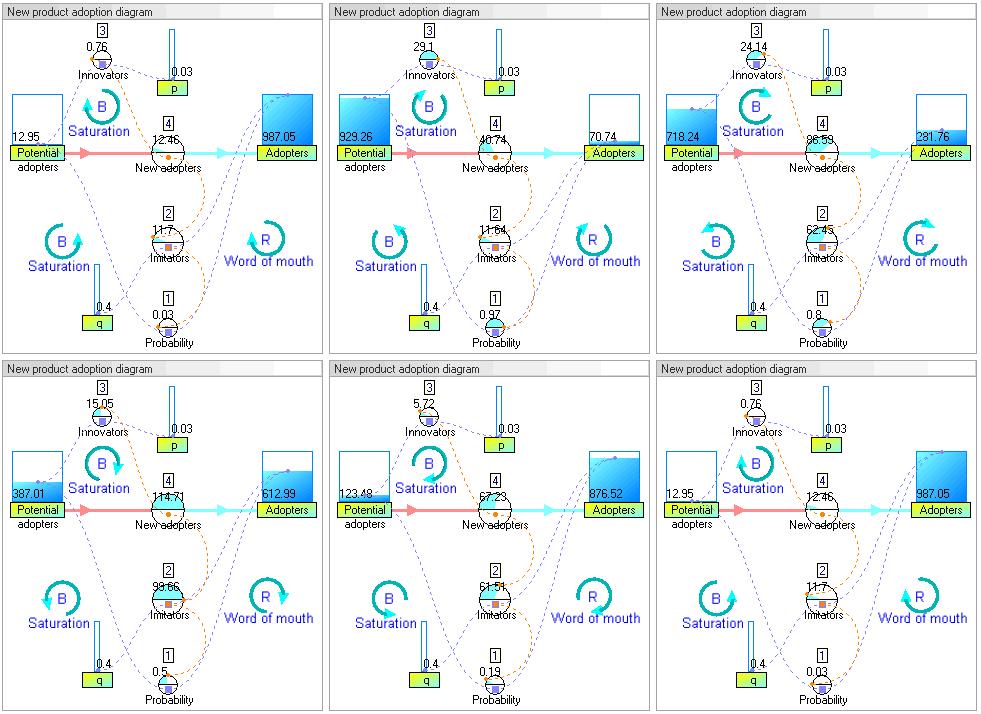
Dynamic stock and flow diagram of model New product adoption (model from article by John Sterman 2001 - True Software)

System dynamics (SD) is an approach to understanding the nonlinear behaviour of complex systems over time using stocks, flows, internal feedback loops, table functions and time delays.[1]

Overview

[edit]

System dynamics is a mathematical modeling technique to frame, understand, and discuss complex systems. Originally developed in the 1950s to help corporate managers improve their understanding of industrial processes, SD is being used in the 2000s throughout the public and private sector for policy analysis and design.[2]

Convenient graphical user interface (GUI) system dynamics software developed into user friendly versions by the 1990s and have been applied to diverse systems. SD models solve the problem of simultaneity (mutual causation) by updating all variables in small time increments with positive and negative feedbacks and time delays structuring the interactions and control. The best known SD model is probably the 1972 The Limits to Growth. This model forecast that exponential growth of population and capital, with finite resource sources and sinks and perception delays, would lead to economic collapse during the 21st century under a wide variety of growth scenarios.

System dynamics is an aspect of systems theory as a method to understand the dynamic behavior of complex systems. It is a property of complex systems that the structure of any system, with many circular, interlocking, sometimes time-delayed relationships among its components, is often just as important in determining its behavior as the individual components themselves. Examples are chaos theory and social dynamics. There are often emergent properties and behaviour of the system which are not properties and behaviour of the individual parts.

History

[edit]

System dynamics was created during the mid-1950s[3] by Professor Jay Forrester of the Massachusetts Institute of Technology. In 1956, Forrester accepted a professorship in the newly formed MIT Sloan School of Management. His initial goal was to determine how his background in science and engineering could be brought to bear, in some useful way, on the core issues that determine the success or failure of corporations. Forrester's insights into the common foundations that underlie engineering, which led to the creation of system dynamics, were triggered, to a large degree, by his involvement with managers at General Electric (GE) during the mid-1950s. At that time, the managers at GE were perplexed because employment at their appliance plants in Kentucky exhibited a significant three-year cycle. The business cycle was judged to be an insufficient explanation for the employment instability. From hand simulations (or calculations) of the stock-flow-feedback structure of the GE plants, which included the existing corporate decision-making structure for hiring and layoffs, Forrester was able to show how the instability in GE employment was due to the internal structure of the firm and not to an external force such as the business cycle. These hand simulations were the start of the field of system dynamics.[2]

During the late 1950s and early 1960s, Forrester and a team of graduate students moved the emerging field of system dynamics from the hand-simulation stage to the formal computer modeling stage. Richard Bennett created the first system dynamics computer modeling language called SIMPLE (Simulation of Industrial Management Problems with Lots of Equations) in the spring of 1958. In 1959, Phyllis Fox and Alexander Pugh wrote the first version of DYNAMO (DYNAmic MOdels), an improved version of SIMPLE, and the system dynamics language became the industry standard for over thirty years. Forrester published the first, and still classic, book in the field titled Industrial Dynamics in 1961.[2]

From the late 1950s to the late 1960s, system dynamics was applied almost exclusively to corporate/managerial problems. In 1968, however, an unexpected occurrence caused the field to broaden beyond corporate modeling. John F. Collins, the former mayor of Boston, was appointed a visiting professor of Urban Affairs at MIT. The result of the Collins-Forrester collaboration was a book titled Urban Dynamics. The Urban Dynamics model presented in the book was the first major non-corporate application of system dynamics.[2] In 1967, Richard M. Goodwin published the first edition of his paper "A Growth Cycle",[4] which was the first attempt to apply the principles of system dynamics to economics. He devoted most of his life teaching what he called "Economic Dynamics", which could be considered a precursor of modern Non-equilibrium economics.[5]

The second major noncorporate application of system dynamics came shortly after the first. In 1970, Jay Forrester was invited by the Club of Rome to a meeting in Bern, Switzerland. The Club of Rome is an organization devoted to solving what its members describe as the "predicament of mankind"—that is, the global crisis that may appear sometime in the future, due to the demands being placed on the Earth's carrying capacity (its sources of renewable and nonrenewable resources and its sinks for the disposal of pollutants) by the world's exponentially growing population. At the Bern meeting, Forrester was asked if system dynamics could be used to address the predicament of mankind. His answer, of course, was that it could. On the plane back from the Bern meeting, Forrester created the first draft of a system dynamics model of the world's socioeconomic system. He called this model WORLD1. Upon his return to the United States, Forrester refined WORLD1 in preparation for a visit to MIT by members of the Club of Rome. Forrester called the refined version of the model WORLD2. Forrester published WORLD2 in a book titled World Dynamics.[2]

Topics in systems dynamics

[edit]

The primary elements of system dynamics diagrams are feedback, accumulation of flows into stocks and time delays.

As an illustration of the use of system dynamics, imagine an organisation that plans to introduce an innovative new durable consumer product. The organisation needs to understand the possible market dynamics in order to design marketing and production plans.

Causal loop diagrams

[edit]

In the system dynamics methodology, a problem or a system (e.g., ecosystem, political system or mechanical system) may be represented as a causal loop diagram.[6] A causal loop diagram is a simple map of a system with all its constituent components and their interactions. By capturing interactions and consequently the feedback loops (see figure below), a causal loop diagram reveals the structure of a system. By understanding the structure of a system, it becomes possible to ascertain a system's behavior over a certain time period.[7]

The causal loop diagram of the new product introduction may look as follows:

Causal loop diagram of New product adoption model

There are two feedback loops in this diagram. The positive reinforcement (labeled R) loop on the right indicates that the more people have already adopted the new product, the stronger the word-of-mouth impact. There will be more references to the product, more demonstrations, and more reviews. This positive feedback should generate sales that continue to grow.

The second feedback loop on the left is negative reinforcement (or "balancing" and hence labeled B). Clearly, growth cannot continue forever, because as more and more people adopt, there remain fewer and fewer potential adopters.

Both feedback loops act simultaneously, but at different times they may have different strengths. Thus one might expect growing sales in the initial years, and then declining sales in the later years. However, in general a causal loop diagram does not specify the structure of a system sufficiently to permit determination of its behavior from the visual representation alone.[8]

Stock and flow diagrams

[edit]

Causal loop diagrams aid in visualizing a system's structure and behavior, and analyzing the system qualitatively. To perform a more detailed quantitative analysis, a causal loop diagram is transformed to a stock and flow diagram. A stock and flow model helps in studying and analyzing the system in a quantitative way; such models are usually built and simulated using computer software.

A stock is the term for any entity that accumulates or depletes over time. A flow is the rate of change in a stock.

A flow is the rate of accumulation of the stock

In this example, there are two stocks: Potential adopters and Adopters. There is one flow: New adopters. For every new adopter, the stock of potential adopters declines by one, and the stock of adopters increases by one.

Stock and flow diagram of New product adoption model

Equations

[edit]

The real power of system dynamics is utilised through simulation. Although it is possible to perform the modeling in a spreadsheet, there are a variety of software packages that have been optimised for this.

The steps involved in a simulation are:

  • Define the problem boundary.
  • Identify the most important stocks and flows that change these stock levels.
  • Identify sources of information that impact the flows.
  • Identify the main feedback loops.
  • Draw a causal loop diagram that links the stocks, flows and sources of information.
  • Write the equations that determine the flows.
  • Estimate the parameters and initial conditions. These can be estimated using statistical methods, expert opinion, market research data or other relevant sources of information.[9]
  • Simulate the model and analyse results.

In this example, the equations that change the two stocks via the flow are:



Equations in discrete time

[edit]

List of all the equations in discrete time, in their order of execution in each year, for years 1 to 15 :



Dynamic simulation results

[edit]

The dynamic simulation results show that the behaviour of the system would be to have growth in adopters that follows a classic s-curve shape.
The increase in adopters is very slow initially, then exponential growth for a period, followed ultimately by saturation.

Dynamic stock and flow diagram of New product adoption model
Stocks and flows values for years = 0 to 15

Equations in continuous time

[edit]

To get intermediate values and better accuracy, the model can run in continuous time: we multiply the number of units of time and we proportionally divide values that change stock levels. In this example we multiply the 15 years by 4 to obtain 60 quarters, and we divide the value of the flow by 4.
Dividing the value is the simplest with the Euler method, but other methods could be employed instead, such as Runge–Kutta methods.

List of the equations in continuous time for trimesters = 1 to 60 :

  • They are the same equations as in the section Equation in discrete time above, except equations 4.1 and 4.2 replaced by following :



  • In the below stock and flow diagram, the intermediate flow 'Valve New adopters' calculates the equation :

Dynamic stock and flow diagram of New product adoption model in continuous time

Application

[edit]

System dynamics has found application in a wide range of areas, for example population, agriculture,[10] epidemiological, ecological and economic systems, which usually interact strongly with each other.

System dynamics have various "back of the envelope" management applications. They are a potent tool to:

  • Teach system thinking reflexes to persons being coached
  • Analyze and compare assumptions and mental models about the way things work
  • Gain qualitative insight into the workings of a system or the consequences of a decision
  • Recognize archetypes of dysfunctional systems in everyday practice

Computer software is used to simulate a system dynamics model of the situation being studied. Running "what if" simulations to test certain policies on such a model can greatly aid in understanding how the system changes over time. System dynamics is very similar to systems thinking and constructs the same causal loop diagrams of systems with feedback. However, system dynamics typically goes further and utilises simulation to study the behaviour of systems and the impact of alternative policies.[11]

System dynamics has been used to investigate resource dependencies, and resulting problems, in product development.[12][13]

A system dynamics approach to macroeconomics, known as Minsky, has been developed by the economist Steve Keen.[14] This has been used to successfully model world economic behaviour from the apparent stability of the Great Moderation to the 2008 financial crisis.

Example: Growth and decline of companies

[edit]
Causal loop diagram of a model examining the growth or decline of a life insurance company.[15]

The figure above is a causal loop diagram of a system dynamics model created to examine forces that may be responsible for the growth or decline of life insurance companies in the United Kingdom. A number of this figure's features are worth mentioning. The first is that the model's negative feedback loops are identified by C's, which stand for Counteracting loops. The second is that double slashes are used to indicate places where there is a significant delay between causes (i.e., variables at the tails of arrows) and effects (i.e., variables at the heads of arrows). This is a common causal loop diagramming convention in system dynamics. Third, is that thicker lines are used to identify the feedback loops and links that author wishes the audience to focus on. This is also a common system dynamics diagramming convention. Last, it is clear that a decision maker would find it impossible to think through the dynamic behavior inherent in the model, from inspection of the figure alone.[15]

Example: Piston motion

[edit]
  1. Objective: study of a crank-connecting rod system.
    We want to model a crank-connecting rod system through a system dynamic model. Two different full descriptions of the physical system with related systems of equations can be found here (in English) and here (in French); they give the same results. In this example, the crank, with variable radius and angular frequency, will drive a piston with a variable connecting rod length.
  2. System dynamic modeling: the system is now modeled, according to a stock and flow system dynamic logic.
    The figure below shows the stock and flow diagram
    Stock and flow diagram for crank-connecting rod system
  3. Simulation: the behavior of the crank-connecting rod dynamic system can then be simulated.
    The next figure is a 3D simulation created using procedural animation. Variables of the model animate all parts of this animation: crank, radius, angular frequency, rod length, and piston position.
3D procedural animation of the crank-connecting rod system modeled in 2

See also

[edit]

References

[edit]

Further reading

[edit]
[edit]
Revisions and contributorsEdit on WikipediaRead on Wikipedia
from Grokipedia
System dynamics is a computer-aided approach to that applies feedback to analyze the structure and behavior of complex systems over time, focusing on as accumulations of resources, flows as rates of change affecting those stocks, and feedback loops that generate nonlinear dynamics such as growth, oscillation, or equilibrium. Developed in the mid-1950s by Jay W. Forrester at the Massachusetts Institute of Technology, initially to address industrial management problems through computer simulation, it evolved from Forrester's work in servomechanisms and early computing projects like and SAGE. Central to system dynamics are reinforcing feedback loops, which amplify changes and drive exponential growth or decline, and balancing loops, which counteract deviations to promote stability but can induce delays and oscillations when combined with nonlinearities. Forrester formalized these concepts in his 1961 book Industrial Dynamics, demonstrating how system structure determines long-term behavior patterns observable in corporations, such as cyclical employment fluctuations. Subsequent extensions applied the methodology to in Urban Dynamics (1969) and global resource limits in World Dynamics (1971), the latter influencing the controversial Limits to Growth report that projected potential under unchecked population and capital expansion. The approach has been employed in policy design across , , environmental management, and analysis, enabling endogenously generated behaviors like policy resistance or through tools such as causal loop diagrams for qualitative insight and stock-flow simulations for quantitative testing. Despite debates over predictive accuracy in high-profile applications like Limits to Growth, where empirical divergences from baseline scenarios have been attributed to unforeseen technological and policy interventions, system dynamics emphasizes causal mechanisms rooted in system structure over exogenous shocks, fostering robust strategy formulation.

Overview

Definition and Core Purpose

System dynamics is a for studying and managing complex feedback that exhibit dynamic behavior over time. It employs computer to model the interactions among components, emphasizing endogenous causes of behavior rather than external disturbances. Developed by Jay Forrester in the at , the approach originated from efforts to analyze industrial production but expanded to broader applications in policy design and strategy formulation. At its core, system dynamics seeks to uncover how stocks—accumulations of material or information—change through inflows and outflows, modulated by feedback loops and time delays. Reinforcing feedback loops can drive exponential growth or decline, while balancing loops promote stability or goal-seeking behavior; delays introduce oscillations or policy resistance. The methodology's purpose is to enable better decision-making by revealing counterintuitive dynamics in social, economic, and environmental systems, allowing policymakers to test interventions virtually before real-world implementation. This focus on structure over events distinguishes system dynamics from static analysis, prioritizing causal realism by tracing behaviors back to underlying feedback structures rather than superficial correlations. By quantifying qualitative insights into models, it facilitates rigorous testing of hypotheses about system , such as or market saturation, grounded in verifiable data and first-principles of accumulation and interconnection.

Key Assumptions and First-Principles Basis

System dynamics assumes that the observed behavior of complex systems emerges endogenously from their internal structure, rather than being driven primarily by external events or disturbances. This endogenous viewpoint holds that dynamics such as growth, decline, oscillations, or policy resistance arise from interactions among feedback loops, decision rules, and within the system's boundary, enabling explanations that treat the system as the source of its own behavior. At its core, the methodology rests on that all dynamic systems can be decomposed into —accumulations of , , or —and flows that alter those at rates determined by system conditions. This representation draws from conservation laws fundamental to physics and , where integrate inflows minus outflows over time, providing a first-principles basis for modeling continuity and change across diverse domains from servomechanisms to economies. Feedback processes, both reinforcing (amplifying deviations) and balancing (counteracting them), form the causal architecture that generates nonlinear behaviors, with delays in , , or response times introducing counterintuitive outcomes like overshoot or instability. These assumptions prioritize causal realism by focusing on over exogenous shocks, assuming that human decision-making operates through boundedly rational rules embedded in feedback structures, which simulations reveal beyond unaided . Validation relies on empirical patterns of matching model-generated trajectories, rather than point predictions, underscoring the approach's emphasis on qualitative consistency with real-world data.

History

Origins in Engineering and Management (1940s-1960s)

, an electrical engineer, developed the foundational concepts of system dynamics in the mid-1950s while at the Massachusetts Institute of Technology (MIT). Forrester, who joined MIT in 1939, contributed to wartime servomechanism research during , focusing on feedback control systems for applications like fire-control mechanisms. In 1940, he co-founded MIT's Servomechanisms Laboratory, an extension of the Electrical Engineering Department, where he advanced analog and digital computing techniques essential for simulating dynamic systems. These engineering roots emphasized feedback loops, delays, and nonlinear interactions, drawing from servo-theory and early principles articulated by in 1948. By the early 1950s, Forrester shifted his focus to applying these engineering methods to managerial decision-making in complex organizations. Invited to the in 1956, he began modeling industrial processes, such as production-inventory dynamics and workforce fluctuations, using feedback structures to explain observed oscillations and growth patterns in corporations like . He developed the programming language in 1958 for continuous simulation on digital computers, enabling the translation of feedback diagrams into executable models that revealed endogenous causes of behavior rather than external shocks. This approach treated management s as analogous to problems, where policies create amplifying or balancing loops affecting stocks like orders and inventories over time. The formalization of these ideas culminated in Forrester's 1961 book Industrial Dynamics, which outlined a for designing corporate structures and policies through quantitative . The text demonstrated how managerial decisions, modeled as feedback loops, could lead to unintended instabilities, advocating for computer-based experimentation to test policy alternatives before implementation. Early applications targeted pipelines and market responses, showing, for instance, how delays in amplify effects in supply chains. This period established system dynamics as a bridge between engineering precision and , prioritizing causal structures over static equilibrium analysis prevalent in at the time.

Expansion to Social Systems (1970s)

In the early 1970s, system dynamics extended beyond industrial and corporate applications to encompass broader social systems, including urban development, global economics, and . This expansion built on Jay Forrester's 1969 Urban Dynamics model, which analyzed city growth through endogenous structures like housing, jobs, and population migration, revealing counterintuitive policy effects such as how subsidized low-income housing could exacerbate by trapping populations in dependency loops rather than fostering mobility. The methodology's emphasis on feedback loops and delays proved adept at capturing nonlinear behaviors in social contexts, where traditional static analysis often failed to predict outcomes like policy-induced stagnation. A pivotal advancement occurred in 1971 with Forrester's World Dynamics, the first system dynamics model of the global system. This simulation integrated stocks such as population (approximately 3.7 billion in 1971), natural resources, capital investment, and persistent ; flows including birth and death rates, resource consumption, and investment allocation; and balancing loops like capital dilution from and reinforcing loops for industrial expansion. Running on software, the model generated scenarios projecting potential overshoot and collapse by the mid-21st century under business-as-usual conditions, driven by delays in signals and amplifying feedbacks in food production and pollution absorption. Forrester argued that these dynamics stemmed from system structure, not exogenous shocks, challenging prevailing optimistic growth assumptions. The 1972 Club of Rome report , authored by , , Jørgen , and William Behrens III, further propelled this expansion by adapting Forrester's framework into the model. Commissioned in 1970 and published in March 1972, the study simulated interactions among five global stocks—, industrial capital, agricultural output, natural resources, and —with flows governed by equations for technological substitution, service allocation, and environmental decay. Thirty standard runs, including a "business-as-usual" forecasting collapse around 2030 due to resource exhaustion and feedbacks, highlighted the need for deliberate interventions to achieve sustainable equilibrium. The report sold over 12 million copies across 30 languages by 1972's end, influencing international policy debates on and resource conservation, though critics contested its parameter assumptions and exclusion of adaptive market mechanisms. These applications demonstrated system dynamics' utility in dissecting social systems' endogenous drivers, such as how reinforcing loops in population-capital growth could overwhelm balancing constraints like finite (modeled at 0.25 hectares in ). Despite methodological critiques—often from linear economic models overlooking delays—the approach's causal mapping enabled testing of policies like resource or adjustments, revealing trade-offs absent in aggregate statistics. By mid-decade, extensions appeared in areas like and systems, solidifying system dynamics as a tool for of societal trajectories.

Institutionalization and Maturation (1980s-2000s)

The System Dynamics Society was established in 1984 as an international to promote , , and application of system dynamics principles, building on earlier informal networks from MIT and annual conferences that began in the 1970s. This formalization provided a dedicated platform for practitioners, including the launch of the System Dynamics Review journal in 1985, which became a primary venue for peer-reviewed articles on methodology, case studies, and theoretical advancements. By the late 1980s, the society had grown to support global chapters and events, fostering standardization of modeling practices and credentialing through workshops and certifications. Accessibility advanced significantly with commercial software tools in the 1980s and 1990s, transitioning system dynamics from mainframe-based simulations to user-friendly graphical interfaces. STELLA, introduced in 1985 by High Performance Systems (later isee systems), pioneered icon-based modeling that allowed non-programmers to construct stock-flow diagrams and run simulations on personal computers, democratizing the approach beyond specialists. Vensim, developed in the mid-1980s and commercialized in 1992, offered robust equation-based modeling with sensitivity analysis features, enabling broader adoption in consulting and academia. These tools, alongside others like iThink, reduced barriers to entry, with studies showing their use in over 100 educational programs by the 1990s. Applications matured during this period, expanding from corporate and urban policy roots to diverse domains including , project dynamics, , and environmental systems. In the , ecological models gained prominence, analyzing predator-prey interactions and lake ecosystems to reveal counterintuitive behaviors from feedback delays. The saw integration into , with initiatives like those in Tucson schools demonstrating improved student understanding of complex causality through hands-on modeling. By the 2000s, system dynamics informed simulations and , with empirical validations showing improved forecasting accuracy in nonlinear environments compared to static methods. Academic programs proliferated at institutions like the University at Albany and , solidifying its status as a rigorous interdisciplinary field.

Fundamental Concepts

Feedback Loops and Causal Structures

Feedback loops constitute the core mechanism in system dynamics for explaining how systems generate behavior over time through endogenous causal processes. A feedback loop arises when a change in one system variable triggers a chain of causal effects that eventually returns to alter the initial variable, creating a closed pathway of influence. These loops capture the self-regulating or self-amplifying nature of complex , where outcomes feed back to influence their own causes, rather than attributing dynamics solely to external disturbances. System dynamics distinguishes two fundamental loop types based on their polarity and effect on change: reinforcing (R) loops and balancing (B) loops. Reinforcing loops, characterized by an even number of negative causal links (or all positive), amplify deviations from equilibrium, leading to , decline, or instability; for instance, where more individuals produce more offspring, further increasing population. Balancing loops, with an odd number of negative links, counteract deviations, driving the system toward a goal or equilibrium, such as adjustment where excess reduces orders, stabilizing levels—though can induce oscillations. The polarity of a link is positive if the cause and effect move in the same direction and negative if opposite, determining the loop's overall behavior through of link polarities around the cycle. Causal structures refer to the interconnected network of variables and directed causal links that form these loops, emphasizing the architecture of influences within the system boundary. Represented qualitatively in causal loop diagrams (CLDs), these structures use arrows to denote causal direction, + or - symbols for polarity, and labels (R or B) to identify dominant loop types, facilitating initial testing about system dynamics without quantification. CLDs highlight how multiple loops interact—such as reinforcing loops dominating early phases before balancing loops assert control—revealing endogenous sources of like tipping points or counterintuitive policies, as opposed to linear or exogenous explanations prevalent in traditional analysis. While CLDs abstract away stocks and flows for simplicity, they must align with more formal models to avoid misrepresenting nonlinear or delayed effects.

Stocks, Flows, and Accumulations

In system dynamics, represent accumulations of tangible or intangible entities, such as material resources, populations, or , that quantify the state of a system at any instant and provide it with and against rapid changes. These levels, as termed by Jay Forrester, persist over time and are altered solely by associated flows, embodying the integration of past system activities. Flows denote the rates of movement into or out of , with inflows augmenting the accumulation and outflows diminishing it, thereby driving the dynamic evolution of the . Forrester described flows as the mechanisms that "change the amount in the ," typically measured in units of per time, such as births per year for a . The rate of change for a is precisely the algebraic difference between its inflows and outflows, ensuring conservation principles are maintained in model formulations. Accumulations, synonymous with in this context, highlight the integrative nature of processes, where Forrester asserted that "nature only integrates, that is, accumulates in ," rejecting direct modeling of in favor of deriving rates from accumulated levels to avoid instability in simulations. This approach underpins the field's emphasis on endogenous explanations, as retain historical effects, enabling feedback loops to generate observed behaviors like growth, decline, or oscillations without exogenous forcing. Common examples illustrate these elements: a bathtub's serves as the , faucet inflow and drain outflow as flows, revealing how imbalances lead to rising or falling levels; similarly, in economic models, capital accumulates via flows net of . Such structures form the foundational building blocks of system dynamics models, capturing delays and nonlinear interactions essential for , as validated in Forrester's 1958 Industrial Dynamics applications to inventories.

Delays, Nonlinearities, and Endogenous Dynamics

Delays in system dynamics models capture the time lags inherent in real-world processes, such as the interval between placing an order and receiving or the response time in feedback loops. These , often modeled using or material delay functions, introduce phase shifts that can amplify oscillations or cause overshoots in balancing loops, as actions taken to correct deviations arrive after conditions have changed. Jay Forrester highlighted as a core driver of cyclical behavior in industrial systems, where lags between production decisions and market responses contribute to boom-bust patterns observed in sectors like electronics manufacturing during the 1950s. Common implementations include first-order exponential , defined by an average delay time τ\tau, where the output y(t)y(t) approximates the input x(tτ)x(t - \tau) via the τdydt=xy\tau \frac{dy}{dt} = x - y, leading to smoothing that averages past inputs weighted by recency. Higher-order , aggregating multiple exponential stages, better represent distributed lags in pipelines or queues, but increase model complexity and potential for if not calibrated against empirical . Nonlinearities refer to relationships where outputs do not scale proportionally with inputs, arising from mechanisms like saturation, thresholds, or multiplicative interactions—such as adoption rates depending on both potential adopters and existing users in diffusion models. These enable qualitative shifts in system behavior, where reinforcing loops dominate during early growth phases but yield to balancing constraints later, producing S-shaped curves or tipping points absent in linear systems. John Sterman emphasizes that nonlinearities reflect fundamental physical and behavioral limits, exemplified by production rates bounded at zero or capacity ceilings, which prevent unrealistic perpetual growth and allow models to capture discontinuities like stockouts triggering order surges. In practice, nonlinear functions—e.g., table lookups for or if-then switches for policy thresholds—are integrated into rate equations, enhancing fidelity to empirical patterns like supply chain bullwhip effects, where small demand fluctuations amplify upstream due to nonlinear ordering heuristics. Endogenous dynamics embody the foundational viewpoint that a system's observed trajectories—growth, decline, cycles, or equilibria—originate from internal rather than external noise or forcings. This perspective mandates bounding the model to include feedback loops, accumulations, , and nonlinearities sufficient to generate the reference behavior modes endogenously, as exogenous explanations merely relocate causality without revealing mechanisms. Forrester's insists on this endogenous focus to uncover leverage points, contrasting with exogenous event-driven narratives that overlook how amplifies minor perturbations into major outcomes, such as policy resistance in urban dynamics models from the . Validation involves testing whether model-generated patterns match historical data across scenarios, with endogenous explanations preferred when replicates behaviors like commodity cycles without invoking unexplained shocks. and nonlinearities are pivotal enablers here, as linear instantaneous feedbacks yield damped exponentials or steady states, whereas their interplay produces the rich, path-dependent evolutions characteristic of socioeconomic systems.

Modeling Techniques

Causal Loop Diagrams

Causal loop diagrams (CLDs) represent the qualitative structure of systems by mapping variables and their interdependencies through directed links indicating causation. In system dynamics, CLDs serve as initial tools for conceptualizing feedback processes, identifying key variables, and exploring dynamic behaviors before developing quantitative models. They consist of nodes for variables, arrows for causal influences, polarity signs (+ for same-direction change, - for opposite-direction change), and loop labels (R for reinforcing, B for balancing). Reinforcing loops amplify deviations from equilibrium, leading to or decline; they occur when an even number of negative polarities close the loop. For instance, where more individuals lead to more births, which further increase , forms a reinforcing loop. Balancing loops counteract change to stabilize around a , resulting from an odd number of negative polarities; an example is where rising stock levels reduce orders, curbing further accumulation. To construct a CLD, start with central variables driving observed , add influencing factors via arrows with polarities based on empirical or , then trace and label loops. , indicated by double lines on arrows, account for time lags in causation, essential for capturing oscillations or policy resistance. Originating from Jay Forrester's early system dynamics work in the and , CLDs evolved as communication aids in the 1970s for non-technical audiences, distinct from Forrester's diagrams by emphasizing feedback loops over detailed equations. While CLDs facilitate hypothesis generation and team discussions, they risk oversimplification by omitting nonlinearities or unless multiple perspectives are integrated. In practice, they precede stock-and-flow diagrams for validation, as qualitative links do not guarantee quantitative fidelity without testing. Empirical validation involves comparing loop-predicted behaviors, such as growth limits from balancing loops, against historical data.

Stock and Flow Diagrams

Stock and flow diagrams constitute a core representational tool in system dynamics, illustrating the accumulations within a system and the processes that alter them over time. Stocks, depicted as rectangular reservoirs, signify quantities such as populations, inventories, or capital that persist and integrate the effects of past activities; their levels at any instant reflect the net result of inflows minus outflows up to that point. Flows, shown as pipes equipped with symbols, represent the rates at which stocks increase (inflows) or decrease (outflows), often governed by auxiliary variables or feedback mechanisms. This notation, pioneered by Jay Forrester in his 1961 work Industrial Dynamics, draws on a hydraulic metaphor to emphasize how rates of change drive the evolution of system states. The diagrams incorporate additional elements to capture complexity: converters, rendered as small circles, denote variables like parameters or functions that influence flows without accumulating (e.g., coefficients in models); connectors, thin arrows, transmit or causal influences between components. Unlike causal loop diagrams, which abstractly map feedback polarity, stock and flow diagrams enforce a rigorous of material or informational balance, enabling direct translation into differential equations for —typically stocks as integrals of net flows. This structure reveals endogenous dynamics, such as in adjustment or nonlinear interactions, that qualitative sketches might overlook. For instance, in a basic model, a stock of receives inflows from production rates and loses outflows via , with cloud symbols optionally denoting unbounded sources or sinks. In practice, these diagrams facilitate model validation by mirroring conservation principles inherent in real systems, such as mass or balance. A canonical example is the Bass innovation diffusion model, where two stocks—potential adopters and adopters—interact via a flow of new adopters comprising innovators (proportional to potential) and imitators (proportional to adopters times potential ratio), parameterized by coefficients p = 0.03 and q = 0.4 to simulate over time. Such formulations underpin simulations in software like Vensim or Stella, where continuous-time equations yield behavior-over-time graphs, highlighting phenomena like S-shaped growth curves observed in historical for products like hybrid corn in the 1940s, achieving 90% by 1958. Empirical calibration, as in Forrester's original industrial applications, underscores the method's utility in forecasting under policy interventions, provided initial values and flow drivers align with verifiable . Stock and flow diagrams excel in dissecting policy resistance or growth limits, as stocks inherently embody inertia against rapid change, contrasting with instantaneous adjustments in non-accumulative models. Limitations arise in highly discrete or spatial systems, where agent-based alternatives may supplement, but for aggregate, continuous approximations—as validated in peer-reviewed applications to or —they provide transparent, falsifiable structures superior to purely verbal or econometric descriptions lacking explicit accumulation logic.

Mathematical Formulations

In system dynamics, mathematical formulations translate qualitative structures—such as , flows, feedback loops, and —into quantitative models, typically as systems of nonlinear ordinary differential equations (ODEs) or their discrete equivalents, capturing endogenous dynamics driven by interactions among variables. represent accumulations (e.g., levels or sizes), governed by the principle that their rate of change equals net inflows minus outflows, where flows are functions of current , auxiliary variables, parameters, and time . These equations emphasize causal structures over exogenous inputs, enabling of policy leverage points and behavioral modes like , , or S-shaped adoption.

Continuous-Time Equations

Continuous-time formulations model system evolution via ODEs, where each stock Si(t)S_i(t) satisfies dSidt=Ii(t)Oi(t)\frac{dS_i}{dt} = I_i(t) - O_i(t), with inflows IiI_i and outflows OiO_i as nonlinear algebraic expressions involving other stocks SjS_j, constants, and table functions approximating nonlinearities or delays. Initial conditions set Si(0)S_i(0), and the full system forms a coupled set of first-order ODEs solvable analytically for simple cases (e.g., linear systems yielding exponential solutions) or numerically via integration methods like Runge-Kutta. Feedback enters endogenously: positive loops amplify deviations (e.g., reinforcing growth in dSdt=rS\frac{dS}{dt} = r S, solution S(t)=S0ertS(t) = S_0 e^{rt}), while negative loops stabilize (e.g., goal-seeking dSdt=k(SG)\frac{dS}{dt} = -k (S - G), converging to goal GG). A canonical example is the for adoption, where potential adopters P(t)P(t) and adopters A(t)A(t) obey dAdt=pP(t)+qA(t)mP(t)\frac{dA}{dt} = p P(t) + q \frac{A(t)}{m} P(t), with mm as market potential, pp coefficient, and qq imitation coefficient; equivalently, P(t)=mA(t)P(t) = m - A(t) and dAdt=(p+qA(t)m)(mA(t))\frac{dA}{dt} = (p + q \frac{A(t)}{m}) (m - A(t)), yielding a logistic-like S-curve solution A(t)=m1+e(p+q)tmA(0)A(0)A(t) = \frac{m}{1 + e^{-(p+q)t} \frac{m - A(0)}{A(0)}} under A(0)=0A(0) = 0. Delays appear as distributed lags, e.g., I(t)=0f(τ)R(tτ)dτI(t) = \int_0^\infty f(\tau) R(t - \tau) d\tau with kernel ff, introducing phase shifts and oscillations in closed loops.

Discrete-Time Equations and Simulations

Discrete-time formulations approximate continuous dynamics via difference equations, updating as Si(t+Δt)=Si(t)+[Ii(t)Oi(t)]ΔtS_i(t + \Delta t) = S_i(t) + [I_i(t) - O_i(t)] \Delta t, where Δt\Delta t is a small timestep (e.g., 0.25 years for quarterly resolution), and rates Ii,OiI_i, O_i evaluated at time tt using forward or backward Euler schemes. This Euler integration suits numerical in software, preserving qualitative behaviors if Δt\Delta t is sufficiently small relative to timescales, though larger steps risk numerical in stiff systems with disparate rates. For nonlinear feedback, discrete equations enable event-driven or hybrid modeling, e.g., in adoption: new adopters over Δt\Delta t as ΔA=[pP+qAmP]Δt\Delta A = [p P + q \frac{A}{m} P] \Delta t, then Anew=A+ΔAA_{new} = A + \Delta A, Pnew=PΔAP_{new} = P - \Delta A, iterated from initials. Simulations aggregate over many steps, incorporating randomness via stochastic flows or Monte Carlo for uncertainty, but prioritize deterministic endogenous causes over probabilistic exogenous shocks. Validation compares simulated trajectories to historical data, testing sensitivity to parameters like p,qp, q (typically 0.03 and 0.4 in Bass applications).

Continuous-Time Equations

In system dynamics, continuous-time models represent the rates of change in variables through ordinary differential equations, approximating system behavior as smooth flows over infinitesimal time intervals. This formulation, pioneered by Jay Forrester in his 1961 work Industrial Dynamics, treats accumulations () as integrals of net flows and derives their dynamics from principles, where the of a stock S(t)S(t) satisfies dSdt=I(t)O(t)\frac{dS}{dt} = I(t) - O(t), with I(t)I(t) denoting inflows and O(t)O(t) outflows at time tt. Forrester justified the continuous approximation for industrial systems, arguing it simplifies analysis of feedback-dominated processes even when discrete events occur, as the averaging effect reveals underlying structures more clearly than discrete-event tracking. A full model comprises a coupled set of such first-order ODEs for multiple stocks x(t)=[x1(t),,xn(t)]T\mathbf{x}(t) = [x_1(t), \dots, x_n(t)]^T, expressed as dxdt=f(x,p,t)\frac{d\mathbf{x}}{dt} = \mathbf{f}(\mathbf{x}, \mathbf{p}, t), where f\mathbf{f} encodes inflows and outflows as algebraic, often nonlinear, functions of stocks x\mathbf{x}, parameters p\mathbf{p} (e.g., constants from empirical ), auxiliary variables, and occasionally explicit time dependence for exogenous forces. Flows capture causal structures like reinforcing or balancing loops through multiplicative or functional dependencies, such as table lookups for nonlinearities derived from or ; for instance, production rates might equal minimums of stocks weighted by . conditions x(0)\mathbf{x}(0) anchor solutions, but closed-form integration is infeasible for nonlinear systems, necessitating numerical methods like Euler or Runge-Kutta in . Delays and nonlinearities introduce endogenous behaviors like oscillations or bifurcations, analyzed via phase-plane methods or sensitivity testing rather than alone, emphasizing structure over parameter precision. Though conceptually continuous, practical computation discretizes time into small steps Δt\Delta t for Euler integration, x(t+Δt)x(t)+dxdtΔtx(t + \Delta t) \approx x(t) + \frac{dx}{dt} \Delta t, with step size tuned for accuracy against aggregation bias. This approach, as detailed by John Sterman, supports policy testing by revealing leverage points in feedback loops, validated against historical data where model-generated trajectories match observed patterns within estimation errors. For example, in technology adoption models, stocks of adopters A(t)A(t) and potential adopters P(t)P(t) follow dAdt=NA(t)\frac{dA}{dt} = NA(t) and dPdt=NA(t)\frac{dP}{dt} = -NA(t), with new adopters NA(t)=pP(t)+qA(t)P(t)A(t)+P(t)NA(t) = p P(t) + q A(t) \frac{P(t)}{A(t) + P(t)}, where pp and qq parameterize and coefficients fitted to data; this S-shaped growth emerges endogenously from density-dependent imitation. Such equations highlight how continuous-time framing facilitates bifurcation analysis, e.g., tipping points where imitation dominates, unlike discrete formulations prone to artifacts.

Discrete-Time Equations and Simulations

In system dynamics modeling, continuous-time differential equations are discretized for computational simulation to approximate the behavior of and flows over time. This discretization typically employs the , where the change in a stock SS over a small time step Δt\Delta t is calculated as ΔS=\Delta S = (inflow rate - outflow rate) ×Δt\times \Delta t, yielding the updated stock St+Δt=St+ΔSS_{t + \Delta t} = S_t + \Delta S. Rates are evaluated at the beginning of each time step, introducing a approximation that balances simplicity with reasonable accuracy for small Δt\Delta t. System dynamics software such as STELLA and Vensim implements this as the default integration technique, with Δt\Delta t often set to values like 0.0625 or 0.25 to ensure while capturing dynamic patterns. For models involving auxiliary variables or feedback loops, discrete-time equations propagate updates sequentially within each time step: first compute rates based on current and auxiliaries, then apply flow adjustments to . In the of adoption, for instance, new adopters (sum of innovators p×p \times potential adopters and imitators q×q \times adopters ×\times fraction non-adopters) are scaled by Δt\Delta t to form "" flows, updating potential adopters downward and adopters upward: potential adopters =-= new adopters ×Δt\times \Delta t, adopters +=+= new adopters ×Δt\times \Delta t. With parameters p=0.03p = 0.03 and q=0.4q = 0.4, and Δt=0.25\Delta t = 0.25 (quarterly steps), this yields S-shaped adoption curves approximating the continuous logistic form, though larger Δt\Delta t risks overshoot or of oscillations. Higher-order methods like Runge-Kutta 4 (RK4) mitigate Euler's local truncation errors by evaluating rates multiple times per step (e.g., at tt, t+Δt/2t + \Delta t/2, and t+Δtt + \Delta t), offering fourth-order accuracy at the cost of increased computation—up to four rate evaluations versus Euler's one. Software defaults to Euler for transparency and speed in exploratory modeling, switching to RK4 for precision in validation, as larger Δt\Delta t (e.g., 1.0) with Euler can destabilize systems with rapid feedbacks or delays, amplifying errors exponentially. Empirical tests in business dynamics models show Euler sufficient for most policy insights when Δt\Delta t is one-eighth the shortest system time constant, but RK4 reduces sensitivity to step size by factors of 10-100 in oscillatory behaviors.

Tools and Implementation

Simulation Software Evolution

The initial simulation software for system dynamics models was , a specialized programming language developed at MIT in the early by Alexander Pugh, Phyllis Fox, and colleagues under Jay Forrester's guidance. translated stock-and-flow diagrams into differential equations solvable via , primarily through on mainframe computers like the 7090, which constrained use to expert users due to the absence of real-time interaction or visual interfaces. By the late 1970s, extensions like Professional introduced limited plotting capabilities, but the paradigm remained text-based and non-interactive, reflecting the computational limitations of the era. The 1980s marked a pivotal shift toward graphical, interactive tools enabled by personal computers, broadening beyond specialists. STELLA, released in 1985 by Barry Richmond through High Performance Systems (later isee systems), pioneered visual modeling on the Macintosh platform, allowing users to construct models by dragging icons for , flows, and connectors directly onto a canvas, with automatic equation generation and runtime . This iconographic approach democratized system dynamics by reducing the need for manual coding, fostering adoption in education and consulting, though early versions were limited to continuous-time simulations without advanced optimization. Concurrently, tools like and Dynamo II emerged, but STELLA's intuitive interface set the standard for subsequent software emphasizing model building over programming. In the 1990s, software evolved to support more sophisticated analysis on Windows and cross-platform environments. Vensim, first commercialized by Ventana Systems in 1991 (version 1.50), introduced automated diagram-to-equation translation, sensitivity testing, and simulations, catering to professional modelers while offering a free personal learning edition to encourage wider use. Powersim Studio, released around 1993, added optimization and scripting, integrating system dynamics with discrete events for hybrid modeling. These advancements reflected growing computational power, enabling features like model calibration against data and endogenous policy optimization, which addressed DYNAMO-era limitations in handling nonlinearity and uncertainty. The 2000s and beyond integrated system dynamics with multi-paradigm simulation and open ecosystems. , launched in , embedded SD modules within agent-based and discrete-event frameworks, supporting Java-based extensions for complex applications in supply chains and . Open-source alternatives like Insight Maker (circa 2010) and Python libraries such as PySD emerged, allowing translation of graphical models into code for reproducibility and integration with pipelines, though proprietary tools like Vensim and Stella retained dominance in enterprise due to robust validation features. Recent developments emphasize cloud-based collaboration, assimilation, and AI-assisted model generation, yet core challenges persist in ensuring across diverse hardware, underscoring the field's reliance on empirical testing over unverified assumptions.

Integration with Data and Computing Advances

Advances in computational power and software have facilitated the simulation of larger and more intricate system dynamics models, incorporating techniques such as parallel processing for sensitivity analyses and simulations. For instance, modern implementations leverage solvers optimized for efficiency, as seen in Python-based frameworks that translate traditional system dynamics models into executable code compatible with scientific libraries. These developments, emerging prominently since the mid-2010s, allow for rapid iteration over spaces that were previously computationally prohibitive, enhancing the of models with numerous feedback loops and nonlinearities. Integration with has improved model calibration and validation through methods, particularly techniques that estimate parameters by fitting historical to simulated outputs. A study demonstrated the use of methods within system dynamics to quantify in parameter estimation, drawing on empirical sets for posterior distributions rather than point estimates. This approach addresses traditional challenges in system dynamics, where sparse historically limited structural fidelity, by incorporating large-scale observational —such as economic indicators or environmental metrics—to refine stock-flow relationships and test causal hypotheses against real-world trajectories. Hybrid modeling combining system dynamics with has gained traction for handling subsystems where mechanistic understanding is incomplete, using data-driven algorithms to approximate endogenous dynamics. For example, models have been integrated to predict variable interactions within system dynamics frameworks, as applied in a 2025 analysis of socioeconomic systems, where identified nonlinear dependencies overlooked by pure differential equations. Similarly, amortized via accelerates inference in complex models by amortizing computational costs across simulations, enabling real-time policy testing in scenarios like disruptions. Physics-guided further embeds first-principles causal structures from system dynamics into neural networks, improving interpretability and generalization from limited , as evidenced in dynamical systems benchmarks from 2024. These integrations, while promising, require careful validation to avoid or spurious correlations, with from case studies showing improved predictive accuracy when augments rather than replaces core feedback mechanisms. Tools like PySD exemplify this synergy by enabling seamless incorporation of data analytics pipelines, such as Kalman filtering for state estimation, directly into system dynamics workflows. Ongoing research emphasizes causal realism in hybrid approaches, prioritizing models that preserve endogenous explanations over purely correlational fits.

Applications

Business and Organizational Modeling

System dynamics modeling in business contexts emphasizes the role of endogenous feedback structures in driving strategic outcomes, such as market growth and resource allocation, rather than exogenous shocks alone. Developed initially by Jay Forrester in the 1950s for industrial dynamics, the approach gained traction through applications like the beer game , which illustrates order amplification in supply chains due to delayed information and adjustment processes. John Sterman's 2000 textbook Business Dynamics formalized its use for policy analysis, integrating stocks (e.g., inventory levels), flows (e.g., production rates), and delays to simulate scenarios in operations and strategy. Empirical validations, such as those in manufacturing firms, show models accurately replicating historical oscillations in orders and stocks, enabling tests of interventions like . In supply chain management, system dynamics captures the bullwhip effect, where small demand fluctuations at the retail level amplify upstream, increasing costs by 10-30% in some industries according to simulations calibrated to real data. A 2004 case study of a UK supermarket chain used stock-flow models to represent inventory policies and supplier lead times, revealing that reducing order batch sizes by 20% could halve variability without stockouts. Similar applications in steel production modeled four-echelon chains (from raw materials to finished goods), demonstrating how capacity adjustments interact with demand forecasts to stabilize output amid volatility. These models prioritize causal mechanisms like reinforcement from backlog pressures over static optimization, aligning with observed real-world behaviors in global chains. Project management benefits from system dynamics by endogenizing rework cycles and erosion, common in 70-90% of large projects exceeding budgets by 50% or more. Sterman's models quantify how initial shortfalls compound through feedback loops—poor work increases rework, depleting resources and extending schedules exponentially in endeavors like and . For instance, simulations of defense projects show that allocating 10-15% of effort to early prevents vicious cycles, reducing overruns validated against historical data from and . This contrasts with traditional critical path methods, which overlook dynamic interactions, as critiqued in peer-reviewed assessments of system dynamics' superior handling of . Organizational modeling employs system dynamics to simulate internal processes like skill accumulation and delays. Generic firm models track of and flows, predicting trajectories under varying investments; for example, reinforcing loops from gains can double over 5-10 years if balancing constraints like turnover are managed. In employee , Vensim-based simulations integrate with feedback from incentives, showing that delayed appraisals amplify turnover by 15-25% in high-uncertainty environments. Applications in resilience, such as 2024 models for enterprise adaptation, highlight how adaptive capacities buffer shocks, with validations from firm-level data underscoring the method's utility over linear regressions for nonlinear behaviors. Overall, these tools aid in scenario testing, though their effectiveness hinges on accurate parameterization from operational data rather than assumptions.

Engineering and Physical Systems

System dynamics modeling in engineering and physical systems emphasizes feedback mechanisms and accumulations inherent in processes like material transport, energy transfer, and mechanical motion, often using to represent quantities such as volume, , or positional displacement, with flows capturing rates governed by physical laws. This approach, rooted in Jay Forrester's adaptations of principles, enables of nonlinear interactions that classical differential equations may overlook in complex assemblies. For example, in systems, denote reservoir levels while flows model inlet/outlet rates influenced by pressure gradients and delays, aiding analysis of networks or hydraulic actuators. In mechanical engineering, system dynamics constructs stock-flow representations for oscillatory systems, such as pistons or suspensions, where displacement integrates velocity flows driven by force feedbacks including damping and stiffness. These models reveal counterintuitive behaviors like overshoot from delayed responses, informing design in automotive or aerospace components. A 1983 analysis highlighted system dynamics' utility in engineering design for "hard" systems, contrasting its typical socio-economic uses by focusing on deterministic feedback in physical prototypes. Applications extend to , where stocks capture heat content in lumped masses, with convective and conductive flows modulated by temperature differentials and insulation lags. In networks, validated system dynamics simulations replicate transient extraction dynamics, integrating depletion stocks with reinjection flows to predict long-term declines under varying operational policies. Similarly, in —a domain blending physical structures with project flows—a 2023 review of over 100 studies documented prevalent use for modeling rework cycles, where defect stocks accumulate from error flows, feeding back to delay schedules and inflate costs. These implementations underscore system dynamics' strength in bridging micro-physical laws with macro-system behaviors, though empirical remains essential due to parameter sensitivity.

Policy, Environment, and Social Systems

System dynamics models have informed by simulating endogenous feedback in socioeconomic structures, as exemplified by Jay Forrester's Urban Dynamics (1969), which represented city populations in categorized by employment class (managerial, worker, ) and flows driven by housing obsolescence, job attraction, and migration. The model projected that policies subsidizing low-income accelerated growth while depleting resources for new construction, creating poverty traps that hindered overall urban revitalization; instead, allowing aged to decay and incentivizing private investment in jobs and premium generated counterintuitive growth in total population and over 50-year horizons. These insights challenged intuitive interventions like welfare expansion, influencing debates on in the U.S. during the 1970s. In , system dynamics has modeled epidemic dynamics and intervention trade-offs, such as in simulations that integrated of infected populations, treatment flows, and reinforcing loops from stigma and compliance to assess scaling antiretroviral against behavioral prevention from 2001 onward. Similarly, models employed system dynamics to evaluate effects on infection rates, economic , and healthcare capacity, revealing nonlinear in impacts that informed phased reopening strategies in multiple jurisdictions by 2021. Environmental applications leverage system dynamics to capture resource accumulation and depletion feedbacks, as in a model for , , which simulated forest stocks, labor flows, and harvesting rates to optimize sustainable forestry policies, projecting condition improvements under adjusted workforce allocations as of the 2010s. For pollution control, a system dynamics of Mexico City's air quality from 2010–2020 used emission source stocks, dispersion flows, and abatement policies to forecast PM2.5 reductions, estimating that vehicle restrictions and industrial shifts could lower concentrations by 20–30% under targeted scenarios. Water management models have similarly analyzed stocks in arid regions, incorporating recharge delays and extraction feedbacks to recommend quota policies avoiding collapse, as demonstrated in regional case studies. Social systems modeling with system dynamics examines norm propagation and inequality dynamics through imitation loops and stock heterogeneities, such as simulations of behavior adoption where potential adopters decline via contact-based conversion rates, empirically calibrated to data showing tipping points at 25–40% adoption thresholds. In urban social-ecological contexts, models integrate with resource feedbacks to evaluate policies, revealing how inequality amplification loops—via uneven access to and jobs—exacerbate environmental strain, with applications projecting intervention effects on Gini coefficients over decades. These approaches highlight causal chains where initial inequities compound via delayed reinforcements, informing targeted equity policies.

Empirical Validation and Case Studies

Successful Implementations

One prominent application occurred at , where system dynamics modeling was employed in the 1990s to analyze subscriber growth dynamics and redesign the business strategy for the service, launched in 1996; this effort contributed to establishing a multi-billion-dollar industry by simulating feedback loops in customer adoption and service expansion. In healthcare, the UK's (NHS) utilized system dynamics to address patient waiting lines, enabling operational and clinical teams to test interventions and optimize , resulting in measurable reductions in wait times through identification of leverage points in service delivery flows. In defense , the U.S. Department of Defense applied a system dynamics model to a tactical program, simulating production, inventory, and distribution interactions to diagnose inefficiencies and recommend structural changes that improved program performance and cost control. For pharmaceutical supply chains, system dynamics models have guided investment decisions, directing millions of dollars toward high-efficiency initiatives by quantifying the impacts of feedback delays and capacity constraints on product operations. Jay Forrester's 1969 Urban Dynamics model exemplified early success in by endogenously simulating urban population, housing, and employment stocks and flows, revealing counterintuitive policies like reduced underclass housing to counteract decay, which informed debates on city planning despite subsequent refinements.

Notable Failures and Lessons

Several system dynamics projects have failed to achieve intended impacts despite robust modeling efforts, often due to organizational resistance, inadequate strategies, and mismatches between model insights and processes. A study analyzing such cases identified key barriers including client toward model results, insufficient post-modeling support for policy changes, and models being perceived as too abstract or disconnected from immediate operational needs. These failures highlight the gap between theoretical understanding of system behavior and practical adoption, where even validated simulations fail to alter entrenched behaviors or incentives. In applications, system dynamics models have encountered implementation challenges leading to limited uptake, such as difficulties in integrating dynamic insights into static tools and resistance from stakeholders unfamiliar with feedback loop concepts. For instance, efforts to model scoping and estimating errors in construction projects revealed that while models accurately captured delay amplification through rework cycles, they often failed to influence budgeting decisions due to perceived model and lack of background among managers. Similarly, very large-scale models, intended to encompass broad socioeconomic interactions, have been abandoned when they exceeded manageable , resulting in diminished credibility and resource waste without yielding actionable policies. Lessons from these shortcomings emphasize the necessity of root cause analysis prior to extensive modeling to avoid superficial structures that overlook fundamental drivers, as inadequate problem framing can propagate errors throughout the . Effective interventions require simplifying models to core feedback mechanisms while ensuring boundary definitions explicitly account for external influences, preventing "invisible fences" that distort causal realism. Moreover, successful application demands active from , including training to interpret endogenous dynamics, and iterative validation against empirical data to build trust and facilitate translation into adaptive strategies. These practices mitigate risks of model rejection and enhance the method's utility in addressing real-world delays and nonlinearities.

Criticisms and Limitations

Methodological Shortcomings

One prominent methodological shortcoming of system dynamics modeling lies in its validation procedures, which have been criticized for lacking sufficient objectivity, formality, and quantitative rigor compared to statistical or econometric standards. Critics argue that system dynamics models often prioritize internal structural consistency over empirical , making it difficult to rigorously test and refute hypotheses in a Popperian sense, as validation tests focus more on behavioral patterns than on precise statistical goodness-of-fit or out-of-sample predictions. This approach has drawn fire from economists like , who in 1972 contended that such models fail to adequately replicate historical data, thereby undermining confidence in their . Aggregation assumptions represent another core limitation, as dynamics typically employs highly aggregated and flows that presume homogeneity within levels, potentially masking micro-level heterogeneity and agent behaviors essential for causal realism in complex social or economic s. This leveling process, while enabling tractable feedback loop analysis, can lead to ecological fallacies where average behaviors are extrapolated without accounting for distributional variances or nonlinear interactions at finer scales, as noted in critiques of the methodology's handling of and . For instance, models assuming uniform response rates across populations may overlook effects or emerging from disaggregated dynamics, a concern echoed in analyses of and influences. Quantification of parameters, particularly "soft" variables like or , poses significant challenges due to errors and unverifiable causal linkages, rendering model subjective and prone to bias in social systems modeling. Traditional system dynamics struggles with these elements because reliable for soft factors is often scarce, leading to estimations that compromise reproducibility; empirical studies, such as those integrating , highlight how standard validation falters when causal relationships cannot be empirically anchored. This issue exacerbates overreliance on endogenous explanations, where exogenous shocks or human agency—such as discretionary —are downplayed in favor of deterministic feedback structures, inviting accusations of mechanistic oversimplification. Predictive accuracy remains contested, with models frequently tuned to historical trajectories but exhibiting poor foresight for novel scenarios, as evidenced by debates over works like (1972), where projections were deemed overly prophetic and insensitive to technological or disruptions. While proponents emphasize conditional over point predictions, the methodology's emphasis on long-term endogenous dynamics often underperforms in environments with high or , limiting its utility for precise . These shortcomings, rooted in the paradigm's foundational commitments to continuity and feedback dominance, underscore the need for hybrid approaches integrating disaggregated data or agent-based elements to enhance empirical grounding.

Challenges in Validation and Prediction

Validating system dynamics models requires a multi-faceted approach encompassing structural, , and behavioral tests, yet these methods encounter significant hurdles due to the methodology's emphasis on aggregate patterns rather than disaggregate points. Structural validation, which assesses whether the model's boundaries, causal loops, and feedback mechanisms accurately capture the real system's key drivers, often relies on judgment and sparse historical , making it susceptible to omitted variables or mis-specified that distort endogenous . Parameter verification demands against time-series evidence, but scarcity for soft variables—such as managerial decision rules or social influences—frequently results in wide confidence intervals and reliance on assumed functional forms, undermining robustness. Behavioral validation further complicates the process, as tests like extreme condition analysis (e.g., simulating shocks to check plausible responses) and reveal model fragility but cannot rule out equifinality, wherein diverse structures generate indistinguishable output trajectories, precluding unique identification of the "correct" representation. Quantitative tests tailored to system dynamics must prioritize major time-pattern components—such as growth cycles or S-shaped accumulations—over conventional statistical metrics like R-squared, which are ill-suited to nonlinear, feedback-driven simulations; designing and interpreting such tests remains an ongoing methodological challenge, with empirical applications showing inconsistent falsification power. Integration error tests ensure , but they address computational artifacts rather than substantive realism, leaving gaps in confirming causal validity against alternative explanations. Prediction in system dynamics modeling inherits these validation issues while introducing additional constraints from the inherent in complex, adaptive systems. Models typically reproduce historical behaviors effectively under endogenous assumptions, but out-of-sample accuracy diminishes rapidly beyond short horizons—often 5-10 years in socioeconomic applications—due to sensitivity to initial conditions, unforeseen exogenous perturbations, and structural breaks from policy interventions or technological shifts that violate conditions. Unlike econometric models optimized for point estimates, system dynamics prioritizes exploration over precise quantification, yielding directional insights (e.g., tipping points or leverage policies) but limited metric precision; studies indicate that while long-term trend predictions, such as paths, can align qualitatively with evidence, quantitative deviations accumulate from parameter uncertainties and omitted nonlinearities. This predictive modesty reflects causal realism: feedback loops amplify small errors over time, rendering long-range numerical forecasts unreliable without continuous model revision, as evidenced in applications like disruptions where assumed steady states fail amid volatility.

Overreliance on Simplification and Subjectivity

System dynamics models frequently aggregate heterogeneous system components into simplified and flows to achieve computational tractability, but this aggregation can obscure critical variations among individual elements, leading to an oversimplification of dynamics. For instance, representing diverse populations or agents as average behavioral rates ignores heterogeneity that may drive emergent patterns, potentially resulting in inferences akin to the , where macro-level correlations are erroneously attributed to micro-level mechanisms without disaggregated evidence. Critics argue this overreliance on simplification risks missing nonlinear interactions or threshold effects that aggregation smooths over, as evidenced in reviews of SD applications where model boundaries exclude key feedbacks, yielding incomplete behavioral explanations. Parameter estimation and structural choices in system dynamics further introduce subjectivity, as modelers often depend on expert elicitation or qualitative modes when empirical data is insufficient for . This discretion in hypothesizing causal loops, selecting time delays, or fitting nonlinear functions can embed unstated assumptions that reflect the modeler's rather than verifiable mechanisms, with limited formal procedures to adjudicate alternatives. While proponents maintain that iterative testing and mitigate these issues, empirical assessments indicate persistent challenges, such as inconsistent parameter values across similar models, underscoring the method's vulnerability to in structure validation. Overreliance on these elements has drawn scrutiny in fields like and , where SD models' simplified representations have failed to predict observed variances in disaggregated data, prompting calls for hybrid approaches integrating agent-based microsimulation to address aggregation biases. Nonetheless, the field's guidelines emphasize transparency in documenting subjective decisions to build confidence, though real-world applications reveal that such disclosures rarely prevent divergent interpretations among stakeholders.

Controversies

The Limits to Growth Debate

The (LTG) report, published in 1972 by the , utilized the system dynamics model developed at MIT to examine interactions between five global factors: , industrial output, food production, stocks, and persistent . The model's "standard run" scenario, assuming no major policy changes or technological breakthroughs, forecasted leading to , food shortages, and accumulation, culminating in around the mid-21st century, with industrial output peaking circa 2030 followed by decline. Alternative scenarios incorporated delays in feedback loops, such as capital investment in pollution controls or resource substitution, but emphasized that unchecked growth on a finite would trigger nonlinear declines due to reinforcing loops of depletion and erosion of . Critics, including economist , contended that the model systematically undervalued human adaptability and innovation as the "ultimate resource," predicting instead that scarcity signals via prices would spur substitution, , and gains, as evidenced by falling real prices from 1970 to 1990 despite population doubling. Simon's wager against ecologist on resource costs further highlighted empirical divergences, with metal and dropping contrary to depletion forecasts. Similarly, Bjørn Lomborg's analysis in (2001) critiqued LTG for neglecting market dynamics and historical trends, noting that global food production rose 30% from 1970 to 2000 amid , and resource reserves expanded through exploration and technology rather than contracting as modeled. These arguments underscore methodological flaws in , such as fixed assumptions on extraction rates and substitution elasticities, which ignored adaptive balancing loops driven by economic incentives. Defenders, including the report's authors in their 2004 update, maintained that real-world data tracked the business-as-usual trajectory closely, with industrialization and population aligning to model outputs through 2000, and warned of impending stagnation absent systemic shifts. A 2020 empirical comparison by analyst Gaya Herrington fitted historical data (1972–2019) to variants, finding the standard and comprehensive technology scenarios most consistent with trends in capital investment and use, projecting industrial decline starting in the 2030s. However, such validations have faced scrutiny for selective parameter tuning and underweighting post-1970s innovations like hydraulic fracturing and scaling, which decoupled some growth from resource intensity. The debate persists in system dynamics literature, pitting Malthusian views of inherent against cornucopian faith in endogenous technological feedbacks, with mixed: while resource scarcities have not materialized as predicted, accumulating ecological stressors like atmospheric CO2 exceeding 420 ppm by 2023 signal activating delay-prone loops in and subsystems. Proponents of LTG highlight its role in raising awareness of dynamic overshoot risks, yet acknowledge model limitations in capturing institutional adaptations, underscoring system dynamics' strength in structural insight over precise forecasting.

Critiques of Policy Applications

System dynamics applications in policy formulation have faced criticism for contributing to policy resistance, wherein targeted interventions are undermined by countervailing feedback loops inherent in the modeled systems. John Sterman describes this as a common outcome in social systems, where efforts to adjust variables like or provoke compensatory responses, such as increased or behavioral shifts, that restore equilibrium but thwart intended goals. For instance, attempts to boost short-term economic indicators through subsidies often lead to long-delayed degradations in system resilience, as balancing loops amplify over time. Critics argue that system dynamics exacerbates this by encouraging modelers to prioritize endogenous structures while underestimating exogenous political or cultural factors that policymakers must navigate. Jay Forrester's 1969 Urban Dynamics model exemplifies controversial policy outputs, recommending against low-income housing subsidies and job training for the underemployed on grounds that such measures attract more migrants, overcrowd , and impede long-term urban vitality by undercutting business expansion. These prescriptions, derived from simulations showing decay under welfare-oriented policies, were lambasted for neglecting migration drivers beyond model parameters, racial inequities, and broader societal costs, with reviewers like Linstone asserting the model's toward conservative fiscalism over equitable redistribution. Forrester's refusal to calibrate the model to empirical urban data—viewing it as a generic rather than a predictive tool—further eroded confidence in its policy relevance, as initial conditions and parameter sensitivities proved highly influential on outcomes. Broader critiques highlight implementation failures in system dynamics-driven policies, often stemming from invalid real-world assumptions or inadequate stakeholder buy-in. Andreas Größler analyzed projects where models accurately depicted dynamics but yielded negligible organizational impact, attributing this to opaque model validation, resistance to shifts, and disconnects between simulated leverage points and actionable reforms. In and domains, for example, models prescribing resource reallocations have faltered when human agency—such as non-compliance or —overrides projected causal chains, underscoring the methodology's vulnerability to subjective parameterization in high-stakes contexts. Such cases reveal a systemic gap: while system dynamics illuminates structural causes, its translations frequently overlook the adaptive, non-linear behaviors of real agents, leading to recommendations that appear theoretically sound yet practically inert.

Recent Developments

Advances in Sustainability and Big Data Integration

Recent advancements in system dynamics (SD) modeling have enhanced its application to sustainability challenges by incorporating empirical data from coupled human-natural systems, enabling more robust simulations of long-term environmental and socioeconomic interactions. A 2023 analysis in Proceedings of the National Academy of Sciences highlights progress in addressing historical limitations, such as integrating high-resolution spatial data and agent-based behaviors into SD frameworks to better capture nonlinear feedbacks in sustainable development scenarios, including resource depletion and policy interventions. These models have been applied to evaluate trade-offs in urban sustainability, where SD structures reveal reinforcing loops in circular economies, such as local employment gains from recycled construction materials outweighing initial social costs in quantified simulations. Integration of has further advanced SD's predictive capacity in contexts by providing granular inputs for and validation, mitigating reliance on subjective assumptions. For instance, a review of urban SD applications identifies sources—like and IoT sensor networks—as critical for parameterizing models of and flows, revealing gaps in traditional SD where static data underestimated dynamic urban expansion effects by up to 30% in case studies from Asian megacities. This approach allows for hybrid models that fuse SD's stock-flow logic with real-time data streams, improving forecast accuracy for metrics such as carbon emission trajectories. A notable 2025 hybrid framework combines SD with techniques, specifically algorithms, to assess long-term environmental impacts of policy variables in ; the model processed datasets exceeding 1 million observations to quantify variable interactions, demonstrating that in could reduce emissions by 15-25% under optimized scenarios, validated against historical EU industrial . Similarly, analytics in SD-driven models have been shown to enhance environmental outcomes by optimizing factors, with systematic reviews confirming BDA's role in identifying causal pathways for reduced , though integration challenges persist due to heterogeneity. These developments underscore SD's evolution toward -informed causal realism, prioritizing verifiable feedbacks over aggregated generalizations in planning.

Emerging Interdisciplinary Extensions (2020s)

In the 2020s, system dynamics has increasingly intersected with (AI) and (ML), yielding hybrid frameworks that leverage SD's feedback mechanisms and causal structures alongside ML's data-driven . These extensions address interpretability challenges in neural networks by embedding , flows, and loops into pipelines, enabling models of complex systems like transportation and supply chains that reveal underlying dynamics rather than opaque predictions. For example, Interpretable Neural System Dynamics, proposed in 2025, combines concept-based and mechanistic interpretability with causal ML to simulate system behaviors while preserving transparency, outperforming traditional black-box approaches in domains requiring policy insights. Similarly, integrations of SD with ML have enhanced forecasting in environmental impacts and operational efficiency, such as assessing demolition tool effects through dynamic simulations augmented by predictive algorithms. Extensions into epidemiology have advanced SD's application to infectious disease modeling, incorporating spatiotemporal and multilevel interactions absent in compartmental models alone. During the COVID-19 response, adaptive SD frameworks captured policy interventions, behavioral feedbacks, and socioeconomic determinants to forecast trajectories, demonstrating improved accuracy over static methods in U.S. hospital settings from 2020 onward. Post-pandemic, hybrid SD-epidemiology models have bridged qualitative causal mapping with quantitative network analysis for risks like hepatitis C among injecting drug users, revealing leverage points in social and transmission networks that statistical associations overlook. These developments emphasize SD's role in handling nonlinear delays and endogenous uncertainties, with dynamic causal models validating long-term predictions against empirical outbreaks as of 2025. Further interdisciplinary reach includes quantitative systems , where SD integrates with ML for automated model calibration in , processing high-throughput data to simulate patient responses and reduce trial failures. In , SD extensions model disruptions in interconnected systems, such as supply chains under adoption, by simulating flow delays across graph structures to optimize resilience. These fusions, often tested in peer-reviewed simulations, highlight SD's adaptability to data-rich environments while mitigating overparameterization risks inherent in purely computational methods.

References

Add your contribution
Related Hubs
User Avatar
No comments yet.








