Hubbry Logo
Aluminium sulfateAluminium sulfateMain
Open search
Aluminium sulfate
Community hub
Aluminium sulfate
logo
8 pages, 0 posts
0 subscribers
Be the first to start a discussion here.
Aluminium sulfate
Aluminium sulfate
from Wikipedia
Aluminium sulfate
Aluminium sulphate hexadecahydrate
Names
IUPAC name
Aluminium sulfate
Other names
  • Aluminum sulfate
  • Aluminium sulphate
  • Cake alum
  • Filter alum
  • Papermaker's alum
  • Alunogenite
  • aluminium salt (3:2)
Identifiers
3D model (JSmol)
ChemSpider
ECHA InfoCard 100.030.110 Edit this at Wikidata
EC Number
  • 233-135-0
E number E520 (acidity regulators, ...)
RTECS number
  • BD1700000
UNII
  • InChI=1S/2Al.3H2O4S/c;;3*1-5(2,3)4/h;;3*(H2,1,2,3,4)/q2*+3;;;/p-6 checkY
    Key: DIZPMCHEQGEION-UHFFFAOYSA-H checkY
  • InChI=1/2Al.3H2O4S/c;;3*1-5(2,3)4/h;;3*(H2,1,2,3,4)/q2*+3;;;/p-6
    Key: DIZPMCHEQGEION-CYFPFDDLAS
  • [Al+3].[Al+3].[O-]S(=O)(=O)[O-].[O-]S([O-])(=O)=O.[O-]S([O-])(=O)=O
Properties
Al2(SO4)3
Molar mass 342.15 g/mol (anhydrous)
666.44 g/mol (octadecahydrate)
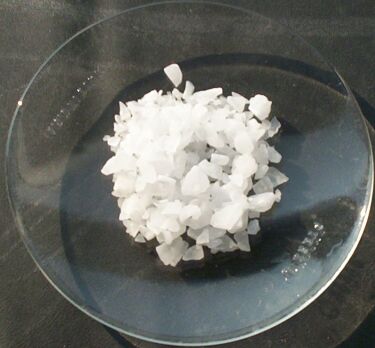
Appearance white crystalline solid
hygroscopic
Density 2.672 g/cm3 (anhydrous)
1.62 g/cm3 (octadecahydrate)
Melting point 770 °C (1,420 °F; 1,040 K) (decomposes, anhydrous)
86.5 °C (octadecahydrate)
31.2 g/100 mL (0 °C)
36.4 g/100 mL (20 °C)
89.0 g/100 mL (100 °C)
Solubility slightly soluble in alcohol, dilute mineral acids
Acidity (pKa) 3.3–3.6
−93.0×10⁻⁶ cm3/mol
1.47[1]
Structure
monoclinic (hydrate)
Thermochemistry
−3440 kJ/mol
Hazards
NFPA 704 (fire diamond)
NFPA 704 four-colored diamondHealth 1: Exposure would cause irritation but only minor residual injury. E.g. turpentineFlammability 0: Will not burn. E.g. waterInstability 0: Normally stable, even under fire exposure conditions, and is not reactive with water. E.g. liquid nitrogenSpecial hazards (white): no code
1
0
0
NIOSH (US health exposure limits):
PEL (Permissible)
none[2]
REL (Recommended)
2 mg/m3[2]
IDLH (Immediate danger)
N.D.[2]
Related compounds
Other cations
Gallium sulfate
Magnesium sulfate
Related compounds
See Alum
Supplementary data page
Aluminium sulfate (data page)
Except where otherwise noted, data are given for materials in their standard state (at 25 °C [77 °F], 100 kPa).
☒N verify (what is checkY☒N ?)

Aluminium sulfate is a salt with the formula Al2(SO4)3. It is soluble in water and is mainly used as a coagulating agent (promoting particle collision by neutralizing charge) in the purification of drinking water[3][4] and wastewater treatment plants, and also in paper manufacturing.

The anhydrous form occurs naturally as a rare mineral millosevichite, found for example in volcanic environments and on burning coal-mining waste dumps. Aluminium sulfate is rarely, if ever, encountered as the anhydrous salt. It forms a number of different hydrates, of which the hexadecahydrate Al2(SO4)3·16H2O and octadecahydrate Al2(SO4)3·18H2O are the most common. The heptadecahydrate, whose formula can be written as [Al(H2O)6]2(SO4)3·5H2O, occurs naturally as the mineral alunogen.

Aluminium sulfate is sometimes called alum or papermaker's alum in certain industries. However, the name "alum" is more commonly and properly used for any double sulfate salt with the generic formula XAl(SO4)2·12H2O, where X is a monovalent cation such as potassium or ammonium.[5]

Production

[edit]

In the laboratory

[edit]

Aluminium sulfate may be made by adding aluminium hydroxide, Al(OH)3, to sulfuric acid, H2SO4:

2Al(OH)3 + 3H2SO4 → Al2(SO4)3 + 6H2O

or by heating aluminium in a sulfuric acid solution:

2Al + 3H2SO4 → Al2(SO4)3 + 3H2

From alum schists

[edit]

The alum schists employed in the manufacture of aluminium sulfate are mixtures of iron pyrite, aluminium silicate and various bituminous substances, and are found in upper Bavaria, Bohemia, Belgium, and Scotland. These are either roasted or exposed to the weathering action of the air. In the roasting process, sulfuric acid is formed and acts on the clay to form aluminium sulfate, a similar condition of affairs being produced during weathering. The mass is now systematically extracted with water, and a solution of aluminium sulfate of specific gravity 1.16 is prepared. This solution is allowed to stand for some time (in order that any calcium sulfate and basic iron(III) sulfate may separate), and is then evaporated until iron(II) sulfate crystallizes on cooling; it is then drawn off and evaporated until it attains a specific gravity of 1.40. It is now allowed to stand for some time, and decanted from any sediment.[6]

From clays or bauxite

[edit]

In the preparation of aluminium sulfate from clays or from bauxite, the material is gently calcined, then mixed with sulfuric acid and water and heated gradually to boiling; if concentrated acid is used no external heat is generally required as the formation of aluminium sulfate is exothermic. It is allowed to stand for some time, and the clear solution is drawn off.

From cryolite

[edit]

When cryolite is used as the ore, it is mixed with calcium carbonate and heated. By this means, sodium aluminate is formed; it is then extracted with water and precipitated either by sodium bicarbonate or by passing a current of carbon dioxide through the solution. The precipitate is then dissolved in sulfuric acid.[6]

Uses

[edit]
Sediment core sampled from a Minnesota lake. Aluminium sulfate flocs are pictured as white clumps near the sediment surface.

Aluminium sulfate is sometimes used in the human food industry as a firming agent, where it takes on E number E520, and in animal feed as a bactericide. In the United States, the FDA lists it as "generally recognized as safe" with no limit on concentration.[7] Aluminium sulfate may be used as a deodorant, an astringent, or as a styptic for superficial shaving wounds.[citation needed] Aluminium sulfate is used as a mordant in dyeing and printing textiles.

It is a common vaccine adjuvant and works "by facilitating the slow release of antigen from the vaccine depot formed at the site of inoculation."[citation needed]

Aluminium sulfate is used in water purification and for chemical phosphorus removal from wastewater. It causes suspended impurities to coagulate into larger particles and then settle to the bottom of the container (or be filtered out) more easily. This process is called coagulation or flocculation. Research suggests that in Australia, aluminium sulfate used in this way in drinking water treatment is the primary source of hydrogen sulfide gas in sanitary sewer systems.[8] An improper and excess application incident in 1988 polluted the water supply of Camelford in Cornwall.

Aluminium sulfate has been used as a method of eutrophication remediation for shallow lakes. It works by reducing the phosphorus load in the lakes.[9][10]

When dissolved in a large amount of neutral or slightly alkaline water, aluminium sulfate produces a gelatinous precipitate of aluminium hydroxide, Al(OH)3. In dyeing and printing cloth, the gelatinous precipitate helps the dye adhere to the clothing fibers by rendering the pigment insoluble.

Aluminium sulfate is sometimes used to reduce the pH of garden soil, as it hydrolyzes to form the aluminium hydroxide precipitate and a dilute sulfuric acid solution. An example of what changing the pH level of soil can do to plants is visible when looking at Hydrangea macrophylla. The gardener can add aluminium sulfate to the soil to reduce the pH which in turn will result in the flowers of the Hydrangea turning a different color (blue). The aluminium is what makes the flowers blue; at a higher pH, the aluminium is not available to the plant.[11]

In the construction industry, it is used as waterproofing agent and accelerator in concrete. Another use is a foaming agent in fire fighting foam.

It can also be very effective as a molluscicide,[12] killing spanish slugs.

Mordants aluminium triacetate and aluminium sulfacetate can be prepared from aluminium sulfate, the product formed being determined by the amount of lead(II) acetate used:[13]

Al2(SO4)3 + 3Pb(CH3CO2)2 → 2Al(CH3CO2)3 + 3PbSO4
Al2(SO4)3 + 2Pb(CH3CO2)2 → Al2SO4(CH3CO2)4 + 2PbSO4

Chemical reactions

[edit]

The compound decomposes to γ-alumina and sulfur trioxide when heated between 580 and 900 °C. It combines with water forming hydrated salts of various compositions.

Aluminium sulfate reacts with sodium bicarbonate to which foam stabilizer has been added, producing carbon dioxide for fire-extinguishing foams:

Al2(SO4)3 + 6NaHCO3 → 3Na2SO4 + 2Al(OH)3 + 6CO2

The carbon dioxide is trapped by the foam stabilizer and creates a thick foam which will float on top of hydrocarbon fuels and seal off access to atmospheric oxygen, smothering the fire. Chemical foam was unsuitable for use on polar solvents such as alcohol, as the fuel would mix with and break down the foam blanket. The carbon dioxide generated also served to propel the foam out of the container, be it a portable fire extinguisher or fixed installation using hoselines. Chemical foam is considered obsolete in the United States and has been replaced by synthetic mechanical foams, such as AFFF which have a longer shelf life, are more effective, and more versatile, although some countries such as Japan and India continue to use it.[citation needed]

References

[edit]
[edit]
Revisions and contributorsEdit on WikipediaRead on Wikipedia
from Grokipedia
Aluminium sulfate, commonly known as , is an inorganic salt with the Al₂(SO₄)₃, most commonly occurring as the hydrated form Al₂(SO₄)₃·18H₂O, known as the octadecahydrate, which appears as a white crystalline solid. This compound has a molecular weight of 666.43 g/mol for the octadecahydrate and is highly soluble in but insoluble in , making it suitable for aqueous applications. It decomposes upon heating at approximately 770 °C without a distinct for the form. The compound is widely utilized in and as a coagulant to remove impurities, , and by forming insoluble aluminum flocs that trap suspended particles. In the paper industry, it serves as a agent to enhance resistance and as a in to fix colors onto fabrics. Additional applications include tanning, foams, antiperspirants, and as a (E520) for pH regulation and firming in products like pickles and . Despite its utility, aluminium sulfate is an irritant to eyes, , and respiratory systems and poses environmental risks to aquatic life due to its acidity and aluminum content. Aluminium sulfate is produced industrially from ore and .

Properties

Physical properties

Aluminium sulfate has the molecular formula Al₂(SO₄)₃ and exists in various hydrated forms, with the octadecahydrate Al₂(SO₄)₃·18H₂O being the most common, often referred to as . It appears as a , odorless, hygroscopic crystalline or powder in both and hydrated states. The form has a of 2.672 g/cm³, while the octadecahydrate is less dense at 1.62 g/cm³. It melts at approximately 770 °C but decomposes rather than boiling at higher temperatures. Aluminium sulfate exhibits high solubility in water, dissolving up to 36.4 g per 100 mL at 20 °C, with solubility increasing to 89.0 g/100 mL at 100 °C; it is slightly soluble in alcohol and insoluble in acetone. Thermodynamically, the for the compound is -3440 kJ/mol. The octadecahydrate crystallizes in the monoclinic system.

Chemical properties

Aluminium sulfate, with the molecular formula Al₂(SO₄)₃, dissociates in into the hexaaquaaluminium cation [Al(H₂O)₆]³⁺ and three anions [SO₄]²⁻, reflecting its ionic nature in hydrated environments. In contrast, the form adopts a polymeric consisting of edge-sharing AlO₆ octahedra linked by SO₄ tetrahedra through covalent Al-O-S bonds, imparting partial covalent character to the solid state. The compound exists in multiple hydration states, ranging from anhydrous Al₂(SO₄)₃ to the monohydrate and higher hydrates up to the octadecahydrate Al₂(SO₄)₃·18H₂O; the octadecahydrate is the most thermodynamically stable under ambient conditions and predominates in commercial production due to its ease of crystallization from aqueous solutions. Aluminium in aluminium sulfate is in the +3 , while sulfur maintains the +6 typical of groups. The compound exhibits Lewis acidity primarily through the Al³⁺ cation's high , which polarizes coordinated molecules in [Al(H₂O)₆]³⁺ and promotes ; the pKₐ for the first step, [Al(H₂O)₆]³⁺ ⇌ [Al(H₂O)₅(OH)]²⁺ + H⁺, is approximately 5.0 at 25°C. reveals characteristic absorption bands for the moiety in the 1100–1200 cm⁻¹ range, attributed to the asymmetric (ν₃) of SO₄²⁻, while Al-O coordination vibrations in the hydrated forms appear around 600–800 cm⁻¹, confirming octahedral aluminium environments.

Production

Laboratory preparation

Aluminium sulfate can be prepared in the laboratory by reacting aluminum metal with , a method suitable for small-scale synthesis in educational or research environments. The balanced for this reaction is: 2Al+3H2SO4Al2(SO4)3+3H22Al + 3H_2SO_4 \rightarrow Al_2(SO_4)_3 + 3H_2 The reaction is exothermic and produces gas, requiring gentle heating to manage the gas and prevent excessive foaming; typically, aluminum foil or powder is added gradually to dilute (approximately 1-2 M) in a to ensure safety from acid fumes and ignition risks. An alternative laboratory method involves neutralizing aluminum hydroxide with sulfuric acid, which is particularly useful when starting from basic aluminum salts. The reaction proceeds as: 2Al(OH)3+3H2SO4Al2(SO4)3+6H2O2Al(OH)_3 + 3H_2SO_4 \rightarrow Al_2(SO_4)_3 + 6H_2O Aluminum hydroxide is suspended in dilute sulfuric acid (about 1 M) and stirred with mild heating until dissolution is complete, forming a clear solution of aluminium sulfate; this approach avoids hydrogen gas production and is often preferred for its simplicity in lab settings. The process must be conducted under fume extraction due to the release of acidic vapors. Following synthesis by either method, purification is essential to obtain the hydrated form, commonly Al₂(SO₄)₃·18H₂O. The reaction mixture is first filtered to remove any unreacted solids or impurities, then the filtrate is concentrated by gentle evaporation and cooled slowly to induce of the . Recrystallization from may be repeated for higher purity, isolating colorless, efflorescent crystals. Safety precautions in the laboratory include performing all steps in a well-ventilated to handle corrosive and potential gas, wearing appropriate protective equipment such as gloves, , and lab coats, and disposing of wastes according to local regulations to avoid environmental release of aluminum compounds. These laboratory methods share foundational acid-base principles with industrial production but emphasize controlled conditions for purity rather than volume.

Industrial production

Aluminium sulfate is primarily produced on an industrial scale by reacting aluminum hydroxide (Al(OH)₃), derived from ore via the , with . The reaction follows the equation: 2Al(OH)3+3H2SO4Al2(SO4)3+6H2O2Al(OH)_3 + 3H_2SO_4 \rightarrow Al_2(SO_4)_3 + 6H_2O This is typically conducted at temperatures of 100–130°C to achieve high conversion rates and minimize impurities, yielding either liquid or solid aluminum sulfate after and concentration. An alternative method involves processing clay or kaolin, where the raw material is first calcined to convert it to , then roasted with concentrated to solubilize the alumina content, followed by leaching and to isolate aluminum . This approach is particularly useful in regions with abundant clay resources but lower availability. Historically, aluminum sulfate was manufactured from schists—shale deposits rich in aluminum silicates and iron —through roasting to generate , followed by water leaching to extract the product. Contemporary production increasingly incorporates spent sulfuric acid recovered from titanium dioxide manufacturing via the sulfate process, reducing waste and costs while maintaining product quality. Worldwide output stands at approximately 5 million metric tons per year as of the early , driven by demand in and other sectors. Roasting and reaction steps demand substantial energy, often from or , and may generate byproducts like when calcium-bearing impurities are present in the feedstock.

Chemical reactions

Hydrolysis and solution chemistry

Upon dissolution in water, aluminium sulfate dissociates into its constituent ions according to the equation \ceAl2(SO4)3>2Al3++3SO42\ce{Al2(SO4)3 -> 2Al^{3+} + 3SO4^{2-}} However, the released \ceAl3+\ce{Al^{3+}} ions rapidly hydrate and undergo due to their high and Lewis acidity. The initial hydration forms the hexaaqua complex, \ceAl3++6H2O[Al(H2O)6]3+,\ce{Al^{3+} + 6H2O ⇌ [Al(H2O)6]^{3+}}, which is followed by stepwise deprotonation. The first hydrolysis step is \ce[Al(H2O)6]3+[Al(H2O)5OH]2++H+,\ce{[Al(H2O)6]^{3+} ⇌ [Al(H2O)5OH]^{2+} + H^{+}}, with a pKa value of approximately 5.0 at 25°C. Subsequent deprotonations produce further hydroxo species, such as \ce[Al(H2O)4(OH)2]+\ce{[Al(H2O)4(OH)2]^{+}} and \ce[Al(H2O)3(OH)3]\ce{[Al(H2O)3(OH)3]}, contributing to the acidity of the solution. The hydrolysis reactions render aqueous solutions of aluminium sulfate acidic, typically exhibiting a pH of 3 to 4 for a 1% solution, as the released protons from deprotonation accumulate. At higher concentrations, hydrolysis favors the formation of polynuclear species through olation and oxolation processes, including the prominent Keggin-type tridecamer \ce[Al13O4(OH)24(H2O)12]7+\ce{[Al13O4(OH)24(H2O)12]^{7+}}, which has a formation constant (log β) of approximately -103.9 at infinite dilution and ionic strength near zero. This species is particularly stable in the pH range of 4 to 5. Speciation in solution is highly dependent on concentration and : at low aluminium concentrations (e.g., <10^{-4} M), monomeric aquo and hydroxo predominate, while at higher concentrations (>10^{-3} M), oligomeric and polymeric forms such as dimers, trimers, and the Al_{13} cluster become significant, as depicted in speciation diagrams showing a shift from mononuclear to polynuclear dominance around 4. These polymeric play a brief contextual role in by promoting charge neutralization and bridging of colloids. influences the hydrolysis kinetics and equilibrium; lower temperatures (e.g., 4°C versus 25°C) reduce the hydrolysis rate by up to 50%, shifting solubility boundaries toward higher and favoring less hydrolyzed monomeric forms.

Reactions with other compounds

Aluminium sulfate reacts with bases such as to form a precipitate of and the corresponding salt. The balanced equation for this reaction is: Al2(SO4)3+6NaOH2Al(OH)3+3Na2SO4\mathrm{Al_2(SO_4)_3 + 6NaOH \rightarrow 2Al(OH)_3 \downarrow + 3Na_2SO_4} This precipitation occurs because the solubility product of is very low, driving the reaction forward in aqueous solutions. In the presence of carbonates or s, such as found in , aluminium sulfate undergoes a reaction that precipitates while releasing . A simplified representation of this reaction, relevant to processes, is: Al2(SO4)3+3Ca(HCO3)22Al(OH)3+3CaSO4+6CO2\mathrm{Al_2(SO_4)_3 + 3Ca(HCO_3)_2 \rightarrow 2Al(OH)_3 \downarrow + 3CaSO_4 + 6CO_2} The ions provide the necessary for formation, and the evolved CO₂ helps in the removal of temporary . Upon heating at approximately 770°C, aluminium sulfate undergoes to yield and . The decomposition reaction is: Al2(SO4)3Al2O3+3SO3\mathrm{Al_2(SO_4)_3 \rightarrow Al_2O_3 + 3SO_3} This process occurs in stages, with initial loss of from the form followed by breakdown, and is endothermic overall. Aluminium sulfate forms complexes with fluoride ions, leading to species such as (AlF₃) or intermediates relevant to (Na₃AlF₆) formation. In aqueous solutions, fluoride coordinates with Al³⁺ to produce stable fluoroaluminate complexes like [AlF₄]⁻ or [AlF₆]³⁻, depending on fluoride concentration and ; precipitation of AlF₃ can occur under specific conditions. These complexes influence and are significant in fluoride removal or contexts.

Uses

Water and wastewater treatment

Aluminium sulfate, commonly known as , serves as a primary coagulant in and processes, facilitating the removal of , , , and phosphates. Its use in municipal dates back to the , with widespread adoption in the early 1900s following advancements in techniques, such as jar testing developed in 1918. In wastewater applications, it is particularly effective for phosphorus removal, binding phosphates to form insoluble precipitates that settle out, thereby mitigating in receiving waters. The mechanism of action relies on the of aluminium sulfate in , which produces positively charged species such as Al(OH)₃ that neutralize the negative charges on colloidal particles, including clay, organics, and microorganisms. This charge neutralization destabilizes the colloids at lower doses (typically under 20 mg/L at below 6.5), while higher doses (30–100 mg/L at 6–8) promote sweep , where amorphous aluminum flocs enmesh and aggregate impurities for easier removal. As referenced in chemical reactions, these hydrolysis products form active species that enhance floc formation, leading to or . Overall dosages range from 10–100 mg/L, optimized based on water quality parameters like and . The treatment process involves adding to or , followed by rapid mixing (10–60 seconds at velocities of 300–1000 s⁻¹) to disperse the coagulant and initiate , then gentle (20–50 minutes at 20–75 s⁻¹) to build larger flocs, and finally in basins or through media beds. Optimization is achieved via tests, which simulate these steps at bench scale to determine the ideal dose and for maximum impurity removal, often achieving filtered below 0.3 NTU. In , this sequence aids in and reduces . Alum's advantages include its cost-effectiveness, with treatment costs around $50–95 per million gallons, and versatility across a range of 6–8, making it suitable for diverse source waters without excessive pH adjustment. It excels in removing over 90% of and significant organics, outperforming alternatives in many scenarios. However, a key disadvantage is the potential for residual aluminum in treated water, prompting operational limits such as the World Health Organization's recommended maximum of 0.2 mg/L to minimize health risks. Variants like polyaluminum chloride (PAC) offer improved performance in cold waters or with lower alkalinity, but aluminum-based coagulants, including , remain dominant, accounting for over 62% of the global inorganic coagulant as of 2023.

Industrial applications

Aluminium sulfate plays a crucial role in various industrial processes beyond , particularly in sectors where its coagulating and precipitating properties enhance product quality and performance. In the , the global market for aluminium sulfate highlights its significance, with production accounting for approximately 30% of total consumption, underscoring its importance in industrial applications. In paper production, aluminium sulfate serves as a sizing agent to control water absorption and improve the paper's resistance to penetration by liquids such as . It is essential in the rosin-alum method, where aluminium sulfate reacts with soap to form insoluble rosin-alum complexes that adhere to cellulose fibers, thereby reducing the paper's wettability and enhancing printability. This process, historically dominant and still widely used, requires about 1.5 parts of aluminium sulfate per part of for effective precipitation onto the fibers. In leather tanning, aluminium sulfate stabilizes animal hides by forming cross-links with proteins, preventing and imparting durability to the . It is typically applied in aqueous solutions of 5-10% concentration during the wet-white tanning , where aluminium ions penetrate the hide and coordinate with protein carboxyl groups, fixing and enhancing hydrothermal stability up to around 118°C when combined with . This method produces supple, white suitable for further finishing. Within the textile industry, aluminium sulfate functions as a mordant in dyeing processes, facilitating the fixation of dyes to fibers and improving color fastness, particularly on cotton and other cellulosic materials. By forming coordination complexes with dye molecules and fiber hydroxyl groups, it ensures vibrant, long-lasting colors resistant to washing and light exposure; it is often applied at concentrations of 5-10% based on fiber weight for optimal results. Other notable applications include its use in flame retardants for fabrics, where leads to the formation of , which decomposes endothermically upon heating to release and suppress spread while forming a protective char layer. Additionally, aluminium sulfate acts as a precursor for alumina-based catalysts in petrochemical processes, such as , by providing aluminum compounds that enhance structures for refining heavy feedstocks. In the , it is approved as additive E520, serving as a firming agent in to maintain the texture of fruits and by stabilizing and preventing softening.

Safety and environmental impact

Health effects

Aluminium sulfate is an irritant that can cause acute adverse effects upon exposure through various routes. Contact with the skin may result in severe or burns, particularly in its concentrated form, while eye exposure leads to serious damage including redness, , and potential corneal . Inhalation of dust or mist can irritate the , causing coughing, , or throat discomfort. typically induces gastrointestinal distress such as , , , and burns to the mouth and , though the substance exhibits relatively low acute oral toxicity with an LD50 greater than 5,000 mg/kg in rats. Chronic exposure to aluminium sulfate primarily involves the accumulation of aluminum ions, which may pose risks of . Prolonged intake or absorption of aluminum has been associated with potential contributions to neurodegenerative conditions like , though this link remains debated and requires further substantiation as one of multiple interacting factors rather than a sole cause. Dermal absorption of aluminum from aluminium sulfate is generally low, limiting systemic effects from contact alone. In occupational settings, such as during production or handling, of aluminium sulfate dust presents risks of pulmonary issues, including and, in cases of chronic exposure to aluminum-containing dusts, potential development of severe reactions like . To mitigate these, (PPE) including respirators, gloves, and eye protection is required, with the National Institute for Occupational Safety and Health (NIOSH) (REL) for soluble aluminum salts of 2 mg Al/m³ as an 8-hour time-weighted average. Aluminium sulfate is classified as a hazardous substance under regulatory frameworks, designated as UN 3260 for corrosive solids, acidic, inorganic, n.o.s., falling under Class 8 (corrosive) with Packing Group III. First aid measures emphasize immediate flushing of affected areas with copious amounts of for at least 15 minutes in cases of , eye, or exposure, followed by seeking prompt attention; for , do not induce and consult a . Vulnerable populations, including children—particularly premature infants—and individuals with kidney impairment, face heightened risks due to impaired aluminum excretion, potentially leading to , , or other systemic toxicities.

Environmental considerations

Aluminum sulfate, when released into aquatic environments, poses significant toxicity risks primarily through the hydrolysis of Al³⁺ ions into more bioavailable and toxic forms, such as Al(OH)₂⁺, particularly at low pH levels below 6.5. These hydrolyzed species adsorb onto fish gills, causing ionoregulatory disruption, mucus overproduction, hyperplasia, and impaired respiration, leading to mortality in sensitive species. For salmonids like rainbow trout (Oncorhynchus mykiss) and brook trout (Salvelinus fontinalis), acute LC50 values for sensitive life stages typically range from 0.1 to 3 mg/L (as total Al) under acidic conditions, with early life stages being especially vulnerable. Additionally, the acidic nature of aluminum sulfate solutions can contribute to localized water acidification, exacerbating toxicity by enhancing aluminum solubility. In soils and sediments, aluminum sulfate effectively binds through the formation of insoluble aluminum complexes, thereby reducing release and mitigating in affected water bodies. This inactivation can shift eutrophic lakes toward mesotrophic conditions by limiting algal blooms and improving , with treatment doses achieving up to 90% reduction in bioavailable . However, the resulting aluminum flocs accumulate in sediments and treatment sludges, potentially leading to long-term buildup that may release bound aluminum under changing or conditions, affecting benthic communities. Regulatory frameworks address aluminum sulfate discharges to protect ecosystems. Some EU member states have established national environmental quality standards (EQS) for dissolved aluminum to protect inland surface waters, such as a proposed annual average of 10 μg/L in the UK. In the United States, the EPA recommends a chronic criterion of 87 μg/L (0.087 mg/L) as total recoverable aluminum (adjusted for and other water chemistry factors) to safeguard aquatic life. Sustainability efforts focus on recovering aluminum from sludges to minimize . Acidification processes, such as leaching, can recover up to 76% of aluminum from sludges, enabling reuse as coagulant while reducing sludge volume by 67%, thus lowering disposal needs. Alternatives like ferric sulfate offer environmental advantages by producing less residual aluminum in effluents and sludges, potentially decreasing aquatic risks while maintaining effective , though they may generate more iron-laden . Globally, aluminum sulfate production contributes to environmental burdens through upstream mining, which generates 2–2.5 tons of waste per ton of alumina intermediate, leading to , heavy metal contamination, and habitat loss in mining regions. Additionally, the used in synthesis accounts for a notable portion of the product's , estimated at 0.088–0.092 kg CO₂-eq per mole of Al³⁺, primarily from energy-intensive production processes.

References

Add your contribution
Related Hubs
User Avatar
No comments yet.