


Community hub
Recent from talks
Contribute something
Nothing was collected or created yet.
European Centre for Medium-Range Weather Forecasts
View on Wikipedia
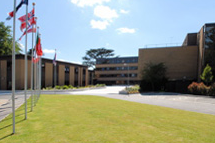
The European Centre for Medium-Range Weather Forecasts (ECMWF) is an independent intergovernmental organisation supported by most of the nations of Europe. It is based at three sites: Shinfield Park, Reading, United Kingdom; Bologna, Italy; and Bonn, Germany. It operates one of the largest supercomputer complexes in Europe and the world's largest archive of numerical weather prediction data.[1]
Key Information


History
[edit]
ECMWF was established in 1975, in recognition of the need to pool the scientific and technical resources of Europe's meteorological services and institutions for the production of weather forecasts for medium-range timescales (up to approximately two weeks) and of the economic and social benefits expected from it. The Centre employs about 350 staff, mostly appointed from across the member states and co-operating states.[1]

In 2017, the centre's member states accepted an offer from the Italian Government to move ECMWF's data centre to Bologna, Italy. The new site, a former tobacco factory, would be redesigned by the architecture firm gmp.[2]
During 2020, the Centre arranged to move its Copernicus operations away from Reading and into European Union territory.[3] Following bids from Toulouse,[3] Italy,[4] Austria,[5] Germany,[6] Spain[7] and Ireland,[8] eventually Bonn (Germany) was chosen.[9] The move has been directly attributed to Brexit.[9][10]
In early 2024, it was announced that the ECMWF's headquarters, currently at Shinfield Road in the English town of Reading, would be relocated to a new complex to be constructed on the Whiteknights Park campus of the University of Reading. Construction of this complex started in early 2025, with completion expected in early 2027.[11][12]
Objectives
[edit]ECMWF aims to provide accurate medium-range global weather forecasts out to 15 days and seasonal forecasts out to 12 months.[13] Its products are provided to the national weather services of its member states and co-operating states as a complement to their national short-range and climatological activities, and those national states use ECMWF's products for their own national duties, in particular to give early warning of potentially damaging severe weather.
ECMWF's core mission is to:[14]
- Produce numerical weather forecasts and monitor planetary systems that influence weather
- Carry out scientific and technical research to improve forecast skill
- Maintain an archive of meteorological data
To deliver this core mission, the Centre provides:
- Twice-daily global numerical weather forecasts
- Air quality analysis
- Atmospheric composition monitoring
- Climate monitoring
- Ocean circulation analysis
- Hydrological prediction
The Centre develops and operates global atmospheric models and data assimilation systems for the dynamics, thermodynamics and composition of the Earth's atmosphere and for interacting parts of the Earth-system. It uses numerical weather prediction methods to prepare forecasts and their initial conditions, and it contributes to monitoring the relevant parts of the Earth system.
Copernicus
[edit]The centre currently serves as the Entrusted Entity responsible for delivery of two of the Services of the EU's Copernicus Programme. The two services are the Copernicus Atmosphere Monitoring Service (CAMS)[15] and the Copernicus Climate Change Service (C3S).[16]
The Centre arranged to move its Copernicus operations away from Reading and into Bonn (Germany) in 2020.[3][9] The move has been directly attributed to Brexit.[9][10]
Work and projects
[edit]Forecasting
[edit]Numerical weather prediction (NWP) requires input of meteorological data, collected by satellites and earth observation systems such as automatic and crewed weather stations, aircraft (including commercial flights[17]), ships and weather balloons. Assimilation of this data is used to produce an initial state of a computer model of the atmosphere, from which an atmospheric model is used to forecast the weather. These forecasts are typically:
- medium-range forecasts, predicting the weather up to 15 days ahead
- monthly forecasts, predicting the weather on a weekly basis 30 days ahead
- seasonal forecasts up to 12 months ahead.
Over the past three decades ECMWF's wide-ranging programme of research has played a major role in developing such assimilation and modelling systems. This improves the accuracy and reliability of weather forecasting by about a day per decade, so that a seven-day forecast now (2015) is as accurate as a three-day forecast was four decades ago (1975).[18]
Monthly and seasonal forecasts
[edit]ECMWF's monthly and seasonal forecasts provide early predictions of events such as heat waves, cold spells and droughts, as well as their impacts on sectors such as agriculture, energy and health. Since ECMWF runs a wave model, there are also predictions of coastal waves and storm surges in European waters which can be used to provide warnings.
Early warning of severe weather events
[edit]Forecasts of severe weather events allow appropriate mitigating action to be taken and contingency plans to be put into place by the authorities and the public. The increased time gained by issuing accurate warnings can save lives, for instance by evacuating people from a storm surge area. Authorities and businesses can plan to maintain services around threats such as high winds, floods or snow.
In October 2012 the ECMWF model suggested seven days in advance that Hurricane Sandy was likely to make landfall on the East Coast of the United States.[19] It also predicted the intensity and track of the November 2012 nor'easter, which impacted the east coast a week after Sandy.[20]
ECMWF's Extreme Forecast Index (EFI) was developed as a tool to identify where the EPS (Ensemble Prediction System) forecast distribution differs substantially from that of the model climate[clarification needed]. It contains information regarding variability of weather parameters, in location and time and can highlight an abnormality of a weather situation without having to define specific space- and time-dependent thresholds.
Satellite data
[edit]ECMWF, through its partnerships with EUMETSAT, ESA, the EU and others, exploits satellite data for operational numerical weather prediction and operational seasonal forecasting with coupled atmosphere–ocean–land models. The increasing amount of satellite data and the development of more sophisticated ways of extracting information from that data have made a major contribution to improving the accuracy and utility of NWP forecasts.[21]
Reanalysis
[edit]ECMWF supports research on climate variability using an approach known as reanalysis. This involves feeding weather observations collected over decades into a NWP system to recreate past atmospheric, sea- and land-surface conditions over specific time periods to obtain a clearer picture of how the climate has changed. Reanalysis provides a four-dimensional picture of the atmosphere and effectively allows monitoring of the variability and change of global climate, thereby contributing also to the understanding and attribution of climate change.
To date, and with support from Europe's National Meteorological Services and the European Commission, ECMWF has conducted several major reanalyses of the global atmosphere: the first ECMWF re-analysis (ERA-15) project generated reanalyses from December 1978 to February 1994; the ERA-40 project generated reanalyses from September 1957 to August 2002. The ERA-Interim reanalysis[22] covered the period from 1979 onwards. A reanalysis product (ERA5)[23] with higher spatial resolution (31 km) was released by ECMWF in 2019 as part of the Copernicus Climate Change Service.[24]
Operational forecast model
[edit]ECMWF's operational forecasts are produced from its "Integrated Forecast System" (sometimes informally known in the United States as the "European model") which is run every twelve hours and forecasts out to ten days.
It includes both a "deterministic forecast" mode and an ensemble. The deterministic forecast is a single model run that is relatively high in resolution as well as in computational expense. The ensemble is relatively low (about half that of the deterministic) in resolution (and in computational expense), so less accurate. But it is run 51 times in parallel, from slightly different initial conditions to give a spread of likelihood over the range of the forecast.[25]
As of 2021, the ECMWF's weather model is generally considered to be the most accurate weather forecasting model.[26]
Member and co-operating states
[edit]ECMWF comprises 23 European countries:
- the eighteen founding states of 1975: Austria, Belgium, Denmark, Finland, France, Germany, Greece, Republic of Ireland, Italy, Luxembourg, Netherlands, Norway, Portugal, Spain, Sweden, Switzerland, Turkey, United Kingdom.
- five states that joined since 2010: Iceland (April 2011),[27] Slovenia (December 2012),[28] Serbia (January 2015),[29] Croatia (January 2016),[30] Estonia (December 2020).[31]
It also has co-operation agreements with other states: Bulgaria, Czech Republic, Georgia, Hungary, Israel, Latvia, Lithuania, North Macedonia, Montenegro, Morocco, Romania and Slovakia.
| Member state[32] | Year of joining |
|---|---|
 Austria Austria
|
1975 |
 Belgium Belgium
|
1975 |
 Croatia Croatia
|
2011 |
 Denmark Denmark
|
1975 |
 Estonia Estonia
|
2020 |
 Finland Finland
|
1975 |
 France France
|
1975 |
 Germany Germany
|
1975 |
 Greece Greece
|
1976 |
 Iceland Iceland
|
2011 |
 Ireland Ireland
|
1975 |
 Italy Italy
|
1977 |
 Luxembourg Luxembourg
|
2002 |
 Netherlands Netherlands
|
1975 |
 Norway Norway
|
1989 |
 Portugal Portugal
|
1976 |
 Serbia Serbia
|
2014 |
 Slovenia Slovenia
|
2011 |
 Spain Spain
|
1975 |
 Sweden Sweden
|
1975 |
 Switzerland Switzerland
|
1975 |
 Turkey Turkey
|
1976 |
 United Kingdom United Kingdom
|
1975 |
| Co-operating State[33] | Year of joining |
|---|---|
 Bulgaria Bulgaria
|
12 July 2010 |
 Czech Republic Czech Republic
|
1 August 2001 |
 Georgia Georgia
|
1 December 2021 |
 Hungary Hungary
|
1 July 1994 |
 Israel Israel
|
28 October 2010 |
 Latvia Latvia
|
30 April 2008 |
 Lithuania Lithuania
|
20 November 2006 |
 Montenegro Montenegro
|
5 November 2007 |
 Morocco Morocco
|
1 December 2006 |
 North Macedonia North Macedonia
|
9 February 2011 |
 Romania Romania
|
22 December 2003 |
 Slovakia Slovakia
|
1 January 2008 |
| Co-operating agreements[34] | Year of joining |
|---|---|
| WMO | 1 November 1975 |
| EUMETSAT | 18 May 1988 |
| ACMAD | 11 May 1995 |
| ALADIN/HIRLAM - Use of IFS/Arpege | 19 February 1999 |
| JRC | 6 May 2003 |
| CTBTO | 24 June 2003 |
| CLRTAP | 26 January 2005 |
| ESA | 31 May 2005 |
| Memorandum of Understanding for Joint Liaison Office with European institutions in Brussels | 23 April 2010 |
| RIMES | 8 February 2012 |
| CMA | 21 January 2014 |
| US NWS | 23 January 2015 - amended 30 January 2018 |
| US NCAR | 31 August 2016 |
| INPE Brazil | 31 August 2017 |
See also
[edit]

References
[edit]- ^ a b "Who we are". ECMWF. 28 November 2013. Retrieved 1 January 2016.
- ^ "Press kit: Bologna to host ECMWF's new data centre". 3 March 2017.
- ^ a b c "France Applies to Host Top Weather Forecaster Now Based in U.K." Bloomberg. 30 May 2020.
- ^ "Tecnopolo di Bologna. Il Governo autorizza la spesa di 40 milioni nel prossimo triennio, di cui 10 milioni nel 2020". CONFERENZA DELLE REGIONI E DELLE PROVINCE AUTONOME. 20 May 2020. Retrieved 18 June 2020.
- ^ "Regierung will Klimawandel-Überwachungsdienst nach Österreich holen". Die Presse. 20 May 2020. Retrieved 18 June 2020.
- ^ "SO WILL BONN EUROPÄISCHES WETTER-ZENTRUM WERDEN!". TAG24. 16 June 2020. Retrieved 18 June 2020.
- ^ "España postulará a Barcelona como sede del Centro Europeo de Predicciones Meteorológicas a Plazo Medio". europa press. 29 May 2020. Retrieved 18 June 2020.
- ^ "Govt to bid for relocation of EU forecaster from UK to Ireland". Radió Telefis Éireann. 23 September 2020. Retrieved 24 September 2020.
- ^ a b c d ""European weather authority relocates to Bonn"". City of Bonn. 9 December 2020. Archived from the original on 16 December 2020. Retrieved 9 December 2020.
- ^ a b "European Center for Weather Forecasting: France selects Toulouse candidate". en24 news. 30 May 2020. Retrieved 1 June 2020.[dead link]
- ^ "European weather centre HQ given planning permission". University of Reading. 15 February 2024. Retrieved 14 May 2025.
- ^ "Weather centre construction to begin on University campus". University of Reading. 20 January 2025. Retrieved 14 May 2025.
- ^ Deutscher Wetterdienst. "ECMWF - European Centre for Medium-Range Weather Forecasts". Berlin, Germany: Federal Ministry of Transport and Digital Infrastructure. Retrieved 29 April 2014.
Established in 1975, ECMWF is renowned worldwide for providing the most accurate medium-range global weather forecasts up to 10 days ahead, monthly forecasts and seasonal outlooks to six months ahead.
- ^ ECMWF (30 December 2013), What we do, retrieved 11 June 2019
- ^ "Copernicus Atmosphere Monitoring Service". ECMWF. 11 November 2014. Retrieved 23 October 2019.
- ^ "Copernicus Climate Change Service". ECMWF. 11 November 2014. Retrieved 23 October 2019.
- ^ "COVID-19: Aeolus and weather forecasts". www.esa.int. Retrieved 30 July 2023.
- ^ "The Forecast For Weather Technology". Sky News. 17 July 2015. Retrieved 1 January 2016.
- ^ Roulstone, Ian; Norbury, John (25 July 2013). "How Math helped forecast Hurricane Sandy". Scientific American. Retrieved 9 August 2013.
- ^ "Moderate-strength Nor'easter may hit Sandy-devastated areas Wednesday | Category 6™". www.wunderground.com. Archived from the original on 25 March 2017. Retrieved 1 May 2017.
- ^ "Fifty years of data assimilation at ECMWF" (PDF). ECMWF. 2025. Retrieved 9 May 2025.
- ^ Dee, D. P.; Uppala, S. M.; Simmons, A. J.; Berrisford, P.; Poli, P.; et al. (2011). "The ERA-Interim reanalysis: Configuration and performance of the data assimilation system". Quarterly Journal of the Royal Meteorological Society. 137 (656): 553–597. Bibcode:2011QJRMS.137..553D. doi:10.1002/qj.828. hdl:20.500.11824/1106.
- ^ Hersbach, H.; Bell, B.; Berrisford, P.; Hirahara, S.; Horányi, A.; Muñoz-Sabater, J.; et al. (2020). "The ERA5 global reanalysis". Quarterly Journal of the Royal Meteorological Society. 146 (730): 1999–2049. Bibcode:2020QJRMS.146.1999H. doi:10.1002/qj.3803.
- ^ "New ERA5 dataset provides weather and climate details back to 1979". 17 January 2019.
- ^ "Modelling and Prediction". ECMWF. 29 November 2013. Retrieved 2 January 2016.
- ^ Paul Douglas (18 April 2021). "Will a New GFS Weather Model Upgrade Close the Gap with The European Model?". AerisWeather. Retrieved 14 September 2021.
- ^ "MeteoWorld". 22 September 2015.
- ^ "Slovenia becomes ECMWF's 20th Member State". ecmwf.int. ECMWF. Archived from the original on 3 September 2013. Retrieved 8 December 2012.
- ^ Jeppesen, Joanne (5 January 2015). "Serbia becomes ECMWF's 21st Member State". ECMWF.
- ^ Jeppesen, Joanne (1 July 2016). "News". ECMWF.
- ^ "ECMWF welcomes Estonia as 23rd Member State". 1 December 2020.
- ^ "ECMWF Member States". ECMWF. 2017.
- ^ "ECMWF Co-operating States". ECMWF. 2017.
- ^ "ECMWF Co-operating Agreements". ECMWF. 2017.
Further reading
[edit]- Woods, Austin (2006). Medium-Range Weather Prediction – the European Approach. Springer. ISBN 978-0-387-26928-3.
- Butler, Graham (2024). "Sun from Behind the Clouds: the Appeals Board of the European Centre for Medium-Range Weather Forecasts". Journal of International Dispute Settlement. 15 (3): 365–376. doi:10.1093/jnlids/idae013.
External links
[edit]- Official website

- ECMWF Re-analysis (ERA)
- "ERA-15". Archived from the original on 11 August 2004.
- "ERA-40". Archived from the original on 11 August 2004.
European Centre for Medium-Range Weather Forecasts
View on GrokipediaHistory
Founding and Early Development
The European Centre for Medium-Range Weather Forecasts (ECMWF) originated from a 1967 proposal by the Council of the European Communities for a shared "European Meteorological Computing Centre," driven primarily by political aims to foster international cooperation in meteorology rather than purely scientific imperatives.[7] This initiative culminated in a project study completed on 5 August 1971, followed by a decision from the Council of Ministers in November 1971 to establish the Centre.[7] The first draft of the ECMWF Convention was discussed on 9 and 10 December 1971 by representatives from 14 of the eventual 18 founding Member States.[2] The Convention was signed in 1973 and entered into force on 1 November 1975, formally creating ECMWF as an independent intergovernmental organization headquartered in Reading, United Kingdom, selected for its proximity to the UK Met Office and the University of Reading.[2][7] The 18 founding Member States ratified the original Convention, pooling resources to advance medium-range weather forecasting (initially defined as 4-10 days ahead) through collaborative research and operations.[2] Early efforts emphasized cost-benefit justification, with analyses estimating annual economic gains of 200 million units of account from improved forecasts against a 20 million unit setup cost, based on interviews across 15 countries.[7] ECMWF began as an extension of European Cooperation in Science and Technology (COST) projects, focusing on numerical weather prediction models and data assimilation.[2] Initial operations relied on high-speed data links to national meteorological services, with computing infrastructure evolving into one of Europe's largest dedicated systems.[7] The Centre produced its first real-time medium-range forecast on 15 June 1979, coinciding with the official opening of its Shinfield Park headquarters.[7] Operational production for Member States commenced on 1 August 1979 with 10-day forecasts issued five days per week, expanding to daily seven-day coverage by 1 August 1980; these early outputs demonstrated rapid skill improvements, with 1980s seven-day forecasts outperforming prior five-day accuracy benchmarks.[7][8]Key Operational Milestones
The European Centre for Medium-Range Weather Forecasts (ECMWF) initiated operational medium-range forecasting on 1 August 1979, delivering ten-day predictions five days per week via an N48 spectral grid model with approximately 200 km horizontal resolution.[2] This marked the transition from experimental real-time forecasts conducted in June 1979 to routine production, enabling Member States to access global numerical weather prediction outputs for the first time.[8] A pivotal advancement occurred on 24 November 1992, when ECMWF integrated the first ensemble predictions into its operational system, initially running the ensemble prediction system (EPS) three days per week to quantify forecast uncertainty through perturbations in initial conditions and model physics.[2] This probabilistic approach, expanded to daily operations by the mid-1990s, significantly enhanced medium-range reliability by representing the range of possible outcomes rather than deterministic single forecasts.[9] In 1997, ECMWF pioneered the operational implementation of four-dimensional variational (4D-Var) data assimilation, shifting from optimal interpolation to a method that optimizes the model state over a time window by minimizing discrepancies between observations and short-range forecasts.[10] This upgrade, building on experimental trials from January 1996, improved initial condition accuracy and forecast skill, particularly for atmospheric dynamics, establishing a benchmark for global centers.[11] Subsequent upgrades to the Integrated Forecasting System (IFS) included resolution enhancements and coupled modeling; for instance, Cycle 48r1 in June 2023 increased medium-range horizontal resolution to 9 km, unifying configurations across forecast ranges while incorporating advances in physics and ensemble methods.[12] More recently, on 25 February 2025, ECMWF operationalized its Artificial Intelligence Forecasting System (AIFS), running parallel to the deterministic IFS to leverage machine learning for faster, data-driven predictions without sacrificing skill in core variables.[13] The ensemble variant of AIFS followed on 1 July 2025, extending probabilistic capabilities through AI-generated perturbations.[14]Institutional Expansion and Modern Era
In response to growing computational demands and uncertainties following the United Kingdom's withdrawal from the European Union, ECMWF's member states approved amendments to its convention in 2005 and 2010, facilitating the addition of new members and expanding the organization's reach to 23 member states and 12 cooperating states by the 2020s.[2][3] This growth supported enhanced international collaboration in medium-range weather forecasting and climate research, with contributions funding an annual budget primarily derived from state assessments.[15] To address escalating requirements for high-performance computing and data storage, ECMWF pursued infrastructural expansion, culminating in the establishment of a multi-site organization. In December 2020, the ECMWF Council selected Bonn, Germany, for new premises dedicated to Copernicus Atmosphere Monitoring Service operations, with activities commencing in late 2021. Concurrently, in 2017, Italy's proposal to host a new data centre in Bologna was accepted, leading to the facility's formal opening on 14 September 2021; this site, refurbished from a former tobacco factory at the Tecnopolo complex, now accommodates advanced supercomputing systems, including Atos installations operational from 2022.[2][16][17] The transition to Bologna marked a pivotal modern development, with the migration of over 450 petabytes of meteorological archive data completed in 2022, followed by the full shift of operational forecast services from Reading, United Kingdom, on 18 October 2022. This relocation ensured continuity and scalability for ECMWF's numerical weather prediction activities, integrating cloud infrastructure for services like the Climate and Atmosphere Data Stores. These changes positioned ECMWF as a distributed entity—maintaining headquarters in Reading while leveraging Bologna for computing and Bonn for specialized monitoring—enhancing resilience and alignment with European environmental programmes such as Copernicus.[18][19][20]Governance and Organization
Member and Co-operating States
The ECMWF is governed and primarily funded by its 23 Member States, which collectively provide the bulk of its financial resources through contributions scaled to their gross national income; these states hold representation in the ECMWF Council, the Centre's principal decision-making body.[15][3] In 2023, contributions from the 35 total Member and Co-operating States amounted to £62.5 million, underscoring their role as the Centre's principal financiers.[3] Member States also receive enhanced access to ECMWF's computing resources, including supercomputers and permanent data storage in the meteorological archive.[15]| Member States |
|---|
| Austria, Belgium, Croatia, Denmark, Estonia, Finland, France, Germany, Greece, Iceland, Ireland, Italy, Luxembourg, Netherlands, Norway, Portugal, Serbia, Slovenia, Spain, Sweden, Switzerland, Türkiye, United Kingdom |
| Co-operating States |
|---|
| Bulgaria, Czech Republic, Georgia, Hungary, Israel, Latvia, Lithuania, Montenegro, Morocco, North Macedonia, Romania, Slovakia |
Leadership and Decision-Making Processes
The Council constitutes the principal governing and decision-making authority of the European Centre for Medium-Range Weather Forecasts (ECMWF), composed of two representatives from each Member State, with at least one designated from the respective national meteorological service.[21] It convenes biannually—typically in June and December—to deliberate and approve critical elements including the Centre's long-term strategy, annual programme of work, budget, financial regulations, and staff regulations, as stipulated in the ECMWF Convention established on 1 November 1975 and amended on 6 June 2010.[22] [21] The Council also holds authority over admissions of new Member States, ratification of cooperation agreements, appointments of the Director-General and deputy, and major property acquisitions, ensuring alignment with the intergovernmental framework while incorporating input from observers such as the World Meteorological Organization, EUMETSAT, and EUMETNET.[21] The Director-General serves as the chief executive officer, appointed by the Council for a renewable term, and is responsible for the operational management, preparation of draft programmes and budgets for Council approval, and reporting on Centre activities.[22] Dr. Florence Rabier has held this position since January 2016, overseeing strategic implementation amid expansions in forecasting capabilities and data services.[22] Florian Pappenberger, currently Deputy Director-General and Director of Forecasts, has been elected as the next Director-General, effective 1 January 2026.[23] The Council elects its own President and Vice-President annually from among its members, with terms limited to one year and no more than two consecutive re-elections; as of 2024, Penny Endersby of the United Kingdom serves as President, with Dr. Roar Skålin of Norway as Vice-President.[21] Decision-making is supported by a network of advisory committees that furnish specialized recommendations to the Council, including the Scientific Advisory Committee on research and programme drafts, the Finance Committee on budgetary and financial oversight with delegated powers, the Policy Advisory Committee on overarching policies, the Technical Advisory Committee on operational matters, the Advisory Committee of Co-operating States on programme and budget implications for non-members, the Advisory Committee for Data Policy on data dissemination, and the Joint Advisory Group on collaborative initiatives like the European Weather Cloud.[22] These bodies ensure scientifically robust and fiscally prudent resolutions, with the Council retaining final authority on all substantive approvals to maintain consensus among Member States.[21]Mission and Strategic Objectives
Core Research and Forecasting Mandate
The European Centre for Medium-Range Weather Forecasts (ECMWF) was established with the primary purpose of developing a capability for medium-range weather forecasting and providing such forecasts to its Member States.[24] This mandate, enshrined in Article 2 of its founding Convention, emphasizes the operation of global numerical models and data-assimilation systems to generate predictions of the Earth's fluid envelope, including the atmosphere, oceans, and land surface components.[24] Forecasts are produced using numerical methods, with initial conditions derived from assimilated observational data, extending typically from a few days to two weeks ahead, though the Centre also supports extended-range predictions up to seasonal timescales.[4] The Centre delivers these outputs four times daily, prioritizing high-resolution ensemble-based predictions to quantify uncertainty and enhance reliability for national meteorological services.[4] Complementing forecasting, ECMWF's mandate includes continuous scientific and technical research aimed at improving prediction accuracy and extending forecast lead times.[24] This involves advancing numerical weather prediction (NWP) techniques, such as model physics refinements, ensemble methods, and integration of emerging technologies like machine learning, to push the limits of medium-range skill amid challenges like climate variability.[25] Research efforts focus on monitoring the broader Earth system, including atmospheric composition and ocean dynamics, to inform not only weather but also environmental applications, while ensuring outputs remain complementary to Member States' short-range capabilities.[4] The Centre collects and archives meteorological data to support these activities, making processed results accessible to Members under Council-defined conditions.[24] ECMWF's forecasting mandate extends to collaborative functions, such as providing computing resources prioritized for NWP-related research by Member States and contributing to World Meteorological Organization (WMO) programs.[24] Advanced training for scientific personnel in numerical forecasting techniques is also integral, fostering expertise across Europe.[24] Under its 2025–2034 strategy, the Centre reaffirms this core focus on delivering world-leading medium-range predictions through physical and data-driven innovations, while collaborating within the European Meteorological Infrastructure to address evolving demands like extreme weather preparedness.[25] These elements collectively position ECMWF as a hub for global-scale, probabilistic forecasting grounded in rigorous model development and validation against observations.[4]Integration with Broader Environmental Programmes
The European Centre for Medium-Range Weather Forecasts (ECMWF) implements the Copernicus Atmosphere Monitoring Service (CAMS) and the Copernicus Climate Change Service (C3S), which form core components of the European Union's flagship Earth observation programme, Copernicus, aimed at monitoring environmental changes using satellite, in-situ, and model-based data.[26][27] CAMS, operational since July 2015, delivers global and regional forecasts and analyses of atmospheric composition, including air quality, greenhouse gases, and aerosol levels, leveraging ECMWF's numerical weather prediction infrastructure to support policy decisions on pollution and climate forcing.[28][29] C3S, also managed by ECMWF, provides authoritative climate data sets, including historical reanalyses from 1950 onward, sector-specific indicators, and seasonal-to-decadal predictions, enabling users to assess climate variability and extremes for adaptation strategies.[30][31] This integration extends ECMWF's medium-range forecasting mandate into long-term environmental monitoring by assimilating diverse observational inputs—such as satellite measurements from Sentinel missions—into coupled models that simulate Earth system interactions, including atmosphere-ocean feedbacks and greenhouse gas fluxes.[32][33] ECMWF contributes to the Copernicus Emergency Management Service (CEMS) through rapid mapping and early warning products, such as the European Flood Awareness System (EFAS), which uses ensemble predictions to forecast river discharges up to 10 days ahead, aiding disaster response across Europe.[26] These services produce open-access data disseminated via standardized interfaces, fostering applications in public health, agriculture, and energy sectors, with over 10 years of operational delivery by 2025 demonstrating improved accuracy in air quality forecasts and climate projections through iterative model upgrades.[29][34] Beyond Copernicus, ECMWF supports national collaboration programmes in EU member states to enhance the uptake of environmental data, including tailored training and toolkits for integrating CAMS and C3S outputs into local decision-making processes, such as urban air quality management and climate risk assessments.[35] This broader alignment with EU environmental objectives, funded through delegated implementation agreements since 2014, positions ECMWF as a bridge between operational meteorology and policy-relevant Earth system science, while maintaining its independence as an intergovernmental organization.[31][26]Core Operational Activities
Medium-Range Numerical Weather Prediction
The European Centre for Medium-Range Weather Forecasts (ECMWF) specializes in numerical weather prediction (NWP) for the medium-range timeframe, defined as 3 to 15 days ahead, leveraging its Integrated Forecasting System (IFS) to generate global forecasts. The IFS, developed in collaboration with Météo-France, integrates atmospheric, oceanic, land surface, and sea-ice components into a unified framework for data assimilation and prediction, solving the governing equations of atmospheric dynamics and physics on a spectral grid. Operational medium-range products include the high-resolution deterministic forecast (HRES), which provides detailed single-member predictions, and the ensemble forecast (ENS), comprising 51 perturbed members to quantify uncertainty in weather evolution. These forecasts are produced twice daily, assimilating observational data via a 4D variational method to initialize model states.[36][37][38] The IFS employs spectral triangular truncation for horizontal representation, achieving operational resolutions of approximately 9 km for both HRES and ENS in recent cycles, enabling simulation of mesoscale phenomena while maintaining computational efficiency for global domains. Vertical resolution consists of 137 hybrid-sigma-pressure levels extending to 0.01 hPa, capturing tropospheric and stratospheric processes critical for medium-range skill. Key physical parameterizations include convection schemes, cloud microphysics, and radiation models refined through ongoing research to address biases in precipitation and temperature forecasts. The ensemble generation incorporates perturbations in initial conditions and model physics via stochastic schemes, providing probabilistic outputs such as probability maps for extreme events.[38][37] ECMWF's medium-range NWP demonstrates leading global accuracy, with verification statistics showing anomaly correlations for 500 hPa geopotential height exceeding 60% at 10-day lead times in the Northern Hemisphere, outperforming many national centers due to advanced data assimilation and model resolution. Continuous evaluation against observations informs upgrades, such as enhancements in cycle 48 (implemented 2023), which improved tropical cyclone track forecasts and upper-air predictability. Despite challenges from atmospheric chaos limiting deterministic skill beyond 10 days, ensemble methods extend reliable probabilistic guidance, supporting applications in aviation, energy, and disaster preparedness.[39][40][41]Ensemble and Probabilistic Forecasting
The European Centre for Medium-Range Weather Forecasts (ECMWF) pioneered operational ensemble prediction systems (EPS) to address inherent uncertainties in numerical weather prediction, initiating them on 24 November 1992 with low-resolution integrations at T63 spectral truncation and 19 vertical levels, comprising one unperturbed control forecast and 32 perturbed members run to 10 days ahead.[9][42] This approach sampled forecast probability distributions by introducing perturbations to initial conditions via singular vectors—optimized structures capturing rapidly growing instabilities—and bred-vector methods, alongside stochastic physics perturbations to represent model errors.[43] By quantifying spread around the deterministic forecast, the EPS enabled probabilistic outputs, such as the likelihood of precipitation exceeding thresholds or temperature anomalies, improving decision-making for events like severe storms where single forecasts often underperformed.[44] Evolution of the EPS has focused on enhancing resolution, ensemble size, and realism to better resolve uncertainty. The current medium-range EPS employs 50 perturbed members plus a control, at approximately 9 km horizontal resolution (TCo1279) and 137 vertical levels, extending to 15 days with twice-daily runs; perturbations now incorporate an ensemble of data assimilations (EDA) since 2010, generating initial condition variability from 25 lower-resolution analyses to propagate observational uncertainties.[45][46] Stochastic parametrizations, refined over decades, perturb subgrid-scale processes like convection and clouds to mimic structural model deficiencies, yielding more reliable spread-skill relationships where ensemble variance correlates with forecast error.[37] Probabilistic products derive from ensemble statistics, including tercile probabilities for variables like 2 m temperature and mean sea-level pressure, calibrated via techniques such as the Brier score for verification against observations, ensuring outcomes align with predicted frequencies.[47] Recent innovations integrate machine learning to augment traditional physics-based ensembles, with the Artificial Intelligence Forecasting System (AIFS) ensemble becoming operational on 1 July 2025, offering comparable skill to the physics-driven EPS at reduced computational cost while maintaining probabilistic integrity through diffusion models that generate diverse trajectories.[14] This hybrid approach has demonstrated superior performance in ensemble spread for medium-range variables, reducing biases in precipitation and wind forecasts, as validated against reforecast datasets.[48] The EPS's impact extends to downstream applications, including extreme event warnings, where probabilistic guidance has measurably improved economic value via cost-loss analyses, outperforming deterministic methods by capturing low-probability high-impact scenarios.[49]Extended-Range and Seasonal Predictions
ECMWF's sub-seasonal-range forecasts, extending up to 46 days ahead, deliver probabilistic assessments of weekly mean weather anomalies relative to a model climatology, emphasizing potential deviations such as warmer or colder than average conditions. Updated daily at approximately 36 km horizontal resolution, these predictions exploit sources of predictability including slowly evolving sea surface temperatures, soil moisture, stratospheric circulation, and residual atmospheric memory from initial conditions. The forecasts employ the Integrated Forecasting System (IFS) in ensemble configuration to quantify uncertainty, facilitating applications in sectors like agriculture and energy planning where medium-range determinism fades.[50] Complementing these, ECMWF's seasonal forecasts address timescales from one to seven months using the SEAS5 system, operational since 5 November 2017, which generates monthly-updated 51-member ensembles for monthly means and quarterly updates for annual forecasts up to 13 months. SEAS5 couples the IFS atmospheric component (Cycle 43r1 at TCo319 resolution, ~36 km) with the NEMO ocean model (ORCA025 configuration), LIM2 sea-ice prognostic scheme, and land surface interactions, initialized via the ORAS5 ocean and sea-ice reanalysis ensemble. This setup enhances representation of air-sea coupling critical for phenomena like El Niño-Southern Oscillation, with hindcasts spanning 1981–2016 for calibration.[51][52] SEAS5 demonstrates tangible advances over its predecessor System 4, including a larger ensemble (51 versus 15 members), refined tropical sea surface temperature biases (e.g., ~2°C reduction in Niño3.4 RMSE beyond two months), and improved Arctic sea-ice edge predictions through interactive modeling. Skill scores, such as anomaly correlations for 2 m temperature, show gains in tropical and select extratropical regions like the North Pacific, though variability persists in areas like the North-West Atlantic due to initialization shifts; overall reliability supports probabilistic outputs for climate-sensitive decisions in water resource management and disaster preparedness. These systems contribute to ECMWF's seamless prediction framework, bridging medium-range determinism with probabilistic long-range guidance.[52]Data Handling and Analysis
Observational Data Assimilation
The European Centre for Medium-Range Weather Forecasts (ECMWF) employs observational data assimilation to integrate diverse measurements into its numerical weather prediction models, producing an optimal estimate of the atmospheric state that minimizes discrepancies between forecasts and observations. This process combines short-range model forecasts—serving as a background—with incoming observations via statistical methods, correcting systematic errors and initializing subsequent predictions.[53] The assimilation cycle operates sequentially every 12 hours, updating the model state to reflect the latest data while accounting for observational errors and model uncertainties.[54] ECMWF's primary technique is four-dimensional variational data assimilation (4D-Var), which iteratively adjusts initial conditions over a 12- or 24-hour window to fit both observations and model dynamics, incorporating time evolution in four dimensions (three spatial plus time). This method outperforms simpler three-dimensional variants by enforcing physical consistency across the assimilation period, enabling better handling of sparse or delayed observations. Complementing 4D-Var, an Ensemble of Data Assimilations (EDA) runs 51 parallel lower-resolution cycles to sample analysis uncertainties, which directly initialize probabilistic ensemble forecasts and quantify error covariances more realistically than static approximations.[55][53] Observations assimilated span multiple platforms, including approximately 90 satellite instruments processed daily for radiance data, along with in-situ measurements from weather stations, ships, buoys, radiosondes, aircraft reports, and oceanographic profiles such as Argo floats. Satellite data dominate due to global coverage, but quality control rejects outliers based on model consistency and instrument metadata; for instance, hyperspectral infrared sounders provide vertical profiles of temperature and humidity, while microwave imagers contribute precipitation and surface parameters. Land surface assimilation separately incorporates soil moisture from satellites like SMOS and ASCAT, using simplified Kalman filter variants tailored to non-Gaussian error distributions in variables like snow depth. Ocean components draw from altimetry, sea surface temperature, and salinity profiles, though atmospheric assimilation remains the core driver for medium-range forecasting.[56][53][57] Recent enhancements include coupled atmosphere-ocean-ice 4D-Var implementations since 2016, reducing initialization shocks, and ongoing experiments with machine learning for bias correction in satellite radiances to address instrument degradation. These updates have incrementally improved forecast skill, with diagnostics revealing that assimilated observations account for about 18% of global error reduction, the remainder stemming from background forecast constraints. Despite advances, challenges persist in assimilating convective-scale data and resolving mesoscale features, prompting research into hybrid ensemble-variational approaches for future operational upgrades.[53][58]Reanalysis and Historical Datasets
The European Centre for Medium-Range Weather Forecasts (ECMWF) generates reanalysis datasets by integrating historical observations with advanced numerical weather prediction models through four-dimensional variational (4D-Var) data assimilation, yielding consistent estimates of atmospheric, oceanic, and land surface states over decades.[59] These products reconstruct past weather and climate conditions, enabling applications in climate research, model validation, and long-term trend analysis, while addressing observational gaps via model physics.[60] ERA5, the fifth-generation ECMWF reanalysis produced under the Copernicus Climate Change Service, spans hourly data from 1940 to the present, offering global coverage at approximately 31 km horizontal resolution and 137 vertical levels extending to 80 km altitude.[61] [62] It incorporates diverse observations, including satellite radiances and in-situ measurements, using the Integrated Forecasting System Cycle 41r2 for 1950–present and earlier cycles for pre-1950 periods to handle sparse data.[59] Compared to its predecessor ERA-Interim (1979–August 2019, at 79 km resolution), ERA5 demonstrates reduced biases in variables like temperature and precipitation due to enhanced model resolution, improved humidity control, and inclusion of remotely sensed soil moisture.[63] [59] Complementing ERA5, the ERA5-Land dataset provides a 9 km resolution replay of land-surface components from 1950 onward, driven by ERA5 atmospheric forcing but with uncoupled land modeling to enhance detail in hydrology, soil moisture, and energy fluxes over land.[64] [65] It maintains hourly temporal resolution and includes uncertainty estimates at coarser scales, supporting applications in drought monitoring and agriculture where fine-scale terrain effects matter.[65] Earlier reanalyses, such as ERA-40 (covering 1957–2002), laid foundational methodologies but suffered from coarser resolution (about 125 km) and fewer assimilated observations, limiting their utility for regional studies compared to modern products.[63] ECMWF's datasets are accessible via the Copernicus Climate Data Store, with ongoing updates ensuring near-real-time extensions and quality improvements through bias corrections and expanded observation types.[66] These resources underpin global climate assessments, though users must account for model-dependent uncertainties in underrepresented phenomena like aerosols or sub-grid convection.[59]Technological Foundations
Integrated Forecasting System and Model Evolution
The Integrated Forecasting System (IFS) constitutes ECMWF's primary operational framework for numerical weather prediction, unifying data assimilation, dynamical modeling, and physical parameterizations within a coupled Earth system representation. At its core, the IFS employs a four-dimensional variational (4D-Var) data assimilation scheme to estimate the initial atmospheric, oceanic, sea-ice, and land-surface states by minimizing discrepancies between model trajectories and diverse observations, including satellite radiances, radiosondes, and surface measurements. This analysis initializes subsequent forecast integrations using hydrostatic primitive equations for atmospheric dynamics, solved through spectral transforms and semi-Lagrangian advection schemes, coupled to ocean, wave, and biogeochemical modules for comprehensive Earth system simulations. The system supports deterministic and ensemble predictions across medium-range (up to 15 days), sub-seasonal (up to 46 days), and seasonal (up to 7 months) horizons, with resolutions varying by application—such as TL1279 (approximately 9 km grid spacing) for high-resolution atmospheric forecasts.[12][67] Development of the IFS traces back to the 1990s, evolving from earlier spectral models into a modular architecture that integrated advanced assimilation and coupled components. A pivotal milestone occurred with IFS cycle 11r7, implemented on 2 March 1994, which represented a comprehensive rewrite of the forecast model, enabling semi-Lagrangian dynamics and paving the way for operational 4D-Var assimilation by the late 1990s. Subsequent cycles incrementally refined resolution, physics (e.g., cloud microphysics, radiation schemes, and boundary-layer turbulence), and observation handling, driven by empirical verification against reanalyses and targeted research to mitigate biases in phenomena like tropical convection and stratospheric variability. By the early 2000s, the system incorporated ensemble prediction systems (EPS) with stochastic perturbations for probabilistic outputs, enhancing reliability in medium-range guidance.[10][12] Recent upgrades have focused on unifying configurations, elevating computational efficiency, and integrating machine learning elements for parameter tuning. Cycle 47r3, deployed on 12 October 2021, enhanced moist physics representations and expanded assimilation of hyperspectral satellite data, yielding measurable gains in precipitation and upper-air forecast skill. Cycle 48r1, introduced on 27 June 2023, standardized medium-range resolutions across deterministic and ensemble streams while improving overall model climatology and tropical cyclone track predictions through refined ocean-atmosphere coupling. The latest operational iteration, cycle 49r1 on 12 November 2024, prioritized refinements in boundary-layer processes and observation error modeling, resulting in superior wind and near-surface temperature forecasts, as validated against independent verification datasets. These evolutions reflect iterative empirical tuning, with each cycle tested via parallel runs against predecessors to ensure stability and skill improvements exceeding 1-2% in anomaly correlation scores for key variables like 500 hPa geopotential height.[12]| IFS Cycle | Implementation Date | Key Improvements |
|---|---|---|
| 47r3 | 12 October 2021 | Enhanced moist physics schemes; improved assimilation of infrared and microwave satellite observations for better humidity and cloud analysis.[12] |
| 48r1 | 27 June 2023 | Unified resolutions in medium-range forecasts; advancements in data assimilation for aerosols and land-surface states; reduced biases in extended-range predictions.[12] |
| 49r1 | 12 November 2024 | Optimized wind shear and temperature profiles; enhanced variational bias correction for radiosonde data; improved ensemble spread calibration.[12] |