Hubbry Logo
Eastern panhandle of West VirginiaEastern panhandle of West VirginiaMain
Open search
Eastern panhandle of West Virginia
Community hub
Eastern panhandle of West Virginia
logo
8 pages, 0 posts
0 subscribers
Be the first to start a discussion here.
Eastern panhandle of West Virginia
from Wikipedia

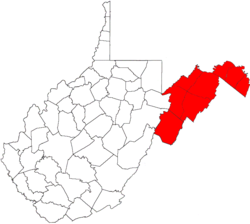
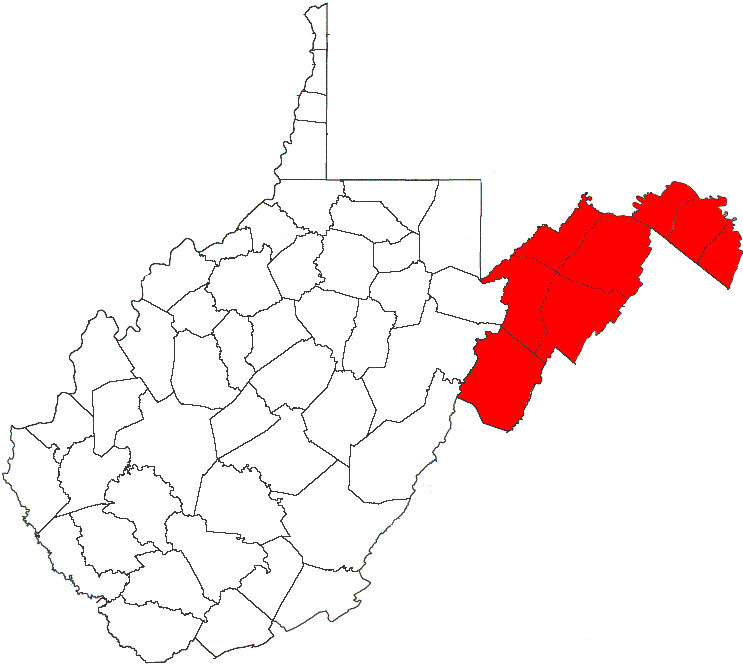
The eastern panhandle is one of the two panhandles in the U.S. state of West Virginia; the other is the northern panhandle. It is a small stretch of territory in the northeast of the state, bordering Maryland and Virginia. Some sources and regional associations only identify the eastern panhandle as being composed of Morgan, Berkeley, and Jefferson Counties.[3] Berkeley and Jefferson Counties are geographically located in the Shenandoah Valley. West Virginia is the only U.S. state with two panhandles.

Key Information

History

[edit]

Berkeley, Hampshire, Hardy, Jefferson, and Morgan Counties were part of the Unionist state of West Virginia created in 1863. Shortly after West Virginia gained statehood, Mineral and Grant Counties were created from Hampshire and Hardy in 1866.

The eastern panhandle includes West Virginia's oldest chartered towns (1762) of Romney and Shepherdstown. The panhandle also includes West Virginia's two oldest counties: Hampshire (1753) and Berkeley (1772). West Virginia's historically most famous towns, Harpers Ferry and Charles Town, are at the eastern end of the eastern panhandle. Harpers Ferry is the easternmost town in West Virginia.

The Baltimore and Ohio Railroad, now CSX, runs through the panhandle. Until 1861, Harpers Ferry was the site of a U.S. armory (weapons factory), briefly captured by John Brown during his famous raid. The strategic nature of the area influenced its inclusion in West Virginia by the Union Congress.

There has been talk about certain counties in the eastern panhandle rejoining Virginia, due primarily to poor economic conditions and perceived neglect from the state government. In 2011, West Virginia state delegate Larry Kump sponsored legislation to allow Morgan, Berkeley, and Jefferson Counties to rejoin Virginia by popular vote.[4] The bill did not pass.

Geography

[edit]

The eastern panhandle includes both West Virginia's highest and lowest elevations above sea level: Spruce Knob, 4,863 feet (1,482 m), in Pendleton and Harpers Ferry, 240 feet (73 m), in Jefferson on the Potomac River. The region is separated from the remainder of the state by the Allegheny Front, which separates the Mississippi watershed from that of Chesapeake Bay.

The counties in the eastern panhandle are:[5]

A short stretch of West Virginia Route 9 west of Berkeley Springs provides the only road connection between Berkeley Springs and points east to the rest of state without having to cross state lines.

Population

[edit]

According to the 2010 census, the eight counties of the eastern panhandle had a combined population of 261,041, giving the region 11.75% of West Virginia's population.[7] Berkeley County is the panhandle's most populous county, with a census 104,169 residents (2010). Berkeley also includes the panhandle's largest city, Martinsburg, with a 2010 census population of 17,227.[8]

Housing growth

[edit]

The eastern panhandle is West Virginia's fastest-growing region in terms of population and housing. In July 2005, the United States Census Bureau released a list of the top 100 counties according to housing growth. Berkeley County grew 3.95 percent, from 36,365 housing units in 2003 to 37,802 units in 2004. That growth rate was 86th in the nation among the 3,143 United States counties. Jefferson County was not far behind at 88th in the nation. It grew 3.94 percent from 19,381 housing units in 2003 to 20,144 units in 2004.

Largest municipalities

[edit]

The majority of the eastern panhandle's growing residential developments are located outside city and town boundaries and are not included in the city or town's official population.

City 2010 2000 1990 1980 1970 County
Martinsburg 17,227 14,972 14,073 13,063 14,626 Berkeley
Keyser 5,439 5,303 5,870 6,586 Mineral
Ranson 3,957 2,951 2,890 2,189 Jefferson
Charles Town 5,259 2,907 3,122 3,023 Jefferson
Petersburg 2,467 2,423 2,360 2,177 Grant
Moorefield 2,544 2,375 2,148 2,124 Hardy
Romney 1,848 1,940 1,966 2,364 Hampshire
Shepherdstown 1,734 803 1,287 1,688 Jefferson
Bolivar 1,045 1,045 1,013 943 Jefferson
Piedmont 876 1,014 1,094 1,763 Mineral

NOTE: This list does not include the unincorporated census-designated places of Inwood (pop. 2,954) and Fort Ashby (pop. 1,380). The U.S. Census Bureau does not release estimates for CDPs. The population figures listed are from the 2010 census.

Statistical areas

[edit]

Several counties in the eastern panhandle are part of metropolitan, micropolitan, and consolidated metropolitan statistical areas defined by the United States Office of Management and Budget.

MSA/CMSA Population (2000) WV Counties
Cumberland, MD-WV MSA 102,008 Mineral
Hagerstown-Martinsburg, MD-WV MSA 222,771 Berkeley, Morgan
Washington-Arlington-Alexandria, DC-VA-MD-WV MSA 4,796,183 Jefferson
Washington-Baltimore, DC-MD-VA-WV CSA 7,538,385 Berkeley, Jefferson
Winchester, VA-WV MSA 102,997 Hampshire

County information

[edit]
County Named For Founded Seat
Berkeley Norborne Berkeley, Baron de Botetourt February 1772 Martinsburg
Grant Ulysses S. Grant February 14, 1866 Petersburg
Hampshire County of Hampshire, England December 13, 1753 Romney
Hardy Samuel Hardy December 10, 1785 Moorefield
Jefferson Thomas Jefferson January 8, 1801 Charles Town
Mineral minerals located in the county February 1, 1866 Keyser
Morgan General Daniel Morgan February 9, 1820 Berkeley Springs
Pendleton Edmund Pendleton December 4, 1787 Franklin

Places of worship

[edit]

Potomac Highlands

[edit]

Grant, Hampshire, Hardy, Mineral, and Pendleton Counties belong to the geographical region of West Virginia known as the Potomac Highlands of West Virginia.

See also

[edit]

References

[edit]
Revisions and contributorsEdit on WikipediaRead on Wikipedia
from Grokipedia
The Eastern Panhandle of West Virginia is a geographic and cultural region comprising Berkeley, Jefferson, and Morgan counties, extending along the state's border with Maryland and Virginia in a narrow strip averaging 10 to 20 miles wide and about 70 miles long. This area lies within the Ridge and Valley physiographic province, featuring broad valleys drained by the Potomac and Shenandoah rivers, fertile agricultural lands, and elevations ranging from river lowlands to rolling hills bounded by the Blue Ridge Mountains to the east. With a combined population of approximately 200,000 residents as of recent estimates—Berkeley County at 126,000, Jefferson at around 58,000, and Morgan at 18,000—it stands out as West Virginia's fastest-growing subregion, fueled by suburban expansion and daily commutes to the Washington, D.C. metropolitan area, which lies about 60-90 minutes away. Economically, it contrasts sharply with the state's resource-dependent interior by emphasizing manufacturing, logistics, tourism, and professional services, with total employment surging by 8,000 jobs since mid-2020 amid statewide stagnation. Historically significant for its role in the Civil War, including sites like Harpers Ferry where John Brown's raid occurred in 1859, the region preserves colonial-era towns such as Shepherdstown and Romney, the state's oldest chartered municipalities from 1762, alongside natural attractions that support outdoor recreation and heritage tourism.

History

Pre-colonial era and early European settlement

Prior to European contact, the Eastern Panhandle of West Virginia functioned primarily as seasonal hunting and migration territory for various Native American groups, with no evidence of permanent villages in the region. Tribes such as the Shawnee and Susquehannock exploited the Potomac River valley for game and resources, while Iroquoian peoples including the Tuscarora and elements of the broader Iroquois Confederacy, such as the Seneca, also traversed the area as part of contested hunting grounds extending from the Susquehanna to the Potomac rivers. Archaic and Woodland period cultures, including precursors to the Adena mound builders, left archaeological traces of transient occupation in the Eastern Panhandle dating back to 7000 BCE, but the protohistoric era from the 16th century onward saw intensified use by Algonquian and Iroquoian hunters amid intertribal rivalries. European exploration of the region commenced in the early under the auspices of Virginia's colonial expansion, particularly through land surveys ordered by , 6th Lord Fairfax, who held proprietary rights to the tract encompassing the future Eastern Panhandle. In March 1748, a 16-year-old joined a surveying party that mapped lands in the area, marking one of his earliest ventures westward and contributing to the delineation of fertile valleys for future settlement. These efforts facilitated the allocation of bounties and patents, drawing initial settlers amid ongoing Native American resistance during the mid-century Anglo-French conflicts. Permanent European settlement began with the arrival of , a Welsh immigrant from , who constructed a on Mill Creek near present-day Bunker Hill in Berkeley County in 1726, establishing the first recorded homestead in what became . By the 1730s, Scotch-Irish Presbyterians and German families followed, founding farms along waterways like the Opequon, Back Creek, and Cacapon River in Berkeley and counties, motivated by abundant arable land under Fairfax grants and proximity to migration routes. established a west of future Martinsburg by 1738, while Presbyterian congregations formed in the vicinity, reflecting the ethnic diversity of these pioneers who prioritized self-sufficient over coastal dependencies. Settlement accelerated in the 1740s despite skirmishes with raiders, as families like the Nolands and cleared land for subsistence farming, laying the groundwork for county formations in the ensuing decades.

Antebellum period and Virginia statehood

Following the (1754–1763), European settlement expanded in the valley, where fertile alluvial soils supported the cultivation of grains such as and corn, alongside limited production, as part of Virginia's western frontier agrarian economy. These crops were suited to the region's and , with farms typically smaller and more diversified than the large tobacco plantations of eastern Virginia's Tidewater, reflecting a shift toward and rearing by the early . Infrastructure developments enhanced the area's economic integration with broader markets. Construction of the commenced on July 4, 1828, paralleling the and facilitating the shipment of grain, timber, and other valley produce westward toward and eastward to Georgetown, thereby boosting local agricultural viability despite competition from emerging railroads. This canal era underscored the panhandle's role as a transitional zone between Virginia's eastern slave-based economy and the more market-oriented farming of and . As sectional divisions intensified in 1861, the region's counties largely aligned with Virginia's pro-secession stance during the May 23 referendum on the . Berkeley County recorded 1,091 votes for and 754 against; Jefferson County, 1,252 for and 277 against; Morgan County, 326 for and 211 against; Hampshire County, 614 for and 451 against. Despite these majorities favoring separation from the Union, Union military priorities prevailed in the statehood process: Berkeley, Jefferson, and Morgan counties—initially excluded from the provisional government—were annexed in 1863 to encompass the Baltimore and Ohio Railroad's critical mainline, ensuring federal control over this strategic supply route amid Confederate threats. achieved statehood on June 20, 1863, incorporating the eastern panhandle as a pragmatic exception driven by logistical imperatives rather than uniform regional sentiment.

Civil War and Reconstruction

The raid on the by abolitionist John Brown on October 16–18, 1859, served as a significant precursor to sectional conflict in the Eastern Panhandle, where Brown's group of 22 men seized the federal facility in Jefferson County to incite a slave uprising but was quickly overwhelmed by local and U.S. Marines led by . The event, resulting in Brown's capture, trial, and execution on December 2, 1859, intensified abolitionist fervor in the North while deepening Southern fears of servile insurrection, particularly in slaveholding areas like Jefferson County, which held around 4,000 enslaved people. This raid underscored the panhandle's strategic vulnerability at the confluence of the Potomac and Shenandoah rivers, positioning it as a flashpoint for national divisions. At the Civil War's outset, following Virginia's ordinance on April 17, 1861, Confederate forces under Colonel Thomas " seized Harpers Ferry on April 18, destroying the armory to prevent Union use, amid divided local loyalties in Berkeley and Jefferson counties where Unionist sentiments prevailed among many yeoman farmers but Confederate sympathies dominated among planters and elites. The region's proximity to —just 50 miles away—and control over access routes led to repeated occupations, with Union troops recapturing Harpers Ferry by March 1862 before Jackson's forces enveloped and captured a 12,400-man garrison there on September 15, 1862, marking the war's largest Union surrender. Adjacent battles, such as the on May 25, 1862, and on June 14–15, 1863, drew panhandle residents into the fray through refugee flows, foraging, and skirmishes, exacerbating local divisions where Berkeley County supplied roughly 800 Confederate soldiers against 200 Union enlistees. Infrastructure like the Baltimore & Ohio Railroad in Martinsburg faced sabotage and repair cycles, crippling commerce. During Reconstruction, the Eastern Panhandle, incorporated into the new Unionist state of on June 20, 1863, grappled with loyalty oaths required under the 1866 state constitution to disfranchise ex-Confederates, enforcing political exclusion that stabilized Republican control but fueled resentment among the roughly 40% of panhandle voters who had favored . Economic recovery lagged due to wartime devastation of bridges, railroads, and farms—Jefferson County's assessed property values dropped 30% by —yet federal investments in rebuilding the Chesapeake & Ohio Canal and rail lines spurred gradual restoration by the 1870s, though divided communities hindered unified progress. These measures prioritized loyalty over broader enforcement, reflecting 's focus on state legitimacy amid lingering Confederate guerrilla threats.

20th-century industrialization and post-WWII shifts

In the early , Martinsburg emerged as a key industrial center in the Eastern Panhandle, driven by the enduring legacy of the & Ohio Railroad, which had arrived in 1842 and continued to support manufacturing, repair shops, and related industries well into the period. The railroad's roundhouse and machine shops facilitated bridge and switch fabrication, sustaining employment and economic activity amid broader regional shifts. Concurrently, Berkeley Springs leveraged its historic mineral springs for tourism, drawing visitors to the area's warm waters, which had been promoted for curative properties since colonial times, though the advent of automobiles began altering resort patterns by facilitating easier access to distant sites. By mid-century, traditional sectors faced challenges: the apple orchard industry, which had expanded to over 200 operations at its peak in the Eastern Panhandle during the mid-1900s, encountered persistent declines due to competition, changing markets, and agricultural pressures, reducing commercial viability. , while not dominant in the region compared to southern , saw limited local output wane amid statewide production fluctuations and mechanization trends. These downturns were partially mitigated by sustained railroad operations and diversified manufacturing in Martinsburg, alongside federal influences during , though the area lacked major ordnance facilities like those in other parts of the state. Post-World War II, the Eastern Panhandle experienced relative stagnation through the 1970s, with population levels holding steady around 200,000 amid widespread out-migration from West Virginia, which saw its statewide numbers peak at over 2 million in 1950 before gradual decline. This demographic stability contrasted with the state's broader economic contraction in extractive industries, as commuting patterns to nearby Maryland and Virginia had not yet accelerated, preserving a localized economy reliant on legacy rail and light manufacturing until the 1980s.

Recent economic expansion since 1990s

The Eastern Panhandle has experienced sustained economic expansion since the 1990s, primarily driven by its geographic proximity to the metropolitan area, which has facilitated commuting for federal government employees and professionals seeking lower living costs. This influx began accelerating in the late as improvements and the rise of telecommuting technologies enabled residents to access high-wage D.C.-area jobs while benefiting from West Virginia's relatively low property taxes—ranking eighth-lowest nationally at 0.57% effective rate—and absence of estate or inheritance taxes, contrasting sharply with higher burdens in neighboring and . Empirical evidence shows the region's labor force expanded by 11,000 workers from 2010 to 2019, outpacing statewide trends amid West Virginia's overall . Population growth in core counties—Berkeley, Jefferson, and Morgan—underscores this causal link, with Berkeley County's residents rising from 104,169 in 2010 to 122,076 in 2020, a 17.2% increase, fueled by in-migration from higher-cost jurisdictions. Jefferson County added approximately 5,600 residents over the same decade, achieving 4.6% growth, while Morgan saw modest gains, contributing to the region's divergence from the state's 3.2% population drop. This expansion correlates with D.C. metro spillover, where private-sector responses to demand have predominated over government-led initiatives, as evidenced by housing construction permits in Charles Town (Jefferson County) surging from 223 in 2020 to 787 in 2022, reflecting market-driven supply adjustments to accommodate newcomers. By 2025, this trajectory continued, with total employment in the three counties rising by 8,000 since mid-2020—nearly 9% of statewide payroll gains—amid enhanced telecommuting post-pandemic, further amplifying the appeal of low-regulation environments relative to D.C. suburbs. While regulatory barriers, such as local and permitting delays, have constrained supply in some analyses, the observed boom stems from deregulatory advantages like West Virginia's lighter overall regime enabling private development to respond to organic demand, rather than subsidized models that risk distorting markets. Sustained growth hinges on preserving these incentives, as overreliance on government intervention could undermine the cost advantages drawing residents.

Geography

Boundaries and regional context

The Eastern Panhandle of West Virginia consists primarily of the core counties of Berkeley, Jefferson, and Morgan, forming a narrow eastward projection of the state wedged between to the north and east and to the south. These counties total approximately 760 square miles, though the region is sometimes extended westward to include Hampshire County, expanding the area to around 1,400 square miles. The eastern boundary is defined by the , which separates West Virginia from and facilitates hydrological and economic ties across state lines. This configuration distinguishes the Eastern Panhandle from the more rural and mountainous Potomac Highlands to the west, which encompass counties like Hardy and Grant within West Virginia's Appalachian interior and lack the same proximity to urban centers. Geopolitically, the region integrates into the broader Washington, D.C. metropolitan sphere, serving as a commuter extension with residential development oriented toward federal employment hubs rather than isolated Appalachian patterns prevalent in western West Virginia. Unlike the Northern Panhandle—comprising Hancock, Brooke, and counties along the with a legacy of and industries tied to and —the Eastern Panhandle features lower industrial and aligns culturally and economically with Mid-Atlantic suburban influences from the Potomac watershed. This positioning avoids the heavy urban agglomeration of adjacent suburbs while benefiting from interstate connectivity via and Interstate 81.

Physical landscape and geology

The Eastern Panhandle of West Virginia lies within the Ridge and Valley of the Appalachians, dominated by a series of northeast-southwest trending ridges and narrow valleys formed by differential erosion of folded sedimentary strata during and after the approximately 320 to 250 million years ago. Ridges, composed primarily of resistant sandstones and conglomerates like the Oriskany and Pocono formations, rise sharply 1,000 to 2,000 feet above adjacent valleys, creating a rugged that historically directed settlement into the more accessible, flatter valley bottoms suitable for and early . This , with its steep slopes and narrow interfluves, constrained widespread by limiting flat land availability while channeling major rivers like the Potomac and South Branch Potomac, which exploit synclinal valleys for southward flow. Underlying geology consists almost entirely of sedimentary rocks, including through Mississippian limestones, shales, and sandstones deposited in ancient shallow marine and deltaic environments, with minimal igneous or metamorphic influences. In areas such as Morgan County, soluble carbonate rocks of and age, like the Beekmantown Group, have undergone karstification through groundwater dissolution, producing sinkholes, caves, and underground drainage networks that affect local and stability for farming. These limestone terrains contribute to fertile, valley soils derived from weathered residuum and , which supported pre-industrial agriculture in floodplains along river valleys, though karst features pose risks of that influenced cautious patterns. To the east, the region abuts the Blue Ridge province, where escarpments mark the transition to higher, more dissected uplands, with the overall landscape grading from broad valleys near the —elevations around 250 to 500 feet—to ridge crests exceeding 1,500 feet, fostering isolated hollows that limited lateral expansion of communities. This structural grain, a legacy of Appalachian folding, not only facilitated linear riverine transport corridors for early settlers but also segmented the terrain into compartments that preserved valley-specific micro-landscapes conducive to small-scale farming rather than expansive development.

Hydrology and environmental features

The Eastern Panhandle of West Virginia lies predominantly within the Potomac River watershed, which drains approximately 927 square miles across the region and adjacent northern Virginia, encompassing direct drains into the Potomac that form much of the area's hydrologic framework. The Potomac River itself delineates the northern boundary between West Virginia and Maryland from the Fairfax Stone westward to Harpers Ferry, serving historically as a fishery for species like shad and herring while supporting contemporary recreational activities such as boating and angling. Major tributaries include Opequon Creek, a 64-mile stream originating in Frederick County, Virginia, flowing northward into Berkeley County, West Virginia, and discharging into the Potomac near Martinsburg, with sub-tributaries like Stribling Run and Hoge Run contributing to its 272-square-mile drainage basin. Natural springs represent key hydrologic features, notably the warm mineral springs in Berkeley Springs State Park, Morgan County, where water emerges at a constant 74.3°F from silica aquifers, attracting visitors for bathing and drawing from Warm Springs Ridge sources without artificial heating. These springs, part of broader Appalachian thermal systems, highlight groundwater dynamics influenced by regional and fractured , though over-extraction risks localized depletion absent . Environmental assets include extensive mixed forests dominated by species such as oaks, maples, hickories, and tulip poplars, fostering high in temperate ecosystems with habitats supporting like deer, turkey, and native adapted to Appalachian ridges. Conservation prioritizes voluntary private land stewardship through easements, as facilitated by the Land Trust of the Eastern Panhandle since 1994, which has protected farmland, open spaces, and riparian buffers across Berkeley, Jefferson, and Morgan counties to maintain watershed integrity without relying on expansive federal designations. Development-driven sediment loads pose management challenges, as evidenced by Total Maximum Daily Load assessments for Potomac direct drains identifying from urban expansion and as primary impairments to aquatic habitats since monitoring intensified post-2008. Tributaries like Opequon Creek exhibit elevated from such runoff, reducing benthic macroinvertebrate diversity and necessitating targeted riparian restoration on private holdings to curb .

Climate patterns and natural hazards

The eastern panhandle of West Virginia exhibits a (Köppen Cfa) in its lower elevations, transitioning toward humid continental influences at higher points, with four distinct seasons marked by hot, humid summers and cold winters. Average summer highs reach approximately 85°F (29°C) in and , while winter lows average around 25°F (-4°C) in and , based on data from Martinsburg, a key regional city. Annual totals about 40 inches (102 cm), with the wettest months in spring and early summer, contributing to lush but also seasonal variability. Flooding along the represents a primary natural hazard, driven by the region's steep topography, narrow valleys, and convergence of rivers like the Potomac and Shenandoah, which amplify runoff from heavy rains or rather than solely upstream factors. The January 1996 flood event, triggered by intense rainfall and rapid , saw the at Harpers Ferry crest at 31 feet—13 feet above —leading to evacuations and property damage across the eastern panhandle, including submerged areas in Berkeley and Jefferson counties. Similar overflows occurred in September 1996 following Hurricane Fran, with crests exceeding 5 feet above in downstream reaches, underscoring recurrent risks tied to hydrological geography. Tornadoes and severe thunderstorms pose lesser threats compared to Midwestern states, with West Virginia recording an average of fewer than 10 tornadoes annually statewide, many of EF0-EF1 intensity and concentrated outside the panhandle's immediate terrain. Nonetheless, embedded supercells within Appalachian weather patterns can produce localized wind damage or , and recent urban expansion has increased vulnerability to property impacts from these events. Winter storms occasionally bring or heavy , exacerbating potential through frozen soil reduced infiltration, though overall hazard frequency remains moderate relative to coastal or plains regions.

Demographics

Population dynamics and growth drivers

The Eastern Panhandle of West Virginia, encompassing Berkeley, Jefferson, and Morgan counties, recorded the state's strongest from 2010 to 2020, with Berkeley County expanding by 17.2% and the region overall outpacing the national decade-over-decade increase of 7.4%. This contrasted sharply with West Virginia's statewide decline of 3.2% over the same period, positioning the panhandle as an outlier amid broader depopulation trends driven by out-migration and low birth rates elsewhere in the state. Growth persisted into the early 2020s, with Berkeley, Jefferson, and Morgan counties claiming the top three spots for annual increases among West Virginia's 55 counties from 2022 to 2023. Key drivers include spillover from the Washington, D.C., metropolitan area, where the panhandle functions as an affordable bedroom community for commuters facing high housing costs in Maryland and Virginia. In-migration from these high-tax, high-regulation states is fueled by West Virginia's lower property taxes—among the nation's lowest—and reduced overall living expenses, enabling households to access larger homes and rural amenities while retaining access to federal and private-sector jobs within commuting distance. Relocation incentives, such as the Ascend West Virginia program offering up to $12,000 in rewards for moving to designated areas including the Eastern Panhandle, have supplemented organic migration by targeting remote workers and families seeking cost savings. Regional unemployment rates remain below the state average of approximately 3.7% as of July 2025, reflecting labor market resilience tied to cross-border employment rather than local stagnation. Projections from the West Virginia Bureau of Business and Economic Research forecast annual gains of 1.1% to 1.2% in the Eastern Panhandle from 2022 to 2027, sustaining momentum through private-sector expansion and commuter inflows that create self-reinforcing economic vitality. These trends empirically refute characterizations of the region as economically dormant, as sustained in-migration and below-state underscore causal links between , fiscal advantages, and demographic expansion amid national urban pressures.

Major municipalities and urban development

Martinsburg, the largest municipality in the Eastern Panhandle and seat of Berkeley County, serves as a key industrial and logistical hub with a 2020 population of 18,773. Its economy anchors regional manufacturing, including food processing and transportation equipment, bolstered by proximity to and historic rail infrastructure. Charles Town, the county seat of Jefferson County, had a 2020 population of 5,807 and functions primarily as a center for historical tourism, drawing visitors to sites linked to the American Revolutionary and , including the Charles Town Race Track and Slots for gaming revenue. The city's growth has accelerated, with estimates reaching approximately 6,850 by 2023, driven by its appeal as a heritage destination. Paw Paw, a smaller town in Morgan County with a 2020 population of 410, preserves its role as a canal-era settlement along the , supporting limited and amid rural surroundings. Urban development in the region features suburban sprawl patterns, particularly in Berkeley and Jefferson counties, where housing construction responds to market-driven demand from Washington, D.C. commuters rather than centralized planning initiatives. The Hagerstown-Martinsburg , encompassing these areas, had a 2023 population of about 299,000, facilitating integration as exurban extensions of the D.C. metro with expanding residential subdivisions. In Berkeley County, new home construction in the has included detached homes starting in the low $300,000s and townhomes in the $260,000-$290,000 range, contributing to median sale prices rising to $330,000 by late 2025 amid ongoing supply increases. This organic expansion has raised local concerns over infrastructure capacity but aligns with broader population inflows seeking affordable alternatives to and suburbs.

Ethnic composition and socioeconomic profiles

The ethnic composition of the Eastern Panhandle remains predominantly White (Non-Hispanic), with shares exceeding 85% across Berkeley, Jefferson, and Morgan counties according to 2020 U.S. Census data aggregated for the region. In Berkeley County, Whites comprise 82.4% of the population, reflecting some diversification near urban commuter corridors; Morgan County reports 93.2% White residents, while Jefferson County maintains a similarly high proportion amid its growth. Black or African American residents constitute approximately 5-7% regionally, with concentrations up to 7.1% in Berkeley County due to inflows from -area employment. Hispanic or Latino populations have increased to 5-7%, largely from economic migration tied to federal and service-sector jobs, though this diversification occurs against a backdrop of retained conservative Appalachian cultural norms rather than wholesale shifts. Asian and other minority groups remain under 2% combined. Socioeconomic profiles feature median household incomes surpassing the state average of $55,948, ranging from $55,000 to over $65,000 in the counties—exemplified by Jefferson County's position as one of West Virginia's highest. Poverty rates hover around 10%, below the state's 16.7%, enabled by proximity to high-wage opportunities in and that mitigate typical rural Appalachian economic pressures. Educational attainment exceeds state norms, with roughly 25% of adults holding bachelor's degrees or higher versus West Virginia's lower baseline of about 21%, correlating with elevated and reduced reliance on public assistance programs. This profile underscores employment-driven resilience over dependency, as indicators show lower welfare participation relative to more isolated rural areas.

Economy

Primary industries and employment sectors

Agriculture in the Eastern Panhandle encompasses diverse production of grains, , fruits including apples, and , serving as a traditional economic base amid suburban pressures on farmland. Berkeley, Jefferson, and Morgan counties host apple orchards that contribute significantly to the state's output, though growers face import competition and shifting markets. operations, such as and , complement crop activities in the region's rural areas. Manufacturing represents a key non-government sector, with facilities like Procter & Gamble's plant in Martinsburg producing consumer goods and driving local employment resurgence. The sector has expanded as part of West Virginia's broader revival, focusing on stable operations in paper products and related industries rather than volatile subfields like . Combined with , these activities account for a foundational share of jobs, supporting diversification from public-sector dominance. Retail trade, healthcare services, and logistics have grown alongside population influxes, with healthcare providers like WVU Medicine ranking among top employers. The Eastern Panhandle Economic Outlook for 2023-2027 highlights manufacturing alongside trade, transportation, and utilities as drivers of employment gains, with total jobs rising by 8,000 since mid-2020—nearly 9% of statewide payroll growth. Tourism bolsters these efforts through attractions like Harpers Ferry's Civil War sites and Berkeley Springs' historic mineral spas, drawing visitors to leverage natural and historical assets with minimal public subsidies.

Commuter economy and federal influence

The Eastern Panhandle's economy is characterized by extensive cross-border commuting, with a significant share of the workforce traveling daily to the Washington, D.C., metropolitan area and adjacent Maryland counties for employment in federal government positions and technology-related roles. This pattern sustains elevated local incomes, as evidenced by Jefferson County's per capita personal income of approximately $59,200 in recent estimates, ranking it second highest in West Virginia and reflecting the influx of high-wage earnings from external jobs. Commuters benefit from West Virginia's lower overall tax burden, including property tax rates averaging 0.55% of assessed value—below Maryland's 1.05% and Virginia's 0.80%—enabling greater retention of disposable income despite D.C. and Maryland withholding taxes on work-sourced earnings. West Virginia's adoption of right-to-work legislation in has complemented geographic proximity by reducing labor cost barriers for in-region businesses, fostering job growth that outpaced the state average; for instance, the three-county area added over 5,500 net jobs from 2012 to mid-2018 while statewide employment declined by 20,000. Empirical comparisons with nearby high-tax, union-strong jurisdictions like Maryland's western counties suggest that policy factors, including right-to-work status, contribute causally to the panhandle's appeal for wage earners seeking near high-productivity job centers, rather than proximity alone driving retention. Assertions of economic dependency on commuting overlook induced local multipliers, where commuter spending on housing, retail, and services generates secondary employment; high regional incomes have driven demand for expanded infrastructure like schools and utilities, supporting private-sector expansion in construction and hospitality independent of direct federal payrolls. Federal employment's influence extends indirectly through stable D.C.-area demand, but local data indicate diversified payroll gains from projects like data centers and logistics, amplifying commuter-driven prosperity.

Growth impacts and infrastructural strains

The Eastern Panhandle's population growth, concentrated in Berkeley, Jefferson, and Morgan counties, has driven a housing boom with median listing prices in Berkeley County surpassing $349,000 as of 2025, reflecting appreciation exceeding 50% in many areas since 2010 amid demand from Washington D.C. commuters. However, regulatory zoning barriers have constrained new supply, contributing to shortages of at least 1,330 affordable rental units and broader inventory strains that elevate costs for existing residents. Expanded development has amplified on , a key north-south artery handling surging commuter and freight volumes, leading to routine delays, lane closures from crashes, and heightened accident risks in the segment. from construction and impervious surfaces has also degraded water quality, with stormwater pollution—exacerbated by growth—emerging as the fastest-rising impairment despite overall basin improvements. These strains notwithstanding, empirical economic benefits predominate, as evidenced by the region's role in West Virginia's statewide addition of over 3,000 jobs since mid-2024 and an unemployment rate of 3.7% in June 2025—below the national 4.1%—fostering wage gains and prosperity that incentivize private-sector responses like denser over growth-curtailing interventions. Such market adaptations, unhindered by excessive , empirically mitigate pains while amplifying net welfare from expansion, countering claims that infrastructural pressures necessitate anti-growth policies.

Government and Politics

Administrative structure and counties

The Eastern Panhandle of West Virginia comprises three core counties—Berkeley, Jefferson, and Morgan—each administered by an independent elected that serves as the primary legislative and executive body for local . These commissions manage essential functions such as budgeting, property assessment, oversight, and public facility maintenance, operating under West Virginia's constitutional framework that emphasizes county-level decision-making. To address cross-county coordination, the counties participate in the Eastern Panhandle Regional Planning and Development Council (Region IX), a state-chartered entity established to support area-wide planning, functional studies, and resource allocation for common issues like and . The council's governing board includes seven supervisors apportioned by county population: three from Berkeley, two from Jefferson, and two from Morgan, ensuring balanced regional input without supplanting individual county authority. This structure promotes collaboration while preserving local autonomy, as state intervention remains confined to statutory mandates rather than day-to-day operations. Berkeley County, the region's most populous and functioning as its administrative hub with county seat in Martinsburg, employs a five-member commission elected to handle diverse responsibilities, including operations and county property stewardship. Jefferson County, seated in Charles Town, maintains a commission oriented toward tourism-driven priorities, such as for visitor-related development alongside protections. Morgan County, the least populous and oriented toward rural administration with its seat in Berkeley Springs, utilizes a three-member commission with six-year staggered terms to oversee fiscal and service delivery in a predominantly agricultural context. West Virginia's governance model affords these counties substantial discretion in fiscal matters, including the establishment of property tax levies through voter-approved or commission-set rates within state-imposed caps, facilitating localized policies that have drawn business investment via comparatively low effective rates.

Political alignments and voting patterns

The Eastern Panhandle of West Virginia, comprising Berkeley, Jefferson, and Morgan counties, exhibits strong Republican dominance in electoral outcomes, rooted in the region's incorporation into the Union during the Civil War through Unionist efforts to secure key transportation infrastructure like the Baltimore & Ohio Railroad. This historical alignment has persisted and intensified since the early 2000s, mirroring West Virginia's statewide transition from Democratic majorities to Republican reliability, with local voter registrations shifting markedly—such as in Jefferson County, where record numbers changed affiliation to Republican by 2018. Despite population growth from Washington, D.C. commuters introducing potentially moderate influences, the area has resisted narratives of liberalization, maintaining conservative voting patterns that bolster statewide Republican victories. In the 2020 presidential election, Republican candidate secured approximately 66% of the vote in Berkeley County (33,279 votes to Joe Biden's 17,186), the region's largest by population, while similar margins prevailed across Jefferson and Morgan counties, contributing to West Virginia's overall Republican presidential win exceeding 68%. Voter registration data underscores this trend, with Republicans outnumbering Democrats in Berkeley County by over 15,000 as of April 2023 (36,708 Republicans versus 20,893 Democrats), reflecting sustained conservative leanings amid commuter-driven expansion. Recent primaries, including those in , highlight internal Republican factions emphasizing pro-development stances amid growth pressures, with high local engagement on issues like economic and infrastructure, even as statewide turnout remains challenged. These dynamics ensure the panhandle's votes consistently align with broader red-state reliability, countering any dilutive effects from federal workforce influxes.

Policy debates on development and regulation

In Berkeley County, rapid population influx has fueled debates between pro-development advocates emphasizing economic vitality and opponents calling for moratoriums on large-scale projects to address infrastructural deficits. A moratorium on such developments was imposed to evaluate impacts on roads and utilities, but developers petitioned for its lifting in April 2024, arguing it stifled job-creating opportunities amid a 17.9% rise in new businesses since January 2021. The unanimously lifted the moratorium in November 2024 to enable mixed-use projects on vacant land, prioritizing growth despite preservationist petitions against high-density builds that strain existing capacity. Zoning regulations versus property rights form a core tension, with rural landowners challenging restrictions that limit subdivisions and commercial uses. In Jefferson County, planning commissions have debated ordinance updates, rejecting amendments to eliminate concept plans in October 2025 while striking controversial density provisions from comprehensive drafts in January 2025 to balance development with local input. Property owners have pursued lawsuits against zoning denials, as in the 2025 Sidewinder case over a water extraction facility, where courts weighed ordinance compliance against extraction rights amid grassroots opposition citing aquifer depletion. Data center expansions highlight regulatory conflicts, with a 2025 state law barring counties from enacting barriers to such facilities, favoring private investment in high-tech infrastructure over localized environmental controls. Proponents cite job growth in the Eastern Panhandle's corridor to , while critics decry unpermitted electricity and water demands, as voiced in public forums on projects near Berkeley and Jefferson counties. Growth-induced strains on public resources underscore opposition to regulatory moratoriums, with school overcrowding necessitating taxpayer-funded expansions like those at Martinsburg High, where enrollment surges from D.C. commuters have outpaced facilities since the early 2020s. Jefferson County's rejection of the water bottling plant in November 2024 prioritized local water rights over commercial extraction, rejecting equity-based allocations in favor of conserving supplies for residential expansion. In the 2020s, discourse has extended to electoral regulations, with Eastern Panhandle representatives advancing reforms amid perceptions of diluted local control from urban D.C. inflows, including stricter voter verification to counter purported external influences. These measures, enacted statewide, reflect causal links between commuter-driven demographic shifts and demands for decentralized oversight, privileging verifiable processes over expansive access mandates.

Infrastructure

Transportation networks

Interstate 81 serves as the principal north-south highway through Berkeley County, spanning approximately 12 miles within and accommodating average annual daily traffic volumes of 60,000 vehicles near the northern and southern state lines, rising to 80,000 vehicles toward the county's center. runs parallel to Interstate 81, providing an alternative corridor for local traffic, commercial vehicles, and access to industrial areas along the route. The MARC Brunswick Line offers commuter rail service from Martinsburg station to Washington, D.C., supporting daily travel for workers in the capital region; this line carried 14 percent of total MARC passengers in 2024 amid system-wide recovery, with overall MARC ridership rising 23 percent from January to May 2025 compared to the prior year. Crossings of the , including road bridges linking Berkeley and Jefferson counties to , enable essential east-west mobility but face capacity constraints from regional growth, prompting 2024 lane and signage enhancements in Berkeley County to mitigate congestion. Commercial air travel depends on out-of-region airports, with located 28 miles northeast of Martinsburg and Washington Dulles International Airport approximately 70 miles southeast; the Eastern West Virginia Regional Airport near Martinsburg handles primarily operations. Private automobiles dominate mobility, augmented by demand-response bus services from the Eastern Panhandle Transit Authority in Berkeley and Jefferson counties.

Utilities and public services

Water and sewer services in the Eastern Panhandle are managed by local municipal systems and public service districts, including the Martinsburg Sanitary Board and Jefferson County PSD, which have faced capacity strains from population increases exceeding 1% annually in counties like Berkeley and Jefferson between 2020 and 2023. Expansions have lagged behind demand in some areas, driving state-level funding for upgrades; for example, in August 2025, West Virginia allocated $16 million for water infrastructure projects statewide, supporting regional improvements to address aging pipes and increased usage. Additional grants, such as $2.46 million announced in August 2025 for critical sewer enhancements, highlight ongoing efforts to mitigate shortages amid growth pressures. Electricity is provided by Potomac Edison, a FirstEnergy subsidiary serving the region, which maintains a generally stable grid capable of handling residential and commercial loads. However, flood vulnerabilities persist due to the area's riverside location, with heavy rains periodically threatening substations and causing outages, as evidenced by regional flood events requiring elevated infrastructure resilience measures like substation hardening. Emergency services, encompassing fire, EMS, and dispatch, are predominantly volunteer-based, with over 90% of West Virginia fire departments— including those in the Eastern Panhandle—operating entirely on volunteers who protect the majority of the population. Population growth has necessitated scaling through recruitment drives and training, though departments contend with declining volunteer numbers nationwide; local agencies like Jefferson County Emergency Services Agency emphasize operational efficiency via state extension programs to sustain response times.

Housing expansion and zoning challenges

The eastern panhandle experienced notable residential expansion from 2010 to 2020, with approximately 7,149 new housing units added across Berkeley, Jefferson, and Morgan counties, concentrated in the former two due to their proximity to the Washington, D.C., metro area. This growth, primarily in single-family detached homes, reflected demand from commuters seeking affordable alternatives to higher-cost Maryland and Virginia suburbs, though Morgan County saw a net decline in units. County zoning frameworks have channeled this development toward low-density sprawl rather than compact, higher-density configurations, as seen in Berkeley County's historically limited regulatory oversight, which permitted "leapfrog" patterns of scattered subdivisions disconnected from existing . Jefferson County's comprehensive , while enabling approvals, often enforces minimum lot sizes and setbacks that discourage multifamily or townhome projects, prioritizing rural preservation over urban infill. Such policies constrain supply elasticity, as empirical patterns in similar U.S. regions show that density restrictions elevate land costs and hinder response to inflows. By May 2025, median sold prices in the MD-WV panhandle market hovered at $299,150, with Berkeley County listings at $340,000, preserving relative affordability compared to adjacent counties where medians exceed $500,000 amid stricter land-use controls. This gap underscores causal effects of : looser permitting in counties has allowed faster unit absorption than in heavily zoned neighbors, countering upward price pressure from net in-migration. Debates persist over balancing developer incentives—such as streamlined approvals in pro-growth jurisdictions—with resident-led restrictions rooted in concerns over , schools, and , often termed opposition. Prioritizing property owners' rights to develop, as advocated in economic analyses of supply constraints, offers a resolution by reducing artificial barriers, enabling market-driven density where demand warrants it without subsidizing sprawl through implicit exclusions. This approach aligns with evidence that easing variances correlates with stabilized affordability in commuter corridors.

Culture and Society

Educational institutions and attainment

Public school districts in the eastern panhandle, primarily Berkeley, Jefferson, and Morgan counties, serve over 20,000 students across K-12 grades, with Berkeley County Schools enrolling the largest share at approximately 20,000. These districts report four-year adjusted cohort graduation rates exceeding the state average in Berkeley (97-98%) and Morgan (95%) counties, while Jefferson's stands at 88%. West Virginia's statewide rate hovered at 91-92% for recent cohorts, reflecting outcomes influenced by local emphases on pathways, such as career-technical programs in trades and , rather than universal preparatory tracks. Shepherd University in Shepherdstown, Jefferson County, is the primary higher education institution, with fall 2024 enrollment of 3,235 students pursuing over 70 majors and concentrations, including strengths in STEM fields like computer science and environmental science, alongside practical programs in business and education that support regional workforce needs. Blue Ridge Community and Technical College, spanning Berkeley and Jefferson counties, complements this with associate degrees and certificates focused on healthcare, manufacturing, and information technology, aiding in retaining graduates locally through community-oriented curricula. Homeschooling has expanded notably, comprising about 9% of K-12 students statewide and reaching nearly 12% in Jefferson County by late 2021, driven by post-pandemic shifts and parental emphasis on customized instruction amid conservative community values prioritizing family oversight of curricula. Private and options, such as Eastern Panhandle Preparatory , have seen variable growth but reflect similar demands for alternatives to standard public models, though some, like the academy, have scaled back high school offerings. These trends underscore a regional for aligned with practical skills and individual over centralized mandates.

Religious institutions and community life

The Eastern Panhandle of West Virginia exhibits a predominantly Protestant religious landscape, with evangelical denominations such as Baptist and non-denominational churches comprising the largest share of adherents in counties like Berkeley and Morgan, where they account for over 40% of religious congregations combined. Mainline Protestant groups, including Methodist and Episcopal churches, also maintain a significant presence, particularly in rural areas, while Catholic parishes serve as minorities, representing about 10-15% of organized religious bodies across Berkeley, Jefferson, and Morgan counties. These institutions foster social cohesion by functioning as central hubs for rural communities, especially in Morgan County, where small congregations of 20-50 members organize events, mutual aid, and gatherings that reinforce local bonds amid population growth pressures. Historically, Quaker meetings in the Harpers Ferry area of Jefferson County played a pivotal role in shaping abolitionist sentiments during the antebellum period, with local Friends' anti-slavery advocacy influencing figures like John Brown and contributing to the region's networks as early as the 1830s. This legacy underscores religion's contribution to moral community frameworks, distinct from broader national movements, as Quaker and ethical stances on human bondage provided grassroots cohesion in an otherwise divided frontier society. Contemporary faith-based initiatives further demonstrate religion's practical role in addressing community needs without relying on expanded governmental programs. In Morgan and Berkeley counties, churches operate food pantries, emergency shelters, and homeless coalitions, such as the Faith Community Coalition, which provided assistance to over 200 individuals in 2022 through volunteer-driven efforts focused on prevention and direct aid. Similarly, Protestant-led organizations like God's Storehouse and Loaves & Fishes distribute resources to low-income residents, handling thousands of annual requests for essentials amid housing expansion challenges, thereby sustaining social stability through decentralized, voluntary networks.

Heritage sites and tourism economy

Harpers Ferry National Historical Park, encompassing sites related to the John Brown abolitionist raid of 1859, Civil War battles, and early industrial history, attracts significant visitation to the region. In 2023, the park recorded 427,317 visitors who spent $23.8 million in nearby communities, generating a total economic impact of $37.7 million and supporting 456 local jobs. These figures reflect the park's draw for historical exhibits on pivotal American events, including the armory raid that heightened sectional tensions preceding the Civil War. The Washington Heritage Trail, spanning Berkeley, Jefferson, and Morgan counties, connects additional preserved sites such as the Martinsburg Roundhouse—a rare 19th-century railroad facility—and the Belle Boyd House, a Confederate spy highlighting wartime intelligence operations. Berkeley Springs State Park features springs used since colonial times, with among early visitors seeking therapeutic baths, fostering a spa niche that emphasizes natural properties over modern interventions. The park hosts the annual Apple Butter Festival, established in 1974 and drawing crowds for demonstrations of traditional Appalachian preservation techniques, with over 150 vendors and contests in recent years. Heritage tourism sustains local economies by leveraging these assets for visitor expenditures on lodging, dining, and guided experiences. In , the Eastern Panhandle recorded over $1.025 billion in destination spending by visitors, the highest among regions, underscoring the causal link between site preservation and revenue generation without reliance on subsidized cultural reinterpretations. This activity preserves physical structures and historical narratives through direct economic incentives, as evidenced by sustained operations and trail maintenance funded partly by entry fees and concessions.

References

Add your contribution
Related Hubs
User Avatar
No comments yet.