Hubbry Logo
Ed KranepoolEd KranepoolMain
Open search
Ed Kranepool
Community hub
Ed Kranepool
logo
8 pages, 0 posts
0 subscribers
Be the first to start a discussion here.
Ed Kranepool
Ed Kranepool
from Wikipedia

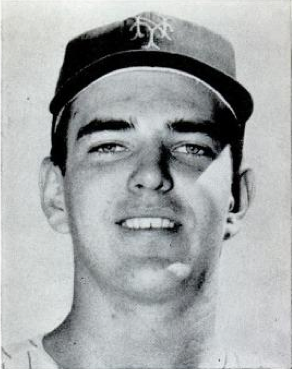
Edward Emil Kranepool III (November 8, 1944 – September 8, 2024) was an American professional baseball player. He spent his entire Major League Baseball career with the New York Mets. He was predominantly a first baseman, but he also played in the outfield.

Key Information

Born in the Castle Hill section of the Bronx, New York, Kranepool attended James Monroe High School, where he began playing baseball and basketball. Mets' scout Bubber Jonnard signed Kranepool in 1962 at the age of 17 as an amateur free agent. By the time he retired in 1979, he had become the last remaining Met from their inaugural 1962 season and was a member of the Miracle Mets World Championship team of 1969.

Baseball career

[edit]

1962–1963: Debut with the Mets

[edit]

After batting a combined .301 at three levels of the Mets' minor league system in 1962, Kranepool received a September call-up in just his first professional season. At age 17, Kranepool was six years younger than the next-youngest '62 Met, a reflection of the decision of Met management to select mostly older veterans in the expansion draft. He made his major league debut wearing number 21 on September 22, 1962, as a late inning defensive replacement for Gil Hodges at first base in a 9–2 loss to the Chicago Cubs at the Polo Grounds. He grounded out to Cubs second baseman Ken Hubbs in his only at bat.[1] He made his first start the next day, September 23, playing first base, and went one for four with a double.[2]

Kranepool began the 1963 season splitting playing time with "Marvelous" Marv Throneberry at first base and Duke Snider in right field. By May 5, Throneberry's ineptitude at the plate (.143 batting average and only one run batted in during the first 23 games of the season) wore thin on Met fans and management, and he was demoted to the Mets' Triple A affiliate, the Buffalo Bisons. Tim Harkness was awarded the first base job, with Snider shifting to left field and Kranepool becoming the Mets' everyday right fielder. This arrangement, however, did not last, as Kranepool was sent down to the minors in July with a .190 batting average. He resurfaced later that season as a September call-up, and went four for five with a run batted in and a run scored in his first game back.[3] He continued to hit better following his late season call-up, and managed to bring his batting average up to .209 for the season.

1964: Earning the first base job

[edit]

With Harkness, Dick Smith, and Frank Thomas sharing first base, Kranepool received most of his playing time in right field at the start of the 1964 season. On May 24, Joe Christopher was batting .303 and had won a starting job in right field. He was awarded the right field job, and Kranepool was demoted to Buffalo with a .139 batting average.

Kranepool played just 15 games with the Bisons, hitting three home runs and batting .352 to earn a promotion back to the Mets. On his last day with the Bisons, Kranepool played all 18 innings of a double header, before getting the call to come to Shea Stadium where the Mets were playing two games the next day.[4] On Sunday, May 31, he played first base in game one of the double header against the San Francisco Giants. Kranepool also played first in the second game of the double header, which went 23 innings. Kranepool ended up playing all 23 innings, going four for 14 over the two games. In all, he played 50 innings in two days. "I wish we could have played another 40 minutes", Kranepool was later quoted as saying of the record setting double header that lasted nearly 10 hours and ended at 11:20 PM. "That way, I could always say I played in a game that started in May and ended in June."[5]

These two games were the start of a 13-game hitting streak that saw Kranepool's batting average rise to .264. For the season, Kranepool batted .257 with 10 home runs and 45 RBI.

1965–1966: All-Star

[edit]

Prior to the start of the 1965 season, the Mets acquired future Hall of fame pitcher Warren Spahn from the Milwaukee Braves. Kranepool gave up his number 21 to Spahn, who had worn that number his entire career, and began wearing his more familiar number 7.

By midseason, Kranepool was batting .287 with seven home runs and 37 RBIs. He was named the Mets sole representative on the National League All-Star team at the 1965 Major League Baseball All-Star Game, though he did not play. By the end of the season, Kranepool's batting average had fallen to .253, but that was still enough to lead the Mets, as the team lost 112 games that season and finished in tenth and last place in the National League. He also led his team with 133 hits and 24 doubles.

In 1966, Kranepool paced the Mets with a career high 16 home runs to help the Mets avoid a last place finish and 100 losses for the first time in franchise history (95).

1969: Miracle Mets

[edit]

Kranepool was reportedly part of proposed a trade package along with Amos Otis and Bob Heise when the Mets attempted to acquire the Braves' Joe Torre who went to the St. Louis Cardinals for Orlando Cepeda instead.[6]

On May 21, 1969, the Mets won their third game in a row for a .500 winning percentage 36 games into the season for the first time in franchise history. This was followed by a five-game losing streak that saw the Mets fall into fourth place in the newly aligned National League East.

The Mets then went on an 11-game winning streak that included a two home run performance by Kranepool against the Los Angeles Dodgers.[7] By the end of the streak, the Mets were in second place, seven games back of the Chicago Cubs.

On July 8, Kranepool hit a fifth-inning home run off Ferguson Jenkins to give the Mets a 1–0 lead over the Cubs. By the time the Mets batted in the ninth inning, however, the first place Cubs had taken a 3–1 lead. The Mets scored three runs in the ninth to win the game, with Cleon Jones scoring the last run on Kranepool's single to center.[8]

The Mets completed their remarkable "Miracle" 1969 season, in which the team, backed by Kranepool, Tom Seaver, and Jerry Koosman, won their first World Series title against the Baltimore Orioles. Kranepool hit a home run in game three of the series, a 5–0 win for the Mets.[9]

1970–1973: Demoted to Tidewater

[edit]
Period BA OBP SLG OPS
Through 1970 .246 .298 .358 .656
After 1970 .278 .333 .398 .732

On June 23, 1970, Kranepool was batting just .118, and was demoted to the Mets' triple A affiliate, the Tidewater Tides.[10] He considered retirement, but instead, he accepted his reassignment, and batted .310 in 47 games at Tidewater. He was back with the Mets by the middle of August, but saw very little playing time. For the season, Kranepool had only 52 plate appearances in 43 games.

Kranepool bounced back with perhaps his best season in 1971, batting .280 with 14 home runs, 58 RBI, and an on-base plus slugging+[11] of 123. He also led the National League with a .998 fielding percentage. The late-career demotion marked a turning point for Kranepool, with him becoming a useful hitter and first baseman/outfielder despite never entering a season with a specific full-time role.

In 1973, Kranepool lost his starting job at first base to John Milner. Kranepool still managed to play 100 games and make 320 plate appearances backing up Milner at first and Cleon Jones in left. The Mets won the NL East, and faced the Cincinnati Reds in the 1973 National League Championship Series. Kranepool's only appearance in the NLCS was in game five, and he drove in the first two runs of the Mets' series clinching victory to lead his team to the 1973 World Series.[12] He played in 4 games of the 1973 World Series, going hitless in 3 at bats.[13]

1974–1976: Joan Payson's death

[edit]

Kranepool batted .300 in consecutive seasons in 1974 and 1975, sharing first base duties with Milner and Dave Kingman. When Mets owner Joan Payson died on October 4, 1975, she left the team to her husband Charles. While Joan had been the driving force behind the Mets, her survivors did not share her enthusiasm. Charles delegated his authority to his three daughters, who left control of baseball matters to club chairman M. Donald Grant. According to an interview with Kranepool, he was the only Met player invited to Mrs. Payson's funeral.[14]

The Mets enjoyed the second best winning percentage in franchise history in 1976 when they went 86–76 to finish third in the NL East. Kranepool was again a regular first baseman with the Mets that season, batting .292 with 10 home runs and 49 RBIs. He compiled his best offensive years from 1974 through 1977, hitting .299 in 431 games with 28 home runs and 156 runs batted in.

1977–1979: Pinch-hitting and retirement

[edit]

Popular centerfielder Lee Mazzilli became the face of the organization. Kranepool, perhaps as a symbol of the Mets' past glory, emerged as a fan favorite as well, despite his relegation to a limited pinch hitting role at that point in his career. From 1974 through 1978, Kranepool hit .396 as a pinch hitter, batting .486 (17-for-35) in the role in 1974, still the major league single-season pinch hit batting average record.[15] After the Mets traded Jerry Koosman at the end of the 1978 season, Kranepool became the last of the 1969 Miracle Mets.

When he retired after the 1979 season at the age of 34, he was the all-time Mets leader in eight offensive categories (all since surpassed).

As a pinch-hitter, Kranepool went 90-for-325 (.277) in his career with 6 home runs and 55 RBI.[16]

Through the 2024 season, he still holds the mark of most games played with the Mets at 1,853 and became an enduring legend among Mets fans for having played 18 seasons. He was the last of the 1962 Mets to remain with the team, and the last of that team to retire from Major League Baseball.

Though still relatively young at that time, he was only useful as long as his pinch-hits kept dropping in. He had also reportedly had some friction with the team's ownership group, led by Lorinda DeRoulet who was controlling the team after the death of her mother, Joan Payson. When the team was sold after the 1979 season to a group headed by Nelson Doubleday Jr. and Fred Wilpon, Kranepool was part of one of the groups offering a losing bid.[17]

Seasons Games AB Runs Hits 2B 3B HR RBI SB BB SO Avg. Slg. SF
18 1853 5436 536 1418 225 25 118 614 15 454 581 .261 .377 58

Kranepool had career fielding percentage of .994 as a first baseman and .975 as an outfielder. Overall, he finished with a .993 fielding percentage.[18]

Commercials and television appearances

[edit]

A 1978 television commercial for Gillette Foamy shaving cream began with black-and-white film footage of Kranepool striking out, and an announcer saying, "From 1962 to 1970, Ed Kranepool batted .227. Then Ed switched to Gillette Foamy." The ad showed Kranepool in front of a mirror, lathering up and shaving, and switched to color footage of him hitting a ball down the right-field line. The announcer said, "Since 1971, Ed's batted .283! What do you think of that, Ed?" As baseball players had long had a reputation for being superstitious, the ad closed with Kranepool standing in the dugout, in uniform but lathered up and holding up a can of Foamy, saying, "I don't know, but now I shave every other inning." The closing narration was, "Foamy: More than thick and rich enough for New York's heavy hitters."

Another Gillette commercial featured Kranepool lighting a candle in his bathroom and trying to shave using Foamy during a blackout. The ad was clearly inspired by the New York blackout of the previous season, which came during a Mets home game at Shea Stadium on July 13, 1977. Kranepool also appeared in an ad for SportsPhone with Jerry Koosman.

Kranepool caught flak for a 1986 campaign commercial he did for New York Senator Alfonse D'Amato in which he appeared wearing a New York Mets uniform. Following protest from the Mets' ownership group, the commercial was quickly pulled. Kranepool also appeared on Saturday Night Live in a cameo appearance, being interviewed by Bill Murray during a skit filmed during spring training in 1979, regarding Chico Escuela's (portrayed by Garrett Morris) tell all book, Bad Stuff 'bout The Mets (a parody of Sparky Lyle's tell all book about the New York Yankees, The Bronx Zoo). He appeared as himself in a 1999 episode of Everybody Loves Raymond along with several other members of the 1969 Mets.[19]

Post-retirement and health problems

[edit]

Kranepool made a living after retirement as a stockbroker, a restaurateur, and working for a credit card processing company. He was inducted into the New York Mets Hall of Fame in 1990. He ranks third on the all-time Mets hits list with 1,418. He was surpassed by Mets third baseman David Wright, with 1,777, and, in 2017, by José Reyes, who has 1,534 hits as a member of the Mets.[citation needed]

Kranepool developed diabetes shortly after retirement. In 2017, Kranepool had a toe removed due to an abscess that became infected. The infection could not be controlled because both of his kidneys were failing. At the time, Kranepool was on a waiting list for a kidney transplant.[20] On May 7, 2019, Kranepool received a kidney transplant from a living donor at Stony Brook University Hospital.[21]

Kranepool's autobiography, The Last Miracle: My 18-Year Journey with the Amazin' New York Mets, was released in August 2023.[22]

Death

[edit]

Kranepool died of cardiac arrest in Boca Raton, Florida, on September 8, 2024, at the age of 79.[23][24]

See also

[edit]

References

[edit]
[edit]
Revisions and contributorsEdit on WikipediaRead on Wikipedia
from Grokipedia
Ed Kranepool (November 8, 1944 – September 8, 2024) was an American professional baseball player who spent his entire 18-season career as a and for the , debuting at age 17 in the franchise's inaugural 1962 season and retiring after the 1979 campaign. A native New Yorker born in , Kranepool signed with the Mets straight out of high school and quickly became a fixture in their lineup, appearing in 1,853 games while batting .261 with 1,418 hits, 118 s, and 614 runs batted in over his career. He earned a reserve spot on the 1965 National League team and set several franchise records, including the most games played (1,853) and at-bats (5,436), while also holding the Mets' single-season pinch-hit record with a .486 average (17-for-35) in 1974. Kranepool's tenure made him the longest-serving player in Mets history, and he played a pivotal role in the team's "Miracle" championship, contributing a in Game 3 of the Fall Classic against the Baltimore Orioles. He was inducted into the New York Mets Hall of Fame in 1990. In his later years, Kranepool faced health challenges, including a kidney transplant in 2019 due to complications from , which led him to become an advocate for diabetes awareness and other charitable causes such as autism support. He was married twice—first to Carole Henson (divorced), then to Monica since 1981—and had a son, Edward Keith Kranepool; after retiring, he worked in processing and remained a beloved figure in Mets lore for his steady play and loyalty to the organization.

Early life

Birth and family

Edward Emil Kranepool III was born on November 8, 1944, in the Castle Hill section of , . His father, Sergeant Edward Kranepool, a 31-year-old U.S. , had been just three and a half months earlier on July 28, 1944, during the Allied invasion of in , , leaving the family without its primary provider. Kranepool's mother, Ethel (Hasselbach) Kranepool, was six months pregnant at the time of her husband's death and raised her two children—Kranepool and his older sister, Marilyn, who was three years his senior—on a modest military widow's pension supplemented by odd jobs. The Kranepool family embodied the working-class ethos of post-World War II neighborhoods, where tight-knit immigrant and blue-collar communities fostered resilience amid economic challenges. Ethel's determination to provide stability for her children in this urban environment shaped Kranepool's early years, marked by a sense of community support in the wake of wartime loss. Growing up in a modest household, Kranepool spent much of his childhood in local playgrounds, where the vibrant street culture of —alive with the sounds of stickball games and neighborhood sports—nurtured his budding athleticism. Kranepool's early enthusiasm for was influenced by the era's baseball heroes and local mentors in post-war New York. As a young boy, he idolized New York Yankees star , whose exploits captivated the city's youth and inspired Kranepool's passion for the game amid the playground rivalries of his upbringing. A neighbor and family friend, Jim Schiaffo, served as a surrogate father figure, encouraging Kranepool's involvement in informal sports and laying the groundwork for his organized play. These experiences in the resilient, sports-saturated communities of honed his skills and set the stage for his athletic development.

High school and amateur career

Ed Kranepool attended High School in , New York, where he played varsity for three seasons. As a left-handed , he emerged as a standout player on a team known as a perennial powerhouse in the city's Public School Athletic League (PSAL). During his senior year in 1962, Kranepool led to the PSAL finals, though the team fell short in a 6-5 loss to the defending champion from . He compiled impressive power numbers, hitting 19 home runs over his high school career, including nine in his final season—a mark that broke the school's long-standing record of seven set by future Hall of Famer in 1929. His prodigious hitting earned him the nickname "Eddie’s Tree" for an oak in right-center field at the school's field, which students dubbed in honor of the frequent long balls he cleared. In the championship game, despite a fielding error on a popup that contributed to two unearned runs, Kranepool showed versatility by pitching a scoreless eighth and ninth innings. Kranepool's performances drew heavy scouting from nearly every club, positioning him as one of the top amateur prospects in the country. He graduated from in June 1962 and opted to forgo college, signing directly with the for an $80,000 bonus just days later, drawn by the opportunity to play close to home despite larger offers from other teams.

Professional baseball career

Signing with the Mets and debut (1962–1963)

Kranepool signed with the New York Mets as an amateur free agent on June 27, 1962, days after graduating from James Monroe High School in the Bronx, where his stardom as a slugging first baseman had drawn scouts from multiple teams. The Mets, in their inaugural season, outbid competitors including the St. Louis Cardinals and Cincinnati Reds with a signing bonus of $85,000—the largest ever for a high school player at the time—along with incentives that could push the total higher. He immediately flew to join the Mets in Los Angeles, arriving in time to witness Sandy Koufax's first no-hitter on June 30 before being optioned to the minors to begin his professional career. At age 17, Kranepool faced a steep learning curve in the minors, starting at Triple-A Syracuse Chiefs of the International League, where he batted .229 in 14 games amid the challenges of advanced competition and long bus rides. Demoted in mid-July to Class-A Knoxville Smokies of the South Atlantic League (.278 average in 7 games), he was sent down again a week later to the Class-D Auburn Mets of the New York-Penn League, thriving with a .351 average, 23 runs scored, and 18 RBI in 20 games. Overall, he hit .301 with a .783 OPS across 41 minor league games that season, demonstrating power potential with 6 doubles, 2 triples, and 1 home run while adapting to the rigors of professional play, including stricter umpiring and team discipline. Kranepool earned a call-up to the Mets after his strong finish in Auburn, making his major league debut on September 22, 1962, at the against the Chicago Cubs; at 17 years and 318 days old, he became the youngest player ever to appear for the franchise, relieving veteran at first base and grounding out to shortstop in his only at-bat that day. The following afternoon, in what was intended as the Mets' final home game before relocating to , he recorded his first major league hit—a double off Cubs reliever . In three games that , Kranepool batted .167 with one double in six at-bats, while handling 12 chances flawlessly at first base for a 1.000 fielding , showcasing the glove work that had impressed scouts. The 1963 season marked Kranepool's first full year in the majors at age 18, as he appeared in 86 games for the last-place Mets, splitting time between first base (20 games) and the outfield (55 games, mostly right field). He batted .209 overall with 57 hits, 12 doubles, 2 triples, 2 home runs, and 14 RBI in 273 at-bats, including his first major league home run on April 19 against Milwaukee Braves pitcher Bob Shaw at the Polo Grounds. Kranepool showed signs of maturation late in the year, hitting .274 in September (17-for-62), though defensive adjustments in the outfield proved challenging amid the Mets' 111 losses.

Establishing as first baseman (1964–1966)

In 1964, at the age of 19, Ed Kranepool secured the starting position for the during , transitioning from a part-time role in his previous seasons to a full-time starter following the departure of veteran Marv Throneberry. This opportunity allowed Kranepool to play in 119 games, primarily at first base with 104 appearances there, marking his establishment as a cornerstone of the Mets' infield. Kranepool's offensive performance that year included a .257 over 420 at-bats, with 10 home runs and 45 RBIs, contributing to his development as a reliable with emerging power. Defensively, he demonstrated solid fielding at first base, posting a .991 with only 10 errors across 1,065 total chances, which helped reduce the Mets' infield vulnerabilities and earned him recognition for dependable play, though not yet at the level of award contention. Building on this foundation, Kranepool's 1965 season saw further consistency, as he appeared in a career-high 153 games, batting .253 with 10 home runs and 53 RBIs in 525 at-bats. His strong start to the year, leading the Mets in hits (133) and total bases (204), earned him his lone All-Star selection as the team's only representative in the National League, though he did not appear in the game at Minnesota's Metropolitan Stadium. Defensively, he maintained a .992 fielding percentage over 147 games at first base, solidifying his reputation as a steady handler of the position. By 1966, Kranepool showed notable power growth, hitting 16 home runs—his career high at that point—while with 57 RBIs in 146 games and 464 at-bats. He started 132 games at , occasionally platooning with outfield duties, and continued his defensive reliability with a .992 fielding percentage and just 10 errors. Over these three seasons, Kranepool's cumulative statistics—36 home runs, 155 RBIs, and a —highlighted his maturation into a durable, everyday for the improving Mets.

Miracle Mets championship (1967–1969)

In 1967, Kranepool enjoyed a solid season as the ' primary , batting .269 with 10 home runs and 54 RBIs over 141 games, providing offensive stability for a team that finished 73-89 in the National League. His performance helped anchor a young roster featuring emerging talents like and , though the Mets remained mired in the lower echelons of the standings during another rebuilding year. The 1968 campaign was more challenging for Kranepool, who hit .231 with just 3 home runs and 20 RBIs in 127 games, reflecting the team's overall struggles as they posted a 66-95 record. Despite the dip in production, Kranepool's experience as one of the original Mets offered continuity to a squad still developing its identity amid consecutive losing seasons. Kranepool rebounded somewhat in , batting .238 with 11 home runs and 49 RBIs in 112 games, posting a .675 while sharing first-base duties in manager ' platoon system after the acquisition of . Key regular-season contributions included a walk-off single on July 8 against the Chicago Cubs, scoring Cleon Jones to secure a 4-3 victory and signaling the Mets' growing competitiveness as they trailed the Cubs by 4.5 games. He also participated in the Mets' clinching 6-0 win over the Cardinals on , contributing to the offense in the game that secured their first title with a 100-62 record. In the postseason, Kranepool batted .250 (3-for-12) with one double and one RBI in the against the , helping the Mets sweep the series 3-0. His most memorable moment came in Game 3 of the against the Baltimore Orioles, where he hit a solo in the bottom of the eighth inning off reliever Pete Richert, extending the Mets' lead to 5-0 en route to a 5-0 victory that shifted momentum in the underdog team's eventual 4-1 series win for their first championship. Overall, Kranepool appeared in just four postseason games but embodied the resilience of the "Miracle Mets," a ragtag group of young pitchers and gritty position players who defied expectations to claim the title.

Demotion to minors (1970–1973)

Following the highs of the championship, Ed Kranepool encountered significant challenges at first base due to the Mets' acquisition of , who assumed the starting role and platooned with Kranepool in 1970. Early in the 1970 season, Kranepool struggled offensively, managing only a over his first 34 at-bats, including an 0-for-18 stretch as a . On June 23, 1970, the Mets demoted him to their Triple-A affiliate, the Tidewater Tides, to clear a roster spot for outfielder ; the move marked the first assignment for Kranepool since 1964 and effectively ended his status as an everyday player at age 25. Devastated by the demotion, Kranepool briefly contemplated retirement but instead focused on redemption in the , where he batted .310 with seven home runs and 45 RBIs in 47 games. Recalled to the Mets on August 14, he appeared in 43 major league games that year, primarily as a , finishing with a .170 , no home runs, and three RBIs overall. The Mets, managed by , ended the season in third place in the with an 83-79 record amid a transitional period following their miracle title. In 1971, Clendenon's departure via trade opened the door for Kranepool to reclaim a regular role, as he started primarily at first base and batted .280 with 14 home runs and a career-high 58 RBIs in 122 games. His improved performance reflected a mended relationship with Hodges and renewed motivation after the prior year's setback, though the team again finished third at 83-79. The 1972 season brought further instability when Hodges died suddenly in spring training, leading to Yogi Berra's appointment as manager and contributing to ongoing roster flux at first base. Kranepool platooned throughout the year, splitting time between first base and right field while batting .269 with eight home runs and 34 RBIs in 122 games, as the Mets maintained their third-place standing with an 86-76 mark. By 1973, competition intensified with the emergence of John Milner, who took over most starts at first base; Kranepool's role diminished to a and utility position, including outfield duties, as he appeared in 100 games and batted .239 with one and 35 RBIs. Despite the reduced playing time under Berra, Kranepool provided key contributions during the Mets' improbable run to the National League pennant, starting Game 5 of the NLCS against the and delivering a two-run single that helped secure a 9-2 .

Return to the majors (1974–1976)

In 1974, Kranepool transitioned into a utility role, primarily serving as a while occasionally starting at first base and in the outfield. In 94 games that season, Kranepool posted a .300 and .350 , with his pinch-hitting prowess standing out as he batted .486 (17-for-35), setting a major league single-season record for the role. Kranepool's part-time duties continued in 1975 and 1976 amid the Mets' rebuilding efforts, as the team integrated younger talent and endured losing or mediocre seasons, finishing 71-91 in 1974, 83-79 in 1975, and 86-76 in 1976. He platooned at first base with players like John Milner and , appearing in 106 games in 1975 with a career-high .323 and .370 , and 123 games in 1976 at .292 and .344, respectively. These seasons highlighted his improved plate discipline and reliability in limited at-bats, contributing to team morale during the transition. The death of Mets owner on October 4, 1975, deeply affected Kranepool, who was the only active player to attend her funeral and later described her as "like a grandmother" for her personal support throughout his career. This loss, coming after the 1975 season, underscored Kranepool's enduring loyalty to the organization amid ownership changes to her daughter and son-in-law , influencing his commitment during the 1976 campaign.

Pinch-hitting role and retirement (1977–1979)

In the later stages of his career, Ed Kranepool transitioned fully into a pinch-hitting specialist for the New York Mets, leveraging his veteran plate discipline and clutch performance from limited appearances. Building on his established bench role in the mid-1970s, Kranepool excelled in this capacity during 1977 and 1978, posting a combined .396 batting average in pinch-hit at-bats over those years as part of a broader 1974–1978 stretch where he hit .396 (57-for-144). In 1977, he batted .448 as a pinch-hitter (13-for-29), contributing key hits such as an RBI single in an August 7 extra-innings victory over the Los Angeles Dodgers. The following year, 1978, he maintained effectiveness with a .300 pinch-hit average (15-for-50), including three home runs off the bench, though his overall season batting average dipped to .210 amid just 66 games played and limited starts. Kranepool's opportunities remained sparse, reflecting the Mets' rebuilding phase and his age of 33–34, but he accumulated 10 home runs in 1977—his highest total since 1975—while finishing with a .281 overall average in 108 games. His career home run count reached 118 by the end of 1978, underscoring a power element to his utility despite fewer starts. In 1979, however, his production waned, with a .232 batting average in 82 games and a sharp drop to .162 in 49 pinch-hit at-bats (6-for-37), signaling the physical toll of 18 major league seasons. Kranepool's final appearance came on September 30, 1979, at age 34, in a home game against the St. Louis Cardinals at , where he recorded a pinch-hit double off pitcher in the ninth inning of a 3-0 loss. Granted free agency on November 1, 1979, he chose retirement rather than signing elsewhere, citing his unwavering loyalty to the Mets organization that had signed him as a 17-year-old bonus baby in 1962. Over his 18 seasons—all with New York—he set franchise records for (1,853) and tenure as the longest-serving player, earning him the enduring title of the "last original Met."

Media appearances

Commercials

Following his retirement from baseball, Kranepool capitalized on his enduring popularity as a Mets icon through various endorsements, including political advertisements. In 1986, Kranepool made a brief appearance in a television commercial supporting the re-election campaign of U.S. Senator Alfonse D'Amato (R-N.Y.). Filmed on a Long Island baseball field, the 30-second spot showed Kranepool in a dugout wearing an old Mets uniform—lacking the team logo on the sleeve—and included archival footage from the 1969 World Series victory. He endorsed D'Amato by drawing parallels to the "Miracle Mets," declaring, "I'll be voting for Al D'Amato in November because he's been fighting and winning for New York." The ad aired locally on ABC affiliate WABC during the New York Mets' National League Championship Series game against the Houston Astros on October 8. The commercial quickly drew backlash from the Mets organization, which protested its unauthorized use of the team name, uniform, and historical imagery as a potential . General counsel Gerard Toner emphasized the team's commitment to and lack of permission for any political tie-in. D'Amato's campaign dismissed the complaint, insisting the ad was legitimate and refusing to withdraw it despite requests. Kranepool's involvement, while leveraging his status as one of the original Mets, highlighted tensions between former players' personal endeavors and team branding rights.

Television and film roles

Ed Kranepool leveraged his status as a key member of the champion to secure several guest spots and cameos in television and film, often portraying himself or providing expertise in entertainment contexts. In 1980, Kranepool made a brief appearance as himself, a player, in the film It's My Turn, a romantic drama directed by and starring , where he featured in a scene tied to the sport's cultural backdrop. Kranepool reprised his on-screen persona two decades later in a 1999 episode of titled "Big Shots" (Season 3, Episode 19, aired March 1). He played himself in a cameo alongside fellow 1969 Mets teammates like Jones and , appearing at a Hall of Fame autograph session that highlighted the enduring legacy of the Miracle Mets. Beyond scripted roles, Kranepool contributed to several documentaries and educational videos, drawing on his firsthand experiences with the Mets. He appeared as himself in the 2008 retrospective Shea Goodbye: 45 Years of Amazin' Mets, hosted by , which chronicled the team's history at through archival footage and player interviews. In 1991, he featured in the health-focused video Living with : A Winning Formula, sharing insights on managing the condition based on his own diagnosis shortly after retirement. These appearances, along with occasional guest spots on sports broadcasts and Mets-related TV segments as a or interviewee, allowed Kranepool to remain a visible ambassador for in media.

Post-retirement life

Business activities

After retiring from in 1979, Ed Kranepool transitioned into a career as a on , building on his earlier experience in during his playing days. He had earned his in 1965 at age 21, becoming one of only two licensed brokers in the National League alongside pitcher , and worked at the firm , Grumet & Seigel, where he managed approximately 160 clients by early 1967. Post-retirement, Kranepool continued this profession, leveraging his extensive network from to maintain a viable amid the competitive New York financial scene. Kranepool also entered the restaurant industry as an entrepreneur. In the wake of the ' 1969 championship, he partnered with teammate to open The Dugout, a Mets-themed eatery in . The venture capitalized on their celebrity status but operated for only a few years, as the demands of management proved challenging alongside his other pursuits. In his later professional years, Kranepool shifted focus to through a role in processing. Based in the New York area, he worked as a salesman soliciting businesses and retailers for payment solutions, drawing on his enduring recognition as a Mets to foster client trust and connections. This endeavor represented a return to finance while providing steady income from his sports legacy.

Health issues

Following his retirement from Major League Baseball in 1979, Ed Kranepool was diagnosed with in 1980, which he managed for over three decades through and adjustments. The condition gradually led to serious complications, including peripheral infections and declining organ function, despite his active post-career involvement in baseball-related events that helped delay some symptoms. Kranepool became a spokesperson for , promoting awareness across the country for six years, and supported other charitable causes such as autism awareness. In August 2016, Kranepool developed a severe in his left foot linked to his , necessitating the of his big toe the following month to prevent further spread. By early 2017, his function had deteriorated to the point where he was placed on the national transplant waiting list, a process exacerbated by four decades of that had reduced his capacity to approximately 20 percent. Kranepool's health challenges gained public attention through media appeals for potential donors starting in 2017, with the organization amplifying his story in 2018 to encourage living donations. These efforts culminated in April 2019 when a compatible anonymous donor was identified through a exchange chain, leading to a successful transplant surgery at Stony Brook University Hospital on May 7, 2019. Post-surgery, Kranepool reported significant recovery, allowing him to resume limited public appearances while adhering to immunosuppressive therapy to prevent rejection.

Death and legacy

Ed Kranepool died on September 8, 2024, at his home in , from at the age of 79. He relocated to as his full-time residence in 2022, following a transplant in 2019, which addressed long-standing health challenges including . The organization issued a statement mourning his loss, with owners Steve and describing Kranepool as "a beloved figure in Mets history" who "embodied the spirit of the organization" and continued serving as a community ambassador. Tributes from former teammates highlighted his enduring camaraderie; at his wake, and were among those in attendance, reflecting on his loyalty and steady presence. The Mets held a before a game on September 16, 2024, to honor him, and in April 2025, 1969 World Series champion shared personal remembrances during the team's home opener. In 2025, the Mets further honored Kranepool with a No. 7 uniform patch worn all season and a giveaway on September 16, 2025. Kranepool's legacy as the longest-tenured player in Mets history, spanning all 18 seasons of his career from 1962 to 1979, cemented him as a symbol of franchise loyalty and resilience. Inducted into the Mets Hall of Fame in 1990, he remains third on the team's all-time hits list with 1,418, and his career statistics include a .261 , 118 home runs, 614 runs batted in, and 1,853 —records that underscore his foundational role in the organization's early years and the triumph.

References

Add your contribution
Related Hubs
User Avatar
No comments yet.