Recent from talks
Nothing was collected or created yet.
Ferguson Jenkins
View on Wikipedia
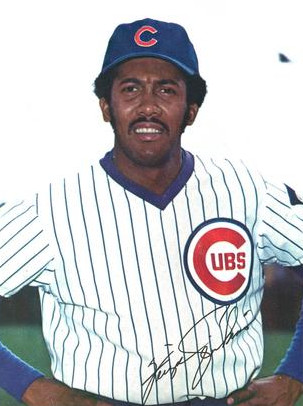
Ferguson Arthur "Fergie" Jenkins[a] OC (born December 13, 1942)[1] is a Canadian former professional baseball pitcher and coach. He played Major League Baseball (MLB) from 1965 to 1983 for the Philadelphia Phillies, Chicago Cubs, Texas Rangers and Boston Red Sox.
Key Information
Jenkins played most of his career with the Cubs. He was a National League (NL) and Cubs All-Star for three seasons, and in 1971, he was the first Canadian and Cubs pitcher to win a Cy Young Award. He was a 20-game winner for seven seasons, including six consecutive seasons for the Cubs. He was the NL leader in wins, in 1971, and the American League (AL) leader in wins, in 1974. Jenkins was also the NL leader in complete games in 1967, 1970, and 1971, and the AL leader in complete games in 1974. He led the NL in strikeouts in 1969 and had over 3,000 strikeouts during his career. His 284 victories are the most by a black pitcher in major league history.[2]
Jenkins played basketball in the off-season for the Harlem Globetrotters from 1967 to 1969, and pitched two seasons in Canada for the minor league London Majors following his major league career.[3] Jenkins became the first Canadian to be inducted into the National Baseball Hall of Fame in 1991; he remained the only one until Larry Walker's election in 2020.[4]
Early life
[edit]Jenkins was born and raised in Chatham, Ontario, the only child of Delores Jackson and Ferguson Jenkins Sr.[3][5] His father, a chef and chauffeur,[6] was the son of immigrants from Barbados, while his mother was a descendant of captive Africans enslaved in America, who escaped through the Underground Railroad before settling in Southwestern Ontario.[3][5] Both of his parents were good athletes; his father was an amateur boxer and semi-professional baseball player for the Chatham Coloured All-Stars.[5]
A talented athlete, Jenkins competed in track and field, ice hockey, and basketball in his school years, lettering five times. When he began playing bantam baseball in his teens, he started out as a first baseman. He honed his pitching skills by throwing pieces of coal from a local coal yard, aiming at either an open ice chute or the gaps of passing boxcars.[3] He was also encouraged to continue working on his pitching by Gene Dziadura, a former shortstop in the Chicago Cubs minor league system, and a Philadelphia Phillies scout. Many training sessions involving the two followed, until Jenkins graduated from high school.
Professional baseball
[edit]MLB career
[edit]Early seasons
[edit]In 1962, Jenkins was signed by Philadelphia Phillies scout Tony Lucadello.[3] Jenkins made his major-league debut as a 22-year-old in 1965, as a relief pitcher. He was traded the following year to the Chicago Cubs, along with Adolfo Phillips and John Herrnstein, for pitchers Larry Jackson and Bob Buhl. Jenkins would become one of the best pitchers in the majors. In his first full year as a starter for the Cubs (1967), Jenkins recorded 20 wins while posting a 2.80 ERA and 236 strikeouts. He finished tied for second in the Cy Young Award voting, following Mike McCormick of the San Francisco Giants. He was also selected for the All-Star Game for the first time that season.

The following year his numbers improved; once again he won 20 games, his ERA dropped to 2.63 and his strikeout total increased to 260. Jenkins established a reputation for achieving his pitching feats and his statistics while spending most of his career pitching in a "hitter's ballpark"—Wrigley Field in Chicago.[7] Furthermore, in 1968, Jenkins lost five of his starts in 1–0 ball games.
1971 season
[edit]Jenkins had his best season in 1971. On April 6, 1971, Jenkins started the Cubs' opening-day game. The Cubs defeated the St. Louis Cardinals 2–1 in 10 innings at Wrigley Field. Jenkins pitched the complete game for the Cubs, and Billy Williams hit a home run in the final inning for the victory.[8] On September 1, 1971, Jenkins threw another complete game against the Montreal Expos and hit two home runs. The Cubs won the game 5–2.[9] He was named NL Player of the Month (for the only time in his career) in July, with a 6–1 record, a 2.14 ERA, and 49 strikeouts.
That season, Jenkins threw a complete game in 30 of 39 starts and received a decision in 37 of them, finishing with a 24–13 record (.649). He walked only 37 batters versus 263 strikeouts across 325 innings.[10] He played in the All-Star Game and finished seventh in MVP voting. Jenkins also posted a .478 slugging percentage, hitting six home runs and driving in 20 runs in just 115 at-bats.
Jenkins won the 1971 NL Cy Young Award. Jenkins was the first Cubs pitcher and the first Canadian to win the Cy Young Award (Quebec native Éric Gagné is the only other Canadian to match the feat). He received 17 of 24 first-place votes. He was outpitched in several statistical categories by New York Mets pitcher Tom Seaver, but Jenkins pitched in hitter-friendly Wrigley Field and Seaver worked in pitcher-friendly Shea Stadium.

Later seasons
[edit]In 1972, Jenkins completed his sixth consecutive season with 20 or more wins.[11] By the middle of the following season, he expressed that he did not feel like playing baseball anymore. He finished the season, but registered a 14–16 win–loss record.
Jenkins was traded from the Cubs to the Texas Rangers for Bill Madlock and Vic Harris on October 25, 1973.[12] Texas manager Billy Martin was pleased with the trade, describing Jenkins as a workhorse and a winner.[13] In 1974, Jenkins achieved a personal best 25 wins during the season, setting a Rangers franchise record which still stands. He finished second in Cy Young Award voting for the second time in his career behind Catfish Hunter in a very close vote (90 points to Jenkins's 75); surprisingly, Jenkins actually finished ahead of Hunter in MVP voting (118 points to Hunter's 107), and his fifth-place finish on the MVP leader-board was the highest of his career. He was named the American League Comeback Player of the Year by The Sporting News.
Jenkins achieved his 250th win against the Oakland Athletics on May 23, 1980. Later that year, during a customs search in Toronto, Jenkins was found possessing 3.0 grams cocaine, 2.2 grams hashish, and 1.75 grams marijuana. In response, on September 8, Commissioner Bowie Kuhn suspended him indefinitely. However, Jenkins' suspension lasted only two weeks before, in an unprecedented action, an independent arbiter, Raymond Goetz, overturned the suspension and reinstated him and he returned to the league. Eventually, when he went to trial, the judge gave him an absolute discharge for lack of some evidence.[14] Jenkins was not punished further by MLB for the incident, as he remained active until his retirement following the 1983 season. It has been suggested that this incident delayed his induction into the Baseball Hall of Fame.[15]
Canadian baseball
[edit]Minor league
[edit]Jenkins continued playing professional baseball in Canada after retiring from MLB in 1983 and pitched two seasons for the London Majors, a minor league team of the Intercounty Major Baseball League, operating in London, Ontario.
Post-baseball
[edit]
Jenkins ran for the Ontario Liberal Party in the 1985 Ontario general election, in the riding of Windsor—Riverside, but placed third with 15% of the vote behind the NDP's Dave Cooke.[16]
Legacy
[edit]Jenkins led the league in wins twice (1971, 1974), fewest walks per 9 innings five times, complete games nine times, and home runs allowed seven times. He led the league in strikeouts once (1969, with 273). His streak of six straight seasons with 20 or more wins (1967–1972) is the longest streak in the major leagues since Warren Spahn performed the feat between 1956 and 1961.
Jenkins, fellow Cub Greg Maddux, Curt Schilling, and Pedro Martínez are the only major league pitchers to ever record more than 3,000 strikeouts with fewer than 1,000 walks.[17] Only Robin Roberts and Jamie Moyer allowed more home runs over a career than Jenkins. Jenkins achieved his 3,000th strikeout on May 25, 1982, against Garry Templeton.
As a hitter, Jenkins posted a .165 batting average (148-for-896) with 54 runs, 13 home runs, 85 RBI and 41 bases on balls. Defensively, he recorded a .954 fielding percentage.[10]
Jenkins is one of the Black Aces, black pitchers with at least 20 wins in a single MLB season.[18]
Honors and awards
[edit]
In 1974, Jenkins, then with the Texas Rangers, became the first baseball player to win the Lou Marsh Trophy, an award given annually to Canada's top athlete. He was also named the Canadian Press male athlete of the year four times (1967, 1968, 1971, and 1974).
In 1987, Jenkins was awarded the Order of Sport, marking his induction into Canada's Sports Hall of Fame.[19] Jenkins was inducted into the Canadian Baseball Hall of Fame in 1987, and in 1991, became the first Canadian ever elected to the Baseball Hall of Fame in Cooperstown, New York.[20] The 1991 Major League Baseball All-Star Game, held in Toronto, was dedicated to Jenkins; he threw out the ceremonial first pitch to conclude the pregame ceremonies. Jenkins was inducted into the Ontario Sports Hall of Fame in 1995,[21] and was inducted onto Canada's Walk of Fame in 2001. He was appointed the commissioner of the now-defunct Canadian Baseball League in 2003; the league's Jenkins Cup went missing when the league folded and has been missing ever since.[22] He was inducted into the Texas Rangers Hall of Fame in 2004. In 2011, the Ontario Sports Hall of Fame created the Ferguson Jenkins Heritage Award in his honour to commemorate those one-of-a-kind events or special moments in time that so embellish the long history of sports in Ontario.[23]
On December 17, 1979, he was made a Member of the Order of Canada for being "Canada's best-known major-league baseball player".[24] Governor General Michaëlle Jean officiated at his investiture into the Order, which finally occurred on May 4, 2007, more than 27 years after he was appointed.[25] On May 3, 2009, the Cubs retired jersey number 31 in honor of both Jenkins and Greg Maddux.[26] On December 13, 2010, Canada Post announced Jenkins would be honoured in Canada with his own postage stamp. The stamp was issued on February 1, 2011, to commemorate Black History Month.[27] On May 20, 2022, Jenkins was honored with a statue outside Wrigley Field.[28][29]
Personal life
[edit]Jenkins had three daughters with his first wife, Kathy, whom he divorced in 1987.[30]
Jenkins had one child, a daughter named Samantha, with his second wife, Maryanne. In December 1990, Maryanne broke her neck in a car accident near their ranch in Guthrie, Oklahoma. She died from pneumonia in January 1991.[30][31]
In December 1992, Jenkins' girlfriend, Cynthia Takieddine, and Jenkins' three-year-old daughter, Samantha Jenkins, died of carbon monoxide poisoning in her car near Perry, Oklahoma.[31] It was ruled a murder-suicide although Takieddine's motives were not clear in the suicide note. It did say she loved Samantha and could not bear to leave her.[30]
Jenkins was married to Lydia Farrington from 1993 until her death in 2018.[32]
See also
[edit]- List of Major League Baseball career wins leaders
- List of Major League Baseball players from Canada
- List of Major League Baseball annual strikeout leaders
- List of Major League Baseball annual wins leaders
- List of Major League Baseball career hit batsmen leaders
- List of Major League Baseball career strikeout leaders
- List of members of Canada's Sports Hall of Fame
- List of Canadian sports personalities
Notes
[edit]- ^ While Jenkins's father became known as Ferguson Jenkins Sr., father and son had different middle names.
References
[edit]- ^ "The Fergie Jenkins Foundations". fergiejenkinsfoundation.org. Retrieved May 7, 2015.
- ^ Weiner, Allen (November 21, 2016). "MLB: Every Black Pitcher Who Has Won the Cy Young Award". Sportscasting.com. Archived from the original on October 21, 2021. Retrieved July 7, 2021.
- ^ a b c d e "Ferguson Jenkins Jr". Who's Who in Black Canada. Archived from the original on February 25, 2011. Retrieved July 19, 2012 – via Wayback Machine.
- ^ "Fergie Jenkins". National Baseball Hall of Fame. Retrieved May 6, 2015.
- ^ a b c Breaking The Colour Barrier University of Windsor. Retrieved November 5, 2017.
- ^ Ferguson Jenkins Canada's Walk of Fame. Retrieved February 4, 2014.
- ^ Pashko, Stanley (1975). Ferguson Jenkins: The Quiet Winner. New York: G. P. Putnam's Sons.
- ^ "St. Louis Cardinals at Chicago Cubs Box Score, April 6, 1971 - Baseball-Reference.com". Baseball-Reference.com.
- ^ "Montreal Expos at Chicago Cubs Box Score, September 1, 1971 - Baseball-Reference.com". Baseball-Reference.com.
- ^ a b "Fergie Jenkins Stats - Baseball-Reference.com". Baseball-Reference.com.
- ^ Engelhardt, Gordon (September 7, 2013). "Jenkins, Fingers 'still fit' their legendary status in baseball". Evansville Courier & Press. Archived from the original on February 4, 2014. Retrieved September 21, 2013.
- ^ "Padres Get McCovey," The New York Times, Friday, October 26, 1973. Retrieved November 28, 2020
- ^ "Cubs trade Jenkins to Texas for youth". The Rochester Sentinel. October 26, 1973. Retrieved September 21, 2013.
- ^ 1919 Black Sox Archived August 20, 2008, at the Wayback Machine
- ^ Able, Allen (July 15, 1991 – August 26, 2006). "Fergie Jenkins, 1st Cdn. in Baseball Hall of Fame". The Journal. Archives, Canadian Broadcasting Corporation. Retrieved May 4, 2007.
- ^ Nidetz, Steve (May 1, 1985). "Chicago State Has Some Big Plans". Chicago Tribune.
- ^ Nemec, David; Flatow, Scott (April 2008). Great Baseball Feats, Facts and Figures (2008 ed.). New York: A Signet Book, Penguin Group. p. 88. ISBN 978-0-451-22363-0.
- ^ Grant, Jim "Mudcat"; Sabellico, Tom; O'Brien, Pat (2007). The Black Aces: Baseball's Only African-American Twenty-Game Winners. Aventine Press. ISBN 978-1593304881.
- ^ "Canada Sports Hall of Fame | Hall of Famers Search". www.sportshall.ca. Retrieved March 25, 2024.
- ^ "The Hall of Famers: Ferguson Arthur Jenkins". National Baseball Hall of Fame and Museum. Archived from the original on July 27, 2009. Retrieved June 17, 2009.
- ^ "Ferguson Jenkins". oshof.ca. Ontario Sports Hall of Fame. Archived from the original on March 1, 2021. Retrieved September 23, 2014.
- ^ Macklin, Bob. "CBL receivership not a fall classic". Vancouver Courier. Archived from the original on July 17, 2011. Retrieved December 16, 2010.
- ^ "Ferguson Jenkins Heritage Award". oshof.ca. Ontario Sports Hall of Fame. Archived from the original on November 12, 2014. Retrieved September 23, 2014.
- ^ "Honours Order of Canada Ferguson Jenkins, C.M." Members of the Order of Canada. Governor General of Canada. March 30, 2006. Archived from the original on September 30, 2007. Retrieved May 4, 2007.
- ^ "Jenkins gets Order of Canada". Toronto Star. The Canadian Press. May 4, 2007. Archived from the original on October 24, 2012. Retrieved May 4, 2007.
- ^ "Cubs to Retire No. 31". ESPN. Associated Press. March 18, 2009.
- ^ "Ferguson Jenkins gets stamp in Canada". ESPN. Associated Press. December 13, 2010. Retrieved October 30, 2013.
- ^ "Chicago Cubs unveil statue of Hall of Fame pitcher Fergie Jenkins outside Wrigley Field". ESPN. May 20, 2022. Retrieved May 20, 2022.
- ^ "Ferguson Jenkins Historical Marker". www.hmdb.org. Retrieved January 28, 2025.
- ^ a b c Banks, Don (March 20, 1993). "Still struggling to regain his control". Tampa Bay Times. Retrieved July 19, 2023.
- ^ a b Kuhlman, Judy (December 17, 1992). "Girlfriend, Child Of Baseball Star Found Dead in Car". The Oklahoman. Retrieved July 19, 2023.
- ^ "Jenkins's wife passes away". Chatham Daily News. August 30, 2018. Retrieved July 4, 2025.
Further reading
[edit]- Jenkins, Fergie, with Lew Freedman (2009). Fergie: My Life from the Cubs to Cooperstown. Chicago: Triumph Books. ISBN 1-60078-171-3
External links
[edit]- Ferguson Jenkins at the Baseball Hall of Fame
- Career statistics from MLB · ESPN · Baseball Reference · Fangraphs · Baseball Reference (Minors) · Retrosheet · Baseball Almanac
- Fergie Jenkins Foundation
- Ferguson Jenkins at the SABR Baseball Biography Project
- Ferguson Jenkins at Baseball Almanac
- Sidebar "Texas Ranger Hall of Famer"
- National Film Board of Canada documentary
- History by the Minute Ferguson Jenkins
Ferguson Jenkins
View on GrokipediaEarly Life
Upbringing in Chatham
Ferguson Jenkins was born on December 13, 1942, in Chatham, Ontario, as the only child of Delores Jackson and Ferguson Jenkins Sr.[7][8] His father, a chef and chauffeur born in Windsor, Ontario, to immigrant parents from Barbados, had himself been an accomplished athlete, including playing semiprofessional baseball as an outfielder.[8][9] Jenkins' mother traced her ancestry to enslaved people in the United States who fled north via the Underground Railroad, establishing roots in Chatham's historically Black community.[7][10] Raised in a working-class household amid Chatham's tight-knit Black enclave—bolstered by the town's role as a terminus for fugitives seeking freedom—Jenkins experienced a childhood shaped by modest means and strong familial emphasis on discipline and athletics.[11][8] Both parents were active in sports, fostering Jenkins' early involvement in track and field, ice hockey, and baseball from childhood.[12] By his teenage years, Jenkins had expanded into basketball while continuing to hone baseball skills on local fields, often playing alongside integrated teams in a region with limited but growing opportunities for Black athletes.[6][13] His multi-sport prowess reflected the versatile physical demands of small-town Canadian life, where winter hockey and summer ball fields dominated recreation.[14]Introduction to Baseball and Signing with Phillies
Ferguson Jenkins, born on December 13, 1942, in Chatham, Ontario, Canada, developed an early interest in baseball amid a local sports culture dominated by hockey.[2] Growing up in Chatham, he participated in youth bantam leagues during his teenage years, initially playing as a first baseman, outfielder, and shortstop rather than pitcher.[15] Jenkins honed his throwing accuracy and arm strength through unconventional practice, such as hurling pieces of coal against the side of a house, which helped transition him toward pitching as his primary skill.[16] He also excelled in basketball and hockey, competing at high levels, but prioritized baseball after graduating from Chatham Vocational High School in the early 1960s.[6][2] Scouts took notice of Jenkins' raw athleticism and potential during his high school and local amateur play. Philadelphia Phillies scout Tony Lucadello, renowned for signing over 50 future major leaguers including Hall of Famers, identified Jenkins as a promising right-handed talent.[17] On June 15, 1962, the Phillies signed the 19-year-old Jenkins as an amateur free agent, marking his entry into professional baseball without a draft selection, a common practice for non-U.S. prospects at the time.[18] This contract initiated his minor league progression, though he would not debut in the majors until 1965.[3]Minor League Career
Progression Through Phillies System
Jenkins signed with the Philadelphia Phillies as an amateur free agent on June 15, 1962, under the guidance of scout Gene Dziadura, who helped refine his raw throwing accuracy from childhood rock-skipping games into professional pitching mechanics.[8][19] His initial assignment was to Class D Miami in the Florida State League, where at age 19 he posted a 7-2 record with a 0.97 ERA over 65 innings in 11 appearances (8 starts), striking out 69 batters while issuing 19 walks, including 5 complete games and 3 shutouts that highlighted his early dominance.[20] Late in 1962, he received a brief promotion to Triple-A Buffalo in the International League, struggling with a 1-1 mark and 5.54 ERA in 13 innings across 3 games (2 starts).[20] In 1963, Jenkins returned to Miami, now at Class A, where he excelled with a 12-5 record, 3.41 ERA, and 135 strikeouts in 140 innings over 20 appearances (18 starts), logging 10 complete games and 2 shutouts to demonstrate improved stamina and command.[20] A short late-season stint at Triple-A Arkansas in the International League yielded a 0-1 record and 6.30 ERA in 10 innings, underscoring ongoing challenges against advanced hitters.[20] Jenkins advanced to Double-A Chattanooga in the Southern League for 1964, achieving a 10-6 record with a 3.11 ERA and career-high 149 strikeouts in 139 innings across 21 games (20 starts), including 7 complete games and 2 shutouts that signaled his readiness for higher competition.[20] He split time at Triple-A Arkansas in the Pacific Coast League, posting 5-5 with a 3.16 ERA in 57 innings over 11 games (9 starts), with 4 complete games and 2 shutouts, showing adaptability in both starting and brief relief roles.[20] By 1965, at age 22, Jenkins focused on Triple-A Arkansas in the PCL, compiling an 8-6 record with a 2.95 ERA in 122 innings across 32 games (10 starts), striking out 112 while walking 42, which earned him a September call-up to the Phillies for his major league debut on September 10.[20] Over four minor league seasons in the Phillies system, he appeared in 105 games (61 starts), progressively building strikeout totals and control while transitioning from overpowering low-level bats to competing effectively at Triple-A, though inconsistent AAA outings reflected the system's depth and his need for further refinement before establishing as a big-league starter.[20][8]Development as a Pitcher
Jenkins signed with the Philadelphia Phillies organization in 1962 following his high school graduation, initially as a first baseman before transitioning to pitching after a teammate's arm injury created an opportunity.[8] Under the guidance of scout Gene Dziadura, a former minor league player, Jenkins began refining his throwing mechanics, drawing on childhood practices of accuracy from rock-throwing games to build timing and control.[8] In his first professional season at Class D Miami, Jenkins posted a 7-2 record with a 0.97 ERA over 65 innings, striking out 69 batters while walking 19, demonstrating early command despite his inexperience as a dedicated pitcher.[20] A brief stint at Triple-A Buffalo yielded mixed results (1-1, 5.54 ERA in 13 innings), highlighting adjustment challenges at higher levels, but his overall 1962 performance across levels—8-3, 1.73 ERA, 75 strikeouts in 78 innings—signaled potential.[20] By 1963 at Class A Miami, Jenkins solidified his role as a starter, achieving 12 wins against 5 losses with a 3.41 ERA in 140 innings and 135 strikeouts, though control issues persisted with 59 walks.[20] He split time again with Triple-A Arkansas (0-1, 6.30 ERA in 10 innings), underscoring ongoing refinement needs against advanced hitters.[20] In 1964, advancing to Double-A Chattanooga, he recorded 10-6 with a 3.11 ERA over 139 innings and 149 strikeouts, complemented by 5-5 at Triple-A Arkansas (3.16 ERA, 49 strikeouts in 57 innings), showing improved durability and strikeout-to-walk ratios.[20] Jenkins' 1965 season at Triple-A Arkansas marked peak minor league form, with an 8-6 record, 2.95 ERA across 122 innings, and 112 strikeouts against 42 walks, reflecting enhanced mechanics and pitch command that facilitated his September call-up to the Phillies.[20] Over four minor league years, he compiled a 43-26 record, 2.87 ERA, 533 strikeouts in 546 innings, transitioning from a converted position player to a control-oriented power pitcher capable of dominating professional lineups.[20] This progression emphasized steady mechanical tweaks and adaptation, overcoming early inconsistencies in higher classifications to earn major league readiness.[8]Major League Career
Early Seasons with Phillies and Cubs
Ferguson Jenkins debuted in Major League Baseball with the Philadelphia Phillies on September 10, 1965, appearing exclusively in relief over seven games that season. He recorded a 2-1 mark with a 2.19 ERA, allowing eight hits and five walks while striking out 10 in 12.1 innings pitched.[2][4] His limited role reflected the Phillies' view of him primarily as a reliever during his initial major league exposure. On April 21, 1966, the Phillies traded Jenkins, along with outfielder Adolfo Phillips and first baseman John Herrnstein, to the Chicago Cubs in exchange for pitchers Larry Jackson and Bob Buhl.[21][19] Joining the Cubs midseason, Jenkins continued in a swingman capacity, making 61 appearances including 12 starts across both teams, finishing 6-8 with a 3.32 ERA over 184.1 innings and 150 strikeouts.[2] His performance in 60 games with Chicago that year yielded the bulk of those figures, signaling potential but still as a long reliever and spot starter.[21] The Cubs transitioned Jenkins to a full-time starting role in 1967 under manager Leo Durocher, where he flourished with 20 wins against 13 losses, a 2.80 ERA, and 236 strikeouts in 289.1 innings across 38 starts.[2][3] This breakout earned him an All-Star selection and a second-place finish in National League Cy Young voting. He followed with consecutive 20-win seasons in 1968 (20-15, 2.63 ERA, 260 strikeouts in 308 innings) and 1969 (21-15, 3.21 ERA, 273 strikeouts in 311.1 innings), establishing himself as a workhorse ace with seven shutouts the latter year.[2][3] These early Cubs years marked his evolution from peripheral reliever to frontline starter, averaging over 300 innings pitched annually by 1969.Peak Performance and Cy Young Award
Ferguson Jenkins reached the height of his pitching prowess during the late 1960s and early 1970s with the Chicago Cubs, recording six consecutive 20-win seasons from 1967 to 1972.[2] His exceptional control and durability defined this period, as he consistently led the National League in innings pitched multiple times while maintaining low walk rates.[22] In 1970, Jenkins posted a 22-16 record with a 3.18 ERA over 326.1 innings, including 24 complete games.[2] The following year built on this foundation, solidifying his status as one of baseball's premier starters. Jenkins' 1971 season stands as his career pinnacle, where he compiled a 24-13 record, a 2.77 ERA, and 263 strikeouts in 325 innings pitched across 41 starts.[2] He led the National League in wins, complete games (30), and innings pitched, while issuing only 45 walks, showcasing his pinpoint accuracy.[5] This performance earned him the National League Cy Young Award on November 3, 1971, making him the first Chicago Cubs pitcher and the first Canadian to receive the honor.[5] Voters recognized his workload and effectiveness, as he allowed just 1.03 walks per nine innings.[23] The Cy Young Award highlighted Jenkins' mastery of fundamental pitching mechanics, relying on a fastball, slider, and curveball delivered with an efficient motion that minimized strain.[24] Despite the Cubs finishing third in the NL East with an 83-79 record, Jenkins' individual dominance was undeniable, contributing significantly to the team's competitiveness.[25] His 1971 achievements underscored a peak characterized by endurance and precision, setting benchmarks for workhorse pitchers in an era of high-inning totals.[22]Later Seasons and Trades
Following the 1973 season, Jenkins was traded by the Chicago Cubs to the Texas Rangers on October 25, 1973, in exchange for infielder Bill Madlock and outfielder Vic Harris.[19] In his first year with the Rangers, 1974, Jenkins achieved a career-high 25 wins against 12 losses, complemented by a 2.82 earned run average over 328 innings pitched, including 29 complete games and six shutouts.[26] This performance earned him the American League Comeback Player of the Year award.[26] Jenkins remained with the Rangers through the 1975 season, posting a 17-18 record with a 3.34 ERA in 264 innings.[2] On November 17, 1975, he was traded to the Boston Red Sox for outfielder Juan Beníquez, pitcher Steve Barr, and a player to be named later.[19] His tenure in Boston from 1976 to 1977 was less successful, with records of 11-14 in 1976 (3.83 ERA) and 4-6 in 1977 (4.29 ERA) before being traded again.[27] On December 14, 1977, the Red Sox sent Jenkins back to the Texas Rangers in exchange for pitcher John Poloni and $25,000.[27] Reinvigorated, he recorded an 18-8 mark with a 3.04 ERA in 1978, leading the Rangers in wins and earning a spot on the American League All-Star team.[27] Jenkins continued pitching for Texas through 1981, compiling a 42-39 record over those four seasons despite a drug-related suspension in 1980 that sidelined him for the entire year.[26] After his release by the Rangers following the 1981 season, Jenkins signed with the Chicago Cubs as a free agent on February 5, 1982.[2] In 1982, he went 5-7 with a 3.55 ERA in 21 starts, and in 1983, he made one start (1-0, 0.00 ERA) before retiring on September 26, 1983, at age 40.[2]Controversies and Legal Issues
1980 Drug Arrest and Suspension
On August 25, 1980, Ferguson Jenkins, then a pitcher for the Texas Rangers, was arrested at Toronto's Exhibition Stadium by Royal Canadian Mounted Police after customs officials discovered controlled substances in his luggage upon arrival at Toronto International Airport. The items included four grams of cocaine, marijuana, and hashish, with an estimated street value of $500.[28][29][30] Major League Baseball Commissioner Bowie Kuhn responded by suspending Jenkins indefinitely on September 9, 1980—the first such drug-related indefinite suspension in league history—citing the need to uphold baseball's integrity amid growing concerns over substance abuse.[31][32] Jenkins, who had denied personal use of the drugs and claimed they belonged to an acquaintance, immediately appealed the decision.[33] Arbitrator Peter Seitz overturned the suspension following a hearing, ruling on October 1, 1980, that MLB lacked sufficient evidence of on-field impairment or prior warnings to Jenkins, thereby reinstating him to play.[34] In the subsequent Canadian court proceedings, Jenkins pleaded not guilty but was convicted on December 18, 1980, of cocaine possession; however, Judge Gerald Young granted an absolute discharge, imposing no fine, jail time, or criminal record due to Jenkins' status as a first-time offender and his contributions to Canadian sports, including prior receipt of the Order of Canada.[29][30]Post-Playing Career
Coaching and Involvement in Canadian Baseball
Following his retirement from Major League Baseball after the 1983 season, Jenkins returned to Canada and pitched for two seasons with the London Majors of the Intercounty Baseball League, compiling a 6-2 record with a 2.50 ERA in 1984 and contributing to the team's efforts in a competitive senior circuit.[35][15] In 1987, Jenkins served as pitching coach for the Canadian national baseball team at the Pan American Games, where he mentored emerging talents including future MLB pitchers Rhéal Cormier and Denis Boucher, helping to develop pitching fundamentals amid Canada's growing international baseball presence.[7][18] Jenkins' involvement extended to broader promotion of baseball in Canada, including his 1987 induction into the Canadian Baseball Hall of Fame, which recognized his role as a trailblazer for Canadian players, and subsequent efforts to inspire youth through educational programs and leagues bearing his name, such as the Fergie Jenkins Showcase League.[6][36] These initiatives underscored his commitment to fostering the sport domestically, leveraging his status as the first Canadian elected to the National Baseball Hall of Fame in 1991.[37]Philanthropy and Political Attempts
Jenkins established the Fergie Jenkins Foundation in 1997 with the mission of "Serving Humanitarian Need Through the Love of Sport."[38] The organization has raised over $4 million to support more than 400 charities across North America, funding efforts in areas such as children's camps, health initiatives, and community programs.[39][40] Key fundraising activities include public appearances, autograph signings, book sales, and three annual golf tournaments, which have also facilitated over 100 internships for local college and university students.[38] The foundation operates a museum in St. Catharines, Ontario, housing Jenkins' baseball memorabilia, black history archives, and family keepsakes, opened in 2011 to promote education and cultural preservation.[41] In 2022, Jenkins initiated legal action against the foundation to relocate it from St. Catharines to his hometown of Chatham, Ontario, and to retrieve personal artifacts, expressing shock and sadness over the resistance from foundation leadership.[42][43] In addition to philanthropy, Jenkins pursued political office by running as a candidate for the Ontario Liberal Party in the 1985 provincial general election, though he did not win.[7] This bid represented an unsuccessful foray into provincial politics following his baseball career.[44]Legacy
Statistical Accomplishments
Ferguson Jenkins recorded 284 wins and 226 losses over 18 Major League seasons from 1965 to 1983, achieving a career earned run average of 3.34 across 4,500⅔ innings pitched in 664 games, including 594 starts.[2][3] He struck out 3,192 batters while issuing just 997 walks, establishing him as the only pitcher in MLB history to exceed 3,000 strikeouts with fewer than 1,000 bases on balls.[2][3] Jenkins demonstrated exceptional control, leading the National League in fewest walks per nine innings five times, and durability, completing 267 games with 49 shutouts.[2][3] He notched 20 or more wins in seven seasons, including six consecutive campaigns from 1967 to 1972, during which he averaged 306 innings pitched annually and completed 140 games.[3] In 1971, Jenkins paced the National League with 25 victories, 29 complete games, and 328⅓ innings, while topping MLB in complete games that year.[2] He also led the league in strikeouts in 1969 (273) and 1970 (263), and in shutouts in 1969 (7).[2]
| Category | Career Total |
|---|---|
| Wins | 284 |
| Losses | 226 |
| ERA | 3.34 |
| Strikeouts | 3,192 |
| Walks | 997 |
| Innings Pitched | 4,500⅔ |
| Complete Games | 267 |
| Shutouts | 49 |
