Hubbry Logo
Cast-iron cookwareCast-iron cookwareMain
Open search
Cast-iron cookware
Community hub
Cast-iron cookware
logo
8 pages, 0 posts
0 subscribers
Be the first to start a discussion here.
Cast-iron cookware
Cast-iron cookware
from Wikipedia

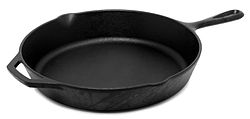
A cast-iron skillet

Heavy-duty cookware made of cast iron is valued for its heat retention, durability, ability to maintain high temperatures for longer time duration, and non-stick cooking when properly seasoned. Seasoning is also used to protect bare cast iron from rust. Types of cast-iron cookware include frying pans, dutch ovens, griddles, waffle irons, flattop grills, panini presses, crêpe makers, deep fryers, tetsubin, woks, potjies, and karahi.

History

[edit]
An American cast-iron Dutch oven, 1896

In Asia, particularly China, India, Korea and Japan, there is a long history of cooking with cast-iron vessels. The first mention of a cast-iron kettle in English appeared in 679 or 680, though this wasn't the first use of metal vessels for cooking. The term pot came into use in 1180. Both terms referred to a vessel capable of withstanding the direct heat of a fire.[1] Cast-iron cauldrons and cooking pots were valued as kitchen items for their durability and their ability to retain heat evenly, thus improving the quality of cooked meals.

In Europe and the United States, before the introduction of the kitchen stove in the middle of the 19th century, meals were cooked in the hearth, and cooking pots and pans were either designed for use in the hearth, or to be suspended within it. Cast-iron pots were made with handles to allow them to be hung over a fire, or with legs so that they could stand in the coals. In addition to Dutch ovens with three or four feet, which Abraham Darby I secured a patent in 1708 to produce,[2] a commonly used cast-iron cooking pan called a spider had a handle and three legs allowing it to stand upright over campfires as well as in the coals and ashes of a fireplace.

Cooking pots and pans with legless, flat bottoms came into use when cooking stoves became popular; this period of the late 19th century saw the introduction of the flat cast-iron skillet.

Cast-iron cookware was especially popular among homemakers during the first half of the 20th century. It was a cheap, yet durable cookware. Most American households had at least one cast-iron cooking pan. Popular manufacturers included Griswold, which began production in 1865, Wagner in 1891, and Blacklock Foundry in 1896. The 20th century also saw the introduction and popularization of enamel-coated cast-iron cookware.

Cast iron fell out of favor in the 1960s and 1970s, as teflon-coated aluminum non-stick cookware was introduced and quickly became the item of choice in many kitchens. The decline in daily use of cast-iron cookware contributed to the closure of nearly all the iron cookware manufacturers in the United States. Many went out of business in the 1920s as seen in the List of cast-iron cookware manufacturers. Others were absorbed by other cookware manufacturers.

A large selection of cookware can be purchased from kitchen suppliers. The durability and reliability of cast iron as a cooking tool has ensured its survival. Cast-iron pots and pans from the 19th and 20th century continue to see daily use to the present day. They are also highly sought after by antique collectors and dealers.[3] Cast iron has also seen a resurgence of its popularity in specialty markets. Through cooking shows, celebrity chefs have brought renewed attention to traditional cooking methods, especially the use of cast iron.[4] In the 2010s, small startup companies began producing cast-iron cookware designs for specialty cooking markets.

Surface

[edit]

Bare cast iron

[edit]

Cast iron's ability to withstand and maintain very high cooking temperatures makes it a common choice for searing or frying, and its excellent heat retention makes it a good option for long-cooking stews or braised dishes.[5] Because cast-iron skillets can develop a "non-stick" surface when cared for properly, they are excellent for frying potatoes or preparing stir-fries. Some cooks consider cast iron a good choice for egg dishes, while others feel the iron adds an off-flavor to eggs. Other uses of cast-iron pans include baking, for instance for making cornbread, cobblers and cakes.[citation needed]

Most bare cast-iron pots and pans are cast as a single piece of metal, including the handle. This allows them to be used on both the stovetop and in the oven. Many recipes call for the use of a cast-iron skillet or pot, especially so that the dish can be initially seared or fried on the stovetop then transferred into the oven, pan and all, to finish baking.[6] Likewise, cast-iron skillets can double as baking dishes. This differs from many other cooking pots, which have varying components that may be damaged by the excessive temperatures of 400 °F (200 °C) or more.[citation needed]

Cast iron is a poor heat conductor compared to copper and aluminum, and this can result in uneven heating if a cast-iron pan is heated too quickly or on an undersized burner.[7] Cast iron has a higher heat capacity than copper but a lower heat capacity than stainless steel or aluminum.[8] However, cast iron is denser than aluminum and stores more heat per unit volume. Additionally, cast-iron pans are typically thicker than similar sized pans of other materials. The combination of these factors results in cast-iron pans being capable of storing more heat longer than copper, aluminum, or stainless steel pans.[9] Slow heating over an appropriate sized burner (or in an oven) can lead to a more even temperature distribution. Due to the thermal mass of cast-iron utensils, especially heavy duty pots and pans, they can retain heat for a long time, and continue cooking food after the heat source has been removed.

Enameled cast iron

[edit]
An enameled cast-iron pot

Enameled cast iron is cast iron that has a vitreous enamel glaze applied to the surface. The fusion of the glaze with the cast iron prevents rusting, eliminates the need to season the metal, and allows more thorough cleaning.[10] Enameled cast iron is excellent for slow cooking and drawing flavor from foods.[11] Furthermore, cadmium pigments used in the enameling process are resistant to temperatures of 1,700 to 2,300 °F (900 to 1,280 °C) and can produce vibrant colors.[12]

While enamel-coated cast iron does not have the seasoning and cleaning issues of bare cast iron, a similar style of enamel-coated cast iron can cost three or four times its bare cast-iron counterpart. For those seeking to reduce iron in their diet, enameled cast iron limits the leaching of dietary iron into food. However, some of the benefits of bare cast iron, such as the ability to withstand searing heat and resist sticking, are lost through enameling. In addition, the enamel coating can become chipped if the pan is dropped, overheated, or cold water is added to a hot pot.[citation needed]

Toxic heavy metals such as cadmium and lead can be leached from the enamel coating into food being cooked in some cast iron pots.[13]

Some popular brands of enameled cookware include Le Creuset, Descoware, Cousances, and Druware.

Seasoning

[edit]

A seasoned pan has a stick-resistant coating created by polymerized oils and fats.[14] Seasoning is a process by which a layer of animal fat or vegetable oil is applied and cooked onto cast-iron or carbon steel cookware.[15] A proper cast iron seasoning protects the cookware from rusting, provides a non-stick surface for cooking, and reduces food interaction with the iron of the pan.[16] Enamel-coated cast-iron pans are not subject to rusting, but do not build up a seasoning and need a sufficient amount of fat when cooking.[17]

Washing a seasoned pan in a conventional dishwasher will remove the seasoned coating.[18][19] While some food writers advise against all use of detergent for seasoned pans, tests by America's Test Kitchen found that small amounts of soap do not damage the seasoning.[20] Exposure to acidic foods, such as tomatoes, damages the seasoning and the cookware may need to be re-seasoned over time.[21] Though some writers recommend completely avoiding cooking acidic foods in seasoned pans, America's Test Kitchen found that cooking acidic foods for short periods of time had no noticeable effect.[20]

Cleaning

[edit]

Because other cookware cleaning techniques like scouring or washing in a dishwasher can remove or damage the seasoning on a bare cast-iron pan, experts advise not cleaning these pans like most other cookware. Some chefs advocate simply wiping them out after use, or washing them with hot water and a stiff brush.[22] Others advocate washing with mild soap and water, and then re-applying a thin layer of fat or oil.[23] It is a common misconception that cleaning a well-seasoned cast-iron pan with mild soap will remove or damage the seasoning.[24][25] A third approach is to scrub with coarse salt and a paper towel or clean rag.[26]

Health effects

[edit]

An American Dietetic Association study found that cast-iron cookware can leach significant amounts of dietary iron into food. The amounts of iron absorbed varied greatly depending on the food, its acidity, its water content, how long it was cooked, and how old the cookware is. The iron in spaghetti sauce increased 845 percent (from 0.61 mg/100 g to 5.77 mg/100 g), while for other foods it increased less dramatically; for example, the iron in cornbread increased 28 percent, from 0.67 to 0.86 mg/100 g.[27] People with anemia or other iron deficiencies may benefit from this effect,[28] which was the basis for the development of the lucky iron fish, a small iron ingot used during cooking to provide dietary iron to those with iron deficiency. People with hemochromatosis (iron overload, bronze disease) should avoid using cast-iron cookware because of the iron leaching effect into the food.[29]

Laboratory tests conducted by America's Test Kitchen found that an unseasoned cast-iron skillet leached significant iron into tomato sauce (10.8 mg/100 g), while a seasoned cast-iron pan leached only a small amount.[20]

See also

[edit]

References

[edit]
[edit]
Revisions and contributorsEdit on WikipediaRead on Wikipedia
from Grokipedia
Cast-iron cookware consists of durable, nonelectric utensils made by pouring molten —a hard, brittle primarily composed of iron and carbon—into sand molds to form items such as skillets, Dutch ovens, saucepans, and griddles. These pieces are renowned for their exceptional heat retention and even distribution, making them suitable for high-heat cooking methods like , , and across stovetops, ovens, grills, or open flames. The origins of cast-iron cookware trace back to ancient around the BCE, where early techniques were developed, with widespread adoption in by the and significant production in colonial America by the . In the United States, it became a household staple through the 19th and early 20th centuries, produced by companies like Lodge Manufacturing, which has operated since 1896 using traditional sand-molding processes involving melting and recycled steel at over 2,000°F, pouring into molds, and baking with oil for initial . Its popularity waned mid-20th century with the rise of lighter aluminum and nonstick alternatives but has resurged due to its longevity and versatility. Key advantages include superior durability—often lasting generations without damage—natural nonstick properties when properly seasoned, and the ability to impart small amounts of dietary iron to food during cooking. It excels in browning meats, breads, and preparing one-pot meals, while enameled variants offer resistance and compatibility with acidic ingredients like tomatoes. Maintenance involves seasoning by coating with a neutral oil with a high smoke point (420°F or higher) and high in polyunsaturated fats, such as grapeseed, canola, vegetable, sunflower, avocado, soybean, or flaxseed oil—leading manufacturer Lodge specifically recommends vegetable oil, canola oil, or melted shortening for reliable, long-lasting seasoning—and baking at around 450°F to form a polymerized nonstick layer, followed by with hot water and a —mild is safe if needed—thorough drying, and light oiling to prevent . Avoid dishwashers, prolonged soaking, or cooking highly acidic foods in unenameled pieces without re-seasoning, as these can degrade the surface.

History

Early Origins

The origins of cast-iron cookware trace back to ancient , where innovative techniques first enabled the production of durable iron vessels for cooking. In , the earliest evidence of cast iron dates to the 9th to 8th century BCE, with small fragments discovered at sites like Tianma-Qucun in Province, though these may have resulted from accidental processes during iron production. By the 5th century BCE, cast iron had become more widespread for tools and weapons, and archaeological finds from the late 4th to 3rd century BCE at the Yangcheng site in , Province, reveal broken casting molds and iron strips, indicating the development of permanent molds for standardized of iron objects, including early cookware precursors. This technology spread across , influencing neighboring cultures. In , arrived during the (circa 300 BCE–300 CE) primarily as imported artifacts, such as cast-iron axeheads similar to Chinese designs, laying the groundwork for local adaptations in cooking vessels over centuries. In Korea, the gamasot—a heavy used for boiling rice, soups, and stews—emerged as a staple during the Dynasty (37 BCE–668 CE), valued for its superior heat retention in traditional cooking. Similarly, in , the (also known as kadai), a deep, rounded wok-like pan, has roots in ancient subcontinental , employed for stir-frying, deep-frying, and simmering spices in everyday and ceremonial meals, with its thick construction promoting even heat distribution. Europe's adoption of cast-iron cookware lagged behind but accelerated in the early through technological breakthroughs. In 1707, British ironmaster Abraham Darby I secured a for casting iron pots and other hollowware using coke (derived from coal) in sand molds at his furnace, bypassing expensive charcoal and enabling affordable mass production of cooking vessels like pots and kettles. This innovation made cast iron accessible for household use across , where pre-industrial cooks relied on it for hearth-based methods such as hanging pots over open fires or using legged skillets directly on embers. In colonial America, imported and locally produced cast-iron items, including Dutch ovens and spiders (three-legged skillets), became essential by the for cooking, enduring harsh conditions to prepare stews, breads, and fried foods in log cabins and campsites. These early forms underscored cast iron's role in sustaining daily life and cultural practices before widespread industrialization.

Modern Developments

In the late 19th century, several prominent American manufacturers emerged, industrializing the production of cast-iron cookware and establishing it as a household staple. Griswold Manufacturing, founded in , in 1865 by Matthew Griswold and the Selden brothers, became a leading producer known for its lightweight, smooth-surfaced skillets and other pieces. Wagner Manufacturing Company, established in , in 1891 by brothers Milton M. and Bernard P. Wagner, expanded from hardware to specialize in durable cast-iron items, including innovative aluminum variants by 1894. Lodge Manufacturing, started in 1896 by Joseph Lodge as Blacklock Foundry in , focused on a broad range of cast-iron products and remains in operation today as one of the few continuous producers. These companies drove widespread adoption, with cast-iron cookware reaching peak popularity in American homes through the mid-20th century, valued for its affordability, heat retention, and versatility in everyday cooking until the 1960s. The mid-20th century marked a significant decline for cast-iron cookware, as lighter alternatives gained prominence. In the 1950s, the introduction of Teflon-coated aluminum non-stick pans revolutionized kitchens, offering ease of use and reduced maintenance compared to the heavy, seasoning-required cast iron. This shift accelerated in the 1960s and 1970s, with Teflon's popularity leading many manufacturers, including Griswold and Wagner, to cease operations or pivot away from traditional cast iron by the late 1950s. A resurgence began in the , fueled by cultural and culinary trends emphasizing durability and tradition. Cooking shows and celebrity chefs, such as , highlighted cast iron's performance in cooking, inspiring home cooks to rediscover its benefits for and . This revival was amplified by startups like Smithey Ironware, founded in in , by Isaac Morton, which revived vintage-style production techniques to create heirloom-quality pieces. Similarly, FINEX Cast Iron Cookware, established in 2012 in , by and Ron Khormaei, innovated with octagonal designs and machined surfaces, appealing to modern consumers through success. Into the 2020s, initiatives and collecting have further propelled cast iron's popularity. Manufacturers like Lodge have emphasized eco-friendly practices, such as using recycled materials and promoting long-lasting products that reduce waste, aligning with broader consumer demands for durable, non-toxic cookware. Meanwhile, the trend of and restoring pieces from brands like Griswold and Wagner has surged, with prices for well-preserved items rising significantly due to online communities and nostalgia-driven interest.

Manufacturing

Production Methods

Cast-iron cookware is traditionally produced by melting pig iron in a cupola furnace, a vertical shaft furnace lined with refractory materials where the charge—consisting of pig iron, scrap steel, and returns—is layered with coke fuel and flux. The air blast through tuyeres ignites the coke, generating temperatures of 1,200–1,500°C to melt the iron into molten cast iron, which is tapped from the hearth into ladles for transfer. Though modern processes often use electric induction furnaces for cleaner operation and energy efficiency, achieving similar temperatures of around 1,380–1,500°C. This step, rooted in historical smelting innovations like the cupola's development in the 18th century, ensures the metal achieves the necessary fluidity for casting. The molten iron, typically at around 1,380–1,500°C upon pouring, is then transferred to sand molds formed by packing fine, moisture-conditioned sand around a pattern of the desired cookware shape, such as a skillet or Dutch oven, creating precise cavities with integrated gates for metal flow. In traditional methods, molds are hand-packed in flasks, allowing for custom variations but requiring skilled labor; modern factories, however, employ automated molding machines to mix and compact sand efficiently, enabling high-volume production with consistent mold integrity. The iron is poured into these molds, filling the cavity before the assembly is set aside for controlled cooling, which solidifies the metal over several hours depending on the piece size. Once cooled, the shakeout process involves vibrating or manually breaking apart the mold to release the raw , with the sand recycled for reuse. Excess material, including and risers, is then removed through , where castings are fed into grinders or tumblers to cut away sprues and smooth rough surfaces, eliminating sand remnants and achieving a uniform finish suitable for cookware. Automated grinding lines in contemporary operations, such as those used by major manufacturers, enhance precision and speed compared to traditional hand-finishing techniques. Quality control is integral throughout, with inspections for wall thickness—typically 3–5 mm to balance durability, heat retention, and weight—and , which can compromise strength if excessive. testing employs non-destructive methods like visual examination, , or radiographic analysis to detect voids caused by gas entrapment during pouring, ensuring only defect-free pieces proceed to finishing. These checks maintain the cookware's integrity for safe, long-term use.

Materials and Sustainability

Cast iron cookware is primarily composed of iron, which constitutes 95–98% of the material, along with 2–4% carbon to enhance and castability, 1–3% to improve fluidity during molding, and trace elements such as , , and that contribute to strength and durability. The raw materials for cast iron cookware are sourced through a mix of virgin and recycled scrap to minimize the demand for new extraction. Manufacturers like Lodge Cast Iron incorporate 45% recycled and 10% recycled into their production, drawing from scrap sources such as obsolete machinery and end-of-life products to promote . is a leading producer in global supply chains for cast iron cookware, while U.S. foundries like Lodge maintain domestic operations focused on sustainable sourcing. From a sustainability perspective, offers high recyclability, with iron and recycling rates averaging 80–90% , allowing the material to be reused indefinitely without quality loss and using up to 75% less energy than . However, its production is energy-intensive, requiring 500–1,000 kWh per ton to melt and cast, primarily due to high-temperature furnaces. Modern initiatives address this through efficiency improvements, such as Lodge's adoption of furnaces that reduce by 25% and comprehensive programs that repurpose within their facilities. The lifecycle of cookware emphasizes longevity, often spanning generations or even centuries, which significantly offsets its initial when compared to more disposable alternatives like aluminum. This durability reduces the frequency of replacements and associated emissions, positioning cast iron as one of the least environmentally damaging cookware materials overall.

Varieties

Common Types

Cast-iron skillets, also known as frying pans, are flat-bottomed pans typically measuring 8 to 12 inches in , ideal for stovetop , , and due to their even heat distribution and retention. Among these sizes, 10- to 12-inch models are the most versatile for everyday frying, particularly on induction cooktops, where their magnetic properties ensure efficient heat transfer and compatibility with standard burner sizes. These pans usually weigh between 4 and 7 pounds, with a standard 10.25-inch model around 5.5 pounds, making them versatile for everyday cooking tasks like eggs or steaks. Many are available pre-seasoned, such as those from Lodge Manufacturing, which apply a layer in their factory to create a natural right out of the box. Dutch ovens are deep, lidded pots commonly ranging from 3 to 7 quarts in capacity, designed for slow-cooking methods like meats or breads in the or on the stovetop. A typical 5-quart model weighs about 11 to 15 pounds, providing ample space for family-sized meals while maintaining moisture and flavor during long cooks. Bare cast iron versions of Dutch ovens are cheaper than enameled alternatives and develop a natural nonstick patina over time through seasoning, though they require regular maintenance and care to preserve the seasoning and prevent rust. Pre-seasoned versions from brands like Lodge enhance durability and ease of use for these multipurpose vessels. Griddles are flat, often reversible pans suited for high-volume flat-top cooking such as pancakes or burgers, with standard rectangular sizes around 9.5 by 16.75 inches and weights of 9 to 11 pounds to cover multiple burners effectively. Bakeware, including rectangular pans, measures about 12 by 6 inches and weighs 3 to 5 pounds, promoting even browning for items like or biscuits in the . Overall, these common types typically range from 5 to 10 pounds, balancing heft for heat retention with practicality for home use.

Specialized Forms

Cast iron woks represent a specialized of the traditional design, featuring a deep, rounded bowl with sloped sides that facilitate high-heat tossing and even distribution of ingredients during stir-frying in Asian cooking styles. Unlike lighter woks, versions provide superior heat retention, making them suitable for maintaining consistent temperatures over open flames or stovetops, though their weight limits rapid maneuvering. The Lodge 14-inch wok, for instance, is pre-seasoned for immediate use and excels in , deep-frying, and stir-frying vegetables or proteins. Grill pans and cornbread molds exemplify regionally inspired cast iron forms, particularly in Southern U.S. cuisine, where ridged surfaces or molded shapes enhance texture and presentation for specific dishes. Cast iron grill pans typically include elevated ridges that mimic outdoor grill marks while allowing fat to drain, ideal for searing meats or vegetables indoors or on a grill without flare-ups. Complementing this, cornbread molds—often shaped like ears of corn or sticks—originate from early 20th-century innovations, such as Wagner's 1920 patent for a corncob pan, which bakes individual portions with crispy edges in wood-fired ovens or modern appliances. These molds, measuring around 12 inches long, promote even browning and are staples for accompaniments to Southern meals like chili or greens. For outdoor enthusiasts, cast iron gear includes tripod-compatible pots and bean pots designed for rugged, open-fire cooking. Tripod pots, often Dutch ovens with bail handles, suspend over campfires via adjustable chains or stands, allowing precise heat control for stews or breads; Lodge's 43.5-inch camp tripod, constructed from 0.5-inch stock, supports such pots stably for hours-long . Bean pots, traditionally tall and narrow for slow-cooking , adapt well to camping with their lidded design that retains moisture and flavor during trail-side meals, though their 4-quart capacity balances portability against durability over rough terrain. Vintage and artisanal cast iron pieces highlight craftsmanship through hand-hammered or etched finishes, produced in limited runs by small-batch makers to evoke heirloom quality. Artisanal producers like Smithey Ironware in , craft skillets and Dutch ovens using traditional molding techniques refined for smoothness and longevity, releasing items in controlled quantities to ensure precision. Hammered finishes, popular from the late to 1940s, feature molded dimples (1/8 to 3/8 inches in diameter) across surfaces of skillets or corn stick pans by makers such as Griswold and Wagner, imparting an upscale, textured aesthetic without actual hand-hammering due to cast iron's rigidity. Etched vintage examples, often unmarked or lightly ornamented, appear in collectible forms like waffle irons, adding decorative flair while maintaining functional heat distribution.

Surfaces and Treatments

Bare Cast Iron

Bare cast iron features a porous iron surface that readily absorbs oils, forming the basis for a natural non-stick layer through . This allows fats and oils to penetrate and polymerize during high-heat treatment, creating a protective coating that prevents food from sticking once established. Additionally, bare cast iron exhibits excellent heat retention due to its high , maintaining consistent temperatures during cooking, and provides even heat distribution once preheated, though its lower thermal conductivity compared to materials like lead to initial hot spots if not properly managed. The untreated surface of bare is highly reactive, particularly with acidic foods such as tomatoes or , which can cause discoloration of the cookware and leach small amounts of iron into the food, potentially imparting a metallic if cooked for extended periods. However, this reactivity can beneficially increase the iron content in meals, especially in quick-cooking applications where the metallic flavor is minimal, supporting nutritional enhancement rather than altering undesirably. New bare cast iron cookware typically arrives from the factory with a light coating of or to prevent during shipping, though some vintage or basic models may be entirely untreated, necessitating immediate by the user to build the initial protective layer. This preparation involves applying a thin layer of and baking at high temperatures to polymerize it, a process that transforms the reactive surface into a more functional cooking tool. Bare cast iron is renowned for its , resisting warping even under due to its thick, uniform and low internal stresses, allowing pieces to last for generations with proper care. Its robust nature makes it nearly indestructible against everyday wear, provided it is protected from prolonged moisture exposure.

Enameled Cast Iron

Enameled cookware consists of a base coated with , a glass-like material fused to the metal surface at temperatures of 800–850°C to create a durable, protective layer. This coating is applied in multiple layers: an initial ground coat that adheres directly to the iron for bonding and degassing, followed by one or more cover coats that provide coloration and a smooth finish. Common colors include cream shades and deep , offering both aesthetic appeal and functionality. The enameling process occurs after the cast iron is formed, adding considerable weight to the cookware compared to its bare counterpart. Popularized in the by brands like , which began production in , enameled revolutionized cookware by combining the strength of iron with an inert surface that eliminates the need for initial . The enamel renders the interior non-reactive to acidic ingredients such as tomatoes, , or , preventing metallic flavors or that can occur with uncoated iron. This makes it particularly suitable for sauces, braises, and dishes requiring prolonged exposure to liquids, as the smooth enamel surface facilitates easy food release and cleanup without compromising the underlying material. In terms of thermal performance, enameled cast iron retains and distributes heat evenly, much like bare , ensuring consistent cooking results for slow-cooked meals. The enamel's glossy finish enhances this by providing a low-friction surface that supports delicate preparations, such as reducing sauces, without scorching. Enameled cast iron is particularly advantageous for baking soft sourdough sandwich bread due to its even heat distribution and retention, which promote excellent oven spring and consistent baking superior to lighter aluminum pans. The enamel's naturally non-stick properties eliminate the need for seasoning, prevent soggy bottoms, and, when combined with enriched dough, result in a moist fluffy interior, tender exterior, soft sides and bottom, and gentle top browning. To achieve optimal softness, if the loaf pan has a lid, cover it for the first 20–30 minutes of baking to trap steam and promote a pliable crust, then remove the lid to allow for color development. For pans without a lid, introduce steam by placing ice cubes in a hot pan below the loaf or loosely tenting with foil early in the bake. Brushing the crust with melted butter immediately after baking can further enhance tenderness. While light greasing may be applied if needed, the enamel surface typically prevents sticking without it. Additionally, the lid traps steam to create a uniformly thin soft crust. While the coating is designed for chip resistance to withstand , it remains vulnerable to impacts from hard objects or , underscoring the importance of careful handling to maintain its integrity.

Seasoning

Process and Application

Seasoning cast-iron cookware involves the of oils or fats applied to the bare metal surface, where heat causes the oil molecules to bond and form a hard, carbonized layer that acts as a protective, non-stick barrier against and food . This process relies on neutral oils high in polyunsaturated fats and with high smoke points (420°F or higher), such as flaxseed, , grapeseed, canola, , sunflower, or avocado oil, which undergo oxidative cross-linking at temperatures between 200–260°C (approximately 392–500°F), creating a durable film through the breakdown and recombination of chains. Leading manufacturer Lodge specifically recommends vegetable oil, canola oil, or melted shortening for re-seasoning to achieve the most reliable, long-lasting non-stick surface. To apply seasoning, begin by thoroughly cleaning the bare cast-iron surface with warm, soapy water to remove any manufacturing residues or debris, then dry it completely to prevent moisture-related issues. Apply a very thin, even layer of oil—using a to wipe away excess so the surface appears nearly dry—covering both the interior and exterior. Place the cookware upside down in an preheated to 450–500°F (232–260°C), with foil on the lower rack to catch drips, and bake for one hour to initiate ; allow it to cool gradually before repeating the oil application and baking process 3–6 times to build a robust, multi-layered . Alternatively, stovetop seasoning can be performed by heating the oiled pan over medium-low heat until it smokes lightly, wiping away residue, and repeating layers, though methods are preferred for uniform results. Many manufacturers, including Lodge, have offered factory-applied initial since the early 2000s, typically using a soy-based baked onto the surface in a continuous high-heat process to provide a ready-to-use non-stick layer equivalent to several home applications. This semi-permanent barrier, formed through the same mechanism, enhances the cookware's performance from the outset while allowing further buildup through regular use.

Maintenance of Seasoning

Maintaining the seasoning on cast iron cookware involves consistent daily practices to prevent degradation and promote buildup of the polymerized oil layer that provides non-stick properties and rust protection. After each use, rinse the cookware with hot water and a soft sponge or nylon brush, avoiding harsh detergents or prolonged soap exposure, which can strip the seasoning; if soap is necessary, use a mild dish soap sparingly. Immediately dry the piece thoroughly with a towel or by heating it on the stovetop to evaporate any moisture, then apply a thin layer of neutral oil, such as vegetable or canola, using a cloth or paper towel to wipe away excess until the surface appears dry. This routine not only preserves the existing seasoning but also allows it to strengthen over time through regular cooking. If the seasoning becomes damaged, such as developing spots from exposure to moisture or appearing sticky from excess oil buildup, targeted repairs can restore it without starting from scratch. For , scrub affected areas with or coarse to remove the oxidation, rinse, dry completely, apply a thin oil layer, and bake upside down in an oven at 350–450°F (177–232°C) for one hour to re-polymerize the oil, repeating if needed for multiple layers. Sticky , often resulting from uneven oil application, can be fixed by wiping off excess and re-baking at the same temperature; for flaking, which indicates breakdown of the polymer layer, gently scrub with a nylon brush or salt, then follow the same oiling and process. These repairs mirror aspects of the initial but focus on targeted restoration to rebuild the protective . Common issues affecting seasoning include rust formation due to improper drying after washing or storage in humid environments, and flaking or dulling from extreme overheating (e.g., above 600°F/315°C) without sufficient oil, which can cause the polymerized layer to break down. Moisture is the primary culprit for , while rapid high-heat exposure without preheating gradually leads to a sticky or patchy surface. With proper care, however, the seasoning can develop multiple layers over years of use, enhancing durability and non-stick performance, often lasting generations. Practical tips for long-term seasoning maintenance include cooking fatty foods like or meats regularly, as the rendered fats naturally deposit and polymerize onto the surface during use, building additional layers without extra effort. Always preheat the cookware slowly on medium heat to avoid , and store it in a dry place with a light oil coating to ward off . Avoid dishwashers and cleaners, as they accelerate wear; instead, embrace frequent use, which inherently maintains and improves the through accumulated oil residues.

Care and Maintenance

Cleaning Techniques

Cleaning bare cast iron cookware requires gentle methods to preserve the layer that prevents and enhances non-stick properties. After use, allow the pan to cool slightly, then rinse with hot water and scrub using a soft or chainmail to remove residues; a small amount of mild dish may be used sparingly if necessary. For tougher spots without soap, sprinkle coarse salt into the pan as a mild , scrub with a or while adding hot water to create a paste, then rinse thoroughly. Immediately after cleaning, dry the cookware completely with a and apply a thin layer of neutral oil to maintain the , as residual moisture can lead to formation. Enameled cast iron, with its protective vitreous coating, allows for simpler cleaning but demands care to avoid chipping or scratching the enamel. Cool the piece to , then wash by hand with warm , mild dish , and a soft or brush to gently remove residues from both interior and exterior surfaces. While many enameled pieces are dishwasher-safe, hand-washing is preferred to prevent gradual dulling of the enamel finish over repeated cycles, though cooking performance remains unaffected. Avoid abrasive tools like or harsh scrubbers, which can damage the enamel coating. For stubborn residues on bare cast iron, fill the pan with a small amount of and simmer for 3-5 minutes to loosen baked-on , then cool, scrape gently with a or wooden tool, and scrub as in regular . On enameled cast iron, soak in warm soapy for 15-20 minutes or simmer 1-2 tablespoons of baking soda in for 8-10 minutes to break down stains, followed by scrubbing with a soft ; for exterior discoloration, a baking soda paste applied and gently rubbed can restore shine without abrasion. A well-seasoned bare cast iron surface simplifies these cleaning processes by minimizing adhesion in the first place. Routine cleaning frequency for bare cast iron should occur after every use to protect the from degradation, while a deeper clean with or salt scrubbing may be needed weekly depending on usage intensity; enameled pieces require similar post-use attention but tolerate less frequent deep treatments due to their durable coating.

Storage and Longevity

Proper storage of cast-iron cookware is essential to maintain its , prevent on bare surfaces, and protect enameled finishes from damage. For bare , ensure the cookware is thoroughly dried after and apply a thin coat of neutral , such as or flaxseed , to all surfaces before storing in a low-humidity environment. When stacking bare cast iron pieces, place a paper towel between them to prevent scratches, allow air circulation, and absorb any residual moisture. This layer creates a protective barrier against , significantly reducing the risk of formation. Storage in dry, well-ventilated areas, away from sources of steam or dampness, further preserves the cookware's integrity. Enameled cast iron requires careful handling to avoid chipping or scratching the coating. When stacking pieces, place soft separators such as paper towels, cloth pads, or dedicated protectors between them to prevent surface abrasion and allow air circulation, which helps avoid trapped moisture. Ideally, store enameled items in a single row if space permits, lifting rather than sliding them to minimize contact damage. With diligent care, including proper storage practices, cast-iron cookware can achieve exceptional longevity, often lasting over 100 years and becoming family heirlooms passed down through generations. To further ensure this , limit prolonged cooking of highly acidic foods like tomatoes until the pan is well-seasoned, as extended exposure can degrade the seasoning. Factors such as consistent drying, oiling, and avoidance of corrosive environments contribute to this , allowing pieces to retain their functionality and non-stick properties indefinitely. For travel or , wrap bare and enameled cast iron in breathable cloth, towels, or padded bags to protect against scratches and impacts during . Avoid exposing the cookware to extreme temperature swings, such as pouring cold water on a hot pan, as rapid changes can cause , potentially cracking enameled surfaces or warping bare iron. Store in stable, moderate conditions within vehicles or campsites to ensure safe handling.

Culinary Uses

Cooking Applications

Cast-iron cookware is renowned for its versatility in diverse cooking environments, leveraging its exceptional heat retention and even distribution to handle a wide range of temperatures and methods. This durability allows it to transition seamlessly between heat sources without compromising performance. On the stovetop, cast iron shines in high-heat applications like steaks or foods, where it can reach temperatures up to 500°F to promote rapid and flavorful crust formation. Its ability to maintain consistent heat makes it particularly effective for these tasks, preventing significant temperature drops during cooking. Cast iron is particularly recommended for searing steak on induction (IH) stoves due to its superior heat retention, which provides stable high temperatures enabling the Maillard reaction for a crispy exterior and juicy interior; it is fully compatible with IH stoves owing to its ferrous composition. In oven use, cast iron's superior heat retention is invaluable for baking bread or preparing casseroles, providing stable temperatures that yield uniform results and enhanced texture in baked goods. For instance, enameled cast iron is particularly effective for baking soft sourdough sandwich bread, as its even heat distribution and retention promote excellent oven spring and consistent baking compared to lighter aluminum pans; the enamel is naturally non-stick without seasoning, preventing soggy bottoms; when combined with enriched dough, it results in a moist fluffy interior, tender exterior, soft sides and bottom, and gentle top browning; the lid traps steam for a uniformly thin soft crust. Bare cast iron supports the development of crispy crusts in loaves while keeping interiors moist. Outdoors, cast-iron Dutch ovens are a staple for or cooking, enduring direct flame or coals to prepare hearty meals like stews or roasted dishes in scenarios. Their robust construction ensures reliable performance over open fires, distributing heat evenly for outdoor applications. The multi-functional design of also accommodates gentler processes, such as sauces for extended periods or to caramelize their natural sugars. Bare works well for these, though enameled varieties may be preferred for acidic sauces to prevent reactions. in a preheated skillet highlights its capacity for high-heat contact that enhances flavor without additional equipment.

Techniques and Best Practices

To achieve optimal results with cast-iron cookware, gradual preheating is essential to prevent , which can cause warping or cracking in the material. Begin by placing the cookware on a burner similar in size to the base, starting at low to medium heat and allowing it to warm slowly for 5 to 10 minutes; this promotes even heat distribution without sudden temperature changes. Medium heat is particularly recommended for most cooking tasks, as cast iron's high means it retains and conducts heat efficiently once warmed, reducing the need for high settings that could lead to uneven heating or overheating. For effective food release, especially in well-seasoned pans, preheat the cookware thoroughly before adding a thin layer of oil or fat, which creates a natural by allowing the oil to polymerize slightly upon contact with the hot metal. This method minimizes sticking far better than adding oil to a cold pan, and it's advisable to test readiness by flicking a drop of onto the surface—if it dances and evaporates quickly, the pan is hot enough. When foods like steaks or vegetables, place them on the hot, oiled surface and flip only once after achieving a deep crust on the first side, typically after 2 to 3 minutes, to promote even cooking and a superior sear without disturbing the developing . The use of a on cast-iron cookware can significantly influence cooking outcomes depending on the desired texture. For or stewing, a tight-fitting traps and , creating a humid environment that tenderizes tougher cuts of over low, slow , often at 300°F to 325°F in the . To achieve crisping, such as on fried foods or roasted , partially vent the or remove it entirely toward the end of cooking to allow excess to escape, promoting and browning. For baking sourdough bread in an enameled cast iron loaf pan to achieve a soft crust, cover the pan with its lid for the first 20 to 30 minutes of baking to trap steam and promote oven spring, then remove the lid to allow for browning. If the pan lacks a lid, tent loosely with aluminum foil early in the bake or introduce steam by placing ice cubes in a hot pan below the loaf. After baking, brush the crust with melted butter to enhance tenderness. Light greasing is usually unnecessary due to the enamel's non-stick properties. Cast-iron cookware is compatible with nearly all heat sources, including gas, electric, , and oven use up to 500°F, but for induction cooktops, it requires a magnetic base to respond to the —standard qualifies due to its composition, though enameled versions should be verified with a test. Always match the burner size to the cookware base for efficient heating across all stovetop types.

Benefits and Limitations

Advantages

Cast-iron cookware excels in heat retention due to its high , allowing it to maintain consistent temperatures during cooking even when cold ingredients are added, which is ideal for meats and . This property is particularly beneficial for searing steak on induction (IH) stoves, where cast iron's superior heat retention provides stable high temperatures, enabling the Maillard reaction for a crispy exterior and juicy interior. This property surpasses that of materials like or , as absorbs heat slowly but holds it longer, ensuring even cooking without hot spots. Compared to alternatives, is more affordable, with entry-level skillets often available for under $50, making it accessible for home cooks. The material's versatility spans multiple heat sources, including gas, electric, induction cooktops, ovens, grills, and even open flames like campfires, without compromising performance. Cast iron is fully compatible with induction cooktops due to its magnetic properties, making it an excellent choice for high-heat applications like searing on IH stoves. For everyday frying on induction cooktops, sizes of 10 to 12 inches are the most versatile, suitable for a variety of household cooking needs such as frying eggs, vegetables, or small meals. Over time, proper builds a —a polymerized oil layer—that not only prevents sticking but also enhances flavors in dishes like seared steaks or fried foods by imparting subtle depth from accumulated cooking residues. This develops naturally with use, contributing to the cookware's evolving utility. Cast iron demonstrates superior , warping far less than aluminum under high due to its rigid and thickness, often lasting generations with proper care. It is also eco-friendly, being fully recyclable at the end of its long lifespan, with manufacturers like Lodge repurposing thousands of tons of scrap metal annually—for instance, purchasing over 9,000 tons of recycled steel in 2021—to produce new pieces, reducing environmental impact. This recyclability, combined with its lifetime durability, underscores its cost-effectiveness as a sustainable investment for everyday cooking.

Drawbacks

Cast iron cookware, while durable, presents several notable drawbacks that can impact its practicality in everyday use. One primary limitation is its substantial weight, with skillets and pots often ranging from 5 to 15 pounds depending on size, which can make handling, lifting, and maneuvering challenging, particularly for individuals with reduced strength, such as the elderly or those with mobility issues. This heft not only complicates tasks like transferring from stovetop to but also increases the risk of accidental drops that could damage countertops or other surfaces, and it is especially noticeable when using heavy pieces on induction stoves for tasks like searing. Another significant issue arises from the reactivity of bare cast iron with acidic ingredients, such as tomatoes, , or , which can leach iron into the , imparting an unwanted metallic flavor and potentially degrading the protective layer over time. This reactivity necessitates careful upkeep to minimize flavor alterations and maintain the cookware's non-stick properties, though prolonged cooking of acidic foods remains inadvisable even in well-seasoned pans. Proper seasoning is also essential to prevent rust, particularly after use on induction stoves where moisture can accumulate if not dried thoroughly. The material's thermal properties also pose challenges, as cast iron heats and cools slowly due to its high and , making it less suitable for quick-cooking tasks like water or where rapid adjustments are needed. This slow response can lead to uneven cooking if not preheated gradually, requiring more time and attention compared to lighter materials like aluminum or . Additionally, bare cast iron is highly susceptible to formation if exposed to moisture without proper drying and , as the unprotected iron oxidizes readily in humid environments or after improper . Enameled versions mitigate some reactivity and issues but are prone to chipping from , impacts, or abrasive , which exposes the underlying iron and compromises the finish's integrity. Such damage can accelerate further deterioration if not addressed promptly.

Health Considerations

Nutritional Benefits

Cast-iron cookware leaches ferrous iron (Fe²⁺) into foods during cooking, providing a natural source of dietary iron that is particularly pronounced with acidic ingredients or extended cooking durations. For example, sauce cooked in exhibits an approximately 846% increase in iron content compared to its raw state, reaching up to 5.77 mg per 100 g after preparation. This leaching process is more effective in bare compared to enameled varieties, which prevent iron transfer due to their protective . For individuals with , this iron supplementation can significantly boost levels and alleviate symptoms. A of multiple studies found increases of 0.8–1.7 g/dL after regular use of iron cookware over 4–12 months, with one intervention reducing prevalence from 57% to 13% in preschool children after 12 months. Meals prepared in typically add 3–6 mg of iron per 100 g serving, depending on the and cooking conditions, contributing substantially toward the recommended daily of 8–18 mg for adults. Absorption of leached non-heme iron can be enhanced by consuming with sources. Foods such as meats, , and leafy greens are optimal for maximizing iron absorption when cooked in , as the added non-heme iron enhances overall content without altering flavor or safety for most diets. Research from 2021 confirms that this leached iron has comparable to oral supplements, effectively raising levels and supporting nutritional needs in deficient populations. As of 2024, studies continue to affirm benefits in reducing with no emerging safety concerns for the general population.

Potential Risks

Individuals with hemochromatosis, a causing excessive iron absorption, face heightened risks from using cast-iron cookware, as it can leach additional dietary iron into food, potentially exacerbating and leading to organ damage such as in the liver, heart, and . Patients with this condition are advised to limit or avoid cast-iron use to prevent worsening symptoms. For the general without such conditions, risks from iron leaching are minimal, as the tolerable upper level for iron is 45 mg per day for adults, and typical leaching from cast-iron cookware adds only 2-8 mg per meal, well below thresholds with rare cases of overload reported. Enameled cast-iron variants eliminate iron transfer entirely due to the non-reactive coating, providing a safer option for those concerned about metal exposure. Individuals with genetic iron disorders should consult healthcare providers for personalized advice on cookware choices, while confirms the overall of cast-iron use for non-affected , with no evidence of broad health hazards from routine application.

References

Add your contribution
Related Hubs
User Avatar
No comments yet.