Hubbry Logo
EndodermEndodermMain
Open search
Endoderm
Community hub
Endoderm
logo
8 pages, 0 posts
0 subscribers
Be the first to start a discussion here.
Endoderm
Endoderm
from Wikipedia
Endoderm
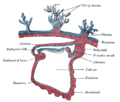
Tissues derived from endoderm.
Details
Days16
PrecursorEpiblast
Identifiers
MeSHD004707
FMA69071
Anatomical terminology

Endoderm is the innermost of the three primary germ layers in the very early embryo. The other two layers are the ectoderm (outside layer) and mesoderm (middle layer).[1] Cells migrating inward along the archenteron form the inner layer of the gastrula, which develops into the endoderm.[2]

The endoderm consists at first of flattened cells, which subsequently become columnar. It forms the epithelial lining of multiple systems.

In plant biology, endoderm corresponds to the innermost part of the cortex (bark) in young shoots and young roots often consisting of a single cell layer. As the plant becomes older, more endoderm will lignify.

Production

[edit]

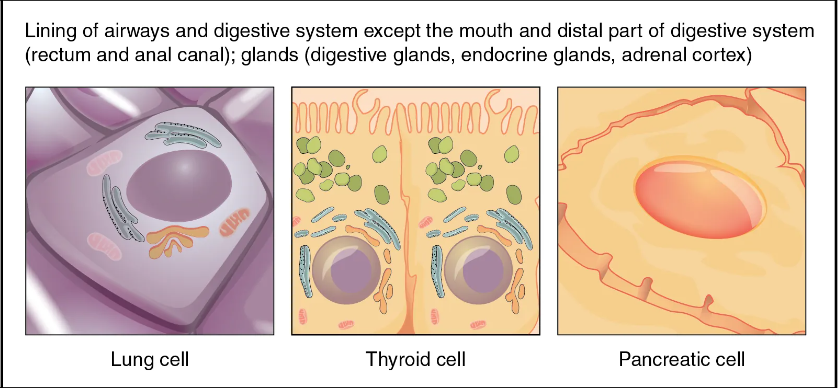
The following chart shows the tissues produced by the endoderm. The embryonic endoderm develops into the interior linings of two tubes in the body, the digestive and respiratory tube.[3]

Layer Category System
General[4] Gastrointestinal tract the entire alimentary canal except part of the mouth, pharynx and the terminal part of the rectum (which are lined by involutions of the ectoderm), the lining cells of all the glands which open into the digestive tube, including those of the liver and pancreas
General Respiratory tract the trachea, bronchi, and alveoli of the lungs
General Endocrine glands and organs the lining of the follicles of the thyroid gland and the epithelial component of the thymus (i.e. thymic epithelial cells).
Auditory system the epithelium of the auditory tube and tympanic cavity
Urinary system the urinary bladder and part of the urethra

Liver and pancreas cells are believed to derive from a common precursor.[5]

In humans, the endoderm can differentiate into distinguishable organs after 5 weeks of embryonic development.

Additional images

[edit]

See also

[edit]

References

[edit]
Revisions and contributorsEdit on WikipediaRead on Wikipedia
from Grokipedia
The endoderm is the innermost of the three primary germ layers formed during in triploblastic s, serving as a progenitor tissue that gives rise to the epithelial linings of the digestive and respiratory tracts, as well as associated internal organs such as the liver, , and . In embryogenesis, including humans, the endoderm originates from cells that ingress through the during , undergoing an epithelial-to-mesenchymal transition regulated by transcription factors like Snail and Slug, and signaling pathways such as Nodal and Wnt. This process reorganizes the blastula into distinct layers, with the endoderm positioning internally to form the primitive gut, which later differentiates into , , and regions around day 22 in human embryos when the opens to establish the oral cavity. Key genes including Sox17, Gata4/5/6, and FoxA2 drive endoderm specification and regional patterning, often in synergy with gradients from the node or anterior visceral endoderm. The definitive endoderm contributes to a wide array of structures essential for internal , including the epithelial lining of the , , small and large intestines (excluding the open ends derived from ), trachea, bronchi, and alveoli of the lungs, as well as glandular derivatives like the of the liver, exocrine and endocrine , , and pharyngeal pouch-derived organs such as the , parathyroid, and ultimobranchial body of the . Additionally, it forms extraembryonic tissues like the visceral endoderm in early stages, which supports nutrient exchange before full . Endoderm development is critical for establishing the body's internal architecture, interacting closely with to specify organ domains via signals like Sonic hedgehog, and disruptions in its formation can lead to congenital anomalies affecting and respiration. Historically, the germ layer concept, including , was first delineated by Christian Pander in 1817 through studies of chick embryos and extended to vertebrates by in 1828, underscoring its conserved role across species.

Overview

Definition

The endoderm is one of the three primary germ layers—ectoderm, mesoderm, and endoderm—that form during in the embryos of triploblastic animals, which include most multicellular animals except sponges and cnidarians. As the innermost layer, it arises from cells that migrate inward to line the developing , establishing the foundational structure for internal organ linings. The term "endoderm" was coined in 1842 by German embryologist Robert Remak, who identified and named the three distinct germ layers while providing histological evidence for their existence in chick embryos, thereby simplifying earlier descriptions. This built on the foundational work of , who in the 1820s extended Christian Pander's observations of three layers in avian embryos to mammalian development, initially describing four embryonic "leaves" before the three-layer model gained prominence. Remak's nomenclature emphasized the endoderm's internal position and epithelial nature, distinguishing it from the outer and intervening . In early embryonic stages, the endoderm consists of epithelial cells that are initially flattened or squamous-like, transitioning to cuboidal or columnar shapes as development progresses and the layer organizes into a cohesive sheet. These cells invaginate during to form the innermost layer, in contrast to ectodermal cells that remain on the surface and mesodermal cells that migrate between them to occupy the middle position. This spatial distinction ensures the endoderm's role in generating internal barriers, such as those of the primitive gut.

Role in Multicellular Organisms

The endoderm serves as a fundamental in multicellular animals, primarily forming internal epithelial barriers and linings that facilitate nutrient absorption, of and hormones, and across various phyla. In triploblastic animals, the endoderm primarily differentiates into the epithelial linings of the digestive tract; in vertebrates, it also forms those of the , enabling efficient internal processing of resources essential for survival and growth. This layer's epithelial characteristics, including tight junctions and polarity, allow it to create selective barriers that maintain physiological balance while permitting the transport of ions, fluids, and macromolecules. Endoderm is present in both diploblastic and triploblastic metazoans, though its organization differs between these groups. In simpler diploblastic forms like cnidarians, the endoderm, often termed gastrodermis, lines the gastrovascular cavity to support and nutrient distribution without a distinct mesoderm layer. In contrast, triploblastic animals integrate endoderm with and to form more complex internal structures, such as the gut tube, which supports advanced metabolic functions. This evolutionary conservation underscores the endoderm's conserved role in establishing internal compartments for across animal diversity. The endoderm interacts dynamically with other germ layers to orchestrate development, including inducing formation through signaling molecules and providing a structural scaffold for . For instance, endodermal signals promote mesenchymal differentiation in adjacent , facilitating the co-development of supportive connective tissues around endoderm-derived epithelia. These interactions ensure coordinated tissue layering and vascularization, essential for functional organ systems. In vertebrates like humans, endoderm-derived epithelia underpin by regulating absorption in the intestines, in the lungs, and in the liver, with disruptions leading to widespread physiological imbalances. Similarly, in such as sea urchins, the endoderm contributes to the larval gut, forming a functional digestive tract that supports uptake during early planktonic stages and highlighting the layer's conserved physiological roles across phyla.

Embryonic Development

Gastrulation and Formation

Gastrulation represents a pivotal phase in early embryogenesis where the single-layered blastula reorganizes into a multilayered structure comprising the three primary germ layers: , , and endoderm. For endoderm formation, this process involves the coordinated inward movement of specified cells from the epiblast (in amniotes) or blastoderm (in ) through mechanisms such as involution, ingression, or , positioning them as the innermost layer that will line future visceral structures. In vertebrates, gastrulation stages vary by developmental mode but share conserved cellular dynamics. In amniotes, such as birds and mammals, the process initiates with the formation of the along the posterior epiblast around the onset of . Cells from the epiblast ingress through this transient structure, with those destined for endoderm migrating anteriorly to displace the pre-existing (primitive endoderm) and establish the definitive endoderm layer. In amphibians, begins with the specification and of bottle cells at the dorsal lip of the blastopore; these elongated, contractile cells drive the formation of the cavity, facilitating the involution of presumptive endodermal cells from the vegetal region inward to line the gut primordium. This formative process unfolds early in embryogenesis, typically within the first two weeks post-fertilization. In human embryos, commences around days 14-16 of , marking the transition from the bilaminar disc to the trilaminar organization, with activity peaking during this window to generate the initial endodermal cohort. At the cellular level, endoderm establishment often involves dynamic behaviors, including an epithelial-to-mesenchymal transition (EMT) in many species, where epiblast cells lose apical-basal polarity, gain migratory motility, and ingress collectively or individually before reintegrating as an epithelial sheet. In mammals, for instance, definitive endoderm progenitors traverse the via partial EMT, enabling their displacement of extraembryonic endoderm while preserving some epithelial traits for subsequent gut tube formation.

Specification and Patterning

The specification of endoderm from naive epiblast cells during early embryonic development is primarily driven by gradients of Nodal and Wnt signaling. Nodal signaling, a member of the TGF-β superfamily, induces the expression of endoderm-specific genes in the posterior epiblast, promoting the transition from pluripotency to definitive endoderm fate. Concurrently, Wnt/β-catenin signaling cooperates with Nodal to posteriorize the epiblast and reinforce mesendoderm formation, with high levels of both pathways restricting endoderm commitment to regions of appropriate signaling intensity. These gradients arise shortly after implantation in mammals, establishing the initial endodermal progenitors that ingress during . Anterior-posterior (A-P) patterning of the endoderm follows initial specification and involves key s such as FoxA2 and Sox17, which regionalize the tissue into , , and domains. FoxA2, expressed early in endodermal precursors, acts as a pioneer factor to open chromatin and facilitate the activation of foregut-specific genes, while its graded expression helps delineate anterior regions. Sox17, a high-mobility group box , is induced in posterior endoderm and maintains Sox2 repression to promote mid- and hindgut identities, ensuring proper A-P compartmentalization. Together, these factors integrate upstream signals like Nodal and Wnt to refine endodermal domains, with FoxA2-dominant anterior cells giving rise to pharyngeal and esophageal tissues, and Sox17-enriched posterior cells contributing to intestinal lineages. Dorsal-ventral (D-V) patterning of the endoderm is modulated by the inhibition of BMP signaling in ventral regions, which promotes endoderm identity by suppressing mesodermal fates. In the ventral endoderm, antagonists such as Noggin and Chordin inhibit BMP activity, allowing Nodal-driven endoderm specification to dominate and prevent ectopic mesoderm induction. This BMP inhibition is crucial for maintaining ventral endoderm progenitors, as sustained BMP signaling would otherwise divert cells toward ventrolateral mesoderm. Species-specific variations highlight conserved yet adapted mechanisms in endoderm patterning. In , nodal-related signals such as (Ndr1) establish endoderm in region, the organizer equivalent, by creating a that patterns mesendoderm along the animal-vegetal axis and restricts endoderm to dorsal domains. In mice, extraembryonic signals from the visceral endoderm, including Nodal secretion from distal visceral endoderm cells, influence epiblast patterning by regulating Nodal expression levels and promoting anterior visceral endoderm migration to refine A-P axes. These differences underscore how extraembryonic tissues in mammals provide additional cues absent in teleosts.

Derivatives

Digestive and Respiratory Linings

The endoderm gives rise to the epithelial linings of the digestive tract, forming a continuous tube from the esophagus to the rectum that facilitates nutrient absorption and waste elimination. In the esophagus, the endoderm contributes a stratified squamous epithelium that transitions to columnar epithelium in the stomach, where it lines the glandular mucosa for secretion of digestive enzymes and acids. The small intestine's endodermal epithelium features villi and microvilli, specialized projections that vastly increase surface area for selective nutrient uptake while maintaining barrier integrity through tight junctions. In the duodenum, endoderm-derived Brunner's glands in the submucosa secrete alkaline mucus to neutralize gastric acid and protect the intestinal wall. The large intestine's endodermal lining, composed of columnar absorptive cells and goblet cells, primarily handles water reabsorption and mucus production. In the respiratory system, the endoderm forms the pseudostratified ciliated columnar that lines the trachea and bronchi, enabling to trap and expel inhaled particles and pathogens through coordinated ciliary beating and secretion. This extends into the bronchioles and culminates in the alveoli, where it differentiates into thin type I alveolar cells for and cuboidal type II alveolar cells that produce to reduce and prevent alveolar collapse. production by type II cells typically becomes physiologically effective around week 34 of gestation, supporting postnatal . Developmentally, these linings arise from endodermal folding and evagination processes during embryogenesis. The originates from ventral evaginations of the endoderm as buds, which emerge around embryonic day 9.5 in mice or week 4 in humans, branching into trachea, bronchi, and alveolar structures. Concurrently, the digestive tube elongates and loops, with the forming intestinal loops that rotate and position the organs, while regional differentiation establishes the specialized epithelial domains. These morphological changes ensure the formation of a functional gastrointestinal and , with the endodermal serving as a selective barrier in the gut—regulating ion and via tight junctions—and a protective, clearance mechanism in the airways.

Endocrine and Exocrine Glands

The endoderm gives rise to several key exocrine and endocrine glands that play critical roles in , , and regulation. These glands develop through the evagination and branching of endodermal buds from the primitive gut tube, a process influenced by regional patterning into , , and domains. For instance, the endoderm contributes to the formation of the liver, , and via specialized diverticula. Exocrine glands derived from the endoderm include the liver, , and the exocrine portion of the . The liver originates from the hepatic , an outgrowth of ventral endoderm that appears around the third to fourth week of , with hepatocytes differentiating to produce secreted into the via the biliary system. The develops as a small outgrowth from the hepatic during the fourth week, forming a sac-like structure that stores and concentrates before release into the . The exocrine develops from dorsal and ventral buds emerging from the endoderm during the fourth week, which rotate, fuse by the seventh week, and give rise to acinar cells that synthesize and secrete digestive enzymes into the through the . Endocrine glands and cell types from the endoderm encompass the endocrine pancreas, thyroid follicular cells, parathyroid glands, thymus, ultimobranchial body, and enteroendocrine cells. The endocrine pancreas arises from the same endodermal buds as the exocrine portion, with islets of Langerhans forming by the tenth week through differentiation of progenitor cells into insulin-producing beta cells, glucagon-producing alpha cells, and other hormone-secreting clusters that release products directly into the bloodstream. Thyroid follicular cells derive from an endodermal thickening at the base of the in the third week, forming a that descends and produces such as thyroxine for systemic circulation. Parathyroid glands originate from the endoderm of the third and fourth pharyngeal pouches, with the inferior glands from the third pouch and superior from the fourth, differentiating into cells that secrete to regulate calcium . The arises from the endoderm of the third pharyngeal pouch during the fourth week, developing into a primary lymphoid organ essential for T-cell maturation and immune function. The ultimobranchial body, derived from the endoderm of the fourth pharyngeal pouch, fuses with the during the fifth week and gives rise to calcitonin-producing C cells. Enteroendocrine cells, scattered throughout the gut mucosa, emerge from endodermal progenitors in the , producing hormones like serotonin, , and cholecystokinin to modulate and .

Molecular and Cellular Aspects

Key Genes and Markers

The endoderm, one of the three primary germ layers in embryos, is characterized by a suite of key s and molecular markers that regulate its specification, differentiation, and maintenance. Among these, Sox17 stands out as an essential SRY-related HMG-box required for the formation of definitive endoderm from primitive endoderm precursors during . Sox17 directs the segregation of endodermal lineages by activating genes involved in gut and repressing alternative fates, such as those leading to extraembryonic tissues. In mouse models, Sox17-null embryos exhibit severe defects in definitive endoderm contribution, resulting in the absence of gut tube formation and early lethality around embryonic day 10.5 due to impaired heart and gut development. FoxA1 and FoxA2, members of the forkhead box A family, function as pioneer transcription factors that initiate chromatin remodeling in endodermal cells, enabling access to regulatory elements for subsequent gene activation. These factors bind to compacted chromatin early in development, facilitating the expression of endoderm-specific programs in the foregut and midgut regions. FoxA2, in particular, is critical for ventral foregut specification, and its disruption in mice leads to profound foregut defects, including failure of organ budding and embryonic lethality by embryonic day 9.5-10.5. Gata4 and Gata6, zinc-finger transcription factors from the GATA family, play pivotal roles in gut endoderm specification and regional patterning, promoting epithelial differentiation and organogenesis in the digestive tract. Gata4/6 double knockouts in mice result in cardia bifida and endodermal defects, underscoring their necessity for midline fusion and gut looping. Cellular markers further define endodermal identity and subtypes. E-cadherin (CDH1), a calcium-dependent , is a hallmark of epithelial integrity in endoderm-derived tissues, maintaining cell-cell contacts during tube formation and preventing epithelial-to-mesenchymal transitions. (Afp) serves as a marker for primitive endoderm and early visceral endoderm, with high expression in and fetal liver precursors before declining in definitive endoderm. Cdx2, a caudal-type , specifically marks posterior endoderm, driving intestinal specification and development. In Cdx2-deficient mice, posterior endoderm fails to differentiate properly, leading to colonic . These genes and markers are integral to protocols for generating endoderm from human induced pluripotent stem cells (iPSCs) in . Differentiation schemes typically activate SOX17 and FOXA2 expression via activin/Nodal signaling to confirm definitive endoderm formation, achieving over 80% purity in FOXA2+SOX17+ cells for downstream applications like modeling of liver or . Such markers enable quality control in clinical-grade production, ensuring functional endodermal progenitors for transplantation therapies.

Signaling Pathways

The development and patterning of the endoderm are orchestrated by a network of intercellular signaling pathways, primarily involving members of the TGF-β superfamily, Wnt, FGF, BMP, and families. These pathways regulate the induction, regional specification, and maintenance of endoderm progenitors during and subsequent in embryos. The Nodal/Activin pathway, part of the TGF-β superfamily, plays a pivotal role in inducing endoderm fate from naive epiblast cells. Nodal and Activin ligands bind to type I (ALK4/7) and type II (ActRII) receptors, leading to of receptor-regulated Smads (Smad2 and Smad3), which complex with Smad4 to translocate to the nucleus and activate target genes essential for endoderm specification. High levels of Nodal/Activin signaling promote definitive endoderm formation, distinguishing it from mesoderm induction at lower concentrations, as observed in , , and models. This pathway is active during primitive streak formation, where it directs epiblast cells toward an endodermal lineage. Along the anterior-posterior axis, Wnt and FGF signaling pathways exhibit antagonistic interactions to establish endoderm polarity. Canonical Wnt/β-catenin signaling promotes posterior endoderm identities by stabilizing β-catenin, which activates transcription factors like Tcf/Lef to drive posterior and inhibit anterior markers; for instance, Wnt activity is required for specification in the and . In contrast, FGF signaling, particularly FGF4, supports posterior patterning but can antagonize excessive Wnt to refine boundaries, while anterior regions rely on Wnt inhibitors like and Crescent to suppress posterior fates. This mutual antagonism ensures proper anterior () versus posterior (mid/) endoderm differentiation. BMP signaling contributes to dorsoventral patterning by restricting endoderm formation and promoting ventral identities through graded activity. BMP ligands (e.g., BMP4) emanate from ventral , creating a that specifies ventrolateral endoderm while limiting it away from dorsal regions via antagonists like Noggin and Chordin; this is evident in , where BMP inhibition expands endoderm dorsally. Complementarily, Sonic hedgehog (Shh), secreted from ventral endoderm, patterns adjacent and reinforces ventral structures, such as separating respiratory and digestive tracts in the foregut by inducing ventral-specific . These pathways integrate through extensive cross-talk to coordinate endoderm development. For example, Nodal synergizes with Wnt in the to enhance mesendoderm induction, where Wnt amplifies Nodal responsiveness via β-catenin-mediated enhancement of Smad activity, ensuring robust formation; disruptions in this synergy, such as Nodal mutations, result in anterior endoderm defects like truncation in mice. BMP modulates this by antagonizing Nodal dorsally to prevent ectopic endoderm, while FGF and Wnt feedback loops refine A-P boundaries during gut tube elongation. Such integrations highlight the dynamic regulatory network maintaining endoderm integrity.

Clinical and Evolutionary Significance

Associated Disorders

Malformations of the endoderm during embryonic development can lead to various congenital defects, including anorectal malformations arising from errors in patterning. These conditions often result from disruptions in signaling pathways such as Sonic Hedgehog (Shh), which is essential for proper cloacal septation and differentiation, leading to abnormal anorectal development in affected individuals. Similarly, occurs due to failure in septation, where incomplete separation of the respiratory and digestive tracts from the common endoderm results in abnormal connections between the trachea and . Genetic syndromes associated with endoderm dysfunction include pancreatic agenesis linked to variants in GATA6, a critical for definitive endoderm specification and pancreatic progenitor expansion, resulting in neonatal and complete or partial absence of the . Acquired disorders involving endoderm-derived tissues encompass cancers such as colorectal , which originates from the of the colonic and is influenced by embryonic signaling pathways like Wnt that regulate endodermal . Inflammatory conditions, including , affect the gut by causing transmural and barrier dysfunction in the endoderm-lined , contributing to chronic symptoms like and . Diagnostic markers for endoderm-related tumors include elevated alpha-fetoprotein (AFP) levels in yolk sac tumors, which arise from primitive endoderm and serve as a key serum indicator for monitoring disease progression and response to therapy.

Evolutionary Conservation

The endoderm germ layer exhibits remarkable evolutionary conservation across metazoans, with homologous structures and regulatory mechanisms evident in both deuterostomes and protostomes. In deuterostomes such as chordates, endoderm arises during gastrulation to form the primitive gut, while in protostomes like Drosophila melanogaster, it originates from anterior and posterior invaginations that coalesce to generate the midgut epithelium. This process in Drosophila involves the specification of endodermal progenitors through sequential invagination and migration, mirroring the gastrulation events in vertebrate endoderm formation. Key regulators, including GATA transcription factors, operate sequentially to drive endoderm differentiation in both protostomes (e.g., C. elegans and Drosophila) and deuterostomes (e.g., amphibians and mammals), underscoring a shared genetic toolkit predating the protostome-deuterostome divergence. In more primitive metazoans, endoderm-like tissues further highlight this conservation. The nematode derives its entire intestinal endoderm from the E blastomere lineage, which emerges from the EMS cell at the four-cell stage and produces 20 intestinal cells essential for gut function. This lineage is specified by Wnt signaling and factors like END-1 and END-3, which activate intestinal . In cnidarians, such as the Nematostella vectensis, the gastrodermis serves as an endodermal analog, lining the gastrovascular cavity and expressing genes associated with nutrient absorption and secretion; recent analyses confirm its segregation as a distinct endoderm identity using conserved signaling pathways like Notch and Delta, despite the diploblastic . The gastrodermis also shows bifunctional endomesodermal characteristics, incorporating elements of both endoderm and . Vertebrate evolution introduced innovations building on this ancestral foundation, such as the expansion of endodermal derivatives for specialized organs. The endoderm in tetrapods is a vertebrate-specific adaptation, homologous to the in ray-finned , which also derives from endoderm and shares developmental regulators like Tbx5 and Wnt2/2b. This homology is supported by conserved Shh expression in the endodermal , which patterns branching in both structures. Transcriptomic comparisons across sarcopterygians reveal that lung-related genes, including those for alveolar differentiation, predate the fish-tetrapod transition and were co-opted from swim bladder pathways.00089-1) Post-2020 single-cell RNA sequencing studies have illuminated deep homology in endoderm specification, identifying conserved modules involving Sox and Fox transcription factors across phyla. In cnidarians like N. vectensis, SoxB and Fox genes are expressed in gastrodermal progenitors, paralleling their roles in bilaterian endoderm fate commitment. Comparative analyses in deuterostomes, such as hemichordates, show these factors integrating with cis-regulatory elements to control gastrulation and endoderm patterning, with orthologs maintaining similar expression in Xenopus mesendoderm. This conservation supports the idea of an ancient regulatory network, where Sox/Fox interactions enable endoderm diversification from a shared metazoan ancestor.

References

Add your contribution
Related Hubs
User Avatar
No comments yet.