Hubbry Logo
FibrinolysisFibrinolysisMain
Open search
Fibrinolysis
Community hub
Fibrinolysis
logo
7 pages, 0 posts
0 subscribers
Be the first to start a discussion here.
Fibrinolysis
Fibrinolysis
from Wikipedia

Fibrinolysis is a process that prevents blood clots from growing and becoming problematic.[1] Primary fibrinolysis is a normal body process, while secondary fibrinolysis is the breakdown of clots due to a medicine, a medical disorder, or some other cause.[2]

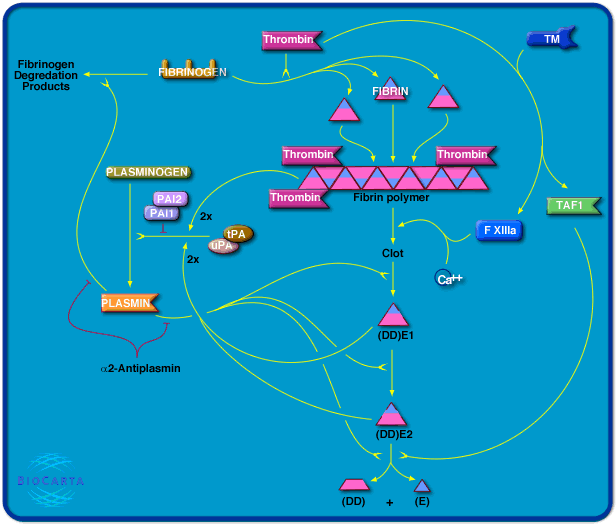
In fibrinolysis, a fibrin clot, the product of coagulation, is broken down.[3] Its main enzyme plasmin cuts the fibrin mesh at various places, leading to the production of circulating fragments that are cleared by other proteases or by the kidney and liver.

Physiology

[edit]
Fibrinolysis (simplified). Blue arrows denote stimulation, and red arrows inhibition.

Plasmin is produced in an inactive form, plasminogen, in the liver. Although plasminogen cannot cleave fibrin, it still has an affinity for it, and is incorporated into the clot when it is formed.

Tissue plasminogen activator (t-PA)[4] and urokinase are the agents that convert plasminogen to the active plasmin, thus allowing fibrinolysis to occur. t-PA is released into the blood slowly by the damaged endothelium of the blood vessels, such that, after several days (when the bleeding has stopped), the clot is broken down. This occurs because plasminogen became entrapped within the clot when it formed; as it is slowly activated, it breaks down the fibrin mesh. t-PA and urokinase are themselves inhibited by plasminogen activator inhibitor-1 and plasminogen activator inhibitor-2 (PAI-1 and PAI-2). In contrast, plasminogen further stimulates plasmin generation by producing more active forms of both tissue plasminogen activator (tPA) and urokinase.

α2-Antiplasmin and α2-macroglobulin inactivate plasmin. Plasmin activity is also reduced by thrombin-activatable fibrinolysis inhibitor (TAFI), which modifies fibrin to make it more resistant to the tPA-mediated plasminogen.

Measurement

[edit]

Plasmin breaks down fibrin into soluble parts called fibrin degradation products (FDPs). FDPs compete with thrombin, and thus slow down clot formation by preventing the conversion of fibrinogen to fibrin. This effect can be seen in the thrombin clotting time (TCT) test, which is prolonged in a person that has active fibrinolysis.

Antibody-antigen technology can measure FDPs and a specific FDP, the D-dimer. This is more specific than the TCT, and confirms that fibrinolysis has occurred. It is therefore used to indicate deep-vein thrombosis, pulmonary embolism, DIC, and efficacy of treatment in acute myocardial infarction. Alternatively, a more rapid detection of fibrinolytic activity, especially hyperfibrinolysis, is possible with thromboelastometry (TEM) in whole blood, even in patients on heparin. In this assay, increased fibrinolysis is assessed by comparing the TEM profile in the absence or presence of the fibrinolysis inhibitor aprotinin. Clinically, the TEM is useful for near real-time measurement of activated fibrinolysis for at-risk patients, such as those experiencing significant blood loss during surgery.[5]

Testing of overall fibrinolysis can be measured by a euglobulin lysis time (ELT) assay. The ELT measures fibrinolysis by clotting the euglobulin fraction (primarily the fibrinolytic factors fibrinogen, PAI-1, tPA, α2-antiplasmin, and plasminogen) from plasma and then observing the time required for clot dissolution. A shortened lysis time indicates a hyperfibrinolytic state and bleeding risk. Such results can be seen in peoples with liver disease, PAI-1 deficiency or α2-antiplasmin deficiency. Similar results are also seen after administration of desmopressin or after severe stress.[6]

Role in disease

[edit]

Few congenital disorders of the fibrinolytic system have been documented. Nevertheless, excess levels of PAI and α2-antiplasmin have been implicated in metabolic syndrome and various other disease states.

However, acquired disturbance of fibrinolysis (hyperfibrinolysis), is not uncommon. Many trauma patients have an overwhelming activation of tissue factor and thus massive hyperfibrinolysis.[7] Hyperfibrinolysis may occur in other disease states. It could lead to massive bleeding if not diagnosed and treated early enough.

The fibrinolytic system is closely linked to control of inflammation, and plays a role in disease states associated with inflammation. Plasmin, in addition to lysing fibrin clots, also cleaves the complement system component C3, and fibrin degradation products have some vascular permeability inducing effects.

Pharmacology

[edit]

In a process called thrombolysis (the breakdown of a thrombus), fibrinolytic drugs are used. They are given following a heart attack to dissolve the thrombus blocking the coronary artery; experimentally after a stroke to allow blood flow back to the affected part of the brain; and in the event of pulmonary embolism.[8]

Thrombolysis refers to the dissolution of the thrombus due to various agents while fibrinolysis refers specifically to the agents causing fibrin breakdown in the clot.

Antifibrinolytics, such as aminocaproic acid (ε-aminocaproic acid) and tranexamic acid are used as inhibitors of fibrinolysis. Their application may be beneficial in patients with hyperfibrinolysis because they arrest bleeding rapidly if the other components of the haemostatic system are not severely affected.[9] This may help to avoid the use of blood products such as fresh frozen plasma with its associated risks of infections or anaphylactic reactions.

Fibrinolytic enzymes

[edit]

References

[edit]
[edit]
Revisions and contributorsEdit on WikipediaRead on Wikipedia
from Grokipedia
Fibrinolysis is the enzymatic process by which the body degrades and dissolves clots, primarily through the proteolytic breakdown of the insoluble network that forms the structural basis of thrombi, thereby preventing excessive and restoring normal flow. This physiological mechanism is essential for maintaining hemostatic balance, as it limits the growth of clots formed during injury and facilitates the removal of thrombi once vascular repair is underway. In primary fibrinolysis, this breakdown occurs as a natural response to clot formation, while secondary fibrinolysis arises from underlying medical conditions, medications, or other triggers that can lead to dysregulated clot dissolution and potential bleeding complications. The core of the fibrinolytic system revolves around the zymogen , which is converted to the active enzyme by plasminogen activators such as tissue-type plasminogen activator (tPA) and urokinase-type plasminogen activator (uPA). then hydrolyzes into soluble fibrin degradation products (FDPs), including D-dimers, which serve as markers of fibrinolysis in clinical diagnostics. This activation is highly efficient on surfaces, where tPA exhibits up to a 500-fold increase in activity compared to solution-phase conditions, ensuring targeted clot lysis without widespread proteolytic damage. Fibrinolysis is tightly regulated to prevent both and , involving a network of inhibitors that modulate the system's activity. Key inhibitors include , which neutralizes tPA and uPA; α2-antiplasmin, which rapidly inactivates free ; and thrombin-activatable fibrinolysis inhibitor (TAFI), which removes residues from to reduce binding sites. Clot also influences lysis rates, with denser, thicker networks resisting degradation more effectively. Dysregulation of this balance contributes to pathological states, such as hyperfibrinolysis in trauma or leading to , or hypofibrinolysis in conditions like promoting . Clinically, fibrinolysis is harnessed through thrombolytic therapies, where recombinant tPA or is administered to accelerate clot dissolution in acute events like , ischemic stroke, or . However, these interventions carry risks of hemorrhage due to systemic effects, underscoring the need for precise monitoring of fibrinolytic activity via assays like . As of 2025, ongoing research explores fibrinolysis modulators, including and novel delivery systems, to improve outcomes in thrombotic disorders and trauma management.

Overview

Definition and Process

Fibrinolysis is the enzymatic process by which , the primary structural component of blood clots, is degraded to dissolve thrombi and restore vascular patency, thereby preventing excessive and maintaining blood flow. This physiological mechanism counterbalances the cascade, ensuring that clot formation is transient and localized to sites of vascular injury. The process begins with the conversion of the inactive plasminogen, present in plasma and bound to , into the active plasmin through the action of plasminogen activators. then mediates the of fibers within the clot, cleaving them into soluble degradation products such as and other fragments (FDPs), which are subsequently cleared from the circulation. This breakdown progressively weakens the clot structure, leading to its dissolution and the re-establishment of normal blood flow. In vivo, fibrinolysis typically unfolds over a timeframe of hours to days following clot formation, contrasting sharply with the rapid onset of , which occurs in seconds to minutes. Primary fibrinolysis, also known as physiological fibrinolysis, represents the body's endogenous, regulated breakdown of clots under normal conditions. In contrast, secondary fibrinolysis refers to the breakdown of clots due to a disorder, medication, or other cause.

Biological Significance

Fibrinolysis plays a critical role in maintaining hemostatic balance by preventing excessive and ensuring the timely dissolution of clots within the vascular system. This process counteracts the cascade to avoid pathological clot formation that could lead to vascular occlusion, thereby preserving circulatory flow and tissue . Dysregulation of fibrinolysis can tip this balance toward either or thrombotic tendencies, underscoring its essential function in vascular . Beyond , fibrinolysis contributes to tissue remodeling, embryonic development, and reproductive processes such as through the proteolytic degradation of extracellular matrices. In embryonic development, it facilitates and organ formation by breaking down provisional scaffolds, while during , it enables follicular rupture and subsequent formation. These roles highlight fibrinolysis's broader involvement in dynamic physiological remodeling events. The fibrinolytic system exhibits remarkable evolutionary conservation, with core components traceable to early vertebrates, reflecting its integral link to across species. Seminal studies in the , building on discoveries of plasminogen activators, established fibrinolysis as a counterpart to , demonstrating its presence in diverse organisms from early vertebrates to mammals. This conservation suggests an ancient origin tied to the of closed circulatory systems. Fibrinolysis interacts closely with and , where serves as a provisional matrix that supports leukocyte infiltration and endothelial during . Plasmin-generated fragments from degradation modulate inflammatory responses and promote neovascularization by influencing release and activity. These interactions position fibrinolysis as a key regulator in tissue repair and adaptive responses to injury.

Molecular Components

Key Enzymes and Proteins

Plasminogen serves as the inactive precursor to the fibrinolytic and is synthesized primarily in the liver as a single-chain with a molecular weight of approximately 92 , consisting of 791 and about 2% . Its structure comprises an N-terminal peptide domain, five domains (K1 through K5) that facilitate binding to and other substrates via lysine-binding sites, and a C-terminal domain containing the (His-Asp-Ser) essential for . These domains, each forming triple-loop structures stabilized by three disulfide bonds, contribute to plasminogen's conformational flexibility and substrate specificity. Circulating in human plasma at a concentration of approximately 180–200 μg/mL (or ~2 μM), plasminogen exists predominantly in its closed, inactive Glu-plasminogen form, which requires proteolytic cleavage for . Upon activation, plasminogen is converted to , a broad-spectrum with a identical to that of trypsin-like enzymes, enabling it to hydrolyze bonds in various proteins. exhibits particular substrate specificity for the cross-links in , preferentially cleaving lysyl and arginyl residues within the fibrin α- and β-chains to generate soluble degradation products such as D-dimers. This targeted disrupts the fibrin network without excessively degrading circulating fibrinogen under normal conditions, thereby localizing fibrinolysis to the clot site. In the intrinsic pathway of fibrinolysis, initiation involves contact activation proteins such as (Hageman factor), prekallikrein, and (HMWK), which are present in plasma at concentrations of about 30 μg/mL, 50 μg/mL, and 80 μg/mL (range 70–90 μg/mL), respectively. , a 80-kDa , undergoes autoactivation on negatively charged surfaces to form Factor XIIa, a that reciprocally activates prekallikrein to , with HMWK serving as a cofactor to facilitate this surface-bound activation and amplify the contact system. , in turn, directly activates plasminogen to and further promotes Factor XII activation, thereby linking the intrinsic pathway to fibrinolysis initiation on vascular surfaces. Fibrinogen, a 340-kDa hexameric plasma protein at ~2–4 mg/mL concentration, undergoes thrombin-mediated cleavage of fibrinopeptides A and B, exposing polymerization sites (knobs 'A' and 'B') that bind complementary pockets ('a' and 'b') in adjacent molecules to form protofibrils. These protofibrils laterally aggregate into a branched network stabilized by Factor XIIIa-mediated cross-links between γ- and α-chains, enhancing clot mechanical strength. Non-cross-linked is more susceptible to plasmin-mediated compared to cross-linked , which exhibits greater resistance due to reduced accessibility of lysyl residues, influencing the overall efficiency of clot dissolution.

Pathways and Activators

Fibrinolysis is primarily mediated through two distinct activation pathways: the extrinsic pathway, which is initiated by (tPA), and the intrinsic pathway, which involves (uPA) and is dependent on contact activation. These pathways ensure localized plasminogen activation to , preventing widespread while targeting clots. The extrinsic pathway is triggered by tPA, a synthesized and secreted by vascular endothelial cells in response to stimuli such as , , or . Upon release into the bloodstream, tPA binds specifically to via its domain, localizing activation to the clot surface and enhancing the catalytic efficiency of plasminogen conversion to by approximately 500-fold compared to solution-phase activation. This fibrin-enhanced mechanism promotes rapid, clot-specific fibrinolysis within the vascular compartment. In contrast, the intrinsic pathway relies on uPA, which is produced by various cell types including monocytes, macrophages, and epithelial cells, and is activated through the contact system involving factor XII. Contact activation of factor XII on negatively charged surfaces generates factor XIIa, which converts prekallikrein to kallikrein; kallikrein then cleaves single-chain pro-uPA to its active two-chain form, enabling uPA to activate plasminogen. Unlike tPA, uPA operates with lower affinity for plasminogen and does not require fibrin as a cofactor, facilitating activation primarily on cell surfaces via its receptor (uPAR). The extrinsic and intrinsic pathways differ markedly in localization and efficiency: the tPA-mediated extrinsic pathway predominates in intravascular spaces, where binding ensures high-efficiency, targeted clot dissolution, whereas the uPA-dependent intrinsic pathway is more prominent in extravascular tissues, supporting pericellular with reduced dependency and overall lower catalytic efficiency. These distinctions allow the extrinsic pathway to handle vascular efficiently, while the intrinsic pathway contributes to tissue remodeling and repair outside the bloodstream. The extrinsic pathway's key activator, tPA, was first identified in the 1940s through studies on tissue extracts by researchers Astrup and Permin in 1947, who described a fibrin-activating principle in animal tissues. Similarly, uPA, central to the intrinsic pathway, was discovered in the when Sobel et al. isolated a from human urine in 1952, later termed due to its urinary origin. These discoveries laid the foundation for understanding pathway-specific fibrinolysis.

Physiological Mechanisms

Plasminogen Activation

Plasminogen activation represents the pivotal enzymatic process in fibrinolysis, converting the inactive plasminogen (primarily in its Glu-plasminogen form) into the through limited proteolysis. This activation is catalyzed by s, including (tPA) and urokinase-type plasminogen activator (uPA), which specifically cleave the Arg561-Val562 within the activation loop of plasminogen. The cleavage exposes the in the resulting two-chain molecule, where the heavy chain contains the domains and the light chain harbors the catalytic domain linked by bonds. A key intermediate in this pathway is Lys-plasminogen, formed by the subsequent removal of the N-terminal peptide (residues 1-77) from Glu-plasminogen, often mediated by initial activity. Lys-plasminogen exhibits enhanced susceptibility to further compared to Glu-plasminogen due to conformational changes that improve activator access and substrate efficiency. This intermediate plays a significant role in amplifying fibrinolysis, particularly at clot surfaces, by serving as a more efficient substrate for tPA and uPA.67995-0/fulltext) The kinetics of plasminogen activation follow Michaelis-Menten principles, with the rate expressed as v=kcat[PA][Pg]Km+[Pg]v = \frac{k_{\text{cat}} [\text{PA}] [\text{Pg}]}{K_m + [\text{Pg}]}, where PA denotes the and Pg plasminogen; however, the catalytic efficiency (kcat/Kmk_{\text{cat}} / K_m) is dramatically influenced by , which acts as a cofactor template. colocalizes tPA, plasminogen, and itself, resulting in a approximately 1000-fold enhancement of tPA-mediated compared to solution-phase conditions, thereby ensuring targeted fibrinolysis at sites.54820-6/fulltext) Plasminogen's affinity for fibrin is mediated by its five kringle domains, which contain lysine-binding sites (LBS) that recognize and bind exposed C-terminal lysine residues on fibrin during early clot degradation. These LBS, particularly in kringles 1, 2, 4, and 5, promote high-avidity binding of plasminogen to the surface, increasing local concentrations and facilitating rapid . This interaction not only accelerates the process but also contributes to the fibrin-specificity of fibrinolysis by minimizing systemic generation.

Fibrin Clot Breakdown

initiates the breakdown of clots through limited proteolysis, primarily targeting multiple (Lys) and (Arg) residues in the C-terminal regions of the fibrin α- and β-chains. These cleavages occur sequentially, starting with sites in the α-chain such as Lys-508 for initial loosening, followed by additional sites in the α- and β-chains, which disrupt the fibrin's structural integrity and expose additional binding sites for further enzymatic action. The degradation process generates a series of soluble fragments in a progressive manner: early action produces the large fragment X (approximately 250-270 ), which encompasses intact central E-domain and partial outer D-domains; subsequent cleavages yield fragment Y (about 150 ), consisting of the E-domain linked to one D-domain; and terminal products include two fragment D (each ~90 ) and fragment E (~50 ), the latter derived from the central nodule of . In the case of cross-linked , stabilized by factor XIIIa via γ-chain cross-links between Lys-406 residues in adjacent D-domains, degradation specifically preserves these links in the terminal products, resulting in the neoantigenic unit—a dimerized fragment D paired with fragment E (DD/E complex)—which serves as a key diagnostic marker for active fibrinolysis. The time course of fibrin clot breakdown involves an initial phase of structural loosening, where peripheral cleavages weaken the fiber network and reduce mechanical stiffness within minutes of exposure, followed by progressive solubilization as fragments are released into circulation over hours, leading to complete clot dissolution. This phased progression ensures efficient removal of the while minimizing systemic effects. Fibrin degradation byproducts, particularly fragment E, possess angiogenic properties that contribute to tissue repair; this fragment stimulates endothelial and vessel formation in models such as the chick chorioallantoic membrane assay, highlighting its role beyond clot resolution in promoting vascular remodeling during .

Regulation

Endogenous Inhibitors

Endogenous inhibitors of fibrinolysis play a crucial role in maintaining hemostatic balance by preventing excessive degradation of clots, thereby avoiding hemorrhage while allowing controlled resolution. These inhibitors primarily target key components of the fibrinolytic cascade, such as plasminogen activators and , through specific molecular interactions that attenuate enzymatic activity. Among the principal endogenous inhibitors are (PAI-1), alpha-2-antiplasmin (α₂AP), and thrombin-activatable fibrinolysis inhibitor (TAFI), each contributing distinct mechanisms to regulate fibrinolysis locally within the clot or systemically in plasma. PAI-1, a member of the superfamily, serves as the primary physiological inhibitor of (tPA) and urokinase-type plasminogen activator (uPA). It exerts its inhibitory effect by forming a 1:1 stoichiometric complex with these activators, initially reversible, followed by covalent binding that irreversibly traps the in an acyl-enzyme intermediate, thereby blocking plasminogen to . PAI-1 is predominantly stored in platelets, which contain over 90% of circulating PAI-1, and is released upon platelet to localize inhibition at sites of . Plasma concentrations of PAI-1 typically range from 5 to 20 ng/mL, with the active form exhibiting a short of approximately 1-2 hours due to spontaneous conversion to a latent, inactive conformation. PAI-1 levels exhibit diurnal fluctuations, peaking in the early morning, and are elevated under conditions of physiological stress, such as acute or psychological strain, which promotes its synthesis in endothelial cells and adipocytes. Alpha-2-antiplasmin (α₂AP) functions as the fastest-acting inhibitor of , rapidly neutralizing free in circulation and within clots to limit proteolytic degradation. As a , α₂AP forms a covalent complex with via its reactive center loop, inactivating the enzyme with a reaction rate that shortens 's to less than 100 milliseconds . A key feature of α₂AP is its incorporation into through covalent cross-linking mediated by activated factor XIII (FXIIIa), a that binds α₂AP to specific residues on α-chains, thereby providing localized protection against fibrinolysis at the clot surface. This cross-linking enhances clot stability by concentrating inhibition where generation is highest. Plasma concentrations of α₂AP are approximately 70 μg/mL (or ~1 μM), with a of about 2.6 days in circulation, allowing sustained availability for rapid response to formation. Thrombin-activatable fibrinolysis inhibitor (TAFI), also known as procarboxypeptidase U, indirectly inhibits fibrinolysis by modulating the fibrin template for plasminogen . Upon to TAFIa by (often in complex with ) or , TAFIa acts as a carboxypeptidase that cleaves C-terminal residues exposed on partially degraded , thereby reducing binding sites for plasminogen and tPA and attenuating generation on the clot surface. This mechanism prevents amplification of fibrinolysis during the propagation phase, with even low levels of TAFIa (as little as 1% of total TAFI) sufficient to substantially delay lysis. TAFIa is intrinsically unstable, with a of 8-10 minutes at 37°C, which confines its activity to acute thrombotic events and requires ongoing for sustained effect. Plasma concentrations of TAFI range from 4 to 15 μg/mL (73-275 nM), ensuring baseline availability for rapid deployment in .

Feedback Mechanisms

Fibrinolysis incorporates mechanisms to amplify clot dissolution once initiated. During the process, cleaves at multiple sites, generating C-terminal residues that serve as high-affinity binding sites for plasminogen. This exposure enhances plasminogen recruitment to the fibrin surface, facilitating its by tissue plasminogen activator (tPA) and thereby accelerating generation in a self-reinforcing loop. This mechanism ensures efficient lysis of dense structures, with studies showing that removal of even four such sites significantly impairs tPA-mediated plasminogen . Negative feedback loops counteract excessive fibrinolysis to maintain hemostatic balance. Thrombin-activatable fibrinolysis inhibitor (TAFI), activated primarily by thrombin in complex with thrombomodulin, exerts this control by acting as a carboxypeptidase that systematically removes the C-terminal lysine residues from partially degraded fibrin. By eliminating these plasminogen-binding sites, activated TAFI (TAFIa) reduces surface-bound plasminogen availability, thereby diminishing plasmin formation and stabilizing the clot against premature dissolution. This inhibition is particularly pronounced in the presence of thrombomodulin on endothelial cells, where TAFI activation is enhanced up to 1250-fold, linking coagulation directly to antifibrinolytic regulation. Cross-talk between the and fibrinolytic systems further refines these dynamics through the protein C pathway. The thrombin-thrombomodulin complex not only activates TAFI but also converts to activated (APC), which attenuates thrombin generation by inactivating factors Va and VIIIa. This reduction in thrombin limits subsequent TAFI activation, indirectly promoting fibrinolysis by preserving lysine binding sites on . In experimental models, upregulation of fibrinolysis has been shown to depend on this TAFI modulation, preventing clot stabilization during ongoing lysis. Mathematical modeling of these feedback interactions often employs steady-state approximations to capture the activator-inhibitor balance. For instance, the net rate can be described using Michaelis-Menten kinetics for -mediated degradation, where the steady-state concentration of assumes a balance between its generation and decay: d[plasmin]dt=Vmax[plasminogen]Km+[plasminogen]kdeg[plasmin]=0\frac{d[\text{plasmin}]}{dt} = \frac{V_{\max} [\text{plasminogen}]}{K_m + [\text{plasminogen}]} - k_{\text{deg}} [\text{plasmin}] = 0 Here, VmaxV_{\max} represents the maximum activation rate by tPA, KmK_m is the Michaelis constant reflecting substrate affinity (e.g., ~19 μM for Lys-plasminogen), and kdegk_{\text{deg}} accounts for inhibition and clearance. Incorporating TAFI inhibition extends this to quasi-steady-state equations for binding site dynamics, such as the degradation of fibrin doublets: d[doublets]dt=kcat[doublets][plasmin]Km+[doublets]kTAFIa[doublets]=0\frac{d[\text{doublets}]}{dt} = \frac{k_{\text{cat}} [\text{doublets}] [\text{plasmin}]}{K_m + [\text{doublets}]} - k_{\text{TAFIa}} [\text{doublets}] = 0 These models predict front propagation and highlight how perturbations in levels shift the equilibrium toward either clot persistence or rapid dissolution.

Clinical Assessment

Laboratory Measurements

Laboratory measurements of fibrinolysis involve a range of assays designed to quantify the activity and components of the fibrinolytic system in plasma or samples. These tests provide insights into the functional capacity of fibrinolysis, including plasminogen activation, generation, and clot breakdown, aiding in the assessment of hemostatic balance in clinical settings. Common assays include turbidimetric, chromogenic, and viscoelastic methods, each targeting specific aspects of the process while offering varying degrees of . The euglobulin lysis time (ELT), also known as euglobulin clot lysis time (ECLT), is a classical turbidimetric assay that evaluates overall fibrinolytic potential by measuring the time required for an in vitro fibrin clot, formed from acid-precipitated euglobulin fraction of plasma, to dissolve under the influence of endogenous activators and plasmin. This fraction isolates key fibrinolytic components such as plasminogen, tissue plasminogen activator (tPA), and fibrinogen while excluding inhibitors like alpha-2-antiplasmin, thereby reflecting net fibrinolytic activity. Normal ELT values typically range from 90 to 240 minutes, with prolonged times indicating hypofibrinolysis and shortened times suggesting hyperfibrinolysis. D-dimer assays, particularly those using enzyme-linked immunosorbent assay (ELISA) formats, specifically detect cross-linked fibrin degradation products generated during fibrinolysis, serving as an indirect marker of clot breakdown. These immunoassays employ monoclonal antibodies targeting the unique D-dimer neoantigen formed by factor XIIIa-mediated cross-linking of fibrin, distinguishing them from fibrinogen degradation products. A common clinical cutoff for ruling out thrombotic events is approximately 0.5 μg/mL (or 500 ng/mL fibrinogen equivalent units), below which the assay exhibits high negative predictive value for conditions involving fibrin turnover. Plasminogen activity is commonly assessed using chromogenic substrate assays, which measure the functional conversion of plasminogen to and its subsequent proteolytic activity on synthetic substrates. In these automated methods, excess or tPA activates plasminogen in the sample, and the generated hydrolyzes a chromogenic substrate like S-2251 (H-D-Val-Leu-Lys-pNA), releasing a colored product quantified by at 405 nm to determine activity levels relative to a standard curve. Reference ranges for functional plasminogen activity are typically 75-140% of normal pooled plasma, with deficiencies below 75% indicating potential hypofibrinolysis. Global tests such as (TEG) provide a dynamic, viscoelastic assessment of fibrinolysis by monitoring whole blood clot formation and in real time using a rotating cup-and-pin system. Key parameters include clot time (CLT), defined as the time from maximum (MA) to 50% , and LY30, the percentage reduction in 30 minutes after MA, which quantifies the extent of fibrinolysis. Normal LY30 values are less than 3-4%, with values exceeding 7.5% suggesting significant hyperfibrinolysis, while CLT typically exceeds 60 minutes in healthy individuals. These parameters integrate the contributions of all fibrinolytic components in a citrated blood sample activated by kaolin or .

Diagnostic Applications

Fibrinolysis measurements play a crucial role in diagnosing (DIC), where elevated levels reflect ongoing degradation, while low plasminogen concentrations indicate consumption of factors due to widespread activation of the hemostatic system. In clinical practice, this combination of findings—high and reduced plasminogen—helps confirm in suspected DIC cases, particularly in settings like or trauma, aiding in timely intervention to mitigate bleeding risks. Monitoring thrombolytic therapy, such as after tissue plasminogen activator (tPA) administration for acute , involves serial assessments of tPA levels and markers like to evaluate treatment efficacy and reperfusion success. Post-infarction, rising levels shortly after therapy signal effective clot breakdown, while persistent monitoring helps detect incomplete or complications like reocclusion. Screening for inherited fibrinolysis deficiencies often employs genetic assays to identify polymorphisms, such as those in the (PAI-1) gene, which can predispose individuals to thrombotic disorders by impairing fibrin clot resolution. For instance, the PAI-1 4G/5G polymorphism is assessed via molecular testing in patients with recurrent or family history, guiding stratification without relying solely on functional assays. Despite these applications, fibrinolysis diagnostics face limitations from assay variability across methods and the necessity for age- and sex-adjusted reference norms, as levels naturally rise in the elderly, potentially leading to if standard cutoffs are applied. Such adjustments, like age × 10 μg/L for patients over 50, improve specificity in older populations but highlight the need for standardized protocols to reduce interpretive errors. Specific assays, such as euglobulin lysis time, provide complementary insights but are detailed elsewhere.

Pathophysiology

Disorders of Fibrinolysis

Disorders of fibrinolysis are classified into hypofibrinolysis, which impairs clot breakdown and promotes , and hyperfibrinolysis, which accelerates fibrinolysis and causes ; these can arise from genetic defects or acquired conditions affecting key components of the system. Hypofibrinolysis primarily stems from excess (PAI-1), the main inhibitor of tissue plasminogen activator (tPA), leading to reduced generation and a prothrombotic state known as . Elevated PAI-1 levels are associated with an increased risk of venous (VTE), with odds ratios of approximately 1.6 for the highest versus lowest quartiles after adjusting for confounders. A notable genetic contributor is the 4G/4G polymorphism in the PAI-1 gene promoter, which enhances PAI-1 transcription and correlates with increased risk, with odds ratios of 1.3 to 2.0 compared to the 5G/5G variant depending on population and genetic model. Hypofibrinolysis is a relatively uncommon contributor to VTE, often in combination with other risk factors. In contrast, hyperfibrinolysis involves deficient inhibition of activity, most classically due to congenital alpha-2-antiplasmin deficiency, a rare autosomal recessive disorder that results in unchecked fibrinolysis and severe hemorrhagic tendencies, such as prolonged bleeding after trauma or dental procedures. Mutations in the alpha-2-antiplasmin (SERPINF2) further exacerbate this by reducing functional inhibitor levels, manifesting as episodic or spontaneous hemorrhages. Acquired forms of hyperfibrinolysis are observed in , where hepatic dysfunction impairs synthesis of alpha-2-antiplasmin and other regulators, contributing to and bleeding complications in . Similarly, can induce paraneoplastic hyperfibrinolysis through tumor-derived proteases that activate plasminogen, leading to life-threatening hemorrhage as an initial presentation in rare cases. These disorders highlight pathological imbalances in endogenous inhibitors, such as alpha-2-antiplasmin and PAI-1, which normally maintain fibrinolysis homeostasis.

Role in Thrombotic Diseases

Dysregulated fibrinolysis plays a pivotal role in the pathogenesis of thrombotic diseases by impairing the timely dissolution of fibrin clots, thereby exacerbating thrombus formation and propagation in arterial and venous systems. In conditions such as myocardial infarction (MI), ischemic stroke, and venous thromboembolism (VTE), hypofibrinolysis—characterized by diminished plasminogen activation and plasmin generation—contributes to persistent occlusive thrombi, increasing the risk of acute events and chronic vascular damage. This imbalance often stems from elevated levels of fibrinolysis inhibitors relative to activators, fostering a prothrombotic environment that amplifies endothelial dysfunction and inflammatory responses within the vasculature. In , impaired fibrinolysis arises from a reduced tissue plasminogen activator (tPA) to (PAI-1) ratio, which hinders efficient clot breakdown and promotes plaque instability. Studies have demonstrated that PAI-1 levels are markedly elevated in atherosclerotic plaques compared to normal vessels, with the PAI-1/tPA ratio increasing up to 18:1 in diseased arteries, thereby suppressing local fibrinolysis and facilitating accumulation. This imbalance not only stabilizes plaque formation but also predisposes to rupture by limiting matrix remodeling and promoting thin-walled, acellular plaques vulnerable to acute , as observed in (CAD). Venous thromboembolism exemplifies the consequences of low plasmin activity, where hypofibrinolysis correlates with heightened recurrence risk, estimated at 20-30% within five years following an initial event in unprovoked cases. Reduced fibrinolytic potential, including diminished -mediated lysis, impairs resolution in deep veins, leading to persistent occlusion and embolization to the . Prospective cohort studies confirm that elevated PAI-1 and reduced overall fibrinolytic capacity independently predict recurrent VTE, with hypofibrinolysis conferring a 1.5- to 2-fold increased in follow-up analyses. Cancer-associated thrombosis highlights the dual nature of fibrinolysis dysregulation, where tumor-secreted urokinase plasminogen activator (uPA) enhances local fibrinolysis to support and , yet induces systemic hypofibrinolysis that promotes widespread . Tumors overexpress uPA, which activates at the tumor-stroma interface to facilitate degradation and neovascularization, but circulating inhibitors like PAI-1 rise concurrently, suppressing global activity and elevating VTE incidence in . This systemic antifibrinolytic state is evident in digestive tract and cancers, where impaired clot lysis significantly increases the risk of compared to non-cancer patients. Epidemiological evidence from meta-analyses of prospective studies underscores hypofibrinolysis as an independent for CAD, with prolonged times associated with a (HR) of approximately 2.5 for , even after adjusting for traditional factors like and . In cohorts exceeding 3,000 patients, markers of impaired endogenous , such as extended clot duration, predicted recurrent ischemic events with HRs ranging from 2.0 to 2.8, highlighting fibrinolysis assessment as a valuable prognostic tool in thrombotic stratification. Recent research as of 2025 has also implicated fibrinolysis dysregulation in other pathologies, such as hyperfibrinolysis contributing to in bacterial and hypofibrinolysis promoting chronic inflammation in autoimmune diseases.

Therapeutic Interventions

Fibrinolytic Agents

Fibrinolytic agents are pharmacological compounds designed to accelerate the dissolution of clots by enhancing the activity of the endogenous fibrinolytic system, primarily through activation of plasminogen to . These agents are categorized based on their origin and specificity: non-fibrin-specific agents like and activate plasminogen systemically, while fibrin-specific agents such as tissue plasminogen activator (tPA) variants preferentially target thrombi. Developed over decades, these drugs represent key advancements in thrombolytic , with origins tracing back to natural proteins derived from bacterial, urinary, or recombinant sources. Streptokinase, the first fibrinolytic agent identified, is a protein derived from beta-hemolytic streptococci . It functions by binding to plasminogen to form a 1:1 stoichiometric complex, which exposes a catalytic site that converts additional plasminogen molecules to active , thereby initiating fibrinolysis. This mechanism is non-fibrin-specific, leading to systemic generation and potential degradation of circulating fibrinogen. Discovered in 1933 by Tillett and Garner, streptokinase entered clinical investigation in the 1950s, with initial therapeutic use for acute reported in 1958; it received U.S. (FDA) approval for systemic in and in 1977. However, streptokinase is no longer commercially available in the United States as of 2005. Notably antigenic due to its bacterial origin, streptokinase can induce formation, limiting repeat dosing and increasing risk. Its plasma is approximately 80 minutes, prolonged by complex formation with plasminogen. Urokinase, another early fibrinolytic agent, is a originally isolated from human urine in 1947 and later produced recombinantly. It acts as a direct by cleaving the Arg560-Val561 in to generate , without requiring binding for activity, making it non-fibrin-specific and capable of systemic effects. Purified forms became available in the 1960s, and the FDA approved for systemic treatment of in 1978, followed by catheter-directed applications in 1983. Its short plasma half-life of about 20 minutes necessitates continuous for sustained activity, and production challenges, including viral concerns, led to temporary market withdrawal in the early 2000s and final discontinuation in the US in 2011, though recombinant versions are available internationally. Tissue plasminogen activator (tPA) variants represent a class of recombinant fibrin-specific agents modeled after the endogenous human tPA, which is briefly referenced here as a released from endothelial cells. , the first recombinant tPA, is produced using ovary cells expressing the human tPA gene and binds to within the , enhancing plasminogen activation locally to form while minimizing systemic effects. Developed in the 1980s, alteplase gained FDA approval in 1987 for acute , marking a in targeted . Its short of approximately 5 minutes requires bolus or administration. , a genetically modified tPA variant with three mutations—threonine 103 to asparagine (T103N), asparagine 117 to glutamine (N117Q), and replacement of lysine-histidine-arginine-arginine (positions 296–299) with alanine-alanine-glutamine-glutamine—exhibits increased fibrin specificity, resistance to plasminogen activator inhibitor-1, and a longer initial of 20-24 minutes, allowing single-bolus dosing. Approved by the FDA in 2000 for acute , tenecteplase builds on alteplase's foundation to improve pharmacokinetics. In February 2025, the FDA approved tenecteplase for the treatment of acute ischemic stroke in adults.

Clinical Uses and Limitations

Fibrinolytic therapy is primarily indicated for the treatment of acute ST-elevation (STEMI) when (PCI) is not immediately available, with administered as a bolus followed by infusion to achieve reperfusion and reduce mortality by approximately 25% in eligible patients. In acute ischemic stroke caused by large vessel occlusion, it is recommended within a 4.5-hour window from symptom onset to improve neurological outcomes, particularly when combined with mechanical interventions. These applications are limited to patients without contraindications, emphasizing rapid administration to maximize benefits in time-sensitive thrombotic events. Dosing regimens for fibrinolytic agents vary by indication and agent. For in STEMI, the standard dose is 0.9 mg/kg (maximum 90 mg total), with 10% given as an initial intravenous bolus over 1 minute followed by the remainder infused over 60 minutes. , preferred for its single-bolus administration in STEMI, is dosed at 30 to 50 mg intravenously over 5 seconds, weight-adjusted as follows: 30 mg for patients under 60 kg, 35 mg for 60-69 kg, 40 mg for 70-79 kg, 45 mg for 80-89 kg, and 50 mg for those 90 kg or more. In ischemic , follows a similar 0.9 mg/kg regimen (maximum 90 mg), while is typically 0.25 mg/kg (maximum 25 mg) as a single bolus. Despite its efficacy, fibrinolytic therapy carries significant limitations, including a of major bleeding, with symptomatic occurring in approximately 1% of STEMI patients and up to 6% in cases. Absolute contraindications include recent major within 3 weeks, active , and suspected , as these increase hemorrhagic complications. In elderly patients, fibrinolytic resistance and reduced efficacy are observed due to delayed presentation and age-related comorbidities, alongside heightened risks that may offset mortality benefits. When fibrinolysis is contraindicated or ineffective, mechanical thrombectomy serves as a preferred alternative for large vessel occlusions in acute ischemic , offering higher recanalization rates without systemic lytic exposure. Cost-effectiveness analyses support fibrinolytic use in STEMI, with estimated to save around $20,000 per (QALY) gained compared to no reperfusion, though primary PCI remains more economical in accessible settings.

References

Add your contribution
Related Hubs
User Avatar
No comments yet.