Hubbry Logo
FieldcraftFieldcraftMain
Open search
Fieldcraft
Community hub
Fieldcraft
logo
8 pages, 0 posts
0 subscribers
Be the first to start a discussion here.
Contribute something
Fieldcraft
Fieldcraft
from Wikipedia
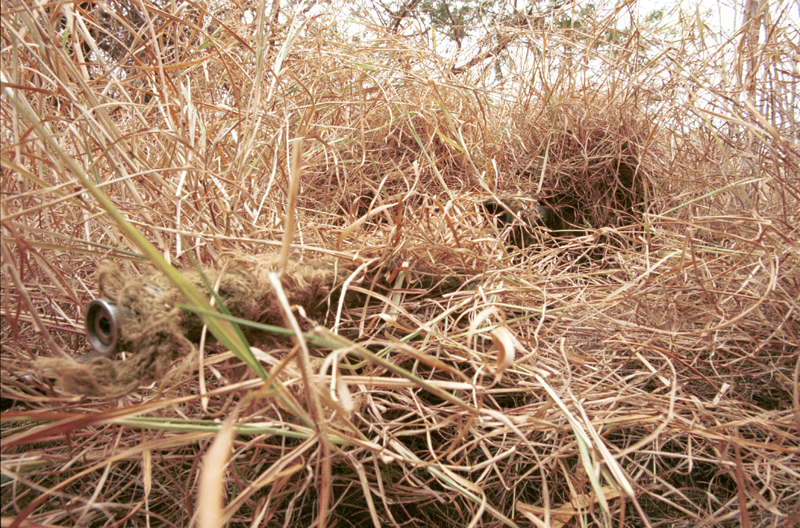
A camouflaged sniper lying prone

Fieldcraft comprises the techniques and methods involved in living, traveling, or making military or scientific observations in the field.[1] The term "fieldcraft" is used in a broad range of industries including military, oil and gas, wildlife and food and agriculture.[2][3]

In the anti-terrorism field, field craft is "the art of evading monitoring by police and the security services." Terror groups such as the one tracked by Operation Guava were caught "despite their own well developed field craft."[4]

The term has been used since at least World War II. For example, Diana Rowden, a war hero, was described at the time as "very good in field craft and excellent with guns”.[5]

Field skills include camouflage, land and water navigation, understanding the difference between concealment from view and cover from small arms fire, using the terrain and its features to mask ground movement, obstacle crossing, selecting good firing positions, lying-up positions, camping positions, effective observation, camouflage penetration, countersurveillance, detecting enemy-fire directionality and range, survival, evasion, and escape techniques.[6]

Good fieldcraft is especially important for the effectiveness and survival of infantry soldiers, snipers, special forces, reconnaissance and sabotage teams. Efficient fieldcraft is only possible by spending time, effort, and attention to memorizing battlefield details, infiltration and escape routes, construction and employment of hiding positions, enemy force doctrines and equipment.

See also

[edit]

References

[edit]
Revisions and contributorsEdit on WikipediaRead on Wikipedia
from Grokipedia
Fieldcraft encompasses the foundational military skills essential for operating effectively in field environments, including stealth, camouflage, observation, land navigation, and tracking. These techniques enable soldiers to minimize detection, exploit terrain for advantage, and maintain operational tempo under austere conditions without reliance on advanced technology. Originating from infantry doctrines emphasizing self-reliance and tactical proficiency, fieldcraft forms the core of for and forces, fostering a of signature management and adaptability to natural surroundings. Key components include distinguishing between concealment from observation and cover from fire, employing natural materials for personal and positional , and mastering silent movement to evade auditory detection. Proficiency in these skills enhances unit survivability and , as demonstrated in patrol base establishment, , and missions where minimizing footprint is paramount. While integral to conventional curricula, fieldcraft principles extend to scenarios and hunting pursuits, underscoring their basis in empirical of human and animal behavior in settings. Modern adaptations integrate with technological aids, yet core tenets remain grounded in timeless practices validated through combat experience rather than theoretical constructs.

Definition and Principles

Core Definition

![Camouflaged sniper demonstrating fieldcraft techniques][float-right] Fieldcraft refers to the techniques and methods employed for living, traveling, observing, and operating undetected in field environments, primarily within contexts. These skills enable personnel to minimize detection by adversaries while maximizing and operational effectiveness in natural terrains such as forests, deserts, or urban outskirts. Core elements include stealthy movement, natural integration, and disciplined observation practices, which collectively reduce the risk of compromise during or combat patrols. Originating from infantry training doctrines, fieldcraft emphasizes the art of using , , and available resources to one's advantage, often described as the tactical application of environmental . It distinguishes itself from broader by prioritizing evasion and gathering over mere sustenance, though overlap exists in areas like and basic shelter construction. Military manuals, such as those from the U.S. Marine Corps, outline fieldcraft as foundational for small-unit tactics, where individual proficiency directly impacts and mission success. Proficiency in fieldcraft has been honed through generations of warfare, proving essential in asymmetric conflicts where technological superiority alone insufficiently counters human ingenuity in concealment and avoidance.

Fundamental Principles

Fieldcraft fundamentally emphasizes operating in natural or hostile environments while minimizing detection risk, prioritizing the ability to observe adversaries or without reciprocal exposure. This core tenet, often summarized as "see without being seen," derives from requiring personnel to employ , concealment, and disciplined movement to disrupt visual, auditory, olfactory, and signatures. Effective fieldcraft demands adaptation to specific terrains—such as using local for blending in woodlands or shadows in deserts—and adherence to principles like and discipline to avoid compromising positions. Key principles include systematic through all senses, involving deliberate scanning techniques, establishment of observation posts with defined sectors, and recognition of unnatural indicators like absent wildlife sounds or scents. Movement principles stress slow, terrain-utilizing techniques, such as crawling or short bounds under cover, with halts for (e.g., "SLLS" – stop, look, , smell) to detect threats early. Concealment extends beyond static positions to dynamic operations, incorporating track discipline to erase signs of passage and selection of low-profile, irregular-shaped hides following criteria like BLISS (blend, low , irregular shape, small, secluded). Sustained field presence requires self-reliant practices for living undetected, including maintenance to prevent odor trails, efficient use like melting for without , and gear to balance load while reducing from items like canteens. integrates these elements via team coordination, such as buddy systems for mutual checks and decentralized command for rapid response, ensuring operational continuity without escalating detectability. These principles, validated through military training manuals, enable , evasion, and by leveraging environmental causality over reliance on technology alone.

Historical Development

Origins in Military Tradition

The foundational skills of fieldcraft—encompassing stealthy movement, terrain observation, camouflage, and reconnaissance—emerged from the practical demands of ancient warfare, where forces relied on light troops and specialized scouts to gather intelligence, avoid detection, and execute ambushes rather than solely engaging in pitched battles. These techniques, adapted from hunting and foraging practices, enabled smaller or outnumbered groups to outmaneuver larger armies by exploiting natural cover and unpredictable terrain, as evidenced in the campaigns of early professional militaries that prioritized mobility over massed formations. In , particularly during the Classical period (c. 5th–4th centuries BCE), prodromoi units of served as scouts, conducting to identify enemy positions, screen advances, and harass flanks while minimizing exposure to the phalanx's rigid structure. These horsemen, often equipped with javelins and lighter armor for speed, operated independently to probe routes and report back, allowing commanders like those in Alexander the Great's army (336–323 BCE) to maintain operational surprise across vast distances from to . The (c. 509–27 BCE) formalized such roles with exploratores, elite horsemen tasked with long-range patrols to map enemy movements, topography, and resources ahead of legions, often venturing far beyond skirmish lines to secure advance intelligence critical for campaigns like those against the . Complementing them were , who handled nearer-term scouting, signaling, and even sabotage, evolving from earlier Republican practices during the (343–290 BCE) into a structured intelligence arm that informed tactical decisions in expansive provincial conquests. Eastern military traditions paralleled these developments; in the (c. 475–221 BCE), Sun Tzu's underscored as foundational, advising generals to deploy scouts and spies for "foreknowledge" of enemy dispositions, without which "even the bravest spirits cannot inform the soldiers adequately" about victory prospects. This emphasis on empirical intelligence over brute force influenced enduring Asian warfare doctrines, where field skills ensured adaptation to diverse environments from steppes to mountains. These ancient precedents established fieldcraft as an indispensable military tradition, prioritizing causal advantages in information and concealment over numerical superiority.

Evolution During Major Conflicts

During , fieldcraft adapted to the demands of static , emphasizing stealthy reconnaissance patrols and sniping to gather and disrupt enemy positions without large-scale assaults. British and Allied forces developed specialized sniping units, where soldiers used early techniques including , scrim nets over helmets, and periscopes to observe and engage from concealed positions in no-man's land. German stormtrooper tactics, introduced around 1916-1917, incorporated elements of fieldcraft such as small-group infiltration, using for cover, and bypassing strongpoints, influencing later doctrines by prioritizing individual initiative and skills over massed formations. Manuals like "Fieldcraft, Sniping and ," published during the war, instructed troops in use, principles, and landscape sketching for effective scouting. World War II saw fieldcraft evolve toward mobile and offensive applications, driven by the need for in diverse theaters including deserts, jungles, and urban areas. The formalized fieldcraft training through publications such as the 1942 "Instructor's Handbook on Fieldcraft and ," which covered , movement without detection, and integration with for infantry sections. units, formed in 1940, underwent rigorous training in raiding and , honing skills in silent movement, tracking, and concealment to conduct hit-and-run operations against Axis forces. Special forces like the (SAS), established on July 16, 1941, by , advanced fieldcraft for long-range desert patrols, employing lightweight equipment, natural , and minimal-trace navigation to airfields and supply lines, achieving successes such as destroying 250 aircraft in December 1941 raids. Allied efforts expanded, with demonstrations in films showing soldiers blending into environments using disruptive patterns and decoys, reflecting a doctrinal shift toward integrated with . These developments emphasized decentralized tactics, where small teams relied on superior fieldcraft to operate behind enemy lines, contrasting WWI's defensive focus and laying groundwork for postwar .

Post-World War II Advancements

Following World War II, fieldcraft advancements emphasized survival in asymmetric warfare and counter-insurgency operations amid Cold War tensions. The U.S. military formalized Survival, Evasion, Resistance, and Escape (SERE) training, initially established by the Air Force at the war's end for aircrew at risk of capture, drawing from WWII and Korean War POW experiences to teach evasion, land navigation, concealment, and resistance techniques. By the 1960s, SERE expanded across services, incorporating field survival skills like shelter construction, foraging, and signaling to enhance individual resilience in isolated environments. The drove refinements in jungle-specific fieldcraft, particularly through long-range reconnaissance patrols (LRRPs) that prioritized stealthy movement, observation, and rapid evasion. U.S. Army Field Manual 31-18, published in 1968, outlined LRRP tactics including small-team infiltration, integration, and avoidance, adapting pre-war principles to dense where detection by enemy trackers was constant. These patrols, often 4-6 soldiers deep in hostile territory for days, advanced techniques for minimizing noise, scent, and visual signatures, influencing post-war doctrine. Camouflage and concealment evolved with environmental demands and emerging threats like detection. The ERDL (Engineer Research & Development Laboratories) four-color , developed in 1948 but first fielded in 1967 for units, provided disruptive foliage mimicry superior to solid green uniforms, reducing visibility in transitional light. This 's success led to its scaling and recoloring into the M81 Woodland camouflage by the late 1970s, standardizing multi-terrain concealment while manual skills in natural material use—ghillie suits, brush netting—remained essential against human trackers. Overall, these developments shifted fieldcraft from massed formations to individualized, adaptive proficiency, prioritizing empirical evasion over technological reliance.

Key Techniques and Skills

Observation and Reconnaissance

Observation in fieldcraft encompasses the deliberate and systematic application of visual, auditory, and other sensory inputs to assess , , , and potential threats while maintaining personal concealment. This skill enables individuals to build a comprehensive without revealing their position, relying on principles such as scanning from near to distant objects, left to right or in a 180-degree arc, prioritizing dark areas and irregular shapes indicative of human activity or equipment. Techniques include initial unaided eye sweeps followed by magnification via or scopes to detect subtle indicators like movement, shine from metal, or disturbed earth, with emphasis on and discipline to avoid counter-detection. Reconnaissance represents an extension of into structured missions aimed at collecting detailed on enemy dispositions, obstacles, routes, or zones ahead of main forces, conducted primarily through visual means or detection devices to minimize uncertainty for commanders. outlines five fundamental principles: ensuring continuous to maintain ; avoiding commitment of the reconnaissance force to decisive engagements to preserve its mobility; orienting efforts toward specific objectives like named areas of interest; rapidly gaining, maintaining, and reporting pertinent information via standardized formats such as spot reports or sketches; and retaining freedom of maneuver to adapt to emerging threats or opportunities. Key techniques for reconnaissance patrols involve stealthy infiltration via dismounted movement, limited visibility periods, or specialized insertions like combat or small boat operations, establishing temporary observation posts () for persistent using ground-level and sensors. Long-range , positioned beyond small-arms with mutual support from hide sites, facilitate broad-area monitoring, while short-range variants enable detailed enemy identification in restrictive like jungles, demanding rigorous with natural materials and subsurface construction in loose soils to evade detection. Patrols typically comprise small teams (e.g., 2-6 personnel) executing route, zone, or area , logging data on azimuths, ranges, and enemy activity, with evasion plans incorporating isolated guidance and recovery procedures to ensure information return even under compromise. In practice, fieldcraft reconnaissance prioritizes avoiding enemy contact unless essential, employing bounding or traveling formations tailored to , with post-mission reporting emphasizing timely transmission of priority requirements via radio brevity codes to influence operational decisions. Training regimens, such as those in Marine Corps Basic Reconnaissance Course, stress environmental adaptations—e.g., pre-hydration in deserts or sustainment caching in jungles—to sustain 96-hour operations, underscoring the causal link between disciplined execution and mission success in reducing operational fog.

Movement and Navigation

Movement and navigation in fieldcraft prioritize stealth, precision, and reliability in austere environments, enabling personnel to traverse undetected while maintaining orientation without dependence on electronic systems. These skills derive from emphasizing low-profile displacement to evade and accurate positioning via traditional tools like maps and compasses, which resist jamming or battery failure. Effective execution reduces vulnerability to by integrating deliberate pacing, cover utilization, and periodic position verification. Individual movement techniques focus on minimizing detection through controlled, terrain-adapted locomotion. The low crawl advances the body on the stomach, propelling with elbows and toes while keeping the rifle forward and head low to exploit prone concealment behind minimal cover. The high crawl, or monkey run, employs hands and knees for faster progress over low obstacles, with the body parallel to the ground, buttocks lowered, and weapon held by the to avoid snagging. The rush facilitates rapid transition across exposed areas, involving a low sprint from cover to the next position followed by immediate prone assumption and observation. Night variants adapt these—such as the ghost walk with high leg lifts for silent foot placement or kitten crawl on forearms and toes—to acoustic cues, emphasizing bounds of 5-10 meters with halts in shadow or defilade. Stealth principles govern all techniques, mandating slow execution to prevent noise from foliage or gear, frequent halts for sensory (e.g., ear-to-ground ), and route selection via dead ground or linear features like streambeds for natural screening. Personnel avoid skylines, isolated landmarks, and sudden motions that draw the eye, instead freezing upon disturbance or illumination flares by going prone or blending into terrain. Bounding coordinates these with , alternating covered advances (e.g., one element moves while the other suppresses), limited to short distances based on visibility and threat.
TechniquePrimary UseKey Execution Steps
Low CrawlProne concealment over open or sparse cover1. Assume prone; 2. forward at 45°; 3. Advance elbows then toes alternately; 4. Keep body 5-10 cm off ground.
High CrawlLow cover requiring speed1. Hands and knees; 2. Short steps, head low; 3. gripped ahead; 4. Observe flanks continuously.
Exposed gaps under fire1. Plan endpoint; 2. Sprint low; 3. Dive prone; 4. Crawl to final cover.
Navigation employs map reading, compass bearings, and pacing to sustain direction and distance, calibrated via a 100-meter pace course yielding averages like 60-120 steps per 100 meters adjusted for load and . plots grid azimuths from (converted to magnetic via declination diagram), follows them with lensatic presets (e.g., align azimuth under index line, track north-seeking arrow), and measures travel via calibrated paces, correcting for drift or obstacles by 90° detours then re-azimuthing. association cross-references visible features—ridgelines via contour crests, streams for drainage patterns, or handrails like roads—with symbols (e.g., brown contours for , blue for ) to confirm progress, using SOSES criteria (, orientation, size, , slope). Resection refines position by sighting 2-3 known landmarks, measuring magnetic azimuths, converting to back azimuths (add/subtract 180° or 3200 mils), and plotting intersections on an oriented map. Route planning integrates METT-T factors (mission, enemy, terrain, troops, time) and deliberate offsets (e.g., 10° deviation toward linear catching features) to intercept objectives, with checkpoints like ridge crossings for verification. Night navigation supplements with stellar cues (e.g., Polaris for north) or reduced paces (e.g., 20% slower in darkness), prioritizing compass over visual drift. These methods ensure autonomy, as electronic alternatives falter in contested electromagnetic environments.

Camouflage, Concealment, and Tracking

Camouflage in fieldcraft employs techniques to blend individuals, equipment, and positions with the surrounding environment, disrupting enemy recognition through alteration of visual, thermal, and acoustic signatures. United States Army doctrine identifies primary recognition factors as shape, shadow, silhouette, shine or light reflection, color, surface texture, spacing, movement, and noise, which must be counteracted to evade detection. Personal camouflage methods include applying paint sticks or field expedients like mud and charcoal to skin—darker shades on protruding areas and lighter on recesses—and attaching disruptive vegetation to battle dress uniforms and helmets using netting or jute strands to break outlines and match local patterns. Equipment receives similar treatment, with shiny surfaces covered by scrim or tape and thermal signatures reduced by avoiding unnecessary heat sources. Concealment differs from by focusing on hiding from direct using natural or artificial features, while providing no inherent from enemy fire—unlike cover, which combines both. Effective prioritizes with defilade, dense foliage, or urban structures for dispersion and minimization; for posts, Marine Corps practices involve layered concealment with mylar blankets under netting to mask thermal emissions and plexiglass-sealed viewing ports to maintain invisibility up to 30 meters against . Vehicle and position concealment incorporates berms, netting spaced for heat dissipation, and avoidance of obvious disruptions like fresh tracks or spoil piles visible from aerial surveillance. Tracking constitutes the counterpart skill for detecting and pursuing targets by interpreting physical signs including footprints, bent grass, displaced , and debris patterns. Trackers analyze sign age via factors such as , vegetation recovery, and weather exposure, employing systematic searches along likely paths with team roles for confirmation and direction. Essential tracker attributes encompass patience, humility, acute sensory acuity, and to persist through false trails or environmental challenges. Counter-tracking integrates with camouflage and concealment to erase or disguise passage, such as traversing hard ground, streams, or existing trails; brushing footprints with branches; or timing movements during low-visibility periods like thermal crossover at dawn and dusk when heat signatures blend with background. In snow or soft terrain, single-file movement with periodic lead changes minimizes trail width, while scent discipline—avoiding smoking or strong odors—prevents olfactory detection up to 500 meters downwind. These methods, drawn from doctrinal manuals, underscore fieldcraft's emphasis on proactive signature management against both visual and technological observers.

Basic Survival Methods

Basic survival methods in fieldcraft prioritize physiological imperatives to sustain when isolated from support, focusing on protection from environmental stressors, hydration, , and minimal . , such as the U.S. Army's FM 3-05.70, structures these around the S-U-R-V-I-V-A-L framework: sizing up the situation, using senses, remembering location, vanquishing , improvising, valuing , acting like natives, and learning skills, which informs a pattern addressing , fire, , , , and signaling in that sequence. This order derives from human limits—exposure kills faster than thirst, which outpaces —allowing 3 hours without in extremes, 3 days without , and 3 weeks without under average conditions. Shelter Construction
Improvised shelters must trap , block wind and precipitation, and elevate off conductive ground to prevent conductive heat loss, which accounts for up to 30% of body heat in cold environments. designs using branches, leaves, or ponchos suffice in temperate zones; snow caves or quinzees provide insulation in conditions, retaining up to 40% more heat than open exposure per imaging studies of similar structures. avoids flash flood areas, animal trails, and deadfall risks; construct during daylight to maximize efficiency.
Water Procurement and Purification
Dehydration impairs cognitive function within 24 hours and causes organ failure after 3-5 days without intake; procure 2-4 liters daily minimum, increasing to 6 liters in arid heat via solar stills, transpiration bags on vegetation, or digging seeps near water-bearing plants. Purify all sources to eliminate pathogens: boil for 1 minute at (adding 1 minute per 1,000 feet ), filter through cloth then charcoal-impregnated , or use iodine tablets (5-15 minutes contact time depending on temperature). Empirical tests confirm reduces bacterial load by over 99.99%, though it does not remove chemical contaminants.
Fire Making
Fire provides heat (reducing risk by raising core temperature 5-10°C in confined shelters), , food cooking to kill parasites, and signaling via smoke or light. Select dry (e.g., , punk wood), kindling, and fuel; ignite using methods like bow drills (requiring 20-30 minutes practice for proficiency) or rods striking to 3,000°C sparks. In wet conditions, feather sticks expose dry inner wood; maintain by banking coals overnight. Data from field trials show proficient fire-starting doubles survival odds in sub-zero temperatures by enabling sustained intake.
Food Acquisition
Food ranks lower priority but prevents muscle wasting after 72 hours; target 2,000-3,000 calories daily from traps (deadfall or snares using wire or cordage), gorges, or / insects identified via universal edibility tests (rub on skin, lips, then ingest small amounts over 8 hours). Avoid high-risk without verification—e.g., 10% of wild mushrooms are lethal; prioritize protein from small game over vegetation in cold climates for metabolic efficiency. yields higher returns than , with success rates up to 50% in trained personnel versus 10% for unaided pursuit.
Basic First Aid and Signaling
Address wounds immediately with direct pressure to staunch bleeding (controlling 80% of cases without tourniquets), improvised splints for fractures using sticks and cloth, and prevention via shared body heat. Signal rescuers with three fires in a triangle, reflective mirrors flashing , or ground-to-air panels in contrasting colors; ground signals like "V" for requiring medical aid measure 10-20 feet for aerial visibility. Mental discipline counters panic, which elevates 20-30% and accelerates per stress physiology studies.

Training and Application

Military Training Protocols

Military fieldcraft training protocols integrate foundational skills for infantry operations, emphasizing stealth, , and environmental adaptation through progressive instruction and practical application. These protocols, embedded in basic recruit and advanced unit training, derive from doctrinal manuals prioritizing empirical effectiveness in , , and scenarios. Core objectives include minimizing detection signatures—visual, auditory, olfactory, and thermal—while enabling soldiers to navigate, observe, and maneuver under conditions. In the United States Marine Corps, fieldcraft training follows a three-class structure introduced post-2018, building on the Infantry Training & Requirements Manual and Scouting and Patrolling publications. Class 1 focuses on gear organization using a tiered sustainment system: first-line for 12-24 hours (essentials only), second-line for 24-72 hours (sustainment items), and third-line for extended operations, paired with bivouac routines for rapid setup and breakdown. Class 2 covers , concealment, and tracking, teaching signature management through natural materials and movement techniques to evade observation. Class 3 addresses overhead concealment, listening post/ (LPOP) construction, and tactical firecraft, with practical exercises preceding field exercises (FEX) to reinforce self-reliance. Instruction combines 1-hour lectures with 1-2 hour hands-on sessions, evolving since 2019 to counter modern detection threats like unmanned aerial systems. British Army protocols, as outlined in cadet manuals, structure fieldcraft into sequenced lessons on packing, personal , , and distance judgment, progressing to advanced tactics like and ambushes. employs demonstrations by instructors or senior personnel, followed by supervised practice with blank and , adhering to a safe system of that verifies personnel, , practice methods, and venue suitability. Key exercises include scanning with (20-minute shifts in posts), stalking over 300 meters under time constraints, and fire-and-movement drills in pairs or teams, culminating in tactical exercises without cadets (TEWCs) on realistic to test planning and execution. follows the G.R.O.U.N.D. (ground, route, obstacles, undergrowth, , danger areas), with harbors occupied in five stages: , , siting, occupation, and . Standards mandate proficiency in , weapon maintenance, and fire control orders, assessed via star-level progression from basic to advanced. Across NATO-aligned forces, protocols stress noise and light discipline, with U.S. Marine guidelines specifying gear taping to eliminate rattles, full container filling to prevent sloshing, and trail-breaking rotations every 15-30 minutes in to maintain track security. Defense fieldcraft includes fighting position reinforcement with sandbags (cuffing edges, packing to 80% capacity) and walls for masking. In specialized roles, such as U.S. Army training updated in 2024, fieldcraft II textbooks extend protocols to integrate medical sustainment, covering prolonged field living with kits under 1 pound for four days and procurement from melt. Evaluations prioritize causal effectiveness—e.g., killing zones of 30-100 meters for optimal surprise and —over rote compliance, with rehearsals ensuring teams achieve balanced tactical coverage.

Civilian and Survivalist Adaptations

Civilians and survivalists adapt military fieldcraft for in , , or societal breakdown scenarios, emphasizing , , and basic sustenance over tactics. Publicly released U.S. military manuals, such as FM 21-76 (, Evasion, and Recovery), originally developed in the 1970s for service members isolated from support, detail techniques like constructing improvised shelters from natural materials, purifying via or , and identifying and , which civilians replicate for off-grid living or emergency preparedness. These resources, available as free PDFs since , form the basis of civilian training, with adaptations prioritizing long-term , such as caching food supplies or using terrain for passive defense against environmental hazards rather than human threats. The SAS Survival Handbook by John Wiseman, first published in 1986 and informed by British Special Air Service protocols, has shaped civilian practices by distilling fieldcraft into accessible skills like friction fire-starting, navigation without instruments, and signaling for rescue, selling millions of copies worldwide and influencing survival curricula. Survivalists modify these for urban-rural hybrids, incorporating low-profile movement to evade crowds during evacuations or in suburban edges, as evidenced in handbooks' emphasis on —maintaining mental acuity through routine tasks to counter isolation-induced errors. Private entities like Fieldcraft Survival, established to bridge military expertise with civilian needs, deliver courses on reconnaissance-derived skills such as terrain analysis for and basic tracking to monitor game or intruders, with over 10,000 trainees reported by 2021 focusing on non-lethal applications like or homestead . Adaptations often integrate from evasion manuals, like treating with body heat sharing or improvised splints, tested empirically in civilian contexts such as multi-day treks where GPS failure necessitates compass-and-map proficiency. These methods underscore causal priorities—securing and before —to maximize odds, diverging from military brevity for extended autonomy.

Modern Adaptations and Techcraft

Integration of Technology

The integration of technology into fieldcraft augments core skills such as , movement, and concealment by providing precision data and reducing human exposure to hazards. In contexts, this manifests through systems like the U.S. Army's Mounted Assured Precision, Navigation, and Timing Generation II (MAPS GEN II), deployed to units starting in September 2025, which delivers accurate positioning, , and timing (PNT) data resilient to GPS jamming or denial, thereby enhancing vehicular and dismounted beyond traditional map-and-compass methods. Similarly, handheld GPS devices integrated into training plot grid coordinates on digital maps, allowing soldiers to combine analog proficiency with electronic overlays for faster route planning in dynamic environments. Unmanned aerial vehicles (UAVs), particularly small Group 2 systems under 27 kg, enable remote by capturing real-time imagery and without risking personnel, a capability validated in U.S. Army operations since at least 2018. These drones support fieldcraft by scouting terrain, identifying threats, and tracking movements, with long-range variants ordered in August 2025 for extended missions. Advanced sensors on such platforms, including electro-optical and cameras, integrate with soldier-carried devices for fused data feeds, allowing operators to maintain concealment while directing fires or evading detection. Optical enhancements like night vision goggles and thermal imagers detect heat signatures and low-light movement, countering traditional by revealing concealed positions through infrared emissions; this has driven developments in multi-spectral materials that reduce thermal visibility, as explored in U.S. military research since 2019. Wearable sensors further embed technology into survival practices, monitoring to predict heat-related illnesses during prolonged field exposure, with Army prototypes in use across training units since 2024 to sustain operational endurance. The "techcraft" paradigm, formalized in U.S. Army by 2024, emphasizes proficiency in concealing, , and adapting technologies like these in contested environments, ensuring they complement rather than supplant foundational field skills amid risks such as battery failure or electronic warfare. This approach mitigates vulnerabilities observed in conflicts like , where field-expedient tech integration has proven decisive despite jamming threats.

Challenges in Contemporary Warfare

Contemporary warfare, characterized by pervasive unmanned aerial systems (UAS), satellite imagery, and multispectral sensors, has rendered traditional fieldcraft techniques increasingly vulnerable, compelling forces to adapt or risk detection and rapid neutralization. In conflicts like the Russia-Ukraine war, the battlefield's transparency—driven by ubiquitous drones providing constant intelligence, surveillance, and reconnaissance (ISR)—eliminates tactical surprise and safe havens, as UAS can observe up to 50 units simultaneously over areas like Bakhmut in August 2022. Ukrainian production exceeding 1 million drones in 2024 exemplifies this scale, enabling fiber-optic variants that evade jamming and direct artillery or first-person-view (FPV) strikes from up to 10 km, compressing decision cycles to under 60 seconds. Camouflage and concealment, core to fieldcraft, face obsolescence against thermal imaging, night vision, and radar, which detect heat signatures and electromagnetic emissions even through visual disruptions like foliage or netting. Traditional methods, such as tree branches or straw used by Russian forces, prove inadequate, as multispectral sensors penetrate them, necessitating advanced materials for signature reduction—yet even thermal ponchos or "invisible shields" deployed in Ukraine since 2023 create detectable cold spots or offer mixed efficacy. Skills in these areas atrophied during post-Cold War counterinsurgency operations in Iraq and Afghanistan, where urban and low-intensity fights de-emphasized peer-level concealment, leading to a relearning curve in Ukraine where forces sacrifice camouflage for identification via colored bands while relying on dispersion and emission controls like paper-based communications to evade tracking. Movement and are further complicated by the need for extreme dispersion to mitigate drone spotting, preventing massing of forces and undermining cohesive or tracking reliant on familiarity. Russian advances stalled due to inability to conceal maneuvers, with units retreating underground and Ukrainian tactics emphasizing twilight operations to counter FPV drones active since late 2023, though battery limitations and fatigue exacerbate risks. This shift demands hybrid "techcraft" skills—integrating robotics and AI troubleshooting with survival basics—as seen in U.S. experiments at Fort Moore since 2023, where overreliance on unjammable systems risks failure without foundational fieldcraft resilience.

Criticisms and Controversies

Limitations of Traditional Fieldcraft

Traditional fieldcraft techniques, such as ghillie suits and natural concealment, primarily disrupt visual detection by blending with terrain but fail against multispectral sensors like imaging and , which identify heat emissions from human bodies and equipment regardless of optical camouflage. In conflicts like the Russia-Ukraine war, commercial drones with cameras have exposed concealed positions by detecting body heat through smoke or foliage, prompting adaptations like thermal blankets that traditional methods do not incorporate. This vulnerability stems from the physics of , where living organisms emit detectable wavelengths (8-14 micrometers) that penetrate visual barriers, rendering pre-2000s fieldcraft doctrines obsolete without supplementary tech. Skill represents another core limitation, as fieldcraft proficiency—encompassing , tracking, and —decays without regular practice, particularly in shifted toward technology-dependent operations. U.S. Army assessments post-Iraq and noted that sustainment units and alike lost foundational skills like digging fighting positions or employing nets due to reliance on contractors for and infrequent field exercises, with retention intervals exceeding six months leading to measurable performance drops. Studies on military skill retention indicate that perceptual-motor tasks in fieldcraft fade faster than cognitive ones, with decay rates up to 50% after one year without reinforcement, exacerbated by modern training emphases on simulations over live environments. Furthermore, traditional fieldcraft assumes rural or woodland terrains optimized for slow, deliberate movement, but struggles in urban or open deserts where electronic signatures (e.g., radio emissions) and rapid maneuver demands outpace manual techniques. Sniper operations, a hallmark of fieldcraft, have seen reduced efficacy in drone-saturated battlespaces, as long-range stalks become untenable against persistent aerial overwatch, shifting reliance to shorter-range, tech-augmented engagements. Physical demands also limit scalability; elite proficiency requires exceptional fitness and hours of practice per skill, which mass armies rarely sustain, leading to inconsistent application in peer conflicts. These constraints highlight how empirical battlefield data from 2014-2025 conflicts underscores the need for hybrid approaches beyond pure traditionalism.

Debates on Training Efficacy and Skill Atrophy

Military fieldcraft , encompassing skills like , concealment, tracking, and , faces scrutiny over its overall efficacy, with evidence suggesting that initial instruction alone yields limited long-term proficiency without sustained, scenario-based reinforcement. Studies from the U.S. Army Research Institute indicate that while basic imparts foundational competencies, efficacy diminishes in non-ideal conditions due to variances in motivation, instructor quality, and environmental realism, leading to suboptimal transfer to operational settings. Proponents of rigorous protocols argue that live exercises, as opposed to simulations, better simulate cognitive demands, yet debates persist on resource allocation, with some analyses highlighting inefficiencies in pre-deployment programs that prioritize volume over adaptive, mission-specific drills. A central contention revolves around skill atrophy, where fieldcraft abilities—classified as perishable due to their procedural and psychomotor nature—exhibit rapid decay absent periodic refreshers. Literature reviews document that without practice, retention of skills fades significantly within weeks to months, following a steep initial decline curve as neural pathways weaken and erodes. For analogous tactical skills, such as lifesaving integral to scenarios, longitudinal tracking reveals proficiency drops of up to 50% or more over six months post-training, underscoring the causal link between disuse and performance erosion. This atrophy manifests acutely in reserve and non-deployed forces, where Army studies on active and soldiers show parallel decay patterns across knowledge and hands-on tasks, prompting recommendations for targeted reacquisition protocols to mitigate losses. In fieldcraft contexts, observers note that prolonged focus on logistics-heavy operations, as seen in post-2001 conflicts, has eroded tactical proficiencies like and , with sustainment requiring deliberate, repetitive field exercises to counteract natural forgetting. Debates intensify over balancing techcraft integration against traditional skills, as over-reliance on gadgets risks further atrophy in core abilities, though empirical data affirms that regular, unassisted practice remains indispensable for retention.

References

  1. https://en.wiktionary.org/wiki/fieldcraft
Add your contribution
Related Hubs
Contribute something
User Avatar
No comments yet.