Hubbry Logo
FlypostingFlypostingMain
Open search
Flyposting
Community hub
Flyposting
logo
8 pages, 0 posts
0 subscribers
Be the first to start a discussion here.
Flyposting
Flyposting
from Wikipedia
Flyposting
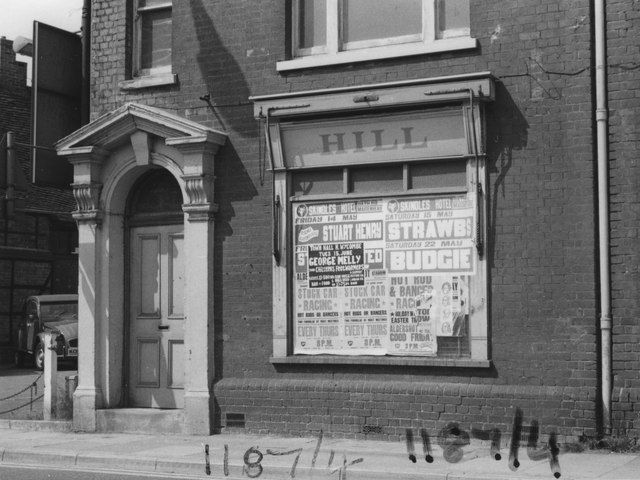
Fly posters advertising Strawbs, Budgie, George Melly, and other acts in Henley-on-Thames, 1976
MediaPoster
Preceded byGuerrilla marketing
Followed byStreet marketing
Flyposted posters in Manchester, England, 2007
A fake lost-person poster advertising the second annual Treefort Music Fest in Boise, Idaho, 2013

Flyposting (also known as bill posting) is a guerrilla marketing tactic where advertising posters (also known as flyers) are put up. In the United States, these posters are also commonly referred to as wheatpaste posters because wheatpaste is often used to adhere the posters. Posters are adhered to construction site barricades, building façades and in alleyways.

[edit]

The posters used are typically made of a lightweight paper and printed using flexography, digital printing and screen printing. Modern printing techniques enable the posters to feature full-colour designs, halftones, and photographs, making them popular for advertising concerts, political messages, commercial advertisements and special events. An increasing number of posters do not advertise anything at all and instead feature artwork, inspirational or positive messages, and religious messages.[citation needed]

It is an advertising tactic mostly used by small businesses promoting concerts and political activist groups, but there have been occasions where international companies subcontracted local advertising agencies for flyposting jobs in order not to get caught in illegal behavior, as a form of guerrilla marketing. In 2004, Sony Music and BMG were threatened with anti-social behaviour orders by Camden Borough Council for illegal flyposting.[1]

Legislation

[edit]

In many countries, it is illegal to place such posters on private property without the consent of the property owner, or to post on public property without a sign permit from the local government. Some areas, however, have public bulletin boards where notices may be posted.[2]

In an effort to discourage illegal flyposting, surfaces at risk of it are sometimes permanently signed Post No Bills (US), No Flyposting (UK), or Défense d'afficher - loi du 29 juillet 1881 (France), a reference to a law passed in 1881 that regulates the display of advertisements in public spaces.

While flyposting is commonplace, it is often viewed as a nuisance by landlords and they can take civil action to protect their property rights. A particularly noteworthy incident of this type occurred in Boston, Massachusetts. In the case of the 2007 Boston Mooninite panic, advertisers had placed electronic signboards without notifying local authorities, prompting a costly reaction by the Boston Police Department bomb squad when the signs were mistaken for bombs.[3]

Web banner

[edit]

With the rise of the World Wide Web, much of advertising has been shifted online. Some advertising agencies have drawn similarities between flyposting and certain types of adware, which are more invasive to consumers.[4]

See also

[edit]

References

[edit]
Revisions and contributorsEdit on WikipediaRead on Wikipedia
from Grokipedia
Flyposting is the illegal and unauthorized placement of posters, bills, or notices on or such as walls, , or buildings, without the of the owner or relevant authorities. Commonly utilized for promoting commercial events, products, political messages, or cultural activities, it functions as a form of that prioritizes visibility and low cost over legal compliance. The practice traces its origins to 19th-century bill-posting traditions in urban centers like , where legitimate posterers operated alongside illicit ones, but modern flyposting emerged distinctly as unauthorized activity amid stricter regulations and urban beautification efforts. In jurisdictions worldwide, particularly in the and other European countries, flyposting constitutes a criminal offense under local bylaws and environmental laws, leading to fines, cleanup costs imposed on perpetrators, and enforcement campaigns by councils to mitigate its role in visual clutter and defacement. Despite its prohibition, flyposting persists due to its effectiveness in targeting dense foot traffic areas, though it generates controversies over aesthetic degradation, maintenance burdens on public resources, and occasional associations with broader issues, prompting specialized guides for prevention and removal. Local authorities often collaborate with police for prosecutions, highlighting enforcement challenges in high-incidence zones like commercial districts and event-heavy cities.

Definition and Methods

Core Definition

Flyposting is the unauthorized attachment of advertising materials, such as posters, stickers, banners, or bills, to public or including walls, , buildings, and utility poles, without obtaining permission from the property owner or relevant authorities. This practice, also known as wild posting or bill posting, constitutes a form of intended to maximize exposure in high-traffic urban areas while circumventing formal advertising regulations. The act typically involves affixing materials using adhesives like wheat paste, glue, or staples, often under cover of night to evade detection, and is distinguished by its ephemeral nature, as posters are frequently layered over existing ones or removed by authorities. In legal terms, flyposting is treated as a criminal offense in many jurisdictions, particularly in the , where it falls under laws against fly-posting and unauthorized advertisements, punishable by fines up to £2,500 per offense under the Clean Neighbourhoods and Environment Act 2005. Enforcement is handled by local councils or police, who prioritize removal to prevent visual clutter and damage to surfaces. While flyposting can serve commercial, political, or artistic purposes, its core illegality stems from rights violations and , as it defaces structures and imposes cleanup costs estimated at hundreds of pounds per incident in urban settings. Unlike permitted billboards or sanctioned , it lacks oversight, leading to proliferation in densely populated areas where traditional advertising is cost-prohibitive.

Techniques and Materials

Flyposting primarily employs -based attachment of printed posters to urban surfaces such as walls, poles, and boards. The predominant technique involves wheatpasting, where posters are secured using a homemade derived from and , applied via brushes or rollers to ensure strong bonding on porous substrates like or . Wheatpaste preparation entails boiling four parts , then incorporating a of one part mixed with cold , stirring until the mixture thickens into a glue-like consistency suitable for outdoor durability against weather exposure. Posters are typically printed on thin, uncoated stock to enhance paste absorption and flexibility during application. Application proceeds by coating the target surface with paste, positioning the , and smoothing out air pockets to prevent peeling; a second layer of paste is often applied over the for added protection and longevity. Alternative methods include stapling for wooden surfaces, taping for or smooth panels, or using cable ties and stickers for quicker, less permanent fixes, though these yield shorter times compared to paste. Essential materials encompass posters in bulk quantities, paste-making ingredients ( and ), containers like buckets for transport, and tools such as wide brushes or squeegees for even distribution, often carried discreetly to evade detection during nighttime operations. Commercial adhesives or synthetic glues may substitute in some instances for faster drying, but traditional flour-based variants prevail due to their low cost and environmental degradability over time. Flyposting is fundamentally distinguished from legal billposting by its lack of authorization and formal site allocation. Legal billposting, as practiced since the , relies on designated advertising hoardings or surfaces leased from property owners or municipalities, often coordinated by billposting associations to ensure compliance with regulations. In 1872, the International Bill Posters' Association formalized such practices , emphasizing controlled placement to avoid conflicts with property rights. Flyposting, conversely, bypasses these structures, targeting ad hoc urban surfaces without permission, which exposes practitioners to fines and removal orders under local bylaws, such as those in the UK where unauthorized postings can incur penalties up to £2,500 per offense as of 2023. In contrast to , flyposting employs prefabricated, printed materials adhered via paste, glue, or staples rather than direct inscription with paint, markers, or etchings. typically involves individualized, on-site creation—often tags, murals, or throw-ups—prioritizing stylistic expression or territorial marking, with permanence enhanced by applications that penetrate porous surfaces. Flyposting prioritizes rapid dissemination of standardized promotional content, resulting in peelable but accumulative layers that councils classify separately as "environmental crimes," with local authorities reporting over 10,000 flyposting incidents annually in major cities like , distinct from 's focus on visual permanence. This methodological divergence affects remediation: flyposting residues respond to solvents or scraping, whereas often requires abrasive cleaning or overpainting. Flyposting also differs from broader street art techniques, despite occasional overlap in medium. While street art encompasses unsanctioned public interventions like stenciling or installations driven by aesthetic or , flyposting centers on commercial replication—posters promoting events, products, or campaigns—lacking the conceptual depth attributed to artists such as . Regional terminology further nuances this: North American "wild posting" may involve semi-permitted placements on construction sites using larger formats (up to 4x6 feet) and durable stocks, contrasting European flyposting's smaller, ephemeral A2 or A1 sheets on varied urban fixtures. Such distinctions underscore flyposting's guerrilla efficiency for low-cost reach, averaging 1,000-5,000 impressions per site in high-traffic areas, over artistic experimentation.

Historical Development

Origins and Early Examples

The practice of affixing printed bills and posters to public walls and surfaces, precursor to modern flyposting, arose in the early in , driven by urban expansion, cheaper printing, and demand for commercial and political promotion. In Britain, bill stickers—manual laborers who pasted advertisements—operated in an unregulated environment, competing fiercely for wall space in cities like , often leading to physical confrontations over prime locations. By the mid-19th century, this had become a distinct , with posters promoting theaters, , and events pasted on hoardings, buildings, and fences without consistent oversight. One of the earliest documented political uses occurred in 1840, when Prince Napoleon, nephew of Napoleon Bonaparte, distributed posters during his attempted coup in Boulogne, France; printed in , these proclaimed his imperial restoration and included spaces for handwritten dates, marking an innovative early instance of mass-distributed . In commercial contexts, Victorian-era saw bill posting tied to , such as advertising musical performances at unlicensed venues, as referenced by in his 1879 Dictionary of London. By 1877, approximately 200 professional bill-posters worked legitimately in , but a larger, unaccountable cadre engaged in unauthorized postings, highlighting the blurred line between sanctioned and illicit practice. The formalization of legitimate bill posting further delineated flyposting's illicit nature; in the early 1860s, Edward Sheldon in pioneered renting walls for exclusive rights, shifting some operations toward paid sites while leaving opportunistic, unpaid postings as the unregulated alternative. Across the Atlantic, similar practices prompted the formation of the International Bill Posters’ Association of in 1872, reflecting growing organization amid unchecked street-level proliferation. These early examples underscore flyposting's roots in expedient, low-cost dissemination amid limited regulatory frameworks, predating the term "fly-posting," which first appeared in print around 1903.

20th Century Expansion

In the early decades of the 20th century, flyposting expanded rapidly in major urban centers, particularly in , where it emerged as the primary medium for promoting theatrical productions and patent medicines, leading to extensive layering of advertisements on building facades and telephone poles. This growth was marked by intense competition, including violent clashes among bill-posters; for instance, around the early 1900s, police reported fights involving up to sixty individuals vying for control of prime posting locations such as 104-106 West Thirty-Fourth Street. The practice proliferated across other cities, including , , , , and , fueled by and the increasing availability of mass-produced posters. By mid-century, flyposting adapted to emerging cultural scenes, notably in music promotion. In , as early as the late 1940s, organizers of the local traditional scene routinely posted advertisements on derelict buildings in areas popular with fans, exploiting under-policed urban spaces. The marked a shift toward more subversive applications, with flyposting in New York adopting a "wild" guerrilla style employed by political radicals and nascent punk musicians to publicize events and ideas outside official channels. In , designers like Hapshash evaded authorities through visually striking psychedelic posters for venues, contributing to the method's association with countercultural defiance. The and saw further entrenchment in the rock and punk eras, where flyposting served as an economical alternative to formal amid rising promotion demands. Record labels outsourced to specialized gangs, paying approximately £30 for every 100 posters in 1977, a rate that reflected the scale of operations controlled by figures in . Campaigns included ' 1977 promotions, though politically charged content, such as the Edgar Broughton Band's 1974 anti-establishment poster, occasionally faced refusal from these networks due to perceived risks. This period's expansion was supported by advancements in , enabling cheaper, higher-volume production, while enforcement remained inconsistent, allowing the practice to thrive in dense, transient urban environments.

Contemporary Evolution

In the early 21st century, flyposting evolved into "wild posting," a formalized variant of emphasizing strategic, high-visibility poster placements in urban environments such as and . This adaptation, building on 1960s punk and political applications, saw increased adoption by commercial brands from the 2000s onward, with campaigns for luxury labels like featuring models such as to cultivate an edgy, authentic image. Agencies specializing in wild posting integrate it into broader media strategies, often securing permissions for sites like construction barriers to mitigate legal risks while preserving the medium's rebellious appeal. Contemporary techniques prioritize data-driven placement in high-footfall areas, employing vibrant graphics, bold , and calls-to-action to maximize impact. Integration with digital elements, including QR codes linking to websites or , has bridged physical posters with online metrics, enabling campaigns to amplify reach through and hashtags. For example, a campaign utilizing posters in subways and districts reportedly boosted attendance by 25%. This hybridization addresses the saturation of digital advertising by offering tangible, context-specific exposure. Stricter regulations, such as local authority guidelines aimed at curbing unauthorized postings, have prompted more sophisticated compliance measures, including eco-friendly materials and rapid deployment to evade removal. Despite these challenges, wild posting's low cost— at approximately $1 per gallon compared to $20,000 daily for traditional billboards—sustains its viability for independent artists, activists, and brands seeking hyper-local engagement in an era dominated by algorithmic ads. The practice continues to foster "porous urban space," allowing non-corporate messages to infiltrate controlled environments.

Applications and Motivations

Commercial and Promotional Uses

Flyposting serves as a strategy for commercial promotion, enabling businesses to advertise products, services, and events on public surfaces without permission, thereby achieving high visibility at minimal cost. Companies in sectors like and favor this method for its immediacy and ability to target dense urban foot traffic, often layering posters in prominent locations such as lampposts and building walls to create a saturated visual impact. For instance, luxury brands including and have deployed celebrity-endorsed posters—featuring figures like for and for suits—across streets to hype clothing collections and generate street-level buzz. Music labels and event promoters extensively use flyposting for concert and album announcements, exploiting its low barrier to entry compared to permitted outdoor ads. A notable case involved a record label fined £5,000 by Westminster Council in 2003 for unauthorized postings in London's district promoting music events. Similarly, major corporations like have integrated flyposting into broader guerrilla campaigns to amplify product launches, valuing the tactic's edginess for fostering word-of-mouth engagement despite regulatory risks. Costs remain a key driver, with materials like available for as little as $1 per , contrasting sharply with rates exceeding $20,000 daily, allowing small budgets to yield extensive coverage. Penalties underscore the trade-offs, as authorities enforce against commercial flyposting to curb visual clutter and . In 2025, issued a £500 to a local business for four illegal advertisements promoting its services. Such reflects broader motivations for use: the technique's affordability and viral potential often outweigh fines in cost-benefit calculations for short-term campaigns, though repeated violations can escalate to court actions with maximum penalties up to £2,500 per offense in the UK.

Political and Activist Campaigns

Flyposting has been employed by activist groups as a low-cost method to disseminate political messages and mobilize support in urban environments, circumventing regulated advertising channels. This tactic allows for rapid, widespread visibility but frequently violates local ordinances prohibiting unauthorized postings on . In the United States, the 2012 campaign, aimed at raising awareness about and the in , explicitly urged participants to flypost images of Kony on walls and poles across cities to amplify the viral video's reach and pressure governments for intervention. European examples illustrate flyposting's role in environmental and anti-capitalist . In September 2022, activists coordinated efforts to subvert over 500 advertising billboards across multiple countries, replacing commercial ads with satirical artworks critiquing the aviation industry's contribution to and highlighting the discrepancy between greenwashing claims and actual carbon footprints. Similarly, in the , activists in October 2022 conducted nighttime flyposting operations in to demand an immediate amid concerns over failures under the Conservative , using posters to echo the hashtag and draw public attention to perceived governmental inaction. Pro-Palestine advocacy has also featured flyposting, often leading to enforcement actions. In 2023, the group London Palestine Action placed unauthorized posters inside bus shelter ad panels calling for the cancellation of a Tel Aviv-related event, prompting complaints to authorities and underscoring tensions between free speech claims and vandalism regulations. While mainstream in jurisdictions like the typically adhere to permitted election poster sites to avoid fines— with councils enforcing "" policies even during campaigns—fringe or elements occasionally resort to flyposting for unauthorized promotion, resulting in prosecutions under town and country planning acts. These instances highlight flyposting's appeal for under-resourced campaigns seeking unfiltered public exposure, though empirical data on its electoral impact remains limited compared to digital or broadcast alternatives.

Artistic and Subcultural Contexts

Flyposting serves as a medium for street artists employing wheatpasting, a technique involving made from and to affix posters to public surfaces, enabling large-scale, ephemeral installations that interact with urban environments. , through his Obey Giant campaign initiated in the late 1980s, extensively used wheatpasting to distribute propaganda-style posters featuring Andre the Giant, with documented applications in as early as 1995. This method allowed Fairey to parody advertising and consumer culture on a guerrilla scale, producing posters on inexpensive paper optimized for pasting before transitioning elements to prints. Other practitioners, such as Swoon (Caledonia Dance Curry), have specialized in life-size wheatpaste prints and paper cutouts of human figures since the late 1990s, blending portraiture with site-specific interventions. French artist Levalet creates whimsical, realistic figures via wheatpasted posters that engage architectural elements in , emphasizing narrative absurdity in public spaces. Historically, artistic flyposting traces to conceptual interventions like Daniel Buren's 1970 project, where he systematically flyposted striped posters in the , New York, and metros to explore site-specific perception and repetition. Contemporary wheatpasting continues this tradition, with artists like Steeven Salvat affixing finely rendered birds and animals to dried flowers for surreal, temporary tableaux, and incorporating pasted elements into broader works for social commentary. These practices prioritize impermanence and accessibility, distinguishing flyposting from permanent while aligning with street art's ethos of uncommissioned public expression. In subcultural contexts, flyposting gained traction within the scene during the 1970s and 1980s, where bands, collectives, and promoters pasted handmade flyers on telephone poles, walls, and derelict buildings to publicize underground concerts, circumventing costly or restrictive mainstream advertising. In , this method promoted , and events on sites frequented by subcultural audiences as early as the late 1940s for , evolving into a staple for punk gigs by the 1970s. Punk posters often embodied anti-authoritarian themes, functioning as communal billboards that reinforced subcultural identity and rebellion against commercial norms, with examples from bands like the and amplifying their DIY aesthetic through illicit placement. This usage extended to other scenes, such as hip-hop and club culture, where flyposting facilitated dissemination of event details in urban enclaves resistant to institutional gatekeeping. Artists like Dr. D (Subvertiser) integrated flyposting into punk-adjacent subversions in London's during the 1980s, targeting high-visibility spots for countercultural messaging. Overall, flyposting in these milieus emphasized autonomy and ephemerality, mirroring the transient, spirit of the communities it served.

International Variations

In the , flyposting is prohibited under section 224 of the Town and Country Planning Act 1990 and section 148 of the Highways Act 1980, classifying it as a criminal offense without owner consent or . Penalties include unlimited fines upon , with magistrates' courts often imposing up to £2,500 for individuals and fixed penalty notices ranging from £100 to £400 issued on-site by local authorities. Enforcement emphasizes removal costs borne by councils, which can exceed £1,000 per incident in urban areas. France regulates flyposting, termed affichage sauvage, as illegal under environmental and urban planning codes, with article L. 621-2 of the Code du patrimoine and related decrees prohibiting unauthorized postings on public or private surfaces. Violations carry fines up to €1,500 for individuals and €7,500 for legal entities, though enforcement varies by municipality, with Paris showing periodic crackdowns but historical tolerance for cultural or promotional posters under freedom of expression challenges. In , wild posting constitutes under section 303 of the (), rendering it illegal without explicit permission, particularly on traffic signs, buildings, or public infrastructure. Penalties include fines starting at €500 and potential imprisonment up to two years for severe cases, with authorities intensifying removals and prosecutions since the early to curb urban blight from advertising and overlaps. Australian regulations treat flyposting—often called bill posting—as an offense under state-specific litter and nuisance laws, such as the Litter Act 1979 in and the Local Nuisance and Litter Control Act 2016 in , requiring owner consent. Fines vary: imposes $330 for individuals and up to $3,300 for corporations per offense, while other jurisdictions like Victoria cap at $10,000 maximum but typically issue $200–$2,500 penalties, with limited success in curbing persistent campaigns due to jurisdictional fragmentation. The lacks federal uniformity, delegating flyposting rules to municipal ordinances that generally ban unauthorized postings as littering or defacement, with fining $200–$350 per poster under administrative code section 10-119 and imposing up to $1,000 plus cleanup fees. Enforcement loopholes persist, such as 30-day grace periods for removal in some cities before fines accrue, allowing short-term guerrilla campaigns, though repeat violations can escalate to misdemeanors with jail time in stricter locales like .

Enforcement Mechanisms and Penalties

Enforcement of flyposting regulations primarily occurs through authorities, who conduct patrols, respond to public reports, and utilize such as CCTV footage to identify offenders. In the , local councils and police enforce prohibitions under Section 224 of the Town and Country Planning Act 1990, which deems unauthorized display of advertisements on certain structures a criminal offence, alongside provisions in the Highways Act 1980 for obstructions and the Criminal Damage Act 1971 for surface damage. Mechanisms include immediate removal of posters under Section 225 of the 1990 Act, where councils can recover costs from the advertiser, and issuance of fixed penalty notices (FPNs) by authorized officers to encourage compliance without court proceedings. Penalties in the UK emphasize financial deterrence, with FPNs typically ranging from £80 to £400, often discounted (e.g., to £200) for payment within 10-14 days. Non-payment or repeat offences lead to prosecution in magistrates' courts, where maximum fines reach £2,500 per poster under the Town and Country Planning Act, plus up to £250 for each continuing day of the offence. In , fines are capped at £200 on summary conviction, with £20 per additional day. is rare, reserved for egregious or commercial-scale violations. In the United States, enforcement is decentralized, governed by municipal ordinances rather than uniform , often classifying flyposting as , littering, or defacement of . Local officers or police issue citations, with penalties varying widely—fines from $100 to several thousand dollars depending on the city, and potential charges leading to or, in extreme cases like , up to 15 days jail for persistent illegal advertising. European approaches outside the mirror this, with national or local fines (e.g., up to €500-€2,000 in some jurisdictions for unauthorized postings), enforced by municipal teams focused on rapid removal and advertiser tracing via poster details. Across regions, —through event details or names on posters—enables targeting organizers rather than just posters, enhancing deterrence for commercial flyposting.

Case Studies of Prosecutions

In 2019, Manchester City Council prosecuted JD Sports Fashion Plc for flyposting over 30 unauthorized posters promoting a sale event across the city centre, including on traffic signs and street furniture. The company pleaded guilty to five offences under the Town and Country Planning Act 1990 at Manchester Magistrates' Court, resulting in a £7,500 fine plus additional costs and a victim surcharge totaling more than £8,000. The council's environmental crimes team had gathered evidence through site visits and traced the posters back to the retailer, highlighting how even large corporations can face liability for outsourced advertising campaigns that violate local bylaws. In March 2025, York Magistrates' Court convicted an unnamed local company of flyposting numerous posters on lampposts and lights in between July and September 2024. The firm was fined £2,500, ordered to pay a £1,000 , and £1,921 in prosecution costs, amounting to £5,421 overall. enforced the case after repeated warnings and evidence collection demonstrated the company's direct involvement in the unauthorized postings, which cluttered public spaces and required council resources for removal. This prosecution underscored the escalating penalties for repeat or persistent offenders under . A 2024 case in involved the prosecution of a resident for extensive flyposting across multiple towns in the county, including posters affixed to street signs, poles, and buildings without permission. At , the individual received a 24-month conditional discharge—avoiding immediate incarceration provided no further offences occurred—and was ordered to pay £1,465 in full prosecution costs to . Council officers had documented over 100 instances of the activity through patrols and public reports, leading to this summary conviction that emphasized rehabilitation alongside financial accountability for prolific individual perpetrators rather than solely commercial entities.

Debates and Criticisms

Effectiveness as Guerrilla Marketing

Flyposting functions as a tactic by deploying posters in high-traffic urban areas without permission, aiming to surprise audiences and maximize exposure at minimal expense. This approach capitalizes on the element of unexpectedness to foster word-of-mouth dissemination and heightened , particularly among younger demographics frequenting city centers. Marketing analyses indicate that such campaigns can achieve significant visibility, with one industry report citing up to 70% increased among urban residents for well-targeted efforts. Case studies of flyposting for events, such as music festivals, demonstrate tangible outcomes like boosted attendance through localized buzz, where neon or visually striking posters in trendy drew crowds that traditional ads might overlook. The low barrier to entry—often costing fractions of digital or broadcast alternatives—yields a favorable in niche markets, aligning with broader guerrilla strategies that prioritize creativity over budget. Empirical comparisons in media suggest posters, including unauthorized variants, outperform radio in certain recall metrics for local promotions. However, effectiveness is constrained by the ephemeral of flyposted materials, which authorities routinely remove, limiting sustained impact. Legal risks, including fines and reputational harm from associations with , can negate gains, as evidenced by enforcement actions that publicize violations and alienate audiences perceiving the tactic as intrusive. While guerrilla theses affirm superior consumer behavior influence over conventional methods, flyposting's illegality introduces variability absent in authorized alternatives, with scant peer-reviewed longitudinal data quantifying net ROI amid these liabilities.

Arguments Framing It as Vandalism

Flyposting constitutes by involving the unauthorized attachment of posters to public or , often using adhesives, staples, or nails that cause physical damage to surfaces such as walls, lampposts, and . This defacement requires removal efforts that can further harm substrates, including painted or historical structures, mirroring the destructive intent of traditional . Legally, in jurisdictions like the , it falls under provisions for criminal damage or when is absent, with treating it as an environmental offense akin to littering or . In the United States, such acts align with criminal statutes, as in where willful damage to property under $200 is a punishable by fines and potential jail time. Proponents of this framing argue that flyposting erodes urban aesthetics, creating visual clutter that signals neglect and fosters broader anti-social behavior, consistent with environmental criminology principles linking minor disorders to increased crime perception. The proliferation of layered, weathered posters not only obscures legitimate but also contributes to a degraded public realm, diminishing property values and deterring investment in affected areas. Cleanup demands specialized labor and materials, imposing uncompensated burdens on property owners or municipalities; for instance, local authorities classify it as a warranting proactive removal to preserve community standards. Economically, the activity generates substantial remediation costs, often absorbed by taxpayers through council budgets that bundle flyposting with abatement. In like Camden, annual expenditures for flyposting removal have been estimated at around £100,000, reflecting the scale of and required to counteract recurrent postings. Fines, while a deterrent—up to £2,500 per instance in some areas—frequently fail to offset these outlays, underscoring the net fiscal drain on resources without yielding equivalent benefits to perpetrators. Critics emphasize that unlike permitted , flyposting evades regulatory oversight, externalizing costs to non-consenting parties and undermining equitable urban management.

Economic and Social Costs

Flyposting imposes significant economic burdens on local authorities and property owners through removal and enforcement expenses. In , , the annual cost to taxpayers for removing flyposters from lamp-posts, traffic signs, ATMs, and other urban fixtures exceeded £250,000 as of 2011. Similarly, a local authority reported spending at least £25,000 yearly on poster and sticker removal in 2001, despite collecting £75,000 in fines, highlighting the net fiscal drain after accounting for incomplete recovery. These costs encompass labor, equipment, and materials for cleaning, often requiring specialized methods to avoid surface damage, and can escalate with the scale of infestations in high-traffic areas. es affected by flyposting on face additional outlays for remediation, which may include hiring contractors and temporary business disruptions during cleanup. Beyond direct removal, flyposting contributes to indirect economic losses via urban degradation. It fosters an appearance of neglect that deters investment and tourism, as noted in municipal assessments linking such visual clutter to broader perceptions of decay. Property owners may incur devaluation risks, though quantifiable impacts specific to flyposting remain limited; general studies on street-level defacement, including posters, correlate with reduced appeal in commercial districts, potentially lowering rental yields or sales values. Enforcement efforts, including monitoring and prosecution, further strain public budgets, with local councils in the UK allocating resources that could otherwise address infrastructure or services. Socially, flyposting exacerbates urban blight by cluttering public spaces, diminishing aesthetic quality, and signaling permissiveness toward disorder. Combined with and , it erodes community pride and usability of streets, as evidenced in parliamentary submissions recognizing its damaging effects on shared environments. This can heighten residents' sense of insecurity, associating flyposting with anti-social behavior and potentially elevating in affected neighborhoods. In subcultural contexts, persistent flyposting reinforces cycles of low-level , straining social cohesion and diverting community resources toward mitigation rather than positive initiatives.

Societal Impacts

Environmental Consequences

Flyposting generates litter and waste as posters, typically printed on non-recyclable or contaminated paper stock, accumulate on surfaces and degrade over time. If left unremoved, these materials rot, fragment, and disperse as debris, contributing to urban litter accumulation that clogs drainage systems and fosters vermin habitats. A 2003-2004 Committee report documented fly-posting's role in and , noting its prevalence in commercial areas where it defaces and legitimate sites, affecting 13% of surveyed locations and prompting costly removal operations that produce additional . In Westminster alone, 2,032 incidents in 2003 incurred £400,000 in cleanup expenses, underscoring the scale of material disposal involved. Adhesives used in flyposting, such as wheat paste or commercial glues, leave residues that require solvent-based cleaning, potentially introducing trace chemical pollutants into during removal, though biodegradable options mitigate this to some extent. The practice indirectly exacerbates broader environmental decline by signaling neglect, which can correlate with reduced maintenance of green spaces and heightened littering in affected zones, as observed in local assessments.

Cultural Perceptions and Legacy

Flyposting elicits divided cultural perceptions, often framed as a on public spaces by authorities and residents who view it as visual clutter akin to , yet embraced in subcultural circles for embodying raw, unfiltered urban expression. In and countercultural contexts, it functions as a democratizing medium for communication, paralleling in challenging commercial advertising norms and fostering communal narratives on city walls. Academic analyses highlight its role in "porous urban space," where layered posters evoke historical memory and social flux, contrasting with sanitized modern billboards. Within music and punk scenes of the 1970s and 1980s, particularly in and , flyposting gained cachet as a rebellious tactic that lent authenticity to promotions, with record labels employing "flyposters" like Vince Stitt to blanket walls and create buzz for emerging bands. This era solidified its image as guerrilla artistry, rooted in protest traditions, where illegality amplified perceived edginess over permitted channels. Historically, its precedents trace to 15th-century , with affixing printed flyers for sales by 1477, evolving into 19th-century uses by traveling circuses and theaters for transient announcements, embedding it in performative street culture. The legacy of flyposting endures as a foundational influence on and , inspiring tactics like wildposting in New York from Victorian flyposting roots, and underscoring tensions between ephemeral public intervention and institutional control. Its persistence reflects causal drivers of low-barrier dissemination in pre-digital eras, now echoed in digital memes and viral campaigns, though empirical studies note subjective valuations often prioritize its informational utility in underserved communities over aesthetic harms. Despite regulatory crackdowns, cultural reverence persists in histories, as seen in exhibitions tracing posters' role in protest visuals from the onward, affirming its status as a resilient artifact of .

Alternatives and Mitigation Strategies

Legal alternatives to flyposting encompass permitted outdoor advertising methods that achieve similar visibility without violating public space regulations. These include negotiating access to private property sites for wheatpasting or poster displays, as practiced in "Wild Posting®" campaigns where advertisers secure landowner permissions to avoid illegality. Other options involve distributing flyers in authorized locations such as community bulletin boards, local businesses like coffee shops and libraries, and educational institutions, which provide targeted exposure while complying with local ordinances. Digital equivalents, such as geo-targeted social media ads or electronic billboards, offer scalable reach without physical defacement, though they lack the tactile impact of street-level postings. Mitigation strategies focus on proactive prevention, swift remediation, and deterrent enforcement to curb flyposting incidence. Physical interventions include applying hydrophobic nano-coatings to surfaces, which repel adhesives and enable easy water-based removal of posters without residue, as demonstrated in urban applications reducing persistence. Architectural deterrents, such as installing trellises or planting climbing vegetation on walls, discourage attachment by creating uneven or inaccessible surfaces. Rapid removal protocols by local authorities or property managers signal intolerance for violations, with studies indicating that prompt cleanups within hours minimize repeat postings by disrupting perpetrators' perceived impunity. Enforcement mechanisms integrate patrols during high-risk periods, such as event seasons, to educate and intercept posters in real-time, complemented by legal advertising panels that provide sanctioned outlets and reduce incentives for illegality. Coordinated inter-agency efforts, including prosecution for removal costs and fines up to thousands of pounds per offense in jurisdictions like the , have proven effective when resourced consistently, as outlined in government guides emphasizing sustained monitoring over sporadic crackdowns. Community reporting hotlines further amplify these measures by detection, though efficacy depends on public awareness campaigns to counter perceptions of flyposting as harmless.

References

Add your contribution
Related Hubs
User Avatar
No comments yet.