Hubbry Logo
Syrian WarsSyrian WarsMain
Open search
Syrian Wars
Community hub
Syrian Wars
logo
8 pages, 0 posts
0 subscribers
Be the first to start a discussion here.
Contribute something
Syrian Wars
Syrian Wars
from Wikipedia
Syrian Wars

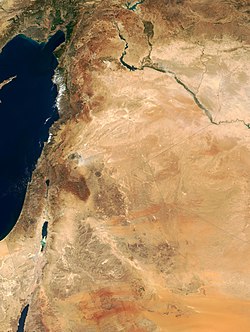
Coele-Syria, the site where much of the wars took place
Date274–271 BC; 260–253 BC; 246–241 BC; 219–217 BC; 202–195 BC; 170–168 BC
Location
Result
  • Seleucid Victory
Belligerents
Commanders and leaders

The Syrian Wars were a series of six wars between the Seleucid Empire and the Ptolemaic Kingdom of Egypt, successor states to Alexander the Great's empire, during the 3rd and 2nd centuries BC over the region then called Coele-Syria, one of the few avenues into Egypt. These conflicts drained the material and manpower of both parties and led to their eventual destruction and conquest by Rome and Parthia. They are briefly mentioned in the biblical Books of the Maccabees.

Background

[edit]

In the Wars of the Diadochi following Alexander's death, Coele-Syria initially came under the rule of Antigonus I Monophthalmus. In 301 BC Ptolemy I Soter, who four years earlier had crowned himself King of Egypt, exploited events surrounding the Battle of Ipsus to take control of the region. The victors at Ipsus, however, had allocated Coele-Syria to Ptolemy's former ally Seleucus I Nicator, founder of the Seleucid Empire. Seleucus, who had been aided by Ptolemy during his ascent to power, did not take any military action to reclaim the region. Once both were dead, however, their successors became embroiled in war.

First Syrian War (274–271 BC)

[edit]

A decade into his rule, Ptolemy II faced Antiochus I, the Seleucid king who was trying to expand his empire's holdings in Syria and Anatolia. Ptolemy proved to be a forceful ruler and skilled general. In addition, his recent marriage to his court-wise sister Arsinoe II of Egypt had stabilized the volatile Egyptian court, allowing Ptolemy to successfully carry out the campaign.

The First Syrian War was a major victory for the Ptolemies. Antiochus took the Ptolemaic controlled areas in coastal Syria and southern Anatolia in his initial rush. Ptolemy reconquered these territories by 271 BC, extending Ptolemaic rule as far as Caria and into most of Cilicia. With Ptolemy's eye focused eastward, his half-brother Magas declared his province of Cyrenaica to be independent. It would remain independent until 250 BC, when it was reabsorbed into the Ptolemaic Kingdom: but not before having triggered a sequence of Ptolemaic and Seleucid court intrigues, war and ultimately leading to the marriage of Theos and Berenice.

Second Syrian War (260–253 BC)

[edit]

Antiochus II succeeded his father in 261 BC, and thus began a new war for Syria. He reached an agreement with the current Antigonid king in Macedon, Antigonus II Gonatas, who was also interested in pushing Ptolemy II out of the Aegean. With Macedon's support, Antiochus II launched an attack on Ptolemaic outposts in Asia.

Most of the information about the Second Syrian War has been lost. It is clear that Antigonus' fleet defeated Ptolemy's at the Battle of Cos in 261 BC, diminishing Ptolemaic naval power. Ptolemy appears to have lost ground in Cilicia, Pamphylia, and Ionia, while Antiochus regained Miletus and Ephesus. Macedon's involvement in the war ceased when Antigonus became preoccupied by the rebellion of Corinth and Chalcis in 253 BC, possibly instigated by Ptolemy, as well as an increase in enemy activity along Macedon's northern frontier.

The war was concluded around 253 BC with the marriage of Antiochus to Ptolemy's daughter, Berenice Syra. Antiochus repudiated his previous wife, Laodice, and turned over substantial domain to her. He died in Ephesus in 246 BC, poisoned by Laodice according to some sources. [citation needed] Ptolemy II died in the same year.

Third Syrian War (246–241 BC)

[edit]

Also known as the Laodicean War, the Third Syrian War began with one of the many succession crises that plagued the Hellenistic states. Antiochus II left two ambitious mothers, his repudiated wife Laodice and Ptolemy II's daughter Berenice Syra, in a competition to put their respective sons on the throne. Laodice claimed that Antiochus had named her son heir while on his deathbed, but Berenice argued that her newly born son was the legitimate heir. Berenice asked her brother Ptolemy III, the new Ptolemaic king, to come to Antioch and help place her son on the throne. When Ptolemy arrived, Berenice and her child had been assassinated.

Ptolemy declared war on Laodice's newly crowned son, Seleucus II, in 246 BC, and campaigned with great success (his forces possibly being commanded by Xanthippus of Lacedaemon, aka Xanthippus of Carthage, the mercenary general responsible for defeating a Roman army at Tunis/Bagrades in 255 BC). He won major victories over Seleucus in Syria and Anatolia, briefly occupied Antioch and, as a recent cuneiform discovery[1] proves, even reached Babylon. These victories were marred by the loss of the Cyclades to Antigonus Gonatas in the Battle of Andros. Seleucus had his own difficulties. His domineering mother asked him to grant co-regency to his younger brother, Antiochus Hierax, as well as rule over Seleucid territories in Anatolia. Antiochus promptly declared independence, undermining Seleucus' efforts to defend against Ptolemy.

In exchange for peace in 241 BC, Ptolemy was awarded new territories on the northern coast of Syria, including Seleucia Pieria, the port of Antioch. The Ptolemaic kingdom was at the height of its power.

Fourth Syrian War (219–217 BC)

[edit]

Upon taking the Seleucid throne in 223 BC, Antiochus III the Great (241–187 BC) set himself the task of restoring the lost imperial possessions of Seleucus I Nicator, which extended from the Greco-Bactrian Kingdom in the east, the Hellespont in the north, and Syria in the south. By 221 BC, he had re-established Seleucid control over Media and Persia, which had been in rebellion. The ambitious king turned his eyes toward Syria and Egypt.

Egypt had been significantly weakened by court intrigue and public unrest. The rule of the newly inaugurated Ptolemy IV Philopator (reigned 221–204 BC) began with the murder of queen-mother Berenice II. The young king quickly fell under the absolute influence of imperial courtiers. His ministers used their absolute power in their own self-interest, to the people's great chagrin.

Antiochus sought to take advantage of this chaotic situation. After an invasion in 221 BC failed to launch, he finally began the Fourth Syrian War in 219 BC. He recaptured Seleucia Pieria as well as cities in Phoenicia, amongst them Tyre. Rather than promptly invading Egypt, Antiochus waited in Phoenicia for over a year, consolidating his new territories and listening to diplomatic proposals from the Ptolemaic kingdom.

Meanwhile, Ptolemy's minister Sosibius began recruiting and training an army. He recruited not only from the local Greek population, as Hellenistic armies generally were, but also from the native Egyptians, enrolling at least thirty thousand natives as phalangites. This innovation paid off, but it would eventually have dire consequences for Ptolemaic stability. In the summer of 217 BC, Ptolemy engaged and defeated the long-delayed Antiochus in the Battle of Raphia, the largest battle since the Battle of Ipsus over eighty years earlier.

Ptolemy's victory preserved his control over Coele-Syria, and the weak king declined to advance further into Antiochus' empire, even to retake Seleucia Pieria. The Ptolemaic kingdom would continue to weaken over the following years, suffering from economic problems and rebellion. Patriotic sentiment had developed among the native Egyptians who had fought at Raphia. Confident, well-trained, but resentful of the Ptolemaic Dynasty, they broke from Ptolemy in what is known as the Egyptian Revolt, establishing their own kingdom in Upper Egypt which the Ptolemies finally reconquered around 185 BC.

Fifth Syrian War (202–195 BC)

[edit]

The death of Ptolemy IV in 204 BC was followed by a bloody conflict over the regency as his heir, Ptolemy V, was just a child. The conflict began with the murder of the dead king's wife and sister Arsinoë by the ministers Agothocles and Sosibius. The fate of Sosibius is unclear, but Agothocles seems to have held the regency for some time until he was lynched by the volatile Alexandrian mob. The regency was passed from one adviser to another, and the kingdom was in a state of near anarchy.

Seeking to take advantage of this turmoil, Antiochus III staged a second invasion of Coele-Syria. He convinced Philip V of Macedon to join the war and conquer the Ptolemies' territories in Asia Minor – actions which led to the Second Macedonian War between Macedon and the Romans. Antiochus quickly swept through the region. After a brief setback at Gaza, he delivered a crushing blow to the Ptolemies at the Battle of Panium near the head of the River Jordan which earned him the important port of Sidon.

In 200 BC, Roman emissaries came to Philip and Antiochus demanding that they refrain from invading Egypt. The Romans would suffer no disruption of the import of grain from Egypt, key to supporting the massive population in Italy. As neither monarch had planned to invade Egypt itself, they willingly complied to Rome's demands. Antiochus completed the subjugation of Coele-Syria in 198 BC and went on to raid Ptolemy's remaining coastal strongholds in Caria and Cilicia.

Problems at home led Ptolemy to seek a quick and disadvantageous conclusion. The nativist movement, which began before the war with the Egyptian Revolt and expanded with the support of Egyptian priests, created turmoil and sedition throughout the kingdom. Economic troubles led the Ptolemaic government to increase taxation, which in turn fed the nationalist fire. In order to focus on the home front, Ptolemy signed a conciliatory treaty with Antiochus in 195 BC, leaving the Seleucid king in possession of Coele-Syria and agreeing to marry Antiochus' daughter Cleopatra I.

Sixth Syrian War (170–168 BC)

[edit]
Sidon coinage of Antiochus IV, depicting a victorious galley.

Background (195–170 BC)

[edit]

The Seleucids had little desire to entangle themselves in a new war with the Ptolemies. After losing the Roman-Seleucid War, they were forced to pay a huge indemnity that the Roman Republic imposed on them at the Treaty of Apamea in 188 BC. They already controlled Coele-Syria, and were busy with fending off the rising Parthian Empire in the East.

Internal dissent and rebellions weakened the Ptolemies over time. In particular, the power of the monarchy waned, and the influence of aristocrats of high standing in Alexandria grew, as did the power of Egyptian nativist movements. Ptolemy V seemed to possibly be intending to raise funds to finance an attempt to reclaim Coele-Syria, but died unexpectedly in 180 BC; in the paranoid atmosphere of the era, many assumed he had been poisoned, perhaps by courtiers who wished to keep the peace and avoid taxes or levies to finance a war, or because they preferred a young king and regent who would be easier to manipulate. Cleopatra, the regent, favored the peace faction at court, whether because she agreed a war made no sense, or because of lingering loyalties to the Seleucid royal family she descended from.[2] Cleopatra I died in 176 BC, but her eldest son Ptolemy VI Philometor was still only 10 years old, necessitating a continued regency. Eulaeus and Lenaeus, a eunuch and a slave, became the two regents of the young king of Egypt, likely as a compromise between the relevant Egyptian factions who could not bear to see a rival on the throne who might have the backing and lineage to claim it themselves. Under the regents, the young Ptolemy VI was married to his sister Cleopatra II and she was declared a co-ruler.[3]

Sixth War

[edit]

The causes of the new conflict are obscure. Relations declined between the two powers, with both sending emissaries to Rome (then bogged down in the Third Macedonian War) asking for military support against the other before the war even started. In 170 BC, Ptolemy's younger sibling Ptolemy VIII Physcon was declared a co-ruler as well in order to bolster the unity of Egypt; the three siblings ranged from 10 to 16 years of age. While the causes are still not entirely clear, Ptolemaic regents Eulaeus and Lenaeus seem to have instigated the formal declaration of war on Seleucid ruler Antiochus IV Epiphanes. This was possibly out of a desire to find a unifying issue to rally the state around, possibly due to political gains in the pro-war faction, and likely influenced by a vast misunderstanding of how easy it would be to win such a war. Antiochus IV had gotten word of Egyptian preparations for war and was in Tyre in July and August 170 BC preparing his forces, and reached the important strategic town of Pelusium in November 170 BC. Just as the Ptolemaic army moved out of Pelusium to begin its invasion of Coele-Syria, the Seleucids defeated the Ptolemaic army in the Sinai desert, perhaps due to Egyptian surprise at the Seleucids being ready to fight immediately. Ptolemaic losses mounted as they retreated to Pelusium, but Pelusium quickly fell with little loss of life and a surrender of the Ptolemaic army. Pelusium was the gateway to the rest of Egypt; with it under control, Seleucid supply lines were secure, and Egypt was in grave danger. Antiochus took Naucratis and camped near Alexandria, potentially threatening a siege.[4]

The Egyptians suffered internal unrest over the poor progress of the war: Eulaeus and Lenaeus were overthrown and replaced by two new regents, Comanus and Cineas. Envoys were sent to negotiate a peace treaty. Antiochus took Ptolemy VI (who was his nephew) under his guardianship, perhaps with the intent of making Egypt a client state subordinate to Seleucid power. Archaeological records show that even Thebes in the southern part of Egypt were occupied by a foreign army (surely the Seleucids) in October 169 BC. However, this occupation was unacceptable to the people of Alexandria who responded by proclaiming Ptolemy Physcon as sole king. Antiochus besieged Alexandria but he was unable to cut communications to the city so, in late autumn of 169, he withdrew his army, leaving Ptolemy VI as a rival king in Memphis. Antiochus possibly withdrew to deal with problems in Phoenicia at home.[5]

In Antiochus's absence, Ptolemy VI and his brother Ptolemy Physcon were reconciled, possibly after a brief civil struggle. Antiochus, angered at his loss of control over the king, invaded again in 168 BC. The Egyptians sent to Rome asking for help and the Senate dispatched Gaius Popilius Laenas to Alexandria. Meanwhile, a Seleucid fleet seized Cyprus, and Antiochus's army took Memphis again. While at Memphis, he even issued an official decree as Egyptian king. The Ptolemaic armies failed to offer any major field battles, instead staying fortified in garrisons. Antiochus was now prepared to march on the capital of Alexandria again. At Eleusis, on the outskirts of Alexandria, he met Popilius Laenas, with whom he had been friends during his stay in Rome. But instead of a friendly welcome, Popilius offered the king an ultimatum from the Roman Senate: he must evacuate Egypt and Cyprus immediately. Rome had only just recently defeated the Macedonians at the Battle of Pydna, potentially freeing up armies with which it could credibly threaten the Seleucids.[6] Antiochus begged to have time to consider but Popilius drew a circle round him in the sand with his cane and told him to decide before he stepped outside it. Antiochus chose to obey the Roman ultimatum to avoid a new Roman–Seleucid War, a retreat that Polybius described as personally humiliating for Antiochus. The "Day of Eleusis" ended the Sixth Syrian War and Antiochus' hopes of conquering Egyptian territory. Still, the Ptolemies were greatly weakened by the war as well as the conflict between Ptolemy VI and VIII. A rebel named Dionysus Petrosarapis would attempt to exploit the animosity between the two Ptolemy brothers and start a series of revolts from 168–164 BC.[7][8][9]

Ptolemy VI's intervention in the Seleucid Dynastic Wars

[edit]

While not usually classed as the "Seventh Syrian War", the Ptolemies and a portion of the Seleucids would clash again in 145 BC. The Seleucid Empire began to fall to internal disorder in 152 BC as the Romans and Pergamese, seeking to destabilize and weaken Syria, encouraged Alexander Balas to make a hostile claim on the throne against King Demetrius I Soter. Alexander's allies funded him and hired mercenaries on his behalf, and he was able to gain the loyalty of those of Syria who disliked Demetrius, such as Jewish military leader Jonathan Apphus. Alexander eventually won the civil war, a diplomatic coup for Ptolemy VI who saw a competent, ambitious, and hostile Seleucid rival in Demetrius replaced by an opportunist in Balas. Ptolemy VI's daughter Cleopatra Thea married Alexander Balas as a gesture of friendship.[10]

However, this peace did not last. Demetrius II, Demetrius I's son, made a play to overthrow Balas, who gained a reputation as a weak ruler (whether deserved or not). The civil war resumed, and Egyptian forces massed on the border around 147 BC, ready to intervene in the Seleucid civil war. With Alexander's permission, they occupied much of coastal Coele-Syria, with the cooperation of Alexander's Jewish allies who expanded and took over more of the Judean hills and interior. As Ptolemy VI marched north, he switched sides and demanded his son-in-law hand over his chief minister on likely faked charges. Presumably Demetrius II had offered to legitimize Ptolemaic rule of Coele-Syria if he switched to aiding his faction. Ptolemy VI now marched on Antioch; Alexander abandoned the city, apparently disliking his chances in a siege. Ptolemy VI now ruled from Syria itself, with Demetrius II as a puppet; Cleopatra Thea was remarried to the new king. Alexander Balas's loyalists harassed the countryside outside of Antioch. Eventually, Ptolemy VI rallied his forces and the Ptolemaic-Demetrius II coalition went to meet him at a nearby river. The Battle of the Oenoparus resulted. Alexander's army was defeated, and he was forced to flee to his Nabatean (Arab) allies, where he was murdered by two of his own men. Ptolemy VI died of wounds. The unexpected winner was thus Demetrius II who, with the Ptolemaic king dead and the Seleucids briefly unified, turned on his former Egyptian allies and was able to banish the Ptolemaic occupation force out of Coele-Syria.[11]

See also

[edit]

References

[edit]

Further reading

[edit]
Revisions and contributorsEdit on WikipediaRead on Wikipedia
from Grokipedia
The Syrian Wars were a series of six conflicts between the of Egypt and the , successor states to Alexander the Great's empire, waged intermittently from 274 BC to 168 BC over control of —a fertile region encompassing modern-day , , , and parts of and that Ptolemy I had occupied following the in 301 BC. These wars, rooted in territorial disputes and dynastic rivalries, involved key battles such as Raphia in 217 BC during the Fourth War, where Ptolemy IV defeated Antiochus III, and Paneion in 200 BC in the Fifth War, which secured Seleucid dominance over the disputed territories. The First Syrian War (274–271 BC) erupted when Antiochus I Soter of the Seleucids sought to reclaim from , but ended inconclusively with Ptolemaic retention of the region. The Second (260–253 BC) and Third (246–241 BC) wars further strained the rivals, with advancing deep into Seleucid territory during the latter, reaching and recovering Egyptian relics before withdrawing due to internal revolts. The Fourth War (219–217 BC) saw Ptolemy IV's victory at Raphia bolster Egyptian forces through the integration of native troops, temporarily halting Seleucid expansion. By the Fifth Syrian War (202–195 BC), a resurgent Antiochus III exploited Ptolemaic instability under the young to conquer , marking a decisive shift in power. The Sixth and final war (170–168 BC), initiated by against , nearly brought under Seleucid rule until Roman intervention at Eleusis compelled a humiliating withdrawal. Overall, the wars weakened both Hellenistic powers, paving the way for Roman ascendancy in the , while highlighting the strategic importance of for trade routes and agriculture.

Historical Background

The Diadochi and Successor States

The death of Alexander the Great in 323 BC triggered a power vacuum in his vast empire, leading to the Wars of the from 322 to 281 BC, a series of conflicts among his generals (the ) vying for control of the territories he had conquered. Key figures emerged during this period, including , who rapidly secured as his satrapy by diverting funeral cortege to Memphis and establishing a base of power there, and , who initially fled to but later reclaimed in 312 BC after defeating rival claimants. These wars culminated in the fragmentation of the empire into several Hellenistic kingdoms, with and Seleucus emerging as dominant rulers whose rivalries would shape regional conflicts, including early tensions over border areas like . The was formally established in 305 BC when I declared himself king, centering his realm in , , founded by as a major Hellenistic cultural and economic hub, which developed into his capital. The Ptolemies emphasized naval dominance, building a formidable fleet based in and other ports to secure Mediterranean and trade routes, protecting commerce in , , and luxury goods while projecting power across the Aegean and . In contrast, the arose under Seleucus I around 312 BC, initially encompassing and Persia, and later expanding to include and parts of through military campaigns that leveraged a large land-based of phalangites, cavalry, and war elephants. Seleucus founded key cities like Antioch in as administrative centers, prioritizing territorial expansion and control over vast inland resources to sustain his empire's military strength. A pivotal moment in formalizing these divisions occurred with the in 320 BC, convened after the death of , where was appointed regent and the redistributed satrapies: was confirmed in , while Seleucus was assigned , laying the groundwork for future border disputes between their emerging realms. Culturally and administratively, the Ptolemies adopted pharaonic traditions, presenting themselves as Egyptian god-kings to integrate with local priesthoods and maintain stability through a dual Greek-Egyptian bureaucracy. The Seleucids, however, promoted a more purely Hellenistic model, founding and granting autonomy to Greek-style poleis (city-states) across their territories to foster loyalty among settler elites and facilitate Greek cultural dissemination, though they also accommodated Persian administrative practices in the east. These divergent approaches underscored the Ptolemies' insular, maritime focus versus the Seleucids' expansive, continental orientation, setting the stage for prolonged rivalry.

Dispute over Coele-Syria

, derived from the Greek term meaning "Hollow Syria," primarily denoted the fertile between the and Anti-Lebanon mountain ranges, but in the , it encompassed a broader region of south of the Eleutheros River, including modern-day , coastal and inland areas of and , and parts of western up to the Dead Sea and Transjordan. This area served as a vital geographic corridor connecting to the Mesopotamian heartlands, facilitating overland movement through the and providing a strategic link between the Mediterranean seaboard and interior trade networks. The region's topography, with its rift valleys and plains like the Massyas, supported intensive settlement and Hellenistic urban foundations, underscoring its role as a contested . The economic allure of stemmed from its control over key trade routes, abundant agricultural resources, and access to Mediterranean ports, making it indispensable for both Ptolemaic and Seleucid economies. Major caravan paths, such as those along the valley and from Gaza to the Arabian interior, channeled lucrative aromatics, spices, and incense from and toward and beyond, with Gaza emerging as a primary hub for these exchanges. Agriculturally, the fertile soils yielded cereals, fruits, grapes, and timber, with areas like the and around cities such as Abila renowned for and grain production that supported exports to . Ports like Ptolemais (modern Akko) and Tyre facilitated grain and timber shipments, while Seleucid developments at Seleukeia in Pieria and Laodikeia enhanced maritime access, amplifying the region's wealth through commerce in , , and other goods. Legal claims to arose from the chaotic partitions following Alexander the Great's death, pitting the Seleucids against the Ptolemies in a protracted rivalry. The Seleucids asserted rights based on Seleucus I Nicator's allocation of , including , after his pivotal role in the coalition victory at the in 301 BC, where he defeated Antigonus and Demetrius, thereby extending his domain from westward. In contrast, the Ptolemies grounded their possession in Ptolemy I Soter's early occupations during the Wars of the Diadochi, notably his 312 BC invasion of alongside Seleucus, which secured southern districts like and through military gains and subsequent diplomatic alliances, including initial pacts with Seleucus that later frayed. Ptolemaic administrators referred to the territory as "Syria and Phoenicia" in official documents, reinforcing control despite Seleucid protests. Beyond material stakes, held symbolic value as a between the rival empires, embodying Hellenistic legitimacy through urban and cultural imposition. Control over this corridor projected imperial prestige, with both dynasties founding Greek-style cities—such as Antioch for the Seleucids and for the —to assert Macedonian heritage and divine kingship. Pre-war tensions escalated with incidents like I's raids into around 312 BC during the conflicts, which preemptively seized key sites, and failed arbitration attempts by other successors post-Ipsus, where 's opportunistic reoccupation defied the agreed partition, sowing seeds for enduring antagonism.

The Syrian Wars

First Syrian War (274–271 BC)

The First Syrian War erupted in 274 BC when of the launched an invasion of Ptolemaic-held territories in Asia Minor and , aiming to consolidate control over disputed border regions. This aggressive move was likely a response to II Philadelphus's earlier support for Galatian tribes, who had invaded and disrupted Seleucid lands in Asia Minor following their migration from around 278–277 BC; 's backing, including possible naval expeditions and recruitment efforts, aimed to weaken his rival's position in the region. The core motivation lay in the strategic and economic value of , a fertile corridor linking to the . The conflict unfolded primarily as a land campaign, featuring inconclusive skirmishes and sieges in and northern , where neither side achieved a decisive breakthrough. Ptolemaic forces emphasized a disciplined of Macedonian-style drawn from Egyptian recruits, supplemented by a superior that secured coastal strongholds like Tyre and , preventing full Seleucid advances. Seleucid armies, meanwhile, deployed cataphracts—heavily armored —and war elephants, drawing on eastern traditions to counter Ptolemaic formations, though logistical challenges limited their effectiveness in prolonged engagements. By 271 BC, mutual exhaustion led to a peace treaty that restored the pre-war status quo, with no significant territorial shifts but leaving Coele-Syria's ownership unresolved and open to future contention.

Second Syrian War (260–253 BC)

The Second Syrian War erupted in 260 BC, shortly after ascended to the Seleucid throne, as he sought to avenge the inconclusive outcome of the First Syrian War and reclaim control over . Antiochus launched campaigns in Asia Minor to consolidate his power and challenge Ptolemaic influence in the region, allying with of Macedonia to target Ptolemaic possessions in the Aegean. This prompted to respond with aggressive counteroffensives, including the revolt of his son Ptolemy the Son in 259 BC, who seized control of several cities before being defeated. Leveraging Ptolemaic naval superiority, Ptolemy's forces imposed blockades on Seleucid ports and engaged in key naval battles, such as the Battle of Cos around 256 BC, where Antigonid forces defeated Ptolemaic squadrons. Ptolemy II's military efforts were bolstered by the employment of Galatian mercenaries, recruited to enhance the Ptolemaic forces amid ongoing Hellenistic rivalries. These troops, known for their ferocity, played a role in the offensives, though the Ptolemies also exploited Seleucid internal divisions, including satrapal revolts that weakened Antiochus II's hold on his eastern territories. A pivotal diplomatic development occurred when Ptolemy II proposed a marriage alliance, sending his daughter —later known as Phernophorus for her lavish dowry—to wed Antiochus II, effectively shifting the conflict's dynamics toward negotiation. This union, intended as a ploy to secure Ptolemaic interests, helped stabilize the situation. The war concluded with the Treaty of 253 BC, which largely maintained the status quo in while granting Ptolemy II additional control over portions of ; Antiochus retained or gained influence in western Asia Minor, including the liberation of cities like . The marriage alliance temporarily stabilized the borders, averting further immediate hostilities, though underlying tensions over persisted. This outcome highlighted Ptolemaic strategic innovations in combined naval and mercenary operations, contrasting the First War's stalemate by achieving measurable territorial gains in through alliances and diplomacy.

Third Syrian War (246–241 BC)

The Third Syrian War erupted in 246 BC amid Seleucid dynastic turmoil following the death of , whose marriage to , daughter of Ptolemy II, had been arranged to end the Second Syrian War but ultimately failed due to the intrigues of his former wife Laodice. Laodice's partisans murdered and her infant son, prompting to invade ostensibly to avenge his sister and install her surviving son on the throne. 's forces swiftly overran Seleucid territories, capturing key cities such as Seleucia-in-Pieria and Antioch early in the campaign. Ptolemaic armies pressed deep into the , advancing through to by late 246 BC, where III was acclaimed as a liberator and received tribute from local satraps. The expedition reportedly extended even farther east, reaching Susiana, , and possibly Media, with Ptolemaic forces sacking cities and recovering sacred images plundered by the Persians centuries earlier. This rapid penetration exploited the instability of Seleucus II Callinicus's early reign, marked by internal revolts and divided loyalties among eastern provinces. Seleucus II mounted counterattacks, crossing the into around 245 BC to reclaim lost territories, which forced a partial Ptolemaic withdrawal from . However, his efforts faltered amid fraternal rivalries, culminating in a major defeat near Ancyra circa 241 BC against forces allied with his brother Antiochus Hierax, weakening his position in the broader conflict. The war concluded with a peace settlement in 241 BC, by which Ptolemy III secured control over and the Phoenician coast, though he was compelled to withdraw from deeper eastern gains due to escalating revolts in , including a significant Theban uprising that threatened his southern frontier. Ptolemy's successes were celebrated in the inscription, where he adopted the epithet Euergetes ("Benefactor") for restoring cult images and extending Ptolemaic influence, underscoring the war's role in bolstering his domestic propaganda as a pious and victorious ruler.

Fourth Syrian War (219–217 BC)

The Fourth Syrian War erupted in 219 BC when Antiochus III, recently ascended to the Seleucid throne, launched an aggressive campaign to reclaim from Ptolemaic control, aiming to reverse the territorial gains III had secured during the Third Syrian War a generation earlier. Antiochus quickly overran Ptolemaic defenses, capturing key cities including Seleucia in Pieria, Tyre, Ptolemais, Philoteria, and , as local satraps like Theodotus defected or surrendered amid IV Philopator's internal weaknesses. This offensive paused Antiochus's planned eastern consolidations, redirecting Seleucid resources southward. In response, Ptolemy IV mobilized a massive force of approximately 70,000 , 5,000 , and 73 war , innovatively incorporating native Egyptian troops trained as phalangites under commanders like Eulaeus and Sosibius to bolster the army's ranks. The decisive confrontation occurred at the in 217 BC, where Ptolemy's forces, positioned with the in the center and on the flanks, exploited a breakthrough on their right wing and an effective elephant charge to outmaneuver Antiochus's larger contingent of 102 and similar numbers. The Seleucids suffered heavy losses, with around 10,000 and 300 killed, alongside 5 , compared to Ptolemaic casualties of 1,500 , 700 , and 16 . The victory at Raphia forced Antiochus to retreat, leading to a that restored the pre-war borders and granted a one-year truce, allowing to retain temporarily. However, the integration of native Egyptian soldiers into the exposed underlying military vulnerabilities, as their taste for combat and subsequent unrest contributed to the Great Egyptian Revolt beginning around 205 BC, which weakened Ptolemaic stability in the years following. This short-lived peace highlighted the fragile balance between the successor kingdoms, setting the stage for renewed conflicts.

Fifth Syrian War (202–195 BC)

The Fifth Syrian War erupted in 202 BC amid severe instability in the following the death of in 204 BC, which left his young son, , a minor under contested regency and exacerbated by widespread revolts in Egypt. of the seized the opportunity to invade , motivated in part by unresolved resentments from his earlier defeat at the during the Fourth Syrian War. Seleucid forces rapidly advanced southward, capturing key Ptolemaic strongholds including the siege and fall of in 201 BC, where the Ptolemaic commander Scopas retreated after initial setbacks. Antiochus's army also occupied and , aided by pro-Seleucid factions among the Jewish population who opposed Ptolemaic rule and assisted in securing the citadel from Ptolemaic garrisons. This local support highlighted emerging divisions that would later contribute to the . The war's turning point came at the Battle of Panium in , fought near Paneas (modern ) at the foot of . Antiochus III deployed a combined force emphasizing superiority and war elephants, outflanking Scopas's , which relied on a heavy and Greek mercenaries. The Seleucid shattered the Ptolemaic left wing, causing a collapse and rout; Scopas escaped with about 10,000 survivors to , but the defeat ceded control of to the Seleucids. attributes the victory to Antiochus's tactical positioning and the effectiveness of his mounted forces against the terrain-constrained enemy. Hostilities ended with a treaty negotiated in 195 BC, by which Ptolemy V formally recognized Seleucid sovereignty over Coele-Syria, including Phoenicia, Palestine, and southern Syria. To cement the alliance, Ptolemy V married Cleopatra Syra, Antiochus III's daughter, in a dynastic union intended to bind the kingdoms peacefully; the Ptolemaic Empire retained only Cyprus and Cyrenaica outside Egypt proper. This agreement represented a precursor to broader Seleucid ambitions but stabilized the frontier until later conflicts.

Sixth Syrian War (170–168 BC)

The Sixth Syrian War arose from lingering tensions over , which the Seleucids had retained following the Fifth Syrian War despite Ptolemaic claims to it as a for I. After the death of I in 176 BC, her son , then a of about 11 years old, assumed the under the regency of the eunuchs Eulaios and Lenaios, whose inexperienced rule exacerbated internal divisions, including rivalries with Ptolemy's younger brother , who was elevated to co-ruler in 170 BC to bolster defenses against Seleucid threats. Meanwhile, Seleucid king , having consolidated power since his accession in 175 BC through internal reforms and diplomatic maneuvers, viewed the Ptolemaic instability as an opportunity to expand, motivated by ambitions to reclaim influence in and secure his western flank before potential Roman distractions in the Third Macedonian War. In the autumn of 170 BC, Antiochus IV launched a major invasion of , advancing rapidly with a large and capturing after a brief , which opened the route to the . The Seleucids proceeded to occupy Memphis, the traditional Ptolemaic capital, and much of , where Antiochus was even acclaimed as king by local priests, though he refrained from immediate full annexation to avoid provoking . The Ptolemaic response centered on naval forces dispatched to , but these were insufficient to halt the land advance, prompting to prepare defenses amid growing popular unrest against the regents. The conflict escalated in 169 BC when Antiochus returned with reinforcements for a second campaign, defeating Ptolemaic forces at the and securing through naval victories that demonstrated renewed Seleucid maritime strength despite post-Apamea restrictions. Advancing on , the Seleucids besieged the city but encountered fierce resistance from its inhabitants and garrison, who rallied under VI's personal leadership after his brief captivity and release in Memphis, ultimately forcing Antiochus to lift the siege without capturing the capital. Roman intervention decisively ended the war in 168 BC, as the , wary of Seleucid expansion amid its own Macedonian concerns, dispatched envoys including Gaius Popillius Laenas to . At Eleusis near the city, Popillius famously issued an ultimatum to Antiochus IV—demanding immediate withdrawal from —by drawing a circle in the sand around the king and insisting on a decision before he stepped out, a moment described as emblematic of Roman assertiveness. Antiochus, recognizing the futility of defiance, complied and withdrew his forces, averting further escalation. The war concluded with a return to the pre-conflict status quo, as Ptolemy VI retained control of with Roman backing, while Antiochus secured spoils and prestige but abandoned conquest ambitions in the region. This outcome markedly enhanced Roman influence in the , establishing the as the ultimate arbiter in Hellenistic disputes and constraining both powers' autonomy.

Later Ptolemaic-Seleucid Conflicts

Ptolemy VI's Intervention (163–162 BC)

Following the death of in late 164 BC, the plunged into dynastic turmoil, with the underage installed as king under the regency of , amid ongoing internal conflicts and external pressures from the in . Demetrius I, son of and held as a political in since approximately 175 BC, emerged as a prominent to the throne, leveraging his royal lineage to challenge the regency. Ptolemy VI Philometor, having consolidated power in after the Sixth Syrian War and Roman mediation, viewed the Seleucid instability as an opportunity to expand Ptolemaic influence in the and weaken a longtime rival. In 163 BC, Ptolemy dispatched embassies to , where he cultivated relations with key figures, including the captive , who had demonstrated personal friendliness toward the Ptolemaic king during interactions in the Roman capital. This diplomatic outreach laid the foundation for more direct involvement, aligning with Ptolemy's broader strategy of allying with and to counter Seleucid resurgence. The core of Ptolemy VI's intervention unfolded in 162 BC through covert support for Demetrius' bid for power. Ptolemy's envoy in , Menyllus of Alabanda, played a crucial role by arranging the logistics of Demetrius' escape, including securing a Carthaginian vessel at Ostia, provisioning it for the voyage, and coordinating with Demetrius' inner circle to maintain secrecy. On a carefully planned night, Demetrius, accompanied by eight companions and slaves, slipped out of undetected, with Menyllus misleading the ship's crew by claiming the passengers were Ptolemaic soldiers en route to the East. This assistance enabled Demetrius to reach Tripolis in , where he rallied local support, defeated Lysias' forces, executed Antiochus V, and ascended as in 161 BC. Ptolemy's actions marked a proactive shift in Ptolemaic , moving from defensive postures in prior wars to opportunistic meddling in Seleucid succession disputes via and proxy support, without committing large-scale troops. While no territorial gains accrued immediately, the intervention enhanced Ptolemy's leverage in the region and set precedents for future engagements, including treaties with to legitimize such maneuvers. Demetrius I's subsequent reign (161–150 BC) initially stabilized the Seleucids but ultimately fueled further civil strife upon his capture by the Parthians in 150 BC, indirectly benefiting Ptolemaic interests.

Decline and Final Interactions

Following the intervention of Ptolemy VI in 163–162 BC, both the Seleucid and Ptolemaic empires entered a phase of accelerated fragmentation, marked by external conquests and internal divisions that eroded their capacities for sustained conflict over Coele-Syria. The Seleucid Empire, already strained by dynastic strife after the death of Antiochus IV in 164 BC, faced devastating losses to the rising Parthian kingdom under Mithridates I, who captured Media around 148 BC and overran Mesopotamia, including Babylon, by 141 BC, severing key eastern territories and revenue sources. Internal wars compounded this decline, as rival claimants like Demetrius II and Alexander Balas fueled civil conflicts from 150 BC onward, fragmenting royal authority and military cohesion across the empire. In parallel, the Ptolemaic kingdom grappled with severe internal strife, exemplified by the revolt of Cleopatra II against her brother-husband Ptolemy VIII Euergetes II in 132 BC, which escalated into a protracted civil war lasting until 124 BC and involved the murder of her son Ptolemy Memphites, further destabilizing the dynasty's control over Egypt and its dependencies. In 145 BC, Ptolemy VI intervened militarily in Syria to support his ally against the invading Demetrius II, but was killed in battle near Antioch, after which Balas was defeated and killed shortly thereafter. These episodes underscored the shift from large-scale wars to opportunistic probes, as neither empire could muster the resources for renewed conquests over . Roman influence increasingly overshadowed these waning Hellenistic rivalries, culminating in direct interventions that dismantled both empires' independence. the Great annexed Syria as a in 64 BC, ending Seleucid rule after defeating the last claimant, Philip II, and reorganizing the region to curb Parthian threats and local unrest. In Egypt, Roman oversight intensified with ' expedition in 55 BC, dispatched as proconsul of Syria to restore the exiled to the throne by force, installing a client king and leaving a contingent of Roman troops that foreshadowed full annexation. This process concluded in 30 BC, following Octavian's defeat of Cleopatra VII and at the in 31 BC, incorporating Egypt as a personal province and extinguishing the . The protracted Syrian Wars contributed significantly to the economic decline of both empires, as repeated mobilizations drained treasuries, disrupted trade routes, and fostered administrative inefficiencies that persisted into Roman rule. The constant warfare exhausted agricultural output in and , key economic hubs, leading to depopulation and reduced tax revenues that weakened central authority. Despite this, the cultural legacy of endured under , with Greek urban institutions, language, and artistic styles integrating into the provincial framework, as seen in the continued flourishing of cities like Antioch and as centers of Greco-Roman synthesis. Historiographical accounts of the Syrian Wars rely heavily on , whose Histories provide the primary narrative up to 146 BC, emphasizing geopolitical causes and Roman ascendancy, and , who in Books 31–45 of his summarizes earlier conflicts while integrating them into a Roman-centric . Modern scholarship debates the precise numbering of the wars, with some historians, following ' framework of six major conflicts, excluding Ptolemy VI's 163–162 BC intervention as a "seventh" due to its limited scope, while others include it to account for ongoing Ptolemaic-Seleucid tensions.

References

Add your contribution
Related Hubs
Contribute something
User Avatar
No comments yet.