


Community hub
Recent from talks
Contribute something
Nothing was collected or created yet.
Mosquitofish
View on Wikipedia
| Mosquitofish | |
|---|---|

| |
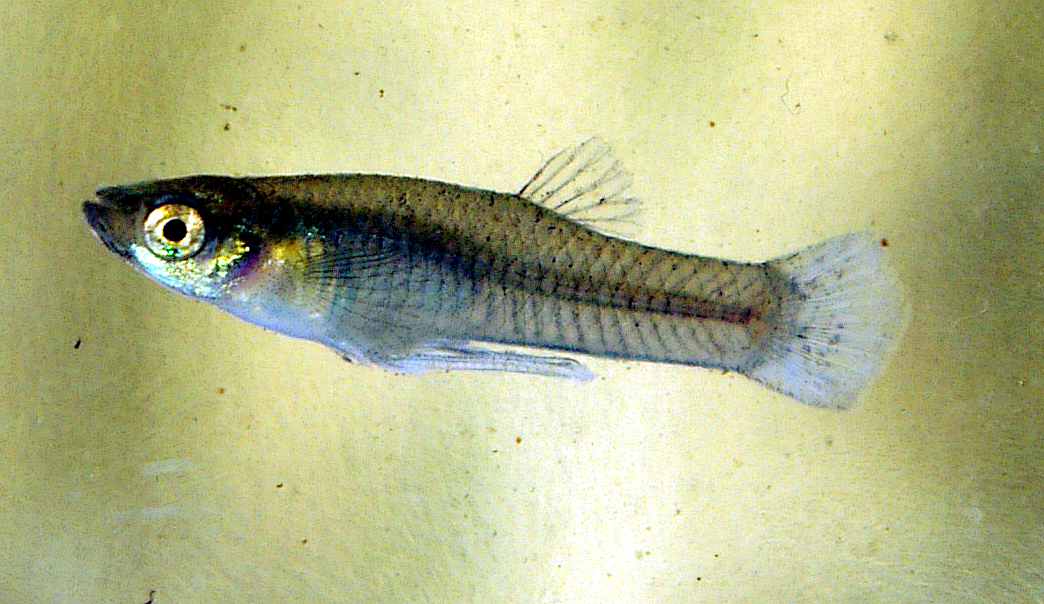
| Female | |

| |
| Male | |
Scientific classification 
| |
| Kingdom: | Animalia |
| Phylum: | Chordata |
| Class: | Actinopterygii |
| Order: | Cyprinodontiformes |
| Family: | Poeciliidae |
| Genus: | Gambusia |
| Species: | G. affinis
|
| Binomial name | |
| Gambusia affinis (S. F. Baird & Girard, 1853)
| |
| Synonyms[2] | |
| |

The western mosquitofish (Gambusia affinis) is a North American freshwater poeciliid fish, also known commonly, if ambiguously, as simply mosquitofish or by its generic name, Gambusia, or by the common name gambezi. Its sister species, the eastern mosquitofish (Gambusia holbrooki) is also referred to by these names.
Mosquitofish are small in comparison to many other freshwater fish, with females reaching a maximum length of 7 cm (2.8 in) and males a maximum length of 4 cm (1.6 in). The female can be distinguished from the male by her larger size and a gravid spot at the posterior of her abdomen. The name "mosquitofish" was given because the fish eats mosquito larvae, and has been used more than any other fishes for the biological control of mosquitoes.[3] Gambusia typically eat zooplankton, beetles, mayflies, caddisflies, mites, and other invertebrates; mosquito larvae make up only a small portion of their diet.[4]
Mosquitofish were introduced directly into ecosystems in many parts of the world as a biocontrol[5] to lower mosquito populations which in turn negatively affected many other species in each distinct bioregion.[6] Mosquitofish in Australia are classified as a noxious pest and may have exacerbated the mosquito problem in many areas by outcompeting native invertebrate predators of mosquito larvae. Several counties in California distribute mosquitofish at no charge to residents with human-made fish ponds and pools as part of their mosquito abatement programs.[7][8][9] The fish are made available to residents only and are intended to be used solely on their own property, not introduced into natural habitat. On 24 February 2014, Chennai Corporation in India introduced western mosquitofish in 660 ponds to control the mosquito population in freshwater bodies.[10]
Fertilization is internal; the male secretes milt into the genital aperture of the female through his gonopodium.[3][11] Within 16 to 28 days after mating, the female gives birth to about 60 young.[3][12] The males reach sexual maturity within 43 to 62 days. The females, if born early in the reproductive season, reach sexual maturity within 21 to 28 days; females born later in the season reach sexual maturity the next season, in six to seven months.[13]
Description
[edit]Mosquitofish are small and of a dull grey coloring, with a large abdomen, and have rounded dorsal and caudal fins and an upturned mouth.[3] Sexual dimorphism is seen; mature females reach a maximum overall length of 7 cm (2.8 in), while males reach only 4 cm (1.6 in). Sexual dimorphism is also seen in the physiological structures of the body. The anal fins on adult females resemble the dorsal fins, while the anal fins of adult males are pointed. This pointed fin, referred to as a gonopodium, is used to deposit milt inside the female. The gonopodium of G. affinis has a smooth third ray (the anteriormost elongated ray), while that of G. holbrooki bears minute denticles.[14] Adult female mosquitofish can be identified by a gravid spot they possess on the posterior of their abdomens. Other species considered similar to G. affinis include Poecilia reticulata, Poecilia latipinna, and Xiphophorus maculatus; they are commonly misidentified as mosquitofish.[3][15]
Naming and taxonomy
[edit]The mosquitofish is a member of the family Poeciliidae of order Cyprinodontiformes. The genus name Gambusia is derived from the Cuban Spanish term gambusino, meaning "useless".[16] The common name, mosquitofish, is derived from their use for biological control of mosquitoes, which itself was based on early observations that, in certain circumstances, they can reduce mosquito abundances. Classification of the western mosquitofish has been difficult due to their similarity to the eastern mosquitofish, and according to ITIS (Integrated Taxonomic Information System), G. holbrooki (eastern mosquitofish) may be an invalid taxonomic name, and could be considered a subspecies of G. affinis.[3][17]
Diet
[edit]
Mosquitofish are diet generalists, but they are considered "larvivorous" because they consume the larvae of mosquitoes and other aquatic insects.[18] Their diet consists of zooplankton, small insects and insect larvae, and detritus material. Mosquitofish feed on mosquito larvae at all stages of life, if mosquito larvae are available in the environment. Adult females can consume up to hundreds of mosquito larvae in one day.[3] Maximum consumption rate in a day by one mosquitofish has been observed to be from 42%–167% of its own body weight.[19] However, they can suffer mortality if fed only mosquito larvae, and survivors of this diet show poor growth and maturation.[20] As generalists, mosquitofish have also shown cannibalistic behavior on the young of their own species.[21]
Habitat
[edit]The native range of the mosquitofish is from southern parts of Illinois and Indiana, throughout the Mississippi River and its tributary waters, to as far south as the Gulf Coast in the northeastern parts of Mexico.[22] They are found most abundantly in shallow water protected from larger fish.[11] Mosquitofish can survive relatively inhospitable environments, and are resilient to low oxygen concentrations, high salt concentrations (up to twice that of sea water), and temperatures up to 42 °C (108 °F) for short periods.[15] Because of their notable adaptability to harsh conditions and their global introduction into many habitats for mosquito control, they have been described as the most widespread freshwater fish in the world.[23] Some of their natural predators include the bass, catfish and bluegill.[24]
Global invasion history and environmental impact
[edit]
Mosquitofish were intentionally introduced in many areas with large mosquito populations to decrease the population of mosquitoes by eating the mosquito larvae.[3] However, retrospectively, many introductions could be considered ill-advised; in most cases native fishes supplied control of mosquito populations, and introducing mosquitofish has been harmful to indigenous aquatic life.[23] Mosquitofish introduction outside of their native range can also be harmful to ecosystems.[25][26] Mosquitofish can consume or injure other small fish or otherwise harm them through competition.[19] The ecological impacts of mosquitofish are partly dictated by their sex ratio, which can vary dramatically across their introduced range.[27] Mosquitofish in Australia are considered noxious pests where they pose a threat to native fish and frog populations and little evidence indicates they have controlled mosquito populations or mosquito-borne diseases. They have been dubbed by scientists as "one of the most problematic animals on the planet".[28]
However, from the 1920s to the 1950s, mosquitofish were considered by some to be a significant factor in eradicating malaria in South America, southern Russia, and Ukraine. Mosquitofish bred by Joice Loch were distributed through Greece, Serbia and the Middle east.[29] On the coast of the Black Sea in Russia, the mosquitofish is commemorated for eradicating malaria by a monument in Sochi.[30]
Mosquitofish are still employed for biological control of mosquitoes in some places. In 2008, in some parts of California and in Clark County, Nevada, mosquitofish were bred in aquariums so people could stock stagnant pools of water with the mosquitofish to reduce the number of West Nile virus cases.[31]
Through species distribution models, it has been revealed that G. affinis exhibit significant niche expansions beyond their natural climatic ranges, with a notable shift towards tropical regions in Asia.[5] These findings highlight the ecological flexibility of these species, contributing to their extensive success and posing a substantial risk for further range expansion. Furthermore, it is assumed that the species will continue to spread in the course of climate change.[5]
Reproduction
[edit]Reproduction of the mosquitofish starts with the male arranging the rays of the gonopodium (modified anal fin) into a slight tube. The male mosquitofish uses this tubular fin to secrete milt into the female's genital aperture in the process of internal fertilization.[3][11][2] The female's genital aperture is located just behind the anal fin and is an opening for the milt to fertilize the ova within the ovary.[11] Mosquitofish are within the infraclass Teleostei and as all teleosts, mosquitofish lack a uterus, so production of oocytes and gestation occur within the ovary of a female mosquitofish.[32][33] Inside the female, sperm from multiple males can be stored to later fertilize ova.[3] Based on laboratory experiments, female mosquitofish become vitellogenic when springtime temperatures reach 14 °C (57 °F), and then the oocytes mature when the average temperature reaches about 18 °C (64 °F). Then late in the summer when the photoperiod is less than 12.5 hours long, the next clutch of oocytes develops.[32] In one reproductive season, a female may fertilize, with stored milt, two to six broods of embryos, with the size of the brood decreasing as the season progresses.[13] Reproduction rates are highly dependent on temperature and ration level. As temperature increases from 20 to 30 °C, mean age at first reproduction decreases from 191 to 56 days, and brood size and mass of offspring increase significantly. Interbrood interval estimates at 25 and 30 °C are 23 and 19 days, respectively.[34]
Embryology
[edit]Mosquitofish have a 16- to 28-day gestation period.[12] They are lecithotrophic, which means during gestation, nutrients are provided to the embryos by a yolk sac.[35] If the gestation period is shorter, each newborn will at birth still have a yolk sac connected through a slit located on the ventral side of the body wall.[12] Brood size of females depends on the size of the given female; larger females are more capable of a larger brood quantity than smaller females. Many females have a brood quantity of up to or more than 60 young.[13][3] Mosquitofish are viviparous, which means after the gestation of a brood, the female will have live birth.[2][32] In most cases, the newborn brood will have an equal male to female sex ratio.[13]
Growth
[edit]After birth, newborn mosquitofish are about 8 to 9 mm (0.31 to 0.35 in) in length. As juveniles, they grow at a rate of about 0.2 mm (0.0079 in) per day, but growth is highly temperature-dependent. Growth rates of juvenile mosquitofish reach their peak when the water temperature is within a range of 24 to 30 °C (75 to 86 °F), depending on resource availability.[36] As temperatures rise above or dip below this range, growth rates decrease. Consistent temperatures at or above 35 °C (95 °F) are typically lethal, while growth stops when temperatures are at or below 10 °C (50 °F).[13] For male mosquitofish, sexual maturity is reached in about 43 to 62 days, but maturation age is also dependent on temperature and resources.[37] Female mosquitofish reach sexual maturity in about 21 to 28 days if born early within the reproductive season. The lifespan of a mosquitofish averages less than a year and the maximum is about 1.5 years. However, mosquitofish kept as pets can live much longer, with owners reporting lifespans of over three years. Male mosquitofish lifespans are considerably shorter than females.[13]
References
[edit]- ^ NatureServe (2019). "Gambusia affinis". IUCN Red List of Threatened Species. 2019 e.T166562A58317114. doi:10.2305/IUCN.UK.2019-2.RLTS.T166562A58317114.en. Retrieved 19 November 2021.
- ^ a b c Froese, Rainer; Pauly, Daniel (eds.). "Gambusia affinis". FishBase. August 2019 version.
- ^ a b c d e f g h i j k Masterson, J. "Gambusia affinis". Smithsonian Institution. Archived from the original on 28 November 2018. Retrieved 21 October 2011.
- ^ Lund, Mark (16 November 2005). Mosquitofish: Friend or Foe? Edith Cowan University.
- ^ a b c Jourdan, Jonas; Riesch, Rüdiger; Cunze, Sarah (2021). "Off to new shores: Climate niche expansion in invasive mosquitofish (Gambusia spp.)". Ecology and Evolution. 11 (24): 18369–18400. Bibcode:2021EcoEv..1118369J. doi:10.1002/ece3.8427. PMC 8717293. PMID 35003679.
- ^ Fryxell, David C.; Moffett, Emma R.; Kinnison, Michael T.; Simon, Kevin S.; Palkovacs, Eric P. (2022). "From southern swamps to cosmopolitan model: Humanity's unfinished history with mosquitofish". Fish and Fisheries. 23 (1): 143–161. Bibcode:2022AqFF...23..143F. doi:10.1111/faf.12604. S2CID 239088797.
- ^ Alameda County Mosquito Abatement Program http://www.mosquitoes.org
- ^ Mosquitofish Archived 9 June 2012 at the Wayback Machine. Santa Clara County Vector Control District
- ^ Contra Costa County Mosquito and Vector Control District http://www.contracostamosquito.com/
- ^ "Mosquitofish introduced in ponds to tackle mosquito menace". Business Standard India. Press Trust of India. 23 February 2014 – via Business Standard.
- ^ a b c d Kuntz, Albert (1913). "Notes on the Habits, Morphology of the Reproductive Organs, and Embryology of the Viviparous Fish Gambusia affinis". Bulletin of the United States Bureau of Fisheries. 33. Department of Commerce: 181–190.
- ^ a b c Rajkumar, R (1987). "Trophic microvilli of the belated embryos of Gambusia affinis (Baird and Girard) (Atheriniformes: Poeciliidae)". Journal of the Inland Fisheries Society of India Barrackpore. 19 (1): 32–36.[permanent dead link]
- ^ a b c d e f Whiteside, Bobby; Bonner, Timothy; Thomas, Chad; Whiteside, Carolyn. "Gambusia affinis western mosquitofish". Texas State University. Archived from the original on 25 April 2012. Retrieved 25 October 2011.
- ^ Quvatov, Asqar Q.; Atamuratova, Mukhayyo Sh.; Mirzaev, Ulugbek T. (2022). "Morphometric Characteristics of Gambusia holbrooki and Gambusia affinis (Cyprinodontiformes: Poeciliidae) Distributed on the Plains of the Chirchik River, Uzbekistan". Egyptian Journal of Aquatic Biology and Fisheries. 26 (1): 341–350. doi:10.21608/EJABF.2022.217574.
- ^ a b "Gambusia affinis (fish)". Global Invasive Species Database. Retrieved 21 October 2011.
- ^ Wallus & Simon 1990, p. 175
- ^ "Gambusia holbrooki Girard, 1859". ITIS. Retrieved 30 December 2011.
- ^ Regional Office for the Eastern Mediterranean (2003). Use of Fish For Mosquito Control (PDF). World Health Organization. p. 15. Retrieved 2 January 2012.
- ^ a b Nico, Leo; Fuller, Pam; Jacobs, Greg; Cannister, Matt (19 August 2009). "Gambusia affinis". USGS. Retrieved 25 October 2011.
- ^ Kitching, R.l., ed. The Ecology of Exotic Animals. Milton: John Wiley and Sons, 1986. 7–25.
- ^ Dionne, Michele (1985). "Cannibalism, Food Availability, and Reproduction in the Mosquito Fish (Gambusia affinis): A Laboratory Experiment". The American Naturalist. 126 (1): 16–23. Bibcode:1985ANat..126...16D. doi:10.1086/284392. JSTOR 2461558. S2CID 84921196.
- ^ Krumholz, Louis (1944). "Northward Acclimatization of the Western Mosquitofish, Gambusia affinis affinis". Copeia. 1944 (2): 82–85. doi:10.2307/1438757. JSTOR 1438757.
- ^ a b "Гамбузия". Great Soviet Encyclopedia (in Russian). Moscow.
- ^ "Archived copy" (PDF). Archived from the original (PDF) on 31 October 2020. Retrieved 28 October 2020.
{{cite web}}: CS1 maint: archived copy as title (link) - ^ "Aquatic Invasive Species: Gambusia affinis (Mosquito fish)". Washington Department of Fish and Wildlife. Archived from the original on 4 March 2016. Retrieved 2 January 2012.
- ^ Rupp, Henry (1995). "Adverse Assessments of Gambusia affinis". North American Native Fishes Association (NANFA). Retrieved 2 January 2012.
- ^ Fryxell, David C.; Arnett, Heather A.; Apgar, Travis M.; Kinnison, Michael T.; Palkovacs, Eric P. (22 October 2015). "Sex ratio variation shapes the ecological effects of a globally introduced freshwater fish". Proc. R. Soc. B. 282 (1817) 20151970. doi:10.1098/rspb.2015.1970. ISSN 0962-8452. PMC 4633880. PMID 26490793.
- ^ "Robot fish scare off invasive species in Australian waters, study finds". ABC News. Australian Broadcasting Corporation. 17 December 2021. Retrieved 17 December 2021.
- ^ De Vries, Susanna. Blue Ribbons Bitter Bread, the Story of Joice Loch, Australia's Most Decorated Woman. 2000. Pirgos Press, Melbourne. ISBN 0-86806-691-5
- ^ Vinogradova 2000, p. 187
- ^ Russel, Sabin (12 July 2008). "Heat wave adds to West Nile danger". San Francisco Chronicle. San Francisco, California: SFGate. p. B–1. Retrieved 3 January 2012.
- ^ a b c Koya, Y; Kamiya, E (2000). "Environmental Regulation of Annual Reproductive Cycle in the Mosquitofish, Gambusia affinis". The Journal of Experimental Zoology. 286 (2): 204–11. Bibcode:2000JEZ...286..204K. doi:10.1002/(SICI)1097-010X(20000201)286:2<204::AID-JEZ12>3.0.CO;2-G. PMID 10617862.
- ^ Schindler, Joachim; Hamlett, William (1993). "Maternal–embryonic relations in viviparous teleosts". Journal of Experimental Zoology. 266 (5): 378–393. Bibcode:1993JEZ...266..378S. doi:10.1002/jez.1402660506.
- ^ Campton, D. E.; Gall, G. A. E. (1988). "Growth and reproduction of the mosquitofish, Gambusia affinis, in relation to temperature and ration level: consequences for life history". Environmental Biology of Fishes. 21 (1): 45–57. Bibcode:1988JFBio..33..203C. doi:10.1111/j.1095-8649.1988.tb05463.x.
- ^ Grier, HJ; Grier, HJ (2010). "Oogenesis of microlecithal oocytes in the viviparous teleost Heterandria formosa". J. Morphol. 272 (2): 241–57. doi:10.1002/jmor.10912. PMID 21210493. S2CID 37006846.
- ^ Wurtsbaugh, Wayne A.; Cech, Joseph J. (1983). "Growth and activity of juvenile mosquitofish: temperature and ratio effects". Transactions of the American Fisheries Society. 112 (5): 653–660. Bibcode:1983TrAFS.112..653W. doi:10.1577/1548-8659(1983)112<653:GAAOJM>2.0.CO;2.
- ^ Campton, D. E.; Gall, G. A. E. (1988). "Effect of individual and group rearing on age and size at maturity of male mosquitofish, Gambusia affinis". Journal of Fish Biology. 33 (2): 203–212. Bibcode:1988JFBio..33..203C. doi:10.1111/j.1095-8649.1988.tb05463.x.
Bibliography
[edit]- Vinogradova, Elena Borisovna (2000). Culex pipiens pipiens mosquitoes: taxonomy, distribution, ecology, physiology, genetic, applied importance and control. Pensoft Publishers. ISBN 978-954-642-103-6. Retrieved 29 April 2011.
- Wallus, Robert; Simon, T.P. (1990). Reproductive Biology and Early Life History of Fishes in the Ohio River Drainage. Taylor & Francis. ISBN 978-0-8493-1921-1.
External links
[edit]
Mosquitofish
View on GrokipediaThe western mosquitofish (Gambusia affinis) is a small, live-bearing freshwater fish in the family Poeciliidae, native to the Mississippi River basin from central Indiana and Illinois southward to the Gulf of Mexico, as well as Gulf Slope drainages from Mobile Bay, Alabama, to Tampico, Mexico.[1][2] Adults typically measure 2.5 to 6 cm in length, with females larger and more robust than males, and the species inhabits a range of still or slow-moving waters including ponds, ditches, and marshes.[1][3] Introduced worldwide beginning in the early 1900s primarily for biological control of mosquito larvae—exploiting its opportunistic predation on aquatic invertebrates—the mosquitofish has proliferated into one of the most extensively distributed non-native fish species, establishing self-sustaining populations across every continent except Antarctica.[4][5] While promoted for reducing mosquito vectors of disease, controlled studies reveal its efficacy is often marginal, as it preferentially consumes more readily available prey over mosquito larvae and fails to achieve sustained population suppression in diverse habitats.[6][7] Ecologically, G. affinis exhibits invasive traits including high reproductive rates—females producing up to 100 offspring per brood multiple times annually—aggressive behaviors toward conspecifics and other species, and broad environmental tolerance, leading to documented declines in native amphibians, invertebrates, and fish through direct predation, competition, and habitat alteration.[5][8] U.S. federal assessments classify it as high-risk for invasiveness, with examples of local extirpations or reductions in endemic species following introductions, underscoring causal trade-offs where short-term pest control gains are outweighed by long-term biodiversity losses.[9][5]
Taxonomy and Description
Scientific Classification and Naming
![Gambusia affinis male][float-right] The western mosquitofish, Gambusia affinis (Baird & Girard, 1853), is classified within the domain Eukarya, kingdom Animalia, phylum Chordata, subphylum Vertebrata, class Actinopterygii, order Cyprinodontiformes, family Poeciliidae, subfamily Poeciliinae, genus Gambusia, and species G. affinis.[10][2] This taxonomic placement reflects its status as a small, live-bearing fish adapted to freshwater environments, sharing traits with other poeciliids such as internal fertilization and viviparity.[11]| Taxonomic Rank | Classification |
|---|---|
| Kingdom | Animalia |
| Phylum | Chordata |
| Class | Actinopterygii |
| Order | Cyprinodontiformes |
| Family | Poeciliidae |
| Genus | Gambusia |
| Species | G. affinis |
Physical Characteristics
The western mosquitofish (Gambusia affinis) is a small, live-bearing fish with a fusiform body, circular cross-section, short rounded form, flattened head, and upward-directed mouth adapted for surface feeding.[1][10] It lacks dorsal and anal spines, featuring a single dorsal fin with 7–9 soft rays positioned opposite the seventh anal ray and an anal fin with 9–10 soft rays.[10] The species has no lateral line organ and exhibits 8 horizontal scale rows between the dorsal and ventral surfaces.[10][13] Coloration is typically dull gray or brown without bars or bands along the sides; scales are outlined in black, contributing to a speckled appearance, and the caudal fin is rounded.[1][13] Sexual dimorphism is pronounced, with females reaching a maximum total length of 7.0 cm compared to 5.1 cm for males.[10] Males possess a modified anal fin termed a gonopodium, functioning as an intromittent organ for internal fertilization, while gravid females develop a dark spot at the posterior abdomen.[10]
Native Biology and Ecology
Habitat Preferences
The mosquitofish (Gambusia affinis and closely related G. holbrooki) primarily inhabits shallow, lentic freshwater systems in its native range across the south-central and southeastern United States, including ponds, marshes, sloughs, irrigation ditches, and slow-moving streams along Atlantic and Gulf coastal drainages from New Jersey southward to Florida and Texas.[13][5] These species show a strong preference for vegetated shallows with dense aquatic plants such as Typha spp., Juncus spp., and submerged macrophytes, which provide cover from predators and foraging opportunities for insect larvae.[14][15] They are less common in fast-flowing lotic environments or deep, open waters lacking structural complexity, as such habitats limit access to preferred microhabitats and increase predation risk.[13] Ecologically, mosquitofish favor warm, stable conditions with temperatures typically ranging from 20–35°C, though they exhibit broad thermal tolerance from near-freezing minima (around 4–10°C in resilient populations) to upper limits exceeding 38°C, enabling persistence in subtropical and temperate wetlands subject to seasonal fluctuations.[16][17] Salinity preferences lean toward freshwater (0–5 ppt) but extend into oligohaline brackish zones up to 15–20 ppt, with occasional records in higher salinities approaching 30 ppt in coastal habitats; full marine conditions are rare and non-preferred in native contexts.[18][19] They also tolerate low dissolved oxygen levels (down to 1–2 mg/L) and eutrophic conditions common in disturbed or vegetated shallows, reflecting physiological adaptations like air-gulping and efficient gill ventilation.[18] In native ecosystems, habitat selection is influenced by resource availability and predator avoidance, with individuals aggregating in edge zones of vegetated backwaters where mosquito larvae abound, rather than pelagic or profundal areas.[14] This microhabitat fidelity supports their role as opportunistic generalists, though empirical studies indicate avoidance of heavily shaded or anoxic pockets within preferred vegetated zones due to reduced foraging efficiency.[20] Substrate composition is secondary to vegetation cover, with tolerance for mud, sand, or detritus bottoms prevalent in depositional wetland environments.[15]Diet and Feeding Behavior
Mosquitofish, encompassing species such as Gambusia affinis and G. holbrooki, are opportunistic omnivores with a broad diet that includes zooplankton (particularly cladocerans), aquatic and terrestrial insects, filamentous algae, detritus, and occasionally small fish or fish eggs.[21] [22] Gut content analyses across multiple populations indicate detritus as the most ubiquitous category, present in nearly all examined individuals, followed by microcrustaceans like cladocerans, which comprised a significant portion in invasive Italian and Spanish sites.[21] In a year-long study of G. holbrooki in Lake Nainital, India, insect larvae (including dipterans) formed about 20-30% of the diet by volume, while algae and detritus each exceeded 25%, with mosquito immatures (larvae, pupae, adults) accounting for under 1%.[23] Seasonal shifts occur, with higher insect intake in warmer months and increased detritus or algae during cooler periods or resource scarcity.[24] Feeding behavior is characterized by active, visually guided predation, with mosquitofish foraging throughout the water column but preferentially at the surface for emerging insects or air-breathing prey.[25] They exhibit size-selective feeding, targeting smaller prey items relative to their gape, which favors zooplankton and early-instar insect larvae over larger alternatives unless the latter are abundant or isolated.[26] In experimental settings, G. affinis demonstrates higher predatory efficiency under certain light wavelengths (e.g., shorter blue-green spectra), consuming up to 1.06 g of prey per g of fish body weight daily at optimal temperatures around 25-30°C.[27] [28] Preference hierarchies prioritize mosquito larvae when fish larvae are scarce, but alternative prey like native cyprinid larvae are readily consumed in mixed assemblages, reducing selectivity for mosquitoes in diverse habitats.[29] Cannibalism rates remain low, typically under 1-2% of gut contents, even in dense populations.[30] This generalist strategy enables high adaptability but underscores limited specialization on mosquito larvae in natural ecosystems, where broader prey availability dilutes targeted predation.[31] Laboratory trials confirm elevated mosquito consumption in isolated, larvae-only environments, yet field observations consistently show insects (including mosquitoes) as secondary to microcrustaceans and organic matter.[23] [29]Role in Native Ecosystems
In their native range spanning the Mississippi River basin from central Indiana and Illinois southward to the Gulf of Mexico, and Gulf Slope drainages extending into northeastern Mexico, western mosquitofish (Gambusia affinis) function as opportunistic omnivorous mid-level predators in shallow, vegetated freshwater systems such as ponds, lakes, backwaters, sloughs, and slow-flowing streams.[5] These habitats often feature dense aquatic vegetation and tolerate environmental extremes, including low dissolved oxygen levels as low as 0.18 mg/L, temperatures from 12°C to 42°C, and varying salinities up to brackish conditions.[5][2] By foraging primarily at the water's surface, mosquitofish help regulate populations of small aquatic invertebrates, thereby influencing lower trophic dynamics and contributing to energy transfer within the food web.[5] The diet of G. affinis consists mainly of zooplankton (e.g., rotifers), insect larvae (including those of mosquitoes and other dipterans), crustaceans, snails, and spiders, supplemented by algae, diatoms, detritus, fish fry (including conspecifics), and anuran eggs when available.[5][2] Their feeding rate is notably high, capable of consuming 42–167% of their body weight per day, which supports rapid population growth and positions them as efficient consumers of ephemeral prey resources in nutrient-rich, vegetated shallows.[5] This predation exerts top-down control on larval insect abundances, potentially mitigating outbreaks of disease vectors like mosquitoes while also limiting overpopulation of competing microinvertebrates, though mosquito larvae comprise only a minor dietary fraction relative to other invertebrates.[2] As prey, mosquitofish integrate into higher trophic levels, serving as forage for piscivorous fishes such as black basses (Micropterus spp.) and gars (Lepisosteus spp.), water birds, spiders, and snakes like Nerodia spp., thereby facilitating biomass transfer from primary consumers to apex predators.[5][2] Their livebearing reproductive strategy and tolerance of harsh conditions enable persistent densities in native assemblages, where they coexist with and occasionally hybridize with the closely related eastern mosquitofish (G. holbrooki) in overlapping zones, maintaining ecological stability without the disruptive effects observed in non-native contexts.[2] Overall, G. affinis contributes to ecosystem resilience by promoting invertebrate diversity regulation and serving as a resilient link in detritus-based food chains prevalent in warm, lowland wetlands.[5]Reproduction and Development
Reproductive Biology
Mosquitofish (Gambusia affinis and related species) are ovoviviparous, with females producing eggs that develop and hatch internally after internal fertilization by males.[32] Males possess a gonopodium, an intromittent organ formed by modification of the anal fin, which delivers sperm directly into the female's genital opening during mating.[33] This reproductive strategy enables live birth of free-swimming fry, typically numbering 20–100 per brood depending on female size and environmental conditions.[34] Sexual dimorphism is pronounced, with females significantly larger than males—adult females reach 6–10 cm in length, while males are 2–4 cm—facilitating female investment in larger broods and male focus on frequent mating attempts.[35] Mating behavior is characterized by male coercion rather than courtship; males attempt forced inseminations by thrusting the gonopodium toward the female's urogenital area, often without female consent, leading to a promiscuous system with high male-male competition.[36] Smaller males may achieve higher thrusting success due to stealthier approaches, contributing to reverse sexual size dimorphism.[37] The gestation period lasts 21–28 days, influenced by temperature, with warmer conditions accelerating development.[35] Females can produce multiple broods annually—up to nine in favorable climates—supported by photoperiod and temperature cues that define the breeding season, typically from spring through fall.[38] Sperm storage in females allows superannual reproduction from a single insemination, maintaining viability for months and enabling successive broods without remating.[39] Maturity is reached rapidly, often within four weeks in summer, underpinning high population growth rates.[35] Brood size and offspring mass increase with rising temperatures from 20°C to 30°C, while age at first reproduction decreases from about 191 days to 56 days over this range.[34]
Embryology and Livebirth
Mosquitofish (Gambusia spp.) are viviparous, with embryos undergoing intraovarian development within ovarian follicles following internal fertilization by the male's gonopodium.[40] This process enables superfetation, allowing females to carry broods at different developmental stages simultaneously, with multiple clutches maturing over 10-15 weeks from a single insemination.[40] Gestation typically lasts 21-30 days at 25°C, during which embryos progress asynchronously from zygote formation to fully formed fry.[40][32] Embryonic development unfolds in defined stages: the zygote period (0.5-1.5 hours post-fertilization, with egg diameter ~1200 μm and initial vascular stalk formation); cleavage (up to ~1 day, synchronous divisions to 1024 cells); blastula (~5-7 days, yolk syncytial layer and germ ring development); gastrula (body axis and embryonic shield formation by ~10 days); segmentation (~10-20 days, somitogenesis to 35 somites, organogenesis, and heart beating initiation at ~43 bpm by stage 19); and pharyngula (~20-30 days, fin ray development starting with caudal fins, internal organ maturation, and pigmentation).[40] Embryos receive initial nutrition from yolk reserves in a vascularized yolk sac, supplemented by maternal provisioning via a placenta-like structure, as evidenced by stable or increasing dry weights without significant yolk depletion alone, distinguishing them from strictly lecithotrophic ovoviviparous species.[40][41] By late stages, the yolk sac diminishes, heart rate reaches ~153 bpm, and features like 40 conical teeth, inflated swim bladder, and functional digestive systems emerge.[40] At parturition (~30 days), advanced embryos (stage 39) rupture follicle walls, migrate to the ovarian cavity and gonoduct, and are expelled as live young measuring ~8-10 mm (3/8 inch) with absorbed yolk sacs, prominent black eyes, and immediate swimming capability.[40][32] Brood sizes vary from a few to several hundred (averaging ~60), decreasing with maternal size, and young are independent post-birth, growing rapidly based on food and temperature.[32] This reproductive strategy supports high fecundity and rapid population expansion in suitable habitats.[40]Growth and Lifespan
Western mosquitofish (Gambusia affinis) display rapid somatic growth, with specific growth rates increasing with temperature under ad libitum feeding conditions: 1.7% dry mass per day at 20°C, 3.1% at 25°C, and 3.4% at 30°C.[42] Growth follows allometric patterns, with females exhibiting positive allometry (b = 3.253), males negative allometry (b = 2.593), and juveniles isometric growth (b = 2.665).[43] Sexual dimorphism is pronounced, as females attain larger sizes (up to 44 mm total length) compared to males (up to 29 mm), enabling greater fecundity but also higher energetic demands.[43] Maturation occurs early, with minimum total lengths of 12 mm for both sexes, though pregnant females require at least 21 mm; age at first reproduction decreases markedly with temperature, from 191 days at 20°C to 56 days at 30°C.[43][42] Growth is continuous but slows in cooler temperatures or resource-limited environments, and juveniles prioritize length over mass initially before shifting to reproductive allocation.[42] Lifespans are short, reflecting r-selected life-history traits suited to high-predation or unstable habitats. In invasive populations, males rarely exceed age 0+ (one year), while females may reach 1+; maximum observed ages align with annual cohorts dominated by young individuals.[43] Population age structures often show 80% in age 0+, 13% in 1+, and 6% in 2+ during winter, indicating high overwinter mortality. Under controlled or favorable conditions with reduced predation, lifespans can extend to 2–3 years, though this exceeds typical field durations.[45] Factors such as temperature, salinity fluctuations, and density-dependent competition modulate both growth and survival, with warmer regimes accelerating development but potentially shortening longevity via trade-offs.[46][42]History of Introductions
Origins of Use in Biological Control
The western mosquitofish (Gambusia affinis), native to streams and ponds in the southeastern United States, was initially observed preying on mosquito larvae in its natural habitats during the late 19th and early 20th centuries, prompting interest in its potential for targeted biological control. Systematic promotion began around 1905, when ichthyologist Alvin Seale, of the U.S. Bureau of Fisheries, advocated its use after noting low mosquito prevalence in Texas waters inhabited by the fish; he transported approximately 150 specimens from near Galveston, Texas, to Hawaii that year for introduction into Oahu streams to suppress larval populations.[47][48] Concurrently, in 1905, G. affinis sourced from North Carolina were released into New Jersey waterways explicitly for mosquito control, representing one of the earliest documented domestic translocations for this purpose.[1] These early efforts were driven by public health concerns over malaria and other mosquito-borne diseases, with U.S. agencies such as the Bureau of Fisheries and the Public Health Service facilitating broader dissemination. By the 1910s and 1920s, the fish—often distributed as "top-minnows"—had been shipped to multiple states and territories, including California in 1922, where 600 individuals were stocked in a Sacramento lily pond, leading to rapid establishment.[8] International exports followed, with the first to Europe occurring in Spain in 1921, underscoring the species' appeal as a low-cost, self-sustaining alternative to chemical larvicides amid limited insecticide options at the time.[47] Early advocates like Seale emphasized the fish's voracious appetite for Anopheles and Culex larvae, reporting consumption rates of up to 100–200 per individual daily under laboratory conditions, though field efficacy varied with environmental factors.[49] Despite initial successes in reducing larval densities in stocked ponds and ditches, these introductions often lacked rigorous ecological assessments, setting precedents for the species' global proliferation as an invasive biocontrol agent.[35]Global Spread and Invasion Patterns
The western mosquitofish (Gambusia affinis), native to the south-central United States and northeastern Mexico, underwent initial introductions outside its native range in the early 1900s primarily for biological mosquito control. The first documented international release occurred in 1905, when approximately 150 individuals from Texas stocks were introduced to Hawaii by the U.S. Bureau of Fisheries.[1] Subsequent domestic releases expanded its presence to western U.S. states, such as California and Arizona, by the 1920s, often via federal and state agencies including the U.S. Public Health Service.[5] Global dissemination accelerated in the mid-20th century through deliberate translocations by governments and health organizations. Introductions reached South Africa in 1936, followed by distributions across various estuarine and freshwater systems there by the 1970s.[13] In South America, releases began in the late 1930s and early 1940s in countries including Brazil, Argentina, and Venezuela, typically sourced from U.S. populations.[50] European introductions included Greece in 1906 and Mandatory Palestine shortly thereafter, while serial stockings occurred in New Zealand starting in the 1930s, often involving multiple founder events from North American or Australian propagules, which resulted in bottlenecks reducing genetic diversity.[51][52] Invasion patterns reflect G. affinis's euryhaline tolerance, broad thermal range (surviving 4–42°C), and prolific reproduction (up to 6 broods per year with 20–100 fry each), enabling rapid colonization post-introduction.[53] Beyond initial biocontrol sites, spread occurs via natural mechanisms like flooding and downstream drift, augmented by ongoing human-mediated movements such as aquarium releases or further control efforts; established populations now span tropical and subtropical freshwater, brackish, and sometimes saline habitats across Africa, Asia (including recent detections in China as of 2023), Australia, Europe, Oceania, and the Americas.[54][55] In regions like Peninsular India, invasions have filled research gaps on local establishment dynamics, with populations persisting despite varying predation pressures.[56] This serial introduction history has led to homogenized genotypes in non-native ranges, potentially enhancing invasiveness through consistent traits like aggression and dietary opportunism.[57]Applications in Mosquito Control
Mechanisms of Larval Predation
Mosquitofish (Gambusia affinis and G. holbrooki) primarily target mosquito larvae through surface-oriented feeding enabled by their superiorly positioned, terminal mouths, which facilitate access to the air-water interface where larvae often aggregate for respiration and feeding.[11][5] This morphology positions the jaws upward, allowing the fish to patrol shallow waters and detect larvae suspended or wriggling near the surface via visual cues and lateral line mechanoreception of vibrations from larval movements.[58] Early instar larvae, being smaller and more mobile, are particularly vulnerable, as the fish's gape limitation—constrained by mouth size of approximately 3-5 mm in adults—favors prey fitting this dimension, though larger larvae can be consumed if encountered in high densities.[59][60] Capture occurs via suction feeding, a kinematic sequence involving rapid jaw protrusion and hyoid depression to generate negative pressure, drawing larvae into the buccal cavity with minimal forward ram motion to preserve stealth against elusive prey.[61][62] Protrusible premaxillae in cyprinodontiforms like Gambusia enhance suction efficiency by increasing gape and aligning the mouth directly toward the prey, reducing escape probabilities estimated at under 20% for surface-bound targets in controlled observations.[61] Once ingested, larvae are swallowed whole, with adult females—larger and more voracious—capable of consuming up to 100-200 individuals per day under optimal conditions of high larval density.[29][63] Predation selectivity is influenced by larval instar and environmental factors; fish preferentially attack active, mid-water larvae over those buried in sediment, leveraging opportunistic patrolling behavior in vegetated or open shallows up to 1 meter deep.[58] Chemical kairomones released by Gambusia may indirectly modulate predation by deterring oviposition, but direct larval encounters rely on mechanosensory and visual detection rather than chemotaxis.[64] Efficacy diminishes in turbid waters, where reduced visibility impairs detection, or with alternative prey availability, as Gambusia shift from specialist larval predation to generalist foraging.[29][65]Empirical Evidence of Effectiveness
Field experiments in rice paddies in India demonstrated that stocking Gambusia affinis at densities of 5 fish per square meter significantly reduced Culex larval and pupal densities compared to untreated controls over a 1991 growing season, with reductions attributed to direct predation.[66] Similarly, in container trials using discarded tires, releases of G. affinis at rates achieving over 100 fish per minnow trap markedly lowered overall mosquito populations, outperforming lower-density stockings but requiring supplemental bacterial insecticides for complete suppression in a 1988 study.[67] However, efficacy diminishes in natural or semi-natural settings with alternative prey availability. A 1988 rice field trial in California stocking G. affinis at 224 grams per hectare (equivalent to approximately 0.2 pounds per acre) yielded no measurable impact on mosquito population densities, suggesting insufficient predation pressure relative to larval production rates.[68] Field observations in New Jersey woodland pools, stocked up to 500 fish per acre, classified G. affinis as only marginally effective for early-season mosquito control, with limited persistence and predation in vegetated or fluctuating habitats.[69] Comparative trials highlight context-dependency: a 2008 pond study found G. affinis less effective than native Gila orcuttii at reducing mosquito larvae over six weeks, consuming fewer prey items overall despite similar stocking.[70] A 2022 review of larvivorous fish introductions, including G. affinis, concluded that while some density reductions occur, impacts on mosquito larval populations remain small and inconsistent across global sites, lacking robust data for broad-scale endorsement.[47] Predation selectivity further limits reliability, as G. affinis preferentially consumes fish larvae or larger invertebrates over mosquito larvae when alternatives are present, per multiple laboratory assays.[71][29]Factors Limiting Efficacy
Despite their predatory capabilities, mosquitofish exhibit selective feeding behaviors that diminish their impact on mosquito populations. Laboratory and field studies indicate that Gambusia affinis preferentially consumes larger prey items, such as fish larvae or zooplankton, over small or newly hatched mosquito larvae when alternatives are available, leading to incomplete control of early instar stages.[71] This selectivity is exacerbated in natural habitats where diverse prey competes, reducing mosquito larval consumption by up to 50% in mixed-prey scenarios compared to mosquito-only environments.[29] Habitat complexity further constrains efficacy, as dense vegetation or shaded woodland pools shelter mosquito larvae from predation. In New Jersey woodland pools, mosquitofish achieved only marginal reductions in early-season mosquito production, with larvae persisting in vegetated refugia despite fish stocking at densities of 10-20 individuals per square meter.[69] Flowing waters or high-salinity environments also limit their activity and distribution, as Gambusia thrives primarily in still, low-salinity freshwater, allowing mosquitoes to exploit untreated niches.[72] Empirical reviews of field applications reveal inconsistent translation to adult mosquito suppression. A comprehensive analysis of peer-reviewed literature found no evidence of effective control in natural settings, even with repeated stockings, attributing failures to factors like seasonal temperature fluctuations that reduce fish foraging below 15°C and overpopulation leading to intraspecific competition for limited oxygen and space.[73] Stocking densities below 5 fish per cubic meter often yield negligible larval reductions, while higher densities risk ecological disruptions without proportional benefits.[74] Native predators, such as certain cyprinids, have demonstrated superior efficacy in comparable trials, consuming mosquito larvae at rates 2-3 times higher than Gambusia.[35]Ecological Impacts
Interactions with Native Species
Western mosquitofish (Gambusia affinis) primarily interact with native species through predation, aggressive behaviors, and resource competition, often resulting in negative outcomes for smaller or similarly sized native fish and amphibians.[53] The species preys on eggs, larvae, and juveniles of native fish such as largemouth bass (Micropterus salmoides) and common carp (Cyprinus carpio), as well as amphibian larvae including California newt (Taricha torosa) and Pacific treefrog (Pseudacris regilla) tadpoles.[53] Aggressive fin-nipping and direct killing by mosquitofish have been documented to cause habitat shifts and reduced foraging in natives, with mesocosm experiments showing elevated mortality rates in fundulid fishes due to these interactions.[53] Specific declines in native populations have been linked to mosquitofish introductions; for instance, the threatened Railroad Valley springfish (Crenichthys nevadae) in Nevada exhibited altered microhabitat use and population reductions following invasion.[53] The endangered Sonoran topminnow (Poeciliopsis occidentalis) has been locally eliminated in Arizona streams co-inhabited with mosquitofish, attributed to predation and competition.[53] Similarly, the least chub (Iotichthys phlegethontis) was extirpated from certain Utah localities due to these pressures.[53] Competition for zooplankton and invertebrate prey disadvantages native species like the plains topminnow (Fundulus sciadicus) and plains killifish (Fundulus kansanus), with laboratory studies demonstrating asymmetric interference where mosquitofish outcompete these natives.[53] However, interactions are not uniformly detrimental to natives; larger predatory natives such as bluegill sunfish (Lepomis macrochirus) exert biotic resistance, reducing mosquitofish recruitment by up to fivefold and stunting their growth fourfold in mesocosm trials conducted in 2010 and 2012.[75] Bluegill survival and growth remain largely unaffected by mosquitofish presence, highlighting size-dependent dynamics in interspecific encounters.[75]Biodiversity and Ecosystem Alterations
Introduced populations of mosquitofish (Gambusia affinis and G. holbrooki) exert significant predation pressure on native aquatic invertebrates, fish eggs, and larvae, resulting in reduced abundances and altered community structures in invaded habitats.[76] In experimental settings, mosquitofish have been observed to drastically lower populations of rotifers, crustaceans, and insects, which in turn promotes phytoplankton proliferation due to diminished grazing.[77] This predation extends to native fish species, including threatened taxa such as the Railroad Valley springfish (Crenichthys baileyi), where mosquitofish introductions correlate with habitat shifts and population reductions.[5] At the ecosystem level, mosquitofish invasions disrupt trophic cascades and functional processes. Studies in lentic systems demonstrate that their presence decreases invertebrate richness and shifts assemblage composition, indirectly slowing leaf-litter decomposition rates by reducing detritivore abundances.[78] In naturally fishless wetlands, such introductions can lead to the loss of specialized invertebrate diversity, as mosquitofish outcompete or prey upon endemic fauna adapted to predator-free environments.[76] These alterations extend to broader biodiversity declines, with documented extirpations of native species in regions like the Murray-Darling Basin, where mosquitofish contribute to genetic dilution and ecosystem dysfunction. Field manipulations further reveal context-dependent impacts, such as reduced periphyton biomass in some cases but consistent suppression of macroinvertebrates, underscoring mosquitofish as drivers of simplified food webs.[79] In Mediterranean streams, invasive mosquitofish have been linked to cascading effects on threatened cyprinodontids via indirect chemical cues, amplifying non-consumptive stressors on native populations.[80] Overall, these dynamics position mosquitofish among the most detrimental aquatic invaders, with empirical evidence from multiple continents highlighting their role in eroding native biodiversity and reshaping ecosystem services like nutrient cycling.[81][9]Case Studies of Invasions
In Australia, Gambusia holbrooki (eastern mosquitofish) was introduced in the early 1920s from the United States via Italy for mosquito control and rapidly spread across waterways, including the Murray-Darling Basin, where it now dominates biomass in many lentic habitats.[82] In this basin, gambusia exhibits major niche overlap with 16 of 37 native fish species, such as the olive perchlet (Ambassis agassizii), southern pygmy perch (Nannoperca australis), and purple-spotted gudgeon (Mogurnda adspera), through predation on eggs and larvae, competition for food and habitat, and aggressive behaviors like fin-nipping.[83] Field observations show southern pygmy perch absent from suitable sites with high gambusia densities, while gut content analyses confirm consumption of native rainbowfish (Melanotaenia spp.) eggs and larvae, contributing to range contractions and population declines in species like the purple-spotted gudgeon.[83] Gambusia also preys on amphibian eggs and tadpoles, implicated in declines of native frogs such as Litoria aurea.[82] In Hawaii, Gambusia affinis (western mosquitofish) was introduced to Oahu in 1905 for mosquito control and stocked across all major islands by the mid-20th century, establishing self-sustaining populations in freshwater habitats.[13] This invasion has been associated with declines in native damselfly (Megalagrion spp.) populations on Oahu, where mosquitofish predation on larvae and competition disrupt aquatic invertebrate assemblages essential to these endemics.[1] Experimental and observational studies further document reduced native fish and insect diversity in poeciliid-dominated wetlands, with gambusia altering community structure through selective predation on small-bodied prey.[84] In Madagascar, G. affinis was introduced in the 1920s primarily for vector control, establishing populations that have since contributed to ecological disruptions in island freshwater systems with high endemism.[85] Limited quantitative data exist, but regional reviews link poeciliid invasions, including gambusia, to declines in native amphibians and fish via predation and resource competition, exacerbating threats in isolated habitats.[85]Controversies and Management
Debates on Benefits Versus Risks
The introduction of mosquitofish (Gambusia affinis and G. holbrooki) for mosquito control has sparked ongoing debates, pitting their potential as biological agents against documented ecological harms. Proponents argue that these fish effectively reduce mosquito larvae in targeted, contained environments, such as urban water bodies or rice fields, where chemical pesticides are undesirable. For instance, historical programs in the United States and Australia reported larval reductions of up to 90% in small ponds stocked with mosquitofish, supporting their use in integrated pest management where native predators are absent.[86] However, critics contend that such benefits are overstated and context-specific, often failing in open ecosystems due to the fish's opportunistic feeding habits, which prioritize more nutritious prey like native fish larvae or invertebrates over mosquito immatures.[71] [29] Ecological risks dominate counterarguments, with peer-reviewed reviews classifying mosquitofish as among the world's worst invasive species due to aggressive predation, hybridization, and displacement of endemic fauna. In invaded wetlands, they have contributed to local extirpations of native fish and amphibians, altering food webs and reducing biodiversity; for example, in Australian streams, G. holbrooki populations correlated with 50-70% declines in co-occurring frog species through direct predation and habitat competition.[7] [80] These impacts extend to indirect effects, such as decreased invertebrate richness and shifts in algal communities, which undermine long-term ecosystem stability more than they mitigate vector-borne diseases.[79] Detractors, including conservation biologists, emphasize that mosquitofish's high reproductive rates (up to 300 offspring per female annually) and tolerance to pollution exacerbate invasiveness, rendering eradication costly and incomplete.[53] The debate intensifies over policy recommendations, with mosquito control agencies in regions like Florida and California continuing limited releases despite alternatives like Gambusia-free native fish or Bacillus thuringiensis israelensis (Bti) bacteria proving equally or more effective without non-target risks.[87] [88] A 2008 review by Australian fisheries experts concluded that while short-term mosquito suppression occurs, the cumulative ecological costs—evidenced by over 100 documented native species declines globally—outweigh benefits, advocating bans on further introductions.[82] Conversely, some vector control advocates, citing successes in malaria-endemic areas pre-1950s DDT era, defend judicious use in isolated habitats, arguing that disease prevention justifies risks when surveillance monitors invasions.[47] Recent syntheses, however, highlight a consensus shift toward non-invasive methods, with bodies like the IUCN listing G. affinis as ecologically damaging and urging evidence-based alternatives over historical precedents.[89][7]Eradication and Control Efforts
Due to their high fecundity, live-bearing reproduction, and tolerance to diverse environmental conditions, complete eradication of established Gambusia affinis populations from aquatic ecosystems is rarely achieved, with efforts typically resulting in temporary suppression rather than elimination.[5][90] Successful removals are documented only on very small scales, such as water bodies under 0.5 km², where intensive physical methods can target isolated populations before widespread dispersal.[91] Primary control methods focus on mechanical removal, including electrofishing, seining with fine-mesh nets, trapping, and dip netting, often combined for greater efficacy in shallow or stagnant waters.[92] Direct removal is considered the most effective strategy overall, outperforming ecosystem manipulations like altering water quality or introducing predators, as Gambusia species exhibit broad physiological tolerance.[92] For instance, in Backwater Slough connected to the Sugar River in Wisconsin, efforts in October 2012 using backpack electrofishing, 20-foot seine nets, and dip nets removed 1,965 individuals over three days, but high population density, silt substrates, and dense vegetation rendered the approach ineffective and not cost-viable, with fish persisting post-removal.[93] Electrofishing has shown promise in reducing abundances significantly—up to substantial declines in field trials—but ongoing recruitment from surviving breeders prevents full eradication, necessitating repeated interventions for sustained suppression.[90] Prevention remains the preferred long-term approach, involving regulatory restrictions on transport and stocking to curb further introductions, as containment post-establishment demands resource-intensive, multi-year campaigns with limited success in large or connected systems.[5][13]Recent Research and Policy Shifts
Recent studies have increasingly questioned the net benefits of Gambusia affinis for mosquito control, emphasizing its variable predation efficacy under real-world conditions. A 2024 study found that exposure to sewage effluent significantly impairs the fish's ability to consume mosquito larvae, reducing biocontrol potential in polluted waters and necessitating better wastewater management for any continued use.[94] Similarly, research in 2024 demonstrated that alternative native or less invasive species, such as molly fish (Poecilia sphenops), exhibit higher larval predation rates (averaging 55.11% consumption) compared to mosquitofish, suggesting superior options for biological control without the same invasive risks.[95] These findings align with broader 2022 analyses indicating that releasing non-native fish like G. affinis often fails to suppress mosquito populations effectively while causing ecological harm, such as predation on non-target invertebrates and amphibians.[74] Ecological interaction studies from 2024 further underscore ongoing concerns, documenting aggressive behaviors by G. affinis toward native species like bluegill sunfish (Lepomis macrochirus), including fin-nipping and resource competition that contribute to native population declines.[96] Adaptation research in 2025 highlights the species' resilience to stressors like hypoxia and selenium contamination, potentially exacerbating its invasiveness in changing environments, though these traits do not enhance proven mosquito control benefits.[97][98] Policy responses have shifted toward restriction and prohibition in multiple regions, driven by evidence of biodiversity threats outweighing mosquito control gains. In Ontario, Canada, both western (G. affinis) and eastern mosquitofish were classified as prohibited invasive species effective January 1, 2024, banning possession, transport, and release to prevent further spread.[99] Australia and New Zealand maintain longstanding bans on wild introductions, with illegality reinforced by studies documenting reproductive interference with natives.[100] In India, the National Green Tribunal issued notices in February 2025 urging cessation of releases, citing inconclusive efficacy data and calls for stronger bans on further introductions into freshwater systems. U.S. states like Oregon prohibit releases into public waters without permits, promoting integrated management over reliance on G. affinis.[101] These measures reflect a global pivot to prevention, removal, and native alternatives, prioritizing ecosystem integrity amid persistent promotion by some vector control programs.[102]References
- https://www.[researchgate](/page/ResearchGate).net/publication/229520276_Life-history_patterns_of_the_mosquitofish_Gambusia_affinis_in_the_estuary_of_the_Guadalquivir_River_of_South-West_Spain