Hubbry Logo
TorticollisTorticollisMain
Open search
Torticollis
Community hub
Torticollis
logo
8 pages, 0 posts
0 subscribers
Be the first to start a discussion here.
Torticollis
Torticollis
from Wikipedia
Torticollis
Other names
  • Crick in the neck
  • wry neck
  • stiff neck loxia[note 1]
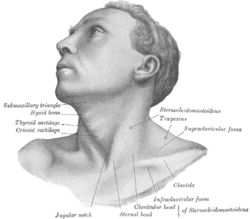
The muscles involved with torticollis
SpecialtyOrthopedics
Diagnostic methodUltrasonography

Torticollis, also known as wry neck, is an extremely painful, dystonic condition defined by an abnormal, asymmetrical head or neck position, which may be due to a variety of causes. The term torticollis is derived from Latin tortus 'twisted' and collum 'neck'.[1][2]

The most common case has no obvious cause, and the pain and difficulty in turning the head usually goes away after a few days, even without treatment in adults.

Signs and symptoms

[edit]

Torticollis is a fixed or dynamic tilt, rotation, with flexion or extension of the head and/or neck.

The type of torticollis can be described depending on the positions of the head and neck.[1][3][4]

  • laterocollis: the head is tipped toward the shoulder
  • rotational torticollis: the head rotates along the longitudinal axis towards the shoulder[5]
  • anterocollis: forward flexion of the head and neck[6] and brings the chin towards the chest[5]
  • retrocollis: hyperextension of head and neck backward[7] bringing the back of the head towards the back[5]

A combination of these movements may often be observed. Torticollis can be a disorder in itself as well as a symptom in other conditions.

Other signs and symptoms include:[8][9]

  • Neck pain
  • Occasional formation of a mass
  • Thickened or tight sternocleidomastoid muscle
  • Tenderness on the cervical spine
  • Tremor in head
  • Unequal shoulder heights
  • Decreased neck movement

Causes

[edit]

A multitude of conditions may lead to the development of torticollis including: muscular fibrosis, congenital spine abnormalities, or toxic or traumatic brain injury.[2] A rough categorization discerns between congenital torticollis and acquired torticollis.[10]

Other categories include:[11]

  • Osseous
  • Traumatic
  • CNS/PNS
  • Ocular
  • Non-muscular soft tissue
  • Spasmodic
  • Drug induced
  • Oral ties (lip and tongue ties)

Congenital muscular torticollis

[edit]

Congenital muscular torticollis is the most common torticollis that is present at birth.[12] Congenital muscular torticollis is the third most common congenital musculoskeletal deformity in children.[13] The cause of congenital muscular torticollis is unclear. Birth trauma or intrauterine malposition is considered to be the cause of damage to the sternocleidomastoid muscle in the neck.[2] Other alterations to the muscle tissue arise from repetitive microtrauma within the womb or a sudden change in the calcium concentration in the body that causes a prolonged period of muscle contraction.[14]

Any of these mechanisms can result in a shortening or excessive contraction of the sternocleidomastoid muscle, which curtails its range of motion in both rotation and lateral bending. The head is typically tilted in lateral bending toward the affected muscle and rotated toward the opposite side. In other words, the head itself is tilted in the direction of the shortened muscle, with the chin tilted in the opposite direction.[11]

Congenital torticollis is presented at 1–4 weeks of age, and a hard mass usually develops. It is normally diagnosed using ultrasonography and a color histogram or clinically by evaluating the infant's passive cervical range of motion.[15]

Congenital torticollis constitutes the majority of cases seen in paediatric clinical practice.[11] The reported incidence of congenital torticollis is 0.3-2.0%.[16] Sometimes a mass, such as a sternocleidomastoid tumor, is noted in the affected muscle. Congenital Muscular Torticollis is also defined by a fibrosis contracture of the sternocleidomastoid muscle on one side of the neck.[13] Congenital torticollis may not resolve on its own, and can result in rare complications including plagiocephaly.[17] Secondary complications associated with Congenital Muscular Torticollis include visual dysfunctions, facial asymmetry, delayed development, cervical scoliosis, and vertebral wedge degeneration which will have a serious impact on the child's appearance and even mental health.[13]

Benign paroxysmal torticollis is a rare disorder affecting infants. Recurrent attacks may last up to a week. The condition improves by age 2. The cause is thought to be genetic.[18]

Acquired torticollis

[edit]

Noncongenital muscular torticollis may result from muscle spasm, trauma, scarring or disease of cervical vertebrae, adenitis, tonsillitis, rheumatism, enlarged cervical glands, retropharyngeal abscess, or cerebellar tumors.[19] It may be spasmodic (clonic) or permanent (tonic). The latter type may be due to Pott's Disease (tuberculosis of the spine).[20]

  • A self-limiting spontaneously occurring form of torticollis with one or more painful neck muscles is by far the most common ('stiff neck') and will pass spontaneously in 1–4 weeks. Usually the sternocleidomastoid muscle or the trapezius muscle is involved. Sometimes draughts, colds, or unusual postures are implicated; however, in many cases, no clear cause is found. These episodes are commonly seen by physicians.[citation needed]

Most commonly this self-limiting form relates to an untreated dental occlusal dysfunction, which is brought on by clenching and grinding the teeth during sleep. Once the occlusion is treated it will completely resolve. Treatment is accomplished with an occlusal appliance, and equilibration of the dentition.[citation needed]

  • Tumors of the skull base (posterior fossa tumors) can compress the nerve supply to the neck and cause torticollis, and these problems must be treated surgically.
  • Infections in the posterior pharynx can irritate the nerves supplying the neck muscles and cause torticollis, and these infections may be treated with antibiotics if they are not too severe, but could require surgical debridement in intractable cases.
  • Ear infections and surgical removal of the adenoids can cause an entity known as Grisel's syndrome, a subluxation of the upper cervical joints, mostly the atlantoaxial joint, due to inflammatory laxity of the ligaments caused by an infection.[21]
  • The use of certain drugs, such as antipsychotics, can cause torticollis.[22]
  • Antiemetics - Neuroleptic Class - Phenothiazines
  • There are many other rare causes of torticollis. A very rare cause of acquired torticollis is fibrodysplasia ossificans progressiva (FOP), the hallmark of which is malformed great toes.

Spasmodic torticollis

[edit]

Torticollis with recurrent, but transient contraction of the muscles of the neck and especially of the sternocleidomastoid, is called spasmodic torticollis. Synonyms are "intermittent torticollis", "cervical dystonia" or "idiopathic cervical dystonia", depending on cause.[23]

Trochlear torticollis

[edit]

Torticollis can be caused by damage to the trochlear nerve (fourth cranial nerve), which supplies the superior oblique muscle of the eye. The superior oblique muscle is involved in depression, abduction, and intorsion of the eye. When the trochlear nerve is damaged, the eye is extorted because the superior oblique is not functioning. The affected person will have vision problems unless they turn their head away from the side that is affected, causing intorsion of the eye and balancing out the extorsion of the eye. This can be diagnosed by the Bielschowsky test, also called the head-tilt test, where the head is turned to the affected side. A positive test occurs when the affected eye elevates, seeming to float up.[24]

Anatomy

[edit]

The main job of the sternocleidomastoid muscle is to help move the head and neck by turning the head to one side and bending the neck forward.[25] The sternocleidomastoid muscle gets its blood from different arteries in the neck, which bring oxygen and nutrients to keep the muscle healthy. Torticollis can happen when there are issues with the sternocleidomastoid muscle, like if it's too short, causing the head and neck to be in an odd position.[25] Torticollis can also be caused by problems with bones, muscles, or the spine in the neck, leading to difficulty moving the head and neck normally.[25] Knowing about the sternocleidomastoid muscle and how it works is crucial for doctors to diagnose and treat torticollis correctly, so they can find and fix the problem causing it. Differences in how the sternocleidomastoid muscle is supplied with blood or nerves can affect how torticollis develops or how well treatments work, so it's important for doctors to consider these variations when planning treatment.[26] Having a good understanding of the neck's anatomy helps doctors accurately diagnose torticollis and choose the best treatments to help patients feel better.

The sternocleidomastoid muscle gets signals from nerves in the neck and head to contract and move properly. The underlying anatomical distortion causing torticollis is a shortened sternocleidomastoid muscle. This is the muscle of the neck that originates at the sternum and clavicle and inserts on the mastoid process of the temporal bone on the same side.[11] There are two sternocleidomastoid muscles in the human body and when they both contract, the neck is flexed. The main blood supply for these muscles come from the occipital artery, superior thyroid artery, transverse scapular artery and transverse cervical artery.[11] The main innervation to these muscles is from cranial nerve XI (the accessory nerve) but the second, third and fourth cervical nerves are also involved.[11] Pathologies in these blood and nerve supplies can lead to torticollis.[citation needed]

Diagnosis

[edit]

Evaluation of a child with torticollis begins with history taking to determine circumstances surrounding birth and any possibility of trauma or associated symptoms. Physical examination reveals decreased rotation and bending to the side opposite from the affected muscle. Some[who?] say that congenital cases more often involve the right side, but there is not complete agreement about this in published studies. Evaluation should include a thorough neurologic examination, and the possibility of associated conditions such as developmental dysplasia of the hip and clubfoot should be examined. Radiographs of the cervical spine should be obtained to rule out obvious bony abnormality, and MRI should be considered if there is concern about structural problems or other conditions.

Ultrasonography can be used to visualize muscle tissue, with a colour histogram generated to determine cross-sectional area and thickness of the muscle.[27]

Evaluation by an optometrist or an ophthalmologist should be considered in children to ensure that the torticollis is not caused by vision problems (IV cranial nerve palsy, nystagmus-associated "null position", etc.).

Differential diagnosis for torticollis includes[11][28]

Cervical dystonia appearing in adulthood has been believed to be idiopathic in nature, as specific imaging techniques most often find no specific cause.[30]

Treatment

[edit]

Teaching people how to sit and stand properly can help reduce strain on the neck muscles and improve posture. Changing habits like bad posture or repetitive movements can help ease symptoms of torticollis.[26] Wearing a special collar can also support the neck and keep it in the right position during daily activities. Using electrical devices have also been shown to reduce pain, make muscles work better, and relax tight muscles.[31] Injecting a substance like Botox into overactive muscles can weaken them temporarily, allowing for better movement.[32] If other treatments don't work, surgery might be needed to fix the muscles or bones causing torticollis.

Physical therapy

[edit]

Physical therapy is an option for treating torticollis in a non-invasive and cost-effective manner.[33] Physical therapy is seen as an early conservative intervention to minimize the intensity of the musculoskeletal disorder, leading to short durations of care as well as improved outcomes from treatment. The Physical Therapy Management of Congenital Muscular Torticollis Evidence-Based Clinical Practice Guidelines (CMT CPG) reflects the recommendations and guidelines for physical therapists in diagnosing, treating and educating families of infants with congenital muscular torticollis. Physical therapists that reported using the 2013 CMT CPG in their practices saw patient torticollis resolution in as little as 6-months increase from 42%-61%. As of currently, there is an updated 2024 CMT CMG from the American Physical Therapy Association.[34][35] In the children above 1 year of age, surgical release of the tight sternocleidomastoid muscle is indicated along with aggressive therapy and appropriate splinting. Occupational therapy rehabilitation in congenital muscular torticollis concentrates on observation, orthosis, gentle stretching, myofascial release techniques, parents' counseling-training, and home exercise program. While outpatient infant physiotherapy is effective, home therapy performed by a parent or guardian is just as effective in reversing the effects of congenital torticollis.[14] It is important for physical therapists to educate parents on the importance of their role in the treatment and to create a home treatment plan together with them for the best results for their child.

Five components have been recognized as the "first choice intervention" in PT for treatment of torticollis and include

  • neck passive range of motion,
  • neck and trunk active range of motion,
  • development of symmetrical movement,
  • environmental adaptations, and
  • caregiver education

In therapy, parents or guardians should expect their child to be provided with these important components, explained in detail below.[36] Lateral neck flexion and overall range of motion can be regained quicker in newborns when parents conduct physical therapy exercises several times a day.[14]

Physical therapists should teach parents and guardians to perform the following exercises:[14]

  • Stretching the neck and trunk muscles actively. Parents can help promote this stretching at home with infant positioning.[36] For example, prone positioning will encourage the child to lift their chin off the ground, thereby strengthening their bilateral neck and spine extensor muscles, and stretching their neck flexor muscles.[36] Active rotation exercises in supine, sitting or prone position by using toys, lights and sounds to attract infant's attention to turn neck and look toward the non-affected side.[36]
  • Stretching the muscle in a prone position passively.[36] Passive stretching is manual, and does not include infant involvement. Two people can be involved in these stretches, one person stabilizing the infant while the other holds the head and slowly brings it through the available range of motion.[36] Passive stretching should not be painful to the child, and should be stopped if the child resists.[36] Also, discontinue the stretch if changes in breathing or circulation are seen or felt.[36]
  • Stretching the muscle in a lateral position supported by a pillow (have infant lie on the side with the neck supported by pillow). Affected side should be against the pillow to deviate the neck towards the non-affected side.[citation needed]
  • Environmental adaptations can control posture in strollers, car seats and swings (using U-shaped neck pillow or blankets to hold neck in neutral position)[citation needed]
  • Passive cervical rotation (much like stretching when being supported by a pillow, have affected side down)[37]
  • Position infant in the crib with affected side by the wall so they must turn to the non-affected side to face out[citation needed]

Physical therapists often encourage parents and caregivers of children with torticollis to modify the environment to improve neck movements and position. Modifications may include:

  • Adding neck supports to the car seat to attain optimal neck alignment
  • Reducing time spent in a single position
  • Using toys to encourage the child to look in the direction of limited neck movement
  • Alternating sides when bottle or breastfeeding[36]
  • Encouraging prone playtime. Although the Back to Sleep campaign promotes infants sleeping on their backs to avoid sudden infant death syndrome during sleep, parents should still ensure that their infants spend some waking hours on their stomachs.[36]

Environmental Modifications for Torticollis Management:

  • Placing the baby in a crib with the affected side facing the wall can encourage them to turn their head the other way, promoting better movement.[38]

Manual therapy

[edit]

A meta-analysis shows physical therapists specializing in manual therapy have developed effective interventions for the management of Congenital Muscular Torticollis (CMT), primarily centered around massage and passive stretching techniques. These interventions are tailored to address the specific needs of pediatric patients, with a focus on stretching the sternocleidomastoid muscle.[38] Various protocols have been proposed, including stretching exercises held for specific durations and repetitions, aimed at increasing blood flow, and promoting muscle relaxation.

Additionally, massage maneuvers such as rhythmic muscle mobilization techniques are employed to mobilize cervical structures and induce relaxation.[38] The systematic review highlights the efficacy of manual therapy and passive stretching in improving cervical range of motion (ROM) in children with CMT. Furthermore, the involvement of caregivers in home exercise programs is emphasized as crucial for optimizing treatment outcomes and promoting motor development while preventing secondary complications.

A systematic review, looked into the possible benefits of using manipulation techniques to counteract infant torticollis. The study considered the impact of manipulation on an infant's sleep, crying, and restlessness as well.[39] This review did not report any adverse effects of using manipulation techniques. It was shown that using manipulation techniques on their own had little to no statistical differences from a placebo group, immediately. When manipulation techniques were combined with physical therapy, there was a change in symptoms compared to the use of physical therapy alone. When targeting the cervical spine, manipulation techniques were shown to shorten treatment duration in infants with head asymmetries.[39]

Microcurrent therapy

[edit]

A Korean study has recently[when?] introduced an additional treatment called microcurrent therapy that may be effective in treating congenital torticollis. For this therapy to be effective the children should be under three months of age and have torticollis involving the entire sternocleidomastoid muscle with a palpable mass and a muscle thickness over 10 mm. Microcurrent therapy sends minute electrical signals into tissue to restore the normal frequencies in cells.[27] Microcurrent therapy is completely painless and children can only feel the probe from the machine on their skin.[27]

Microcurrent therapy is thought to increase ATP and protein synthesis as well as enhance blood flow, reduce muscle spasms and decrease pain along with inflammation.[27] It should be used in addition to regular stretching exercises and ultrasound diathermy. Ultrasound diathermy generates heat deep within body tissues to help with contractures, pain and muscle spasms as well as decrease inflammation. This combination of treatments shows remarkable outcomes in the duration of time children are kept in rehabilitation programs: Micocurrent therapy can cut the length of a rehabilitation program almost in half with a full recovery seen after 2.6 months.[27]

About 5–10% of cases fail to respond to stretching and require surgical release of the muscle.[40][41]

Surgery

[edit]

Surgical release involves the two heads of the sternocleidomastoid muscle being dissected free. This surgery can be minimally invasive and done laparoscopically. Usually surgery is performed on those who are over 12 months old. The surgery is for those who do not respond to physical therapy or botulinum toxin injection or have a very fibrotic sternocleidomastoid muscle.[8] After surgery the child will be required to wear a soft neck collar (also called a Callot's cast). There will be an intense physiotherapy program for 3–4 months as well as strengthening exercises for the neck muscles.[42]

Other treatments

[edit]

Other treatments include:[14]

Overview

[edit]

CMT is a neck problem that babies are born with or develop soon after birth, causing their neck to be stiff and bent in an awkward position.[38] Besides the sternocleidomastoid muscle, other muscles in the neck can also be affected by CMT, leading to problems moving the head and neck normally.[38] The main goal of treating CMT is to make the sternocleidomastoid muscle stronger and more flexible, so the neck can move better and symptoms can improve.

Prognosis

[edit]

Studies and evidence from clinical practice show that 85–90% of cases of congenital torticollis are resolved with conservative treatment such as physical therapy.[36] Earlier intervention is shown to be more effective and faster than later treatments. More than 98% of infants with torticollis treated before 1 month of age recover by 2.5 months of age.[36] Infants between 1 and 6 months usually require about 6 months of treatment.[36] After that point, therapy will take closer to 9 months, and it is less likely that the torticollis will be fully resolved.[36] It is possible that torticollis will resolve spontaneously, but chance of relapse is possible.[11] For this reason, infants should be reassessed by their physical therapist or other provider 3–12 months after their symptoms have resolved.[36]

Other animals

[edit]
A guinea pig with a head-tilt

In veterinary literature usually only the lateral bend of head and neck is termed torticollis, whereas the analogon to the rotatory torticollis in humans is called a head tilt. The most frequently encountered form of torticollis in domestic pets is the head tilt, but occasionally a lateral bend of the head and neck to one side is encountered.[45]

Head tilt

[edit]

Causes for a head tilt in domestic animals are either diseases of the central or peripheral vestibular system or relieving posture due to neck pain. Known causes for head tilt in domestic animals include:

Notes

[edit]

References

[edit]
[edit]
Revisions and contributorsEdit on WikipediaRead on Wikipedia
from Grokipedia
Torticollis, commonly known as wry neck, is a medical condition characterized by the involuntary contraction or shortening of the muscles, resulting in an abnormal tilt, turn, or rotation of the head to one side. The term originates from Latin words meaning "twisted ," reflecting the visible distortion of head position due to affected muscles, most often the sternocleidomastoid. This condition can manifest as a congenital issue present at birth or as an acquired disorder developing later in life, with symptoms ranging from mild discomfort to significant limitation in mobility. Congenital muscular torticollis (CMT), the most prevalent form in infants, typically arises from or in the during fetal development or birth, leading to unilateral shortening that pulls the head toward the affected side while rotating the chin away. Acquired torticollis, by contrast, encompasses acute episodes triggered by trauma, , or muscle strain, as well as chronic forms like cervical dystonia (), a involving involuntary, sustained contractions of neck muscles. Other causes include ocular issues, tumors, or inflammatory conditions, though these are less common. Common symptoms include persistent head tilt (laterocollis), rotation (rotational torticollis), or forward flexion (anterior torticollis), often accompanied by , , headaches, and restricted . In congenital cases, it may also lead to facial asymmetry or if untreated, while adult-onset forms can cause significant functional impairment and emotional distress. Diagnosis generally relies on clinical history and , supplemented by such as for infants or MRI for adults to exclude underlying structural or neurological pathologies. Treatment approaches vary by type and severity but emphasize conservative measures first. For congenital torticollis, early focusing on stretching, positioning, and strengthening exercises is highly effective, often resolving the condition in 90% of cases within the first year. Acquired acute torticollis may respond to rest, heat, anti-inflammatory medications, or muscle relaxants, while chronic is managed with injections to weaken overactive muscles, oral medications like anticholinergics, or in refractory cases. Surgical intervention, such as of the sternocleidomastoid, is reserved for persistent or severe instances unresponsive to other therapies.

Definition and Classification

Definition

Torticollis is a medical condition characterized by the involuntary contraction or shortening of the muscles, resulting in an abnormal positioning of the head relative to the body. This abnormal posture typically manifests as a lateral tilt of the head (laterocollis), rotational deviation (torticollis), or forward flexion (anterocollis), and is commonly known as "wry neck." The term "torticollis" originates from Latin roots, combining "tortus" meaning twisted and "collum" meaning , reflecting the characteristic deformity. It was first documented in in the early , around 1811, as a description of affecting the head and muscles. In congenital muscular torticollis, it presents with a characteristic triad of features: ipsilateral head tilt toward the affected side, contralateral rotation of the , and restricted in the . These signs arise from the imbalance in , leading to the fixed abnormal posture. Torticollis is broadly classified into congenital, acquired, and spasmodic types, each with distinct etiologies and presentations.

Types

Torticollis is broadly classified into congenital and acquired forms based on the timing of onset, with further subdivisions reflecting differences in underlying mechanisms and clinical presentation. Congenital torticollis manifests at or shortly after birth, while acquired torticollis develops later in life, often due to identifiable triggers such as injury or disease. These distinctions aid in directing diagnostic and therapeutic approaches, emphasizing the need to differentiate muscular from neuromuscular or structural origins. Congenital muscular torticollis (CMT) is the most common form, present at birth and primarily resulting from or shortening of the sternocleidomastoid (SCM) muscle, leading to ipsilateral head tilt and contralateral rotation. It affects approximately 1 in 250 infants, with a higher incidence in males and right-sided involvement. This type typically arises from intrauterine positioning, birth trauma, or vascular compromise to the SCM during delivery, though the exact remains multifactorial. Acquired torticollis emerges postnatally and encompasses a diverse group of conditions triggered by trauma, infections, neurological disorders, or medications, with onset varying from infancy to adulthood. It is subdivided into secondary forms, such as those induced by neuroleptic drugs (e.g., acute dystonic reactions) or underlying like tumors, and idiopathic variants without a clear precipitant. often involves acute or progressive deviation, distinguishing it from the more static congenital patterns, and requires evaluation for reversible causes. Spasmodic torticollis, also known as cervical dystonia, is an adult-onset characterized by involuntary, sustained muscle contractions in the , resulting in abnormal head postures. It typically begins between ages 30 and 50, with spasms classified as simple (involving in one plane, such as laterocollis or anterocollis) or complex (multidirectional, combining , tilt, and extension). The condition is idiopathic in most cases, though genetic factors may contribute, and it leads to intermittent or persistent torticollis without fixed deformity. Ocular torticollis represents a rare compensatory subtype arising from ocular misalignment, most commonly superior oblique palsy (previously termed palsy), where head tilting restores and minimizes . It is observed in approximately 3% of pediatric cases and presents with a characteristic ipsilateral tilt, often evident in as visual demands increase. Unlike muscular forms, resolution may follow correction of the underlying ocular issue. Other rare types include atlantoaxial rotatory subluxation, a structural misalignment at the C1-C2 junction often following minor trauma in children, presenting as acute, painless torticollis with limited neck motion, and Sandifer syndrome, a paroxysmal dystonic disorder in infants linked to gastroesophageal reflux, featuring episodic head tilting and back arching that spares the limbs. These variants highlight the spectrum of non-muscular etiologies and necessitate specialized imaging or gastroenterological assessment for diagnosis.

Epidemiology

Prevalence

Torticollis manifests in both congenital and acquired forms, with distinct prevalence patterns. Congenital muscular torticollis (CMT), the most common type in infants, affects approximately 0.3% to 2% of newborns worldwide. , a representing an acquired form, has an annual incidence of 9 to 28 cases per million adults. Age distribution highlights the bimodal nature of the condition. CMT typically peaks in infancy, with symptoms often emerging around 3 to 4 weeks post-birth as head tilting becomes apparent. In contrast, acquired forms like predominantly occur in adults aged 30 to 50 years. Demographic trends reveal gender disparities, particularly in congenital cases. CMT shows a slight predominance, with a of 3:2. Globally, prevalence varies by region; rates are lower in some Asian populations (around 0.3%) compared to reporting up to 16%, potentially influenced by differences in screening and reporting. As of 2025, recent reviews confirm stable overall incidence for congenital forms but note enhancements in early detection through assessments of associated musculoskeletal issues.

Risk Factors

Risk factors for torticollis encompass both non-modifiable and potentially modifiable elements that elevate susceptibility, particularly distinguishing congenital muscular torticollis (CMT) from acquired forms like . Prenatal conditions such as breech presentation, , and intrauterine constraint are associated with a substantially higher incidence of CMT, with breech deliveries linked to rates up to 1.8% compared to 0.3% in uncomplicated vertex presentations. Difficult deliveries, including those involving limited fetal space in first pregnancies, further contribute to this risk by promoting abnormal neck positioning. Perinatal trauma represents a key modifiable risk, often resulting in injury during birth. or can cause direct trauma to the muscle, leading to and subsequent torticollis in affected infants. This mechanism underscores the importance of careful delivery techniques to mitigate such injuries. Genetic factors play a prominent role in familial cases of , a form of cervical , with approximately 10-25% exhibiting hereditary patterns. Mutations in the DYT1 (TOR1A) gene are implicated in some familial instances, contributing to dystonic features including neck involvement, though is reduced at 30-40%. For acquired torticollis, environmental triggers include exposure to neuroleptic drugs such as antipsychotics, which can induce acute or tardive dystonic reactions manifesting as neck spasms. Infections like also precipitate acute torticollis through inflammatory muscle and pain. Torticollis frequently co-occurs with other conditions in infants, amplifying mutual risks. Infants with developmental dysplasia of the hip (DDH) show a higher association with CMT, as both stem from similar positional constraints, with DDH noted in 2-29% of CMT cases. Similarly, is prevalent alongside torticollis, with studies indicating co-occurrence in 20-40% of infants, where head tilting exacerbates skull deformation and vice versa.

Pathophysiology and Anatomy

Neck Anatomy

The neck's skeletal framework consists of seven , designated C1 through C7, which form a flexible column supporting the and enabling a wide range of head movements while protecting the and neurovascular structures. The atlas (C1) articulates with the of the , allowing for nodding motions, while the axis (C2) features the odontoid process that facilitates ; the remaining vertebrae (C3-C7) provide progressive for balanced posture. Proper alignment of these vertebrae is essential for maintaining neutral head position relative to the . Key muscles of the neck include the sternocleidomastoid (SCM), scalenes, , and splenius capitis, which collectively control head tilt, rotation, flexion, and extension. The SCM originates from the anterior surface of the manubrium sterni and the medial third of the , inserting on the mastoid process of the and the lateral half of the superior nuchal line of the . The anterior scalene arises from the anterior tubercles of the transverse processes of C3-C6 vertebrae and inserts on the scalene of the first rib, while the middle and posterior scalenes originate from C2-C7 transverse processes and attach to the first and second , respectively. The muscle's upper fibers originate from the superior nuchal line, , and ligamentum nuchae, inserting into the lateral third of the , , and scapular spine. The splenius capitis originates from the lower half of the ligamentum nuchae and the spinous processes of C7-T3/4 vertebrae, inserting into the mastoid process and superior nuchal line. Motor innervation to the SCM is primarily provided by the spinal accessory nerve (cranial nerve XI), with additional proprioceptive input from the ventral rami of C2 and C3. The receive motor supply from the anterior rami of C3-C8 spinal nerves via the cervical and brachial plexuses. The is innervated by cranial nerve XI for its primary motor function, supplemented by C3-C4 rami for sensory and minor motor contributions. Splenius capitis is supplied by the dorsal rami of C1-C3 spinal nerves. Sensory innervation to the neck's skin and superficial structures derives from the , formed by the anterior rami of C1-C4, which provides cutaneous branches such as the lesser occipital, great auricular, transverse cervical, and . The vertebral arteries, branches of the subclavian arteries, course through the transverse foramina of the from C6 to C1, ascending alongside the before piercing the dura to enter the and form the . This path underscores the intimate relationship between vascular supply and skeletal alignment in the neck. In terms of , normal head rotation involves coordinated contraction of the contralateral SCM to turn the head ipsilaterally, coupled with ipsilateral tilt via the same muscle, while the splenius capitis and upper assist in extension and stabilization; the scalenes contribute to lateral flexion during combined movements.

Pathophysiological Mechanisms

In congenital muscular torticollis (CMT), the primary pathophysiological mechanism involves of the sternocleidomastoid (SCM) muscle, often initiated by formation due to birth trauma or vascular , leading to localized and subsequent of the muscle fibers. This triggers an inflammatory response that promotes excessive deposition within the endomysium, resulting in fibrotic and restricted neck rotation, as evidenced by histopathological analyses showing dense bundles replacing normal muscle architecture. Recent 2025 reviews confirm this process, and studies have shown occupying 46-55% of the SCM muscle area across different age groups in CMT patients, perpetuating the ipsilateral head tilt and contralateral rotation. In , a form of focal cervical dystonia, the underlying mechanism stems from dysfunction, which disrupts normal and generates aberrant signaling through extrapyramidal pathways, leading to involuntary dystonic spasms in neck muscles such as the SCM and . This hyperactivity in the direct pathway inhibits the indirect pathway, resulting in unbalanced thalamo-cortical output that amplifies muscle contractions and sustains abnormal postures without structural muscle changes. studies demonstrate reduced inhibition in these circuits, contributing to the phasic or tonic spasms characteristic of the condition. Ocular torticollis arises from compensatory mechanisms in response to (cranial nerve IV) , where weakness of the causes vertical and torsional misalignment, prompting an involuntary head tilt to the contralateral side for binocular fusion and alleviation of double vision. This adaptive posture minimizes the in the affected eye by aligning the visual axes through vestibular-ocular reflex adjustments, though prolonged tilting can secondarily strain cervical muscles. Acquired forms of torticollis often involve inflammatory pathways that induce muscle spasms via release or direct neural , particularly in response to localized infections or space-occupying lesions in the region. Pro-inflammatory s such as interleukin-6 and tumor factor-alpha, elevated in inflammatory or retropharyngeal processes, sensitize nociceptors and promote sustained contraction in cervical musculature, exacerbating the dystonic posture. Neural from compressive effects, such as those from tumors or abscesses, further activates reflex arcs in the , amplifying spasm without primary involvement. Across torticollis variants, neurological integration plays a key role through disrupted proprioceptive feedback loops, where altered sensory input from mechanoreceptors fails to correct abnormal postures, reinforcing the tilted position via maladaptive sensorimotor integration in the and cortex. This dysfunction impairs the vestibulocerebellar of head orientation, leading to persistent reliance on faulty afferent signals that sustain the clinical presentation.

Causes

Congenital Causes

Congenital muscular torticollis (CMT), the most common form of congenital torticollis, frequently originates from intrauterine malposition of the , where restricted space in the —often due to multiple , , or maternal pelvic shape—causes unilateral compression and stretching of the sternocleidomastoid (SCM) muscle. This malposition leads to muscle injury, potentially resulting in compartment-like syndrome or early , and is considered the leading in a substantial proportion of cases, with some studies favoring it over perinatal factors. Risk factors include breech presentation and status, which exacerbate uterine crowding during late . Birth trauma during delivery constitutes another major congenital cause, particularly in cases involving difficult labor such as breech extraction or use, which can produce a unilateral within the SCM muscle. Associated injuries like clavicular fracture may further contribute to localized and subsequent organization of the into avascular fibrous tissue, shortening the muscle and tilting the head. Although historically emphasized, this mechanism is now viewed as less prevalent than intrauterine factors in most CMT presentations. Vascular compromise theories suggest that ischemic events to the SCM, arising from , venous congestion, or prolonged compression during delivery, underlie some cases of congenital torticollis by triggering muscle and reparative . Supporting evidence includes detection of hypoechoic pseudotumors in the affected muscle, indicative of early ischemic damage rather than acute hemorrhage. These vascular insults may overlap with malposition effects, promoting the histopathological changes observed in CMT. A fibrotic basis is evident in , a benign, self-limiting proliferation of fibroblastic tissue within the SCM that represents the pathological hallmark of many congenital torticollis cases, and a palpable mass is present in approximately 30-50% of affected infants. This condition arises from disorganized muscle repair following the aforementioned injuries, without malignant potential or in most instances. Genetic factors are rarely implicated, with familial recurrence limited to isolated reports. Congenital torticollis often co-occurs with other musculoskeletal anomalies, notably developmental dysplasia of the hip in up to 20% of cases and in a smaller subset, suggesting shared intrauterine constraints or vulnerabilities. These associations underscore the need for screening in diagnosed infants. Other forms of congenital torticollis, less common than CMT, include non-muscular causes such as skeletal anomalies (e.g., Klippel-Feil syndrome, vertebral malformations, or unilateral atlantooccipital fusion), ocular torticollis due to congenital or , and positional deformation from prolonged intrauterine positioning.

Acquired Causes

Acquired torticollis arises from postnatal environmental, traumatic, or secondary medical factors that disrupt normal neck muscle function or cervical spine alignment, often presenting as reversible or treatable conditions in contrast to developmental origins. These causes typically manifest later in life or after specific exposures, leading to involuntary neck tilting or rotation through mechanisms such as , imbalance, or neural disruption. Common triggers include infections, injuries, medications, neurological disorders, and gastrointestinal or psychological factors. Infectious etiologies often involve deep neck space infections or upper airway processes that provoke muscle spasm and irritation. , a bacterial in the retropharyngeal , frequently causes torticollis through local inflammation, swelling, and secondary muscle contracture, presenting with neck stiffness and pain alongside fever and . Upper respiratory , such as viral or streptococcal , can induce reactive , leading to muscular irritation and acute torticollis as the body responds with protective posturing. Traumatic causes stem from direct or indirect to the cervical region, resulting in muscular imbalance or damage. Whiplash injuries, commonly from accidents, involve rapid hyperextension and flexion of the neck, which can strain sternocleidomastoid and muscles, producing persistent torticollis due to and . Similarly, cervical spine injuries, such as fractures or sprains from falls or sports, disrupt normal and lead to compensatory muscle guarding that manifests as acquired torticollis. Iatrogenic factors, particularly medication-related, account for acute-onset cases through pharmacological interference with neurotransmitter balance. High-potency neuroleptics like , used in psychiatric or agitation management, induce acute —including torticollis—in approximately 3-10% of users, often within hours of administration due to blockade in the . This reaction is more prevalent in younger males and at moderate to high doses, highlighting the need for monitoring during antipsychotic therapy. Neurological conditions contribute through central or peripheral disruptions affecting . Posterior fossa tumors, such as medulloblastomas or ependymomas, can compress cerebellar or structures, resulting in torticollis as an early sign of imbalance in neck posture regulation. , particularly involving the or , may cause neurogenic torticollis by impairing neural pathways that coordinate head position, leading to dystonic posturing on the affected side. Atlantoaxial instability, which occurs in up to 49% of patients with , can produce chronic or intermittent torticollis through erosion of ligaments and joints at the C1-C2 level, causing that irritates surrounding muscles and nerves. Other acquired triggers include gastrointestinal and psychogenic origins, which are less common but distinct in their mechanisms. , linked to (GERD) or , manifests as episodic torticollis in infants through dystonic posturing as a reflexive response to esophageal pain during feeding or reflux episodes. Psychogenic torticollis, arising from underlying psychiatric disorders, presents as functional with inconsistent symptoms that mimic organic forms but resolve with psychological intervention, accounting for a small subset of non-structural cases.

Signs and Symptoms

Presentation in Infants

In infants, congenital muscular torticollis (CMT) typically presents with a characteristic head tilt, where the on the affected side approximates the ipsilateral , accompanied by of the chin toward the opposite . This posture results from unilateral shortening or of the sternocleidomastoid (SCM) muscle, leading to restricted passive and lateral flexion of the to the contralateral side. Facial asymmetry may develop over time, often manifesting as , a flattened appearance of the on the ipsilateral side due to persistent head positioning. A palpable firm , known as a pseudotumor or , within the affected SCM muscle is detectable in up to 50% of CMT cases, usually appearing between 2 and 8 weeks of age and resolving spontaneously by 4-8 months. This represents benign fibrous proliferation rather than a true and is more commonly located in the lower third of the muscle. Functionally, infants with CMT often exhibit positional preferences, such as favoring one side during sleep or play, which exacerbates skull flattening and may contribute to delayed motor milestones, including difficulty rolling over or achieving symmetrical head control. Feeding challenges are common, with infants struggling to latch or breastfeed effectively on the affected side due to limited neck mobility and discomfort. These presentations are primarily linked to congenital etiologies involving SCM injury or malformation during birth.

Presentation in Adults

In adults, acute torticollis due to neck myositis or muscle spasm classically presents with asymmetrical, acute pain on one side of the neck, for example after an awkward sleep position, worsened by specific movements like turning or bending, with possible limitation in forward bending due to pain but no fever, headache, or other systemic signs. Torticollis, often manifesting as cervical dystonia or , typically presents with involuntary contractions of the neck muscles leading to abnormal head postures and movements. This condition is usually acquired and chronic, differing from congenital forms by its onset in mid-adulthood and association with dystonic features rather than fixed positioning. Symptoms can vary in severity but commonly involve a combination of motor, sensory, and psychological elements that significantly disrupt daily functioning. The profile in adult torticollis is characterized by aching discomfort in the that frequently radiates to the shoulders and upper back, affecting up to 76% of patients due to sustained muscle contractions and abnormal postures. In spasmodic cases, this is often exacerbated by emotional stress or physical , with over 80% of individuals reporting worsening during periods of heightened or exhaustion. Motor limitations arise from intermittent spasms that produce jerky, involuntary head movements, tremors, or persistent pulling sensations toward one side, resulting in restricted and abnormal tilting or rotation of the head. These dystonic contractions can be sustained, leading to fixed postures, or phasic, causing repetitive twisting motions that intensify during activities like walking. Sensory aspects include frequent headaches stemming from muscle tension, occasional , and in cases with pronounced head turning that affects swallowing mechanics. These symptoms contribute to overall discomfort and may prompt medical evaluation when accompanied by other neurological signs. Psychosocial effects are prominent, with many patients experiencing embarrassment from visible head abnormalities, leading to social withdrawal and avoidance of public interactions. Many patients with report substantial quality-of-life impairments, often tied to non-motor symptoms like anxiety and depression that amplify the condition's burden.

Diagnosis

Clinical Assessment

The clinical assessment of torticollis begins with a detailed to determine the onset, progression, and potential . Clinicians inquire about the timing of symptom onset, distinguishing congenital cases noted shortly after birth from acquired forms that may develop suddenly or gradually later in life. A history of trauma, such as birth-related injury or recent neck strain, is elicited, along with family patterns, as congenital muscular torticollis (CMT) can have a familial component in rare instances. Associated symptoms are carefully documented, including pain, fever, vomiting, irritability, or neurological deficits like ataxia or weakness, which may indicate underlying conditions beyond muscular causes. Physical examination focuses on posture and mobility to characterize the . Observation reveals characteristic head tilt toward the affected side with contralateral chin rotation, often accompanied by facial if chronic. The sternocleidomastoid (SCM) muscle is palpated for , thickening, or a palpable mass, present in approximately one-third of congenital cases. Cervical range of motion (ROM) is measured actively and passively; normal rotation is approximately 80° bilaterally, with restrictions typically exceeding 15-20° indicating significant involvement. Neurological screening is essential to identify central or dystonic etiologies. A complete exam assesses cranial nerve function, checking for , , or other focal deficits that may suggest posterior fossa . In adults with suspected (cervical dystonia), standardized scales like the Toronto Western Spasmodic Torticollis Rating Scale (TWSTRS) evaluate severity, , and , with total scores ranging from 0 to 85 for comprehensive assessment. Red flags warranting urgent evaluation include sudden onset, fever, progressive neurological symptoms, or signs of increased , as these may signal , , or vascular issues rather than benign muscular torticollis.

Diagnostic Tests

Ultrasound serves as the first-line imaging modality for diagnosing congenital muscular torticollis (CMT), particularly in infants, where it effectively visualizes sternocleidomastoid (SCM) muscle involvement. It reveals characteristic findings such as SCM thickening greater than 4 mm, often accompanied by hyperechoic regions indicating or pseudotumor formation, with a sensitivity exceeding 90% for detecting clinically significant CMT. This non-invasive test is preferred due to its availability, lack of , and ability to assess muscle texture and vascularity via Doppler, aiding in differentiation from other neck masses. For acquired torticollis, (MRI) and computed tomography (CT) are essential to exclude underlying structural pathologies such as tumors, abscesses, or cervical spine abnormalities. provides superior contrast to identify neural compression, inflammatory processes, or vascular anomalies, while CT excels in detecting bony deformities or calcifications. According to 2025 pediatric imaging guidelines, is recommended for cases of to rule out secondary structural lesions, especially when clinical red flags suggest non-muscular etiologies. Electromyography (EMG) is particularly valuable in evaluating spasmodic torticollis, a form of cervical dystonia, by characterizing abnormal muscle activity patterns. Surface or needle EMG recordings demonstrate co-contraction of antagonist neck muscles, overflow activity, and irregular firing rates, helping to confirm dystonic etiology and guide targeted interventions. These findings distinguish spasmodic torticollis from other movement disorders, with studies showing consistent patterns of sustained bursts in affected sternocleidomastoid and trapezius muscles. Additional diagnostic tests include plain X-rays for assessing bony , such as atlantoaxial rotary displacement, which may present with acute torticollis and require dynamic views to evaluate alignment. In cases of suspected familial dystonias contributing to torticollis, targets mutations in genes like TOR1A (DYT1) or THAP1 (DYT6), recommended when a positive family history indicates hereditary forms.

Treatment

Physical and Manual Therapies

Physical and manual therapies serve as first-line, non-invasive treatments for torticollis, focusing on restoring neck (ROM), reducing muscle tightness, and promoting symmetrical posture through targeted rehabilitation techniques. These approaches are particularly effective for congenital muscular torticollis (CMT) in infants and in adults, with evidence indicating improved outcomes when initiated early. There is no fixed number of physiotherapy sessions for torticollis, as this varies depending on the type (acute muscle spasm versus chronic forms such as congenital muscular torticollis or spasmodic torticollis/cervical dystonia), severity, patient response, and whether combined with other treatments (e.g., botulinum toxin injections). Acute neck muscle spasms or acquired torticollis may show improvement with shorter courses, often within 3-10 sessions or several weeks of daily home exercises. Congenital muscular torticollis typically involves frequent daily home stretching over months (shorter durations with early intervention), with clinic visits varying by progress. Spasmodic torticollis often requires long-term management over many months to over a year, with supervised sessions frequently 1-2 times per week initially (sometimes more intensive, e.g., up to 5 days/week in certain protocols), plus regular home exercises. Stretching exercises target the sternocleidomastoid (SCM) muscle, involving passive stretches where the gently tilts and rotates the infant's head toward the affected side. Typical protocols recommend holding each stretch for seconds, repeating 3 to 5 times per session, and performing sessions 3 to 5 times daily to elongate the shortened muscle and prevent progression. In CMT cases, early intervention before 3 months of age leads to shorter treatment durations (e.g., averaging 1.5-5.9 months compared to 7.2 months for starts at 3-6 months) and better outcomes, including higher rates of full resolution. Positioning strategies complement stretching by encouraging natural head movement and counteracting preferential turning. For infants, supervised —starting with short sessions totaling 15-30 minutes daily by 2 months—combined with placing toys or mirrors on the non-preferred side promotes active rotation and strengthens extensors. In adults with acquired torticollis, posture training uses full-length mirrors to provide visual feedback during daily activities, helping patients self-correct head tilt and maintain neutral alignment, thereby reducing compensatory strain on adjacent muscles. Manual therapy techniques, such as and , involve gentle and sustained pressure on the SCM and surrounding to break down adhesions and enhance tissue extensibility. These interventions, often integrated into sessions 2-3 times weekly, have demonstrated efficacy in significantly improving cervical ROM, particularly when combined with . Home-based exercises are critical for maintaining gains from supervised in cervical , with structured programs combining clinic and home components resulting in significant reductions in severity. As of 2025, approaches, including tele-yoga, have demonstrated feasibility for managing cervical , potentially improving access and adherence in adult patients. Early intervention through these therapies correlates with favorable long-term prognosis, as detailed in subsequent sections.

Pharmacological and Injectable Treatments

Pharmacological treatments for torticollis primarily target muscle spasms and dystonic activity through oral medications that modulate neurochemical pathways, offering symptom relief in select cases. Anticholinergics, such as , are commonly initiated to reduce involuntary contractions by blocking at muscarinic receptors, particularly effective in pediatric or early-onset forms where higher doses may be tolerated. These agents may provide modest symptom relief in some patients with , though efficacy is limited in adults and often requires high doses with side effects. Benzodiazepines, like or , provide adjunctive muscle relaxation and benefits, enhancing spasm control when combined with anticholinergics, but with variable response. These oral options are often trialed before more invasive interventions, with dosing titrated to balance symptom reduction against side effects like dry mouth, , or . Injectable therapies represent a cornerstone for managing refractory or , directly targeting overactive muscles to interrupt dystonic signals. Botulinum toxin type A (BoNT-A), administered via intramuscular injections into the sternocleidomastoid (SCM) and adjacent neck muscles such as the or splenius capitis, induces localized chemodenervation for 3-4 months per cycle. Meta-analyses and clinical reviews confirm substantial benefits, with 70-90% of patients experiencing meaningful improvement in head position, pain, and disability scores on scales like the Toronto Western Spasmodic Torticollis Rating Scale (TWSTRS). (EMG)-guided injections enhance precision, minimizing diffusion to adjacent structures and optimizing outcomes in up to 80% of cases. These treatments are repeated every 12-16 weeks, often complementing for sustained gains. For severe contractures unresponsive to standard approaches, chemical with phenol blocks offers longer-lasting of affected nerves or motor points in the SCM or posterior cervical muscles. Phenol, injected at concentrations of 5-7% under EMG or guidance, produces partial of nerve function, leading to significant reductions in Tsui scores for neck deviation in responsive patients, though effects may persist 6-12 months with variable recurrence. Emerging into inflammatory components of acquired torticollis suggests potential roles for monoclonal antibodies targeting autoimmune pathways, such as those modulating activity in secondary dystonias, but clinical application remains investigational with limited evidence. Common side effects of injectable treatments include transient , neck weakness, or injection-site pain, occurring in 10-30% of BoNT-A cases and higher with phenol due to its caustic nature; these are mitigated through EMG guidance and dose optimization. Dryness of the mouth or may accompany oral anticholinergics, necessitating monitoring in older adults.

Surgical Interventions

Surgical interventions for torticollis are typically reserved for cases where conservative treatments, such as and pharmacological options, have failed to achieve adequate improvement. These procedures aim to address underlying structural or neurological issues causing persistent head tilting and rotation. In congenital muscular torticollis (CMT), is indicated if there is no significant progress after at least 12 months of intensive . Common techniques include sternocleidomastoid (SCM) or lengthening to release the shortened muscle and . These procedures have demonstrated high success rates, with approximately 88% of patients achieving excellent or good outcomes in head position and . For , also known as cervical dystonia, surgical options target refractory cases unresponsive to medications or injections. Selective peripheral , such as rhizotomy of affected cervical nerves and muscles, interrupts abnormal signals and provides lasting relief in about 76% of patients with significant symptom reduction. Alternatively, (DBS) of the internus offers for severe, medication-resistant cases, achieving 50-70% improvement in dystonic symptoms and disability scores over long-term follow-up. Atlantoaxial fusion is employed for fixed deformities resulting from rotatory at the C1-C2 , often due to chronic or trauma. This posterior fusion stabilizes the atlantoaxial articulation, correcting the torticollis and preventing neurological compromise in cases where nonoperative reduction fails. Postoperative management universally includes immobilization with a for 4-6 weeks to promote healing, followed by structured to restore mobility and strength. Recent reviews from 2023-2025 highlight that minimally invasive techniques, such as endoscopic SCM release, are associated with lower complication rates—often under 5% for or scarring—compared to traditional open surgery, while maintaining comparable efficacy.

Prognosis and Complications

Prognosis

The prognosis for congenital muscular torticollis (CMT) is generally excellent when is initiated early, typically within the first few months of life, with 90% to 95% of affected infants achieving full resolution of symptoms by age one. Delayed treatment beyond six months increases the likelihood of persistent craniofacial and other anatomic changes, potentially requiring surgical intervention in cases. In , also known as cervical dystonia, the condition is chronic but often manageable with multimodal approaches including injections, medications, and . Long-term control remains variable, with approximately 52% of patients rating their outcomes as good or excellent after sustained therapy. Acquired torticollis has a variable depending on the underlying cause, but acute forms—such as those secondary to —typically resolve fully with prompt treatment of the , often within 7 to 10 days. Key factors influencing overall prognosis across torticollis types include the age at onset, with earlier intervention yielding superior outcomes particularly in infants, and adherence to prescribed , which significantly correlates with reduced treatment duration and better resolution rates.

Complications

Untreated or severe cases of congenital muscular torticollis (CMT) can result in significant musculoskeletal complications, including permanent facial asymmetry due to uneven growth of the craniofacial bones from persistent head tilting. Additionally, prolonged may lead to cranial deformation, such as , where the skull flattens asymmetrically, and secondary as compensatory curvatures develop in the cervical and thoracic spine to maintain balance. Neurological complications arise primarily from chronic strain in severe or untreated torticollis, particularly in rotational variants. syndromes are common in adults with (cervical dystonia), often involving unilateral radiating to the shoulders and accompanied by muscle stiffness. Compensatory headaches frequently occur due to sustained abnormal postures and muscle tension. In rare instances, rotational torticollis has been associated with , a serious vascular event that can lead to ischemic , as documented in pediatric case reports of recurrent episodes. Developmental sequelae are particularly notable in infants with untreated CMT, where restricted mobility hinders visual exploration and environmental interaction, contributing to motor such as postponed achievement of milestones like rolling, sitting, and crawling. Studies indicate that infants under 10 months with torticollis face an elevated risk of these compared to peers without the condition. In adults with persistent dystonic torticollis, these issues evolve into reduced , marked by limitations in daily activities, social withdrawal, and heightened emotional distress from ongoing visible deformity and pain. Iatrogenic complications can emerge from interventions aimed at managing torticollis. Pharmacological treatments like injections may cause transient neck weakness, , or localized pain at the injection site, affecting up to a notable portion of patients in clinical series. Surgical release of the , typically reserved for refractory cases, carries risks of poor scarring, recurrent deformity requiring reoperation in about 1-2% of instances, and potential injury to the spinal leading to weakness.

Torticollis in Other Animals

Presentation

Torticollis, also known as wry neck, manifests in veterinary patients as an abnormal, involuntary twisting or tilting of the head and , often resulting from unilateral or neurological dysfunction. In dogs and cats, it is a frequent clinical sign encountered in , primarily arising from peripheral vestibular disease, or interna ( infections), or trauma, with the head tilt typically unilateral and accompanied by signs such as (involuntary eye movements), (uncoordinated gait), circling toward the affected side, and reluctance to turn or raise the head. These presentations differ from human cases, where muscular predominates, by the prominent role of pathology in small animals, leading to vestibular imbalances that disrupt balance and spatial orientation. In rabbits, a common small , torticollis often results from infections such as (a protozoan parasite) or bacterial causes like , leading to vestibular dysfunction. Affected rabbits display a pronounced head tilt, rolling, or torticollis, frequently with and loss of balance, which can progress to if untreated. Vestibular dysfunction, a leading cause of torticollis in dogs and cats, has a reported of approximately 0.08% among primary veterinary care cases in the UK, though it is more common in presentations involving neurological complaints. Congenital forms, such as those linked to cervical vertebral malformations (), occur at higher rates in predisposed breeds like Doberman Pinschers, where up to 80% of such malformations are documented in Dobermans and Great Danes combined. In birds, particularly chickens and other , wry neck is frequently observed and typically stems from nutritional deficiencies, such as or shortages, or trauma. Symptoms include twisted posture, inability to hold the head upright, circling, and star-gazing, often without the vestibular signs prominent in mammals. In , torticollis presents as wry neck, often stemming from cervical vertebral malformations, trauma, or congenital skeletal defects, and is frequently associated with due to or instability. Affected exhibit a persistent abnormal posture, stiffness, reluctance to flex or turn the head, and gait abnormalities such as stumbling or limb incoordination, contrasting with the more isolated head tilt seen in small animals. This condition shares anatomical parallels with human torticollis in involving asymmetric tension in cervical musculature but is distinguished by its frequent integration with locomotor deficits in equines.

Management

Management of torticollis in animals emphasizes conservative strategies initially, with surgical options reserved for or structural cases, all adapted to species-specific and ethical considerations such as minimizing stress in exotic or large animals. For infectious causes, such as bacterial or , prompt administration of targeted antibiotics forms the primary treatment, often supplemented with medications, vitamins (e.g., B1 and B12), and supportive fluid therapy to address and neurological symptoms. In small mammals like rabbits and , management includes analgesia (e.g., ) and anti-nausea agents (e.g., ) to alleviate discomfort and vestibular signs, while in dogs and cats, passive range-of-motion exercises and gentle manipulation mimic to reduce cervical muscle spasms without risking injury. For birds, treatment focuses on correcting nutritional deficiencies with and supplementation, alongside supportive care. Neck braces or custom cervical collars provide stabilization in pets, restricting excessive head movement to promote healing while allowing basic mobility and vision, particularly useful post-trauma or during acute vestibular episodes. Surgical interventions are indicated for trauma-induced , congenital malformations, or chronic infections unresponsive to medical , with techniques tailored to the animal's size and anatomy. In , cervical spine stabilization via intervertebral fusion or polyaxial pedicle screw-rod constructs addresses vertebral contributing to torticollis, aiming to decompress the and restore alignment. For otitis-related cases in rabbits, total ear canal ablation combined with bulla osteotomy effectively eliminates infectious foci in the . injections, which relax dystonic muscles, are infrequently employed in veterinary practice due to prohibitive costs, off-label status, and limited clinical trials demonstrating efficacy in animals. Prognosis in animals with torticollis is generally favorable for infectious etiologies, with good outcomes when treatment is initiated early and the is susceptible to antibiotics. Idiopathic vestibular cases, however, warrant a more guarded outlook, as spontaneous resolution occurs in many but residual deficits like mild head tilt may persist despite supportive care. Veterinary diagnostics utilize advanced MRI techniques to delineate and neural abnormalities, improving targeted management.

References

Add your contribution
Related Hubs
User Avatar
No comments yet.