Hubbry Logo
Hopi ReservationHopi ReservationMain
Open search
Hopi Reservation
Community hub
Hopi Reservation
logo
8 pages, 0 posts
0 subscribers
Be the first to start a discussion here.
Hopi Reservation
Hopi Reservation
from Wikipedia

Key Information

PeopleHopi
LanguageHopilàvayi,
Hand Talk
CountryHopitutskwa
Panoramic view of Hopi Reservation from Arizona State Route 264 a few miles from Oraibi

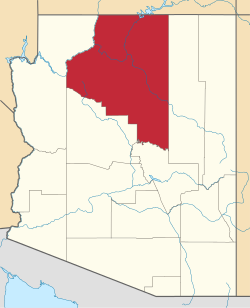
The Hopi Reservation (Hopi: Hopitutskwa) is a Native American reservation for the Hopi and Arizona Tewa people, surrounded entirely by the Navajo Nation, in Navajo and Coconino counties in northeastern Arizona, United States.[2][3][4][5] The site has a land area of 2,531.773 sq mi (6,557.262 km2) and, as of the 2020 census had a population of 7,791.[6]

The two nations formerly shared the Navajo–Hopi Joint Use Area until the Navajo–Hopi Land Settlement Act created an artificial boundary through the area. The partition of this area, commonly known as Big Mountain, by acts of Congress in 1974 and 1996, has resulted in continuing controversy.[7][8]

The system of villages unites three mesas in the Pueblo style traditionally used by the Hopi. Walpi is the oldest village on First Mesa, having been established in 1690 after the villages at the foot of mesa Koechaptevela were abandoned for fear of Spanish reprisal after the 1680 Pueblo Revolt. The Tewa people live on First Mesa. Hopi also occupy the Second Mesa and Third Mesa.[9] The community of Winslow West is off-reservation trust land of the Hopi tribe.[citation needed]

The Hopi Tribal Council is the local governing body consisting of elected officials from the various reservation villages. Its powers were given to it under the Hopi Tribal Constitution.[10]

The Hopi consider their life on the reservation (in particular, the traditional clan residence, the spiritual life of the kivas on the mesa, and their dependence on corn) an integral and critically sustaining part of the "fourth world".[citation needed][clarification needed] Hopi High School is the secondary education institute for reservation residents. [citation needed] Hopi Radio, a station with a mix of traditional Hopi and typical American programming is run for the reservation[11] and provides internships for Hopi High School.[citation needed]

Communities

[edit]

Time zone

[edit]
Second Mesa and Mishongnovi, Navajo County, Arizona, as seen from the Arizona State Route 264 at the ascent to Shungopavi

The Hopi Reservation lies within the Mountain Time Zone. Like most of Arizona, but unlike the surrounding Navajo Nation, it does not observe daylight saving time.[12]

Aerial views

[edit]

Aerial views looking north along the central three of the reservation's five major washes,[13] from west to east:

See also

[edit]

References

[edit]
[edit]
Revisions and contributorsEdit on WikipediaRead on Wikipedia
from Grokipedia
The Hopi Reservation, known in the Hopi language as Hopitutskwa, is a federally recognized Native American reservation in northeastern , spanning parts of Navajo and Coconino counties and encompassing over 1.5 million acres of arid highland terrain dominated by three finger-like mesas rising from the surrounding desert. It constitutes the primary homeland of the Tribe, whose ancestors have occupied the region for millennia, developing resilient dry farming techniques adapted to minimal rainfall and maintaining 12 traditional pueblos clustered atop the mesas. Formally established by U.S. presidential on December 16, 1882, the reservation preserves a matrilineal clan-based society with spiritual practices centered on rituals and corn symbolizing life's cycles. As of recent estimates, the on-reservation population numbers approximately 8,300, predominantly Hopi enrolled members sustaining cultural continuity amid challenges like , land encroachments from the encircling , and historical federal policies restricting development such as the Bennett Freeze from 1966 to 2009. These factors underscore the Hopi's enduring emphasis on and ecological , distinguishing their territory as one of the oldest continuously inhabited cultural landscapes in .

Geography

Location and Boundaries

The Hopi Reservation occupies approximately 1.6 million acres in northeastern , primarily within Navajo County with extensions into Coconino County. This land base includes the main reservation of 1,625,686 acres designated as , centered on the Hopi Mesas, along with additional administrative units such as the Moenkopi area. The reservation forms a non-contiguous enclave entirely surrounded by the , with irregular boundaries shaped by federal executive orders, court rulings, and land partition agreements. The core boundaries trace back to the 1882 designation of for exclusive use, encompassing arid plateaus, washes, and the prominent First, Second, and Third Mesas where the 12 villages are located. Detached portions, like the Moenkopi Administrative Unit near Tuba City, lie about 50 miles west of the main mesas, highlighting the fragmented nature of the territory. These boundaries enclose a rugged high-desert , with the reservation's eastern and southern edges abutting lands, northern limits near the , and western extensions limited by historical allotments and state holdings. Jurisdictional overlaps in former Joint Use Areas were resolved through the 1974 Navajo-Hopi Land Settlement Act, which allocated specific parcels to control, stabilizing the current configuration as of the late 20th century.

Topography and Climate

The Hopi Reservation occupies a portion of the in northeastern , primarily within Navajo County and extending into Coconino County, where the terrain features prominent mesa formations rising abruptly from expansive high desert plains. The reservation's core consists of three southward-extending mesas—First Mesa, Second Mesa, and Third Mesa—comprising a single geologic finger-like structure with elevations on the mesa tops ranging from approximately 5,800 to 6,500 feet above , while surrounding valley floors lie between 5,000 and 6,000 feet. To the north, the landscape includes higher elevations approaching 7,000 feet on Black Mesa, contributing to varied microtopographies of flat-topped buttes, steep escarpments, and intermittent washes such as Polacca Wash and Oraibi Wash that channel seasonal runoff. Vegetation distribution reflects elevational gradients and soil characteristics: lower elevations support semi-desert grasslands and shrublands adapted to aridity, mid-level valleys feature mixed grasslands, and higher mesa summits host pinyon-juniper woodlands, with sparse riparian zones along washes. The climate is classified as semi-arid continental, with low annual averaging 8.5 inches across the reservation, though it varies from 5 inches in southern lowlands to 15 inches in northern highlands, mostly delivered via summer monsoons (July-August) and winter frontal systems. Temperatures show marked seasonal extremes and high diurnal ranges typical of high-desert interiors; for instance, at Keams Canyon (elevation ~5,900 feet), average summer daytime highs reach the mid-80s to low-90s°F, while winter lows frequently fall below 20°F, with a of 130-180 frost-free days. Prolonged droughts, exacerbated by elevation-driven variability, have historically constrained to dry-farming techniques reliant on moisture conservation in sandy soils.

Natural Resources

The Hopi Reservation, situated in a semi-arid region of northeastern , features limited extractable natural resources dominated by deposits, aggregates, and , with primarily consisting of ephemeral washes. reserves, concentrated on Black Mesa in the Joint Use Area shared with the , have historically provided economic revenue through mining operations that began in 1970. The Black Mesa Mine, operated by Peabody Western Coal Company, produced for power generation, including transport via a that drew approximately 1.4 billion gallons annually from the N- (Navajo ) until the mine's suspension in 2005 and full closure amid declining demand. These operations extracted billions of gallons of over decades, contributing to drawdown rates of up to 17 feet in monitoring wells near the site from 1972 to 1979, alongside declines in connected seeps and springs vital for traditional . Water remains the most constrained resource, with surface flows limited to five major washes—Jeddito, , Dinnebito, Oraibi, and Moenkopi—that carry runoff sporadically and support of corn, beans, and squash when supplemented by rainfall averaging 10-12 inches annually. from the N-Aquifer, a principal source for domestic and ceremonial use, has experienced ongoing depletion from historical , prolonged , and regional pumping, resulting in reduced spring flows and heightened vulnerability to . Tribal management emphasizes conservation, including natural springs and reservoirs, amid efforts to mitigate legacies through reclamation under the Abandoned Mine Land program, certified complete for sites in 1994. Secondary resources include , , and quarried used for local and maintenance, alongside rangeland comprising about 1.5 million acres suitable for limited of sheep, , and horses. Fuelwood is harvested from scattered pinyon-juniper stands, while wildlife populations—encompassing , , rabbits, and —sustain regulated subsistence hunting under tribal oversight. No significant timber or metallic mineral deposits are commercially exploited, though trace occurrences exist in the broader region without active Hopi-specific development. Economic transitions post-coal era focus on sustainable alternatives, given the finite nature of reserves estimated at 11 million tons remaining in associated operations as of recent assessments.

History

Ancestral and Pre-Contact Period

The Hopi people trace their ancestry to the , indigenous groups who developed complex agricultural societies across the American Southwest beginning around 500 B.C. during the Basketmaker period and evolving through the Pueblo I-IV phases up to A.D. 1300. Archaeological evidence links modern Hopi clans to these earlier populations through continuity in pottery styles, architecture, and ritual practices, such as the construction of subterranean kivas for ceremonial use. Sites in the Hopi region, including those on the three mesas, show initial small-scale occupations dating to A.D. 900-1100, with evidence of agriculture adapted to arid conditions via dry farming techniques. By the Pueblo III and IV periods (A.D. 1100-1400), ancestral communities aggregated into larger multi-room pueblos, exemplified by Homol'ovi II, a 14th-century site with over 700 rooms located near the modern Reservation, which served as a regional center before abandonment around A.D. 1400. Tree-ring dating confirms continuous occupation at villages like Oraibi since approximately A.D. 1150, marking it as one of the oldest continuously inhabited settlements in . These settlements featured stone masonry buildings clustered around plazas, reflecting social organization into matrilineal clans that managed land use and ceremonies tied to agricultural cycles. Population movements during the 13th century, driven by prolonged droughts and resource depletion as evidenced by paleoclimatic data and site abandonments in the region, contributed to migrations toward the Mesas. oral traditions describe clan migrations from distant places, which archaeological findings corroborate through shifts in , such as motifs indicating diverse origins integrated into society. Pre-contact relied on corn, beans, squash, and cotton cultivation, supplemented by hunting small game and gathering, with trade networks extending to sources hundreds of miles away. emphasized kinship-based governance and religious societies preserving knowledge of emergence myths and rituals, fostering resilience in a harsh environment without external disruptions until Spanish arrival in 1540.

European Contact and Early U.S. Relations

The first recorded European contact with the occurred in 1540 during the expedition led by , when Pedro de Tovar was dispatched to explore villages in present-day northeastern . Tovar's party visited at least seven villages, including Mishongnovi, Shungopovi, Awatovi, and Walpi, where initial interactions involved but escalated to a skirmish at one village after demands for tribute were resisted. These encounters introduced the to and metal tools but foreshadowed future conflicts over resource extraction and cultural imposition. Franciscan missionaries established three missions among the starting in 1629 at Awatobi, Oraibi, and Shongopovi, aiming to convert the population and enforce Spanish colonial authority through labor drafts and suppression of traditional practices. Tensions mounted over decades due to enforced tribute, destruction of kivas, and interference with ceremonies, culminating in the of 1680, in which villagers participated by killing or expelling priests and destroying mission structures. accounts describe throwing Franciscan friars from mesa edges, contributing to the broader uprising that temporarily expelled Spanish forces from the region. Following the revolt, the successfully resisted Spanish reconquest efforts, maintaining autonomy on their mesas while other groups faced re-subjugation; sporadic Spanish expeditions in the late 17th and 18th centuries, such as those in , failed to reimpose control due to Hopi defensiveness and geographic isolation. Mexico's independence in 1821 brought little direct change, as Mexican governance remained weak in the remote Hopi territory. U.S. control over Hopi lands was formalized in 1848 via the ending the Mexican-American War, yet early American interactions were minimal, with the Hopi avoiding formal treaties, military engagements, or significant engagement with federal agents into the 1870s.

Reservation Establishment and Expansion

The Hopi Reservation was formally established on December 16, 1882, by Executive Order of President Chester A. Arthur, which set aside a tract of approximately 2.5 million acres (or 3,863 square miles) in northern Arizona Territory for "the use and occupancy of the Moqui [Hopi] and such other Indians as the Secretary of the Interior may see fit to settle thereon." This reservation encompassed the traditional lands of the Hopi villages situated atop First Mesa, Second Mesa, and Third Mesa in present-day Navajo and Coconino Counties, responding to documented pressures from Navajo population growth and livestock overgrazing that threatened Hopi agricultural fields and water sources. The order's boundaries were arbitrarily drawn based on surveys and reports from Indian agents, extending roughly from the Little Colorado River southward, but excluding some outlying Hopi settlements like Moencopi to the west. Unlike contemporaneous expansions of neighboring reservations, the Hopi Reservation saw no immediate enlargements through additional in the late , as federal policy prioritized containment of the amid broader assimilation efforts. Instead, repeated from 1886 to 1918 progressively expanded the adjacent Reservation—initially created by in 1868—from 3.5 million acres to over 16 million acres by 1934, encircling the lands and creating overlapping use in peripheral zones where herders had settled. This de facto contraction of relative territory stemmed from the 1882 order's permissive language allowing "other Indians" on the land, which administrators interpreted to accommodate without formal boundary adjustments, exacerbating resource competition over and springs. Early 20th-century federal actions, such as the Act of June 14, 1934, fixed the Reservation's western boundary along a line that incorporated approximately 234,000 acres of former land adjacent to areas, including the Moencopi villages, but explicitly preserved occupancy rights without transferring title or expanding core boundaries. These measures reflected administrative efforts to stabilize grazing districts amid Bowl-era concerns, rather than deliberate enlargement, leaving the reservation's original 1882 footprint as its primary extent until later judicial interventions.

20th-Century Land Disputes and Resolutions

In the early , the Reservation faced ongoing encroachments from pastoralists, stemming from an 1882 that reserved land for the and "such other Indians" as deemed appropriate by the Secretary of the Interior, which facilitated settlement on those lands. A federal district court ruling in Healing v. Jones affirmed to the 1882 reservation lands but recognized possessory rights, leading to joint use without clear boundaries and enabling population growth and livestock expansion that strained resources. By the 1950s, occupation covered approximately 1.8 million acres of disputed territory, prompting complaints to federal authorities about and water diversion. Tensions escalated in 1966 when the Hopi Tribe filed a lawsuit in the U.S. District Court for the District of Arizona, seeking exclusive possession of about 1.5 million acres within the expanded 1934 reservation boundaries occupied primarily by Navajos. In response, Secretary of the Interior Stewart Udall imposed the "Bennett Freeze," named after Commissioner of Indian Affairs Robert L. Bennett, halting all federal infrastructure development, loans, and grants on 1.5 million acres of the disputed Joint Use Area to compel negotiations and prevent further entrenchment. This freeze, intended as temporary, persisted for decades, exacerbating poverty among approximately 10,000 Navajos residing there by denying access to modern housing, roads, and utilities. Negotiations between the tribes failed, leading Congress to enact the Navajo-Hopi Settlement Act of 1974 (Public Law 93-531), which partitioned the Joint Use Area into District 6 (allocated to , about 640,000 acres) and the remainder to , requiring the relocation of Navajo families from Hopi-designated land and a smaller number of Hopi from Navajo land. The act established the Joint Use Area Commission for oversight and authorized federal funding for relocations, though implementation faced resistance, with only partial compliance by the 1980s; by 1990, over 8,000 Navajos had been evicted from lands under court orders enforcing the partition. Amendments in the 1980s extended relocation deadlines and created the Office of Navajo and Indian Relocation to manage compensation and housing, relocating about 3,000 families by the century's end amid criticisms of inadequate federal support. Further resolutions in the late included the 1996 Navajo-Hopi Land Dispute Settlement Act ( 104-266), which ratified a 1995 agreement allowing limited Navajo occupancy on partitioned Hopi lands via accommodation leases and resolving lingering boundary issues from the 1974 partition. This measure aimed to stabilize land use without additional relocations, though it did not lift the Bennett Freeze, which continued to impede development until the . These actions marked a shift from judicial partition to negotiated coexistence, driven by federal intervention to avert violence reported in the , including armed standoffs over evictions.

Government and Politics

Tribal Governance Structure

The Hopi Tribe maintains a governance structure that integrates traditional village with a centralized tribal council framework established in the mid-20th century. Traditionally, the 12 villages operate as semi-independent entities, each led by a kikmongwi (village chief) who holds authority rooted in hereditary, religious, and consensus-based decision-making processes focused on internal community affairs, ceremonies, and resource allocation within village lands. This decentralized system emphasizes clan-based kinship and spiritual leadership, with villages retaining primary over local matters such as and , as affirmed in the tribe's foundational documents describing the as "a union of self-governing villages." The modern centralized element, the Hopi Tribal Council, was formed in 1936 under the and ratified its constitution on December 19, 1936, to facilitate interactions with the U.S. federal government and manage reservation-wide concerns. The comprises a chairman and vice chairman, elected tribe-wide every four years, alongside 22 legislative members elected by and representing village constituencies, including groups such as Upper Moenkopi (multiple seats), Bacavi, Kykotsmovi, Sipaulovi, and consolidated villages on First, Second, and Third Mesas (e.g., First Mesa Consolidated Villages encompassing Walpi, Sichomovi, and Hano). Elections occur through village-specific processes, with terms typically lasting four years, ensuring representation from the core villages while accommodating consolidations for administrative efficiency. The council operates as the legislative branch, wielding enumerated powers under Article VI of the constitution, including enacting ordinances, representing the tribe in federal dealings, managing communal property and natural resources, approving budgets, and regulating economic activities for tribal welfare. The executive branch, headed by the chairman—who appoints department heads subject to council approval—oversees administrative services such as health, education, and natural resources, with the vice chairman assuming duties in the chairman's absence. The judicial branch consists of the Hopi Court of Justice and lower courts, appointed by the council, which adjudicate civil and criminal matters under tribal law, incorporating customary practices where applicable, though federal oversight limits certain criminal jurisdiction per the Major Crimes Act. This hybrid structure reflects ongoing tensions, as the council's authority—imposed partly through federal policy—sometimes conflicts with traditional village leaders who prioritize local sovereignty and view centralized decisions as diverging from ancestral consensus models. Despite such dynamics, the council remains the primary interface for federal relations, negotiations (e.g., and rights), and tribal-wide policy, with villages vetoing council actions affecting their internal in practice.

Sovereignty and Federal Relations

The Hopi Tribe exercises sovereign authority as a federally recognized Indian tribe, conducting government-to-government relations with the , which acknowledges the Tribe's inherent powers of over internal affairs, subject to federal plenary authority. The Tribe's reservation lands, encompassing approximately 1.5 million acres in Coconino and counties, , are held in trust by the federal government, imposing a fiduciary duty on the to manage these assets for the Tribe's benefit, including protection of natural resources and enforcement of tribal laws where applicable. The legal basis for the reservation originated with Executive Order 1882, issued by President on December 16, 1882, which withdrew about 2.5 million acres from for the "use and occupancy" of the Tribe and "such other Indians as the Secretary of the Interior may see fit," without a formal , thereby initiating federal oversight while permitting shared use that later precipitated conflicts with the . The Tribal Council, established under the Tribe's and By-laws ratified on October 24, 1936, and approved by the Secretary of the Interior on December 19, 1936, pursuant to the of 1934, serves as the primary governing body, wielding legislative, executive, and judicial powers delegated by the Tribe, though federal law supersedes in areas like criminal jurisdiction under the and civil regulatory matters. Federal relations are administered principally through the (BIA), which operates the Hopi Agency to fulfill trust obligations, including land acquisition, resource management, and support for tribal programs, while the Tribe retains authority over membership, cultural practices, and local ordinances. Disputes have arisen over BIA performance, as in Hopi Tribe v. United States (2015), where the Tribe alleged breach of trust in the agency's failure to fully reimburse litigation costs under the Navajo-Hopi Settlement Act, highlighting tensions in federal fiduciary duties despite the absence of a substantive right to such payments under the . Congressional interventions have shaped sovereignty boundaries, notably through the Navajo-Hopi Land Settlement Act of 1974 (Public Law 93-531), which partitioned the 1882 lands into - and -exclusive areas following a 1962 federal court ruling on joint , mandating relocation of over 10,000 from -partitioned lands and imposing federal oversight via the Office of Navajo and Indian Relocation. Amendments in 1988 (Public Law 100-690) and 1996 (Public Law 104-301) extended relocation deadlines, authorized long-term leases, and facilitated additional land transfers into trust, underscoring federal authority to resolve intertribal conflicts while affirming within statutory frameworks. These acts exemplify the dependent nature of tribal , where federal can compel accommodations like for displaced on lands, balancing trust responsibilities against broader policy imperatives.

Internal Political Dynamics

The Hopi 's internal political dynamics revolve around the tension between its centralized Tribal Council, established by the 1936 under the , and the of its 12 semi-autonomous villages, each led by a kikmongwi (village chief) who derives legitimacy from clan-based ritual and consensus rather than elected office. The frames the tribe as a "union of self-governing villages sharing common interests," vesting primary powers in the unicameral Tribal Council composed of one elected representative per village, but this structure has historically overlaid and sometimes conflicted with village-level decision-making rooted in matrilineal clans and ceremonial responsibilities. Village chiefs retain significant influence over local matters like land allocation and , often prioritizing cultural preservation over broader tribal policies, leading to instances where villages have asserted the right to seat or remove their council delegates. This duality fosters factionalism between traditionalists, who emphasize adherence to Hopi prophecies, sovereignty, and resistance to external economic pressures, and progressives, who advocate for adaptation through resource development like to address and needs. Traditionalists, prominent in villages like Hotevilla, have historically boycotted or challenged Tribal actions perceived as eroding cultural , such as land leases or federal negotiations, exemplified by the Traditionalist Movement that splintered from progressive-led initiatives and influenced ongoing resistance to centralized authority. Progressives, often aligned with leadership, push for modernization, but internal disputes have repeatedly stalled policies; for instance, in , divisions over an expanded permit at the Black Mesa Complex highlighted economic versus environmental priorities, contributing to leadership turmoil and controversies. Consensus-driven rituals underpin political legitimacy, with authority diffused across kiva societies and heads rather than concentrated in formal institutions, complicating secular and amplifying disputes during resource or external threats like the -Navajo land partition. Low in tribal elections—often below 20%—reflects deep-seated distrust of imposed governmental structures and cultural norms against overt political competition, as many view voting as disruptive to harmonious village relations. Judicial evolution, including blending traditional norms with Western adjudication, has helped mediate conflicts, such as grazing disputes formerly handled by village chiefs but now increasingly routed through tribal courts.

Demographics and Communities

Population Statistics

The Hopi Reservation, encompassing approximately 2,532 square miles in northeastern , had a resident population of 6,377 as recorded in the 2020 Decennial for the Hopi Reservation and . The 2018–2022 estimated a higher figure of 7,895 residents, with a of ±704. These numbers reflect primarily individuals living on reservation lands, distinct from the total enrolled tribal membership, which stood at approximately 14,394 as of 2024, many of whom reside off-reservation. Population density remains low, at roughly 2.5 persons per based on 2020 figures, due to the vast arid terrain and concentration of settlements on the three main mesas. Demographically, over 94% of residents identify as American Indian or Alaska Native, with small percentages of other races, including about 1% and minimal or Latino representation (around 5%). The median age is 38.4 years, with 26.6% under 18 and a notable portion aged 25–44.
Statistic2020 Decennial 2018–2022 ACS Estimate
Total 6,3777,895 (±704)
Under 5 YearsNot specified~7.3%
Under 18 YearsNot specified26.6% (±3.7%)
These figures indicate modest growth from prior decades, though undercounting in remote tribal areas may affect accuracy, as noted in analyses comparing reservation response rates. The enrolled tribal has grown 76% since 1990, driven by factors including improved efforts.

Villages and Mesas

The Hopi Reservation encompasses 12 villages distributed across three primary mesas—First Mesa, Second Mesa, and Third Mesa—extending southward from Black Mesa in northeastern Arizona. These mesas, rising 300 to 600 feet above the arid valleys, provided strategic defensibility and access to arable land for ancient Ancestral Puebloan inhabitants, with continuous occupation dating back over 800 years in some cases. The villages consist of multi-story stone-and-adobe pueblos clustered atop the mesa rims, traditionally organized by clans and matrilineal kinship groups, though some residents now live in modern homes at the bases. First Mesa, the easternmost and eastern-facing, includes the villages of Walpi, Sichomovi, and Hano, with additional communities like and Keams Canyon at its base. Walpi, occupied since at least the 13th century and fortified in its current position around 1690 following Spanish colonial pressures, exemplifies traditional with terraced houses accessed by ladders. Sichomovi, founded in the late by migrants from Walpi, serves as a cultural and administrative hub, while Hano, a Tewa-speaking enclave established by refugees from the region circa 1700, maintains distinct linguistic and ceremonial traditions integrated with Hopi practices. First Mesa villages are renowned for polychrome production, a craft tied to ceremonial and economic roles. Second Mesa, centrally located, features Shungopavi, Mishongnovi, Sipaulovi, and Kykotsmovi. Shungopavi, among the oldest with roots in the , hosted early Spanish missionary efforts in the 1620s before abandonment and reoccupation. Mishongnovi and Sipaulovi, established around the same period, emphasize coiled basketry craftsmanship. Kykotsmovi, developed in the as a consolidation site, functions as the Tribal Headquarters and a modern administrative center. Third Mesa, the westernmost and largest, comprises Oraibi (Orayvi), Hotevilla, Bacavi, and Moenkopi (including Upper and Lower settlements). Oraibi, inhabited continuously since approximately 1150 CE, holds the distinction as one of North America's oldest extant communities, with a 1970 population of about 100 residents in its historic core amid ongoing modernization. Hotevilla and Bacavi emerged in the early from schisms in Oraibi over accommodation to U.S. policies, reflecting internal traditionalist-progressive divides. Moenkopi, located farther west near Tuba City, supports via the Little Colorado River and dates to the 19th century. Third Mesa is noted for wicker basketry, weaving, and kachina doll carving. Population data across villages varies, contributing to the tribe's total enrollment of around 14,000 as of 2014, with many villages maintaining fewer than 200 residents each.

Social and Cultural Composition

Hopi society on the reservation is fundamentally organized around a matrilineal system, where descent and inheritance pass through the female line, establishing clan membership at birth via the . Clans, typically exogamous and grouped into larger phratries, form the core units, with lineages—groups sharing a common ancestor—providing mutual support obligations among members. This structure integrates networks across villages, emphasizing communal responsibilities over individual autonomy. Residence patterns reinforce through matrilocal practices, whereby a relocates to his wife's post-marriage, embedding him within her 's domain while children belong unequivocally to the maternal . Men traditionally assume roles in , , and ceremonial , balancing women's over , land allocation, and key agricultural decisions. Phratries and preserve distinct legends, rituals, and totemic associations, fostering social cohesion amid the reservation's 12 villages spanning three mesas. Culturally, the population remains predominantly , with over 95% of tribal members identifying solely as American Indian or Alaska Native, supplemented by a small subgroup on First Mesa whose ancestors integrated via historical alliances. Traditional values prioritize , ritual observance, and harmony between human society and natural cycles, though contemporary influences introduce variations in adherence. Clans dictate exogamous rules to maintain genetic and social diversity within the bounded reservation community, distinct from surrounding populations despite shared regional history.

Culture and Traditions

Religious and Ceremonial Practices

The Hopi religion constitutes a holistic system integrating cosmology, ethics, and agricultural imperatives, emphasizing harmony between humans, nature, and supernatural entities known as katsinam (singular katsina), or kachina spirits, which embody natural forces, ancestors, and moral exemplars. These beings are believed to descend from the San Francisco Peaks to reside among the Hopi from the winter solstice through midsummer, manifesting through masked dancers in ceremonies that petition for rain, fertility, and communal well-being, thereby sustaining the dry-farming economy reliant on corn, beans, and squash. Religious authority resides with initiated members of clan-based societies, such as the Snake, Antelope, and Kachina fraternities, who perform esoteric rites in subterranean kivas to perpetuate cosmic balance, with participation restricted to preserve ritual efficacy and cultural integrity. Central to Hopi ceremonial life is the kachina cult, where impersonators clad in elaborate , costumes, and body paint represent over 300 distinct katsinam during public and semi-public dances, enacting narratives that reinforce social norms, seasonal transitions, and reciprocity with the environment. Dolls (tihu) carved as teaching aids for children depict these spirits, fostering early into religious duties, while into the cult—typically around age ten—serves as the formal entry to spiritual life, involving trials that instill reverence through experiential shocks. These practices, predating European contact but adapted amid external pressures, underscore a worldview where human conduct directly influences natural cycles, with lapses risking or misfortune. The annual ceremonial cycle aligns with the solar and agricultural calendar, commencing with the Soyal ceremony around the in , conducted secretly in kivas to invoke the sun's return, renew clan ties, and distribute prayer sticks (paho) to katsinam for guidance. This is followed in February by the Powamu (or Bean Ceremony), featuring kachina dances and the ritual sprouting of beans to herald planting season and distribute bean sprouts symbolizing abundance. Midyear brings the Niman or Home Dance in July, a public farewell to departing katsinam, with and gift-giving to affirm communal reciprocity. Alternating biennially with the Flute Ceremony, the Snake-Antelope Dance occurs in late August over 16 days of preparation and performance, wherein initiated Snake Clan members collect live rattlesnakes—regarded as rain-bringers—handle them ritually, and carry them in their mouths during a procession to convey prayers to water deities, culminating in snake release toward springs; this rite, observed historically at villages like Walpi and Hotevilla, has drawn external attention since the but remains under control to prevent desecration. Contemporary observance persists amid challenges from and cultural dilution, with core rites confined to initiated practitioners per tribal protocol, though some public elements educate outsiders while safeguarding ; federal policies have occasionally intersected, as in repatriation of sacred objects, affirming Hopi over religious stewardship.

Language Preservation and Daily Life

The , Hopilàvayi, an Uto-Aztecan tongue, is classified as vulnerable by , with intergenerational transmission disrupted among younger generations despite ongoing use in traditional contexts. Approximately 7,105 people spoke at home in recent U.S. data, reflecting a stable but aging speaker base where fluency rates drop sharply by age cohort: near 100% among those over 60, 84% for ages 40-59, 50% for 20-39, and only 5% for children under 19, based on a 1998 tribal survey whose trends persist amid limited child acquisition. On the reservation, about 68.9% of households report speaking a non-English at home, predominantly , underscoring its role in familial and ceremonial domains despite English dominance in formal and . Preservation initiatives emphasize community-driven immersion and documentation to counter fluency erosion, driven by historical policies that suppressed native . The Tribe's Department of coordinates reservation-wide programs, including integration in tribal to promote and oral proficiency. University's Hopilavayi Project advances a comprehensive plan for standardized instruction, incorporating surveys to assess community needs and develop materials for all age groups. Specialized efforts, such as the Hopitutuqaki immersion established to revive craft-linked use, and of toponyms by native speakers, aim to preserve phonetic and cultural nuances tied to landscape and history. These programs, often funded through federal grants like those from the , prioritize elder-youth mentorship to embed in daily transmission, though challenges persist from economic pressures favoring English for off-reservation employment. In daily life, permeates village routines on the mesas, where residents—numbering around 7,000 enrolled tribal members—engage in dry farming, herding, and household tasks using the language for practical exchanges, such as discussing crop cycles or obligations rooted in matrilineal clans. Ceremonial kivas and home settings sustain its oral traditions, with phrases invoking spiritual central to the worldview of balance with nature, though monolingual Hopi speakers number fewer than 40, mostly elders. English prevails in K-12 schooling via facilities and interactions with neighboring or outsiders, reflecting bilingualism as a pragmatic to federal constraints and resource . This linguistic duality shapes social cohesion, as reinforces clan-based reciprocity in resource sharing and , yet generational shifts risk cultural discontinuities without intensified revitalization.

Kinship and Social Organization

Hopi kinship is fundamentally matrilineal, with descent, membership, and of land and resources traced through the female line, such that children belong to their mother's . This system organizes extended families into households where senior women, known as clan mothers, hold authority over domestic affairs, land allocation, and succession, which passes to the eldest daughter upon the mother's death. Marriage follows uxorilocal or patterns, with newlyweds typically residing with the bride's family, fostering integration into the wife's matrilineage while prohibiting unions within one's own or often the father's to maintain . Clans form the core social units, numbering over 30 distinct groups named after natural elements such as animals, plants, or weather phenomena (e.g., or clans), each headed by a clan mother and sometimes a male elder. These exogamous clans are grouped into larger phratries—alliances of related clans that emerged together from mythological origins—and provide mutual support networks spanning multiple villages, including aid in rituals, disputes, and resource sharing. Clans own farmland adjacent to villages and control access to it, with prestige-based ranking among clans historically influencing ceremonial leadership, political roles, and , though this has weakened in modern times. Social organization integrates clans into autonomous villages, each functioning as a federation of multiple clans with shared plazas and kivas for ceremonies, governed traditionally by a village chief (kikmongwi) and council of elders from prominent clans. Ceremonial societies, often male-led and crossing clan lines, handle religious rites and community welfare, balancing the matrilineal clan structure with complementary patrilateral ties, such as those to ritual godfathers. Kinship terms are classificatory, extending to broad categories that encompass phratry members and affines, reinforcing reciprocal obligations and ethical norms centered on harmony and clan loyalty. This framework has sustained Hopi cohesion across the reservation's mesas despite external pressures, with women retaining control over produce and homes while men focus on governance and spirituality.

Economy

Traditional Subsistence and Agriculture

The Tribe has sustained a traditional centered on dryland for over 2,000 years in the arid highlands of northeastern , where annual averages 8 to 12 inches, primarily from winter and summer monsoons. This rain-fed system, eschewing , depends on conservation through techniques such as deep planting, basin terracing, and organic mulching to minimize in sandy-loam soils. Fields are typically located in bottomlands below the three Hopi Mesas or along ephemeral washes, where natural runoff from flash floods supplements rainfall, enabling cultivation without mechanical water diversion. Core crops consist of the "Three Sisters"—maize (corn), beans, and squash—intercropped to optimize resource use: corn stalks provide trellises for climbing beans, which fix in the , while squash vines suppress weeds and retain with broad leaves. Corn, planted 6 to 18 inches deep to reach subsoil , dominates production and holds profound cultural significance as a symbol of sustenance and spiritual reciprocity with . Beans and squash are sown shallower at 3 to 4 inches and 2 to 4 inches, respectively, with additional varieties like melons, , and sunflowers grown for diversity. Traditional tools include wooden digging sticks and hoes for hand-tilling small plots, often 1 to 5 acres per family, though some modern adaptations incorporate tractor harrowing for larger fields. Subsistence practices integrate agriculture with seasonal gathering of wild foods, such as piñon nuts, prickly pear fruits, and mesquite beans, and limited of rabbits, deer, and birds using bows or traps, providing protein and supplements during lean years. Land tenure follows matrilineal clans, with fields inherited through maternal lines and allocated by village leaders based on and accessibility, ensuring communal stewardship. Yields vary widely with rainfall—successful seasons produce enough corn for storage in granaries, sustaining households through winter—reflecting an adaptive strategy honed against cycles, as evidenced by archaeological records of continuous farming since at least 1000 BCE.

Resource Extraction Industries

The Hopi Tribe's primary resource extraction industry has historically centered on , particularly through the Black Mesa Mine operated by Peabody Western Coal Company on jointly administered Hopi and lands in northeastern . In 1966, the Hopi and tribal governments signed mineral leases granting Peabody rights to extract from approximately 64,858 acres of Black Mesa, enabling strip-mining operations that began in the late 1960s and continued until the mine's closure in 2005 due to lease expiration and environmental opposition. These operations produced millions of tons of annually, much of which was transported via a that drew water from the N-aquifer, the Hopi's sole source, leading to documented declines in aquifer levels and springs critical for traditional and ceremonial uses. Coal royalties and related revenues constituted a major portion of the Tribe's operating budget, exceeding 50% of its approximately $20 million annual income during peak operations and supporting tribal services, infrastructure, and employment for tribal members. The mine's economic contributions included direct jobs and indirect benefits from the adjacent , which consumed the and provided power to utilities across the Southwest until its decommissioning in 2019, exacerbating revenue losses for the as demand declined amid federal clean policies. Post-closure, the tribe has pursued federal funding for economic diversification, including a $100 million proposal in 2022 to transition to development and workforce training to offset job losses estimated in the hundreds for local communities. Uranium mining has had a lesser but notable presence on or near lands, with historical extraction in the broader region contributing to affecting residents alongside communities. Operations from the to the left legacy contamination from unreclaimed sites, prompting ongoing remediation efforts under the U.S. Department of Energy's programs for former mill sites within the that border territory. Recent uranium transport activities, such as ore shipments from the Pinyon Plain Mine starting in 2025, have raised concerns among leaders over haul routes potentially impacting reservation areas, though the tribe has not entered direct extraction agreements. No significant large-scale oil, gas, or other mineral extraction industries operate on lands as of 2025, with tribal focus shifting toward sustainable alternatives amid from past .

Contemporary Economic Challenges and Diversification

The Hopi Reservation faces persistent economic challenges, including an unemployment rate of 12.1% as of recent census data, significantly higher than the national average of 5.3%. Poverty affects 32.2% of the population based on 2019-2023 American Community Survey estimates, compared to 12.5% nationally, with median per capita income at approximately $12,632 to $22,342, well below state and U.S. figures. These issues stem partly from the reservation's geographic isolation, limited infrastructure, and the recent closure of coal mines and regional coal-fired power plants, which previously provided revenue and jobs but declined due to market shifts away from fossil fuels. Diversification efforts focus on , particularly solar, to replace lost coal-related income. The Tribe has pursued federal grants, including a $25 million award in 2025 for solar panels and battery storage to serve around 600 homes, though subsequent policy changes under the Trump administration eliminated related funding programs. Plans outlined in the tribe's 2024-2029 Comprehensive Strategy (CEDS) prioritize solar development, a tribal power utility, and workforce training to create jobs in clean , alongside helium extraction and enhancement. The Tribe Corporation (HTEDC) supports through a proposed (CDFI) for business loans and training, aiming to bolster small enterprises in crafts and services. Gaming has not been adopted, as tribal referenda have consistently rejected casino development due to cultural concerns. Additional initiatives include reclaiming abandoned coal mine lands with $3.5 million from the Abandoned Mine Land Economic Revitalization Program in 2025 to restore sites for potential alternative uses. These strategies, guided by successive CEDS documents, seek to address structural barriers like water scarcity and remoteness while leveraging federal funding, though implementation depends on sustained infrastructure investments and market viability.

Environmental and Resource Issues

Water Rights and Management

The Hopi Reservation, located in a semi-arid region of northeastern , relies predominantly on from the N aquifer for domestic, ceremonial, and agricultural needs, supplemented by limited surface water from ephemeral washes and tributaries of the . Annual averages approximately 8.5 inches, exacerbating chronic water scarcity that has intensified with multi-decadal conditions. The tribe's water use includes traditional , which has shifted toward well-dependent amid declining natural flows, as well as leasing aquifer water to operations for royalty income. Groundwater depletion in the N aquifer stems from both climatic factors and anthropogenic extraction, notably activities on Black Mesa. From 1965 to 2005, Peabody Western Coal Company pumped an estimated 1.3 billion gallons annually—accounting for 63% of the aquifer's drawdown—primarily for transport to power plants, leading to dried springs, reduced well yields, and elevated levels in remaining sources. This over-extraction, permitted under federal leases, has compounded natural drought effects, threatening ceremonial practices tied to reliable springs and limiting livestock and crop viability across the reservation's 1.5 million acres. Under the Winters doctrine, the Hopi Tribe holds federally reserved water rights sufficient for reservation purposes, but quantification has been contentious. A 2022 Arizona Superior Court ruling, upheld in 2023, allocated 28,988 acre-feet per year—far below the tribe's requested 96,074—confined to sustaining the depleted and existing streams, explicitly excluding allocations for economic diversification, expanded ranching, or additional ceremonial uses. The tribe also holds a contract for 6,028 acre-feet annually from the mainstem. These limits cap projected at 18,255 by 2110 and hinder infrastructure projects estimated at $10 billion, prompting tribal plans for appeals and self-reliant development. The 2024 Northeastern Arizona Indian Water Rights Settlement Agreement, signed by Arizona Governor on November 20, seeks to resolve longstanding claims by the , , and San Juan Southern Paiute Tribe to , , and groundwater resources. For the , it guarantees 2,300 acre-feet per year from the Upper Basin and over 5,900 acre-feet from the , alongside funding for infrastructure to deliver sustainable supplies and mitigate depletion. Pending congressional ratification as of October 2025, the agreement aims to provide legal certainty while addressing past exclusions from basin-wide compacts, though critics note potential trade-offs in tribal sovereignty over unquantified rights. Water management efforts focus on quality and access amid arsenic contamination affecting up to 75% of reservation wells, a naturally occurring issue worsened by drawdown. Many households lack piped water and haul from communal sources, with levels exceeding EPA maximums of 10 in untreated systems. The Arsenic Mitigation Project, supported by federal partners, constructed treatment facilities for four villages; by November 14, 2024, all achieved compliance under the , leading the EPA to terminate enforcement orders. Ongoing challenges include high maintenance costs—potentially $1 million annually per plant—and regulatory burdens without assured funding, underscoring the tribe's push for integrated monitoring and adaptive infrastructure.

Land Use and Conservation

The Hopi Reservation encompasses approximately 1.86 million acres of arid high-desert land, with the majority designated for traditional dryland and . Traditional farming focuses on crops such as corn, squash, beans, melons, , and trees, primarily through dryland methods supplemented by spring-fed in areas like the Moenkopi ; however, cultivated acreage has declined significantly, with only about 1,100 acres under active farming by 1991 due to and shifting economic pressures. Rangelands, comprising roughly 1.4 million acres, support grass-fed sheep and cattle operations across designated units, including and Hopi Partitioned Lands (Units 251-573), governed by tribal grazing permits and Ordinance #43 for control to prevent . Conservation efforts are coordinated by the Hopi Tribe's Department of Natural Resources, which emphasizes protecting rangelands, woodlands, wetlands, and habitats under the "Hopi Tutskwa – Hopi Lands" to preserve and enhance environmental resources. The Wildlife and Ecosystems Management Program oversees habitat management, including and wetland restoration, while range conservation practices since the 1930s have implemented controlled grazing systems, water developments (e.g., windmills established in 1957 and upgraded through 1982), and measures like dams, dikes, and vegetation plantings in washes such as and Echo Wash. These initiatives have resulted in improved grass vigor (e.g., galleta and blue grama), reduced bare soil exposure, and enhanced forage, with federal lands contributing 34-53% of range productivity during critical periods. Key policy frameworks include the Integrated Resources Management Plan (2001), Woodlands Management Plan (2006), and Drought Contingency Plan (2000), alongside compliance with the and a FEMA-approved Natural Hazard Mitigation Plan (2006). Collaborative efforts with the U.S. Forest Service since the have focused on preserving sacred springs vital for ceremonial and ecological purposes, addressing arid conditions where annual averages 8-12 inches. Tribal ordinances such as #47 (woodlands) and #48 ( and ) regulate resource extraction, including fuel wood and quarried materials, to sustain long-term land productivity amid challenges like and encroachment.

Climate and Adaptation Efforts

The Hopi Reservation experiences a cold semi-arid typical of the high desert Southwest, with elevations ranging from 4,500 to 7,500 feet. Annual averages 8.5 inches, primarily from summer monsoons and winter snowstorms, though it varies from 5 inches in lower southern areas to 15 inches in higher northern regions. Temperatures fluctuate widely, with summer highs reaching 95°F and winter lows dropping to 21°F; recent decades have seen temperatures warmer than any period in the past 115 years. A prolonged 30-year has reduced typical yearly rainfall from 7 inches, exacerbating and . Hopi agricultural practices have long adapted to this through dry farming techniques developed over millennia without , relying on summer rains and retention. Key methods include selecting specific soil types, clearing fields, spacing plants appropriately, and planting seeds deeply—6 to 18 inches for corn and 3 to 4 inches for beans—often bundling multiple seeds together for resilience. These time-tested approaches, including cultivation of drought-tolerant crops like corn, beans, and squash, have sustained communities for over 2,000 years by maximizing limited efficiency. Contemporary adaptation efforts build on these traditions amid intensifying and warming trends, emphasizing preservation and youth training in sustainable practices. Initiatives like the Raincatchers partnership train young tribal members in water harvesting and to combat and dune mobility. Community observations document impacts, informing strategies such as revitalizing ancient seed varieties—some dating back 800 years—that demonstrate viability in testing for modern conditions. Vegetation management addresses drivers like overgrazing and -induced die-off, which accelerate wind speeds and , while cultural knowledge guides holistic crop management.

Controversies

The Navajo-Hopi boundary disputes arose from competing claims to lands in northeastern , primarily within the 1882 reservation established by President for the Tribe and "such other Indians" as approved by the Secretary of the Interior, which encompassed about 2.1 million acres and became jointly occupied by Navajos. Navajos, who expanded into the region from the late , increasingly used the area for , leading to and resource depletion that Hopi traditionalists attributed to Navajo practices, prompting Hopi petitions to for exclusive control as early as the 1890s. A 1934 congressional act attempted to define Hopi boundaries within the larger Navajo Reservation but failed to resolve overlapping use rights in the Joint Use Area (JUA), exacerbating tensions over permits, water access, and sacred sites. In 1962, the U.S. District Court for the District of ruled that the Tribe held undivided, joint right, title, and interest with the in the surface of the 1882 lands, rejecting claims of exclusive possession and affirming Hopi subsurface rights. This decision, upheld on appeal, stalled development and intensified conflicts, culminating in the Navajo-Hopi Land Settlement Act of 1974 (Public Law 93-531), which directed a to partition the JUA into equal halves—approximately 900,000 acres each for Partitioned Lands (NPL) and Partitioned Lands (HPL)—and required the relocation of residents from the partitioned lands of the other tribe within five years. The act established the Office of and Indian Relocation (ONHIR) to oversee compensation, housing, and benefits, primarily affecting over 10,000 Navajos living on HPL and fewer than 100 Hopis on NPL. The relocation effort, one of the largest involuntary tribal displacements in U.S. , faced fierce resistance from Navajos who viewed the partition as arbitrary and disruptive to traditional , resulting in federal enforcement actions including home demolitions and livestock seizures starting in 1977. Outcomes included documented cases of economic hardship, family separations, and cultural loss among relocatees, with only about 3,200 households receiving new homes by 2016 despite over $600 million in federal funding; Navajo advocacy groups have highlighted delays and inadequate benefits as stemming from bureaucratic inefficiencies rather than tribal intransigence. Hopi perspectives, conversely, emphasized the necessity of the partition to restore sustainable land management and protect ceremonial practices from encroachment. Complicating enforcement, the Bennett Freeze—imposed by Interior Secretary Stewart Udall's successor Robert Bennett in 1966—halted and across 1.6 million acres of the JUA to pressure negotiations, persisting until its lift in 2009 and leaving persistent underdevelopment in the former disputed zone. The 1996 Navajo-Hopi Land Dispute Settlement Act ( 104-301) amended the 1974 framework by facilitating coal lease revenues sharing and exchanges, but implementation lagged, with some HPL transfers to still unresolved as of 2020 due to holdouts and environmental concerns. Ongoing ONHIR operations, audited by the Government Accountability Office, continue to process appeals and benefits, though the program nears closure with fewer than 100 active cases reported in recent years.

Impacts of Mining and Energy Development

The Peabody Western Coal Company operated the Black Mesa and Kayenta surface mines on lands jointly administered by the Hopi Tribe and from the late 1960s until their respective closures in 2005 and 2019, extracting over 1.5 billion tons of primarily for power generation in the . These operations relied on a pipeline that transported pulverized mixed with water drawn from the N-Aquifer, the sole source for the Hopi Reservation, consuming an estimated 1.4 million gallons daily at peak. Mining activities caused significant depletion of the N-Aquifer, with water levels dropping by as much as 100 feet in monitored wells between 1965 and 2005, leading to the drying of traditional seeps and springs essential for , ceremonial practices, and domestic use. This over-extraction, which exceeded sustainable recharge rates, has resulted in chronic for the approximately 9,000 residents, forcing reliance on hauled water and limiting agricultural productivity in a region already prone to . The U.S. Department of the Interior's Office of Reclamation and Enforcement failed to adequately monitor or mitigate these impacts, despite lease agreements requiring water resource protection. Environmental degradation from strip affected over 30,000 acres, including habitat loss for local wildlife, , and elevated particulate matter from , which compromised air quality and regrowth despite reclamation mandates. Post-closure assessments indicate partial stabilization since 2005, but full recovery remains uncertain due to the 's slow recharge in arid conditions, with ongoing risks to flows in washes critical to . Economically, the mines generated royalties exceeding $500 million for the Tribe since inception, funding infrastructure and services, alongside employing a few hundred tribal members at peak operations; however, these benefits were offset by long-term resource loss, as market declines ended payments by 2019, prompting diversification into renewables amid skepticism toward development due to documented risks elsewhere. effects include indirect impacts from water shortages, such as reduced access to traditional foods, though direct linkages are less pronounced than in adjacent districts; cultural disruptions arose from disturbed ancestral sites during excavation. The Tribe's 2021 economic strategy highlights these trade-offs, advocating sustainable alternatives to avoid repeating extraction-driven environmental trade-offs.

Governance and Internal Reforms

The Hopi Tribal Government operates as a unicameral system in which all legislative powers are vested in the Hopi Tribal Council, established on December 19, 1936, through the adoption of the tribe's Constitution and By-Laws. The council consists of 22 representatives selected from participating villages, either or appointment by the village kikmongwi (traditional leader), serving two-year terms; these villages include Upper Moenkopi, Bacavi, Kykotsmovi, Sipaulovi, the First Mesa Consolidated Villages (Walpi, Sichomovi, and ), and Mishongnovi, while Shungopavi, Oraibi, Hotevilla, and Lower Moenkopi remain unrepresented. An executive branch, headed by an elected chairman (currently Timothy L. Nuvangyaoma) and vice chairman (Craig Andrews), handles administrative functions, while a judicial branch exists with constitutionally limited authority. This structure was imposed atop a pre-existing traditional model of autonomous villages led by clan-based councils and religious societies, where emphasized consensus among matrilineal clans and spiritual leaders rather than elected representation. The creation of the Tribal Council represented a federal-driven reform under the of 1934, ratified by Hopi voters in 1936 despite opposition from traditionalist factions skeptical of U.S. policies, which divided communities along lines of accommodation ("Friendlies") versus resistance ("Hostiles"), culminating in village schisms like the 1906 splitting of Oraibi and the later establishment of Hotevilla-Bacabi. Traditional prioritized village and ceremonial authority, with each of the twelve villages maintaining inherent powers under the Constitution's framing as a "union of self-governing villages," but the council's centralization has persistently faced legitimacy challenges from unrepresented traditional villages, which view it as an assimilationist overlay eroding clan and religious primacy. Internal reform efforts have centered on reconciling these dual systems, including a controversial 2010 proposal to revise the , which critics argued would centralize power in the , diminish village , and remove protections for religious practices by creating an unneeded oversight branch. The initiative, prompted by a declared involving the tribal , included an freezing judicial actions and restructuring operations, but it drew accusations of a "power grab" that violated village and failed to gain broad support, highlighting ongoing tensions between modern bureaucratic needs and traditional decentralized authority. Advocates for further reform, such as former Chairman Abbott Sekaquaptewa, have called for updating the Bureau of Indian Affairs-drafted document to enhance , reduce federal oversight, and better integrate village inherent powers, though no major amendments have been ratified as of 2025. The 's evolution has incorporated hybrid elements, such as evolving that merges traditional values with Western legal forms in tribal courts, yet persistent non-participation by traditional villages underscores unresolved governance fractures.

Recent Developments

Infrastructure and Public Health Advances

In recent years, the Hopi Tribe has advanced its through federal grants enabling solar projects. A $9 million U.S. Department of Energy grant supported an $11.3 million initiative to install solar panels and battery storage, enhancing electricity reliability and providing 24/7 power to services across the reservation. This builds on Arizona State University-led efforts, funded with $9 million in August 2025, to develop scalable solar solutions tailored to the reservation's remote mesas and limited grid access. These projects address chronic outages from aging and dependency, promoting via renewables. Water infrastructure has seen targeted upgrades to combat and . In March 2025, the tribe received over $4 million for a solar-powered integrating and distribution systems, reducing reliance on distant sources and arsenic-prone wells. Complementary efforts include pipe repairs, facility modernizations, and expanded access in remote villages, as outlined in the tribe's 2024-2029 Comprehensive (CEDS). These address historical deficits, with the CEDS prioritizing alongside to support economic viability in isolated communities. Public health systems strengthened notably during the COVID-19 pandemic, with intensive 2020 collaborations yielding improved surveillance, testing capacity, and response protocols that mitigated second-wave impacts. The Department of Health and Human Services expanded programs including disease prevention, sanitation compliance, tobacco cessation, and wellness initiatives, serving the reservation's 12 villages through ongoing education and compliance enforcement. These enhancements, informed by tribal data aggregation, continue to bolster resilience against infectious diseases and chronic conditions prevalent in underserved areas.

Political Elections and Leadership Changes

The Hopi Tribe conducts elections for the Chairman and Vice Chairman of the Tribal every four years, with a to narrow candidates followed by a . In the 2025 cycle, the held on September 11 resulted in Lamar Keevama receiving 160 votes and Clark Tenakhongva obtaining 130 votes, advancing both to the ; a third candidate, Dwayne Secakuku, garnered 72 votes and was eliminated. This contest marked the end of incumbent Chairman Timothy L. Nuvangyaoma's second term, following his re-election in November 2021 with a victory over David Talayumptewa. The 2025 primary drew attention to persistent challenges with voter participation, as community feedback highlighted low turnout, with some attributing it to limited awareness among off-reservation residents. A forum organized by KUYI Hopi Public Radio on October 15, 2025, at the Community Building provided an opportunity for Keevama and Tenakhongva to address tribal issues, though specific outcomes as of late October remained pending announcement from the Hopi Elections Board. Tenakhongva, a former Vice Chairman elected in 2017 alongside Nuvangyaoma, represented a bid for renewed experience in the race. These elections occur amid broader tribal governance discussions, including adherence to the 1936 , which emphasizes village autonomy and traditional values in selection. Historical patterns of low engagement, influenced by cultural preferences for consensus over partisan voting and distrust of centralized authority, continue to shape outcomes, as evidenced by turnout data from prior cycles like 2021, where approximately 1,433 voters participated out of an eligible population exceeding 10,000.

Economic Transition Initiatives

The Hopi Tribe has pursued economic diversification following the 2019 closure of the Kayenta Mine and associated , which previously provided significant employment but declined due to market shifts away from . This transition is guided by the tribe's Comprehensive Economic Development Strategy (CEDS), updated periodically, with the 2024-2029 edition emphasizing sustainable ventures in renewables, reclamation, and traditional sectors to mitigate and foster self-reliance. Renewable energy projects form a core initiative, including the establishment of Hopi Utilities Corporation in 2021 to develop solar photovoltaic systems and battery storage microgrids for reservation communities. In 2023, the U.S. Department of Energy facilitated an interagency agreement with the Hopi Tribe and Navajo Nation to support clean energy infrastructure, aiming for equitable job creation and energy independence. Federal grants have funded specific efforts, such as over $4 million in 2025 for solar-powered water wells serving hundreds of homes, and proposals for utility-scale solar to power emergency services reliably. Abandoned mine land reclamation under the 2021 Bipartisan Infrastructure Law's Economic Revitalization Program allocates $3.5 million as of October 2025 to restore former coal sites, enabling new economic uses like local and land restoration while addressing environmental legacies. The Tribe Economic Development Corporation (HTEDC), operational since at least 2023, manages tribally owned enterprises and solicits consultants for diversified growth, including potential extraction from identified reserves, which recent technologies render viable. Agricultural enhancement initiatives build on traditional of corn, squash, and beans, with CEDS support for irrigated fields in Moenkopi villages and promotion of Indigenous knowledge to bolster amid economic shifts. These efforts integrate with broader resilience planning, targeting increased employment through value-added processing and local markets, though challenges persist from arid conditions and limited infrastructure.

References

Add your contribution
Related Hubs
User Avatar
No comments yet.