Hubbry Logo
Fungi imperfectiFungi imperfectiMain
Open search
Fungi imperfecti
Community hub
Fungi imperfecti
logo
8 pages, 0 posts
0 subscribers
Be the first to start a discussion here.
Fungi imperfecti
Fungi imperfecti
from Wikipedia

Fungi imperfecti
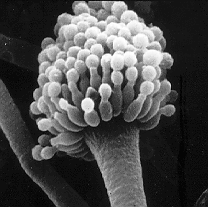
Conidiophore of Aspergillus sp.
Scientific classification
Kingdom:
Species

See below.

The fungi imperfecti or imperfect fungi are fungi which do not fit into the commonly established taxonomic classifications of fungi that are based on biological species concepts or morphological characteristics of sexual structures because their sexual form of reproduction has never been observed. They are known as imperfect fungi because only their asexual and vegetative phases are known. They have asexual form of reproduction, meaning that these fungi produce their spores asexually, in the process called sporogenesis.

There are about 25,000 species that have been classified in the phylum Deuteromycota and many are Basidiomycota or Ascomycota anamorphs. Fungi producing the antibiotic penicillin and those that cause athlete's foot and yeast infections are algal fungi. In addition, there are a number of edible imperfect fungi, including the ones that provide the distinctive characteristics of Roquefort and Camembert cheese.

Other, more informal names besides phylum Deuteromycota (or class "Deuteromycetes") and fungi imperfecti are anamorphic fungi, or mitosporic fungi, but these are terms without taxonomic rank. Examples are Alternaria, Colletotrichum, Trichoderma etc. The class Phycomycetes ("algal fungi") has also been used.

Problems in taxonomic classification

[edit]

Although Fungi imperfecti/Deuteromycota is no longer formally accepted as a taxon, many of the fungi it included have yet to find a place in modern fungal classification. This is because most fungi are classified based on characteristics of the fruiting bodies and spores produced during sexual reproduction, and members of the Deuteromycota have been observed to reproduce only asexually or produce no spores.

Mycologists formerly used a unique dual system of nomenclature in classifying fungi, which was permitted by Article 59 of the International Code of Botanical Nomenclature (the rules governing the naming of plants and fungi). However, the system of dual nomenclature for fungi was abolished in the 2011 update of the Code.[1]

Under the former system, a name for an asexually reproducing fungus was considered a form taxon. For example, the ubiquitous and industrially important mold, Aspergillus niger, has no known sexual cycle. Thus Aspergillus niger was considered a form taxon. In contrast, isolates of its close relative, Aspergillus nidulans (Eidam) G. Winter 1884, revealed it to be the anamorphic stage of a teleomorph (the ascocarp or fruiting body of the sexual reproductive stage of a fungus), which was already named Emericella nidulans. When such a teleomorphic stage became known, that name would take priority over the name of an anamorph (which lacks a sexual reproductive stage). Hence the formerly classified Aspergillus nidulans would be properly called Emericella nidulans Vuill. 1927 – note there's no reference to the original author. The system since 2013 instead treats both as the same species typified by the anamorph, and hence the author citation would include the original author as Emericella nidulans (Eidam) Vuill. 1927[2]: Appendix.F.8.1.Ex.2 

Phylogeny and taxonomy

[edit]

Phylogenetic classification of asexually reproducing fungi now commonly uses molecular systematics. Phylogenetic trees constructed from comparative analyses of DNA sequences (such as rRNA or multigene phylogenies )may be used to infer relationships between asexually reproducing fungi and their sexually reproducing counterparts. With these methods, many asexually reproducing fungi have now been placed in the tree of life.[3]

However, because phylogenetic methods require sufficient quantities of biological materials (spores or fresh specimens) that are from pure (i.e., uncontaminated) fungal cultures, for many asexual species their exact relationship with other fungal species has yet to be determined. Under the current system of fungal nomenclature, teleomorph names cannot be applied to fungi that lack sexual structures. Classifying and naming asexually reproducing fungi is the subject of ongoing debate in the mycological community.[citation needed]

Historical classification of the imperfect fungi

[edit]

These groups are no longer formally accepted because they do not adhere to the principle of monophyly.[citation needed] The taxon names are sometimes used informally. In particular, the term 'hyphomycetes' is often used to refer to molds, and the term 'coelomycetes' is used to refer to many asexually reproducing plant pathogens that form discrete fruiting bodies.

Following, a classification of the Fungi imperfecti: Saccardo et al.(1882-1972)[4]

Other, according to Dörfelt (1989):[5]

Other systems of classification are reviewed by (Kendrick 1981).

Common species

[edit]

Industrially relevant fungi

[edit]

Important pathogens

[edit]

Evolution

[edit]

Many fungi imperfecti are unable to reproduce in a sexual way because of identified mutations that disable their ability to sexually reproduce, others may be sterile due to epigenetic changes. These kinds of changes can arise very quickly in laboratory conditions that force 10–19 generations of exclusive asexual reproduction. Female-sterile strains of Magnaporthe oryzae appear to have a selective advantage in the form of faster growth with more efficient conidia transfer.[13]

Nieuwenhuis and James (2016) also discusses the costs and benefits for sexual and reproduction in fungi as well as mechanisms that have evolved to reduce the costs of either. They also describe the so-called "parasexual cycle" in some fungi imperfecti, which allows recombination without sex.[14]

See also

[edit]

References

[edit]

Bibliography

[edit]
Revisions and contributorsEdit on WikipediaRead on Wikipedia
from Grokipedia
Fungi imperfecti, commonly referred to as Deuteromycota or imperfect fungi, represent an artificial grouping of fungi characterized by the absence of a known sexual reproductive stage, with reproduction occurring primarily through asexual means such as conidia produced on specialized structures like conidiophores. These fungi typically exhibit septate hyphae and are estimated to encompass around 15,000 to 20,000 species, many of which are actually the anamorphic (asexual) states of sexually reproducing fungi in the phyla or, less commonly, . Historically, the classification of fungi imperfecti relied on morphological features of their asexual structures, such as conidial shape, color, and arrangement, leading to form-taxa like and Coelomycetes under the form-orders Sphaeropsidales, Melanconiales, and Moniliales. However, advances in molecular since the 1990s, including sequencing (e.g., 18S rRNA and ITS regions), have revealed their polyphyletic nature and integrated them into phylogenetic trees of and , rendering Deuteromycota an informal rather than formal taxonomic category. This shift has resolved many ambiguities in identification, particularly for polyphyletic genera like and , by linking anamorphs to their corresponding teleomorphs (sexual forms). Ecologically and economically, fungi imperfecti play crucial roles as decomposers of , contributing to nutrient cycling in soils and forests, while some species cause significant diseases in , animals, and humans—such as Fusarium species inducing wilt in crops or Candida causing opportunistic infections like thrush. Industrially, they are vital for producing antibiotics, with Penicillium species serving as the source of penicillin, and enzymes used in , though certain taxa like can also produce mycotoxins posing health risks. Notable genera include , , , and Rhizoctonia, highlighting their diverse impacts across , , and .

Definition and Characteristics

Core Definition

Fungi imperfecti, also referred to as Deuteromycota, represent a historical taxonomic grouping of fungi characterized by reproduction exclusively through asexual (anamorphic) stages, with no observed sexual reproductive phase (teleomorph). This arose because, at the time of description, the sexual cycles of these fungi were unknown or undiscovered, leading to their designation as "imperfect" in contrast to those with complete life cycles. The term "Fungi imperfecti" emerged in 19th-century to encompass fungi whose life histories appeared incomplete due to the lack of documented , serving as a practical category for species that did not align with the sexually defined phyla and . Later, in 1971, Richard T. Moore formally proposed Deuteromycota as a to systematically organize these asexually reproducing fungi, building on earlier 19th-century efforts to classify them separately. The inclusion criteria emphasized the production of conidia or other asexual spores without evidence of a teleomorph, distinguishing this group from "perfect fungi" that exhibit known sexual stages. In contemporary , the concept of Fungi imperfecti is obsolete, as molecular phylogenetic analyses have revealed that most species belong to or , often with identifiable sexual stages upon further investigation. This shift underscores the artificial nature of the original , which was based solely on phenotypic observations rather than evolutionary relationships.

Key Morphological Features

Fungi imperfecti, also known as Deuteromycota, exhibit a wide array of morphological traits primarily centered on their asexual reproductive structures, as no sexual stages are observed in their classification. The primary asexual reproductive structures include conidia, which are non-motile spores produced exogenously on specialized hyphae called conidiophores. These conidiophores can be simple, such as unbranched stalks in species, or complex and branched, like the penicillate (brush-like) arrangements in where conidia form chains at the tips of phialides. Sporangiospores, produced within sporangia, are less common but occur in some deuteromycetous fungi, contrasting with the more prevalent conidial production. Pycnidia, flask-shaped fruiting bodies containing conidiophores and conidia, are characteristic of coelomycetous imperfect fungi, exemplified by Phoma where hyaline conidia are released through an ostiole. Vegetative features of these fungi typically involve septate hyphae, which are multinucleate and branched, forming a that can be (colorless) or pigmented, such as the dark brown pigmentation in Alternaria hyphae. Colony morphology on culture media varies from powdery or velvety in molds like to slimy or yeast-like in Candida, aiding in preliminary identification. Some species produce , compact masses of hardened hyphae serving as survival structures under adverse conditions, as seen in Sclerotium rolfsii. The morphological diversity spans unicellular yeast-like forms, such as budding cells in , to multicellular mold-like growth with extensive hyphal networks in . Diagnostic microscopic features focus on spore characteristics: conidia shapes range from spherical and ovoid (e.g., 2–4 μm in ) to elongated and multiseptate (e.g., crescent-shaped macroconidia up to 30–50 μm in ), with arrangements including solitary, catenate chains as in , or clustered in slime heads in Gliocladium. These traits, observed under light microscopy, are essential for distinguishing genera within the group.

Historical Classification

Early Taxonomic Systems

In the 18th century, Carl Linnaeus initiated the systematic classification of fungi within his broader botanical framework, treating them as cryptogams—a subclass of plants characterized by concealed reproductive structures—in his seminal work Species Plantarum published in 1753. Linnaeus applied binomial nomenclature to fungi, grouping them primarily based on observable fruiting bodies and spores, but his system struggled to accommodate asexual forms that lacked distinct sexual reproductive stages, often resulting in provisional or incomplete placements. During the early 19th century, Christiaan Hendrik Persoon advanced fungal by emphasizing morphological details of fructifications and spores, establishing many genera still recognized today and laying the groundwork for systematic through works like Synopsis Methodica Fungorum (1801). Persoon's approach relied heavily on fruiting body characteristics, yet it encountered difficulties with asexual fungi, whose conidial states did not fit neatly into categories defined by sexual structures, leading to fragmented classifications. The concept of "Fungi imperfecti" emerged in the 1880s through the efforts of Pier Andrea Saccardo, who formalized a dedicated grouping for fungi lacking known , basing his system on the morphology of conidia—the asexual spores—and their production mechanisms. Saccardo divided these imperfect fungi into artificial orders such as (with open conidiophores), Sphaeropsidales (producing pycnidia), and Melanconiales (forming acervuli), further subdividing families by conidial color, shape, and septation, which allowed for the organization of genera like Fusarium (noted for fusiform conidia) and Aspergillus (characterized by radiate conidiophores). This conidial-centric approach provided a practical framework despite its artificial nature, prioritizing observable asexual traits over phylogenetic relationships. Central to Saccardo's system was the early form-genera concept, where taxa were named and classified independently based on their anamorphic (asexual) states, distinct from any potential teleomorphic (sexual) stages, allowing imperfect fungi to be cataloged as provisional entities without requiring knowledge of a perfect state. This dual-naming practice—imperfect state for anamorphs and perfect state for teleomorphs when discovered—facilitated ongoing taxonomic work amid incomplete life cycle understanding. Saccardo's foundational publication, Sylloge Fungorum Omnium Hucusque Cognitorum, began in 1882 and spanned initial volumes through 1889 that extensively cataloged imperfect fungi, compiling descriptions of thousands of species and serving as a comprehensive reference for subsequent mycological research. These early volumes systematically enumerated genera and species within his morphological scheme, establishing a benchmark for the documentation of Fungi imperfecti that influenced global mycological efforts for decades.

Establishment of Deuteromycota

In 1931, Frederic E. Clements and Cornelius L. Shear provided a comprehensive of fungal genera in their The Genera of Fungi, treating imperfect fungi as an artificial group alongside other fungal divisions such as , Ascomycetes, and Basidiomycetes to accommodate species whose sexual reproductive stages remained unknown. This emphasized the artificial nature of the group, relying solely on asexual morphology for identification and organization, reflecting the limitations of contemporary mycological techniques. Within this grouping of imperfect fungi, Clements and Shear adopted and expanded upon earlier schemes, subdividing it into three primary classes based on modes of asexual spore production: , comprising conidial molds that produce spores externally on hyphae or conidiophores; Coelomycetes, characterized by pycnidial forms where conidia develop within enclosed fruiting structures such as pycnidia or acervuli; and , encompassing yeast-like fungi that reproduce primarily by . These subdivisions provided a practical framework for cataloging the diverse asexual forms, drawing from foundational work by earlier mycologists like Pier Antonio Micheli and Pier Andrea Saccardo, but were refined in the 1931 treatment to include over 1,500 genera across the imperfect fungi. Subsequent refinements to these classes were influenced by mid-20th-century mycologists such as George L. Barron and William B. Kendrick, who focused on conidiogenesis—the developmental processes of formation—as a key criterion for classification. Barron's 1968 monograph The Genera of detailed over 100 genera of soil-inhabiting molds, emphasizing microscopic features like conidiophore structure and septation to distinguish taxa within the . Similarly, Kendrick's 1979 work The Genera of built on this by incorporating developmental , further delineating boundaries between and related groups while highlighting overlaps with Coelomycetes in transitional forms. These contributions enhanced the precision of asexual-based during a period when the imperfect fungi remained a cornerstone of fungal . The formal taxonomic name Deuteromycota for this group of imperfect fungi was proposed as a by R.T. Moore in 1971. By the mid-20th century, the imperfect fungi achieved peak prominence in mycological textbooks and research, serving as the standard repository for fungi lacking known teleomorphs (sexual stages) and encompassing an estimated 20,000 to 25,000 described species. This widespread adoption underscored its utility in applied fields like and industrial , where many pathogens and decomposers—such as Penicillium and Aspergillus—were classified exclusively under this grouping. However, the estimate reflected only documented taxa, with many more undescribed species inferred from ecological surveys.

Taxonomic Challenges

Limitations of Asexual-Based Classification

The classification of Fungi imperfecti, or Deuteromycota, relies exclusively on asexual reproductive structures such as conidia and conidiophores, but this approach is undermined by , where environmental factors induce significant variation in these traits. For instance, in the nematode-trapping fungus Arthrobotrys, conidial morphology and trapping device formation vary markedly under different salinity gradients, leading to potential misidentification of the same species as distinct taxa based on asexual forms alone. Such plasticity complicates reliable delineation, as stress conditions like nutrient limitation or temperature fluctuations can alter conidiophore length, conidial shape, and pigmentation without reflecting genetic differences. Convergent evolution further exacerbates classification challenges by producing similar asexual structures in unrelated lineages, resulting in polyphyletic groupings that do not reflect true phylogenetic relationships. Acervular conidiomata, for example, have evolved independently in multiple fungal groups, such as within the anamorphs of Mycosphaerella species, where superficial distinctions between pycnidial and acervular types prove taxonomically insignificant due to repeated convergence. Similarly, helicosporous conidia appear in disparate clades like the Tubeufiaceae, misleading traditional taxonomy into grouping ecologically adapted but phylogenetically distant fungi together. A core limitation of asexual-based classification is its failure to capture evolutionary history, as it prioritizes superficial morphological traits over phylogenetic signals, often creating artificial taxa known as form-genera. Genera such as Chalara and Phialophora exemplify this issue, encompassing species from multiple taxonomic classes due to shared conidial that masks underlying . This approach treats Deuteromycota as a "failed taxonomic ," ignoring the holomorph (complete life cycle) and perpetuating groupings that lack . Practically, the absence of sexual stages precludes compatibility tests for species delimitation, fostering an overload of synonyms where variable asexual phenotypes prompt repeated descriptions of the same entity under new names. In Fusarium, for example, what was once classified as a single morphological species (F. graminearum) encompasses at least 16 cryptic phylogenetic species, many burdened by extensive synonymy from overlooked plasticity. This synonymy hampers applied , as inconsistent confounds identification in ecological, medical, and industrial contexts.

Impact of Discovering Sexual Stages

The discovery of sexual stages, or teleomorphs, in numerous species traditionally classified within the Fungi imperfecti during the mid- to late fundamentally disrupted the foundational principles of Deuteromycota . Previously viewed as a coherent group of asexually reproducing fungi, the revelation of hidden sexual cycles demonstrated that many of these organisms were merely the anamorphic (asexual) phases of sexually reproducing ascomycetes or basidiomycetes, rendering Deuteromycota an artificial, polyphyletic assemblage lacking phylogenetic coherence. This shift emphasized the limitations of morphology-based reliant solely on asexual structures, prompting a reevaluation of how fungal diversity should be organized to reflect evolutionary relationships rather than reproductive modes alone. Significant revelations occurred between the 1960s and 1980s, with pivotal examples illustrating the widespread nature of cryptic sexuality. A landmark case involved species, where the sexual stage was identified as belonging to teleomorph genera such as Eurotium, directly challenging the perceived asexuality of these industrially and medically important fungi and exposing the Deuteromycota's taxonomic fragility. Similarly, in 1977, research established connections between species and the sexual genus Talaromyces, revealing that a substantial portion of imperfect fungi represented anamorphs of , thereby accelerating the dismantling of form-based genera within Deuteromycota. These discoveries not only expanded knowledge of fungal but also facilitated studies, enhancing applications in and . The emergence of the holomorph concept in marked a conceptual turning point, defining the complete fungal life cycle as encompassing both anamorph and teleomorph phases under a unified biological entity, thereby prioritizing the whole over isolated reproductive states. This framework supported dual nomenclature, allowing separate naming for asexual and sexual forms while recognizing their interdependence; for example, serves as the anamorph of an unidentified ascomycetous teleomorph, illustrating how imperfect states could retain distinct identities pending full life cycle elucidation. By promoting a holistic view, the holomorph approach mitigated some taxonomic confusion but highlighted the need for systemic reform to avoid perpetuating artificial divisions. By the 1990s, these cumulative insights influenced international mycological policy, with congresses advocating the gradual abandonment of form-taxa in favor of phylogenetically informed names that integrate the holomorph. Recommendations from bodies like the International Mycological Association emphasized aligning with , reducing reliance on reproductive criteria and foreshadowing the eventual one-fungus-one-name principle adopted later. This transition not only streamlined but also bolstered ecological and genomic by providing more stable, biologically meaningful taxa for studying fungal and diversity.

Modern Taxonomy and Phylogeny

Advances in Molecular Phylogenetics

The advent of (PCR) and technologies in the late 1980s and 1990s revolutionized the study of Fungi imperfecti by enabling the analysis of genetic markers to link asexual (anamorph) forms to their sexual (teleomorph) counterparts, overcoming the limitations of morphology-based identification. Early applications focused on the (ITS) region of and the small subunit (SSU) rRNA gene, which provided sufficient variation for species-level resolution while conserving enough similarity for phylogenetic placement. These markers allowed researchers to identify teleomorph-anamorph connections in imperfect fungi, such as linking the human pathogen Sporothrix schenckii as an anamorph in the Ophiostoma-Sporothrix complex within Ophiostomatales based on SSU rRNA sequences. Building on single-gene approaches, multi-locus phylogenetics emerged in the 1990s and 2000s, employing protein-coding genes like beta-tubulin and translation elongation factor 1-alpha (EF-1α) alongside ITS to construct more robust trees and assign imperfect fungi to specific clades. These loci offered higher resolution for resolving closely related species and detecting cryptic diversity, as beta-tubulin sequences capture variations useful for generic delimitation, while EF-1α provides reliable orthology across fungal lineages. Seminal studies, such as Berbee and Taylor (1992), demonstrated through analyses that the majority of Deuteromycota species nest within clades, challenging the artificial separation of asexual fungi. Similarly, Hibbett et al. (2007) integrated multi-gene data into a comprehensive fungal , confirming the polyphyletic nature of imperfect states and advocating for their incorporation into sexual phyla based on molecular evidence. In the 2020s, whole-genome sequencing (WGS) has further advanced the field by uncovering cryptic sexual cycles in presumed asexual species, revealing genes involved in and recombination that were previously undetected. For instance, WGS of f. sp. ciceris populations provided genome-wide evidence of meiotic recombination, indicating ongoing that contributes to and pathogenicity in this agriculturally significant imperfect fungus. These findings underscore how genomic approaches not only resolve phylogenetic positions but also illuminate the evolutionary dynamics of in Fungi imperfecti.

Integration into Ascomycota and Basidiomycota

The integration of Fungi imperfecti, formerly classified under Deuteromycota, into the phyla and represents a fundamental shift in fungal taxonomy driven by phylogenetic evidence. Approximately 90% of these fungi have been reclassified as anamorphic (asexual) states within , such as the genus Trichoderma, while the remaining roughly 10% align with , including structures like urediniospores in rust fungi. This reclassification renders Deuteromycota obsolete as a formal taxon, as molecular data reveal that most "imperfect" fungi possess cryptic sexual stages or phylogenetic affinities to these dikaryotic phyla. Nomenclatural reforms under the International Code of Nomenclature for , fungi, and (ICN), effective from the 2011 Melbourne Congress, mandate a single name for the entire fungal life cycle (holomorph), eliminating dual for anamorph-teleomorph pairs. Previously, names based on the sexual (teleomorph) stage were prioritized, but post-2012 amendments allow greater flexibility, often favoring well-established anamorph names when the teleomorph is unknown or ecologically irrelevant. These changes, implemented to align fungal naming with phylogenetic reality, have streamlined by treating asexual and sexual forms as conspecific, reducing confusion in identification and classification. A small fraction of fungi remain classified as truly asexual, lacking any detected sexual cycle, after extensive genomic surveys. Examples include certain yeasts, though even these often exhibit parasexual processes or latent sexuality. As of 2025, major databases such as MycoBank no longer recognize Deuteromycota as a valid phylum, instead integrating all species into Ascomycota, Basidiomycota, or other lineages using multilocus phylogenetic analyses. This consensus reflects the polyphyletic nature of the old grouping and the dominance of molecular methods in resolving affinities.

Notable Examples

Industrially Relevant Species

Fungi imperfecti, particularly their anamorphic forms, play a pivotal in industrial biotechnology due to their robust and metabolic versatility, enabling efficient large-scale , organic acids, enzymes, and fermented products. These fungi are favored for their ability to thrive in submerged systems, yielding high titers of commercially valuable compounds without the complexities of sexual cycles. Among them, several species stand out for their contributions to pharmaceuticals, , and industries. Penicillium chrysogenum (now reclassified as P. rubens), a classic representative of Fungi imperfecti, revolutionized through its production of penicillin, the first widely used . Discovered serendipitously by in 1928 from a contaminated , the fungus's antimicrobial properties were harnessed for industrial-scale during to meet urgent demands for wound treatment. Through classical strain improvement and , modern industrial strains achieve penicillin G titers exceeding 50 g/L in fed-batch processes, far surpassing the initial yields of under 1 g/L in the . This production relies on optimized carbon sources like glucose and limitation to direct metabolic flux toward beta-lactam , making P. chrysogenum a cornerstone of the global antibiotics market. Aspergillus niger, another key anamorphic fungus, dominates the production of citric acid, the most abundant fungal-derived organic acid in commerce and a vital additive in food, beverages, and pharmaceuticals. Employing submerged fermentation with cheap substrates like molasses or sucrose, A. niger strains yield up to 90 g/L of citric acid under acidic conditions (pH 2–3) and high aeration, accounting for approximately 90% of the global output. The worldwide citric acid market reached 2.8 million metric tons in 2022 and 3.0 million metric tons as of 2024, underscoring the scale of this biotech process, which has been refined since the early 20th century to minimize byproducts like oxalic acid. Beyond acids, A. niger serves as a workhorse for industrial enzymes, including amylases, proteases, and lipases, produced via solid-state or submerged fermentation for applications in detergents, textiles, and food processing. Trichoderma reesei, valued for its imperfect state and exceptional secretory capacity, is the primary industrial source of cellulase enzyme cocktails essential for biofuel production from lignocellulosic biomass. Isolated during World War II from a soldier's trouser canvas, the fungus was genetically engineered in the 1970s to hyperproduce cellulases, with strains like Rut-C30 achieving filter paper activities over 100 FPU/mL through mutations in carbon catabolite repression genes. These enzymes hydrolyze cellulose into fermentable sugars for ethanol production, enabling processes that convert agricultural waste into sustainable fuels; for instance, optimized T. reesei cocktails improve biomass saccharification yields by 20–50% in industrial biorefineries. Ongoing genetic modifications, such as promoter engineering and heterologous gene expression, further enhance secretion levels, reducing enzyme costs that constitute up to 40% of biofuel manufacturing expenses. Historically classified among Fungi imperfecti due to the long-observed predominance of its budding , Saccharomyces cerevisiae exemplifies the industrial utility of yeast anamorphs in fermentation-based processes. For millennia, it has been central to , , and , where it converts sugars to and , with archaeological evidence tracing its back over 5,000 years. In modern , recombinant S. cerevisiae strains serve as expression hosts for therapeutic proteins, such as insulin and , leveraging their genetic tractability and GRAS () status to produce over 20% of the global market's heterologous proteins.

Pathogenic Species

Fungi imperfecti include several species that act as significant plant pathogens, with Fusarium oxysporum being a prominent example responsible for vascular wilt in crops such as tomatoes. This soilborne fungus invades the vascular system of host plants, leading to wilting, yellowing, and eventual death, with yield losses ranging from 10% to 80% depending on environmental conditions and host susceptibility. Globally, F. oxysporum f. sp. lycopersici causes substantial economic damage to tomato production, contributing to major agricultural challenges in both field and greenhouse settings. In humans, Candida albicans, classified among the imperfect fungi due to its historically undefined sexual cycle, serves as a key opportunistic pathogen causing candidiasis, including oral thrush and systemic infections. This dimorphic yeast thrives in immunocompromised individuals, forming biofilms on mucosal surfaces or medical devices, which enhances its resistance to antifungal treatments and complicates clinical management. Biofilm formation involves hyphal growth and extracellular matrix production, allowing persistent colonization and invasion of host tissues. Among animal pathogens, , an asexual belonging to the Fungi imperfecti, primarily affects pets like cats and dogs, causing manifested as ringworm lesions with alopecia, scaling, and pruritus. This zoophilic fungus is highly contagious, transmitting via direct contact or fomites, and frequently zoonoses to humans, particularly children, resulting in similar superficial skin infections. In veterinary contexts, outbreaks in kennels or shelters highlight its implications due to interspecies spread. Emerging threats from Fungi imperfecti include the anamorphic stage of , a basidiomycetous yeast that causes cryptococcal meningitis predominantly in immunocompromised hosts, such as those with . Inhalation of environmental spores leads to pulmonary infection, which can disseminate to the , producing symptoms like , fever, and altered mental status, with high mortality rates if untreated. Its classification as an imperfect fungus stems from the asexual yeast form observed in infections, though linked to the teleomorph Filobasidiella neoformans.

Evolutionary Aspects

Origins of Imperfect States

The imperfect states observed in many fungi, historically classified as Fungi imperfecti, are predominantly derived from sexual ancestors within the and phyla, where sexuality represents the ancestral condition in the fungal kingdom. Genomic analyses reveal that these asexual forms often retain vestigial sexual machinery, such as mating-type loci (), which have undergone degeneration through mutations or formation, leading to the loss of meiotic capabilities. For instance, degeneration of the MAT1-1-1 gene into a has been documented in certain lineages, reducing selective pressure to maintain . Fossil evidence underscores the ancient origins of asexual fungal states, with the earliest known anamorphic (asexual) phases appearing in the deposits from the period, approximately 400 million years ago. Structures resembling conidiophores and chlamydospores, indicative of asexual production, have been identified in association with early land like Asteroxylon mackiei, as seen in the fossil Paleopyrenomycites devonicus. These findings suggest that asexuality was already established in fungal lineages contemporaneous with the colonization of terrestrial environments by . Genetic mechanisms such as (HGT) and whole-genome duplications (WGD) have facilitated the long-term persistence of by promoting without reliance on . In asexual entomopathogenic fungi like , inter- and intraspecies HGT of entire chromosomes carrying virulence factors occurs during co-infections, enabling rapid adaptation and lineage survival. Similarly, WGD leading to generates heterogeneity through parasexual cycles, chromosome loss, and , as observed in , where tetraploid intermediates produce diverse progeny to counter environmental stresses. Comparative phylogenomic studies from the 2000s highlight repeated evolutionary transitions to across fungal lineages, particularly in the Candida clade within . Analyses of multiple Candida genomes revealed that while some species like C. lusitaniae retain complete sexual cycles, others exhibit cryptic parasexuality or gene losses in mating loci, indicating multiple independent shifts from sexual to asexual modes over evolutionary time. These transitions, often involving MTL locus rearrangements, underscore the labile nature of reproductive strategies in fungi.

Ecological and Adaptive Significance

The asexual reproductive strategies of Fungi imperfecti, primarily through conidial production, confer significant dispersal advantages by enabling rapid colonization of ephemeral substrates such as decaying wood and soil. Conidia, as lightweight and abundant spores, facilitate efficient dissemination over distances up to several kilometers via or currents, allowing these fungi to quickly exploit nutrient-rich but transient resources before competitors arrive. For instance, species like produce vast quantities of conidia on specialized conidiophores, germinating swiftly upon landing to establish mycelial networks in organic debris, thereby enhancing their competitive edge in resource acquisition. This mode of reproduction bypasses the time-intensive processes of sexual stages, promoting opportunistic growth in dynamic environments. Asexuality in Fungi imperfecti also provides adaptive benefits in stressful niches, where rapid clonal propagation supports survival under extreme conditions. In hydrocarbon-polluted sites, extremotolerant species such as thrive via melanin-mediated protection and oligotrophic growth, utilizing conidia to maintain populations in nutrient-scarce, toxic soils without the genetic recombination risks of sex. These thick-walled spores resist and chemical stressors, enabling in harsh habitats like oil-contaminated industrial areas, where they contribute to gradual degradation. Such adaptations underscore the evolutionary utility of imperfect states in occupying marginal ecosystems otherwise inhospitable to sexually reproducing fungi. Ecological interactions further highlight the adaptive significance of asexual states, as seen in symbiotic associations that bolster stability. , an asexual entomopathogen, functions endophytically in plants like and , inducing systemic resistance against herbivores and pathogens while transferring from infected to host tissues. This mutualism enhances plant defense via fungal volatiles and enzymes, allowing Beauveria to persist saprophytically in soil post-infection, thus linking with nutrient cycling. Such versatile interactions exemplify how supports multifaceted roles in food webs, from predation to . Imperfect fungi significantly contribute to by dominating in key ecosystems and driving cycles. In terrestrial soils, asexual forms comprise a substantial portion of fungal communities, for 55-89% of microbial across biomes and accelerating breakdown through efficient spore-based recolonization. Their prevalence in wood decay successions fosters habitat heterogeneity, supporting diverse and microbial assemblages while nutrients essential for primary . This dominance ensures resilient processes, mitigating nutrient limitations in forests and soils.

References

Add your contribution
Related Hubs
User Avatar
No comments yet.