Hubbry Logo
John 5John 5Main
Open search
John 5
Community hub
John 5
logo
8 pages, 0 posts
0 subscribers
Be the first to start a discussion here.
John 5
John 5
from Wikipedia

John 5
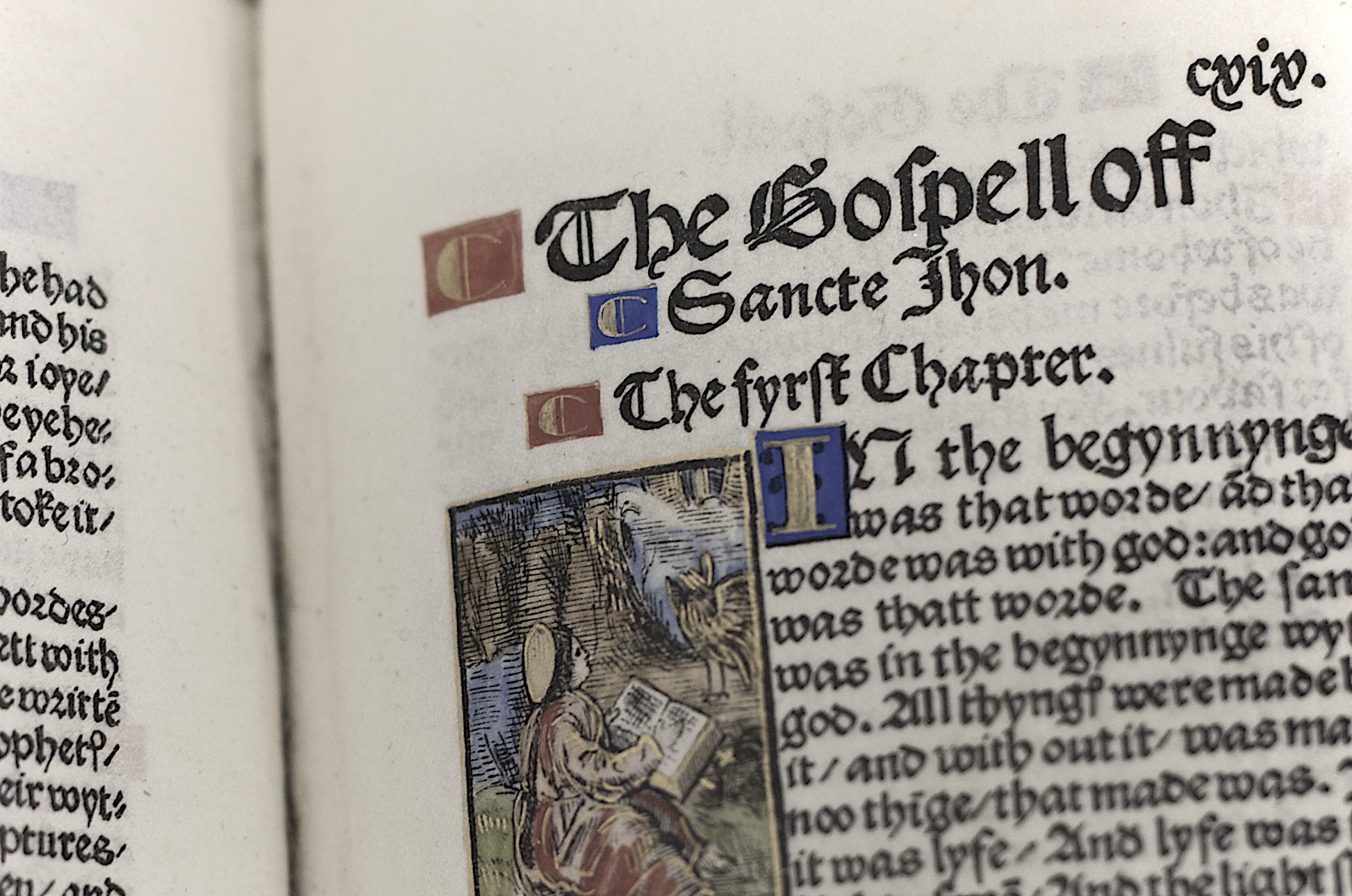
The beginning verses of the Gospel of John chapter 5, from a facsimile edition of William Tyndale's 1525 English translation of the New Testament
BookGospel of John
CategoryGospel
Christian Bible partNew Testament
Order in the Christian part4

John 5 is the fifth chapter of the Gospel of John of the New Testament of the Christian Bible. It relates Jesus' healing and teaching in Jerusalem, and begins to evidence the hostility shown him by the Jewish authorities.[1]

Text

[edit]
John 5:26–29 in Papyrus 95 recto (3rd century)

The original text was written in Koine Greek. This chapter is divided into 47 verses.

Textual witnesses

[edit]

Some early manuscripts containing the text of this chapter are:

Some writers place this chapter after John 6.[4]

Old Testament references

[edit]

A feast at Jerusalem (verse 1)

[edit]

As the chapter opens, Jesus goes again to Jerusalem for "a feast".

According to Deuteronomy 16:16, "Three times a year all your males shall appear before the Lord your God in the place which He chooses (i.e. Jerusalem): at the Feast of Unleavened Bread (Passover), at the Feast of Weeks (Shavuot, or Pentecost), and at the Feast of Tabernacles".[a] John's Gospel records Jesus' visit to Jerusalem for the Passover in John 2:13, and another Passover was mentioned in John 6:4, and so some commentators have speculated whether John 5:1 also referred to a Passover (implying that the events of John 2–6 took place over at least three years), or whether a different feast is indicated. Bengel's Gnomen lists a number of authorities for the proposition that the feast referred to was Pentecost.[6] The Pulpit Commentary notes that "the indefinite Greek: ἑορτη has been identified by commentators with every feast in the calendar, so there can be no final settlement of the problem".[7] In verse 9 it is considered to be a sabbath.[4]

Healing at Bethesda (verses 2-15)

[edit]
Pool of Bethesda – model in the Israel Museum

At the Pool of Bethesda or Bethzatha,[8] Jesus heals a man who is both paralyzed and isolated. Jesus tells him to "Pick up your mat and walk!" This takes place on the Sabbath, and Jewish religious leaders see the man carrying his mat and tell him this is against the law. He tells them the man who healed him told him to do so, and they ask who that was. He tries to point out Jesus, but he has slipped away into the crowd. Jesus comes to him later and tells him "Sin no more, lest a worse thing come upon you". The man then tells the Jewish religious leaders that it was Jesus who healed him (John 5:15).

The ruins of the Pool of Bethesda are still standing in Jerusalem.

Verses 3b–4

[edit]
In these lay a great multitude of impotent folk, of blind, halt, withered, waiting for the moving of the water. 4 For an angel went down at a certain season into the pool, and troubled the water: whosoever then first after the troubling of the water stepped in was made whole of whatsoever disease he had. And a certain man was there, which had an infirmity thirty and eight years.[9]

Verses 3b–4, in bold above, are not found in the most reliable manuscripts of John,[10] although they appear in the King James Version of the Bible (which is based on the Textus Receptus). Most modern textual critics believe that John 5:3b–4 is an interpolation, and not an original part of the text of John.[11]

The New English Translation and the English Revised Version omit this text completely, but others, such as the New International Version, refer to it in a note. Bengel, who treats it as integral to the text, thinks that "a certain season" might indicate that the occasion was Pentecost.[6] Biblical commentator Alfred Plummer treats this text as spurious, and argues that the occasions when the water was "moved" or "troubled" (verse 7) came "at irregular intervals".[1]

Verses 9-10

[edit]
9 And immediately the man was made well, took up his bed, and walked. And that day was the Sabbath. 10 The Jews therefore said to him who was cured, "It is the Sabbath; it is not lawful for you to carry your bed".[12]

Before Jesus is accused of working on the Sabbath, the man he has healed is accused. His bed would probably be only a mat or rug, but Plummer notes that his Jewish accusers "had the letter of the law very strongly on their side",[1] citing several passages in the Mosaic law (Exodus 23:12, Exodus 31:14, Exodus 35:2–3 and Numbers 15:32), but especially Jeremiah 17:21:

Thus says the Lord: "Take heed to yourselves, and bear no burden on the Sabbath day, nor bring it in by the gates of Jerusalem.

Verse 11

[edit]
He answered them, "He who made me well said to me, 'Take up your bed and walk'."[13]

Plummer notes that the man carries his bed in obedience "to a higher authority",[1] not merely as a practical consequence of his having been cured.

Verse 13

[edit]
Now the man who had been healed did not know who it was, for Jesus had withdrawn, as there was a crowd in the place.[14]

René Kieffer [sv] sees Jesus' withdrawal from the drama as purposeful: "in order to allow a discussion to be raised with the man who was healed".[4][b]

Verse 14

[edit]
Afterward Jesus found him in the temple, and said to him, "See, you have been made well. Sin no more, lest a worse thing come upon you."[15]

"Sin no more" is spoken as a prohibition with a present imperative, involving a general condition.[16] The connection expressed between sickness and sin is distinct from Jesus' assertion in John 9:2-3 that the healed man there had not been born blind because of his own sin or his parents'.[4]

Jesus speaks of His Father and the Jews begin to persecute him (verses 16–30)

[edit]

The Jews begin to persecute Jesus (and in some texts, verse 16 adds that they "sought to kill him").[17] H. W. Watkins argues that "the words 'and sought to slay Him' should be omitted: in his view they have been inserted in some manuscripts to explain the first clause of John 5:18 (the Jews sought the more to kill him)",[18] the first of several Jewish threats against him (John 7:1, 7:19–25, 8:37, 8:40 and 10:39).[4]

Two reasons emerge:

  • firstly, for "working on the Sabbath" (John 5:16);
  • secondly, for calling God his "father" and thus making himself equal to God (John 5:18).

From Jesus' words, "My Father", Methodist founder John Wesley observed that "It is evident [that] all the hearers so understood him [to mean] making himself equal with God".[19] St. Augustine sees the words "... equal to God" as an extension of the words in John 1:1: In the beginning was the Word, and the Word was with God, and the Word was God.[20]

Jesus continues to speak of himself ("the Son") in relation to God ("the Father"): the Son can do nothing independently of (or in rivalry with) the Father; "the Son can have no separate interest or action from the Father".[21] the Son "acts with no individual self-assertion independent of God, because He is the Son.[1] The Son imitates the Father; the Father loves the Son and shows Him his ways; and the Son gives life in the way that the Father raises the dead. But the Father has delegated the exercise of judgment to the Son: all should honour the Son as they would honour the Father, and anyone who does not honour the Son does not honour the Father who sent Him. (John 5:19–23) The words in verse 19: the Son can do nothing on his own become, in verse 30, I can do nothing on my own; Jesus "identifies himself with the Son".[1]

Two sayings then follow each commencing with a double "amen" (Greek: αμην αμην, translated "Verily, verily" in the King James Version, "Truly, truly" in the English Standard Version, or "Very truly I tell you" in the New International Version):

  • He who hears My word and believes in Him who sent Me has everlasting life, and shall not come into judgment, but has passed from death into life. (John 5:24)
  • The hour is coming, and now is, when the dead will hear the voice of the Son of God; and those who hear will live. (John 5:25)

Reformed Evangelical theologian D. A. Carson sees John 5:24 as giving the "strongest affirmation of inaugurated eschatology in the Fourth Gospel" ... it is not necessary for the believer to "wait until the last day to experience something of resurrection life".[22] Lutheran theologian Heinrich Meyer refers to "the hour when the dead hear the voice of the Son of God" as the "resurrection summons". Meyer argues that this "hour" extends from its beginning at "Christ's entrance upon His life-giving ministry" until "the second advent – already had it begun to be present, but, viewed in its completeness, it still belonged to the future".[23]

The fourfold witness (verses 31–47)

[edit]

The final verses of this chapter, verses 31 to 47 refer to what the New King James Version calls the "fourfold witness". Jesus states that he does not bear witness (Greek: η μαρτυρια) to himself, for such witness would not be true or valid. Instead he calls on the testimony of four other witnesses:

Jesus says that the Jews who seek to kill him study the scriptures hoping for eternal life, but that the scriptures speak of him, and people still refuse to come to him for life. People accept people who preach in their own name but not in one who comes in the name of the Father. "How can you believe if you accept praise from one another, yet make no effort to obtain the praise that comes from the only God?" He then speaks of Moses as their accuser:

"But do not think I will accuse you before the Father. Your accuser is Moses, on whom your hopes are set. If you believed Moses, you would believe me, for he wrote about me:
I will raise up for them a Prophet like you from among their brethren, and will put My words in His mouth, and He shall speak to them all that I command Him" (John 5:45, linked to Deuteronomy 18:18).

But, says Jesus, since you do not believe what Moses wrote, how are you going to believe what I say?" (John 5:47)

Theologian Albert Barnes notes that "the ancient fathers of the Church and the generality of modern commentators have regarded our Lord as the prophet promised in these verses [of Deuteronomy]".[24] Commentators have also explored whether the contrast to be emphasized is a contrast between the person of Moses and the person of Jesus, or between Moses understood as the author of scriptural writings and Jesus, who did not write but whose testimony was his 'sayings'. Bengel's Gnomen argues that in John 5:47, Moses' writings (Greek: Γράμμασιν) are placed in antithesis to Jesus' words (Greek: ῥήμασι): "Often more readily is belief attached to a letter previously received, than to a discourse heard for the first time".[6] However, Plummer is critical of this approach:

"The emphatic words are 'his' and 'My'. Most readers erroneously emphasize 'writings' and 'words'. The comparison is between Moses and Christ. It was a simple matter of fact that Moses had written[c] and Christ had not: the contrast between writings and words is no part of the argument". The same comparison is seen in Luke 16:31: "If they hear not Moses and the prophets, neither will they be persuaded though one rose from the dead".[1]

These teachings of Jesus are almost only found in John. In the Synoptic Gospels, Jesus only speaks of himself as the Messiah in such a straightforward way at the very end, shortly before his death. All this occurs in Jerusalem, while the Synoptic Gospels have very little of Jesus's teachings occurring in Jerusalem and then only shortly before his death.

Notes

[edit]

References

[edit]
[edit]
Revisions and contributorsEdit on WikipediaRead on Wikipedia
from Grokipedia
John William Lowery, known professionally as John 5, is an American guitarist, songwriter, and multi-instrumentalist born on July 31, 1970, in . Renowned for his virtuosic and eclectic playing style that blends heavy metal, , , and bluegrass influences, he has built a prolific career as both a and band member. As of 2025, John 5 has released 11 solo studio albums, beginning with his debut Vertigo in 2004 and most recently Ghost in October 2025, showcasing his instrumental prowess and genre-defying compositions. John 5 began playing guitar at age seven, inspired by artists like and the variety show , and formed his first band, Dirty Trixx, as a teenager before moving to at 18 to pursue music professionally. Early in his career, he worked as a session player, contributing to projects with , , and , and co-formed the industrial rock duo 2wo with Judas Priest's , releasing the album in 1998, produced by . That same year, he adopted the stage name John 5—derived from the horror film Basket Case—and joined as lead guitarist, performing on tours and contributing to albums Holy Wood (In the Shadow of the Valley of Death) (2000) and (2003) until his departure in 2004. Transitioning to a solo career, John 5 signed with Capitol Records and released Vertigo in 2004, followed by Songs for Sanity in 2005, establishing him as an innovative instrumental artist with a signature sound incorporating custom guitars and effects. In 2005, he formed the rock band Loser, and in 2006, he joined Rob Zombie's band, serving as guitarist and co-songwriter for over 15 years, contributing to albums like Educated Horses (2006), Hellbilly Deluxe 2 (2010), and The Electric Warlock Acid Witch Satanic Blood Ritual (2016), as well as scoring Zombie's films The Lords of Salem (2012) and 31 (2016). He also collaborated with artists such as Steve Vai and Albert Lee, and in 2015, launched the backing band John 5 and the Creatures to support his live performances. In 2023, following ' retirement from touring, John 5 joined Mötley Crüe as their touring and later full band member, debuting on their world tour and contributing to new material. Throughout his career, he has been recognized for his technical skill, innovative gear endorsements with brands like Fender and , and ability to bridge rock subgenres, solidifying his status as a influential figure in modern guitar music.

Introduction and Context

Overview of the Chapter

John 5 is the fifth chapter of the Gospel of John in the of the , comprising 47 verses originally composed in . The chapter unfolds in during an unnamed Jewish feast, where performs a healing that sparks conflict with religious authorities, leading into a lengthy on his identity and mission. The broad narrative arc begins with Jesus' arrival in the city and centers on the healing of a man paralyzed for 38 years at the , an event that occurs on the and prompts accusations of law-breaking from Jewish leaders. This miracle escalates into persecution, as defends his actions by claiming unity with , asserting authority over life, judgment, and resurrection, which intensifies opposition and sets the stage for further revelations about his divine sonship. Positioned after John 4, which recounts ' encounters with the Samaritan woman and the of an official's son in , chapter 5 marks a transition to and heightens the theme of escalating conflict between and Jewish authorities. It precedes , the feeding of the 5,000 and walking on water, underscoring a shift from rural ministry to urban confrontation. Central motifs introduced include as a demonstration of divine authority, the controversy over observance, bold claims to , and the contrast between belief in and persistent unbelief.

Historical and Cultural Setting

The events of John 5 are situated during an unnamed "feast of the Jews" (John 5:1), which scholars identify as likely one of the major pilgrimage festivals such as , (Shavuot), or Tabernacles (), based on the narrative's placement within the Jewish liturgical calendar and Jesus' pattern of festival attendance in the Gospel. This unnamed feast occurs amid Jesus' public ministry, traditionally dated to approximately 27–30 CE, a period of heightened religious and political tension under Roman rule in . The ambiguity of the feast's identity reflects the Gospel's theological emphasis on Jesus transcending specific ritual observances, while grounding the events in authentic first-century Jewish practice. In the Second Temple period (c. 516 BCE–70 CE), Jerusalem functioned as the preeminent pilgrimage center of the , attracting tens of thousands of Jewish devotees from , , and the during the three mandated festivals (, , and Tabernacles) as prescribed in Deuteronomy 16:16. These gatherings swelled the city's population, fostering communal worship at the Temple but also straining resources and amplifying messianic expectations amid Roman oversight. The , referenced in John 5:2 and archaeologically identified near the Sheep Gate (modern ) in 's northeastern quarter, exemplifies this era's infrastructure: it consisted of two adjacent basins, with the southern pool serving as a large public mikveh (ritual immersion bath) for pilgrims seeking purification before Temple entry, while the northern pool later hosted Roman healing cults but was already a focal point for the afflicted in Jewish popular piety. Excavations beginning in the late , including those by Conrad Schick in the and further digs in the , confirm its five-sided porticoes and water supply from nearby springs, underscoring its role in ritual and therapeutic contexts during the late Second Temple era. Jewish Sabbath regulations, foundational to the chapter's cultural backdrop, derive from the Torah's commandment in Exodus 20:8–11 to "remember the day, to keep it holy" by abstaining from work, a principle expanded in prophetic texts like 17:21–22 prohibiting the carrying of burdens through Jerusalem's gates. By the first century CE, these were codified in the 's tractate Shabbat, which delineates 39 prohibited categories of melakhah (creative labor), including hotza'ah (transferring objects between domains) and specifically barring the carrying of items like mats or bedding as burdens ( Shabbat 7:2). This legal framework, developed through Pharisaic and rabbinic interpretation to safeguard the 's sanctity, directly contextualizes disputes over permissible actions, reflecting the era's rigorous observance amid diverse Jewish sects. Within of the first century, cultural attitudes toward blended biblical ideals of compassion (e.g., :14) with practical marginalization, as individuals with physical impairments were often deemed ritually impure, excluded from Temple participation, and viewed as objects of divine judgment or testing per texts like 2 Samuel 5:8. Seeking , the disabled congregated at sites like Bethesda, where superstitious beliefs—possibly influenced by Greco-Roman therapeutic practices at shrines—held that periodic stirring of the waters (attributed to in later textual variants) granted curative powers to the first entrant, illustrating a syncretic popular religion amid expectations of messianic restoration. This worldview positioned not merely as physical affliction but as a social and spiritual liminality, heightening the stakes of narratives in Jerusalem's crowds.

Textual Analysis

Manuscripts and Textual Witnesses

The textual transmission of John 5 in the Gospel of John is attested by a range of early Greek papyri fragments, which provide some of the earliest surviving witnesses to the chapter's content. One of the most significant is Papyrus 66 (𝔓⁶⁶), dated to approximately 200 CE, which preserves a substantial portion of the Gospel, including the entirety of John 5:1–47 as part of its coverage from John 1:1 to 6:11. This manuscript, discovered in an ancient codex format, offers insights into the early circulation of the Johannine text in Egypt and demonstrates a relatively consistent rendering of the narrative and discourse sections of the chapter. Similarly, Papyrus 75 (𝔓⁷⁵), dated to the late 2nd/early 3rd century CE, preserves portions of John including 5:1–24, offering another early Egyptian witness that closely resembles the Alexandrian codices. Another key early fragment is Papyrus 95 (𝔓⁹⁵), from the third century CE, which contains verses 5:26–29 and 36–38, focusing on portions of Jesus' discourse on judgment and witness. These papyri, both originating from Oxyrhynchus or related Egyptian contexts, highlight the chapter's preservation in the initial centuries following its composition, with minimal orthographic deviations in the surviving text. Among the major uncial codices, John 5 is fully attested in several fourth- and fifth-century Greek manuscripts that represent the , known for its reliability in transmission. Codex Sinaiticus (א), produced around 330–360 CE in a monastic likely in or , includes the complete text of John 5 without significant lacunae, serving as a primary to the chapter's wording in the discourses on divine authority and healing. Similarly, Codex Vaticanus (B), dated to approximately 300–325 CE and housed in the , preserves John 5 in its entirety, aligning closely with Sinaiticus in most readings and underscoring the chapter's textual integrity during this period. Codex Alexandrinus (A), from the early fifth century (ca. 400–440 CE) and now in the , also contains the full chapter, though it occasionally reflects minor Byzantine influences; together, these codices form the backbone of the critical editions of the Greek for John 5. Early translations into other languages further corroborate the transmission of John 5, with emerging in the third to fifth centuries that attest to its widespread use in non-Greek Christian communities. The Latin , commissioned by in the late fourth century (ca. 382–405 CE), renders John 5 completely and influentially, drawing from Greek exemplars similar to Vaticanus and becoming the standard Latin text for centuries. The Syriac , a standardized from around the fifth century (ca. 400–450 CE), includes the full chapter, reflecting an Eastern textual tradition that aligns well with the Greek papyri and codices in key passages. Coptic , beginning in the third to fourth centuries (e.g., Sahidic and Bohairic dialects), preserve John 5 in full, often from early Greek Vorlagen and providing evidence of the chapter's adaptation in Egyptian and . Overall, the textual history of John 5 exhibits high stability across these witnesses, with a notable degree of agreement in the core narrative and theological content compared to other chapters in , where variants are more frequent due to or expansion tendencies. This consistency is evident in the alignment between the early papyri, major codices, and versions, with fewer substantive discrepancies reported in critical apparatuses for this chapter than in sections like the prologue () or the (John 13–17). Such preservation underscores the careful copying practices in early Christian scribal traditions for this portion of the text.

Significant Variants

One of the most notable textual variants in John 5 occurs in verses 3b–4, where a passage describes a multitude of invalids waiting for an angel to stir the waters of the pool of Bethesda, with the first to enter after the stirring receiving healing. This text is absent from the earliest and highest-quality Greek manuscripts, including the third-century papyri P66 and P75, as well as the fourth-century Codex Sinaiticus (ℵ) and Codex Vaticanus (B). It appears in later witnesses, such as fifth-century Codex Alexandrinus (A), which in its original hand omits verse 3b but includes verse 4, with 3b added by a later corrector, and is fully present in the majority of Byzantine manuscripts from the medieval period onward, along with some early Latin versions like the Old Latin. Textual critics consider the passage a secondary addition, functioning as an explanatory gloss derived from oral traditions to clarify the invalid's mention of troubled waters in verse 7, as its vocabulary (e.g., "angelos" and "tarassō") deviates from Johannine style and introduces a folkloric element not integral to the narrative. Contemporary critical editions, including Nestle-Aland 28th edition (NA28) and United Bible Societies 5th edition (UBS5), exclude verses 3b–4 from the main text and place them in the apparatus, with UBS5 assigning the omission a confidence rating of {A}, signifying virtual certainty based on external and internal evidence. In verse 7, the response of the invalid to Jesus exhibits minor variations in word order and phrasing among Greek manuscripts, such as the placement of "kyrie" () relative to the clause "ouk echō anthrōpon" (I have no man) or slight differences in the sequence of "en hō de erchomai egō" (while I am coming). These occur in witnesses like (D, fifth century) and some minuscules, contrasting with the smoother order in P66, P75, and the Alexandrian tradition. However, these discrepancies are orthographic or syntactical, with no impact on the meaning or doctrinal content, as all readings convey the man's frustration at lacking assistance to reach the pool. Critical editions like NA28 and UBS5 adopt the reading supported by the early papyri and major uncials, rating the preferred form {B} for moderate confidence due to the limited variation. Verse 16 presents a variant involving the motivation for the Jews' persecution of Jesus, where the verb "ediōkon" (they persecuted) is followed in some manuscripts by the explanatory phrase "hoti tauta epoiēsen en tō sabbatō" (because he did these things on the Sabbath). This addition appears in later Byzantine texts and some Western witnesses, but is absent from early Alexandrian manuscripts such as P66, P75, Sinaiticus, and Vaticanus. Scholars view the phrase as a scribal harmonization, clarifying the Sabbath context already implied in the preceding narrative, though unnecessary in the original terse phrasing. NA28 and UBS5 omit the addition, with UBS5 rating the shorter reading {A} for certainty, as it aligns with the best external evidence and avoids redundancy. These variants influence the interpretation of the Bethesda episode by affecting perceptions of superstition and observance: the omission of 5:3b–4 removes an explicit in angelic intervention, emphasizing ' direct over without reliance on , while the shorter forms in verses 7 and 16 heighten the narrative's focus on unmediated divine action amid Jewish opposition. The UBS5's {A} ratings for these omissions underscore scholarly consensus on their authenticity, reinforcing the chapter's theological emphasis on ' sovereignty independent of popular traditions.

Narrative Summary

The Unnamed Feast and Arrival in Jerusalem (5:1)

John 5:1 records the transition in Jesus' ministry following the events in Galilee and Samaria detailed in the previous chapter: "After this there was a feast of the Jews, and Jesus went up to ." This verse situates Jesus undertaking a from northern regions to the , aligning with the customary journey for such observances. The feast itself remains unspecified in , yet its description as "a feast of the Jews" implies one of the major religious celebrations that drew participants to . Under Mosaic law, adult Jewish males were required to appear before the three times annually at the central for these pilgrimage festivals— and , Weeks, and —as outlined in Deuteronomy 16:16: "Three times a year all your males shall appear before the your at the place that he will choose." This obligation not only underscores the event's religious importance but also accounts for the influx of pilgrims, creating a crowded urban environment near the temple and facilitating interactions central to the narrative. In the broader structure of John's Gospel, this verse signals a pivotal shift from localized ministry in Galilee to renewed engagement in Jerusalem, initiating what scholars term the "Festival Cycle" (John 5–10). Some interpreters view this as Jesus' second Passover appearance, following the initial one in John 2:13, which would align with a three-year ministry timeline and amplify the escalating scrutiny from Jewish authorities. The proximity of the feast to the Sabbath further foreshadows the controversies over Jesus' actions that soon emerge.

The Healing at the Pool of Bethesda (5:2–15)

In Jerusalem, near the Sheep Gate, lay a pool known in Aramaic as Bethesda, surrounded by five covered colonnades where a multitude of the sick, including the blind, lame, and paralyzed, gathered. Among them was a man who had been invalid for thirty-eight years, unable to reach the pool's waters when they were stirred, as he had no one to assist him before another entered ahead. The description of the waters being periodically stirred by an angel, with the first to enter after the disturbance receiving healing from any disease, appears in verses 3b–4 but is widely regarded by scholars as a later scribal gloss, omitted from the earliest and most reliable Greek manuscripts and thus excluded from critical editions of the text. Jesus, observing the man and aware of his long affliction, approached and asked, "Do you want to be healed?" The man explained his plight, prompting to command, "Get up, take up your bed, and walk." Immediately, the man was healed, rolled up his mat, and began walking, though this occurred on the . Jewish authorities confronted the healed man, objecting that carrying his bed violated law by constituting work. He replied that the one who healed him had instructed him to do so, but he could not identify , who had slipped away into the crowd. Later, in the temple, encountered the man again, declaring, "See, you are well! Sin no more, that nothing worse may happen to you." The man then informed the Jewish leaders that was the healer, thereby identifying him and intensifying the conflict. Archaeological excavations in the late , beginning with Conrad Schick's work in the near the Church of St. Anne, uncovered the remains of the Bethesda pool complex, confirming its location and structure as a double basin divided by a partition wall, with porticoes aligning to the Gospel's description of five colonnades. Subsequent investigations over the following century refined understanding of the site's Roman-era features, including its use as a healing sanctuary.

Jesus' Discourse on Divine Authority (5:16–47)

Response to Persecution and Claims of Sonship (5:16–30)

Following the healing at the , the Jewish authorities initiated against primarily for performing work on the , as the act of instructing the healed man to carry his mat violated their interpretations of regulations. responded by declaring, "My is working until now, and I am working," thereby equating his ongoing activity with 's continuous sustenance of creation, which did not cease after the initial rest. This claim intensified their hostility, as they viewed it not only as Sabbath-breaking but also as positioning himself as equal to by calling his own , prompting plots to kill him. In defense, elaborated on his relationship with the in verses 19–23, asserting that "the can do nothing of his own accord, but only what he sees the doing," emphasizing a profound unity of will and action where the perfectly replicates the 's deeds. He explained that the 's for the involves revealing all his works, including greater ones that would astonish observers, such as raising the dead and granting life—powers the shares equally. Consequently, the has entrusted all judgment to the , requiring that people honor the with the same reverence accorded to the ; failure to do so dishonors the who sent him. This discourse underscores the 's divine prerogatives while maintaining monotheistic integrity, as the 's dependence on the reflects relational rather than subordination in . Shifting to eschatological implications in verses 24–30, Jesus proclaimed that those who hear his word and believe in the One who sent him possess eternal life, having already passed from death to life without facing condemnation. He described an inaugurated "hour" when the dead would hear the voice of the and live, as the Father has granted the Son inherent life and to execute precisely because he is . This extends to a future where all in the tombs will rise—those who have done good to eternal life, and those who have done to condemnation—ensuring just outcomes aligned with the Father's will. Jesus concluded by affirming his judgments are righteous, as he seeks only the Father's glory and acts solely in accordance with what he hears from him. In Johannine terminology, the "works" (erga) here encompass Jesus' signs, like the Bethesda healing, as validations of his divine mission, while the "hour" (hōra) evokes the pivotal moment of his and exaltation, blending present spiritual realities with future consummation.

The Four Witnesses to Jesus' Identity (5:31–47)

In response to potential challenges against his self-attestation, Jesus outlines four witnesses that validate his divine mission and identity as the sent by the , drawing on Jewish legal principles that require multiple testimonies for (Deuteronomy 19:15). He declares in verse 31 that if he were to testify solely about himself, his testimony would not hold true, but another——bears witness to him (verse 32). This initial reference to the frames the ensuing arguments, emphasizing divine corroboration over solitary claims, while building on ' earlier assertions of unity with the in and works (John 5:19–30). The first witness is , whom describes as a "lamp that burned and gave " for a time (verses 33–35). recalls how the Jewish leaders had sent messengers to John, who testified to the truth about him, not for ' own reliance on human validation but so that they might be saved through this testimony. John's role as a temporary, shining witness aligns with prophetic traditions, where figures like him prepare the way for the , yet his was only enjoyed briefly by his audience before they turned away. This witness underscores the historical and prophetic endorsement of ' identity, though positions it as secondary to divine proofs. Transitioning to a weightier testimony, points to his works—the performed through the 's commission—as that the has sent him (verse 36). These acts, such as the healing at Bethesda earlier in the chapter, serve as tangible demonstrations of divine power and authority, surpassing even John's prophetic witness in evidential force. Scholars note that these "works" function as signs in Johannine , revealing ' unity with the and inviting belief, while critiquing the leaders' failure to recognize them as godly endorsements. The 's direct is then affirmed (verse 37), manifested through ' ministry, though the audience has neither heard God's voice nor seen his form, nor does his word abide in them due to their unbelief (verse 38). This second and third witnesses—works and —form a unified divine attestation, highlighting the leaders' spiritual disconnection despite their religious zeal. The fourth witness emerges from the Scriptures themselves, particularly the writings of , which claims testify about him (verses 39–47). He rebukes the Jewish leaders for diligently searching the Scriptures in pursuit of eternal life, yet failing to recognize that these texts point to him as their fulfillment, refusing to come to him for life (verses 39–40). Their lack of 's love and readiness to accept glory from one another, rather than from , blinds them to his mission (verses 41–44). Ultimately, —on whom they set their hopes—will accuse them before the , for if they truly believed , they would believe , since wrote about him (verses 45–46); their rejection of those writings precludes acceptance of ' words (verse 47). This scriptural witness integrates the Hebrew Bible's messianic prophecies (e.g., Deuteronomy 18:15–18) into ' defense, portraying unbelief as a profound irony given the Torah's alignment with his identity. The fourfold structure—John, works, , and /Scriptures—thus constructs an irrefutable case, cumulatively affirming ' messiahship while exposing the consequences of rejection.

Theological Themes

Sabbath Observance and Healing

In the account of John 5, Jesus' healing of the paralytic at the occurs on the , an act that Jewish authorities interpret as a violation of , specifically the against carrying a burden, one of the 39 categories of forbidden labors outlined in the 7:2. These labors, derived from activities associated with the construction of the in Exodus 35, include tasks like carrying objects from one domain to another, which the healed man performs by taking up his mat as instructed by (John 5:8-10). Despite this apparent breach, defends his action by declaring, "My Father is working until now, and I am working" (John 5:17), aligning his healing with God's ongoing redemptive activity rather than a negation of the command. This justification echoes the prophetic emphasis on mercy over ritual sacrifice, as in 6:6, where God desires steadfast love rather than offerings, thereby prioritizing human wholeness and compassion in observance. The Bethesda incident serves as a paradigm for contrasting popular superstition with direct faith in Jesus' authority. The invalid, waiting 38 years for the pool's waters to stir—per a later textual tradition (John 5:4)—a belief rooted in folk traditions of intermittent angelic intervention for healing—relies on ritualistic competition rather than personal trust (John 5:3,7). Jesus bypasses this intermediary superstition entirely, commanding the man to rise, take his mat, and walk, which demands immediate obedience and faith without reliance on external signs or pools (John 5:8). This direct intervention underscores Jesus' sovereign power, transforming the Sabbath from a day bound by traditional expectations into one of liberated restoration, where faith in him supplants ritual dependencies. Within the Gospel of John, the Sabbath healing in chapter 5 represents the third of seven "signs" that reveal Jesus' divine identity, following the wedding at Cana (John 2) and the official's son (John 4), and preceding events like the feeding of the five thousand (John 6) and the man born blind (John 9). Notably, two of these signs occur on the Sabbath (John 5 and 9), forming a thematic progression that escalates tensions leading to Jesus' crucifixion, timed during Passover preparations on a Sabbath eve (John 19:31). These Sabbath miracles collectively portray Jesus as the fulfillment of the law, challenging restrictive interpretations and inviting recognition of his messianic role. Theologically, the Sabbath in John 5 signals a shift toward its ultimate realization in , where symbolizes entry into a new creation and rest from spiritual bondage. This motif draws on Sabbath imagery of cessation from toil (Genesis 2:2-3; Exodus 20:8-11) but reorients it around ' life-giving work, prefiguring the eschatological "Sabbath rest" described in 4:9-10, where believers cease from their own efforts through faith in Christ. By performing on the , embodies divine compassion as the true keeper, inviting humanity into the rest he provides (cf. Matthew 11:28-30), thus transforming the day from legal obligation to a foretaste of eternal renewal.

Witness, Judgment, and Eternal Life

In John 5, the theme of witness underscores ' divine identity through multiple sources of testimony, exceeding the Mosaic requirement of at least two witnesses for validation (Deuteronomy 19:15). These include (John 5:33–35), ' own works (John 5:36), the (John 5:37–38), and the Scriptures (John 5:39–47), collectively affirming ' mission and countering accusations of false testimony under Jewish law. This communal and scriptural endorsement portrays not as a solitary claimant but as corroborated by divine and historical agents, emphasizing the reliability of his claims. The authority of judgment is delegated by the Father to the Son, reversing traditional expectations where God alone judges (John 5:22, 27). As the Son of Man, Jesus exercises this role, with an "hour" approaching when the dead will hear his voice and rise—either to life for those who have done good or to condemnation for those who have done evil (John 5:25, 28–29). This dual resurrection motif blends present spiritual realities with future eschatological fulfillment, positioning Jesus' judgment as just because it aligns perfectly with the Father's will (John 5:30). Eternal life emerges as an immediate gift through , distinct from the physical earlier in the chapter. Whoever hears ' word and believes in the who sent him possesses eternal life now, escaping judgment and transitioning from death to life (John 5:24). This spiritual vitality contrasts with temporal existence, as ' voice quickens the spiritually dead in the present (John 5:25), while the Scriptures, though searched for eternal life, point ultimately to him as its source—yet many refuse to come to him for it (John 5:40). These motifs interweave to reveal unbelief as self-condemnation: rejecting the witnesses, particularly ' writings in the Scriptures, invites accusation at judgment (John 5:45), aligning with the Gospel's broader dualism of and where leads to life and rejection to condemnation. This synthesis ties the Son's unity with the to the evidentiary power of , culminating in the offer of eternal life as for believers.

Interpretations and Legacy

Early Christian Commentary

Early Christian interpreters, particularly those in the Alexandrian tradition, approached John 5 allegorically, viewing the as a symbol of the soul's due to and the troubled waters as prefiguring the of , where divine intervention restores spiritual health. The healing miracle was seen as foreshadowing the , through which Christ imparts ongoing grace for eternal life. Augustine, in his Tractates on the Gospel of John, emphasized the superiority of in Christ over superstitious reliance on the pool's periodic stirring, portraying the healed man's experience as a call to trust in as the true source of healing. He interpreted the Sabbath healing as a type of the found in Christ, where divine work continues without violation of the law's deeper intent. Augustine also highlighted ' warning to the man in John 5:14—" no more, lest a worse thing come unto thee"—as a caution against returning to after receiving grace, underscoring the moral transformation demanded by . John Chrysostom, in his Homilies on the Gospel of John, defended ' Sabbath work as an exercise of divine prerogative, equal to the Father's ongoing creative and sustaining activity, thereby refuting Jewish accusations of . He presented the four witnesses to ' identity—John the Baptist, ' works, the Father, and the Scriptures—as irrefutable testimony against the Jews' rejection, affirming Christ's messianic authority amid persecution. This often served polemical purposes, highlighting Jewish opposition as willful unbelief. In the medieval period, integrated John 5 into his , linking the promise of eternal life to the reception of grace through Christ's redemptive acts, such as the Bethesda , which demonstrates divine power to raise the spiritually dead. viewed the chapter's discourse on judgment and life as illustrating how grace enables believers to merit eternal beatitude by adhering to the . Illuminated manuscripts from this era frequently depicted the Bethesda scene, portraying the pool and as visual aids for meditation on sacramental renewal. The reception of John 5 in early Christianity included its use in anti-Jewish polemics, where patristic writers contrasted Jewish legalism with Christian faith, yet it also featured prominently in liturgical readings during Lent, preparing catechumens for baptism through themes of healing and new life.

Modern Scholarly Views

In historical-critical scholarship, Rudolf Bultmann analyzed John 5 as a composite text, identifying the discourse in verses 16–47 as a later redactional insertion derived from a separate discourse source to amplify the theological dimensions of Jesus' claims to divine authority and equality with God. Similarly, Ernst Haenchen interpreted the Bethesda healing narrative (5:2–15) as a symbolic etiology that explains the pool's folkloric association with miraculous cures, emphasizing its role in illustrating Johannine themes of belief rather than reporting a verbatim historical incident. Socio-rhetorical interpretations have illuminated motifs of alienation and power. Wayne A. Meeks examined the portrayal of as a "stranger from heaven" (8:23; cf. 5:19–30), arguing that this otherworldly figure in the discourse asserts authority over observance and judgment, positioning him as an outsider whose origins provoke rejection by the Jewish authorities and resonate with the Johannine community's sense of estrangement. Feminist readings, such as those by , reframe the paralyzed invalid in 5:1–9 as emblematic of systemic , where ' healing act disrupts patriarchal and social hierarchies that marginalize the disabled and vulnerable, thereby challenging exploitative structures within first-century . Archaeological findings have integrated with textual analysis to affirm the chapter's historical plausibility. Excavations in the , building on earlier 19th-century discoveries, uncovered the near the Sheep Gate with two basins and five porticoes, precisely matching the description in John 5:2 and supporting the narrative's rootedness in 's topography during the Second Temple period. The unnamed feast in 5:1 has sparked debate, with scholars like Janet Yee and Andreas Köstenberger proposing it as —a non-pilgrimage festival commemorating Esther's deliverance—since this would account for Jesus' Jerusalem visit outside the required major feasts like or Tabernacles, without implying obligatory attendance. Studies of the contextualize the chapter's polemics. argued that the persecution motif in 5:16 echoes the expulsion of believers from synagogues (cf. 9:22; 16:2), a trauma experienced by the Johannine group amid post-70 CE Jewish reorganization, with the gospel's final composition dated to 90–100 CE as it grapples with this separation. Post-2000 narrative approaches underscore literary artistry. Adele Reinhartz, applying narrative criticism, highlights the irony in 5:31–47, where the Jewish leaders, despite poring over the Scriptures (5:39), fail to recognize their testimony to , exposing their unbelief as a tragic misunderstanding of central to Johannine . This irony ties into the broader motif of eternal life as a Johannine sign, realized through faith in Jesus' works and words. In contemporary liturgical practice, John 5:24–29 is commonly used as a Gospel reading (option G-11) in Catholic Funeral Masses, emphasizing themes of eternal life, resurrection, and judgment.

References

Add your contribution
Related Hubs
User Avatar
No comments yet.