Hubbry Logo
History of the Jews in BahrainHistory of the Jews in BahrainMain
Open search
History of the Jews in Bahrain
Community hub
History of the Jews in Bahrain
logo
8 pages, 0 posts
0 subscribers
Be the first to start a discussion here.
History of the Jews in Bahrain
from Wikipedia

Key Information

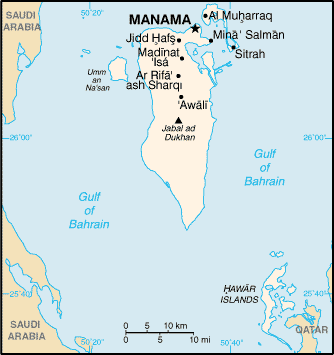
Geographic location of Bahrain
Bahrain

The history of the Jews in Bahrain goes back to ancient times. Bahraini Jews constitute one of the world's smallest Jewish communities, although its origins go back to late antiquity. Talmudic sources refer to ports and islands on the Persian Gulf, indicating that Jews may have already settled in this region. Arabic sources record Jews in the old capital of Bahrain, Hajar, at the time of the Islamic conquest in 630 C.E. In the 12th century, the Jewish traveler-adventurer Benjamin of Tudela mentions 500 Jews living in Qays, and 5,000 in Al-Qatîf, involved in pearl fishery. In the 19th century, there were Jewish merchants from Iraq, Persia, and India in Bahrain.[2]

The Jewish community declined during the twentieth century. In 1968, only some 100 Jews remained in the new capital city of Manama.[2] At the beginning of the twenty-first century, about 30 Jews remained in Bahrain. The community maintained ownership of a synagogue, but it was not in use and services were held in private homes on holidays. The Jewish community also maintained its cemetery.[2][1]

From its independence in 1971, Bahrain had no official relations with Israel until the Oslo Agreements were signed between Israel and the Palestinians in 1993. Subsequently, semi-official relations, particularly commercial, were established.[2][1] Bahraini Jews were not allowed to visit Israel, although, officially, Bahrain agreed to cease adherence to the economic boycott of Israel in exchange for a free-trade agreement with the United States in 2004.[3]

In September 2020, Bahrain and Israel agreed to establish diplomatic relations. Travel links between the two countries were also established.[4] As of 2022 the majority of Jews live in Umm al Hassam in Manama.[5]

Early history

[edit]

There are Talmudic references made of a Jewish community dating back in the geographic areas of present-day Bahrain, as well as references in Arabic texts to a Jewish presence in Hajar (eastern coast of inland Arabia) during Mohammed's time.[2][6] Jews are reported to have been living in what became the modern kingdom of Bahrain since the times of the Talmud. Arabic sources state that Jews lived in Hajar, the capital of Bahrain, in 630 CE and refused to convert to Islam when most of the population of the island did.[2][7]

Modern history

[edit]

Modern Bahrain's Jewish community traces its origins to the migration of Iraqi traders from the Jewish Yadgar family in the 1880s.[3]

After World War II, increasing anti-British sentiment spread throughout the Arab World and led to riots in Bahrain. The riots focused on the Jewish community.[8] In 1948, there were 1,500 Jews living in Bahrain, while some sources give the Jewish population as 600 in 1948. On 5 December 1947, riots broke out against the Jewish community in Manama in the wake of ongoing violence in Palestine. A mob looted Jewish homes and shops, destroyed the city's synagogue, physically assaulted Jews, and murdered an elderly Jewish woman.[9] Most members of Bahrain's Jewish community abandoned their properties and evacuated to Bombay, later settling in Israel, many of them in the town of Pardes Hanna-Karkur; others went to the United Kingdom. The 1950 census found 293 Jews in the country.

Houda Nonoo told The Independent newspaper: "I don't think it was Bahrainis who were responsible. It was people from abroad. Many Bahrainis looked after Jews in their houses." This view is supported by Charles Belgrave, formerly a political adviser to the government of Bahrain – which at the time was subject to treaty relations with Britain – who recalled in a memoir: "The leading Arabs were very shocked ... most of them, when possible, had given shelter and protection to their Jewish neighbours... [the riots] had one surprising effect; it put an end to any active aggression by the Bahrain Arabs against the Bahrain Jews." Following the riots, as well as the establishment of Israel and the 1948 Arab-Israeli War, many Bahraini Jews emigrated to Israel, the United States, or United Kingdom. Some 500-600 remained, but after riots broke out in the aftermath of the Six-Day War in 1967, Bahraini Jewry emigrated en masse.[10][11]

Twenty-first century

[edit]

Jews are one of several communities that form the core of the liberal middle classes and several are even active in politics. A Jewish businessman, Ebrahim Daoud Nonoo, sat on the appointed upper house of the Bahraini Parliament's Shura Council. In 2005, he was replaced by his niece, Houda Ezra Nonoo. Since 2004, Ms. Nonoo also headed the Bahrain Human Rights Watch Society[12] which has campaigned against the reintroduction of the death penalty in the tiny kingdom. Neither is considered a controversial figure, even among Salafi politicians.

As of 2007, the Jewish population of Bahrain numbered 36.[7] At that time, the tolerance extended to the island's Jewish community is the result of the policy of its leader, King Hamad ibn Isa Al Khalifa. The island's boycott of Israeli products was in effect until 2004 when a free-trade agreement with the United States put an end to the official boycott.[13]

Jewish Bahraini author Nancy Khedouri wrote From Our Beginning to Present Day[3] about the Bahraini Jewish community:

...Bahraini Jews are well integrated into the life of the 700,000-person island kingdom, with Jewish government officials such as former Shura Council member Abraham David Nonoo and Khedouri's own family, Bahrain’s leading importer of tablecloths and linens.[7]
Khedouri explained, "Most of the Jewish men were traders and the women worked as teachers, nurses, and from the very start developed strong bonds of friendship with the local citizens."
Ms. Khedouri was quoted by the Gulf News as saying that her book "shows how Bahrain has practiced religious tolerance all these years and how privileged everyone should feel to be living in this beautiful Kingdom, which has always offered and will continue to offer peace and security to all its citizens." In an earlier interview, with the Bahrain Tribune, Khedouri said, "The peaceful co-existence we have with the Bahrainis is proof of the religious tolerance advocated by His Majesty the King, Hamad bin Isa Al-Khalifa."
...Before the establishment of the State of Israel, nearly 600 Jews lived in Bahrain, but many fled in the wake of anti-Semitic rioting in 1947-48 and again in 1967. Currently, Bahraini Jews are not allowed to visit Israel, although, officially, Bahrain agreed to cease adherence to the economic boycott of Israel in exchange for a free-trade agreement with the United States in 2004.

In 2006, the US State Department reported that, there have been no acts of physical violence or harassment of Jews or vandalism of Jewish community institutions, such as schools, cemeteries, or the synagogue. Although the Government has not enacted any laws protecting the right of Jews to religious freedom, Jews practice their faith privately without governmental interference. Nevertheless, the Government has made no specific effort to promote antibias and tolerance education. Some antisemitic political commentary and editorial cartoons continue to appear, usually linked to the Israeli-Palestinian conflict.[14]

In 2008, Bahrain's king nominated Houda Nonoo, a Jewish woman who served in the nation's 40-member upper house of Parliament, as its ambassador to the United States.[15]

In November, 2010, Bahraini Jewish author Nancy Khedouri[16] was appointed to replace Nonoo in Parliament.[1]

Beginning in 2015, King al-Khalifa officially marked the celebration of Hanukkah, with Jewish and Muslim Bahrainis celebrating together.[17]

On 11 September 2020, Israel and Bahrain agreed to "normalize relations."[18]

Abraham Accords

[edit]

The agreement was announced by President Donald Trump on September 11, 2020,[19] and followed on from a joint statement, officially referred to as the Abraham Accords, by the United States, Israel and the United Arab Emirates (UAE) on August 13, 2020.[20] It was formally signed on September 15, 2020, at the White House in Washington, D.C.,[21] and made Bahrain the fourth Arab state to recognize Israel and the second within a month.[22][23][a] The agreements were named "Abraham Accords" to highlight the common belief of Judaism and Islam in the prophet Abraham.[24][25]

See also

[edit]

Notes

[edit]

References

[edit]
[edit]
Revisions and contributorsEdit on WikipediaRead on Wikipedia
from Grokipedia
The history of the in encompasses a small but enduring community primarily established by Iraqi merchants in the late , who settled in the as a trading hub between , , and the broader Gulf. This group, augmented by arrivals from and in the early , focused on commerce in textiles, jewelry, and finance, achieving economic prominence without facing the pogroms or expulsions common in neighboring regions. The population peaked at approximately 600 individuals by the 1940s, including ownership of numerous businesses, before declining sharply to dozens following mass emigration to the newly founded State of in 1948 amid regional Arab-Israeli tensions. Despite the , a core remnant preserved institutions such as the synagogue—built in the 1930s and the only one in the Gulf—and a dating to the community's formative years, reflecting 's relative tolerance under Al Khalifa rule. The community's defining traits include its integration into local society, as evidenced by figures like serving as 's first Jewish ambassador in 2008, and a resurgence in visibility after the 2020 normalized ties with , facilitating direct flights, business ventures, and public Jewish observances absent since 1947. This trajectory underscores causal factors like geopolitical stability, trade opportunities, and pragmatic diplomacy over ideological conflict, contrasting with broader Middle Eastern patterns of Jewish displacement.

Ancient and Pre-Modern Presence

Talmudic and Early References

historical sources from the early Islamic period attest to a presence in Hajar, the ancient capital of (corresponding to modern-day and parts of ), during the Muslim conquest of the region around 629–630 CE. These accounts describe Jews in Hajar as refusing , paying (poll tax) instead, which indicates an established community capable of negotiating terms under the new regime. Specific groups mentioned include Jaylān (possibly Jīlān) and Yāmin, identified as ploughmen affiliated with al-Mushaqqar, a settlement near Hajar, highlighting their integration into local agriculture alongside trade. The Babylonian Talmud, redacted in between the 3rd and 6th centuries CE, lacks explicit references to Hajar but alludes to Jewish maritime activities in ports and islands, consistent with the extending from Babylonian centers to Gulf trading hubs proximate to . This proximity—'s role in pearling, date export, and incense routes linking , Persia, , and —likely drove causal settlement by Jewish merchants and families seeking commercial opportunities, rather than speculative migrations or unverified legends of pre-exilic origins. No archaeological evidence confirms earlier presence, underscoring reliance on textual attestations from this late antique transition.

Medieval and Ottoman-Era Evidence

Arabic chronicles from the early Islamic period document the presence of in Hajar, the ancient capital of , around 630 CE, during the led by Muhammad's forces; these reportedly refused to convert to , unlike much of the local population. During the Abbasid era, the 12th-century Jewish traveler recorded a community of approximately 500 on the island of (adjacent to ) and another of about 5,000 in nearby al-Qatif, noting their involvement in the local pearl fishery alongside occupations such as and glassworking; these figures suggest a modest but economically active Jewish population integrated into Gulf trade networks under caliphal oversight. Jewish communities in Bahrain and its environs endured as dhimmis under successive Islamic rulers from the Umayyad through Abbasid periods, obligated to pay the poll tax for protection and in religious practice, though subject to restrictions on public worship, testimony, and arms-bearing; no records indicate mass expulsions or pogroms in Bahrain comparable to those in other regions, with their continuity attributable to the practical value of Jewish mercantile expertise in sustaining pearl and commodity exchanges vital to the local economy. Evidence for the Ottoman era remains scant, as Bahrain fell outside direct Ottoman administration—controlled instead by , Safavid Persian, and local Arab powers—but archival hints and traveler accounts imply small, stable Jewish pockets persisted without significant , benefiting from the same trade-driven tolerance extended under prior Muslim governance.

19th-Century Settlement and Expansion

Migration from and Surrounding Regions

The modern Jewish community in Bahrain originated with the arrival of Iraqi Jewish traders in the late , primarily driven by commercial opportunities in the burgeoning Gulf trade networks rather than widespread persecution. The Yadgar family, hailing from in , initiated this migration around 1880, when Saleh Eliyahou Yadgar settled in to capitalize on regional commerce. These early migrants were attracted by Bahrain's status as a neutral entrepôt with low customs duties, facilitated by agreements since 1861, which ensured stability and access to pearl exports and shipping routes. Subsequent waves from , alongside smaller groups from and , intensified during the 1880s to 1920s, coinciding with the peak of Bahrain's pearl industry, which generated substantial wealth through exports to and Asia. While Ottoman administrative instability in provided some push incentives for mobile traders, the dominant pull was Bahrain's economic vibrancy: its free port policies and position as a hub for textiles, spices, and pearls outweighed localized disruptions in , enabling families to establish import-export firms without the heavier taxation of neighboring ports. Prominent lineages like the Nonoo, also originating from , followed suit; Abraham Nonoo arrived as a child with relatives around the early , rooting in Manama's quarters. By the and , these migrations had expanded the community to approximately 500–600 individuals, reflecting sustained influxes tied to Gulf commerce under British oversight, which minimized local conflicts and promoted trade. This demographic growth underscored Bahrain's appeal as a low-risk base for Jewish merchants navigating imperial trade circuits, with families like the Yadgars amassing fortunes in textiles linked to pearling .

Establishment of Trading Communities

The Jewish trading communities in Bahrain coalesced in during the late , anchored by kinship networks of immigrant families such as the Yadgars, who originated from and specialized in textiles. These groups leveraged Bahrain's position as a in the , facilitating imports and exports that connected regional markets to and through colonial trade routes. British colonial patronage further enabled their economic foothold by providing access to imperial networks, where Jewish merchants benefited from favorable conditions amid the pearl and broader commodity s. The 1861 treaty establishing Bahrain as a introduced relative stability, shielding emerging communities from regional instability without documented instances of official . This security underpinned self-sustaining operations, with families pooling resources for commercial ventures rather than relying on local patronage. By the early , these networks had expanded to include diverse crafts and brokerage roles, contributing to a population that grew steadily prior to . Religious observance initially centered on private worship in homes, reflecting the nascent scale of settlements, though efforts toward formalized spaces emerged as numbers increased. No centralized was constructed in the , but communal practices persisted discreetly amid the commercial focus. This infrastructural restraint aligned with the priorities of trader families, who prioritized economic consolidation over public institutions during the protectorate's formative decades.

Interwar and Mid-20th-Century Development

Community Growth and Infrastructure

During the and into the , the Jewish community in experienced significant growth, with population estimates ranging from 800 to 1,500 residents, primarily migrants from engaged in trade. This expansion reflected 's role as a British-protected trading hub in the , attracting Jewish merchants who leveraged secure conditions to establish permanent settlements. Key infrastructure developments included the construction of the synagogue in the early 1930s, funded by community contributions including Iranian Jewish merchant Shimon Cohen and American jeweler Rosenthal, with a deed registered in 1931. The community also maintained kosher facilities to support religious observance, though formal schools were limited to informal or private arrangements amid the small scale of the population. Jews integrated into local commerce as intermediaries between British interests and traders, benefiting from Bahrain's favorable trading environment without formal guild exclusions, in contrast to more restrictive regional patterns. Contemporary accounts highlight the absence of inherent local antisemitism prior to external influences, with Jews reporting secure coexistence with Bahrainis, diverging from broader tensions.

Economic Roles in Trade and Commerce

The Jewish community in Bahrain, primarily migrants from , , and arriving in the late 19th and early 20th centuries, played a significant role in the island's pre-oil economy, which relied on its position as a regional for goods transiting between , , and the . Operating under dhimmi status that imposed taxes and social restrictions but permitted commercial activity, Jews specialized in import-export trades, leveraging familial and diasporic networks to facilitate the movement of commodities such as textiles and consumer goods. By the , they had established themselves as key intermediaries in Manama's souks, importing European fabrics and exporting local products, which bolstered Bahrain's volume prior to the 1932 oil discovery that shifted economic priorities. Prominent families exemplified this dominance in niche sectors. The Yadgar family amassed wealth through the textile trade, importing and distributing fabrics that supplied local merchants and regional markets, contributing to Bahrain's reputation as a commercial hub. Similarly, the Nonoo family pioneered foreign-exchange operations, establishing the country's first such business in the early , which served as a precursor to modern banking by handling currency conversions and credit for pearl divers and traders. These activities extended to money-changing and informal lending, filling gaps in formal and enabling smoother cross-border transactions in an era when pearls constituted Bahrain's primary export, with Jewish merchants often acting as financiers for diving expeditions and gem sorting. Despite their small numbers—estimated at several hundred by —these roles amplified Bahrain's function, as Jewish traders' multilingual skills and connections bridged ports with Bombay and European suppliers, sustaining commerce amid fluctuating pearl prices. This economic niche generated occasional Arab resentment over perceived Jewish profiteering in high-margin trades, particularly as pearl yields declined in the due to cultured pearl competition from , straining local livelihoods. However, such tensions remained localized and did not manifest in systemic boycotts or exclusionary policies until external events in the , allowing Jewish commerce to integrate into Bahrain's multicultural trading ecosystem without widespread disruption. Their contributions, grounded in portable skills rather than land ownership—prohibited under rules—demonstrated causal efficacy in elevating Bahrain's trade efficiency, as evidenced by the persistence of family firms into the mid-20th century.

Post-WWII Challenges and the 1947 Riots

Triggers from Palestinian Partition

The adopted Resolution 181 on November 29, 1947, proposing the partition of into separate and Arab states, which ignited widespread protests across Arab countries in response to perceived support for . In , this external political development intersected with local demonstrations against British colonial influence and oil economy grievances, but the anti- violence that ensued was not rooted in endemic Bahraini toward the longstanding, integrated merchant community. Rather, the riots reflected spillover from regional agitation, with 's —primarily Iraqi-origin traders uninvolved in Zionist activities—targeted despite their demonstrated allegiance to local rulers and economy. On December 5, 1947, a protest march in Manama escalated into a riot when a mob, including Iranian and Trucial States (modern UAE) sailors present in the port, deviated to assault the Jewish quarter in the souq. These foreign elements looted approximately 12 Jewish homes and businesses and set fire to the Adass Yeshurin synagogue, resulting in one Jewish death from injuries. Local Bahraini participation was minimal, underscoring that the violence stemmed from transient outsiders rather than indigenous communal friction, as the Jewish population had maintained neutrality on Palestine and contributed significantly to Bahrain's pearl and trade sectors without political agitation. Prior tensions included sporadic calls for economic boycotts of Jewish firms amid pan-Arab solidarity, yet these did not originate from Bahraini authorities or reflect prior patterns of domestic persecution.

Violence, Destruction, and Immediate Aftermath

The anti-Jewish riots in broke out on December 3, 1947, days after the approved the Palestine Partition Plan on November 29, which proposed dividing into Jewish and Arab states. What began as peaceful protests and strikes by students, reformists, and workers against the plan escalated into targeted violence against the Jewish quarter, with crowds looting and burning the community's , ransacking twelve homes, and attacking Jewish residents. Twenty Jews were injured, including the who suffered a severe beating, while one elderly woman died from shock amid the chaos; no direct fatalities from assault were recorded. Rioters comprised local Shiʿa laborers, such as pearl divers facing post-war economic hardship, alongside Persian immigrants, driven by a mix of anti-colonial resentment, labor unrest, and opposition to perceived Zionist gains rather than unadulterated sectarian animus. Transient foreign sailors from and the contributed to the rampage through the souq, amplifying the disorder, though Bahraini emphasized that core local Muslim elements offered shelter to some families during the attacks. Bahraini police responded decisively, dispersing the mobs within hours and preventing prolonged escalation, unlike the unchecked pogroms in that same month, which claimed 82 Jewish lives, or the sustained violence in and that foreshadowed mass expulsions. In the immediate aftermath, authorities initiated limited compensation for damaged properties, signaling containment of the incident without endorsing broader anti-Jewish measures, though the events exposed vulnerabilities in the community's integration amid regional tensions. Narratives framing the riots solely as displaced rage against —often echoed in secondary accounts influenced by pan-Arab —overlook the primacy of Gulf-specific socioeconomic triggers, as evidenced by the localized participation and swift official intervention; community denials of provocative Zionist activities locally further undermine such attributions, which lack corroboration in contemporaneous records.

Decline and State Protection

Mass Emigration to Israel and Elsewhere

In the late and early , Bahrain's Jewish community underwent a sharp demographic decline through voluntary , dropping from 414 members in 1947 to 143 by 1951. This reduction, involving roughly 270 departures mainly from late 1949 onward, primarily affected poorer families who had incurred uncompensated property losses during the 1947 riots. A significant portion of emigrants relocated to amid the waves following the state's 1948 founding, motivated by Zionist ideals and the opportunity for national fulfillment, while others settled in the or . Regional tensions, including the 1948 Arab-Israeli War, intensified these pull factors by amplifying personal security fears, even as saw no repeat of local anti-Jewish violence beyond the initial disturbances. Wealthier families largely stayed, integrating economically and retaining Bahraini citizenship without facing expulsion or discriminatory policies, in contrast to forced removals in other states. By the mid-1950s, the residual community numbered around 100-200, sustained by these voluntary choices rather than governmental coercion.

Royal Safeguards Against Further

Following Bahrain's independence in 1971 under Emir , the ruling Al Khalifa family implemented policies ensuring the security of the remaining Jewish community, numbering around 50 individuals by the late , amid regional expulsions and violence against in countries like and . Unlike in , where the 1969 execution of for alleged spying led to mass arrests, or , where airlifted nearly all to by 1950 due to ongoing persecution, Bahrain experienced no further pogroms or state-sanctioned attacks on its Jewish residents from the through the 1990s. Emir Isa's administration maintained domestic protections, allowing the community to operate its and conduct religious practices without interference, reflecting a pragmatic approach to minority stability in a trade-dependent rather than ideological commitment to tolerance. The Al Khalifa rulers exempted Bahraini Jews from strict enforcement of the , permitting them to retain business ties and property without the divestment pressures faced elsewhere in the . While community members were informally discouraged from visiting —passports stamped to prevent such travel—the government did not confiscate Jewish assets or compel adherence to boycott measures targeting personal commerce, contrasting with Iraq's of Jewish businesses post-1958 revolution. This selective non-enforcement aligned with Bahrain's economic pragmatism, as the Jewish community's historical role in pearl trading and import-export had contributed to the island's pre-oil prosperity, incentivizing rulers to prioritize internal order over pan-Arab economic . Such safeguards drew criticism from segments of Bahrain's Shiite majority, who viewed royal favoritism toward the Jewish minority as a Sunni Al Khalifa tactic to cultivate loyal non-Shiite allies amid sectarian divides, exacerbating perceptions of divide-and-rule in a kingdom where Shiites comprise about 70% of the population but hold limited political power. This dynamic underscored causal factors in monarchical strategy: protecting a small, integrated minority served to balance demographic tensions without risking broader instability, as evidenced by the absence of anti-Jewish unrest during the 1979 Iranian Revolution's regional spillover or the 1990s Gulf crises.

21st-Century Revival

Diplomatic Recognition and Notable Figures

In 2008, King Hamad bin Isa Al Khalifa appointed Houda Ezra Ebrahim Nonoo as Bahrain's ambassador to the United States, marking her as the first Jewish individual to serve in such a high diplomatic role for any modern Arab country. Nonoo, a businesswoman and member of Bahrain's longstanding Jewish community, held the position until 2013, during which she represented Bahrain's interests in Washington, D.C., and emphasized the kingdom's commitment to religious tolerance amid regional tensions. This unprecedented appointment, coming decades after most Bahraini Jews emigrated following the 1948 Arab-Israeli War, underscored the community's integration into national institutions despite its reduced size of fewer than 50 members by the early 21st century. The Nonoo family has played a central role in sustaining the Jewish community's presence and influence in Bahrain. Ebrahim Dahood Nonoo, a prominent family member and informal head of the community, was appointed in 2001 as the first Jewish representative to Bahrain's Shura Council, the kingdom's consultative assembly, further evidencing royal efforts to incorporate Jewish citizens into governance. Ebrahim Nonoo has led community affairs, maintaining business operations in trade and finance that trace back to the family's arrival in the late , even as the overall population dwindled due to . These roles, while limited in scale given the tiny community, highlighted Bahrain's distinction from neighboring states by protecting and elevating Jewish figures in public life.

Synagogue Restoration and Cultural Reemergence

The House of Ten Commandments synagogue in Manama, Bahrain's sole Jewish house of worship originally established in the 1930s, was renovated in 2021 at a cost of 60,000 Bahraini dinars (approximately $159,000). This restoration equipped the interior with Torah scrolls, a menorah, and prayer books in Arabic, English, and Hebrew, enabling structured communal services for the first time since its destruction during the 1947 riots. In August 2021, the hosted its first public services in 74 years, led by community head Ebrahim Nonoo and attended by local alongside expatriates and diplomats. These services included traditional elements such as bread, grape juice, and readings, signaling the end of post-1947 secrecy in religious practice where worship had been confined to private homes. Public observance extended to later that year, with the approximately 50-member community—predominantly descendants of the Nonoo family—gathering openly for high holiday rituals. The revival has fostered cultural continuity through regular observances, though the community's small scale limits the frequency and scale of minyanim and ritual viability, relying on family-led leadership amid historical emigration.

and Normalization

The , formalized on September 15, 2020, established full diplomatic relations between and , marking the second Gulf state to normalize ties following the . This agreement facilitated immediate practical measures, including the launch of direct commercial flights by from to in October 2020 and bilateral trade agreements that expanded economic cooperation in sectors such as technology, agriculture, and defense. Bahraini Jewish community leaders, representing the kingdom's small indigenous Jewish population, publicly welcomed the normalization as a "historic moment" that could foster growth and stability for their community, which has maintained a and under royal protection despite its diminished size. While no direct evidence indicates Bahraini Jews led backchannel diplomacy, their longstanding presence and loyalty to the Al Khalifa contributed to an environment of pragmatic tolerance that underpinned the accords' feasibility. Following the attack on on October 7, 2023, Bahrain-Israel relations faced strains from regional protests and Bahrain's participation in and Organization of Islamic Cooperation summits condemning Israeli actions in Gaza, yet the kingdom refrained from recalling its ambassador or suspending key agreements. Bahrain officially denounced the assault as while balancing domestic Shia-majority sentiments through measured criticism of 's response, preserving airspace access for Israeli flights and ongoing security dialogues. Proponents of the accords, including Bahraini officials and Israeli analysts, emphasize their role in bolstering collective defense against Iranian aggression, as evidenced by joint military exercises and intelligence sharing that address shared threats from Tehran-backed proxies. Critics, including Palestinian advocates and some regional commentators, argue the normalization was primarily driven by economic incentives, such as Bahrain's pursuit of advanced U.S. weaponry including potential F-35 components through American brokerage, rather than genuine ideological alignment, effectively sidelining issue in favor of gains. This perspective highlights how the accords prioritized Bahrain's military modernization and economic diversification—evident in post-normalization deals worth hundreds of millions in —over broader consensus on Israel-Palestine, though empirical data shows sustained bilateral investment despite the 2023-2024 Gaza conflict. The Jewish community's position aligns with the accords' pragmatic benefits, viewing normalization as enhancing their security amid Bahrain's strategic pivot away from Iran-centric tensions, without resolving underlying domestic opposition to Israel.

Current Community Dynamics and Future Prospects

As of 2023, Bahrain's Jewish community numbers approximately 50 individuals, primarily residing in the capital, , marking it as the sole organized Jewish presence in the Persian Gulf. The community's central institution, the House of Ten Commandments synagogue, remains active, hosting public worship and attracting high-profile visitors, such as Governor in May 2025, who toured the site during an economic mission. Despite the small size, which exposes the group to emigration risks from natural attrition or external pressures, daily life proceeds with reported personal security for residents, even amid regional conflicts like the Israel-Hamas war and escalations involving . However, Jewish travelers face potential anti-Semitic backlash from protests linked to Gaza tensions, underscoring vulnerabilities for non-residents. Looking ahead, the ' normalization with offers prospects for community growth through increased tourism, investment, and possible influxes of Jewish expatriates, as bilateral ties have facilitated cultural exchanges and property interests in . Yet, these accords face strains from ongoing Palestinian-Israeli violence, with Bahrain's leadership navigating domestic dilemmas that have cooled public enthusiasm for deeper ties. Opposition factions have criticized rising property acquisitions by international Jewish or Zionist-linked entities, framing them as encroachments that exacerbate sectarian divides. of tolerance—rooted in royal patronage—persists, but the community's sustainability hinges on the Al Khalifa monarchy's stability, given Bahrain's documented suppression of Shiite-majority dissent through arbitrary detentions, citizenship revocations, and barriers to worship, which fuel broader unrest potentially spilling over to minorities. This dependency raises realism about long-term viability, as systemic against the Shiite population (60-65% of citizens) undermines inclusive governance, per U.S. State Department assessments. Without broader reforms, external shocks could prompt further , limiting revival to symbolic rather than substantive scales.

References

Add your contribution
Related Hubs
User Avatar
No comments yet.