


Community hub
Recent from talks
Contribute something
Nothing was collected or created yet.
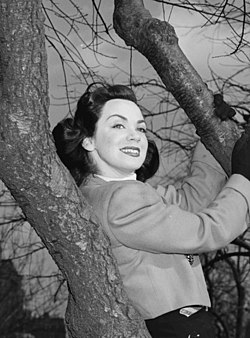
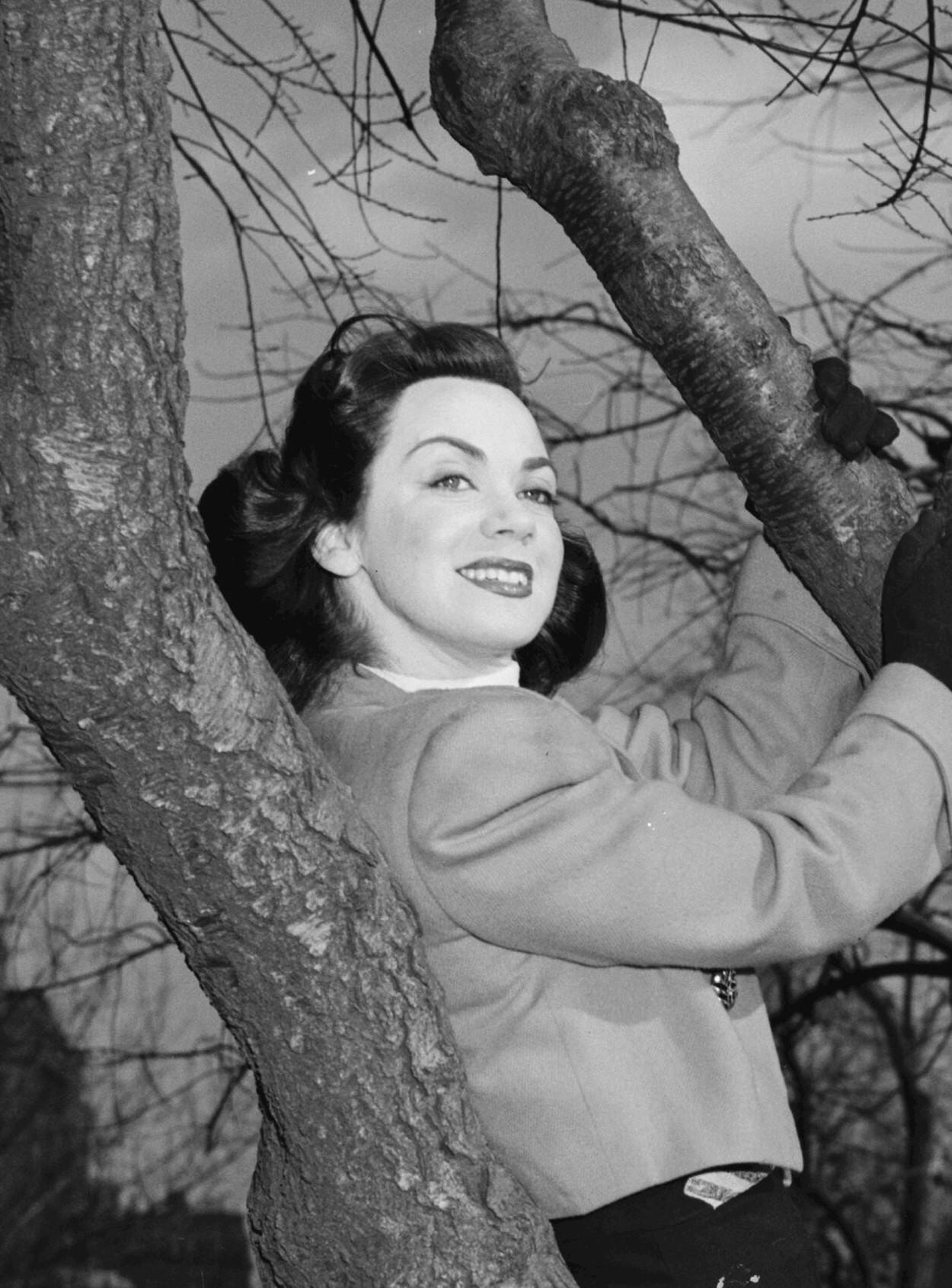
Kitty Kallen
View on Wikipedia
Katie "Kitty" Kallen (May 25, 1921 – January 7, 2016) was an American singer whose career spanned from the 1930s to the 1960s, including the Swing era of the Big Band years, the post-World War II pop scene, and the early years of rock 'n roll. Kallen performed with popular big band leaders of the 1940s, including Jimmy Dorsey and Harry James,[1] before establishing a solo career.
Key Information


She is best known for her 1954 solo recording '"Little Things Mean a Lot", a song that stayed at the U.S. Billboard number one spot for nine consecutive weeks and took top honor as 1954's #1 song of the year, charted in the U.S. for almost seven months, hit No. 1 on the UK singles chart, and sold more than two million copies.[2] Voted "most popular female singer" in 1954 in both Billboard and Variety polls,[3] Kallen lost her voice at the London Palladium in 1955 at the top of her career[4][3][5] and stopped singing before an audience for four years.[4] After testing her voice under a pseudonym in small town venues, she ultimately returned and went on to achieve 13 top-ten career hits.
Early life
[edit]Born Katie Kallen (her birth name at times erroneously reported as Katherine Kalinsky)[4][6] on May 25, 1921, in Philadelphia, Pennsylvania,[4][7] to Russian Jewish immigrants Samuel and Fannie Kalinsky (née Kaplan) (later Kallen), she was one of seven children.[8] As a child, she won an amateur contest by imitating popular singers. When she returned home with her prize, a camera, her father did not believe her, and punished her for stealing the camera. Only when neighbors subsequently visited to congratulate her did Kallen's father realize she had actually won it.[3]
Career
[edit]As a young girl, she sang on The Children's Hour, a radio program sponsored by Horn & Hardart, the automat chain. As a preteen, Kallen had a radio program on Philadelphia's WCAU and sang with the big bands of Jan Savitt[7] in 1936, Artie Shaw in 1938,[9] and Jack Teagarden in 1939. It was with Teagarden's band that Kallen cut her first records, eight sides in total.
Shortly before her 21st birthday, on May 5, 1942, she sang the vocals for "Moonlight Becomes You", with Bobby Sherwood and His Orchestra at the second ever session for what was then still called Liberty Records but would soon be renamed Capitol Records. It was her only session for the label.
At 21, she joined the Jimmy Dorsey band, replacing Helen O'Connell. One of her recordings with Dorsey was a favorite of American servicemen: "They're Either Too Young or Too Old" reached the No. 2 position in the Billboard charts in 1944.[10] The same year, Kallen performed the vocals for Dorsey's number-one hit "Besame Mucho". Most of her singing assignments were in duets with Bob Eberly, and when Eberly left to go into the service toward the end of 1943, she joined Harry James's band.
Between January and November 1945, she had two songs recorded with the Harry James Orchestra in the top twenty, six in the top ten, and two at the No. 1 spot: "I'm Beginning to See the Light" and "It's Been a Long, Long Time",[11] which remains deeply associated with the end of World War II and the returning troops.[citation needed] In 1951, Kallen appeared with Buster Crabbe as the Queen and King of Winter at the Lake Placid resort.[12]
As a solo performer following the war, Kallen bounced from label to label—a brief stint with Musicraft in 1946 and then three years at Mercury in 1949-51, followed by a stint at Columbia and a reunion with Harry James. Despite covering a number of songs that had been hits for other singers, she still failed to produce a major hit. It was not until signing with Decca in 1953 that she at last enjoyed chart success.
With the 1954 hit "Little Things Mean a Lot", she was voted the most popular female singer in Billboard and Variety polls. AllMusic called the recording a "monster hit",[4] and music historian Jonny Whiteside said the song "ably characterizes Kallen's impressive, and graceful, transition from classic big band swing to modern post-war pop".[13] She followed up the song with "In the Chapel in the Moonlight", another million selling record,[2] in the U.S. and a version of "True Love" for Decca.
Kallen performed at numerous prominent live venues including Manhattan's Copacabana, Morris Levy's Versailles, the Capitol Theater, the Maisonette Room at the St. Regis,[14] the Cafe Rouge at the Hotel Pennsylvania and the Plaza Hotel's Persian Room. As well as this, she starred on Broadway in Finian's Rainbow; in the 1955 film The Second Greatest Sex[15] and on numerous television shows including The Tonight Show with Johnny Carson, The Big Beat with singer-host Richard Hayes,[16] American Bandstand, and Fred Allen's Judge for Yourself.
In 1956, rock-and-roll was dominating the charts and nosing out most older singers. Kallen experienced a mental breakdown during this time in which she found herself unable to sing live, although she could perform in the studio with no problems. She sought help from a psychiatrist but ended the sessions after he asked her to undress as part of therapy. Kallen's psychological issues and the changing music landscape convinced her to retire from performing, but three years later she decided to make a comeback and signed with Columbia.
In 1959, she recorded "If I Give My Heart to You" for Columbia and in 1963, she recorded a top-selling version of "My Coloring Book" for RCA Victor. Her final album was Quiet Nights, a bossa nova–flavored release for 20th Century Fox Records after which she retired from recording permanently.
During the height of her popularity, three imposters billed themselves as Kitty Kallen. When one of them, Genevieve Agostinello, died in 1978, it was incorrectly reported that Kallen herself had died.[15] On February 8, 1960, Kallen received a star on the Hollywood Walk of Fame (located on the north side of Hollywood Boulevard at #7021).[3]
A compilation of her hits on various labels remains available on the Sony CD set The Kitty Kallen Story.
Marriages
[edit]While performing with Jack Teagarden's band, she married Clint Garvin, the band's clarinet player. When Teagarden fired Garvin, Kallen left as well, later annulling the marriage. In 1948, Kallen married Bernard "Budd" Granoff, a publicist, agent, and television producer[17] — who later became a pioneering television syndicator.[17] The couple, married for over forty-five years until Granoff's death in 1996, had a son, Jonathan Granoff, President of the Global Security Institute and Adjunct Professor of International Law at Widener University School of Law.[17]
Later years
[edit]In 1977, Kallen sued her dermatologist, Norman Orentreich, after he prescribed an estrogen drug, Premarin, for her small facial wrinkles. She subsequently suffered blood clots in her lungs, caused directly by the drug, and was awarded $300,000 by a court.[18]
In 2008, Kallen joined artists Patti Page, Tony Martin, Dick Hyman, Richard Hayman and the estates of Count Basie, Benny Goodman, Sarah Vaughan, Woody Herman, Les Brown, the Mills Brothers, Jerry Murad, Frankie Laine, and the gospel singer Sister Rosetta Tharpe in a suit against the world's then largest music label,[19] Universal Music Group, alleging the company had cheated them on royalties.[20]
In 2009, Kallen was inducted into the Hit Parade Hall of Fame.
Kallen had homes in Englewood, New Jersey, and Cuernavaca, Mexico. By the end of her life, she lived full-time in Cuernavaca, where she died on January 7, 2016, at the age of 94. She was in a relationship with Sonny Shiell in her later years.[21]
Albums discography
[edit]- 1956 It's A Lonesome Old Town
- 1960 If I Give My Heart To You
- 1961 Honky Tonk Angel, Country Songs With A City Flavor
- 1963 Kitty Kallen Sings Our Lady of Fatima
- 1963 Kitty Kallen's "My Coloring Book" And Her Other Great Hits
- 1964 Quiet Nights
Singles discography
[edit]| Year | Single (A-side, B-side) Both sides from same album except where indicated Unrelated B-sides not shown |
Chart positions | Album | |||||
|---|---|---|---|---|---|---|---|---|
| U.S. | U.S. R&B[23] |
U.S. AC |
UK[24] | Cash Box | Music Vendor/Record World | |||
| 1943 | "They're Either Too Young or Too Old" (with Jimmy Dorsey) / | 2 | Non-album tracks | |||||
| "Star Eyes" (with Jimmy Dorsey & Bob Eberly) | 3 | |||||||
| 1944 | "Bésame Mucho (with Jimmy Dorsey & Bob Eberly) |
1 | ||||||
| "When They Ask About You" (with Jimmy Dorsey and Barbara Witsen | 4 | 10 | ||||||
| 1945 | "I'm Beginning to See the Light"(with Harry James) | 1 | ||||||
| "I Don't Care Who Knows It" (with Harry James) / | 8 | |||||||
| "I Guess I'll Hang My Tears Out to Dry" (with Harry James) | 16 | |||||||
| "Yah-Ta-Ta, Yah-Ta-Ta" (with Harry James) | 11 | |||||||
| "11:60 PM" (with Harry James) | 8 | |||||||
| "I'll Buy That Dream" (with Harry James) | 2 | |||||||
| "It's Been a Long, Long Time" (with Harry James) | 1 | |||||||
| "Waitin' for the Train To Come In" (with Harry James) | 6 | |||||||
| 1946 | "My Heart Belongs to Daddy" (with Artie Shaw) | 22 | ||||||
| 1949 | "Silver Bells" b/w "A Bushel and a Peck" Both sides with Richard Hayes |
Kitty Kallen Sings | ||||||
| "Kiss Me Sweet" b/w "I Don't See Me in Your Eyes Anymore" (from Kitty Kallen Sings) |
30 | Non-album tracks | ||||||
| "I'm Gonna Wash That Man Right Outa My Hair" b/w "Happy Talk" |
||||||||
| "Milwaukee" b/w "Fellow in Yellowstone Park" |
||||||||
| "Mad About the Boy" b/w "A Man Wrote a Song" |
||||||||
| 1950 | "I Got Tookin'" b/w "If You Smile at the Sun" |
|||||||
| "Juke Box Annie" b/w "Choo'n Gum" |
17 | |||||||
| "You Missed the Boat" b/w "Monday, Tuesday, Wednesday" Both sides with Jimmy Carrol Orchestra |
||||||||
| "Mother, Pin a Rose on Me" b/w "Willya, Won'tcha (Kinda Sorta)" Both sides with Mitch Miller |
||||||||
| "Our Lady of Fatima" b/w "Honestly, I Love You" Both sides with Richard Hayes |
10 | Kitty Kallen Sings | ||||||
| "Get Out Those Old Records" b/w "It Is No Secret" Both sides with Richard Hayes |
||||||||
| 1951 | "Aba Daba Honeymoon" b/w "I Don't Want to Love You" (Non-album track) Both sides with Richard Hayes |
9 | ||||||
| "Last Night My Heart Crossed the Ocean" b/w "If You Want Some Lovin'" |
Non-album tracks | |||||||
| "Old Soft Shoe" b/w "I Wish I Had a Daddy in the White House" |
30 | Kitty Kallen Sings | ||||||
| "Another Human Being of the Opposite Sex" b/w "More! More! More!" |
Non-album tracks | |||||||
| 1952 | "When I Dream (I Always Dream of You)" b/w "To Be Loved by You" Both sides with Harry James |
|||||||
| 1953 | "Lonely" b/w "Heartless Love" |
|||||||
| "Are You Looking for a Sweetheart?" b/w "A Little Lie" (Non-album track) |
27 | 38 | Little Things Mean a Lot | |||||
| 1954 | "Little Things Mean a Lot" b/w "I Don't Think You Love Me Anymore" (Non-album track) |
1 | 1 | 1 | 12 | |||
| "In the Chapel in the Moonlight" / | 4 | 5 | 7 | |||||
| "Take Everything but You" | 44 | 24 | Non-album track | |||||
| "I Want You All to Myself (Just You)" / | 23 | 24 | 22 | Little Things Mean a Lot | ||||
| "Don't Let The Kiddy Geddin" | 31 | 26 | Non-album tracks | |||||
| "Baby Brother (Santa Claus, Dear Santa Claus)" b/w "The Spirit Of Christmas" |
||||||||
| 1955 | "I'd Never Forgive Myself" / | 32 | ||||||
| "Honestly" | 31 | 38 | ||||||
| "Kitty Who?" b/w "By Bayou Bay" |
83 | |||||||
| "Forgive Me" b/w "If It's a Dream" |
41 | |||||||
| "Just Between Friends" b/w "Let's Make the Most of Tonight" (Non-album track) |
75 | It's a Lonesome Old Town | ||||||
| "Come Spring" b/w "Only Forever" (from Little Things Mean a Lot) |
Non-album tracks | |||||||
| "Sweet Kentucky Rose" / | 76 | 30 | 23 | |||||
| "How Lonely Can I Get?" | 33 | Little Things Mean a Lot | ||||||
| 1956 | "Go on with the Wedding" b/w "The Second Greatest Sex" Both sides with Georgie Shaw |
39 | 16 | 54 | Non-album tracks | |||
| "Will I Always Be Your Sweetheart?" b/w "True Love" (from Little Things Mean a Lot) |
74 | |||||||
| "How About Me?" b/w "The Lonely One" |
72 | It's a Lonesome Old Town | ||||||
| "Ah, Ah, Ah, Ah" b/w "Saturday Blues" (Non-album track) |
Little Things Mean a Lot | |||||||
| 1957 | "Star Bright (Mara)" b/w "Gently, Johnny" |
Non-album tracks | ||||||
| "Hideaway Heart" b/w "Teen-Age Heart" |
||||||||
| "Lasting Love" b/w "Long, Lonely Nights" |
39 | |||||||
| "Crying Roses" b/w "I Never Was the One" |
82 | |||||||
| 1958 | "Love Is a Sacred Thing" b/w "When Will I Know" (Non-album track) |
82 | If I Give My Heart to You | |||||
| 1959 | "If I Give My Heart to You" b/w "The Door That Won't Open" (Non-album track) |
34 | 25 | 27 | ||||
| 1960 | "That Old Feeling" / | 55 | 100 | 87 | ||||
| "Need Me" | 91 | Non-album track | ||||||
| "Got a Date with an Angel" b/w "Always in My Heart" |
111 | If I Give My Heart To You | ||||||
| "Make Love to Me" b/w "Heaven Help Me" |
Non-album tracks | |||||||
| "Be True to Me" b/w "Come Live with Me" |
||||||||
| "The Things You Left in My Heart" b/w "I Believe in You" |
||||||||
| 1961 | "Hey, Good Lookin'" b/w "Raining in My Heart" |
117 | Honky Tonk Angel | |||||
| "Summertime Lies" b/w "Yassu" |
118 | Non-album tracks | ||||||
| 1962 | "It Wasn't God Who Made Honky Tonk Angels" b/w "You Are My Sunshine" |
101 | 137 | Honky Tonk Angel | ||||
| "My Coloring Book" b/w "Here's To Us" (Non-album track) |
18 | 7 | 13 | 8 | My Coloring Book | |||
| 1963 | "Please Don't" b/w "Star Eyes" (from My Coloring Book) |
121 | Non-album tracks | |||||
| "I'll Teach You How to Cry" b/w "We'll Cross That Bridge" |
99 | |||||||
| 1964 | "Make Someone Love You" b/w "Lies and More Lies" |
|||||||
| 1965 | "It's Almost Tomorrow" b/w "All I Do Is Dream of You" |
|||||||
| "No One Will Ever Know" b/w "So Many Others" |
||||||||
| 1966 | "One Grain of Sand" b/w "From Your Lips to the Ears of an Angel" |
|||||||
| 1967 | "Oba, Oba" b/w "Summer, Summer Wind" |
|||||||
References
[edit]- ^ Bernstein, Adam (January 7, 2016). "Kitty Kallen, silken-voiced pop singer of 'Little Things Mean a Lot,' dies at 94". The Washington Post. ISSN 0190-8286. Retrieved January 11, 2016.
- ^ a b Murrells, Joseph (1978). The Book of Golden Discs (2nd ed.). London: Barrie and Jenkins Ltd. p. 69. ISBN 0-214-20512-6.
- ^ a b c d "Kitty Kallen". Hollywood Walk of Fame. October 25, 2019.
- ^ a b c d e "Kitty Kallen profile". AllMusic. Retrieved May 28, 2012.
- ^ "Jefferson City Daily Capital News". January 26, 1963. suffering paralyzed vocal cords
- ^ Adam Burnstein (January 7, 2016). "Kitty Kallen, silken-voiced pop singer of 'Little Things Mean a Lot,' dies at 94". The Washington Post.
- ^ a b JC Marion (2002). "Kitty Kallen". Home.earthlink.net. Archived from the original on March 5, 2016. Retrieved January 9, 2016.
- ^ "Father of Kitty Kallen dies". The New York Times. January 14, 1955.
PHILADELPHIA Jan. 13 Samuel Kallen, father of Kitty Kallen, the singer, died last night at Einstein Hospital at-the age of 61. His widow, Rose, and six other children, survive.
- ^ "Kitty Kallen". Archived from the original on March 8, 2005.
- ^ Whitburn, Joel (1986). Joel Whitburn's Pop Memories 1890-1954. Wisconsin, USA: Record Research Inc. p. 132. ISBN 0-89820-083-0.
- ^ "Pop Chronicles 1940s Program #1". 1972.
- ^ "Placid's Royalty Named" (PDF). The New York Times. December 20, 1951.
Former Olympic champion Buster Crabbe and singer Kitty Kallen of Broadway will act as King and Queen of Winter at Lake Placid's twenty-sixth annual coronation ceremonies Dec. 29. Mr. Crabbe and Miss Kallen, who had the lead in Finian's Rainbow will succeed Faye Emerson and Skitch Henderson, last Winter's royal couple. The coronation traditionally opens the winter season at Lake Placid and includes an ice show and hockey game.
- ^ Whiteside, Jonny (June 24, 2010). "Kitty Kallen". Los Angeles Times. Retrieved August 7, 2015.
- ^ "Mr. Pop's Ultimate 1960 Timeline, February". Mr. Popculture.com.
- ^ a b "Kitty Kallen dead? No, Singer Reports". The Free Lance-Star. Fredericksburg, Virginia. April 21, 1978.
- ^ "Kitty Kallen Solo Star Now". The Pittsburgh Press. November 6, 1949.
- ^ a b c Thomas, Robert McG. Jr. (May 1, 1996). "Budd Granoff Is Dead at 77; A Show-Business Innovator". The New York Times.
- ^ "Notes on People" (PDF). The New York Times. October 7, 1977. Retrieved January 7, 2016.
- ^ "Music greats say Universal owes them". Los Angeles Times. February 16, 2008.
- ^ EDIDIN, PETER (February 16, 2008). "Universal Royalty Suit". The New York Times.
The estates of some of American music's biggest names, including Count Basie, Benny Goodman and Sarah Vaughan, have sued Universal Music Group for more than $6 million, claiming the company cheated them out of royalties, The Associated Press reported. The lawsuit, which was also filed on behalf of some living artists, asserts that the company withheld record royalties, engaged in self-serving schemes with record clubs and suppressed payments from Apple's iTunes and other digital distributors. The court papers accuse Universal of breach of contract, breach of fiduciary duty and unjust enrichment. The 14 plaintiffs are Patti Page, Tony Martin, Dick Hyman, Richard Hayman, Kitty Kallen and the estates of Basie, Goodman, Vaughan, Woody Herman, Les Brown, the Mills Brothers, Jerry Murad, Frankie Laine and the gospel singer Sister Rosetta Tharpe. The lawsuit, filed in State Supreme Court in Manhattan, says Universal has been using questionable accounting practices since at least 1998. "We believe that these claims are baseless, and we are confident that we will prevail in court," said Peter Lofrumento, a spokesman for the Universal Music Group.
- ^ Grady, Denise (January 7, 2016). "Kitty Kallen, Big Band Singer of 'Bésame Mucho,' Dies at 94". The New York Times. Retrieved January 7, 2016.
- ^ "Discogs". www.discogs.com. Retrieved January 16, 2025.
- ^ Whitburn, Joel (2004). Top R&B/Hip-Hop Singles: 1942-2004. Record Research. p. 169.
- ^ Roberts, David (2006). British Hit Singles & Albums (19th ed.). London: Guinness World Records Limited. p. 296. ISBN 1-904994-10-5.
External links
[edit]
- Kitty Kallen at IMDb
- Profile, discogs.com

Kitty Kallen
View on GrokipediaEarly Life
Childhood and Family Background
Kitty Kallen was born Katie Kallen on May 25, 1921, in South Philadelphia, Pennsylvania, to Russian Jewish immigrant parents Samuel Kallen, a barber whose original surname was Kalinsky, and the former Fanny Kaplan.[1][5] She was the youngest of seven children in a family that resided in one of the city's poorer neighborhoods, where economic hardships were common among immigrant households during the early 20th century.[6][5] Kallen's early years were marked by significant family challenges, including the death of her mother when she was eight years old, which left her father struggling to provide for the large family as a barber with limited means.[1][7] Growing up in this environment instilled a sense of resilience, while the family's Jewish cultural heritage, rooted in Eastern European traditions, influenced her upbringing through observance of holidays, community gatherings, and the vibrant ethnic fabric of South Philadelphia's immigrant enclaves.[5][8] Her initial fascination with music developed amid these circumstances, sparked by listening to popular tunes on local Philadelphia radio stations and participating in community events that showcased young talent.[2] As a child, she won an amateur singing contest by imitating well-known vocalists of the era, an early indicator of her innate performative abilities.[9]Initial Steps in Music
Kitty Kallen's earliest public foray into music occurred around age 12, when she won first prize—a camera—in an amateur-hour singing contest by performing imitations of popular singers of the era.[10] This victory provided her initial recognition and encouragement to pursue performing, as neighbors' congratulations convinced her skeptical father of her talent.[10] Soon after, in the 1930s, Kallen entered show business as a child regular on Philadelphia's Horn & Hardart Children's Hour, a radio variety program sponsored by the local automat chain.[2] By age 12, she secured her own radio program on station WCAU, where she sang and built a local following as a young performer.[2] During the late 1930s, Kallen expanded into her first professional singing roles, appearing in local Philadelphia venues and contributing to minor radio spots that honed her skills and increased her visibility in the regional entertainment scene.[10] These early opportunities allowed her to support her family amid economic hardships while transitioning from amateur to paid work.[1]Career
Big Band Associations
Kitty Kallen began her professional singing career as a teenager, associating with several prominent big bands in the late 1930s. At age 15, she joined Jan Savitt's orchestra in 1936, marking her entry into the swing era's vibrant scene.[3] She followed this with a stint as a vocalist for Artie Shaw's band in 1938, where her clear, emotive style complemented the group's innovative arrangements.[11] By 1940, at age 18, Kallen performed with Jack Teagarden's ensemble, gaining experience in jazz-inflected big band settings before transitioning to more established acts. In 1942, Kallen joined Jimmy Dorsey's orchestra, replacing Helen O'Connell and quickly becoming a featured vocalist alongside Bob Eberly. This period yielded significant hits, including the 1944 recording of "They're Either Too Young or Too Old," a humorous wartime tune that reached No. 2 on the Billboard charts.[12] The song, with its lighthearted commentary on draft-age frustrations, captured the era's spirit and boosted morale for troops and civilians alike during World War II. Kallen also contributed to Dorsey's No. 1 hit "Besame Mucho" that year, a duet that exemplified the band's romantic, danceable sound.[3] Kallen moved to Harry James's orchestra in late 1943, where she remained until 1945, delivering vocals on several top-selling records amid the height of the war. Her performance on "It's Been a Long, Long Time," released in October 1945 just after Japan's surrender, topped the Billboard charts for one month, resonating deeply as a poignant anthem of reunion for separated loved ones.[13] This recording, along with others like "I'm Beginning to See the Light," highlighted Kallen's velvety tone and helped sustain the big band tradition's role in uplifting American audiences through the conflict's final years.Solo Recordings and Chart Success
After departing from the Harry James orchestra in late 1945, Kitty Kallen transitioned to a solo career, beginning recordings in 1946 with labels such as Musicraft and Mercury before signing major deals with Decca and Columbia in the early 1950s.[14][15] This shift allowed her to explore a more personal vocal approach, building on the romantic phrasing honed during her big band era as a precursor to her independent work.[3] Kallen's breakthrough arrived in 1954 with her Decca recording of "Little Things Mean a Lot," which ascended to No. 1 on the Billboard Hot 100 for nine consecutive weeks and topped the UK Singles Chart as well.[16] The single sold over two million copies, establishing her as a leading pop vocalist of the postwar era.[4] That same year, Kallen scored an additional top-ten hit on the Billboard charts, "In the Chapel in the Moonlight" (peaking at No. 4); these contributed to her overall tally of approximately 18 chart appearances across her career. Her solo output often revisited earlier successes, such as a re-recording of "Bésame Mucho" from her 1944 Jimmy Dorsey collaboration, included on her 1962 album My Coloring Book (RCA Victor), where the title single also reached No. 18 on Billboard.[17] By the mid-1950s, Kallen's recordings evolved toward pop standards, exemplified by her 1956 Decca album It's a Lonesome Old Town, arranged by Jack Pleis and featuring introspective tracks like the title song and "How Are Things in Glocca Morra?" that highlighted her warm, emotive delivery on themes of longing and memory.[18][19] This phase underscored her commercial peak, with multiple singles maintaining momentum through the decade.Television and Live Performances
Kitty Kallen made frequent guest appearances on popular television variety programs during the 1950s and 1960s, showcasing her vocal talents alongside hosts and fellow performers. She performed her hit "Little Things Mean a Lot" on The Perry Como Show in 1955, captivating audiences with her smooth delivery during the live broadcast.[20] Earlier, in 1954, Kallen sang "In the Chapel in the Moonlight" on The Ed Sullivan Show, a staple of early network television that highlighted her rising popularity.[21] She also appeared on The Colgate Comedy Hour in 1950, performing alongside comedian Fred Allen, and later guested on The Tonight Show Starring Johnny Carson in 1963, where she shared the stage with celebrities like Bob Hope and Tallulah Bankhead.[22] These spots on shows such as American Bandstand and The Dick Clark Saturday Night Beechnut Show in the late 1950s further solidified her multimedia presence, often featuring renditions of her chart-topping singles in a live format.[23] On stage, Kallen ventured into Broadway during the height of her big band career, taking on a prominent role in the original production of Finian's Rainbow. In April 1947, she replaced Ella Logan as Sharon McLonergan, the female lead in the long-running musical fantasy, performing the role through much of its successful run at the 46th Street Theatre.[24] This theatrical debut marked a significant expansion of her performance repertoire beyond vocal ensembles, allowing her to engage with scripted dialogue and choreography in a critically acclaimed show that earned multiple Tony nominations. While her Broadway tenure was brief, it underscored her versatility as an entertainer during the postwar era. Kallen's live performances extended to renowned nightclubs, theaters, and concert halls throughout the 1950s, where she drew crowds with intimate sets of standards and hits. She headlined at New York's Copacabana nightclub, delivering sultry renditions that epitomized the glamour of Manhattan's nightlife scene.[7] Other domestic venues included Morris Levy's Versailles and the Capitol Theater, where her appearances blended big band flair with solo charisma. Internationally, she toured to the London Palladium, achieving acclaim in Europe with sold-out concerts that introduced her American pop style to global audiences.[2] These engagements, often part of broader tours across the United States and abroad, highlighted her enduring appeal through dynamic live interpretations of songs like "Little Things Mean a Lot." Kallen's active performing career culminated in the mid-1960s following the release of her final album, Quiet Nights, a bossa nova-infused collection issued by 20th Century Fox Records in 1964. Featuring tracks like "Quiet Nights of Quiet Stars," the album reflected a mature, reflective phase in her artistry amid emerging musical trends.[25] Shortly thereafter, a lung ailment forced her retirement from live performances and recording.[7]Personal Life
Marriages and Relationships
Kitty Kallen's first marriage occurred in the early 1940s to Clint Garvin, a clarinetist in Jack Teagarden's big band, where she was performing as a vocalist. The union was short-lived; following Garvin's dismissal from the band, Kallen left with him, but the marriage was soon annulled amid career conflicts that disrupted her early professional momentum.[1][9] In 1948, Kallen married Bernard "Budd" Granoff, a prominent publicist, agent, and television producer, a partnership that endured until his death in 1996. Granoff promptly transitioned to managing Kallen's career exclusively, leaving his other clients to focus on her bookings, recordings, and public appearances, which fostered a close professional collaboration during her shift to solo work.[1][7] These marriages influenced Kallen's touring and recording schedules throughout the 1940s and 1950s. The annulment of her first marriage allowed her to rejoin prominent big bands, such as those led by Jimmy Dorsey and Harry James, enabling hits like "Bésame Mucho" in 1944 without prolonged interruption. Meanwhile, Granoff's management supported her intensive solo touring across nightclubs and theaters while prioritizing studio sessions that produced chart-toppers like "Little Things Mean a Lot" in 1954, balancing personal stability with professional demands.[9][1] The couple had one son, Jonathan.[1]Family
Kitty Kallen and her husband Bernard Granoff welcomed their only child, son Jonathan Granoff, following their 1948 marriage, which provided the stable foundation for their family life. Jonathan, born in November 1948, pursued a distinguished career in law, specializing in human rights and international security. He serves as president of the Global Security Institute, an organization dedicated to advancing nuclear non-proliferation, interfaith dialogue, and global peace initiatives, drawing on values of respect and understanding that he has credited to his upbringing.[1][26] The Granoff family initially made their home in New York City during Kallen's peak performing years in the 1940s and 1950s, immersing themselves in the vibrant cultural scene of the metropolis. As her career evolved, they relocated to Englewood, New Jersey, where they resided for several decades, offering a quieter suburban environment while remaining close to New York. In her later years, Kallen divided her time between Englewood and a vacation home in Cuernavaca, Mexico, eventually settling full-time in Mexico by the 2000s. Born Katie Kallen to Russian Jewish immigrant parents in Philadelphia, Kallen remained connected to her Jewish heritage, which influenced her personal values and family traditions.[1][7]Later Years
Retirement and Legal Challenges
Following the release of her final album, Quiet Nights, in 1964, Kitty Kallen retired from performing and recording in the mid-1960s due to a lung ailment and the evolving music landscape.[25][27] She transitioned to a more private existence, supported by her husband, producer Budd Granoff, and their son until Granoff's death in 1996.[1] In 1977, Kallen pursued a medical malpractice lawsuit against her dermatologist and Ayerst Laboratories, alleging harm from hormone-based treatments prescribed for skin conditions, which culminated in a $300,000 settlement.[28] Throughout the 1970s and 1990s, she led a low-key life away from the spotlight, engaging in sporadic media appearances, including a 1992 television interview at the Hollywood Palladium where she reminisced about her big band era collaborations.[29]Death
Kitty Kallen died on January 7, 2016, at her home in Cuernavaca, Mexico, at the age of 94.[1] She had been residing year-round in Cuernavaca with her son, Jonathan Granoff, and his family.[1] Granoff confirmed the death to news outlets, though no specific cause was disclosed.[7] Following her passing, Kallen was interred at Beth-El Cemetery in Paramus, New Jersey.[30] No public details emerged regarding funeral arrangements, which were handled privately by the family.[1] Her death prompted tributes in major publications, including obituaries in The New York Times and The Washington Post, which celebrated her chart-topping hits like "Little Things Mean a Lot" and her contributions to big band and pop music during the swing era.[1][7]Legacy
Awards and Recognition
Kitty Kallen received a star on the Hollywood Walk of Fame in the recording category on February 8, 1960, located at 7021 Hollywood Boulevard.[9] In 1954, following the success of her number-one hit "Little Things Mean a Lot," Kallen was voted the most popular female singer in the United States by both Billboard and Variety polls.[9] That same year, the song was recognized as the most popular record of the year.[2] Kallen's contributions to popular music were further honored with her induction into the Philadelphia Music Alliance Walk of Fame in 1992.[2] In 2009, she was inducted into the Hit Parade Hall of Fame for her enduring impact on chart-topping music.[31] Her major hits, including "Little Things Mean a Lot" which sold over two million copies and was certified gold by the RIAA in January 2005, earned multiple gold record certifications during her career.[4][32]Influence on Popular Music
Kitty Kallen played a pivotal role in transitioning vocal styles from the Swing era's big band orchestras to the more intimate, personality-driven pop of the 1950s, exemplifying a smooth evolution that influenced subsequent female vocalists in American music. Her early work with ensembles led by Jimmy Dorsey, Harry James, and Artie Shaw in the 1940s emphasized clear diction, emotional phrasing, and a velvety tone suited to large arrangements, which she later adapted to solo recordings like the 1954 chart-topper "Little Things Mean a Lot." This shift highlighted her ability to maintain big band-era warmth while embracing post-war pop's focus on relatable sentimentality, setting a template for singers who balanced orchestral roots with individual expressiveness.[33][1][34] During World War II, Kallen's recordings with the Harry James Orchestra, particularly "It's Been a Long, Long Time" in 1945, contributed significantly to homefront morale by capturing the era's themes of longing, reunion, and relief following the conflict's end. The song, which reached number one on the Billboard charts, resonated with families separated by the war, offering emotional catharsis and optimism amid the loss of over 400,000 American lives, and it became one of the era's biggest hits in providing solace to both troops and civilians. Her performances underscored the power of popular music as a unifying force during national hardship, influencing how wartime ballads shaped public sentiment.[35][1] Kallen's recordings experienced renewed interest in the 1990s and 2000s through compilation albums and digital reissues that highlighted her catalog's enduring appeal, while her hits like "Little Things Mean a Lot" inspired covers by later artists, including Bettye Swann in 1969 and Little Shoes Big Voice in 2013, demonstrating ongoing cultural resonance. As a Jewish-American performer born to Russian immigrant parents in Philadelphia, she brought subtle cultural authenticity to mainstream pop without overt ethnic markers, paving the way for diverse voices in the genre and reflecting the broader integration of Jewish artists into America's popular music landscape during the mid-20th century. Her songs have appeared in media revivals, such as film soundtracks and nostalgic playlists, affirming her subtle but persistent impact on vocal traditions.[36][1]Discography
Studio Albums
Kitty Kallen's studio album output was relatively modest, reflecting the era's emphasis on singles, but her full-length releases spanned romantic ballads, genre explorations, and thematic collections from the mid-1950s to the mid-1960s. During her early 1950s tenure with Decca Records, Kallen primarily issued singles backed by orchestras, including collaborations with arranger Mitchell Ayres on select tracks that showcased her warm, emotive delivery in pop standards. These Decca sessions laid the groundwork for her album work, blending big band influences with intimate vocal performances.[15] Her debut studio album, It's a Lonesome Old Town, arrived in 1956 on Decca, featuring 12 tracks of melancholic standards and contemporary tunes arranged and conducted by Jack Pleis and his orchestra. The production emphasized lush string arrangements and Kallen's nuanced phrasing, creating an atmosphere of wistful nostalgia suited to themes of longing and lost love. Another 1956 release, Kitty Kallen with Sonny Burke's Orchestra, on Royale, highlighted similar orchestral pop with Burke's swinging arrangements, focusing on upbeat yet heartfelt selections from the Great American Songbook.[37][15] Transitioning to Columbia in 1960, Kallen released If I Give My Heart to You, a collection of romantic ballads produced with full orchestral support, exploring devotion and vulnerability through songs like the title track and "Need Me." The album's arrangements amplified her velvety tone, prioritizing emotional intimacy over elaborate instrumentation. The following year, Honky Tonk Angel: Country Songs with a City Flavor on Columbia ventured into country-tinged pop, with urban polish applied to rustic themes via sophisticated orchestrations, demonstrating Kallen's versatility in merging genres.[38][15] In 1963, Kallen moved to RCA Victor for Kitty Kallen's "My Coloring Book" and Her Other Great Hits, which included newly recorded versions of her signature tunes alongside the title ballad, arranged to evoke tender reflection on relationships. The album's commercial success was bolstered by the hit single "My Coloring Book," tying into its themes of heartbreak and resilience, with production featuring rich, symphonic backings. That same year, she issued Kitty Kallen Sings Our Lady of Fatima on Wing Records, a devotional project centered on Marian hymns with understated orchestral accompaniment, reflecting personal faith amid simpler arrangements.[39][15] Kallen's final studio album, Quiet Nights, came in 1964 on 20th Century Fox Records (often dated to 1965 in some catalogs), embracing bossa nova rhythms and serene interpretations of standards, arranged and conducted by Manny Albam. The production captured a laid-back, introspective mood with subtle Latin percussion and gentle strings, marking a sophisticated close to her discography focused on tranquility and maturity.[40][25]| Album Title | Year | Label | Key Collaborators/Notes |
|---|---|---|---|
| Kitty Kallen with Sonny Burke's Orchestra | 1956 | Royale | Arranged by Sonny Burke; pop standards with swinging orchestra. |
| It's a Lonesome Old Town | 1956 | Decca | Arranged/conducted by Jack Pleis; themes of nostalgia and longing. |
| If I Give My Heart to You | 1960 | Columbia | Romantic ballads; full orchestral production. |
| Honky Tonk Angel: Country Songs with a City Flavor | 1961 | Columbia | Genre-blending country-pop; urban arrangements. |
| Kitty Kallen's "My Coloring Book" and Her Other Great Hits | 1963 | RCA Victor | Includes hit title track; symphonic backings for reflective themes. |
| Kitty Kallen Sings Our Lady of Fatima | 1963 | Wing | Devotional hymns; simple orchestral support. |
| Quiet Nights | 1964 | 20th Century Fox | Arranged/conducted by Manny Albam; bossa nova influences for serene mood. |
Notable Singles
Kitty Kallen's notable singles highlight her versatility as a vocalist, from big band collaborations in the 1940s to solo successes in the 1950s and early 1960s, with many achieving high placements on Billboard's pop charts during an era when wartime sentiment and postwar optimism shaped popular music. Her recordings often featured lush orchestral arrangements, contributing to their commercial appeal and cultural resonance.[3] During her tenure with Jimmy Dorsey's orchestra, Kallen sang on "They're Either Too Young or Too Old," released in 1944 on Decca (18571), which peaked at No. 2 on the Billboard Best Seller chart, serving as a humorous commentary on dating challenges amid World War II enlistments. The same year, her vocals on Dorsey's version of "Bésame Mucho" (Decca 18499) reached No. 1 on the Billboard charts, introducing the Latin standard to American audiences and underscoring the era's fascination with exotic rhythms.[33] Transitioning to Harry James's orchestra, Kallen featured on "I'm Beginning to See the Light" in 1945 (Columbia 36769), which hit No. 1 on the Billboard charts, capturing the joy of romance in the war's final months.[41] That same year, "It's Been a Long, Long Time" (Columbia 36993) also topped the Billboard charts for three weeks, becoming a poignant anthem for returning soldiers and selling over a million copies as one of the biggest hits of 1945.[42] Another collaboration with James, "Waitin' for the Train to Come In" (Columbia 37034), peaked at No. 6 in 1945, reflecting themes of longing and homecoming.[43] In her solo career, Kallen's breakthrough came with "Little Things Mean a Lot" in 1954 (Decca 29037), which held the No. 1 spot on the Billboard Best Sellers chart for nine weeks, topped the year-end chart, and sold over two million copies, earning her the title of most popular female vocalist in Billboard and Variety polls.[44] The follow-up, "In the Chapel in the Moonlight" (Decca 29130), reached No. 2 on Billboard in 1954, evoking nostalgic romance with its waltz-time arrangement.[44] Earlier solo efforts included "Kiss Me Sweet" in 1949 (Mercury 5265), peaking at No. 5, and "Juke Box Annie" in 1950 (Mercury 5417), which hit No. 3 and playfully satirized jukebox culture.[44] Later notable releases encompassed "My Coloring Book" in 1962 (RCA Victor 8124), a cover of the Broadway tune that peaked at No. 4 on the Billboard Hot 100 and No. 7 on the Adult Contemporary chart, marking her return to prominence after vocal health issues.[44] Kallen amassed 13 top-ten entries across her career, spanning labels like Decca, Mercury, and RCA, with her singles often bridging swing-era exuberance and mid-century pop intimacy.[4]| Title | Year | Peak Position (Billboard) | Label | Notes |
|---|---|---|---|---|
| Bésame Mucho (with Jimmy Dorsey) | 1944 | 1 | Decca 18499 | Big band Latin hit |
| They're Either Too Young or Too Old (with Jimmy Dorsey) | 1944 | 2 | Decca 18571 | Wartime novelty |
| I'm Beginning to See the Light (with Harry James) | 1945 | 1 | Columbia 36769 | Postwar romance standard |
| It's Been a Long, Long Time (with Harry James) | 1945 | 1 | Columbia 36993 | Million-seller anthem |
| Waitin' for the Train to Come In (with Harry James) | 1945 | 6 | Columbia 37034 | Longing theme |
| Kiss Me Sweet | 1949 | 5 | Mercury 5265 | Early solo |
| Juke Box Annie | 1950 | 3 | Mercury 5417 | Satirical pop |
| Little Things Mean a Lot | 1954 | 1 (9 weeks) | Decca 29037 | Career-defining No. 1 |
| In the Chapel in the Moonlight | 1954 | 2 | Decca 29130 | Nostalgic follow-up |
| My Coloring Book | 1962 | 4 | RCA Victor 8124 | Broadway cover comeback |