Hubbry Logo
KothrudKothrudMain
Open search
Kothrud
Community hub
Kothrud
logo
8 pages, 0 posts
0 subscribers
Be the first to start a discussion here.
Kothrud
Kothrud
from Wikipedia

Kothrud (Kothrud Baug during the Maratha Empire era) is an upmarket residential suburb in the city of Pune. Once boasting the tag of Asia's fastest developing suburb, Kothrud of 2025 faces several challenges of urban planning, traffic congestion, environmental degradation, and to some extent, rising crime rates.[1]

Key Information

The neighbourhood is located in the West-Central part of the city. During recent times, Kothrud has seen rapid expansion as well as development in commercial and residential real estate. Landmarks in Kothrud include the Mrutyunjayeshwar Temple dating to Peshwa times. This is also next to where Mastani once lived.[2]

Several prominent citizens of Pune who are active in Bollywood, Marathi cinema, media, cricket, and politics reside in Kothrud.

Economy

[edit]

Kothrud is a primarily residential suburb. Over the past decades many schools, colleges, hospitals, restaurants, cinemas, malls, theatres, health clubs, as well as business establishments have come to dot the area. Kothrud Industrial Estate is a prominent locality comprising many independent small and micro industries, industrial ancillary workshops and printing shops. Kothrud lies conveniently connected to IT establishments of Cognizant, Persistent Systems and Tech Mahindra.[3] Offices of information technology companies such as Harbinger Systems, Harbinger Knowledge Products and e-Zest Solutions are also located in Kothrud.[4] The registered office of Kirloskar Industries is located in Kothrud. A manufacturing facility of Cummins India Ltd located in the western part of the area for decades, is known by the name of Kothrud Engine Plant. Automotive Research Association of India or ARAI, is located atop Vetal Tekdi overlooking Kothrud on its southern slopes.[5] New age startups like StomatoBot Technologies, which automates CCTV Surveillance[6] for proactive mobile alerts in near real-time, using Computer Vision and Deep Learning,[7] have also appeared in Kothrud.

Apart from multiple local vegetable markets, State-organised weekly farmers' markets[8] and consumer-driven direct-from-farm initiates are held in Kothrud.[9]

The presence of many large educational institutions has meant a substantial student population and a proportionate housing, food and service economy. Throughout recent years, the single largest economic activity throughout this area has been the construction of residential buildings, mostly as redevelopment of older buildings leading to taller buildings and the urban issues owing to relentlessly increasing density.[10][11]

Geography

[edit]

Kothrud, one of the earliest and now largest suburbs of Pune, is bounded between Vetal Tekdi hills on the North and Karve Nagar and Mutha river on the South. Kothrud primarily consists of areas around Paud Road and Karve Road.[12] Paud Road begins at Paud Phata and leads to Paud Gaon via Chandani Chowk on the Katraj-Dehu Bypass on the Mumbai-Bengaluru NH4, which also forms the western boundary of Kothrud. Karve Road begins in Deccan and ends at Warje.

A few walking trails leading up to Vetal Tekdi originate at some places in Kothrud. The natural vegetation and man-made plantations on the hill lend the adjoining neighbourhoods a sense of calm, although the hill slopes and the forest cover have been steadily impacted due to the fast-paced growth and development in and around this area. The Indian Meteorological Department (IMD) recently dropped plans to install the X-band Doppler Weather Radar for Pune district at the Vetal Tekdi citing operational difficulties and resistance from locals who perceived the project as a threat to the fragile ecosystem of the hills.[13] Kothrud enjoys the same generally mild and pleasant Pune weather with a slight advantage of the cooler westerly breeze reaching the city, and in some neighbourhoods, a hyperlocal advantage of proximity to the Vetal Tekdi or Mahatma Hill.

Groundwater is accessible throughout the year in most parts thanks largely to the underlying geology and the large unconfined aquifers[14] held in and recharged by the Vetal Tekdi hill complex.[15] As in every urban growth spot, the rising population density threatens the tree cover, open grounds that allow percolation of stormwater, and consequently the quality and sustainability of groundwater.

Population

[edit]

According to Pune Municipal Corporation (PMC) ward-wise population data based on 2011 census, the population recorded for all wards nested under Kothrud is 209,331.[16] There are no reliable pointers to estimate the population in 2025. An extrapolation using 2.45% growth rate yields an approximate number of 300,962.[citation needed] For reference, and in the absence of a formal census in 2021, the population of Pune Metropolitan Region is arrived at by The United Nations World Urbanisation Prospects as being 7,525,720 starting with a number of 580,848 in 1950, and a rate of growth of 2.45%.[17]

Localities

[edit]

The major localities in Kothrud include Anand Nagar, Bharti Nagar, Bhelke Nagar, Bhusari Colony, Chandani Chowk, Dahanukar Colony, Eklavya College, Ex-Servicemen's Colony, Gananjay Society, Gujarat Colony, Guruganesh Nagar, Happy Colony, Ideal Colony, Jaibhawaninagar, Jijainagar, Karve Putala, Kishkindha Nagar, Lokmanya Colony, Madhav Baug, Mahatma Society, Mayur Colony, Paschimanagari, Rahul Nagar, Rambaug Colony, Shastrinagar, Shikshaknagar, Shivaji Putala, Shivteerth Nagar, Thorat Baug, Tejasnagar, Vanaz, Sutardara, and pockets of informal settlements across the entire neighbourhood.

Transport

[edit]

Pune Metro

[edit]
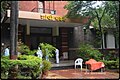
Entrance of Ideal Colony metro station, Kothrud
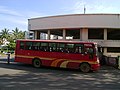
Kothrud bus stand

The Pune Metro Aqua Line is the first Metro line to start in Pune. Three metro stations on the Aqua (Vanaz to Ramwadi) Line, viz. Vanaz, Ideal Colony and Anand Nagar serve Kothrud since March 2022, connecting the suburb with the rest of the city.[18]

Road and Bus

[edit]

Kothrud is connected by the Pune Mahanagar Parivahan Mahamandal Limited and operates two main bus depots: Kothrud Depot and Kothrud Stand. Buses connect Kothrud to other parts of Pune like Nigdi, Hadapsar, Swargate, Chakan, and villages mostly to the West and South of Pune city, such as Khed-Shivapur, Panshet and Pirangut. Direct buses to the Wipro Circle in Hinjawadi IT hub ply the 33 Km route only in the morning and evening hours.[19] A recently set up Kumbare Park (also called Kumbre Park) terminus on D.P. Road operates PMPML buses to major parts of Pune city like Market Yard, Pune Station, Vadgaosheri and Sainathnagar.[20]

Many private and MSRTC intercity buses from and to Mumbai, Thane, Raigad and Alibaug halt at Vanaz Corner in Kothrud to drop and pick-up passengers.

Karve Road connects Kothrud to the heart of city, while Paud Road connects it to the outskirts of city.

Cycling, Pedestrian or Non-motorised Transport

[edit]

Pune was once known as the bicycle city of Maharashtra and has historically had a high bicycling modal share of 35% in the 1980s. This dwindled to just 13% in 2003.[21] Likewise in Kothrud, cyclists are a rare sight, while dedicated cycle tracks and decent footpaths persist as a topic on the wish-list.

Education

[edit]

Museums

[edit]
  • Joshi's Museum of Miniature Railways houses a remarkable collection of miniature trains, locomotives and model railways from different eras and regions around the world. The museum consists of a working model of an entire city. The exhibits chronicle the evolution of railway technology, from the earliest steam engines to the modern high-speed train.
  • Vikram Pendse Cycle Museum has over 150 bicycles, the oldest of which is from 1916. This private collection has many other bicycle related artefacts, tools, toys, and motorbikes.[22]

Fire Brigade

[edit]

The Kothrud Fire Brigade of Pune Municipal Corporation is stationed at S. No. 2/1, Near Kothrud Stand on Karve Road.[23]

[edit]

See also

[edit]

References

[edit]
Revisions and contributorsEdit on WikipediaRead on Wikipedia
from Grokipedia
Kothrud is an affluent residential locality in the west-central part of , , , recognized for its blend of historical roots and rapid modern development. Originally known as Kothrud Baug during the era, the area has transitioned from a quieter into a bustling hub featuring upscale housing, commercial centers, and robust infrastructure. Kothrud stands out for its educational prominence, hosting institutions such as and various colleges focused on engineering, management, and pharmacy, attracting students from across the region. The locality benefits from strong connectivity via key arteries like Karve Road, Paud Road, and FC Road, alongside access to including the Pune Metro's Ideal Colony station and local bus services. With a estimated at around 227,000, it serves as a preferred destination for families due to proximity to quality schools, hospitals like , and recreational green spaces, though rapid urbanization has led to challenges in traffic management.

History

Origins and Early Settlement

Kothrud emerged as a rural , referred to as Kothrud Baug, on the western periphery of during the Peshwa era of the in the . This designation, evoking enclosed gardens or estates, reflected its agrarian character amid the Deccan Plateau's fertile soils, suited for crops like millet and pulses that supported regional sustenance. The area's likely derives from kothar, denoting granaries, underscoring its role in storing provisions for Peshwa administrative needs, as granaries dotted the landscape to provision military campaigns and urban . Settlement patterns were shaped by proximity to , which served as the Maratha capital under s from 1713 to 1818, fostering ancillary developments like private estates and temples built by sardars loyal to the regime. Notable structures include the Mrutyunjayeshwar Temple, constructed in the late 1700s by Haripant Phadke, a key , near sites associated with Bajirao I's consort , highlighting elite patronage amid the era's political intrigues. Similarly, the Dashabhuja Ganapati Temple at Paud Phata, established by Phadke and later donated as to the s, exemplifies devotional architecture tied to Maratha nobility, with its ten-armed deity rooted in regional Shaiva-Ganapatya traditions. These edifices, amid sparse hamlets, indicate limited but strategic habitation, primarily agrarian communities serving 's expansion without significant . Into the early , Kothrud's adjacency to Pune's core—mere kilometers from emerging British cantonments and native extensions—spurred nascent residential clusters, transitioning farmland into modest plots for middle-class dwellers drawn by affordable land and connectivity via rudimentary roads like Paud Road. This shift, predating large-scale planning, relied on from Pune's interwar economic stirrings, including and hubs, yet retained a village essence with scattered farms until mid-century pressures.

Post-Independence Expansion

Following India's independence in 1947, Kothrud transitioned from a predominantly agricultural village on Pune's western outskirts to an emerging suburb amid the city's industrial expansion. The establishment of manufacturing units, including automobile firms like Kirloskar Oil Engines in the 1950s and in the early 1960s, attracted migrant workers and professionals from rural and beyond, fostering residential demand in peripheral areas. This migration drove landowners to subdivide fields into informal plots for housing, often bypassing systematic zoning or infrastructure planning, as Pune's overall population grew from approximately 500,000 pre-independence to 595,000 by 1961. The 1960s marked a pivotal , with the development of the industrial township redirecting urban growth westward and intensifying pressure on Kothrud's land use. Educational institutions established during this period further stimulated family settlements, as proximity to learning centers appealed to incoming middle-class households amid limited in Pune's core. By the 1970s, these dynamics contributed to notable land price increases across Pune's suburbs, with values rising substantially from 1951 levels due to speculation and accessibility, while infrastructure such as roads and lagged, exacerbating uneven development patterns evident in records of surges. Pune's metropolitan approached 1.2 million by 1981, underscoring the causal link between industrial migration and Kothrud's unplanned sprawl.

Modern Suburban Development

Following India's in the early , which facilitated foreign investment and the expansion of the IT and services sectors, Pune experienced rapid suburban growth, with Kothrud attracting professionals migrating for employment opportunities in nearby Hinjewadi and other tech hubs. This influx drove demand for housing, transforming Kothrud from a semi-rural extension of into a burgeoning residential enclave by the late , as developers capitalized on available land and proximity to the city's core. By the early 2000s, Kothrud had earned recognition in the Guinness Book of World Records as one of Asia's fastest-developing suburbs, reflecting a surge in construction that turned former barren areas into densely built neighborhoods within a decade. activity accelerated through private-led redevelopment of older low-rise structures into high-rise apartments, with average property prices reaching ₹13,100 per square foot by 2025, marking a 29% increase over the prior five years and an 8.27% year-over-year rise. Commercial nodes, including shopping complexes and service outlets, proliferated alongside these residential towers, supported by market-driven incentives like high rental yields from IT workers rather than heavy regulatory intervention. While this development elevated Kothrud to an upmarket status with enhanced private amenities—such as gated security, dedicated parking, and community facilities in redeveloped societies—it has drawn criticism for straining through increased , leading to , encroachments, and declining liveability scores. Private initiatives have mitigated some issues by incorporating modern features like fitness centers and green spaces in new projects, though persistent from unchecked construction highlights the limits of market-led progress without adequate civic oversight.

Geography

Location and Topography

Kothrud is a locality situated in the western part of , , , within the limits. Its central geographic coordinates are approximately 18.509890° N and 73.807182° E . The area is bounded by neighboring locales such as Karve Nagar to the east, to the northeast, and Bavdhan to the west, forming part of Pune's expansive suburban continuum. Topographically, Kothrud lies in the Mutha River basin, contributing to the broader Mula-Mutha river system that drains eastward from the Western Ghats. The locality features an average elevation of around 560 meters above mean sea level, consistent with Pune's position on the Deccan Plateau. Prominent features include the Mhatoba Tekdi hill, part of the Vetal-Mhatoba hill complex, which rises to elevations exceeding 700 meters and serves as a natural water divide between the Mula and Mutha basins. Natural streams originating from surrounding hills traverse Kothrud, feeding into the , though has altered their courses, contributing to identified flood-prone zones such as Omkar Garden Chowk and areas near Pragati Hardware. surveys have mapped these vulnerabilities based on hydrological patterns and historical inundation data. analyses reveal trends of green cover reduction in Pune's western suburbs, including Kothrud, with citywide tree cover losses totaling 136 hectares from 2001 to 2024, driven by expansion.

Climate and Environment

Kothrud shares Pune's tropical wet and dry climate (Köppen Aw), marked by three distinct seasons: a hot pre-monsoon summer from to May, a southwest from June to September, and a mild dry winter from October to February. Average annual rainfall measures 763 mm, with approximately 79% concentrated in the period, leading to heavy downpours that often cause localized flooding in urbanized low-lying areas. Summer daytime highs frequently exceed 38°C, while winter minimums dip to around 10°C, based on long-term records from the (IMD) stations in the region. These patterns align with broader influences, moderated slightly by elevation. Urbanization has intensified the effect in Kothrud, with land surface s rising from an average of 34.59°C in 2000 to 39.38°C in , driven by expanded concretization and reduced vegetative cover. Air studies in suburbs report maximum increases of 0.13°C to 1.63°C at monitoring sites over similar periods, attributable to heat retention in built environments rather than regional climatic shifts. This effect is particularly pronounced in rapidly developing zones like Kothrud, where green space loss exacerbates local warming by 2-4°C compared to rural benchmarks. Ecologically, Kothrud's location near the ' foothills, including Vetal Tekdi as an extension, supports notable , with documented odonate and avian diversity reflecting the hotspot's influence. Over 129 species have been recorded in adjacent hills, underscoring residual natural buffers. However, encroachments pose risks to aquatic habitats; in February 2025, residents protested plans to construct roads over natural watercourses, arguing it threatens , fauna, and natural drainage without adequate mitigation.

Demographics

Population Growth and Statistics

According to ward-wise data from the 2011 Indian compiled by the , the of Kothrud totaled 209,331 across the relevant wards. This figure encompasses multiple wards such as 57 (18,064 ), 58 (20,244), and 59 (29,109), reflecting the area's consolidation as a suburban hub within . Post-2011 growth has been influenced by Pune's broader urban expansion, with in-migration accounting for approximately 50% of the city's increases, primarily from other states attracted to employment opportunities in and sectors. Recent locality-level estimates place Kothrud's at 226,935, indicating an average annual growth rate of about 1.2% from , though this may underrepresent unregistered inflows and ongoing residential development. The area's 12.83 km² yields a of roughly 17,700 persons per square kilometer, exceeding city's average and contributing to suburban overcrowding pressures. Demographic breakdowns from these estimates show 116,796 males and 110,139 females, for a of 943 females per 1,000 males, slightly below the average of 915 but aligned with urban trends. No comprehensive recent surveys provide age-specific distributions for Kothrud alone, though Pune's population (0-6 years) constituted about 11.7% of the total in 2011, with similar proportions likely persisting amid migration-driven relocations. Projections extrapolating Pune's municipal growth trends (2.5-3% annually) suggest Kothrud could exceed 300,000 residents by late 2025, though official updates remain pending the next .

Socioeconomic Composition

Kothrud's residents predominantly belong to the middle and upper-middle classes, with a significant proportion employed in professional occupations, particularly in and services, due to the suburb's proximity to Pune's IT corridors and educational hubs like . This self-selection in housing markets favors higher-income groups, as evidenced by trends positioning Kothrud as a preferred locality for working professionals and families seeking upscale amenities. Literacy levels in Kothrud surpass Pune's urban average of 89.56% recorded in the 2011 , supported by access to quality and a demographic skewed toward educated migrants. Gender parity in literacy and workforce participation aligns with the district's overall of 915 females per 1,000 males, though broader urban patterns indicate persistent gaps in lower socioeconomic segments. The area's cultural makeup centers on a Marathi-speaking , with notable diversity from non-local inflows attracted by employment, as reflected in Pune's migrant-driven growth. Socioeconomic stratification manifests in contrasts between affluent gated communities and peripheral lower-income pockets, mirroring urban inequalities where luxury developments coexist with informal settlements, though Kothrud's core remains upscale.

Economy

Residential Real Estate Boom

Kothrud has emerged as one of Pune's leading residential localities by 2025, driven by sustained demand for upscale housing amid broader citywide real estate growth. Average property rates for flats reached approximately ₹13,950 per square foot, reflecting an 8.27% year-over-year increase as of mid-2025. Over the prior four years, prices in the area appreciated from ₹10,250 per square foot in 2021 to ₹13,800 per square foot in 2025, aligning with Pune's overall residential surge of 9-13% annually reported by CREDAI, fueled by mid- and luxury segment demand. This positioning stems from private developers' focus on high-quality projects, though rapid appreciation has raised concerns over affordability for middle-income buyers due to speculative buying pressures. Private sector initiatives have emphasized gated communities and premium amenities, drawing high-net-worth individuals seeking secure, modern living options. Developments feature luxury 2- and 3-BHK apartments with integrated facilities like clubhouses, green spaces, and advanced security, as seen in projects such as those by Sobha and Mittal Builders, which cater to affluent professionals in IT and related sectors. These societies have boosted Kothrud's appeal as Pune's "most desirable residential hub," with sales volumes contributing to the city's record 90,000 housing units sold in 2024 per CREDAI-Pune Metro data. However, such concentration of upscale supply has inflated entry-level costs, exacerbating speculation amid limited land availability. Redevelopment of aging structures has played a key role in expanding housing stock, with projects converting older buildings into contemporary high-rises that offer enhanced living standards and increased density. In Kothrud, these initiatives have targeted chawls and low-rise societies, providing original with larger, upgraded units while introducing market-rate sales to fund , as exemplified by ongoing efforts documented in local developer portfolios. This trend has mitigated supply shortages but faces regulatory delays from municipal approvals and tenant disputes, slowing pace despite developer advocacy for streamlined processes via bodies like CREDAI. Overall, while private innovation drives the boom, persistent bureaucratic hurdles underscore the need for policy reforms to sustain equitable growth.

Commercial and Service Sectors

Kothrud's commercial sector is characterized by a dense concentration of retail outlets, dining venues, and service providers, primarily serving the area's affluent middle-class and commuters. Along key corridors like Karve Road, clusters of shops offer groceries, apparel, and consumer goods, with over 130 commercial shops available for rent as of recent listings, reflecting steady demand for small-scale retail operations. Dining options range from cafes and fast-food outlets to multi-cuisine restaurants, including stalls that cater to diverse tastes and contribute to daily footfall in hubs near Karishma Society. Developments like Kothrud Central Mall provide over 200 premium spaces dedicated to , , and services, positioning the locality as a localized commercial node within Pune's suburban economy. Service-oriented businesses, including banking branches, coworking spaces, and small offices, support local professionals and remote workers, with properties near Karishma Chowk frequently leased for administrative and consulting firms. The proximity to Pune's IT epicenter in Hinjewadi has fostered ancillary services, such as IT support firms and back-office operations, though direct spillover remains limited amid Hinjewadi's traffic challenges prompting some firms to seek nearby alternatives. Commercial absorption in Kothrud expanded by 15-20% over the past five years, driven by IT-allied sectors employing professionals in software services and related fields, though specific figures from localized surveys are scarce. This growth underscores Kothrud's role in Pune's , supplementing the city's broader IT dominance without hosting large-scale tech campuses. Informal vending, including unauthorized hawkers selling produce and goods along roads like DP Road, meets immediate consumer demands efficiently but has drawn criticism for obstructing paths and exacerbating . Civic drives, such as the 2025 crackdown in the MIT Kothrud area, targeted encroachments, with residents advocating for designated zones to balance vendor livelihoods against urban order. Pune Municipal Corporation data indicates fines totaling Rs 95 lakh from nearly 8,000 vendors citywide in early 2025, highlighting enforcement challenges that indirectly affect Kothrud's commercial vibrancy by straining formal retail competition. Despite these tensions, the informal sector's adaptability sustains affordable access to essentials, complementing structured services in a locality where regulated markets like Gujarat Colony face revitalization efforts to integrate vendors formally.

Infrastructure and Transport

Road Networks and Traffic Management

Kothrud's road network primarily revolves around two major arterials, Paud Road and Karve Road, which connect the locality to central and surrounding suburbs like Karvenagar and . Paud Road extends from Paud Phata through Kothrud, facilitating access to western outskirts, while Karve Road links to and Shivajinagar, serving as a vital corridor for commuters. These roads accommodate high vehicular densities, contributing to the area's role as a key suburban artery amid Pune's rapid . Traffic volumes on these arterials frequently result in congestion, with reports of chronic jams exacerbated by peak-hour surges and inadequate capacity relative to vehicle growth. Pune's overall registered exceed 5.2 million as of recent estimates, growing at 8% annually, with 80% of city concentrated on limited road stretches like those in Kothrud. Specific junctions along Paud Road and Karve Road experience habitual snarls due to encroachments, wrong-side driving, and disorganized parking, reflecting planning shortfalls where residential and commercial expansion has outpaced infrastructure upgrades. Traffic management efforts include the deployment of additional police wardens at vulnerable Kothrud junctions to enforce flow and the installation of Adaptive Traffic Management Systems (ATMS) along Paud Road and Karve Road under Smart City initiatives, featuring 125 signalized intersections with AI-enabled adaptive controls. These measures aim to optimize signal timings and reduce delays, though implementation challenges persist, including maintenance lapses noted in municipal budgets. Accident rates in Kothrud exceed city averages, with frequent incidents in areas like Bhusari Colony attributed to high speeds amid congestion and poor enforcement, underscoring causal failures in proactive widening and missing link roads that remain delayed despite civic plans for over 450 km of new alignments. Private residential societies have partially offset parking deficits through internal facilities, though street-level violations continue to strain the system.

Public Transit Systems

Kothrud is served by the (PMPML), which operates multiple bus routes from the Kothrud Depot, a key hub connecting the area to central , Hadapsar, and other suburbs. Routes such as 99, 71 (circular via Sukhsagarnagar), and 199 provide frequent service, with the 199 route covering 39 stops from Kothrud Depot to Hadapsar Gadital between 6:50 AM and 11:40 PM. PMPML's citywide daily ridership averages 12.41 passengers, though specific Kothrud data remains limited; integration with metro via feeder buses has increased demand as metro usage rises. Pune Metro Line 2 (Aqua Line), operational from Vanaz to Ramwadi as of 2025, enhances Kothrud connectivity with stations including Ideal Colony, Kothrud Bus Depot, and . Phase 2 extensions, approved in June 2025, add 12.75 km and 13 stations linking Kothrud to suburbs like Bavdhan and Kharadi, improving eastern and western access. Metro ridership reached 2.53 daily in September 2025, up 46% over prior months, driven by shifts from buses post-PMPML fare hikes, offering faster travel and reduced private vehicle reliance. However, peak-hour overcrowding persists, with commuters demanding more coaches and frequency amid ongoing construction. Cycle tracks and pedestrian paths supplement transit in Kothrud but remain underutilized due to obstructions, poor maintenance, and encroachment. Surveys indicate low cyclist adoption on routes like Sinhgad Road, despite policy efforts for sustainable options. These facilities cover limited segments, with usage hindered by incomplete , contributing minimally to overall transit efficacy compared to buses and metro.

Recent Infrastructure Projects

In August 2025, the opened Kothrud's largest public facility, a three-level underground structure with capacity for 766 vehicles, aimed at mitigating shortages and illegal roadside amid the area's rapid . This initiative, generating revenue potential beyond the PMC's existing 30 lots' ₹6 annual collection, targets congestion relief in high-density commercial zones. Pune Metro Phase-2, approved by the Union Cabinet in June 2025 at a cost of ₹3,636 , features two elevated corridors totaling 12.75 km with 13 stations linking Kothrud, Bavdhan, Chandani Chowk, and Kharadi to IT corridors like Hinjewadi, enhancing commuter access and decongesting arterial roads. Extensions to Line 2, including the 1,123-meter Vanaz-Chandni Chowk segment with a Kothrud Depot station and a planned 508-meter foot-overbridge, support ongoing integration despite historical delays and cost escalations in prior phases. These developments are projected to reduce road traffic volumes by diverting passengers to mass transit, though quantifiable impacts in Kothrud await full operational data. The Raja Dinkar Kelkar Museum's expansion, fast-tracked in July 2025 with six acres allotted in adjacent Bavdhan Budruk, involves constructing a fivefold larger complex to accommodate growing collections and visitors, bolstering cultural infrastructure for the Kothrud-Bavdhan vicinity. This relocation addresses space constraints at the original Kasba site, positioning the upgraded facility as a regional draw while integrating with metro-enhanced accessibility.

Education

Higher Education Institutions

MIT World Peace University (MIT-WPU), a private institution in Kothrud, Pune, provides undergraduate, postgraduate, and doctoral programs across engineering, management, design, and sciences, contributing to the area's tertiary education landscape. Established as part of the MIT Group, it emphasizes industry-aligned curricula, with over 600 recruiters participating in drives. In 2024 placements, MIT-WPU achieved a 75% placement rate, with 1,903 students placed out of 2,544 registered, including roles at IT firms such as , TCS, , and ; the highest package offered was 51.36 LPA. These outcomes support Pune's IT-dominated by supplying skilled graduates, as evidenced by alumni advancements in , , and sectors. Campus expansions have sparked local disputes; on April 22, 2025, over 250 Kothrud residents under the CF@11 banner protested MIT-WPU's construction near Vetal Tekdi, demanding a halt due to and ecological damage from rapid . P. Jog College of Science and Commerce, also in Kothrud, offers undergraduate degrees in sciences and commerce, serving local students pursuing foundational higher education.

Primary and Secondary Schools

Kothrud features a concentration of private primary and secondary schools primarily affiliated with the Central Board of Secondary Education (CBSE) and Indian Certificate of Secondary Education (ICSE) boards, reflecting strong parental demand for structured curricula emphasizing academic rigor and English-medium instruction. Prominent institutions include City International School, a co-educational CBSE school offering classes from pre-primary to secondary levels with modern facilities such as digital classrooms. Other notable schools are MIT Vishwashanti Gurukul School, part of the MIT Group and focused on CBSE curriculum with integrated holistic development programs, and New India School in Bhusari Colony, which provides state board education alongside extracurricular activities like sports and arts. These schools draw significant enrollment from local middle-class families seeking alternatives to under-resourced public options, underscoring a market-driven preference for private education in the area. Academic outcomes in Kothrud's private schools consistently demonstrate high pass rates in board examinations, with institutions like City International School and New India School reporting 100% results in CBSE and Secondary School Certificate (SSCE) exams respectively for recent years. This performance aligns with broader trends where private schools in urban , including , exhibit superior student achievement in standardized assessments compared to government-run counterparts, attributable to factors such as qualified faculty—over 80% graduates in private versus 59% in public—and smaller class sizes. Infrastructure in these schools emphasizes quality facilities, including well-ventilated classrooms equipped with smart boards and digital tools to support , alongside dedicated spaces for laboratories, libraries, and sports grounds. Extracurricular offerings, such as clubs, debate societies, and athletic training, complement core academics, fostering skills beyond rote examination preparation. The dominance of private institutions—evident in enrollment shifts toward them amid perceptions of inconsistent public school infrastructure—highlights parental prioritization of measurable outcomes like exam success over subsidized access, though localized challenges like congestion from school transport vehicles persist during peak hours.

Culture and Society

Religious and Cultural Landmarks

Kothrud hosts several longstanding temples that serve as focal points for religious observance and community gatherings. The Shri Dashbhuja Ganpati Temple, located on Paud Phata, is a prominent dedicated to Lord in his ten-armed form, drawing large crowds for daily worship and major festivals. The Shri Mrutyunjayeshwar Temple, classified as a Grade II heritage structure by the , traces its origins to the Peshwa era and is linked to , functioning as a key site for devotees amid surrounding urban development. Similarly, the Mhatoba Mandir, revered as the guardian deity of the locality, occupies a modest setting that attracts visitors for rituals and leisurely walks, preserving pre-urban traditions. These sites anchor annual festivals, particularly , where Kothrud features over 150 Ganesh mandals installed across neighborhoods, facilitating widespread participation in processions and immersions that reinforce social ties despite logistical strains from crowds and traffic. Community halls adjacent to temples, such as those at Dashbhuja Ganpati, host cultural programs including traditional Marathi plays and bhajans during Navratri, blending devotion with performative arts rooted in local Maharashtrian heritage. Preservation initiatives counter pressures, with heritage grading by municipal authorities enabling structural for sites like Mrutyunjayeshwar, though encroachments and modern constructions nearby test their spatial . Local trusts fund restorations using adaptations in select temples, as seen in broader practices, to sustain functionality without compromising ritual continuity. These efforts underscore the sites' in fostering communal resilience, evidenced by consistent attendance at events that outpace general urban devotional averages.

Community Life and Events

Resident associations in Kothrud, such as Rahul Nagar cooperative housing society established in 1993, actively manage amenities like green spaces and organize events to strengthen community bonds among residents. These societies, including Ganesh Nagar Co Op Hsg Society, facilitate local gatherings such as sports tournaments and weekly markets, promoting interpersonal ties in a predominantly middle-class with a mix of nuclear and households. Recurring community events include annual shopping festivals, such as the Kothrud Shopping Festival held in June, which draw local vendors and residents for economic and social interaction. Cultural programs like the Kothrud Surotsav in October 2025 featured performances blending folk traditions and Hindustani classical music by artists including Rahul Deshpande, attracting hundreds to celebrate Maharashtra's heritage. The Happy Streets initiative, in its third edition on February 17, 2025, closed roads for participatory activities like dancing, singing, and games, enhancing public space utilization and resident engagement. Sports clubs and associations support community fitness, with facilities for , , and hosting regular intra-society competitions that foster volunteer-led coaching and team-building. Volunteerism is evident through local NGOs like Maitri, a -based reliant on resident volunteers for , though specific participation rates in Kothrud remain undocumented in public surveys. Post-occupancy studies indicate moderate residential satisfaction tied to community amenities, with improvements sought in amid . Local street markets, such as Gujarat Colony, serve as hubs for daily social exchanges but face revitalization challenges from traffic and vendor competition.

Governance and Politics

Administrative Framework

Kothrud operates under the jurisdiction of the , the primary civic body responsible for urban services including water supply, sanitation, road maintenance, and across Pune's inner limits. The locality spans multiple PMC wards, primarily within Zone 2, with dedicated ward offices—such as the one located behind Paranjape School at Dahanukar Chowk—serving as local administrative hubs for resident grievances, permit issuances, and routine infrastructure oversight. Each ward elects a corporator (prabhag sevak) to represent local interests in the PMC's general body, enabling ward-level committees to prioritize area-specific projects like drainage repairs or street lighting, though overarching policy decisions remain centralized at the municipal commissioner's office. Decentralized governance through these ward structures allows for responsive handling of hyper-local issues, such as coordinating repairs or community feedback sessions, which can expedite minor implementations compared to fully centralized systems. However, dependencies on central PMC approvals for major expenditures or land-use changes often introduce delays, as evidenced by resident complaints over prolonged tender processes for local works. In the 2025-26 , PMC's total of ₹11,601 includes prabhag-wise allocations for , with Kothrud wards receiving funds channeled through zonal deputy commissioners for tasks like filling and upkeep, though exact figures vary by project approval and have faced scrutiny for uneven distribution favoring politically aligned areas. Service delivery metrics highlight mixed outcomes in execution efficiency. PMC reports achieving approximately 95% source segregation and near-100% door-to-door waste collection across covered areas, bolstered by partnerships like SWaCH for decentralized pickup, yet Kothrud have documented lapses, including irregular disposal and overflow at collection points, prompting the addition of 18 specialized in to address localized bottlenecks. These ward-level operations underscore PMC's hybrid model, where local corporators and officers drive but contend with constraints tied to central budgeting, resulting in variable efficacy—stronger in routine collections (over 850 tonnes daily citywide via cooperatives) but weaker in peak-demand scenarios like monsoons.

Electoral Dynamics and Representation

Kothrud Assembly constituency, encompassing the locality within city, has functioned as a stronghold for the (BJP) in state legislative elections since 2014. In the 2014 elections, the BJP secured the seat, marking the beginning of its dominance in this urban middle-class area characterized by educated voters and growing residential populations. This trend continued in 2019, when BJP candidate won with 105,246 votes against competitors from the (MNS) and other parties. The 2024 Maharashtra Assembly elections reinforced BJP's grip, with Patil retaining the seat in a triangular contest against Shiv Sena (Uddhav Balasaheb Thackeray) candidate Chandrakant Mokate and MNS's Kishor Shinde. Patil garnered 159,234 votes, defeating Mokate's 47,193 by a margin of 112,041 votes, amid estimated around 60% consistent with broader urban patterns. Campaign dynamics highlighted clashes among pro-Hindutva parties over local infrastructure priorities, including persistent and garbage disposal inefficiencies, which residents cited as key concerns influencing booth-level preferences for development-oriented representation. Patil's tenure as MLA and state minister has emphasized advocacy for urban development projects, such as widening and public transit expansions, crediting BJP's governance for accelerated infrastructure funding in Kothrud. However, opposition critiques, including from factions, have pointed to unfulfilled promises on and mitigation, with residents reporting ongoing encroachments and service gaps despite electoral pledges. This representation has driven shifts in voter alignment toward parties demonstrating tangible progress on civic issues, underscoring Kothrud's role in reflecting broader urban electoral trends favoring incumbents with administrative leverage.

Challenges and Controversies

Urban Planning Disputes

In June 2025, residents and activists raised concerns over the alleged encroachment of a plot in Kothrud reserved by the for a sports ground, where a construction firm reportedly enclosed the area with metal sheets, prompting fears of unauthorized development on designated open space. This incident highlighted ongoing tensions between preserving recreational land allocations in the city's development plan and pressures from private builders seeking to repurpose such sites for residential or commercial use. A significant dispute arose in April 2025 when over 250 Kothrud residents, organized under the Citizens Forum @11 (CF@11), protested against the expansion of (MIT-WPU) near Vetal Tekdi, demanding an immediate halt to activities that they claimed violated norms and strained local without adequate PMC oversight. The protesters argued that the university's growth encroached on ecologically sensitive hill slopes designated for limited development, leading to increased and loss of green buffers, while MIT-WPU maintained that expansions were approved under allowances to meet rising enrollment demands. Similar complaints resulted in PMC interventions, such as halting excavation work at nearby Mahatma Tekdi in November 2024 following resident reports of unpermitted land alteration. Redevelopment projects in Kothrud have fueled disputes over densification, with proponents noting that upgrading aging societies boosts the municipal tax base—PMC's collections from such areas reportedly rose by approximately 20-30% post-redevelopment in comparable locales—yet residents contend these often bypass strict for open space retention, as evidenced by a 2024 scam involving fraudulent tenders across 36 societies and 60 row houses spanning 14 acres. In response to violations, PMC has issued approvals selectively but faced pushback, including court challenges; for instance, illegal plotting and excavation at Bhamburda Hill Park in Kothrud prompted investigations in January 2025, underscoring inconsistent enforcement of reservations. While densification addresses shortages, critics, including local activists, highlight resultant breaches that erode public open spaces without commensurate upgrades, as seen in stalled projects pending legal stays from the on PMC sanctions.

Environmental and Infrastructure Conflicts

In October 2025, residents of Kothrud protested unauthorized digging activities on Mhatoba Tekdi, a local hill, alerting Pune Municipal Corporation (PMC) Commissioner Naval Kishore Ram on October 3 about potential ecological damage including soil erosion and habitat disruption. Environmental groups such as Vanachari and Greenhills emphasized that such excavations threaten groundwater recharge and biodiversity on urban hills, which serve as natural buffers against runoff. A February 2025 controversy arose over PMC's proposed road construction spanning a natural stream in Kothrud, prompting over 140 residents to petition for its halt due to heightened vulnerabilities. Activists argued the project would eliminate aquatic habitats, violate norms, and exacerbate by impeding natural drainage, with experts citing increased from impervious surfaces as a direct causal factor. Similar concerns linked excavation near Vetal Tekdi—adjacent to Kothrud—to disruption, where concretized landscapes have empirically correlated with intensified inundation, as observed in analyses showing inadequate leading to localized overflows. Pune's broader concretization trends, including Kothrud's housing society paving and debris dumping, have reduced permeable surfaces, contributing to recurrent waterlogging; for instance, PMC officials attributed 2024 floods partly to excessive cementing in residential areas, which accelerates runoff velocity and overwhelms drains during heavy rains. While citywide tree loss exceeded 27,000 from 2021 to 2023—driven by infrastructure expansions eroding green buffers—Kothrud's hill encroachments mirror this, diminishing without compensatory . Critics of PMC precedents highlight how such developments prioritize connectivity over , as evidenced by post-monsoon reports tying habitat loss to amplified flood magnitudes. Countering these pressures, private initiatives in Kothrud have advanced , with societies like Shilpa Co-operative implementing recharge pits since the early 2010s to mitigate depletion and recharge local aquifers amid . These community-led efforts demonstrate feasible , achieving measurable upticks where municipal infrastructure lags, though they remain insufficient against systemic buffer erosion from large-scale projects.

Crime and Social Issues

In September 2025, Kothrud witnessed a -related incident on September 17, triggered by at a , where members of the Ghaywal allegedly fired at a local resident, Prakash Dhumal, critically injuring him and assaulting a student. police arrested five gang members, invoked the Control of Organised Crime Act (MCOCA) against Ghaywal and eight aides, seized from his residence, and pursued the fugitive gangster, whose passport was cancelled by October 2025. Reckless vehicle use by students from institutions like has prompted complaints from residents of approximately 45 housing societies, affecting around 9,000 people through hazardous driving, haphazard parking, and traffic disruptions on internal roads. In October 2024, such issues escalated into a four-hour roadblock following an involving an MIT student's . Other reported crimes include a violent in September 2025, where juveniles assaulted a resident with an iron rod before being apprehended within 24 hours, and a on October 3, 2025, in which a 33-year-old man murdered his father over a dispute about switching off a television. The Ghaywal gang faces additional charges for allegedly grabbing 10 flats at gunpoint in property disputes. Criticisms of police handling include allegations in August 2025 that Kothrud station officers harassed three women during a missing person's probe, using casteist slurs and detaining them without cause, though police denied Atrocities Act violations and claimed resolution via dialogue. Pune's overall crime rate stands at 219.3 per population, ranking it fifth safest among Indian cities per recent assessments, with Kothrud benefiting from community-led vigilance such as resident complaints and protests that prompt swift in isolated incidents. Despite spikes in gang activity and nuisances, localized data indicate rates below broader urban averages for violent crimes, supported by proactive society interventions.

References

Add your contribution
Related Hubs
User Avatar
No comments yet.