Hubbry Logo
Carbon blackCarbon blackMain
Open search
Carbon black
Community hub
Carbon black
logo
8 pages, 0 posts
0 subscribers
Be the first to start a discussion here.
Carbon black
Carbon black
from Wikipedia
Carbon black
Names
Other names
  • Acetylene black
  • Channel black
  • Furnace black
  • Lamp black
  • Thermal black
  • C.I. Pigment Black 6
Identifiers
3D model (JSmol)
ECHA InfoCard 100.014.191 Edit this at Wikidata
EC Number
  • 215-609-9
E number E152 (colours)
UNII
  • C
Properties
C
Molar mass 12.011 g·mol−1
Appearance Black solid
Density 1.8–2.1 g/cm3 (20 °C)[1]
Practically insoluble[1]
Hazards
Lethal dose or concentration (LD, LC):
> 15400 mg/kg (oral rat)[1]
3000 mg/kg (dermal, rabbit)[1]
Except where otherwise noted, data are given for materials in their standard state (at 25 °C [77 °F], 100 kPa).
Worker at carbon black plant, 1942

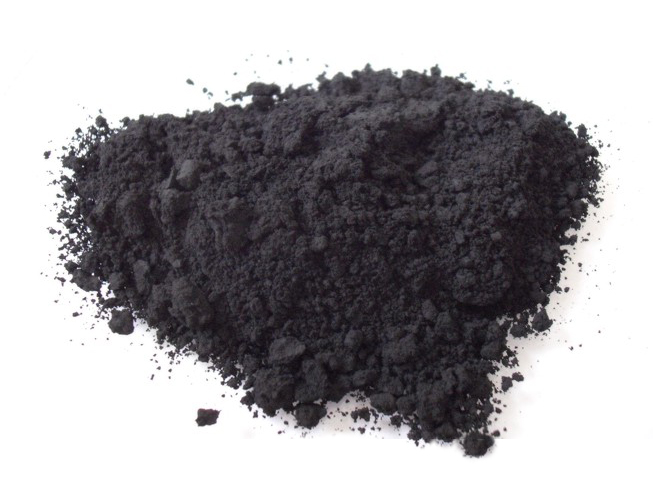
Carbon black (with subtypes acetylene black, channel black, furnace black, lamp black and thermal black) is a material produced by the incomplete combustion of coal tar, vegetable matter, or petroleum products, including fuel oil, fluid catalytic cracking tar, and ethylene cracking in a limited supply of air. Carbon black is a form of paracrystalline carbon that has a high surface-area-to-volume ratio, albeit lower than that of activated carbon. It is dissimilar to soot in its much higher surface-area-to-volume ratio and significantly lower (negligible and non-bioavailable) polycyclic aromatic hydrocarbon (PAH) content.

Carbon black is used as a colorant and reinforcing filler in tires and other rubber products and as a pigment and wear protection additive in plastics, paints, and ink pigment.[2] It is used in the EU as a food colorant when produced from vegetable matter (E153).

The current International Agency for Research on Cancer (IARC) evaluation is that, "Carbon black is possibly carcinogenic to humans (Group 2B)".[3] Short-term exposure to high concentrations of carbon black dust may produce discomfort to the upper respiratory tract through mechanical irritation.

Common uses

[edit]

The most common use (70%) of carbon black is as a reinforcing phase in automobile tires. Carbon black also helps conduct heat away from the tread and belt area of the tire, reducing thermal damage and increasing tire life. Its low cost makes it a common addition to cathodes and anodes and is considered a safe replacement to lithium metal in lithium-ion batteries.[4] About 20% of world production goes into belts, hoses, and other non-tire rubber goods. The remaining 10% use of carbon black comes from pigment in inks, coatings, and plastics, as well as being used as a conductive additive in lithium-ion batteries.[5]

Carbon black is added to polypropylene because it absorbs ultraviolet radiation, which otherwise causes the material to degrade. Carbon black particles are also employed in some radar absorbent materials, in photocopier and laser printer toner, and in other inks and paints. The high tinting strength and stability of carbon black has also provided use in coloring of resins and films.[6] Carbon black has been used in various applications for electronics. A good conductor of electricity, carbon black is used as a filler mixed in plastics, elastomer, films, adhesives, and paints.[6] It is used as an antistatic additive agent in automobile fuel caps and pipes.

Carbon black from vegetable origin is used as a food coloring, known in Europe as additive E153. It is approved for use as additive 153 (Carbon blacks or Vegetable carbon) in Australia and New Zealand[7] but has been banned in the US.[8] The color pigment carbon black has been widely used for many years in food and beverage packaging. It is used in multi-layer UHT milk bottles in the US, parts of Europe and Asia, and South Africa, and in items like microwavable meal trays and meat trays in New Zealand.

The Canadian Government's extensive review of carbon black in 2011 concluded that carbon black could continue to be used in products – including food packaging for consumers – in Canada. This was because "in most consumer products carbon black is bound in a matrix and unavailable for exposure, for example as a pigment in plastics and rubbers" and "it is proposed that carbon black is not entering the environment in a quantity or concentrations or under conditions that constitute or may constitute a danger in Canada to human life or health."[9]

Within Australasia, the color pigment carbon black in packaging must comply with the requirements of either the EU or US packaging regulations. If any colorant is used, it must meet European partial agreement AP(89)1.[10]

Total production was around 8,100,000 metric tons (8,900,000 short tons) in 2006.[11] Global consumption of carbon black, estimated at 13.2 million metric tons, valued at US$13.7 billion, in 2015, is expected to reach 13.9 million metric tons, valued at US$14.4 billion in 2016.

While distinct from soot and similar particulates, carbon black can be used as a model compound for diesel soot to better understand how diesel soot behaves under various reaction conditions. Carbon black and diesel soot have some similar properties such as particle sizes, densities, and copolymer adsorption abilities that contribute to them having similar behaviours under various reactions such as oxidation experiments.[12][13][better source needed]

Global consumption is forecast to maintain a CAGR (compound annual growth rate) of 5.6% between 2016 and 2022, reaching 19.2 million metric tons, valued at US$20.4 billion, by 2022.[14]

Reinforcing carbon blacks

[edit]

The highest volume use of carbon black is as a reinforcing filler in rubber products, especially tires. While a pure gum vulcanization of styrene-butadiene has a tensile strength of no more than 2 MPa and negligible abrasion resistance, compounding it with 50% carbon black by weight improves its tensile strength and wear resistance as shown in the table below. It is used often in the aerospace industry in elastomers for aircraft vibration control components such as engine mounts.

Certain types of carbon black used in tires, plastics and paints
Name Abbrev. ASTM
desig.
Particle
Size
nm
Tensile
strength
MPa
Relative
laboratory
abrasion
Relative
roadwear
abrasion
Super Abrasion Furnace SAF N110 20–25 25.2 1.35 1.25
Intermediate SAF ISAF N220 24–33 23.1 1.25 1.15
High Abrasion Furnace HAF N330 28–36 22.4 1.00 1.00
Easy Processing Channel EPC N300 30–35 21.7 0.80 0.90
Fast Extruding Furnace FEF N550 39–55 18.2 0.64 0.72
High Modulus Furnace HMF N660 49–73 16.1 0.56 0.66
Semi-Reinforcing Furnace SRF N770 70–96 14.7 0.48 0.60
Fine Thermal FT N880 180–200 12.6 0.22
Medium Thermal MT N990 250–350 9.8 0.18

Practically all rubber products where tensile and abrasion wear properties are important use carbon black, so they are black in color. Where physical properties are important but colors other than black are desired, such as white tennis shoes, precipitated or fumed silica has been substituted for carbon black. Silica-based fillers are also gaining market share in automotive tires because they provide better trade-off for fuel efficiency and wet handling due to a lower rolling loss. Traditionally silica fillers had worse abrasion wear properties, but the technology has gradually improved to a point where they can match carbon black abrasion performance.

Pigment

[edit]

Carbon black (Color Index International, PBK-7) is the name of a common black pigment, traditionally produced from charring organic materials such as wood or bone. It appears black because it reflects very little light in the visible part of the spectrum, with an albedo near zero. The actual albedo varies depending on the source material and method of production. It is known by a variety of names, each of which reflects a traditional method for producing carbon black:

  • Ivory black was traditionally produced by charring ivory or bones (see bone char).
  • Vine black was traditionally produced by charring desiccated grape vines and stems.
  • Lamp black was traditionally produced by collecting soot from oil lamps.

All of these types of carbon black were used extensively as paint pigments since prehistoric times.[15] Rembrandt, Vermeer, Van Dyck, and more recently, Cézanne, Picasso and Manet[16] employed carbon black pigments in their paintings. A typical example is Manet's "Music in the Tuileries",[17] where the black dresses and the men's hats are painted in ivory black.[18]

Newer methods of producing carbon black have largely superseded these traditional sources.[citation needed] For artisanal purposes, carbon black produced by any means remains common.[6]

Surface and surface chemistry

[edit]

All carbon blacks have chemisorbed oxygen complexes (i.e., carboxylic, quinonic, lactonic, phenolic groups and others) on their surfaces to varying degrees depending on the conditions of manufacture.[19] These surface oxygen groups are collectively referred to as volatile content. It is also known to be a non-conductive material due to its volatile content.

The coatings and inks industries prefer grades of carbon black that are acid-oxidized. Acid is sprayed in high-temperature dryers during the manufacturing process to change the inherent surface chemistry of the black. The amount of chemically-bonded oxygen on the surface area of the black is increased to enhance performance characteristics.

Use in lithium-ion batteries

[edit]
The generic structure of carbon black

Carbon black is a common conductive additive for lithium-ion batteries as the particles have small sizes and a large specific surface areas (SSA) which allow for the additive to be well distributed throughout the cathode or anode in addition to being cheap and long-lasting.[5][20] Unlike graphite, which is one of the other common materials used in chargeable batteries, carbon black consists of crystal lattices that are further apart and promotes Li+ intercalation because it allows more pathways for lithium storage.[20]

Carbon black has a low density that allows for a large volume of it to be dispersed so that its conductive effects are applied evenly throughout the battery.[21][22] Furthermore, its arrangement of randomly distributed graphite-like crystals improves battery stability because of the decrease in the potential barrier of lithium intercalation into graphite, which ultimately affects the performance of cathodes.[20]

While carbon black is lightweight and well dispersed throughout the battery and increases the conductive performance of batteries, it also contains oxygen containing hydrophilic functional groups that can cause side reactions to occur in the battery and lead to the decomposition of electrolyte. Graphitization (heating) of carbon black can thermally decompose the hydrophilic functional groups and thus increase the cycle life of the battery which maintains the conductive abilities of carbon black while mitigating the damage that can be caused to batteries by hydrophilic functional groups.

Half cells created with heavy graphitization, light graphitization, and no graphitization showed that the cell created with heavy graphitization had a stable cycle life of 320 cycles, the cell with light graphitization showed a stable cycle life of 200 cycles, and the cell with no graphitization showed a stable cycle life of 160 cycles.[5]

Safety

[edit]

Carcinogenicity

[edit]

Carbon black is considered possibly carcinogenic to humans and classified as a Group 2B carcinogen because there is sufficient evidence in experimental animals with inadequate evidence in human epidemiological studies.[3] The evidence of carcinogenicity in animal studies comes from two chronic inhalation studies and two intratracheal instillation studies in rats, which showed significantly elevated rates of lung cancer in exposed animals.[3] An inhalation study on mice did not show significantly elevated rates of lung cancer in exposed animals.[3] Epidemiologic data comes from three cohort studies of carbon black production workers. Two studies, from the United Kingdom and Germany, with over 1,000 workers in each study group showed elevated mortality from lung cancer.[3] A third study of over 5,000 carbon black workers in the United States did not show elevated mortality.[3] Newer findings of increased lung cancer mortality in an update from the UK study suggest that carbon black could be a late-stage carcinogen.[23][24] However, a more recent and larger study from Germany did not confirm this hypothesis.[25]

Occupational safety

[edit]

There are strict guidelines available and in place to ensure employees who manufacture carbon black are not at risk of inhaling unsafe doses of carbon black in its raw form.[26] Respiratory personal protective equipment is recommended to properly protect workers from inhalation of carbon black. The recommended type of respiratory protection varies depending on the concentration of carbon black used.[27]

People can be exposed to carbon black in the workplace by inhalation and contact with the skin or eyes. The Occupational Safety and Health Administration (OSHA) has set the legal limit (Permissible exposure limit) for carbon black exposure in the workplace at 3.5 mg/m3 over an 8-hour workday. The National Institute for Occupational Safety and Health (NIOSH) has set a Recommended exposure limit (REL) of 3.5 mg/m3 over an 8-hour workday. At levels of 1750 mg/m3, carbon black is immediately dangerous to life and health.[28]

See also

[edit]

References

[edit]

Further reading

[edit]
[edit]
Revisions and contributorsEdit on WikipediaRead on Wikipedia
from Grokipedia
Carbon black, a form of elemental carbon, has been produced since antiquity through the incomplete of organic materials as lampblack, with industrial-scale production beginning in the late via the channel process. It is a finely divided, amorphous form of nearly pure elemental carbon, produced through the partial or of hydrocarbons such as , , or residues, resulting in a black powder or pelletized material with nanoscale primary particles typically ranging from 10 to 100 nanometers in diameter. It serves primarily as a reinforcing agent in rubber, enhancing tensile strength, abrasion resistance, and , with over 90% of global production used in tires and other elastomers, while the remaining portion functions as a high-performance black pigment in inks, paints, coatings, plastics, and even . The material's properties, including surface area (often 20 to 150 m²/g for rubber grades, measured via adsorption), aggregate structure, and purity (greater than 97% carbon), are precisely controlled during to suit diverse applications, with higher surface areas providing greater reinforcement but potentially increasing in processing. Carbon black is non-toxic in its pure form but may contain trace polycyclic aromatic hydrocarbons from production, necessitating careful handling in industrial settings. Global production was approximately 14 million metric tons in 2024, dominated by the furnace black process, which involves injecting feedstock into a preheated reactor with controlled oxygen to achieve incomplete at 1,320–1,540°C, followed by rapid and collection via cyclones or filters; other methods like thermal cracking account for less than 5% of output. Grades are classified by standards such as ASTM, with series like –N900 for rubber (e.g., N330 for general-purpose treads) differentiated by , structure, and tinting strength to optimize performance in end-use products.

Introduction

Definition and Basic Properties

Carbon black is a form of produced by the incomplete or of , resulting in nearly pure elemental carbon arranged in colloidal particles. It is defined as an engineered product, primarily composed of carbon (>97% by weight), formed through the controlled reaction of a hydrocarbon vapor with oxygen, and distinguished from other carbon forms like by its consistent particle morphology and purity. This material appears as a or pelletized form, with applications spanning in rubber products, pigmentation in inks and coatings, and conductive additives in plastics. The basic structure of carbon black consists of primary particles, typically spherical and ranging from 10 to 500 nm in diameter, which aggregate into chain-like or branched clusters measuring 100 nm to several micrometers. These aggregates exhibit a high , often between 5 and 1000 m²/g, which contributes to its reinforcing and adsorptive capabilities. The particles possess a turbostratic -like layered structure, less ordered than crystalline , with surface functional groups such as carboxyl and phenolic moieties that influence dispersibility and chemical reactivity. Chemically, carbon black is inert under normal conditions but can be oxidized at high temperatures, releasing , and its surface chemistry allows for modifications to enhance compatibility with polymers or improve electrical conductivity, which ranges from insulating to semi-conductive depending on the grade. Its typically falls between 1.7 and 1.9 g/cm³, and it has low volatility, making it stable for industrial processing. These properties position carbon black as a versatile nanomaterial, with global production exceeding 15 million metric tons annually as of 2024, underscoring its industrial significance.

Historical Development

Carbon black has been utilized since ancient times, with evidence of its use as a derived from in early civilizations. In and , collected from oil lamps or incomplete of organic materials was employed for writing on and , as well as for blackening artwork and textiles. These early applications relied on simple collection methods, such as scraping from lamp wicks or , highlighting carbon black's role as one of the oldest known s. The transition to industrial production began in the late with the invention of the channel process around 1892, which involved burning flames against cooled iron channels to deposit fine carbon particles. This method allowed for more consistent production of high-quality carbon black, initially used in inks and paints, and marked a shift from artisanal to mechanized . By the early , the growing demand from the emerging automobile and industries drove further innovation, as carbon black was discovered to significantly enhance rubber's strength and durability when incorporated as a filler. A major advancement came in 1922 with the introduction of the gas furnace process, which improved efficiency by decomposing natural gas in a controlled furnace environment, producing larger quantities of carbon black suitable for rubber reinforcement. This was followed by the oil furnace process in 1943, pioneered by at its plant, which utilized heavy oil feedstocks to achieve higher yields and versatility, rapidly supplanting the channel process due to its scalability and lower costs. In the United States, the industry expanded rapidly in starting in 1923, when the first plant was built to process residue natural gas from oil fields, transforming waste into a valuable product and fueling economic growth in the region. By the mid-20th century, the furnace processes dominated global production, with annual output reaching millions of tons to support the booming and rubber sectors, while also expanding into plastics, inks, and batteries. These developments not only industrialized carbon black but also established it as a material in modern manufacturing.

Production

Industrial Methods

Carbon black is primarily produced through thermal processes involving the incomplete or of hydrocarbons, with the furnace black process dominating global output at over 95% of production. This method utilizes heavy aromatic oils derived from refining as feedstock, which are atomized and injected into a refractory-lined reactor furnace preheated to 1200–1900°C with a controlled supply of air or gases. The generates intense heat, promoting rapid and of carbon particles that aggregate into chain-like structures; the reaction is quenched with spray to halt further growth, followed by separation of the fluffy black powder via cyclones, bag filters, and pelletization for handling. parameters such as furnace , feedstock flow rate, and (typically 0.1–0.5 seconds) precisely control (10–100 nm) and structure, yielding versatile grades for rubber reinforcement and pigments. The thermal black process accounts for about 2–3% of production and employs (mainly ) or heavy oils as feedstock in an oxygen-free environment to avoid . In this cyclic operation, pairs of furnaces alternate: one decomposes the at 1300–1500°C over 2–3 seconds, producing carbon black and hydrogen-rich off-gas, while the other uses the off-gas to reheat walls for the next cycle. The resulting product features larger primary particles (180–300 nm) and lower surface area (5–15 m²/g), lending it low structure and high purity, ideal for applications requiring minimal reinforcement like plastics and inks. Yields are around 40–50% carbon black by weight from the feedstock. Specialty methods include the acetylene black process, which thermally decomposes gas (C₂H₂) at 800–1000°C in a controlled furnace, yielding a highly branched, conductive carbon black with particle sizes of 30–70 nm and surface areas up to 70 m²/g, primarily for battery electrodes and electrical components. This process, representing less than 1% of output, achieves high purity due to the clean feedstock but is energy-intensive. Historically significant but now marginal or obsolete processes encompass the channel (impingement) method, where flames at 1200–1400°C deposit ultrafine particles (10–30 nm, surface area 200–300 m²/g) onto cool iron channels, offering high dispersibility for inks but low yield (2–5%) and high energy use, leading to its decline since the mid-20th century. The lampblack process, one of the oldest, involves burning aromatic oils in open pans or lamps, with collecting on enclosed cool surfaces; it produces irregular aggregates (50–100 nm) for specialty pigments but is inefficient and environmentally challenging, limited to niche artisanal or small-scale uses.

Feedstocks and Sustainability

Carbon black production primarily relies on hydrocarbon feedstocks derived from fossil sources. The most common method, the furnace black process, utilizes heavy aromatic oils obtained from petroleum refining, such as clarified oil or decant oil, which are injected into a high-temperature where partial and occur to form carbon particles. In the , natural gas—predominantly —or heavy aromatic oils serve as feedstocks, undergoing in the absence of oxygen at temperatures around 1400–1600°C to yield carbon black and . These feedstocks provide the necessary carbon content, with aromatic structures favoring the formation of structured carbon aggregates essential for industrial applications. The reliance on fossil-derived feedstocks poses significant challenges, including high from upstream extraction and refining, as well as energy-intensive production that contributes with the energy-intensive production contributing an estimated 2–5 kg CO2 per kg of carbon black, or 30–80 million metric tons annually from global output exceeding 15 million tons. Volatile oil prices and geopolitical supply risks further exacerbate economic vulnerabilities, while environmental regulations increasingly target the of non-renewable materials. Traditional processes also generate byproducts like tars and emissions of volatile organic compounds, necessitating advanced emission controls to mitigate air and . To address these issues, sustainable alternatives focus on renewable and recycled feedstocks. Recovered carbon black (rCB) from end-of-life tires via offers a solution; tires, composed of up to 30% carbon black by weight, are thermally decomposed in oxygen-free conditions at 400–600°C, yielding rCB that can replace virgin material in rubber with comparable reinforcing properties after purification steps like demineralization and . This approach diverts millions of tires from landfills annually—over 1 billion globally—and reduces dependency, potentially lowering the by 80–90% compared to conventional production. Bio-based feedstocks, such as pyrolysis oils from agricultural residues like or oil palm , provide another pathway; these renewable oils are processed in modified furnace reactors to produce bio-carbon black with similar morphology, supporting decarbonization in tire and plastics industries while utilizing domestic streams to enhance . Challenges in scaling these alternatives include optimizing yield and purity to match fossil-based grades, as often has lower aromatic content, but ongoing advancements in reactor design and are improving viability. In May 2025, the International Carbon Black Association (ICBA) released the first industry-average Product (PCF) for furnace carbon black, representing 95% of member production volumes, to promote transparency and decarbonization strategies.

Classification and Types

Based on Production Process

Carbon black is classified into several types based on the production process, which influences its particle size, structure, purity, and subsequent applications. The primary categories include furnace black, , channel black, lampblack, and . These methods differ fundamentally in their use of , , or conditions, leading to variations in yield, morphology, and surface properties. Furnace and thermal processes dominate modern production, accounting for nearly all global output, while channel, lampblack, and acetylene methods are either obsolete or specialized. Furnace black, the most prevalent type, is produced through the partial of heavy aromatic oils or hydrocarbons in a refractory-lined furnace. Feedstock oil is injected into a stream of hot gases (from and air) at temperatures of 1320–1540°C, where incomplete oxidation forms fine carbon particles that are quenched and collected. This continuous process yields over 90% of global carbon black, producing a wide range of grades with particle sizes from 10–500 nm and high surface areas (up to 1000 m²/g), making it suitable for reinforcement in tires and rubber products. Thermal black is manufactured via the (pyrolysis) of or heavy hydrocarbons in the absence of air or oxygen, typically in a cyclical operation using two alternating furnaces heated to 1300–1700°C. (primarily ) decomposes into carbon and , with the carbon particles cooled and collected after each cycle; yields are lower (around 20–50%) compared to furnace methods. This produces coarser particles (150–500 nm) with low structure and surface area (5–15 m²/g), ideal for non-reinforcing applications like plastics and inks where minimal conductivity is desired. It accounts for approximately 5% of production. Channel black (also known as gas black) involves the impingement of flames onto cool iron channels or plates, where carbon deposits as and is periodically scraped off. This discontinuous process operates at lower temperatures (around 1200–1400°C) and uses methane-rich gas, resulting in very fine particles (10–30 nm) with high surface area (200–300 m²/g) but low purity due to . Once common for inks and paints, it now represents less than 1% of production and has largely been phased out due to inefficiency and environmental concerns. Lampblack, the oldest method, entails burning liquid hydrocarbons (such as oils or ) in open lamps or saucers, with the resulting directed onto cool collection surfaces like plates to deposit fine . Performed at moderate temperatures (500–1000°C), this labor-intensive process yields impure carbon with particle sizes of 50–100 nm and moderate surface area (20–50 m²/g), often containing polycyclic aromatic hydrocarbons. Historically used for pigments, it is now obsolete for industrial-scale production due to low yields (10–20%) and safety issues. Acetylene black is generated by the controlled of gas in closed, oxygen-free reactors at temperatures above 800°C, often under to control particle formation. The (C₂H₂ → 2C + H₂) produces high-purity carbon (over 99%) with unique chain-like structures, particle sizes of 30–100 nm, and high crystallinity, offering excellent electrical conductivity (resistivity ~0.01–0.1 Ω·cm). This specialized , comprising less than 1% of output, is tailored for demanding uses like battery electrodes and conductive polymers. Recovered carbon black is produced by recovering carbon from the of end-of-life tires or other waste rubber, followed by or purification processes to achieve properties similar to virgin carbon black. This emerging method, gaining traction for , yields material with particle sizes around 20–100 nm and variable surface areas (50–200 m²/g), suitable for reinforcing applications. As of 2025, it represents a small but growing share of production, focused on initiatives.

Functional Categories

Carbon black is functionally categorized based on its primary applications and the specific performance attributes it imparts, such as , coloration, or electrical conductivity. These categories are determined by factors like , surface area, structure, and surface chemistry, which influence how the material interacts with host matrices like rubber, plastics, or coatings. The main functional categories include reinforcing, pigment, and conductive types, with specialty variants tailored for niche uses. Reinforcing carbon blacks are predominantly used in rubber to enhance mechanical properties, including tensile strength, tear resistance, and abrasion resistance. These grades, often characterized by high surface area (typically 50–200 m²/g) and structured aggregates, form strong polymer-filler interactions that improve durability in high-wear applications like treads and conveyor belts. For instance, furnace blacks such as N220 and N330 are common reinforcing agents, where smaller particle sizes correlate with greater potential due to increased interfacial bonding. This category accounts for the majority of carbon black production, with over 90% directed toward rubber globally. Pigment carbon blacks serve as colorants and UV stabilizers in inks, paints, coatings, and plastics, providing deep black hues, opacity, and protection against . These grades feature fine particle sizes (10–50 nm) and high to achieve high jetness and tinting strength, enabling applications from inks to automotive finishes. For example, channel blacks or specialized furnace variants like Black Pearls are employed for their dispersibility and color consistency, where surface oxidation levels affect compatibility with resins. In plastics, they not only impart color but also enhance weather resistance by absorbing UV , extending product lifespan in outdoor exposures. Conductive carbon blacks are engineered for electrical conductivity in polymers, batteries, and antistatic materials, typically featuring high structure and low resistivity (around 0.01–1 ohm-cm at 20–40% loading). These grades, such as or specialized furnace blacks like Ketjenblack, form percolating networks within to enable (ESD) protection, (EMI) shielding, and improved battery performance. Applications include IC packaging trays, fuel system components, and cathodes, where conductivity thresholds (e.g., 10⁶–10⁹ ohms for ESD) are critical for safety and functionality. The efficacy depends on aggregate morphology, with branched structures promoting lower thresholds for efficient charge transport. Specialty carbon blacks overlap with the above but are customized for unique demands, such as high-purity grades for toners or low-volatiles variants for electronics, often involving post-treatments to modify surface functional groups for better compatibility. These are produced in smaller volumes and prioritize attributes like purity (>99.5% carbon) or specific volatility to meet stringent industry standards in areas like solar panels or medical devices.

Physical and Chemical Properties

Particle Morphology and Structure

Carbon black particles exhibit a hierarchical morphology consisting of primary particles, aggregates, and sometimes agglomerates. The primary particles are nearly spherical, aciniform units with diameters typically ranging from 10 to 100 nm in furnace-produced carbon blacks, though thermal blacks can have larger diameters up to 150–500 nm. These particles form during the incomplete combustion or thermal decomposition of hydrocarbons, where carbon nuclei grow and fuse irreversibly at high temperatures. The size of primary particles significantly influences properties such as surface area and reinforcement potential, with smaller particles providing higher surface areas (often 20–200 m²/g) for better interactions in composites. Aggregates represent the stable structural units of carbon black, formed by the fusion of multiple primary particles into chain-like, branched, or clustered configurations. These aggregates typically measure 50 nm to several micrometers in overall dimension, with the degree of branching determining the "" level—low-structure grades form more compact, spheroidal aggregates, while high-structure grades exhibit elongated, dendritic shapes that enhance conductivity and . The fusion occurs via strong covalent bonds during formation, making aggregates resistant to complete breakdown under mechanical shear, though partial deagglomeration is possible. Morphological classification often uses (TEM) per ASTM D3849, categorizing aggregates as spheroidal, ellipsoidal, linear, or branched based on aspect ratios and irregularity. At the atomic level, carbon black possesses a turbostratic internal structure, comprising stacked, graphene-like carbon layers (0.34–0.35 nm spacing) that are parallel within each layer but rotationally disordered between layers, distinguishing it from the ordered, three-dimensional crystallinity of . This partially graphitic arrangement arises from the rapid quenching in production processes, resulting in short-range order with basic structural units of 1–5 nm wide aromatic lamellae. The turbostratic nature contributes to the material's unique balance of rigidity and flexibility, affecting optical, electrical, and adsorptive properties. High-resolution TEM studies reveal variations in layer and within primary particles, with more ordered structures in high-temperature furnace blacks compared to amorphous variants.

Surface Chemistry

The surface chemistry of carbon black is dominated by oxygen-containing functional groups that arise primarily from the incomplete or processes during production, as well as from intentional post-oxidation treatments. These groups, including carboxylic acids (-COOH), phenolic hydroxyls (-OH), quinones (C=O), lactones, and anhydrides, are bonded to the edges of the graphitic carbon layers on the particle surface, imparting polarity and reactivity to an otherwise hydrophobic basal plane. The concentration of these groups varies with production method; for instance, furnace blacks typically exhibit higher oxygen content (up to 1-2 wt%) compared to blacks, leading to more acidic surfaces. Characterization of these functional groups employs techniques such as Boehm titration, which quantifies acidic (carboxyl, , phenol) and basic (, chromene) sites through selective neutralization with bases like NaHCO₃, Na₂CO₃, and NaOH, revealing total acidic site densities often ranging from 0.1 to 1 mmol/g for commercial grades. Fourier-transform infrared (FTIR) identifies specific vibrations, such as O-H stretching at 3400-3600 cm⁻¹ for hydroxyls and C=O at 1700-1750 cm⁻¹ for carbonyls, while (XPS) measures surface oxygen atomic percentages (typically 2-10%) and binding energies to distinguish group types. The surface of carbon black dispersions in correlates strongly with oxygen content, with oxidized samples showing acidic values ( 2-5) due to carboxyl dominance, whereas low-oxygen variants are near-neutral or basic. These functional groups profoundly influence carbon black's interactions in applications; for example, they enhance wettability and dispersion in polar solvents or polymers by increasing the polar component of surface free energy (up to 10-20 mJ/m²), as demonstrated by inverse gas chromatography studies showing linear correlation between surface oxygen and polar interactions. In rubber reinforcement, acidic groups promote bound rubber formation through chemical bonding with elastomer chains, improving filler-polymer adhesion, though excessive oxidation can reduce electrical conductivity by disrupting graphitic domains. Surface modification techniques, such as plasma oxidation or chemical grafting, allow tailoring of these groups to optimize properties like hydrophilicity for fuel cell catalysts, where -SO₃H or -OH introduction boosts proton conductivity.

Applications

Reinforcement in Polymers

Carbon black serves as a primary reinforcing agent in elastomeric polymers, particularly in rubber compounds, where it significantly enhances mechanical properties such as tensile strength, tear resistance, and abrasion resistance. This has been extensively studied and applied for over 80 years, making carbon black indispensable in industries reliant on durable . In , for instance, carbon black constitutes up to 30-50% by weight in tread compounds, transforming soft, extensible rubber into a capable of withstanding high stress and . The effectiveness stems from its nanoscale (typically 10-100 nm) and high surface area (50-300 m²/g), which allow for strong interfacial interactions with chains. The mechanism primarily involves physical and chemical between carbon black surfaces and molecules, leading to the formation of a bound rubber layer that restricts chain mobility and increases stiffness. Key factors include the filler's surface chemistry—such as oxygen-containing functional groups that promote covalent or hydrogen —and its aggregate structure, which influences filler-filler networks responsible for the Payne effect, a nonlinear viscoelastic response observed in filled rubbers under strain. For example, furnace blacks with higher structure (branched aggregates) provide superior in by improving modulus at low s while maintaining elongation at break, as demonstrated in studies of formulations. Heat treatment of carbon black can reduce these interactions by removing surface oxides, drastically lowering efficiency and highlighting the role of polarity in polymer-filler . Dispersion quality during mixing is critical, as agglomeration leads to stress concentrations and reduced performance; optimal dispersion, achieved through high-shear processing, maximizes load transfer and fatigue resistance in applications like conveyor belts and hoses. In rubber (SBR), common in passenger tires, carbon black grades like N330 (high abrasion furnace black) increase Young's modulus by factors of 10-20 compared to unfilled rubber, while also improving dynamic properties under adiabatic conditions simulating road use. Emerging research explores hybrid systems, such as carbon black combined with epoxidized , to further tune properties for eco-friendly, high-performance composites with enhanced cut and chip resistance. Overall, these attributes position carbon black as the benchmark reinforcing filler, though sustainable alternatives like recovered carbon black are gaining traction for partial substitution without compromising key metrics. In flame-retarded high-density polyethylene (HDPE) systems employing decabromodiphenyl ether (decaBDE) and antimony trioxide (Sb₂O₃), carbon black at 2-3% loading functions primarily as a pigment. It also promotes condensed-phase char formation by acting as a carbon nucleator, forming a protective carbon layer that isolates the substrate. Furthermore, its high surface area enables adsorption of flame retardant components or decomposition products, reducing their gas-phase availability and resulting in antagonism with the bromo-antimony system.

Pigments and Coatings

Carbon black serves as a primary pigment in various formulations due to its intense jet- color and high tinting strength, which allow for efficient coloration with minimal loading levels. Unlike organic pigments, carbon black offers superior , enabling it to effectively mask underlying substrates in paints and . Its chemical inertness provides excellent resistance to solvents, acids, alkalis, and thermal degradation, ensuring long-term color stability in demanding environments. These properties make it indispensable for applications requiring durable, high-performance pigmentation. Beyond , carbon black is extensively used in inks for high-quality , as a colorant and UV stabilizer in plastics, and in for safe, intense pigmentation. In liquid paints and industrial coatings, carbon black enhances aesthetic qualities such as and depth of color while functioning as a UV absorber to protect the from . For instance, furnace black grades with controlled particle sizes (typically 10-100 nm) are selected for optimal dispersion in systems, minimizing agglomeration and achieving uniform black tones. This dispersion is critical in automotive coatings, where carbon black delivers deep jet-black finishes for exteriors and interiors, contributing to visual appeal and weather resistance. Powder coatings represent another key application, where carbon black not only imparts colorimetric but also improves electrical conductivity and UV stabilization depending on the grade used. High-structure variants enhance mechanical attributes like hardness and scratch resistance in the final cured film, extending in architectural and appliance coatings. Overall, carbon black's versatility supports its use across ~10-15% of global demand in coatings, balancing cost-effectiveness with performance in diverse formulations.

Conductive Additives in Batteries

Carbon black serves as a critical conductive additive in electrodes, enhancing electronic conductivity within the composite structure comprising active materials, binders, and electrolytes. Its high electrical conductivity, typically on the order of 10^{-2} to 10 S/cm depending on the grade, enables efficient electron transport to otherwise poorly conducting active materials like (LiFePO₄) or . Due to its low (around 1.8–2.2 g/cm³), only 1–5 wt% of carbon black is generally sufficient to form a percolating conductive network, minimizing the reduction in overall electrode . The additive influences not only electrical performance but also the formation of the / interface, where it participates in interphase (SEI) development during . In low-potential regimes (e.g., 3.0–0 V vs. Li/Li⁺), carbon black promotes uniform SEI growth by providing conductive pathways, reducing local overpotentials and parasitic side reactions that could lead to capacity fade. Studies on silicon-rich electrodes demonstrate that varying carbon black content affects , (typically 20–40%), and stability, with optimal loadings yielding up to 20–30% higher discharge capacities at high rates (e.g., 5C). Furthermore, in dry processing—a solvent-free approach—carbon black acts as a aid, improving calendering uniformity and mechanical integrity by reinforcing the binder network, which can enhance cohesion and reduce cracking during volume changes in active materials. Beyond lithium-ion systems, carbon black extends to emerging battery chemistries, such as potassium-metal batteries, where its surface area (ranging from 50–1400 m²/g across grades) dictates storage mechanisms and SEI characteristics. For instance, high-surface-area variants like Ketjenblack facilitate better potassium- intercalation, achieving reversible capacities of ~200–300 mAh/g, while also mitigating formation through uniform current distribution. Challenges include potential agglomeration at higher loadings, which can increase impedance, and the need for tailored surface chemistry to minimize unwanted . Overall, advancements in carbon black formulations, such as doping with metals like tin, aim to make it an active contributor to capacity rather than solely a passive conductor, potentially boosting by 10–15%.

Other Industrial Uses

Carbon black serves as a recarburizer in steel foundries and , where it is added to molten iron or to increase carbon content and improve mechanical properties. This application leverages its high carbon purity and low ash content, allowing for efficient carbon addition without introducing impurities that could affect quality. Additionally, special grades of carbon black act as release agents in processes; when dispersed and coated on mold surfaces, they prevent adhesion and facilitate easier demolding of metal parts. In the construction of asphalt pavements, carbon black functions as a reinforcing additive to enhance binder , particularly in resisting rutting and under traffic loads. Studies have shown that incorporating carbon black into asphalt mixtures increases deformation resistance at high temperatures and improves crack resistance at low temperatures, with optimal additions around 5-20% by weight of asphalt leading to measurable gains in Marshall stability and reduced permanent strain. For instance, experimental pavements using carbon black additives have demonstrated long-term improvements, as evidenced by reduced strain rates during tests. Pyrolyzed carbon black derived from tires has also been evaluated as a sustainable modifier, further promoting by materials while maintaining or enhancing pavement integrity. Beyond asphalt, carbon black is incorporated into -based products and as a functional additive to optimize material properties and reduce environmental impact. Carbon black can be incorporated into -based products as a functional additive or for partial replacement of (up to 10% in studies using carbon black), contributing to improved workability, , and reduced emissions without significantly compromising strength. It also serves as a coloring agent to achieve uniform black hues in architectural , while its particulate nature contributes to improved workability and in mixes. Research on carbon-negative variants indicates potential for enhancing overall , though integration requires careful control to avoid adverse effects on setting time or .

Health and Safety

Toxicity and Carcinogenicity

Carbon black exhibits low , with oral and dermal LD50 values exceeding 10 g/kg in , indicating minimal systemic absorption through these routes. is the primary exposure route of concern, where respirable particles can cause to the , leading to symptoms such as coughing and reduced lung function in exposed workers. Chronic exposure to high concentrations may result in benign , characterized by dust accumulation in lung tissue without significant , distinguishing it from more toxic dusts like silica. Regarding carcinogenicity, the International Agency for Research on Cancer (IARC) classifies carbon black as possibly carcinogenic to humans (Group 2B), based on sufficient evidence of carcinogenicity in experimental animals but limited evidence in humans. In inhalation studies, carbon black induces lung tumors, particularly in rats, at high concentrations (e.g., 20-80 mg/m³) over 1-2 years, with tumor incidence correlating to particle surface area and overload of lung clearance mechanisms. These effects are attributed to the poorly soluble low-toxicity (PSLT) particle paradigm, where persistent particles trigger chronic , epithelial , and , promoting tumorigenesis without direct . No carcinogenic effects were observed in mice or under similar conditions, suggesting species-specific responses. Human epidemiological data provide inadequate evidence for carcinogenicity. Cohort studies of carbon black production workers, involving over 10,000 participants followed for decades, show no consistent elevation in mortality rates after adjusting for and co-exposures like polycyclic aromatic hydrocarbons. A of three major cohorts (, , ) reported a pooled standardized mortality ratio of 0.95 for (95% CI: 0.87-1.04), indicating no significant risk. Case-control studies similarly found no association between occupational carbon black exposure and , though some report minor increases attributable to factors. The U.S. Agency (EPA) assesses carbon black as having low carcinogenic potential, emphasizing that tumors are not predictive of human risk due to differences in particle clearance and . Mechanistically, carbon black's effects align with PSLT particles like , involving secondary from persistent inflammation rather than primary DNA damage; and tests are predominantly negative. Airborne, unbound respirable particles are listed under California's Proposition 65 as known to cause cancer, reflecting precautionary alignment with IARC's Group 2B classification. Overall, risks are mitigated by occupational exposure limits (e.g., 3.5 mg/m³ TWA by OSHA), which prevent overload effects observed in animal models.

Occupational Exposure

Workers in carbon black production and downstream industries, such as rubber and , inks, paints, and plastics , face primary occupational exposure through of fine particulate during handling, mixing, bagging, and processing operations. Dermal contact and eye exposure can also occur, particularly in environments with poor ventilation or inadequate (PPE). Exposure levels historically varied widely, with higher concentrations (up to several mg/m³) observed in direct production areas before modern controls, though current levels in regulated facilities are typically below 1 mg/m³ due to engineering measures like local exhaust ventilation and enclosed systems. Regulatory agencies have established exposure limits to mitigate risks. The U.S. (OSHA) sets a (PEL) of 3.5 mg/m³ as an 8-hour time-weighted average (TWA) for total carbon black dust, excluding polycyclic aromatic hydrocarbons (PAHs); when PAHs are present, carbon black is regarded as a potential occupational requiring additional precautions. The National Institute for Occupational Safety and Health (NIOSH) recommends a similar REL of 3.5 mg/m³ TWA for total dust but advises a stricter 0.1 mg/m³ REL for the cyclohexane-extractable PAH fraction in contaminated carbon black to address carcinogenic concerns. Monitoring methods, such as NIOSH Method 5000, involve gravimetric sampling to assess compliance. Acute effects from occupational exposure include irritation of the eyes, , and upper , manifesting as redness, , and temporary discomfort, particularly at concentrations exceeding 3.5 mg/m³. Chronic exposure is associated with respiratory symptoms such as persistent , production, wheezing, and dyspnea, along with modest declines in function (e.g., reduced forced expiratory volume) observed in cohort studies of carbon black workers. Benign carbon black , characterized by radiographic opacities without significant or impairment, has been reported in heavily exposed individuals but is rare under current controls. Regarding carcinogenicity, the International Agency for Research on Cancer (IARC) classifies carbon black as Group 2B (possibly carcinogenic to humans), based on sufficient evidence of lung tumors in animal inhalation studies but limited evidence from human . Cohort studies in carbon black manufacturing have shown inconsistent associations with , with some reporting standardized mortality ratios slightly above 1.0, potentially confounded by historical PAH co-exposures or ; recent analyses indicate no clear excess risk attributable solely to pure carbon black. No strong links to other cancers have been established in occupational settings.

Environmental Considerations

Carbon black production primarily occurs through the furnace black process, which involves the incomplete combustion of hydrocarbons, leading to significant air emissions including particulate matter, , volatile organic compounds, nitrogen oxides, sulfur compounds, and polycyclic aromatic hydrocarbons. These emissions contribute to and are regulated under the U.S. Agency's National Emission Standards for Hazardous Air Pollutants (NESHAP), which target hazardous air pollutants such as from carbon black facilities. Wastewater from the furnace process, generated during and purification, contains , , oil and grease, and pH-altering substances, prompting effluent limitations under EPA guidelines for direct dischargers to surface waters. In contrast, older channel and lamp black processes produce minimal due to their dry nature. Solid wastes, such as off-specification carbon black and process residues, are generally inert and non-leaching in landfills, posing low risk to due to the material's stability and high adsorptive surface area. The industry contributes to through , with global production of approximately 15 million metric tonnes annually emitting 29–79 million metric tonnes of CO2 equivalent, largely from feedstocks. Particulate emissions also include , a short-lived with a up to 1,500 times that of CO2 per unit mass over its 4–12 day atmospheric lifetime. To mitigate these impacts, regulations like EPA's reporting rule require carbon black manufacturers to track and report emissions. Sustainability efforts focus on reducing virgin production's environmental footprint through recovered carbon black (rCB) derived from end-of-life tires via , which cuts CO2 emissions to under 0.5 tonnes per tonne of rCB compared to 2–3 tonnes for conventional carbon black. Industry associations like the International Carbon Black Association promote standardized product calculations to enhance transparency and drive lower-emission processes. Innovations, such as using as feedstock, further support approaches in regions like and .

References

Add your contribution
Related Hubs
User Avatar
No comments yet.