
_edited.jpg/250px-Old_Town_Plaza_-_Logrono_-_La_Rioja_-_Spain_(14576256386)_edited.jpg)


_edited.jpg/2000px-Old_Town_Plaza_-_Logrono_-_La_Rioja_-_Spain_(14576256386)_edited.jpg)
Community hub
Recent from talks
Contribute something
Nothing was collected or created yet.
Logroño
View on Wikipedia | You can help expand this article with text translated from the corresponding article in Spanish. (September 2012) Click [show] for important translation instructions.
|
Logroño (UK: /lɒˈɡrɒnjoʊ/ ⓘ log-RON-yoh, US: /ləˈɡroʊnjoʊ, loʊˈ-/ lə-GROHN-yoh, loh-,[2][3][4] Spanish: [loˈɣɾoɲo] ⓘ) is the capital of the autonomous community of La Rioja, Spain. Located in the north of the Iberian Peninsula, primarily in the right (South) bank of the Ebro River, Logroño has historically been a place of passage, such as the Camino de Santiago. Its borders were disputed between the Iberian kingdoms of Castille, Navarre and Aragon during the Middle Ages.
Key Information


_edited.jpg)

.9.jpg)

.svg)


The population of the city in 2021 was 150,808 while the metropolitan area included nearly 200,000 inhabitants. The city is a centre of trade of Rioja wine, for which the area is noted, and manufacturing of wood, metal and textile products.
Etymology
[edit]Origin of the name
[edit]The origin of this toponym is, as for many other places, unknown. The name Lucronio was first used in a document from 965 where García Sánchez I of Pamplona donated the place so named to the Monastery of San Millán. In the Fuero of Logroño from 1095 it appeared under the name Logronio, except once when it was called illo Gronio. The most broadly accepted theses seem to be those which indicate it is a late latinization by prefixing the article "lo/illo" to the old toponym Gronio/Gronno,[5] a word of Celtic origin which means the ford or the pass.[citation needed] It is believed that this name was due to the frequent use of this place to cross the Ebro river.
Other historians have proposed alternative theories, such as a possible derivation from Lucus Brun or Lucus Beronius ("Sacred place in the Beronian forest"), but its etymology remains unknown.[6]
Titles
[edit]John II of Castile granted it the title of "City" on 7 February 1431 in Palencia and ratified it on 20 February in Valladolid,[7] thus it stopped being called "Village", despite there being no explicit justification of the reasons for that change. 20 July 1444 the same king added the titles of "Very noble", Spanish: Muy Noble, and "Very loyal", Spanish: Muy Leal, which up until today appear in the seal of the city. In this case, the reason was the loyalty of the habitants against the homonymous king John II of Aragon, because despite the «long war, and wounds and deaths, and robberies, and fires, and damages and oppressions», the city remained loyal to the service of the king of Castile.
On 5 July 1523, the king Francis I granted it the three fleurs-de-lis for the shield of the city for its resistance during the French siege in 1521.
It also received by Royal Decree the title of "Excellence" 6 December 1854 from Isabella II, as a reward for its behavior during the cholera epidemic which devastated the city.
Geography
[edit]Logroño is located in the northern region of La Rioja, on the river Ebro, 384 metres (1,260 feet) above sea level. The Camino de Santiago passes through the city. The geographical coordinates of the city are: 42° 27′ N, 2° 29′ W.
The city lies 152 km (94 mi) from Bilbao, 172 km (107 mi) from Zaragoza, 336 km (209 mi) from Madrid and 468 km (291 mi) from Barcelona.
History
[edit]Logroño was an old settlement, first of the Romans, under the name of Vareia,[8] a commercial port that was founded near an older city of the Berones.[9][circular reference] From the 10th century, possession of Logroño was disputed between the kings of Navarre and those of Castile; the region was finally annexed to Castile. The name is a combination of le and Groin, mashed together as Logroño over time. Alfonso VI of Castile granted Logroño in 1095 a charter of rights that served as a model for other Spanish cities. In 1609 and 1610 Logroño was the main seat of the Basque witch trials, part of the Spanish Inquisition.
Famous people from Logroño include Manuel Bretón de los Herreros, Fausto Elhúyar, Práxedes Mateo Sagasta, Rafael Azcona, Ramón Castroviejo, Pedro J. Ramírez, Navarrete "El Mudo".
Demographics
[edit]Population centres
[edit]- Logroño
- El Cortijo
- Varea
Politics
[edit]| Term | Mayor | Political party |
|---|---|---|
| 1979–1983 | Miguel Ángel Marín | UCD |
| 1983–1987 | Manuel Sainz Ochoa | PSOE |
| 1987–1991 | Manuel Sainz Ochoa | PSOE |
| 1991–1995 | Manuel Sainz Ochoa | PSOE |
| 1995–1999 | José Luis Bermejo | PP |
| 1999–2003 | Julio Revuelta | PP |
| 2003–2007 | Julio Revuelta | PP |
| 2007–2011 | Tomás Santos | PSOE |
| 2011–2015 | Cuca Gamarra | PP |
| 2015–2019 | Cuca Gamarra | PP |
| 2019–2023 | Pablo Hermoso de Mendoza | PSOE |
| 2023– | Conrado Escobar | PP |
Economy
[edit]Logroño is the shopping and financial capital of La Rioja. Its economy is heavily reliant on wine, the most popular of which is Rioja D.O. Logroño is twinned with Dunfermline, Darmstadt, Libourne, Dax, Rancagua, Ciudad de La Rioja, Brescia, El Hagounia. The airport Logroño-Agoncillo connects the city with Madrid.
Food
[edit]There are over 50 taperías (tapas restaurants) located within a four-block area near the town center. The traditional tapas restaurants often serve only one tapa [such as seta (mushroom), served as pincho – pintxo in Basque – meaning one serving, or media ración ("half portion"), a small plate of tapas, but offer the Rioja D.O.
Climate
[edit]The weather in Logroño – mostly due to its peculiar location, both in terms of distance to the Atlantic coast and in the situation along the course of the Ebro river, is characterized by values ranging from those typically found in temperate oceanic climates to the warmer and drier ones observed in southeastern mediterranean regions of the river's valley. However, the weather station has a cold semi-arid climate (Köppen: BSk) with subtropical influences. The average annual temperature is 13.9 °C (57 °F).[10][11] Although infrequent, unusually low temperatures during the winter can drop to −5 °C (23 °F) or even lower, while daily high averages may exceptionally exceed the mark of 38 °C (100 °F) in a particularly hot summer. The average annual precipitation is about 400 mm (15.75 in), regularly spread over the whole year: from 20–25 mm (0.79–0.98 in) in drier periods to the 45–50 mm (1.77–1.97 in) range in the rainiest.[11] The winds that affect the city are as follows: the northerly Cierzo, the southerly Ábrego, the easterly Solano, and the westerly Castellano. Intermediate winds are the northeasterly Navarrico, the northwesterly Regañón, the southwesterly Burgalés and the southeasterly Soriano.[citation needed]
| Climate data for Logroño (1991–2020 normals, extremes since 1948) | |||||||||||||
|---|---|---|---|---|---|---|---|---|---|---|---|---|---|
| Month | Jan | Feb | Mar | Apr | May | Jun | Jul | Aug | Sep | Oct | Nov | Dec | Year |
| Record high °C (°F) | 19.3 (66.7) |
23.1 (73.6) |
28.8 (83.8) |
31.2 (88.2) |
39.8 (103.6) |
42.2 (108.0) |
42.8 (109.0) |
40.8 (105.4) |
39.0 (102.2) |
31.4 (88.5) |
27.4 (81.3) |
21.4 (70.5) |
42.8 (109.0) |
| Mean daily maximum °C (°F) | 10.4 (50.7) |
12.2 (54.0) |
16.3 (61.3) |
18.6 (65.5) |
22.8 (73.0) |
27.5 (81.5) |
30.4 (86.7) |
30.5 (86.9) |
25.9 (78.6) |
20.5 (68.9) |
14.0 (57.2) |
10.4 (50.7) |
20.0 (68.0) |
| Daily mean °C (°F) | 6.4 (43.5) |
7.3 (45.1) |
10.5 (50.9) |
12.5 (54.5) |
16.3 (61.3) |
20.6 (69.1) |
23.1 (73.6) |
23.1 (73.6) |
19.4 (66.9) |
14.9 (58.8) |
9.7 (49.5) |
6.7 (44.1) |
14.2 (57.6) |
| Mean daily minimum °C (°F) | 2.3 (36.1) |
2.4 (36.3) |
4.6 (40.3) |
6.5 (43.7) |
9.9 (49.8) |
13.6 (56.5) |
15.7 (60.3) |
15.8 (60.4) |
12.8 (55.0) |
9.3 (48.7) |
5.4 (41.7) |
2.9 (37.2) |
8.5 (47.3) |
| Record low °C (°F) | −11.6 (11.1) |
−9.6 (14.7) |
−8.8 (16.2) |
−3.6 (25.5) |
0.6 (33.1) |
4.8 (40.6) |
7.2 (45.0) |
6.2 (43.2) |
3.0 (37.4) |
−1.2 (29.8) |
−8.2 (17.2) |
−11.6 (11.1) |
−11.6 (11.1) |
| Average precipitation mm (inches) | 36.8 (1.45) |
31.3 (1.23) |
37.3 (1.47) |
44.6 (1.76) |
45.8 (1.80) |
45.3 (1.78) |
32.1 (1.26) |
20.4 (0.80) |
31.0 (1.22) |
37.8 (1.49) |
48.3 (1.90) |
37.3 (1.47) |
448 (17.63) |
| Average precipitation days (≥ 1 mm) | 6.9 | 5.9 | 6.1 | 7.2 | 7.6 | 5.6 | 3.7 | 3.4 | 4.4 | 6.7 | 7.7 | 6.7 | 71.9 |
| Mean monthly sunshine hours | 109 | 137 | 198 | 209 | 240 | 281 | 321 | 298 | 232 | 172 | 112 | 97 | 2,406 |
| Source: Météo Climat[12] | |||||||||||||
| Climate data for Logroño (1981–2010 normals) | |||||||||||||
|---|---|---|---|---|---|---|---|---|---|---|---|---|---|
| Month | Jan | Feb | Mar | Apr | May | Jun | Jul | Aug | Sep | Oct | Nov | Dec | Year |
| Record high °C (°F) | 19.3 (66.7) |
23.0 (73.4) |
27.6 (81.7) |
31.2 (88.2) |
37.6 (99.7) |
42.2 (108.0) |
42.8 (109.0) |
40.6 (105.1) |
39.0 (102.2) |
31.4 (88.5) |
27.4 (81.3) |
21.4 (70.5) |
42.8 (109.0) |
| Mean daily maximum °C (°F) | 9.9 (49.8) |
12.0 (53.6) |
15.9 (60.6) |
17.8 (64.0) |
22.0 (71.6) |
26.9 (80.4) |
30.1 (86.2) |
29.8 (85.6) |
25.8 (78.4) |
20.1 (68.2) |
13.8 (56.8) |
10.2 (50.4) |
19.5 (67.1) |
| Daily mean °C (°F) | 5.9 (42.6) |
7.2 (45.0) |
10.2 (50.4) |
12.0 (53.6) |
15.9 (60.6) |
20.1 (68.2) |
22.8 (73.0) |
22.7 (72.9) |
19.3 (66.7) |
14.7 (58.5) |
9.5 (49.1) |
6.5 (43.7) |
13.9 (57.0) |
| Mean daily minimum °C (°F) | 2.0 (35.6) |
2.4 (36.3) |
4.6 (40.3) |
6.3 (43.3) |
9.7 (49.5) |
13.3 (55.9) |
15.6 (60.1) |
15.6 (60.1) |
12.9 (55.2) |
9.2 (48.6) |
5.3 (41.5) |
2.8 (37.0) |
8.3 (46.9) |
| Record low °C (°F) | −11.6 (11.1) |
−9.6 (14.7) |
−8.8 (16.2) |
−3.6 (25.5) |
0.6 (33.1) |
4.8 (40.6) |
7.2 (45.0) |
6.2 (43.2) |
3.0 (37.4) |
−1.2 (29.8) |
−8.2 (17.2) |
−11.6 (11.1) |
−11.6 (11.1) |
| Average precipitation mm (inches) | 28 (1.1) |
23 (0.9) |
26 (1.0) |
46 (1.8) |
47 (1.9) |
44 (1.7) |
30 (1.2) |
21 (0.8) |
26 (1.0) |
37 (1.5) |
40 (1.6) |
38 (1.5) |
405 (15.9) |
| Average precipitation days (≥ 1 mm) | 5.6 | 5.1 | 4.7 | 7.4 | 8.0 | 5.2 | 3.7 | 3.4 | 3.9 | 6.5 | 6.7 | 6.5 | 66.7 |
| Average snowy days | 1.5 | 1.4 | 0.6 | 0 | 0 | 0 | 0 | 0 | 0 | 0 | 0.2 | 0.9 | 4.6 |
| Average relative humidity (%) | 78 | 72 | 65 | 64 | 62 | 57 | 55 | 58 | 64 | 72 | 77 | 80 | 67 |
| Mean monthly sunshine hours | 105 | 133 | 189 | 198 | 225 | 270 | 312 | 285 | 220 | 164 | 113 | 93 | 2,305 |
| Source: AEMET[11][13] | |||||||||||||
Places of interest
[edit]
- Con-Catedral de Santa María de la Redonda
- Iglesia (Church) de San Bartolomé
- Iglesia de Santiago
- Iglesia de Palacio
- Museo de La Rioja
- Parlamento de La Rioja, an old factory of the tabacalera, the national tobacco company.
- Muralla del Revellín
- Fuente (Fountain) de los Riojanos Ilustres, in which royal figures with a connection to either Logroño or La Rioja are represented in bronze. Because the figures are placed looking towards the public and so large torrents of water pour down behind them, the fountain is commonly known as the one with "wet backs".

- Bridge of Mantible, in the El Cortijo district. Constructed during the Roman era and declared Bien de Interés Cultural in the Monument category on January 25, 1983.
- Theatre of Bretón de los Herreros
Recreation (plazas and parks)
[edit]- Paseo del Príncipe de Vergara (El Espolón): Located in the financial center of the capital and positioned in the center by the statue of General Espartero.
- Plaza del Ayuntamiento: Located on the Avenue of Peace, the modern Town Hall of Logroño, designed by architect Rafael Moneo, is in a large plaza where in years past it has seen numerous public acts, festivals, expositions, concerts, and in the last few years, during Christmas, a life-size reconstruction of the nativity scene.
- Parque del Carmen: Located near the bus station, this park has a variety of flora and fauna including several ducks and birds.[citation needed]

- Plaza del Mercado: Located somewhere near Calle Portales, one of the most famous avenues of the city, at the foot of the Round Cathedral. This is where the nightly festivals of Logroño occur, near Calle Mayor (Marqués de San Nicolas Street).
- Parque del Ebro: Located near the Ebro, an extensive park full of vegetation ideal for relaxing. Also has a bike path traversing through the park.
- Parque de la Ribera: Next to Parque del Ebro, recently constructed. Here many gardens are found alongside the Plaza de Toros de la Ribera. Also: Riojaforum. Palacio de Congresos y Auditorio de La Rioja
- Parque de San Miguel

Social life
[edit]Calle del Laurel, known as "the path of the elephants" and Calle San Juan are typical streets where various restaurants and tapas bars offer some of the best pinchos and tapas in northern Spain. Calle Portales is the main street in the old town, where people like to walk and sit in the terraces to eat a meal or drink wine. Calle Marqués de San Nicolás (otherwise known as Calle Mayor) is the main area where people spend weekend nights.
Broadcasting stations
[edit]Southwest of Logroño, at 42°26'34"N 2°30'43"W, a medium wave broadcasting station with a transmission power of 25 kW is operated and maintained by RTVE.[14]
![[icon]](https://en.wikipedia.org/wiki/File:Wiki_letter_w_cropped.svg) | This section needs expansion. You can help by adding to it. (January 2010) |
Sports
[edit]Festivals and traditions
[edit]
The patron saint of Logroño is Santa María de la Esperanza.
The most important festivals are:
- San Bernabé (Saint Barnabas), celebrated on June 11, commemorating the victory and resistance of Logroño against French invaders under Francis I that besieged the city in May and June 1521. During this celebration, fried trout is typically served by the Fish Brotherhood, along with bread and wine, allegedly the only foodstuffs available in Logroño during the siege.
- San Mateo, celebrated between September 20 and September 26. Since 2006 the celebrations start the Saturday before September 21 (the day of Saint Matthew) and last for a week.
During the first week of January there is a cultural festival known as "ACTUAL" with music, theater and art.
International relations
[edit]Twin towns and sister cities
[edit]Logroño is twinned with:
 Brescia, Italy
 Darmstadt, Germany (since 2002)[15]
 Dax, France (since 1960)[16]
 Dunfermline, Fife, Scotland. (since 1990)[17]
- El Hagounia, Western Sahara (since 1991)[18]
- Libourne, France (since 1979)[19]
 Rancagua, Chile (since 1992)[20]
 Ciudad de La Rioja, Argentina (since 1992)


Logroño is associated with:
- Vichy, France (since 1965)[21]
- Wilhelmshaven, Germany (since 1990)
Transport
[edit]The city is served by the Logroño railway station and by the Logroño–Agoncillo Airport which has flights to Madrid and Palma De Mallorca on Iberia and Vueling.
In popular culture
[edit]In the 4th season of the HBO television series True Blood, the witch Antonia is from Logroño. She refers to herself as Antonia Galván de Logroño. In the Netflix original series Money Heist, where members of the band of bank robbers use cities as codenames, their accomplice Benjamín Martínez is jokingly given the codename 'Logroño'.
Notable people
[edit]Some notable people from Logroño are:
- Lola Rodríguez Aragón, (1910–1984) soprano and entrepreneur
- Dani Aranzubia, (1979–) former football player
- Maria de Arburu, (died in Logrono, 1610) as an alleged witch
- Rodrigo de Arriaga, (1592–1667) philosopher, theologian and Jesuit
- Rafael Azcona, (1926–2008) screenwriter and novelist
- Soledad Bravo, (1943–) Venezuelan singer of Spanish origin
- Carlota Castrejana, triple-jumper
- Ramón Castroviejo, (1904–1987) eye surgeon
- Carlos Coloma Nicolás, (1981–) cross-country mountain biker
- Fausto Elhuyar, (1755–1833) and Juan José Elhuyar (1754–1796) chemists and discoverers of tungsten
- Baldomero Espartero, (1793–1879) general and liberal politician
- Alberto Garzón, (1985–) economist and politician of United Left
- María Teresa León, (1903–1988) writer of the Generation of '27
- Gaspar Llamazares, (1957–) doctor and politician of Izquierda Abierta
- David Lopez Moreno, footballer
- Cosme García Sáez, (1818–1874) engineer, first to invent a submersible
- Manuel Jalón Corominas, (1925–2011) engineer and inventor
- Alfonso Navarrete, (1571-1617), missionary, social worker and Dominican
- Juan Fernández Navarrete, (1526–1579), [[Mannerism|Manner
- Pau Quemada, (1983–) field hockey playerist painter]]
- Julio Rey Pastor, (1888–1962) mathematician
- Pedro J. Ramírez, (1952–) journalist and editor of "El Español"
- Eduardo Sáenz de Cabezón, (1972–) mathematician and science communicator
- Pablo Sáinz Villegas, (1977–) classical guitarist
- Pepe Viyuela, (1963–) actor and comedian
- Martín Zurbano, (1788–1845) liberal military figure
Gallery
[edit]-
 Roman ruins in Varea, near Logroño. This old village was known as "Vareia".
 -
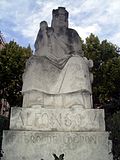 Monumento del Fuero de Logroño, given by Alfonso VI in 1095, near the Town Hall
 -
 Arch of Revellín Wall
 -
 Science "House"
 -
 Universidad de La Rioja


_of_Universidad_de_La_Rioja_in_Logro%C3%B1o.jpg)
See also
[edit]References
[edit]- ^ National Statistics Institute (13 December 2024). "Municipal Register of Spain of 2024".
- ^ "Logroño". Collins English Dictionary. HarperCollins. Retrieved March 2, 2019.
- ^ "Logroño" (US) and "Logroño". Oxford Dictionaries UK English Dictionary. Oxford University Press. n.d. Retrieved March 2, 2019.
- ^ "Logroño". Merriam-Webster.com Dictionary. Merriam-Webster. Retrieved July 30, 2019.
- ^ I. Rodríguez y R. de Lama, Colección diplomática medieval de La Rioja, vol. I, Logroño 1979, 272–293
- ^ Urbano Espinosa (1993). "El gentilicio Berones en el topónimo Logroño". In Jürgen Untermann; Jaime Siles (eds.). Studia palaeohispanica et indogermanica J. Untermann ab amicis hispanicis oblata. Edicions Universitat Barcelona. p. 139. ISBN 978-84-475-0418-3.
El gentilicio Berones en el topónimo Logroño Urbano Espinosa Logroño forma parte de un reducido grupo de topónimos mayores en la España septentrional. cuya etimología resulta inexplicable.
- ^ Rolled leather parchment sealed with lead and the royal seal. Valladolid, 20 February 1431. Logroño municipal register
- ^ Keay, S.; R. Mathisen; H. Sivan; R. Talbert; T. Elliott; S. Gillies (7 June 2018). "Places: 246729 (Vareia?)". Pleiades. Retrieved August 27, 2013.
- ^ "La Custodia".
- ^ "Weather in Logroño". Archived from the original on 1 May 2013. Retrieved 12 June 2012.
- ^ a b c "Standard Climate Values for Logroño". Agencia Estatal de Meteorología. Retrieved 5 June 2015.
- ^ "Météo climat stats Moyennes 1991/2020 Espagne (page 2)" (in French). Retrieved 8 June 2022.
- ^ "Extreme Climate Values for Logroño". Agencia Estatal de Meteorología. Retrieved 5 June 2015.
- ^ "Adjudicación expediente "adquisición e instalación de un transmisor de OM de 25 KW y equipamiento accesorio para el programa de RNE en el centro emisor de La Grajera (Logroño)"" [Awarding of the contract "acquisition and installation of a 25 kW MF transmitter and accessory equipment for the RNE (Radio Nacional de España) program at the La Grajera broadcasting center (Logroño)."]. www.rtve.es (in Spanish). Retrieved 2025-08-22.
- ^ "Städtepartnerschaften und Internationales". Büro für Städtepartnerschaften und internationale Beziehungen (in German). Archived from the original on 2013-07-23. Retrieved 2013-07-26.
- ^ Rioja, La. "Actos del 50 Aniversario del hermanamiento entre Dax y Logroño - laRioja.com. Foto 1 de 38". www.larioja.com.
- ^ A-Z Twinning and Networking (. Accessed 2010-11-02.)
- ^ "Ayuntamiento de Logroño | Hagunia" (in Spanish). Xn--logroo-0wa.es. Retrieved 2018-05-11.
- ^ "Ayuntamiento de Logroño | Libourne" (in Spanish). Xn--logroo-0wa.es. Retrieved 2018-05-11.
- ^ "Ayuntamiento de Logroño | Rancagua" (in Spanish). Xn--logroo-0wa.es. Retrieved 2018-05-11.
- ^ "National Commission for Decentralised cooperation". Délégation pour l’Action Extérieure des Collectivités Territoriales (Ministère des Affaires étrangères) (in French). Archived from the original on 2013-10-04. Retrieved 2013-12-26.
External links
[edit]
- Official website (in Spanish)
- University of La Rioja (in Spanish)
- Bermemar (in Spanish)
- Mayors of Logroño (in Spanish)
- Fish Brotherhood (in Spanish)

.svg)
Capitals of autonomous communities of Spain | ||
|---|---|---|
 | ||
1 Autonomous cities | ||
| International | |
|---|---|
| National | |
| Geographic | |
| Other | |

Logroño
View on GrokipediaEtymology
Origin of the Name
The name Logroño derives from the medieval form lo Gronio, combining the Old Spanish or Basque definite article lo ("the") with Gronio, a pre-Roman toponym of probable Celtic or Celtiberian origin signifying a "ford" or river crossing, alluding to the site's strategic position at a shallow passage on the Ebro River. This etymology aligns with the area's topography, where early settlements facilitated transit and trade via the river, as evidenced by linguistic parallels in Indo-European roots for watery crossings documented in classical sources like Alfred Holder's Alt-celtischer Sprachschatz (1896), which links similar terms such as gronna or grunnia to marshy or fordable locales.[6][7] The earliest written attestations appear in 10th-century charters: a 956 document records Locrunio as a donation by King García Sánchez I of Pamplona to the Monastery of San Millán de la Cogolla, followed by Lucronio in a 965 charter confirming the same grant, reflecting phonetic evolution from Latin-influenced Visigothic script to Romance dialects amid post-Roman repopulation. These references, preserved in monastic archives, correlate with archaeological findings of Iron Age and Roman riverine fortifications nearby, though the name itself postdates Roman Vara (the prior settlement), indicating a medieval re-naming tied to local geography rather than imperial nomenclature. Alternative derivations, such as from Latin lucrum ("profit") or lucus brunius ("brown grove"), lack primary documentary support and appear in later speculative accounts without charter backing.[7]Historical Titles and Heraldry
In 1431, King Juan II of Castile granted Logroño the title of city, recognizing its administrative and defensive significance along the Ebro River.[7] This was followed in 1444 by the additional designations of "Muy Noble" and "Muy Leal," awarded for the city's demonstrated loyalty to the Crown amid regional conflicts.[7] These titles underscored Logroño's fidelity during turbulent periods, including resistance to Navarrese incursions, and permitted privileges such as representation in Castilian courts.[7] The heraldry of Logroño originated in the medieval period with seals depicting a fortified bridge spanning the Ebro, defended by three towers, symbolizing the city's strategic river crossing and role in protecting Castilian frontiers. This imagery, traceable to the 13th century through preserved imprints, emphasized local defenses rather than broader regional emblems.[8] The modern coat of arms, formalized in the 16th century under Emperor Charles V (Carlos I of Spain), features a silver shield with a four-arched bridge bearing three towers linked by sable chains, waves of azure and silver below, and a royal banner of Castile and León atop the central tower. [8] This heraldic design deviated from contemporaneous regional symbols by prioritizing the bridge motif, which asserted Logroño's autonomous civic identity and historical self-reliance, even as it incorporated Castilian-Leonese elements post-unification under the Catholic Monarchs.[9] The absence of overt Rioja-specific icons, such as castles dominant in later provincial heraldry, reflected the city's medieval privileges and frontier status, maintaining distinct symbolism into the modern era.Geography
Location and Topography
Logroño is situated at coordinates 42°28′N 2°27′W along the banks of the Ebro River in northern Spain, at an elevation of 384 meters above sea level.[10][11][12] The city occupies a position within the Ebro Valley, a broad alluvial plain that forms part of La Rioja's central wine-growing basin, where the river's sediment deposition has created fertile, level terrain conducive to viticulture.[11][13] The local topography is characterized by the Ebro's meandering channel, which defines the northern boundary and influences landscape formation through erosion and deposition processes.[14] Surrounding elevations rise sharply to the north with the Sierra de Cantabria foothills and to the south via the Iberian System's slopes, including the Sierra de la Demanda, creating a basin-like enclosure that channels river flow and exposes the plain to hydrological variability.[13][15] These topographic features contribute to the Ebro's role in regional drainage, with the river's middle course prone to flooding due to its rainfall-driven regime and constrained valley morphology.[16][17] Logroño's placement positions it adjacent to the autonomous communities of the Basque Country to the north and Navarre to the northeast, leveraging the Ebro Valley's linear corridor for natural connectivity and historical passage routes.[11][13] This proximity enhances the area's integration into broader Iberian transit networks, with the river serving as a persistent axis for movement despite topographic barriers from adjacent sierras.[14]Climate and Environmental Conditions
Logroño experiences a Mediterranean climate with continental influences, characterized by hot, dry summers and cold winters. Average temperatures reach approximately 25°C in July, the warmest month, while January averages around 5°C.[18] Annual precipitation totals about 400 mm, concentrated in spring and autumn, with low humidity and frequent clear skies contributing to the semi-arid conditions.[19] The Köppen classification designates it as Csa, reflecting the thermal regime with dry summers.[20] Recent meteorological trends indicate warming, with average temperatures in Spanish cities, including those in La Rioja, rising by about 1.5°C from 1971 to 2022, exacerbating drought risks amid irregular rainfall patterns.[21] Precipitation has shown variability, with Spain recording one of its driest years in 2023 at 536 mm nationally, heightening water scarcity in the Ebro basin.[22] The Ebro River, flowing through Logroño, faces pollution pressures from upstream agricultural runoff, including elevated nitrate levels in tributaries, as documented in studies of nitrate vulnerable zones in La Rioja.[23] Intensive farming contributes to nutrient fluxes, impacting water quality despite regulatory efforts.[24] Logroño's location in the Ebro Valley, flanked by the Sierra de la Demanda and other ranges, moderates extremes through foehn winds but promotes cold air drainage, increasing late spring frost risk that affects valley-floor viticulture.[25] This topography fosters microclimates suitable for grape cultivation by enhancing drainage on slopes and reducing humidity-related diseases, though frost events can delay budburst and reduce yields.[26]History
Prehistoric and Roman Foundations
Archaeological investigations in the Ebro Valley region surrounding Logroño reveal evidence of prehistoric human activity dating to the Paleolithic era, including nearby cave sites and open-air settlements associated with hunter-gatherer societies. Artifacts such as lithic tools and faunal remains from these locales indicate intermittent occupation tied to the exploitation of riverine resources along the Ebro, though direct evidence within modern Logroño's urban core remains sparse. The La Rioja Museum in Logroño houses exhibits from these periods, underscoring the area's role in broader Upper Paleolithic networks across northern Iberia.[27] The Roman settlement of Vareia, established around the 1st century BCE in the province of Hispania Citerior Tarraconensis, formed the foundational nucleus of what became Logroño, succeeding earlier indigenous Beronian or Celiberian presence near the Ebro River. Positioned strategically as a commercial port, Vareia facilitated trade and military logistics post-Sertorian Wars, with its remains preserved beneath the modern Varea neighborhood. Excavations have uncovered structural evidence of urban infrastructure, including a forum and potential villa outskirts, reflecting Roman administrative and agricultural imposition on the landscape.[28] Key infrastructural elements linked Vareia to regional networks, such as roads connecting southward to Caesaraugusta (modern Zaragoza) along the Ebro corridor, evidenced by the navigability of the river up to the settlement and traces of viae facilitating troop movements and commerce. Coin hoards and epigraphic inscriptions from the site corroborate sustained occupation through the Imperial period, with finds attesting to economic vitality under emperors like Augustus and later rulers. A port facility downstream near the site of later bridges further supported fluvial transport, integrating Vareia into the Via Augusta system spanning Hispania.[29][30][31] Following the decline of Roman authority in the 5th century CE, Vareia underwent depopulation, with archaeological layers showing reduced material culture and abandonment of public structures, consistent with broader rural-urban contraction in late antique Hispania amid economic disruption and insecurity. Limited post-Roman artifacts suggest discontinuity rather than seamless transition, paving the way for later medieval refounding on the site.[29]Medieval Development and the Camino de Santiago
Logroño emerged as a key settlement in the medieval period under the influence of Navarrese kings, who repopulated the region after the 8th-century Muslim invasions, transforming it into a frontier outpost amid ongoing territorial disputes with Castile from the 10th century onward.[11] This strategic location along the Ebro River positioned the town as a vital link in Christian resistance during the Reconquista, serving as a buffer against incursions from the Muslim taifas of Zaragoza.[32] The pivotal development came in 1095, when King Alfonso VI of León and Castile granted Logroño its fuero, a charter of privileges that formalized its role on the Camino Francés route to Santiago de Compostela, offering settlers legal protections, tax exemptions, and market rights to foster repopulation and commerce.[33] This charter, confirmed by Alfonso VII in 1146, directly incentivized the influx of pilgrims, whose passage required provisioning, lodging, and trade, thereby catalyzing urban growth and economic activity centered on the pilgrimage economy.[34] Fortifications, including initial city walls constructed from the 12th century, further secured the town against raids, enabling sustained development as a safe haven for travelers and merchants.[35] The Camino's traffic provided empirical economic stimulus through recurring fairs and markets, where local wine, agricultural goods, and imported textiles were exchanged, underpinning Logroño's rise as a commercial hub and contributing to population increases and infrastructural investments like hospices and bridges by the 13th century.[36] These privileges and defenses created a causal chain: pilgrimage demand drove service-oriented trades, while Reconquista stability reinforced the town's viability, distinguishing it from less fortified regional outposts.[37]Early Modern and Industrial Era
In the 16th century, Logroño experienced military pressures as a frontier town, including a 17-day siege by French forces in 1521 during conflicts associated with the Italian Wars, which the defenders successfully repelled.[11] The city also served as a venue for the Spanish Inquisition's Basque witch trials in 1610, where accusations of sorcery led to executions, reflecting the era's religious and judicial enforcement under Habsburg rule.[38] Administrative continuity from its medieval integration into Castile persisted, with Logroño functioning as a fortified gateway emphasizing defense over expansion, though Bourbon administrative reforms in the 18th century introduced centralized fiscal and governance structures that marginally streamlined local operations without major upheaval.[33] The 19th century brought political instability through the Carlist Wars, with Logroño emerging as a liberal stronghold; during the First Carlist War (1833–1840), General Baldomero Espartero established it as a key base for government forces against Carlist insurgents, who briefly controlled nearby areas but relinquished Logroño early in the conflict.[39] Sieges and skirmishes persisted into the Third Carlist War (1872–1876), disrupting regional stability but reinforcing the city's role in centralist defenses.[40] Concurrently, the arrival of the railway in 1863–1864, connecting Logroño to broader networks via Tudela and Bilbao, facilitated agricultural exports, particularly wine, though industrial growth remained constrained by the agrarian economy.[41] , Logroño experienced minimal direct combat, as Nationalist forces under General Emilio Mola entered the city with little resistance in October 1936, avoiding the widespread destruction seen in Spain's industrial northern regions.[45] [46] Post-war repression occurred, including executions at sites like La Barranca cemetery, but the city's infrastructure remained largely intact, facilitating a quicker recovery under Francoist rule compared to heavily bombed areas.[45] La Rioja achieved autonomy through its Statute of Autonomy, approved on June 9, 1982, establishing Logroño as the region's capital and granting self-governance in areas like education and agriculture.[47] Spain's entry into the European Economic Community in 1986 further integrated Logroño's economy, particularly via enhanced wine exports under Rioja's protected designation of origin, with total Rioja sales reaching over 240 million liters in 2024 despite global consumption declines.[48] However, EU market dynamics exposed vulnerabilities, including chronic overproduction and surplus stocks in cellars, prompting discussions in 2025 about voluntary vineyard removals to balance supply amid stagnant demand and potential trade disruptions like U.S. tariffs.[49] [50] In recent years, Logroño has pursued urban renewal through initiatives like the Concéntrico International Festival of Architecture and Design, which marked its 10th edition from April 25 to May 1, 2024, with 20 interventions reimagining public spaces via temporary installations addressing future urban needs.[51] The 11th edition, held June 19–24, 2025, emphasized themes such as food systems, urban agriculture, and shared public areas to counter tourism pressures and foster community engagement in city planning.[52] [53] These events position Logroño as a laboratory for innovative architecture, transforming underused plazas and riverbanks into dialogic spaces without permanent alterations.[54]Demographics
Population Trends and Statistics
As of January 1, 2024, Logroño recorded a municipal population of 151,164 inhabitants per the Instituto Nacional de Estadística (INE) padrón municipal revision.[55] This figure reflects a modest annual increase of 581 residents from the prior year, continuing a recovery trend after earlier declines.[55] The broader metropolitan area, including surrounding municipalities, supports approximately 220,000 residents, concentrating about two-thirds of La Rioja's total population of 319,000 as of January 2024.[56] The region's population density stands at approximately 65 inhabitants per square kilometer, indicative of sparse rural settlement patterns outside urban cores.[57] Historical census data reveal accelerated growth in the postwar era, with Logroño's population expanding from 52,514 in 1950 to about 135,000 by 2001, driven by internal migration to industrializing urban centers.[58] Peak levels neared 152,000 around 2008 before stagnating amid the global financial crisis, dipping to 149,000-150,000 by 2013 due to elevated unemployment and outward mobility.[55] Recovery has been modest since 2023, with a net gain of 581 from 2023 to 2024, though still below pre-crisis highs.[55]| Year | Population (INE Padrón) |
|---|---|
| 1950 | 52,514 |
| 1981 | 112,423 |
| 2001 | 135,577 |
| 2008 | ~152,000 |
| 2021 | 150,808 |
| 2024 | 151,164 |
Ethnic and Immigration Composition
As of 31 December 2024, Logroño's resident population stood at 152,262, of which 19,778 individuals—or 12.99%—held foreign nationality, primarily driven by net positive migration inflows exceeding natural population change (922 births against 1,401 deaths).[62] This marks a slight decline from the 24% foreign share recorded in 2015, reflecting stabilized EU mobility post-2008 recession and selective non-EU inflows tied to labor demands in viticulture, logistics, and hospitality sectors.[63] Romanian nationals form the predominant group, accounting for over 20% of the immigrant stock in prior assessments and leveraging EU free movement for seasonal and permanent roles in agriculture; their numbers hovered around 5,458 as of 2020, likely higher amid recent regional upticks.[64] Non-EU immigrants, comprising Moroccans, Pakistanis, and Colombians, each represent roughly 1-2% of the total population based on 2020-2023 patterns extrapolated to current totals, with Colombians drawn by familial networks and service jobs post-2000s economic liberalization in Latin America.[64] These groups integrate primarily through employment, with foreign workers filling 15-20% of low-skilled positions in La Rioja's wine industry and urban services, though non-EU shares have risen to about 40% of regional foreigners by 2024 amid Spain's broader regularization amnesties.[65] Employment rates among immigrants exceed native averages in agriculture (over 90% participation for seasonal roles), correlating with lower welfare dependency but higher informal labor exposure.[65]| Main Foreign Nationalities in Logroño (Approximate Shares of Total Population, Based on 2020 Data Scaled to 2024 Trends) |
|---|
| Romania: ~3-4% |
| Pakistan: ~1-2% |
| Morocco: ~1-2% |
| Colombia: ~1% |
Government and Politics
Administrative Structure
Logroño's local government operates through the Ayuntamiento de Logroño, the municipal corporation vested with executive, legislative, and administrative powers under Spain's Organic Law on the Basis of Local Regime. The structure includes the Pleno municipal, comprising 27 concejales (councilors) elected for four-year terms, which exercises deliberative and supervisory functions; the Junta de Gobierno Local, led by the alcalde (mayor) and handling executive decisions; and specialized commissions for policy areas such as urban planning and finance.[67] The alcalde, responsible for day-to-day governance and representation, is selected by absolute majority vote in the Pleno following elections, with Conrado Escobar (Partido Popular) holding the office since June 17, 2023, after securing a plenary majority in the May 28, 2023, municipal elections.[68][69] Municipal elections employ proportional representation via the d'Hondt method, allocating seats based on vote shares in a single district encompassing the entire municipality, with a 3% threshold for representation; this system has yielded absolute majorities for the leading party in recent cycles, including 15 of 27 seats for the Partido Popular in 2023.[70] The Ayuntamiento manages core services like urban infrastructure, public safety via the Policía Local, and waste management, funded primarily through local taxes (e.g., property tax or IBI) and transfers from the La Rioja regional budget. As the capital of La Rioja per Article 4 of the 1982 Statute of Autonomy (Ley Orgánica 3/1982), Logroño integrates regional institutions, including the Parliament of La Rioja and executive offices, within its municipal boundaries, though these operate under separate autonomous community frameworks distinct from city governance.[71] For decentralized administration, the city divides into five distritos—Norte, Centro, Sur, Este, and Oeste—each with boards coordinating local services and citizen input across constituent barrios, facilitating targeted resource allocation without independent fiscal autonomy.[72]Political Landscape and Governance Trends
Logroño's political landscape reflects a longstanding dominance by the Partido Popular (PP), a center-right party emphasizing traditional values, rural interests, and economic stability tied to the region's agricultural heritage. In the 2023 municipal elections, the PP secured 43.72% of the vote and 14 out of 27 seats, achieving an absolute majority and continuing its control of the city hall under Mayor Pablo Hermoso de Mendoza, who has held office since 2011.[73] This outcome aligns with broader regional trends, where the PP won 45.4% of the vote and 17 of 33 seats in the 2023 La Rioja parliamentary election, regaining an absolute majority after a brief coalition period following 2015.[74] Such results underscore a preference for conservative governance rooted in the area's rural-traditional ethos, contrasting with more urban progressive elements that have garnered support for the PSOE (31.1% in Logroño municipal vote) but failed to displace PP majorities.[75] Governance trends prioritize sector-specific supports like wine production subsidies, which have sustained La Rioja's economy amid EU-level challenges, including post-phylloxera recoveries and recent tariff threats.[76] On immigration, a key issue given the region's high influx of seasonal workers for viticulture—comprising nearly 15% of school populations in La Rioja—PP administrations have emphasized enforcement and integration policies over expansive welfare expansions, reflecting voter concerns in a depopulating rural context.[36] Post-2008 financial crisis protests highlighted anti-austerity sentiments, yet PP-led policies maintained fiscal prudence, contributing to regional debt management superior to national averages despite Spain's overall burdens. Critics, including left-leaning opposition, point to bureaucratic inertia hindering diversification beyond wine dependency, with limited progress in tech or services despite EU funds.[77] Conversely, achievements include stable governance and resistance to central impositions, fostering a conservative continuity that has preserved local autonomy in a polarized national environment. The rise of Vox (7.76% in 2023 municipal elections) signals hardening right-wing flanks on issues like cultural preservation, potentially influencing future PP coalitions without yet altering the core landscape.[73]Economy
Primary Economic Sectors
The economy of Logroño, serving as the primary urban center of La Rioja, relies predominantly on the services sector, which accounts for roughly 70% of regional GDP through activities such as commerce, tourism, real estate, and business services.[78] [79] The industrial sector contributes approximately 20-25%, focused on manufacturing including food processing, exceeding the national average by 9 percentage points.[79] Agriculture and related primary activities make up about 10% of output, higher than Spain's national figure due to the region's fertile Ebro Valley lands.[80] These proportions reflect Logroño's role in coordinating regional production and distribution, with the city's per capita GDP aligning with La Rioja's €32,828 in 2023—6% above the Spanish average of approximately €30,970.[80] Employment data underscores the sector balance, with services employing the majority of Logroño's workforce amid an unemployment rate of 8.8% in Q1 2025, below the national 11.4% and indicative of relative stability despite seasonal variations from tourism peaks and agricultural harvests.[80] [81] Diversification initiatives target logistics and transport, capitalizing on Logroño's strategic position along the Ebro River and major highways to mitigate reliance on traditional sectors.[78] Following the COVID-19 disruptions, Logroño's economy rebounded with La Rioja's GDP expanding 3.1% in 2024, supported by tourism recovery and sustained industrial output, though exposure to external factors like energy prices and global trade persists.[80] This growth trajectory, projected at 2.5% for 2025, highlights resilience but underscores the need for broader risk mitigation.[82]Wine Industry: Achievements and Challenges
The Rioja Denominación de Origen Calificada (DOCa), centered around Logroño as the regional hub, produces over 240 million liters of wine annually, equivalent to approximately 320 million standard bottles, with sales growing 0.63% in 2024 amid a global market contraction.[48] Exports reached 98.8 million liters that year, up 4.42% and comprising 41.5% of Spain's protected designation of origin bottled wine shipments, generating around €520 million in value and underscoring the appellation's competitive edge through premium branding of Tempranillo-based blends.[83] Post-phylloxera reconstruction in the late 19th and early 20th centuries spurred innovations like massal selection of grape varieties and refined oak aging techniques imported from Bordeaux, enabling Rioja to transition from bulk production to quality-focused exports that preserve traditional methods while adapting to international tastes.[44] Despite these gains, the industry faces structural vulnerabilities from monoculture dominance, with Tempranillo covering over 80% of vineyards, leading to soil erosion rates exacerbated by tillage and contributing to nutrient depletion in sloped terrains around Logroño.[84] EU subsidies have fueled oversupply, resulting in widespread producer distress and at least one notable bankruptcy in early 2024 amid falling prices and excess inventory equivalent to 12 liters per EU citizen unsold.[85] [86] In response, the Consejo Regulador imposed a planting moratorium through 2026 and yield caps at 90% of norms for 2023-2024 harvests, yet climate variability— including erratic rainfall in 2024—continues to erode yields and heighten drought risks, though old vines (over 35 years) demonstrate resilience by maintaining quality under stress.[87] [88] [77] This overreliance on wine, employing much of the rural workforce, has accelerated youth outmigration from Logroño's hinterlands, straining demographic sustainability despite tourism booms.[89]Culture and Society
Culinary Traditions and Food Culture
Logroño's culinary traditions center on the pincho culture of Calle del Laurel, a historic street transformed from a former red-light district into a vibrant hub of over 50 specialized bars since the mid-20th century.[90][91] Here, patrons engage in a bar-hopping ritual, sampling small, skewered appetizers known as pinchos—such as grilled mushrooms in garlic sauce at Bar Soriano or stuffed piquillo peppers—typically paired with affordable glasses of Rioja red or white wine priced at 1-2 euros each.[92][93] This practice, influenced by broader Spanish tapas evolution in the late 20th century, emphasizes communal, bite-sized portions that encourage moderation and variety rather than full meals.[94] Traditional specialties reflect the region's agricultural bounty and pastoral economy, including wood-roasted lamb (cordero asado) cooked in earthen ovens for tender, caramelized results, and hearty stews like callos (tripe) simmered with local vegetables.[95][96] Seasonal wild mushrooms (setas or champiñones), foraged from nearby forests and sautéed with olive oil and lemon, feature prominently in autumn dishes, their earthy flavors enhanced by the Ebro River valley's fertile soils supporting vegetable cultivation.[97][98] The river's proximity enables irrigation for peppers, onions, and artichokes integral to these preparations, while lamb derives from regional herding practices.[99] As a stop on the Camino de Santiago pilgrimage route, Logroño's food customs have incorporated simple, restorative elements suited to travelers, fostering a legacy of shared, robust fare like mushroom tapas and stews that sustain long journeys.[100] This gastronomic heritage attracts substantial tourism, with La Rioja region recording over 748,000 visitors in 2022—a 62% rise from prior years—many drawn to the pincho bars and wine pairings that define the city's identity.[101]Festivals, Traditions, and Social Customs
The Fiestas de San Mateo, Logroño's principal annual festival, commemorate the grape harvest and date to the 12th century, initially drawing merchants from across Spain and evolving into a week-long event centered on September 21, the feast day of Saint Matthew, extending through the first weekend of October.[102][103] Activities include traditional grape treading by foot, fireworks displays, morning bull runs through city streets, and evening bullfights, blending agricultural rituals with public spectacles that attract thousands of participants and visitors annually.[104][105] Holy Week processions, observed during the week leading to Easter Sunday (typically late March or early April), reflect Logroño's enduring Catholic traditions, featuring events such as the Palm Sunday "La Borriquilla" parade with donkey-mounted figures, floats depicting biblical scenes ("pasos"), and the closing Procession of the Risen Christ.[106] These brotherhood-led rituals, involving hooded penitents and ornate statues, draw local families and maintain participation through organized cofradías, underscoring a heritage of communal religious observance amid Spain's secularizing trends.[106] Christmas markets in December populate central plazas with stalls offering regional crafts, sweets like roscos and mantecados, and Rioja wines, fostering seasonal family gatherings that align with the city's conservative social fabric.[107] Social customs emphasize bar-hopping along streets like Calle Laurel, where residents engage in "ir de pintxos"—sampling small tapas with wine at multiple establishments in a single evening—as a daily ritual that reinforces community bonds and intergenerational ties, with children often accompanying parents in this unhurried, family-centric practice.[108][109] This contrasts with broader urban individualism, preserving a provincial emphasis on extended family meals and Catholic-rooted restraint, though rising visitor numbers to tapas routes have intensified crowds without eroding core local participation.[91][110]Sports and Leisure Activities
UD Logroñés, Logroño's principal football club, competes in Segunda Federación Group II, Spain's fourth-tier league, during the 2025-2026 season, with home matches at Estadio Las Gaunas, which accommodates around 16,000 spectators.[111] The team maintains a focus on regional competition, reflecting steady grassroots support amid challenges in ascending to higher divisions like Primera Federación.[112] Cycling leverages the undulating Rioja terrain, fostering both recreational and competitive participation; the annual La Rioja Bike Race, centered near Logroño, features multi-stage mountain bike events that drew competitors in its 11th edition in 2025, with the 12th scheduled for May 15-17, 2026.[113] Local routes through vineyards and hills support amateur riders, tying into broader regional cycling calendars with over 15 events yearly in La Rioja.[114] Leisure centers on the Ebro riverside paths in Parque del Ebro, a expansive green space with woodland trails used for walking, jogging, and casual cycling, complemented by integrated sports halls and playgrounds that promote daily physical activity among residents.[115] Hiking extends to accessible urban trails, such as loops combining Parque del Ebro with Río Iregua paths spanning 13 miles and moderate elevation gains, appealing to locals and visitors seeking low-intensity exercise.[116] Logroño's sports infrastructure supports wide participation, earning designation as a European City of Sport for its extensive facilities accessible to citizens and tourists.[117] In June 2025, the city hosted the World Under-24 Ultimate Championships, attracting nearly 2,000 international youth participants and highlighting its capacity for hosting major amateur events.[118] Rising wellness tourism trends amplify demand for outdoor pursuits like trail hiking and riverside wellness walks, though elite-level facilities lag behind robust community programs.[119]Landmarks and Tourism
Historic Monuments and Sites
![Façade of Santa María de la Redonda in Logroño edited.jpg][float-right] The Co-Cathedral of Santa María de la Redonda stands as a primary historic monument in Logroño, with its origins tracing to a 12th-century Romanesque temple upon which the main structure was erected in the 16th century, incorporating Gothic elements, and later modified with Baroque features during the 17th and 18th centuries.[120] The church of San Bartolomé, dating to the 12th century, exemplifies Romanesque architecture blended with later Gothic influences, reflecting the evolution of religious building styles in the region.[121] Similarly, the church of Santa María de Palacio was constructed between the 12th and 13th centuries, with 15th-century rebuilds to its transept and choir, preserving imperial-era stylistic traits.[122] The Puente de Piedra, first documented in 1095 and rebuilt in its current form in 1884, originally served as a medieval crossing over the Ebro River, facilitating entry for pilgrims and marking a significant engineering feat of its era.[123] [124] Remnants of Logroño's city walls, fortified since the 12th century and reinforced after the 1521 French siege, include the 16th-century Revellín Gateway and associated ravelin and artillery tower, which bear imperial heraldry and illustrate early modern defensive adaptations.[35] [125] As a key stop on the Camino de Santiago, Logroño's monuments such as the Puente de Piedra and associated pilgrim markers draw part of the nearly 300,000 annual travelers traversing the route through La Rioja, underscoring their enduring role in medieval pilgrimage infrastructure.[126] These sites maintain structural integrity through ongoing preservation efforts, though exposure to the Ebro River's fluctuations poses potential erosion challenges to riverside elements like the bridge.[127] ![Puente de Piedra Logrono.jpg][center]Parks, Plazas, and Modern Public Spaces
The Parque del Ebro, inaugurated in 1993, spans 153,000 square meters along the right bank of the Ebro River north of central Logroño, serving as a primary green lung for the city with pathways for walking, cycling, and relaxation amid lawns, woodlands, and riverside areas.[128] This park integrates sports facilities, including an indoor hall, and children's play areas, fostering recreational use year-round though visitation dips during colder months due to Logroño's continental climate.[115] Plaza del Mercado, established in the late 16th century as the city's original main square, functions as a vibrant public gathering space with arcaded porticos supporting cafes and markets, adjacent to key urban nodes and promoting daily social interactions among residents.[129] Complementing this are linear promenades like Paseo del Espolón, which enhance pedestrian connectivity and leisure in the urban core.[130] Modern enhancements to Logroño's public spaces emphasize adaptive, temporary interventions through the Concéntrico architecture and design festival, which in its 2024 edition (April 25 to May 1) and 2025 event (June 19 to 24) deploys site-specific installations to rethink usability, such as communal dining structures and urban agriculture prototypes that prioritize community engagement over permanent aesthetics.[131] These annual projects, marking a decade by 2025, address underutilization by transforming underused plazas into interactive zones, though critics note elevated short-term maintenance demands on municipal resources.[53]Infrastructure
Transportation Networks
Logroño's road network centers on the AP-68 motorway, a toll road connecting the city eastward to Zaragoza and westward toward Bilbao, facilitating freight and passenger traffic as part of Spain's primary east-west corridor. Complementary routes include the A-12 (Autovía del Camino de Santiago) linking to Burgos and the A-11 to Soria, with the LO-20 ring road managing urban bypasses. These highways handle substantial volumes, including wine exports and Camino de Santiago support vehicles, though specific annual traffic data remains limited in public records.[132][133] High-speed rail connectivity is provided by Renfe's AVE service from Logroño station to Madrid-Chamartín, covering 250 kilometers in as little as 2 hours and 35 minutes on direct trains operating multiple times daily. Regional lines extend to nearby provinces, but the AVE route dominates intercity travel, reducing reliance on highways for long-distance trips.[134] Air access occurs via Logroño-Agoncillo Airport (RJL), located 14 kilometers southeast, primarily serving domestic flights to Madrid-Barajas with Iberia Express, typically 1-2 daily departures using small aircraft like the ATR 72. International connections require transfers, and passenger numbers have remained modest, with no expansions reported post-2020. Ground links include bus line 21 from the city center, taking about 30 minutes.[135][136] Urban mobility relies on a bus system operated by Autobuses Urbanos de Logroño, featuring 11 lines covering the municipality from 7:00 a.m. to 11:00 p.m., supplemented by the BiciLOG bike-sharing network with stations across the city for short trips. The Ebro River supports limited recreational navigation but lacks commercial port operations, with bridges like Puente de Piedra handling all cross-river vehicular flow.[137] Traffic challenges arise in the historic center's limited traffic zone (Zona de Bajas Emisiones), restricting non-resident vehicles to curb congestion from daily commuters, trucks serving logistics hubs, and seasonal pilgrim influxes along Camino routes. Post-2020 infrastructure efforts have focused on smart public transport tech integrations, such as real-time apps, though major highway or rail upgrades remain pending.[138][139]Media and Broadcasting
The principal daily newspaper serving Logroño and the La Rioja region is Diario de La Rioja, a publication owned by the Vocento media group that focuses on local news, including municipal politics, economic developments in viticulture, and community events.[140] Established in 1898, it maintains a print edition alongside its digital platform, larioja.com, which delivers real-time updates and archives.[140] While precise recent circulation data is limited, the outlet reaches a core audience in Logroño and surrounding areas through both formats, emphasizing regional autonomy and factual reporting on issues like agricultural policy.[140] Local television broadcasting centers on TV Rioja (TVR), the publicly oriented regional channel operated by Vocento, which airs news bulletins, cultural programming, and coverage of La Rioja-specific topics such as wine harvests and infrastructure projects.[141] Complementing this is La 7 de La Rioja, a dedicated local station providing live news, weather updates, and community-focused content via terrestrial and online streams.[142] These outlets collectively serve Logroño's metropolitan area, with TVR emphasizing in-depth regional analysis drawn from on-site reporting.[143] Radio remains a vital medium in Logroño, particularly for real-time traffic, weather, and emergency alerts in rural-adjacent zones. Key stations include Cadena SER Radio Rioja on FM 99.8, offering talk shows and local inserts, and Onda Cero La Rioja on FM 89.1, which features news segments tailored to provincial concerns.[144] Additional options like Canal Ebro provide music and light informational programming.[145] Audience metrics indicate sustained listenership for these affiliates, bolstered by their integration with national networks for broader resource access.[144] The media landscape in Logroño reflects a transitional phase, with digital platforms—such as enhanced websites and apps from Vocento properties—driving subscription growth and user engagement through redesigned interfaces for mobile access. However, traditional print and broadcast retain strong penetration in rural La Rioja locales, where internet infrastructure lags and older demographics prefer established formats for reliable, locality-specific information.[146] Local outlets prioritize objective coverage of controversies, including viticultural disputes and political accountability, drawing on verifiable regional data to counterbalance broader national narratives.[140]International Relations
Twin Towns and Sister Cities
Logroño maintains formal twin town partnerships with eight cities, primarily to promote mutual cultural understanding, economic collaboration, and people-to-people exchanges rooted in post-World War II European reconciliation principles.[147] These agreements emphasize practical initiatives such as student and youth programs, trade linkages—particularly in wine-related sectors given Logroño's status as a Rioja wine hub—and occasional joint cultural events, though documented outcomes remain limited to sporadic recognitions and proposals rather than sustained large-scale projects.[147] Partnerships with non-European cities reflect historical naming ties or regional solidarity, such as with Argentine and Chilean locales sharing "Rioja" nomenclature, but lack evidence of frequent reciprocal activities.[147] The roster includes:- Dax, France (established 1960): The oldest twinning, initiated to strengthen Franco-Spanish ties shortly after the Spanish Civil War's aftermath, with activities including periodic official visits and invitations to local festivals.[148][149]
- Libourne, France (established circa 1979): Focused on economic synergies, leveraging Libourne's role as a Bordeaux wine export hub for potential trade and viticulture exchanges with La Rioja producers.[150][147]
- Dunfermline, Fife, Scotland, United Kingdom: Aimed at broader cultural and educational links, with limited publicized joint initiatives.[147]
- Darmstadt, Germany: Established for European integration goals, contributing to networks like the 2012 "Red de Ciudades 2020" for sustainable urban cooperation, though specific Logroño-Darmstadt outcomes are not detailed beyond award ceremonies.[151][147]
- Brescia, Italy: Supports cultural exchanges, including participation in European recognition events; Brescia's proximity to Franciacorta wine region aligns with potential viticultural dialogue.[147]
- Hagunia, Western Sahara: Symbolic solidarity linkage with minimal verified cross-border activities.[147]
- Todos los Santos de la Nueva Rioja, Argentina: Tied to shared regional nomenclature, fostering nominal heritage connections without noted economic impacts.[147]
- Rancagua, Chile: Emphasizes Latin American ties, potentially for wine industry parallels given Chile's export-oriented viticulture, but lacking empirical evidence of implemented programs.[147]