

Lotus Elise
View on Wikipedia
| Lotus Elise | |
|---|---|
.jpg) Lotus Elise S Club Racer (Series 3) | |
| Overview | |
| Manufacturer | Lotus Cars |
| Production | 1996–2021 35,124 produced[1] |
| Assembly | United Kingdom: Hethel, Norfolk, England Malaysia: Shah Alam (Lotus Cars Malaysia: Series 1, 1997–2000)[2][3][4] |
| Body and chassis | |
| Class | Sports car (S) |
| Body style | 2-door 2-seat targa top roadster |
| Layout | Transverse mid-engine, rear-wheel-drive |
| Platform | Lotus small car platform |
| Chronology | |
| Predecessor | Lotus Elan[5] |
| Successor | Lotus Emira Lotus Theory 1 |
The Lotus Elise is a sports car conceived in early 1994 and released in September 1996 by the British manufacturer Lotus Cars. A two-seater roadster with a rear mid-engine, rear-wheel-drive layout, the Elise has a fibreglass body shell atop its bonded extruded aluminium chassis that provides a rigid platform for the suspension, while keeping weight and production costs to a minimum. The Elise was named after Elisa Artioli, the granddaughter of Romano Artioli, who was chairman of Lotus and Bugatti at the time of the car's launch.[6]
Production of the Elise, Exige and Evora ended in 2021. It was replaced by the Lotus Emira.[7][8][1]
Series 1
[edit]| Series 1 | |
|---|---|
 | |
| Overview | |
| Production | 1996–2001[5] |
| Designer | Julian Thomson[5] |
| Body and chassis | |
| Related | Lotus 340R Vauxhall VX220/Opel Speedster Lotus Elise GT1 |
| Powertrain | |
| Engine | 1.8 L Rover K-series I4[5] |
| Transmission | 5-speed manual[5] |
| Dimensions | |
| Wheelbase | 2,300 mm (90.6 in) |
| Length | 3,726 mm (146.7 in) |
| Width | 1,719 mm (67.7 in) |
| Height | 1,202 mm (47.3 in) |
| Kerb weight | 725 kg (1,598.4 lb) ~ 755 kg (1,664 lb)[5][9] |

The 1996 Lotus Elise weighed 725 kg (1,598 lb).[9] Because of this low weight, it was able to accelerate 0–60 mph (0–97 km/h) in 5.8 seconds despite its relatively low power output of 118 bhp (88 kW; 120 PS).[5] Braking and fuel consumption are also improved by the car's reduced weight. Cornering is helped by a low centre of gravity height of 470 mm (18+1⁄2 in).[10]
Series 1 was designed by Julian Thomson, then head of design at Lotus, and Richard Rackham, Lotus's chief engineer.[11]
Besides the standard higher-performance variants listed below, Lotus also released some limited edition models such as Sport 135 (1998/9) with approximately 145 bhp (108 kW; 147 PS), Sport 160 (2000) with 150–160 bhp (112–119 kW; 152–162 PS), and Sport 190 (190 bhp (142 kW; 193 PS)). These were more competent on track with sports suspension, wheels and tyres, seats according to model. There were other special editions such as the 50th Anniversary Edition (green/gold) celebrating 50 years of Lotus cars, the Type 49 ("Gold Leaf" red and white two-tone), and Type 79 ("JPS" black/gold) which refers to its successful Grand Prix car type numbers.
The Series 1 Lotus Elise was assembled from kits on a dedicated assembly line at Proton's Shah Alam factory between 1997 and 2003.[2] The drivetrain was imported complete and initially the bodywork was painted in the UK at Hethel prior to export. The Malaysian-assembled Elise sold for double the price of its British-built counterpart due to local vehicle taxes.[3] The Malaysian-assembled Elise was also exported to regional markets, including Japan, Hong Kong, Australia and New Zealand.[4][2] The Malaysian spec Elises came with a factory hard top, carpets and air con as standard though the air con was unreliable and ineffective. All cars had MMC brakes as that was what was current when the kits were imported in the late 1990s.[3] The Proton-assembled Elises were assigned the code 'B' in the eleventh VIN position, while the original Hethel-built units were stamped with the code 'H'.[12]
111S
[edit]A faster edition called the 111S, named after the Lotus type-number of the Elise (Type 111), was introduced in early 1999 and had the 1.8 Rover K-series engine also used in the Rover MGF. It featured a VVC system providing continuously variable lift and duration on the intake valves only. This technology produced a flatter torque curve from lower down the rev range and a declared 143 bhp (107 kW; 145 PS), a small but useful improvement over the standard 16 valve Rover 1.8 L K-series 118 bhp (88 kW; 120 PS) inline-four unit. Fitted with a closer ratio manual gearbox and lower ratio final drive, the acceleration was improved. Minor changes include more padding in the seats, headlamp covers, rear spoiler, cross drilled brake discs, alloy window winders and six-spoke wheels. The rear wheels being slightly wider than before necessitated the fitting of "spats" on the back of the rear wheel arches to comply with EU regulations. The 111S was also fitted with a "chipcutter" front grille.[13]
340R
[edit]In 2000, the 340R limited-edition model, based on a Series 1 Elise was introduced. This roofless car was a special edition, limited to only 340 cars being built. The name 340 originally referred to the 340 bhp/tonne (254 kW/tonne) power-to-weight ratio of the original prototype which had 177 bhp (132 kW; 179 PS) while weighing just 500 kg (1,102 lb). However, in production models the 340 refers to the number of cars built. The final production versions weighed 701 kg (1,545 lb) and had a power-to-weight ratio of 252.5 bhp (188.3 kW)/tonne. A "Track Pack" was created that upped power to 192 bhp (143 kW; 195 PS) and weighed only 571 kg (1,259 lb), thus fulfilling its original power-to-weight ratio promise.
Exige
[edit]In 2000, Lotus introduced the Exige — a hardtop version of the Elise with the 177 bhp (132 kW; 179 PS) engine from the 340R; as well as different front and rear body "clamshells", larger wheels, and a rear wing. Many models received an upgrade to 190 bhp (142 kW; 193 PS) with better driveability due to changes to ECU and cam timing.
Series 2
[edit]| Series 2 | |
|---|---|
_Lotus_Elise_(type_111)_version_SC_(SuperCharged)_2009_(cropped).jpg) | |
| Overview | |
| Production | 2001–2011 |
| Designer | Steve Crijns[14] |
| Body and chassis | |
| Related | Lotus Exige Opel Speedster/Vauxhall VX220 Lotus 2-Eleven Lotus Europa S Tesla Roadster Hennessey Venom GT |
| Powertrain | |
| Engine | 1.8 L Rover K-series I4 1.8 L Toyota 1ZZ-FE I4 1.8 L Toyota 2ZZ-GE I4[15] |
| Transmission | 5-speed Rover PG1 manual[16] 5-speed Toyota C56 manual[16] 6-speed Toyota C64 manual[15][17] |
| Dimensions | |
| Wheelbase | 2,300 mm (90.6 in)[18] |
| Length | 3,785 mm (149.0 in)[18] |
| Width | 1,719 mm (67.7 in)[17][18] |
| Height | 2002–2007: 1,143 mm (45.0 in) 2008–2011: 1,117 mm (44.0 in)[18] |
| Kerb weight | 860 kg (1,896 lb)[19] 910 kg (2,006 lb)[20] |
The Series 1 could not be produced beyond the 2000 model production year due to new European crash regulations, so Lotus needed a development partner to meet the investment requirement for a Series 2 car. General Motors offered to fund the project, in return for a badged and GM-engined version of the car for their European brands, Opel and Vauxhall.
The Series 2 Elise, project code name "Monza", announced on 9 October 2000, was a redesigned Series 1 using a slightly modified version of the Series 1 chassis to meet the new regulations, and the same K-series engine with a brand new Lotus-developed ECU. The design of the body paid homage to the earlier M250 concept, and was the first Lotus to be designed on a computer.[21]
Both the Series 2 Elise and the Opel Speedster/Vauxhall VX220 were built on the same production line in a new facility at Hethel. Both cars shared many parts, although they had different drive-trains and power-plants. Contrary to popular belief, the VX220 chassis, later used for the Europa S, is not exactly the same as the Elise S2 chassis, the VX220 having a 30mm longer wheelbase and lower door sills. The VX220 also carried the Lotus internal model identification Lotus 116, with the code name Skipton for the launch 2.2N/A version and Tornado for the 2004 introduced 2.0 L Turbo.[22] Fitted with 17 inch over the Elise's 16 inch front wheels, the Vauxhall/Opel version ceased production in late 2005 and was replaced by the Opel GT for February 2007, with no RHD version for the United Kingdom.
Basic S2 models had a naturally aspirated 1,795 cc (1.8 L; 109.5 cu in) Rover K-series engine without VVC rated at 120 bhp (122 PS; 89 kW) at 5600 rpm and 124 lb⋅ft (168 N⋅m) at 3500 rpm of torque.[23][24]
111S
[edit]The Series 2 was also available as a 111S model, with the VVC engine Rover technology producing 160 hp (119 kW). The 111S Type 25 was built to commemorate the revolutionary race car driven by Jim Clark in F1, painted in Lotus Racing Green with twin metallic yellow stripes running front to back. Unique black Lotus styled six-spoke wheels. The interior includes perforated Ruby red leather seats, door panels and steering wheel centre (echoing the original), and red laurels embroidered onto the headrest of each seat. A Heritage Type 25 ID plate confirms its limited edition status as only 50 of these cars were produced. The UK market was to get 45 and Australia 5. During boat loading one of the 5 was damaged and only 4 sent to Australia. It's presumed the damaged car was later sold in the UK. The car is also supplied with hard top maintaining the twin stripes. The 111S models were discontinued in 2005 in favour of the Toyota powerplant.
In 2003 the Type 23 or Heritage Type 23 was built to commemorate the Colin Chapman designed race car which ran from 1962 to 1963. Like the Type 25 the car was based on the 111S and powered by the Rover K Series engine. It was limited to a production run of 50 cars, all of which were fitted with the heritage type 23 ID plate indicating the build number. Externally the car was painted in heritage white with twin parallel Lotus racing Green stripes. Heritage laurels and Union jacks were fitted to each wing, all of which set the car apart. Internally the car was fitted with perforated green leather seats, door panels and steering wheel centre, and green laurels are embroidered onto the headrest of each seat. The car was supplied with a green soft top and hard top maintaining the green stripes.[citation needed]
It is believed that the switch to a Toyota engine was due to federalising issues with the Rover powerplant in the US, however this has been largely unproven with little information released from Lotus as to the exact reasons. As of the time of the switch the Rover engine would still have met the standards required of it for use in America.[25]
Two more track-focused models, the 135R and Sport 190, were available with 135 and 192 bhp (101 and 143 kW; 137 and 195 PS) respectively. These also came with associated handling upgrades such as Lotus Sport Suspension and wider wheels with Yokohama Advan A048 tyres. In certain markets, the 135R was replaced by the "Sport 111", which was similar, apart from sporting the 156 bhp (116 kW; 158 PS) VVC engine in place of the 135 bhp (101 kW; 137 PS) tuned K-series.
111R / Federal Elise
[edit]
This Series 2 Elise model comes in a European 111R version or a version sold in North America, referred to as the Federal Elise. It is powered by the all-aluminium alloy 189 hp (192 PS; 141 kW) 1.8 L (1,796 cc) DOHC Toyota 2ZZ-GE with a Yamaha designed twin-cam head offering variable valve timing on the intake valvetrain, variable valve lift on both the intake and exhaust valvetrains, and a Toyota C64 6-speed manual transmission. Although the engine was borrowed from Toyota, its tune for the Elise was done in-house by Lotus. Many tests show performance of 0–60 mph (0–97 km/h) in approximately 4.9 seconds, or 4.7 seconds with the Sport Package.
The 2005 Lotus Elise was the first to be sold commercially in the United States, in the summer of 2004. Approval for the Elise, however, required intervention by the National Highway Traffic Safety Administration (NHTSA) which provided a three-year exemption for the car, as it had failed to meet US bumper and headlight regulations. The first-year model suffered from a few flaws, most notably a design flaw in the headlamps that magnified the sun's light, allowing the inside of the lamp housings to be melted by the sun.[26]
This model was followed up by the 2006 Model Year Elise 111R and Sports Racer models. Lotus made a limited production (50 in the US) called the Lotus Sport Elise. 2006 models differ from the 2005 models in a few aspects. 2006 models sport LED tail lights, drive by wire (an updated ECU), improved fuel consumption, and more comfortable[citation needed] ProBax seats.
For the 2007 model year Lotus several minor changes were made. The LOTUS decals on the rear of the vehicle, previously flat stickers, were replaced by raised lettering. The headlamp units were sealed. Also, in order to comply with US Federally mandated bumper restrictions, the frontal crash structure was slightly changed and rear bumperettes were added next to the licence plate mount. Approximately 100 2007 model year "launch" cars were shipped to the US without these bumper changes. Also in 2007, the Elise S was released and the 111R renamed Elise R. All Lotus Elise cars manufactured after 1 January 2007 include the new headlights and 2.5 mph (4.0 km/h) bumpers, although they are hidden in the front.
The Elise S is the new base model with a Toyota sourced 1.8 L (1,796 cc) engine replacing the previous models K series Rover engine. The 2ZZ-GE engine produces 189 bhp (141 kW; 192 PS) at 6,200 rpm (a considerable increase over the 120 bhp or 89 kW or 122 PS of the Rover engine). The inclusion of airbags, ABS brakes, electric windows, and carpet in addition to the new heavier engine has increased the base weight to 860 kg (1,896 lb) (approximately 85 kg or 187 lb higher than the previous S model).[citation needed]
2008 models
[edit].jpg)

For 2008, there were several additions to the Lotus line-up. There are three versions of the Elise. Lotus continued to provide a naturally aspirated Elise producing 189 hp (141 kW). The second version is the Elise SC sporting a non-intercooled supercharger producing 218 hp (163 kW). 0–60 mph (0–97 km/h) is reduced from 4.9 for the base Elise or 4.7 seconds for the Elise with Sport package to 4.3 seconds for the Elise SC. The NA Elise styling is similar to the prior model years. The Elise SC, however, is distinguishable from the NA version by a rear spoiler identical to the Type 72-D edition spoiler and new wheels. Weight remained a Lotus-claimed 1,987 lb (901 kg); just 3 lb (1.4 kg) more than the previous year. Prior to the release of the 2008 Elise SC, the limited production California Edition arrived at dealerships. A total of fifty California Edition Elises were produced; 25 in Saffron Yellow and 25 in Ardent Red. The interiors of the Calis were produced in a light two-tone leather (Biscuit) and the exterior modifications included a silver front grille (a nod to vintage-Ferrari), body-coloured shutter grills on the side inlets and engine cover, enhanced 16-spoke wheels, and a large spoiler that covers the upper-rear deck (72-D style). The Calis were intended to appeal to "the lifestyle market."[27]
In Europe, there are three models available; the Elise S with a 134 bhp (100 kW; 136 PS), 1.8L Toyota 1ZZ-FE engine and 5 speed manual gearbox (0–60 mph; 0–97 km/h) in 5.8 seconds, top speed 127 mph (204 km/h)); the Elise R with a 189 bhp (141 kW; 192 PS), 1.8 L Toyota 2ZZ-GE engine and 6-speed manual gearbox (0–60 mph; 0–97 km/h) in 4.9 seconds, top speed 148 mph (238 km/h)); and the Elise SC with a supercharged non-intercooler 1.8L Toyota 2ZZ-GE engine rated at 217 bhp (220 PS; 162 kW) at 8000 rpm and 156 lb⋅ft (212 N⋅m) at 5000 rpm of torque,[28] 6 speed manual gearbox and a spoiler (0–60 mph; 0–97 km/h) in 4.3 seconds, top speed 150 mph (241 km/h)).[29]
Several new colour options for 2008 were brought to the marketplace. These include new metallic colours (additional $590) Persian Blue and Liquid Blue; new Lifestyle colour (additional $1200) Isotope Green; new Limited Colour Level (additional $3,300) Candy Red, Ice White, and Burnt Orange; and the new Exclusive Colour Level (additional $5,100) Prism Green and Moonstone Silver. The following colours were discontinued for 2008: Nightfall Blue, Aubergine Purple, Magnetic Blue, Polar Blue, Autumn Gold, Chili Red, and Krypton Green.
Series 3
[edit]| Series 3 | |
|---|---|
 | |
| Overview | |
| Production | 2011–2021 |
| Body and chassis | |
| Related | Lotus Exige |
| Powertrain | |
| Engine | 1.6 L Toyota 1ZR-FAE I4 1.8 L Toyota 2ZZ-GE I4 (2011 Models) 1.8 L Toyota 2ZR-FE Supercharged I4[16] |
| Transmission | 6-speed Toyota EC60 manual[15] 6-speed Toyota C64 manual (2011 US Models) |
| Dimensions | |
| Wheelbase | 2,300 mm (90.6 in) |
| Length | 3,824 mm (150.6 in) |
| Width | 1,719 mm (67.7 in) |
| Height | 1,117 mm (44.0 in) |
| Kerb weight | 866 kg (1,909 lb) 914 kg (2,015 lb) |

In February 2010, Lotus unveiled a facelifted version of the second generation Elise (internal project code name "Anglesey"). The new headlights are now single units; triangular in shape they are somewhat larger than the earlier lights. The cheapest version in Europe had a 1.6 litre 1ZR-FAE engine to comply with Euro 5 emissions, with the same power output as the earlier 1ZZ-FE, 136 PS (100 kW; 134 hp).[30] The face lifted model was also available for Model Year 2011 with the 1.8 litre 2ZZ-GE in naturally aspirated form from the Series 2 111R/R and with a Magnuson R900 supercharger making 220 PS (162 kW; 217 hp). For the Model Year 2012 the 2ZZ engine was replaced by the supercharged 2ZR-FE power unit that remained until the end of production in 2021. The 1.6 litre version was discontinued in 2018.
US Model
[edit]The 2011 model was the last offered for street legal sale in the United States when the waiver from the United States Government's National Highway Traffic Safety Administration (NHTSA) for Lotus to build and sell cars in the US without smart airbags expired in August 2011.[31] It used the Toyota 2ZZ-GE engine
Elise R & Elise SC
[edit]Two versions of the 2011 model year, similar to the US Elise, were also offered in the rest of world. Both powered by the 2ZZ-GE engine. The Elise R had the 189 hp naturally aspirated unit and the Elise SC was fitted with a supercharged 2ZZ, producing 218 hp.
Elise S
[edit]For the 2012 model year the naturally aspirated 2ZZ engine was dropped and the supercharged 2ZZ version was replaced by the supercharged 2ZR-FE Elise S. This model remained in production until being replaced in 2015 by the Elise 220 and derivatives.
Elise Cup 220
[edit]At the 2015 Geneva Motor Show, Lotus revealed a high performance version of the Elise called the Cup 220. The Cup 220 is a more track-focused and hardcore version of the standard Elise. It has the following specifications according to a 2015 Top Gear road test:[32]
- Engine: 1.8 litre supercharged Toyota 2ZR-FE Inline-4
- Transmission: 6-speed Toyota EC60 manual with sport ratios
- Power: 217 bhp (162 kW; 220 PS) at 6800 rpm
- Torque: 250 N⋅m (184 lb⋅ft) at 4600 rpm
- Acceleration: 0-60 mph (97 km/h) in 4.2 seconds
- Top speed: 140 mph (225 km/h)
- Weight: 932 kg (2,055 lb) (dry weight)
- Downforce: 125 kg (276 lb) at 140 mph (225 km/h)
Elise Sport, Sport 220
[edit]Revealed in November 2015, The Lotus Elise Sport and Sport 220 are set to join the two-seater sports car's line-up, with the two models replacing the outgoing Elise and Elise S. The models mark a return for the ‘Sport’ name to a Lotus, with the badge last appearing on the Lotus Esprit. The two cars get a weight reduction of 10 kg, with the Elise Sport now down to 866 kg and the Sport 220 now 914 kg. The reduced weight doesn't improve performance but it does bring a marginal boost in claimed economy, with the Sport now managing 45.0 mpg the Sport 220 improving to 37.5 mpg. The changes are marginal enough that the CO2 emissions remain unchanged.
Both cars also come with lightweight sports seats, which are available with optional tartan trim that harks back to the 1970s Esprit S1. Other visual upgrades and options include lightweight silver or black cast wheels, which are 16 inch at the front and 17 inch at the rear. Optional lightweight wheels can reduce another 5 kg from the car's weight. A black rear diffuser is standard, along with a choice of 10 colours. Other options include a hard roof, air conditioning, cruise control and an upgraded Clarion stereo system.
The engines remain unchanged. The Sport comes with a 1.6-litre petrol engine with 134 bhp (136 PS; 100 kW) and 160 N⋅m (118 lb⋅ft) of torque. It can go 0-62 mph in 6.5 seconds, and has a top speed of 127 mph. The Sport 220's 1.8-litre engine can develop 217 bhp (220 PS; 162 kW) and 250 N⋅m (184 lb⋅ft) of torque. It can go 0-62 mph in 4.6 seconds and has a 145 mph of top speed. Both come with a six-speed manual transmission.
The pricing has also been trimmed, with the Elise Sport model starting at £29,900 and the Elise Sport 220 priced at £36,500. Both cars will go on sale from December 2015 in Europe and the rest of the world from January 2016.
Elise Cup 250
[edit].jpg)
At the 2016 Geneva Motor Show, Lotus revealed the high performance version of the Elise called the Cup 250. The Cup 250 is a more track focused and hardcore version of the standard Elise. It has the following specifications according to Lotus:[33]
- Engine: 1.8 litre supercharged Toyota 2ZR-FE Inline-4
- Transmission: 6-speed Toyota EC60 manual with sport ratios
- Power: 243 bhp (181 kW; 246 PS) at 7200 rpm
- Torque: 250 N⋅m (184 lb⋅ft) at 5500 rpm
- Acceleration: 0-60 mph (97 km/h) in 3.9 seconds
- Top speed: 154 mph (248 km/h)
- Weight: 884 kg (1,949 lb) (dry weight)
- Downforce: 125 kg (276 lb) at 140 mph (225 km/h)
Elise Cup 260
[edit]In October 2017, Lotus unveiled a hardcore version of the Elise called the Elise Cup 260. It is inspired by the two hardcore variants of the Evora and Exige line up, the Sport 380 and the GT430 respectively. It features the double taillight units and rear wing from the Exige Sport 380 and the Lotus 3-Eleven respectively. Power has also been uprated and is now 250 hp (186 kW; 253 PS) thanks to a revised supercharger. Other changes include increased top speed, acceleration, low weight and high downforce due to added aero elements. The Elise Cup 260 has the following specifications according to Lotus:[34]
- Engine: 1.8 litre supercharged Toyota 2ZR-FE Inline-4
- Transmission: 6-speed Toyota EC60 manual with sport ratios
- Power: 250 bhp (186 kW; 253 PS) at 7200 rpm
- Torque: 265 N⋅m (195 lb⋅ft) at 5500 rpm
- Acceleration: 0-60 mph (97 km/h) in 3.8 seconds
- Top speed: 151 mph (243 km/h)
- Weight: 862 kg (1,900 lb) (dry weight)
- Downforce: 180 kg (397 lb) at 151 mph (243 km/h)
Elise Sprint
[edit]
In March 2017, Lotus announced the special edition 'Sprint' models of the Elise. For the Elise Sprint, Lotus used several weight-saving techniques to cut the car's weight down to 798 kg (1,759 lb). To achieve the 40 kg (88 lb) weight saving, some body parts are made in carbon, as well as the seats. The backlight glass is made of polycarbonate, and the lightweight battery is a Lithium-ion model. Wheels are the usual size, but forged instead of cast alloy. The Sprint can be had with either a 1.6-litre naturally aspirated engine, or a 1.8-litre supercharged engine, available for the Sprint 220 version. The former has a 0–60 mph (97 km/h) time of 5.9 seconds, while the Sprint 220 can accelerate from 0–60 mph (97 km/h) in 4.1 seconds. Dampers are uprated, as on the Elise Cup models.[35]
Elise Sport 240, Cup 250 Final Edition
[edit]On 9 February 2021, Lotus unveiled two final editions line-up models of Elise on online platforms.[36][37]
Opening the range is the Elise Sport 240 Final Edition, which sees the existing Sport 220's 1.8-litre supercharged four-cylinder engine uprated to develop 240 bhp (243 PS; 179 kW) and 244 N⋅m (180 lb⋅ft), permitting a zero to 100 km/h time of 4.5 seconds. When fully specified with weight-saving options – namely carbon-fibre sill and engine covers, a lithium-ion starter battery and a polycarbonate rear window – the Sport 240 is the lightest car on offer, at 898 kg. A set of 10-spoke forged alloy wheels fill the arches, measuring 40.6 cm (16 inches) in diameter up front and 43 cm (17 inches) at the rear, using Yokohama Y105 tyres. Lotus claims the new wheels are 0.5 kg lighter than those fitted to the outgoing Sport 220.
The Elise Cup 250 Final Edition features a variant of the Sport 240's 1.8-litre four-cylinder, now tuned to produce 245 bhp (248 PS; 183 kW) and 244 N⋅m (180 lb⋅ft). Lotus claims a 4.3-second 0–100 km/h sprint time. This model gets an optimised aerodynamic package allowing for 155 kg of downforce at its top speed of 248 km/h, along with 10-spoke M Sport forged alloy wheels, Yokohama A052 tyres, Bilstein dampers and adjustable anti-roll bars. A lightweight lithium-ion battery and polycarbonate rear window are also fitted as standard for increased weight saving, and, in top spec layout, the car weighs 931 kg.[38]
The last Elise built was a Sport 240, painted gold; it was delivered to Elisa Artioli, the car's namesake.[39]
Elise Concept
[edit].JPG)
The series 3 Lotus Elise first appeared as a design study alongside the Lotus Esprit concept at the 2010 Paris Motor Show as the "Lotus Elise Concept" in the autumn of that year, and was set to be launched within the next couple of years. The car was heavier than the production model of that time, and had a considerably more powerful 2.0-litre inline-4 engine.[40] The production model was then unveiled with many changes, including the downsizing of the engine to 1.6 litre and 1.8 litre (supercharged) and a different design with little cues taken from the concept.
Special editions
[edit]- Sport 220
- Sport 190
- Sport 160
- Sport 135R
- Lotus Sport 111 (Track based option for Australia, Hong Kong, Japan & Singapore)
- Type 23
- 50th Anniversary Edition
- 60th Anniversary Edition
- Jim Clark Type 25
- Type 25
- Type 49
- Lotus Sport Edition
- Type 72
- Type 79
- Type 99T
- Sports Racer
- Race Tech
- Club Racer [41]
- California Edition[42]
- Purist Edition
- Final Edition[43]
- Roger Becker SC[44][45]
Exige
[edit]The Series 2 Exige comes with the same high revving Toyota 1.8L engine and six speed gearbox as the Elise 111R, replacing the Rover K-series engine of the previous Exige.
The Series 2 Exige has been followed by the limited-edition Lotus Sport Exige 240R, incorporating a Lotus-developed supercharger atop the Lotus engine. The US Federalised version with the supercharger fitted is known as the Exige S 240.
Zytek Lotus Elise
[edit] |
The Zytek Lotus Elise is an electric sports car that was jointly produced by Lotus and Zytek from 1998 until 2003.
Its 70 kg (154 lb) extruded aluminium space frame and lightweight composite body shell are factors in its low kerb weight of 875 kg (1,929 lb). 250 nickel-cadmium batteries provide 300 volts (at full charge) to two Zytek oil-cooled brushless DC motors, which deliver a total power of 150 kW (201 hp; 204 PS) and torque of 100 N⋅m (74 lb⋅ft). These motors are each mated to a single-speed, fixed ratio transmission with an aluminium gear. Its acceleration time from 30 to 70 mph (48 to 113 km/h) is 5 seconds, and from 0 to 90 mph (145 km/h) is 11.2 seconds. The car is governor-limited to 90 mph (145 km/h) to conserve charge. The range per charge is typically 100 to 120 mi (161 to 193 km) and the car can be re-charged within an hour.
There is an example of the Zytek Elise on display at the Heritage Motor Centre.
Type 135
[edit]The electric successor to the Elise is the Type 135, being released in 2026.[46]
Other cars sharing the Elise platform
[edit]- Hennessey Venom GT
- Lotus 2-Eleven
- Lotus 340R
- Lotus 3-Eleven
- Lotus Circuit Car
- Lotus Elise GT1
- Lotus Europa S/Dodge EV
- Lotus Motorsport Elise
- Lotus Sport Exige 300RR
- Melkus RS 2000
- Opel Speedster/Vauxhall VX220/Opel Eco-Speedster Concept
- Rezvani Beast Alpha
- Rinspeed sQuba
- Tesla Roadster (2008)
- PG Elektrus
- Detroit Electric SP.01
Awards and recognition
[edit]The Elise has received critical acclaim for its performance and driving experience, including Best Driver's Car 2001 (Autocar), Car of the Year 2003 (UK Horizons TV), Best Sportscar 2004 (BBC Top Gear Magazine), and Icon of Icons at the Autocar Awards 2019 (Autocar).[47] The Daily Telegraph listed the Elise at number 44 of their 100 best cars ever made.[48]
Gallery
[edit]-
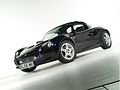 Lotus Elise S1
 -
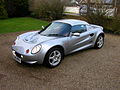 Lotus Elise Sport 135
 -
 Lotus Elise 111S (Series 1) at the Thatcham Classic Car Show in 2009
 -
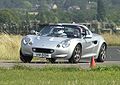 Lotus Elise 111S
 -
 Interior of a Lotus S1, with Sport 135 seats and steering wheel
 -
 Interior of a Lotus Elise S2
 -
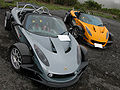
-
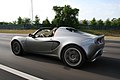 A Lotus Elise drives on Interstate 4 in Central Florida
 -
 US "Federal Elise" configuration of a standard Lotus Elise on display in Indiana
 -
 Elise SC premiere at the 2007 Tokyo Motor Show
 -
 2011 Lotus Elise SC (US)

.jpg)


.jpg)


References
[edit]- ^ a b Silvestro, Brian (22 December 2021). "The Lotus Elise, Exige, and Evora Have Finally Ended Production". Road and Track. Retrieved 5 March 2022.
- ^ a b c Ben D'Cunha (28 June 1998). "Malaysian Lotus". New Straits Times. Retrieved 12 February 2016.
- ^ a b c "Lotus Elise assembly at Proton terminated". autoworld.com.my. 14 November 2000. Archived from the original on 16 May 2015. Retrieved 16 May 2015.
- ^ a b "Last 'Malaysian' Elise To Be Delivered This Month". autoworld.com.my. 9 December 2002. Archived from the original on 16 May 2015. Retrieved 16 May 2015.
- ^ a b c d e f g "Lotus Elise S1 1995 - 2001 Series 1 1.8". Archived from the original on 13 February 2008. Retrieved 6 March 2008.
- ^ Walton, Jeremy (2003). Lotus Elise: The Official Story. Motorbooks Intl. pp. 7, 95. ISBN 1-902351-05-3.
- ^ Allan, Lawrence (25 January 2021). "Lotus confirms new sports car, end of Elise, Exige and Evora in 2021". Autocar.
- ^ "A New Year and a New Future: New Lotus sports car series confirmed Elise, Exige and Evora embark on final year of production". Lotus Cars Media Site. 25 January 2021.
- ^ a b "Lotus Elise Model Comparison, Handling, Power". Sands Mechanical Museum. Retrieved 3 March 2009.
- ^ "Suspension". 4 February 2014. Archived from the original on 25 June 2016. Retrieved 5 June 2016.
The Lotus Elise has a kinematic roll center height of 30mm above the ground and a center of gravity height of 470mm. The Lotus Elise RCH is 6% the height of the CG, meaning 6% of lateral force is transferred through the suspension arms and 94% is transferred through the springs and dampers.
- ^ "My Other Design is a Lotus". Retrieved 14 August 2008.
- ^ "Chassis Number | TechWiki". Retrieved 17 August 2018.
- ^ "Lotus Elise 111s". Lotus Models. Lotus Esprit World. Retrieved 8 December 2012.
- ^ "Elise S2 Announcement". Retrieved 16 December 2021.
- ^ a b c "Lotus Elise R - Vehicle Description". Group Lotus PLC. Archived from the original on 17 May 2008. Retrieved 19 March 2008.
- ^ a b c "Lotus Elise S - Vehicle Description". Group Lotus PLC. Archived from the original on 17 May 2008. Retrieved 19 March 2008.
- ^ a b "2005 Lotus Elise" (PDF). Road & Track. Hachette Filipacchi Media U.S., Inc. August 2004. Archived from the original (PDF) on 21 July 2009. Retrieved 19 March 2008.
- ^ a b c d "Lotus Elise S - Dimensions". Group Lotus PLC. Archived from the original on 17 May 2008. Retrieved 19 March 2008.
- ^ "Elise S anchors Lotus lineup". Autoblog.com.
- ^ "2008 Lotus Elise SC". Group Lotus PLC. Archived from the original on 13 March 2008. Retrieved 19 March 2008.
- ^ "The new Elise - Improving on an icon". Retrieved 17 August 2018.
- ^ "Lotus Elise Model Guide". Retrieved 17 August 2018.
- ^ "2001 Lotus Elise S2 1.8 technical specifications". ultimatespecs.com. Retrieved 23 June 2018.
- ^ "Lotus Elise S2 Type 25". ultimatecarpage.com. Retrieved 23 June 2018.
- ^ "Lotus Elise, Engine Tuning, King K". www.sandsmuseum.com. Retrieved 4 April 2018.
- ^ "Lotus Elise Buyers Guide". Retrieved 6 October 2014.
- ^ "2008 Lotus Elise SC 220 and Elise California - Auto Shows (English)". caranddriver.com. November 2007. Archived from the original on 9 September 2010. Retrieved 26 December 2010.
- ^ "Lotus Elise SC 2008 review". carmagazine.co.uk. 10 January 2008. Retrieved 23 June 2018.
- ^ "European Lotus Elise Brochure (English)" (PDF). Grouplotus.com. Retrieved 10 October 2010.[permanent dead link]
- ^ "Lotus Elise Club Racer Revealed With Less Weight, New 1.6L Engine [Geneva Preview]". AutoGuide.com News. 18 February 2011. Retrieved 4 October 2014.
- ^ "Lotus Elise and Exige Dead in U.S. This Summer, Leaving Only Evora Until Reinforcements Arrive". Car And Driver News. 20 April 2011. Retrieved 20 May 2015.
- ^ "Road Test: Lotus Elise 1.8 220 Cup 2dr". 1 June 2015.
- ^ "Lotus Elise Cup 250 Specifications". Lotus Cars. 20 March 2016. Retrieved 3 November 2017.
- ^ "Lotus Elise Cup 260 Specifications". Lotus Cars. 23 October 2017. Retrieved 3 November 2017.
- ^ "Lotus Elise Sprint: Less Mass Means More". Automoblog.net. 21 March 2017. Retrieved 28 March 2017.
- ^ "New Elise Sport 240 Final Edition - Lotus Cars Media Site". media.lotuscars.com. Retrieved 11 February 2021.
- ^ "New Elise Cup 250 Final Edition - Lotus Cars Media Site". media.lotuscars.com. Retrieved 11 February 2021.
- ^ "2021 Lotus Elise and Exige Final Edition price and specs. In February 2021 it was announced that the final ever CUP 250 order had been placed and the final allocations accounted for. | CarAdvice". CarAdvice.com. Retrieved 11 February 2021.
- ^ "The Lotus Elise Was Named for Her. Now She Owns the Last One Made". 28 February 2022.
- ^ "Lotus is back with a bang | Paris Motor Show | Motor Shows". Auto Express. Retrieved 10 October 2010.
- ^ https://web.archive.org/web/20100209011743/http://www.lotuscars.com/club_racer.html
- ^ "2008 Lotus Elise". Autoblog.com.
- ^ "Lotus Marks End for Elise and Exige with Final Edition". Automoblog.net. 8 August 2011. Archived from the original on 25 March 2012. Retrieved 4 September 2011.
- ^ "Lotus to produce Roger Becker Edition Elise and Exige".
- ^ "Lotus announce new Roger Becker Limited Edition Elise and Exige S". Archived from the original on 12 February 2015.
- ^ "Lotus Type 135: Electric Elise successor due in 2026 teased". Motor Authority. Retrieved 22 September 2022.
- ^ "Group Lotus Engineering Awards". Grouplotus.com. Archived from the original on 20 July 2008. Retrieved 10 October 2010.
- ^ "Lotus Elise: 100 best cars ever made". The Daily Telegraph. Archived from the original on 19 July 2024. Retrieved 31 May 2025.
External links
[edit]
- Group Lotus PLC Manufacturer website
- Lotus USA US distributor
- SELOC Techwiki Lotus Technical Wiki
- Lotus Elise - The Inside Story video documentary
Lotus Elise
View on GrokipediaDevelopment and History
Conception and Design
The Lotus Elise was conceived in early 1994 amid financial turmoil for Lotus, following a series of ownership changes including Toyota's divestment in 1993 and acquisition by Romano Artioli, who aimed to revitalize the brand with a return to its core philosophy of lightweight, minimalist engineering.[6][1] The project sought to succeed the front-wheel-drive Elan and create an affordable, driver-focused sports car that embodied founder Colin Chapman's mantra of "simplify, then add lightness," targeting initial production of around 750 units annually but ultimately becoming the company's best-selling model.[7][8] Development proceeded rapidly, with sketches evolving into a running prototype by December 1995 and production commencing in summer 1996, a timeline of just 28 months.[9] The design was led by Julian Thomson as head of Lotus Design, who crafted a timeless, rounded aesthetic inspired by the Ferrari 206 Dino, Porsche 356 Speedster, Group C race cars, and even motorcycle elements like the Honda CBR for its functional simplicity.[10][8] Chief engineer Richard Rackham oversaw the overall engineering, while chassis specialist Matt Becker refined the handling dynamics, emphasizing a minimalist structure with honest, exposed elements such as pedal extrusions to celebrate engineering artistry.[7][1] The body adopted a glass-reinforced plastic (GRP) construction with a targa-style removable roof, high sills for a low-slung racing profile, and simple shutlines to minimize panels and weight, though late additions of doors and a roof compromised ease of entry.[8] Named after Artioli's granddaughter Elisa—originally the project code "111"—the Elise debuted at the 1995 Frankfurt Motor Show, ahead of its planned London unveiling.[6] At its core was a groundbreaking chassis: a bonded extruded aluminum tub developed in collaboration with Hydro Aluminium Structures, using aerospace-grade adhesives to create a rigid, lightweight structure weighing just 68 kg (150 lb).[9][7] This innovation provided exceptional torsional stiffness while keeping the overall curb weight to approximately 725 kg (1,598 lbs), half that of contemporaries like the Porsche 911.[10][6] Power came from a transversely mounted 1.8-liter Rover K-series inline-four engine, producing 118 horsepower and 122 lb-ft of torque, paired with a five-speed manual gearbox for agile, unfiltered performance.[9] Early models featured innovative metal matrix composite (MMC) brakes to further reduce unsprung mass, though these were later replaced due to supply issues.[7][10] The result was a mid-engined roadster prioritizing purity and road-holding over luxury, redefining affordable sports cars in an era of increasing weight and complexity.[1]Launch and Production Timeline
The Lotus Elise was publicly unveiled on 12 September 1995 at the Frankfurt Motor Show, marking the debut of Lotus Cars' lightweight sports car concept originally codenamed Type 111.[11] The name "Elise" was chosen in honor of Elisa Artioli, granddaughter of the then-CEO of Lotus owner Bugatti Automobili.[11] Production of the first-generation Series 1 model began in June 1996 at Lotus' Hethel facility in Norfolk, England, with initial customer deliveries following shortly thereafter.[12] The Series 1 Elise remained in production from 1996 to 2001, featuring an extruded aluminum chassis and a Rover K-series inline-four engine, emphasizing minimal weight and agile handling.[2] This period saw incremental updates, including the introduction of the higher-output 111S variant in 1999 and limited-run models like the track-focused 340R in 1999, before the entire lineup transitioned to meet evolving emissions and safety standards.[3] In 2001, the second-generation Series 2 Elise launched, incorporating a revised fiberglass body for better crash protection and switching to Toyota-sourced engines for improved reliability and compliance with Euro 3 emissions regulations.[2] Production of the Series 2 continued until 2011, with notable developments such as the supercharged 111R model in 2004 and aesthetic refreshes in 2007 to align with broader Lotus design language.[3] The third-generation Series 3 Elise debuted in 2010, building on the Series 2 platform with updated Toyota 1.6- and 1.8-liter engines to meet Euro 5 standards, along with enhanced aerodynamics and interior refinements.[3] This generation ran from 2011 to 2021, incorporating further evolutions like the supercharged Cup 250 in 2015 and lightweight track variants, while maintaining the car's sub-900 kg curb weight ethos.[2] Production concluded in autumn 2021 with the limited-edition Sport 240 Final Edition, as Lotus shifted focus to electrified models under new ownership by Geely, rendering the internal-combustion Elise obsolete amid stricter global emissions mandates.[10] Over its 25-year run, the Elise solidified Lotus' commitment to lightweight engineering, with total output exceeding 35,000 units across all series.[10]Technical Specifications
Chassis and Suspension
The Lotus Elise features a groundbreaking chassis design centered on a lightweight spaceframe constructed from bonded anodized extruded aluminum alloy, primarily using 6063 magnesium-silicon extrusions for the main structure and 3105 recycled aluminum for panels.[13] This construction employs approximately 27 to 35 extruded components joined via epoxy adhesive—such as XB 5315 paste—and mechanical fasteners like self-piercing rivets or self-swaging screws, avoiding welding to preserve the material's yield strength and eliminate distortion.[14] Developed in collaboration with Hydro Aluminium Automotive Structures, the chassis weighs just 68 kg (150 lb), roughly half that of an equivalent steel spaceframe, while providing exceptional torsional rigidity through computer-optimized beam sections and integral features like a steel roll-over hoop and galvanized rear subframe.[12][15] The bonding process involves precise gap control (0.2–0.5 mm) via tongue-in-groove joints and ridges, followed by heat curing at around 180–200°C, enabling high stiffness-to-weight ratios that enhance handling without compromising crash safety, as evidenced by impact-absorbing aluminum structures at the front and rear.[13][14] This chassis design prioritizes minimalism and precision manufacturing, with straight extrusions for most elements and curved side members for packaging efficiency, reducing part count and tooling costs while supporting scalable production.[15] Across generations, the core aluminum spaceframe remained largely unchanged, though later models incorporated minor reinforcements for regulatory compliance, such as in the U.S.-federalized Series 2, without significantly altering the 68 kg base weight or rigidity.[1] The structure's durability has been proven in over 23,000 units with no reported chassis failures, attributing stress distribution benefits to the adhesive bonding that spreads loads more evenly than welded joints.[14] The suspension system complements the chassis with a fully independent double-wishbone configuration at both axles, utilizing unequal-length upper and lower wishbones for optimal camber control and compliance.[16] Key components include coaxial Eibach coil springs, Bilstein inverted monotube gas dampers for responsive damping, and Lotus-patented extruded aluminum uprights that minimize unsprung mass.[15][12] A front anti-roll bar is standard, with some variants offering adjustability, and the rear setup incorporates trailing toe-links for steer compliance, allowing tunable ride height reductions of up to 50 mm via damper swaps for track use.[16][15] This motorsport-derived layout, sharing bushings and ball joints across corners for simplicity, delivers precise handling with track widths of 1457 mm front and 1507 mm rear on a 2300 mm wheelbase, contributing to the Elise's renowned balance and agility.[16] In the second generation, the system evolved with potential damper refinements for comfort, but retained the double-wishbone geometry to preserve the car's lightweight ethos and cornering prowess.[1]Engines and Performance
The Lotus Elise's engines evolved across its generations to balance lightweight construction, high-revving character, and regulatory compliance, prioritizing power-to-weight ratios that enhanced its renowned handling dynamics. Initial models relied on the British-sourced Rover K-series 1.8-liter inline-four, a compact aluminum unit known for its efficiency and tunability, producing outputs from 118 to 177 horsepower depending on the variant. This engine's transverse mid-engine placement contributed to the car's near-perfect weight distribution, typically around 48:52 front-to-rear. From the mid-2000s onward, Lotus transitioned to Toyota-sourced units—the 2ZZ-GE and later 1ZZ-FE/2ZR-FE—for better emissions compliance, reliability, and high-rpm performance, with supercharging introduced to boost torque without excessive weight. These engines maintained the Elise's focus on naturally aspirated or mildly forced-induction setups, emphasizing rev-happy delivery over low-end grunt, often exceeding 8,000 rpm redlines.[2] Performance across the lineup emphasized rapid acceleration and agile responses rather than outright top speeds, with power-to-weight ratios frequently surpassing 200 bhp per tonne due to curb weights under 900 kg. Base models achieved 0-60 mph times around 6 seconds, while higher-output variants dipped below 5 seconds, showcasing the chassis's ability to translate engine power into linear, predictable dynamics. Fuel efficiency was a byproduct of the lightweight design and efficient engines, averaging 25-30 mpg combined, though real-world figures varied with driving style. Supercharged iterations improved mid-range usability for road use, while track-focused models like the Exige derivatives amplified outputs for circuit prowess. Braking performance, aided by ventilated discs and low mass, consistently delivered sub-110-meter stops from 60 mph.[17]| Variant | Engine | Power/Torque | 0-60 mph | Top Speed |
|---|---|---|---|---|
| Series 1 Base (1996) | Rover K-series 1.8L NA | 118 hp @ 5,500 rpm / 122 lb-ft @ 3,000 rpm | 5.9 s | 126 mph |
| Series 1 Sport 160 (1998) | Rover K-series 1.8L VVC NA | 160 hp @ 7,000 rpm / 128 lb-ft @ 4,500 rpm | 5.1 s | 135 mph |
| Series 1 111S (1999) | Rover K-series 1.8L VVC NA | 143 hp @ 7,000 rpm / 128 lb-ft @ 4,500 rpm | 5.1 s | 132 mph |
| Series 2 111R (2004) | Toyota 2ZZ-GE 1.8L NA | 189 hp @ 7,600 rpm / 133 lb-ft @ 6,800 rpm | 4.8 s | 145 mph |
| Series 2 SC (2007) | Toyota 2ZZ-GE 1.8L supercharged | 218 hp @ 7,200 rpm / 152 lb-ft @ 4,800 rpm | 4.3 s | 145 mph |
| Series 3 Base (2010) | Toyota 1ZR-FAE 1.6L NA | 134 hp @ 6,800 rpm / 118 lb-ft @ 4,400 rpm | 6.0 s | 127 mph |
| Series 3 S (2010) | Toyota 2ZR-FE 1.8L supercharged | 217 hp @ 6,800 rpm / 184 lb-ft @ 4,600 rpm | 4.6 s | 145 mph |
| Series 3 Cup 250 (2016) | Toyota 2ZR-FE 1.8L supercharged | 243 hp @ 7,200 rpm / 184 lb-ft @ 3,500-5,500 rpm | 3.9 s | 154 mph |
First Generation (Series 1, 1996–2001)
Base Models
The base models of the first-generation Lotus Elise (Series 1) were introduced in 1996 as the marque's return to affordable, lightweight sports cars, embodying founder Colin Chapman's philosophy of "performance through lightweight" design.[18] Unveiled at the 1995 Frankfurt Motor Show and entering production in June 1996, these entry-level variants featured a minimalist roadster body with a focus on driver engagement and agility, named after Elisa Artioli, granddaughter of Lotus owner Romano Artioli.[12] They replaced the M100 Elan and helped revitalize Lotus under Proton ownership, with production running until late 2001 to comply with evolving crash regulations.[19] Powered by a 1.8-liter Rover K-series inline-four engine producing 118 bhp at 5,500 rpm and 122 lb-ft of torque at 3,000 rpm, the base Elise emphasized balance over outright power.[20] This naturally aspirated, all-alloy DOHC unit, derived from Rover's mass-produced components but tuned for sports car use, drove the rear wheels via a five-speed manual transaxle, delivering 0-60 mph acceleration in approximately 5.9 seconds and a top speed of 124 mph.[19] Fuel economy ranged from 28-38 mpg, reflecting the car's efficient lightweight construction.[20] The chassis, a groundbreaking riveted and epoxy-bonded extruded aluminum tub weighing just 68 kg, formed the core of the base model's exceptional handling, paired with a fiberglass composite body for a kerb weight of 725-755 kg.[12] Double-wishbone suspension at all wheels, without power steering, provided precise feedback, while early models used lightweight Lanxide aluminum-matrix composite brakes (switched to cast-iron vented discs in 1998 for cost and durability).[3] Dimensions included a 3,726 mm length, 1,820 mm width, 1,202 mm height, and 2,300 mm wheelbase, with a spartan interior featuring exposed aluminum, slim bucket seats, and minimal instrumentation to keep weight down.[20] A total of 8,613 base model units were produced out of 10,619 Series 1 Elises overall, priced at around £18,995 new in the UK, making it accessible for enthusiasts seeking track-capable performance on road-legal terms.[12] Minor updates during the run included improved interior trim and optional hardtops, but the core design remained unchanged to preserve its purity, earning acclaim for cornering prowess and minimalism that influenced subsequent lightweight sports cars.[19]111S Variant
The Lotus Elise 111S, introduced in early 1999, represented a performance-oriented evolution of the original Series 1 Elise, aiming to deliver enhanced power and handling while preserving the model's lightweight ethos. Unveiled at the Geneva Motor Show in March 1999, it addressed criticisms of the base model's modest acceleration by incorporating upgrades that boosted output without significantly increasing weight. Production commenced in January 1999 and continued until June 2000, with a total of 1,489 units built at Lotus's Hethel facility in England.[21][10] Central to the 111S's appeal was its revised powertrain, featuring a 1.8-liter Rover K-series inline-four engine equipped with Variable Valve Control (VVC) technology. This setup produced 143 horsepower at 7,000 rpm and 128 lb-ft of torque at 4,500 rpm, an improvement over the standard Elise's 118 horsepower unit. Mated to a close-ratio five-speed manual transaxle, the engine enabled sharper gear shifts and better mid-range responsiveness, contributing to the variant's reputation for agile track performance. The drivetrain retained the mid-engine, rear-wheel-drive layout on the bonded aluminum spaceframe chassis, which weighed just 68 kg and provided exceptional rigidity.[22][21] Performance figures underscored the 111S's dynamic capabilities, with a 0-60 mph sprint time of 5.4 seconds and a top speed of 133 mph, despite the curb weight remaining under 770 kg. Braking was enhanced by cross-drilled ventilated discs at all four corners, paired with uprated calipers for improved fade resistance during spirited driving. Suspension tuning included double-wishbone setups front and rear with coil springs and an anti-roll bar, maintaining the Elise's hallmark balance while accommodating the increased power.[22][21] Distinctive features set the 111S apart visually and functionally, including OZ Racing six-spoke alloy wheels (16-inch front, 17-inch rear with wider 225/45 VR17 tires), a high-rise rear spoiler for added downforce, and reshaped sports seats with carbon-fiber inserts for better support. The interior incorporated Alcantara-trimmed elements and a carbon-fiber dashboard trim, emphasizing the variant's sporty intent. Exterior options included two-tone paint schemes, such as red over white, and smoked front indicator lenses, while the overall design adhered to the minimalist fiberglass body panels of the Series 1. Priced at approximately £22,000 upon launch, the 111S bridged the gap between the base Elise and more extreme models like the 340R.[10][21]340R Track Version
The Lotus 340R Track Version was an optional configuration of the limited-production 340R, designed specifically for circuit use while retaining road homologation where applicable. Introduced in 2000 alongside the standard road-going 340R, this variant emphasized extreme lightweight construction and enhanced performance through modifications like the removal of the catalytic converter and sound insulation, allowing it to meet track-day requirements without full race-spec alterations. Only a small number of these track-focused cars were produced, with eight units exported to the United States explicitly for non-road use due to emissions and safety regulations.[23][24] At its core, the track version utilized the same bonded aluminum chassis tub as the Elise Series 1 but stripped away non-essential components, including the roof, doors, and most interior trim, to achieve a dry weight of approximately 571 kg—significantly lighter than the road model's 675 kg. The powertrain featured a tuned 1.8-liter Rover K-series inline-four engine, upgraded via the optional Track Pack to deliver 195 PS (143 kW) at 7,800 rpm and 174 Nm of torque at 5,000 rpm, compared to the road version's 177-180 PS. This was paired with a close-ratio five-speed manual transmission, limited-slip differential, and AP Racing clutch for precise control during high-speed cornering. Suspension comprised double-wishbone setup with Eibach springs and adjustable Koni dampers, while braking came from 282 mm ventilated cross-drilled discs with four-piston AP Racing calipers. The Track Pack further included a quick-release Momo race steering wheel, five-point harness adapters, and a Stack digital rev-counter with shift lights and lap timer functionality.[25][26][27] Performance metrics underscored its track prowess, with acceleration from 0-100 km/h in about 4.3 seconds and a top speed of 215 km/h, aided by a power-to-weight ratio exceeding 340 bhp per tonne. Equipped with lightweight Tecnomagnesio magnesium wheels (15-inch front, 16-inch rear) shod in Yokohama A038R tires, the 340R Track Version offered exceptional handling and grip, evoking the minimalist ethos of the original Lotus Seven while integrating modern Elise engineering. Its cycle-wing fenders and exposed chassis design prioritized aerodynamics and weight reduction over comfort, making it ideal for enthusiasts seeking raw, unfiltered driving experiences on circuits like Silverstone or Brands Hatch. Production was capped at 340 total 340R units overall, with track variants comprising a subset allocated to dedicated buyers.[23][24]Exige Introduction
The Lotus Exige Series 1 was developed as a road-legal derivative of the Lotus Sport Elise race car, which had been created specifically for the one-make Autobytel Lotus Championship racing series.[28] This track-oriented foundation emphasized lightweight construction and enhanced aerodynamics, building directly on the Elise's bonded aluminum chassis technology while incorporating modifications for greater rigidity and downforce.[29] The Exige represented Lotus's effort to bridge the gap between circuit competition and street usability, prioritizing handling precision over everyday comfort.[30] The Exige made its public debut on April 9, 2000, at Brands Hatch Circuit in the United Kingdom, coinciding with the opening round of the Lotus Motor Sport Elise racing series.[29] Production commenced shortly thereafter in June 2000, with the model positioned as a premium, fixed-roof coupe variant alongside the standard Elise lineup, including the entry-level models and the higher-output Elise 111S.[31] Priced at approximately £30,000 in the UK at launch, it targeted enthusiasts seeking a more aggressive driving experience without venturing into full race-prepped vehicles.[30] Powered by a naturally aspirated 1.8-liter Rover K-series inline-four engine in Very High Performance Derivative (VHPD) specification, the Exige delivered 177 horsepower and 127 lb-ft of torque, enabling a 0-60 mph acceleration time of around 4.9 seconds and a top speed of 150 mph.[32] Weighing just 780 kg thanks to its minimalist fiberglass bodywork and extruded aluminum chassis, it achieved exceptional power-to-weight ratios that underscored its race-bred heritage.[33] A total of 604 units were produced between 2000 and 2001, with only about 177 configured for left-hand drive markets, making it a limited-run offering that quickly sold out.[34]Second Generation (Series 2, 2001–2011)
Base and 111R Models
The second-generation Lotus Elise, known as Series 2, was introduced in late 2000 and entered production in 2001, featuring a revised bonded aluminum chassis to comply with stricter European crash safety regulations while preserving the model's lightweight ethos. The base model initially utilized a 1.8-liter Rover K-series inline-four engine producing 120 horsepower and 122 lb-ft of torque, paired with a five-speed manual transmission, enabling a 0-60 mph acceleration time of approximately 5.9 seconds and a top speed of 126 mph, with a kerb weight of approximately 756 kg. This setup emphasized the Elise's core philosophy of minimalism and agile handling, with double-wishbone suspension at both ends contributing to its renowned balance and responsiveness on twisty roads. The Rover engine, while providing a characterful rev range, was prone to head gasket issues over time, prompting owners to monitor cooling systems diligently.[35] To address reliability concerns and impending emissions standards, Lotus transitioned the base model to Toyota-sourced engines starting in 2005, adopting the 1.8-liter 1ZZ-FE unit delivering 136 horsepower and 125 lb-ft of torque, which improved durability without significantly altering the car's playful dynamics; later, from 2010, a 1.6-liter variant offered 134 horsepower in response to further regulatory pressures. These Toyota engines, with their smoother power delivery and lower maintenance needs, helped maintain fuel efficiency around 30 mpg combined, making the base Elise a more practical daily driver while retaining curb weights around 870 kg (1,918 lbs) for spirited performance. The interior saw modest upgrades like optional air conditioning and electric windows, adding usability without compromising the minimalist cockpit design focused on driver engagement.[36][37] The 111R variant, launched in 2004 as a more potent option within the Series 2 lineup, replaced the earlier 111S supercharged Rover model and featured a high-revving 1.8-liter Toyota 2ZZ-GE engine with variable valve timing and lift (VVTL-i), generating 189 horsepower at 7,800 rpm and 133 lb-ft of torque at 6,800 rpm, mated to a six-speed manual gearbox. This powertrain propelled the 111R to 0-60 mph in 4.9 seconds and a top speed of 140 mph, with a slightly increased curb weight of 860 kg due to added structural reinforcements and standard ABS brakes for enhanced safety. The 111R's engine, tuned by Yamaha for Lotus, delivered a thrilling "lift" at 6,000 rpm for explosive high-end performance, underscoring the model's track-capable nature while standard features like stiffer suspension tuning amplified its precise steering and cornering prowess. Production of the 111R continued until 2011, with values holding strong at £20,000–£30,000 for well-maintained examples today, reflecting its enduring appeal among enthusiasts.[38][35]Federal Elise Adaptation
The Federal Elise adaptation refers to the modifications made to the second-generation Lotus Elise (Series 2) to comply with U.S. Federal Motor Vehicle Safety Standards (FMVSS) and emissions regulations, enabling its official introduction to the American market as a 2005 model year vehicle. This version addressed key barriers that had previously prevented the Elise from being sold stateside, primarily the Rover K-series engine's inability to meet stringent U.S. emissions requirements. Lotus collaborated with Toyota to integrate a compliant powertrain, marking a pivotal shift that sustained the model's lightweight philosophy while achieving regulatory approval. The adaptation process involved minimal structural alterations to preserve the car's renowned handling, with production continuing until 2011 when evolving airbag standards led to its discontinuation in North America.[39] A primary change was the replacement of the European-spec Rover K-series engine with the Toyota 2ZZ-GE 1.8-liter inline-four, featuring variable valve timing and lift (VVTL-i) technology, which delivered 190 horsepower at 7,800 rpm and 138 lb-ft of torque at 6,800 rpm. This engine, already certified for U.S. emissions in vehicles like the Celica GT-S, was customized by Lotus with a proprietary engine management system, intake manifold, and exhaust to optimize performance while ensuring compliance with Environmental Protection Agency (EPA) standards. The switch necessitated a redesigned galvanized steel rear subframe to accommodate the Toyota unit, enhancing overall torsional rigidity by 10% compared to the European model, though the core epoxy-bonded aluminum chassis tub remained unchanged and passed FMVSS crash tests without reinforcement. Cooling was improved via a 17% larger radiator outlet to handle hotter U.S. climates, and the curb weight rose to 895 kg (1,973 lb) from the European S2's 830 kg, primarily due to the heavier engine (adding 32 kg), mandatory air conditioning (13 kg), and federal equipment.[40][41][39] Safety adaptations focused on FMVSS compliance, including the addition of driver- and passenger-side airbags, ballistic seat belt pretensioners, and amber side-marker lights on the front fenders and red ones at the rear. The aluminum chassis's inherent strength allowed it to meet unbelted occupant protection standards without modifications, but exemptions were granted for non-compliant elements like unsealed headlights and bumpers not rated for 2.5-mph impacts. Anti-lock braking system (ABS) became standard, paired with power-assisted discs, while the soft-top received added lining for noise insulation. Performance metrics reflected the adaptations' balance: acceleration from 0-60 mph in under 4.9 seconds, a top speed of approximately 150 mph, and EPA-rated fuel economy of 23 mpg city and 28 mpg highway, maintaining the Elise's agile dynamics with a power-to-weight ratio near 1:10.[40][41] These federal adaptations not only facilitated the Elise's U.S. debut but also influenced subsequent models like the Exige, fostering a long-term Toyota partnership that extended to later Lotus vehicles. Annual U.S. sales peaked at around 1,000 units, underscoring the model's appeal to enthusiasts despite the added weight and cost—priced at about $48,000 base. The version's end in 2011 stemmed from the expiration of a temporary exemption for "smart" airbag requirements under FMVSS No. 208, rendering further compliance uneconomical without major redesigns.[41][39]2008 Facelift Updates
The 2008 model year updates to the Lotus Elise Series 2 represented a mid-cycle refresh, emphasizing enhanced performance, refined interior ergonomics, and improved safety without altering the core lightweight aluminum chassis or overall dimensions. These changes, sometimes described as a facelift in automotive reviews, built on the established platform to maintain the car's agile handling while addressing driver feedback on usability and power delivery. Key among the enhancements was the introduction of the Elise SC variant, which adopted a supercharged version of the 1.8-liter Toyota 2ZZ-GE inline-four engine, delivering 217 horsepower and 158 lb-ft of torque—a notable increase from the 189 horsepower of the prior naturally aspirated models. This upgrade, powered by a Magnuson M45 Roots-type supercharger, improved acceleration to 0-60 mph in 4.4 seconds and a top speed of approximately 145 mph, while adding only about 26 pounds to the curb weight.[42][43][44] Interior refinements focused on modernizing the cockpit for better visibility and convenience, including a redesigned instrument cluster with inverted-color backlit gauges, a high-definition LCD message panel, and a multi-function digital display that provided clearer readouts for vehicle status and warnings. Three-tier shift lights were added to assist with optimal gear changes during spirited driving, and the key fob was updated to integrate remote locking and alarm functions for simplified operation. Safety features saw a significant boost with the standardization of driver- and passenger-side airbags across the lineup, enhancing occupant protection in line with evolving regulations. Optional packages further customized the experience: the Touring Pack added leather-trimmed seats, full carpeting, an upgraded stereo with iPod connectivity, and even a cup holder, while the Sport Pack offered lighter-weight bucket seats for reduced mass and improved track feel.[43][44][45] Exterior modifications were subtler, with minor headlight revisions for improved illumination and aesthetics, alongside new 17-inch alloy wheels on the SC model for better grip and a subtle rear spoiler to enhance high-speed stability. To commemorate regional markets, Lotus released the limited California Special Edition, limited to 50 units (25 in Saffron Yellow and 25 in Ardent Red), featuring two-tone tan leather interiors and California-themed badging, blending exclusivity with the updated platform. These updates ensured the Elise remained competitive in the lightweight sports car segment, preserving its reputation for pure driving dynamics while incorporating practical evolutions.[46][45][43]Third Generation (Series 3, 2010–2021)
Core Models (S, SC, R)
The third-generation Lotus Elise, known as Series 3 or Mk3, debuted in 2010 with a redesigned aluminum chassis incorporating enhanced pedestrian impact protection while preserving the model's lightweight ethos, weighing between 860 and 900 kg depending on the variant. The core models—S, SC, and R—formed the foundation of the lineup, emphasizing purity of driving dynamics through mid-engine layout, rear-wheel drive, and minimalistic engineering, with power sourced from Toyota-sourced inline-four engines tuned for efficiency and performance. These models prioritized balance and agility over outright power, achieving power-to-weight ratios exceeding 150 bhp per tonne across the range, and were offered exclusively with a six-speed manual transmission. Production of these core variants continued until 2015, when higher-output models took precedence, but they remained available in select markets until the Elise's discontinuation in 2021. The Elise S served as the entry-level model upon the Series 3 launch in 2010, designed to meet stricter Euro 5 emissions standards with a downsized engine while maintaining accessibility. It featured a 1.6-liter naturally aspirated Toyota 1ZR-FAE engine producing 136 PS (100 kW) at 7,200 rpm and 160 Nm of torque at 4,400 rpm, enabling a 0-100 km/h acceleration in 6.0 seconds and a top speed of 204 km/h. With a kerb weight of 860 kg, the S delivered nimble handling via revised suspension geometry and optional sports pack upgrades, though its modest power made it ideal for urban and twisty-road use rather than high-speed tracks. This model was phased out in Europe by 2011 in favor of the more potent R, but lingered in some markets as a compliant, fuel-efficient option averaging 6.5 L/100 km combined. Introduced alongside the S in 2010 and carried over from the previous generation with Series 3 chassis adaptations, the Elise SC elevated performance through forced induction, targeting enthusiasts seeking greater thrust without sacrificing the Elise's raw feel. Powered by a supercharged 1.8-liter Toyota 2ZZ-GE engine delivering 220 PS (162 kW) at 6,800 rpm and 250 Nm at 4,600 rpm, it achieved 0-100 km/h in 4.4 seconds and a top speed of 233 km/h, with a kerb weight of 898 kg. The supercharger's low-end torque boost enhanced mid-range responsiveness, complementing the car's double-wishbone suspension and limited-slip differential for superior cornering grip, often praised for its linear power delivery in road tests. Priced higher than the S, the SC remained a staple until 2017, bridging the gap to track-focused variants. The Elise R arrived in 2011 as an evolution of the base model, replacing the 1.6-liter S in most markets with a return to the larger-displacement engine for improved drivability and broader appeal. It utilized a naturally aspirated 1.8-liter Toyota 2ZZ-GE engine with variable valve timing and lift (VVTL-i), outputting 192 PS (141 kW) at 7600 rpm and 170 Nm at 4,400 rpm, resulting in 0-100 km/h in 5.4 seconds and a top speed of 222 km/h at a kerb weight of 878 kg.[47] This configuration offered a rev-happy character with a redline near 8200 rpm, enhancing the high-revving excitement without the supercharger's complexity, and included standard features like traction control and optional air conditioning. In the US market, where the Elise was reintroduced after a brief hiatus, the R was limited to 77 units with a 189 hp version to comply with emissions, but the European spec underscored its role as a versatile core offering until production emphasis shifted to special editions.[47]| Model | Engine | Power/Torque | 0-100 km/h | Top Speed | Kerb Weight |
|---|---|---|---|---|---|
| S (2010–2011) | 1.6L NA I4 | 136 PS / 160 Nm | 6.0 s | 204 km/h | 860 kg |
| SC (2010–2017) | 1.8L supercharged I4 | 220 PS / 250 Nm | 4.4 s | 233 km/h | 898 kg |
| R (2011–2015) | 1.8L NA I4 (VVTL-i) | 192 PS / 170 Nm | 5.4 s | 222 km/h | 878 kg |