


Community hub
Recent from talks
Contribute something
Nothing was collected or created yet.
MINISO
View on Wikipedia | A major contributor to this article appears to have a close connection with its subject. (August 2025) |
MINISO Group Holding Limited (simplified Chinese: 名创优品; traditional Chinese: 名創優品; pinyin: Míngchuàng Yōupǐn; Jyutping: ming4 cong3 jau1 ban2), trading as MINISO is a Chinese[1] retailer and variety store chain that specializes in household and consumer goods including cosmetics, stationery, toys, and kitchenware featuring IP design.[3] Founded in 2013 by Ye Guofu, its headquarters are in Haizhu District, Guangzhou.[4][5][6] In 2025, the company's sales revenue reached $2.45 billion.[7][8] In March 2019, MINISO began a collaboration with Marvel Entertainment to sell its branded products.[9]
Key Information


MINISO has expanded outside of the Chinese market and operates over 7,000 stores including designer toy brand – TOPTOY stores and 6,868 MINISO stores in Asia, Europe, Oceania, Africa, North America, and South America.[10][11][12] Sustainalytics and Morningstar ESG risk rating rank MINISO as “Low Risk".[13][14]
History
[edit]MINISO opened its first pilot store in Guangzhou, China in 2013, near its factory. It then expanded to Hong Kong, Singapore, and Malaysia before opening several stores in Sydney, Australia.[15] The company was co-founded by Chinese entrepreneur Ye Guofu in 2013. According to Ye, the brand's early product designs were developed in collaboration with a Japanese designer. However, some media outlets have questioned the authenticity or existence of this designer, suggesting a lack of verifiable information or public records regarding their identity.[16][17][18][19]
The company initially employed a Japanese-influenced branding strategy, despite previously operating under Chinese company Aiyaya.[20] MINISO’s first overseas store was opened in Singapore in 2015, two years since its debut in Guangzhou.[21] MINISO has since expanded outside of the Chinese market and operates 6,868 in Asia, Europe, Oceania, Africa, North America, and South America.[22]
In January 2017, MINISO announced that they were seeking to enter the North Korean market, opening their first store in Pyongyang four months later. According to The Economist, the store was popular among the country's wealthy but only accepted foreign currency, including the US dollar, Chinese yuan, and euro as payment.[7] Soon after opening, the company's Japanese branch came under pressure for violating United Nations Security Council Resolution 2321 prohibiting trade with North Korea, distanced themselves from the move, and blamed the Chinese offices for the decision.[23] As a result of the controversy, MINISO promised not to ship any more products to North Korea and the Pyongyang store was rebranded as "Evolution".[24][25]
In September 2018, MINISO received its first external strategic investment funding of one billion RMB from Tencent and Hillhouse Funding Group.[26] On December 18, 2018, MINISO Canada filed for bankruptcy.[27] In March 2019, MINISO China took over the operations of MINISO Canada.[28] On March 13, 2019, MINISO partnered with Marvel to introduce a range of themed products. MINISO went public on the NYSE in October 2020 under the name MNSO.[29]
In December 2020, MINISO launched a toy brand called TOP TOY, with its first global flagship store located in Guangzhou, Guangdong.[30]
In August 2022, MINISO apologized for "wrong brand positioning and marketing", admitting that the company was a "proud Chinese brand through and through", and said it would remove its Japanese inspired elements (including their katakana logo, メイソウ MEISOU) by March 2023.[31][32]
In 2023, MINISO released new brand strategies including launching different store types such as IP-themed stores, “super stores” and national flagship stores and changed the font on the logo. Their stores have been revamped, removing most Japanese references, and are much larger in size for more products.[33]
In May 2024, MINISO ceased operations in the Republic of Ireland and went into administration in Australia for the second time in four years.[34]
As of June 2024, MINISO has established collaborations with over 100 intellectual properties, including Disney, Sanrio, Barbie, Sesame Street, Minions, Pokémon, Harry Potter, Care Bears, Peanuts, Tom and Jerry, Teletubbies, Strawberry Shortcake, We Bare Bears, My Little Pony, The Powerpuff Girls and the Beijing Palace Museum. The company currently operates four design centers in China, the United States, Japan, and South Korea. It has launched over 10,000 stock keeping units (SKUs) related to intellectual properties. After partnering with Mattel Inc. since 2022 and releasing Barbie-themed products since 2023, MINISO acquired several percent of Mattel's shares. The acquisition was officially announced at the Barbie 65th anniversary celebrations in April 2024.[35][12] Also in 2024, MINISO opened its largest Barbie-themed store in Malaysia and Vietnam, attended by both Mattel and MINISO's directors and staff.
On 9 December 2024, Mirage Retail Group, the operator of Miniso Netherlands stores, was declared bankrupt.[36] In February 2025, Mirage Retail Group put Miniso Netherlands up for sale.[37]
Global expansion
[edit]
MINISO first established a retail presence in China, and the majority of its stores still operate there. It has pursued an aggressive expansion plan in countries connected with China's One Belt One Road economic policy, alongside other similar international retailers like Mumuso,[38][39][40] XIMIVOGUE,[41][42] YOYOSO,[43][44][45] USUPSO[46][47] and LÄTT LIV,[48][49] with shopping malls sometimes having several rival stores.[50]
It first began expanding in Asian countries, including Taiwan, Hong Kong, Cambodia, Nepal, Macau, India, Pakistan, Mongolia, Kazakhstan, South Korea, North Korea, Indonesia, Malaysia, Singapore, Vietnam, Sri Lanka, the Philippines, Thailand and Bangladesh.[7][11] Sales in one store in Vietnam on its opening day exceeded $10,000 in one hour.[51] Its Japanese branch closed in 2020 due to the pandemic. MINISO's store in Pyongyang was the first and only foreign-branded chain store in North Korea.[7] It opened its first Australian store in early 2017.[52]
On 27 May 2016, MINISO opened its first Thai store in Seacon Square Srinakarin, Bangkok, operating under the name of Miniso (Thailand) Company Limited, which Singtai Trading Company Limited is the sole importer. Currently, MINISO has a total of 52 branches in Thailand.[53]
MINISO currently operates 294 stores in North America and 598 in Latin America.[54][55] Its first U.S. store opened in Pasadena in April 2017.[56]
In Central America, MINISO opened its first store in Panama in 2018. They had opened four more stores there by October that year. They also started operations in Costa Rica in 2019, where there are currently 10 stores.[57]

In South America, MINISO opened its first retail store in Brazil in August 2017.[58] Its second store followed in Chile in December 2017, where there are now 30 locations.[59] In May 2018, MINISO opened its first retail store in Peru at Jockey Plaza Shopping Center. In Colombia, operations began with the simultaneous opening of two stores on August 30 in Bogotá, and by December 2018, they planned to have 15 stores in the country. In October 2018, MINISO opened its first store in Bolivia and reached its tenth store in that country by 2020.[60]
In Europe, MINISO operates retail outlets in Spain, Germany, Italy, Estonia, Serbia,[61] Armenia,[62] Russia, the United Kingdom, France and Iceland.[63][11]
In Africa, MINISO first entered Morocco in early 2017 with 15 stores in multiple cities around the kingdom, South Africa in August 2017[64] and Nigeria in West Africa one month later.[65] There are also stores in Kenya and in Kampala, Uganda.[66][67][68] As of January 2018, MINISO operated two stores in Egypt.
On August 1, 2018, MINISO opened its first store in Kuwait in the Avenues Mall Phase 4 (The Forum). On September 25, 2019, its second store was opened in The Avenues Mall Phase 1. On March 3, 2021, another store was opened in Marina Mall, and a fourth location opened on July 7, 2022 in Souq Sharq Mall.
On September 1, 2018, MINISO opened two stores in Romania and plans to open 40 more stores nationwide.[69] MINISO has opened more than 70 franchises in Pakistan during past three years.[70] On January 12, 2018, MINISO opened its first store in Bangladesh, with 29 stores currently.[71][72]
In June 2019, MINISO announced it would open six more stores in Israel bringing the total to 18 by the end of the year.[73]
On 8 November 2019, MINISO opened its first store in the United Kingdom in Ealing, a West London suburb.[74] They then proceeded to open more stores as of December 2023; including one in Wandsworth, South London and their Central London flagship store in Oxford Street on 10 November 2023, as well as a 'MINI MINISO' concept store near Chinatown, London on 29 September 2023.[75] In February 2024, its largest UK store opened in Camden, London.[76]
As of January 2020, MINISO had over 3,500 stores in 79 countries, with an approximate revenue of US$2.4 billion in 2019.[15]
In January 2021, MINISO opened its first Portuguese store in Porto, Portugal, and announced plans to open 250 stores in Spain and Portugal.[77]
As of August 2021, MINISO had four stores in Oman, with three located in the capital city of Muscat and one store in Sohar.[78][79][80][81][82]
In May 2023, MINISO opened its first flagship store in Times Square, New York City and also one store inside the Mattel headquarters in El Segundo, California before its first live action movie (Barbie) was launched, specialized to sell Barbie-themed collaboration products.[83] In December of the same year, its 100th U.S. store opened in Orlando, Florida. One year later, MINISO opened a pop-up store in Times Square, setting a new U.S. record for sales per square foot and ranking in the top three U.S. stores in terms of sales performance.[84] On October 24, 2023, MINISO opened its first flagship store in Latin America at Costanera Center in Santiago, Chile.[59]
In December 2023, MINISO opened its first Sanrio co-branded pop-up store, located in Margo City, a shopping mall in Indonesia.[85] On 31 August 2024, the company opened its largest store globally at Central Park Jakarta, Indonesia.[86]
In May 2024, MINISO expanded its presence in the New York metropolitan area with the opening of its first IP collection store in New Jersey. By the end of 2024, MINISO opened its 200th store in the United States.[87]
In June 2024, MINISO opened a flagship store on the Champs-Elysees in Paris, positioning the store as a global IP co-branded collection hub, launching more than 2,400 IP co-branded products, including Disney, Sanrio, BT21, Barbie, Harry Potter, Plants vs. Zombies, Minions, Pokémon and Peanuts.[88]
At the end of 2024, MINISO launched a flagship project, "MINISO LAND," in Madrid, Spain, aiming to enhance brand experience through themed spaces.[89][90][91] In January 2025, MINISO opened a flagship store at Asiatique The Riverfront in Thailand, further expanding its presence in Southeast Asia.[92][93][94] Throughout 2023 and 2024, MINISO continued opening "IP-powered flagship stores" in key international markets, including Times Square in New York,[95][96] Oxford Street in London,[97][98] and the Champs-Élysées in Paris,[99][100][101] showcasing collaborations with global IP brands and enhancing its international brand image. Also in June 2024, MINISO introduced its biggest flagship store at Plaza Hollywood in Hong Kong, making it the brand’s largest store in the region.[102]
Intellectual property concerns
[edit]Copycat controversy
[edit]Since its opening, MINISO has focused on "Japanese style." Its logo, store image, and products are similar to those of UNIQLO, MUJI, Daiso[103] and even caused controversy over plagiarism due to being too similar. Their business methods are also known as "cottage-style" business methods.[6][104][105][106][107][108][109]
Laura Wen-Yu Young, a managing partner at San Francisco-based law firm Wang and Wang believes that there are no restrictions on creating a brand that simply sounds Japanese or Korean. She ultimately thinks that it will be up to the customers to decide whether such businesses "will succeed or fail based on normal market principle".[110]
Simon Collins, founder of Fashion Culture Design Unconference and former Dean of Parsons School of Design, suggests that the criticism MINISO has been facing doesn't stand to a certain extent. He does not think that "Muji or Uniqlo represent Japanese cultural brand", given that they are "100% international".[110]
MINISO allegedly started to remove Japanese elements from its stores and shopping bags in late 2019 across its 3,100 shops in China.[111] MINISO’s "de-Japanisation" process has allegedly been completed in March 2023.[112]
Copyright infringement
[edit]Several products of MINISO were also accused of infringing copyrights rather than authorizing the use of characters designed by different cartoonists and illustrators. In mainland China, MINISO and its trademark owner Saiman Investment have been involved in many intellectual property infringement lawsuits, most of which ended with MINISO compensation.
The commodity director of MINISO said that their products "are similar to other famous brands because they are the original factory of the favorite brand products, so the similar appearance is reasonable."[113][114][115]
Finances
[edit]According to reports, the address, chairman, founder, and investment fund of Fenlibao, a P2P online lending platform, are all the same, and there are reports that the platform was established to support MINISO. However, after the Fenlibao platform collected funds from individual investors, MINISO guaranteed it, and then loaned to MINISO’s franchisees at an annual interest rate as high as 18%, and the franchisees were asked to pay MINISO Chuangyoupin, this financing method has been questioned to transfer operating risks to franchisees to conduct "self-financing" (self-financing) behaviors that violate mainland Chinese laws and regulations, and is also suspected of violating regulations that prohibit providing "self-guarantees" to lenders. Its individual financing amount is also suspected of exceeding the upper limit. However, MINISO replied that its "industry-finance integration model" is not self-financing, and believes that doubters do not understand the operating nature of its P2P financing.
At the same time, according to the official announcement, the main assets of Fenlibao, an online loan investment docking platform, come from MINISO, and investors can get an annual interest rate of 6-11%, which is relatively "stable." This financing method allows MINISO to "transfuse blood" for franchisees and circulate assets internally to realize its business empire.[116][117] Miniso stopped using the platform prior to its public listing. In August 2020, Fenlibao officially announced its closure, and other P2P businesses associated with Ye Guofu and Miniso (also known as Mingchuang Premium) were also wound down.[118][119]
Marketing
[edit]According to company co-founder Ye Guofu, the brand was initially registered in Japan and operates some stores there, contributing to its positioning as a "Japanese brand." However, this identity has been widely questioned, particularly due to its corporate headquarters and main operations being based in China.[120]
In response to accusations of imitation, MINISO’s Hong Kong general manager stated that the similarities with other Japanese-inspired brands were the result of employing a design team with diverse nationalities and a shared minimalist style. Critics have debated whether MINISO's branding is misleading or simply a strategic decision aligned with consumer preferences.
Legal experts interviewed by the South China Morning Post have argued that creating a brand name that sounds Japanese or Korean is not legally prohibited. Laura Wen-Yu Young, a managing partner at the U.S.-based law firm Wang & Wang, noted that market success is ultimately determined by consumer response rather than brand origin. Likewise, Simon Collins, founder of the Fashion Culture Design Unconference and former dean of Parsons School of Design, remarked that criticism toward MINISO may be overstated, emphasizing that even well-known Japanese-origin brands like Muji and Uniqlo are, in essence, globalized companies.[120]
Nevertheless, because of MINISO's success in expanding its number of retail stores, AllianceBernstein, a global asset management company.
IP collaborations, word-of-mouth, celebrity endorsements and the ability to launch viral products are the basis of MINISO's success in China.[121] Apart from collaborating with international brands, its store designs that attract customers and encourage social media engagement, it also uses blind boxes to increase sales, especially among young consumers.[122]
In recent years, MINISO has expanded its overseas marketing activities by introducing IP-themed stores and pop-up events in various regions such as Southeast Asia,[123][124] Australia,[125] and the United States.[126] These stores feature collaborations with globally recognized brands such as Harry Potter,[127] Sanrio and Lilo & Stitch.
Additionally, MINISO has leveraged the global popularity of the blind box trend through initiatives like the "Blind Box Carnival," offering immersive unboxing experiences in stores worldwide.[128][129][130] In 2023, MINISO reported global blind box sales exceeding 20 million units,[131] further enhancing its brand engagement, particularly among younger demographics.
Social responsibility
[edit]In February 2022, MINISO entered into partnership with Peruvian NGO ECOAN to plant a tree in the Andes mountains for each certain number of items it sold. The project was joined by entities from 37 countries and donated 115,000 plants.[132] On June 22, 2022, MINISO launched a charity campaign - Penpen2PENPEN focused on supporting children around the world. MINISO alongside its customers and fans donated goods to children in 18 different countries.[133] In September 2022, MINISO and the China Green Foundation jointly launched the #PlantForPanda# campaign to raise awareness for panda conservation and bamboo planting. The campaign resulted in planting over 50,000 clumps of bamboo for pandas.[134] MINISO’s 2023 ESG Report indicated that it supports women through its marriage and childbirth incentive programs and has established a fund of US$1.38 million. The proportion of women in senior management positions in China is 61.8%.[135]
Awards
[edit]In 2018 and 2019, MINISO won German iF Design Award for seven of its products including The Wave Pencil Box, "Water Cube" series water bottles, Kendama Gel Pen and portable lint rollers.[136] In 2021, MINISO was awarded the Red Dot award for the simple and user-centric designs of the Ten Thousand Bristles Toothbrush and the double-sided makeup mirror.[137][138] MINISO was named 2023 'International Retailer of the Year' and was awarded the 2023 and 2024 'Store Design of the Year’ (Small) by Retail Asia Awards.[139][140] In 2024, MINISO won the gold award of ‘Best Cause-Related Event’ and bronze for ‘Best Experiential Marketing’ in Event Marketing Awards.[141] MINISO won the “2024 Best Managed Companies” award by Deloitte China[142] and received the title of “Most Intellectual Property Rights Merchandise” in The Malaysia Book of Records, in featuring 4,616 new products of 86 IPs.[143] According to 2023 ESG report, MINISO is turning ““Waste” into Treasure by Using Recycled PET Bottles to Make Plush Toys".[144] In 2024, MINISO won MUSE Design Awards for “the largest store in Indonesia”, MUSE Design Awards for 200th store in the U.S and MUSE Design Awards for its India store.[145][146] In addition to design awards, MINISO has been recognized for its corporate performance and leadership. In 2024, Ye Guofu, founder and CEO of MINISO, was named among Forbes China Best CEOs.[147] The company was also honored by Institutional Investor as part of the 2024 Asia (Ex-Japan) Executive Team rankings.[148]
Moreover, MINISO was listed among Forbes China's Top 30 Multinational Companies,[149] and was ranked in the Hurun China 500 Most Valuable Private Companies 2023.[150] In the same year, MINISO was awarded Forbes China's Best Employer 2024 — Most Popular Employer Among Employees.[151]
Gallery
[edit]-
 MINISO, SM Ormoc
 -
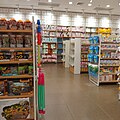 Shelves in MINISO, SM Ormoc
 -
 MINISO, SM Ormoc
 -
 MINISO, Champs-Élysées
 -
 MINISO, Santa Monica
 -
 MINISO, Santa Monica
 -
 MINISO, Santa Monica
 -
 MINISO, Gran Via
 -
 MINISO, Gran Via
 -
 MINISO, Gran Via
 -
 MINISO, Times Square


References
[edit]- ^ a b "Miniso Group Holding Limited, Amendment No. 1 to Form F-1 Registration Statement". US Securities and Exchange Commission. October 7, 2020.
- ^ "MINISO Group Announces June Quarter and Fiscal Year 2023 Unaudited Financial Results". 22 August 2023. Retrieved 17 October 2023.
- ^ "MINISO going places despite Muji copycat charge". Hong Kong Economic Journal. June 10, 2016. Retrieved January 3, 2017.
- ^ "Contact". Miniso. Archived from the original on 2023-01-03. Retrieved 2022-03-25.
和业广场 中国广东省广州市荔湾区康王中路486号 邮政编码: 510140
- ^ "Japanese people surprised to find that "popular Japanese store" Meiso doesn't exist in Japan". SoraNews24 -Japan News-. 2014-04-23. Archived from the original on May 23, 2018. Retrieved 2019-07-02.
- ^ a b "Is Miniso a Japan-based chain store?". Macau Daily Times. January 26, 2016. Retrieved January 3, 2017.
- ^ a b c d "A trendy Asian lifestyle chain opens in North Korea". The Economist. June 22, 2017. Retrieved August 21, 2017.
- ^ "Miniso to unveil character-inspired store at American Dream". Chain Store Age. 2024-04-04. Retrieved 2024-07-30.
- ^ "MINISO". www.miniso.com. Retrieved 2021-01-15.
- ^ Team, Dao (2024-09-02). "Going abroad: MINISO's overseas revenue rises 42.6%". Dao Insights. Retrieved 2024-09-05.
- ^ a b c "Stores around the world". Miniso. Archived from the original on March 9, 2015. Retrieved January 3, 2017.
- ^ a b "Miniso opens Paris flagship; eyes 1,000 new stores in 2024". Chain Store Age. 2024-06-26. Retrieved 2024-07-30.
- ^ "Company ESG Risk Rating - Sustainalytics". sustainalytics.com. Retrieved 2024-09-05.
- ^ "MNSO - MINISO Group Holding Ltd ADR Sustainability | Morningstar". Morningstar, Inc. 2024-09-03. Retrieved 2024-09-05.
- ^ a b "The Miniso Story: How a "Muji Copycat" Became an Innovative Retail Giant". RADII | Culture, Innovation, and Life in today's China. 2020-01-07. Retrieved 2020-04-16.
- ^ Singh, Pooja (2019-08-12). "MINISO's Miyake Junya Talks about Expansion & Brand Journey". Entrepreneur.
- ^ "终于要去日化,名创优品边赚钱边被"嫌弃"的十年". TOPYS. 2023-10-02. Retrieved 2025-05-02.
- ^ "Miniso far, Mumuso good: how China's 'cultural copycats' took over the world". South China Morning Post. 2018-11-05.
- ^ "日本風中国企業「名創優品」が突きつけるもの" (in Japanese). Nikkei Business. 2019-09-19.
- ^ "Emerging Market Game Changers: From Copycats To Top Dogs". ValueWalk. September 16, 2016. Retrieved January 3, 2017.
- ^ "Miniso aims to be 'on par with Nike' as it opens flagship shop in New York". South China Morning Post. 2023-05-20. Retrieved 2024-05-28.
- ^ "I spent £50 in Miniso but this playground of cuteness is a trip out in itself". Ham & High. 2024-02-15. Retrieved 2024-05-28.
- ^ Takahashi, Kosuke (June 16, 2017). "Miniso shop in Pyongyang could breach UNSC resolutions: Japanese expert". NK News. Retrieved November 8, 2017.
- ^ O'Carrol, Chad (August 21, 2017). "Pyongyang's "Miniso" store rebrands amid increased scrutiny". Retrieved November 8, 2017.
- ^ 平壌の元ミニソウが進化となり観光客もショッピングできるように. KoreaWorldTimes (in Japanese). 2019-01-01. Retrieved 2020-09-25.
- ^ Chen, Wency (2020-09-24). "Tencent-backed variety retailer Miniso files for US IPO". KrASIA. Retrieved 2024-07-30.
- ^ "Miniso files for bankruptcy in Canada". December 18, 2018. Retrieved January 31, 2022.
- ^ US, FashionNetwork com (20 March 2019). "Miniso China takes over Canadian operations". FashionNetwork.com. Retrieved 2024-09-05.
- ^ "Chinese retailer Miniso targets US$116 million in secondary Hong Kong listing". South China Morning Post. 2022-06-30. Retrieved 2024-07-30.
- ^ 王俊伟. "Miniso's Top Toy to play big for more market share". www.chinadaily.com.cn. Retrieved 2024-07-30.
- ^ Retailer Miniso to Junk Japanese Styling After Chinese Outcry Bloomberg News, August 19, 2022
- ^ Chinese Discount Retailer Miniso Is Sorry for Pretending to Be Japanese Vice Media, Rachel Cheung, August 22, 2022
- ^ Pandaily (2023-03-01). "Miniso Releases New Brand Strategy Amid Record High Gross Margin". Pandaily. Retrieved 2024-09-05.
- ^ Yun, Jessica (2024-05-29). "Chinese variety retailer Miniso goes into administration for a second time". The Sydney Morning Herald. Retrieved 2024-05-31.
- ^ 腾讯网 (2023-10-31). "名创优品:冲击全球化"超级品牌"_腾讯新闻". news.qq.com (in Chinese (China)). Retrieved 2025-08-02.
- ^ "Blokker parent company Mirage Retail Group files for bankruptcy". NL Times. 9 December 2024. Retrieved 5 August 2025.
- ^ "Bargain chain Miniso's Dutch stores could be up for grabs after Blokker bankruptcy". NL Times. 18 February 2025. Retrieved 5 August 2025.
- ^ Guatemala Embassy (August 4, 2018). "Mumuso is not Korean brand and they are originated from China". MOFA, Korean Gov.
- ^ "Mumuso, Miniso, Ximi Vogue, cuando lo 'cute' está de moda". December 6, 2019.
- ^ "Mumuso vs. Miniso, un mundo asiático compitiendo en México". amp.milenio.com. 7 April 2019.
- ^ ""Korean" Variety Retailer 'Ximivogue' to Enter Canadian Market". March 8, 2019.
- ^ "There is a shop called Ximi Vogue in S'pore, which is essentially pseudo-Korean Miniso". mothership.sg.
- ^ "El boom del 'bueno, bonito y barato' asiático en México". expansion.mx. 22 January 2019.
- ^ "Miniso, Mumuso, minigood y Yoyoso... la invasión de las tiendas asiáticas". EL ECONOMISTA. 16 September 2019.
- ^ "Chinese Variety Retailer YOYOSO to Enter Canada with Plans for Multiple Storefronts". February 26, 2020.
- ^ "India acquires a new taste for cute Asian stores". thepassage.cc. Archived from the original on 2022-12-09. Retrieved 2021-03-30.
- ^ "Miniso, Usupso, dan Uniqlo, Apa Bedanya?". fashion.
- ^ Arce, Por Manuel Avendaño (12 July 2019). "Tiendas de 'estilo de vida' traen precios bajos sin sacrificar la experiencia de compra". La Nación.
- ^ "Lätt Liv, el nuevo competidor que llega al sector retail en Colombia". July 28, 2019.
- ^ Liu, Visen (June 28, 2017). "This Muji-like Chinese chain is expanding in the US—and North Korea". Quartz. Retrieved November 8, 2017.
- ^ "Spectacular Scene of MINISO's Three Stores Opened in Vietnam". Yahoo Finance. September 28, 2016. Archived from the original on January 4, 2017. Retrieved January 3, 2017.
- ^ Cummins, Carolyn (February 17, 2017). "Miniso the latest retailer to disrupt the Australian market". Sydney Morning Herald. Retrieved November 8, 2017.
- ^ "เส้นทาง 6 ปี มินิโซ สำเร็จได้ด้วยสูตร 'กำไรต่ำ-คุณภาพสูง' | Workpoint News". workpointnews.com. Archived from the original on 2019-12-18.
- ^ Dhopade, Prajakta (November 18, 2017). "How Miniso might just be a Dollarama disruptor in Canada". Maclean's. Retrieved October 30, 2017.
- ^ "LA JAPONESA MINISO ESTIMA ABRIR 150 TIENDAS EN MÉXICO" (in Spanish). Expansion. March 6, 2017. Retrieved November 8, 2017.
- ^ "Miniso Japan to Open First U.S. Store in Pasadena". Pasadena Now. April 5, 2017. Retrieved November 8, 2017.
- ^ "Sucursales | MINISO". www.minisocr.com. Retrieved 2025-07-10.
- ^ "Miniso, maior rival da Daiso, abre primeira loja no Brasil" (in Portuguese). Veja. August 31, 2017. Retrieved November 8, 2017.
- ^ a b "Miniso abre en Chile su primera tienda insignia en América Latina" [Miniso opens its first flagship store in Latin America in Chile]. Forbes Chile (in Spanish). 2023-10-24. Retrieved 2024-09-16.
- ^ González Litman, Tamara (2020-09-14). "Miniso abre las puertas de su décima tienda en Bolivia" [Miniso opens the doors of its tenth store in Bolivia]. Fashion Network (in Spanish). Retrieved 2024-09-16.
- ^ "Otvorena prva radnja japanskog lanca Miniso u Srbiji - TiMP portal". TiMP portal (in Serbian). 2018-05-17. Archived from the original on 2019-09-10. Retrieved 2018-08-06.
- ^ ""MINISO" • ARMENIA (YEREVAN) • SPYUR". spyur.am.
- ^ "Miniso opens first store in Paris". RetailDetail EU. 2020-10-20. Retrieved 2024-09-05.
- ^ Steyn, Gabriella (August 8, 2017). "Japanese Fashion and retail brand MINISO takes on SA". Retrieved November 8, 2017.
- ^ "MINISO to open new shops in Nigeria". Vanguard. August 30, 2017. Retrieved November 8, 2017.
- ^ January 10, 2018, Wednesday (11 December 2020). "Japan's Miniso opens shop at Nairobi malls". Business Daily.
{{cite web}}: CS1 maint: numeric names: authors list (link) - ^ "Japan expands presence in Kenya's retail market with MINISO Lifestyle". The Exchange. 2018-06-11. Archived from the original on 2019-08-07. Retrieved 2019-02-15.
- ^ "Blogkla | Kampala City Blog". Blogkla | Kampala City Blog. 17 April 2018. Retrieved 2019-02-15.
- ^ "Retailerul japonez Miniso a deschis primul magazin în România. Unde şi când le deschide pe următoarele două". www.economica.net (in Romanian). 2018-09-05. Retrieved 2018-09-21.
- ^ "MINISO: A Strategy to Penetrate in Pakistani Retail Market | Marketing Skull". Archived from the original on 2021-03-23. Retrieved 2021-04-02.
- ^ "MINISO flagship store opens in Dhaka". The Daily Star. 2018-01-16. Retrieved 2023-07-21.
- ^ "MINISO flagship now in Bangladesh - Life & Style - observerbd.com". The Daily Observer. Retrieved 2023-07-21.
- ^ "Japan's Miniso to open 6 more Israeli stores". Globes. Retrieved 3 July 2019.
- ^ "Ealing Broadway Shopping Centre". Ealing. Retrieved 27 January 2023.
- ^ "Lifestyle retailer MINISO announces opening date for flagship Oxford Street store". Bdaily Business News. 2023-11-01. Retrieved 2023-11-04.
- ^ Robinson, Megan. "Miniso opens largest UK store to be 'vibrant hub of joy'". Retail Week. Retrieved 2024-07-31.
- ^ Maria Salgueiro (2021-01-06). "Miniso chega a Portugal com uma loja em Gaia (e prepara-se para abrir mais espaços)" [Miniso arrives in Portugal with a store in Gaia (and prepares to open more spaces)]. NiT (in Portuguese).
- ^ "MINISO". www.miniso.com.
- ^ "Miniso Muscat - Stationery, Gifts & Bags". City Centre Muscat.
- ^ "Miniso | First Floor | Oman Avenues Mall". www.omanavenuesmall.om.
- ^ "Miniso Store Qurum - Stationery, Cosmetics & More". City Centre Qurum.
- ^ "Miniso City Centre Suhar". Archived from the original on 2021-08-20. Retrieved 2021-08-20.
- ^ MINISO Group. "MINISO Celebrated the Grand Opening of Its Global Flagship Store at Times Square, New York". www.prnewswire.com (Press release). Retrieved 2024-06-03.
- ^ Hendriksz, Vivian (2024-03-28). "Miniso opens pop-up store in Times Square, NYC as it eyes up US expansion push". FashionUnited. Retrieved 2024-07-31.
- ^ Singsit, Jangoulun (2023-10-24). "Miniso unveils first IP-themed flagship store in Indonesia". Retail Insight Network. Retrieved 2024-07-31.
- ^ "World's largest Miniso store to open in Jakarta". The Manila Times. 2024-08-30. Retrieved 2024-09-16.
- ^ Moss, Linda (May 24, 2024). "Chinese Specialty Chain Miniso Ramps Up US Expansion: 'Plushie' Retailer Looks To Jump From 156 to 250 Stores".
- ^ "Miniso opens Paris flagship; eyes 1,000 new stores in 2024". Chain Store Age. 2024-06-26. Retrieved 2024-07-31.
- ^ "MINISO Opens MINISO LAND in Madrid". Retail & Leisure International. Retrieved 2025-01-05.
- ^ "MINISO Madrid Launch". Chain Store Age. Retrieved 2025-01-05.
- ^ "MINISO Themed Retail in Madrid". Toy Book. Retrieved 2025-01-05.
- ^ "MINISO Opens Flagship at Asiatique Thailand". License Global. Retrieved 2025-01-05.
- ^ "MINISO Thailand Expansion". Branding in Asia. Retrieved 2025-01-05.
- ^ "MINISO Expands in Thailand". Forbes Thailand. Retrieved 2025-01-05.
- ^ "MINISO Opens Times Square Flagship". DAO Insights. Retrieved 2025-01-05.
- ^ "MINISO Expansion Highlights". Bloomberg. Retrieved 2025-01-05.
- ^ "MINISO Launches UK Flagship". Inside Retail Asia. Retrieved 2025-01-05.
- ^ "MINISO UK Expansion". Retail Gazette. Retrieved 2025-01-05.
- ^ "MINISO Paris Flagship Store". Kidscreen. Retrieved 2025-01-05.
- ^ "MINISO Paris Growth". Retail & Leisure International. Retrieved 2025-01-05.
- ^ "MINISO Global Strategy". License Global. Retrieved 2025-01-05.
- ^ "Largest Hong Kong Flagship Opened By Miniso - Retail & Leisure International". 2024-06-25. Retrieved 2024-07-31.
- ^ link, Get; Facebook; X; Pinterest; Email; Apps, Other (2015-05-30). "Is China's MINISO Copying Japan's MUJI, UNIQLO and Daiso?". Retrieved 2025-05-02.
{{cite web}}:|last2=has generic name (help) - ^ "宣称100%日本品牌,"名创优品"被曝商品大多中国制造" (in Chinese). The Paper. September 13, 2015.
- ^ "那些山寨"名创优品"的山寨了谁?". www.sohu.com. Retrieved 2023-07-14.[permanent dead link]
- ^ 楊婉婷 (2016-06-11). "名創優品被斥「山寨品牌」 面世三年爭議不絕". 香港01 (in Chinese (Hong Kong)). Retrieved 2023-07-14.
- ^ 王林 (2021-08-23). "业绩快报丨名创优品2021财年营收90.72亿元,已布局全球99个国家和地区-36氪". 36kr.com. Retrieved 2023-07-14.
- ^ "Behind Mingchuang Premium, the challenges and controversy of the godfather of online finance". www.moomoo.com. Retrieved 2025-05-02.
- ^ "Muji, Japan's 'no brand' brand, battles copycats in China". Nikkei Asia. Retrieved 2025-08-21.
- ^ a b "How 'cultural copycats' like Miniso took over the world". South China Morning Post. 2018-11-05. Retrieved 2024-06-05.
- ^ "Chinese retailer Miniso to ditch Japanese styling after backlash". Reuters. Reuters. 2022-08-19.
- ^ Ai, Lee Kuo. "Is Chinese retailer Miniso's 400% stock rally sustainable?". ThinkChina - Big reads, Opinion & Columns on China. Retrieved 2024-05-27.
- ^ 蔡靜心, 潘安奇 (2016-06-11). "北歐設計師「被加入」名創優品 半數不知情求除名未果". 香港01 (in Chinese (Hong Kong)). Retrieved 2023-07-14.
- ^ "诺米家居指名创优品模式难为继 为上市恶意窃取创意". finance.sina.com.cn. 2018-03-27. Retrieved 2023-07-14.
- ^ 博評組 (2016-06-01). "名創優品又涉侵權 本地漫畫界嬲嬲豬|吹水貓紙|博評". 香港01 (in Chinese (Hong Kong)). Retrieved 2023-07-14.
- ^ "年收入百亿,阿里巴巴用了4年,这家公司只用了3年,高成长背后有什么风险?". www.sohu.com. Retrieved 2023-07-14.[permanent dead link]
- ^ sina_mobile (2017-06-28). "名创优品帝国速成记:分利宝输血 风险落加盟商身上". finance.sina.cn. Retrieved 2023-07-14.
- ^ "Miniso no longer uses P2P platform prior to IPO". EqualOcean. Retrieved 2025-01-05.
- ^ "Miniso's financing structure explained". Moomoo. Retrieved 2025-01-05.
- ^ a b "Miniso, so far Mumuso good: How China's cultural copycats took over the world". South China Morning Post. November 10, 2018. Retrieved 2025-01-10.
- ^ "MINISO is regarded as "the most powerful competitor" by MUJI and Watsons". June 23, 2022. Retrieved January 23, 2022.
- ^ Esposito, Alicia (2023-12-27). "Miniso Blind Box Carnival Surprises and Delights Shoppers Worldwide". Retail TouchPoints. Retrieved 2024-07-31.
- ^ "MINISO expands with new IP-themed stores in Singapore and Vietnam". License Global. Retrieved 2024-07-31.
- ^ "MINISO strengthens brand presence in Southeast Asia". Retail Asia. Retrieved 2024-07-31.
- ^ "Miniso expands its IP-themed concept stores to Australia". Inside Retail. Retrieved 2024-07-31.
- ^ "MINISO brings more IP-themed pop-ups to the U.S." License Global. Retrieved 2024-07-31.
- ^ "Miniso partners with Harry Potter franchise to launch themed stores". Marketing Interactive. Retrieved 2024-07-31.
- ^ "MINISO hosts Blind Box Carnival events across international locations". The Toy Book. Retrieved 2024-07-31.
- ^ "Blind Box Carnival delights global MINISO customers". Time Out. Retrieved 2024-07-31.
- ^ "Miniso Blind Box Carnival Surprises and Delights Shoppers Worldwide". Retail TouchPoints. 27 December 2023. Retrieved 2024-07-31.
- ^ "MINISO's global blind box sales surpass 20 million in 2023". Stock Titan. Retrieved 2024-07-31.
- ^ "MINISO dona más de 134.000 euros para plantar 115.000 árboles en los Andes". Europa Press. 2022-02-22. Retrieved 2024-09-05.
- ^ Oong, Ren Jie (2022-11-15). "Retail Hero Chapter 4: Miniso - Exabytes Blog". Retrieved 2024-09-05.
- ^ "MINISO raises awareness for panda conservation with new global campaign". Marketing-Interactive. 2022-10-26. Retrieved 2024-09-05.
- ^ Staff Reporter (2024-04-23). "MINISO enhances employee welfare and environmental initiatives in 2023". Retail Asia. Retrieved 2024-09-05.
- ^ "中国设计刷屏2018年iF设计奖,是实至名归还是水准降低?". www.sohu.com. Retrieved 2024-09-05.
- ^ "创新就是生命力,名创优品再获德国红点奖". finance.ifeng.com (in Chinese). Retrieved 2024-09-05.
- ^ "如何平衡设计和生活?名创优品用2021德国红点奖作品告诉你答案". www.yicai.com. Retrieved 2024-09-05.
- ^ Staff Reporter (2024-06-12). "MINISO bags two Retail Asia Awards for flagship stores in Shanghai and Indonesia". Retail Asia. Retrieved 2024-09-05.
- ^ Staff Reporter (2023-06-16). "MINISO bags two major accolades at Retail Asia Awards 2023". Retail Asia. Retrieved 2024-09-05.
- ^ "Winners". Event Marketing Awards. Retrieved 2024-09-05.
- ^ "2024". Deloitte China. Retrieved 2024-09-05.
- ^ "MINISO Gets into Malaysian Book of Records for Having Most Intellectual Property (IP) Rights Merchandise". Licensing International. 2024-08-19. Retrieved 2024-09-05.
- ^ "Environemtal, Social and Governance Report" (PDF). 2023.
- ^ Awards, MUSE Design. "MINISO LAND - MINISO's IP-design Wonderland in Indonesia by MINISO". MUSE Design Awards. Retrieved 2025-01-25.
- ^ Awards, MUSE Design. "MINISO's Costal-Themed IP Collection Store in Santa Monica by MINISO". MUSE Design Awards. Retrieved 2025-02-08.
- ^ "Forbes China Best CEOs 2024". Forbes China. Retrieved 2024-09-05.
- ^ "2024 Asia Executive Team Honored Companies". Institutional Investor. Retrieved 2024-09-05.
- ^ "Forbes China Top 30 Multinational Companies". Forbes China. Retrieved 2024-09-05.
- ^ "Hurun China 500 Most Valuable Private Companies 2023". Hurun Report. Retrieved 2024-09-05.
- ^ "Forbes China Best Employer 2024". Forbes China. Retrieved 2024-09-05.
External links
[edit]
MINISO
View on GrokipediaMINISO Group Holding Limited is a Chinese multinational retailer founded in 2013 by Ye Guofu and headquartered in Guangzhou, China.[1] The company specializes in affordable, design-driven lifestyle products, including cosmetics, accessories, plush toys, and household goods, with a focus on trendy items featuring collaborations with over 100 global intellectual properties such as Disney, Harry Potter, and Sanrio.[1] MINISO has pursued aggressive global expansion, reaching over 7,800 stores across 112 countries and regions by September 2025, including flagship locations in major cities like New York, Paris, and London.[2] Its business model emphasizes offline retail supplemented by online channels, driving revenue growth of 22.8% in 2024 alongside a record gross margin of 44.9%.[3] The retailer listed on the New York Stock Exchange in 2020 and the Hong Kong Stock Exchange in 2022, positioning itself as a leading IP design retail group.[1] Early branding drew from Japanese minimalism aesthetics, which sparked controversy in 2022 when Chinese consumers accused the firm of misleadingly presenting itself as Japanese-origin, prompting a public apology and commitments to "de-Japanification" efforts.[4][5] Despite such challenges, MINISO's strategy of IP integrations and store openings has sustained strong performance, with overseas revenue surpassing domestic sales in recent periods.[6]
Founding and Early Development
Inception and Founding Principles
MINISO was founded in 2013 by Chinese entrepreneur Ye Guofu in Guangzhou, China, with its first store opening in the city's Haizhu District.[1][7] Ye, who had previously operated the lifestyle brand Aiyaya, drew inspiration for MINISO during a family vacation in Japan that year, where he observed specialty stores offering high-quality, low-priced everyday items akin to those in 100-yen chains.[1][8] This experience prompted him to collaborate with Japanese designer Miyake Junya to create a retail model leveraging China's manufacturing advantages for affordable, aesthetically pleasing products, distinguishing it from pure Japanese imports by emphasizing cost-efficient domestic production.[7][9] The company's foundational business principles centered on a "three highs and three lows" strategy designed to maximize volume sales through affordability while maintaining operational efficiency. The "three lows" encompassed low prices (typically under $10 per item), achieved via low production costs and low gross margins, enabling broad consumer access to lifestyle goods without premium pricing.[10][11] Complementing this, the "three highs" focused on high product quality, high operational efficiency, and high supply chain technology adoption to ensure reliable, appealing offerings despite slim margins.[11][12] This approach prioritized direct cost reductions in sourcing and logistics over branding extravagance, aiming to disrupt China's fragmented retail sector by delivering value-driven, simple designs for daily use.[13][14]Initial Growth in China
MINISO opened its first store in Guangzhou, China, in 2013, marking the beginning of its domestic operations focused on affordable lifestyle products.[15] The company pursued rapid scaling through an asset-light franchise model, with over 70% of stores franchised by the late 2010s, enabling quick penetration into urban shopping malls and high-traffic locations.[16] This approach facilitated hundreds of annual openings in the mid-2010s, capitalizing on China's growing middle-class demand for low-cost, trendy goods without heavy capital investment in owned real estate.[14] Key to sustained growth was a high-frequency product refresh strategy, featuring weekly updates and an inventory turnover target of approximately 21 days, which kept assortments fresh and aligned with shifting consumer preferences for value-oriented, design-inspired items.[17] This drove robust same-store sales in early years, as empirical demand for items priced under 10 yuan underscored the appeal of accessible novelty in a competitive retail landscape dominated by higher-end or utilitarian alternatives.[18] Initial hurdles in supplier coordination, including quality consistency and cost pressures amid fast expansion, were mitigated through deepened retailer-supplier partnerships and enhanced vertical oversight, fostering efficient integration and contributing to gross margins exceeding 40% by the late 2010s.[19] Such measures stabilized operations, allowing MINISO to refine its domestic footprint before broader pursuits.[20]Business Model and Operations
Core Strategies and Supply Chain
MINISO employs a lean operational model emphasizing direct sourcing from Chinese suppliers to achieve cost efficiencies, partnering with over 1,400 manufacturers that account for 80-90% of its product procurement. This approach bypasses intermediaries through bulk orders and integrated logistics, enabling low procurement costs and rapid production cycles aligned with demand fluctuations.[21][22] The company's supply chain supports high inventory turnover, with mainland China operations achieving approximately 72 inventory days—translating to over five annual turns—via data analytics for sales forecasting and just-in-time replenishment that curtails excess stock and waste, in contrast to traditional retailers' slower cycles. Overseas direct operations exhibit longer turnover at 153 days due to logistical variances, yet overall efficiencies stem from centralized warehousing and vendor coordination in Guangdong province.[23][24] To mitigate dependencies on external licensing and bolster proprietary control, MINISO initiated an in-house IP incubation program on September 30, 2025, focusing on original character development like PenPen and DunDun, which integrates with its existing supply network to sustain low-cost scaling without eroding margins. This strategic pivot complements core efficiencies by internalizing design inputs while leveraging China's manufacturing scale for quick iteration and global distribution.[25][26]Store Format and Retail Approach
MINISO stores adopt compact formats, typically under 200 square meters for standard locations, featuring minimalist designs inspired by Japanese retail aesthetics such as clean lines and simple shelving to create an organized, approachable shopping space.[27][28] These layouts utilize a grid configuration with parallel, medium-height aisles that guide customer flow efficiently while highlighting products on end caps.[29] The retail approach emphasizes impulse-driven sales through visual merchandising strategies, including strategic placement of low-priced, trendy items like cosmetics on prominent displays to trigger unplanned purchases.[30][29] Limited SKUs in each category support rapid inventory turnover, minimizing overstock and reinforcing the fast-paced, grab-and-go experience central to the model.[31] A franchise-dominant structure, with over 70% of stores operated via partnerships, enables broad scalability, while centralized elements in the supply chain—such as controlled product sourcing and distribution—preserve uniformity in store presentation and merchandise availability across franchised units.[16][32] This integration ensures consistent brand execution despite decentralized ownership, prioritizing experiential consistency over local deviations.[33]
Product Offerings and Innovation
Product Categories and Sourcing
MINISO's product assortment encompasses categories such as cosmetics, household goods, toys, accessories, electronics, fashion, beauty and wellness items, snacks and beverages, and lifestyle products.[34] [35] Typical stores stock over 3,500 stock-keeping units (SKUs), with the company introducing approximately 100 new SKUs weekly to maintain variety and responsiveness to consumer trends.[20] [21] Nearly all items are priced under $10, emphasizing affordability and accessibility for everyday purchases.[36] [37] The company's sourcing relies heavily on a network of over 1,400 suppliers, with 80-90% of procurement originating from Chinese factories, facilitating cost efficiency and quick turnaround for production.[21] [38] This China-centric supply chain supports the rapid launch of new products, averaging around 940 SKUs monthly under the core MINISO brand as of mid-2024.[39] Certain product lines incorporate licensed intellectual property collaborations, including partnerships with Disney and Marvel, which extend to themed items in categories like plush toys, accessories, and apparel.[40] [41] These licensed offerings, spanning multiple categories, enable MINISO to integrate popular characters into its low-price model, such as Marvel-themed products across 13 categories launched in 2019.[42]Design Practices and Quality Management
MINISO's product designs emphasize a minimalist aesthetic inspired by Japanese principles, characterized by clean lines, simple forms, and functional simplicity, often infused with playful pop culture motifs through licensed intellectual properties (IPs) such as characters from Disney and Sanrio.[43][44] This approach targets young consumers seeking affordable, visually appealing everyday items like accessories and home goods, differentiating from cluttered fast-fashion alternatives.[45] In 2025, MINISO intensified efforts to develop proprietary IPs through an in-house incubation plan, signing nine artists to create original characters like YOYO for global launches, aiming to elevate originality and reduce dependence on external licensing that previously drew inspiration from popular trends.[25][46] Company executives stated this strategy targets 30% of sales from self-developed IPs by fostering unique, interest-driven products amid rising demand for branded merchandise valued at over $3.7 trillion globally in 2025.[47][25] Quality management integrates supplier evaluations, unannounced factory inspections, and onsite audits of production systems to enforce standards across the supply chain, with procedures embedded from design to delivery.[48][49][50] MINISO conducts random product testing and dynamic supplier assessments to maintain consistency, prioritizing affordable yet durable goods suitable for its price-sensitive demographic.[31] These controls correlate with a reported repeat purchase rate of approximately 60%, reflecting functional adequacy and consumer tolerance for the brand's value proposition despite occasional criticisms of variability in lower-tier items.[51] Sustained growth in same-store sales and customer engagement metrics further indicate that quality perceptions align with expectations for budget lifestyle products, countering unsubstantiated claims of inherent inferiority by prioritizing empirical retention over anecdotal defects.[52][53]Global Expansion
Timeline of International Entry
MINISO initiated its international expansion in August 2016 by opening its first overseas store, a flagship location in Seoul, South Korea.[54] This marked the company's entry into Asian markets beyond China, followed by openings in countries such as the United Arab Emirates and Malaysia during 2016 and 2017.[1] By 2018, MINISO extended its presence to Europe, establishing initial stores in the region, and began operations in the Americas, including early entries in North and Latin American markets.[55][56] The company's New York Stock Exchange initial public offering in October 2020 provided capital that supported accelerated direct-operated flagship developments abroad, shifting from primarily franchise-based models in select regions.[57] MINISO reached over 100 countries by 2023, with approximately 107 markets served and more than 2,100 overseas stores operational.[58] Post-2023, expansion intensified amid global economic challenges, with plans for 900 to 1,100 annual net new store openings through 2028 to sustain growth momentum.[59]Key Markets and Adaptation Strategies
MINISO maintains a regional operational framework dividing international markets into North America and Latin America, Southeast Asia, the Middle East, and Europe to tailor strategies effectively.[21] This approach enables localized product assortments and merchandising, with Southeast Asia emerging as a stronghold due to cultural resonance with value-driven variety retail; the region hosts nearly 1,500 stores across Asia excluding China, including 300 in Indonesia where high population density and price sensitivity align with MINISO's model.[60] In the Middle East, similar affordability appeals drive penetration, supported by franchise partnerships that adapt store layouts to local shopping habits. In the United States and Europe, MINISO counters higher market entry barriers by emphasizing urban flagship stores in prime locations, such as Times Square in New York and Champs-Élysées in Paris, alongside hybrid e-commerce integrations to test consumer response before scaling physical footprints.[61] [62] Product adaptations include regional flavor profiles in snacks and beauty items, alongside increased local sourcing—reaching 60% in the U.S. to mitigate tariffs and appeal to preferences for domestically produced goods.[63] These tactics have yielded empirical gains, with same-store sales growth turning positive in the June 2025 quarter, marking the first such uptick in four quarters and reflecting successful navigation of initial cultural and preference mismatches via data-informed assortment refinements.[53] [64] Franchise model adjustments further prioritize partner incentives aligned with local regulatory and consumer dynamics, fostering resilience over rigid global standardization.