Hubbry Logo
MicrodontiaMicrodontiaMain
Open search
Microdontia
Community hub
Microdontia
logo
8 pages, 0 posts
0 subscribers
Be the first to start a discussion here.
Microdontia
Microdontia
from Wikipedia
Microdontia
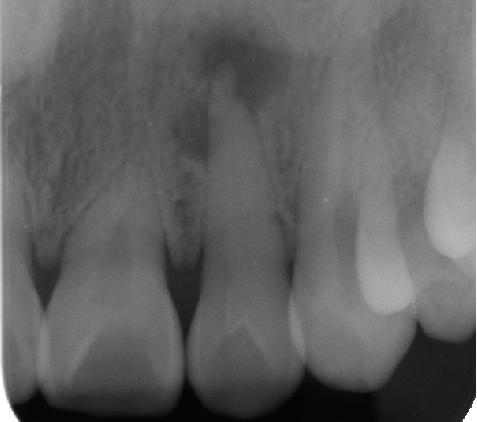
Radiograph (X-ray) showing microdontia. Note also periapical lesion on the maxillary left lateral incisor.
SpecialtyDentistry

Microdontia is a condition in which one or more teeth appear smaller than normal. In the generalized form, all teeth are involved. In the localized form, only a few teeth are involved. The most common teeth affected are the upper lateral incisors and third molars.

Teeth affected by microdontia may also have abnormal shape, and the abnormal size may affect the whole tooth, or only a part of the tooth.[1]

Definition

[edit]

Males tend to have larger teeth than females,[1] and tooth size also varies by race.[1] Abnormal tooth size is defined by some as when the dimensions are more than 2 standard deviations from the average.[1] Microdontia is when the teeth are abnormally small, and macrodontia is when the teeth are abnormally large.

Classification

[edit]

There are 3 types of microdontia:

True generalized

[edit]

All the teeth are smaller than the normal size. True generalized microdontia is very rare, and occurs in pituitary dwarfism.[2][3] Due to decreased levels of growth hormone the teeth fail to develop to a normal size.[2]

Relative generalized

[edit]

All the teeth are normal size but appear smaller relative to enlarged jaws.[3] Relative generalized microdontia may be the result of inheritance of a large jaw from one parent, and normal sized teeth from the other.[2]

Localized (focal)

[edit]

Localized microdontia is also termed focal, or pseudo-microdontia. A single tooth is smaller than normal.[3] Localized microdontia is far more common than generalized microdontia,[2] and is often associated with hypodontia (reduced number of teeth).[1] The most commonly involved tooth in localized microdontia is the maxillary lateral incisor, which may also be shaped like an inverted cone (a "peg lateral").[3] Peg laterals typically occur on both sides,[2] and have short roots.[2] Inheritance may be involved,[2] and the frequency of microdontia in the upper laterals is just under 1%.[1] The second most commonly involved tooth is the maxillary third molars,[3] and after this supernumerary teeth.[3]

Causes

[edit]

There are many potential factors involved.[4]

Others include trichorhinopharyngeal, odontotrichomelic, neuroectodermal and dermo-odontodysplasia syndromes.[4]

Treatment

[edit]

Unerupted microdonts may require surgical removal to prevent the formation of cysts.[2] Erupted microdonts, peg laterals especially, may cause cosmetic concern. Such teeth may be restored to resemble normal sized teeth,[2] typically with composite build ups or crowns.[4] Orthodontics may be required in severe cases to close gaps between the teeth.[4]

Epidemiology

[edit]

Females are affected more than males,[4] and the condition occurs in permanent (adult) teeth more than deciduous (baby teeth or milk teeth).[4]

References

[edit]
[edit]
Revisions and contributorsEdit on WikipediaRead on Wikipedia
from Grokipedia
Microdontia is a developmental dental anomaly characterized by the presence of one or more teeth that are abnormally small in size compared to normal standards, potentially disrupting occlusion, , and oral function. This condition arises from disruptions in tooth formation during embryonic or early postnatal development and can manifest as isolated occurrences or in association with genetic syndromes. Microdontia is classified into three main types: localized microdontia, which affects a single or a few teeth (most commonly the maxillary lateral incisors, appearing peg-shaped); relative generalized microdontia, where teeth of normal size appear small relative to an oversized ; and true generalized microdontia, a rare form involving proportionally small size across all teeth, often linked to systemic conditions. The prevalence of microdontia is estimated at 1.5% to 2% in the general population, with a slight predominance in females, though true generalized cases are exceptionally uncommon, comprising only a handful of documented non-syndromic instances. Etiologically, microdontia is primarily attributed to genetic factors, including mutations affecting dental morphogenesis, but environmental influences such as prenatal exposures (e.g., infections, nutritional deficiencies, or radiation), hormonal imbalances (e.g., pituitary dwarfism), and preterm birth can also contribute. It frequently co-occurs with other anomalies like hypodontia (missing teeth) or may signal broader syndromes, including orofaciodigital syndrome or congenital deafness with microtia. Clinically, affected individuals may experience spacing between teeth (diastema), malocclusion, or aesthetic concerns, though many cases are asymptomatic and discovered incidentally via dental examination or radiographs. Management typically involves multidisciplinary approaches, with cosmetic restorations like composite bonding, veneers, or crowns to enhance size and shape, alongside orthodontic interventions to correct alignment if needed; early is crucial to prevent complications such as food impaction or periodontal issues.

Introduction

Definition

Microdontia is a dental anomaly characterized by the presence of one or more teeth that are abnormally small in , specifically defined as a mesiodistal exceeding two standard deviations below the population for the individual's age, sex, and specific type. This quantitative criterion ensures that microdontia is distinguished from typical developmental variations, focusing on measurable reductions in crown width along the mesiodistal axis. Normal dimensions vary by type, with the serving as a common example of measurement; in adults, its average mesiodistal width ranges from 6.5 to 7.0 mm. influences these sizes, as males generally exhibit larger teeth than females, with differences typically ranging from 0.2 to 0.5 mm across various tooth types, though greater discrepancies (up to 1.0 mm) may occur in molars. Additionally, ethnic and racial factors contribute to baseline variations, such that teeth in Asian populations tend to be smaller than those in Caucasian populations, reflecting population-specific norms in odontometric data. This condition stands in opposition to macrodontia, where teeth exceed two standard deviations above the mean, highlighting microdontia as the diminutive counterpart on the spectrum of tooth size anomalies, separate from the broader range of normal physiological variation. Microdontia may present in generalized or localized forms, but its core identification relies on these standardized dimensional thresholds.

Clinical Presentation

Microdontia manifests primarily through visibly undersized teeth that disrupt the normal alignment and proportions of the , often resulting in aesthetic concerns such as narrow, tapered crowns that create noticeable gaps or diastemas between teeth, leading to a disproportionate or uneven . These gaps are particularly evident in the anterior , where small teeth fail to fill the available space, contributing to an unaesthetic facial profile and reduced lip support. Patients frequently report self-consciousness about their appearance, as the altered tooth morphology, such as peg-shaped incisors, accentuates in the . Functionally, microdontia can lead to due to insufficient tooth mass for proper occlusion, resulting in uneven bite forces and potential food impaction in the spaces between teeth. This reduced occlusal surface area often impairs chewing efficiency, causing difficulties in mastication and increased sensitivity to temperature extremes from exposed . Additionally, the presence of diastemas may contribute to speech impediments, such as lisping, particularly with sounds, as the gaps alter airflow during articulation. The condition most commonly affects the upper lateral incisors, where teeth may appear peg-shaped with conical crowns, and the third molars, which are frequently diminutive or absent in form. While are more prone to these isolated presentations, microdontia in deciduous dentition is rarer and typically less severe, often resolving or becoming evident upon eruption of successors. In generalized cases, all teeth exhibit proportional reduction in size, amplifying both aesthetic and functional challenges across the . Microdontia often co-occurs with other dental anomalies, such as , where the absence of teeth exacerbates spacing and alignment issues, though it is not invariably syndromic. , characterized by enlarged pulp chambers, may also accompany microdontia in certain presentations, further altering root morphology without directly impacting crown presentation.

Classification

True Generalized Microdontia

True generalized microdontia represents a rare dental anomaly in which all teeth within the —encompassing both and permanent sets—are proportionally reduced in size compared to normal standards. This condition involves uniform miniaturization across the entire , with teeth exhibiting significantly smaller mesiodistal and buccolingual dimensions while retaining typical morphological forms. The prevalence of true generalized microdontia is exceedingly rare in the general population, often occurring in association with systemic growth disorders such as pituitary dwarfism, where reduced levels contribute to overall developmental impacts including dental size reduction. Morphological features typically include short crown heights, absent or reduced interproximal contact areas, peg-shaped anterior teeth, and shortened occlusogingival dimensions in posterior teeth, without localized anomalies or disproportionate variations. These characteristics may accompany a proportionally smaller maxillofacial , preserving normal relationships. Historical documentation of true generalized microdontia appears in mid-20th-century endocrine literature, with early reports linking it to pituitary dysfunction and growth deficiencies, as noted in seminal dental pathology texts. For instance, case descriptions from the 1950s highlighted uniform tooth size reduction in patients with , emphasizing its distinction from more common focal forms.

Relative Generalized Microdontia

Relative generalized microdontia is characterized by teeth of normal size that appear proportionally small due to a disproportionately large or , often leading to the illusion of excessive spacing between teeth or challenges in achieving proper arch alignment. This condition arises from a mismatch in dental and skeletal development, where the overgrowth creates an abnormal tooth-to-jaw size ratio, potentially resulting in aesthetic concerns or functional issues such as disproportionate facial appearance. The inheritance pattern typically involves a familial tendency through crossed genetic contributions, such as inheriting a larger structure from one parent and normal-sized from the other, without association to systemic diseases or syndromes. This non-syndromic presentation distinguishes it from other forms of microdontia, emphasizing the role of polygenic influences on craniofacial dimensions rather than specific affecting formation. Clinically, the condition is identified by an abnormal tooth-to-jaw ratio, often confirmed through that reveals macrognathia or excessive jaw dimensions relative to standard norms. involves comparing dental measurements to skeletal landmarks via radiographs, highlighting the disproportion without evidence of inherently undersized teeth. Relative generalized microdontia is more prevalent than true generalized microdontia, with overall microdontia affecting approximately 1.5% to 2% of the population, though specific rates for the relative form vary based on skeletal variations.

Localized Microdontia

Localized microdontia represents the most prevalent subtype of this dental anomaly, characterized by the abnormal smallness of one or a few isolated teeth, rather than the entire . It commonly manifests in specific teeth, such as the maxillary lateral incisors, which often present as peg-shaped with a conical form and reduced mesiodistal width typically less than 5 mm, compared to the normal range of approximately 6.5 mm for these teeth. Another frequent site is the third molars, where microdontia results in diminutive crowns that may resemble supplemental or rudimentary structures. This focal nature distinguishes it from generalized forms, which involve widespread size discrepancies across multiple teeth. The prevalence of localized microdontia varies by affected tooth, with peg-shaped maxillary lateral incisors occurring in 0.8% to 8.4% of the population, showing a higher incidence in females. These anomalies can appear unilaterally or bilaterally, though bilateral involvement is more common in peg laterals. Morphologically, affected teeth exhibit forms such as the classic peg shape, where the crown tapers to a point, or hypoplastic variants with reduced enamel and thickness leading to overall diminished size. Hypocalcified presentations, involving softer, less mineralized tissues, are less typical but contribute to the structural inadequacy in some cases. Localized microdontia is frequently associated with other dental anomalies, particularly (missing teeth), often involving the contralateral tooth in unilateral presentations. For instance, in patients with of one , the opposing tooth is peg-shaped in about 45-55% of instances. However, this association remains nonsyndromic in most occurrences, without the systemic features seen in broader genetic conditions.

Etiology

Genetic and Syndromic Causes

Microdontia can arise from mutations in genes critical to odontogenesis, such as PAX9 and EDA, which disrupt tooth development during embryogenesis. Mutations in PAX9, often inherited in an autosomal dominant manner, are linked to microdontia particularly affecting the upper central incisors, with higher prevalence in frameshift and nonsense variants compared to missense types. EDA mutations, typically X-linked recessive, underlie and result in microdontia alongside by interfering with ectodysplasin signaling in the EDA/ pathway. Several syndromes feature microdontia as a prominent dental manifestation due to underlying chromosomal or genetic abnormalities. In , particularly the hypohidrotic form caused by EDA pathway disruptions, microdontia affects small, conical teeth, often combined with delayed eruption and enamel defects. , resulting from trisomy 21, is associated with microdontia in approximately 34-46% of cases, manifesting as smaller-than-normal that contribute to . , caused by a microdeletion at 7q11.23, exhibits microdontia in about 95% of affected individuals, typically presenting as uniformly small, tapered teeth with excessive interdental spacing. Orofacio-digital syndrome, a group of X-linked or autosomal disorders involving mutations in genes like OFD1, can present with microdontia alongside other oral-facial anomalies such as and renal issues. Congenital deafness with , often linked to genetic factors affecting development, may include microdontia as part of the . Pituitary dwarfism, stemming from , leads to true generalized microdontia where all teeth are proportionally reduced in size, reflecting impaired overall somatic growth including dental tissues. A heterozygous c.413A>T variant in EDARADD has been identified in cases of nonsyndromic tooth agenesis, which can co-occur with microdontia.

Environmental and Developmental Factors

Environmental and developmental factors contribute to microdontia by disrupting the delicate processes of formation and differentiation, particularly during critical prenatal and early postnatal periods when ameloblasts and odontoblasts are most vulnerable. These non-genetic influences can lead to incomplete enamel and deposition, resulting in teeth that are proportionally smaller than normal. Unlike inherent genetic predispositions, many of these factors are modifiable through preventive measures, such as management and careful monitoring of childhood treatments. Intrauterine insults represent a primary category of environmental risks, where maternal conditions during interfere with fetal development. For instance, maternal s like can cross the and affect odontogenesis, leading to microdontia as part of broader dental anomalies by halting cellular proliferation in the dental lamina. Similarly, nutritional deficiencies—often linked to inadequate maternal diet—impair mineralization and matrix formation in developing buds, with specifically associated with reduced size due to its role in calcium absorption and enamel maturation. These prenatal exposures highlight the importance of maternal and screening to mitigate risks during the first trimester when tooth germs initiate. Postnatal developmental disruptions further contribute to microdontia, often through therapeutic interventions or localized insults. and in young children, particularly for cancers like , damage proliferating cells in germs, with studies reporting microdontia in up to 64.5% of survivors treated before age 5, especially affecting incisors and premolars due to high doses (≥20 Gy) to the head and neck. Trauma to developing germs from maxillofacial injuries can also cause localized microdontia by inducing abnormal folding of the inner enamel epithelium and of the , altering crown morphology. Endocrine imbalances, such as or , disrupt hormonal regulation of dental growth postnatally, leading to proportionally small teeth through impaired and ameloblast activity; for example, in pituitary disorders has been linked to true generalized microdontia. These factors underscore the need for dental monitoring in at-risk children to address modifiable exposures early. Multifactorial models emphasize how environmental triggers interact with underlying to produce microdontia, often amplifying risks in susceptible individuals while allowing for intervention strategies like nutritional supplementation or protective dental shielding during cancer . This interplay supports efforts to reduce incidence through awareness of preventable exposures.

Diagnosis

Clinical Evaluation

The clinical evaluation of microdontia begins with a thorough history to identify potential contributing factors and associated conditions. This includes inquiring about family history of dental anomalies, such as similar tooth size discrepancies or other developmental issues in relatives, which may indicate a . Prenatal and perinatal details, including maternal exposures to infections, medications, or nutritional deficiencies, as well as the patient's growth patterns from childhood, are assessed to detect environmental influences. Additionally, screening for syndromic associations involves evaluating systemic symptoms, such as , intellectual delays, or characteristic facial features, to differentiate isolated microdontia from conditions like or . Intraoral examination is essential for direct visualization and quantification of dimensions. Visual inspection identifies teeth that appear disproportionately small or exhibit abnormal shapes, such as peg-like forms, particularly affecting maxillary lateral incisors or second premolars. of the and alveolar ridges helps detect unerupted or impacted teeth that may contribute to perceived size discrepancies. Precise measurement of the mesiodistal diameter using digital calipers or vernier gauges is performed on erupted teeth, with microdontia typically defined as a width more than two standard deviations below the population mean for age and sex-matched norms. Extraoral assessment evaluates overall facial harmony to distinguish true microdontia from relative forms. This involves observing facial proportions, including the relationship between the midface, , and , to identify discrepancies such as a disproportionately large relative to tooth size. Jaw size is gauged through profile views and of the mandibular border, helping to confirm if teeth of normal dimensions appear small due to macrognathia. Differential diagnosis during clinical evaluation must rule out conditions mimicking microdontia, such as excessive tooth wear from attrition or , which can reduce clinical crown height and width. Attrition, often from or occlusal habits, presents with uniform wear facets, while shows smooth, glassy surfaces typically on lingual or occlusal aspects due to acidic exposures. These are differentiated by history of parafunctional habits or dietary acids and by examining wear patterns absent in developmental microdontia.

Radiographic Assessment

Radiographic assessment plays a crucial role in confirming microdontia by providing detailed visualization of size, structure, and associated anomalies beyond clinical observation. Conventional , particularly panoramic X-rays (orthopantomograms), is the initial imaging modality of choice for evaluating the overall . These images allow for the identification of smaller-than-normal dimensions, assessment of developing buds in pediatric patients, and evaluation of formation and potential impaction, especially in third molars. For instance, panoramic radiographs can reveal congenital absence of buds or variations such as single-ed molars in cases of generalized microdontia. Intraoral periapical films complement this by offering high-resolution views of specific affected teeth, enabling precise measurement of crown dimensions and morphology in localized microdontia. Advanced imaging techniques, such as cone-beam computed tomography (CBCT), provide three-dimensional reconstructions essential for complex evaluations. CBCT is particularly valuable for analyzing root morphology, pulp chamber size, and tooth volume in microdontia cases, where two-dimensional radiographs may underestimate structural anomalies. This modality facilitates the detection of associated conditions like by visualizing unerupted or malformed teeth in multiple planes. Quantitative analysis enhances diagnostic accuracy through software-based tools applied to radiographic images. These tools measure parameters such as root-to-crown ratios, which are often altered in microdontia (e.g., ≤1:1 in cases with short root anomaly), compared to the normal range of 1.5–2.0 for permanent . Such measurements help differentiate true microdontia from relative forms and identify links to . In pediatric cases, where microdontia is frequently encountered, radiation safety adheres to the ALARA (As Low As Reasonably Achievable) principle to minimize exposure. Guidelines recommend selective use of radiographs based on clinical needs, employing collimation, high-speed films, and digital sensors to reduce doses while maintaining diagnostic quality.

Management

Restorative Treatments

Restorative treatments for microdontia focus on enhancing the aesthetics and function of affected teeth through direct or indirect modifications, particularly for erupted teeth such as peg-shaped maxillary lateral incisors in cases of localized microdontia. These approaches aim to restore normal tooth dimensions and proportions while preserving as much natural tooth structure as possible. Composite bonding, also known as direct resin restorations, involves the application of tooth-colored to build up the deficient areas of microdont teeth. This minimally invasive technique is ideal for peg laterals, where it can increase tooth width by 1-2 mm through layered application to mimic natural contours, requiring no or minimal enamel preparation. It is particularly suitable for younger patients or interim corrections, as the material is repairable and allows adjustments as gingival maturation occurs. Benefits include reversibility, low abrasion to opposing teeth, and good initial , though it is susceptible to , , and over time. Costs for composite bonding range from $100-600 per tooth as of 2025, making it accessible for mild cases. For more severe cases in adults, veneers and crowns provide durable indirect restorations using or materials to reshape and strengthen microdont teeth. veneers cover the labial surface with minimal reduction (often enamel-confined at 0.3-0.6 mm), offering superior shade matching and resistance to staining compared to composites, with survival rates of 95% after 9 years and up to 99% at 12 years when bonded to enamel. Crowns, which encase the entire , are indicated when significant is needed but are more invasive, involving greater enamel removal and higher risks of pulpal complications in younger patients. These restorations typically last 10-15 years with proper care, improving both shape and longevity. Costs for veneers and crowns range from $900-2,500 per as of 2025, justified by their durability in aesthetic zones. Material selection emphasizes , with feldspathic porcelain (e.g., Super Porcelain EX-3) favored for its natural translucency and bond strength to etched enamel, ensuring minimal allergic reactions and optimal integration. Precise shade matching is achieved through or visual guides to blend with adjacent teeth. As of 2025, advances in for microdontia incorporate digital smile design (DSD) software, which enables precise virtual mockups and visualization of outcomes before treatment, along with interdisciplinary digital workflows for ultrathin veneers in complex cases involving . This tool facilitates additive wax-ups and intraoral simulations, guiding minimally invasive preparations and improving predictability, as demonstrated in cases of focal microdontia treated with veneers.

Orthodontic and Surgical Approaches

Orthodontic management of microdontia primarily focuses on addressing malocclusions and diastemata resulting from undersized teeth, often employing fixed appliances such as braces or to redistribute space and achieve proper alignment. In cases of localized microdontia, such as peg-shaped lateral incisors, orthodontic treatment can close interproximal gaps typically measuring 2-4 mm by proclining adjacent teeth or using elastomeric chains for controlled retraction, thereby improving occlusal function without altering size. techniques, which involve dental compensations like tipping incisors to mask underlying skeletal discrepancies associated with syndromic microdontia, are preferred over surgical options when growth potential remains, as they avoid invasive procedures while enhancing and stability. Pre-orthodontic space closure using temporary composite buildups may guide tooth movements, ensuring precise contact points during alignment. Surgical interventions are indicated for impacted or supernumerary microdonts that disrupt eruption or contribute to crowding, with enucleation or extraction serving as primary options to facilitate arch development. For example, impacted wisdom teeth exhibiting microdontia characteristics can be surgically removed via flap elevation and bone removal to prevent resorption of adjacent structures, particularly in adolescents where early intervention preserves space for permanent dentition. In cases of retained microdont incisors, surgical exposure combined with orthodontic traction—using buttons and light forces (e.g., 50-100g)—allows guided eruption, often followed by prosthetic rehabilitation if the tooth remains undersized. Dental implants are recommended for replacing missing adjacent teeth post-extraction, providing osseointegrated anchors that support long-term occlusal stability in multidisciplinary plans. Extraction of non-viable microdonts is considered only when prognosis is poor, prioritizing space maintenance with provisional appliances. Multidisciplinary care integrates with periodontics and , emphasizing intervention during the mixed phase (ages 8-12) to leverage growth for optimal outcomes. Timing in this period allows interceptive measures to correct spacing anomalies, such as those exacerbated by aberrant frenal attachments, where a may be performed to release midline diastemata and promote natural closure without braces. ensures sequential phasing: surgical exposure first, followed by orthodontic alignment, and finally restorative enhancements, minimizing treatment duration to 18-24 months. The American Association of Orthodontists recommends orthodontic evaluation by age 7, which is crucial for early intervention in cases of microdontia, including syndromic forms like , to prevent progressive through interceptive and address associated . This approach prioritizes non-extraction camouflage in growing patients to accommodate small teeth within the arch, with multidisciplinary monitoring.

Epidemiology and Prognosis

Prevalence and Demographics

Microdontia, characterized by teeth smaller than normal, exhibits a global prevalence estimated at 1.5% to 2% in the general population as of 2025, with variations depending on the specific tooth type and population studied. This condition affects both primary and permanent dentitions, though it is more common in permanent teeth, with rates of approximately 0.5% in primary dentition and 2.5% in permanent dentition. Among subtypes, peg-shaped maxillary lateral incisors represent a frequent manifestation, occurring in about 1.8% of individuals worldwide, with no significant publication bias in meta-analytic estimates. Demographic factors influence the occurrence of microdontia, showing a higher in females compared to males, with women 1.35 times more likely than men, particularly for peg-shaped laterals. Ethnic variations are notable, with higher rates observed in Asian () populations, where can reach up to 2.6% or more for certain anomalies, in contrast to lower rates of around 1-2% in African populations based on comparative surveys. are disproportionately affected compared to across these groups, aligning with broader patterns in dental developmental anomalies. In specific at-risk groups, such as patients with , the prevalence of microdontia increases substantially, reaching up to 5.6% in affected individuals according to radiographic evaluations. Meta-analyses from national health surveys, such as updates from the 2010s, support these trends, emphasizing the need for population-specific screening.

Long-Term Outcomes

With early intervention through restorative or orthodontic management, microdontia typically yields excellent aesthetic and functional outcomes, with composite restoration survival rates reaching up to 93% post-orthodontics. Minimally invasive adhesive techniques preserve tooth structure and provide predictable long-term stability, particularly for focal or localized forms. Untreated microdontia, however, increases risks of spacing-related complications, including due to food impaction and plaque accumulation in gaps, as well as leading to uneven wear and chewing difficulties. Common long-term complications include restoration failure rates of approximately 7% over 4 years for resin-based treatments, potentially rising with shrinkage or color , necessitating periodic maintenance. In orthodontic cases, relapse can occur due to inherent spacing tendencies, though specific rates for microdontia are not well-delineated beyond general post-treatment in anomalous dentitions. Syndromic microdontia, often linked to conditions like , portends worse outcomes due to associated and progressive occlusal issues. Post-treatment psychological impacts are generally positive, with interventions improving and oral health-related (OHRQoL); for instance, Geriatric Oral Health Assessment Index (GOHAI) scores in affected adults rose from poor (33/60) to adequate (53/60) levels within months of multidisciplinary rehabilitation. Longitudinal observations indicate reduced (TMJ) strain following alignment corrections, as unresolved spacing exacerbates uneven loading, though direct studies on microdontia-specific cohorts remain limited. Recent post-2020 cohort analyses, including 8-month to 4-year follow-ups, underscore the value of preventive care in sustaining outcomes, with digital workflows enabling stable aesthetics and emphasizing regular monitoring to mitigate biological risks like root caries in retained structures.

References

Add your contribution
Related Hubs
User Avatar
No comments yet.