Hubbry Logo
AnkyloglossiaAnkyloglossiaMain
Open search
Ankyloglossia
Community hub
Ankyloglossia
logo
8 pages, 0 posts
0 subscribers
Be the first to start a discussion here.
Ankyloglossia
Ankyloglossia
from Wikipedia
Ankyloglossia
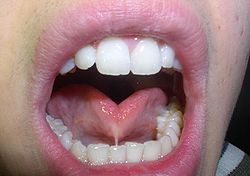
Adult with ankyloglossia
SpecialtyMedical genetics Edit this on Wikidata

Ankyloglossia, also known as tongue-tie, is a congenital oral anomaly that may decrease the mobility of the tongue tip[1] and is caused by an unusually short, thick lingual frenulum, a membrane connecting the underside of the tongue to the floor of the mouth.[2] Ankyloglossia varies in degree of severity from mild cases characterized by mucous membrane bands to complete ankyloglossia whereby the tongue is tethered to the floor of the mouth.[2]

Definition

[edit]

Tongue-tie is "a condition that impairs tongue movement due to a restrictive lingual frenulum". As of 2025, no definition, classification system, diagnostic parameters and therefore no definite management parameters have been generally accepted.[3]

Cause

[edit]

The cause for tongue tie is unknown. While research suggests that tongue-tie could be heritable, most people with it have no inborn diseases.[3] There are associations between X-linked cleft palate syndrome and rare syndromes, including Kindler syndrome, Opitz syndrome, and Van Der Woude syndrome.[3]

Presentation

[edit]

Ankyloglossia can affect eating, especially breastfeeding, speech and oral hygiene[4] as well as have mechanical/social effects.[5] Ankyloglossia can also prevent the tongue from contacting the anterior palate. This can then promote an infantile swallow and hamper the progression to an adult-like swallow which can result in an open bite deformity.[2] It can also result in mandibular prognathism; this happens when the tongue contacts the anterior portion of the mandible with exaggerated anterior thrusts.[2]

Opinion varies regarding how frequently ankyloglossia truly causes problems. Some professionals believe it is rarely symptomatic, whereas others believe it is associated with a variety of problems. The disagreement among professionals was documented in a study by Messner and Lalakea (2000).[6]

Feeding

[edit]

Messner et al.[7] studied ankyloglossia and infant feeding. Thirty-six infants with ankyloglossia were compared to a control group without ankyloglossia. The two groups were followed for six months to assess possible breastfeeding difficulties; defined as nipple pain lasting more than six weeks, or infant difficulty latching onto or staying onto the mother's breast. Twenty-five percent of mothers of infants with ankyloglossia reported breastfeeding difficulty compared with only 3% of the mothers in the control group. The study concluded that ankyloglossia can adversely affect breastfeeding in certain infants. Infants with ankyloglossia do not, however, have such big difficulties when feeding from a bottle.[8]

Wallace and Clark also studied breastfeeding difficulties in infants with ankyloglossia.[9] They followed 10 infants with ankyloglossia who underwent surgical tongue-tie division. Eight of the ten mothers experienced poor infant latching onto the breast, 6/10 experienced sore nipples and 5/10 experienced continual feeding cycles; 3/10 mothers were exclusively breastfeeding. Following a tongue-tie division, 4/10 mothers noted immediate improvements in breastfeeding, 3/10 mothers did not notice any improvements and 6/10 mothers continued breastfeeding for at least four months after the surgery. The study concluded that tongue-tie division may be a possible benefit for infants experiencing breastfeeding difficulties due to ankyloglossia and further investigation is warranted.[9]

Speech

[edit]

Messner and Lalakea studied speech in children with ankyloglossia. They noted that the phonemes likely to be affected due to ankyloglossia include sibilants and lingual sounds such as 'r'. In addition, the authors also state that it is uncertain as to which patients will have a speech disorder that can be linked to ankyloglossia and that there is no way to predict at a young age which patients will need treatment. The authors studied 30 children from one to 12 years of age with ankyloglossia, all of whom underwent frenuloplasty. Fifteen children underwent speech evaluation before and after surgery. Eleven patients were found to have abnormal articulation before surgery and nine of these patients were found to have improved articulation after surgery. Based on the findings, the authors concluded that it is possible for children with ankyloglossia to have normal speech in spite of decreased tongue mobility. However, according to their study, a large percentage of children with ankyloglossia will have articulation deficits that can be linked to tongue-tie and these deficits may be improved with surgery. The authors also note that ankyloglossia does not cause a delay in speech or language, but at the most, problems with enunciation. Limitations of the study include a small sample size as well as a lack of blinding of the speech-language pathologists who evaluated the subjects' speech.

Several recent systematic reviews and randomized control trials have argued that ankyloglossia does not impact speech sound development and that there is no difference in speech sound development between children who received surgery to release tongue-tie and those who did not.[10][11][12]

Messner and Lalakea also examined speech and ankyloglossia in another study. They studied 15 patients and speech was grossly normal in all the subjects. However, half of the subjects reported that they thought that their speech was more effortful than other peoples' speech.[5]

Horton and colleagues discussed the relationship between ankyloglossia and speech. They believe that the tongue-tie contributes to difficulty in range and rate of articulation and that compensation is needed. Compensation at its worst may involve a Cupid's bow of the tongue.[2]

Although the tongue-tie exists, and even years following surgery, common speech abnormalities include mispronunciation of words, the most common of which is pronouncing Ls as Ws; for example, the word "lemonade" would come out as "wemonade".

Mechanical and social effects

[edit]

Ankyloglossia can result in mechanical and social effects.[5] Lalakea and Messner studied 15 people, aged 14 to 68 years old. The subjects were given questionnaires in order to assess functional complaints associated with ankyloglossia. Eight subjects noted one or more mechanical limitations which included cuts or discomfort underneath the tongue and difficulties with kissing, licking one's lips, eating an ice cream cone, keeping one's tongue clean and performing tongue tricks. In addition, seven subjects noted social effects such as embarrassment and teasing. The authors concluded that this study confirmed anecdotal evidence of mechanical problems associated with ankyloglossia and it suggests that the kinds of mechanical and social problems noted may be more prevalent than previously thought. Furthermore, the authors note that some patients may be unaware of the extent of the limitations they have due to ankyloglossia, since they have never experienced a normal tongue range of motion.[5]

Lalakea and Messner[13] note that mechanical and social effects may occur even without other problems related to ankyloglossia, such as speech and feeding difficulties. Also, mechanical and social effects may not arise until later in childhood, as younger children may be unable to recognize or report the effects. In addition, some problems, such as kissing, may not come about until later in life.[13]

Tongue posture and mouth breathing

[edit]

Ankyloglossia most often prohibits the tongue from resting in its ideal posture, at the roof of the mouth. When the tongue rests at the roof of the mouth, it enables nasal breathing. A seemingly unrelated consequence of ankyloglossia is chronic mouth breathing. Mouth breathing is correlated with other health issues such as enlarged tonsils and adenoids, chronic ear infections, and sleep-disordered breathing.[14][15]

Dental issues

[edit]

Ankyloglossia is correlated to grinding teeth (bruxism) and temporomandibular joint (TMJ) pain. When the tongue normally rests at the roof of the mouth, it leads to the development of an ideal U-shaped palate. Ankyloglossia often causes a narrow, V-shaped palate to develop, which crowds teeth and increases the potential need for braces and possibly jaw surgery.[14][15][16]

Fascia and muscle compensation

[edit]

The lingual frenulum under the tongue is part of the body's larger fascia network.[17] It is hypothesized that, when the tongue is restricted by an overly tight frenulum, the tightness can travel to other nearby parts of the body such as the neck causing muscle tightness and poor posture. The tongue being restricted then could force other muscles in the neck and jaw to compensate causing muscle soreness.[18][19]

Diagnosis

[edit]
Ankyloglossia

According to Horton et al., diagnosis of ankyloglossia may be difficult; it is not always apparent by looking at the underside of the tongue, but is often dependent on the range of movement permitted by the genioglossus muscles. For infants, passively elevating the tongue tip with a tongue depressor may reveal the problem. For older children, making the tongue move to its maximum range will demonstrate the tongue tip restriction. In addition, palpation of genioglossus on the underside of the tongue will aid in confirming the diagnosis.[2]

Some signs of ankyloglossia can be difficulty speaking, difficulty eating, ongoing dental issues, jaw pain, or migraines.[20]

A severity scale for ankyloglossia, which grades the appearance and function of the tongue, is recommended for use in the Academy of Breastfeeding Medicine.[21][22]

Treatment

[edit]

There are varying types of intervention for ankyloglossia. Intervention for ankyloglossia does sometimes include surgery in the form of frenotomy (also called a frenectomy or frenulectomy) or frenuloplasty. This relatively common dental procedure may be done with soft-tissue lasers, such as the CO2 laser.[23]

A frenotomy can be performed as a standalone procedure or as part of another surgery. The procedure is typically quick and is performed under local anesthesia. First, the area under the tongue is numbed with an injection. Once the patient is numb, a small incision is made in the tissue and the tongue is freed from its tether. The incision is then closed with dissolvable sutures. Recovery from a frenotomy is typically quick and most patients experience little to no pain or discomfort.[20]

According to Lalakea and Messner, surgery can be considered for patients of any age with a tight frenulum, as well as a history of speech, feeding, or mechanical/social difficulties. Adults with ankyloglossia may elect the procedure. Some of those who have done so report post-operative pain.[citation needed]

Horton et al.,[2] have a classical belief that people with ankyloglossia can compensate in their speech for a limited tongue range of motion. For example, if the tip of the tongue is restricted for making sounds such as /n, t, d, l/, the tongue can compensate through dentalization; this is when the tongue tip moves forward and up. When producing /r/, the elevation of the mandible can compensate for restriction of tongue movement. Also, compensations can be made for /s/ and /z/ by using the dorsum of the tongue for contact against the palate rugae. Thus, Horton et al.[2] proposed compensatory strategies as a way to counteract the adverse effects of ankyloglossia and did not promote surgery. Non-surgical treatments for ankyloglossia are typically performed by Orofacial Myology specialists, and involve using exercises to strengthen and improve the function of the facial muscles and thus promote the proper function of the face, mouth, and tongue.[24]

An alternative to surgery for children with ankyloglossia is to take a wait-and-see approach, which is more common if there are no impacts on feeding.[13] Ruffoli et al. report that the frenulum naturally recedes during the process of a child's growth between six months and six years of age.[25][26]

References

[edit]
[edit]
Revisions and contributorsEdit on WikipediaRead on Wikipedia
from Grokipedia
Ankyloglossia, also known as tongue-tie, is a congenital condition in which an abnormally short, thick, or tight lingual —a band of tissue connecting the underside of the to the of the —restricts the 's mobility and function. This limitation can affect in infants, speech development in children, and certain oral activities in adults, though many individuals experience no significant issues. The condition is present at birth and varies in severity, with anterior ankyloglossia involving a visible near the tip and posterior types featuring a less apparent but restrictive attachment farther back. The etiology of ankyloglossia remains largely unknown, but it may involve genetic factors, as it has been associated with rare syndromes such as X-linked cleft palate and Kindler syndrome, as well as maternal use during . Epidemiologically, ranges from 0.1% to 10.7% in the general population, with higher rates in newborns (1.7% to 10.7%) compared to older children and adults (0.1% to 2.08%), and it occurs more frequently in males without racial predilection. , diagnoses have increased tenfold from 1997 to 2012, accompanied by a doubling in frenotomy procedures between 2012 and 2016, raising concerns about potential overdiagnosis. Symptoms in infants often include difficulties with latching during , leading to maternal nipple pain, inadequate milk intake, and poor , though fewer than 50% of affected infants exhibit these problems. In older children and adults, it may contribute to speech articulation challenges, such as difficulty with sounds like "t," "d," "l," or "n," and mechanical issues like challenges in licking the lips or playing wind instruments. Diagnosis relies on clinical examination by healthcare professionals, often using assessment tools like the Hazelbaker Assessment Tool for Ankyloglossia, which evaluates tongue anatomy and function, though no standardized criteria exist and validation is limited. Management typically begins with conservative measures, such as lactation support and monitoring for breastfeeding difficulties; if unresolved, frenotomy—a simple procedure involving incision or division of the frenulum—may be recommended to alleviate symptoms, particularly in symptomatic infants. This intervention is low-risk, with rare complications like bleeding or infection, and evidence supports short-term benefits for reducing maternal pain, but it does not prevent future speech issues. Multidisciplinary evaluation involving pediatricians, lactation consultants, and speech therapists is advised before proceeding, emphasizing informed consent and individualized care.

Background

Definition

Ankyloglossia, commonly referred to as tongue-tie, is a congenital condition characterized by an abnormally short, thick, or tight lingual —a band of tissue connecting the underside of the to the of the —that limits the 's mobility and . This restriction arises from the frenulum's atypical attachment, which tethers the more closely to the oral than in typical development. The term "ankyloglossia" originates from the Greek words ankylos (meaning crooked or fused) and glossa (meaning ), reflecting the fused or restricted nature of the tongue's positioning. Historically known as "tongue-tie," the condition has been recognized for its potential to hinder normal oral functions, though its varies widely. Functionally, ankyloglossia is identified by impaired tongue movements, including the inability to protrude the tongue tip beyond the lower , elevate it to touch the upper teeth or , or achieve full side-to-side motion. These limitations stem from the frenulum's mechanical constraint rather than structural abnormalities elsewhere in the oral cavity. Importantly, not every short or anteriorly attached constitutes symptomatic ankyloglossia; diagnosis emphasizes functional impairment over cosmetic appearance, as many individuals with a shortened frenulum experience no adverse effects on daily activities such as feeding or speech.

Epidemiology

Ankyloglossia, commonly known as tongue-tie, exhibits a global ranging from approximately 3% to 10% among newborns, based on various diagnostic criteria and studies conducted through 2025. In cohorts presenting with , the condition appears at higher rates, up to 25-34%, highlighting its relevance in early challenges as documented in recent analyses from 2024-2025. These estimates vary due to differences in assessment tools, such as the Coryllos or Hazelbaker tool, with overall rates stabilizing around 5% in meta-analyses of diverse newborn populations. Diagnoses of ankyloglossia have shown a marked upward trend since the , attributed to heightened clinical awareness, routine newborn screenings, and expanded support initiatives. , for instance, reported cases increased nearly tenfold from 1997 to 2012, with a further doubling by 2016, paralleling rises in frenotomy procedures. However, recent reports from the in 2024 caution against potential , noting that many cases represent normal anatomical variations rather than clinically significant restrictions, which may contribute to unnecessary interventions. Similar patterns of increased detection have been observed internationally, though true incidence remains challenging to discern amid evolving diagnostic practices. Demographically, ankyloglossia is more prevalent in males, with a consistent male-to-female of approximately 2:1 across multiple studies, potentially linked to sex-specific developmental factors. Familial patterns are evident in 20-30% of cases, suggesting a often inherited in an autosomal dominant or X-linked manner, as supported by pedigree analyses showing higher recurrence in first-degree relatives. Geographic variations reflect differences in healthcare practices, with higher reported prevalence in Western countries like the , , and —where routine newborn examinations and breastfeeding promotion programs facilitate early detection—contrasting with underdiagnosis in regions lacking such systematic screening. In non-Western settings without robust infant care infrastructure, the condition may go unrecognized until later childhood, skewing global data toward higher rates in resource-rich areas. Ankyloglossia co-occurs with other congenital anomalies, such as cleft lip or , in fewer than 5% of cases, typically within rare syndromic presentations like X-linked cleft palate rather than isolated occurrences.

Pathophysiology

Anatomy of the Lingual Frenulum

The lingual frenulum, also known as the frenulum linguae, is a thin, midline fold of that connects the ventral surface of the to the of the . This structure typically allows for unrestricted tongue mobility, including full protrusion beyond the lower incisors and elevation to the , facilitating essential functions such as and speech articulation. Histologically, it consists of a central fold in the floor-of-mouth overlaid by , with the fascia suspending underlying structures like the sublingual glands and vessels. In ankyloglossia, abnormal variants of the lingual restrict tongue movement by altering its insertion point, thickness, or elasticity. Anterior ankyloglossia, the most common form, features a that tethers the tip or its immediate anterior region to the alveolar or of the mouth, often resulting in a heart-shaped contour upon . Posterior ankyloglossia involves a submucosal or hidden attachment farther back on the ventral , which may not be visibly apparent but limits through fibrous restriction beneath the mucosa. Additional variants include thick or fibrotic , where excessive density impairs flexibility and contributes to functional limitations in protrusion and lateral movement. The lingual develops embryologically during weeks 4 to 8 of as part of formation. It arises from the fusion of the tuberculum impar with bilateral lateral lingual swellings derived from the first , followed by incomplete resorption of the intervening tissue that normally degenerates to form the free ventral surface. Persistence of this tissue due to failed cellular results in ankyloglossia, with the frenulum retaining a restrictive remnant of the developmental membrane. The is anatomically related to key muscles of the and floor of the mouth, influencing the overall oral cavity dynamics. It lies anterior to the muscle, the primary protractor of the , and is bounded inferiorly by the , which forms the muscular floor supporting the sublingual space. These relations allow the to contribute to the 's role in maintaining oral cavity volume during and respiration, with restrictions potentially altering pressure gradients in the pharyngeal airspace. Typical diagrams of the lingual illustrate insertion points, contrasting normal posterior attachments with anterior and posterior ankyloglossia variants to highlight tethering locations relative to the tip and alveolar .

Ankyloglossia is primarily a congenital condition arising from the incomplete regression of the lingual during fetal development, typically between the 8th and 12th weeks of . This developmental anomaly results in a short, thick, or fibrous that restricts mobility from birth, accounting for over 90% of cases. The precise mechanisms underlying this failure remain unclear, but it is often isolated without association to other congenital malformations, though rare links exist to syndromes such as Kindler syndrome or X-linked cleft palate. Genetic factors play a significant role in the etiology, with familial inheritance reported in 21-44% of cases across various studies. Pedigree analyses suggest patterns consistent with X-linked recessive transmission, as evidenced by a higher male predominance in sporadic cases and transmission through unaffected females in hereditary families. Recent investigations, including a 2024 narrative review, have identified associations with specific gene variants, such as mutations in TBX22 on the X chromosome, which is implicated in non-syndromic ankyloglossia, and limited evidence linking MTHFR variants to increased susceptibility, particularly in cases with co-occurring midline defects. Environmental influences contribute to the risk, though evidence is less robust than for genetic components. Cohort studies indicate an elevated prevalence in infants of mothers who used during , potentially due to disruptions in embryonic tissue remodeling. Maternal has been identified as a potential in clinical reviews, possibly through vascular and inflammatory effects on fetal oral structures. Acquired forms of ankyloglossia are rare and constitute less than 10% of cases, typically resulting from post-inflammatory scarring following oral infections, trauma, or surgical complications rather than primary developmental issues. These secondary restrictions form adhesions between the and of the , mimicking congenital presentations but often with identifiable precipitating events. Overall, ankyloglossia follows a multifactorial model, characterized by the interplay of —such as heritable variants—and environmental perturbations during embryogenesis, without a singular agent identified. This complex etiology underscores the condition's heterogeneity, with most cases arising from combined developmental anomalies rather than isolated triggers.

Clinical Manifestations

Breastfeeding and Feeding Difficulties

Ankyloglossia can impair breastfeeding by restricting tongue mobility, preventing infants from properly extending and elevating the tongue to form an effective flange around the nipple. This limitation disrupts the latch, resulting in shallow attachment, ineffective suckling, and inefficient milk transfer from the breast. As a result, infants may struggle to extract sufficient milk, leading to inadequate intake and potential nutritional deficits. Maternal consequences include nipple pain and trauma due to compensatory biting or friction from poor latch, affecting 25% of mothers of infants with ankyloglossia compared to 3% in unaffected controls. This pain increases the risk of mastitis from incomplete breast emptying and contributes to early breastfeeding cessation, with ankyloglossia present in approximately 34% of cases of infant breastfeeding difficulties. For infants, effects encompass poor weight gain, dehydration (including neonatal hypernatremic dehydration), and prolonged feeding sessions, as the restricted tongue hinders rhythmic sucking and swallowing. These challenges are most pronounced in the first 3-6 months, when breastfeeding demands peak. Similar but typically less severe issues arise with bottle-feeding, where the tongue's role in compressing the is altered by the bottle's design, allowing some infants to adapt more readily without the precise needed for . However, affected infants may still experience difficulties forming a seal, leading to spills or during feeds. Difficulties often manifest early but may resolve spontaneously in 20-50% of cases without intervention, as the muscle stretches with repeated use and infants compensate through alternative feeding techniques. According to 2024 guidelines, close monitoring and lactation support are recommended for symptomatic cases, with fewer than 50% of affected infants exhibiting .

Speech and Language Development

Ankyloglossia restricts tongue mobility, potentially leading to articulation disorders in children, particularly affecting that require or protrusion of the tip, such as /t/, /d/, /l/, and /r/. These difficulties often manifest as lisping, imprecise consonants, or frontal articulation errors due to limited positioning during . In untreated cases, studies report articulation issues in approximately 30-50% of affected children, with parent-reported speech difficulties observed in about 35% of a cohort assessed at age 3. Such articulation challenges typically become noticeable between 2 and 4 years of age, coinciding with the primary period of acquisition in . In severe cases, these issues may persist into adolescence or adulthood if unaddressed, potentially contributing to ongoing speech intelligibility problems. Regarding broader , ankyloglossia does not directly cause overall language impairment but may indirectly contribute to delays through factors like communication frustration or diminished oral-motor exploration, exacerbating vulnerabilities in roughly 10-20% of cases based on observed speech- outcome patterns. Children with moderate to severe preoperative speech and impairments often show improved expressive scores following intervention, though for untreated indirect effects remains limited. The evidence base for ankyloglossia's impact on speech and language is mixed, with 2023 scoping reviews identifying articulation difficulties in post-infancy children across 26 studies but emphasizing the need for more robust research on intervention . A 2023 and found low-quality evidence of potential speech benefits from surgical release in symptomatic cases (risk ratio 0.92, 95% CI 0.59-0.98), but no consistent association with untreated articulation errors or universal intervention advantages. Earlier comparative studies similarly report inconsistent differences in consonant errors between treated and untreated groups. To adapt, children with ankyloglossia may employ compensatory mechanisms, such as alternative tongue placements or reliance on accessory muscles, which can foster habits like during speech efforts. These adaptations highlight the condition's functional implications but underscore the importance of targeted assessment to distinguish ankyloglossia-related issues from other developmental factors.

Oral and Dental Effects

Ankyloglossia restricts tongue mobility, potentially impairing the normal pressure exerted by the tongue against the teeth during swallowing and leading to malocclusion risks such as anterior open bite or spacing in the lower anterior teeth, though evidence for this association is weak. This occurs because the tongue adopts an abnormal forward posture, resulting in tongue thrust that exerts lateral forces on the dentition over time. Shorter, tighter lingual frenula may be associated with these issues, including maxillary constriction and lower anterior spacing. A 2023 study reported dental abnormalities or malocclusion in 70.3% of children with ankyloglossia. However, a 2024 systematic review and meta-analysis found no strong evidence supporting an association between ankyloglossia and occlusal alterations, including open bite, crossbite, or other malocclusions. The limited tongue movement also diminishes its role in naturally cleansing the lingual surfaces of the lower teeth, promoting plaque accumulation and elevating the risk of and periodontal concerns. Tight frenulum attachments hinder effective brushing and flossing in the anterior region, exacerbating bacterial buildup and . This can contribute to gaps between teeth due to persistent tongue positioning abnormalities, further complicating maintenance. Compensatory overuse of masticatory muscles in ankyloglossia can strain the (TMJ), leading to symptoms such as pain or clicking. A 2025 of adults found a significant association between moderate to severe ankyloglossia and temporomandibular disorders (TMD), with TMD prevalence at 49.1% among participants and 59.2% of participants having ankyloglossia per Kotlow's classification (p=0.026). clicking and pain were among the assessed symptoms, highlighting the functional impact on joint mechanics. These effects often manifest during the mixed dentition phase, around 6-12 years of age, as erupt and function influences arch development. Early intervention through frenotomy may help in some cases by restoring normal posture and , though a 2024 indicates limited evidence for preventing or reversing malocclusions. 2025 orthodontic studies emphasize the need for further research on this association in adolescents.

Other Mechanical and Social Impacts

Ankyloglossia can impose various mechanical restrictions on tongue mobility beyond primary oral functions, affecting daily activities in older children and adults. Common examples include difficulty licking the lips, consuming ice cream or other foods requiring tongue extension, and performing tongue maneuvers such as tricks or cleaning the oral cavity. These limitations arise from the restricted range of motion imposed by the short or tight lingual frenulum, potentially leading to discomfort or minor injuries like tongue cuts from teeth contact. In a study of 14 adolescents and adults with untreated ankyloglossia, 57% reported such mechanical issues, highlighting their prevalence in persistent cases. Additional mechanical challenges may manifest in specific contexts, such as kissing or playing wind instruments, where precise tongue positioning is essential. These restrictions are less common but can significantly impair intimate or recreational activities, with reports indicating rare but notable impacts on solid foods or maintaining through tongue sweeping. The altered tongue rest position associated with ankyloglossia has also been linked to , as the compensatory muscle tension pulls the and affects cervical alignment; a study of children at risk for found significantly greater forward head tilt in those with a short lingual compared to controls. Social and psychological consequences of these mechanical limitations often emerge in childhood and persist, contributing to reduced and in social settings. For instance, difficulties with activities like licking lips or certain foods can lead to avoidance behaviors, fostering feelings of inadequacy among peers. In adolescents and adults, impacts extend to intimacy challenges from kissing difficulties or professional hurdles, such as performing in roles requiring oral dexterity like musicianship with wind instruments. Untreated ankyloglossia has been associated with broader strain, including social related to oral functions, though evidence remains limited to observational reports. Quality of life assessments reveal functional limitations in daily activities for a substantial portion of affected individuals without intervention. Studies indicate that approximately 57% of untreated adolescents and adults experience mechanical restrictions that hinder routine tasks, while broader symptom reporting reaches 93% in similar cohorts. These effects underscore the need for evaluation, as adaptive strategies may alleviate but not fully resolve the impairments. Long-term, ankyloglossia persists into adulthood in untreated cases, with estimates ranging from 0.1% to 2.08% across age groups, reflecting both spontaneous resolutions and ongoing restrictions. While many individuals develop compensations, such as altered muscle use, these do not eliminate the underlying mobility deficits, potentially sustaining mechanical and social challenges over time.

Diagnosis

Clinical Assessment

Clinical assessment of ankyloglossia begins with a detailed history taking, focusing on parental reports of feeding difficulties, such as poor latch or prolonged feeding times in infants, speech articulation issues in older children, and family history of similar conditions. Observation of the infant's latch during breastfeeding or the child's tongue movement during play is also incorporated to identify functional limitations. The involves visual and tactile inspection of the lingual , assessing its appearance, thickness, and attachment site to the . Key tests include evaluating to determine if the tip can extend beyond the lower alveolar ridge and protrusion to check if it reaches the upper incisors or beyond the lips; restricted movement, such as a heart-shaped tip upon , indicates potential restriction. A gloved finger may be used to palpate the frenulum and test the suck reflex while examining the oropharynx for associated features like a . Functional assessment evaluates the impact on daily activities, particularly in infants using tools like the scoring system, which rates , audible , position, coupling, and hold to quantify effectiveness and milk transfer. Pre- and post-feeding weights help measure intake, while weight gain is monitored against WHO growth standards; for older children, speech evaluations involve articulation tests to assess sounds requiring mobility, such as /l/, /r/, or /t/. Tools like the Hazelbaker Assessment Tool for Lingual Frenulum Function may be used for mobility scoring, though they lack full validation. A multidisciplinary approach is essential, involving pediatricians, International Board-Certified Lactation Consultants for feeding observations, speech-language pathologists for articulation assessments, and otolaryngologists or dentists for specialized exams when needed. This team collaboration ensures comprehensive evaluation of both anatomical and functional aspects before confirming diagnosis. Recent 2024 guidelines from the emphasize prioritizing functional impairments over purely anatomical findings in diagnosis, recommending thorough breastfeeding support and exclusion of other causes like maternal issues before attributing difficulties to ankyloglossia. The aligns with this, advocating screening tools that integrate movement and functional observations during physical exams.

Classification Systems

Ankyloglossia, commonly known as tongue-tie, is classified using various systems that primarily focus on anatomical features or functional impacts to grade severity. The Kotlow classification provides an anatomical typing based on free length (distance from the tongue tip to the insertion). It categorizes cases as Normal (greater than 16 mm), Class I (mild: 12-16 mm), Class II (moderate: 8-12 mm), Class III (severe anterior: less than 8 mm), with Class IV sometimes applied to posterior or submucosal ties that are less visible but restrictive. This system emphasizes insertion location and length to differentiate anterior from posterior ties but lacks validated and is not widely adopted in broader studies. The Coryllos classification, prevalent in pediatric literature since the early , grades ankyloglossia into four types based on location and perceived restrictiveness. Type I features a thin, elastic anchoring the tip; Type II attaches 2–4 mm behind the tip with moderate restriction; Type III inserts midway along the ventral surface, often thicker; and Type IV is a posterior or submucosal tie that appears as a ridge without obvious surface attachment but limits elevation. This anatomical approach aids in identifying classical (Types I–II) versus subtle (Types III–IV) presentations, though it relies on and does not quantify function. In contrast, the Hazelbaker Assessment Tool for Lingual Function (ATLFF), developed in 1993 and revised through 2017, integrates both appearance and function in a 10-item scale for infants. Appearance items (e.g., shape, frenulum length) score 0–10, while function items (e.g., extension, lateralization, cupping) score 0–14, with a total function threshold of <11 indicating impairment warranting intervention if appearance is also suboptimal (<8–10). This tool prioritizes functional outcomes over pure anatomy, making it suitable for assessing breastfeeding-related restrictions. Despite their utility, these systems exhibit limitations, including moderate inter-rater variability (kappa values of 0.4–0.6 for anatomical assessments and lower for some functional items). Recent 2024–2025 reviews highlight a shift toward functional scales like the ATLFF or Tongue Range of Motion Ratio, as anatomical classifications alone often fail to correlate with symptoms, prompting emphasis on observable impacts rather than appearance. Overall, these tools guide clinical decisions on intervention but are not definitive predictors of symptomatic severity, requiring integration with patient-specific evaluations.

Management and Treatment

Indications for Intervention

Intervention for ankyloglossia is indicated primarily in symptomatic cases where the condition demonstrably impairs function, such as persistent despite lactation support, including poor , maternal pain, or inadequate infant . In contrast, asymptomatic ankyloglossia, even with a short , warrants observation rather than treatment, as many cases do not lead to functional issues and may resolve naturally over time. Age-specific considerations guide decision-making: in neonates and infants, intervention is prioritized for feeding-related symptoms to support early success, while in preschool-aged children, treatment may be considered for speech delays or articulation issues confirmed by speech-language pathology evaluation, though evidence for long-term benefits remains limited. The 2024 (AAP) policy explicitly advises against routine frenotomy without symptoms, emphasizing evaluation of both infant and maternal factors first. Recent 2025 guidelines, including the Canadian Association of position statement and medical policy, reinforce multidisciplinary assessment and evidence-based criteria for frenotomy in cases of feeding dysfunction. Risk-benefit analysis is essential, weighing potential improvements in maternal comfort and efficiency against procedural risks like or infection, with multidisciplinary input from , consultants, and surgeons recommended to ensure and alternative management trials. Contraindications include interventions for cosmetic reasons or mild restrictions without functional impact, as these lack supporting and may lead to overtreatment. Recent guidelines from 2025 systematic reviews reinforce evidence-based thresholds, rejecting universal screening or prophylactic procedures in favor of targeted intervention only when symptoms persist after conservative measures, highlighting the need for standardized assessment tools to improve decision accuracy.

Surgical Procedures

Surgical procedures for ankyloglossia primarily involve releasing the restrictive lingual to improve mobility, with techniques selected based on the patient's age, frenulum thickness, and severity of restriction. The most common intervention is frenotomy, also known as frenulotomy, which consists of a simple division of the frenulum using scissors or , typically performed as an outpatient procedure lasting less than 5 minutes with minimal bleeding, particularly in infants. This method is favored for neonates and young infants due to its rapidity and low risk, allowing immediate resumption of feeding. For thicker or more fibrotic frenula, especially in older children and adults, is employed, involving more extensive tissue rearrangement such as to prevent scarring and reattachment while enhancing extension. techniques, including two-flap or four-flap variations, create triangular incisions that are transposed to lengthen the frenulum and improve outcomes in movement and speech articulation compared to simple release. Sutures may be used to close the site, though absorbable options are preferred to minimize discomfort. Surgical methods vary between cold steel instruments like and laser-assisted approaches, with CO2 lasers providing precision, reduced bleeding through , and lower postoperative due to minimized tissue trauma. remain the simplest and most cost-effective option for neonates, used in the majority of cases for their straightforward execution without specialized . Laser frenotomy is particularly advantageous for deeper insertions to avoid excessive bleeding and promote faster healing. Anesthesia is generally limited to topical agents like lidocaine in older patients, as local injections are contraindicated in infants due to risks of toxicity, and many procedures in newborns proceed without any analgesia given the brief duration and sparse innervation of the frenulum. General anesthesia is rarely required and reserved for complex cases in pediatrics. The evolution of these procedures traces back to ancient practices, with Hippocrates around 400 BCE recommending frenulum division for speech impediments like lisping, followed by Roman physician Celsus in the 1st century CE describing similar incisions. By the 19th century, frenotomy gained traction for feeding issues in infants, shifting from speech-focused interventions, and modern protocols from 2023-2025 emphasize minimally invasive techniques like laser-assisted releases to optimize safety and efficacy while addressing historical controversies over necessity.

Postoperative Care and Outcomes

Following frenotomy or frenectomy for ankyloglossia, immediate postoperative care emphasizes resuming within hours to facilitate healing, evaluate latch efficacy, and minimize disruptions to . typically involves oral solution during the procedure and acetaminophen as needed afterward, with no routine use of topical or recommended due to limited evidence of benefit and potential risks. Soft diet and standard are advised for older children, while dressings or prophylactic antibiotics are unnecessary. Wound care protocols vary, but some include stretching or massaging exercises performed 4 times daily for 3-4 weeks to prevent reattachment and promote tongue mobility, particularly in infants; some recent studies indicate these exercises improve feeding difficulties, reduce reattachment, scarring, and revision needs, though they may increase short-term infant distress. Postoperative monitoring focuses on signs of excessive bleeding or poor feeding, with parental education on these risks essential during informed consent. Complications are uncommon overall, occurring in approximately 5-7% of cases based on a 2025 , with minor bleeding being the most frequent at 2.6-8.8% depending on the technique (lower with ). Infections are rare. Reattachment requiring revision affects about 11% of cases with scissor frenotomy without exercises but is higher (30%) with . Rare issues include scarring, , or oral aversion, while major events like airway obstruction or are exceptionally uncommon, reported in under 1% based on systematic reviews of over 1,000 procedures. Short-term outcomes show substantial improvements in breastfeeding, with meta-analyses reporting a relative risk of 1.42 (95% CI: 1.32-1.53) for enhanced and feeding immediately post-procedure, along with reduced maternal nipple pain. A 2023 quantitative review confirmed large effect sizes (SMD 1.28) in breastfeeding quality scores within 5-7 days. Speech gains are more variable, with parental reports indicating improvements in articulation and intelligibility in children treated early, though randomized evidence remains limited and inconsistent. Long-term outcomes demonstrate sustained breastfeeding success in approximately 85% of cases at 3 months, varying by ankyloglossia severity, with potential reductions in associated dental issues like open bites or gaps, though high-quality evidence for these benefits is sparse. Overall treatment efficacy hovers around 85%, influenced by prompt intervention and adjunctive , but long-term speech and oral function improvements require further study. Follow-up visits are generally scheduled 1-2 weeks postoperatively to assess healing, feeding progress, and any residual restrictions, with referrals to speech-language pathology or lactation support if issues persist.

Controversies

Overdiagnosis and Overtreatment

Diagnoses of ankyloglossia have risen dramatically since the early 2000s, with U.S. data indicating an 834% increase from 1997 to 2012, escalating from approximately 3,934 cases to 32,837 annually. This surge is paralleled by an 866% rise in lingual frenotomy procedures over the same period, from 1,279 to 12,406. Much of this increase stems from heightened referrals by lactation consultants amid broader breastfeeding promotion efforts, such as the U.S. Surgeon General's 2011 Call to Action on breastfeeding. Recent analyses, including a 2024 review by the American Academy of Pediatrics (AAP), question the necessity of intervention, noting that fewer than 50% of infants with anatomical features of ankyloglossia exhibit actual breastfeeding difficulties. Several factors contribute to this . Parental anxiety, amplified by and online , often pressures providers to identify and treat ankyloglossia based on appearance alone rather than functional impairment. Some reports suggest that profit motives in private clinics may further incentivize procedures, as monetary interests could influence decisions without robust evidence. Additionally, the absence of standardized training and validated diagnostic tools leads to inconsistent assessments, with overreliance on visual inspection of the rather than evaluating mobility or feeding efficacy. Unnecessary frenotomies carry significant consequences, including acute pain and trauma to the during the procedure, as well as potential iatrogenic complications such as oral aversion in 28% of cases and the need for repeat interventions in 32%. Damage to branches can result in altered tongue sensation or worsened feeding, underscoring the risks of interventions without clear functional deficits. To mitigate and overtreatment, the AAP's 2024 clinical report emphasizes functional assessment, defining symptomatic ankyloglossia only as a restrictive causing persistent issues despite support and recommending no surgical intervention for infants with normal feeding patterns. It advocates for clinician education on natural variations and multidisciplinary evaluations using tools like the Bristol Tongue Assessment Tool, though none are fully validated. Globally, diagnosis and treatment rates are notably higher in the United States and —where procedures increased 866% and 420% respectively between the late 1990s and 2010s— with uniform criteria lacking worldwide but interventions generally reserved for confirmed functional impacts.

Evidence Gaps in Long-Term Effects

While short-term benefits of frenotomy for ankyloglossia, such as reduced maternal nipple pain and improved infant latch during , have been observed in randomized controlled trials, evidence on the durability of these improvements beyond a few weeks remains insufficient. indicate that no high-quality studies have followed participants for months or years to assess sustained duration or overall success rates, limiting the ability to inform parents about potential long-term implications. A 2025 confirmed the ongoing exponential increase in publications on ankyloglossia and frenotomy, yet without a corresponding rise in high-quality evidence. Regarding speech outcomes, the association between ankyloglossia and articulation disorders is weak, with only low-quality cohort studies suggesting possible improvements post-frenotomy in children up to age 3, but without standardized assessments or control groups. No randomized trials demonstrate that frenotomy prevents long-term speech difficulties, and systematic reviews highlight the absence of comparative data on untreated cases or interventions in older children. Evidence gaps extend to other potential long-term sequelae, including dental , orthodontic issues, and social concerns like or eating difficulties. Prospective longitudinal studies on the natural history of untreated ankyloglossia are lacking, making it unclear whether these outcomes are causally linked or resolve spontaneously. Similarly, no robust data exist on frenotomy's impact on or craniofacial growth, with reviews noting methodological flaws such as heterogeneity in diagnostic criteria and outcome measures across studies. Overall, the low strength of for long-term effects underscores the need for well-designed, multicenter trials with extended follow-up periods and validated tools to evaluate both treated and untreated cohorts across diverse outcomes. Current research primarily focuses on infancy and , leaving substantial uncertainties for clinical decision-making in non-breastfeeding contexts.

References

Add your contribution
Related Hubs
User Avatar
No comments yet.