Hubbry Logo
Mohammad-Taqi BaharMohammad-Taqi BaharMain
Open search
Mohammad-Taqi Bahar
Community hub
Mohammad-Taqi Bahar
logo
8 pages, 0 posts
0 subscribers
Be the first to start a discussion here.
Mohammad-Taqi Bahar
Mohammad-Taqi Bahar
from Wikipedia

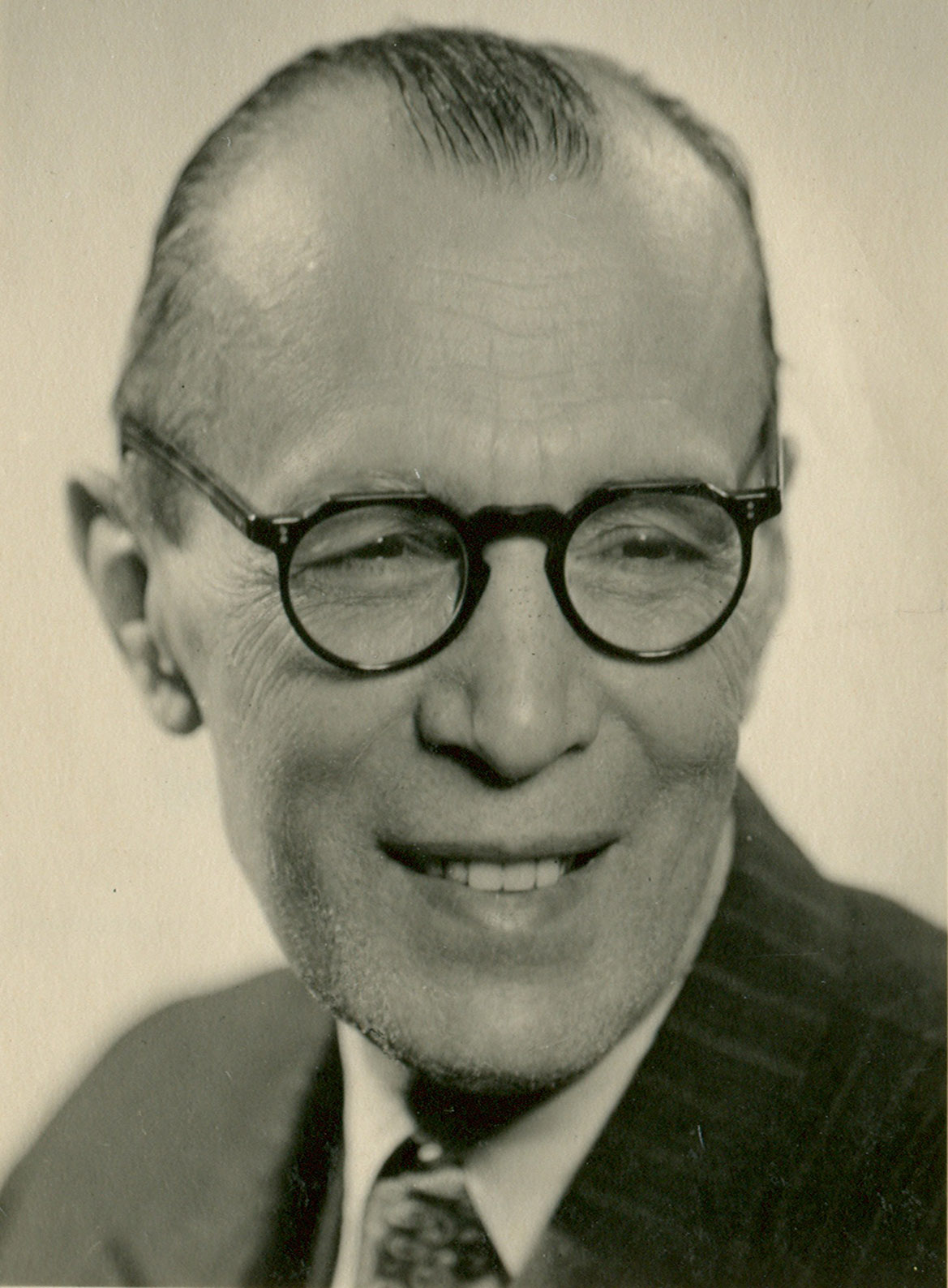
Mohammad-Taqi Bahar (Persian: محمدتقی بهار; also romanised as Mohammad-Taqī Bahār; 10 December 1886 in Mashhad – 22 April 1951 in Tehran), widely known as Malek osh-Sho'arā (Persian: ملک‌الشعراء) and Malek osh-Sho'arā Bahār ("poet laureate," literally: the king of poets), was a renowned Iranian poet, scholar, politician, journalist, historian and Professor of Literature. Although he was a 20th-century poet, his poems are fairly traditional and strongly nationalistic in character. Bahar was father of prominent Iranist, linguist, mythologist and Persian historian Mehrdad Bahar.

Key Information

Biography

[edit]

Mohammad-Taqí Bahār was born on 10 December 1886 in the Sarshoor District of Mashhad, the capital city of the Khorasan Province, north-eastern Iran.[1] His father was Mohammad Kazem Sabouri, the Poet Laureate of the shrine in Mashhad who held the honorific title of Malek o-Sho'arā ("King of Poets"), while his mother was a devout woman named Hajjiyeh Sakineh Khanum.[1][2] Bahār was of Georgian descent on his maternal side.[1] His mother's forebears were Georgian notables who had been captured by the troops of Abbas Mirza during the Russo-Iranian Wars and were taken to mainland Iran, where they eventually converted to Islam.[1] Bahār's paternal great-great-grandfather was Hajj Mohammad-Baqer Kashani, who in turn was the son of Hajj Abd ol-Qader Kharabaf of Kashan.[1]

Bahār began his primary education when he was three, with his father, Mohammad Kāzem Sabouri, as his tutor. In addition to his private schooling, Bahār attended one of the traditional schools, Maktab Khāneh, in Mashhad. To enhance his knowledge of Persian and Arabic, he further attended the classes of Adib Nai'shābouri, a traditional poet and literary scholar who promoted the style of the poets of Khorasan in the early Islamic era, in the tradition of the so-called bāzgasht-e adabī (literary regress).[3] It has been said that Bahār knew by heart a very good portion of the Quran at a very early age. According to Bahār himself, at seven he read Shahnameh and fully grasped the meaning of Ferdowsi's Epic poems.

Bahār composed his first poem at age eight, at which time he also chose the name Bahār, meaning Spring, as his pen name (takhallos in Persian). It is known that Bahār chose this pen name after Bahār Shirvāni, a poet and close friend of his father's, after Shirvāni's death. Shirvāni was a renowned poet during Naser al-Din Shah Qajar.

At 14, Bahār was fluent in Arabic, and later he achieved spoken and written fluency in French. At 18, he lost his father and started to work as a Muslim preacher and clergy. It was during this time that he composed a long ode (Qasideh in Persian) and sent it to Mozzafar-al-Din Shah who became so deeply impressed by this ode that he immediately appointed Bahār as his Poet Laureate and by Royal Decree conferred on him, at the age of 19 (1903), the title of Malek o-Sho'arā at the shrine of Imam Reza in Mashad.[1][2]

At the onset of the Constitutional Revolution of Iran (1906–1911), Bahār laid down his position of Poet Laureateship and joined the revolutionary movement for establishing the parliamentary system of democracy in Iran. Bahār became an active member of the Mashhad branch of Anjoman-e Sa'ādat (Society for Prosperity) that campaigned for establishment of Parliament of Iran (Majles[4]). He published the semi-covert newspaper Khorāsān,[5] in collaboration with Hossein Ardebili, Nou-bahār (New Spring), and Tāzeh-bahār (Fresh Spring), both in collaboration with his cousin Haj Sheikh Ahmad Bahar who operated a printing company and who acted as the Senior Editor first in Mashhad and later in Tehran.

Bahār published numerous articles in his newspapers in which he passionately exhorted his readers to stand up and help bring about the establishment of a functioning Parliament.[6] He equally forcefully advocated the creation of new and reformed public institutions, a new social and political order and of new forms of expression. After the triumph of the Constitutional Revolution, Bahār was repeatedly elected as a Member of Parliament.

In 1918, when Ahmad Shah Qajar, the seventh and the last ruler of the Qajar dynasty, was in power, Bahār reinvented himself: he ceased all his clerical activities and became an entirely new man. At the same time, he together with the writer and poet Saeed Nafisi, the poet and historian Gholam-Reza Rashid Yasemi the historian Abbas Eqbāl Ashtiāni, and his talented friend Abdolhossein Teymourtash founded The Literary Association of the academy (Anjoman-e Adabi-ye Dāneshkadeh). The Magazine of the academy (Majaleh-ye Dāneshkadeh) was the monthly publication of this Association, in which, in addition to works of prose and poetry, other very informative and useful articles were published, under such diverse titles as "Literary Revolution", "How other nations view us" and "The Literary History of Iran". In fact, this magazine became Bahār's vehicle for publication of the results of his literary researches and introduction of Western Literature to Iranians. The magazine also played a key role in developing and strengthening the present-day form of Persian Literature.

Bahār's tomb in Zahir-od-dowleh cemetery, Tehran

Following establishment of Tehran University in 1934 (during the reign of Reza Shah Pahlavi), Bahār became Professor of Persian Literature at the Faculty of Literature of this university. In the course of his tenure as Professor, he dedicated most of his time to writing and editing books on Persian Literature and History. Notable amongst numerous works written and edited by Bahār are:[7]

  • Tārikh-e Sistān (History of Sistān),
  • Tārikh-e Mokh'tasar-e Ahzāb-e Siāssi (A Concise History of the Political Parties),
  • Sabk Shenāsi (Methodology), which concerns the variety of styles and traditions of Persian prose,
  • Moj'malal ol-Tavārikh o val Qesās (Concise Histories and Tales),
  • Javāme' ol-Hekāyāt (Anthology of Stories),
  • Two volumes of verse, consisting of his own poems.

In 1945, during Mohammad Reza Shah Pahlavi's reign, Bahār served for a short period as the Minister of Culture and Education in the Cabinet of the then Prime Minister Ahmad Qavam (also known as Qavam os-Saltaneh). Earlier in the same year he and Ahmad Qavam had created the Tiran Democratic Party (Hezb-e Demokrāt-e Tirān).

In the last years of his life, Bahār suffered from Tuberculosis. He sought medical treatment in Leysin, Switzerland, in a sanatorium, where he stayed between 1947 and 1949. It was not long after his return to Iran that his health quickly deteriorated. He died on 21 April 1951,[8] at his home in Tehran.[9] He is entombed in Zahir-od-dowleh cemetery in Darband, located in Shemiran, northern Tehran.[10]

His poems

[edit]

Although Bahār was a 20th-century poet, his poems are quite traditional and decidedly patriotic. Many scholars have strongly emphasised and documented that Bahār's style of writing and the beauty of his poetry, in addition to his deep passion for Iran and his persistent opposition to fanaticism, have indeed made him one of the greatest cultural icons of modern Iran. Although he worked for some period of time as a clergyman and preacher, his first and foremost passion had always been writing, especially of poetry, as well as carrying out historical researches and teaching.

Through his literary magazine, The Magazine of the academy (Majaleh-ye Dāneshkadeh), Bahār had a significant impact on the development of modern Persian poetry and literature. One may argue that, to varying degrees, almost all the early advocates of modernism in Persian Poetry and Literature found their inspirations in the new developments and changes that had taken place in Western literature. Nonetheless, such inspirations would not have easily resulted in changes without the efforts and support of such figures as Bahār, whose literary contributions were, and remain consonant with Iranian culture. In Bahār's collection of poems, one finds poems composed in almost every tradition of Persian Poetry. To name a few, he wrote Panegyric (Setāyeshi or Madiheh), Epic (Hamāsi), Patriotic (Mihaní), Heraldic and Mystic (Ramzi or Sufi'āneh), Romantic (Āasheghāneh), Ethical (Akhlāghi), Didactic (Āmuzeshi or Pandi), Colloquial (Goft-o-gu'í), and Satirical (Tanzi or Hajvi). Bahār's Official Website[11] has made a selection of Bahār's poetry available to the general public, which the interested reader may wish to consult.

The Chained White Beast

[edit]

"The Chained White Beast" is a poem by Bahar, written in 1922, in which he praises Damavand, the highest mountain in Iran, and presents it as a symbol of patriotism. The opportunity had come for the nationalists to take the floor and criticise the regime. Bahar's symbol for provoking patriotic upheavals is a reflection of the growth of the notion of nationalism which had been introduced to Iranians only few decades before. Bahar describes Damavand as a beast, and asks it to rise and wipe out injustice, and let the real Iran flourish.

References

[edit]

Sources

[edit]

Further reading

[edit]
[edit]

See also

[edit]
Revisions and contributorsEdit on WikipediaRead on Wikipedia
from Grokipedia
Mohammad-Taqi Bahar (1886–1951), titled Malek al-Sho'ara ("King of Poets"), was an Iranian poet, scholar, , politician, and historian whose work bridged classical Persian literary traditions with modern scholarly analysis. Born in , he received early education from his father and later pursued self-study in Arabic, Western sciences, and Pahlavi language under Ernst Herzfeld. Bahar's excelled in classical forms like the , earning him recognition as the last great practitioner of this genre, while he adapted European poetic influences into Persian. His seminal contribution to literary studies, Sabk-shenasi (Stylistics), a three-volume work published in 1942, systematized the evolution of Persian and styles, coining terms such as sabk-e Hendi (Indian style) that remain standard in the field. As a , he founded and edited newspapers including Now-bahar and , using them to advocate for and democratic reforms during Iran's turbulent early 20th century. Politically active from age twenty, Bahar aligned with constitutionalists, joined the Democratic Party in , and was elected to the Majles (parliament) in multiple terms, including the third through sixth and fourteenth through fifteenth sessions; he briefly served as Minister of Education in 1946 before resigning. Opposing Reza Shah's authoritarian rule, he endured an assassination attempt in 1925, , and , reflecting his commitment to parliamentary over . Bahar's historical scholarship included editing texts like Tarikh-e Sistān and authoring works on political parties and Ferdowsi's life, solidifying his multifaceted legacy in preserving and advancing Iranian cultural heritage.

Early Life and Education

Family Background and Upbringing

Mohammad-Taqi Bahar was born on 9 December 1886 in the Sarshoor district of , the capital of in northeastern . His father, Mirza Mohammad Kazem Saburi (also known as Hajj Mohammad Kazim Saburi), held the position of poet-laureate (Malik al-Shu'ara) at the of Imam Reza, a prestigious role that immersed the family in literary and religious scholarship. Saburi's own poetic pursuits, under the takhallus "Saburi," traced back to a family tradition of intellectual engagement, though he diverged from his father's clerical path to focus on . Bahar's upbringing occurred within this cultured household in , a center of Shiite pilgrimage and learning, where his father's duties at the shrine provided early exposure to classical and religious texts. From a young age, Saburi served as his primary tutor, instructing him in foundational skills that fostered a precocious aptitude for poetry and scholarship. This home-based emphasized rote and , aligning with traditional Iranian pedagogical methods prevalent in scholarly families of the late Qajar . Saburi's in 1904 marked a pivotal shift, leaving Bahar to navigate his emerging talents amid familial responsibilities.

Formal Education and Early Influences

Mohammad-Taqi Bahar was born in 1265 Š./1886 in to Mīrzā Moḥammad Kāẓem Ṣabūrī, the poet-laureate attached to the shrine of Imam Reza. His father served as his initial tutor, providing foundational instruction in and the , such that by age six, when Bahar entered formal studies, he was already proficient in reading these texts. This early home-based learning reflected the traditional educational practices prevalent in late Qajar-era , emphasizing religious and classical Persian texts over structured institutional curricula. Bahar's formal education occurred in a maktab-khāneh, the conventional elementary school system of the time, where he continued building on his linguistic foundations. However, at around age fifteen (circa 1301 Š./1901), his studies were interrupted when he was apprenticed to an uncle engaged in glass selling, a practical necessity amid family circumstances. Following his father's death in 1322 Š./1904, Bahar resumed his learning independently, delving deeper into and syntax, as well as introductory Western philosophical concepts, marking a shift toward self-directed scholarship. Among his early teachers was Adīb Nīšāpūrī, a scholar rooted in classical Persian poetic traditions, who influenced Bahar's stylistic preferences. Bahar composed his first poem at age ten, demonstrating precocious talent shaped by his father's poetic legacy and the Khorasanian literary milieu, including exposure to regional poets and the shrine's cultural environment. By his early twenties (circa 1324 Š./1906), constitutionalist political ideas began informing his worldview, blending literary heritage with emerging reformist thought, though his core influences remained anchored in pre-modern Persian canon such as and Sa'di.

Literary Beginnings

Appointment as Court Poet

Mohammad-Taqi Bahar, born in 1886 in , inherited the prestigious title of Malik al-Sho'ara (King of Poets) from his father, Mirza Mohammad Kazem Saburi, who had held the position as the official poet-laureate at the in until his death in 1904. This hereditary role, tied to government patronage under the , provided a in exchange for composing ceremonial and official verses, continuing a tradition of court poetry that emphasized praise for monarchs and religious sites. Bahar's formal appointment came after he submitted a congratulatory (ode) to Mozaffar al-Din Shah Qajar around 1906, demonstrating his early poetic maturity and securing the title as a salaried government position. At approximately 20 years old, this recognition marked his entry into the institutional framework of Persian literary patronage, where poets like Saburi had trained apprentices in classical styles such as Khorasani, blending religious, royal, and national themes. The position obligated Bahar to produce works for state events, reinforcing his status amid the waning Qajar era's cultural apparatus.

Initial Poetic Works and Style

Bahar composed his first poem at the age of ten, drawing early inspiration from classical Persian masters and the Khorasanian poetic tradition. His initial works often adhered to established forms such as the qaṣīda for eulogies and panegyrics, the mosammaṭ for structured praise, and the mostazād for variable rhyme schemes suited to topical expression. A notable early example is a congratulatory qaṣīda dedicated to Moẓaffar al-Dīn Shah, included in his Dīvān (vol. I, p. 3), which exemplifies his emulation of poets like Manūčehrī Dāmḡānī through vivid imagery and rhythmic precision. In style, Bahar predominantly favored the Khorasani mode—characterized by straightforward , descriptive clarity, and epic breadth—over the more ornate, metaphorical Iraqi style, though he incorporated elements of the latter in occasional ghazals. This preference aligned with his regional roots in and emphasized authenticity in language, prioritizing sculptural form and content fidelity to classical antecedents like Rūdakī and Ḵāqānī. Early threnodies composed after his father's death in 1904 further showcased technical maturity, blending personal lament with moral and doctrinal undertones. His breakthrough came with politically charged pieces amid Iran's constitutional ferment; a mostazād published in the newspaper Ḵorāsān during Jomādā I 1327 (May-June 1909) marked his public recognition, critiquing social conditions through nationalistic fervor and calls for reform (Dīvān vol. I, p. 145). These works transitioned from conventional eulogies—such as those for the or —to themes of and critique, reflecting an evolving consciousness of contemporary upheavals while maintaining formal rigor.

Journalistic Contributions

Founding and Editing Newspapers

Bahar's journalistic endeavors began during the period of minor despotism (Estebdād-e Ṣaḡīr), from June 1908 to August 1909, when he collaborated with Hossein Ardebili to publish the clandestine newspaper Khorāsān under pseudonyms, distributing it covertly to evade by anti-constitutional forces. This effort supported the constitutionalist movement in Khorasan province amid repression following the 1908 bombardment of Iran's parliament. Following the restoration of constitutional rule, Bahar established and edited Nou-bahār ("New Spring") in , where he penned articles criticizing foreign interventions, particularly Russian influence, prompting Russian authorities to pressure the local governor to shut it down. In response, he promptly founded Tāzeh-bahār ("Fresh Spring") as a successor publication, which similarly faced closure ordered by the foreign minister due to its oppositional stance against external powers. These Mashhad-based ventures positioned Bahar as a vocal for Iranian and parliamentary during a time of weak central authority and foreign meddling. Later, in , Bahar assumed editorship of the semi-official newspaper in 1919, managing it effectively for two years amid political instability, including debates over foreign agreements that threatened national autonomy. His editorial role reflected a commitment to informed discourse, blending literary acumen with political commentary to foster resistance against perceived imperial encroachments.

Role in Public Discourse

Bahar's journalistic activities positioned him as a pivotal voice in Iranian public discourse, where he leveraged newspapers to champion , , and resistance to foreign domination during the tumultuous early . Founding Nūbahār () in circa 1910, he edited the publication to disseminate liberal democratic ideals, praising the 1906 constitution while critiquing autocratic overreach and imperial encroachments, particularly Russian policies in northern . This stance provoked repeated official suppressions, with the paper facing closures in 1911, 1912, and subsequent years due to its anti-Russian editorials, yet Bahar persisted in using it to foster public awareness of sovereignty threats and the need for parliamentary oversight. His writings in Nūbahār and collaborations on outlets like Khorāsān blended factual reporting with persuasive rhetoric, mobilizing readers toward socio-political action by invoking historical precedents, religious motifs, and linguistic appeals to Iranian identity against colonial influences. Bahar argued for robust press laws to protect journalistic independence, noting in parliamentary debates that the absence of such regulations since the Constitutional Revolution had stifled informed debate and enabled arbitrary . Through these efforts, he influenced on issues like party reorganization—playing a leading role in reviving the Democrat Party around 1918—and broader modernization, emphasizing cultural revival alongside political reforms to counter British and Russian spheres of influence. Even amid censorship under Reza Shah's consolidation of power in the , Bahar's output sustained intellectual discourse on , as seen in his contributions to periodicals that critiqued and advocated Persian linguistic purity in and . His integration of into journalistic commentary amplified these messages, reaching literate elites and shaping activist networks during interwar crises, including occupations and the 1921 coup. This multifaceted engagement established Bahar as a bridge between literary tradition and modern political advocacy, though his critiques occasionally drew accusations of partisanship from regime-aligned factions.

Political Engagement

Participation in Constitutional Movement

In 1324 Š./1906, at the age of twenty, Bahar joined the constitutionalist groups in shortly after the Qajar shah Muẓaffar al-Dīn granted Iran's first on 30 Mordād 1285 Š./August 5, 1906, marking a pivotal shift toward limiting monarchical absolutism and establishing parliamentary governance. His early alignment reflected a rejection of court patronage, as he distanced himself from his inherited role as a provincial to support demands for legal accountability, elective representation, and curbs on arbitrary rule. During the period of repression known as the Estebdād-e Ṣaḡīr (Minor Despotism), from Tir 1327 Š./June 1908 to Šahrīvar 1328 Š./August 1909, when Mohammad ʿAlī Shah bombarded the Majles and suspended constitutional institutions, Bahar contributed to underground resistance by helping publish the clandestine newspaper Ḵorāsān under the Raʾīs al-Ṭollāb. In this outlet, he printed his initial political verses, including a mostazād composed in Jumādā I 1327/May-June 1909, which critiqued autocratic overreach and rallied support for restoration of the assembly. One notable poem, modeled after the style of Ašraf Gīlānī and published in Ḵorāsān, elevated his profile among revolutionaries by blending classical Persian metrics with calls for constitutional fidelity (Dīvān I, p. 145). Bahar also affiliated with the Anjoman-e Saʿādat (Association of Felicity) in Mashhad, a local society advocating democratic reforms amid provincial unrest against central despotism. By 1328 Š./1910, as constitutional forces regrouped following the shah's deposition in 1328 Š./July 1909, he collaborated with Ḥaydar Khan ʿAm(o)ūoglī to organize the Mashhad branch of the Ḥezb-e Demokrāt (Democratic Party), which emphasized secular governance, anti-foreign intervention—particularly Russian influence—and protection of parliamentary sovereignty. That same year, Bahar launched his own periodical Now-bahār (New Spring) in Mashhad, using it to propagate anti-Russian sentiments and defend the fragile constitutional order against external threats and internal sabotage. The publication faced repeated closures by authorities wary of its editorial stance, compelling Bahar to relocate to in 1330 Š./1911 coinciding with the Second Majles's dissolution amid Anglo-Russian pressures. His activities during this era underscored a commitment to intellectual agitation over armed insurgency, leveraging and print to foster public awareness of constitutional principles as bulwarks against Qajar and imperial encroachments, though they yielded no decisive victories before the movement's effective truncation by 1911.

Parliamentary and Governmental Roles

Bahar entered national politics through his election to the Third in , representing amid the turbulent post-Constitutional Revolution period, which allowed him to advocate for democratic reforms from . Following Reza Khan's 1921 , he was elected to the Fourth , which convened in June 1921, where he participated in debates on constitutional limits to executive power despite the shifting authoritarian dynamics under the emerging Pahlavi regime. His repeated elections underscored his local support in , reflecting his blend of literary prestige and regional influence as a and opposing foreign interference and monarchical overreach. In subsequent terms, Bahar served in the Fifth , elected from Bujnurd—his prior place of —continuing to represent provincial interests such as Turshiz (Kashmar), Bajistan, and surrounding districts, while critiquing centralization policies that marginalized elected bodies. These roles positioned him as a vocal parliamentarian, often aligning with modernist factions seeking to preserve against Reza Shah's consolidation of power, though his influence waned as the became increasingly ceremonial by the late 1920s. Bahar's governmental service culminated briefly in 1945, when he was appointed Minister of Culture and Education in Prime Minister Ahmad Qavam's cabinet during Mohammad Reza Shah's early reign, a tenure lasting mere months amid post-World War II political instability and efforts to liberalize cultural policies. He resigned soon after, prioritizing his scholarly pursuits over administrative duties, in line with his longstanding preference for intellectual independence over prolonged bureaucratic entanglement. This short stint highlighted his expertise in and history but also exposed tensions between parliamentary advocates and the monarchy's cultural centralization ambitions.

Interactions with Reza Shah's Regime

Bahar initially expressed support for Reza Khan's ascension to the throne in 1925, composing that praised the new monarch's potential to restore order and national strength following the of the Qajar era. However, as Reza Shah consolidated power and moved toward authoritarian rule, Bahar opposed the erosion of constitutional principles, viewing it as a betrayal of the democratic ideals he had championed during the Constitutional Revolution. His criticism manifested in veiled poetic references to , including works that lamented the suppression of freedoms under the regime. This stance led to direct repercussions from the regime. In , Bahar was imprisoned for approximately one year on unspecified charges related to perceived disloyalty. He faced further repression in 1933, enduring another period of imprisonment followed by exile to for about one year, ostensibly for secret opposition to . These measures reflected the regime's intolerance for dissenting intellectuals, even those like Bahar who held the official title of (Malik al-Shu'ara). Amid such pressures, Bahar largely withdrew from overt political activity by the late , focusing instead on literary and scholarly pursuits to avoid further conflict with the consolidating . Despite periodic imprisonment and , he retained cultural influence, though his public discourse shifted toward and historical studies rather than direct confrontation. The regime's bans on certain performances of his earlier works, such as the second stanza of Morq-e Sahar, underscored the ongoing tension between his advocacy for and the authoritarian controls imposed from 1925 to 1941.

Major Works and Scholarly Output

Key Poetry Collections and Themes

Bahar's principal poetry collection is the Divan-e Bahar, a compilation of his works in forms including ghazals, qasidas, mathnavis, and ballads, reflecting his adherence to classical structures while incorporating contemporary vocabulary and ideas. This divan, first assembled after his in 1951 and reprinted in by in 1344 solar/1965 CE, draws from poems originally published in periodicals like Nava-ye Mashhad and Now Bahar during his lifetime. Specific mathnavis within it, such as those addressing social chaos and , exemplify his blend of epic narrative with personal and political reflection. Central themes in Bahar's poetry revolve around and , often manifesting as laments for Iran's amid foreign threats and internal decay, as seen in odes like the "Damavand Ode," which elevates the mountain as a enduring of Persian resilience. Social criticism features prominently, with satirical and advisory verses targeting , , and —particularly under Reza Shah's regime—employing humor and irony to advocate for constitutional freedoms and justice without abandoning metrical discipline. Mystical and descriptive elements appear in nature-infused imagery, such as birds and dawn motifs in "Morning and Birds" (Morgh-e Sahar), composed during in 1922, symbolizing collective sorrow and renewal amid political turmoil. His works also explore epic and advisory motifs, urging ethical reform and unity, as in "Owl of War," which critiques and war's toll on through allegorical critique. Overall, Bahar's thematic innovation lay in grafting modern exigencies— amid Western influences and national revival—onto Khorasani-style authenticity, prioritizing rhetorical precision over ornamental excess.

Sabkshenasi and Literary Theory

Mohammad-Taqi Bahar pioneered the systematic study of sabkshenāsi () in through his seminal three-volume work Sabkshenāsi, published in 1942. This text delineated the evolution of Persian poetic and styles across historical periods, establishing a framework that categorized developments into distinct phases based on temporal and geographical influences, such as the early sabk-e Khurāsāni (Khorasanian style), the mature sabk-e ʿErāqi (Iraqi style), and the later sabk-e Hendi (Indian style). Bahar's approach emphasized stylistic traits as markers of literary history, coining key terms like sabk-e Hendi to describe post-Timurid complexities influenced by Indian Persianate courts, thereby providing a structured absent in prior anecdotal treatments. The origins of Sabkshenāsi trace to a series of lectures Bahar delivered in 1930–1931 at the Anjoman-e Adabi-ye (Mashhad Literary Society), prompted by discussions on poetic innovation amid the bāzgašt-e adabi (literary return) movement, which sought to revive classical forms while critiquing perceived decadence in later styles. In the work, Bahar applied empirical analysis to linguistic and rhetorical features, arguing for a causal link between socio-political shifts—such as Mongol invasions and Safavid centralization—and stylistic transformations, rather than relying solely on biographical or thematic critiques common in traditional taḏkeras (anthologies). This method integrated historical contextualization with close textual examination, influencing subsequent scholarship by prioritizing verifiable patterns over subjective valuations, though Bahar himself favored the balanced ʿErāqi style as an aesthetic pinnacle reflective of Persian cultural maturity. Bahar's literary theory extended beyond mere classification to advocate for continuity in Persian poetic tradition, positing that true innovation arose from refining classical meters (ʿarūż) and tropes (bedʿ) rather than wholesale Western imitation. He critiqued the ornate excesses of the Hendi style as deviations from linguistic purity, attributing them to geographic dispersal post-Ilkhanid era, yet acknowledged their role in sustaining Persian as a cosmopolitan medium in Mughal India. This perspective informed his own compositions, blending neoclassical forms with nationalist themes, and positioned sabkshenāsi as a tool for cultural revival, countering colonial-era dismissals of Persian literature's vitality. While later critics have debated the rigidity of Bahar's tripartite model for overlooking transitional hybridities, its foundational role in professionalizing Persian literary historiography remains undisputed.

Historical and Other Writings

Bahar contributed to Persian historiography through meticulous editing of classical texts and authorship of modern political history. He produced scholarly editions of medieval chronicles, applying philological rigor to preserve and annotate historical narratives. These efforts bridged traditional historiography with contemporary scholarship, emphasizing textual accuracy over interpretive bias. Among his editorial works, Bahar published Tārīḵ-e Sīstān in Tehran in 1314 Š./1935, a critical edition of the 11th-century anonymous history of Sistan province, which details regional dynasties, invasions, and cultural shifts from pre-Islamic to Islamic eras. In 1318 Š./1939, he edited Mojmal al-Tawārīḵ wa’l-Qeṣaṣ, a 12th-century compilation synthesizing Persian historical lore, myths, and genealogies, enhancing its utility for scholars by clarifying variant manuscripts. He also prepared a partial edition of Jawāmeʿ al-Ḥekāyāt wa Lawāmeʿ al-Rewāyāt in 1324 Š./1945, focusing on anecdotal historical accounts from the Mongol period. Posthumously, his edition of Tārīḵ-e Balʿamī, volume I, appeared in Tehran in 1341 Š./1962, representing an abridged Persian translation of al-Ṭabarī's universal history adapted for 10th-century audiences, with Bahar's annotations addressing linguistic evolutions. These editions relied on direct manuscript collation, prioritizing empirical fidelity to sources amid limited archival access in interwar Iran. Bahar's original historical composition, Tārīḵ-e Mokhtaṣar-e Aḥzāb-e Sīāsī, volume I published in in 1323 Š./1944, chronicles Iranian from the Constitutional onward, drawing on his firsthand parliamentary experience and journalistic records. The work functions as both a factual timeline of factions like the Democrats and Moderate Socialists and a reflective , attributing causal roles to ideological clashes and foreign influences without unsubstantiated . Volume II, completed posthumously in 1363 Š./1984, extends coverage into the Pahlavi era. This text stands as a for early 20th-century Iranian politics, valuing over secondary narratives.

Later Years and Death

Post-War Activities

Following the end of , Bahār was elected to the 14th Majles in 1945, representing amid a period of political fragmentation in . In January 1946, he was appointed Minister of Education in the cabinet of Prime Minister Aḥmad Qawām (Qawām-al-Salṭana), tasked with overseeing cultural and educational reforms during the postwar transition, but resigned after several months due to unspecified reasons. He subsequently led the Democratic Party faction in the 15th Majles, advocating for constitutional principles despite deteriorating health. In literary endeavors, Bahār republished his journal Now-bahār in 1945, reviving a platform he had founded earlier for political and cultural discourse. That same year (1323 Š./1944-45), he issued the first volume of Tārīḵ-e moḵtaṣar-e aḥzāb-e sīāsī (A Concise History of ), analyzing Iran's factional evolution from the Constitutional Revolution onward based on archival and firsthand observations. Scholarship remained a priority, with ongoing work on Tārīḵ-e taṭawwor-e šeʿr-e fārsī (History of the Development of Persian Poetry), a multi-volume study of stylistic periods that drew on classical sources and modern ; though incomplete at his , it reflected his commitment to empirical literary amid political duties. By the late , illness increasingly curtailed his public engagements, limiting further output to revisions and lectures at the Dāneš-kade-ye adabīyāt (Literary Academy).

Death and Immediate Aftermath

Mohammad-Taqi Bahar succumbed to on April 22, 1951 (1 Ordibehesht 1330), at his home in , following a return from extended treatment in , , where he had been hospitalized since April 1949. His body was taken to Sepahsalar Mosque for the funeral rites, with the procession traversing Shahabad and Saadi streets en route to burial at Zahir al-Dowleh cemetery in the Shemiran district north of Tehran. The ceremony attracted substantial attendance from literary, academic, and political figures, reflecting Bahar's enduring influence as Poet Laureate and nationalist intellectual. In the ensuing days, Iranian cultural institutions and periodicals published obituaries and tributes emphasizing his contributions to Persian poetry and constitutionalism, though no major institutional commemorations or policy shifts directly followed. His passing coincided with post-World War II transitions in Iran, but elicited no immediate political repercussions amid the era's factional tensions.

Legacy and Reception

Influence on Persian Literature and Nationalism

Bahar's poetic oeuvre bridged classical Persian traditions and modern socio-political commentary, revitalizing genres like the qaṣīda through a Khorasanian style infused with contemporary themes and occasional colloquial or European elements. This synthesis expanded classical poetry's expressive range, enabling it to address issues such as constitutional reform and national identity, while his translations of works like introduced Western literary influences without abandoning metrical rigor. As (Malik al-Shuʿarāʾ) from 1918, he mentored younger writers via the Dānēškada (established 1918–1919) and journals like Nūr and Nowbahār, fostering innovation amid a return-to-classics movement (bāzgašt-e adabī). His Sabkshenāsi (1942), a three-volume on Persian prose styles, formalized stylistic analysis by classifying periods such as sabk-e Khurāsānī and sabk-e Hendi, providing a historiographical framework that linked historical evolution to linguistic purity and became a cornerstone of modern Persian literary scholarship. Bahar positioned himself as a mediator between traditionalists and innovators, critiquing overly ornate "Indian" influences while advocating balanced revivalism, which influenced subsequent critics and poets in refining national literary canons. Bahar's manifested in verse evoking Iranian resilience, such as his mostazād poems in Ḵorāsān journal, which rallied against autocracy and foreign meddling during the Constitutional era. Symbolic works like the Damavand Elegy portrayed as an enduring emblem of subjugated yet defiant Persian spirit, reinforcing pre-Islamic heritage over pan-Islamic ties. Politically, his 1922 exhortation to Reza Khan to honor —portrayed as the resurrector of and identity—spurred national commemorations, culminating in the 1934 millennial events that elevated Shāhnāma as a nationalist touchstone. Through Democratic Party organization (1910) and Majles service, Bahar championed secular constitutionalism and cultural purism, countering colonial erosion by prioritizing indigenous history and in public discourse.

Achievements and Scholarly Recognition

Bahar was appointed Malik al-Shoʿarāʾ (King of Poets), the official of , by Muzaffar al-Din Qajar in 1903 at the age of 19, succeeding his father who had held the title previously. This honor recognized his early poetic talent, particularly after composing a congratulatory qaṣīda upon the shah's accession. The title, traditionally bestowed on distinguished court poets, underscored Bahar's prominence in classical Persian verse during the late Qajar era. In academia, Bahar served as a professor of at the following its founding in 1934, where he contributed to the curriculum on literary history and . His tenure focused on editing and authoring texts that integrated traditional Persian scholarship with emerging analytical methods, influencing generations of students in the Faculty of Letters. Additionally, he briefly held the position of Minister of Culture and Education in 1945 under Prime Minister , promoting Persian literary heritage domestically and internationally during a period of post-war reconstruction. Bahar's Sabkshenāsī (), first published in 1942 as a three-volume , received enduring scholarly acclaim for establishing a systematic framework for analyzing Persian literary styles. It introduced models, such as the tripartite geographical-temporal division of poetic , and coined terms like sabk-e Hendī (Indian style), which became standard in the field. This work modernized Persian literary by synthesizing indigenous traditions with European Orientalist approaches, serving as a foundational text for the University of Tehran's department and shaping 20th-century nationalist interpretations of Iran's canon. Its impact persists in academic studies, institutionalizing as a core discipline.

Criticisms and Debates

Bahar's political engagements, particularly his initial endorsement of Pahlavi's rise to power, have sparked debates among historians regarding consistency with his constitutionalist principles. As a vocal advocate for the 1906 Constitutional Revolution, Bahar supported Reza Khan's 1921 , viewing it as a necessary response to post-revolutionary anarchy, rampant press licentiousness, and threats to national cohesion, as detailed in his own Tarikh-e Mokhtasar-e Ahzab-e Siyasi-ye Iran (Brief History of Political Parties in ). He explicitly opposed regional autonomy movements, such as those led by Mirza Kuchak Khan in Gilan and Mohammad Taqi Pesian in , labeling them as divisive forces that undermined 's territorial integrity during a period of Bolshevik incursions and internal fragmentation. Critics, including some contemporary analysts, contend that this stance facilitated the consolidation of authoritarian rule by prioritizing stability over democratic reforms, effectively sidelining anti-despotic initiatives that aligned with Bahar's earlier advocacy for parliamentary sovereignty. Subsequent tensions with the Pahlavi regime further fueled interpretations of political pragmatism or opportunism. Appointed (Malik al-Shu'ara) in 1923, Bahar composed panegyrics for , including a 1926 extolling his leadership amid compulsory circumstances following political restrictions imposed after the dynasty's establishment. Yet, by the late , he endured for dissenting views, during which he refused to eulogize the for personal gain, as recounted in his descriptions of fellow inmates who capitulated under duress. Symbolic critiques appear in his poetry, such as the allegorical "Tale of the Boar" (, vol. 2, p. 913), interpreted as veiled indictments of monarchical excess and corruption. Scholars debate whether these shifts reflect ideological evolution—balancing against tyranny—or adaptive survival in a repressive environment, with Bahar himself framing his early support as a bulwark against chaos rather than endorsement of absolutism. In literary scholarship, Bahar's Sabkshenasi (Stylistics, 1942) has elicited discussions on its historiographical framework, particularly its periodization of Persian poetic evolution. While pioneering terms like sabk-e Hendi (Indian style) and integrating external influences such as Darwinian evolution into stylistic analysis, the work has been critiqued for deviating from a purely geographical taxonomy, instead emphasizing socio-political and intellectual causation in linguistic shifts. This approach, linking styles to broader debates on progress and hybridity, contrasts with traditionalist views that prioritize intrinsic poetic purity, prompting reevaluations in post-colonial literary theory where Bahar's model is seen as bridging classical revival (bazgasht-e adabi) and modernist critique of ornate "Indian" excesses. Detractors argue it underplays regional variations in favor of a centralized Iranian narrative, though its enduring influence in curricula underscores its empirical grounding over ideological rigidity.

References

Add your contribution
Related Hubs
User Avatar
No comments yet.