Hubbry Logo
Motion detectorMotion detectorMain
Open search
Motion detector
Community hub
Motion detector
logo
8 pages, 0 posts
0 subscribers
Be the first to start a discussion here.
Motion detector
Motion detector
from Wikipedia
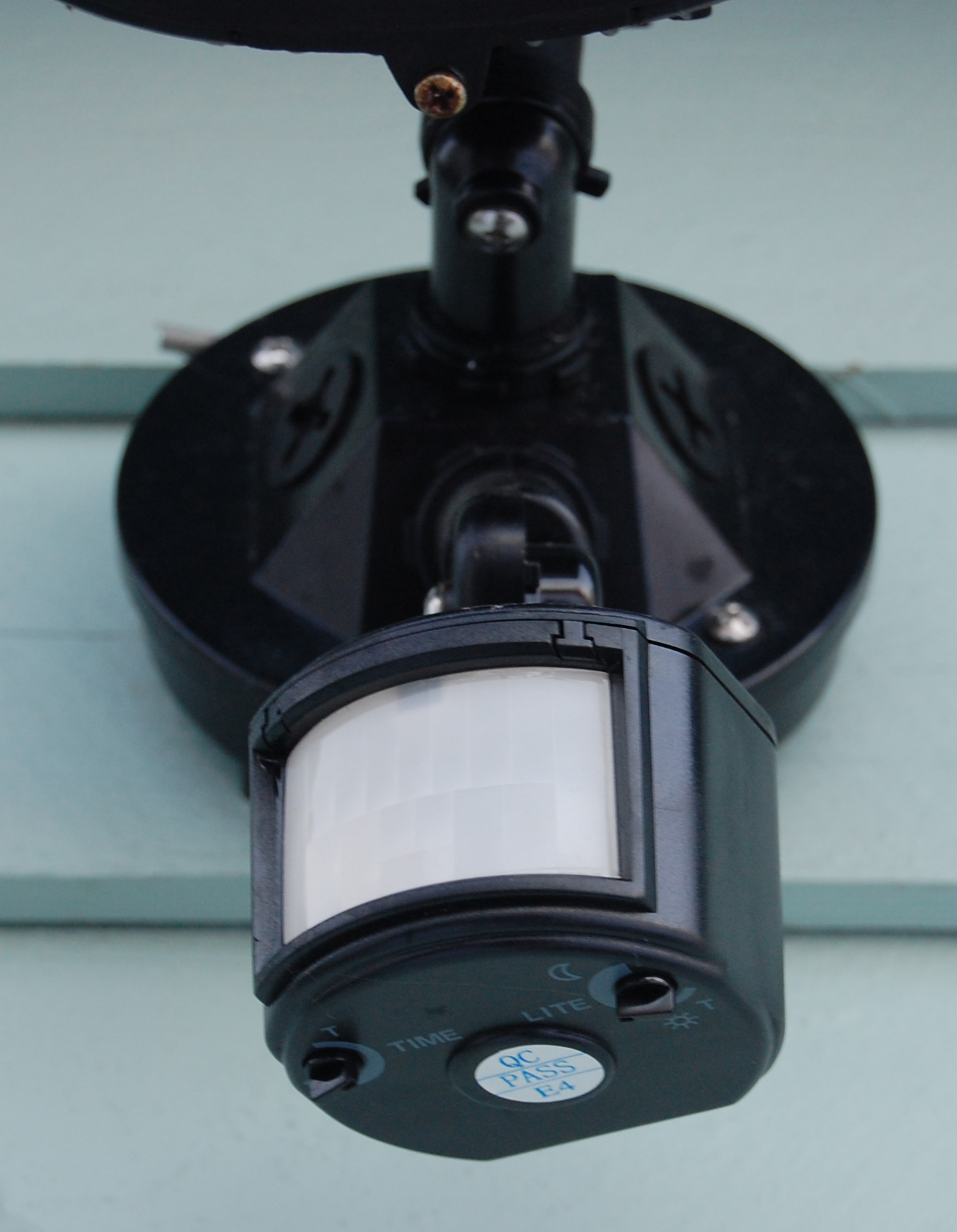
A motion detector attached to an outdoor, automatic light

A motion detector is an electrical device that utilizes a sensor to detect nearby motion (motion detection). Such a device is often integrated as a component of a system that automatically performs a task or alerts a user of motion in an area. They form a vital component of security, automated lighting control, home control, energy efficiency, and other useful systems. It can be achieved by either mechanical or electronic methods.[1] When it is done by natural organisms, it is called motion perception.

Overview

[edit]

An active electronic motion detector contains an optical, microwave, or acoustic sensor, as well as a transmitter. However, a passive contains only a sensor and only senses a signature from the moving object via emission or reflection. Changes in the optical, microwave or acoustic field in the device's proximity are interpreted by the electronics based on one of several technologies. Most low-cost motion detectors can detect motion at distances of about 4.6 metres (15 ft). Specialized systems are more expensive but have either increased sensitivity or much longer ranges. Tomographic motion detection systems can cover much larger areas because the radio waves it senses are at frequencies which penetrate most walls and obstructions, and are detected in multiple locations.

Motion detectors have found wide use in commercial applications. One common application is activating automatic door openers in businesses and public buildings. Motion sensors are also widely used in lieu of a true occupancy sensor in activating street lights or indoor lights in walkways, such as lobbies and staircases. In such smart lighting systems, energy is conserved by only powering the lights for the duration of a timer, after which the person has presumably left the area. A motion detector may be among the sensors of a burglar alarm that is used to alert the home owner or security service when it detects the motion of a possible intruder. Such a detector may also trigger a security camera to record the possible intrusion.

Motion controllers are also used for video game consoles as game controllers. A camera can also allow the body's movements to be used for control, such as in the Kinect system.

Sensor technology

[edit]
A passive infrared detector mounted on circuit board (right), along with photoresistive detector for visible light (left). This is the type most commonly encountered in household motion sensing devices and is designed to turn on a light only when motion is detected and when the surrounding environment is sufficiently dark.

Motion can be detected by monitoring changes in:

  • Infrared light (passive and active sensors)
  • Visible light (video and camera systems)
  • Radio frequency energy (radar,[2] microwave and tomographic motion detection)
  • Sound (microphones, other acoustic sensors)
  • Kinetic energy (triboelectric, seismic, and inertia-switch sensors)
  • Magnetism (magnetic sensors, magnetometers)
  • Wi-Fi Signals (WiFi Sensing)

Several types of motion detection are in wide use:

Passive infrared (PIR)

[edit]

Passive infrared (PIR) sensors are sensitive to a person's skin temperature through emitted black-body radiation at mid-infrared wavelengths, in contrast to background objects at room temperature. No energy is emitted from the sensor, thus the name passive infrared.[3] This distinguishes it from the electric eye for instance (not usually considered a motion detector), in which the crossing of a person or vehicle interrupts a visible or infrared beam. These devices can detect objects, people, or animals by picking up one's infrared radiation.[4]

Mechanical

[edit]

The most basic forms of mechanical motion detection utilize a switch or trigger. For example, the keys of a typewriter use a mechanical method of detecting motion, where each key is a switch that is either off or on, and each letter that appears is a result of the key's motion.

Microwave

[edit]

These detect motion through the principle of Doppler radar, and are similar to a radar speed gun. A continuous wave of microwave radiation is emitted, and phase shifts in the reflected microwaves due to motion of an object toward (or away from) the receiver result in a heterodyne signal at a low audio frequency.

Ultrasonic

[edit]

An ultrasonic transducer emits an ultrasonic wave (sound at a frequency higher than a human ear can hear) and receives reflections from nearby objects.[5] Exactly as in Doppler radar, heterodyne detection of the received field indicates motion. The detected doppler shift is also at low audio frequencies (for walking speeds) since the ultrasonic wavelength of around a centimeter is similar to the wavelengths used in microwave motion detectors. One potential drawback of ultrasonic sensors is that the sensor can be sensitive to motion in areas where coverage is undesired, for instance, due to reflections of sound waves around corners.[6] Such extended coverage may be desirable for lighting control, where the goal is the detection of any occupancy in an area, but for opening an automatic door, for example, a sensor selective to traffic in the path toward the door is superior.

Tomographic motion detector

[edit]

These systems sense disturbances to radio waves as they pass from node to node of a mesh network. They have the ability to detect over large areas completely because they can sense through walls and other obstructions. RF tomographic motion detection systems may use dedicated hardware, other wireless-capable devices or a combination of the two. Other wireless capable devices can act as nodes on the mesh after receiving a software update.[7]

Video camera software

[edit]

With the proliferation of low-cost digital cameras able to shoot video, it is possible to use the output of such a camera to detect motion in its field of view using software.[8][9] This solution is particularly attractive when the intent is to record video triggered by motion detection, as no hardware beyond the camera and computer is needed. Since the observed field may be normally illuminated, this may be considered another passive technology. However, it can also be used together with near-infrared illumination to detect motion in the dark, that is, with the illumination at a wavelength undetectable by a human eye.

More complex algorithms are necessary to detect motion when the camera itself is panning, or when a specific object's motion must be detected in a field containing other, irrelevant movement—for example, a painting surrounded by visitors in an art gallery. With a panning camera, models based on optical flow are used to distinguish between apparent background motion caused by the camera's movement and that of independently moving objects.[10]

Gesture detector

[edit]

Photodetectors and infrared lighting elements can support digital screens to detect hand motions and gestures with the aid of machine learning algorithms.[11]

Dual-technology motion detectors

[edit]

Many modern motion detectors use combinations of different technologies. While combining multiple sensing technologies into one detector can help reduce false triggering, it does so at the expense of reduced detection probabilities and increased vulnerability.[citation needed] For example, many dual-tech sensors combine both a PIR sensor and a microwave sensor into one unit. For motion to be detected, both sensors must trip together.[citation needed] This lowers the probability of a false alarm since heat and light changes may trip the (passive infrared) PIR but not the microwave, or moving tree branches may trigger the microwave but not the PIR. If an intruder is able to fool either the PIR or microwave, however, the sensor will not detect it.[citation needed]

Often, PIR technology is paired with another model to maximize accuracy and reduce energy use.[citation needed] PIR draws less energy than emissive microwave detection, and so many sensors are calibrated so that when the PIR sensor is tripped, it activates a microwave sensor.[citation needed][citation needed] If the latter also picks up an intruder, then the alarm is sounded.

See also

[edit]

References

[edit]
[edit]
Revisions and contributorsEdit on WikipediaRead on Wikipedia
from Grokipedia
A motion detector is an electronic device that senses physical movement within a designated area by detecting changes in environmental factors such as infrared radiation, ultrasonic sound waves, microwaves, or signals, primarily to identify the presence or motion of people or objects. These sensors convert detected motion into electrical signals that can trigger alarms, lights, or automated systems, making them essential for and applications. Motion detectors operate on two main principles: active and passive sensing. Active detectors, such as or ultrasonic types, emit energy waves—radio frequencies or high-frequency sound, respectively—and measure the Doppler shift or echo time when these waves reflect off moving objects, allowing detection even through non-metallic barriers. Passive detectors, like passive (PIR) sensors, do not emit energy but instead monitor ambient (typically in the 8-12 micrometer range) emitted by warm bodies such as humans, registering motion when the pattern changes abruptly from the background. Dual-technology detectors combine active and passive methods, such as with PIR, to minimize false alarms by requiring confirmation from both sensors. Other specialized types include tomographic motion detectors, which use multiple low-power radio transceivers to create a network of overlapping beams and detect disturbances in the signal caused by movement. These technologies vary in range, sensitivity, and immunity to environmental factors; for instance, basic PIR detectors cover up to 5-15 meters indoors, while types can penetrate walls but may trigger on non-threatening motions like swaying trees. Common applications of motion detectors span , energy efficiency, and automation, including intruder alarms in and businesses, automatic door openers in retail and healthcare settings, occupancy-based and HVAC controls to reduce waste, and touchless fixtures like sinks and hand dryers in public restrooms. In contexts, they integrate with systems to alert users or authorities upon detecting unauthorized movement, often featuring pet-immune designs that ignore small animals below a certain threshold. Advances in these devices continue to focus on improving accuracy, reducing power consumption, and enabling integration with smart ecosystems for broader IoT applications.

Introduction

Definition and Purpose

A motion detector is an electronic device designed to detect and measure physical motion or environmental changes within a defined area, typically by sensing variations that indicate movement of objects or people. These devices respond selectively to moving objects, distinguishing them from stationary ones, and are engineered to trigger predefined responses upon detection. The primary purposes of motion detectors include enhancing through intrusion detection, enabling for hands-free operations, promoting by activating systems only when needed, and supporting via monitoring. In applications, they alert to unauthorized movement in protected spaces; for , they facilitate convenient access like in automatic doors at retail entrances; savings occur when integrated with to illuminate areas only during ; and benefits arise from tracking presence in critical zones, such as buildings or vehicles. Everyday examples include outdoor floodlights that activate upon approach and store entry doors that open seamlessly for customers. At a fundamental level, motion detectors consist of a element to capture environmental changes, a unit to analyze and validate the detected motion, and an output mechanism, such as a or alarm, to initiate the desired response. Various sensor technologies underpin these components, allowing to different environments without altering the core detection-to-response .

Historical Development

Early motion detection concepts emerged in the early with photoelectric beam-interruption sensors, used in applications like automatic doors by the 1930s. During , military forces employed basic seismic and acoustic detectors, such as sound-ranging systems, to locate enemy artillery positions by capturing ground vibrations and noise, marking an early application of motion sensing for defense. In the 1940s, amid , infrared sensing technologies advanced significantly for military use, with U.S. forces developing active systems as part of night-vision devices like the Sniperscope, which used illumination to detect movement in low-light conditions. Concurrently, inventor Samuel Bagno patented an ultrasonic motion detector in 1953 (application filed in 1947), adapting principles and the to identify disturbances in enclosed spaces for security applications. These wartime innovations shifted focus from active to passive and ultrasonic methods, enabling more discreet detection. Post-war commercialization accelerated in the 1950s, as microwave motion sensors emerged from radar technology declassified after WWII, initially adapted for industrial and uses due to their ability to penetrate walls and detect changes. By the , of components like pyroelectric materials allowed PIR sensors to enter widespread markets, with early models from companies integrating them into affordable alarm systems for volumetric detection. The 1980s saw motion detectors integrate with emerging home automation systems, enabling coordinated responses like lighting activation upon detection to enhance energy efficiency and security. In the 2000s, advancements in (DSP) in PIR and dual-technology sensors significantly reduced false alarms by filtering noise from environmental factors like temperature fluctuations, improving reliability in residential and commercial settings. The 2010s brought wireless connectivity and IoT integration, allowing motion detectors to link with smart home ecosystems for remote monitoring and automated alerts via protocols like and .

Operating Principles

Fundamental Detection Mechanisms

Motion detectors operate by sensing perturbations in the surrounding environment triggered by the movement of objects or , including alterations in , electromagnetic fields, acoustic , or optical patterns. These environmental changes are converted into measurable electrical signals by the sensor's transduction mechanism, forming the basis for inferring motion. A key classification divides motion detectors into active and passive categories based on energy interaction with the environment. Active detectors emit a signal—such as or ultrasonic waves—and analyze the reflected or backscattered response, where motion modifies the signal's properties like or phase. Passive detectors, in contrast, do not emit but instead capture naturally occurring emissions, such as from sources like human bodies. For instance, active systems like microwave detectors exploit the Doppler shift in reflected waves to identify movement. Following detection, the signals undergo electronic processing to isolate motion-related changes from . Amplification boosts the weak incoming signals to usable levels, while thresholding applies a decision criterion: if the signal change ΔS exceeds a predefined threshold T (i.e., ΔS > T), an output is triggered to indicate motion. This threshold model derives from (SNR) considerations, where T is typically set as a multiple of the variance (e.g., T = k σ, with k chosen for a desired rate via statistical analysis like the Neyman-Pearson lemma), ensuring reliable discrimination between true motion and random fluctuations. Digital filtering, such as band-pass or adaptive filters, further refines the signal by attenuating irrelevant frequencies, enhancing overall detection precision. Motion induces specific interactions with the detection medium that underpin these mechanisms. In systems relying on propagating waves (electromagnetic or acoustic), a moving object produces a Doppler shift, altering the received proportional to the , which manifests as a detectable beat or phase change in the signal. For visual or optical modalities, motion disrupts spatial patterns, causing temporal variations in light intensity across arrays, such as differential pixel values in sequential frames. These alterations provide the ΔS that evaluates against the threshold.

Performance Factors

The performance of motion detectors is determined by several key metrics that influence their reliability and suitability for various applications. Sensitivity, in particular, measures the device's ability to detect subtle movements or changes in the environment. For thermal-based sensors such as passive (PIR) types, sensitivity is typically measured as in volts per watt per square meter (V/(W/m²)) for the detected, reflecting the voltage output generated in response to differentials caused by moving objects. This metric is influenced by the pyroelectric material's properties and optical design, including the lens , which shapes the field of view and enhances detection of small motions at greater distances. Range and coverage define the spatial extent of detection, critical for ensuring comprehensive monitoring without blind spots. Indoor PIR motion detectors typically achieve detection distances of 5-12 meters, while angular coverage commonly spans 90-110 degrees horizontally, allowing for broad area surveillance in rooms or hallways. These values can vary based on lens configuration and mounting height, with wider angles prioritizing volume over distance. These metrics vary by ; for example, sensors often have longer ranges but higher power consumption than PIR. Response time indicates the interval from initial motion detection to signal output, typically ranging from milliseconds to seconds depending on sensor processing and circuitry. Faster responses, often in the 100-500 range for the pyroelectric element, enable quick triggering in security systems, while overall module delays up to several seconds account for signal amplification and false alarm filtering. Processing speed and integration with microcontrollers directly affect this metric, balancing rapidity with accuracy. Power consumption is a vital factor, especially for battery-operated devices, where low-power designs enable extended operation. PIR sensors generally consume less than 1 in active mode, with standby currents around 20-50 μA, enabling battery life of several years in intermittent use. Trade-offs arise between continuous monitoring, which increases draw to around 100-200 μA, and sleep modes that minimize consumption but may delay detection. Environmental factors significantly impact accuracy, necessitating robust . Temperature variations can alter PIR sensitivity by mimicking motion through background IR changes, with optimal operation typically between -20°C and +60°C; extreme heat or cold can reduce range. Humidity levels above 95% may cause on lenses, leading to signal , while interference from or triggers false positives. often involves adjustable potentiometers to fine-tune sensitivity and delay thresholds, compensating for site-specific conditions like ambient gradients.

Primary Sensor Technologies

Passive Infrared (PIR) Sensors

Passive infrared (PIR) sensors represent one of the most prevalent technologies in motion detection, relying on the pyroelectric effect to identify changes in thermal radiation. The design centers on a pyroelectric sensing element, typically composed of materials such as lithium tantalate (LiTaO₃) or deuterated triglycine sulfate (DTGS), which generates an electric charge proportional to temperature variations. This element is encapsulated and paired with a Fresnel lens array made of polyethylene or silicon, which segments and focuses incoming infrared radiation onto the sensor to create multiple detection zones and extend the field of view. PIR sensors specifically target the long-wave infrared spectrum of 8 to 14 μm, aligning with the peak blackbody emission wavelength for objects at human body temperature (approximately 37°C), enabling detection of warm moving bodies against cooler backgrounds. In operation, PIR sensors employ a dual-element pyroelectric configuration to compensate for uniform ambient temperature changes and minimize noise. The two elements, oppositely polarized and connected in series, remain balanced under steady conditions; however, when a warm object moves across the sensor's , it sequentially exposes one element to increased flux while the other experiences a relative decrease, creating a differential temperature change (ΔT). This imbalance induces a transient voltage through the pyroelectric effect, where heating alters the material's spontaneous electric polarization, displacing bound charges to the electrodes. The resulting signal is amplified and processed to trigger detection. The voltage output follows from the charge generation mechanism, approximated as V=αΔTAV = \alpha \Delta T A where α\alpha is the pyroelectric coefficient (typically on the order of 10–400 μC/m²·K for common materials), ΔT is the effective temperature differential, and A is the active electrode area; this relation derives from the thermoelectric principles underlying pyroelectricity, where the generated charge Q = p A ΔT (with p as the primary pyroelectric coefficient) yields voltage across the sensor's capacitance. PIR sensors excel in cost-effectiveness, with production costs low due to their simple, solid-state construction without moving parts, and minimal power requirements (often under 50 μW in standby), as they passively receive rather than emit , ensuring stealthy deployment in applications. Detection ranges commonly reach 10–15 m outdoors under optimal conditions, such as moderate temperatures and clear lines of sight, though this varies with lens and environmental factors. Despite these strengths, PIR sensors have inherent limitations tied to their thermal sensitivity. They cannot detect motion from non-heat-emitting objects, such as cold mechanical devices or inanimate items lacking contrast with the surroundings. Furthermore, environmental heat sources like direct or nearby heaters can overwhelm the sensor by producing rapid fluctuations that mimic motion, leading to false positives, particularly in high-thermal-variance settings.

Microwave Sensors

Microwave sensors detect motion by transmitting radio waves in the frequency and analyzing reflections altered by the , offering advantages in penetration and rapid response compared to other technologies. These active sensors emit continuous waves, typically in the X-band around 10.525 GHz, which reflect off moving objects and return with a shift proportional to the object's relative to the sensor. This shift enables reliable detection even through non-metallic barriers, distinguishing microwave sensors from line-of-sight dependent alternatives. The core design of microwave motion detectors revolves around compact Doppler radar modules, such as the widely used HB100, which integrate a , mixer, and on a single chip. These modules transmit at 10.525 GHz using integrated patch antennas that form a conical beam pattern, with beam widths typically around 80 degrees for horizontal and vertical coverage to define the detection zone. Antenna configurations, including patches or horn elements, ensure efficient beam forming for targeted areas, supporting operational ranges up to 20 meters in open spaces. In operation, the continuously transmits a signal, and any motion in the beam causes the reflected wave to undergo a Doppler shift due to the changing path . This reflected signal is fed into a mixer, where it heterodyne with the original transmitted signal to generate a low- beat signal, whose corresponds directly to the Doppler shift and thus the target's speed. The beat is then filtered, amplified, and thresholded to produce a digital output indicating motion. The Doppler shift fdf_d is expressed as: fd=2vλcosθf_d = \frac{2v}{\lambda} \cos \theta where vv is the radial component of the object's velocity, λ\lambda is the wavelength of the transmitted microwave (λ=c/f\lambda = c / f, with cc the speed of light and ff the transmit frequency), and θ\theta is the angle between the velocity vector and the radar line-of-sight. This formula arises from wave interference principles: the motion-induced change in round-trip path length (2vcosθ2v \cos \theta) alters the phase of the reflected wave relative to the transmitted one, resulting in a beat frequency equal to the rate of phase change divided by 2π2\pi, or equivalently the path length change per unit time scaled by the carrier frequency. For typical motion detectors at 10.525 GHz (λ28.5\lambda \approx 28.5 mm), even slow movements like human walking produce detectable shifts in the tens of Hz range. Microwave sensors excel in penetrating non-metallic walls, such as or , allowing detection through obstacles with effective ranges up to 20 meters, though signal increases with barrier thickness and material density. They provide fast response times under 0.2 seconds, facilitating immediate triggering in dynamic environments. These sensors are also minimally impacted by temperature fluctuations, maintaining consistent performance across wide thermal ranges without the sensitivity degradation seen in thermal-based systems. Beyond standard security uses, Doppler sensors laid foundational principles for speed detection systems, such as police radar guns operating on similar shifts to measure automotive velocities accurately from afar. Their insensitivity to variations further suits them for robust deployment in automotive and outdoor monitoring, where environmental stability is critical.

Ultrasonic Sensors

Ultrasonic sensors detect motion by emitting high-frequency sound waves and analyzing the reflections from objects in their environment. These devices typically employ piezoelectric transducers that function as both transmitters and receivers, generating short pulses of at around 40 kHz, which is above the human hearing range. The transducers convert electrical signals into mechanical vibrations to produce the sound waves and vice versa upon receiving echoes. This design allows for compact, low-power integration in applications such as alarms and systems. In operation, ultrasonic sensors primarily rely on the time-of-flight (ToF) principle to measure distances, where the sensor calculates the round-trip time tt for the echo to return from a target object, using the formula for distance d=vt2d = \frac{v \cdot t}{2}, with vv being the speed of sound in air, approximately 343 m/s at standard temperature and pressure. Motion is detected when changes in dd occur due to an object entering or moving within the sensor's field, often up to 8 meters for typical devices; these changes manifest as variations in echo delay or amplitude. Alternatively, some systems use the Doppler effect, where the frequency shift in the reflected waves from a moving object indicates velocity, enabling detection of finer movements like hand gestures. Additionally, air turbulence caused by motion can alter reflection patterns, providing supplementary sensitivity to subtle disturbances. For motion-induced changes, the effective distance variation can be derived from perturbations in tt, such as Δd=vΔt2\Delta d = \frac{v \cdot \Delta t}{2}, where Δt\Delta t represents the shift in round-trip time due to the object's displacement. This acoustic approach shares parallels with active microwave detection in using emitted waves to probe environments but depends on sound propagation rather than electromagnetic signals. A key advantage of ultrasonic sensors is their cost-effectiveness for short-range applications, making them suitable for indoor environments where they perform reliably without light dependency, thus functioning effectively in complete darkness. They excel at detecting small or slow movements, such as those from pets or gestures, which may evade other technologies. However, these sensors are particularly sensitive to environmental factors: air currents can cause false triggers by mimicking motion-induced echoes, while temperature variations affect the by about 0.6 m/s per °C, potentially leading to measurement errors of several centimeters over typical ranges. Stationary objects or multiple echoes in cluttered spaces can also produce false positives, necessitating careful placement to minimize reverberations.

Specialized Sensor Technologies

Mechanical and Tomographic Detectors

Mechanical detectors rely on physical disruptions to identify motion or intrusion, such as changes in , , or tension caused by an intruder's movement. These systems include pressure-sensitive mats, sensors, and tripwires, which have been employed for perimeter and interior . Pressure mats, for instance, consist of embedded transducers that detect the weight of an individual stepping on them, typically triggering an when a force equivalent to at least 35 kg is applied at a speed of 0.15 m/s or greater. sensors, often mounted on fences or walls, sense low-frequency from activities like climbing or cutting, converting these disturbances into electrical signals for analysis. Tripwires function by completing or breaking an electrical circuit when pulled or disturbed, alerting to boundary crossings. The origins of mechanical detectors trace back to ancient booby traps using simple tension mechanisms, with modernization occurring in the through integration into electronic systems during wartime needs. In operation, pressure mats are typically buried or concealed under in or pathways, where they use piezoelectric elements or fluid-filled tubes to generate signals from mechanical stress; these signals are amplified and threshold-compared to distinguish human intrusion from like or animals. Vibration detectors employ strain gauges or accelerometers attached to structures, processing signals to filter out nuisance alarms from while detecting deliberate perturbations over segments of 1 to hundreds of meters. Tripwires, often strung across access points, activate via mechanical switches upon tension, providing reliable detection in low-tech environments but requiring careful placement to avoid false triggers. These devices excel in tamper-resistant setups due to their concealed or rugged construction, though they can be vulnerable to bypass if not combined with complementary sensors. Tomographic detectors utilize radio frequency (RF) fields to map motion in three-dimensional spaces, creating a virtual grid where disturbances are imaged for intrusion detection. Developed in the early 2000s, with seminal work on radio tomographic imaging (RTI) emerging around 2010 for applications in secure facilities like prisons and vaults, these systems deploy arrays of low-power transceivers to transmit RF signals across an area. Motion from an intruder attenuates or scatters the signals, which receiver nodes measure via received signal strength (RSS) to reconstruct a shadow image of the disturbance using linear inversion models. In high-security vaults, advanced variants incorporate phase comparison of signals for enhanced resolution, allowing detection without line-of-sight and covering room volumes up to 30 meters in diameter with 20-50 nodes. Tomographic systems offer key advantages in sensitive areas, including high tamper resistance since nodes can be embedded in walls or ceilings, making them difficult to locate or disable. They also discriminate against small animals by setting attenuation thresholds for human-scale movements, reducing false alarms in environments like prisons where pets or are absent. Overall, these detectors provide volumetric coverage ideal for intrusion monitoring in enclosed spaces, integrating seamlessly with broader security frameworks for applications in vaults and perimeter protection.

Optical and Video-Based Detectors

Optical and video-based motion detectors utilize sensors and light-based mechanisms to identify movement through visual , distinguishing them from other sensor types by their reliance on captured images or beam interruptions for detection. These systems commonly employ (CCD) or complementary metal-oxide-semiconductor (CMOS) cameras, which capture sequential video frames to analyze changes indicative of motion. Simpler optical variants include beam interrupters, where a directed is projected across a detection zone, and interruption by an object triggers an alert via a . In operation, video-based detectors process image sequences using algorithms such as frame differencing, which subtracts consecutive frames to highlight pixel-level changes caused by moving objects. Background subtraction refines this by modeling a static scene and isolating foreground motion vectors, while methods estimate the apparent motion of brightness patterns across frames to track object trajectories. A foundational approach in is the Lucas-Kanade method, which assumes constant velocity within local image patches and solves for motion parameters by minimizing the difference between observed and predicted intensities. The magnitude of a motion vector v=(u,v)\mathbf{v} = (u, v), representing shifts Δx\Delta x and Δy\Delta y over time, is computed as v=(Δx)2+(Δy)2|\mathbf{v}| = \sqrt{(\Delta x)^2 + (\Delta y)^2}
Add your contribution
Related Hubs
User Avatar
No comments yet.