


Community hub
Recent from talks
Contribute something
Nothing was collected or created yet.
Microsoft Mobile
View on Wikipedia
Microsoft Mobile Oy was a Finnish subsidiary of Microsoft Devices involved in the development and manufacturing of mobile phones. Based in Keilaniemi, Espoo, it was established in 2014 following the acquisition of Nokia's Devices and Services division by Microsoft in a deal valued at €5.4 billion, which was completed in April 2014.[2] Nokia's then-CEO, Stephen Elop, joined Microsoft as president of its Devices division following the acquisition, and the acquisition was part of Steve Ballmer's strategy to turn Microsoft into a "devices and services" company. Under a 10-year licensing agreement, Microsoft Mobile held rights to sell feature phones running the S30/S30+ platform under the Nokia brand.
Key Information

.svg)

Originally Microsoft had established a major partnership with Nokia in 2011, in which the company exclusively produced smartphones using the Windows Phone platform, and promoted Microsoft services on its feature phone products (including Bing search). Microsoft also licensed Here Technologies data for its own mapping services. While Nokia's resultant Lumia range had the largest market share out of all Windows Phone vendors, Nokia's overall market share was falling rapidly due to competition from other major vendors, resulting in a dire financial situation. In September 2013, Microsoft announced its acquisition of Nokia's devices and services businesses, which closed with the formation of a Finnish subsidiary, Microsoft Mobile. On smartphones, the Nokia name was phased out in favour of Microsoft branding on future Lumia products.
While the Lumia range continued to be successful, especially with low- and mid-range devices targeting emerging markets, sales of both Microsoft-manufactured smartphones and feature phones began to see major declines, due primarily to the rapidly-deflating market share of Windows Phone. In 2015, Microsoft took a US$7.8 billion (~$10.1 billion in 2024) write-down on the Nokia purchase, and announced layoffs of 7,800 employees, primarily within Microsoft's phone business. In May 2016, Microsoft abandoned its mobile business, selling the Nokia feature phone line and trademark rights to the Finnish startup HMD Global, and announcing that it planned to cut up to 1,350 positions in Finland and focus on offering its productivity services on competing mobile platforms. In 2017, Microsoft executive Joe Belfiore revealed that Microsoft had ceased the development of new Windows phones and new features for Windows 10 Mobile, citing the losses in market share and lack of app development.
History
[edit]
With the acquisition of Nokia's devices and services division, Microsoft re-entered the smartphone market. In Microsoft's previous attempt, Microsoft Kin, a result of the acquisition of Danger, Inc., had been poorly received.[3][4]
2011–2013: Partnership between Microsoft and Nokia
[edit]
In February 2011, Nokia CEO Stephen Elop and Microsoft CEO Steve Ballmer jointly announced a major business partnership between the two companies, which would see Nokia adopt Windows Phone as the primary platform for its future smartphones, replacing both Symbian and MeeGo. The deal also included the use of Bing as the search engine on Nokia devices, and the integration of Nokia Maps into Microsoft's own mapping services.[5] Nokia announced that it would still release one device running the MeeGo platform in 2011, but that it would devote fewer resources to future development of the platform, and would phase out Symbian entirely.[5] Aligning with Microsoft had been considered a possibility by analysts, due to Elop's prior employment with the company.[6][7][8]
As Nokia was the largest mobile phone and smartphone manufacturer worldwide at the time,[9] it was suggested the alliance would help Windows Phone,[8] but from the beginning of 2011, until 2013, Nokia fell from #1 to #10 in smartphone sales.[10] In June 2011, Nokia was overtaken by Apple as the world's biggest smartphone maker by volume.[11][12] In Q2 2011, amid falling sales, Nokia posted a loss of €368 million, after having realized a profit of €227 million in Q2 2010. In September 2011, Nokia announced it would cut another 3,500 jobs worldwide, including the closure of its Cluj factory in Romania, after having cut as many as 7,000 the previous April.[13] In August 2011 Chris Weber, head of Nokia's subsidiary in the U.S., stated that "The reality is if we are not successful with Windows Phone, it doesn't matter what we do [elsewhere]. He further added, North America is a priority for Nokia […] because it is a key market for Microsoft.[14] On 26 October 2011, Nokia unveiled its first Windows Phone 7-based devices, the high-end Lumia 800 and the mid-range Lumia 710, at its Nokia World conference.[15][16] After this announcement, Nokia's share price fell about 14%, its biggest drop since July 2009.[17] Nokia's smartphone sales, which had been increasing, collapsed.[18]

Nokia reported sales "well above 1 million" of its Lumia line in 2011,[19][20] 2 million sales for the first quarter of 2012,[21] and 4 million for the second quarter of 2012,[22] when Nokia sold only 600,000 smartphones (Symbian and Windows Phone 7) in North America.[23] By comparison, Nokia had sold more than 30 million Symbian devices worldwide in Q4 2010[24] and the Nokia N8 alone had sold almost 4 million in its first quarter. In Q2 2012, 26 million iPhones and 105 million Android phones shipped, compared to only 6.8 million devices with Symbian and 5.4 million with Windows Phone.[25] In announcing an alliance with Groupon, Elop declared, "The competition... is not with other device manufacturers, it's with Google."[26] In June 2012, Nokia chairman Risto Siilasmaa told journalists that Nokia had a contingency plan in the event that Windows Phone failed, but did not specify what it was.[27][28]
On 8 February 2012, Nokia announced 4,000 layoffs at smartphone manufacturing plants in Europe by the end of 2012, to move assembly closer to component suppliers in Asia.[29] Despite its commitment to the Windows Phone platform, Nokia continued to sell Symbian (particularly the Nokia 808 Pureview) and Asha feature phones, which may have indicated a failure in the smartphone sector. On 14 June 2012, Nokia announced 10,000 layoffs globally by the end of 2013[30] and that it would shut production and research sites in Finland, Germany, and Canada, in line with continuing losses and the stock price falling to its lowest point since 1996.[31] In total, Nokia laid off 24,500 employees by the end of 2013.[32] On 18 June 2012, Moody's downgraded Nokia's bond rating to junk status.[33] Nokia's CEO admitted that the company's inability to foresee rapid changes in the mobile phone industry was one of the major reasons for the problems.[34] On 4 May 2012, a group of Nokia investors filed a class action against the company, as a result of disappointing sales.[35] On 22 August 2012, it was reported that a group of Finnish Nokia investors were considering gathering signatures for the removal of Elop as CEO.[36] In December 2012, to cut costs during a period of falling revenues, Nokia announced that it would be selling its headquarters, Nokia House, for €170 million, and leasing the use of it back long-term.[37]
In January 2013, Nokia reported sales of 6.6 million smartphones for Q4 2012, consisting of 2.2 million Symbian and 4.4 million Lumia devices (Windows Phone 7 and 8).[38] In North America, only 700,000 mobile phones were sold, including smartphones. In May 2013, Nokia released the Asha platform for its low-end smartphone devices. The Verge commented that this might have been recognition on the part of Nokia that Windows Phones weren't selling at the bottom end of the smartphone market fast enough and that they might be "hedging their commitment" to the Windows Phone platform.[39] In the same month, Nokia announced its partnership with the world's largest cellular operator, China Mobile, to offer Nokia's new Windows-based phone, the Lumia 920, as the Lumia 920T, an exclusive Chinese variant. The partnership was a bid by Nokia to connect with China Mobile's 700 million-person customer base.[40]
Following the second quarter of 2013, Nokia reported an operating loss of €115 million (£98.8 million), with revenues falling 24% to €5.7 billion, despite Lumia's sales figures exceeding those of BlackBerry's handsets during the same period. Over the nine-quarters prior to the second quarter of 2013, Nokia sustained €4.1 billion worth of operating losses. The company experienced particular problems in both China and the U.S.; in the former, Nokia's handset revenues were the lowest since 2002, while in the U.S., "Nokia continues to show no signs of recovery in the US market. High investments, high expectations, low results."[41] In July 2013, Nokia announced that Lumia sales were 7.4 million for the second quarter of the year – a record high,[42] but Windows Phones in general still lacked momentum and lacked global market share, although scoring progressively better than other competing mobile platforms such as BlackBerry.[43]
In June 2013, despite Nokia's falling commitment to the Windows Phone platform, Nokia's share of that market was a dominant 83.3% of all such phones sold;[44] and by October 2013, Nokia's Lumia line held over a 90% market share of all Windows Phones in use.[45] A part of the reason Nokia couldn't make a profit was that their low priced Nokia Lumia 520 dominated the market while high-end models barely sold.[46]
2013–2014: Acquisition of Nokia's mobile phone business
[edit]On 2 September 2013, Microsoft announced that it would acquire Nokia's mobile device business in a deal worth €3.79 billion, along with another €1.65 billion to license Nokia's portfolio of patents for 10 years; a deal totaling over €5.4 billion. Steve Ballmer considered the purchase to be a "bold step into the future" for both companies, primarily as a result of its recent collaboration. It was also part of Ballmer's long-term vision of transforming Microsoft into a "devices and services" company. Pending regulatory approval, the acquisition was originally expected to close in early 2014.[47][48] In an interview published in Helsingin Sanomat, former Nokia executive Anssi Vanjoki commented that the Microsoft deal was "inevitable" due to the "failed strategy" of Stephen Elop.[49]
In an Helsingin Sanomat interview from 2018, Nokia chairman Risto Siilasmaa revealed that Microsoft were also in talks to purchase HTC, another Windows Phone vendor, before they opted to purchase the Nokia business.[50]
In March 2014, it was announced that the acquisition of Nokia's mobile phone business would not be completed by the end of March as expected, but instead was delayed until April of that year due to problems with regulators in Asia.[51] The acquisition of Nokia's mobile phone business by Microsoft was closed on 25 April 2014 for "slightly more" than the originally stated €5.44 billion.[52] Nokia's mobile phone assets became a part of Microsoft Mobile, a new subsidiary of Microsoft based in Finland.[53][54]
While Microsoft licensed the Nokia brand under a 10-year agreement, Nokia agreed not to use its name on smartphones and to be subject to a non-compete clause preventing it from producing any mobile devices under the Nokia name through 31 December 2015. Microsoft acquired the Asha and Lumia brands as part of the deal, a license to use the Nokia name,[55] as well as the Nokia PureView, ClearBlack, Surge, Mural, and Symbian-related trademarks.[56][57] Further, the deal included the acquisition of 8,500 design-related patents by Microsoft, and license on 30,000 "utility" patents on a non-exclusive basis for 10 years.[58][59][60]
As part of the deal, a number of Nokia executives joined Microsoft: Stephen Elop became the head of Microsoft's devices team (which oversees products such as Xbox and Surface); Risto Siilasmaa replaced Elop as interim CEO, before the appointment of Rajeev Suri.[61][62][63][64]
On 17 July 2014, it was reported that a major round of layoffs, totaling over 18,000 across the entire company, would occur at Microsoft over the following year. The majority of these layoffs were related to the integration of Nokia's former staff into Microsoft, in an effort to reduce redundancy. It was also reported that Microsoft had ended future development of Nokia's Asha, Series 40, and X lines, in favor of focusing exclusively on Windows Phone.[65][66]
Shortly after the acquisition, Microsoft discontinued Nokia's smartwatch prototype, codenamed "Moonraker", dropping it in favour of the Microsoft Band.[67]
2014–2017: As a subsidiary of Microsoft, rebranding from Nokia to Microsoft, divestment and closure
[edit]2014
[edit]
Rebranding started in 2014. In March 2014, Nokia Mail and Nokia Chat were closed, offering migration services to Microsoft's Outlook.com and Skype until April 2015.[68] All Nokia accounts were closed on 25 April 2015.[69][70][71] Most of Nokia's social media sites were rebranded as Microsoft Lumia[72][73][74][75] rather than Microsoft Mobile, to emphasize their focus on Windows Phone as opposed to other Nokia mobile phones. Windows Phone social network pages were rebranded as well,[76] Nokia Conversations being rebranded as Lumia Conversations,[77] and NokNok.tv as Lumia Conversations UK.[78]
The rebranding was not entirely consistent, as the Nokia Army, launched in 2012,[79][80] became the Spartan Nation. The support site for legacy phones, accessories, as well as other Nokia-branded devices and services, Nokia Discussions, was renamed the Microsoft Mobile Community.[81] In July 2014, it was reported by evleaks that Microsoft was attempting to license the Nokia name in a co-branding scheme, which would have seen future devices branded as "Nokia by Microsoft".[82][83][84] After the acquisition of Nokia's mobile device business by Microsoft, several Lumia devices were unveiled by Microsoft Mobile in September 2014 that still carried the Nokia name, including the Lumia 830 and Lumia 735.[85] Nokia's mobile applications retained by Microsoft were rebranded as "Lumia".[86]
In September 2014, Microsoft announced Windows 10 operating system, a common platform for smartphones, tablets, laptops and Xbox. It was made available for their Lumia line of smartphones.[87] Due to the position of Microsoft Lumia devices being first-party hardware by Microsoft, Lumia handsets were the first to receive the Windows Insider preview.[88]
In October 2014, Microsoft announced that future Lumia devices would be branded with the "Microsoft" name and logo rather than "Nokia".[89][90] In November 2014, Microsoft announced its first self branded phone, Microsoft Lumia 535.[91] In November 2014 The Lumia Beta Apps division launched the Lumia Cinemagraph Beta which migrated content from Nokia's website to Microsoft OneDrive and subsequently implemented this feature in Lumia Cinemagraph.[92][93] Previously cinemagraphs used to be synchronized via the Nokia Memories site, the change was made in relation to migrating all content from Nokia's sites to Microsoft's services.[94]
In December 2014, Microsoft discontinued the Nokia Sync service, which used Nokia's account service to synchronize contacts and general phone information, in favour of other offerings such as Microsoft OneDrive, which uses Microsoft accounts as part of the transition from Nokia accounts to Microsoft accounts.[95]
2015–2017
[edit]

To compete in developing markets, Microsoft launched various low- and mid-range devices—such as the Lumia 430 Dual SIM,[96][97] 532, 435, 640, 640 XL, and 540 Dual SIM—to boost Windows Phone sales and increase market share.[98][99] In Q2 2015, Lumia sold 10.5 million devices, compared to 8.2 million during the same quarter in the prior year.[100] As a consequence of the Microsoft Lumia 535 being as popular as its predecessor, the Nokia Lumia 520, in key markets such as India and Brazil,[101] Microsoft would not concentrate on releasing a high end Microsoft Lumia device until the launch of Windows 10.[102] In Q2 2015, feature phone sales declined year-over-year, with a total of 40 million being sold for a total revenue of $2.28 billion, and a gross margin of $330 million (14%), being significantly lower than previous years due to a global decline in the demand for feature phones in favour of smartphones.[103]
In Q3 2015, Lumia sales increased 6.5% over the previous year,[104] a total of 8.6 million Lumia handsets being sold (an 18% increase). But with declining sales of 25.7 million non-Lumia phones, Q3 2015 showed a decline overall.[105] Despite the increased Lumia sales, costs exceeded sales revenue by $4 million, and Microsoft posted a loss of 12 cents per phone sold.[106][107] In February 2015, Microsoft stated that most Lumia devices would be able to upgrade from Windows Phone 8.1 to Windows 10 Mobile. Joe Belfiore said that Microsoft was "working on" a limited version of 10 for low-end devices with 512 MB of RAM, citing the Nokia Lumia 520, which at the time represented 24.5% of all Windows Phone devices sold.[108][109][110]
On 28 April 2015, Microsoft opened the first Microsoft Priority Reseller Store, in the Indian city of Gurgaon, Haryana, as a move to rebrand all their Nokia stores worldwide. At the time Microsoft had 15,684 retail outlets and 324 Nokia Care centres. In addition to selling phones, the stores would also offer Surface and Xbox devices. Of India's 8,872 stores only 441 would become priority resellers, while the rest would be rebranded as Microsoft Mobile Reseller stores.[111][112] On 3 June 2015, Microsoft announced the new Nokia Series 30+ powered Nokia 105 and Nokia 105 Dual SIM devices, which would be primarily marketed to business and travelling users, first-time mobile telephone owners, and as "a back up device" for smartphone owners.[113][114]
In Q4 2015, Microsoft managed to sell only 19.4 million feature phones, compared to 30.3 million in the prior year.[115][116][117] In June 2015, Microsoft took over naming rights to Nokia Theatre L.A. Live, a 7,100-seat concert hall in Los Angeles, renaming it the Microsoft Theatre, supplying and installing new AV equipment, and renovating public spaces. L.A. Live's 40,000-square-foot outdoor plaza would be known as Microsoft Square; and Club Nokia, a 2,300 seat venue in the Plaza, would also be renamed.[118][119]
On 8 July 2015, Microsoft announced a planned restructuring of Microsoft Mobile, including a $7.6 billion (~$9.8 billion in 2024) write down on the acquisition of Nokia, planned layoffs of up to 7,800 jobs, and a plan to downsize its first-party smartphone business, releasing fewer devices per year and pulling out of underperforming markets. New Microsoft CEO Satya Nadella stated that the company planned to have a "more effective and focused phone portfolio", and aimed to "create a vibrant Windows ecosystem including our first-party device family."[120][121][122] In October 2015, Microsoft announced the first Lumia devices running on Windows 10 Mobile, the Lumia 950, 950 XL, and 550, the first two being high-end devices, the latter a budget phone.[123][124][125][126]
In February 2016, the Lumia 650, which runs on Windows 10 Mobile, was launched. It was primarily targeted towards mid-range consumers.[127]
In April 2016, it was revealed that 2.3 million Lumia devices were sold in the previous quarter, a major drop compared to 2015.[128] The rapidly falling sales, coupled with Windows Phone market share dropping below 1%,[129] led to Microsoft announcing on 23 May the "streamlining" of the business. It would lay off "up to 1,850 jobs worldwide",[130] with up to 1,350 of those in Finland. The company also wrote off US$900 million from the Nokia acquisition.[131] Microsoft planned to complete most of these job cuts by the end of 2016, with the rest being completed by July 2017. The company stated that it would continue to develop Windows 10 Mobile, support existing Lumia and future third-party devices (implicating that it would no longer produce new Lumia models), and "embrace other mobile platforms with our productivity services".[132][133]
The same month, Microsoft sold its Nokia feature phone business to HMD Global, a Finnish startup backed by former Nokia executives.[134] The Foxconn subsidiary FIH Mobile acquired a factory in Vietnam, as well as other distribution and manufacturing assets, from Microsoft Mobile as well. HMD and FIH announced that they would collaborate on developing and manufacturing new devices under the Nokia trademark (having reached a new 10-year license for the brand, and the Android-based Nokia 6 smartphone as its first device), with input from Nokia on design and incorporation of its technologies.[135][136][137]
In October 2017, Microsoft executive Joe Belfiore revealed that Microsoft would no longer develop new phone hardware, and that Windows 10 Mobile would only receive maintenance releases and patches from then on, citing its low market share and Microsoft's abandonment of its mobile business.[138][139] Microsoft would later attempt to revive their phone business with the Android-based Surface Duo, which was also met by failure.[140] After 2022, Microsoft no longer makes or supports mobile devices,[141] with the Nokia phone business fully spun off to Nokia Mobile (now HMD)[142], and related services have been phased out. Microsoft has since been promoting their Phone Link app on Windows for use on Samsung Galaxy devices[143], with Bill Gates now using a Galaxy[144].
Hardware products
[edit]Lumia
[edit]
Lumia was a line of touchscreen smartphones and, previously, tablet computers, introduced in November 2011. All Lumia mobile telephones run on the Windows Phone operating system. The only Lumia tablet Lumia 2520, running Windows RT, was introduced in November 2013 and has been discontinued.[145] The Lumia is Microsoft's flagship phone portfolio.[146][147]
In October 2014, Microsoft officially announced that it would phase out the Nokia brand in its promotion and production of Lumia smartphones, and that future Lumia models would be branded solely with the name and logo of Microsoft.[148][149][150][151] In November 2014, Microsoft announced its first self-branded phone, Microsoft Lumia 535.[91][152][153] Rebranding the Lumia line from "Nokia" to "Microsoft" did not affect sales, though some critics believed that the change might influence consumers' decisions due to Nokia being an established phone brand, compared to Microsoft.[154][155]
In October 2015, Microsoft announced the first Lumia devices running on Windows 10 Mobile platform, the Lumia 950, Lumia 950 XL, and Lumia 550.[156][157][158] In addition. Microsoft stated that most Lumia devices would be able to upgrade from Windows Phone 8/8.1 to Windows 10, from December 2015.
In October 2017, Microsoft executive Joe Belfiore revealed that Microsoft would no longer develop new phone hardware, and that Windows 10 Mobile would only receive maintenance releases and patches from then on, citing its low market share and Microsoft's abandonment of its mobile business.[138][139]
For its Microsoft Lumia series Microsoft Mobile created such exclusive content as the Lumia imaging apps (that make use of the PureView technology on higher end Lumia devices) and new software was often tested through the Lumia Beta Apps. The 2024 HMD Skyline has been compared to a revival of the Lumia line[159], though using stock Android instead of Windows Phone.
Nokia X
[edit].jpg)
In mid-September 2013, a media report revealed that Nokia tested the Android operating system on both its Lumia and Asha hardware.[160] On 11 December 2013, a report showed that development of the Asha-like device, codenamed "Normandy", was continuing, despite the finalisation of Nokia's acquisition by Microsoft.[161] In February 2014, in Barcelona, Spain, the Nokia X family was unveiled at Mobile World Congress. These devices, which were aimed towards emerging markets, run a modified version of Android known as Nokia X Software Platform, which was aligned towards Microsoft services and did not use Google Play Store. In a company memo released in July 2014, it was announced that, as part of cutbacks, Microsoft would end the Asha, Series 40, and X range entirely, in favor of solely producing and encouraging the use of Windows Phone products.[66] The X series branding was later reused by HMD for their high end Android phones,[162] (such as the Nokia XR20) but they do not use the X platform and are no different from stock Android,
Asha
[edit]
The Asha series consisted of feature phones and low-end smartphones targeted mainly at emerging markets. The series has a mixture of full-touchscreen, "touch and type", QWERTY, and traditional T9-keypad devices. Originally, the Asha devices ran on Nokia's veteran operating system Series 40. Nokia later created the Asha platform as a result of their acquisition of Smarterphone. In May 2013, the Asha 501 became the first device running under the new OS, and all new Ashas since have been running on the new Asha platform.[163] During the July 2014 job cuts and restructuring at Microsoft, these device lines were moved to "maintenance mode", and would be discontinued, along with Nokia X and Series 40,[164] in favour of solely producing Windows Phone products.[66]
Series 40
[edit]
Series 40, or S40, was a software platform and user interface (UI) based on Java used for Nokia's broad range of mid-tier feature phones, as well as on some of the Vertu line of luxury phones. It was one of the world's most widely used mobile phone platforms.[165] On 25 January 2012, Nokia announced that the company had sold over 1.5 billion Series 40 devices.[166] Although S40 has more features than the Series 30 platform, it was not used for smartphones, where Nokia primarily used Windows Phone and, until 2012, Symbian. However, in 2012 and 2013, several Series 40 phones from the Asha line, such as the 308, 309, and 311, were advertised as "smartphones" although they did not support smartphone features like multitasking or a full-fledged HTML browser.[167] In July 2014, it was announced that Microsoft would discontinue Series 40.[66] It was replaced by S30+, which was not compatible with J2ME apps.
Series 30+
[edit]
Series 30+ is a software platform and user interface that was used by Microsoft Mobile for its entry-level mobile devices.[168] The first Series 30+ device was the Nokia 130,[169][170] which had basic features such as a flashlight, FM radio, USB charging, video playback from microSD cards, and Bluetooth and USB connectivity, but no internet access. The Nokia 215, released in 2014, allowed users to browse the internet with Bing and MSN Weather and came pre-installed with Opera Mini.[171] Most S30+ devices did not come with Wi-Fi and were marketed for developing nations, with the Nokia 105 making up the majority of sales.[172] In June 2015, Microsoft further expanded the line of Nokia-branded feature phones with the Nokia 105 aimed specifically at developing nations, and named after an earlier model with the same target audience,[173] but marketed also towards present smartphone owners, being "perfect for those looking to own their first mobile phone or for those needing a reliable back-up phone for travel and fun."[174] In the third quarter of 2015, the Nokia 222 was released. It featured a larger, 2.4-inch screen.[175] In December 2015, the Nokia 230 was the last Nokia phone from Microsoft. It had an aluminium body, a 2 megapixel front-facing camera, and a dedicated selfie camera key.[176] Series 30+ still lives today as part of HMD Global.

Series 30
[edit]Series 30, or S30, was a software platform and user interface created by Nokia for its entry-level mobile devices. S30 phones are not capable of running Java apps.[177] By mid 2014, Microsoft discontinued S30 for its Nokia-branded mobile devices.[178]
Mobile accessories
[edit]Besides phones Microsoft Mobile also produces mobile-phone accessories such as the Bluetooth enabled Treasure Tags. In newer devices Microsoft has bundled the Swedish company Colourd's headsets as opposed to first-party hardware.[179] In late 2014, Microsoft launched a portable battery charger called Microsoft Portable Power,[180] succeeded by Microsoft Portable Dual Chargers.[181][182]
Treasure Tag
[edit]Treasure Tag, originally Nokia Treasure Tag, is an NFC and Bluetooth enabled keychain companion to Lumia devices. When Treasure Tags are attached to small valuables, such as keys or wallets, the Lumia device can show a map to help locate them.[183][184]
Treasure Tag Mini, originally Nokia Treasure Tag Mini, was launched by Microsoft in 2014 as a successor to the original Treasure Tag. It added support for iOS, Android (including Nokia X devices) and Microsoft feature phones (Such as the Nokia 105). Compared to the original, the Treasure Tag Mini comes in fewer colours, has shorter battery life, lacks NFC capabilities, and has no notification tones.[185][186]
Corporate affairs
[edit]Corporate governance
[edit]When Nokia's devices and services group entered Microsoft's workforce, former Nokia CEO Stephen Elop became the new head of Microsoft Devices, which includes other hardware such as the Surface and Xbox. Elop was joined by Nokia executives Jo Harlow (smart devices), Juha Putkiranta (operations), Timo Toikkanen (feature phones), and Chris Weber (sales and marketing), who gained similar positions at Microsoft. Microsoft Devices retained most of Nokia's groups, including the hardware and studios teams, while software teams were merged with Microsoft's respective teams.[187] The transition worked without much complication, as Elop had previously reorganised Nokia's structure to be similar to Microsoft's.[188]
Many former Nokia executives have joined other projects at Microsoft, an example being Pasi Saarikko who became Principal Hardware Engineering Manager at the Microsoft HoloLens project.[189]
On 17 June 2015, as part of a reorganisation, Microsoft announced that former Nokia executives Stephen Elop,[190] and Jo Harlow would be leaving the company.[191] As part of the structural reorganisation of Microsoft the Devices and Studios group was merged with the Operating Systems group to form the new Windows and Devices group, which is headed by Terry Myerson.[192] Other than Microsoft Lumia, this new engineering group includes Microsoft hardware divisions such as Surface, Band, HoloLens, and Xbox, as well as the Windows operating system.[193]
Headquarters
[edit]
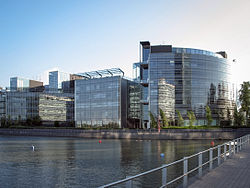
Microsoft Mobile's head office was Microsoft Talo in Keilaniemi, Espoo, Finland. The building was previously named Nokia House, and was part of Microsoft's acquisition of Nokia's device business, becoming Microsoft Mobile's headquarters in April 2014 and receiving its new name.[194] It is now occupied by both Microsoft Finland[195] and Tieto.
See also
[edit]Notes
[edit]References
[edit]- ^ Callaham, John (21 July 2015). "Surface leader Panos Panay is now head of engineering for all of Microsoft's devices". Windows Central.
- ^ Bright, Peter (21 April 2014). "Nokia Devices to become "Microsoft Mobile" on April 25. Microsoft will also run the Nokia.com website for a year". Ars Technica.
- ^ "Notify The Next Of Kin". InformationWeek. 30 June 2010.
- ^ "Dead Pink phone fallout hits Microsoft's top brass". The Register. 8 July 2010.
- ^ a b "Nokia and Microsoft form partnership". BBC. 11 February 2011. Retrieved 12 February 2011.
- ^ Weintraub, Seth (8 February 2011). "Nokia's Elop drops bomb: the platform is on fire". Fortune. Archived from the original on 27 June 2013. Retrieved 14 June 2013.
- ^ John, Michael. "Microsoft announces Lumia". Cellz. Archived from the original on 13 November 2014. Retrieved 13 November 2014.
- ^ a b "Capitulation: Nokia adopts Windows Phone 7". Ars Technica. 11 February 2011. Retrieved 12 February 2011.
- ^ "Gartner Says Sales of Mobile Devices in Second Quarter of 2011 Grew 16.5 Percent Year-on-Year; Smartphone Sales Grew 74 Percent" (Press release). Gartner. 11 August 2011. Archived from the original on 13 August 2011. Retrieved 29 September 2011.
- ^ "Gartner Says Asia/Pacific Led Worldwide Mobile Phone Sales to Growth in First Quarter of 2013". Gartner. Gartner, Inc. 14 May 2013. Archived from the original (Press release) on 7 June 2013. Retrieved 21 July 2013.
- ^ Ward, Andrew (21 July 2011). "Apple overtakes Nokia in smartphone stakes". Financial Times. Retrieved 21 July 2011.
- ^ "Recent Smartphone Shipments show Gainers & Losers". August 2011. Retrieved 22 August 2012.
- ^ "Nokia to cut 3500 jobs worldwide; to shut Romania factory". 29 September 2011.
- ^ Fried, Ina (9 August 2011). "Nokia to Exit Symbian, Low-End Phone Businesses in North America". All Things Digital. Retrieved 9 August 2011.
- ^ "Nokia Lumia 710 hands-on (video)". Engadget. 26 October 2011. Retrieved 8 November 2012.
- ^ Toor, Amar (26 October 2011). "Nokia announces the Lumia 800". Engadget. Retrieved 13 November 2012.
- ^ ben-Aaron, Diana (11 February 2011). "Nokia Falls Most Since July 2009 After Microsoft Deal". Bloomberg.
- ^ "Lumia: Is the light visible?". Asymco. Horace Dediu. 18 April 2013. Retrieved 21 July 2013.
- ^ "Nokia Q4 2011 net sales EUR 10.0 billion, non-IFRS EPS EUR 0.06 (reported EPS EUR −0.29) Nokia 2011 net sales EUR 38.7 billion, non-IFRS EPS EUR 0.29 (reported EPS EUR −0.31)". Nokia. 26 January 2012. Archived from the original on 1 June 2013. Retrieved 22 June 2013.
- ^ Constantinescu, Stefan (26 January 2012). "Nokia Q4 2011 financial results: Over 1 million Lumia Windows Phones sold to date". IntoMobile. Archived from the original on 12 January 2015. Retrieved 22 June 2013.
- ^ Cooper, Daniel (11 April 2012). "Nokia: Two million Lumia phones sold in Q1 but profits still falling". Engadget. AOL. Retrieved 2 June 2012.
- ^ "Nokia ships 4 million Lumias in Q2 2012, over 7 million to date". 19 July 2012.
- ^ "Nokia's Fight for AT&T Shelf Space Shows Hurdle for Lumia". Bloomberg News. 6 August 2012.
- ^ "File Not Found". Archived from the original on 25 April 2020. Retrieved 16 April 2014.
- ^ Charles, A. (31 January 2011). "Android overtakes Symbian in smartphone sales". www.theguardian.com. Retrieved 10 August 2018.
- ^ "Nokia's Lumia phones to show Groupon offers on maps". BBC News. BBC. 2 August 2012.
- ^ Chris Smith (30 June 2012). "Nokia promises back-up plan if Windows Phone fails". Techradar. Retrieved 6 July 2012.
- ^ "Nokia's Siilasmaa: Goal to regain competitiveness". YLS Uutiset. 28 June 2012. Retrieved 6 July 2012.
- ^ Moen, Arild (8 February 2012). "Nokia to Cut 4,000 Jobs". The Wall Street Journal.
- ^ "Nokia to cut 10,000 jobs; shut units". The Hindu. 14 June 2012.
- ^ ben-Aaron, Diana (14 June 2012). "Nokia to Cut 10,000 Jobs as Elop Tries to Stanch Losses". Bloomberg.
- ^ "7 milestones in Nokia's year of woes". The Times of India. 15 June 2012. Retrieved 22 June 2013.
- ^ "Nokia Downgraded to Junk". Zacks.com. 18 June 2012. Archived from the original on 11 May 2013. Retrieved 8 September 2013.
- ^ "Nokia CEO Stephen Elop admits failure to foresee fast-changing industry". BMA Wealth Creators - Official Blog. 29 June 2012. Retrieved 10 August 2018.
- ^ Reisinger, Don (4 May 2012). "Nokia, execs hit with class-action suit over disappointing Lumia sales | Mobile – CNET News". News.cnet.com. Retrieved 8 September 2013.
- ^ "Nokia Finnish investors considering gathering signatures to get CEO Elop sacked". Phonearena.com. 23 August 2012. Retrieved 8 September 2013.
- ^ "Struggling Nokia sells HQ". 3 News NZ. 5 December 2012. Archived from the original on 13 July 2014. Retrieved 16 April 2014.
- ^ "Nokia Corporation Q4 and full year 2012 Interim Report". Archived from the original on 13 December 2013. Retrieved 16 April 2014.
- ^ Savov, Vlad (9 May 2013). "Nokia hedges its commitment to Windows Phone with new Asha platform and $99 phone". The Verge. Retrieved 22 June 2013.
- ^ Einhorn, Bruce (7 December 2012). "Nokia Deal Is Just the Beginning for China Mobile". Businessweek. Archived from the original on 9 December 2012. Retrieved 22 June 2013.
- ^ Arthur, Charles (18 July 2013). "Nokia revenues slide 24% but Lumia sales rise offers hope". The Guardian. Retrieved 19 July 2013.
- ^ Tom Warren (18 July 2013). "Nokia Lumia sales Q2 2013". The Verge. Retrieved 8 September 2013.
- ^ Thurrott, Paul (14 November 2013). "Good News and Bad News for Windows Phone, Strong market share growth doesn't mean big market share". WinSuperSite.
- ^ Rivera, Jaime (18 October 2013). "Nokia owns 90% of the Windows Phone market share". PocketNow. Archived from the original on 16 November 2017. Retrieved 22 April 2015.
- ^ Kharpal, Arjun (24 March 2014). "Nokia-Microsoft merger delayed due to Asia hurdles". CNBC.com.
- ^ Baliga, Anantha (24 March 2014). "Regulatory approval for Microsoft-Nokia deal delayed till April. The deal, announced last September, has received approvals from most regulators and antitrust agencies, with approvals yet to come from some Asian countries". United Press International.
- ^ "Nokian ex-pomo Anssi Vanjoki: Häpeällistä mutta väistämätöntä". Helsingin Sanomat (in Finnish). 3 September 2013. Archived from the original on 16 July 2014. Retrieved 4 September 2013.
- ^ "Jorma Ollila brought Nokia great success. But did he also bring the company down? The former phone giant's current chairman Risto Siilasmaa tells us what he witnessed". 28 September 2018.
- ^ DELAYED: Microsoft Won't Close Its $7.2 Billion Buy Of Nokia Until April, Business Insider, 24 March 2014
- ^ Trenholm, Rich (25 April 2014). "Microsoft closes Nokia deal, pays more than expected". CNET. Retrieved 25 April 2014.
- ^ Williams, Rhiannon (23 April 2014). "Nokia phone unit 'to be renamed Microsoft Mobile'". The Daily Telegraph. Archived from the original on 12 January 2022. Retrieved 25 April 2014.
- ^ "Nokia says its sale to Microsoft will close on April 25th". The Verge. 21 April 2014. Retrieved 25 April 2014.
- ^ "There will never be another Nokia smartphone". The Verge. 3 September 2013. Retrieved 3 September 2013.
- ^ F., Alan (16 June 2014). "Microsoft owns PureView, ClearBlack and four other Nokia trademarks". Phone Arena.
- ^ Jain, Aman (17 June 2014). "Nokia ClearBlack, PureView Trademarks Now Owned By Microsoft". ValueWalk.
- ^ Foley, Mary Jo (4 September 2013). "Microsoft and Nokia weave an entangled patent web". ZDNet.
- ^ Rowinski, Dan (3 September 2013). "What Microsoft Did And Didn't Buy With Its Nokia Acquisition. Nokia will exist while Microsoft gets the manufacturing, distribution, marketing and sales of Nokia's smart and feature phones". ReadWrite. Archived from the original on 5 September 2013.
- ^ Fung, Brian (3 September 2013). "Is Nokia about to become a patent troll?". Washington Post.
- ^ "Microsoft buys Nokia's Devices and Services Unit, unites Windows Phone 8 and its hardware maker". The Verge. Vox Media. 3 September 2013. Retrieved 3 September 2013.
- ^ Ovide, Shira. "Microsoft in $7.17 Billion Deal for Nokia Cellphone Business". Wall Street Journal. Retrieved 3 September 2013.
- ^ "The Next Chapter: An open letter from Steve Ballmer and Stephen Elop". The Official Microsoft Blog. Archived from the original on 4 September 2013. Retrieved 3 September 2013.
- ^ Jones, Chuck. "The Market Essentially Forced Microsoft To Buy Nokia". Forbes. Retrieved 3 September 2013.
- ^ "Microsoft to slash 18,000 jobs in deepest cuts in tech giant's history". The Guardian. 17 July 2014. Retrieved 18 July 2014.
- ^ a b c d "Microsoft is killing off Nokia's feature phones in favor of Windows Phone". The Verge. 17 July 2014. Retrieved 17 July 2014.
- ^ Warren, Tom (12 June 2015). "Microsoft Moonraker was Nokia's smartwatch before it was killed". The Verge.
- ^ Montaño, Jay (23 January 2015). "Nokia Account Discontinued April 14; Nokia Mail and Nokia Chat discontinued on March 9". My Nokia Blog.
- ^ Litchfield, Steve (23 February 2015). "'Nokia Account Discontinuation' on April 25th". All About Symbian.
- ^ Summers, Nick (19 September 2014). "Goodbye nokia.com? Microsoft redirects UK visitors to its own site". The Next Web.
- ^ Bright, Peter (21 April 2014). "Nokia Devices to become "Microsoft Mobile" on April 25. Microsoft will also run the Nokia.com website for a year". Ars Technica.
- ^ Mlot, Stephanie (22 October 2014). "Nokia's Phone Business Rebranded as 'Microsoft Lumia'". PC Magazine. Archived from the original on 3 August 2020. Retrieved 13 March 2017.
- ^ Rao, Leena (22 October 2014). "Microsoft ditching the 'Nokia' and 'Windows Phone' brands for 'Microsoft Lumia'". Fortune.
- ^ "This is what Microsoft's Nokia-less Lumia phones will look like". PC World. 24 October 2014. Retrieved 24 October 2014.
- ^ Clinton, Fitch (10 November 2014). "Microsoft Lumia Rebranding Continues on Facebook, Twitter and YouTube". Clinton Fitch. Archived from the original on 18 February 2021. Retrieved 21 April 2015.
- ^ "Nokia France leak: Windows Phone DUMPED in Microsoft Lumia revamp, Haricots renversés sur Facebook". The Register. Retrieved 22 October 2014.
- ^ "The Nokia Conversations blog is now Lumia Conversations". Windows Central. 9 November 2014. Retrieved 9 November 2014.
- ^ Browne, Mike (8 January 2015). "Welcome to Lumia Conversations U.K." Lumia Conversations U.K. (formerly NokNok.tv). Archived from the original on 19 January 2015. Retrieved 23 February 2015.
- ^ Maisto, Michelle (6 September 2012). "Nokia Lumia Now Has Its Own 'Army' to Boost Smartphone Sales". eWeek.
- ^ Rubino, Daniël (18 May 2012). "Nokia unleashes the ground troops with the official Nokia Army app for Windows Phone". Windows Phone Central.
- ^ "#Nokia Support Discussions gets a new home – The #Microsoft Mobile Community. by @jimboireland". Nokia News Ireland. Archived from the original on 1 January 2015. Retrieved 7 December 2014.
- ^ "Microsoft to use "Nokia by Microsoft" branding on new phones; Surface name to be replaced by Lumia?". PhoneArena. 28 June 2014. Retrieved 12 September 2014.
- ^ Eadicicco, Lisa (24 October 2014). "Microsoft Has Officially Cut Nokia's Brand From Its Most Popular Smartphone Line". Business Insider.
- ^ Lomas, Natasha (28 April 2014). "Microsoft Won't Brand Its Own Phones 'Microsoft Mobile' – Nor Use Nokia's Name For Long". Tech Crunch.
- ^ "Microsoft announces two Lumia phones, always-on Cortana, and clever new mobile accessories". PC World. 4 September 2014. Retrieved 12 September 2014.
- ^ Manish, Signh (4 November 2014). "Microsoft announces rebranding of Nokia apps, shuts down Nokia's memory website". Boy Genius Report – India. Archived from the original on 20 June 2015.
- ^ Announcing Windows 10
- ^ McAllister, Neil (12 February 2015). "Microsoft launches wobbly Windows 10 phone preview for Lumia daredevils only, 'You will encounter bugs'". The Register – United Kingdom.
- ^ Warren, Tom (21 October 2014). "Microsoft Lumia will replace the Nokia brand". The Verge. Retrieved 21 October 2014.
- ^ Warren, Tom (24 October 2014). "Microsoft Lumia design officially revealed without Nokia branding". The Verge.
- ^ a b "High five for Microsoft Lumia 535". Lumia Conversations. 11 November 2015. Archived from the original on 1 January 2015.
- ^ Rubino, Daniël (5 November 2014). "Lumia Cinemagraph Beta is now available to download with new sharing options". Windows Phone Central.
- ^ Callaham, John (14 January 2015). "Microsoft ends the Lumia Cinemagraph beta and brings feature set to main app". Windows Phone Central. Archived from the original on 2 April 2015. Retrieved 24 March 2015.
- ^ Viswav, Pradeep (19 November 2014). "Microsoft Will Be Discontinuing The memories.nokia.com Website For Sharing Cinemagraphs Online". Windows Mobile PowerUser. Archived from the original on 13 February 2021. Retrieved 27 March 2015.
- ^ Nayan (3 December 2014). "'Nokia Sync' being discontinued on 5th December. Export records or move to Microsoft account". NokiaPowerUser. Retrieved 22 August 2022.
- ^ Boxall, Andy (19 March 2015). "Forget flagship phones, Microsoft's back with the $70 Lumia 430". Digital Trends.
- ^ Warren, Tom (19 March 2015). "Microsoft's new Lumia 430 is its cheapest Windows phone yet at just $70". The Verge.
- ^ Vasile, Cosmin (31 March 2015). "Microsoft Explains the Impressive Technology Loaded into Lumia Smartphones". Softpedia.
- ^ "Microsoft launches selfie-focused Lumia 540 smartphone". Yahoo! News. 15 April 2015.
- ^ Warren, Tom (26 January 2015). "Microsoft's Q2 2015: Surface and Lumia up, but Xbox and profits down". The Verge.
- ^ Surur, Suril (23 April 2015). "Microsoft: Flagships can wait as the Microsoft Lumia 535 overtakes the Nokia Lumia 520 in popularity". Windows Mobile PowerUser. Archived from the original on 26 December 2015. Retrieved 23 April 2015.
- ^ Rajan, Nandagopal (23 April 2015). "New Lumia flagships only when Windows 10 launches: Microsoft Mobile Devices". The Indian Express.
- ^ Howse, Brett (26 January 2015). "Microsoft Q2 FY 2015 Financial Results: 8% Revenue Gain". Amand Tech. Archived from the original on 28 January 2015.
- ^ Ovide, Shira (23 April 2015). "Microsoft Outperforms Its Low Growth Expectations, 'We did a little bit better in lots of places,' financial chief says". The Wall Street Journal.
- ^ Allison, Michael (23 April 2015). "Lumia sales up 18% YOY, 8.6 million devices sold". Windows Mobile PowerUser. Archived from the original on 25 November 2015. Retrieved 24 April 2015.
- ^ Keizer, Gregg (27 April 2015). "Microsoft hints at impending write-off of Nokia acquisition that could total billions, Filing with SEC signals massive charge against earnings coming this quarter as phone sales falter". Computer World. Archived from the original on 4 July 2020. Retrieved 27 April 2015.
- ^ Jain, Aman (27 April 2015). "Is Microsoft Corporation Planning To Write Off Nokia Acquisition?Microsoft may be planning to write-off part of the amount paid for the Nokia acquisition, and the announcement could come by July". Value Walk.
- ^ "Joe Belfiore: Windows 10 update for 512 MB phones in the works". GSMArena. Retrieved 9 February 2015.
- ^ Saleem, Hammad (24 March 2015). "Windows Phone performance as of March 2015, budget-friendly devices continue to dominate". WinBeta. Archived from the original on 26 March 2015. Retrieved 26 March 2015.
- ^ Aul, Gabe (12 February 2015). "Announcing the first build of Windows 10 Technical Preview for Phones". Windows Blog. Microsoft Corporation. Retrieved 12 February 2015.
- ^ Sarma, Sandeep (28 April 2015). "World's first Microsoft Priority Store opened in India". Fone Arena.
- ^ Viswav, Pradeep (28 April 2015). "Nokia Stores To Be Rebranded As Microsoft Priority Reseller Stores, First Rebranded Store Opened in India". Windows Mobile PowerUser. Archived from the original on 3 September 2015. Retrieved 29 June 2015.
- ^ McCaskill, Steve (3 June 2015). "Microsoft Updates £13 Nokia 105 With Louder Audio And Dual SIM". TechWeek Europe (United Kingdom). Archived from the original on 23 June 2015.
- ^ McGlaun, Shane (3 June 2015). "Nokia 105 and 105 Dual SIM aim at first time phone users". SlashGear.
- ^ Viswav, Pradeep (21 July 2015). "Microsoft Announces $22.2 Billion Revenue And $2.1 Billion Operating Loss For Q4 FY 2015". Microsoft-News.
- ^ Viswav, Pradeep (21 July 2015). "Microsoft Sold 8.4 Million Lumia Devices in the Q4 Compared To 7.5 Million Last Year". Windows Mobile PowerUser. Archived from the original on 23 August 2015. Retrieved 22 July 2015.
- ^ Diaconescu, Adrian (5 June 2015). "Microsoft reboots Nokia 105 feature phone, but why bother?". Gadgets. Technology Tell. Archived from the original on 9 June 2015. Retrieved 2 January 2019.
- ^ Brown, August (9 June 2015). "L.A. Live's Nokia Theatre changes name to Microsoft Theater". Los Angeles Times.
- ^ Sohn, Adam (9 June 2015). "L.A. LIVE's Home Of Concerts And Award Shows Renamed Microsoft Theater". Bloomberg Business.
- ^ "Microsoft writes off $7.6 billion from Nokia deal, announces 7,800 job cuts". The Verge. Retrieved 9 October 2017.
- ^ "Microsoft to Cut Jobs, Take $7.6 Billion Writedown on Nokia". Bloomberg. 8 July 2015. Retrieved 8 July 2015.
- ^ Bort, Julie (8 July 2015). "Microsoft layoffs will hit its sales and marketing teams and employees in Finland". Business Insider.
- ^ Dolcourt, Jessica (6 October 2015). "Microsoft Lumia 950 coming in November with Windows 10, 5.2-inch screen, starts at $549 (hands-on)". CNet.
- ^ Kastrenakes, Jacob (6 October 2015). "Microsoft Lumia 950 XL with 5.7-inch display and liquid cooling announced for $649". The Verge.
- ^ Statt, Nick (6 October 2015). "Microsoft's new Lumia 550 announced at $139. The Windows budget phone is back". The Verge.
- ^ Olivarez-Giles, Nathan (6 October 2015). "Microsoft Unveils Powerhouse Lumia 950 and 950 XL Phones". The Wall Street Journal.
- ^ Microsoft Lumia 650 launched at $199: Here are the top specs
- ^ Bort, Julie (21 April 2016). "Microsoft's phone business fell off a cliff, sales for the Lumia were down 73%". Business Insider. Retrieved 2 January 2019.
- ^ "Gartner Says Worldwide Smartphone Sales Grew 3.9 Percent in First Quarter of 2016". Gartner. 19 May 2016. Archived from the original on 22 May 2016. Retrieved 2 January 2019.
- ^ Surur (25 May 2016). "Microsoft explains further phone restructuring, 1850 job losses". MSPoweruser. Retrieved 25 May 2016.
- ^ Warren, Tom (25 May 2016). "Microsoft lays off hundreds as it guts its phone business". The Verge. Retrieved 25 May 2016.
- ^ "Microsoft bangs the final nail in Nokia Devices' coffin, will lay off 1,850". Ars Technica. Retrieved 9 October 2017.
- ^ "Microsoft kills what's left of the old Nokia". Engadget. Retrieved 9 October 2017.
- ^ "The legend lives on: Nokia-branded Android smartphones are coming". Android Authority. 18 May 2016. Retrieved 9 October 2017.
- ^ Shilov, Anton. "HMD Closes Nokia Brand and Patents Deal with Microsoft, Smartphones Due in 2017". Anandtech.com. Archived from the original on 3 December 2016. Retrieved 24 July 2017.
- ^ "Microsoft sells Nokia feature phones business". 18 May 2016. Retrieved 14 June 2017.
- ^ "Nokia's new Android smartphone has been unveiled". The Verge. Retrieved 9 October 2017.
- ^ a b "Microsoft finally admits Windows Phone is dead". The Verge. Retrieved 9 October 2017.
- ^ a b "Microsoft exec says Windows 10 Mobile is no longer a 'focus'". Engadget. Retrieved 9 October 2017.
- ^ Carrie Marshall (9 October 2024). "Say goodbye to the Surface Duo – Microsoft is pulling the plug on the Duo 2 this month". TechRadar. Retrieved 1 January 2026.
- ^ GitHub-Name. "Windows 10 Mobile, released in October 2017 - Microsoft Lifecycle". learn.microsoft.com. Retrieved 1 January 2026.
- ^ "Explore Nokia smartphones & tablets - HMD". HMD - Human Mobile Devices. Retrieved 1 January 2026.
- ^ Tyrsina, Radu (7 June 2023). "Connect your Android phone to a Windows PC with Phone Link". Digital Citizen. Retrieved 1 January 2026.
- ^ Farooqui, Adnan (25 August 2025). "See which phone Bill Gates is using that was gifted by Samsung boss Jay Y. Lee". SamMobile. Retrieved 1 January 2026.
- ^ Is Windows RT dead? Microsoft stops making Nokia Lumia 2520 | ITworld
- ^ Wingfield, Nick (22 October 2013). "Nokia's New Tablet Arrives Ahead of Microsoft Deal". The New York Times. Retrieved 24 October 2013.
- ^ Chang, Alexandra (22 October 2013). "Nokia World: First Windows Tablet, Big Lumia Phone, and Instagram (Finally) | Gadget Lab". Wired. Wired.com. Archived from the original on 22 October 2013. Retrieved 24 October 2013.
- ^ "Microsoft Lumia design officially revealed without Nokia branding". The Verge. 24 October 2014. Retrieved 24 October 2014.
- ^ Warren, Tom (10 September 2014). "Microsoft is killing the Nokia and Windows Phone brands". The Verge. Retrieved 12 September 2014.
- ^ "Microsoft is killing the Nokia and Windows Phone names, reports say". PC World. Retrieved 12 September 2014.
- ^ "Microsoft Lumia will replace the Nokia brand". The Verge. 21 October 2014. Retrieved 21 October 2014.
- ^ Bright, Peter (11 November 2014). "The Lumia 535 is the first Microsoft-branded smartphone We're truly entering the post-Nokia era". Ars Technica.
- ^ Saxena, Anupan (11 November 2014). "First Microsoft-branded smartphone Lumia 535 launched". The Times of India.
- ^ Dasani, Jill (28 January 2015). "AdDuplex Stats – Lumia 535 a massive hit in India, Lumia 730 follows". Nokia the One. Archived from the original on 8 February 2015.
- ^ Tre, Tuoi (6 February 2015). "Nokia phones still popular with consumers in Vietnam following Microsoft buyout: retailers". Tuoi Tre News. Archived from the original on 8 November 2020. Retrieved 18 February 2015.
- ^ Dolcourt, Jessica (20 November 2015). "Microsoft Lumia 950 review". CNET. Retrieved 28 July 2018.
- ^ Warren, Tom; Kastrenakes, Jacob (6 October 2015). "Microsoft Lumia 950 XL with 5.7-inch display and liquid cooling announced for $649". The Verge. Retrieved 2 January 2018.
- ^ Nick, Statt (6 October 2015). "Microsoft's new Lumia 550 announced at $139". The Verge. Retrieved 3 January 2019.
- ^ "HMD Skyline Review: Repairability and Qi2—At a Cost". nextpit. 9 August 2024. Retrieved 1 January 2026.
- ^ Tom Warren (13 September 2013). "Nuclear options: Microsoft was testing Surface Phone while Nokia experimented with Android". The Verge. Vox Media. Retrieved 23 September 2013.
- ^ This is Nokia's Android phone
- ^ Contributor, Tech Advisor. "The Nokia XR21 is a solid smartphone with extra durability". Tech Advisor. Retrieved 1 January 2026.
{{cite web}}:|last=has generic name (help) - ^ Rigg, Jamie, "Nokia unveils the touchscreen Asha 501 with new software platform, we go hands-on (video)", Engadget, 9 May 2013
- ^ "Microsoft to abandon mobile phones, X-series Android smartphones: internal Jo Harlow memo – BGR, 17 July 2014". Archived from the original on 26 June 2015. Retrieved 29 June 2015.
- ^ "Forum Nokia – Nokia Series 40 Platform". Nokia. Archived from the original on 2 September 2012. Retrieved 27 October 2010.
- ^ "Nokia has sold over 1.5 billion Series 40 phones". Archived from the original on 18 December 2012. Retrieved 25 January 2012.
- ^ "Nokia outs Asha 308 and 309, deems Series 40 smartphone-worthy". 25 September 2012. Retrieved 25 September 2012.
- ^ Tung, Liam, "Microsoft's new Nokia 130 arrives for $25", ZDNet, 11 August 2014
- ^ Trenholm, Rich, "Nokia 130 lasts more than a month costs 19 Euros", CNet, 11 August 2014
- ^ Ricknäs, Mikael, "Microsoft still believes in basic phones, launches Nokia 130 for $25", PCWorld, 11 August 2014
- ^ "Meet Nokia 215: our most affordable Internet-ready entry-level phone yet". Archived from the original on 5 January 2015. Retrieved 5 January 2015.
- ^ Lancaster, Marco (29 June 2022). "Nokia 105 series phones exceed 200 million units in sales". Gizchina.com. Retrieved 6 January 2024.
- ^ Boone, Jeb (26 February 2013). "Nokia Targets Developing World With Cheap, Simple Phones". Consumer News and Business Channel.
- ^ Mlot, Stephanie (3 June 2015). "Microsoft Tips New $20 Nokia 105 Phone. The single and dual SIM models boast extended phonebook capacity, more talk time, and a long-lasting battery". PC Magazine.
- ^ Nokia 222 launched
- ^ Nokia 230
- ^ "Mobile Community - Re: Nokia 220, the worst s4o phone - Microsoft Mobile Community". Archived from the original on 26 June 2015. Retrieved 29 June 2015.
- ^ H., Victor (15 May 2012). "Nokia quietly kills its Series 30: what does this mean?". FoneArena.
- ^ Gaskell, Helen (31 March 2015). "Microsoft Lumia 640 XL to make UAE debut at GITEX Shopper". ITP.net.
- ^ Bamburic, Mihaita (2 October 2014). "Microsoft's new Portable Power external charger packs 6,000 mAh battery". Beta News.
- ^ Arora, Rohit (11 June 2015). "Microsoft enters portable power banks market; price starts at Rs. 2,200". Personal Computer Quest.
- ^ Satpathy, Sambit (11 June 2015). "Microsoft launches 5,200mAh, 9,000mAh, 12,000mAh power banks, prices start at Rs 2,200". Boy Genius Report – India. Archived from the original on 23 August 2019. Retrieved 18 June 2015.
- ^ Russel, Jon (19 February 2014). "Nokia Treasure Tag is a $30 Lumia accessory to help keep valuables safe – goes on sale in April". The Next Web.
- ^ Haselton, Todd (12 May 2014). "Nokia Treasure Tag Windows Phone Accessory Finally Available". TechnoBuffalo. Archived from the original on 11 April 2015. Retrieved 5 April 2015.
- ^ Fajardo, JR., Romeo (10 May 2014). "Slimmer Than Before: Microsoft Releases Nokia Treasure Tag Mini". Nokia Revolution. Archived from the original on 11 April 2015. Retrieved 5 April 2015.
- ^ Villamarin, Jenalyn (14 May 2014). "Nokia Treasure Tag Mini WS-10: Slimmer Accessory for Nokia Lumia Smartphones to Go on Sale Soon". International Business Times Australia.
- ^ Huang, Ryan (3 September 2013). "Elop drops Nokia CEO role to lead devices team under Microsoft deal". ZDNet.
- ^ Ricker, Thomas (11 February 2011). "Nokia execs reshuffled in Microsoft-centered Elopcalypse". Engadget.
- ^ Mäntylä, Juha-Matti (26 January 2015). "Suomalaiset kehittivät Microsoftille älylasit - "HoloLens on ihmeellinen"". Talouselämä. Archived from the original on 25 June 2015. Retrieved 7 April 2015.
- ^ Popa, Bogdan (17 June 2015). "Microsoft's "Trojan Horse" Stephen Elop Leaves the Company". Softpedia.
- ^ Warren, Tom (17 June 2015). "Microsoft's head of phones, Jo Harlow, has also left the company, Another key former Nokia executive leaves Microsoft". The Verge.
- ^ Bright, Peter (17 June 2015). "Stephen Elop out as Microsoft merges Windows and devices groups, Microsoft Dynamics is also moving to become part of the cloud group. Ministry of Innovation – Business of Technology". Ars Technica.
- ^ Foley, Mary Jo (17 June 2015). "Why did Microsoft just combine its Windows and Devices businesses? In its latest corporate shakeup, Microsoft has moved its first-party hardware business into its Windows engineering organization. But why?". ZDNet.
- ^ "Nokia House now has Microsoft Branding". Archived from the original on 25 May 2014. Retrieved 17 February 2015.
- ^ "Microsoft Worldwide Sites". www.microsoft.com (in Finnish). Retrieved 10 May 2020.
External links
[edit]- Official website
- Official blog
- "Microsoft Mobile Oy – tässä on nokialaisten uusi koti" (Microsoft Mobile – this is the kind of Nokia new home), Talouselämä, 12 December 2013 (Finnish)

| Subsidiaries |  | |
|---|---|---|
| Other units | ||
| Acquisitions | ||
| Divestments | ||
| Places | ||
| People |
| |
| Other | ||

