Hubbry Logo
Nuclear graphiteNuclear graphiteMain
Open search
Nuclear graphite
Community hub
Nuclear graphite
logo
8 pages, 0 posts
0 subscribers
Be the first to start a discussion here.
Nuclear graphite
Nuclear graphite
from Wikipedia

Nuclear graphite is any grade of graphite, usually synthetic graphite, manufactured for use as a moderator or reflector within a nuclear reactor. Graphite is an important material for the construction of both historical and modern nuclear reactors because of its extreme purity and ability to withstand extremely high temperatures.

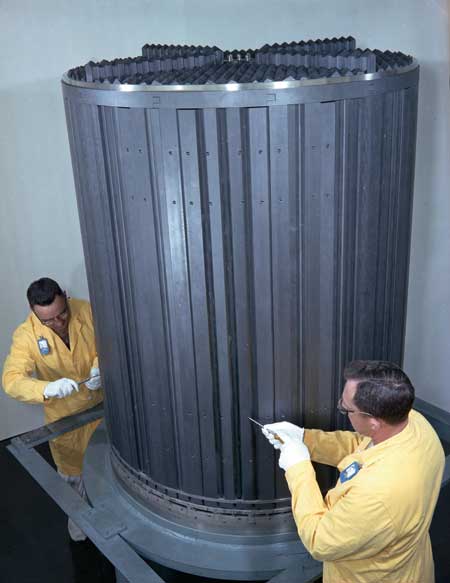
Core graphite from the Molten-Salt Reactor Experiment

History

[edit]

Nuclear fission, the creation of a nuclear chain reaction in uranium, was discovered in 1939 following experiments by Otto Hahn and Fritz Strassman, and the interpretation of their results by physicists such as Lise Meitner and Otto Frisch.[1][2] Shortly thereafter, word of the discovery spread throughout the international physics community.

In order for the fission process to chain react, the neutrons created by uranium fission must be slowed down by interacting with a neutron moderator (an element with a low atomic weight, that will "bounce", when hit by a neutron) before they will be captured by other uranium atoms. By late 1939, it was generally known that heavy water might be used as a moderator. The highest-purity graphite then commercially available (so called electro-graphite) was dismissed by the Germans and the British as a possible moderator because it contained boron and cadmium impurities.[3] However, graphite of high enough purity was developed in the early 1940's in the United States, and this then was utilized in the first and subsequent nuclear reactors for the Manhattan Project.[4]

In February 1940, using funds that were allocated partly as a result of the Einstein-Szilard letter to President Roosevelt, Leo Szilard purchased several tons of graphite from the Speer Carbon Company and from the National Carbon Company (the National Carbon Division of the Union Carbide and Carbon Corporation in Cleveland, Ohio) for use in Enrico Fermi's first fission experiments, the so-called exponential pile.[5]: 190  Fermi writes that "The results of this experiment was [sic] somewhat discouraging"[6] presumably because of the absorption of neutrons by some unknown impurity.[7]: 40  So, in December 1940 Fermi and Szilard met with Herbert G. MacPherson and V. C. Hamister at National Carbon to discuss the possible existence of impurities in graphite.[8]: 143  During this conversation it became clear that minute quantities of boron impurities were the source of the problem.[4][9]

As a result of this meeting, over the next two years, MacPherson and Hamister developed thermal and gas extraction purification techniques at National Carbon for the production of boron-free graphite.[9][10] The resulting product was designated AGOT Graphite ("Acheson Graphite Ordinary Temperature") by National Carbon, and it was "the first true nuclear grade graphite".[11]

During this period, Fermi and Szilard purchased graphite from several manufacturers with various degrees of neutron absorption cross section: AGX graphite from National Carbon Company with 6.68 mb (millibarns) cross section, US graphite from United States Graphite Company with 6.38 mb cross section, Speer graphite from the Speer Carbon Company with 5.51 mb cross section, and when it became available, AGOT graphite from National Carbon, with 4.97 mb cross section.[7]: 178 [12]: 4 [13] By November 1942 National Carbon had shipped 250 tons of AGOT graphite to the University of Chicago[5]: 200  where it became the primary source of graphite to be used in the construction of Fermi's Chicago Pile-1, the first nuclear reactor to generate a sustained chain reaction (December 2, 1942).[7]: 295  In early 1943 AGOT graphite was used to build the X-10 Graphite Reactor at Clinton Engineer Works in Tennessee and the first reactors at the Hanford Site in Washington,[12]: 5  for the production of plutonium during and after World War II.[9][11] The AGOT process and its later refinements became standard techniques in the manufacture of nuclear graphite.[12]

The neutron cross section of graphite was investigated during the Second World War in Germany by Walter Bothe, P. Jensen, and Werner Heisenberg. The purest graphite available to them was a product from the Siemens Plania company, which exhibited a neutron absorption cross section of about 6.4 mb[14]: 370  to 7.5 mb.[15] Heisenberg therefore decided that graphite would be unsuitable as a moderator in a reactor design using natural uranium.[4][14][16] Consequently, the German effort to create a chain reaction involved attempts to use heavy water, an expensive and scarce alternative, made all the more difficult to acquire as a consequence of the Norwegian heavy water sabotage by Norwegian and Allied forces. Writing as late as 1947, Heisenberg still did not understand that the only problem with graphite was the boron impurity.[16]

After testing indigenous electro-graphite, Soviet scientists were able to procure and test American Acheson Graphite in 1943 and subsequently reproduced the technology.[17]

Graphite has also recently been used in nuclear fusion reactors such as the Wendelstein 7-X. As of experiments published in 2019, graphite in elements of the stellarator's wall and a graphite island divertor have greatly improved plasma performance within the device, yielding better control over impurity and heat exhaust, and long high-density discharges.[18]

Wigner effect

[edit]

In December 1942 Eugene Wigner suggested[19] that neutron bombardment might introduce dislocations and other damage in the molecular structure of materials such as the graphite moderator in a nuclear reactor. The resulting buildup of energy in the material became a matter of concern[11]: 5  The possibility was suggested that graphite bars might fuse together as chemical bonds at the surface of the bars when opened and closed again. Even the possibility that the graphite parts might very quickly break into small pieces could not be ruled out. However, the first power-producing reactors (X-10 Graphite Reactor and Hanford B Reactor) had to be built without such knowledge. Cyclotrons, which were the only fast neutron sources available, would take several months to produce neutron irradiation equivalent to one day in B Reactor.

This was the starting point for large-scale research programmes to investigate the property changes from fast particle radiation and to predict their influence on the safety and the lifetime of graphite reactors to be built. Influences of fast neutron radiation material properties have been observed many times and in many countries after the first results emerged from the X-10 Graphite Reactor in 1944.

Specific changes to graphite when irradiated include:

As the state of nuclear graphite in active reactors can only be determined at routine inspections, about every 18 months mathematical modelling of the nuclear graphite as it approaches end-of-life is important. However as only surface features can be inspected and the exact time of changes is not known, reliability modelling is especially difficult.[20] Although catastrophic behaviour such as fusion or crumbling of graphite pieces has never occurred, large changes in many properties do result from fast neutron irradiation which need to be taken into account when graphite components of nuclear reactors are designed. Although not all effects are well understood yet, more than 100 graphite reactors have successfully operated for decades since the 1940s. In the 2010s, the collection of new material property data has improved knowledge significantly. [21][22]

Manufacture

[edit]

Reactor-grade graphite must be free of neutron absorbing materials, especially boron, which has a large neutron capture cross section. Boron sources in graphite include the raw materials, the packing materials used in baking the product, and even the choice of soap (for example, borax) used to launder the clothing worn by workers in the machine shop.[12]: 80  Boron concentration in thermally purified graphite (such as AGOT graphite) can be less than 0.4 ppm,[12]: 81  and in chemically purified nuclear graphite it is less than 0.06 ppm.[12]: 47 

Nuclear graphite for the UK Magnox reactors was manufactured from petroleum coke mixed with coal-based binder pitch heated and extruded into billets, and then baked at 1,000 °C for several days. To reduce porosity and increase density, the billets were impregnated with coal tar at high temperature and pressure before a final bake at 2,800 °C. Individual billets were then machined into the final required shapes.[23]

Accidents in graphite-moderated reactors

[edit]

There have been two major accidents in graphite-moderated reactors, the Windscale fire and the Chernobyl disaster.

In the Windscale fire, an untested annealing process for the graphite was used, causing overheating in unmonitored areas of the core and leading directly to the ignition of the fire. The material that ignited was the canisters of metallic uranium fuel within the reactor. When the fire was extinguished, it was found that the only areas of the graphite moderator to have incurred thermal damage were those that had been close to the burning fuel canisters.[24][25]

In the Chernobyl disaster, the moderator was not responsible for the primary event. Instead, a massive power excursion (exacerbated by the high and positive void coefficient of the RBMK as it was designed and used at the time) during a mishandled test caused the catastrophic failure of the reactor vessel and a near-total loss of coolant supply. The result was that the fuel rods rapidly melted and flowed together while in an extremely high power state, causing a small portion of the core to reach a state of runaway prompt criticality and leading to a massive energy release,[26] resulting in the explosion of the reactor core and the destruction of the reactor building. The massive energy release during the primary event superheated the graphite moderator, and the disruption of the reactor vessel and building allowed the superheated graphite to come into contact with atmospheric oxygen. As a result, the graphite moderator caught fire, sending a plume of highly radioactive fallout into the atmosphere and over a very widespread area.[27]

References

[edit]
[edit]
Revisions and contributorsEdit on WikipediaRead on Wikipedia
from Grokipedia
Nuclear graphite is a high-purity synthetic engineered for use as a , reflector, and structural component in certain nuclear reactors, prized for its low that efficiently thermalizes s while resisting degradation under high-flux and elevated temperatures. Its manufacture involves calcining petroleum or pitch coke, mixing with a binder, extruding or molding into blocks, and subjecting to rigorous purification to achieve contents below 300 ppm and minimal equivalents, thereby curtailing absorption that could impede fission reactions. Graphite's role in nuclear technology originated during the , powering early experimental piles like in 1942 and the production-scale at Oak Ridge from 1943, which facilitated for atomic bombs and marked milestones in harnessing fission for . Deployed in diverse reactor designs—including and Advanced Gas-cooled Reactors in the UK, models in the , and high-temperature gas-cooled variants—nuclear graphite has enabled reliable operation in gas- or water-cooled systems but demands vigilant oversight due to -induced phenomena such as dimensional instability, creep, and the , wherein displaced carbon atoms store that, if abruptly released via annealing, risks as evidenced by the 1957 Windscale incident. These challenges, rooted in atomic displacements from fast collisions, underscore graphite's causal vulnerabilities in prolonged exposure, prompting advanced material refinements for prospective Generation IV reactors while highlighting empirical necessities for impurity control and defect management to sustain safety and performance.

Physical and Nuclear Properties

Crystal Structure and Purity Requirements

Nuclear graphite derives its structure from the elemental form of carbon known as , which features a hexagonal lattice composed of sp2-hybridized carbon atoms arranged in planar hexagonal rings forming layers. These layers are stacked in an alternating ABAB pattern along the c-axis, resulting in a highly with strong covalent bonding within planes and weaker van der Waals forces between them; the lattice parameters are typically a ≈ 0.246 nm and c ≈ 0.671 nm. In nuclear-grade variants, the material is polycrystalline, consisting of large crystallites (often derived from calcined or coal-tar pitch) that are oriented randomly during manufacturing to promote near-isotropic macroscopic properties, such as uniform and efficiency, while preserving the inherent that governs irradiation-induced dimensional changes. Purity requirements for nuclear graphite are exceptionally rigorous to suppress parasitic neutron absorption, which could degrade reactor performance by reducing the multiplication factor and generating unwanted activation products. Impurities with high thermal capture cross-sections, particularly (σ ≈ 767 barns), , , and , are controlled via the boron equivalent concentration (BEC), typically limited to less than 0.2 ppm to ensure minimal impact on neutron economy. Total ash content, representing non-carbon residues, is capped at 300 ppm or lower in high-purity grades, with overall carbon purity exceeding 99.99% achieved through raw material selection, gas purification, and high-temperature graphitization processes that volatilize contaminants. These specifications stem from empirical testing in reactors like the early gas-cooled designs, where elevated impurities led to measurable increases in radiation-induced activity and reduced moderator lifespan; for instance, levels above 1 ppm can elevate BEC sufficiently to fission chains, necessitating purification to parts-per-billion precision for elements like and to mitigate and gas release under . Standards from bodies like the American Society for Testing and Materials (ASTM D7219) formalize these limits, prioritizing lots with BEC < 0.5 ppm and verifying via techniques such as inductively coupled plasma mass spectrometry.

Thermal, Mechanical, and Neutron Moderation Characteristics

Nuclear graphite possesses high thermal conductivity, typically ranging from 100 to 140 W/m·K at room temperature, which facilitates radial heat removal and supports its role in high-temperature reactor designs. This property arises from the ordered graphitic structure but exhibits anisotropy, with values higher parallel to the extrusion axis in molded or extruded grades. Under neutron irradiation, conductivity degrades rapidly, declining by approximately 70% shortly after startup and stabilizing at about 30% of unirradiated levels due to defect accumulation disrupting phonon transport. The coefficient of thermal expansion remains low, at 3.8–5.5 × 10^{-6} K^{-1} over 20–120°C, minimizing differential stresses in core assemblies, though irradiation can initially increase it before reversal at higher doses. Specific heat and diffusivity measurements up to 2500 K confirm thermal stability in inert environments, with no melting point as sublimation occurs above 3600°C. Mechanically, nuclear graphite is polycrystalline with porosity around 15–20%, rendering it strong in compression but weaker in tension, with compressive strengths exceeding 45–100 MPa and tensile strengths of 15–30 MPa depending on grade and orientation. Young's modulus lies between 9–10 GPa unirradiated, reflecting a semi-brittle behavior suited to structural roles under compressive loads in reactor bricks and blocks. Anisotropy ratios near 1:2 for strength and modulus occur in extruded forms due to filler particle alignment, though isostatic grades achieve near-isotropy for uniform performance. Irradiation enhances flexural and compressive strengths by up to 50–80% below turnaround doses (around 1–5 dpa at 400–900°C) via closure of open pores, but subsequent high-dose exposure induces friability and modulus decline from interstitial clustering. Irradiation creep, with strain rates rising at temperatures above 450°C, accommodates dimensional changes and reduces internal stresses over lifetimes exceeding 10^{21} n/cm². For neutron moderation, graphite excels due to its low thermal absorption cross-section of 4–5 mbarn for carbon-12, augmented by purity controls limiting boron to ≤0.2 ppm and total ash to <300 ppm to suppress parasitic captures. Elastic scattering dominates interactions, with neutrons losing energy logarithmically (ξ ≈ 0.158 for carbon) over ~100 collisions to thermalize, enabled by the favorable mass ratio despite requiring greater path lengths than light-water moderators. The moderating ratio, ξΣ_s / Σ_a (where Σ denotes macroscopic cross-sections), exceeds 200 for high-density (1.7–1.8 g/cm³) grades, balancing high scattering power against minimal absorption for efficient slowdown in natural-uranium systems. Density and crystallinity directly enhance slowing-down power, with irradiation inducing minimal changes to moderation efficiency but altering geometry through shrinkage (up to turnaround at ~10^{21} n/cm²) followed by swelling. This sustains chain reactions in graphite-moderated designs like AGR and RBMK, where block or stack geometries optimize neutron economy.

Historical Development

Origins in Early Nuclear Research (1940s)

In the early 1940s, Manhattan Project researchers at the University of Chicago's Metallurgical Laboratory identified graphite as a viable neutron moderator for natural uranium-fueled reactors, owing to its low atomic mass for effective neutron slowing and greater availability than heavy water, which required scarce deuterium production. Initial exponential experiments confirmed graphite's potential, but measurements showed commercial varieties absorbed neutrons excessively due to boron impurities, prompting development of purification methods like thermal treatment and selection of low-boron petroleum coke feedstocks by the National Carbon Company. The resulting AGOT-grade graphite achieved boron levels below 0.1 parts per million, enabling practical moderation ratios. Enrico Fermi's team constructed Chicago Pile-1 (CP-1) in a West Stands squash court starting November 1942, stacking 40,000 graphite bricks—totaling 350 metric tons—for moderation and reflection around 6.2 metric tons of uranium metal and oxide. On December 2, 1942, at 3:25 p.m., CP-1 reached criticality with a multiplication factor of 1.06, sustaining the first controlled chain reaction using cadmium control rods and human-monitored neutron detectors, validating graphite's role without meltdown risks. This 3.5% enriched effective moderator design informed scaling, though early radiation effects like dimensional swelling were not yet fully characterized. CP-1's success accelerated production-scale reactors; the X-10 Graphite Reactor at Oak Ridge, a 1,000-kilowatt air-cooled pile with a 24-foot cubic graphite block and 44 horizontal uranium channels, achieved criticality on November 3, 1943, and first isolated plutonium on February 5, 1944. By mid-1944, Hanford's B Reactor—a 250-megawatt water-cooled graphite-moderated design with 2,004 aluminum-clad uranium slugs in 221 channels within a 36-foot diameter graphite stack—went critical on September 26, 1944, after overcoming xenon poisoning via empirical flux adjustments, producing plutonium at rates exceeding 250 grams daily by 1945. These 1940s milestones hinged on graphite's empirical validation through iterative purification and stack geometries, establishing it as a foundational material despite nascent awareness of neutron-induced defects.

Expansion in Production Reactors and Commercial Power (1950s–1970s)

During the 1950s, the United States significantly expanded its graphite-moderated production reactors at the to meet escalating demands for plutonium in the Cold War arms buildup. Nine such reactors were ultimately constructed between 1944 and 1963, with key additions in the 100-K Area—including the KE reactors operational by January 1951 and the KW reactor by 1955—enabling higher power levels through refined graphite stacking and cooling systems. These facilities processed natural uranium fuel, relying on graphite's low neutron absorption and effective moderation to sustain chain reactions without enrichment. Parallel advancements repurposed similar technology for electricity generation, most notably in the United Kingdom's . The Calder Hall station, with its four 60 MWe units achieving grid connection on October 17, 1956, became the world's first commercial nuclear power reactor, employing 1,700 tons of graphite as moderator alongside carbon dioxide cooling and natural uranium fuel encased in magnesium alloy. Between 1956 and 1971, the UK commissioned 26 Magnox reactors across 11 sites, yielding a combined capacity of 4,430 MWe and demonstrating graphite's scalability for dual-purpose (power and plutonium) operations. In the Soviet Union, graphite moderation underpinned early commercial ventures, including the 5 MWe Obninsk reactor, which reached criticality on May 9, 1954, and supplied the grid from June 27 using enriched uranium and light water cooling. This design evolved into the series—a channel-type, graphite-moderated boiling light-water reactor— with the first 1,000 MWe unit at Leningrad (now Sosnovy Bor) attaining commercial operation on December 21, 1973, after initial criticality in 1972; by the late 1970s, multiple RBMKs were under construction, prioritizing low-enriched uranium (2% U-235) for economic fuel use. The UK's Advanced Gas-cooled Reactor (AGR) program, initiated in 1964 to supersede Magnox limitations, preserved graphite moderation while incorporating higher coolant pressures (up to 40 bar) and temperatures (around 650°C) for improved efficiency with slightly enriched uranium. Prototype testing at Windscale began in 1963, paving the way for seven twin-unit AGR stations operational between 1976 and 1989, though design and construction delays extended into the 1970s. Graphite's prominence during this era stemmed from its proven neutron economy with unenriched fuel, though emerging radiation-induced dimensional changes prompted ongoing material refinements.

Legacy and Phase-Out in Western Designs

In the United Kingdom, graphite-moderated reactors formed the cornerstone of early commercial nuclear power generation, with the Magnox series—comprising 26 reactors across 11 sites commissioned between 1956 and 1971—marking the world's first fleet of electricity-producing nuclear stations. These natural-uranium-fueled, carbon dioxide-cooled designs demonstrated the viability of graphite as a neutron moderator and structural component, enabling sustained operations that contributed significantly to the national grid until the final unit at Wylfa ceased generation in December 2015. Despite operational successes, including over 2,000 reactor-years of service, Magnox stations faced challenges from graphite's radiation-induced degradation, such as dimensional instability and stored energy accumulation, which necessitated careful management to prevent issues like those observed in the 1957 Windscale fire. The Advanced Gas-cooled Reactor (AGR) program, initiated in the 1960s as successors, deployed 14 reactors at seven stations from 1976 onward, utilizing enriched uranium oxide fuel and stainless-steel cladding for improved thermal efficiency up to 41% and higher power densities. These second-generation designs powered much of the UK's nuclear output through the 1980s and 1990s, but graphite's inherent limitations— including neutron-induced swelling, cracking, and potential for oxidation under fault conditions—imposed ongoing surveillance and maintenance burdens, elevating operational costs. By the early 2000s, life extensions had been granted, yet all AGRs are now scheduled for shutdown between 2027 and 2028, with Heysham 1 and Hartlepool closing in March 2027, and Heysham 2 and Torness in 2028, following assessments confirming graphite integrity but prioritizing economic viability amid cheaper fossil and renewable alternatives. The phase-out of graphite-moderated designs in Western nuclear programs reflects a broader shift to light-water reactors (LWRs) starting in the 1970s, driven by graphite's disadvantages relative to water moderation: greater susceptibility to fire risks from air or steam ingress, as graphite oxidizes above 500°C, and extensive material degradation requiring non-replaceable core components that complicate longevity beyond 40-50 years. Unlike LWRs, which integrate moderation and cooling in a single fluid for inherent safety features like negative void coefficients, graphite systems demand separate coolants (e.g., CO2 or helium), increasing complexity and vulnerability, as evidenced by incidents like the 1990 turbine fire at Spain's Vandellos 1 UNGG reactor leading to its premature closure. No new graphite-moderated power reactors have been constructed in Western nations since the AGRs, with decommissioning strategies emphasizing defueling within 3.5-5 years followed by graphite storage or disposal, generating substantial low-level waste volumes—estimated at hundreds of thousands of tonnes across UK sites—due to activation and contamination. This transition prioritized LWR standardization for regulatory approval, export potential, and reduced lifecycle costs, rendering graphite a legacy technology confined to ageing fleets.

Manufacturing Processes

Raw Material Selection and Purification

Calcined petroleum coke, derived from the residues of petroleum refining, serves as the primary filler material for nuclear graphite due to its ability to produce near-isotropic structures with controlled anisotropy after processing. Pitch coke from coal-tar distillation or needle coke variants are alternative fillers selected when specific impurity profiles or crystallite orientations are required, as needle coke enhances isotropy but represents only about 2% of available calcined petroleum coke supply. Raw material selection emphasizes sources with inherently low levels of neutron-absorbing impurities, particularly boron (with a thermal neutron capture cross-section of approximately 3840 barns) and vanadium, to minimize parasitic neutron losses in reactor moderators; typical vendor-supplied cokes aim for boron below 5 ppm prior to further processing, though nuclear specifications demand stricter limits post-purification. Calcination of green coke at around 1300°C in rotary kilns drives off volatile hydrocarbons, sulfur compounds, and moisture, yielding a purified filler with reduced ash and improved thermal stability, while the binder—coal-tar pitch—is chosen for its low metal content and viscosity to ensure uniform mixing with the coke (typically at 20-30% pitch by weight). This step alone achieves partial impurity reduction but insufficient for nuclear use, where total ash must fall below 300 ppm to limit activation products and oxidation catalysis. Final purification occurs during or after graphitization via halogen gas treatment, where chlorine or fluorine gases at temperatures exceeding 2500°C react with metallic impurities (e.g., boron, vanadium, iron) to form volatile halides that diffuse out of the graphite matrix, enabling boron reductions to below 0.4 ppm in thermally assisted processes or under 0.06 ppm in fully chemical variants. This halogen purification, integral to ASTM nuclear graphite standards, addresses source-dependent variability by compensating for raw coke inconsistencies, ensuring the material's low equivalent boron content (often <0.2 ppm) critical for maintaining reactor neutron economy without excessive moderation inefficiency. Thermal-only purification at up to 3000°C can achieve similar results for select natural graphites but is less common for synthetic nuclear grades due to higher energy demands.

Forming, Baking, and Graphitization Techniques

Nuclear graphite production begins with forming a "green" body from a mixture of calcined petroleum coke or coal-tar pitch coke fillers—selected for their isotropic properties—and a coal-tar pitch binder, which is heated to achieve plasticity before mixing. This paste is then shaped using methods such as extrusion, compression molding, or vibration molding for anisotropic variants, while isostatic pressing—applying uniform pressure via a fluid medium—is preferred for near-isotropic nuclear grades to minimize preferred orientations and ensure uniform neutron moderation properties. Forming techniques directly influence ; for instance, extruded graphite exhibits higher radial conductivity than axial due to alignment of coke particles along the extrusion axis, whereas isostatically molded graphite achieves coefficients of below 1.1, critical for dimensional stability under irradiation. Following forming, the green body undergoes baking, or carbonization, in inert or reducing atmospheres at temperatures gradually rising to 800–1,200°C over several weeks to decompose the pitch binder, volatilize non-carbon components like hydrogen, and form a porous carbon matrix without melting or structural collapse. This step yields a density of about 1.4–1.6 g/cm³ and introduces open porosity from gas evolution, which can reach 20–30% volume, facilitating subsequent densification but requiring controlled heating rates (typically 1–5°C/min initially) to avoid cracking. Multiple baking cycles with pitch impregnation may be employed iteratively to fill pores and increase density to 1.7–1.8 g/cm³, enhancing mechanical strength prior to graphitization; for nuclear applications, halogen gas treatments during or after baking purify the material by removing impurities like boron to parts-per-million levels. Graphitization follows, involving Acheson furnace heating in an inert environment to 2,500–3,000°C for 7–10 days, where disordered carbon layers in the baked structure reorganize into ordered three-dimensional graphite crystallites, increasing electrical conductivity by orders of magnitude and achieving final densities of 1.7–1.9 g/cm³ with crystallite sizes up to 100 nm. This transformation reduces anisotropy further in isostatically formed pieces and volatilizes residual impurities, but rapid heating must be avoided to prevent thermal stresses; nuclear graphite variants often incorporate secondary coke additions or optimized graphitization ramps to tailor lattice parameters for low neutron absorption (e.g., <2 ppm boron equivalent). The process's energy intensity—requiring ~10–15 kWh/kg—and control over temperature gradients (e.g., via multi-zone furnaces) are essential to yield graphite with the high purity and isotropy demanded for reactor cores, where deviations can amplify radiation-induced swelling.

Applications in Reactor Design

Role as Moderator and Reflector

Graphite functions as a neutron moderator in thermal nuclear reactors by slowing fast neutrons, emitted with energies around 2 MeV during fission, to thermal energies of approximately 0.025 eV through elastic scattering collisions with carbon-12 nuclei. This process exploits the low atomic mass of carbon relative to heavier moderators, enabling efficient kinetic energy transfer despite requiring multiple collisions, while graphite's low thermal neutron absorption cross-section—about 3.5 millibarns for carbon—minimizes neutron capture and preserves the neutron population for subsequent fissions. The material's high scattering cross-section for neutrons further supports its moderation efficacy, allowing sustained chain reactions in designs reliant on thermal neutrons. As a reflector, graphite surrounds the reactor core to redirect neutrons escaping the fission region back inward via scattering, thereby reducing leakage losses and improving the neutron economy, which raises the effective multiplication factor (k-effective) and enhances fuel utilization efficiency. This dual role—moderator within the core stack and reflector at the periphery—has been implemented in over 100 graphite-moderated power reactors and numerous research facilities, where graphite blocks form a structured lattice accommodating fuel elements and coolant channels without significant neutron poisoning. The reflector's performance stems from the same low-absorption properties that enable moderation, ensuring minimal disruption to the neutron flux while providing structural support under high-temperature, irradiated conditions. In practice, graphite's isotropic neutron interaction properties and thermal stability up to 700–900°C under irradiation make it suitable for both functions in gas-cooled and other thermal spectrum reactors, though radiation-induced dimensional changes necessitate precise design allowances. Empirical data from operational reactors confirm that graphite reflectors can recover up to 10–20% of leaked neutrons, depending on core geometry and purity, contributing to overall reactivity control without active intervention.

Use in Specific Reactor Types (Magnox, AGR, RBMK)

In Magnox reactors, graphite functions primarily as the neutron moderator and structural core component, enabling the use of natural uranium metal fuel clad in magnesium alloy cans. The core comprises a large cylindrical stack of graphite bricks, typically forming a structure approximately 10-12 meters in diameter and height, with vertical channels drilled to accommodate fuel elements and control rods; carbon dioxide gas circulates through these channels for cooling while graphite slows fast neutrons via elastic collisions with carbon atoms. This design, operational in the UK from 1956 onward across 26 reactors, relied on unpurified pile-grade graphite initially, which exhibited moderate density around 1.6 g/cm³ and was prone to oxidation under CO₂ at temperatures up to 400°C. Advanced Gas-cooled Reactors (AGR), an evolution of Magnox designs deployed in the UK starting in 1976, employed refined graphite moderators with improved purity and density (often exceeding 1.7 g/cm³) to withstand higher operating temperatures up to 650°C and support slightly enriched fuel in stainless steel cladding. Graphite bricks interlock to form a modular core with interstitial CO₂ flow paths for enhanced heat transfer, serving dual roles as moderator and reflector while minimizing neutron leakage; the design incorporated keyways and dowels for structural integrity under irradiation-induced dimensional changes. Seven AGR stations were built, totaling 14 reactors, with graphite comprising about 2,000-3,000 tonnes per unit, selected for its low neutron absorption cross-section (around 3.5 millibarns for thermal neutrons) and thermal stability. RBMK reactors, developed in the Soviet Union and operational from 1973, utilize graphite as a lattice moderator surrounding 1,661 zirconium-alloy pressure tubes that house fuel assemblies and light water coolant, allowing low-enriched uranium (around 2% U-235) to achieve criticality despite the moderating competition from water. The graphite stack, roughly 11.8 meters in diameter and 7 meters high per hexagonal column assembly, consists of interlocking blocks totaling about 1,700 tonnes per reactor, with channels for fuel, control rods, and supercritical water flow; this configuration provides a positive void coefficient due to graphite's dominance in neutron slowing at low densities. Unlike gas-cooled types, RBMK graphite operates at lower temperatures (up to 700°C locally) but faces unique radiolytic oxidation from water radiolysis products, necessitating boron carbide absorbers in some blocks for control.

Radiation Effects and Material Degradation

Wigner Effect and Stored Energy Release

The Wigner effect describes the atomic displacements in graphite caused by fast neutron irradiation, where neutrons collide with carbon atoms, ejecting them from their lattice positions to form Frenkel defects—interstitial atoms and corresponding vacancies. This defect creation stores elastic and potential energy in the distorted lattice, termed Wigner energy, as the interstitials and vacancies seek lower-energy configurations. Eugene P. Wigner predicted this phenomenon in 1942, highlighting its implications for graphite moderators in nuclear reactors, where fast neutron fluxes from fission can induce significant damage at operating temperatures below approximately 200–300°C. The magnitude of stored energy depends on irradiation dose, temperature, and graphite properties, with experimental data showing accumulation rates of 10–20 J/g per 10^{21} neutrons/cm² in pile-grade graphite irradiated near room temperature. Peak stored energies have been measured up to 2700 J/g, equivalent to about 1–2% of the graphite's heat capacity, though practical levels in reactors are lower due to partial recovery during operation. This energy represents a fraction of the total displacement damage energy (from neutron kinetic energy transfer), with the remainder dissipated as phonons or other forms during the initial collision cascade. First-principles calculations confirm that single Frenkel defects store 5–10 eV per pair, scaling with defect density until saturation or recombination begins. Stored energy release occurs via thermal annealing, where applied heat enables defect migration and recombination, converting the stored potential into exothermic heat. Release kinetics follow activation energies of 0.5–2 eV, with peaks observed via differential scanning calorimetry at 150–600°C, depending on prior irradiation. In graphite-moderated reactors, gradual release during normal operation mitigates buildup, as temperatures above 400°C promote recovery, limiting stored energy to less than 100 J/g in power-producing designs. However, rapid or uncontrolled release—potentially triggered by localized hotspots—can generate self-sustaining temperature excursions, exacerbating oxidation risks in air-exposed graphite. Historical management of the Wigner effect involved deliberate annealing procedures in early air-cooled reactors, such as the Windscale piles, where controlled heating released accumulated energy to prevent spontaneous bursts. The 1957 Windscale incident occurred during such an annealing operation on Pile 1, where incomplete release modeling led to uranium fuel overheating, initiating graphite oxidation and fire, though the primary energy release was not solely from Wigner recombination but compounded by procedural errors. Post-incident analyses emphasized monitoring release rates and using inert atmospheres to decouple defect annealing from oxidative feedback. In advanced designs like AGRs, higher coolant temperatures and neutron spectra reduce net storage, with empirical data confirming safe operation without dedicated annealing.

Dimensional Changes, Swelling, and Long-Term Damage

Neutron irradiation of nuclear graphite induces dimensional changes primarily through the displacement of carbon atoms, creating Frenkel defects (interstitial-vacancy pairs) that evolve into dislocation loops and other microstructures. Initially, at low doses, graphite experiences anisotropic shrinkage, with greater contraction in the a-b basal plane directions due to the closure of open porosity and the straightening of misoriented crystallite layers, while the c-axis may show minimal expansion or contraction. This shrinkage phase enhances density and mechanical properties up to a point but is followed by a "turnaround" where net expansion begins, driven by the accumulation of interstitial loops that preferentially expand the c-axis lattice parameter, leading to overall volume swelling. The turnaround dose, typically on the order of 5–20 × 10^{21} n/cm² (equivalent to several displacements per atom, dpa), marks the shift from densification to swelling dominance. Swelling mechanisms post-turnaround involve continued growth of interstitial aggregates and pore generation, with the rate accelerating at higher neutron doses; for instance, in operating around 600–900°C, swelling can reach 10–20% volume increase over operational lifetimes exceeding 10^{22} n/cm² fluence. Temperature plays a critical role: higher irradiation temperatures promote earlier turnaround and faster initial swelling due to enhanced defect mobility, allowing interstitials to aggregate more readily, whereas lower temperatures (below ~300°C) delay this but introduce stored energy risks addressed elsewhere. Graphite microstructure influences behavior—fine-grained, isotropic grades exhibit less anisotropy in changes compared to extruded or molded variants, with higher graphitization temperatures reducing overall shrinkage magnitude by starting from a more ordered structure. Irradiation creep, where applied stress modulates dimensional changes, further complicates swelling under mechanical loads in reactor components like bricks or blocks. Long-term damage from sustained swelling manifests as constrained expansion in fixed geometries, generating internal stresses that can exceed graphite's tensile strength (~10–20 MPa), leading to cracking, delamination, or distortion of moderator elements. In operational reactors such as Advanced Gas-cooled Reactors (AGR), cumulative swelling necessitates design margins like oversized channels and periodic monitoring, with lifetime limited when swelling-induced forces risk control rod jamming or core deformation. High-dose exposure also correlates with increased porosity evolution, where initial pore closure gives way to new void formation, exacerbating swelling and reducing effective thermal conductivity, though empirical data from post-irradiation examinations confirm that well-designed graphites maintain integrity up to ~30 dpa before significant degradation. These effects underscore graphite's dose-limited service life, with advanced modeling now incorporating pore size distributions to predict swelling trajectories more accurately.

Safety, Risks, and Incident Analysis

Oxidation and Fire Hazards

Nuclear graphite is susceptible to oxidation in the presence of oxidants such as molecular oxygen, carbon dioxide, or water vapor at elevated temperatures, typically initiating measurably above 400°C in air for grades like IG-110. The primary reaction involves surface carbon atoms combining with oxygen to form CO and CO₂, resulting in progressive mass loss, increased open porosity, and nonuniform density profiles near exposed surfaces. Oxidation rates depend on graphite grade, purity, and environmental factors; for instance, at 600°C in air, rates range from 0.1-1% mass loss per hour for IG-110 under varying flow conditions. Impurities like trace metals (e.g., vanadium or iron) can catalyze the process, accelerating reaction kinetics, though nuclear-grade graphite minimizes these to below 300 ppm ash content. The oxidation mechanism unfolds across temperature-dependent regimes: chemical kinetics control dominates below ~600°C, yielding uniform material removal; internal pore diffusion limits rates from 600-900°C, concentrating damage near surfaces with penetration depths of 1-5 mm; and boundary-layer mass transfer governs above 900°C, where rates plateau due to external transport constraints. These changes degrade mechanical properties, with compressive strength reductions up to 50% at 15% mass loss in grades like PCEA, alongside decreases in tensile strength and Young's modulus, potentially compromising structural integrity during prolonged exposure. Radiolytic effects from neutron irradiation can further exacerbate oxidation by generating active sites or peroxides, though empirical data indicate stabilization in rates after 5-35% weight loss due to altered pore structures. Fire hazards arise from the potential for accelerated oxidation under accident scenarios involving air ingress or depressurization in graphite-moderated s, such as high-temperature gas-cooled designs. Ignition thresholds vary, with onset around 400°C for some machined IG-110 specimens but effective combustion initiation near 650°C under low airflow, leading to surface temperatures exceeding 1000°C locally. However, self-sustaining combustion—defined as -generating oxidation propagating without external input—is precluded in dense nuclear (>1.7 g/cm³) by its high thermal conductivity (dissipating exothermic ), limited reactive edge sites, and restricted oxygen into the bulk, unlike porous or impure carbons. Studies confirm no uncontrolled " burning" in components, as the four elements for sustained (fuel, oxidizer, , ) cannot fully align; even at 1600°C, industrial analogs resist open-air burnout. In practice, risks manifest as corrosion rather than inferno, with acute air exposure at 720°C causing layer-by-layer surface recession and pore generation, but without propagation into the core volume. Mitigation relies on design features like helium coolant purity, pressure boundaries to exclude air, and low impurity specifications, ensuring oxidation remains subcritical even in hypothetical loss-of-coolant events. Empirical tests on grades like NBG-18 and ET-10 demonstrate fractional burnoffs below 10% under simulated ingress, underscoring inherent resistance over flammability.

Key Historical Incidents and Lessons Learned

The occurred on October 10, 1957, in Pile No. 1 at the Windscale works in northwest , a graphite-moderated, air-cooled reactor used for production. During a routine annealing process to release accumulated Wigner energy in the graphite moderator, a uranium-metal cartridge overheated due to uneven heating and blockage, leading to its failure and ignition; the fire spread to the surrounding graphite blocks, which burned for approximately three days despite attempts to extinguish it with water and air flow reversal. This incident released an estimated 740 terabecquerels of and smaller amounts of other fission products into the atmosphere, prompting the dumping of over 200 million liters of contaminated milk across northwest to mitigate ingestion risks. Lessons from Windscale emphasized the hazards of neutron-induced stored energy in and the potential for rapid oxidation in air-cooled systems, prompting enhanced pre-operational annealing protocols, improved canning to isolate from air, and installation of better for detecting hot spots and oxidation precursors. The event also revealed the inadequacy of initial fire suppression methods, as water injection risked further oxidation, leading to adoption of systems like or blanketing in subsequent designs to inhibit . In the Chernobyl accident on April 26, 1986, at Unit 4 of the in the , a following a low-power test exposed the core of the RBMK-1000 reactor, igniting approximately 1,700 tons of graphite moderator upon contact with air; the resulting graphite fire persisted for about 10 days, fractionating and dispersing radionuclides such as cesium-137 and to altitudes exceeding 1 kilometer, which facilitated widespread contamination across . The fire's intensity, fueled by graphite's high carbon content and impurities, amplified the release by up to 50% compared to non-combustible scenarios, with total emissions estimated at 5,200 petabecquerels of equivalents. Chernobyl's graphite fire underscored the catastrophic risks of combustible moderators in water-cooled reactors without full structures, particularly when combined with flaws like positive void coefficients that exacerbate power excursions; key lessons included retrofitting surviving units with reduced graphite mass, core catchers, and enhanced fire barriers, while globally accelerating the phase-out of graphite in favor of light water or to eliminate fire propagation pathways. These incidents collectively drove standards for graphite purity exceeding 99.9% to reduce catalytic impurities accelerating oxidation, mandatory testing for dimensional stability, and probabilistic assessments incorporating graphite degradation under conditions.

Advantages, Limitations, and Alternatives

Operational Benefits and Empirical Performance

Nuclear graphite's primary operational benefit as a moderator stems from carbon's low and high cross-section relative to absorption, enabling efficient thermalization of fast s with minimal parasitic capture, which supports higher neutron economy and the use of low-enrichment or fuel in designs like reactors. This moderation efficiency, quantified by a slowing-down power superior to heavier moderators, allows for larger core volumes and reduced fuel fabrication costs compared to water-moderated systems requiring . Additionally, graphite's low absorption cross-section (approximately 0.0035 barns for thermal neutrons) preserves reactivity margins during prolonged operation. Graphite also provides structural integrity and heat management advantages, serving dual roles as moderator, reflector, and core support material in gas-cooled reactors, which eliminates the need for separate vessels and enables high-temperature operation up to 750°C in AGRs, enhancing thermodynamic efficiency to around 40% versus 33% in light-water reactors. Its anisotropic thermal conductivity (up to 116 W/m·K with-grain at , degrading to 40 W/m·K at 1200°C under irradiation) facilitates effective heat dissipation and minimizes thermal gradients, reducing stress concentrations in large brick assemblies. in non-oxidizing environments further supports reliable performance in CO2-cooled systems. Empirically, graphite-moderated reactors have demonstrated extended operational lifespans beyond initial designs; cores, intended for 20-25 years, achieved over 40 years in seven of eleven stations before shutdowns by 2022, withstanding fast neutron doses up to 0.65 × 10^21 n/cm² while maintaining core functionality. AGR reactors, operational since the with 25-30 year designs, have tolerated doses approaching 10^22 n/cm², dimensional swelling limited to 2-3%, and up to 400 cracked bricks per core without compromising cooling or reactivity, enabling life extensions for continued power generation into the . These outcomes reflect graphite's resistance to radiation-induced degradation, with empirical monitoring confirming safe operation under accumulated damage, as validated through probabilistic assessments showing clad melt risks below 5.1 × 10^{-6}.

Drawbacks and Mitigation Strategies

Nuclear graphite exhibits significant vulnerability to oxidation, particularly in air or CO2 environments at elevated temperatures, which can lead to rapid surface recession, weight loss, and structural weakening; for instance, oxidation rates increase with oxidant partial pressure and gas flow, potentially compromising reactor integrity during accidents or air ingress. This susceptibility contributed to historical fires, such as the 1957 Windscale incident, where graphite ignited, releasing radioactive particulates. Additionally, manufacturing impurities and inherent anisotropy in graphite properties can exacerbate uneven degradation under irradiation and thermal stress, limiting predictability in long-term performance. Irradiation-induced changes, including dimensional instability and cracking, impose operational lifetime constraints on graphite-moderated reactors, often necessitating core replacement after accumulated doses equivalent to 10-20 years of full-power operation in designs like the Advanced Gas-cooled Reactor (AGR). Post-irradiation, graphite becomes activated with long-lived isotopes like , posing challenges for decommissioning and , as encapsulation or geological disposal is required due to its volume and radiotoxicity. Mitigation strategies include selecting ultra-fine-grained, high-purity grades to reduce pore interconnectivity and enhance oxidation resistance, with sealants or impervious coatings applied to minimize gas . designs often employ inert atmospheres in high-temperature gas reactors to suppress oxidation, coupled with active monitoring of properties via specimens and non-destructive testing to enforce operational limits on and fluence. For waste handling, techniques such as to volatilize or into low-radiation applications have been explored, though direct disposal in engineered repositories remains the baseline for legacy from and AGR plants. These approaches, informed by empirical data from facilities like , balance 's neutron economy against its degradation pathways.

Comparison to Other Moderators

Nuclear graphite, composed primarily of carbon atoms with atomic mass 12, effectively slows fast s through repeated collisions, requiring approximately 114 collisions on average to thermalize a 2 MeV , compared to about 18 for light water due to hydrogen's lower mass but offset by graphite's much lower macroscopic absorption cross-section. This results in a moderating (the of slowing-down power to absorption) of roughly 200 for graphite, superior to light water's value of around 70, which contributes to higher parasitic losses in light water and necessitates fuel enrichment to compensate for reduced fission probability with thermal s. Heavy water (D₂O) outperforms both with a moderating exceeding 10,000, stemming from 's (A=2) favorable properties and minimal absorption, enabling efficient operation on with fewer neutron losses than ; however, heavy water's production involves energy-intensive deuterium separation via processes like or , rendering it 10-20 times more costly per unit volume than , which is derived from abundant or pitch. Consequently, has been deployed in over 20% of historical reactors worldwide, particularly in gas-cooled designs, while is confined to about 5% due to economic constraints. Beryllium exhibits a moderating of approximately 100-150, lower than graphite's owing to its higher (A=9) and thus reduced energy loss per collision (ξ ≈ 0.21 versus 0.158 for carbon), alongside challenges in fabrication and from beryllium oxide dust; it finds niche use as a reflector or in compact experimental reactors rather than primary moderation. Organic moderators like offer hydrogen-rich slowing similar to but degrade under radiation and temperature, lacking graphite's thermal stability up to 700°C in inert atmospheres.
ModeratorApproximate Moderating RatioNeutron Absorption (Thermal, barns per atom)Key Operational Trade-offs Relative to Graphite
Graphite~200C: 0.0035Larger cores due to lower density (1.6-1.8 g/cm³ vs. water's 1 g/cm³); radiation-induced degradation requires monitoring; enables and high-temperature gas cooling.
Light Water~70H: 0.33; effective higher with OCompact dual-role (/moderator); lower cost but demands enriched (3-5% U-235); risk alters moderation negatively.
Heavy Water>10,000D: ~0.0005Superior efficiency for unenriched ; leakage and production issues; high cost limits scalability.
~100-150Be: 0.009High neutron economy but toxic ; better reflector than moderator; expensive extraction from ores.
Graphite's advantages in low absorption and structural integrity support its selection for reactors prioritizing and elevated temperatures, though light water's prevalence in over 70% of operating reactors reflects preferences for simplicity, smaller footprints, and integrated cooling despite inferior pure .

Modern Developments and Future Prospects

Advances in Graphite Quality and Testing

Recent efforts to enhance nuclear quality have focused on achieving ultra-high purity levels to minimize absorption and irradiation-induced damage. In 2025, Albany Corp., a of Zentek Ltd., reported purification of to 5N levels (99.9992 wt.% carbon), surpassing typical reactor-grade specifications for , , and impurity content as verified by Advanced Extraction Technologies (AETC). This advancement addresses historical issues with impurities like and , which exacerbate swelling under , by employing air jet sub-sieve size analysis and electrochemical purification techniques. Development of specialized graphite grades has incorporated refined precursor materials and manufacturing processes to improve and resistance to dimensional changes. The NBG-17 grade, introduced for high-temperature reactors (HTRs) and very high-temperature reactors (VHTRs), exhibits enhanced thermal conductivity, lower anisotropy, and superior oxidation resistance compared to earlier polygranular s, as demonstrated through standardized property testing. Similarly, the U.S. Department of Energy's Advanced Reactor Technologies (DOE-ART) Graphite program at has qualified new isotropic graphites for advanced modular reactors, emphasizing filler grain selection and binder optimization to reduce stored Wigner energy accumulation. Advancements in testing methodologies prioritize accurate simulation of reactor conditions to predict long-term performance. A 2025 MIT study linked graphite's initial microcrack density and elastic modulus to irradiation creep and fracture behavior, enabling probabilistic models for lifespan estimation under fast neutron doses up to 10^22 n/cm², validated via electron microscopy and nanoindentation on vintage and modern samples. Irradiation testing protocols have evolved with programs like Terrestrial Energy's Integral Molten Salt Reactor (IMSR) qualification, where NRG-Pallas initiated final-phase capsule irradiations in July 2025 at the High Flux Reactor in Petten, assessing dimensional stability and oxidation thresholds at temperatures exceeding 600°C. Non-destructive evaluation techniques have improved graphite integrity assessment without disassembly. Researchers at developed probabilistic fracture models in 2025, using ultrasonic velocity measurements and X-ray computed tomography to quantify Weibull parameters for irradiated graphite, predicting failure probabilities under multi-axial stresses with uncertainties below 10%. The UK Nuclear National Laboratory introduced a novel measurement method in 2023, employing gas adsorption and mercury intrusion porosimetry to correlate pore structure with air oxidation rates, facilitating qualification of low-porosity grades for Generation IV reactors. Code qualification processes for new grades adhere to ASME Boiler and Pressure Vessel Code Section III, Division 5, requiring comprehensive datasets on virgin and irradiated properties, including creep coefficients derived from advanced simulations that mimic damage more efficiently than traditional fission reactors. These developments collectively enable safer deployment in next-generation reactors by reducing empirical uncertainties in degradation pathways.

Role in Advanced Reactors and Waste Challenges

Graphite serves as a critical moderator, reflector, and structural material in high-temperature gas-cooled reactors (HTGRs), a prominent class of Generation IV advanced nuclear reactors designed for enhanced safety, efficiency, and high-temperature operation up to 950°C. In these systems, such as prismatic and pebble-bed configurations, graphite thermalizes fast neutrons from fission while minimizing absorption, enabling sustained chain reactions with helium coolant that avoids corrosion and supports cogeneration applications like hydrogen production. The very high-temperature reactor (VHTR), an evolutionary HTGR variant, relies on graphite's stability under irradiation and elevated temperatures to achieve outlet temperatures of 750–950°C, facilitating once-through fuel cycles and inherent safety features through negative temperature coefficients and passive decay heat removal. Commercial deployments, including X-energy's Xe-100 small modular HTGR, underscore graphite's ongoing role in modular designs aimed at scalability and load-following capabilities, with bricks forming the core matrix to house TRISO fuel particles that enhance fission product retention. Empirical performance in prototypes like China's , operational since 2021, demonstrates 's capacity to withstand fluences exceeding 10^21 n/cm² while maintaining dimensional stability through controlled impurity levels below 5 ppm equivalent. However, advanced designs incorporate refined grades with improved oxidation resistance and irradiation-induced property predictions to mitigate dimensional changes and Wigner accumulation observed in legacy reactors. Irradiated graphite from advanced reactors poses significant challenges due to producing long-lived radionuclides such as (half-life 5,730 years) and chlorine-36 (half-life 301,000 years), which dominate long-term radiological inventory. Worldwide, over 250,000 tonnes of irradiated await disposal, with volumes from HTGRs potentially adding thousands of tonnes per unit due to comprising up to 40% of core mass in designs like VHTRs. methods, including or leaching, aim for volume reduction by factors of 10–100 but face hurdles from embedded activation products and potential 14C release as CO2, complicating reclassification to . Disposal strategies emphasize deep geological repositories, yet regulatory and environmental concerns—such as migration of 36Cl—have delayed implementation, with no dedicated facilities operational as of 2025; interim safe storage periods now exceed initial 50-year projections due to and cost escalations beyond €1 billion for large inventories. Ongoing under frameworks like the OECD-NEA NEST focuses on advanced characterization via and modeling to predict distribution, but causal factors like heterogeneous in pores challenge accurate inventory assessments, underscoring the need for reactor-specific waste streams in advanced designs.

References

Add your contribution
Related Hubs
User Avatar
No comments yet.