
.jpg/250px-West_side_of_Manhattan_from_Hudson_Commons_(95103p).jpg)


.jpg/2000px-West_side_of_Manhattan_from_Hudson_Commons_(95103p).jpg)
Community hub
Recent from talks
Contribute something
Nothing was collected or created yet.
Office
View on Wikipedia | This article needs additional citations for verification. (May 2024) |
.jpg)
An office is a space where the employees of an organization perform administrative work in order to support and realize the various goals of the organization. The word "office" may also denote a position within an organization with specific duties attached to it (see officer or official); the latter is an earlier usage, as "office" originally referred to the location of one's duty. In its adjective form, the term "office" may refer to business-related tasks. In law, a company or organization has offices in any place where it has an official presence, even if that presence consists of a storage silo. For example, instead of a more traditional establishment with a desk and chair, an office is also an architectural and design phenomenon, including small offices, such as a bench in the corner of a small business or a room in someone's home (see small office/home office), entire floors of buildings, and massive buildings dedicated entirely to one company. In modern terms, an office is usually the location where white-collar workers carry out their functions.
In classical antiquity, offices were often part of a palace complex or a large temple. In the High Middle Ages (1000–1300), the medieval chancery acted as a sort of office, serving as the space where records and laws were stored and copied. With the growth of large, complex organizations in the 18th century, the first purpose-built office spaces were constructed. As the Industrial Revolution intensified in the 18th and 19th centuries, the industries of banking, rail, insurance, retail, petroleum, and telegraphy grew dramatically, requiring many clerks. As a result, more office space was assigned to house their activities. The time-and-motion study, pioneered in manufacturing by F. W. Taylor (1856–1915), led to the "Modern Efficiency Desk" of 1915. Its flat top, with drawers below, was designed to allow managers an easy view of their workers.[1] By the middle of the 20th century, it became apparent that an efficient office required additional control over privacy, and gradually the cubicle system evolved.

History
[edit]
The word "office" stems from the Latin "officium" and its equivalents in various Romance languages. An officium was not necessarily a place, but often referred instead to human staff members of an organization, or even the abstract notion of a formal position like a magistrate. The elaborate Roman bureaucracy would not be equaled for centuries in the West after the fall of Rome, with areas partially reverting to illiteracy.[citation needed] Further east, the Byzantine Empire and varying Islamic caliphates preserved a more sophisticated administrative culture.[citation needed]
Offices in classical antiquity were often part of a palace complex or a large temple. There was often a room where scrolls were kept and scribes did their work. Ancient texts mentioning the work of scribes allude to the existence of such "offices". These rooms are sometimes called "libraries" by some archaeologists because of scrolls' association with literature. They were, however, closer to modern offices because the scrolls were meant for record-keeping and other management functions, not for poetry or works of fiction.[citation needed]
Middle Ages
[edit]
The High Middle Ages (1000–1300) saw the rise of the medieval chancery, which was the place where most government letters were written and laws were copied within a kingdom. The rooms of the chancery often had walls full of pigeonholes, constructed to hold rolled-up pieces of parchment for safekeeping or ready reference. This kind of structure was a precursor to the modern bookshelf. The introduction of the printing press during the Renaissance did not impact the setup and function of these government offices significantly.[citation needed]
Medieval paintings and tapestries often show people in their private offices handling record-keeping books or writing on scrolls of parchment. Before the invention of the printing press and its wider distribution, there was often no clear cultural distinction between a private office and a private library; books were both read and written at the same desk or table, as were personal and professional accounts and letters.
During the 13th century, the English word "office" first began to appear when referring to a position involving specific professional duties (for example, "the office of the....") Geoffrey Chaucer appears to have first used the word in 1395 to mean a place where business is transacted in The Canterbury Tales.[citation needed]
As mercantilism became the dominant economic theory of the Renaissance, merchants tended to conduct their business in buildings that also sometimes housed people doing retail sales, warehousing, and clerical work. During the 15th century, the population density in many cities reached a point where merchants began to use stand-alone buildings to conduct their businesses. A distinction began to develop between religious, administrative/military, and commercial uses for buildings.[2]
The emergence of the modern office
[edit]The first purpose-built office spaces were constructed in the 18th century to suit the needs of large and growing organizations such as the Royal Navy and the East India Company. The Old Admiralty (Ripley Building) was built in 1726 and was the first purpose-built office building in Great Britain. As well as offices, the building housed a board room and apartments for the Lords of the Admiralty. In the 1770s, many scattered offices for the Royal Navy were gathered into Somerset House, the first block purpose-built for office work.[3][contradictory]

The East India House was built in 1729 on Leadenhall Street as the headquarters from which the East India Company administered its Indian colonial possessions. The Company developed a very complex bureaucracy for the task, necessitating thousands of office employees to process the required paperwork. The Company recognized the benefits of centralized administration and required that all workers sign in and out at the central office each day.[4]
As the Industrial Revolution intensified in the 18th and 19th centuries, the industries of banking, rail, insurance, retail, petroleum, and telegraphy dramatically grew in size and complexity. Increasingly large number of clerks were needed to handle order processing, accounting, and document filing, and these clerks needed to be housed in increasingly specialized spaces. Most of the desks of the era were top-heavy and had a cubicle-like appearance, with paper storage bins extending above the desk-work area, offering workers some degree of privacy.
The relatively high price of land in the central core of cities led to the first multi-story buildings, which were limited to about 10 stories until the use of iron and steel allowed for higher structures. The first purpose-built office block was the Brunswick Building, built in Liverpool in 1841.[5][contradictory] The invention of the safety elevator in 1852 by Elisha Otis enabled the rapid upward escalation of buildings.[2] By the end of the 19th century, larger office buildings frequently contained large glass atriums to allow light into the complex and improve air circulation.
20th century
[edit]
By 1906, Sears, Roebuck, and Co. had opened their headquarters operation in a 3,000,000-square-foot (280,000 m2) building in Chicago, at the time the largest building in the world.[citation needed] The time and motion study, pioneered in manufacturing by F. W. Taylor and later applied to the office environment by Frank and Lillian Gilbreth, led to the idea that managers needed to play an active role in directing the work of subordinates to increase the efficiency of the workplace. F.W. Taylor advocated the use of large, open floor plans and desks that faced supervisors.[6] As a result, in 1915, the Equitable Life Insurance Company in New York City introduced the "Modern Efficiency Desk" with a flat top and drawers below, designed to allow managers an easy view of the workers. This led to a demand for large square footage per floor in buildings, and a return to the open spaces that were seen in pre–industrial revolution buildings.[2]

However, by the midpoint of the 20th century, it became apparent that an efficient office required more privacy in order to combat tedium, increase productivity, and encourage creativity. In 1964, the Herman Miller (office equipment) company contracted Robert Propst, a prolific industrial designer. Propst came up with the concept of the Action Office, which later evolved into the cubicle office furniture system.[2]
Offices in Japan have developed unique characteristics partly as a result of the country's unique business culture. Japanese offices tend to follow open plan layouts in an 'island-style' arrangement, which promotes teamwork and top-down management.[7] They also use uchi-awase (informal meetings) and ringi-sho (consensus systems) to encourage input on policies from as many groups throughout the office as possible.[8]
Office spaces
[edit] |
 | This section may contain information not important or relevant to the article's subject. (May 2024) |
The main purpose of an office environment[9] is to support its occupants in performing their jobs—preferably at minimum cost and with maximum satisfaction. Different people performing different tasks will require different office spaces, or spaces that can handle a variety of uses. To aid decision-making in workplace and office design, one can distinguish three different types of office spaces: workspaces, meeting spaces, and support spaces. For new or developing businesses, remote satellite offices and project rooms, or serviced offices, can provide a simple solution and provide all of the former types of space.
Workspaces
[edit]Workspaces in an office are typically used for conventional office activities such as reading, writing, and computer work. There are nine generic types of workspaces,[according to whom?] each supporting different activities.
-
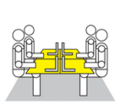 Open office
 -
 Team space
 -
 Cubicle


Open office: an open workspace for more than ten people; suitable for activities that demand frequent communication or routine activities that need relatively little concentration.
Team space: a semi-enclosed workspace for two to eight people; suitable for teamwork which demands frequent internal communication and a medium level of concentration.
Cubicle: a semi-enclosed workspace for one person; suitable for activities that demand medium concentration and medium interaction.
Office Pod: ideal for fostering privacy in today's bustling open-plan offices. It provides a cost-effective and efficient way to ensure privacy and continuity during conversations, calls, and video conferences.
-
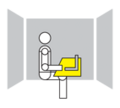 Private office
 -
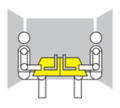 Shared office
 -
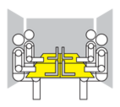 Team room


Private office: an enclosed workspace for one person; suitable for activities that are confidential, demand a lot of concentration, or include many small meetings.
Shared office: a compact, semi-private workspace designed for two or three individuals, facilitating both focused work and small group collaboration.
Team room: an enclosed workspace for four to ten people; suitable for teamwork that may be confidential and demands frequent internal communication.
-
 Study booth
 -
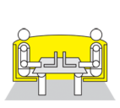 Work lounge
 -
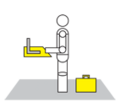 Touch down


Study booth: an enclosed workspace for one person; suitable for short-term activities that demand concentration or confidentiality.
Work lounge: a lounge-like workspace for two to six people; suitable for short-term activities that demand collaboration and/or allow impromptu interaction.
Touch down: an open workspace for one person; suitable for short-term activities that require little concentration and low interaction.
Meeting spaces
[edit]Meeting spaces in an office typically use interactive processes, be they quick conversations or intensive brainstorming. There are six generic types of meeting spaces,[according to whom?] each supporting different activities.
-
 Small meeting room
 -
 Large meeting room
 -
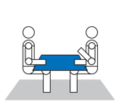 Small meeting space


Small meeting room: an enclosed meeting space for two to four people; suitable for both formal and informal interaction.
Medium meeting room: an enclosed meeting space for four to ten people; suitable for both formal and informal interaction.
Large meeting room: an enclosed meeting space for ten or more people; suitable for formal interaction.
Small meeting space: an open or semi-open meeting space for two to four persons; suitable for short, informal interaction.
-
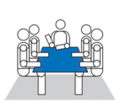 Large meeting space
 -
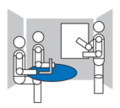 Brainstorm room
 -
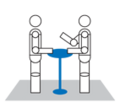 Meeting point


Medium meeting space: an open or semi-open meeting space for four to ten persons; suitable for short, informal interaction.
Large meeting space: an open or semi-open meeting space for ten or more people people; suitable for short, informal interaction.
Brainstorm room: an enclosed meeting space for five to twelve people; suitable for brainstorming sessions and workshops.
Meeting point: an open meeting point for two to four people; suitable for ad hoc, informal meetings.
Support spaces
[edit]Support spaces in an office are typically used for secondary activities such as filing documents or taking breaks. There are twelve generic types of support spaces,[according to whom?] each supporting different activities.
-
 Filing space
 -
 Storage space
 -
 Print and copy area


Filing space: an open or enclosed support space for the storage of frequently used files and documents.
Storage space: an open or enclosed support space for the storage of commonly used office supplies.
Print and copy area: an open or enclosed support space with facilities for printing, scanning and copying.
-
 Mail area
 -
 Pantry area
 -
 Break area


Mail area: an open or semi-open support space where employees can pick up or deliver their mail.
Pantry area: an open or enclosed support space where employees can get refreshments and where supplies for visitor hospitality are kept.
Break area: a semi-open or enclosed support space where employees can take a break from their work.
-
 Locker area
 -
 Smoking room
 -
 Library


Locker area: an open or semi-open support space where employees can store their personal belongings.
Smoking room: an enclosed support space where employees can smoke a cigarette.
Library: a semi-open or enclosed support space for reading books, journals and magazines.
-
 Games room
 -
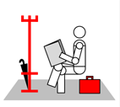 Waiting area
 -
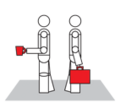 Circulation space


Games room: an enclosed support space where employees can play games, such as pool or darts.
Waiting area: an open or semi-open support space where visitors can be received and wait for their appointment.
Circulation space: support space which is required for circulation on office floors, linking all major functions.
Lactation rooms are also support spaces that are legally mandatory for companies in the United States, as of the 2010 Patient Protection and Affordable Care Act.[citation needed]
Office structure
[edit]
There are many different ways of arranging the space in an office. Managerial styles and the culture of specific companies are important factors in how office space will ultimately be used. One example of diverging office layout philosophies concerns how many people will work within the same room. At one extreme, each individual worker might have their own room; at the other extreme, a large open plan office might see tens or hundreds of people working in the same room. Open-plan offices put multiple workers together in the same space, and some studies[which?] have shown that they can improve short-term productivity, i.e. within a single software project. At the same time, the loss of privacy and security can increase the incidence of theft and loss of company secrets.[citation needed] A type of compromise between open plan and individual rooms is provided by the cubicle desk, possibly made most famous by the Dilbert cartoon series, which solves visual privacy to some extent but often fails on acoustic separation and security. Most cubicles also require the occupant to sit with their back towards anyone who might be approaching. Workers in walled offices typically try to position their normal work seats and desks so that they can see someone entering, and if that goal is not feasible, some install tiny mirrors on things such as computer monitors.[not specific enough to verify]
According to research, open-plan offices are associated with increased stress, a rise in electronic communication, a 70% decrease in face-to-face interactions, a 25% uptick in negative moods, and up to a 20% drop in productivity due to distractions. In contrast, post-pandemic trends are favoring private "cell-office plans", which address health precautions and have been reported to enhance productivity by up to 22%.[10][11][12]
Office buildings
[edit]
.jpg)


While offices can be set up in almost any location and in almost any building, some modern requirements for offices make this more difficult. These requirements can be legal (such as sufficient light levels) or technical (such as requirements for computer networking). Other needs, such as security and layout flexibility, have prompted the creation of special buildings which are dedicated primarily for use as offices. An office building, also known as an office block or business center, is a form of commercial building which contains spaces mainly designed to be used for offices.
The primary purpose of an office building is to provide a workplace and working environment primarily for administrative and managerial workers. These workers usually occupy set up areas within the office building, and usually are provided with desks, PCs and other equipments they may need within their areas.
An office building may be divided into sections for different companies, or it may be dedicated to one company. In either case, each company will typically have a reception area, one or several meeting rooms, singular or open-plan offices, and service rooms such as restrooms.
Many office buildings also have kitchen facilities and a staff room, where workers can have lunch or take a short break. Some office spaces are now also serviced office spaces, allowing for those occupying a space or building to share facilities.
Office and retail rental rates
[edit]Rental rates for office and retail space are typically quoted in terms of cost per floor-area–time, usually cost per floor-area per year or month. For example, the rate for a particular property may be $29 per square-foot per year ($29/sq. ft/yr) or $290 per square-meter per year ($290/m2/yr).
In many countries, rent is typically paid monthly, even if usually discussed in terms of years.[citation needed]
Examples:
- A particular 2,000 sq. ft space is priced at $15/sq. ft/yr, ultimately costing (2,000 sq. ft) × ($15/sq. ft/yr) / (12 mo/yr) = $2500 per month
- A particular 200 m2 space is priced at $150/m2/yr, ultimately costing (200 m2) × ($150/m2/yr) / (12 mo/yr) = $2500 per month
In a gross lease, the rate quoted is an all-inclusive rate. The renter pays a set amount of rent per time and the landlord is responsible for all other expenses, including payments for utilities, taxes, insurance, maintenance, and repairs.
The triple net lease is one in which the tenant is liable for a share of various expenses such as property taxes, insurance, maintenance, utilities, climate control, repairs, janitorial services and landscaping.
Office rents in the United States are still recovering from the high vacancy rates that occurred in the wake of the 2008 depression.[13]
Grading
[edit]The Building Owners and Managers Association (BOMA) classifies office space into three categories: Class A, Class B, and Class C.[14] According to BOMA, Class A office buildings have the "most prestigious buildings competing for premier office users with rents above average for the area." BOMA states that Class A facilities have "high-quality standard finishes, state of the art systems, exceptional accessibility and a definite market presence." BOMA describes Class B office buildings as those that compete "for a wide range of users with rents in the average range for the area." BOMA states that Class B buildings have "adequate systems" and finishes that "are fair to good for the area," but that the buildings do not compete at the same price rates as Class A buildings. According to BOMA, Class C buildings are aimed towards "tenants requiring functional space at rents below the average for the area."[15] The lack of specifics allows considerable room for pushing the boundaries of these BOMA categories. Oftentimes, they are further modified by adding the plus or minus sign to create subclasses, such as Class A+ or Class B-.[16]
See also
[edit]

References
[edit]- ^
Moran, Joe (2007). "3: A lifetime behind a desk". Queuing for Beginners: The Story of Daily Life From Breakfast to Bedtime. London: Profile Books (published 2010). p. 36. ISBN 9781847650658. Retrieved 2018-09-08.
[...] the Modern Efficiency Desk, first made in 1915 by Steelcase Inc. for the New York offices of Equitable Assurance. This desk, consisting of a simple, rectangular table with small drawers, replaced the cabinet-like desks, with their high backs made up of little drawers and cubby holes, which dominated office life before the First World War. At their new efficiency desks, office workers could be watched, monitored and subjected to time-and-motion studies.
- ^ a b c d Long, Kim (2004). User Effective Buildings. Denver: Aardex Corporation. pp. 14–16. ISBN 978-0975552407.
- ^ Hamilton, C.I (2011). The Making of the Modern Admiralty:British Naval Policy-Making, 1805-1927. Cambridge University Press. p. 15. ISBN 9781139496544. Archived from the original on 2016-06-17.
- ^ "How the office was invented". BBC. Archived from the original on 2013-07-22. Retrieved 2012-12-17.
- ^ "Liverpool Firsts". Archived from the original on 2013-12-20. Retrieved 2012-12-17.
- ^ "Psychology of the Office Space". University of Southern California Master of Science in Applied Psychology. Archived from the original on 27 January 2015. Retrieved 28 January 2015.
- ^ Noro, Kageyu; Fujimaki, Goroh; Kishi, Shinsuke (2003). "Evidence-based ergonomics: a comparison of Japanese and American office layouts". International Journal of Occupational Safety and Ergonomics. 9 (4): 527–538. doi:10.1080/10803548.2003.11076588. PMID 14675524. S2CID 32155122.
- ^ Lewis, Richard D. (2015). When cultures collide: leading across cultures (3rd ed.). Bostion: Nicholas Brealey. p. 511. ISBN 9781904838029.
- ^ "Office Environment | NIOSH | CDC". www.cdc.gov. 2022-12-08. Retrieved 2024-05-17.
- ^ Haden, Jeff (Jan 14, 2022). "Open Plan Offices Aren't Just the 'Dumbest Management Fad of All Time.'". inc.com. Archived from the original on January 14, 2022. Retrieved Sep 7, 2023.
- ^ Sarkis, Stephanie (Jan 17, 2021). "Post-Pandemic: Fight For An End To The Open-Plan Office". forbes.com. Archived from the original on January 18, 2021. Retrieved Sep 7, 2023.
- ^ Sander, Libby (Jul 6, 2021). "The surprising toll open-plan offices have on our mental health". World Economic Forum. Archived from the original on July 6, 2021. Retrieved Sep 7, 2023.
- ^ "This Recovery Explained" (PDF). The Steven L. Newman Real Estate Institute. Spring 2011. Archived (PDF) from the original on 2013-05-17.
- ^ Kennedy Smith (30 June 2006). "Categorization of office space is flexible". St. Louis Daily Record & St. Louis Countian. Retrieved 9 September 2010.
- ^ "Building Class Definitions". Archived from the original on 27 August 2013. Retrieved 18 July 2013.
- ^ "CLASS A+ OFFICE SPACE" (PDF). cbre.us. Archived (PDF) from the original on 9 October 2016. Retrieved 21 September 2016.
Further reading
[edit]- Adams, Scott (2002). What do you call a sociopath in a cubicle? (answer, a coworker). Kansas City, Missouri: Andrews McMeel Pub.
- Duffy, Francis; Cave, Colin; Worthington, John, eds. (1976). Planning Office Space. London: The Architectural Press Ltd.
- Klein, Judy Graf (1982). The Office Book. New York: Facts on File Inc. ISBN 9780871964991.
- van Meel, Juriaan; Martens, Yuri; van Ree, Hermen Jan (2010). Planning Office Spaces: a practical guide for manager and designers. London: Laurence King Publishing.
- Saval, Nikil (2014). Cubed: A Secret History of the Workplace. Doubleday.
- Roderick, Ian (2016). "Representing affective labour and gender performativity in knowledge work: a multimodal critical discourse analysis". Gender and Language. 10 (3): 340–363. doi:10.1558/genl.v10i3.32040.
External links
[edit]


Office
View on GrokipediaThe origins of dedicated office spaces trace to ancient Rome and medieval scriptoriums used by monks for manuscript copying, but purpose-built modern offices emerged in the 18th century amid expanding trade and bureaucracy, with the East India Company's London headquarters in 1726 marking an early example of centralized administrative facilities.[1][2] By the Industrial Revolution, offices proliferated to handle growing volumes of records and coordination, evolving from hierarchical, enclosed setups to efficiency-focused open plans in the early 20th century, exemplified by Taylorist principles emphasizing regimented desk arrangements for clerical workers.[3][4] In the mid-20th century, innovations like the 1964 Action Office system introduced modular panels and furniture to promote flexibility, paving the way for cubicles and later open-plan designs intended to enhance collaboration, though empirical studies have shown mixed results on productivity, with some evidence indicating enclosed spaces better support focused tasks.[3][5] Contemporary offices incorporate diverse layouts including hot-desking, activity-based zones, and hybrid models accommodating remote work trends accelerated by the COVID-19 pandemic, reflecting adaptations to technological advances like digital communication and shifting worker preferences for work-life balance.[6][7] Offices remain vital to economies by concentrating knowledge workers, generating daytime economic activity in urban areas, and supporting sectors where face-to-face interaction drives innovation and human capital development, despite debates over their necessity in an era of viable remote alternatives.[8][9]
History
Pre-Industrial Origins
In ancient Rome, the tablinum functioned as a semi-open room within the domus, positioned between the atrium and peristyle, where the paterfamilias managed household administration, stored family records on wax tablets or papyrus, and received clients for business oversight.[10] The space's name derived from tabula, denoting writing tablets essential for documentation and accounting.[11] This arrangement addressed the practical need for centralized record-keeping in large estates and early commercial activities, predating formalized bureaucracy.[12] Medieval European monasteries established scriptoriums as dedicated writing rooms to preserve knowledge through manual manuscript copying, equipping them with sloped desks or benches to support scribes in prolonged, focused textual labor under natural light from large windows.[13] The ninth-century Plan of St. Gall, a monastic blueprint, illustrates a scriptorium layout featuring a central communal table flanked by seven individual writing desks along the walls, optimizing space for multiple clerks while minimizing distractions in communal settings.[13] These facilities emphasized functional division of labor for clerical tasks, with rules enforcing silence and posture to sustain productivity amid pre-mechanical reproduction methods.[14] By the early 18th century, expanding European trade networks prompted merchant companies to create specialized administrative hubs for processing bills of lading, ledgers, and correspondence volumes that manual commerce generated.[1] The British East India Company's London headquarters, redesigned and completed in 1729 by architect Theodore Jacobsen on Leadenhall Street, housed clerks in purpose-built rooms for documenting shipments, finances, and contracts across Asian trade routes, marking an early instance of scaled commercial office infrastructure.[15] This setup prioritized secure storage for records and collaborative oversight, accommodating over 100 staff by mid-century amid rising global mercantilism.[16]Industrial Revolution and Early Modernization
The Industrial Revolution, commencing around 1760 in Britain and extending through 1840, drove the proliferation of factories that required systematic administrative oversight amid scaling production and labor coordination.[2] Mechanized operations generated volumes of paperwork for inventory tracking, wage calculations, and supply chain management, prompting entrepreneurs to allocate distinct spaces for clerical tasks away from production areas to minimize disruptions and enhance accuracy. This shift from ad-hoc merchant counting houses to integrated factory administration reflected causal demands of industrialization, where undivided attention to records became essential for profitability and scalability. Josiah Wedgwood's Etruria Works, opened in 1769 adjacent to the Trent and Mersey Canal in Staffordshire, exemplifies this early formalization, incorporating a roundhouse repurposed as a counting house for bookkeeping and oversight.[17] Wedgwood's complex separated managerial functions from pottery kilns and workshops, enabling clerks to handle correspondence, sales ledgers, and labor records in a dedicated structure, which supported the factory's output of over 20,000 pieces annually by the 1780s.[18] Such arrangements underscored the practical necessity of spatial division to enforce discipline and efficiency in nascent industrial hierarchies. As industrialization accelerated into the mid-19th century, urban hubs like London—home to expanding insurance firms and banks—and New York, with its port-driven trade, saw formalized offices multiply to accommodate rising white-collar employment.[19] Clerical roles, often filled by middle-class recruits earning around £3 weekly, grew to manage bureaucratic demands from imperial commerce and early infrastructure projects.[20] Innovations such as the Liverpool-Manchester Railway (opened 1830) and Samuel Morse's telegraph (demonstrated 1837) further necessitated centralized spaces for timetabling, signaling coordination, and rapid data relay, binding administrative functions to industrial expansion.[21] In these centers, offices evolved into hubs for hierarchical control, with rows of desks facilitating supervisor monitoring of clerks.[22]20th Century Innovations
The principles of scientific management, developed by Frederick Winslow Taylor in the early 1900s, profoundly shaped office layouts by prioritizing worker visibility, task standardization, and supervisory oversight to enhance productivity.[5] By the 1920s, these ideas manifested in open-floor designs where desks faced supervisors in expansive spaces, mimicking factory efficiency models to minimize distractions and facilitate monitoring.[23] Architect Frank Lloyd Wright advanced these concepts through innovative structures emphasizing airflow, natural light, and communal oversight. His Larkin Administration Building, completed in 1906 for the Larkin Soap Company in Buffalo, New York, featured a central atrium surrounded by open-plan offices on multiple levels, with built-in desks and minimal partitions to promote supervision and ventilation in a pre-air-conditioned era.[24] Similarly, the Johnson Wax Administration Building in Racine, Wisconsin, opened in 1939, introduced a vast "Great Workroom" with dendriform columns supporting a reinforced concrete roof, allowing uninterrupted sightlines across 265 workstations arranged in symmetrical rows for collaborative efficiency and psychological openness.[25] Post-World War II space constraints and rising white-collar employment spurred further adaptations, culminating in the modular cubicle system. In 1968, designer Robert Propst, working with Herman Miller, launched Action Office—a flexible panel-based furniture system intended to provide semi-private enclosures within open plans, balancing individual focus with organizational adaptability amid denser staffing.[26] This innovation addressed limitations of pure open layouts by enabling customizable partitions up to 5 feet high, though it later proliferated into uniform "cubicle farms" prioritizing cost-effective density over expansive oversight.[27]Post-1970s Transformations
In the 1970s and 1980s, office designs shifted toward modular systems furniture to address economic pressures from the 1973 and 1979 oil crises, which elevated energy costs and prompted greater emphasis on space efficiency in commercial buildings.[28] These systems, evolving from mid-1960s innovations like Herman Miller's Action Office, enabled rapid reconfiguration of workstations without structural changes, supporting corporate expansion amid rising real estate demands and the need for adaptable layouts.[3] [29] Cubicle-based configurations proliferated, allowing higher occupant densities—often 1:100 to 1:150 square feet per worker—while incorporating partitions for acoustic privacy and early data wiring.[30] The 1990s dot-com boom further transformed offices by prioritizing technology integration and collaborative environments, as startups and tech firms adopted open plans with breakout areas for brainstorming and informal interactions to foster innovation.[31] This era saw standardized local area network (LAN) cabling, typically Ethernet over twisted-pair wiring, embedded in furniture or underfloor systems to accommodate personal computers and networked printers, reflecting the rapid adoption of internet connectivity in workplaces.[31] These changes were driven by the expansion of knowledge economies, where service-sector employment in the US rose from about 69% of total nonfarm jobs in 1970 to 81% by 2000, alongside white-collar occupations surpassing 50% of the workforce by 1976.[32] [33] [34] This growth in professional and managerial roles increased demand for centralized office space, spurring construction of high-rise towers such as Chicago's Willis Tower (completed 1973) and numerous supertalls in the 1980s and 1990s to vertically stack workers in dense urban areas constrained by land availability.[35]Design and Layout
Workstation Configurations
Traditional cellular offices, consisting of enclosed private rooms for individual workers, dominated workstation configurations until the mid-20th century, providing acoustic privacy and minimal interruptions conducive to focused tasks.[36] These setups prioritized concentration for knowledge-based roles but were space-intensive, often allocating 150-200 square feet per employee due to full walls and dedicated areas.[6] In the 1950s, German firm Quickborner introduced Bürolandschaft or "office landscaping," an early open-plan approach using low partitions to foster collaboration and fluid workflows, influencing subsequent designs but revealing drawbacks like increased noise and reduced focus.[36] [37] This evolved into the 1964 Action Office system by Herman Miller, which popularized modular cubicles with partial walls, aiming to balance privacy and flexibility while enabling denser layouts that improved space efficiency compared to cellular offices.[5] [38] By the 1990s, full open-plan layouts largely supplanted cubicles, promoting visibility and interaction to support team-oriented work, yet empirical studies indicate they impair productivity for concentration-intensive tasks through heightened distractions and acoustic interference.[6] [39] For instance, a comparative analysis found open plans associated with lower privacy, concentration, and overall performance relative to enclosed offices, with workers reporting up to 15% more dissatisfaction in interaction ease.[40] [41] Cubicles, offering semi-enclosed barriers, mitigate some open-plan noise while allowing reconfiguration, though they still transmit distractions more than fully private spaces.[42] Contemporary configurations like hot-desking, where workers share unassigned desks, and activity-based working (ABW), which allocates spaces by task type (e.g., quiet booths for deep work), emphasize flexibility for hybrid environments but introduce challenges such as territorial conflicts and hygiene issues.[43] [44] Evidence from workplace studies links these to reduced well-being and planning difficulties, particularly for roles requiring sustained attention, where enclosed or assigned stations outperform shared setups by minimizing cognitive disruptions.[43] Optimal functionality thus aligns workstations causally with task demands: enclosed for individual focus, semi-open for moderate collaboration, supported by data showing productivity gains in matched environments over one-size-fits-all open plans.[39][40]Collaborative and Support Spaces
Collaborative spaces in offices encompass meeting rooms, conference areas, and informal gathering zones such as break rooms and pantries, designed to enable team interactions beyond individual workstations. These areas facilitate structured discussions in small huddle rooms seating 4-6 people or larger conference rooms for 10-20 participants, often equipped with audiovisual tools for presentations. Empirical data indicates that prior to widespread hybrid work adoption around 2020, conference rooms were frequently underutilized, with studies showing over half of such spaces remaining empty for 90% of business operating hours, suggesting inefficient allocation despite their role in coordinating oversight and exchanging ideas. Break areas and pantries, by contrast, support spontaneous interactions; research correlates regular use of these spaces for short breaks with higher employee productivity rates, as workers taking pauses report greater task efficiency compared to those without.[45] Support spaces include filing rooms, storage areas, and print/copy stations, which handle ancillary functions like document management and resource access. Traditional filing rooms, reliant on physical cabinets and shelves for paper records, have diminished in footprint with the shift to digital archives since the 1990s, as electronic document systems eliminate much of the need for expansive physical storage, enabling organizations to repurpose space previously dedicated to records. For instance, digital archiving removes requirements for on-site paper handling, reducing associated square footage demands and retrieval times. Print and copy areas persist for occasional hard-copy needs but occupy minimal space, often centralized to serve multiple users efficiently. These support elements underscore practical utility, prioritizing accessible organization over expansive ideals, with digital transitions yielding measurable space efficiencies.[46][47][48]Building and Infrastructure Features
The development of high-rise office buildings began in the late 19th century, with the Home Insurance Building in Chicago, completed in 1885, recognized as one of the world's first skyscrapers at 10 stories and 138 feet tall, designed by William Le Baron Jenney using a steel-frame structure that supported vertical expansion.[49] This innovation addressed urban land scarcity by enabling greater office density, allowing multiple floors of workspace in limited footprints, which facilitated the concentration of administrative functions in central business districts.[50] Essential infrastructure systems in office buildings include elevators, HVAC, and lighting, which underpin scalability and occupant comfort. Safety elevators, pioneered by Elisha Otis in the 1850s, became integral to high-rises by the 1880s, permitting efficient vertical movement and supporting taller structures beyond walk-up limits.[51] HVAC systems, originating with Willis Carrier's 1902 invention of modern air conditioning for a printing plant, evolved to regulate temperature, humidity, and air quality in office environments, thereby sustaining worker productivity by mitigating environmental stressors that could impair cognitive performance. Electric lighting, widespread by the early 20th century, complemented these by enabling consistent illumination independent of daylight, allowing deeper floor plates and extended working hours without reliance on windows. Following the 1973 oil crisis, building energy codes introduced in the 1970s mandated improvements in insulation, glazing, and system efficiency, resulting in substantial reductions in energy consumption for office buildings.[52] These codes have achieved energy savings of approximately 30% compared to pre-code standards, translating to lower operational costs through decreased heating, cooling, and lighting demands.[53] Adaptive reuse of industrial structures into office lofts provides a cost-effective alternative for expansion, leveraging existing shells to avoid full demolition and new construction expenses.[54] Such conversions, exemplified by transformations of warehouses in urban areas like San Francisco's Mission Bay, can reduce development costs by 15-20% relative to ground-up builds while accommodating office needs through structural reinforcements and modern utility integrations.[55] This approach enhances scalability by repurposing underutilized spaces, often at lower capital outlays than equivalent new developments.[56]Organizational Functions
Internal Structure and Hierarchy
Traditional office layouts reinforce organizational hierarchies through spatial differentiation, with senior executives typically assigned corner offices that provide privacy, enhanced natural lighting from multiple windows, and visible status symbols. This practice emerged prominently in mid-20th-century corporate designs amid top-down management pyramids, where corner positions signified ascent to C-suite levels and facilitated insulated decision-making away from routine operations.[57] In contrast, junior and mid-level staff occupy open bullpen areas—large shared spaces with rows of desks—allowing supervisors to maintain direct line-of-sight oversight, a configuration rooted in industrial-era needs for monitoring task execution and enforcing accountability.[58][59] Functional zoning further embeds hierarchy by strategically placing departments according to decision flows and access requirements; for example, sales teams are often situated near building entrances to streamline client interactions and external communications, while executive suites cluster centrally or adjacently to operational cores for proximate command review.[60] This adjacency-based planning prioritizes causal efficiencies, such as reduced latency in information relay from front-line units to leadership, thereby mirroring chains of command in physical form and supporting delegated authority with built-in supervision vectors. Studies of workplace configurations reveal that spatial hierarchies, by clarifying roles and enabling oversight, align with organizational structures where top-down decisions propagate efficiently, correlating with performance advantages in stable sectors reliant on controlled processes rather than ad-hoc collaboration. Segregated executive enclaves preserve focus for authoritative deliberations, while open subordinate zones expedite feedback loops, though benefits hinge on industry dynamics—hierarchical setups suit deliberate pacing over rapid iteration.[61][62]Operational Workflows and Technology
Operational workflows in offices historically relied on manual processes involving physical documents, typewriters, and centralized filing systems, which limited scalability due to duplication and retrieval delays.[63] The introduction of electronic document management systems in the 1980s began digitizing records, evolving into full document management systems (DMS) by the 1990s that incorporated search and versioning features to streamline administrative tasks.[64] This shift enabled causal efficiencies by reducing physical handling errors and allowing data to be updated in single locations rather than multiple paper copies. The adoption of networked computing in the 1990s marked a pivotal advancement, with local-area networks (LANs) connecting personal computers to shared servers and drives, facilitating collaborative access to files without physical transport.[65] Client-server architectures centralized processing on powerful servers, controlling data distribution and minimizing inconsistencies across office workstations, which supported larger-scale operations by enforcing uniform protocols.[66] While digital tools reduced reliance on paper for routine workflows—such as integrated office systems from the mid-1980s to mid-1990s that digitized files and email—overall paper consumption did not decline proportionally, as printing for review and archiving persisted.[67] Contemporary standards emphasize Voice over Internet Protocol (VoIP) for telephony, converting analog voice signals into digital packets transmitted over IP networks, which integrates seamlessly with office software for features like call logging and automation.[68] Cloud computing further enhances workflow efficiency by providing scalable storage and real-time collaboration, allowing automatic syncing of documents and reducing downtime from local hardware failures.[69] Servers remain foundational for centralizing data management, enabling administrators to enforce access controls and backups that underpin operational reliability and scalability in distributed teams.[70]Health, Ergonomics, and Productivity
Ergonomic Standards and Worker Well-Being
Ergonomic standards for office environments emphasize adjustable workstations to accommodate individual anthropometric variations and reduce musculoskeletal strain, as outlined in OSHA guidelines and the ISO 9241 series. OSHA recommends chairs with adjustable seat height, backrest, and armrests to maintain neutral postures, allowing feet to rest flat on the floor or a footrest while thighs remain parallel to it.[71] Similarly, desks should provide sufficient legroom clearance—typically 24-26 inches deep—and height adjustability to position keyboards at elbow height, minimizing awkward reaches.[72] The ISO 9241-5 standard specifies principles for workstation design, including support for the lower back via adjustable lumbar curvature to align the spine's natural lordosis and prevent slouching.[73] Evidence on lumbar support indicates biomechanical benefits, such as reduced pressure on the lower back; one study found that adding a supplementary backrest to a standard chair decreased average back pressure by 20% and peak pressure by 35% during prolonged sitting.[74] However, randomized trials show limited preventive efficacy against low-back pain compared to no intervention or exercise training alone, with moderate-quality evidence suggesting lumbar supports do not significantly outperform alternatives in reducing incidence.[75] These standards, developed from the 1990s onward, reflect biomechanical analyses prioritizing posture over static support alone. Prolonged sedentary behavior in offices elevates cardiovascular disease (CVD) risk independently of leisure exercise; occupational sitting for most of the workday correlates with a 34% higher CVD mortality hazard ratio after adjusting for confounders.[76] Mechanisms include impaired endothelial function and metabolic dysregulation from reduced muscular activity. Standing desks can decrease daily sitting time by up to 60-90 minutes during work hours, promoting intermittent posture changes.[77] Yet, recent longitudinal data indicate that alternating sit-stand protocols do not mitigate risks of heart failure or stroke, as standing alone fails to offset cumulative sedentary effects or improve vascular outcomes.[78] Ventilation standards, per ASHRAE 62.1, mandate minimum outdoor airflow rates—such as 5 cubic feet per minute per person plus 0.06 cfm per square foot for office spaces—to dilute indoor pollutants and CO2, thereby averting cognitive fatigue and symptoms like drowsiness. Inadequate airflow below these thresholds correlates with elevated occupant complaints of headache and reduced alertness. Lighting norms from the Illuminating Engineering Society recommend 300-500 lux on work surfaces for general clerical tasks to minimize visual fatigue and accommodate VDT use, with higher levels (up to 750 lux) for detailed inspection work. [79] Glare control and uniform distribution are integral to prevent eyestrain, grounded in photobiological thresholds for retinal adaptation.Empirical Impacts on Performance
Empirical research consistently demonstrates that open-plan office designs, intended to foster collaboration, often undermine individual focus and cognitive performance due to elevated noise levels and visual distractions. A 2023 comparative review of office concepts, including activity-based workplaces, concluded that noise distraction in open layouts reduces task performance, imposing a "productivity tax" that exceeds real-estate cost savings, with workers reporting higher perceived workload and impaired concentration. Similarly, a systematic review of office design effects found that open-plan environments correlate with decreased job satisfaction and productivity on demanding cognitive tasks, as opposed to enclosed private offices which enable sustained attention without interruptions. These findings challenge assumptions of seamless collaboration in open spaces, revealing instead a net detriment for knowledge work reliant on deep focus, where enclosed configurations support 10-20% higher output on individual tasks per controlled studies on distraction impacts.[80][39][81] Physical proximity in in-office settings, however, yields measurable benefits for complex problem-solving and innovation through serendipitous interactions. An NBER analysis of software engineering teams showed that colocated workers experience enhanced long-term human capital accumulation—via informal knowledge sharing and skill transfer—outweighing short-term dips in immediate output, with proximity fostering mentorship and creative breakthroughs not replicated virtually. A MIT Sloan study quantified face-to-face encounters as key drivers of innovation metrics, estimating that reduced in-person interactions during remote shifts correlate with 10-15% fewer novel idea generations in teams. These effects underscore causal links between spatial nearness and adaptive learning, particularly for junior employees gaining from observational cues absent in distributed models.[82][83] Hybrid arrangements strike a pragmatic balance, outperforming full remote work in career progression while preserving in-office advantages for mentorship. A 2024 Stanford field experiment across 1,612 employees at a Fortune 500 firm revealed hybrid schedules (two days in-office) yield promotion rates and performance reviews equivalent to full in-office mandates, but slash quit rates by one-third through improved satisfaction, contrasting with full work-from-home's 50% promotion penalty from visibility deficits. Full in-office remains optimal for mentorship-intensive roles, as proximity enables real-time feedback loops that hybrid partially dilutes, per analyses of knowledge spillovers. This evidence debunks pure remote as productivity-neutral, affirming office cores for relational outputs amid flexible peripheries.[84][85][86]Economic Dimensions
Market Dynamics and Rental Economics
The office leasing market has experienced elevated vacancy rates since the COVID-19 pandemic, with the U.S. national average reaching 19.7% in May 2025, up from pre-pandemic lows around 8%.[87] In major urban centers, rates have exceeded 20% in many cases, such as downtown Seattle approaching 30% in 2025, driven by reduced demand from the widespread adoption of hybrid work arrangements.[88] This shift has led to an estimated 15-25% decline in required office space per employee for firms implementing part-time remote policies, as attendance patterns stabilized at lower levels post-2023.[89] [90] Supply-demand imbalances are amplified by lagged construction pipelines, with new deliveries outpacing absorption in oversupplied markets, contributing to structural vacancies projected to hover near 20% through 2025.[91] Demand responds cyclically to economic expansions, where job growth in knowledge sectors prompts lease renewals and expansions; for instance, net absorption correlates positively with regional GDP increases, as firms scale space needs during booms.[92] Rental rates, typically structured under triple-net (NNN) leases where tenants cover base rent plus property taxes, insurance, and maintenance, adjust accordingly, with upward pressure in high-growth periods offsetting concessions like free rent periods in downturns.[93] [94] Regional variations persist, with urban core locations commanding premiums of 20-50% over suburban equivalents due to superior transit access and talent agglomeration benefits, though suburban markets have shown resilience with lower vacancy growth and steadier rent trajectories amid hybrid preferences for shorter commutes.[95] [96] This premium reflects accessibility-driven demand, but post-pandemic flight-to-suburbs dynamics have narrowed gaps in select metros, where suburban asking rents grew faster than urban ones in 2024.[97]Property Valuation and Grading Systems
Office properties are classified into categories such as Class A, Class B, and Class C based on factors including building age, location quality, construction standards, amenities, and overall maintenance level, which inform investor risk assessments and pricing strategies.[98][99] Class A buildings feature modern construction, prime urban locations, high-end finishes, advanced HVAC and security systems, and comprehensive amenities like on-site fitness centers or concierge services, attracting premium tenants and minimizing vacancy risks.[100] In contrast, Class B properties are older but functional with adequate maintenance, secondary locations, and basic upgrades, while Class C buildings are typically the oldest, in less desirable areas, with deferred maintenance and minimal amenities, appealing primarily to budget-conscious or short-term occupants.[101][102] These classifications guide investment decisions by signaling relative desirability: Class A assets offer stability and lower yields due to high demand, whereas Class B and C provide higher potential returns amid elevated risks like renovation needs or tenant turnover.[98][103]| Class | Key Criteria | Typical Investment Implications |
|---|---|---|
| A | Newest builds (post-2000), prime locations (e.g., central business districts), superior amenities, low vacancy rates under 10%. | Lowest risk, highest rents (e.g., $50-100/sq ft in major markets), preferred for institutional investors seeking capital preservation.[100][104] |
| B | Mid-20th century to recent, good condition with updates, suburban or edge-city sites, moderate amenities. | Balanced risk-return, rents 20-40% below Class A, suitable for value-add strategies via targeted upgrades.[105][101] |
| C | Pre-1980s structures, functional but dated, peripheral locations, basic or absent amenities. | Highest risk, lowest rents (often 40-60% below Class A), opportunities for opportunistic investors if repositioning feasible.[106][103] |