Hubbry Logo
George Town, ChennaiGeorge Town, ChennaiMain
Open search
George Town, Chennai
Community hub
George Town, Chennai
logo
8 pages, 0 posts
0 subscribers
Be the first to start a discussion here.
George Town, Chennai
from Wikipedia

George Town, also known as Muthialpet and Parry's corner, is a neighbourhood in Chennai (Madras), Tamil Nadu, India. It is near the Fort Saint George. It is an historical area of Madras city from where its expansion began in the 1640s. It extends from the Bay of Bengal in the east to Park town on the west. The Fort St. George is on the south, to Royapuram in the north. The Fort St. George houses the Tamil Nadu Legislative Assembly and the Secretariat. The High court of Tamil Nadu at Chennai, Dr. Ambedkar Law College, Stanley Medical College and Hospital are located here.

Key Information

History

[edit]
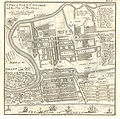
Black Town around 1851
An aerial view of N.S.C. Bose road, leading to 'Parry' Corner
Fort St. George, Tamil Nadu's Legislative Assembly and the Secretariat.

During the colonial period, the area in and around Muthialpet was renamed as "George Town" by the British in 1911, in honour of King George V when he was crowned as the Emperor of India.[1] George Town is one of the names used for Muthialpet. It has the landmark 'Parry building', after which the locality is called 'Parry's Corner'. The area is also called Broadway, named after a main thoroughfare in Muthialpet.

The first settlement of the city of Madras began here, near the fort. Fort St George began in 1640 as a fortified warehouse for the English East India Company. It was built by Francis Day. The township of native people that began to grow up around it was called the Black Town by the British. As the city grew, this area became the base for development and construction activities, meeting the needs of people for their livelihood and rulers' administrative comforts. With the construction of one of India's major ports in the area, Madras became an important naval base for the British.[2]

By the early 18th century, growing population and commercial activities resulted in expansion to neighbouring areas. In 1733, the weaving community started to settle down in Chintadripet and Collepetta near Tiruvottiyur, since abundant open space was available for weaving. The community of washermen in the Mint area then moved towards the west, forming the present Washermanpet. Potters from this area moved outside the Fort on the north side and formed a new colony named Kosapet. With the construction of a bridge in 1710 to connect Egmore, people started moving towards the present Moore Market area.[3]

When the French occupied Madras in 1746 and returned it to the English in 1749 in exchange for Quebec by the Treaty of Aix-la-Chapelle, the English flattened a part of Black Town in order to have a clear field for fire in the event of a future attack. In 1773, the English erected 13 pillars along the flattened area of the Black Town and banned construction in any form between the pillars and the fort which would otherwise block the view of possible invaders. Soon a new township, known as the new Black Town, came up beyond these pillars and the old Black Town gave way to the Madras High Court. A thoroughfare was formed along the stretch between the pillars and the high court which later became the China Bazaar Road. The only surviving one of the 13 pillars is being maintained in the compound of the Parry's building.[4]

In 1772, the first organised water supply of Madras began with the Seven Wells Scheme.[5] On one occasion, Mysore ruler Hyder Ali's troops even tried to poison the water source one night.[4]

In the following centuries, High Court buildings and first light house tower with architectural beauty came up in an area where an old Hindu temple of Sri Chenna Kesava perumal[6] and Chenna Malleswara swamy[6] existed. This temple was demolished and later shifted to the present place near Mint Street on Nethaji Subhash Chandra Bose Road and is popular amongst Hindus as Pattanam Koil.

Several Tamil refugees from Burma, who fled Myanmar during the early sixties, arrived in George Town. In 1969, the Burma Bazaar, a market selling imported foreign goods in shops on pavements, was established by these Burmese refugees-turned-entrepreneurs.[7]

Religions and holy shrines

[edit]
Kāligāmbāl Temple's Gopuram (Gateway tower) entrance. The Marāthi, Chatrapathi Shivāji is said to have visited this temple.
Anderson Church near Madras High court.
Shri Chandraprabhu Jain temple

George Town has a rich congregation of shrines of different faiths within its boundaries. The first Hindu temples of British Madras were built in this neighbourhood between 1640 and 1680. Many of the temples were built since then by the leading merchants of the city, mostly dubashes (middlemen) of British merchants and business establishments. Several of the streets in the neighbourhood are named after these dubashes.[8]

The city's first Jain temples were built in the central part of the western half of the neighbourhood occupied by settlers from Rajasthan and Saurashtra, now known as Sowcarpet. Today, festivals such as Holi, Diwali, and Ganesh Chathurthi are celebrated in the North Indian style.[8]

The first mosque in the neighbourhood was built in the 1670s on Moor Street. The mosque, however, does not exist today. The oldest surviving mosque is the huge Masjid Mamoor in Angappa Naicken Street, which was built in the eighteenth century.[8]

The first Madras Synagogue was built in Coral Merchant Street, which had a large presence of Portuguese Paradesi Jews in the sixteenth, seventeenth and eighteenth centuries. The Madras Synagogue doesn't exist today, but there is said to be a "handful" of Jews (not including people with Jewish lineage) in Madras city today.

The oldest church is the Armenian Church on Armenian Street. The Cathedral of St Mary of the Angels located next to the church has its presence since 1642. However, the first Catholic place of worship in the neighbourhood was built before the St. Mary's cathedral. Protestant churches, however, were built only in the nineteenth century, with the first English Protestant Church built in 1810 on Davidson Street.[8]

The Muthialpet area, the western part of George Town extending northwards from the Madras High Court, is one of the 163 notified areas (megalithic sites) in the state of Tamil Nadu.[9]

Demographics

[edit]

Residents of George Town in earlier days were mainly Telugus with sizable population of Tamils. In the core area, streets are named after Telugu people such as Govindappa Naick, Angappa Naick, Adiyappa Naick, Narayana Mudali, Kasi Chetty, Rasappa Chetty, Varada Muthiappan, Thatha Muthiappan, Kondi Chetty, Linghi Chetty, Thambu Chetty, and so forth. A major part of trade and business was in the hands of Telugus. Apart from locals, people from other parts of the country as well as foreign nationals who had trade and business links with the 'British East India Company' were living in this area. Many of the streets bear the name of the business that people in the locality were engaged in. Men who were doing business in corals lived together in Coral Merchants Street (பவழக்கார தெரு) and people from Armenia (a former state of Russia) doing business with the English were living in Armenian Street (அரண்மனைக்காரர் தெரு). A church called Armenian Church was also constructed in the same area for them. As the town was developing manifold, people from all over India settled here doing business in all fields, chiefly from Rajasthan, Gujarat, Maharashtra and Uttar Pradesh. The area occupied by the North Indians, chiefly Marwaris from Rajasthan and Gujarat, in the twentieth century came to be known as Sowcarpet (literally 'area of the rich', derived from the word 'sahukar' meaning money lender in Hindi).[10]

Geography

[edit]

George Town extends roughly from Chennai Central railway station and People's Park in the west to the Bay of Bengal in the east. To the north is Basin Bridge and Royapuram while Fort St George bounds it on the south. Prakasam Salai (Broadway), originally Popham's Broadway, divided George Town into two portions, the eastern part of which was historically known as Muthialpet and the western past, Peddanaickenpet.

Roads and streets

[edit]
Fort St.George
Parry's corner is named after the landmark Parry building of the Murugappa Group, an industrial conglomerate.

Major roads of the neighbourhood include Netaji Subash Chandra Bose Road (popularly known as China Bazaar Road), Rajaji Salai (formerly First Line Beach road) and Wall Tax Road. The streets are generally small and narrow with several lanes branching out of them. The longest street is Mint Street, which starts near Central Railway Station making way across the neighbourhood for about 4 km towards north and ends near Vallalar Nagar. The street derived its name from a mint of the East India Company that existed at the end of this street during the British era.[10] Now the building houses Central Printing Press of Government of Tamil Nadu. This is considered one of few longest streets in the world.[citation needed] Several government offices, both state and central governments, including Andaman & Nicobar Island government's administrative offices of Shipping and Tourism Departments, are located on Rajaji Salai. The very attractive Burma Bazaar, noted for selling electronic goods and other items at cheaper rates, once mostly run by Burmese refugees, is also located on this road.

Armenian Church in Armenian Street, Chennai. Marked on the building are years 1712 and 1772.

Parry's Corner

[edit]
Parry's Corner
Neighborhood
Map
Interactive map of Parry's Corner
Coordinates: 13°05′20″N 80°17′25″E / 13.08882°N 80.29038°E / 13.08882; 80.29038
CountryIndia
StateTamil Nadu
DistrictChennai
MetroChennai
Government
 • BodyCMDA
Languages
 • OfficialTamil
Time zoneUTC+5:30 (IST)
PIN
600001
Planning agencyCMDA

Parry's Corner (Tamil: பாரி முனை, romanized: Paari Munai)[11] is a locality in George Town. Often referred to as Parry's, it is situated near the Chennai Port, at the intersection of North Beach Road and NSC Bose Road. It is named after Thomas Parry, a Welsh merchant who set up the EID Parry Company in 1787, the corporate headquarters of which stand on the corner.[12]

The place is an important center for commercial banking and trading, and also a major hub for the intracity bus service. It is one of the most congested areas in the city. The area has many popular schools like St. Mary's Anglo-Indian Higher Secondary School, St. Columban's Anglo-Indian Higher Secondary School. The Anderson Church is the oldest and most prominent church in the region.

Streets and specialities

[edit]

Several streets in the neighbourhood is known for their dedicated businesses and services. The following table lists some of the streets and the chief services they are known for.

Street name Speciality
Mannadi Street Textiles, imported goods, eateries
Moore Street Cereals and pulses, hotels and lodges
Angappa Naicken Street Masjid, textile, eateries
Burma Bazaar Grey market for electronic goods, cameras, luggage, perfumes and accessories
Linghi Chetty Street Steel hardware, electric motors and pump sets
Thambu Chetty Street Hardware, ceramic tiles and sanitary ware
Sembudoss Street Steel sheets and rods, pipes
Broadway Cycles and optical goods
Anderson Street Stationery
Godown Street Textiles
Govindappa Naicken Street Electrical goods, dry fruits
Nainiappa Naicken Street Chemicals and surgical instruments, pharma, plywood, glass, laminates, photo frames
Coral Merchant Street Transport and shipping offices
Savarimuthu Street Warehouse, storage godowns and toiletries consumables
Evening Bazaar Household appliances and domestic utensils
Kasi Chetty Street Imported goods, gift items, toys, perfumes, bags, and novelties[2]
Bunder Street Fruits, books, stationery and crackers
Badrian Street Flowers, crackers
Elephant Gate Textiles, chocolates
Rajaji Salai Banks, trading offices, shipping corporations

Architecture

[edit]

Being one of the oldest settlements in the modern city of Chennai, George Town remains a classic example of a confluence of different architectural styles. The neighbourhood is known for several classic styles of buildings such as Indo-Saracenic, Neoclassical, Gothic, and Art Deco, apart from several traditional vernacular styles. Each building presents its uniqueness in its architectural character. Dare House in Parrys Corner, an Art Deco–style building, for instance, sports an emphasis on vertical lines and a distinct design of a 'sunburst jaali' for ventilation.[13]

Buildings and landmarks

[edit]

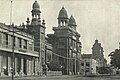
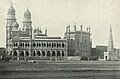
This area has many heritage and modern buildings on Rajaji salai and NSC Bose Road. Heritage buildings include the High Court Buildings, the Old Lighthouse Tower and the Law College building at Parry's Corner and the GPO building and Reserve Bank of India Building on Rajaji Salai. Other modern buildings are Parry's Dare House, the State Bank of Mysore Building, the New Collectorate Office Building (Singaravelar Maaligai), Kuralagam, and the BSNL office buildings. Raja Annamalai Mandram is a big hall where indoor meetings, cultural activities and dramas are held. In addition, there are lot of buildings owned by business community and government.

Panoramic view of the Chennai High Court and its surroundings

Land use

[edit]

The land use in George Town primarily comprises residential and mixed-residential zones. It is classified as a 'continuous building area', permitting structures of ground-plus-one floor, with a floor space index of 1.5. As of 2014, the business district has more than 14,000 buildings with around 25,000 property tax assessees.[14]

All buildings in George Town have been found in violation of development regulations, with several buildings found to have been constructed without obtaining building approval from the corporation.[14]

Economy

[edit]
Commercial buildings at Parry's Corner, Chennai

George Town is the birthplace of the economy of the city that began to flourish in the 17th century. Being the primary neighbourhood of the then burgeoning city of Madras, George Town houses several commercial establishments of national importance. It long housed the central business district of the city, until the 1960s, when it began to drift towards the south to reach the Gemini circle.

Banking

[edit]

The neighbourhood and the surrounding areas were home to several Nattukottai Chettiars or Nagarathars, who offered banking services to the public in the city before the establishment of modern commercial banks. They both offered loans to and accepted money deposits from the public, besides offering loans to the agricultural labourers. Several banking and financial offices were housed in heritage structures from the Colonial era, clustered chiefly around North Beach Road, many of which continue to exist to the present day.[15]

The first European-style banking system in India was started in George Town with the establishment of the 'Madras Bank' on 21 June 1683, almost a century before the establishment of the first commercial banks, such as the Bank of Hindustan and the General Bank of India, which were established in 1770 and 1786, respectively. However, the bank proved a failure.[16] Upon the recommendation of the British Finance Committee on the formation of a government bank, the Madras Bank, then known as the 'Government Bank', started functioning again from 1806. In 1843, the bank merged with the Carnatic Bank (1788), the British Bank of Madras (1795) and the Asiatic Bank (1804) and became the Bank of Madras, which was one of the three Presidency banks of India. In 1921, it merged with the other two Presidency banks, namely the Bank of Bengal and the Bank of Bombay, to form the Imperial Bank of India, which later became the State Bank of India in 1955.[17] The neighbourhood is also home to the south zonal office of the Reserve Bank of India, the country's central bank.[18]

Transportation

[edit]

George Town remains the geographical and geometrical focal point of Chennai where all the radial roads and railroads of the city converge. The arterial roads, namely, North and South Beach Roads, Anna Salai, Poonamallee High Road, Grand Northern Trunk Road, and Ennore High Road radiate from the neighbourhood, and both the primary terminal railway stations of the city, namely, Chennai Central and Chennai Beach borders the western and eastern sides of the neighbourhood. In addition to the two terminal stations, many suburban railway stations are located circumferentially around the neighbourhood, namely, Chennai Central Suburban, Chennai Fort, Chennai Park and Park Town, all located in the south and southwest fringes, Basin Bridge Junction at the western fringe, and Royapuram railway station at the northern fringe. The neighbourhood has a bus terminus, the Broadway Bus Stand near Parry's Corner.

The intercity and interstate express bus terminus originally functioned at the Broadway terminus near Madras High Court in an area covering about 1.5 acres.[19] With increasing transportation needs, the terminus was shifted to the new premises covering 36.5 acres at Koyambedu in 2002 constructed at a cost of 1,030 million.[20][21]

In January 2013, further to the public interest litigation petition filed in the court, the Corporation decided to improve the Broadway bus terminus at an estimated cost of 33.6 million.[22]

Education

[edit]

Colleges and universities

[edit]
Chennai High court building with statue of Manu Needhi Cholan in the foreground. Also housed here is the Dr. Ambedkar Law College, Chennai.

George Town is home to various government-run colleges and institutions. Dr. Ambedkar Law College, initially known as Madras Law College, was established in 1891. The medical college of the Government Stanley Medical College and Hospital was established in 1938 although the hospital was established by the turn of the 19th century. The Government Dental College and Hospital was established in 1953. Bharathi Women's College is located in the northern side of the neighbourhood.

Primary and secondary schools

[edit]

It has many premier schools which includes St. Mary's Anglo-Indian Higher Secondary School, St Francis Xavier Anglo-Indian Hr secondary school, St. Columban's Anglo-Indian Higher Secondary School and other schools including The Muthialpet Higher Secondary School, St.Gabriel's Higher Secondary School, Ramiah Girls High School, MEASI Matriculation Higher Secondary School, Muthialpet Girls School, Bishop Corrie Higher Secondary School and Dominic Savio School.

Developments

[edit]

Although George Town is the origin of the modern city of Chennai and remained the chief commercial hub of the city till the early 20th century, the city's central business district gradually moved towards the south since the mid-20th century, presently lying at the Gemini Circle on Anna Salai. This resulted in paucity of development funds for the northern region of the city. However, some of the community-specific areas of George Town, such as Sowcarpet where the prosperous Marwari community resides, still remains an important commercial hub of the city.[4]

Political awareness

[edit]

Political awareness among citizens of George Town is very high. Almost all leaders of national and state political parties used to hold street meetings contacting people and propagating their aims and principles. Leaders such as C. N. Annadurai, K. Kamaraj, C. Rajagopalachary, E. V. K. Ramaswamy Naicker, M. P. Sivagnanam (Ma. Po. Si), Andhra leaders such as T. Prakasam and also Mahatma Gandhi, Annie Besant and many others did not miss this part of the city. With huge immigrant population settled here, not only local and state politics but also politics of all other states of the country and even foreign nations are well known here. All political parties make it a point to be in good books of the citizens.[citation needed] The DMK party, one of the chief political parties of Tamil Nadu, counts Coral Merchant Street as its birthplace in 1949.[23]

Location in context

[edit]

See also

[edit]

References

[edit]
[edit]
Revisions and contributorsEdit on WikipediaRead on Wikipedia
from Grokipedia
George Town is the historic northern commercial district of , , originally established as Black Town in the 1640s as a settlement for local Indian merchants, weavers, and artisans outside the British-controlled Fort St. George, marking the initial expansion of Madras from its fortified core. Renamed in honor of King George V upon his accession as in 1910, the area evolved into Chennai's primary wholesale trading hub, featuring dense networks of specialized such as Parry's Corner for textiles and hardware, Burma Bazaar for electronics and imported goods, and proximity to facilitating maritime commerce since the colonial era. Beyond its economic role, George Town preserves a multicultural heritage through landmarks like the Armenian Church, Anderson Church, Kaalikaambaal Temple, and Jain Mandir, originating from early trade dependencies on diverse local communities, though much of its colonial-era architecture has deteriorated amid modern urban pressures.

History

Early Settlement and Black Town Origins

The , where George Town is located, featured indigenous villages and routes predating European contact, with the area encompassing settlements like Madraspattinam engaged in coastal and textile production. In August 1639, British agent Francis Day obtained a from local chieftain Damarla Chennappa Nayak and the representative to establish a fortified , leading to the construction of Fort St. George by 1640 as the company's first secure foothold in . Native weavers, merchants, dyers, and laborers, barred from the European-only "" within the fort, began settling in adjacent areas outside its walls, forming what became known as Black Town or Chennapatnam—named after the granting Nayak—in the mid-17th century. This segregated native quarter, comprising divisions like Muthialpet for castes and Peddanaickenpet for others, emerged organically as the incentivized settlement through tax exemptions and protection to secure supplies of textiles and spices for export. Black Town served as an initial warehouse and production hub, with local artisans producing painted cotton cloths that fueled the company's trade with and ; by the late 1600s, it had grown into a bustling commercial extension of the fort, driven by private enterprise and demand rather than centralized . The first recorded mention of Chennapatnam appears in a 1652-1653 , underscoring the settlement's early social organization around trade guilds.

Colonial Development and Naming

Black Town, situated north of Fort St. George, developed from the late 17th century as the primary settlement for Indian merchants, artisans, and laborers supporting the British East India Company's trade in textiles and other commodities. The Company's imperial policies, which established a monopoly on exports through the port, created sustained demand for local production and logistics, driving economic interdependence and population influx that expanded the area into a bustling commercial hub by the early 18th century. This port-linked commerce fostered infrastructure growth, including markets and warehouses, contributing to high population density and urban prosperity reflective of colonial economic priorities. The internal organization of Black Town reflected caste-based divisions, with settlements like Muthialpet (dominated by left-hand castes such as traders) and Peddanaickenpet (right-hand castes) separated by Popham's Broadway, a key thoroughfare that delineated social and economic zones amid ongoing inter-caste dynamics under colonial oversight. A notable infrastructural milestone was the laying of the foundation stone for Pachaiyappa's Hall on October 2, 1846, by , funded from the estate of philanthropist ; completed in 1850, it served as an educational and assembly space, underscoring local elite contributions to civic development tied to trade-generated wealth. In 1911, coinciding with King George V's coronation as at the , Black Town was officially renamed George Town, marking its symbolic incorporation into the Madras Presidency's administrative framework and acknowledging its evolution from segregated native quarters to a central commercial node. This renaming, accompanied by the erection of a commemorative in 1913, highlighted the area's entrenched role in imperial trade networks that had propelled its sustained growth.

Post-Independence Evolution

Following India's independence in , George Town maintained its status as Chennai's central wholesale commercial district, functioning as the key hub for distributing goods throughout . The area's entrenched networks of small-scale trade in textiles, spices, hardware, and other commodities endured, supported by family-owned businesses operating in heritage structures along its colonial-era grid streets. This continuity persisted despite national economic policies emphasizing public sector growth and industrial licensing under the Industries (Development and Regulation) Act of 1951 and the , which curtailed large private industries but minimally affected George Town's mercantile operations. The of 14 major banks in , including entities with branches in George Town such as the , shifted financial control to the state but did not dismantle the district's trade-financing ecosystem, as local commerce relied on a mix of public and residual private lending. Pre-liberalization stagnation under the License Raj constrained broader expansion, yet empirical records show George Town's role as an importer and exporter remained vital well into the late , with persistent congestion reflecting unchecked commercial activity rather than decline. Economic liberalization in 1991, involving rupee devaluation, tariff reductions from peaks exceeding 300% to under 50% initially, and eased foreign investment rules, amplified trade volumes proximate to , directly benefiting George Town's markets through heightened imports of consumer goods and . Container handling at the port grew at 13-14% annually through the 2000s, underscoring boosted port-adjacent , though this exposed entrenched deficits like narrow roadways and poor drainage, rooted in post-1947 municipal priorities that prioritized suburban development over historic core maintenance. Private enterprise's resilience contrasted with state-influenced , as family-run wholesale outlets—exemplified by enduring firms like , established in 1788 and headquartered in the area—sustained operations amid policy flux, adapting to without reliance on government-led initiatives. By the early , over 99% of George Town's buildings lacked approved plans, symptomatic of regulatory neglect that preserved organic trade patterns but hindered modernization.

Geography and Environment

Location and Boundaries

George Town occupies a position in the northern sector of Chennai, Tamil Nadu, along the Coromandel Coast of the Bay of Bengal. Bounded by the sea to the east and Chennai Port, it extends westward into inland commercial districts including Sowcarpet and Park Town, forming a key enclave in the city's historic core. The neighborhood lies approximately 2-4 kilometers north of Fort St. George, integrating into the urban fabric administered under Zone 5 of the , which encompasses central and northern wards around . This positioning facilitates its role as a gateway linked to maritime trade via the adjacent facilities. George Town's terrain is predominantly flat, with elevations typically at or below 2 meters above mean , rendering it vulnerable to inundation from heavy rainfall, tidal surges from the , and overflow influences from the nearby Cooum River basin. The Cooum, historically marking northern settlement limits before urban expansion, continues to shape local through its proximity.

Urban Layout and Topography

George Town's urban layout originated in the as an extension of Fort St. George, featuring a grid pattern of streets designed primarily for and limited vehicular use such as horse-drawn carriages, with roads intersecting at right angles to facilitate orderly expansion beyond the fortified . This colonial imprint is evident in the rectangular blocks north of the fort, where early planning under British administration allocated space for native settlements known as Black Town, incorporating straight thoroughfares like those leading to the waterfront. Over time, organic native expansions introduced branching lanes and denser infill, resulting in high-density blocks interspersed with narrow alleyways typically 3-5 meters wide, which persist amid the grid's framework. Historic features delineate key divisions within the area: Prakasam Salai, formerly Popham's Broadway, runs north-south and separates eastern coastal sections like Muthialpet from inland Peddanaickenpet, influencing spatial organization tied to commerce and community clusters. Similarly, the filled-in North Beach Road—now Rajaji Salai—marks the eastern boundary along the , transforming former shoreline into a linear artery that historically segmented port-adjacent zones from interior developments, exacerbating north-south gradients in density and access. Topographically, George Town lies on flat coastal terrain with an average elevation of approximately 13 meters above sea level, rendering it low-lying and prone to inundation risks. Unchecked urbanization, including groundwater overexploitation for construction and population pressures, has induced land subsidence rates of 2-14 mm per year in Chennai's coastal zones, compounding exposure to relative sea-level rise projected at 19-20 cm by 2050. This causal erosion of land stability stems from anthropogenic loading on sedimentary soils, distinct from broader climatic forcings, and heightens vulnerability in the area's compact, impermeable layout.

Demographics

The population of George Town experienced significant influxes during the mid-20th century, particularly from the 1940s onward, as expansions at drew migrant labor from rural and neighboring regions for dockworking and related industries, contributing to accelerated urban growth in the northern core. Post-independence, Chennai's overall decadal rate peaked at around 3.88% through the 1980s before declining to 2.77% in subsequent decades, with core commercial zones like George Town exhibiting even slower expansion relative to suburban peripheries due to outflows for housing and employment opportunities elsewhere in the . The Chennai Metropolitan Development Authority's master plan highlights that such historical concentrations have led to stabilized but elevated densities, underscoring a shift from rapid mid-century spikes to moderated trends amid broader . As per the 2011 census, George Town spanned approximately 4.5 square kilometers with a of 46,058 persons per square kilometer, among the highest in and indicative of persistent in this compact commercial-residential enclave. This equates to roughly 207,000 residents, reflecting a mature urban fabric where vertical growth is constrained by heritage regulations and narrow street grids. High densities exceed 40,000 per square kilometer in sub-areas like and Mannady, amplifying pressures on legacy infrastructure ill-equipped for modern per capita demands. The reports that George Town's aging utilities— including drains, water distribution networks, and —face strain from these densities, with service provision lagging behind metropolitan averages due to predating post-1940s expansions. Master plan assessments note inadequate capacity in core zones for handling peak loads, prompting calls for rejuvenation to mitigate risks like flooding and service disruptions without altering the area's economic primacy. Recent projections anticipate modest growth through 2026, prioritizing densification controls to align with regional deconcentration efforts.

Socio-Economic Composition

George Town exhibits a predominantly Tamil Hindu population, reflecting the broader demographic patterns of where Hindus constitute over 80% of residents, with forming the ethnic majority. Historical settlement patterns have sustained significant minority communities, including Beri Chettiars—a mercantile subcaste originating from the colonial era—who established key trading networks in the area known as Black Town. These Chettiars, along with Muslim traders concentrated in sub-localities like Mannady, contributed to the neighborhood's multi-ethnic fabric, fostering resilience in commerce through diverse kinship-based networks that mitigated risks in volatile markets. Socio-economically, the area skews toward lower-middle-class strata, dominated by small-scale traders and laborers in the informal sector, which accounts for a substantial portion of Chennai's urban —estimated at around 10 workers city-wide based on 2001 census extrapolations. This composition underscores class disparities, with and select minority groups historically accessing formal banking roles, while the majority rely on daily-wage or petty activities vulnerable to economic shocks. Recent surveys highlight vulnerabilities among informal workers, including women and migrants, who face unstable incomes and limited social protections, perpetuating income inequality despite the area's -driven vitality. In the 2020s, demographic shifts have intensified due to inter-state migration for port-related and labor, drawing workers from northern and rural regions and diluting the native-born share amid urban expansion. This influx, comprising low-skilled migrants with minimal assets, has heightened , as evidenced by elevated rates in George Town— the highest in per 2025 corporation surveys—while preserving the neighborhood's role as a hub for resilient, diverse informal economies.

Economy

Commercial Hubs and Trade

George Town functions as Chennai's foremost wholesale and retail commercial hub, centered around Parry's Corner and , where merchants trade in textiles, components, jewelry, spices, , hardware, and household goods through specialized street markets and warehouses. Parry's Corner, named after the 18th-century merchant Thomas Parry, emerged as a nexus for bulk dealings in fabrics, plumbing items, and electricals, drawing traders due to its dense network of narrow lanes accommodating high-volume transactions without heavy regulatory interference. , adjacent and historically linked to Gujarati and Marwari business communities, specializes in and jewelry alongside readymade garments, fostering supply chains reliant on family-run guilds that prioritize direct buyer-seller negotiations over formalized intermediaries. ![Parry's Corner, a key wholesale market in George Town][float-right] The area's market-driven vitality stems from its adjacency to , enabling seamless logistics for inbound imports like raw textiles and outbound shipments of processed goods, a pattern rooted in colonial-era practices where warehouses in nearby Fort St. George supported barter and export of local commodities such as spices and . Post-1991 , which dismantled licensing barriers and promoted export incentives, amplified this role as private networks in George Town adapted to global demand surges in apparel and accessories, sustaining turnover through agile, entrepreneur-led adaptations rather than state-directed planning. These guilds, often community-based among Telugu, Marwari, and Gujarati traders, maintain resilient supply chains by leveraging interpersonal trust and minimal overheads, exemplifying bottom-up commercial efficiency amid India's broader trade expansion. Spice trade, particularly in Sowcarpet's grain and masala alleys, underscores ongoing entrepreneurial continuity, with wholesalers handling bulk procurement from southern farms for redistribution, unencumbered by the bureaucratic hurdles that plague larger industrial zones elsewhere in the state. This localized dynamism, proximate to port facilities handling over 50 million tonnes annually, reinforces George Town's status as a low-friction conduit for value-added , where merchant initiative drives prosperity independent of subsidized incentives.

Banking and Financial Role

George Town emerged as an early center for banking in during the colonial period, serving as a hub for institutions that facilitated capital flows tied to port-based trade. The , established on July 1, 1843, through the amalgamation of regional banks, was headquartered in Madras and operated from the George Town vicinity, providing credit to merchants and supporting the Company's commercial activities. This institution, one of the three Presidency Banks alongside those in and Bombay, issued notes and handled deposits, laying foundational infrastructure for formal finance in southern until its merger into the in 1921. In the early 20th century, George Town continued to attract indigenous banking ventures amid the . , founded on August 15, 1907, in , initially headquartered in the George Town area, which was the city's primary commercial district at the time, before relocating later. The neighborhood's streets, including those near Rajaji Salai, hosted branches of other banks like , whose first South Indian outlet opened in Linghi Chetty Street in 1945. These establishments concentrated , enabling networks that channeled funds from deposits to trade loans, with George Town's proximity to Fort St. George and the harbor enhancing its role in regional capital allocation. Mint Street within George Town became synonymous with informal finance, drawing Marwari moneylenders and pawn brokers from the onward, who provided to small traders outside formal banking channels. Post-1991 , the area sustained a cluster of non-banking financial companies (NBFCs), which expanded to offer unsecured loans and factoring services to SMEs, leveraging longstanding community ties for over collateral. This persists, with numerous finance firms operating there to support the district's wholesale trade dependencies.

Economic Challenges and Criticisms

George Town faces significant structural economic challenges stemming from pervasive regulatory non-compliance and infrastructural strain, which undermine its role as a commercial hub. In 2014, the Madras High Court observed that over 99% of buildings in the area were constructed either without approved plans or in violation of building norms, as reported by the Chennai Corporation in a preliminary survey submitted to the court. This widespread illegality, often enabled by lax enforcement, has led to inefficient land use and heightened vulnerability to disasters, eroding the district's operational efficiency compared to its colonial-era trade vitality when structured planning supported export-oriented commerce. High congestion exacerbates these issues, with narrow streets overwhelmed by pedestrian and vehicular traffic in a densely packed zone where land scarcity limits expansion. Studies highlight how such overcrowding, compounded by unauthorized vertical additions, hampers logistics and trade flows critical to the area's wholesale markets. Post-independence urban policies, including rigid zoning and delayed approvals, have been criticized for stifling legal upgrades and perpetuating a cycle of informal development, as successive governments prioritized broader city expansion over core-area revitalization. This regulatory overreach traps small traders in socio-economic vulnerabilities, contrasting with the private sector's historical adaptability that sustained commerce through British rule. Homelessness and informal settlements further illustrate these challenges, with George Town hosting vulnerable populations exposed to economic instability and inadequate services. A 2024 study documented socio-economic traps among homeless individuals in the area, linking housing insecurity to barriers in accessing formal and basic amenities, often worsened by gaps that favor entrenched illegality over structured . Despite these hurdles, private market resilience persists, as evidenced by ongoing wholesale trade volumes that outpace regulatory constraints, underscoring how entrepreneurial vitality compensates for governmental shortcomings in fostering sustainable growth.

Architecture and Landmarks

Colonial and Heritage Structures

George Town features a concentration of colonial-era buildings constructed primarily between the late 18th and early 20th centuries, reflecting British administrative and commercial influences adjacent to Fort St. George. These structures often blend neoclassical elements with local adaptations, such as expansive verandas and durable brickwork suited to the coastal climate. Prominent examples include warehouses along Rajaji Salai and NSC Bose Road, developed to support port trade, and institutional buildings like the complex, established in 1892 to house judicial functions. Pachaiyappa's Hall stands as a key neoclassical landmark, with its foundation laid on October 2, 1846, by and inauguration in 1850, funded entirely from the estate of philanthropist . Designed to evoke ancient Greek temples like the , the hall features Doric columns and a pedimented facade, serving initially as an educational and public assembly space accommodating up to 600 students. Its architecture exemplifies the British preference for classical revivalism in colonial public buildings, prioritizing and permanence over indigenous styles. The Ripon Building, completed in 1913 under architect G.S.T. Harris, represents a later neoclassical iteration with its white facade, central tower, and clock inspired by , functioning as the headquarters for the . Originally extensions of port-related infrastructure, many godowns and commercial halls in the area incorporate Greek and Tamil motifs in their arches and cornices, though empirical surveys indicate widespread structural decay, including crumbling facades and water damage in over half of surveyed heritage properties. Preservation efforts reveal a pattern of differential maintenance, where privately held commercial structures receive ad hoc repairs driven by economic utility, contrasting with publicly managed ones suffering from post-1947 institutional neglect, including inadequate enforcement of the Heritage Commission Act of 2012. This has led to accelerated deterioration from exposure and urban encroachment, with heritage advocates noting that without systematic restoration, up to 70% of these buildings risk irreversible loss, underscoring causal links between policy inaction and physical decline.

Religious and Cultural Sites

George Town features a diverse array of religious sites established by trading communities, including Hindu temples linked to early merchants and shrines for Muslim traders from the onward. These structures, such as the dedicated to , were founded in the first year of Madras's establishment around 1640 by dubash Beri Thimmappa, one of the city's founders, with reconstruction in 1762 by Manali Muthu Krishna . The temple, located on Devaraja Mudali Street, underscores the Vaishnavite traditions integral to local merchant identities. The , honoring Goddess Kalikambal (a form of Kamakshi) and Lord Kamateswarar, stands in Thambu Chetty Street near Parry's Corner, drawing devotees for its reputed spiritual potency amid the commercial bustle. Originating in the , it exemplifies central to Hindu trader cohesion in the Black Town area. Jain temples, including the Shri Gujarati Shwetamber Murtipujak Jain Mandir and Shree Aadinath Digambar Jain Mandir, were erected by Gujarati merchants, with the former noted as South India's first with three gopurams and five doors, fully marble-constructed. These sites foster inter-community ties through shared festivals like , though specific attendance figures remain undocumented; larger events, such as those at Saifee Masjid for Ashara Mubaraka, attract over 43,000 participants globally in 2025, highlighting Muslim trader legacies. The Armenian Church of Virgin Mary, constructed in the early 18th century on Armenian Street, serves as a heritage marker for the Armenian trading diaspora, featuring six bells and minimal ornamentation for serene worship. While these sites promote social stability via rituals integrated into daily commerce—such as pre-market prayers—urban density has led to encroachments on temple peripheries, straining preservation efforts amid George Town's congestion.

Infrastructure and Transportation

Roads, Streets, and Markets

Rajaji Salai, also known as North Beach Road, functions as a primary in George Town, linking the commercial district to Fort St. George and while hosting significant institutional and structures. The area's internal network features predominantly narrow , such as those in Prakasam Salai, where limited widths exacerbate vehicular congestion amid heavy commercial traffic and encroachments. Specialized streets define the district's commercial character through organic clustering of trades. Mint Street serves as a hub for hardware, steel, building materials, and related wholesale supplies, supporting construction and industrial needs. Burma Bazaar, located near , specializes in affordable electronics, gadgets, and imported items across approximately 200 shops, drawing bargain seekers for grey-market goods. Parry's Corner emerges as the chaotic core of wholesale activity, integrating multiple specialty lanes for textiles, utensils, stationery, and plumbing fixtures, with dense pedestrian flows complicating vehicle movement in this unzoned, privately evolved marketplace. These configurations highlight adaptive commercial specialization, where proximity fosters trade efficiency despite navigational hurdles from tight layouts and unregulated vending.

Connectivity to Port and Transit Systems

George Town's strategic location provides direct road access to Chennai Port via key arteries such as NSC Bose Road and Rajaji Salai, with the port's main entrance situated less than 2 kilometers from central commercial areas like Parry's Corner. Rail links further integrate the area, with dedicated sidings at the port connecting to broader networks via Chennai Central station, facilitating efficient cargo evacuation for trade activities. This proximity has supported the port's handling of growing container volumes, which saw annual increases of 13-14% through the late 2000s, driven by expanded terminal capacities and regional export demands. Public transit connectivity includes the (MRTS), with stations such as and Chennai Beach serving George Town residents and workers commuting to port-related facilities or southern suburbs. Integration with Rail Phase 2 is advancing through planned takeovers and alignments near Chennai Central, aiming to enhance multimodal links, though ongoing construction has induced significant traffic delays—estimated at 10 minutes per trip across affected corridors—exacerbating urban congestion. Rail level crossings in northern , including those near port access routes, periodically halt vehicular flow, contributing to bottlenecks during peak hours and cargo movements. The port's adjacency has causally boosted local economic output by enabling rapid distribution of imports to George Town's wholesale markets, with Chennai Port's operations underpinning a notable share of Tamil Nadu's trade GDP prior to disruptions. However, vulnerability to environmental shocks was evident in the floods, which damaged approach roads and suspended rail services, temporarily halting port throughput and amplifying losses estimated at over ₹15,000 across regional industries. These events underscore the trade-off between locational advantages and resilience needs for sustained port synergy.

Education and Social Services

Educational Institutions

Pachaiyappas College Higher Secondary School, situated in Parrys within George Town, forms part of the educational legacy of the , which initiated schooling in 1842 through a primary institution aimed at for underprivileged Hindu students. The school provides tailored to the area's communities, emphasizing streams that equip students for roles in , , and family enterprises central to George Town's . V.O.C. Vidyalaya Higher Secondary School operates in George Town, offering matriculation-level instruction with a vocational orientation suitable for the offspring of trading families, fostering skills in business operations and aligned with the locality's port-adjacent . These institutions have historically supported development by achieving functional rates that enable entrepreneurial pursuits, as evidenced by the sustained in George Town's markets. However, overcrowding remains a persistent challenge, with many urban s in , including those in George Town, reporting class sizes often exceeding 50 students, which strains teaching efficacy and individual attention. This issue has drawn criticism for potentially hindering deeper skill acquisition needed for competitive roles, despite the schools' contributions to basic in the local .

Community and Welfare Aspects

Historical merchant guilds in South India, influential in areas like George Town, provided social welfare to members, including financial aid, healthcare, and support during adversities, functioning as self-regulating bodies beyond mere trade. These structures, such as the Ayyavole and Manigramam, emphasized upliftment through collective resources, a legacy persisting in informal mutual aid among contemporary trading communities in Chennai's northern commercial hub. Cultural and kinship networks among and other merchant groups in George Town sustain , offering kinship-based assistance for education and emergencies, often more responsive than formal systems due to shared ethnic ties. NGOs address gaps in support for vulnerable populations, particularly exacerbated by urban migration. The Banyan, operational since 1993, delivers services and rehabilitation to over 3,000 homeless individuals annually in , including northern zones, filling voids in public provision through targeted, evidence-based interventions. partners with 55 NGOs to manage shelters housing 1,600 people, yet coverage remains inadequate for street dwellers in dense areas like George Town. Public welfare schemes, including urban poverty alleviation programs, underperform amid persistent poverty pockets, with studies documenting acute socio-economic vulnerabilities among George Town's homeless, such as lack of access to basic services despite national initiatives. Sanitation deficiencies contribute to health risks, including endemic malaria in George Town as of 2007 data, reflecting causal failures in municipal delivery over infrastructure strain. Private and NGO efficacy contrasts with state efforts, where broad schemes dilute impact, while community-driven aid leverages local knowledge for better outcomes in resilience-building.

Urban Planning and Developments

Recent Redevelopment Initiatives

The (CMDA) launched the Local Area Plan (LAP) for George Town in the early 2020s to address chronic urban pressures through targeted infrastructure upgrades. The initiative proposes elevating the Floor Space Index (FSI) to encourage vertical development, modernizing sewer networks for better , and implementing decongestation strategies such as widened roadways and relocation of wholesale trades to peripheral zones. These measures aim to revitalize high-density areas plagued by outdated patterns and structural , fostering a more efficient urban form while preserving commercial vitality. As of July 2025, planning efforts had advanced to roughly 30% completion, incorporating designs for enhanced footpaths, public open spaces, and improved ventilation alongside the core FSI and sewer enhancements. Despite this progress, the project encountered significant setbacks, with implementation halted primarily by acquisition obstacles, including disputes over compensation and site assembly in densely occupied commercial precincts. Reports from that period highlight how these hurdles have delayed broader rollout, mirroring patterns of protracted execution in prior CMDA schemes. Empirical evaluation reveals the LAP's potential for market-driven renewal, as higher FSI could unlock private in compliant reconstructions, thereby alleviating congestion without heavy public outlay. However, bureaucratic in resolving acquisition issues—evident in stalled negotiations through mid-2025—has undermined momentum, with only preparatory surveys and outlines substantively realized amid fiscal and procedural constraints.

Persistent Issues and Policy Critiques

George Town exhibits persistent structural dilapidation, characterized by crumbling heritage buildings and urban voids transforming into slums due to chronic neglect and encroachments. Over 3,600 illegal buildings were documented in the area as of 2015, with violations comprising up to 99% of constructions, many remaining unaddressed through subsequent years. These issues stem from lax enforcement of building regulations, exacerbating congestion at key nodes like Broadway and poor parking management, which undermine the district's functionality as a commercial core. Efforts to reverse decay, such as the Chennai Metropolitan Development Authority's Local Area Plan initiated in 2006, have faltered, with the George Town renewal project stalled as of July 2025 amid land acquisition roadblocks and trader resistance. The plan aimed to rectify narrow roads, outdated , and inadequate amenities through GIS mapping and upgrades, yet procedural hurdles illustrate policy shortcomings in prioritizing execution over consultation, leaving high-value land underutilized despite evident deterioration. Flooding compounds these vulnerabilities, driven by obsolete stormwater systems and coastal proximity, as evidenced by the December 2023 deluge that submerged northern Chennai locales, including George Town, halting operations at industrial plants and stranding residents. City-wide economic damages from 2023 natural catastrophes exceeded ₹1 , with commercial disruptions in port-adjacent zones like George Town amplifying losses through interruptions. Policy analyses attribute recurrence not merely to intensified rainfall but to failures, including desilting neglect, water body encroachments, and haphazard expansion that overwhelm drainage capacity. Critiques underscore impeding private sector initiatives, where businesses bear disproportionate compliance burdens amid inconsistent enforcement, stifling investments in resilient infrastructure like flood barriers or heritage restoration. Rather than excusing lapses via climatic narratives, causal assessments demand accountability for unheeded planning—such as restoring lakes and widening drains—over permissive that sustains illegality and decay. Streamlined acquisition and vendor regulations are advocated to alleviate trader dependencies on informal setups, enabling sustainable commerce without perpetuating infrastructural fragility.

References

Add your contribution
Related Hubs
User Avatar
No comments yet.