Hubbry Logo
Dave CockrumDave CockrumMain
Open search
Dave Cockrum
Community hub
Dave Cockrum
logo
8 pages, 0 posts
0 subscribers
Be the first to start a discussion here.
Dave Cockrum
Dave Cockrum
from Wikipedia

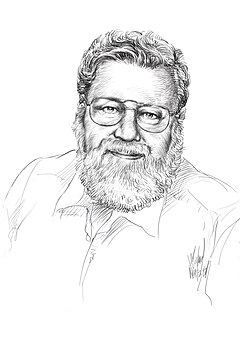
David Emmett Cockrum (/ˈkɒkrəm/; November 11, 1943 – November 26, 2006)[1] was an American comics artist known for his co-creation of the new X-Men characters Nightcrawler, Storm, Colossus, and Mystique, as well as the antiheroine Black Cat. Cockrum was a prolific and inventive costume designer who updated the uniforms of the Legion of Super-Heroes and the X-Men in the 1970s and early 1980s.

Key Information

Early life

[edit]

Cockrum was born on November 11, 1943, in Pendleton, Oregon. His father was a lieutenant colonel of the United States Air Force, resulting in the Cockrums frequently transporting their household from one city to another for years. Cockrum discovered comic books at a young age; an early favorite was Fawcett's Captain Marvel, especially Mac Raboy's Captain Marvel Jr.[2] Other artists whose work the young Cockrum admired were Wally Wood, Gil Kane, Murphy Anderson, and Joe Kubert.[2]

As a young man, Cockrum was a dedicated "letterhack," who had many letters printed in comic book letter columns[3] such as Fantastic Four #22 (Jan. 1964), The Amazing Spider-Man #12 (May 1964), The Atom #1 (June 1962), and Fantastic Four #36 (March 1965) (return address "YN 'A' School, USNTC"). A letter from Cockrum in Fantastic Four #34 (Jan. 1965) led to a correspondence with Andrea Kline, who later became his first wife.[2][4]

Cockrum's ambition was to become a comic-book creator himself. After attending but not graduating from Southern Illinois University,[5] Cockrum joined the United States Navy for six years.[6] During this time, he created the character Nightcrawler, though the character would not be used until years later.[7]

Career

[edit]

Despite serving during the Vietnam War, Cockrum found time to contribute artwork to comics fanzines such as Star-Studded Comics and Fantastic Fanzine.[8]

After leaving the military, Cockrum found employment with Warren Publishing,[7] as well as with Neal Adams' Continuity Associates as a member of the "Crusty Bunkers".[9]

He was then hired as an assistant inker to Murphy Anderson,[2] who was inking various titles featuring Superman and Superboy for DC Comics. At the time, Superboy featured a "Legion of Super-Heroes" backup strip. When the position of artist for "The Legion of Super-Heroes" was left vacant, Cockrum sought the job and was rewarded with his first assignment drawing a feature.[10] Cockrum's work on the feature, beginning with a backup story in Superboy #184 (April 1972) and recurring in several following issues "established an exciting new vibe".[11] He remained the artist on the Superboy series after the Legion of Super-Heroes became the main feature of the book with #197 and his art redefined the look of the Legion, creating new costumes and designs that would last until artist Keith Giffen did a similar revamp in the 1980s. Cockrum is credited with creating team member Wildfire. Cockrum drew the story wherein the characters Bouncing Boy and Duo Damsel were married in Superboy Starring the Legion of Super-Heroes #200 (Feb. 1974).[12] Cockrum eventually left DC and the Legion in a dispute involving the return of his original artwork from that issue.[2][8]

Prior to his departure, Cockrum had been preparing to be the regular artist on an ongoing Captain Marvel Jr. back-up strip in the Shazam! series for DC.[2]

Marvel and the X-Men

[edit]

Moving over to a staff position at Marvel, Cockrum and Len Wein under the direction of editor Roy Thomas created the new X-Men, co-creating such characters as Storm, Nightcrawler, and Colossus. Storm and Nightcrawler were directly based on characters which Cockrum had intended to introduce into the Legion of Super-Heroes storyline had he remained on the title.[13] These characters made their debut in Giant-Size X-Men #1 ([July] 1975),[14] and then in a relaunched Uncanny X-Men (beginning with issue #94).[15]

Cockrum stayed with the title until 1977 (as main penciler on issues #94–105 and 107), when he was succeeded by penciler John Byrne with issue #108.[16] The final issue of his original, regular run introduced the Starjammers, a spacefaring superhero team he had originally intended to debut in their own series.[7] Issue #110, which Cockrum co-pencilled with Tony DeZuniga, was an inventory issue.[17] He continued to contribute covers for the series until Uncanny X-Men #126.[10]

As journalist Tom Spurgeon wrote about Cockrum's X-Men,

Cockrum's penciled interiors on those first few issues of the "new" X-Men were dark and appealingly dramatic...Cockrum gave those first few issues of X-Men a sumptuous, late-'70s cinema style that separated the book from the rest of Marvel's line, and superhero comics in general. Reading those X-Men comics felt like sneaking into a movie starring Sean Connery or Sigourney Weaver, not simply like flipping on the television. Uncanny X-Men really felt new and different, almost right away, and Cockrum's art was a tremendous part of that.[5]

In 1979, Dave Cockrum designed Black Cat for writer Marv Wolfman.[18][19] Cockrum quit his staff job at Marvel in 1979 and his angry resignation letter was printed without his permission in Iron Man #127 (October 1979)[20] but he continued to work for Marvel as a freelancer. Cockrum was Marvel's primary cover artist during this period,[13] and also penciled or inked a number of other titles for DC during this time. Although not a regular artist on the series, he re-designed the costume for Ms. Marvel.[21] When John Byrne left the X-Men in 1981, Cockrum returned to the title with issue #145 but left again with issue #164 (Dec. 1982) to work on The Futurians.[2]

He returned to the X-Universe in 1985 with a four-part Nightcrawler limited series that he wrote as well, a two-part Starjammers limited series in 1990 and an X-Men short story for Marvel Holiday Special #1 in 1991. Two unpublished fill-in issues that Cockrum pencilled in the early 1990s for X-Men and New Mutants respectively were released together posthumously as the one-shot X-Men: Odd Men Out in 2008.[22]

The Futurians

[edit]

In 1983, Cockrum produced The Futurians, first as a graphic novel (Marvel Graphic Novel #9), and then as an ongoing series published by Lodestone Comics.[23] Though it did not last past issue #3, a collected edition was published by Eternity Comics in 1987 that included the "missing" issue #4. In 1995, Aardwolf Publishing printed the "missing" issue as Futurians #0, with a new five-page story by Cockrum and author Clifford Meth.[24]

Claypool Comics

[edit]

In 1993, Cockrum was recruited by Claypool Comics to produce work for them, resulting in several stories for Claypool's Elvira, Mistress of the Dark series beginning with #7. Cockrum was put into rotation on Peter David's Soulsearchers and Company, beginning with issue #13, becoming the series' penciler with #17 and penciling most issues through #44, published in 2000. Cockrum contributed a short feature to Richard Howell's Deadbeats #18.[10]

Personal life, illness, and death

[edit]

While serving in the Navy in the late 1960s, Cockrum married Andrea Kline[5] and had a child with her, Ivan Sean.[5][25]

Dave and Paty Greer Cockrum were married on April 28, 1978.[26]

In later years, Cockrum worked less frequently in comics. In 2004, he became seriously ill due to complications from diabetes and pneumonia,[27] and a number of fellow artists and writers led by Clifford Meth and Neal Adams organized a fundraising project. The auction, run by Heritage Auctions at the WizardWorld Chicago show in August, raised over $25,000.[8] Marvel eventually provided an undisclosed amount of financial support in exchange for Cockrum agreeing to terms protected by a nondisclosure agreement. Cockrum said publicly he was "very happy that so many people cared about my work and about me. ... I'm enormously grateful to Clifford Meth and Neal Adams for having moved this forward. ... I'm very happy with what everyone has done, including Marvel."[27]

Cockrum was due to draw an eight-page story in Giant Size X-Men #3 (2005), but a recurrence of his health problems prevented this. Adams filled in.[28]

Cockrum died at his home in Belton, South Carolina,[5] on the morning of November 26, 2006, due to complications from diabetes. He was survived by his longtime wife, Paty Cockrum, and by his son and two stepchildren.[8]

Legacy

[edit]

The Joe Kubert School of Cartoon and Graphic Art bestowed the first annual Dave & Paty Cockrum Scholarship to a promising artist in 2008. The scholarship, which was organized by Clifford Meth, continues each year and is funded by sales of comics from Cockrum's personal collection.[29]

In the novelization of X-Men: The Last Stand, written by Cockrum's longtime associate Chris Claremont (published in 2006), the President is named "David Cockrum". Claremont also created a character in homage to Cockrum in New Exiles who eventually "moved on" at the end of X-Men: Die by the Sword (2007), which ended with a full-page tribute to Cockrum.[30]

Awards

[edit]

Cockrum's work on the X-Men earned the creative team an Eagle Award for Favourite (Colour) Comic in 1977.[31] Cockrum received an individual Inkpot Award in 1982.[32]

Bibliography

[edit]

References

[edit]
[edit]
Revisions and contributorsEdit on WikipediaRead on Wikipedia
from Grokipedia
Dave Cockrum (November 11, 1943 – November 26, 2006) was an American comic book artist renowned for his dynamic character designs and costume work, particularly his revitalization of DC Comics' in the 1970s and his co-creation of ' All-New, All-Different team, including iconic characters such as , Nightcrawler, Colossus, and Thunderbird. His contributions to these series transformed them into enduring franchises, with the evolving into a multimedia empire encompassing , films, cartoons, and video games that have grossed billions worldwide. Cockrum's signature style featured bold, cinematic visuals with elaborate costumes—often including wide shoulder lapels, oversized belts, and buccaneer boots—that influenced aesthetics for decades. He was posthumously inducted into the Comic Industry Awards Hall of Fame in 2021 for his lasting impact on the medium. Born in , Cockrum was the son of a U.S. Air Force , which exposed him to frequent relocations and an early fascination with aircraft that later informed his detailed depictions of vehicles in . He developed a passion for stories as a child, idolizing characters like Captain Marvel, , and Blackhawk, and pursued art in school with ambitions of entering the industry. After graduating, Cockrum served six years in the U.S. Navy, where he honed his drawing skills through and illustrations. Cockrum broke into professional comics in the early 1970s, starting with black-and-white horror titles at Warren Publishing, including Creepy, Eerie, and Vampirella. He then joined DC Comics as a background inker for veteran artist Murphy Anderson on series like Superman and Superboy, before transitioning to penciling. His breakthrough came with Superboy and the Legion of Super-Heroes, where he illustrated the feature in Adventure Comics and other titles starting in 1972, for much of the 1970s, redesigning numerous characters' costumes and creating new ones to modernize the 31st-century superhero team. This run established Cockrum as a master of crowded ensemble scenes and futuristic designs, boosting the series' popularity. In 1974, Cockrum moved to , initially inking The Avengers and contributing to Giant-Size X-Men #1 (1975), where he collaborated with writer and editor to assemble an international roster of mutants that replaced the original team. He co-designed Thunderbird (an warrior with ), Colossus (a Russian metal-skinned powerhouse), Nightcrawler (a teleporting demonic mutant), and (an African weather goddess), drawing from his unused Legion concepts to infuse the book with fresh energy. Cockrum also refined Wolverine's appearance, adopting a cowl inspired by a misdrawn cover and proposing that his adamantium claws emerge from his hands rather than gauntlets, solidifying the character's feral persona. His artwork on Uncanny X-Men with writer from 1975 to 1977 set the stage for the series' 1980s resurgence. Later in his career, Cockrum returned to DC for projects like Blackhawk (where he penciled covers and stories in the late 1970s) and created his own independent title, The Futurians (1986), a science-fiction superhero series published by his Aardvark-Vanaheim imprint. He also worked on ' Magnus, Robot Fighter, Defiant's titles, and Claypool Comics' Soulsearchers and Company (1993–1997), blending horror and adventure elements. Health issues from forced his retirement in the late 1990s, though he continued occasional commissions. Cockrum died at his home in , from diabetes complications, survived by his wife Paty Cockrum and his son Ivan from a previous . His legacy endures through comprehensive biographies like Glen Cadigan's The Life and Art of Dave Cockrum (2022), which highlights his role as a foundational figure in modern .

Early life

Upbringing and education

David Emmett Cockrum was born on November 11, 1943, in . His father was a in the United States , which led to frequent family relocations during his early years. The Cockrums spent time on various bases, which introduced Cockrum to diverse settings and fostered an early interest in aircraft. From a young age, Cockrum was captivated by comic books, discovering them during the waning days of Fawcett's Captain Marvel era and developing a particular fondness for DC Comics' . This fascination sparked his creative impulses, leading him to begin drawing his own superheroes while still in grade school. Largely self-taught, Cockrum refined his artistic abilities through persistent practice, filling notebooks with imaginative illustrations. By his high school years, he had amassed a huge sketchbook brimming with original characters, many inspired by the vibrant superhero narratives he adored. Cockrum pursued formal art education during his school years, majoring in the subject to nurture his growing talent. He briefly attended , majoring in fine arts, but left before graduating. His early experiences with and set the stage for a career in the industry, though military service soon marked a significant transition.

Military service and early fandom

Cockrum enlisted in the United States Navy after briefly attending , serving for six years during the era. His father, a in the U.S. , had instilled a sense of discipline that aided his adaptability in military life. While stationed on the Pacific island of in 1968, Cockrum worked as a and utilized his time to pursue artistic interests. During his naval service, Cockrum contributed illustrations to amateur comic fanzines, including artwork for Star-Studded Comics, marking his initial foray into published fan art. He also sketched original characters in his downtime, conceiving Nightcrawler—originally envisioned as a teleporting demon-like villain inspired by a circus acrobat sighting—while living on Guam with his first wife. These efforts connected him to the burgeoning mid-1960s comic fan community through correspondence and shared publications, though his full immersion awaited his discharge. Following his honorable discharge in the early 1970s, Cockrum relocated to to pursue opportunities in illustration and . There, he actively engaged with the scene, attending conventions and networking with fellow enthusiasts and creators, which built on his earlier ties and paved the way for his professional entry into the industry.

Professional career

Fanzine work and the

In 1969, Dave Cockrum co-founded the fan club with Paty Cockrum, his future wife, as a dedicated group centered on the creation and production of amateur comics featuring his original characters. The club served as a collaborative hub for fans interested in storytelling and artwork, emphasizing Cockrum's expansive roster of invented heroes and their adventures in self-contained narratives. This initiative marked a pivotal shift for Cockrum from individual sketching—such as the solo fanzine illustrations he produced during his —to organized group efforts in the burgeoning comic fandom scene. Cockrum contributed significantly to various fanzines through the Futurians, providing both stories and artwork that showcased his burgeoning talent for dynamic character designs and intricate plots. Notable examples include his work in Fan-Atic Press and Masque, where he illustrated and scripted tales involving the club's original team of characters, such as a diverse ensemble of superheroes with elaborate costumes and powers drawn from science fiction tropes. These contributions highlighted Cockrum's early flair for visual storytelling, often featuring masked adventurers and team-based conflicts that echoed professional comics but remained firmly rooted in fan-driven creativity. Over the course of the early 1970s, Cockrum and the produced more than 20 issues of self-published fanzines, utilizing technology to replicate and distribute their material affordably among enthusiasts. These publications were primarily shared at comic conventions, fostering a network within the community and allowing Cockrum to refine his artistic style through repeated iterations of character visuals and layouts. The format, though rudimentary, enabled high-volume output and experimentation, contributing to the club's reputation as a key player in the amateur press movement. Key collaborations within the included partnerships with fellow fans and Mike Nasser, who assisted in scripting, inking, and promoting the group's works, thereby expanding Cockrum's connections in the comic scene. These joint efforts not only enhanced the quality and reach of the fanzines but also built professional networks that paved the way for Cockrum's entry into the industry. By the early 1970s, his involvement had evolved from a hobby into semi-professional status, with the elaborate costume designs he developed for characters—featuring bold patterns, capes, and utility elements—influencing his later professional aesthetic in illustration.

Warren Publishing and initial professional roles

Cockrum entered the professional industry in 1971, when he was hired by to illustrate stories and covers for their black-and-white horror anthology magazines Creepy, Eerie, and . His prior work, including contributions to fan publications like those of the , aided in securing this debut role. Before fully committing to , Cockrum had briefly assisted on comic strips and created art to support himself after his military service. At Warren, Cockrum quickly established himself as a versatile artist, penciling and inking self-contained horror tales that showcased atmospheric tension and dramatic visuals. Notable examples include "C. O. D. - Collect On Death" in Creepy #39 (May 1971), scripted by Dave Wood, featuring a tale of a posthumous with horror elements, and "Oh, Brother!" in Eerie #36 (November 1971), written by Steve Skeates, depicting fraternal betrayal with gothic undertones. He also contributed to #11 (September 1971), illustrating a 6-page story scripted by Buddy Saunders involving the titular vampire's adventures. Cockrum's covers, such as the eerie frontispiece for Creepy #39 and the dynamic composition for Eerie #36, highlighted his ability to blend horror motifs with bold, expressive linework. Working under publisher James Warren, Cockrum refined a dynamic inking style characterized by heavy blacks, intricate cross-hatching, and fluid action lines, which enhanced the macabre tone of the genre and drew from influences like . This period allowed him to master short-form horror storytelling, often adapting scripts from writers like Don Glut and Dave Wood, as seen in "A Change of Identity!" in Creepy #42 (November 1971). Over approximately three years, he produced around 15 stories and covers across the titles, contributing to Warren's reputation for high-quality anthology horror. Cockrum left Warren in 1974, as the company navigated financial challenges and shifts in the comics distribution landscape that impacted black-and-white magazine sales. His tenure marked a pivotal professional debut, building the portfolio that led to subsequent opportunities at DC Comics.

Marvel Comics and X-Men contributions

Cockrum joined Marvel Comics in 1974, initially working as an inker on The Avengers under penciler Sal Buscema. His prior experience inking at Warren Publishing had sharpened his ability to enhance dynamic layouts, leading to a swift promotion to penciler on Giant-Size X-Men #1 in 1975. In this landmark issue, co-written with Len Wein, Cockrum co-created the core of the new international X-Men roster, introducing Storm (Ororo Munroe), a Kenyan weather manipulator; Nightcrawler (Kurt Wagner), a teleporting German acrobat with demonic features; Colossus (Piotr Rasputin), a Russian metal-skinned strongman; and Thunderbird (John Proudstar), a Native American tracker with enhanced strength and senses. These characters, drawn from Cockrum's extensive sketchbook of unused designs originally pitched to DC, formed an all-new, all-different team that rescued the struggling X-Men franchise from near-cancellation. Following the one-shot, Cockrum penciled Uncanny X-Men #94–105 and #107 from 1975 to 1976, collaborating primarily with writer after Wein's departure. His intricate penciling, featuring fluid action sequences and expressive character poses, paired with Claremont's character-driven narratives, transformed the series from a low-selling title on the brink of cancellation into one of Marvel's top bestsellers by the late 1970s. Cockrum's artwork emphasized the team's diversity, with sweeping establishing shots of global locales and intimate panels highlighting interpersonal tensions, such as Nightcrawler's struggle with prejudice or Storm's regal poise. His initial X-Men work spanned about 13 issues, including annuals and crossovers, helping to solidify the book's status as a cornerstone of Marvel's lineup. A hallmark of Cockrum's X-Men work was his redesign of costumes for both the new recruits and surviving original members like , Cyclops, and , infusing them with sleek, form-fitting aesthetics that balanced functionality and visual flair. These updates drew heavily from his earlier tenure on DC's , where he had pioneered futuristic, modular uniforms with capes, belts, and metallic accents to denote powers and origins—elements echoed in Storm's flowing cape evoking African royalty or Colossus's armored plating. Such designs not only refreshed the team's look but also underscored their identities, making the X-Men visually distinct in Marvel's . After concluding his primary X-Men run, Cockrum contributed to other Marvel titles, penciling Iron Man #112–114 in 1978, where he depicted Tony Stark battling corporate intrigue and personal demons amid high-stakes action. He then launched Rom #1–7 in 1979, illustrating the spaceknight's alien invasion saga with epic cosmic battles and intricate alien designs that showcased his talent for otherworldly environments. Health issues, including diabetes-related complications, forced Cockrum to depart Marvel after a second run on Uncanny X-Men (#145–150, #153–158, #161–164) in 1982.

DC Comics and independent projects

After leaving Marvel Comics in 1982 following his second run on Uncanny X-Men, Dave Cockrum returned to freelancing and took on assignments for DC Comics, leveraging his reputation from the X-Men revival to secure work on team books like the Legion of Super-Heroes. He provided cover art for Legion of Super-Heroes #272–280 (February 1981–October 1982), where his dynamic designs showcased updated costumes for characters such as Cosmic Boy and Saturn Girl, emphasizing futuristic flair and heroic poses. These covers marked a brief but notable reconnection with the series he had helped revitalize in the 1970s. Cockrum's contributions to DC extended beyond the Legion, including penciling interior art for Legion of Super-Heroes #300 (June 1983), a milestone anniversary issue featuring the team's battle against the Fatal Five. He also supplied inks for covers on titles like Justice League of America #206 (April 1982) and Justice League America Annual #6 (1992), blending his signature style with ensemble action scenes. Over the course of the and early , his DC output encompassed more than 20 covers and story pages across various titles, reflecting a freelance phase that balanced mainstream superhero work with creative experimentation amid industry shifts. In parallel, Cockrum pursued independent projects that allowed greater control over creator-owned concepts. He wrote and drew Futurians #1–3 for Lodestone Press (1985–1986), followed by an unpublished #4 in 1990, a science fiction series expanding on his earlier fanzine ideas with themes of interdimensional adventure and team dynamics. He contributed inks to Dark Dominion #0–4 and #10 (1993–1994) for Defiant Comics, a shared-universe title exploring Arthurian mythology in a modern superhero context. At Broadway Comics, Cockrum penciled sequences in Shadow State #1–4 (1995–1996), a spy-thriller miniseries involving government conspiracies and superhuman agents. Additionally, he worked on Valiant Comics titles, including art for Harbinger Files: Harada #1 (1994), experimenting with high-concept narratives outside major publishers' constraints during a period of freelance challenges.

Claypool Comics and final works

In the early 1990s, Dave Cockrum shifted his focus to independent publisher Claypool Comics, where he contributed extensively to their horror and humor titles starting in 1993. He provided pencils, inks, and covers for , appearing on multiple issues including #7 (August 1993), #27–29 (1995), and #39–43, 45–48 (1996–1997), blending his signature dynamic style with the series' campy supernatural themes. His work appeared in over 20 issues of the long-running series, which spanned 1993 to 2003, often collaborating with writers like and Richard Howell on stories featuring Elvira's encounters with monsters, mad scientists, and Hollywood satire. Cockrum also penciled and inked stories for Claypool's , contributing to issues #13, 15, 17–22, 26, 28, and 32–35 (1994–1998), where he depicted occult investigators battling demonic forces in a mix of adventure and comedy. Building on his earlier self-created superhero team, Cockrum revived elements of The Futurians in the late through independent miniseries efforts, culminating in the 1996–1999 Avatar of the Futurians project, which featured his immortal characters in new tales and achieved modest circulation in the indie comic market via small-press distribution. This revival allowed Cockrum to revisit his original designs for heroes like Werehawk and Sunswift, though production was limited to a four-issue run emphasizing epic battles against cosmic threats. Cockrum's late-career output included guest appearances on other titles, such as pencils for Prime #18–19 in Malibu Comics' Ultraverse line (December 1994–January 1995), where he illustrated the teenage superhero's clashes with villains amid the shared universe's crossover events. He also contributed interior art to Harris Comics' Vampirella Masters Series #5 (2004), focusing on the iconic vampire's adventures scripted by Kurt Busiek, as part of a retrospective anthology highlighting classic creators. These sporadic assignments, alongside his Claypool commitments, amounted to approximately 50 pieces of published work from the mid-1990s onward, reflecting a transition to freelance opportunities in the indie horror genre. By the late 1990s, Cockrum's productivity slowed due to escalating health complications from , which affected his mobility and artistic output. This led to his semi-retirement in 2004, after which he primarily accepted private commissions for sketches and pin-ups rather than full comic stories, supported by industry fundraisers that raised over $25,000 for medical expenses. His final major published contribution was a pin-up illustration for X-Men: The Ultimate Guide (DK Publishing, 2003), a comprehensive reference book by Peter Sanderson featuring Cockrum's depictions of classic characters like Nightcrawler and .

Personal life

Marriages and family

Dave Cockrum was married twice during his lifetime. His first marriage was to Andrea Kline, whom he met through a published letter in the letter column of Fantastic Four #34 (March 1965). The couple corresponded before marrying on December 16, 1966, when Cockrum was 23 years old. Their marriage ended in divorce a few years later, after the birth of their son, Ivan Sean Cockrum. During their marriage, Andrea accompanied Cockrum to his U.S. Navy posting on Guam, where she provided creative input on early character designs, including suggesting the demonic look for Nightcrawler during a storm. Cockrum's second marriage was to Paty Greer, a artist and colorist who worked in Marvel's production department during the . They met through shared involvement in the comic fan community and married on April 28, 1978. The couple collaborated on projects, with Paty contributing art and editing alongside Cockrum's illustrations. Their partnership blended personal and professional interests in , and Paty remained his wife until his death in 2006, supporting him as a in his later years. Cockrum and Paty had no biological children together, but maintained close with step-relatives, including Paty's stepsons and Greer from a previous relationship. Cockrum also had a son, Ivan Sean Cockrum, from his first . The couple viewed the broader community as an extended family, fostering deep connections through conventions and collaborative projects. Paty's early fan involvement encouraged Cockrum's entry into professional , while her role in later years focused on personal support amid his freelance career.

Health struggles and death

Cockrum was diagnosed with in the late 1970s, a condition that progressively worsened over the decades, leading to severe complications including and significant mobility impairment by the 1980s. By the early 2000s, the disease had advanced to the point where he required the of both legs in 2003 and 2004, ultimately confining him to a for the remainder of his life. These health challenges imposed substantial financial burdens on Cockrum and his family, exacerbated by mounting medical bills and limited income in his later years. In 2004, however, reached a settlement with him, providing royalties for his foundational work on the characters, which offered some relief from these hardships. Cockrum's wife, Paty, provided unwavering support throughout his illnesses, managing his care and daily needs as his condition deteriorated. On November 26, 2006, he passed away at age 63 in , from complications related to , including . He was survived by his wife, Paty Cockrum; his son, Ivan Sean Cockrum, from his first marriage; and his stepsons, Lauren and Philip Greer. Following his death, there were no formal services, per Cockrum's wishes; his body was cremated. Paty Cockrum handled the estate and archives, including the distribution and sale of his personal collection of artwork and to support charitable causes like scholarships for aspiring comic artists.

Legacy

Creative influence and innovations

Dave Cockrum's co-creation of the international roster for the X-Men in Giant-Size X-Men #1 (1975) marked a pivotal shift toward diversity in superhero comics, introducing characters from various global backgrounds such as from , Colossus from , and Nightcrawler from , which broadened representation and set a precedent for inclusivity in ensemble teams. This approach not only revitalized the struggling series but influenced subsequent Marvel narratives, emphasizing multicultural dynamics as a core element of mutant for social issues like . Cockrum's signature costume designs masterfully blended and fantasy motifs, creating visually distinctive characters that endured across decades; for instance, Storm's flowing cape evoked ethereal mysticism while integrating practical functionality, and Nightcrawler's attire incorporated his as a dynamic extension of his acrobatic, demonic form. These innovations extended to his earlier work on the , where he standardized futuristic uniforms—such as Phantom Girl's bell-bottom ensemble—that emphasized modular, high-tech aesthetics and have been retained or referenced in later reboots, shaping the of 30th-century superheroics. Beyond aesthetics, Cockrum advocated for creator rights by retaining ownership of his independent project The Futurians (1983), which allowed for its posthumous revival and inspired later indie efforts by demonstrating the viability of self-owned properties outside corporate work-for-hire models. His penciling style, renowned for fluid dynamic action sequences that captured team interplay and high-stakes battles, left a lasting mark cited by subsequent artists like John Byrne, who built upon Cockrum's foundational visuals in his own acclaimed run.

Awards and honors

Dave Cockrum's contributions to the comic book industry were recognized with several prestigious awards during his career. His work on earned the creative team the Eagle Award for Favourite Comicbook (American) in 1977, honoring the series' impact in the dramatic category for work published the previous year. In 1982, Cockrum received the at International, acknowledging his lifetime achievements in and . Cockrum was inducted into the Will Eisner Comic Industry Awards Hall of Fame in 2021, celebrating his innovative character designs and influential penciling on titles like X-Men and Legion of Super-Heroes.

Posthumous recognition

Following Dave Cockrum's death in 2006, Marvel Comics reached a settlement with his estate regarding royalties for his co-creations Nightcrawler and Storm, providing financial support that helped clear medical debts accumulated during his health struggles. In 2023, author Glen Cadigan published The Life & Art of Dave Cockrum, a comprehensive biography chronicling the artist's career from his early fanzine work through his influential runs on Legion of Super-Heroes and X-Men, featuring rare artwork including unused character designs and fanzine pieces. In September 2025, the original cover art for Uncanny X-Men #150, penciled by Cockrum and inked by Joe Rubinstein, surfaced after 40 years in private hands and sold at ComicConnect's Event Auction for $356,627, drawing widespread media coverage for its iconic depiction of Cyclops confronting Magneto and highlighting the enduring market value of Cockrum's contributions. That same year, Cadigan collaborated on a series of restorations for Cockrum's early Legion of Super-Heroes pages, with Metropolis Collectibles releasing digitally enhanced versions throughout 2025 to preserve and showcase the artist's foundational work on the DC title. The 50th anniversary of Giant-Size X-Men #1 in 2025 prompted numerous tributes crediting Cockrum's co-creations, including Marvel's Cosmic X-Men omnibus edition featuring his cover art, San Diego Comic-Con panels distributing original Cockrum pages from the issue, and anniversary features emphasizing his role alongside Len Wein in revitalizing the team.

Bibliography

Marvel Comics works

Cockrum's most prominent Marvel work began with the revitalization of the franchise. He co-created the international lineup of the team—including Nightcrawler, , and Colossus—and served as penciler and inker for #1 (May 1975), which introduced the "All-New, All-Different" roster. This issue marked the start of his influential run on the series, establishing dynamic character designs that became staples of Marvel's mutant universe. He continued as the primary penciler on Uncanny X-Men #94–105 and #107 (August 1975–December 1976), collaborating with writers and to deliver stories featuring the new team's adventures against threats like and the Sentinels. Cockrum's detailed, expressive artwork during this period helped elevate the title from near cancellation to a cornerstone of Marvel's lineup, with notable issues including #100 (August 1976), a landmark anniversary story. After a hiatus during John Byrne's tenure, Cockrum returned as penciler for Uncanny X-Men #145–150, #153–158, and #161–164 (May 1981–December 1982), inking on select pages, and contributed to additional issues focusing on arcs involving and . In addition to the X-Men, Cockrum penciled Iron Man #112–128 (January 1978–May 1979), working under writer on tales exploring Tony Stark's personal struggles and battles against villains like the Melter. His tenure on the series concluded amid scheduling pressures, with his resignation letter inadvertently published in Iron Man #127 (August 1979) in place of a letters column. Cockrum provided covers for the full run of Rom #1–75 (December 1979–January 1986), though primarily for the initial #1–37 (1979–1982), enhancing the spaceknight's heroic silhouette against cosmic backdrops. He also contributed as inker on early Avengers issues, including #105–108 (January–April 1973) over Sal Buscema's pencils and #125–127 (September–November 1974) over Bob Brown and Irv Novick's layouts, adding fluid linework to team-up stories. Overall, Cockrum's Marvel output encompassed over 200 stories and covers across various titles from 1972 to 1986, showcasing his versatility in pencils, inks, and design.

DC Comics works

Cockrum returned to DC Comics in the late 1970s following his influential run at Marvel, bringing his distinctive style to the publisher's science-fiction titles, particularly the . His contributions emphasized dynamic penciling and character redesigns, infusing the futuristic team with visual flair reminiscent of his Marvel work, though adapted to DC's ensemble hero dynamics. Over his DC tenure, Cockrum contributed to approximately 40 issues across various roles, with a focus on revitalizing the Legion's aesthetic through updated costumes that enhanced their individuality and thematic consistency. One of his initial post-Marvel assignments was as fill-in penciler on Superboy and the #259-260 (January-February 1980), where he collaborated with on interiors depicting key Legion adventures, including Superboy's pivotal departure from the team in #259. This brief stint bridged the title's transition to with #259, showcasing Cockrum's ability to handle large casts in high-stakes narratives. Cockrum's most substantial DC run came as regular penciler on Legion of Super-Heroes #272-289 (January 1981-July 1982), an 18-issue arc under writers and others. During this period, he redesigned costumes for several Legionnaires, such as giving Cosmic Boy a more streamlined, metallic look and updating Wildfire's armored suit for greater mobility and visual impact, which helped reinvigorate the series' popularity amid declining sales. His art emphasized epic space battles and intricate group dynamics, contributing to storylines like the Legion's conflicts with the and internal team tensions. Notable issues include #275 (May 1981), where his cover art highlighted a dramatic team confrontation, and #284 (February 1982), featuring redesigned elements in a multi-issue arc against . Beyond the Legion, Cockrum provided cover art for Justice League International Annual #5 (1991), illustrating a ensemble shot of the team facing cosmic threats, which captured the era's lighter tone while echoing his expertise in group compositions. These select works represent his targeted DC output, prioritizing quality over volume and leaving a mark on the publisher's lineup through innovative visual .

Other publishers and independents

Cockrum began his professional comics career at Warren Publishing, contributing artwork to their horror anthology magazines in the early 1970s. He penciled and inked stories and provided covers for Creepy issues #43–50, Eerie issues #43–52, and Vampirella issues #25–35 between 1972 and 1974, marking his debut in mainstream publishing after military service. In the 1990s, Cockrum collaborated with Claypool Comics on multiple titles, including extensive cover art for the long-running Elvira, Mistress of the Dark series beginning with #7 (1993–2003). He also self-published The Futurians #1–3 (October 1985–April 1986) through Lodestone Comics, a superhero series he wrote and illustrated, building on his earlier fanzine concepts. For Broadway Comics, Cockrum served as the penciler on Steelgrip Starkey #1–6 in 1990–1991, a blue-collar superhero title written by Len Wein that showcased his dynamic action sequences. Cockrum's contributions to smaller publishers in the 1990s included inking duties on Defiant Comics' Dark Dominion #0–4 in 1993 and a cover for Valiant's Shadowman #0 in 1992. Later, he provided covers for Harris Comics' Vampirella series in 2003–2004, revisiting the character from his Warren days. Prior to his professional breakthrough, Cockrum was a prolific artist in the late and early , contributing over 150 illustrations, covers, and stories to publications like (over 20 issues from 1969–1974, which he co-edited and self-published) and Fan-Atic Press. These amateur works, often featuring superhero and themes, honed his style and connected him to the community.

References

Add your contribution
Related Hubs
User Avatar
No comments yet.