Hubbry Logo
Permanent teethPermanent teethMain
Open search
Permanent teeth
Community hub
Permanent teeth
logo
8 pages, 0 posts
0 subscribers
Be the first to start a discussion here.
Permanent teeth
Permanent teeth
from Wikipedia
Adult teeth
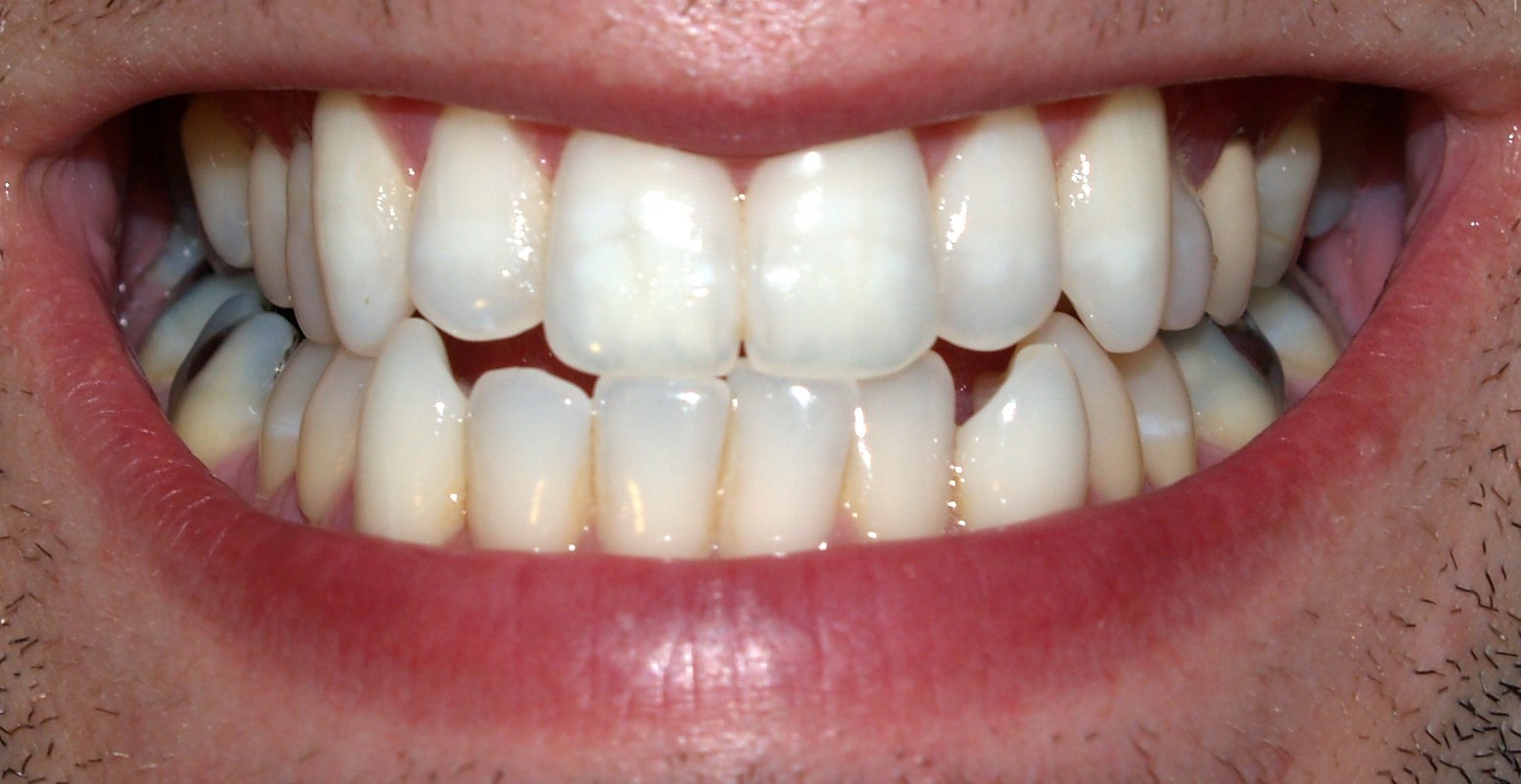
Adult mouth showing full set of permanent teeth
Details
Identifiers
Latindentes permanentes
TA98A05.1.03.077
TA2913
FMA75152
Anatomical terminology

Permanent teeth or adult teeth are the second set of teeth formed in diphyodont mammals. In humans and old world simians, there are thirty-two permanent teeth, consisting of six maxillary and six mandibular molars, four maxillary and four mandibular premolars, two maxillary and two mandibular canines, four maxillary and four mandibular incisors.[1]

Timeline

[edit]

The first permanent tooth usually appears in the mouth at around 5-6 years of age, and the mouth will then be in a transition time with both primary (or deciduous dentition) teeth and permanent teeth during the mixed dentition period until the last primary tooth is lost or shed.[2]

The first of the permanent teeth to erupt are the permanent first molars, right behind the last 'milk' molars of the primary dentition. These first permanent molars are important for the correct development of a permanent dentition. Up to thirteen years of age, 28 of the 32 permanent teeth will appear.

The full permanent dentition is completed much later during the permanent dentition period.[3] The four last permanent teeth, the third molars, usually appear between the ages of 17 and 21 years; they are considered wisdom teeth.[4]

Pathology

[edit]

It is possible to have extra, or "supernumerary", teeth. This phenomenon is called hyperdontia and is often erroneously referred to as "a third set of teeth." These teeth may erupt into the mouth or remain impacted in the bone. Hyperdontia is often associated with syndromes such as cleft lip and cleft palate, tricho-rhino-phalangeal syndrome, cleidocranial dysplasia, and Gardner's syndrome.[5]

See also

[edit]

References

[edit]
[edit]
Revisions and contributorsEdit on WikipediaRead on Wikipedia
from Grokipedia
Permanent teeth, also known as adult or secondary , are the second and final set of teeth in humans that replace the primary (, typically numbering 32 in total—16 in the upper jaw () and 16 in the lower jaw (). These teeth are classified into four main types: incisors (8 total, for cutting food), canines (4 total, for tearing), premolars (8 total, for crushing and grinding), and molars (12 total, including three per quadrant for further grinding, with the third molars often called wisdom teeth). Unlike primary teeth, permanent includes premolars and larger molars, enabling more efficient mastication, supporting speech articulation, and contributing to facial structure and aesthetics. The anatomy of permanent teeth consists of a (the visible enamel-covered portion above the gum line), a embedded in the jawbone, and internal structures including (the supportive layer beneath enamel), pulp (containing nerves and blood vessels), and (covering the root for anchorage via the periodontal ). Enamel, the hardest substance in the composed of about 96% mineralized , protects the crown but cannot regenerate once damaged, while forms the bulk of the tooth and transmits sensations to the pulp. These teeth are designed to last a lifetime, withstanding significant occlusal forces—up to 770 Newtons on molars—though factors like third molar affect about 23% of individuals, potentially reducing the total count. Development of permanent teeth begins in the twentieth week of embryonic life, originating from interactions between the oral ectoderm and neural crest-derived mesenchyme through a process called odontogenesis, which progresses through bud, cap, and bell stages to form tooth germs lingual to the primary teeth. Eruption follows a predictable sequence starting around age 6, with the first permanent molars and lower central incisors emerging first, followed by other incisors, premolars, canines, second molars, and finally third molars between 17 and 21 years. Full replacement of primary teeth typically occurs by age 12-13, though variations in timing can occur due to genetic, nutritional, or health factors, emphasizing the importance of dental monitoring during mixed dentition phases.

Anatomy

Types and Arrangement

Permanent teeth in humans are classified into four main types based on their morphology and function: incisors, canines, premolars, and molars. There are 32 permanent teeth in a complete , comprising 8 incisors (4 maxillary and 4 mandibular), 4 canines (2 maxillary and 2 mandibular), 8 premolars (4 maxillary and 4 mandibular), and 12 molars (6 maxillary and 6 mandibular, including 4 third molars or wisdom teeth). These teeth are arranged in two dental arches: the maxillary (upper) arch and the mandibular (lower) arch, each divided into four quadrants—upper right, upper left, lower right, and lower left—for systematic organization. The universal numbering system, widely used , assigns numbers 1 through 32 to permanent teeth, beginning with the maxillary right third molar as tooth 1 and proceeding clockwise around the arches: teeth 1–8 in the upper right quadrant, 9–16 in the upper left, 17–24 in the lower left, and 25–32 in the lower right. This system facilitates precise identification in clinical and radiographic contexts. Each tooth type is adapted for specific mechanical roles in . Incisors, located at the anterior of each arch, feature thin, chisel-like edges for cutting and biting food into smaller pieces. Canines, positioned lateral to the incisors, have pointed cusps suited for tearing tougher foods. Premolars, situated between canines and molars, possess broader surfaces with two cusps each for crushing and initial grinding. Molars, at the posterior of the arches, have multiple cusps and large occlusal surfaces optimized for thorough grinding and pulverizing of food. Variations in permanent dentition include , or congenital absence of teeth, and supernumerary teeth, or extra teeth beyond the normal complement. is prevalent, affecting approximately 3–10% of the population excluding third molars, with third molars being absent in approximately 23% of individuals due to their distal position and evolutionary trends. Supernumerary teeth occur rarely, with a of 1–3% in the permanent dentition, often as mesiodens (extra incisors) or supplemental forms in other regions. These anomalies can influence occlusion and require orthodontic or surgical intervention.

Microscopic Structure

The microscopic structure of permanent teeth consists of several distinct layers, each with unique histological and material properties that contribute to the tooth's durability and functionality. The outermost layer is enamel, a highly mineralized, acellular tissue primarily composed of crystals arranged in rod-like prisms with interrod spaces, providing a protective covering over the coronal . Beneath the enamel lies , the bulk of the tooth, which forms a tubular matrix produced by odontoblasts and containing approximately 70% mineral content (), 20% organic material, and 10% water, with dentinal tubules housing odontoblastic processes that transmit sensory stimuli. The innermost core is the dental pulp, a soft, vascularized rich in fibroblasts, blood vessels, and nerves, divided into zones including an odontoblastic layer and a central core, which nourishes the surrounding dentin and provides sensory innervation. Covering the root surface is , a mineralized tissue akin to in composition, containing cementocytes within lacunae and Sharpey's fibers that integrate with the periodontal ligament; it anchors the to the surrounding structures. The periodontal ligament, a fibrous composed mainly of and fibroblasts, connects the cementum to the alveolar , facilitating support, , and limited remodeling during orthodontic movement. Permanent tooth roots exhibit varied morphologies depending on tooth type, with incisors and canines typically featuring a single , while premolars often have one or two and molars possess two to three , each containing a system that converges at the —an opening at the apex through which and vessels enter to supply the pulp. This is usually singular per but can vary, with configurations ranging from one to multiple foramina in some cases, ensuring vital tissue continuity. In terms of material properties, enamel exhibits a Mohs of approximately 5, making it the hardest substance in the and comparable to in durability, while has a lower Mohs of about 3, providing elasticity to absorb occlusal forces. Enamel lacks regenerative capacity due to the absence of ameloblasts after , rendering it non-vital and irreparable once damaged, whereas demonstrates limited regeneration through odontoblast-mediated formation of secondary dentin in response to irritation, though this process diminishes with age. The vascular supply to permanent teeth derives from the superior and inferior alveolar arteries, branches of the , which enter via the to perfuse the pulp and surrounding . Innervation is provided by the superior alveolar nerves (from the maxillary division of the , CN V2) for maxillary teeth and the (from the mandibular division, CN V3) for mandibular teeth, forming dental plexuses that supply sensory fibers to the pulp, , and periodontal ligament.

Development

Formation Process

The formation of permanent teeth, known as odontogenesis, is a complex process that begins during fetal development and continues postnatally, involving reciprocal interactions between epithelial and mesenchymal tissues derived from the and , respectively. This process establishes the 32 permanent teeth, which develop lingual to the primary tooth buds around the 20th week of . The dental lamina, formed at 6-7 weeks of , gives rise to both primary and permanent tooth buds, but permanent tooth development initiates later with the bud stage at approximately 20 weeks, where epithelial swellings emerge; followed by the cap stage, marked by the formation of the and early crown shaping; the bell stage, during which cells differentiate into ameloblasts (for enamel) and odontoblasts (for ); the apposition stage, involving and matrix deposition, which begins at birth for the first permanent molars and continues postnatally for others; and the maturation stage, where roots complete formation after crown development, often extending into childhood. These stages differ from primary tooth development, as permanent tooth buds form later and lingually to the primary ones, with initiating at birth for first molars, 3-4 months for central incisors and mandibular lateral incisors, 4-5 months for canines, 10-12 months for maxillary lateral incisors, 1.5-2.5 years for premolars, and 2.5-3 years for second molars, allowing for a sequential replacement of the dentition. Genetic and molecular factors play a critical role in regulating these stages through epithelial-mesenchymal interactions, where signaling pathways such as BMP, FGF, SHH, and WNT mediate induction and patterning. Genes like PAX9 and MSX1, which encode transcription factors, are essential for tooth initiation and agenesis prevention; mutations in these genes lead to hypodontia or oligodontia, particularly affecting permanent molars and premolars. For instance, PAX9 mutations disrupt posterior tooth formation by impairing mesenchymal condensation, while MSX1 influences early bud stage proliferation. Environmental influences can modulate odontogenesis, particularly during . Adequate nutrition, including , supports enamel and mineralization; deficiencies during or early infancy may result in hypoplastic defects in permanent incisors and molars. Similarly, exposure during the apposition and maturation stages enhances remineralization but excessive levels can cause , mottling the enamel of developing permanent teeth.

Eruption Timeline

The eruption of permanent teeth follows a predictable sequence and timeline, beginning around age 6 and typically completing by the early 20s, though individual variations exist. The process starts with the first permanent molars, which emerge before the central incisors, followed by other incisors, premolars, and canines, with second and third molars appearing later; this order ensures proper alignment in the dental arch. In the mandible, the sequence often begins with the first molars (6-7 years), central incisors (6-7 years), lateral incisors (7-8 years), first premolars (10-12 years), second premolars (11-12 years), canines (9-10 years), second molars (11-13 years), and third molars (17-21 years or later). The maxillary sequence is similar but slightly delayed: first molars (6-7 years), central incisors (7-8 years), lateral incisors (8-9 years), first premolars (10-11 years), second premolars (10-12 years), canines (11-12 years), second molars (12-13 years), and third molars (17-21 years or later).
Tooth TypeMandibular Eruption Age (years)Maxillary Eruption Age (years)
First Molar6-76-7
Central 6-77-8
Lateral 7-88-9
First 10-1210-11
Canine9-1011-12
Second 11-1210-12
Second Molar11-1312-13
Third Molar17-21 or later17-21 or later
These timelines represent averages derived from large population studies and may vary by up to a year without clinical concern. Gender influences the timing, with girls generally experiencing eruption approximately 6 months earlier than boys across most tooth types, attributed to differences in hormonal and growth patterns. Ethnic variations also play a role; for instance, individuals of African descent often exhibit earlier eruption compared to those of European or Asian descent, with differences of several months in the onset for molars and incisors. These variations highlight the interplay of genetic and environmental factors in dental development. The mechanism of eruption involves coordinated biological processes: osteoclasts resorb the roots of overlying primary teeth and remodel the alveolar bone above the permanent tooth crown, creating a pathway, while the dental follicle—a connective tissue sac surrounding the tooth—guides the movement by regulating osteoclastic and osteoblastic activity and producing eruption forces through vascular pressure and collagen remodeling. This process ensures the permanent tooth migrates axially through the bone and oral mucosa into occlusion. Delays in eruption, defined as emergence more than two standard deviations beyond the mean (typically over 1-2 years late), can result from local etiologies such as ankylosis, where a primary tooth fuses directly to the alveolar bone, impeding resorption and displacement. Odontogenic cysts, fluid-filled sacs arising from odontogenic epithelium, may also obstruct the eruption path by displacing or compressing adjacent structures.

Functions

Mastication and Digestion

Permanent teeth play a central role in mastication, the mechanical process of breaking down into smaller particles to facilitate . Incisors primarily shear and cut using their sharp incisal edges, while canines puncture and tear tougher items like through their pointed cusps. Premolars crush and grind semi-solid via their occlusal surfaces equipped with two cusps, and molars perform extensive grinding with multiple cusps on their broad occlusal surfaces, enabling efficient pulverization of fibrous or hard materials. The efficiency of mastication depends on proper occlusion, the alignment of upper and lower teeth during biting. Class I occlusion represents the normal (orthognathic) relationship, where the mesiobuccal cusp of the aligns with the buccal groove of the mandibular first molar, allowing ideal intercuspation for optimal bite force distribution and effectiveness. Class II (retrognathic) occlusion features a distal mandibular position relative to the , often leading to overjet and reduced grinding efficiency, while Class III (prognathic) involves a mesial mandibular shift, potentially causing uneven and impaired . Bite force varies across tooth types and individuals, with molars generating the highest —averaging 120-150 psi—to form a cohesive bolus suitable for , influenced by factors such as age (decreasing after maturity) and (typically 20-30% higher in males). This mechanical breakdown by teeth initiates , increasing surface area for enzymatic action in the stomach, where proteins and other nutrients are further degraded; inadequate mastication from , such as reduced grinding in Class II or III cases, can result in larger particles reaching the gut and straining digestive processes. Human permanent teeth evolved from primate dentition, adapting a generalized omnivorous pattern with reduced tooth size, thick enamel, and bunodont molars to process diverse foods including and , unlike the more specialized shearing in carnivorous or extensive grinding in folivores. This shift, evident from early hominins like around 4-2 million years ago, supported dietary flexibility through scavenging and tool use, minimizing chewing demands while maintaining versatility for an energy-dense omnivorous diet.

Secondary Roles

Permanent teeth play a crucial role in speech articulation by serving as stable landmarks for the and , particularly in producing sounds such as /s/, /z/, /f/, /v/, /θ/, and affricates like /tʃ/ and /dʒ/, where the positioning of the anterior incisors is essential for proper airflow and sound formation. The absence or misalignment of these teeth can lead to articulation errors, such as lisping, which alters placement and air escape during . For instance, missing maxillary anterior teeth disrupts the precise contact needed for consonants, impacting overall speech intelligibility. Beyond , permanent teeth contribute significantly to and psychological , as their visible alignment and coloration influence perceptions of attractiveness and . A straight, white enhances , which correlates with higher and reduced psychosocial distress among individuals. Cultural standards, particularly in , promote ideals of aligned and bright teeth as markers of and , shaping societal expectations and personal confidence. Permanent teeth also provide sensory feedback through mediated by mechanoreceptors in the periodontal ligaments, enabling awareness of bite force and positioning during various activities. These ligaments transmit tactile information to the , facilitating precise control over oral movements and preventing excessive loading on dental structures. In terms of protection, permanent teeth support the overall contour by maintaining alveolar bone integrity. triggers in the , leading to facial sagging and a collapsed appearance as the underlying structure diminishes without dental stimulation.

Health and Maintenance

Oral Hygiene Practices

Maintaining the health of permanent teeth involves consistent daily routines to remove plaque and prevent decay. The (ADA) recommends brushing twice a day for two minutes using a soft-bristled and , which strengthens enamel and inhibits bacterial growth. The modified Bass technique is a recommended method for effective cleaning, particularly at the gumline: position the brush at a 45-degree angle to the teeth, apply gentle pressure, and use short, vibrating strokes to dislodge debris without damaging or enamel. Complementing brushing, flossing once daily targets interdental spaces to eliminate food particles and plaque that brushing misses, thereby reducing the risk of cavities and . Tongue cleaning, performed daily with a dedicated scraper or the toothbrush itself, removes bacterial buildup on the tongue's surface, which can otherwise contribute to halitosis and overall oral bacterial load. Dietary choices significantly influence permanent tooth integrity by affecting enamel demineralization. Limiting consumption of sugary and acidic foods and beverages prevents the formation of enamel-eroding acids by oral , a primary cause of decay. Incorporating calcium-rich foods, such as and leafy greens, promotes remineralization, helping to repair early enamel damage and maintain tooth strength. Professional dental care supports home efforts by addressing areas beyond daily reach. Routine checkups and cleanings, ideally every six months, allow for tartar removal and early intervention, tailored to individual risk factors. For permanent molars, which erupt vulnerable to decay due to their grooved surfaces, dental sealants—a thin, protective coating—are applied post-eruption to seal fissures and reduce the risk of cavities by about 80% in the first two years. A range of tools can optimize hygiene outcomes for permanent teeth. Manual and electric toothbrushes both effectively reduce plaque, though electric models often provide enhanced removal through oscillating or sonic action, benefiting those with dexterity challenges. Prescription antimicrobial mouthwashes containing serve as an adjunct, significantly lowering plaque and when used alongside mechanical cleaning. Interdental devices like water flossers, endorsed by the ADA for safety and efficacy, deliver pressurized water to clean between teeth and below the gumline, offering a convenient alternative for thorough plaque disruption. Special consideration is needed for third molars (wisdom teeth), which often have limited access due to their posterior position. Emphasize targeted brushing and flossing around these teeth to avoid food impaction and bacterial buildup, with regular dental monitoring to ensure accessibility.

Common Pathologies

Dental caries, also known as , represents one of the most prevalent pathologies affecting permanent teeth, resulting from the metabolic activity of cariogenic bacteria such as within . These bacteria ferment dietary sugars to produce acids that lower the oral pH, leading to demineralization of the enamel surface. If unchecked, this process initiates a cascade of tissue breakdown, beginning with subsurface enamel demineralization visible as a white spot , progressing to cavitation upon enamel breach, exposure of underlying , and eventual pulp involvement that can cause irreversible or formation. Globally, untreated dental caries in permanent teeth affects approximately 2.4 billion people as of 2021, underscoring its status as a major burden according to analyses of the . Recent reports as of 2025 indicate persistent high prevalence, with slight increases projected due to demographic changes. Periodontal disease encompasses inflammatory conditions of the supporting structures around permanent teeth, progressing from —a reversible gingival characterized by redness, swelling, and due to plaque accumulation—to periodontitis, an advanced stage involving irreversible destruction of the periodontal ligament and alveolar bone. In periodontitis, chronic bacterial and host immune responses lead to progressive pocket formation, , and eventual or loss if untreated. Key risk factors include , which impairs immune function, reduces gingival blood flow, and exacerbates disease severity by up to twofold compared to non-smokers. Severe periodontitis affected over 1 billion people worldwide as of 2021, with prevalence increasing with age and tobacco use; projections estimate over 1.5 billion cases by 2050. Tooth wear involves the progressive loss of hard dental tissues in permanent teeth through non-carious mechanisms, classified into attrition, abrasion, and erosion, each contributing to altered tooth morphology and potential sensitivity or fracture risk. Attrition occurs via direct tooth-on-tooth contact during parafunctional habits like bruxism, resulting in flattened occlusal surfaces and accelerated wear on molars. Abrasion stems from external mechanical forces, such as aggressive toothbrushing or habitual use of abrasive substances, often manifesting as V-shaped notches near the gingival margin. Erosion, conversely, is a chemical process driven by exposure to acidic environments, including frequent consumption of acidic diets rich in citrus fruits, sodas, or carbonated beverages, which dissolve enamel minerals and expose dentin. These forms of wear are increasingly common, with prevalence rates exceeding 50% in adults over 50, often multifactorial and linked to lifestyle factors like diet and stress-induced bruxism. Fractures and trauma to permanent teeth commonly arise from acute impacts, particularly in and accidents, leading to structural damage that compromises tooth integrity and function. The classification system delineates fractures based on depth: Class I involves only enamel fracture with rough edges but no sensitivity; Class II extends into , exposing yellowish layers and causing mild pain to stimuli; and Class III reaches the pulp, resulting in hemorrhage, severe pain, and risk of . Such injuries are prevalent, accounting for 20-30% of all dental traumas, with sports activities (e.g., contact sports like football) and vehicular or pedestrian accidents as leading causes, often affecting due to their anterior positioning. Immediate management is critical to preserve vitality, as untreated fractures can progress to pulp . Malocclusion, or misalignment of permanent teeth, exerts functional impacts through conditions like crowding and , disrupting normal occlusion and biomechanics. Crowding involves overlapping or rotated teeth that hinder effective mastication, increase plaque retention, and elevate risks for caries and periodontal issues by impeding . An , where upper incisors excessively overlap lowers, can lead to uneven occlusal wear, trauma to palatal tissues, and inefficient forces that strain the . These misalignments collectively impair bite efficiency and may contribute to long-term masticatory disadvantages, though adaptation varies individually.

Replacement and Interventions

Prosthetic Options

Prosthetic options provide artificial replacements for lost or damaged permanent teeth, primarily addressing edentulism resulting from decay or trauma. These include fixed prosthetics, which are permanently attached, and removable prosthetics, which can be taken out for cleaning. Fixed options like crowns and bridges restore single teeth or span gaps using adjacent teeth for support, while removable replace partial or full arches. Fixed prosthetics encompass crowns, which cover and protect a damaged single permanent , and bridges, which replace one or more missing teeth by anchoring to adjacent healthy teeth. Crowns can be porcelain-fused-to-metal (PFM), combining a metal substructure for strength with for , or all-, such as zirconia or for superior natural appearance. Bridges function similarly, with PFM or zirconia frameworks spanning the edentulous space. These are indicated for patients with sufficient healthy teeth to restore masticatory function and occlusion. Advantages include high stability and , enabling effective comparable to natural teeth, though disadvantages involve irreversible preparation of supporting teeth and potential complications like ceramic chipping. Removable prosthetics include partial dentures, which replace several missing teeth using an acrylic base with metal clasps to attach to remaining teeth, and full dentures, which cover the entire arch after complete . Partial dentures are suitable for scattered edentulism, while full dentures address total arch absence. They offer advantages such as lower cost and minimal invasiveness compared to fixed options, facilitating easier . However, disadvantages include reduced stability, potential gum irritation, and accelerated over time due to lack of stimulation from natural roots. Key materials in prosthetics prioritize to minimize allergic reactions and promote tissue health, with used for substructures due to its corrosion resistance and osseocompatibility, and zirconia for aesthetic frameworks owing to its high strength ( 900–1400 MPa) and low . Longevity varies: PFM crowns exhibit 97% survival at 10 years, all-ceramic zirconia crowns 98.5% at 5 years, and removable average 8–10 years with proper maintenance. Historically, prosthetic dentistry evolved from 19th-century vulcanite dentures, a hardened rubber invented by Charles Goodyear in 1839 for affordable, moldable bases, to 20th-century acrylic resins like polymethyl methacrylate for improved stability. Modern advancements feature computer-aided design and manufacturing (CAD/CAM) systems, enabling precise digital fabrication of crowns, bridges, and dentures since the late 20th century, enhancing fit and reducing chair time.

Surgical Procedures

Surgical procedures for permanent teeth encompass a range of operative interventions aimed at addressing severe dental issues that cannot be resolved through conservative treatments, such as advanced decay, , or structural misalignment. These procedures are typically performed by oral surgeons or endodontists under local, , or general to ensure patient comfort and safety. Tooth extractions involve the complete removal of a permanent from its socket and are indicated for conditions like severe caries, , or orthodontic needs where the 's position impedes alignment. Simple extractions are used for erupted teeth that are visible and accessible, involving the use of and elevators without incisions, and are suitable for most or non-impacted molars. Surgical extractions, in contrast, are required for impacted teeth, such as third molars (wisdom teeth), where a flap is raised in tissue, may be removed, and the is often sectioned into pieces for removal. These procedures carry risks including at the site or dry socket, a painful condition where the blood clot fails to form or dislodges, exposing and delaying , which occurs in 2-5% of cases, more commonly after lower third molar extractions. Endodontic surgery, particularly therapy, preserves the tooth structure by addressing irreversible or apical infections in permanent teeth. The procedure entails accessing the pulp chamber, removing the infected or necrotic pulp tissue, cleaning and shaping the canals with irrigants, and sealing them with biocompatible materials like to prevent reinfection. Success rates for primary treatments exceed 90%, with long-term tooth survival around 85-97% when followed by appropriate restoration. Dental implants provide a surgical replacement for missing permanent teeth through the placement of posts into the jawbone, which undergo —a where fuses directly to the implant surface over 3-6 months, creating a stable foundation. Single-tooth implants involve one post supporting a , while full-arch solutions like use four to six implants to anchor a complete , ideal for edentulous patients. Overall success rates for osseointegrated implants range from 95-98%, influenced by factors such as bone quality and . Orthognathic surgery corrects severe skeletal malocclusions in permanent dentition by realigning the jaws through osteotomies, often combined with orthodontics for optimal bite function and aesthetics. Procedures may involve Le Fort I maxillary advancement or bilateral sagittal split osteotomy of the mandible, performed under general anesthesia. Recovery typically spans 6-12 weeks, with initial swelling and a soft-liquid diet; while wiring was common historically, modern techniques use rigid fixation plates, allowing earlier mobility. Common complications across these procedures include postoperative , managed with antibiotics, and adverse reactions to , where local anesthetics numb the area for minor surgeries, while general anesthesia is reserved for extensive cases like due to its deeper sedation but higher risk profile. Dry socket remains a notable risk post-extraction, treatable with medicated dressings, while implant failures from poor affect less than 5% of cases.

References

Add your contribution
Related Hubs
User Avatar
No comments yet.