


Community hub
Recent from talks
Contribute something
Nothing was collected or created yet.
Peshkopi
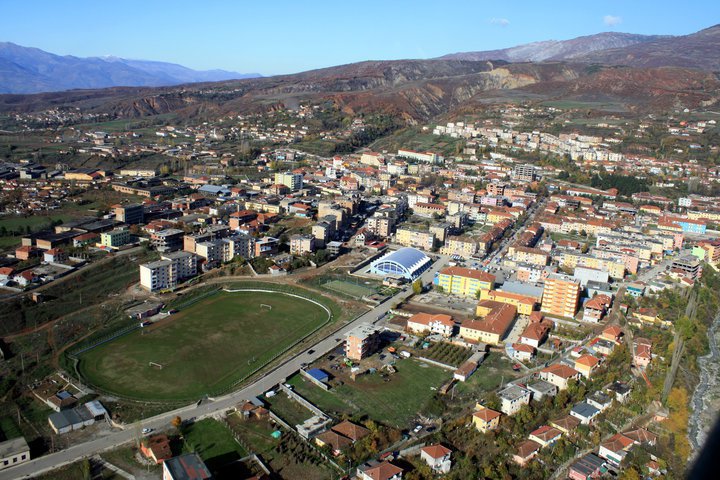
View on WikipediaPeshkopi (Albanian pronunciation: [pɛʃkɔpi]; Albanian definite form: Peshkopia) is a town located in the mountainous regions of northeastern Albania, in Dibër County. It is the capital of both the county (Albanian: qark) and the district (Albanian: rreth) of Dibër, and is the only county regional capital in Albania which does not share its name with its county. The population as of the 2023 census is 14,710.[1]
Key Information


.svg)


| Year | Pop. | ±% |
|---|---|---|
| 1950 | 1,427 | — |
| 1960 | 3,514 | +146.3% |
| 1969 | 5,600 | +59.4% |
| 1979 | 7,800 | +39.3% |
| 1989 | 12,320 | +57.9% |
| 2001 | 14,017 | +13.8% |
| 2011 | 13,251 | −5.5% |
| 2023 | 14,710 | +11.0% |
| Source: [2][3][1] | ||
Peshkopi lies east of the Black Drin river, about 187 kilometres (116 mi) northeast of Tirana, the capital of Albania, and 20 kilometres (12 mi) from the Macedonian border. The town sits 651 metres (2,136 ft) above sea level.
Known for its thermal waters, year-round agriculture, and natural beauty, Peshkopi is also developing a reputation as tourism destination for outdoor activities such as hiking, camping, mountain biking, and rock climbing. The third tallest mountain in the Balkans, Mount Korabi, and the birthplace of Albania's national hero, Gjerg Kastrioti, are nearby heritages sites. The district also contains large mineral ore deposits such as chromium, sulfur, and marble. It is also an important industrial center in Albania, producing many agricultural products for Albania.
History
[edit]The name of Peshkopi is derived from the word peshkop meaning bishop in Albanian and from Episkopè in Greek. Bulgarian maps of the eleventh century [citation needed] show the town under the name Presolengrad. The region of Dibër was subsumed under the Archbishopric of Ohrid in 1019, and one year later received the status of an episcopate with its center in the Bulke ward of Peshkopi, located in what is now the neighborhood of Dobrovë. The central church of the Dibër Episcopate was that of St. Stephen (Albanian: Kisha e Shqefnit). The seat of the Episcopate would later be relocated, but the town of Peshkopi retained its name.[4] Peshkopi is referenced as early as the fifteenth century under the name Peskopia.[5]
The region today known as Dibër was inhabited in pre-Christian times by the Illyrian tribe known to the Romans as Penestae, Πενέσται in Ancient Greek (Albanian: penestë).[6]
By the beginning of the sixteenth century, the Ottoman Empire had completed its conquest of Albania.[7] Under the rule of the Ottoman Empire, Peshkopi (then Debre-i Zir, which meant "Lower Debre" in Persian) was a small market town, overshadowed by the larger and more flamboyant Debar (Albanian: Dibra e Madhe, "Greater Dibër"), which today lies just over the Macedonian border. The population of Peshkopi was almost completely Muslim by 1583.[citation needed] In 1873 an Ottoman barracks was built in Peshkopi, housing up to 8,000 soldiers.[4]
The Dibër region, including Peshkopi, took part in the uprisings against Ottoman authority that were occurring throughout Albania in the early 1910s. Albanian armed bands (Albanian: çeta) captured Peshkopi from the Ottomans on August 16, 1912.[8]
In the aftermath of the breakup of the Ottoman Empire, a Serbian army occupied Dibër and entered Peshkopi in early December 1912. Albanian forces retook the city on September 20, 1913.[9] Bulgarian army soldiers invaded Peshkopi on January 1, 1916. The Austro-Hungarian Empire, an ally of Bulgaria, brought an army to Peshkopi on April 12, 1916, and engaged in punitive house-burnings and executions throughout the region in an attempt to quell local resistance. The Bulgarians and Austro-Hungarians departed the area in September 1918.[10]
Italian forces invaded Albania in 1939, reaching Peshkopi on April 15.[11] Albanian Communist partisans retook Peshkopi on September 9, 1943. The following October, the partisans defeated Balli Kombëtar forces in an armed battle for control of the city. In July 1944, German forces occupied the city, but were expelled later that same month. Fighting continued in the Dibër region until early September, leaving the Communist-dominated National Liberation Army (Albanian: Ushtria Nacionalçlirimtare) in control.[12]
Geography
[edit]Peshkopi is located in northeastern Albania, in the Dibër County. It is situated in the valley of the Drin river, at the foot of the Korab mountain range. The town is the administrative center of the district and has a population of around 14,000 people. The Korab mountain range, which is one of the highest ranges in the Balkans, is located to the east of the town. The Drin River, which is the longest river in the country, flows through the valley and provides water for irrigation and hydroelectric power generation. The valley is also known for its fertile soil and is an important agricultural area, producing crops such as corn, wheat, and vegetables.
Climate
[edit]| Climate data for Peshkopi | |||||||||||||
|---|---|---|---|---|---|---|---|---|---|---|---|---|---|
| Month | Jan | Feb | Mar | Apr | May | Jun | Jul | Aug | Sep | Oct | Nov | Dec | Year |
| Record high °C (°F) | 19.4 (66.9) |
22.0 (71.6) |
27.0 (80.6) |
30.0 (86.0) |
34.0 (93.2) |
37.8 (100.0) |
40.4 (104.7) |
41.4 (106.5) |
36.0 (96.8) |
32.4 (90.3) |
26.0 (78.8) |
21.2 (70.2) |
41.4 (106.5) |
| Mean daily maximum °C (°F) | 6.1 (43.0) |
10.0 (50.0) |
13.3 (55.9) |
18.1 (64.6) |
21.9 (71.4) |
27.0 (80.6) |
31.2 (88.2) |
31.0 (87.8) |
26.0 (78.8) |
20.8 (69.4) |
13.1 (55.6) |
7.4 (45.3) |
18.8 (65.9) |
| Daily mean °C (°F) | 1.9 (35.4) |
4.9 (40.8) |
7.8 (46.0) |
12.1 (53.8) |
16.0 (60.8) |
20.6 (69.1) |
23.5 (74.3) |
23.7 (74.7) |
19.1 (66.4) |
15.3 (59.5) |
8.4 (47.1) |
3.2 (37.8) |
13.0 (55.5) |
| Mean daily minimum °C (°F) | −2.4 (27.7) |
−0.2 (31.6) |
2.4 (36.3) |
6.0 (42.8) |
10.7 (51.3) |
14.2 (57.6) |
15.8 (60.4) |
16.3 (61.3) |
12.2 (54.0) |
9.8 (49.6) |
3.7 (38.7) |
−1.0 (30.2) |
7.3 (45.1) |
| Record low °C (°F) | −18.0 (−0.4) |
−16.0 (3.2) |
−10.0 (14.0) |
−6.0 (21.2) |
0.0 (32.0) |
5.2 (41.4) |
7.8 (46.0) |
8.8 (47.8) |
0.0 (32.0) |
−3.0 (26.6) |
−8.6 (16.5) |
−17.0 (1.4) |
−18.0 (−0.4) |
| Average precipitation mm (inches) | 69.9 (2.75) |
40.9 (1.61) |
54.1 (2.13) |
43.9 (1.73) |
52.9 (2.08) |
21.1 (0.83) |
16.3 (0.64) |
11.5 (0.45) |
43.4 (1.71) |
49.0 (1.93) |
80.8 (3.18) |
67.2 (2.65) |
551 (21.69) |
| Average precipitation days (≥ 0.1 mm) | 12.1 | 9.6 | 11.1 | 10.3 | 11.3 | 6.9 | 4.6 | 4.4 | 8.7 | 7.2 | 11.1 | 10.3 | 107.6 |
| Average snowy days | 5.1 | 4.2 | 2.8 | 1.2 | 0.1 | 0 | 0 | 0 | 0 | 0.1 | 1.1 | 2.6 | 17.2 |
| Source: MeteoManz (May 2011- June 2025)[13] | |||||||||||||
Education
[edit]Peshkopi has a number of primary and secondary schools, which provide education to children in the town and surrounding areas. The schools offer a range of subjects including math, science, language, and social studies. Many of them also have extracurricular activities such as sports, music, and art programs. Overall, education is highly valued in Peshkopi and the government is continuously investing in the development of the educational system in the town.
Tertiary
[edit]Peshkopi briefly had a branch of Aleksandër Moisiu University. It was closed in 2017 by order of the national Ministry of Education for alleged failure to meet standards.
Secondary (grades 10-12)
[edit]- Said Najdeni High School
- Nazmi Rushiti Professional School
Elementary/middle (grades 1-9)
[edit]- Selim Alliu
- Demir Gashi
Tourism
[edit]
The main form of tourism in the region is mountain tourism, due to the hilly terrain and extensive forest. The district of Dibra is home to two of the thirteen national parks in Albania, Lurë National Park, and Korab-Koritnik Nature Park, which offer a variety of outdoor activities including climbing, walking, skiing, trekking, picnics, hunting, kayaking, etc.
The museum, located beside the general secondary school, houses a collection of local costumes, carpets, kitchen equipment and filigree jewelry, as well as a number of models of local architecture.
Elez Isufi Boulevard is a pedestrian-only street in the middle of Peshkopi lined with linden (Albanian: bli) trees. The street is paved with stone from non-native stone from Berat.[14]
Thermal mineral water springs and sulphur baths (Albanian: llixha) in the vicinity of Peshkopi are a draw for seasonal tourism, primarily from within Albania, but also to a lesser extent from neighboring countries. They are reputed to alleviate some health issues.[15] The baths are located a short distance east of the city, upstream along the creek which runs through the middle of Peshkopi.
Sports
[edit]The main sport played in Peshkopi is football. The city's main team is KF Korabi Peshkopi and its home stadium is Korabi Stadium with a capacity of 6,000 spectators. The multidisciplinary club's home arena is the Bashkim Lala Sports Palace, which has a capacity of over 2,000 spectators. KF Korabi currently plays in the Albanian First Division. They were runners-up in the 1961, 2015–16 Albanian First Division going in to the Albanian Superliga.
Transportation
[edit]
Peshkopi is an important transportation hub, located at the crossroads of several important roads connecting Albania with Kosovo and North Macedonia. The town is served by the Rinas Mother Teresa International Airport in the capital city of Tirana, which is located around 200 km to the west of Peshkopi. There are also regular bus services connecting the town with Tirana and Durres.
Bus
[edit]Peshkopi is served by bus lines to and from Tirana and Durrës. Buses typically depart in the morning on a fixed schedule. There are also minibuses and vans (Albanian: furgona) serving a wider set of destinations, which depart when sufficiently full. Minibuses to Tirana and Durrës are generally somewhat more expensive than the equivalent bus route.
Highways
[edit]The main road to Peshkopi is SH6 (State Road 6). A new highway called the Arbër Highway (Albanian: Rruga e Arbërit) is currently under construction and is expected to be completed in Spring 2023. The 200 km road will link Tirana with Debar, North Macedonia and will connect with SH6.
Train
[edit]There is no train service to Peshkopi.
Notable people
[edit]- Gëzim Alpion - Academic
- Cen Elezi - Bayraktar of Dibra
- Bashkim Gazidede- Politician
- Elez Isufi - Nationalist figure
- Denisa Kola - Miss Albania 2003
- Gentjan Manuka - Footballer
- Elvis Prençi - Footballer
- Symir Zuna - WWII fighter
- Qazim Laçi - Footballer
- Hasan Çipuri - Academic
- Qazim Hoxha - Military Official
References
[edit]- ^ a b c "Census of Population and Housing". Institute of Statistics Albania.
- ^ "Cities of Albania".
- ^ "Albania: All places/communes".
- ^ a b Moisi Murra (January 2010). "Qyteti i Peshkopisë nga lashtësia në ditët tona" [The City of Peshkopi from Antiquity to the Present Day] (PDF). Rruga e Arbërit (in Albanian). p. 8. Archived (PDF) from the original on 2011-07-10. Retrieved 2010-02-15.
- ^ Sinani. p. 248.
{{cite book}}: Missing or empty|title=(help) - ^ Sinani, Rakip (2005). Dibra dhe dibranët në faqet e historisë [Dibër and the Dibrans in the Pages of History] (in Albanian). Tiranë: KTISTALINA-KH. p. 20. ISBN 99943-625-8-5.
- ^ Sinani. p. 39.
{{cite book}}: Missing or empty|title=(help) - ^ Sinani. p. 138.
{{cite book}}: Missing or empty|title=(help). - ^ Sinani. pp. 150–160.
{{cite book}}: Missing or empty|title=(help) - ^ Sinani. pp. 168–170.
{{cite book}}: Missing or empty|title=(help) - ^ "Gazeta Shqiptare". 1939-04-16. Cited in Sinani. p. 209.
{{cite book}}: Missing or empty|title=(help) - ^ Sinani. pp. 221–240.
{{cite book}}: Missing or empty|title=(help) - ^ "Peshkopi Data by months". Meteomanz. Retrieved 8 July 2025.
- ^ admin (2021-07-09). ""Zhvishet" bulevardi "Elez Isufi" në Peshkopi, pllakat dëmtohen shumë shpejt pas vendosjes". Mat Televizion. Retrieved 2023-01-16.
- ^ "Blue Albania - We help you to explore Albania... - Portali me i madh turistik Shqiptar". BlueAlbania. Archived from the original on 21 July 2017. Retrieved 23 April 2018.

External links
[edit]Cities and towns in Albania share the status of a geographic unit which makes up a municipality. | |
| (74) |
|
Subdivisions of Dibër County | ||
|---|---|---|
County seat: Peshkopi | ||
| Municipality of Bulqizë |  | |
| Municipality of Dibër | ||
| Municipality of Klos | ||
| Municipality of Mat | ||
Subdivisions of Dibër municipality | ||
|---|---|---|
Municipal seat: Peshkopi | ||
| Administrative unit of Arras |  | |
| Administrative unit of Fushë-Çidhën |
| |
| Administrative unit of Kala e Dodës |
| |
| Administrative unit of Kastriot | ||
| Administrative unit of Lurë |
| |
| Administrative unit of Luzni |
| |
| Administrative unit of Maqellarë |
| |
| Administrative unit of Melan |
| |
| Administrative unit of Muhurr |
| |
| Administrative unit of Peshkopi | ||
| Administrative unit of Selishtë |
| |
| Administrative unit of Sllovë |
| |
| Administrative unit of Tomin |
| |
| Administrative unit of Zall-Dardhë |
| |
| Administrative unit of Zall-Reç |
| |
Peshkopi
View on GrokipediaPeshkopi is a town in northeastern Albania serving as the administrative center of Dibër County and Dibër Municipality.[1] As of the 2023 population and housing census, the municipal unit has a population of 14,710.[2] Located east of the Black Drin River at an elevation of 651 meters (2,136 ft), it is positioned approximately 187 kilometers (116 mi) northeast of Tirana and 20 kilometers (12 mi) from the border with North Macedonia.[3] The town functions as a regional hub in a mountainous area, with an economy centered on agriculture, including livestock and forestry, supplemented by potential in tourism from nearby thermal springs and access to sites like Lura National Park.[4] Peshkopi hosts Albania's prominent folklore festival and benefits from natural resources that support sustainable development, though the region faces challenges typical of rural Albanian areas such as emigration and infrastructure limitations.[1][5]
History
Origins and Ottoman Period
The name Peshkopi derives from the Albanian word peshkop, meaning "bishop," with etymological roots in the Greek episkopḗ (επισκοπή), denoting an overseer or ecclesiastical supervisor, indicating possible medieval ties to a local bishopric or administrative oversight in the Dibër region.[6][7] This linguistic origin suggests early settlement patterns influenced by Byzantine Christian structures, though verifiable pre-Ottoman records for the specific site remain sparse, prioritizing administrative rather than folklore-based interpretations of tribal origins. The Dibër region, including what became Peshkopi, was incorporated into the Ottoman Empire around 1395 following the conquest of local principalities, establishing the Sanjak of Dibra as an administrative unit by the early 15th century.[8] Ottoman tax registers (defters) from 1467 document the kaza of Dibra, encompassing Peshkopi as a subdivision known as Debre-i Zir ("Lower Dibra" in Ottoman Turkish), distinguishing it from the larger Upper Dibra centered at Debar. These records portray it as a modest nahiye with limited households engaged primarily in pastoralism, reflecting its role as a peripheral settlement in the sanjak's fiscal and military organization. Peshkopi's development under Ottoman rule centered on its valley location, serving as a secondary trade node for livestock, timber, and grains along routes linking the Albanian interior to Ottoman provinces in present-day North Macedonia and Kosovo, though overshadowed by Debar's prominence until the 19th century.[9] Population estimates from later Ottoman censuses indicate slow growth, with the area supporting a mixed economy of herding and small-scale commerce amid the rugged topography, which limited large-scale urbanization.[10]19th-20th Century Developments
In the late 19th century, as Ottoman authority waned in the Balkans, the Dibër region, with Peshkopi as an emerging administrative hub, experienced heightened tensions between central imperial control and local notable families enforcing customary law, or kanun. Feuds and blood vendettas persisted amid efforts to integrate the area into reformed Ottoman provincial structures, fostering a reliance on tribal alliances that shaped regional governance.[11] Albanian villages in the Dibër Valley, including those near Peshkopi, gained repute for artisanal wood carving, reflecting economic adaptation under Ottoman rule while cultural resistance to assimilation grew. These dynamics contributed to broader Albanian discontent, setting the stage for nationalist stirrings. The Dibër region's involvement intensified during the Albanian uprising of 1912, a pivotal revolt against Ottoman reforms perceived as favoring Slavic populations. By late April 1912, insurgent bands organized in Dibër under leaders like Basri Bey Matraku, extending the rebellion from northern Albania and capturing key positions, which pressured Ottoman forces and aided the national push for independence declared on November 28, 1912, in Vlorë.[12] Peshkopi served as a logistical base amid these operations, highlighting Dibër's strategic mountainous terrain in disrupting Ottoman supply lines and bolstering the Assembly of Vlorë's claims. Local chieftains, drawing on inherited Ottoman-era authority, balanced support for autonomy with pragmatic alliances, influencing post-independence border negotiations where Dibër's Albanian-majority areas resisted partition to neighboring states.[13] In the interwar period, Peshkopi functioned as the center of Dibër district under the centralizing regime of Ahmet Zogu, who garnered strong backing from local leaders due to his northern roots and suppression of rival factions. Zogu's rise from Mat—adjacent to Dibër—enabled him to navigate tribal structures, appointing loyalists and curbing feuds through state enforcement of kanun variants, though de facto autonomy endured in remote highlands.[13] By 1925, as Zogu consolidated power en route to declaring himself king in 1928, Peshkopi benefited from modest infrastructure initiatives, yet retained its character as a tribal stronghold amid Albania's fragile statehood. Italian forces occupied Albania, including Peshkopi, following the April 7, 1939, invasion, which met scant organized resistance due to King Zog's exile and internal divisions. In Dibër's rugged terrain, anti-occupation activities emerged by 1941, with mountain bands conducting sabotage against Italian garrisons, though fragmented into nationalist groups like Balli Kombëtar and emerging communist partisans, leading to internecine clashes over control.[14] Peshkopi's proximity to Yugoslav borders amplified cross-border skirmishes, as local fighters targeted Italian supply routes until the 1943 capitulation shifted occupation to German forces, exacerbating factional violence without unified resistance.Communist Era and Industrialization
During the communist regime under Enver Hoxha, which consolidated power after 1944, the Dibër region encompassing Peshkopi underwent state-directed industrialization emphasizing mineral extraction to support Albania's self-reliance doctrine. Chrome mining emerged as a cornerstone, with operations at Bulqizë—located approximately 30 kilometers from Peshkopi—commencing in 1948 and expanding through the 1950s as part of national reconstruction efforts.[15] This development positioned Albania among the world's leading chrome producers, with annual chromite output surpassing 1 million metric tons by the 1980s, much of it sourced from Dibër's deposits.[16] However, the regime's prioritization of heavy industry over agricultural or infrastructural balance strained local resources, as mining quotas were enforced through centralized planning that disregarded geological and logistical constraints. The mining boom attracted laborers to the region, contributing to modest population growth amid Albania's overall demographic expansion from 1.1 million in 1945 to 3.2 million by 1989, though Dibër's remote terrain limited large-scale urbanization around Peshkopi itself.[17] Labor conditions were severe, often involving forced work assignments and political purges, mirroring broader patterns where mining sites served as sites of repression; inefficiencies arose from obsolete equipment and isolation from international trade after breaks with the Soviet Union in 1961 and China in 1978. [18] Production shortfalls were common, as evidenced by national trends where planned targets for minerals frequently outpaced feasible extraction, leading to resource exhaustion without proportional economic gains—chrome yields, while exported for hard currency, failed to translate into local prosperity due to reinvestment in bunkers and ideological projects rather than worker welfare.[19] Agricultural collectivization, enforced nationwide from the late 1940s and completed by 1967, devastated private farming in Peshkopi's rural hinterlands, converting individual plots into state cooperatives that prioritized quotas over sustainable yields. Output stagnated at subsistence levels, with initial post-war famines in the early 1950s underscoring the policy's causal failures: dispossession of peasants reduced incentives, while rigid central directives ignored local soil and climate variations in Dibër's highlands, resulting in chronic food shortages that exacerbated poverty.[20] [21] Isolationism compounded these issues by barring modern inputs like fertilizers or machinery, fostering a command economy where empirical discrepancies between quotas and harvests—often 20-30% shortfalls in grains—revealed systemic overoptimism untethered from productive capacities.[22] Unregulated mining practices inflicted lasting environmental damage, with tailings from chrome processing contaminating Dibër's waterways and soils, a pattern consistent with communist-era operations lacking mitigation measures.[23] Human costs were profound, including health hazards from dust exposure and accidents in under-equipped shafts, alongside broader repression that silenced dissent and enforced ideological conformity, ultimately yielding industrialization that boosted raw output but entrenched dependency and underdevelopment.[18][21]Post-1990s Transition and Depopulation
Following the collapse of Albania's communist regime in 1991, Peshkopi experienced the rapid dissolution of state-owned enterprises that had dominated the local economy, including chromium mining and light industry, leading to acute unemployment as privatizations faltered amid weak regulatory frameworks and corruption.[24] This structural shock contributed to economic stagnation in Dibër County, where reliance on subsidized heavy industry left communities vulnerable during the shift to market-oriented policies.[25] The national crisis intensified in 1997 when pyramid investment schemes, which had absorbed household savings equivalent to roughly half of Albania's GDP, imploded due to their unsustainable Ponzi-like structure and inadequate government oversight despite warnings from institutions like the IMF.[24] In northern regions including Dibër, participation in these schemes—often promoted through political ties—resulted in widespread financial ruin, sparking local unrest, protests, and looting of armories as public trust in institutions eroded; the anarchy claimed over 2,000 lives nationwide and prompted international intervention.[26] Policy failures, such as the government's tolerance of unregistered financial entities amid post-communist liberalization, directly exacerbated the spillover effects, deepening poverty and accelerating the exodus from peripheral areas like Peshkopi.[27] Subsequent market reforms aimed to foster private enterprise, but chronic unemployment—reaching double digits regionally—drove sustained youth emigration, primarily to Italy and Greece, where bilateral labor agreements facilitated seasonal and irregular flows starting in the mid-1990s.[28] Albania's overall outflows post-1990 totaled over 1 million people, with northern counties like Dibër contributing disproportionately due to limited local opportunities; youth aged 15-29 faced unemployment rates exceeding 20% into the 2020s, prompting family-supported migration as a survival strategy.[29][28] Census data illustrates the demographic toll: Peshkopi's municipal unit population stood at 13,251 in 2011 but reached 14,710 by the 2023 census, a nominal increase that belies net migration losses, as declining birth rates (from 3 children per woman in 1990 to 1.4 by 2019 nationally) and sustained outflows offset any internal rural-to-urban shifts.[30][31] These trends reflect causal policy shortcomings, including insufficient investment in skills training and job creation, perpetuating a cycle where remittances temporarily buoy households but fail to reverse structural depopulation in upland areas.[25] Infrastructure improvements, such as the completion of the Maqellarë-Peshkopi road segment in May 2025 as part of the "Rruga e Arbërit" corridor, have shortened travel times to Tirana to under two hours, enhancing access to markets and services.[32] However, this connectivity boost has not halted net migration losses, as underlying issues like skill mismatches and limited private sector growth continue to propel young residents abroad, underscoring the limits of physical infrastructure absent broader economic reforms.[29]Geography
Location and Topography
Peshkopi lies in northeastern Albania's Dibër County at coordinates 41°41′N 20°26′E, approximately 187 km northeast of Tirana.[9] Positioned in the Dibër Valley at the base of the Korab mountain range, the city is near the tripoint with Kosovo to the north and North Macedonia to the east, where the range's peaks exceed 2,700 meters.[33] This setting places Peshkopi in a transitional zone between the Albanian interior and border highlands, with the valley serving as a natural corridor for regional pathways.[34] Elevated at 651 meters above sea level, Peshkopi's topography features steep mountain barriers encircling a central lowland valley, fostering isolation by restricting access to narrow passes and gorges.[33] The Black Drin River, flowing westward adjacent to the city, carves the valley floor and directs settlement toward riparian zones, where sediment deposits support limited flatlands amid pervasive slopes.[9] These topographic constraints concentrate resources like water and tillable soil in the valley, while upland ridges distribute precipitation unevenly and impede broader land use.[35]Climate and Natural Features
Peshkopi exhibits a humid continental climate, with cold, snowy winters and warm, relatively dry summers. Long-term averages indicate January lows around -1°C and highs near 5°C, while July temperatures peak at 25–28°C during the day, with annual mean temperatures at approximately 9.5°C. Precipitation totals over 1,100 mm yearly, concentrated in fall and winter, often manifesting as heavy snowfall that blankets the Dibër valley and surrounding highlands from December through March, with monthly accumulations exceeding 100 mm in peak winter periods.[36][37][38] These harsh winter conditions, including sub-zero temperatures and persistent snow cover, disrupt road access and elevate household heating demands, primarily met through wood-burning stoves amid limited infrastructure, thereby increasing energy costs and contributing to economic strains that incentivize outmigration from rural areas. Snowmelt from the elevated terrain feeds the Drin River basin, bolstering hydroelectric potential in Dibër, where facilities like the Shkopet plant generate power from seasonal runoff, though winter isolation historically hampers maintenance and distribution.[39][40][41] The region's natural features encompass rugged mountainous topography, with Peshkopi situated at about 600–700 meters elevation amid valleys flanked by peaks exceeding 2,000 meters, fostering diverse ecosystems in adjacent protected areas such as Lurë National Park. This park, spanning over 200 km², hosts glacial lakes, beech and coniferous forests, and notable biodiversity including brown bears, lynx, and various avian species adapted to alpine conditions. Tectonic activity in the area, part of the Albanian-Dinaric collision zone, results in frequent seismicity, exemplified by the magnitude 6.6 Dibra earthquake on November 30, 1967, which caused significant structural damage and underscores ongoing risks to infrastructure and settlements.[42][43][44]Demographics
Population Statistics and Trends
The population of the Peshkopi municipal unit was enumerated at 14,710 in Albania's 2023 census. This figure marks a slight rise from 13,251 in the 2011 census, corresponding to an average annual growth rate of 0.88% over the intervening period.[45] Dibër County as a whole, however, has undergone pronounced depopulation, shrinking from 137,047 residents in 2011 to 107,178 in 2023—a decline of roughly 22%. This trend stems from sustained net emigration, with internal migration patterns funneling some rural residents toward Peshkopi while larger outflows target urban centers like Tirana or international destinations, compounded by negative natural population growth.[46][47] Albania's national total fertility rate of 1.35 births per woman in 2023 falls well below the 2.1 replacement threshold, with northern counties like Dibër exhibiting even lower birth rates amid youth emigration and economic constraints in agriculture-dependent areas.[48][49] This has fostered an aging demographic profile regionally, where Peshkopi's modest urban retention contrasts with accelerating rural exodus driven by limited local employment prospects.[50][51]Ethnic, Linguistic, and Religious Composition
Peshkopi exhibits a high degree of ethnic homogeneity, with ethnic Albanians comprising the vast majority of the population. In Dibër County, which includes Peshkopi as its administrative center, the 2011 census recorded 91.1% of respondents declaring Albanian ethnicity, alongside minor groups such as Roma (0.07%), Egyptian (0.07%), Macedonian (0.01%), and Greek (0.01%), though 7.8% preferred not to specify.[52] The municipality of Peshkopi, with a 2011 population of 13,251, reflects this pattern, showing no significant deviation in available aggregates.[52] Linguistically, Albanian is the dominant language, spoken as the mother tongue by 99.8% of Dibër County's residents, underscoring the ethnic Albanian predominance despite occasional Slavic-influenced pockets in peripheral areas.[52] Within Peshkopi, the Gheg dialect of Albanian prevails, characteristic of northern Albania's linguistic landscape, with negligible use of minority languages like Macedonian (0.03% county-wide).[52] Religiously, the area maintains a Muslim majority rooted in Ottoman-era conversions, with Sunni Islam and Bektashi Sufism together accounting for approximately 85% of declared affiliations in Dibër County (81.4% Muslim and 3.8% Bektashi).[52] In Peshkopi municipality specifically, Muslims constituted about 93% of the population per census breakdowns.[53] Christian minorities include Orthodox (under 1% county-wide) and Catholics (2%), reflecting localized historical communities, while around 6% preferred not to declare.[52] Post-communist surveys indicate minimal inter-communal tensions, attributed to Albania's secular traditions and emigration patterns that have not altered core compositions significantly.[54]Economy
Traditional Sectors: Agriculture and Mining
Agriculture in the Peshkopi region, characterized by steep slopes and limited arable land, has historically relied on livestock rearing, with sheep and goats predominant due to their adaptability to mountainous terrain. Small ruminants constituted a significant portion of Albania's meat production, around 48%, and provided substantial milk yields, with sheep accounting for over 50% and goats similarly high in certain areas. Grain cultivation occurred on terraced or flatter slopes, but yields remained low owing to soil erosion intensified by overgrazing and seasonal transhumance practices, where herds migrated between summer highlands and winter lowlands.[55][56][57] Mining emerged as a cornerstone of the pre-communist and communist-era economy in Dibër County, particularly chrome extraction in areas like Bulqizë, where operations began in 1948 following initial discoveries in the 1930s. Albania's chromite output positioned it as the world's third-largest producer by the late 20th century, with Bulqizë hosting one of the richest deposits exploited through state-controlled enterprises. Nearby copper mining, such as at Rubik, supplemented this, with modern operations tracing to pre-World War II Italian initiatives expanded postwar. These sectors employed thousands regionally, part of Albania's broader non-energy mining workforce exceeding 65,000 before 1990, but the focus on raw mineral exports under central planning hindered diversification, fostering dependency on volatile commodity prices.[58][59][60][61][62]Post-Communist Economic Shifts
Following the end of communist rule in 1991, economic liberalization in Peshkopi and surrounding Dibër County dismantled state-controlled agriculture, redistributing collectivized lands into small private plots averaging less than 1 hectare per household, which fostered subsistence-level farming focused on crops like potatoes and livestock but constrained efficiency due to fragmentation and limited access to credit or machinery.[63] This transition shifted employment toward informal service jobs in local trade and small retail, where unregulated activities absorbed surplus rural labor amid the collapse of centralized planning.[64] Privatization of mining assets, exemplified by the chromium operations in Bulqiza within Dibër County, encountered investor shortfalls; early concessions to foreign firms like the Italian-based DARFO resulted in operational failures and temporary site abandonments by the mid-2000s, exacerbating unemployment in extractive sectors once central to the region's communist-era output.[65] The informal economy grew substantially, comprising an estimated 30% or more of overall activity in rural Albania, including Dibër, through unregistered petty commerce and seasonal labor that bypassed formal regulations.[66] Remittances from Dibër emigrants, primarily to Italy and Greece, emerged as a critical buffer, accounting for 14-23% of recipient household income nationally during the 2000s-2010s, with disproportionate dependence in high-outmigration prefectures like Dibër where over 21% of the population relocated internally or abroad.[67][68] Albania's EU accession process facilitated agro-export growth, enabling limited shipments of Dibër's highland fruits and dairy to European markets under stabilized trade frameworks, though scale constraints yielded uneven gains for small Peshkopi-area producers.[69]Current Challenges and Opportunities
The economy of Peshkopi, situated in Dibra County, grapples with persistently low GDP per capita, which stood at 67% of the national average according to 2023 regional data from Albania's Institute of Statistics (INSTAT).[70] This disparity reflects structural underinvestment in the northern region, where limited industrial diversification and reliance on subsistence agriculture hinder capital inflows and job creation.[71] Consequently, the local investment climate remains weak, perpetuating a cycle of low productivity and outward migration, with net annual emigration rates averaging -34,500 nationwide from 2020 to 2025, disproportionately affecting rural youth from areas like Dibra.[72] Youth unemployment exacerbates these issues, with national rates for those aged 15-29 reaching 27.2% in recent years, far surpassing the overall 8.5-9% figure, and likely higher in underdeveloped counties such as Dibra due to scarce formal opportunities.[73][74] This drives continued depopulation, as young residents seek employment abroad, further straining the local labor pool and informal sector dominance, where unregistered work accounts for an estimated 28% of national GDP and a larger share in rural peripheries.[75][76] Opportunities emerge from ongoing national infrastructure initiatives, including the government's 2025-2029 program to construct 700 kilometers of new roads, which aims to enhance connectivity between northern Albania, including Dibra, and markets in Kosovo and Tirana.[77] These upgrades, building on existing links like the Kosovo-Albania border routes, could facilitate trade and reduce transport costs, potentially attracting small-scale manufacturing and agribusiness investments to the region.[78] However, realizing these benefits requires addressing regulatory hurdles and skill gaps to convert improved access into sustained economic gains.[79]Government and Politics
Local Administration Structure
Peshkopi functions as the administrative seat of Dibër Municipality, which encompasses 15 administrative units including Peshkopi, Tomin, Melan, Kastriot, and Lura, formed through Albania's 2015 territorial and administrative reform that merged 373 smaller communes into 61 larger municipalities to bolster local governance capacity and service provision.[80][81] The municipal government operates under Law No. 139/2015 on Local Self-Governance, featuring an elected mayor responsible for executive functions and a municipal council handling legislative oversight, strategic planning, and budget approval.[82] Dibër Municipality's budget, like those of other Albanian local governments, depends heavily on unconditional and conditional transfers from the central state budget, which form the primary revenue stream, while own-source revenues from local taxes, fees, and property levies remain limited, accounting for a smaller proportion of total funds.[83] For instance, in 2024, the municipality's fiscal allocations reflected this structure, with central transfers enabling operational continuity amid modest local collections.[83] This fiscal dependency underscores ongoing decentralization challenges, where local revenue autonomy is constrained by underdeveloped tax bases and administrative capacities.[84] The municipality manages essential local services, including waste collection and disposal, maintenance of urban infrastructure, and provision of basic utilities, delegating these through administrative departments to ensure compliance with national standards and local needs.[85] These responsibilities align with the post-reform emphasis on enhanced local delivery, though execution often hinges on central funding allocations for capital investments.[86]
Political Dynamics and Local Issues
In the 2023 local elections held on May 14, Dibër municipality—centered in Peshkopi—saw the Socialist Party (PS) candidate Rahim Spahiu secure victory as mayor with early counts showing 67.93% of votes from 29 of 99 polling stations, continuing PS dominance established after 2016.[87] This outcome aligned with the national trend where PS won 54 of Albania's 61 municipalities, though Dibër's result reflected polarized PS-PD competition rather than a sweeping mandate.[88] Voter turnout in Dibër dropped to 45% in these elections, down from 53% in 2021 parliamentary voting and 60% in 2013, signaling apathy driven by disillusionment with party dominance and perceived inefficacy in addressing local needs.[89] Prior shifts, such as the 2016 ousting of Democratic Party-affiliated mayor Shukri Xhelili amid a personal scandal, underscore alternating control between PS and opposition coalitions, with each side accusing the other of exploiting transitions for patronage.[90] Key local debates revolve around funding disparities, as municipalities like Dibër rely heavily on central government transfers—comprising over 80% of budgets in peripheral areas—fostering claims of Tirana favoritism that starves regional development.[91] Opposition voices, primarily PD-aligned, highlight clientelism in PS resource allocation, alleging vote-buying via selective project approvals, while PS proponents defend centralized oversight as essential for curbing corruption and ensuring equitable efficiency, citing national anti-graft efforts like SPAK prosecutions that have indirectly pressured local accountability.[92] These tensions exacerbate emigration concerns, with politicians from both camps blaming rivals' mismanagement for youth exodus, though evidence points to structural underfunding over partisan failure alone.[93]Education
Primary and Secondary Education
In Albania, primary education spans grades 1-5 for children aged 6-10, while lower secondary covers grades 6-9 for ages 11-14, together forming compulsory basic education up to age 15.[94] Peshkopi maintains a network of public elementary and middle schools that draw students from the town and rural feeder communities in Dibër County, with infrastructure often challenged by aging facilities and limited maintenance due to chronic underfunding in rural areas.[95] Nationally, gross enrollment in primary education reached 95.6% in 2022, reflecting high initial access, though Dibër's remote mountainous terrain exacerbates transportation barriers and contributes to uneven attendance.[96] Upper secondary education (grades 10-12) in Peshkopi includes general lyceums alongside vocational programs tailored to local economic needs, such as profiles in agriculture and resource extraction reflective of Dibër's mining heritage and farming base.[97] The Nazmi Rushiti Vocational School in Peshkopi offers training in practical skills, including recent pilots for green and digital competencies relevant to agrifood sectors.[98] Gross secondary enrollment nationwide stood at 96.1% in 2023, but rural counties like Dibër face higher dropout risks post-basic education, with progression rates hampered by poverty and inadequate facilities.[99][100] Empirical performance indicators reveal quality shortfalls, as Albania's 2022 PISA scores placed it near the bottom globally in reading (355 points), mathematics (367), and science (370), with rural students in under-resourced areas like Dibër likely underperforming national averages due to teacher shortages and outdated curricula.[101] Underfunding, allocating only about 3.5% of GDP to education in recent years—below regional peers—manifests in Peshkopi's schools through overcrowded classes and deferred infrastructure upgrades, perpetuating gaps in instructional materials and digital access.[95][102]Higher Education and Vocational Training
Peshkopi lacks an independent major university, with higher education primarily accessed through a branch campus of Aleksandër Moisiu University of Durrës, established to extend public higher education to peripheral regions.[103][104] This branch offers limited programs, often in fields like economics and administration, but enrollment remains low due to infrastructural constraints and preference for central institutions in Tirana.[103] Many residents pursuing tertiary degrees relocate or commute long distances, exacerbating access barriers in this remote, mountainous area where transportation and living costs pose significant hurdles.[105] Tertiary educational attainment in Albania stands at approximately 20% for short-cycle programs among the population aged 25 and older, with rates in rural northern counties like Dibër likely lower owing to economic underdevelopment and high youth emigration rates seeking advanced opportunities abroad or in urban centers.[106] This mismatch contributes to skill gaps, as local higher education outputs fail to align sufficiently with regional needs in sectors like mining and agriculture, prompting graduates to leave for better prospects.[107] Emigration further depletes the talent pool, with surveys indicating that limited local options drive over 50% of young Albanians from similar areas to pursue studies elsewhere or abroad.[108] Vocational training in Peshkopi centers on basic trades through regional providers affiliated with Albania's National Agency for Vocational Education, Training and Qualifications, emphasizing skills in construction, mechanics, and agribusiness to address immediate labor demands.[109] However, these programs suffer from outdated curricula and insufficient equipment, leading to poor employability outcomes and perpetuating reliance on informal sector work.[110] EU-supported initiatives, such as capacity-building for green and digital transitions in Western Balkan VET systems, aim to modernize these offerings, though implementation in remote areas like Dibër remains uneven due to funding absorption challenges.[111] Local discussions, including those hosted by economic think tanks, highlight the need for stronger public-private partnerships to tailor training to Dibër's mining and tourism potentials, yet progress is hampered by low participation rates tied to poverty and migration pressures.[112]Culture and Society
Cultural Heritage and Traditions
The urban architectural ensemble in Peshkopi, comprising Ottoman-era buildings and layouts, was officially declared a protected cultural monument in March 2025 by Albanian authorities, establishing a surrounding protective zone and a detailed preservation strategy to maintain structural integrity and historical context.[113] This designation, part of broader national efforts marking 60 years of heritage conservation, underscores the ensemble's role as a tangible link to the town's 19th-century development under Ottoman administration.[114] Intangible heritage in the Dibra region, centered on Peshkopi, manifests in festivals rooted in pastoral traditions, such as the annual Oda Dibrane folk gathering, which draws performers from Albania and Kosovo to showcase iso-polyphonic singing, instrumental music on lahuta and çifteli, and dances reflecting highland herding life.[115] These events preserve communal rituals tied to seasonal migrations and agricultural cycles, with participation exceeding hundreds of artists annually. Oral epic traditions endure through recitation of Albanian këngë kreshnike (heroic songs), transmitted verbally in family and village settings, recounting cycles of tribal conflicts and migrations from the medieval period onward.[116] Collections from northern Albanian regions like Dibra document variants emphasizing valor and besa (code of honor), collected systematically since the early 20th century by folklorists.[117] Syncretic religious practices incorporate Bektashi Sufi elements, evident in localized rituals blending Islamic mysticism with pre-Ottoman customs, such as communal dhikr adapted to Albanian linguistic and seasonal observances.[118] This order's influence, established in Albanian territories by the 18th century, fosters tolerant expressions of faith amid the region's diverse ethnic histories.[119]Social Issues and Migration Impacts
Peshkopi, situated in the Dibra region of northern Albania, experiences pronounced social strains from chronic emigration, primarily affecting family structures through the departure of working-age adults, often males seeking employment in Italy and Greece. This has resulted in household fragmentation, with national surveys indicating that migration splits families into multiple households, leading to complex caregiving arrangements where children and elderly relatives are frequently left behind with extended kin or alone. In Dibra, births plummeted by 38% from 2021 to 2025, reflecting broader depopulation that hollows out multi-generational units central to Albanian rural cohesion.[28][68][120] Gender imbalances emerge as a direct consequence, with male emigration rates outpacing female, contributing to a national decline where men decreased by 5% from 2018 to 2023 compared to 2.5% for women, a disparity intensified in northern regions like Dibra due to traditional labor migration patterns. Women remaining in Peshkopi and surrounding villages often assume sole household responsibilities, managing remittances while navigating altered power dynamics and reduced marriage prospects amid skewed sex ratios. Remittances, forming 14% to 23% of recipient household income nationally and vital for rural survival in Dibra, sustain consumption but perpetuate dependency, discouraging local investment and reinforcing cycles of absence that undermine parental roles and child development.[121][67] The resultant aging society burdens fragile social services, as Dibra's elderly population—mirroring Albania's trend where one in five exceeds 65—relies on strained pensions and healthcare amid workforce shrinkage, with left-behind seniors reporting isolation and inadequate support in depopulated communities. Family fragmentation manifests in elevated psychological costs, including disrupted child-rearing and weakened intergenerational bonds, as evidenced by surveys showing 15.5% of Albanian households affected by member outflows between 2011 and 2019.[122][28] Viewpoints diverge on these impacts: proponents of emigration emphasize its economic necessity, citing remittances' role in poverty alleviation and family sustenance as a pragmatic response to local stagnation, while detractors, including rural observers, highlight cultural erosion through eroded community ties, traditional values, and social fabric, arguing that short-term gains mask long-term disintegration of familial and communal resilience. Empirical data underscores the causal link, with migration-driven depopulation directly correlating to heightened vulnerability in family units, independent of adaptive narratives.[123][124]Tourism and Recreation
Key Attractions
Peshkopi's primary attractions lie in its natural features and rudimentary historical remnants, appealing mainly to domestic hikers and those seeking therapeutic soaks rather than mass tourism. The town's underdeveloped infrastructure and seasonal accessibility—exacerbated by rugged mountain roads—restrict visitor numbers to primarily local and regional influxes during warmer months, with international appeal limited by sparse promotion and facilities.[125][126] Lurë National Park, situated roughly 25 kilometers west of Peshkopi, stands as the standout draw for nature enthusiasts, encompassing glacial lakes such as the expansive Great Lake (32 hectares), alpine meadows, and fir-spruce forests ideal for hiking and birdwatching. Established protections since 2018 have expanded its area to 20,242 hectares, yet historical deforestation in the 1990s and ongoing remoteness deter broader visitation, confining appeal to intrepid adventurers rather than casual tourists.[127][125] The thermal springs adjacent to Peshkopi, emerging about 1 kilometer east of the center, have been utilized for their mineral-rich, curative waters—tempered at around 50–60°C—since the 17th century for treating rheumatism and skin conditions. Basic bathing facilities serve as a modest health tourism site, drawing Albanian and Kosovar visitors for short stays, though lacking modern amenities compared to southern counterparts like Bënja.[128][129] Ottoman-era structures, including stone bridges like the Mesi Bridge with its cobblestone paving and select mosques such as the 1773 Lead Mosque, offer understated glimpses into Dibër's Islamic heritage, preserved amid the old quarter but rarely highlighted in travel itineraries due to minimal restoration efforts. These sites underscore Peshkopi's historical role as a regional crossroads without the embellished narratives often applied to more touristed Albanian locales.[130][131]Sports and Community Activities
KF Korabi Peshkopi, the town's main football club, competes in Albania's Kategoria e Parë, the second-tier national league, with matches hosted at Korabi Stadium, which has a capacity of 6,000.[132] [133] The club, named after nearby Mount Korab, draws local participation but operates without significant professional success or high-level infrastructure, indicative of limited public and private investment in sports amid regional economic constraints.[134] Basketball and volleyball see grassroots involvement primarily through school programs and events at the Bashkim Lala Sports Palace, a local indoor venue that has hosted volleyball matches.[135] These activities emphasize amateur and youth development rather than competitive leagues, with facilities supporting basic training but lacking advanced amenities. Traditional sports like Mundje, Albania's indigenous form of wrestling, persist in cultural contexts, while the mountainous terrain around Peshkopi encourages informal pursuits such as hiking and endurance events tied to local identity.[136] Community gatherings, including periodic fairs and festivals, integrate sports demonstrations to promote social bonds and youth retention, countering out-migration pressures in Dibër County.[137] Overall, sports investment remains modest, prioritizing essential services over athletic expansion in this rural area.[138]Infrastructure
Transportation Networks
Peshkopi relies exclusively on road-based transportation, as no railway lines serve the city or surrounding Dibër County. Albania's rail network is largely non-operational for passenger services in this region, with most lines closed or limited in capacity nationwide. Public bus services provide the primary means of intercity travel, connecting Peshkopi to Tirana via regular departures from the northern bus terminal, as well as to Durrës and Elbasan. These buses typically cover the approximately 150 km to Tirana in 3-4 hours under current conditions.[139][140][141][142] The Maqellarë-Peshkopi road segment, part of the broader Arbër Road project, was completed in summer 2025, significantly improving links to central Albania and reducing reliance on older, winding routes. This development enhances access to Tirana, shortening bus and driving times to 3-4 hours and facilitating economic exchanges. Despite these upgrades to primary arterials, many internal and secondary roads in Peshkopi remain narrow, unpaved in parts, and susceptible to seasonal disruptions, constraining local mobility and goods transport.[143][144] Peshkopi's location, roughly 20 km from the Bllatë border crossing with Kosovo, bolsters its role in regional trade via road vehicles. This proximity enables efficient cross-border movement of goods and passengers, supporting commerce between Albania and Kosovo amid ongoing bilateral efforts to streamline transit corridors.[145][146]Utilities and Public Services
Peshkopi draws its electricity primarily from Albania's hydropower-dominated national grid, which supplies the region via lines such as the 110 kV Bulqizë-Peshkopi transmission. However, frequent outages occur due to weather disruptions, maintenance shortfalls, and grid vulnerabilities, as evidenced by the disconnection of the Bulqizë-Peshkopi line in March 2021 amid deteriorating conditions.[147] Similar issues prompted the restoration of the 35 kW Peshkopi-Fushë Aliaj line later that month, underscoring persistent reliability challenges from underinvestment in rural infrastructure.[148] Water supply infrastructure in Peshkopi utilizes karst groundwater sources, including the Gramë spring feeding the local utility, with a dedicated supply and sewerage project completed between 2004 and 2006. Despite these efforts, service remains vulnerable and intermittent, mirroring national patterns where many households receive piped water for only 2-4 hours daily due to aging pipes, leakages, and insufficient capacity.[149][150] Reconstruction of the Gramë-to-Peshkopi line, budgeted at 780 million lekë, was ongoing as of 2020, reflecting chronic delays in upgrading northern Albania's systems.[151][152] Healthcare services center on the Regional Hospital "Rrahim Xhika" in Peshkopi, the main facility for Dibër County, which handles emergency and general care but grapples with staffing shortages common in Albania's peripheral regions. Reconstruction pledged in 2023 to modernize the hospital has stalled as of May 2025, exacerbating capacity constraints and access barriers for residents traveling long distances for specialized treatment.[153][154][155] Waste management operations in Peshkopi suffer from national shortcomings, with collection and disposal reliant on landfills lacking modern sorting or treatment facilities, leading to open dumping and localized pollution. Albania's overall system handles minimal waste separation at source—nearly nonexistent in smaller municipalities—and depends on inadequate infrastructure, hindering effective public sanitation despite economic growth pressures.[156][157]Environmental Concerns
Mining Legacies and Pollution
The Dibër region, encompassing Peshkopi, has a history of chrome ore extraction centered in nearby Bulqizë, where underground mining operations expanded during the communist era (1945–1991) to supply ferrochrome production, yielding over 1 million tons annually by the 1980s before post-communist disruptions led to site abandonments.[158] These abandoned sites, lacking proper closure, continue to leach hexavalent chromium and other heavy metals into local aquifers and surface waters, contributing to contamination in the Black Drin River basin that flows through Peshkopi.[159] [160] Environmental assessments indicate elevated chromium levels in Bulqizë-area soils and sediments exceeding Albanian standards by factors of 10–50 times, with acid mine drainage facilitating metal mobilization into the Drin system, as documented in transboundary analyses of the Drin River Basin.[161] The UNECE's Drin Strategic Action Programme identifies mining-derived heavy metals (including chromium, nickel, and copper) as a priority pollutant requiring remediation by 2030, estimating basin-wide cleanup costs in the tens of millions of euros due to sediment dredging and water treatment needs.[162] Failed privatization efforts in the 1990s–2000s exacerbated legacies, with over 40% of revoked Albanian mining permits (237 total since 2014) attributed to operators' non-compliance with environmental rehabilitation bonds, leaving Dibër sites unrestored and prone to erosion during floods.[163] Former miners in the region report chronic respiratory conditions, including silicosis and chrome-induced lung fibrosis, linked to decades of dust exposure without adequate ventilation or protective gear, with incidence rates 2–3 times higher than national averages per occupational health surveys.[158] Local advocates argue that while mining historically provided essential employment—supporting up to 20% of Dibër's workforce pre-1990s—its irreversible ecological toll, including bioaccumulation in fish stocks, outweighs short-term gains, contrasting with industry views emphasizing controlled reopening for revenue amid Albania's 5–10% annual mineral export reliance.[164] Remediation challenges persist, as state funding shortages delay capping of shafts and tailing dam stabilization, with UNECE recommending phased closures prioritizing high-risk Dibër sites to mitigate downstream transboundary effects.[165]Recent Water and Health Incidents
In October 2024, over 30 residents of Peshkopi's "Kastrioti" neighborhood experienced acute poisoning symptoms, including gastroenteritis, linked to fecal contamination in the municipal drinking water supply.[166] The incident stemmed from inadequate procedures during well cleaning, which allowed sewage to mix directly with potable water sources.[166] Analyses conducted by the Institute of Public Health (ISHP) and the Dibër Regional Public Health Directorate identified Escherichia coli, enterococci, elevated ammonia concentrations exceeding norms, and norovirus G2 in affected samples, establishing the contaminated water as the primary transmission vector.[166] ISHP's epidemiological investigation corroborated the water's role, with officials stating that the patients' conditions "may have come from the drinking water."[166] However, the local water utility director, Hajredin Cena, disputed this attribution, attributing illnesses to seasonal viruses or potential problems at the distant Guri i Lurë intake rather than local handling failures.[166] Responses remained reactive, involving sample testing and advisories, but lacked evidence of immediate infrastructural corrections or accountability measures to prevent recurrence, revealing deficiencies in routine oversight and protocol enforcement.[166] Compounding health sector vulnerabilities, a governance crisis emerged at Dibër Regional Hospital in early 2025, where former director Irini Shehu assaulted the finance chief, Shaban Uklala, using a metal object amid escalating disputes.[167][168] Shehu, dismissed shortly prior, defied a site ban by re-entering the facility, prompting further clashes, threats to staff, and stalking of a civilian via messages and calls.[168] Arrested on April 23, 2025, on charges including assault, threats, and harassment, the case highlighted entrenched leadership instability, with employee denunciations of prior violence signaling broader administrative breakdowns that erode operational integrity and public trust in regional healthcare delivery.[168] Legal proceedings followed, but no systemic audits or reforms were reported to address underlying managerial failures.[168]Notable Individuals
Xhemal Gjunkshi (born January 30, 1963) served as Chief of the General Staff of the Albanian Armed Forces from August 8, 2011, to November 8, 2013, and later as a Member of Parliament since 2017.[169] He resigned from his military post abruptly in 2013 without a stated reason.[170] Bashkim Gazidede (February 2, 1952 – October 25, 2008) directed Albania's State Intelligence Service (SHIK) following the fall of communism and led security forces during the 1997 state of emergency.[171] A former mathematics teacher, he was appointed by President Sali Berisha and died of lung cancer.[172] Gëzim Alpion (born October 10, 1962), a sociologist and associate professor at the University of Birmingham, specializes in the societal impact of religion, including studies on Mother Teresa.[173] His academic career includes degrees from the University of Cairo and Durham University. Denisa Kola (born 1982), a model, represented Albania at Miss World 2003, where she won the Miss World Scholarship, and at Miss Universe 2003.[174]References
- https://en.wikivoyage.org/wiki/Peshkopi