Hubbry Logo
PhysiocracyPhysiocracyMain
Open search
Physiocracy
Community hub
Physiocracy
logo
8 pages, 0 posts
0 subscribers
Be the first to start a discussion here.
Physiocracy
Physiocracy
from Wikipedia
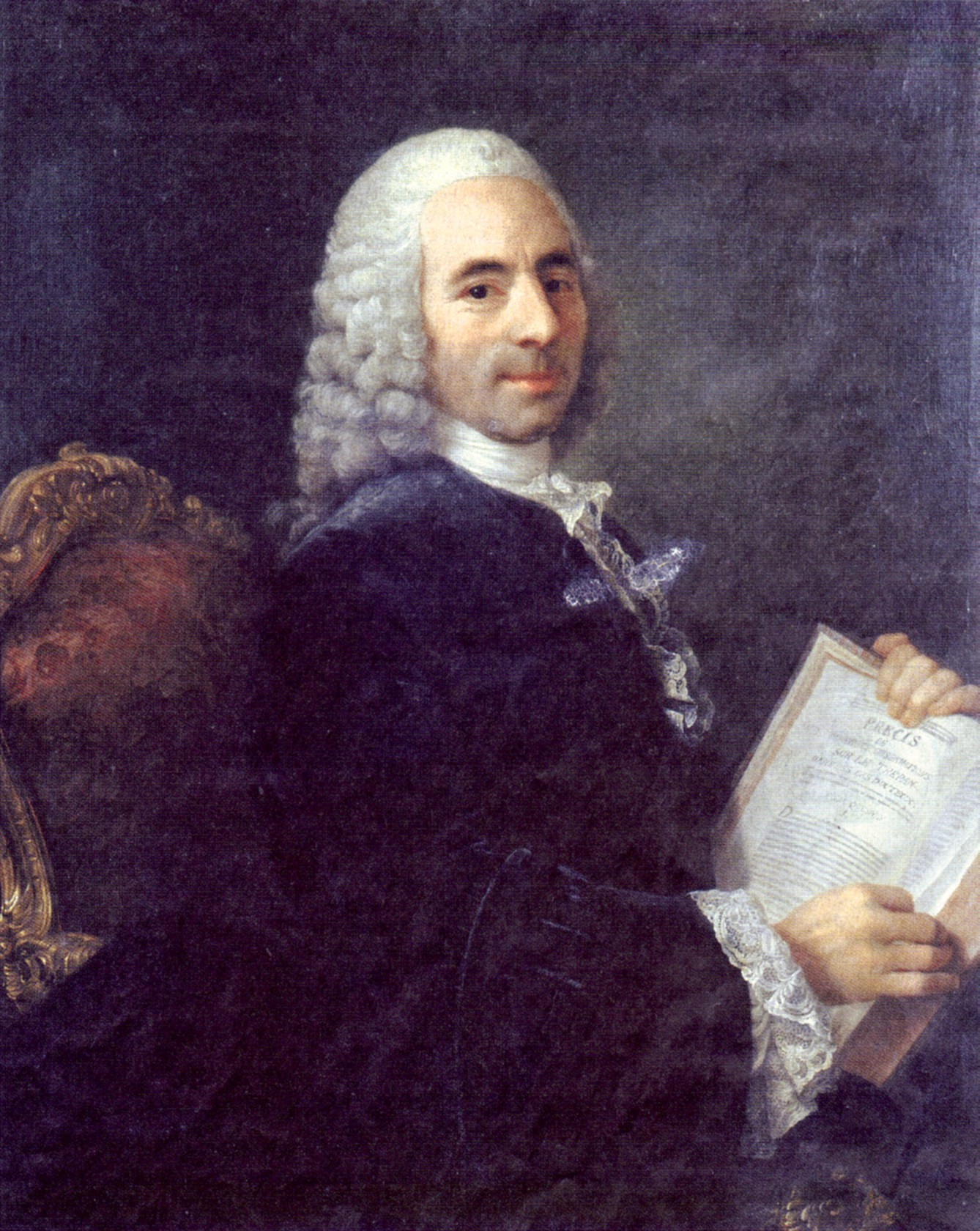
François Quesnay, a physician who is considered the founding father of physiocracy, published the "Tableau économique" (Economic Table) in 1758
Pierre Samuel du Pont de Nemours, a prominent physiocrat. In his book La Physiocratie, du Pont advocated low tariffs and free trade.

Physiocracy (French: physiocratie; from the Greek for "government of nature") is an economic theory developed by a group of 18th-century Age of Enlightenment French economists. They believed that the wealth of nations derived solely from the value of "land agriculture" or "land development" and that agricultural products should be highly priced.[1] Their theories originated in France and were most popular during the second half of the 18th century. Physiocracy became one of the first well-developed theories of economics.[2]

François Quesnay (1694–1774), the Marquis de Mirabeau (1715–1789) and Anne-Robert-Jacques Turgot (1727–1781) dominated the movement,[3] which immediately preceded the first modern school, classical economics, which began with the publication of Adam Smith's The Wealth of Nations in 1776.

The physiocrats made a significant contribution in their emphasis on productive work as the source of national wealth. This contrasted with earlier schools, in particular mercantilism, which often focused on the ruler's wealth, accumulation of gold, or the balance of trade. Whereas the mercantilist school of economics held that value in the products of society was created at the point of sale,[4] by the seller exchanging his products for more money than the products had "previously" been worth, the physiocratic school of economics was the first to see labor as the sole source of value. However, for the physiocrats, only agricultural labor created this value in the products of society.[4] All "industrial" and non-agricultural labors were "unproductive appendages" to agricultural labor.[4]

Quesnay was likely influenced by his medical training, particularly by the work of William Harvey who explained how blood flow and the circulatory system is vital to the human body; Quesnay held that the circulation of wealth was vital to the economy. Societies at the time were also overwhelmingly agrarian. This may be why they viewed agriculture as the primary source of a nation's wealth. This is an idea which Quesnay purported to demonstrate with data, comparing a workshop to a farm. He analyzed "how money flowed between the three classes of farmers, proprietors, and artisans, in the same mechanical way that blood flows between different organs" and claimed only the farm produced a surplus that added to the nation's wealth. Physiocrats viewed the production of goods and services as equivalent to the consumption of the agricultural surplus, since human or animal muscle provided the main source of power and all energy derived from the surplus from agricultural production. Profit in capitalist production was really only the "rent" obtained by the owner of the land on which the agricultural production took place.[4]

"The physiocrats damned cities for their artificiality and praised more natural styles of living. They celebrated farmers."[attribution needed][5][full citation needed] They called themselves les Économistes, but are generally referred to as "physiocrats" to distinguish their beliefs from the many schools of economic thought that followed.[6]

Precursors

[edit]

Physiocracy is an agrarianist philosophy which developed in the context of the predominantly rural, pre-industrial European society of the time. In the late Roman Republic, the dominant senatorial class was not allowed to engage in banking or commerce[7] but relied on their latifundia, large plantations, for income. They circumvented this rule through freedmen proxies who sold surplus agricultural goods.

Other inspiration came from China's economic system, then the largest in the world. Chinese society broadly distinguished four occupations, with scholar-bureaucrats (who were also agrarian landlords) at the top and merchants at the bottom (because they did not produce but only distributed goods made by others). Leading physiocrats like François Quesnay were avid Confucianists who advocated China's agrarian policies.[8] Some scholars have advocated connections with the school of agriculturalism, which promoted utopian communalism.[9] One of the integral parts of physiocracy, laissez-faire, was adopted from Quesnay's writings on China,[10] being a translation of the Chinese Taoism term wu wei.[11] The concept natural order of physiocracy originated from "Way of Nature" of Chinese Taoism.[8]

History

[edit]

The growing power of the centralized state control in the era of enlightened absolutism necessitated centralized, systematic information on the nation. A major innovation was the collection, use and interpretation of numerical and statistical data, ranging from trade statistics, harvest reports, and death notices to population censuses. Starting in the 1760s, officials in France and Germany began increasingly to rely on quantitative data for systematic planning, especially regarding long-term economic growth. It combined the utilitarian agenda of "enlightened absolutism" with the new ideas being developed in economics. In Germany the trend was especially strong in Cameralism while in France it was an important theme in physiocracy.[12]

Pierre Le Pesant, sieur de Boisguilbert served as a member of Louis XIV's local administration of Paris, and wrote pamphlets and booklets on subjects related to his work: taxation, grain trade, and money. Le Pesant asserted that wealth came from self-interest and markets were connected by money flows (i.e. an expense for the buyer is revenue for the producer). Thus he realized that lowering prices in times of shortage – common at the time – was dangerous economically as it acted as a disincentive to production. Generally, Le Pesant advocated less government interference in the grain market, as any such interference would generate "anticipations" which would prevent the policy from working.[13]

For instance, if the government bought corn abroad, some people would speculate that there was likely to be a shortage and would buy more corn, leading to higher prices and more of a shortage. This was an early example of advocacy of free trade. In anonymously published tracts, Vauban proposed a system known as la dîme royale ('the royal tithe'): this involved major simplification of the French tax code by switching to a relatively flat tax on property and trade. Vauban's use of statistics contrasted with earlier empirical methods in economics.[3]

The event that led Mirabeau to devote himself to political economy was undoubtedly his work on a manuscript of Richard Cantillon's Essai sur la nature du commerce en général (Essay on the nature of commerce in general), which he had in his possession as early as 1740.[14] He elaborated a commentary of this text that gradually became his Ami des hommes (Friend of men).[15]

Around the time of the Seven Years' War between France and England (1756–1763), the physiocracy movement grew. Several journals appeared, signaling an increasing audience in France for new economic ideas. Among the most important were the Journal Œconomique (1721–1772), which promoted agronomy and rational husbandry, and the Journal du commerce (1759–1762), which was heavily influenced by the Irishman Richard Cantillon (1680–1734), both dominated by physiocrats; the Journal de l'agriculture, du commerce et des finances (1765–1774) and the Ephémérides du citoyen (Citizen's Ephemeris; 1767–1772 and 1774–1776).[3]

Also, Vincent de Gournay (1712–1759), the Intendant du commerce, brought together a group of young researchers including François Véron Duverger de Forbonnais (1722–1800) and one of the two most famous physiocrats, Anne-Robert-Jacques Turgot (1727–1781). The other, François Quesnay (1694–1774), was among those writing prolifically in contemporaneous journals.[3]

Tableau économique

[edit]

The Tableau économique or Economic Table is an economic model first described by François Quesnay in 1759, which laid the foundation of the physiocrats’ economic theories.[16] It also contains the origins of modern ideas on the circulation of wealth and the nature of interrelationships in the economy.[6]

The model Quesnay created consisted of three economic agents: the "proprietary" class consisted only of landowners; the "productive" class consisted of agricultural laborers; the "sterile" class was made up of artisans and merchants. The flow of production and cash between the three classes originated with the proprietary class because they owned the land and bought from both of the other classes.

Characteristics

[edit]

Natural order

[edit]

The physiocrats thought there was a "natural order" that allowed human beings to live together. Men did not come together via a somewhat arbitrary "social contract." Rather, they had to discover the laws of the natural order that would allow individuals to live in society without losing significant freedoms.[17] This concept of natural order had originated in China. The Chinese had believed that there can be good government only when a perfect harmony exists between the "Way of Man" (governmental institutions) and the "Way of Nature" (Quesnay's natural order).[8]

Individualism and laissez-faire

[edit]

The physiocrats, especially Turgot, believed that self-interest was the motivation for each segment of the economy to play its role. Each individual is best suited to determine what goods they want and what work would provide them with what they want out of life. While a person might labor for the benefit of others, they will work harder for their own benefit; however, each person's needs are being supplied by many other people. The system works best when there is a complementary relationship between one person's needs and another person's desires, and so trade restrictions place an unnatural barrier to achieving one's goals. Laissez-faire was popularized by physiocrat Vincent de Gournay who is said to have adopted the term from François Quesnay's writings on China.[10]

Private property

[edit]

None of the theories concerning the value of land could work without strong legal support for the ownership of private property. Combined with the strong sense of individualism, private property becomes a critical component of the Tableau's functioning. The physiocrats believed in the institution of private property. They saw property as a tree and its branches, as social institutions. They actually stated that landlords must enjoy 2/5 on the land surpluses. They also advocated that landlords should be given dues, otherwise they would take the land away from the cultivators.

Diminishing returns

[edit]

Turgot was one of the first to recognize that "successive applications of the variable input will cause the product to grow, first at an increasing rate, later at a diminishing rate until it reaches a maximum."[16] This was a recognition that the productivity gains required to increase national wealth had an ultimate limit, and, therefore, wealth could not be infinite.

Investment capital

[edit]

Both Quesnay and Anne Robert Jacques Turgot, Baron de Laune recognized that capital was needed by farmers to start the production process, and both were proponents of using some of each year's profits to increase productivity. Capital was also needed to sustain the laborers while they produced their product. Turgot recognizes that there is opportunity cost and risk involved in using capital for something other than land ownership, and he promotes interest as serving a "strategic function in the economy."[16]

Subsequent developments

[edit]

The ideas of the Physiocrats had an influence on Adam Smith, David Ricardo, John Stuart Mill, and above all Henry George, who appears at first to have come to similar beliefs independently.[18] George was the driving force behind what became known as the Single Tax movement (not to be confused with Flat Tax). The Single Tax is a proposal for the use of the annual rental value of land (land value taxation) as the principal or sole source of public revenue.

The New Physiocratic League is a current Georgist political movement which seeks to revive elements of physiocracy.[19]

See also

[edit]

People

[edit]

Notes

[edit]

References

[edit]
[edit]
Revisions and contributorsEdit on WikipediaRead on Wikipedia
from Grokipedia

Physiocracy was an economic doctrine formulated by a group of French thinkers in the mid-18th century, maintaining that alone generates a net surplus or wealth for society, with land serving as the ultimate source of value through its natural productivity. The school's name derives from the Greek terms for "nature" and "rule," underscoring its core tenet that economic processes obey immutable natural laws akin to those in physics or , thereby requiring interference to allow a self-regulating "natural order." , a royal physician and the movement's intellectual leader, encapsulated these ideas in his 1758 , an innovative schematic representing the circular flow of goods and money between productive agricultural and sterile non-agricultural sectors, marking the first systematic effort to model the entire economy. Physiocrats advocated replacing complex tax systems with a single impôt unique on land rents to capture the surplus without distorting production, while promoting free internal trade and secure property rights in land as essential for prosperity. Although the doctrine briefly influenced policy under figures like controller-general Turgot and anticipated elements of , it faced criticism for undervaluing and , leading to its rapid decline after the , yet its emphasis on principles contributed to the intellectual foundations of later economic thought.

Origins and Precursors

Intellectual and Historical Precursors

Pierre de Boisguilbert, a French economist active in the late , is widely regarded as an early precursor to physiocratic thought through his critiques of mercantilist policies and emphasis on . In works such as Le Détail de la France (1695), Boisguilbert argued that 's economic woes stemmed from excessive regulation, particularly on , and advocated for approaches to allow natural market adjustments in , which he viewed as the primary generator of national wealth via a "net product" after subsistence costs. His analysis highlighted how state interventions distorted the flow of goods and money, prefiguring physiocratic opposition to artificial barriers and focus on land's . Sébastien Le Prestre de Vauban complemented these ideas with practical fiscal reforms aimed at easing the tax burden on . In Projet d'une dîme royale (1707), Vauban proposed replacing France's patchwork of indirect taxes with a single, moderate on agricultural output, estimated to yield 80-100 million livres annually while simplifying collection and reducing administrative waste. This scheme underscored land as the taxable base of , influencing later physiocratic calls for a impôt unique on net agricultural product, though Vauban's militaristic context tied it to state efficiency rather than pure . Richard Cantillon's Essai sur la Nature du Commerce en Général (written around 1730, published 1755) provided a more systematic framework, distinguishing between productive land-based activities that generated surplus and "sterile" or services that merely circulated existing value. Cantillon modeled economic circulation as a spatial flow from landowners to farmers, artisans, and merchants, with money velocity determining price levels and emphasizing agriculture's role in wealth creation amid population pressures. His insights into entrepreneurship and market self-regulation, drawn from empirical observations of and , bridged mercantilist analysis with physiocratic , directly informing François Quesnay's later . These precursors emerged amid France's fiscal strains under and the Regency, where agricultural stagnation and tax revolts exposed mercantilism's limits—evident in events like the 1709 famine and failed grain export bans. Collectively, they shifted focus from bullion accumulation to land and minimal intervention, setting the stage for physiocracy's formalization in the without yet articulating a comprehensive "."

Quesnay's Influences from Medicine and Chinese Thought


François Quesnay (1694–1774), originally trained as a surgeon and later a physician to Louis XV, drew upon his medical expertise to conceptualize the economy as a physiological system. His early career included self-taught studies and surgical practice, culminating in a medical doctorate by 1743 and court appointment in 1749. This background informed his view of economic processes as akin to bodily functions, particularly the circulation of blood, which he mirrored in the Tableau économique of 1758—a diagram depicting inter-sectoral flows of income and expenditure to illustrate surplus generation primarily in agriculture. Quesnay posited that, much like vital processes in the human body sustain life, agricultural production alone yielded a net product essential for societal reproduction, distinguishing it from "sterile" activities such as manufacturing.
Quesnay's engagement with Chinese thought, particularly through Jesuit accounts and Confucian texts, profoundly shaped physiocratic ideals of and . He admired China's merit-based and agrarian policies, viewing the imperial system as an embodiment of "" enforced by an absolute sovereign aligned with universal laws, as articulated in his 1767 treatise Le Despotisme de la Chine. Confucian emphasis on as the foundation of moral and economic order resonated with Quesnay's prioritization of , while Taoist concepts like (non-action) were interpreted to support principles, though this reading has been critiqued as a Western projection onto . Quesnay's followers dubbed him the " of " for promoting China's model of low intervention, tax simplicity, and harmony between ruler and natural economic laws.

Development and Key Proponents

François Quesnay as Founder

(1694–1774) served as the court physician to from 1749 onward, leveraging his background in and to analogize the as a self-regulating physiological . Lacking formal training in , he began publishing on economic topics in the 1750s, drawing from observations of and critiques of mercantilist policies that burdened land with excessive taxation and regulations. His approach emphasized empirical patterns in wealth creation, rooted in the causal primacy of land's natural over manufactured goods or . Quesnay's seminal contribution, the Tableau économique published in 1758, depicted the economy as a circular flow of expenditures and outputs among three classes: productive farmers generating surplus, sterile artisans and merchants recirculating value without net addition, and landowners receiving rent. Limited to 25–30 privately printed copies initially, this folded diagram quantified annual flows—such as a 5/5 advance from proprietors to agriculture yielding a 2/5 net product—modeling equilibrium conditions where reproduction requires full replacement of advances plus surplus distribution. By formalizing these interdependencies, Quesnay provided the analytical core for physiocratic theory, challenging mercantilist views that wealth stemmed from bullion or manufacturing. As founder, Quesnay cultivated a dedicated following at Versailles, forming a sect-like group that included Victor Riqueti de Mirabeau and Pierre Samuel du Pont de Nemours, who formalized the doctrine's dissemination through journals like the Éphémérides du citoyen starting in 1765. He articulated the "natural order" (ordre naturel) as an objective economic harmony discoverable via reason, advocating laissez-faire policies to align human actions with this order, including abolition of internal trade barriers and a single land tax (impôt unique) on net product to capture surplus without distorting incentives. This institutionalization of ideas—through maxims, dialogues, and policy memoranda presented to the king—established physiocracy as the first systematic school of political economy, influencing subsequent thinkers despite its short-lived dominance.

Prominent Physiocrats and Their Contributions


Victor Riqueti, marquis de Mirabeau (1715–1789), acted as a chief propagandist for physiocracy after converting in 1757. His L'Ami des hommes (1756) linked national wealth to agricultural productivity and population growth, predating full adherence but aligning with core tenets. In Théorie de l'impôt (1760), he condemned tax farming and advocated taxation based on net product from land. Mirabeau hosted "Tuesday dinners" salons to promote the doctrine, enhancing its influence at court.
Pierre Samuel du Pont de Nemours (1739–1817) formalized the school's identity by inventing the term "physiocratie" in 1767 and compiling Physiocratie (1768), which outlined natural governance maximizing human advantage through agricultural focus. As editor of Éphémérides du citoyen from 1767, he disseminated physiocratic writings on and minimal intervention. Du Pont contributed to policy by drafting the 1774 edict liberalizing under Turgot, emphasizing low tariffs. Pierre François Mercier de la Rivière (1720–1793) advanced physiocratic political theory in L'Ordre naturel et essentiel des sociétés politiques (1767), arguing for enforcement of natural economic laws via "legal despotism" to secure property and net product extraction. His work integrated governance with the agrarian surplus model, justifying aligned with physiocratic principles. Guillaume François Le Trosne (1728–1780), a , elaborated on value and exchange in De l'intérêt social (1777), defending physiocratic views on circulation, industry, and as derivatives of agricultural net product. He supported free internal and external trade while upholding the single land tax and critiqued monetary quantity theories, positing as a representative sign rather than determinant of wealth. Le Trosne reconciled physiocracy with absolute rule, portraying the as steward of . Nicolas Baudeau (1730–1792) bolstered dissemination through editing Ephémérides du citoyen, where he advocated physiocratic reforms including free trade in grains and opposition to mercantilist controls. His clerical background lent theological defense to the natural order, framing agricultural primacy as divine harmony. Anne-Robert-Jacques Turgot (1727–1781), while not a strict physiocrat due to valuing commerce beyond agriculture, implemented aligned policies as controller-general from 1774 to 1776. He issued edicts freeing grain trade on September 13, 1774, suppressed guilds, and replaced corvée with property taxes, embodying laissez-faire despite physiocratic orthodoxy's limits. Turgot's Réflexions sur la formation et la distribution des richesses (1766) echoed supply-demand laws, influencing broader liberal economics.

Spread, Peak, and Decline in 18th-Century

Physiocratic ideas spread rapidly in the 1760s through François Quesnay's influence as physician to at Versailles and his connections to , attracting a circle of intellectuals and nobles including Victor de Riqueti, marquis de Mirabeau, Pierre-Paul Le Mercier de la Rivière, and Pierre Samuel du Pont de Nemours. The Tableau Économique of 1758 served as the foundational text, with dissemination aided by periodicals such as the Journal d'agriculture (1765–1767) and the Ephémérides du Citoyen (1767–1772), which promoted doctrines like free grain trade against mercantilist restrictions. These efforts built a narrow social base among innovative landowners seeking to counter 's post-Seven Years' War economic strains, including agricultural stagnation under Colbertist policies. The school's peak came during Jacques Turgot's tenure as contrôleur général des finances from May 1774 to May 1776 under , when policies aligned with physiocratic principles were enacted, including the 1774 edict for free internal grain trade and partial abolitions to foster . Turgot's reforms extended earlier grain liberalization attempts (1763–1770), supported by publications like the Nouvelles Ephémérides Économiques (1774–1776), reflecting the doctrine's emphasis on minimal intervention to allow the "natural order" to generate wealth from land rents. This period marked the high-water mark of physiocratic policy influence, though limited by resistance from privileged orders. Decline accelerated after Pompadour's death in eroded court patronage, compounded by the 1768 near-famine where physiocrats' insistence on non-intervention in grain markets drew accusations of impractical dogmatism amid public shortages. Turgot's dismissal in 1776, following failed attempts to fully suppress guilds and corvées, led to reform reversals and discredited the school among merchants, parlements, and urban interests opposed to its agricultural exclusivity and perceived neglect of industry. Theoretical contradictions—advocating a minimal state alongside "legal " for —further undermined credibility in France's static agrarian , where of famine and vested opposition prioritized stability over radical . By the late , physiocracy waned as critiques from figures like highlighted its mysticism and overreliance on agriculture, paving the way for broader .

Fundamental Principles

The Natural Order and Harmony

Physiocrats, led by , posited a (ordre naturel) as an governed by immutable physical and moral laws, where serves as the sole source of net product and societal wealth. This order, analogous to the harmonious circulation of blood in the —reflecting Quesnay's medical background—ensures self-regulating balance through the free flow of advances, products, and revenues among economic classes. Adherence to these laws promotes by aligning individual actions with natural incentives, particularly in land cultivation, yielding surplus beyond reproduction costs. In contrast, the positive order comprises human institutions and laws that often impede natural processes, such as mercantilist regulations taxing agriculture. Quesnay argued that optimal governance integrates positive laws with the natural order via "legal despotism," where the sovereign enforces property rights and minimal interventions to safeguard harmony, as outlined in his 1765 essay "Natural Right." This framework views society not as individualistic pursuits but as a holistic organism defined by natural societal functions, where deviations— like sterile labor dominance—disrupt equilibrium and diminish wealth. Harmony manifests in the interdependent roles of productive (agricultural), , and sterile classes, with circulation preventing stagnation and fostering mutual benefits when unhindered by artificial barriers. Physiocrats maintained that empirical observation of natural laws, akin to scientific principles, reveals this order's universality, promising maximal output and social stability under aligned with agrarian primacy. Such views, while critiqued for overlooking industrial productivity, underscored causal realism in by prioritizing verifiable surplus generation over nominal monetary flows.

Laissez-Faire and Minimal Government Intervention

The Physiocrats advocated —often rendered as "laissez faire, laissez passer" (let do, let pass)—as a core principle, arguing that economic prosperity arises from adherence to immutable natural laws rather than artificial regulations imposed by the state. This doctrine, prominently articulated by (1694–1774), held that government interference disrupts the harmonious circulation of wealth, particularly the produit net (net product) generated solely by , leading to inefficiencies and reduced output. Quesnay derived this from his conception of the ordre naturel (natural order), where self-regulating mechanisms akin to physiological processes in the body ensure optimal resource allocation without human meddling. Although the phrase laissez-faire is commonly linked to Quesnay, it originated with his contemporary Vincent de Gournay (1712–1759), a and who used it to critique Colbertist mercantilism's restrictive policies, such as guilds and trade barriers. The Physiocrats, including Anne-Robert-Jacques Turgot (1727–1781), embraced and popularized it, extending its application to demand the abolition of internal customs duties, monopolies, and that fragmented France's markets in the 1760s. They contended that such interventions, prevalent under Louis XV's regime, diverted capital from productive to sterile manufactures and , stifling the annual reproductive cycle essential for national wealth. Minimal government intervention, in Physiocratic terms, confined the state's role to safeguarding property rights, enforcing contracts, and maintaining —functions that enable the natural order without altering its dynamics. Quesnay's Maximes générales du gouvernement économique (1758) explicitly warned that fiscal manipulations, like excessive taxation beyond land rent, violate these laws and provoke crises, as seen in France's recurring shortages exacerbated by export bans in 1763–1764. Proponents like Pierre Samuel du Pont de (1739–1817) further argued for deregulating labor and trade to foster incentives for cultivators, asserting that overregulation had halved potential agricultural yields by the mid-18th century. This stance contrasted sharply with mercantilist precedents, positioning Physiocracy as an early systematic critique of state dirigisme in favor of decentralized, incentive-driven growth.

Private Property and Individual Incentives

Physiocrats regarded secure rights in as indispensable for harnessing individual incentives toward productive , the foundation of societal wealth. By protecting proprietors from arbitrary expropriation and ensuring cultivators retained advances after rent payments, these rights aligned with the natural order, fostering investments in clearance, soil enrichment, and cultivation techniques that expanded the net product. asserted that "respect for " constituted "the primary element of the power of the ," underscoring its role in maintaining economic harmony and state authority. Landlords, as initial investors who cleared and improved uncultivated , earned entitlement to pure rent as compensation, which incentivized ongoing enhancements without distorting productive efforts. This mechanism encouraged tenant farmers to maximize yields, knowing their labor's surplus—beyond subsistence and rent—accrued to them, thereby elevating overall output and provisioning the sterile classes. Physiocrats contrasted this with feudal encumbrances, which diluted incentives through fragmented tenures and privileges, arguing that unambiguous titles under principles would liberate individual enterprise for agrarian advancement. Even the propertyless benefited indirectly, as heightened lowered food prices and raised demand for labor, improving wages and living standards more effectively than communal alternatives. Quesnay's doctrine of natural rights rooted in primal necessity, positing that the "right to things, necessary to our enjoyment," predated and persisted for isolated individuals, extending to collective prosperity only when safeguarded against . This framework rejected absolute , subordinating to the natural order's demands for , yet affirmed it as a bulwark against sterile pursuits like , which they deemed incapable of net creation.

Economic Model and Analysis

Productive and Sterile Classes

François Quesnay, the founder of Physiocracy, classified economic agents into distinct social classes based on their role in generating the produit net, or net product, which he defined as the surplus yielded exclusively by agricultural production after covering reproductive advances. The productive class encompassed farmers, agricultural laborers, and cultivators who advanced capital in the form of seeds, tools, and labor to extract this surplus from the land's natural fertility, reproducing their initial outlays while producing an excess equivalent to roughly half their advances in Quesnay's model. This class was deemed essential to national wealth, as only agriculture, per Physiocratic doctrine, augmented matter through nature's bounty, enabling societal maintenance and growth. The sterile class, by contrast, comprised manufacturers, artisans, merchants, and those in commerce or services, whose activities transformed raw agricultural outputs into or facilitated exchange but failed to create any net surplus. Quesnay contended that these pursuits consumed more in materials and advances than they yielded in value, dissipating the produit net without replenishing it, as merely rearranged existing products without the generative power of . In the of 1758, sterile expenditures were modeled as drawing half their revenue from the net product to purchase agricultural necessities, perpetuating a cycle of dependency on the productive sector rather than contributing to wealth accumulation. A third category, the class of proprietors—including landowners and the —did not produce but received the net product as rent, which they redistributed: half reinvested in to sustain advances and half spent on sterile , thereby supporting non-productive employment without expanding the overall surplus. This tripartite division underscored Physiocracy's agrarian focus, positing that over-reliance on sterile activities eroded national prosperity by diverting resources from the land, where alone true reproduction with increase occurred. Quesnay's framework, rooted in empirical observations of French rural economies, rejected mercantilist emphasis on , arguing instead that should prioritize agricultural incentives to maximize the produit net.

The Tableau Économique

The , formulated by in 1758, represents an early systematic model of economic circulation, depicting the interdependencies among social classes through flows of and over two successive periods. It assumes a closed where generates the sole net product, while non-agricultural activities merely transform existing wealth without creating surplus. The model employs numerical examples, typically using units of five million livres, to illustrate how initial advances by the productive class sustain reproduction and distribution. Quesnay divided society into three classes: the productive class (farmers and agricultural workers), the proprietors (landowners receiving rent), and the sterile class (artisans, manufacturers, and merchants). The tableau's original "zigzag" format traces expenditures: the productive class advances two billion (in simplified terms) annually to , yielding a gross output of five billion, from which one billion replaces advances and two billion forms the net product paid as rent to proprietors. Proprietors spend half their (one billion) on sterile goods and the other half on agricultural products, while the sterile class receives one billion from proprietors and 0.5 billion from productive class purchases, expending it on and raw materials.
ClassInitial Advance/RevenueExpendituresResulting Flows
Productive2 billion (advances)0.5 billion to sterile; net product 2 billion to proprietorsGross output 5 billion; sustained
Proprietors2 billion (rent)1 billion to sterile; 1 billion to productiveSupports consumption without production
SterileNone (transforms)1.5 billion spent on productive outputNo net addition; full recirculated
This simplified matrix captures the annual circulation, emphasizing that disruptions, such as excessive sterile spending, could diminish the net product and hinder economic . Quesnay intended the tableau as a diagnostic tool for , arguing that maintaining the full circuit—via secure property rights and minimal taxes on land rent—maximizes . Later editions, including analyses by Victor de Riqueti, marquis de Mirabeau, refined explanations but retained the core circular flow, influencing subsequent input-output frameworks despite assumptions limiting sterile class .

Net Product, Value Theory, and Diminishing Returns

The net product, or produit net, in Physiocratic theory referred to the surplus generated exclusively by agriculture after deducting the necessary advances—such as seeds, livestock maintenance, wages, and tools required to reproduce the following year's output. This surplus, attributed to the gratuitous productivity of nature acting through land, was seen as the sole source of new wealth in an economy, contrasting with non-agricultural activities that merely circulated or transformed existing value without net addition. François Quesnay quantified it in analyses like the Tableau Économique (1758), where, for a hypothetical kingdom, agricultural output of five billion livres yielded a net product of two billion after advances, underscoring its role as the foundation for societal maintenance and taxation. Physiocratic value theory rejected mercantilist emphases on monetary stocks and labor alone, instead positing that true economic value and surplus originated from land's natural fertility, which enabled agriculture to produce more than the inputs consumed. Influenced by precursors like , Quesnay and followers such as Victor de Riqueti, Marquis de Mirabeau, argued in works like Physiocratie (1767) that the produit net embodied this value creation, as manufacturing and commerce were "sterile" classes that added no surplus, only exchanging goods at equivalent value. This agrarian basis implied that national prosperity depended on maximizing agricultural output through secure property rights and minimal interference, with the net product accruing primarily as rent to landowners. While core Physiocratic doctrine emphasized potential increases in net product via optimal advances and techniques, adherents recognized inherent limits to land productivity, anticipating concepts of . Quesnay's Maxims of Government (1758) implied that overexploitation or inadequate fallowing reduced yields, and Anne-Robert-Jacques Turgot, aligned with Physiocratic principles, detailed in Reflections on the Formation and Distribution of Wealth (1766) how successive cultivations on fixed land parcels led to progressively lower increments without , explaining rent differentials from superior soils. This awareness underscored the finite nature of the produit net, advocating policies to avoid encroachments that would accelerate productivity decline, such as heavy direct taxes on cultivators which shifted burdens and discouraged investment.

Policy Recommendations

Single Tax on Pure Land Rent

The physiocrats advocated the impôt unique, a single tax imposed exclusively on the pure rent derived from , which they defined as the produit net—the surplus yielded by after deducting the necessary advances for seeds, labor, and maintenance to sustain production. This pure rent was viewed as an unearned increment accruing solely to landowners, independent of effort, and the only legitimate base for public revenue since non-agricultural activities generated no such net surplus. François Quesnay first systematized this proposal in his 1756–1757 Encyclopédie articles "Fermiers" and "Grains," contending that all other taxes, such as the regressive taille on peasants or duties on commerce, discouraged productive activity and reduced the kingdom's wealth. He argued for shifting the fiscal burden to proprietors' revenue, stating that "taxes which are laid on the revenue, and which do not fall on cultivation, are not destructive at all," as they avoided impairing the fixed agricultural advances essential for reproduction of the net product. Proponents like Victor Riqueti, marquis de Mirabeau, in his 1760 Théorie de l'impôt, and Pierre Samuel du Pont de Nemours reinforced this by estimating the tax at approximately one-third of land rent to cover sovereign expenses, including defense and justice, while abolishing corvées and internal barriers. The economic rationale rested on land's inelastic supply and unique productivity: taxing pure rent imposed no , as landowners could not withhold land from use without forgoing income, thereby protecting cultivators' incentives and maximizing output under the natural order. This proportional levy on the net product aligned with physiocratic dés-potisme légal, where enforced undistorted to foster harmony between classes, with proprietors bearing the cost as stewards of the surplus. Although Jacques Turgot, as controller-general from 1774 to 1776, liberalized and reduced some indirect taxes in line with these ideas, full implementation of the impôt unique faced opposition from vested interests and was not achieved before the school's decline post-1774.

Opposition to Mercantilism and Trade Barriers

The physiocrats critiqued for conflating wealth with monetary bullion and trade surpluses, arguing instead that such policies distorted the natural economic order by prioritizing unproductive over agriculture, the sole source of net product. Mercantilist interventions, including tariffs, subsidies, and monopolies—epitomized by Jean-Baptiste Colbert's regulations in 17th-century —were seen as artificial barriers that reduced agricultural incentives and overall prosperity by inflating costs and limiting market access for farmers. This opposition stemmed from their view that merely circulates existing value without creating surplus, rendering mercantilist export promotion futile and harmful to the productive class of cultivators. In response, the physiocrats championed trade policies to facilitate the free flow of goods, particularly emphasizing the of internal markets and the abolition of trade barriers to enhance agricultural output and prices. , the school's founder, advocated unrestricted in his Encyclopédie contributions like "Grains" (1757), asserting that export freedoms would stimulate land cultivation by guaranteeing outlets for surplus, countering mercantilist hoarding and that famines exacerbated under restricted regimes. They opposed internal tariffs and monopolies, which fragmented markets and hindered labor mobility, proposing instead a unified national economy where agricultural products could circulate without hindrance to maximize the produit net. This theoretical stance influenced practical reforms, notably under Anne-Robert-Jacques Turgot, a physiocrat-aligned controller-general of finances, who in September 1774 decreed the liberalization of grain imports and exports across and its territories, aiming to "animate and extend the cultivation of the land" by removing export bans and internal barriers. Pierre Samuel du Pont de Nemours further articulated support for low tariffs and broader in works like La Physiocratie (1768), aligning with the school's rejection of to foster abundance, though with a preference for exporting raw agricultural goods over manufactures to preserve domestic incentives. These measures, while short-lived amid political backlash, marked an early challenge to mercantilist orthodoxy by prioritizing empirical agricultural dynamics over state-directed balances. The physiocrats advocated agrarian reforms centered on enhancing agricultural productivity by removing institutional barriers inherited from and . They emphasized transitioning from fragmented small-scale farming to large-scale operations, arguing that consolidated farms allowed for better investment in improvements such as replacing oxen with horses for plowing and establishing artificial pastures to boost yields and the net product. This shift was seen as essential to realizing agriculture's role as the sole source of surplus wealth, with outlining these principles in his 1758 and related articles like "Fermiers." A key policy was the of , including the abolition of internal barriers to circulation, which they believed would stabilize prices, incentivize production, and prevent famines exacerbated by regulations; such measures were partially enacted through edicts like the one of 19 July 1764, amid experiments from 1763 to 1770 and again in 1774–1776 under controllers-general influenced by physiocratic ideas. These reforms required overriding entrenched privileges of the nobility, clergy, and guilds, which physiocrats viewed as artificial obstacles to the natural order. To achieve this, they endorsed "legal despotism" (despotisme légal), a doctrine positing that an absolute monarch, as impartial enforcer of natural laws, should wield centralized power to secure property rights, suppress monopolies, and protect cultivators from riots or feudal exactions, without arbitrary interference in economic processes. Quesnay introduced the concept in his 1767 essay "Despotisme de la Chine," drawing parallels to what he perceived as China's enlightened rule, where the sovereign acts as a steward of physical and moral laws rather than personal whims. Pierre-Paul Le Mercier de la Rivière systematized it in L'Ordre naturel et essentiel des sociétés politiques (1767), distinguishing it from arbitrary despotism by limiting the ruler to upholding standing rules derived from nature, such as property in land rents, thereby legitimizing taxation as a reciprocal obligation for security. This framework justified hereditary monarchy as the optimal vehicle for reform, enabling the king—conceived as a joint proprietor of the net product—to dismantle barriers while fostering individual incentives in agriculture.

Contemporary Criticisms and Debates

Internal Disputes and Turgot's Objections

Within the physiocratic school, disagreements arose over the strict delineation between productive and sterile economic activities, with some members challenging the core doctrine that only generated a net product exceeding input costs. and strict adherents like Victor de Riqueti, marquis de Mirabeau, maintained that manufacturing and commerce merely circulated existing wealth without creating surplus, rendering them unproductive. However, figures associated with the sect, including Anne-Robert-Jacques Turgot and André Morellet, contested this exclusivity, arguing that capital investments in industry could yield similar increments. Turgot, who corresponded with physiocrats and contributed to their journal Éphémérides du Citoyen, articulated his principal objections in Réflexions sur la formation et la distribution des richesses (written 1766, published 1769–1770), where he rejected the physiocratic insistence on as the sole source of . He posited that "advances of stock"— like tools and circulating capital like raw materials—enable producers in both and to generate output exceeding replacement costs, thus producing net revenue through interest on capital. This framework extended productivity beyond land's natural fertility to human foresight and savings, critiquing Quesnay's for underemphasizing capital's role across sectors. These views sparked debates in Éphémérides du Citoyen and private correspondence, such as Turgot's exchanges with Pierre Samuel Du Pont de Nemours in 1774–1775, where he defended industrial value creation against orthodox claims of sterility. Turgot maintained that denying net product in non-agricultural pursuits ignored of profit in , potentially hindering broader . Orthodox physiocrats, in response, upheld the agrarian focus as essential to identifying true wealth origins, viewing deviations as diluting the school's foundational ordre naturel. Turgot's critiques also extended to policy implications, questioning the feasibility of the on land rent without recognizing capital's contributions, though he shared the aversion to mercantilist interventions. His emphasis on universal capital productivity prefigured more flexible , highlighting fractures in physiocratic unity by 1770.

Political and Empirical Challenges

The physiocratic advocacy for a single tax on land rent encountered significant political resistance in France, as it threatened the privileges of the nobility and the mercantile class who benefited from existing subsidies and protections. Landowners, including the aristocracy, opposed reforms that would shift taxation burdens away from consumption and trade toward pure rent, viewing it as an infringement on their feudal rights despite physiocratic assurances of net productivity gains for agriculture. Merchants and manufacturers, aligned with Colbertist mercantilism, lobbied against the dismissal of non-agricultural sectors as "sterile," fearing the elimination of tariffs and guilds that sustained their operations. Implementation efforts under Anne-Robert-Jacques Turgot, appointed controller-general of finances in 1774, highlighted these hurdles; his edicts for grain export liberalization and reduction of internal trade barriers provoked the riots in 1775, driven by urban consumers and provincial interests fearing food price spikes amid poor harvests. Turgot's dismissal in May 1776 after less than two years marked the effective collapse of physiocratic influence at court, as prioritized short-term stability over structural reform under pressure from the parlements and privileged orders. The doctrine's reliance on "legal despotism"—an enforcing in agriculture—proved incompatible with the fragmented power dynamics of the , where royal authority lacked the coherence to override entrenched corporate interests. Empirically, the physiocratic net product theory faltered against observations of industrial and commercial contributions to accumulation, as evidenced by England's contemporaneous growth through manufacturing exports rather than agricultural surplus alone. Critics like argued that industrial labor generated value beyond mere transformation, producing utilities that sustained societal advances, contradicting the claim of sterility for non-farm classes. French agricultural output data from the 1760s-1770s showed stagnant per-acre yields under feudal tenures, undermining the Tableau Économique's assumptions of reproducible surplus via advances, while urban workshops and colonial generated fiscal revenues that could not match. Further challenges arose from in land-intensive production, where soil exhaustion and population pressures limited net output growth, as later formalized by Malthusian dynamics that physiocrats overlooked in their optimism for perpetual agrarian expansion. Empirical studies of pre-revolutionary revealed that , far from parasitic, accounted for up to 20-25% of national income by 1789 through value-added processes, directly refuting the exclusive surplus origin in nature. These discrepancies, observable in trade balances and regional productivity disparities, eroded the doctrine's causal claims, paving the way for broader recognition of labor's role across sectors in wealth creation.

Long-Term Influence

Shaping Classical Economics and Adam Smith

Physiocratic principles, developed in mid-18th-century , laid groundwork for by rejecting mercantilist accumulation of as the measure of and instead emphasizing production of , particularly from , as the true source of national prosperity. This focus on a net product—the excess of output over inputs—influenced classical thinkers' analyses of and distribution, shifting attention to real rather than monetary flows. Physiocrats advocated a natural economic order regulated by immutable laws, promoting policies that minimized state interference, which prefigured classical liberalism's emphasis on free markets and individual incentives. Adam Smith encountered these ideas directly during his 1764–1766 residence in France as traveling tutor to the Duke of Buccleuch, where he engaged with and the physiocratic circle in Versailles and . In An Inquiry into the Nature and Causes of the Wealth of Nations (1776), Smith analyzed the physiocratic system in Book IV, chapters 9–11, praising it as "with all its imperfections, perhaps, the nearest approximation to the truth that has yet been published upon the subject of " for correctly identifying productive labor that adds to national stock and unproductive labor that does not. He credited the physiocrats with recognizing agriculture's foundational role in generating surplus but critiqued their doctrine of the exclusive productivity of agriculture, arguing that manufacturing and commerce also yield net additions to wealth by exchanging and transporting goods, thus expanding markets and enabling division of labor. Smith adopted and refined physiocratic insights, such as the advocacy for free internal and external trade to allow natural price adjustments and opposition to monopolies and regulations that distort the system of natural liberty. Their sectoral model of landlords, farmers, and sterile classes informed his division of society into productive and unproductive members, while Quesnay's Tableau Économique (1758)—a precursor to input-output analysis—inspired Smith's holistic view of economic circulations and interdependencies. Though Smith rejected the physiocrats' metaphysical reliance on a divine natural order and their undervaluation of capital accumulation in non-agrarian sectors, these encounters sharpened his empiricist critique, blending French rationalism with Scottish enlightenment empiricism to form a more comprehensive theory of wealth creation across all industries. Henry George, in his seminal 1879 work Progress and Poverty, explicitly praised the physiocrats for their identification of the produit net—the surplus from agriculture after deducting advances—as the true source of taxable wealth, viewing their impôt unique (single tax) on this net product as an early articulation of taxing unearned land income. This endorsement positioned physiocracy as a foundational influence on Georgism, George's economic philosophy advocating a single tax on the unimproved rental value of land to capture economic rent for public revenue while exempting labor and capital improvements. However, George's formulation diverged from the physiocrats' agrarian focus: their tax applied specifically to agricultural output surplus, incorporating reproducible advances like seeds and labor, whereas Georgism targeted pure, location-based rent independent of cultivation, extending the principle to urban land and natural resources. Despite these refinements, the shared emphasis on land as the origin of surplus value and opposition to taxing productive activities linked the two schools, with George interpreting physiocratic doctrine as implying equal access to land via value capture, even if the originals prioritized agricultural efficiency over speculative holding. The physiocrats' advocacy for and recognition of a self-regulating "natural order" governed by economic laws prefigured elements of Austrian School thought, particularly its stress on spontaneous coordination and rejection of state . Austrian economists, building on this tradition, credit the physiocrats with early critiques of mercantilist interventionism and promotion of free internal trade, as seen in their tabular models illustrating circulatory flows without artificial barriers. Yet, Austrians critiqued the physiocrats' objective value theory rooted in agricultural productivity, favoring instead subjective to explain across all goods, not just land's net product. This methodological shift, evident in Carl Menger's 1871 Principles of Economics, rejected physiocracy's sectoral bias toward agriculture as the sole wealth source, though Austrians retained the emphasis on time-structured production processes, which some trace back to physiocratic notions of advances and on land. Overall, the connection lies in shared principles rather than value theory, with Austrians viewing physiocracy as a partial but influential step toward deducing economic laws from individual actions in a natural order.

Modern Reassessments

Ecological and Sustainability Claims

Some ecological economists have posited physiocracy as an early precursor to biophysical and ecological paradigms by emphasizing agriculture's unique role in generating a "net product" from land, interpreted as recognition of nature's biophysical limits on wealth creation. This view holds that the Physiocrats' focus on solar-driven agricultural surplus, as modeled in François Quesnay's Tableau économique (1758), prefigures modern understandings of economies as open systems dependent on low-entropy solar inputs rather than infinite industrial expansion. Proponents argue this agrarian emphasis implicitly critiques mercantilist overreliance on extractive trade and manufacture, which ignore soil fertility cycles and long-term carrying capacity. However, such claims overlook empirical flaws in Physiocratic sustainability assumptions, as their doctrine assumed perpetual land productivity under conditions without accounting for depletion or overuse. Historical evidence from 18th-century shows Physiocrat-influenced policies, such as those under Controller-General Anne-Robert-Jacques Turgot (1774–1776), promoted export-oriented grain production that exacerbated local famines and in regions like the , contradicting modern metrics like . Critics in biophysical literature note that Physiocrats conflated natural fertility with capitalist enclosure, endorsing colonial land grabs in the to bolster French agrarian output, which accelerated indigenous degradation without regenerative safeguards. Contemporary reassessments in further qualify these links by highlighting Physiocracy's alignment with thermodynamic principles—net energy surplus from —but fault its neglect of accumulation in intensive , a core concern in Herman Daly's models. While the on impôt unique (pure land rent) is sometimes praised for incentivizing land stewardship over speculation, empirical studies of similar rent-based systems, like post-Physiocratic Prussian reforms (1807–1815), demonstrate short-term yield gains followed by fertility declines absent state-enforced rotations, underscoring causal disconnects from verifiable long-term ecological balance. Thus, while Physiocratic naturalism informs debates on valuing ecosystem services, its optimistic "rule of nature" lacks the empirical rigor of modern , which integrates data on and carbon sinks.

Liberal Critiques of Physiocratic Flaws

Classical liberal thinkers, exemplified by Adam Smith in The Wealth of Nations (1776), critiqued the physiocrats' core doctrine that only agriculture generated a net product or surplus, classifying non-agricultural pursuits—such as manufacturing and commerce—as inherently "sterile" or unproductive. Smith argued this undervalued the value added by artisans, who transform raw materials into finished goods, and merchants, who enable efficient distribution, thereby contributing fixed capital and reproducible wealth essential for economic growth. This physiocratic binary, rooted in François Quesnay's Tableau Économique (1758), ignored causal mechanisms of productivity beyond land's natural fertility, such as human ingenuity and capital investment, leading to empirically unsubstantiated claims that industrial expansion merely circulated existing wealth without net creation. The physiocrats' methodological reliance on deductive, —analogizing the to a self-regulating physiological like blood circulation—further drew liberal fire for its rationalist abstraction over inductive . Smith, favoring observation of real-world markets, highlighted how this approach presupposed rigid input-output proportions and overlooked entrepreneurial discretion, price signals, and adaptive responses to , flaws evident in the Tableau's failure to account for technological advances or trade's role in augmenting total output. Such holistic clashed with liberal causal realism, which posits decentralized individual actions as the driver of prosperity, not top-down circulatory metaphors. Policy prescriptions amplified these theoretical defects, as the advocacy for an impôt unique—a singular land tax to replace all others—presumed agriculture's monopoly on surplus, neglecting fiscal needs from urban growth and defense in non-agrarian societies. Moreover, the physiocrats' endorsement of "legal despotism," wherein an enlightened enforces agrarian and , contradicted classical liberal safeguards against concentrated power, favoring instead unchecked executive fiat to override vested interests, a stance Smith implicitly rejected in favor of institutional evolution through and markets. Empirical tests, like Anne-Robert-Jacques Turgot's partial physiocratic experiments as Controller-General (1774–1776), faltered amid grain shortages and opposition, underscoring the doctrine's disconnect from diverse economic realities beyond idealized rural . Later liberal traditions, including Austrian economists, echoed these concerns by decrying the physiocrats' interventionist undertones—such as subsidies for or state-directed enclosures—as precursors to planning fallacies, despite surface rhetoric, for they subordinated to sectoral dogma rather than universal exchange principles. This agrarian exclusivity, empirically refuted by Britain's industrial ascent post-1760, where manufacturing output surged 2–3% annually, revealed physiocracy's causal oversight of and division of labor as broader wealth engines.

References

Add your contribution
Related Hubs
User Avatar
No comments yet.