Hubbry Logo
Pinyon pinePinyon pineMain
Open search
Pinyon pine
Community hub
Pinyon pine
logo
8 pages, 0 posts
0 subscribers
Be the first to start a discussion here.
Pinyon pine
Pinyon pine
from Wikipedia

Pinyon pines
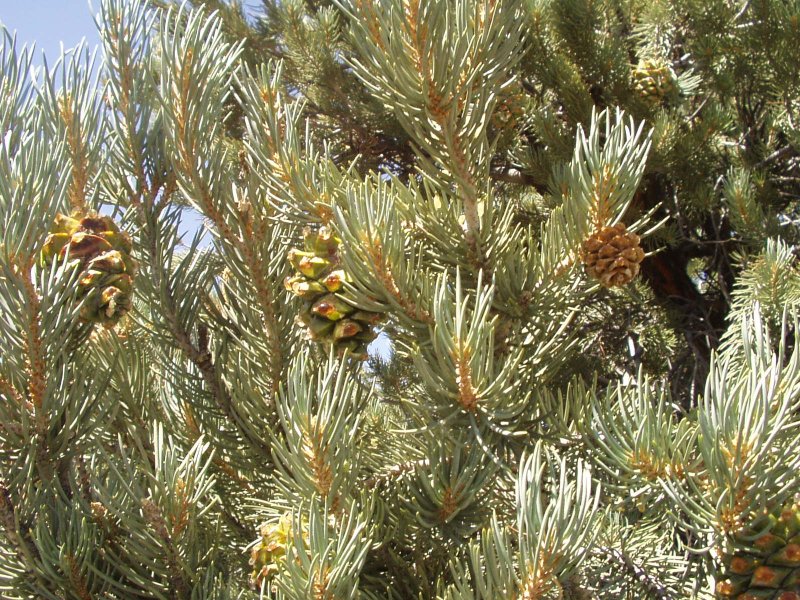
Single-leaf pinyon (Pinus monophylla subsp. monophylla)
Scientific classification Edit this classification
Kingdom: Plantae
Clade: Tracheophytes
Clade: Gymnospermae
Division: Pinophyta
Class: Pinopsida
Order: Pinales
Family: Pinaceae
Genus: Pinus
Subgenus: P. subg. Strobus
Section: P. sect. Parrya
Subsection: P. subsect. Cembroides
Engelm.[1]
Species

See text.

The pinyon or piñón pine group grows in southwestern North America, especially in New Mexico, Colorado, Arizona, and Utah, with the single-leaf pinyon pine just reaching into southern Idaho. The trees yield edible nuts, which are a staple food of Native Americans, and widely eaten as a snack and as an ingredient in New Mexican cuisine. The name comes from the Spanish pino piñonero, a name used for both the American varieties and the stone pine common in Spain, which also produces edible nuts typical of Mediterranean cuisine. Harvesting techniques of the prehistoric American Indians are still used today to collect the pinyon seeds for personal use or for commercialization. The pinyon nut or seed is high in fats and calories. In the western United States, pinyon pines are often found in pinyon–juniper woodlands.

Pinyon wood, especially when burned, has a distinctive fragrance, making it a common wood to burn in chimeneas.[2] Pinyon pine trees are also known to influence the soil in which they grow by increasing concentrations of both macronutrients and micronutrients.[3]

Some of the species are known to hybridize, the most notable ones being P. quadrifolia with P. monophylla, and P. edulis with P. monophylla.

The two-needle piñón (Pinus edulis) is the official state tree of New Mexico.

Evolutionary history

[edit]

The evolutionary origins of the piñóns appear to coincide with the Laramide Orogeny.[4]

Species

[edit]
Range of the two-needle piñón, one of the two most important species in the United States
Range of the three subspecies of the single-leaf pinyon
A single-leaf pinyon from Mono County, California. The short stature and rounded crown are typical of the pinyon.
A forest of two-needle piñóns in Grand Canyon National Park, Arizona

Genetic differentiation in the pinyon pine has been observed associated to insect herbivory and environmental stress.[5][6] There are eight species of true pinyon (Pinus subsection Cembroides):[7]

These additional Mexican species are also related, and mostly called pinyons:

The three bristlecone pine species of the high mountains of the southwestern United States, and the lacebark pines of Asia are closely related to the pinyon pines.[citation needed]

Piñón seeds in Native American cuisine

[edit]

The seeds of the pinyon pine, known as "pine nuts" or "piñóns", are an important food for American Indians living in the mountains of the North American Southwest. All species of pine produce edible seeds, but in North America only pinyon produces seeds large enough to be a major source of food.[8]

The pinyon has likely been a source of food since the arrival of Homo sapiens in the Great Basin and American Southwest (Oasisamerica). In the Great Basin, archaeological evidence indicates that the range of the pinyon pine expanded northward after the Ice Age, reaching its northernmost (and present) limit in southern Idaho about 4000 BCE.[9] Early Native Americans undoubtedly collected the edible seeds, but, at least in some areas, evidence of large quantities of pinyon nut harvesting does not appear until about 600 CE. Increased use of pinyon nuts was possibly related to a population increase of humans and a decline in the number of game animals, thereby forcing the Great Basin inhabitants to seek additional sources of food.[10]

The suitability of pinyon seeds as a staple food is reduced because of the unreliability of the harvest. Abundant crops of cones and seeds occur only every two to seven years, averaging a good crop every four years. Years of high production of seed tend to be the same over wide areas of the pinyon range.[11]

Traditional method of harvesting

[edit]

In 1878, naturalist John Muir described the Indian method of harvesting pinyon seeds in Nevada. In September and October, the harvesters knocked the cones off the pinyon trees with poles, stacked the cones into a pile, put brushwood on top, lit it, and lightly scorched the pinyon cones with fire. The scorching burned off the sticky resin coating the cones and loosened the seeds. The cones were then dried in the sun until the seeds could be easily extracted. Muir said the Indians closely watched the pinyon trees year-round and could predict the scarcity or abundance of the crop months before harvest time.[12] In 1891, naturalist B. H. Dutcher observed the harvesting of pinyon seeds by the Panamint Indians (Timbisha people) in the Panamint Range overlooking Death Valley, California. The harvesting method was similar to that observed by Muir in Nevada, except that the pinyon seeds were extracted immediately after the cones had been scorched in the brushwood fire.[13]

Both the above accounts described a method of extracting the seeds from the green cones. Another method is to leave the cones on the trees until they are dry and brown, then beat the cones with a stick, knocking the cones loose or the seeds loose from the cones which then fall to the ground where they can be collected.[14] The nomadic hunter-gathering people of the Great Basin usually consumed their pinyon seeds during the winter following harvest; the agricultural Pueblo people of the Rio Grande valley of New Mexico could store them for two or three years in pits.[15]

Each pinyon cone produces 10 to 30 seeds and a productive stand of pinyon trees in a good year can produce 250 pounds (110 kg) on 1 acre (0.40 ha) of land. An average worker can collect about 22 pounds (10.0 kg) of unshelled pinyon seed in a day's work. Production per worker of 22 pounds of unshelled pinyon seeds—more than one-half that in shelled seeds—amounts to nearly 30,000 calories of nutrition. That is a high yield for the effort expended by hunter-gatherers. Moreover, the pinyon seeds are high in fat, often in short supply for hunter-gatherers.[16]

Relationship with wildlife

[edit]
Ips confusus trapped in a glob of sap formed by a pitch tube as a defense mechanism by the pinyon pine

The pinyon jay (Gymnorhinus cyanocephalus) takes its name from the tree, and pinyon nuts form an important part of its diet. It is very important for regeneration of pinyon woods, as it stores large numbers of the seeds in the ground for later use, and excess seeds not used are in an ideal position to grow into new trees. The Mexican jay is also important for the dispersal of some pinyon species, as, less often, is the Clark's nutcracker. Many other species of animal also eat pinyon nuts, without dispersing them.

Ips confusus, known as the pinyon ips, is a bark beetle that kills weak or damaged pinyon pine trees. The beetles feed on the xylem and phloem of the trees. As a defense, the trees flood the holes produced by the beetles with sap.[17]

References

[edit]
[edit]
Revisions and contributorsEdit on WikipediaRead on Wikipedia
from Grokipedia
Pinyon pines are a of approximately 15 species and within Pinus subsection Cembroides (section Parrya, Strobus), comprising small to medium-sized trees or shrubs native to the arid and semi-arid regions of western , from the to south-central . These pines are distinguished by their secondary needle leaves, fascicle sheaths, and typically enlarged, functionally wingless seeds encased in a thickened sclerotesta, which facilitate dispersal by birds and rather than wind. The most widespread species include ( pinyon), (singleleaf pinyon), and (Mexican pinyon), which collectively form extensive piñon-juniper woodlands covering millions of hectares. Botanically, pinyon pines exhibit morphological diversity adapted to their harsh habitats, with tree heights ranging from 5 to 21 meters and diameters up to 60 cm, often developing dense, rounded or irregular crowns on rocky slopes and mesas at elevations of 1,500 to 3,000 meters. Needle characteristics vary by species: for instance, P. edulis has 1-2( -3) blue-green needles per fascicle, 20-40 mm long, while P. monophylla features solitary, rigid needles 25-35 mm in length that persist for 5-12 years. Seed cones are ovoid, 3-6 cm long, maturing in two years and producing large, nutritious seeds (piñon nuts) that are 10-15 mm long and wingless, making them a vital food source for and humans. These trees are long-lived, with some individuals exceeding 1,000 years in age, and grow slowly, often taking decades to reach maturity. Ecologically, pinyon pines dominate semi-arid woodlands and shrublands, thriving in environments with annual precipitation of 200-700 mm, temperatures ranging from -35°C to 44°C, and well-drained, rocky soils derived from or . They form symbiotic relationships with mycorrhizal fungi to enhance uptake in nutrient-poor soils and are key in ecosystems that support diverse understory plants, birds like the and (which cache seeds and promote regeneration), and mammals such as . These pines have diversified relatively recently, from the to (approximately 9.5-16 million years ago), with niche divergence driven by climatic heterogeneity in arid hotspots like the Mexican highlands. However, many taxa face threats from drought, fire suppression leading to dense stands, and habitat conversion, with five species listed as vulnerable or endangered by the IUCN. Culturally and economically, pinyon pines hold significant value, particularly for their edible seeds, which have been harvested by for and remain a commercial crop in the southwestern U.S., yielding high-fat, protein-rich nuts used in . P. edulis, for example, is the state tree of , symbolizing the region's arid landscapes, while the pines' resin and needles have traditional medicinal uses. Conservation efforts focus on managing expansion and protecting genetic diversity amid , underscoring their role in maintaining in fragile dryland ecosystems.

Taxonomy and Evolution

Classification

Pinyon pines belong to the genus in the Pinaceae, placed within Strobus (soft pines), section Parrya, and subsection Cembroides. This subsection encompasses approximately 11-15 and , primarily distributed in western and , distinguished from other groups by their adaptation to arid environments. The defining morphological traits of subsection Cembroides include small to medium-sized or shrubs typically reaching 5-15 meters in height, with short, stout trunks and dense, rounded crowns. Needles occur in fascicles of 1 to 5, measuring 1-4 cm long, and are often or slightly curved. Cones are ovoid to globose, maturing in two years and measuring 3-8 cm long, with thick, resinous scales that open upon ripening to release large, wingless or short-winged seeds (10-20 mm long) specifically adapted for dispersal by birds such as and . These seed characteristics contrast sharply with the winged seeds of related subsections, emphasizing animal-mediated dispersal in semiarid habitats. Historically, the taxonomic framework for pinyon pines traces back to George Engelmann's 1848 description of , the first species formally named in the group, followed by his 1880 revision of the genus Pinus where he established subsection Cembroides to separate these nut pines from subsection Cembrae (stone pines) due to differences in seed morphology and cone structure. Earlier classifications sometimes grouped pinyons with Eurasian stone pines or in a separate subgenus Ducampopinus, but molecular phylogenies have confirmed their placement within subgenus Strobus, resolving debates over in section Parrya. Modern revisions, including Aljos Farjon's 2010 handbook, affirm this structure while incorporating genetic data to refine species boundaries. The common name "pinyon" derives from the Spanish piñón, referring to the edible pine nuts (seeds) harvested from these trees, a term introduced by early European explorers in the American Southwest. This etymology highlights the cultural and ecological significance of the seeds in indigenous and communities.

Evolutionary history

Pinyon pines, classified within Pinus subsection Cembroides of subgenus Strobus, originated as part of the broader diversification of the Pinus during the , approximately 125 million years ago, when the crown group of pines emerged in . The split between subgenus Strobus (including pinyons) and subgenus Pinus occurred around the mid-Cretaceous, driven by ecological pressures such as competition with angiosperms. analyses, calibrated with data, estimate the divergence and crown age of subsection Cembroides during the to , approximately 9.5–16 million years ago, marking the initial radiation of pinyon-like lineages distinct from other Pinus species. Fossil evidence underscores these estimates, with the earliest records of pinyon pines appearing in Late deposits across the , such as those in the Creede Formation of . These fossils, including winged seeds and cone fragments attributable to early Cembroides-like forms, illustrate proto-pinyon morphology adapted to emerging semi-arid conditions, predating more modern species by millions of years. Such paleobotanical remains confirm the presence of the lineage in well before the , providing direct calibration points for phylogenetic models. The Miocene epoch saw profound adaptations in pinyon pines coinciding with and regional in western , which fragmented forests and expanded xeric habitats. This period fostered traits like enhanced through reduced via short, needles and deep root systems, alongside fire resistance in some taxa via semi-serotinous cones that release seeds post-fire. These evolutionary responses enabled pinyon pines to thrive in stressful, low-rainfall environments, shifting from mesic ancestral niches to the arid woodlands characteristic of their modern ecology. Genetic studies highlight the role of Pleistocene oscillations in shaping pinyon pine diversity, revealing hybridization events in glacial refugia that promoted adaptive . For instance, nuclear and analyses show that such as Pinus californiarum originated from ancient crosses between P. edulis and P. monophylla approximately 72,000–150,000 years ago, enhancing resilience to fluctuating . These findings, supported by modeling, indicate recurrent within the subsection during expansions, though without direct phylogenetic ties to Mediterranean Pinus , which belong to a separate .

Description

Physical characteristics

Pinyon pines are small to medium-sized , typically growing as or shrubs to heights of 5 to 15 meters, though some specimens reach up to 21 meters under optimal conditions. They often exhibit a bushy, rounded or irregular crown that can be as wide as the tree's height, with multi-stemmed forms common in drier, lower-elevation sites and more single-trunked structures at higher elevations. The bark is reddish-brown to gray, initially smooth on young trees but developing into rough, scaly ridges and deep fissures with age, providing protection in harsh environments. The needles are arranged in fascicles of 1 to 5, depending on the , and are short, rigid, and sharply pointed, measuring 2 to 5 cm in length and 1 to 1.5 mm in width. They are dark green to blue-green, with prominent stomatal lines on all surfaces and thick, waxy cuticles that minimize water loss, enabling persistence for 4 to 12 years. These adaptations contribute to the trees' in semiarid regions. Reproductive structures include ovoid to nearly globose cones, 3 to 8 cm long and wide when open, with thick, woody scales that mature over two to three seasons and dehisce naturally upon ripening. The cones produce 10 to 25 large, wingless seeds per cone, each 10 to 20 mm long, ellipsoid to obovoid in shape, with a thin shell and nutrient-rich , making them edible and a valuable source. The wood of pinyon pines is generally heavy, dense, and resinous, with a yellow to reddish heartwood that exhibits fine and high heat value, historically utilized for tools, posts, and . Growth is slow, with mean annual radial increments of about 0.09 to 0.18 in arid conditions, reflecting annual rings that indicate long lifespans exceeding 700 years in some individuals.

Reproduction and growth

Pinyon pines are monoecious conifers with wind-pollinated reproduction, where male strobili release pollen in late spring or early summer, typically by mid-June, coinciding with the receptivity of female ovulate cones. Fertilization occurs the following spring, and cone development spans two to three seasons, with seeds maturing after 24 to 26 months. Seed production is irregular, characterized by mast seeding events every 3 to 7 years, resulting in low annual seed set but synchronized large crops that enhance reproductive success across populations. Seed dispersal in pinyon pines relies primarily on birds, such as , which cache wingless in the soil after extracting them from cones, facilitating both local and long-distance transport up to several miles. This caching behavior leads to high seed mortality, with many cached consumed by the dispersers or predators, yet the surviving portion enables genetic migration and establishment in new areas. Germination of pinyon pine seeds is epigeal and occurs in spring following dispersal, with fresh seeds exhibiting 85 to 95 percent viability after 28 to 90 days of cold stratification, though viability declines rapidly within a year without storage. Successful establishment is heavily dependent on ectomycorrhizal fungi, which form symbiotic associations with seedling roots to enhance nutrient uptake, particularly and , in nutrient-poor soils; without this symbiosis, seedling survival and growth are severely limited. Initial seedling growth is slow, averaging 2.5 to 5 cm in height per year, increasing to 10 to 15 cm per year in saplings, with trees reaching reproductive maturity in 20 to 50 years under favorable conditions. Pinyon pines exhibit episodic growth patterns closely tied to , with annual height increments of 5 to 15 cm in mature trees during wet years and negligible growth during droughts. Lifespans range from 200 to 900 years or more, allowing persistence in arid environments, though individuals often exceed 300 years on marginal sites. In response to disturbances like , pinyon pines regenerate primarily from off-site seeds rather than resprouting, as their thin bark renders adults highly susceptible to lethal crown scorch, with post-fire establishment relying on seed banks and dispersal.

Distribution and Habitat

Geographic range

Pinyon pines, collectively referring to several species in the Pinus subsection Cembroides, are native to the and . Their primary range encompasses the states of , , , , and , with disjunct populations in , southern , western , and trans-Pecos . In , the distribution extends into the northern states of Chihuahua, , , , , and , spanning approximately 32° to 40° N . This range is characterized by semi-arid to arid conditions across diverse physiographic provinces, including the , Basin and Range, and the northern . Elevational distribution of pinyon pines typically occurs between 1,200 and 2,800 meters in , plateaus, and lower mountain slopes, where they form dominant components of ecosystems. In the and eastern California, disjunct stands of species like occupy isolated mountain ranges at these elevations, transitioning from desert shrublands below to mixed forests above. These woodlands cover extensive areas, estimated at 19 to 40 million hectares in the United States alone, reflecting adaptations to rocky, well-drained soils in regions with limited precipitation. Introduced ranges of pinyon pines remain limited and rare outside their native , with occasional cultivation in arboreta and botanical gardens in (e.g., and ) for ornamental purposes, without naturalization or widespread establishment. Historically, pinyon pine distributions underwent significant post-glacial expansions from refugia in the during the , facilitated by warming climates and continuous woodland corridors that allowed northward and upslope migration into current ranges. However, 20th-century droughts, particularly severe episodes in the , have led to range contractions through widespread tree mortality, exacerbated by insect outbreaks and altered regimes. As of 2024, ongoing droughts and warming have caused further localized contractions in the southern range, with some evidence of upslope migration in northern populations.

Ecological adaptations

Pinyon pines exhibit remarkable through physiological and morphological adaptations suited to arid environments. These trees develop extensive deep systems, often extending up to 10 meters or more into the to access during prolonged dry periods. Additionally, they employ stomatal closure to minimize water loss, reducing rates by approximately 50% during peak summer months as declines. This mechanism allows pinyon pines to maintain hydraulic integrity and survive extended droughts, though it limits carbon assimilation and growth. In fire-prone semi-desert landscapes, pinyon pines demonstrate adaptations that enhance survival under infrequent but intense events. Mature individuals possess bark thickness ranging from 1.3 to 2.2 cm, which insulates the layer from lethal heat during low- to moderate-severity surface fires. However, their cones are non-serotinous and release opportunistically rather than in direct response to fire cues, relying instead on post-fire mineral exposure for establishment. Repeated high-severity fires can exceed these tolerances, leading to widespread mortality and potential conversion of pinyon-juniper woodlands to shrublands or grasslands. Pinyon pines thrive in nutrient-poor, rocky substrates typical of their habitats, particularly soils with low fertility and high alkalinity. These trees are well-adapted to skeletal soils with limited and moisture retention, where they form stable associations on exposed slopes and plateaus. Associations with nitrogen-fixing shrubs such as species facilitate establishment by enriching nitrogen levels, compensating for the inherently low availability in these environments. These species display strong across extreme temperature gradients, enduring winter lows of -30°C and summer highs exceeding 40°C in continental semi-arid regimes. Nonetheless, prolonged droughts can overwhelm these tolerances, as evidenced by the 2002–2004 regional die-off event, where up to 90% of pinyon pines perished in some northern sites due to compounded water stress and outbreaks.

Species Diversity

Major species

The major species of pinyon pine belong to the subsection Cembroides within the genus Pinus, characterized by their edible seeds and adaptation to arid environments of the and . Among these, , commonly known as Colorado pinyon or two-needle pinyon, is the most widespread, dominating pinyon-juniper woodlands in the region and extending across , , , and . It features two needles per fascicle, typically 2-3 cm long, and produces relatively large seeds 10-14 mm in length, with mature trees capable of yielding over 9 kg of seeds in abundant crop years, making it a key source for harvest. Pinus monophylla, or singleleaf pinyon, is distinguished by its one to three needles per fascicle (predominantly single), which are stout and 2-6 cm long, enabling extreme in the and regions of , , and . Its cones are smaller and more rounded, measuring 4-8 cm in length, and it thrives in harsher, lower-elevation sites compared to P. edulis, with slower growth and a more compact form reaching 6-12 m in height. Further south, , the Mexican pinyon, exhibits two to three needles per fascicle and represents the southernmost extent of the group, ranging from into and . It is notable for commercial seed harvesting in , where its nuts are a primary economic resource, and includes varieties like P. cembroides var. orbiculata in , which features slightly broader cones averaging 5-7 cm. The species grows to about 7 m tall and is adapted to warmer, semi-arid conditions with soils. Other notable species include Pinus quadrifolia, or four-needle pinyon, which is rarer and confined to higher elevations in , , and , with its distinctive four needles per fascicle and cones up to 10 cm long, contributing to localized biodiversity in montane woodlands. Similarly, Pinus remota, known as papershell pinyon, occurs disjunctly on the in , characterized by thin-shelled seeds that facilitate easier extraction, and it hybridizes with P. edulis in overlapping areas. Hybrid zones, such as those between P. edulis and P. monophylla in , demonstrate interspecific at range margins, but reproductive barriers including reduced seed production and viability in early-generation hybrids limit widespread admixture, preserving distinctions while allowing adaptation to extreme habitats.

Intraspecific variation

Pinyon pine display notable intraspecific , particularly in peripheral populations where diversity is often maintained at high levels despite historical bottlenecks. For instance, an isolated northern population of at Owl Canyon, Colorado, retains substantial allozyme diversity across 17 loci, with little loss attributable to past population reductions, challenging typical expectations of reduced variation in marginal habitats. Allozyme analyses in P. edulis reveal microgeographic differentiation linked to environmental heterogeneity, such as gradients, with polymorphic loci showing clinal patterns in frequencies. Morphological variations within pinyon pine species include differences in needle length and cone dimensions that correlate with environmental factors. In Pinus monophylla, needle lengths range from 2 to 6 cm across ecotypes, reflecting adaptations to varying aridity levels. Cone size exhibits clinal variation with elevation, where length and width increase in higher, colder, and wetter sites, potentially enhancing dispersal or protection in those conditions. Several subspecies and varieties are recognized within pinyon pines, though their taxonomic status remains debated. For example, var. fallax, found in , features slender, shorter needles compared to the typical variety and is acknowledged by some authorities like the USDA, but often not distinguished in broader classifications due to overlapping traits. These intraspecific variations hold adaptive significance, correlating with local regimes to improve survival and reproduction. Morphological traits like larger and seed sizes in wetter, higher-elevation sites facilitate better and establishment under increased availability, while needle adjustments aid in in arid peripheral areas.

Human Uses

Culinary applications

The seeds of pinyon , known as pine nuts or piñons, possess a rich nutritional profile that makes them a valuable food source. Per 100 grams of dried pinyon pine nuts, they contain approximately 629 kcal (or 2,630 kJ), with about 61% of their weight consisting of fats—predominantly unsaturated fatty acids, including around 31% polyunsaturated and 18% monounsaturated. These nuts are also notable for their pinolenic content, a unique omega-6 fatty acid comprising 14-20% of total fatty acids, which has been associated with potential health benefits such as appetite suppression and support for metabolic health. Protein levels are around 12% by weight, contributing to their role as a nutrient-dense option, though lower than some other nuts. In Native American traditions, particularly among the Pueblo peoples, pinyon pine nuts have long served as a with deep cultural significance. These communities ground the nuts into or meal to prepare traditional dishes such as (a porridge-like beverage) and cakes, often combining them with or other ingredients for sustenance during harsh seasons. The nuts were commonly roasted or eaten raw, providing high-calorie energy essential for survival in arid environments, and their harvest was accompanied by ceremonies expressing gratitude to the tree, involving songs, dances, and prayers to ensure bountiful yields. This practice underscores the nuts' role not only as nourishment but also as a symbol of resilience and spiritual connection in Southwestern Indigenous cultures. In modern cuisines, pinyon pine nuts are incorporated as a flavorful ingredient in both traditional and contemporary dishes, prized for their buttery, slightly resinous taste. They feature prominently in pesto recipes, where they are blended with , , and to create a regional New Mexican variation that highlights local flavors. Internationally, they appear in desserts like , adding crunch and richness to layered pastries, or as toppings for snacks, salads, and baked goods. production is low and variable, with recent good years yielding tens of tons primarily from wild harvests in the Southwest, supplementing larger imports for broader market use. Preparation methods for pinyon pine nuts emphasize enhancing their flavor while mitigating any natural bitterness, often attributed to like in raw nuts. Roasting at temperatures between 120-150°C (250-300°F) for 10-20 minutes in an or skillet develops a golden color and nutty aroma, reducing astringency and improving ; lower temperatures allow for gentler cooking to avoid over-browning. After roasting, the nuts should be cooled completely before storage in cool, dry conditions—ideally in airtight containers in the or freezer—to prevent oxidation of their high content, which can lead to rancidity within months at room temperature. This approach ensures longevity, with properly stored roasted nuts lasting up to six months refrigerated or a year frozen.

Harvesting and processing

Harvesting of pinyon pine nuts occurs primarily in the fall, from to , when cones mature and open to release the seeds. Traditional Native American methods, employed by tribes such as the , Paiute, and Pueblo peoples, involve hand-gathering the nuts from the ground or dislodging them from branches using long poles or by beating the limbs with sticks to drop cones onto tarps spread below the trees. These communal efforts often turn into family and community events, fostering social bonds during the harvest season, with some groups like the Washoe incorporating ceremonial elements such as the Pine Nut Dance to celebrate the gathering. Yields from individual trees vary widely, but a mature tree in an average year produces about 2 to 5 kg of nuts, increasing to over 9 kg during abundant mast years. Historical tools for collection included woven baskets and bags made from skins to carry the sticky nuts without damaging them, allowing for efficient transport back to campsites where initial cleaning occurred by with wind over wicker trays to remove debris like cone scales and . After gathering, traditional processing focused on the nuts in the sun or over low fires to prevent mold, followed by in hot sand or coals to enhance flavor and ease shell removal, a step often done manually by cracking with rocks or teeth. In modern commercial harvesting, primarily in regions like and , operations combine wild collection from public lands with limited cultivation in orchards, where mechanical shakers vibrate tree trunks to dislodge nuts onto ground cloths or mechanical catchers, though hand-picking remains dominant due to the rugged terrain of pinyon-juniper woodlands. begins with cleaning to remove foreign material, followed by kiln-drying at controlled temperatures around 40-50°C to reduce moisture content to below 10% for storage stability and to facilitate shelling. Shelling is highly labor-intensive, typically performed by hand or simple machines that crack the hard outer shell, yielding 35-40% edible kernel by weight from the in-shell nuts, with the remainder discarded as shell waste. U.S. Forest Service and Bureau of Land Management regulations restrict personal non-commercial harvests to sustainable levels, typically 10-25 pounds (4.5-11 kg) per household per season depending on the agency and location, with permits required for larger or commercial quantities to protect tree populations. These limits help mitigate overharvesting in sensitive ecosystems. However, recent droughts and have led to poor yields in many years, impacting both traditional gathering and commercial viability as of 2025. Pinyon nut production exhibits pronounced boom-bust cycles driven by mast seeding, where heavy crop years alternate with lean ones every 2-5 years due to environmental cues like temperature and precipitation, leading to unpredictable supplies and fluctuating prices. Labor shortages, exacerbated by the physically demanding nature of picking and shelling in remote areas, have contributed to declining domestic output, prompting U.S. markets to increasingly rely on imports from China—primarily from non-pinyon species like Pinus koraiensis—to meet demand for pine nuts in culinary applications.

Other traditional and modern uses

of the American Southwest have long utilized pinyon pine wood as a of for heating, cooking, and ceremonial fires, as well as for construction purposes such as reinforcing structures, building roofs, fences, and small tools. The wood's durability made it suitable for crafting household items like cradles and agricultural equipment, while the needles were woven into baskets and tied into bundles for ceremonial use. Pinyon , valued for its properties, served traditionally as a natural glue and waterproofing agent, and was burned as in rituals to cleanse spaces, honor ancestors, and invoke protection. In , bark teas prepared from pinyon pine were employed by Native American communities to alleviate coughs, sore throats, and , owing to the effects of such as alpha-pinene and present in the bark. Folklore among Southwestern tribes also attributes supportive properties to pinyon seeds for and as a nourishing substitute for in care. Modern industrial applications of pinyon pine remain limited by the tree's small stature, with timber occasionally used for rustic furniture and crafts despite its unsuitability for large-scale production. Essential oils distilled from the needles are popular in for their fresh, woody scent, promoting relaxation, focus, and respiratory support through diffusion or topical blends. from pinyon pine shows potential as a source for biofuels, with studies exploring its conversion into via thinning operations in pinyon-juniper woodlands. Pinyon pine holds deep cultural significance for tribes such as the , who regard it as a "" symbolizing sustenance, resilience, and spiritual connection in ceremonies and daily practices. In contemporary contexts, nut festivals organized by tribes like the Walker River Paiute promote eco-tourism, celebrating pinyon heritage through events that highlight sustainable harvesting and cultural traditions.

Ecology and Conservation

Interactions with wildlife

Pinyon pines form key symbiotic and trophic interactions with , primarily centered on , predation, and resource utilization. (Nucifraga columbiana) serves as a primary seed disperser for like Pinus edulis, caching between 2,000 and 30,000 per individual during a typical season in areas with abundant cone crops. These birds retrieve many of their caches for consumption, but some are often forgotten, enabling seed germination and contributing to forest regeneration through scatter-hoarding at depths of 2–3 cm on suitable south-facing slopes. Rodents play a dual role as seed predators and occasional dispersers, with species such as the piñon mouse (Peromyscus truei) consuming 50–80% of fallen seeds on the forest floor, thereby limiting local seedling establishment. These small mammals harvest seeds voraciously, often creating larder hoards or scatter caches, though predation rates are particularly high during mast years when seed abundance temporarily satiates foragers. Corvid birds like the (Gymnorhinus cyanocephalus) also interact with seeds, aiding long-distance dispersal by transporting up to 50 seeds at a time in their expandable , but their retrieval of caches can reduce the number of seeds available for local tree establishment. Insect associates include both detrimental and potentially mutualistic species. The pinyon ips beetle (Ips confusus) infests weakened trees, boring into the and causing widespread mortality across pinyon-juniper woodlands, often exacerbating damage during droughts by vectoring associated fungal pathogens. While pinyon pines are primarily wind-pollinated, certain beetles visit male cones and may contribute to supplemental transfer in mutualistic interactions, though this role is secondary to anemophily. Among vertebrates, (Odocoileus hemionus) browse on pinyon pine needles, particularly during winter when they comprise 1–5% of the deer's diet, providing nutritional browse in arid woodlands. The pinyon jay exhibits strong dependence on pinyon mast crops for its primary food source, with flocks relying on periodic cone abundance for breeding and survival; declines of over 80% in the last 50 years are closely tied to habitat loss and degradation of pinyon pine stands.

Threats and conservation status

Pinyon pine populations face significant threats from , particularly intensified droughts and elevated temperatures that exacerbate water stress and lead to widespread mortality. For instance, severe droughts in the , such as those from 2017 to 2018 and 2020 to 2021, have caused extensive dieback in pinyon-juniper woodlands, with pinyon pines experiencing high levels of canopy loss and tree death across southeastern and adjacent regions due to acute water deficits. These events build on earlier episodes, like the 2002 drought, which killed millions of pinyon pines over 1.2 million hectares through carbon starvation and hydraulic failure. In response to warming, pinyon pine distributions show limited upslope shifts, with studies indicating little upward migration despite projections for climate-driven changes, though recruitment may lag behind climate velocities, increasing vulnerability. Human activities compound these pressures by disrupting regeneration and habitat continuity. Overharvesting of pine nuts, a traditional practice, can reduce seed availability for natural recruitment if not regulated, altering reproduction dynamics in high-value stands, though sustainable gathering in protected areas mitigates this. Urban expansion and associated landscape fragmentation further isolate populations, limiting and . Livestock grazing historically and currently suppresses seedling establishment by consuming young plants and compacting soil, thereby reducing regeneration rates in grazed woodlands. In the , intensive of pinyon pines for production, particularly to fuel southwestern and operations, drastically altered woodland structure and persists as a legacy of sparse, uneven-aged stands. Pests and diseases pose additional risks, often amplified by drought and warming conditions that weaken tree defenses. Bark beetles, such as the pinyon ips (Ips confusus), have caused extensive mortality, infecting over 1.2 million hectares during the early 2000s drought and continuing in sporadic outbreaks, with warmer temperatures extending their active seasons and increasing attack success on stressed trees. Dwarf mistletoe (Arceuthobium divaricatum), a , infects pinyon pines, causing branch deformities, reduced growth, and heightened susceptibility to secondary pests like bark beetles. Conservation efforts aim to safeguard pinyon pines through protection, monitoring, and active restoration. Many populations are preserved within national parks, such as Zion National Park, where projects focus on watershed restoration and connectivity to buffer against fragmentation and climate stressors. According to the IUCN Red List, key species like Pinus remota are assessed as Least Concern, though localized threats warrant ongoing vigilance for rarer variants. Restoration initiatives, including direct seeding and planting, have shown variable success rates, often below 30% due to post-planting drought and herbivory, emphasizing the need for site preparation and microsite selection. In 2024, the U.S. Forest Service and Bureau of Land Management advanced plans for drought-resilient management, including multiyear studies on core woodlands to develop tools for enhancing landscape resilience against fire, drought, and pests through targeted plantings and reduced stressors. As of 2024, the U.S. Fish and Wildlife Service is considering Endangered Species Act protections for the pinyon jay due to its >80% population decline, while the Bureau of Land Management released updated guidelines for conserving pinyon-juniper woodlands against climate and habitat threats.

References

Add your contribution
Related Hubs
User Avatar
No comments yet.