


Community hub
Recent from talks
Contribute something
Nothing was collected or created yet.
Old-growth forest
View on Wikipedia

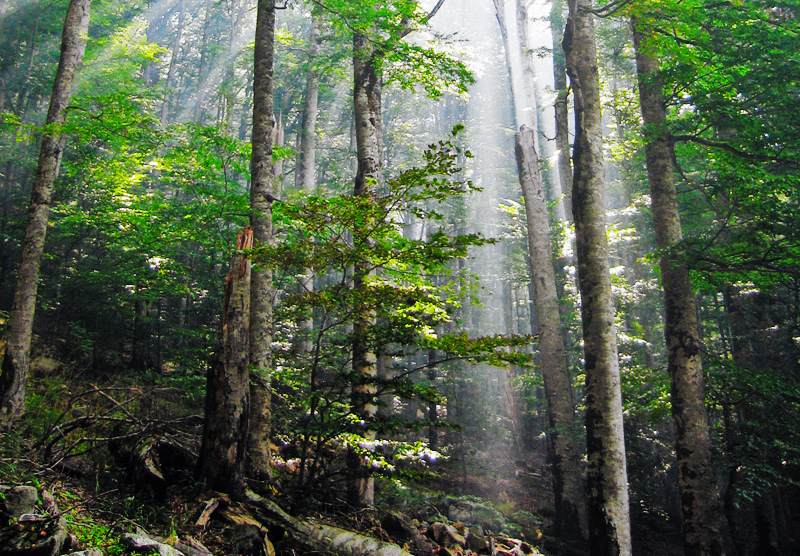
An old-growth forest[a] or primary forest is a forest that has developed over a long period of time without disturbance. Due to this, old-growth forests exhibit unique ecological features.[1] The Food and Agriculture Organization of the United Nations defines primary forests as naturally regenerated forests of native tree species where there are no clearly visible indications of human activity and the ecological processes are not significantly disturbed. One-third (34 percent) of the world's forests are primary forests.[2] Old-growth features include diverse tree-related structures that provide diverse wildlife habitats that increases the biodiversity of the forested ecosystem. Virgin or first-growth forests are old-growth forests that have never been logged. The concept of diverse tree structure includes multi-layered canopies and canopy gaps, greatly varying tree heights and diameters, and diverse tree species and classes and sizes of woody debris.

As of 2020[update], the world has 1.11 billion ha (2.7 billion acres) of primary forest remaining. Combined, three countries (Brazil, Canada, and Russia) host more than half (61 percent) of the world's primary forest. The area of primary forest has decreased by 81 million ha (200 million acres) since 1990, but the rate of loss more than halved in 2010–2020 compared with the previous decade.[3]
Old-growth forests are valuable for economic reasons and for the ecosystem services they provide.[4][5] This can be a point of contention when some in the logging industry desire to harvest valuable timber from the forests, destroying the forests in the process, to generate short-term profits, while environmentalists seek to preserve the forests in their pristine state for benefits such as water purification, flood control, weather stability, maintenance of biodiversity, and nutrient cycling. Moreover, old-growth forests are more efficient at sequestering carbon than newly planted forests and fast-growing timber plantations, thus preserving the forests is vital to climate change mitigation.[6][7]
Characteristics
[edit]
Old-growth forests tend to have large trees and standing dead trees, multilayered canopies with gaps that result from the deaths of individual trees, and coarse woody debris on the forest floor.[8] The trees of old-growth forests develop distinctive attributes not seen in younger trees, such as more complex structures and deeply fissured bark that can harbor rare lichens and mosses.[9]
A forest regenerated after a severe disturbance, such as wildfire, insect infestation, or harvesting, is often called second-growth or 'regeneration' until enough time passes for the effects of the disturbance to be no longer evident. Depending on the forest, this may take from a century to several millennia. Hardwood forests of the eastern United States can develop old-growth characteristics in 150–500 years. In British Columbia, Canada, old growth is defined as 120 to 140 years of age in the interior of the province where fire is a frequent and natural occurrence. In British Columbia's coastal rainforests, old growth is defined as trees more than 250 years, with some trees reaching more than 1,000 years of age.[10] In Australia, eucalypt trees rarely exceed 350 years of age due to frequent fire disturbance.[11]
Forest types have very different development patterns, natural disturbances and appearances. A Douglas-fir stand may grow for centuries without disturbance while an old-growth ponderosa pine forest requires frequent surface fires to reduce the shade-tolerant species and regenerate the canopy species.[12] In the boreal forest of Canada, catastrophic disturbances like wildfires minimize opportunities for major accumulations of dead and downed woody material and other structural legacies associated with old growth conditions.[13] Typical characteristics of old-growth forest include the presence of older trees, minimal signs of human disturbance, mixed-age stands, presence of canopy openings due to tree falls, pit-and-mound topography, down wood in various stages of decay, standing snags (dead trees), multilayered canopies, intact soils, a healthy fungal ecosystem, and presence of indicator species.[14]
Biodiversity
[edit]
Old-growth forests are often biologically diverse, and home to many rare species, threatened species, and endangered species of plants and animals, such as the northern spotted owl, marbled murrelet and fisher, making them ecologically significant. Levels of biodiversity may be higher or lower in old-growth forests compared to second-growth forests, depending on specific circumstances, environmental variables, and geographic variables. Logging in old-growth forests is a contentious issue in many parts of the world. Excessive logging reduces biodiversity, affecting not only the old-growth forest itself, but also indigenous species that rely upon old-growth forest habitat.[15][16]
Studies in British Columbia's cedar-hemlock forests have shown that certain lichen species, particularly cyanolichens, are almost exclusively found in old-growth forests, being absent from even-aged stands (where all trees grew after a single disturbance event) of the same age (120–140 years). This suggests that true old-growth characteristics, like diverse forest structure and microclimate conditions, are necessary for some specialist species beyond just forest age.[17]
Inland temperate rainforests of British Columbia illustrate how old-growth structure can shape entire food webs. Deep winter snowpacks lift woodland caribou into the lower tree canopy, where their survival depends on heavy accumulations of fruticose "hair" lichens such as Bryoria and Alectoria. These lichens reach stand-level "hyperabundance" only in forests older than about 120–150 years, where long-lived canopy architecture and stable microclimates allow sustained growth. Industrial logging and short-rotation silviculture fail to reproduce these conditions, so the old-growth canopy itself functions as a keystone habitat, underpinning both specialist lichens and the endangered deep-snow mountain caribou that rely on them.[18]
Mixed age
[edit] |
Some forests in the old-growth stage have a mix of tree ages, due to a distinct regeneration pattern for this stage. New trees regenerate at different times from each other, because each of them has a different spatial location relative to the main canopy, hence each one receives a different amount of light. The mixed age of the forest is an important criterion in ensuring that the forest is a relatively stable ecosystem in the long term. A climax stand that is uniformly aged becomes senescent and degrades within a relatively short time to result in a new cycle of forest succession. Thus, uniformly aged stands are less stable ecosystems. Boreal forests are more uniformly aged, as they are normally subject to frequent stand-replacing wildfires.
Canopy openings
[edit]Forest canopy gaps are essential in creating and maintaining mixed-age stands.[19] Also, some herbaceous plants only become established in canopy openings, but persist beneath an understory. Openings are a result of tree death due to small impact disturbances such as wind, low-intensity fires, and tree diseases.[19]
Old-growth forests are unique, usually having multiple horizontal layers of vegetation representing a variety of tree species, age classes, and sizes, as well as "pit and mound" soil shape with well-established fungal nets.[20] As old-growth forest is structurally diverse, it provides higher-diversity habitat than forests in other stages. Thus, sometimes higher biological diversity can be sustained in old-growth forests, or at least a biodiversity that is different from other forest stages.[14]
Topography
[edit]
The characteristic topography of much old-growth forest consists of pits and mounds. Mounds are caused by decaying fallen trees, and pits (tree throws) by the roots pulled out of the ground when trees fall due to natural causes, including being pushed over by animals. Pits expose humus-poor, mineral-rich soil and often collect moisture and fallen leaves, forming a thick organic layer that is able to nurture certain types of organisms. Mounds provide a place free of leaf inundation and saturation, where other types of organisms thrive.[4]
Standing snags
[edit]Standing snags provide food sources and habitat for many types of organisms. In particular, many species of dead-wood predators, such as woodpeckers, must have standing snags available for feeding. In North America, the spotted owl is well known for needing standing snags for nesting habitat.[4]
Decaying ground layer
[edit]

Fallen timber, or coarse woody debris, contributes carbon-rich organic matter directly to the soil, providing a substrate for mosses, fungi, and seedlings, and creating microhabitats by creating relief on the forest floor. In some ecosystems such as the temperate rain forest of the North American Pacific coast, fallen timber may become nurse logs, providing a substrate for seedling trees.[4]
Soil
[edit]Intact soils harbor many life forms that rely on them. Intact soils generally have very well-defined horizons, or soil profiles. Different organisms may need certain well-defined soil horizons to live, while many trees need well-structured soils free of disturbance to thrive. Some herbaceous plants in northern hardwood forests must have thick duff layers (which are part of the soil profile). Fungal ecosystems are essential for efficient in-situ recycling of nutrients back into the entire ecosystem.[4]
Definitions
[edit]Ecological definitions
[edit]Stand age definition
[edit]Stand age can also be used to categorize a forest as old-growth.[21] For any given geographical area, the average time since disturbance until a forest reaches the old growth stage can be determined. This method is useful, because it allows quick and objective determination of forest stage. However, this definition does not provide an explanation of forest function. It just gives a useful number to measure. So, some forests may be excluded from being categorized as old-growth even if they have old-growth attributes just because they are too young. Also, older forests can lack some old-growth attributes and be categorized as old-growth just because they are so old. The idea of using age is also problematic, because human activities can influence the forest in varied ways. For example, after the logging of 30% of the trees, less time is needed for old-growth to come back than after removal of 80% of the trees. Although depending on the species logged, the forest that comes back after a 30% harvest may consist of proportionately fewer hardwood trees than a forest logged at 80% in which the light competition by less important tree species does not inhibit the regrowth of vital hardwoods.
Forest dynamics definition
[edit]From a forest dynamics perspective, old-growth forest is in a stage that follows an understory reinitiation stage.[22] Those stages are:
- Stand-replacing: Disturbance hits the forest and kills most of the living trees.
- Stand-initiation: A population of new trees becomes established.
- Stem-exclusion: Trees grow higher and enlarge their canopy, thus competing for the light with neighbors; light competition mortality kills slow-growing trees and reduces forest density, which allows surviving trees to increase in size. Eventually, the canopies of neighboring trees touch each other and drastically lower the amount of light that reaches lower layers. Due to that, the understory dies and only very shade-tolerant species survive.
- Understory reinitiation: Trees die from low-level mortality, such as windthrow and diseases. Individual canopy gaps start to appear and more light can reach the forest floor. Hence, shade-tolerant species can establish in the understory.
- Old-growth: Main canopy trees become older and more of them die, creating even more gaps. Since the gaps appear at different times, the understory trees are at different growth stages. Furthermore, the amount of light that reaches each understory tree depends on its position relative to the gap. Thus, each understory tree grows at a different rate. The differences in establishment timing and in growth rate create a population of understory trees that is variable in size. Eventually, some understory trees grow to become as tall as the main canopy trees, thereby filling the gap. This perpetuation process is typical for the old-growth stage. This, however, does not mean that the forest will be old-growth forever. Generally, three futures for old-growth stage forest are possible: 1) The forest will be hit by a disturbance and most of the trees will die, 2) Unfavorable conditions for new trees to regenerate will occur. In this case, the old trees will die and smaller plants will create woodland, and 3) The regenerating understory trees are different species from the main canopy trees. In this case, the forest will switch back to stem-exclusion stage, but with shade-tolerant tree species. 4) The forest in an old-growth stage can be stable for centuries, but the length of this stage depends on the forest's tree composition and the climate of the area. For example, frequent natural fires do not allow boreal forests to be as old as the coastal forests of western North America.
Of importance is that while the stand switches from one tree community to another, the stand will not necessarily go through old-growth stage between those stages. Some tree species have a relatively open canopy. That allows more shade-tolerant tree species to establish below even before the understory reinitiation stage. The shade-tolerant trees eventually outcompete the main canopy trees in stem-exclusion stage. Therefore, the dominant tree species will change, but the forest will still be in stem-exclusion stage until the shade-tolerant species reach old-growth stage.
Tree species succession may change tree species' composition once the old-growth stage has been achieved. For example, an old boreal forest may contain some large aspen trees, which may die and be replaced by smaller balsam fir or black spruce. Consequently, the forest will switch back to understory reinitiation stage.[23] Using the stand dynamics definition, old-growth can be easily evaluated using structural attributes. However, in some forest ecosystems, this can lead to decisions regarding the preservation of unique stands or attributes that will disappear over the next few decades because of natural succession processes. Consequently, using stand dynamics to define old-growth forests is more accurate in forests where the species that constitute old-growth have long lifespans and succession is slow.[4]
Social and cultural definitions
[edit]
Common cultural definitions and common denominators regarding what comprises old-growth forest, and the variables that define, constitute and embody old-growth forests include:
- The forest habitat possesses relatively mature, old trees;
- The tree species present have long continuity on the same site;
- The forest itself is a remnant natural area that has not been subjected to significant disturbance by mankind, altering the appearance of the landscape and its ecosystems, has not been subjected to logging (or other types of development such as road networks or housing), and has inherently progressed per natural tendencies.
Additionally, in mountainous, temperate landscapes (such as Western North America), and specifically in areas of high-quality soil and a moist, relatively mild climate, some old-growth trees have attained notable height and girth (DBH: diameter at breast height), accompanied by notable biodiversity in terms of the species supported. Therefore, for most people, the physical size of the trees is the most recognized hallmark of old-growth forests, even though the ecologically productive areas that support such large trees often comprise only a very small portion of the total area that has been mapped as old-growth forest.[25] (In high-altitude, harsh climates, trees grow very slowly and thus remain at a small size. Such trees also qualify as old growth in terms of how they are mapped, but are rarely recognized by the general public as such.)
The debate over old-growth definitions has been inextricably linked with a complex range of social perceptions about wilderness preservation, biodiversity, aesthetics, and spirituality, as well as economic or industrial values.[13][26]
Economic definitions
[edit]In logging terms, old-growth stands are past the economic optimum for harvesting—usually between 80 and 150 years, depending on the species. Old-growth forests were often given harvesting priority[clarification needed] because they had the most commercially valuable timber, they were considered to be at greater risk of deterioration through root rot or insect infestation, and they occupied land that could be used for more productive second-growth stands.[27] In some regions, old growth is not the most commercially viable timber—in British Columbia, Canada, harvesting in the coastal region is moving to younger second-growth stands.[28]
Other definitions
[edit]A 2001 scientific symposium in Canada found that defining old growth in a scientifically meaningful, yet policy-relevant, manner presents some basic difficulties, especially if a simple, unambiguous, and rigorous scientific definition is sought. Symposium participants identified some attributes of late-successional, temperate-zone, old-growth forest types that could be considered in developing an index of "old-growthness" and for defining old-growth forests:[29]
Structural features:

- Uneven or multi-aged stand structure, or several identifiable age cohorts
- Average age of dominant species approaching half the maximum longevity for species (about 150+ years for most shade-tolerant trees)
- Some old trees at close to their maximum longevity (ages of 300+ years)
- Presence of standing dead and dying trees in various stages of decay
- Fallen, coarse woody debris
- Natural regeneration of dominant tree species within canopy gaps or on decaying logs
Compositional features:
- Long-lived, shade-tolerant tree species associations (e.g., sugar maple, American beech, yellow birch, red spruce, eastern hemlock, white pine)
Process features:
- Characterized by small-scale disturbances creating gaps in the forest canopy
- A long natural rotation for catastrophic or stand-replacing disturbance (e.g., a period greater than the maximum longevity of the dominant tree species)
- Minimal evidence of human disturbance
- Final stages of stand development before a relatively steady state is reached
Importance
[edit]
- Old-growth forests often contain rich communities of plants and animals within the habitat due to the long period of forest stability. These varied and sometimes rare species may depend on the unique environmental conditions created by these forests.[14]
- Old-growth forests serve as a reservoir for species, which cannot thrive or easily regenerate in younger forests, so they can be used as a baseline for research.
- Plant species that are native to old-growth forests may someday prove to be invaluable towards curing various human ailments, as has been realized in numerous plants in tropical rainforests.[30][31]
- Old-growth forests also store large amounts of carbon above and below the ground (either as humus, or in wet soils as peat). They collectively represent a very significant store of carbon. Destruction of these forests releases this carbon as greenhouse gases, and may increase the risk of global climate change.[32] Although old-growth forests serve as a global carbon dioxide sink, they are not protected by international treaties, because it is generally thought that aging forests cease to accumulate carbon. However, in forests between 15 and 800 years of age, net ecosystem productivity (the net carbon balance of the forest including soils) is usually positive; old-growth forests accumulate carbon for centuries and contain large quantities of it.[33]
Ecosystem services
[edit]Old-growth forests provide ecosystem services that may be far more important to society than their use as a source of raw materials. These services include making breathable air, making pure water, carbon storage, regeneration of nutrients, maintenance of soils, pest control by insectivorous bats and insects, micro- and macro-climate control, and the storage of a wide variety of genes.[34][35]
Climatic impacts
[edit].jpg)
The effects of old-growth forests in relation to global warming have been addressed in various studies and journals.
The Intergovernmental Panel on Climate Change said in its 2007 report: "In the long term, a sustainable forest management strategy aimed at maintaining or increasing forest carbon stocks, while producing an annual sustained yield of timber, fibre, or energy from the forest, will generate the largest sustained mitigation benefit."[7]
Old-growth forests are often perceived to be in equilibrium or in a state of decay.[36] However, evidence from analysis of carbon stored above ground and in the soil has shown old-growth forests are more productive at storing carbon than younger forests.[6] Forest harvesting has little or no effect on the amount of carbon stored in the soil,[37] but other research suggests older forests that have trees of many ages, multiple layers, and little disturbance have the highest capacities for carbon storage.[38] As trees grow, they remove carbon from the atmosphere, and protecting these pools of carbon prevents emissions into the atmosphere. Proponents of harvesting the forest argue the carbon stored in wood is available for use as biomass energy (displacing fossil fuel use),[39] although using biomass as a fuel produces air pollution in the form of carbon monoxide, nitrogen oxides, volatile organic compounds, particulates, and other pollutants, in some cases at levels above those from traditional fuel sources such as coal or natural gas.[40][41][42]
Each forest has a different potential to store carbon. For example, this potential is particularly high in the Pacific Northwest where forests are relatively productive, trees live a long time, decomposition is relatively slow, and fires are infrequent. The differences between forests must, therefore, be taken into consideration when determining how they should be managed to store carbon.[43][44] A 2019 study projected that old-growth forests in Southeast Asia, the majority of which are in Indonesia and Malaysia, are able to sequester carbon or be a net emitter of greenhouse gases based on deforestation scenarios over the subsequent decades.[45]
Old-growth forests have the potential to impact climate change, but climate change is also impacting old-growth forests. As the effects of global warming grow more substantial, the ability of old-growth forests to sequester carbon is affected. Climate change showed an impact on the mortality of some dominant tree species, as observed in the Korean pine.[46] Climate change also showed an effect on the composition of species when forests were surveyed over a 10- and 20-year period, which may disrupt the overall productivity of the forest.[47]
Logging
[edit]

According to the World Resources Institute, as of January 2009, only 21% of the original old-growth forests that once existed on Earth are remaining.[48] An estimated one-half of Western Europe's forests were cleared before the Middle Ages,[49] and 90% of the old-growth forests that existed in the contiguous United States in the 1600s have been cleared.[50]
The large trees in old-growth forests are economically valuable, and have been subject to aggressive logging throughout the world. This has led to many conflicts between logging companies and environmental groups. From certain forestry perspectives, fully maintaining an old-growth forest is seen as extremely economically unproductive, as timber can only be collected from falling trees, and also potentially damaging to nearby managed groves by creating environments conducive to root rot. It may be more productive to cut the old growth down and replace the forest with a younger one.[citation needed]
The island of Tasmania, just off the southeast coast of Australia, has the largest amount of temperate old-growth rainforest reserves in Australia with around 1,239,000 hectares in total.[51] While the local Regional Forest Agreement (RFA) was originally designed to protect much of this natural wealth, many of the RFA old-growth forests protected in Tasmania consist of trees of little use to the timber industry. RFA old-growth and high conservation value forests that contain species highly desirable to the forestry industry have been poorly preserved. Only 22% of Tasmania's original tall-eucalypt forests managed by Forestry Tasmania have been reserved. Ten thousand hectares of tall-eucalypt RFA old-growth forest have been lost since 1996, predominantly as a result of industrial logging operations. In 2006, about 61,000 hectares of tall-eucalypt RFA old-growth forests remained unprotected.[52] Recent logging attempts in the Upper Florentine Valley have sparked a series of protests and media attention over the arrests that have taken place in this area. Additionally, Gunns Limited, the primary forestry contractor in Tasmania, has been under recent criticism by political and environmental groups over its practice of woodchipping timber harvested from old-growth forests.[citation needed]
Management
[edit]
Increased understanding of forest dynamics in the late 20th century led the scientific community to identify a need to inventory, understand, manage, and conserve representative examples of old-growth forests with their associated characteristics and values.[54] Literature around old growth and its management is inconclusive about the best way to characterize the true essence of an old-growth stand.[citation needed]
A better understanding of natural systems has resulted in new ideas about forest management, such as managed natural disturbances, which should be designed to achieve the landscape patterns and habitat conditions normally maintained in nature.[55] This coarse filter approach to biodiversity conservation recognizes ecological processes and provides for a dynamic distribution of old growth across the landscape.[54] And all seral stages—young, medium, and old—support forest biodiversity. Plants and animals rely on different forest ecosystem stages to meet their habitat needs.[56]
In Australia, the RFA attempted to prevent the clearfelling of defined "old-growth forests". This led to struggles over what constitutes "old growth". For example, in Western Australia, the timber industry tried to limit the area of old growth in the karri forests of the Southern Forests Region; this led to the creation of the Western Australian Forests Alliance, the splitting of the Liberal Government of Western Australia and the election of the Gallop Labor Government. Old-growth forests in this region have now been placed inside national parks. A small proportion of old-growth forests also exist in South-West Australia and are protected by federal laws from logging, which has not occurred there for more than 20 years.[citation needed]
In British Columbia, Canada, old-growth forests must be maintained in each of the province's ecological units to meet biodiversity needs.[8]
In the United States, from 2001, around a quarter of the federal forests are protected from logging. In December 2023, Biden's administration introduced a rule, according to which, logging is strongly limited in old growth forests, but permitted in "mature forests", representing a compromise between the logging industry and environmental activists.[57]
Locations of remaining tracts
[edit].jpeg)
In 2006, Greenpeace identified that the world's remaining intact forest landscapes are distributed among the continents as follows:[58]
- 35% in South America: The Amazon rainforest is mainly located in Brazil, which clears a larger area of forest annually than any other country in the world.[59]
- 28% in North America, which harvests 10,000 km2 (3,900 sq mi) of ancient forests every year. Many of the fragmented forests of southern Canada and the United States lack adequate animal travel corridors and functioning ecosystems for large mammals.[59] Most of the remaining old-growth forests in the contiguous United States and Alaska are on public land.[50]
- 19% in northern Asia, home to the largest boreal forest in the world[60]
- 8% in Africa, which has lost most of its intact forest landscapes in the last 30 years. The timber industry and local governments are responsible for destroying huge areas of intact forest landscapes and continue to be the single largest threat to these areas.
- 7% in the South Asia–Pacific, where the Paradise Forests are being destroyed faster than any other forest on Earth. Much of the large, intact forest landscapes have already been cut down, 72% in Indonesia, and 60% in Papua New Guinea.[59]
- Less than 3% in Europe, where more than 150 km2 (58 sq mi) of intact forest landscapes are cleared every year and the last areas of the region's intact forest landscapes in European Russia are shrinking rapidly.[59] In the United Kingdom, they are known as ancient woodlands.
See also
[edit]- Clearcutting – Forestry/logging practice in which most or all trees in an area are uniformly cut down
- Cloud forest – Type of rainforest
- Conservation-reliant species – Type of species requiring human intervention
- Forest ecology – Study of interactions between the biota and environment in forests
- Forest migration
- Habitat conservation – Management practice for protecting types of environments
- History of the forest in Central Europe
- Illegal logging – Harvest, transportation, purchase, or sale of timber in violation of laws
- Kelp forest – Underwater areas highly dense with kelp
- List of countries by forest area
- List of superlative trees
- Old-Growth Forest Network – American non-profit organization
- REDD-plus – Climate change mitigation policy
- Sacred groves – Grove of trees of special religious importance to a particular culture
- Secondary forest – Forest or woodland area which has re-grown after a timber harvest
- Sky island – Geographic or environmental feature
- Subalpine – Ecosystems found in mountains forest
- Taiga – Biome characterized by coniferous forests
- Temperate broadleaf and mixed forest – Biome
- Temperate coniferous forest – Forests found in areas with warm summers and cool winters
- Tropical and subtropical coniferous forests – Tropical forest habitat type
- Tropical and subtropical moist broadleaf forests – Habitat type defined by the World Wide Fund for Nature
- Woodland management – Branch of forestry
Notes
[edit]- ^ Sometimes considered synonymous with the terms primary forest, virgin forest, late seral forest, primeval forest, first-growth forest, and mature forest.
References
[edit]- ^ White, David; Lloyd, Thomas (1994). "Defining Old Growth: Implications For Management" (PDF). Paper Presented at the Eighth Biennial Southern Silvicultural Research Conference, Auburn, al, Nov. L-3, 1994. Eighth Biennial Southern Silvicultural Research Conference. Retrieved 23 November 2009.
- ^ The State of the World's Forests 2020. In brief – Forests, biodiversity and people. Rome: FAO. 2020. p. 9. doi:10.4060/ca8985en. ISBN 978-92-5-132707-4. S2CID 241416114.
- ^ Global Forest Resources Assessment 2020 – Key findings. Rome: FAO. 2020. doi:10.4060/ca8753en. ISBN 978-92-5-132581-0. S2CID 130116768.
- ^ a b c d e f Maloof, Joan (4 April 2023). Nature's Temples: A Natural History of Old-Growth Forests. Princeton University Press. Timber Press. ISBN 978-0-691-23050-4.
- ^ Wirth, Christian; Gleixner, Gerd; Heimann, Martin (7 July 2009). Old-Growth Forests: Function, Fate and Value. Springer Science & Business Media. ISBN 978-3-540-92706-8.
- ^ a b McGarvey, Jennifer; Thompson, Jonathan R.; Epstein, Howard E.; Shugart, Herman H. (1 February 2015). "Carbon storage in old-growth forests of the Mid-Atlantic: toward better understanding the eastern forest carbon sink". Ecology. 96 (2): 311–317. Bibcode:2015Ecol...96..311M. doi:10.1890/14-1154.1. ISSN 1939-9170. PMID 26240851.
- ^ a b "Contribution of Working Group III to the Fourth Assessment Report of the Intergovernmental Panel on Climate Change, 2007 B. Metz, O.R. Davidson, P.R. Bosch, R. Dave, L.A. Meyer (eds) Cambridge University Press, Cambridge, United Kingdom and New York, NY, USA" (PDF). Archived from the original (PDF) on 4 August 2009. Retrieved 25 April 2011.
- ^ a b "Naturally: wood British Columbia's Forest Diversity" (PDF). Archived from the original (PDF) on 8 April 2020. Retrieved 25 April 2011.
- ^ Bolgiano, Chris (1998). The Appalachian forest: a search for roots and renewal. Mechanicsburg, PA: Stackpole Books. p. 23. ISBN 0-8117-0126-3.
- ^ "BC Ministry of Forests 2003 Old Growth Forests" (PDF).
- ^ Williams, Jann; Woinarski, John (13 November 1997). Eucalypt Ecology. Cambridge University Press. ISBN 9780521497404.
- ^ Hilbert, Jaime; Wiensczyk, Alan (2007). "Old-growth definitions and management: A literature review" (PDF). BC Journal of Ecosystems and Management. 8 (1): 15–31. Archived from the original (PDF) on 3 October 2011. Retrieved 25 April 2011.
- ^ a b "Ministry of Natural Resources and Forestry" (PDF). Ontario.ca.
- ^ a b c Catanzaro, Paul; D'Amato, Anthony. Restoring old-growth characteristics to New England's and New York's forests (PDF). Vermont Land Trust. p. 8.
- ^ "Forests Archives". Rainforest Action Network.
- ^ Aldred, Jessica (13 December 2007). "The world's remaining great forests". The Guardian.
- ^ Radies, David N.; Coxson, Darwyn S. (2004). "Macrolichen colonization on 120–140 year old Tsuga heterophylla in wet temperate rainforests of central-interior British Columbia: a comparison of lichen response to even-aged versus old-growth stand structures". The Lichenologist. 36 (3–4): 235–247. Bibcode:2004ThLic..36..235R. doi:10.1017/S0024282904014227.
- ^ Goward, Trevor; Coxson, Darwyn; Gauslaa, Yngvar (2024). "The Manna Effect – a review of factors influencing hair lichen abundance for Canada's endangered Deep-Snow Mountain Caribou (Rangifer arcticus montanus)". The Lichenologist. 56 (4): 121–135. doi:10.1017/S0024282924000161.
- ^ a b Neff, Chris (18 November 2021). "What does 'Old-Growth' really mean? It depends. (Installment 1 of 6)". New Jersey Audubon. Retrieved 12 September 2024.
- ^ Stamets, Paul (2005). Mycelium Running. Ten Speed Press. p. 35. ISBN 978-1-58008-579-3.
- ^ Provincial Non-Spatial Old Growth Order. 2004. Integrated Land Management Bureau, British Columbia, Canada
- ^ Forest Stand Dynamics. 1996. Oliver C.; Larson B.
- ^ Kneeshaw, Daniel; Gauthier, Sylvie (September 2003). "Old growth in the boreal forest: A dynamic perspective at the stand and landscape level". Environmental Reviews. 11 (S1): S99 – S114. doi:10.1139/a03-010. ISSN 1181-8700. Archived from the original on 1 July 2012. Retrieved 25 April 2011.
- ^ "Frequently Asked Questions". nps.gov. Retrieved 11 February 2009.
- ^ Stephanie Wood (4 June 2020). "B.C. old-growth data 'misleading' public on remaining ancient forest: independent report, June 4, 2020, The Narwhal".
- ^ "What is old-growth forest?". 24 February 2015. Archived from the original on 4 October 2022. Retrieved 19 November 2018.
- ^ "Old-growth definitions and management: A literature review BC Journal of Ecosystems and Management" (PDF). p. 17. Archived from the original (PDF) on 3 October 2011. Retrieved 25 April 2011.
- ^ "Coastal Action Plan page 4" (PDF). Archived from the original (PDF) on 17 June 2011. Retrieved 25 April 2011.
- ^ "Old-growth Forests in Canada – A Science Perspective". fao.org.
- ^ "Medicines Derived from Rainforest Plants". worldrainforests.com. Retrieved 23 January 2024.
- ^ "The Rainforest as a Source For New Pharmaceuticals". Network Science. August 2008. Archived from the original on 17 September 2008.
- ^ "Climate Change 2001: The Scientific Basis". grida.no. Archived from the original on 29 September 2007. Retrieved 21 April 2007.
- ^ Luyssaert, S; Schulze, ED (2008). "Old-growth forests as global carbon sinks" (PDF). Nature. 455 (7210): 213–5. Bibcode:2008Natur.455..213L. doi:10.1038/nature07276. PMID 18784722. S2CID 4424430.
- ^ "Old-growth definitions and management: A literature review BC Journal of Ecosystems and Management" (PDF). p. 22. Archived from the original (PDF) on 3 October 2011. Retrieved 25 April 2011.
- ^ Brothers, Timothy S.; Spingarn, Arthur (1992). "Forest Fragmentation and Alien Plant Invasion of Central Indiana Old-Growth Forests". Conservation Biology. 6 (1): 91–100. Bibcode:1992ConBi...6...91B. doi:10.1046/j.1523-1739.1992.610091.x. ISSN 1523-1739.
- ^ Power, Matt (19 May 2008). "Old-Growth Forests Can Actually Contribute to Global Warming". Wired.
- ^ [Ter-Mikaelian, M. T., S. J. Colombo, et al. 2008. "Fact and fantasy about forest carbon." Forestry Chronicle 84(2): 166–171]
- ^ Keith, Heather; Mackey, Brendan G.; Lindenmayer, David B. (14 July 2009). "Re-evaluation of forest biomass carbon stocks and lessons from the world's most carbon-dense forests". Proceedings of the National Academy of Sciences. 106 (28): 11635–11640. Bibcode:2009PNAS..10611635K. doi:10.1073/pnas.0901970106. ISSN 0027-8424. PMC 2701447. PMID 19553199.
- ^ Ryan, Michael G.; Harmon, Mark E.; Birdsey, Richard A.; Giardina, Christian P.; Heath, Linda S.; Houghton, Richard A.; Jackson, Robert B.; McKinley, Duncan C.; Morrison, James F.; Murray, Brian C.; Pataki, Diane E.; Skog, Kenneth E. (2010). "A synthesis of the science on forests and carbon for U.S. Forests – Forest Service Research & Development". Fs.fed.us: 1–16. Archived from the original on 30 April 2017. Retrieved 25 April 2011.
- ^ Eartha Jane Melzer (26 January 2010). "Proposed biomass plant: Better than coal?". The Michigan Messenger. Archived from the original on 5 February 2010.
- ^ Zhang, J.; Smith, K. R. (2007). "Household Air Pollution from Coal and Biomass Fuels in China: Measurements, Health Impacts, and Interventions". Environmental Health Perspectives. 115 (6): 848–855. Bibcode:2007EnvHP.115..848Z. doi:10.1289/ehp.9479. PMC 1892127. PMID 17589590.
- ^ "Announcement". Archives of Virology. 130 (1–2): 225. 1993. doi:10.1007/BF01319012.
- ^ "U.S. Forest Service A Synthesis of the Science on Forests and Carbon for U.S. Forests Page 4" (PDF). Archived from the original (PDF) on 11 May 2012. Retrieved 25 April 2011.
- ^ "Carbon Management In Natural Ecosystems". GRID-Arendal. Archived from the original on 25 January 2017. Retrieved 1 March 2012.
- ^ Estoque, Ronald C.; Ooba, Makoto; Avitabile, Valerio; Hijioka, Yasuaki; DasGupta, Rajarshi; Togawa, Takuya; Murayama, Yuji (23 April 2019). "The future of Southeast Asia's forests". Nature Communications. 10 (1): 1829. Bibcode:2019NatCo..10.1829E. doi:10.1038/s41467-019-09646-4. ISSN 2041-1723. PMC 6478739. PMID 31015425.
- ^ Dai, Limin; Jia, Juan; Yu, Dapao; Lewis, Bernard J.; Zhou, Li; Zhou, Wangming; Zhao, Wei; Jiang, Linhai (15 July 2013). "Effects of climate change on biomass carbon sequestration in old-growth forest ecosystems on Changbai Mountain in Northeast China". Forest Ecology and Management. Shaping Forest Management to Climate Change. 300: 106–116. Bibcode:2013ForEM.300..106D. doi:10.1016/j.foreco.2012.06.046.
- ^ van der Sande, Masha T.; Arets, Eric J. M. M.; Peña-Claros, Marielos; de Avila, Angela Luciana; Roopsind, Anand; Mazzei, Lucas; Ascarrunz, Nataly; Finegan, Bryan; Alarcón, Alfredo (1 May 2016). "Old-growth Neotropical forests are shifting in species and trait composition". Ecological Monographs. 86 (2): 228–243. Bibcode:2016EcoM...86..228V. doi:10.1890/15-1815.1. ISSN 1557-7015.
- ^ "State of the World's Forests". World Resources Institute. 8 January 2009. Retrieved 24 May 2013.
- ^ "State of the world's forests, 2012" (PDF), Food and Agriculture Organization, p. 11, retrieved 24 May 2013
- ^ a b Allan, David (1 April 2010). "Global deforestation". Global change program, University of Michigan. Archived from the original on 15 June 2011. Retrieved 24 May 2013.
- ^ "Forest Education Foundation | Tasmania". Archived from the original on 24 August 2011. Retrieved 17 October 2011.
- ^ Majewski, Ula. "Tasmania's old growth forests". foe.org.au. Archived from the original on 9 April 2011.
- ^ "Opal Creek Wilderness". The Cranberry House. Archived from the original on 27 September 2007. Retrieved 20 August 2007.
- ^ a b "Old-growth definitions and management: A literature review BC Journal of Ecosystems and Management" (PDF). p. 16. Archived from the original (PDF) on 3 October 2011. Retrieved 25 April 2011.
- ^ (DeLong 1998; Wong and Iverson 2004).
- ^ "BC Ministry of Forests Research Program Seral Stages across forested landscapes 1998" (PDF).
- ^ Brown, Matthew (20 December 2023). "Biden administration moves to protect old-growth forests as climate change brings fires, pests". AP News. Retrieved 24 December 2023.
- ^ "Intact Forest Landscapes". intactforests.org.
- ^ a b c d "Intact Forest Landscapes". Greenpeace International. Archived from the original on 18 May 2020.
- ^ "Boreal Forests of the World – Introduction". borealforest.org. 30 August 2022.
Sources
[edit] This article incorporates text from a free content work. Licensed under CC BY-SA 3.0 (license statement/permission). Text taken from Global Forest Resources Assessment 2020 Key findings, FAO, FAO.
This article incorporates text from a free content work. Licensed under CC BY-SA 3.0 (license statement/permission). Text taken from The State of the World's Forests 2020. In brief – Forests, biodiversity and people, FAO & UNEP, FAO & UNEP.
This article incorporates text from a free content work. Licensed under CC BY-SA 3.0 (license statement/permission). Text taken from Global Forest Resources Assessment 2020 Key findings, FAO, FAO.
This article incorporates text from a free content work. Licensed under CC BY-SA 3.0 (license statement/permission). Text taken from The State of the World's Forests 2020. In brief – Forests, biodiversity and people, FAO & UNEP, FAO & UNEP.
Further reading
[edit]- Provincial Old Growth regulations of British Columbia, Canada
- Old-Growth Forest Definitions from the U.S. Regional Ecosystem Office
- Collection of Google map links of clear cuts in or around old growth
- Managing for Biodiversity in Young Forests – U.S. Geological Survey Biological Science Report (pdf)
- The State of British Columbia's Forests Third Edition
- Natural Resources Canada Old-growth boreal forests: unraveling the mysteries
External links
[edit]
- Our disappearing forests Archived 24 September 2008 at the Wayback Machine
- Rainforest Action Network
- Ancient Forest Exploration & Research
- Natural Resources Canada 2003
- Old Growth Forest Definitions for Ontario
- Submissions to XII World Forest Congress 2003
- Minnesota Department of Natural Resources Archived 17 May 2019 at the Wayback Machine
- Archangel Ancient Tree Archive | Old Growth Trees


| International | |
|---|---|
| National | |
| Other | |

Old-growth forest
View on GrokipediaDefinitions
Ecological Definitions
Ecologically, old-growth forests are defined as ecosystems characterized by the presence of old trees and associated structural features that emerge in the later phases of stand development, distinguishing them from earlier successional stages through attributes such as large tree diameters, multi-layered canopies, and substantial accumulations of dead woody material.[10] These forests exhibit structural complexity arising from prolonged natural processes, including gap-phase dynamics where individual treefalls create openings that foster regeneration and maintain uneven-aged compositions, rather than uniform regeneration from large-scale disturbances.[1] Unlike younger stands, which prioritize rapid biomass accumulation and self-thinning, old-growth systems balance production and decomposition, supporting stable ecosystem functions like nutrient retention and habitat heterogeneity.[11] Key ecological indicators include trees approaching or exceeding their species' typical lifespan or rotation age, with high variability in tree sizes and ages within the stand, alongside dense concentrations of snags (standing dead trees) and coarse woody debris on the forest floor.[10] Multiple canopy strata—often comprising overstory dominants, mid-story subcanopy, and understory layers—enhance vertical complexity, providing diverse microhabitats and facilitating species coexistence through shaded, moist conditions below the canopy.[1] Species composition reflects long-term recruitment under infrequent, localized disturbances, with late-seral specialists like shade-tolerant trees and associated epiphytes or lichens contributing to functional diversity.[11] Criteria for identification vary by forest type and region to account for ecological differences, such as growth rates and disturbance histories; for instance, in Pacific Northwest Douglas-fir/hemlock forests, old-growth requires at least 150-200 years of age, a minimum density of 8 trees per acre with diameters at breast height (DBH) of 21 inches or greater, and basal areas exceeding 40 square feet per acre, alongside quantifiable dead wood components.[1] In eastern U.S. hardwood forests, thresholds emphasize canopy layering and diameter diversity over strict age, with basal areas often surpassing 100 square feet per acre and significant snag densities.[10] These metrics, derived from inventory data like the Forest Inventory and Analysis program, prioritize empirical structural thresholds over absolute age or complete absence of past human influence, recognizing that natural variability in disturbance regimes shapes old-growth development across biomes.[1]Economic and Social Definitions
In forestry economics, old-growth forests are often defined as stands that have surpassed the optimal commercial rotation age, typically exceeding 140 years in many temperate species, where net annual growth rates decline relative to accumulated biomass, reducing their efficiency for sustained timber yields compared to intensively managed younger stands.[12] This perspective views such forests as "overmature" resources, historically vital for high-volume timber harvests that supported rural economies and mills processing large-diameter logs for products like structural beams, but increasingly supplanted by engineered alternatives from smaller trees that offer comparable or superior performance at lower cost.[12] On U.S. federal lands, approximately 33 million acres of old-growth contribute to economic values through selective harvesting, though policy restrictions limit access, shifting reliance to secondary growth for most commercial operations.[12] [13] Social definitions of old-growth forests prioritize non-extractive attributes, framing them as culturally significant landscapes evoking aesthetic awe, recreational opportunities, and spiritual connections, often independent of precise age or structural metrics and emphasizing minimal human alteration to preserve perceived pristineness.[14] These forests underpin community identities in timber-dependent regions, where debates over preservation versus utilization reflect broader tensions between employment in extractive industries and benefits from ecotourism, with public sentiment frequently favoring protection to maintain scenic beauty and habitat integrity.[14] [13] For instance, in areas like British Columbia's coastal forests, social valuation through tourism—such as branding locales as "Tall Tree Capitals"—can generate net economic returns exceeding logging scenarios, with full protection projected to yield $40 million CAD in net present value over 100 years via carbon storage, recreation, and real estate premiums.[15] Indigenous perspectives further define old-growth socially by its utility for traditional practices requiring centuries-old trees, such as culturally essential red cedar harvesting, highlighting intergenerational resource stewardship over short-term exploitation.[15]Physical and Structural Characteristics
Age, Composition, and Dynamics
Old-growth forests are characterized by stands in which the majority of trees have attained advanced ages, typically exceeding minimum thresholds of 150 to 300 years depending on forest type, species longevity, site productivity, and regional criteria. For instance, ponderosa pine stands in northern Idaho qualify as old-growth at 150 years, while Douglas-fir forests in eastern Montana require at least 200 years, and bristlecone pine may need 300 years.[1] Individual trees often far surpass these stand minima, with Douglas-fir commonly reaching 300–700 years and giant sequoias persisting for thousands of years, contributing to the accumulation of large-diameter boles and structural legacies.[1][14] Age serves as an indicator but not the sole criterion, as structural maturity—evidenced by large live trees, snags, and downed wood—must accompany longevity to distinguish old-growth from merely mature stands.[1] Species composition in old-growth forests reflects a heterogeneous assemblage shaped by historical disturbances and successional processes, typically featuring multiple canopy-dominant species alongside shade-tolerant understory trees and remnants of earlier seral cohorts. These stands often include two or more tree species, such as Douglas-fir intermixed with western hemlock and Pacific silver fir in Pacific Northwest forests, or ponderosa pine with associated hardwoods in drier interior types, fostering vertical layering from emergent overstory giants to subcanopy shrubs.[16][14] Composition varies regionally: short-lived types like aspen or jack pine develop old-growth traits in decades through rapid cycling, while enduring conifer-dominated systems emphasize climax species with persistent multi-species mosaics.[14] This diversity contrasts with even-aged plantations, where monocultures limit structural and taxonomic variety.[16] Ecological dynamics in old-growth forests arise from regime-specific disturbance patterns that sustain uneven-aged, multi-cohort structures without frequent stand-replacing events. Small-scale disturbances—such as windthrow, insect outbreaks, or disease causing individual or gap-phase tree mortality—predominate, creating localized openings that enable shade-tolerant regeneration and maintain horizontal patchiness, vertical heterogeneity, and microtopographic variation like hummocks from uprooted trees.[16] In fire-adapted systems, such as ponderosa pine or some eucalypt forests, recurrent low-severity surface fires promote fine-grained mosaics and prevent fuel buildup, while infrequent high-severity events in moist conifer types like Douglas-fir yield coarser patches but preserve legacies of snags (persisting 50–125 years) and coarse woody debris (decomposing over centuries).[14][16] These processes yield slow turnover rates, high resilience to chronic stressors, and structural complexity that buffers against uniform decline, differing markedly from the self-thinning and closure phases of younger stands.[1]Canopy, Understory, and Microhabitats
Old-growth forests feature a vertically stratified canopy with multiple layers, including emergent crowns, a primary overstory, and sub-canopy elements, arising from uneven-aged tree recruitment and natural mortality without catastrophic disturbances.[16] This complexity, evident in Pacific Northwest conifer stands where canopies develop two- or multi-tiered profiles over centuries, supports diverse light regimes and structural heterogeneity essential for associated biota.[17] [18] Canopy gaps, formed by the asynchronous death of individual trees, introduce spatial variability in light penetration and microclimate, fostering patch dynamics that persist across scales.[16] The understory layer beneath this canopy hosts shade-tolerant tree saplings, shrubs, ferns, and herbaceous plants, exhibiting elevated species diversity and compositional heterogeneity compared to younger stands.[19] In old-growth systems, understory communities develop smaller patch sizes amid larger turnover in species assemblages, driven by fine-scale disturbances and legacy effects from the overstory.[19] This layer often comprises the majority of vascular plant diversity within the ecosystem, with structural elements like downed logs and rootwads enhancing habitat partitioning.[20] Microhabitats in old-growth forests abound due to accumulated structural legacies, including tree-related features such as cavities, bark pockets, and excrescences that peak in abundance and variety in undisturbed stands.[21] Epiphytic organisms, including lichens and bryophytes, exhibit pronounced vertical stratification, with functional groups partitioned by height gradients in moisture and light availability.[22] Deadwood dynamics and fungal associations further diversify these niches, creating a mosaic of transient habitats that sustain specialized invertebrates, fungi, and vertebrates reliant on long-term continuity.[21] Such microhabitats, more prevalent than in managed forests, underscore the role of protracted development in generating fine-scale biodiversity hotspots.[23]Deadwood, Soil, and Hydrology
Old-growth forests accumulate substantial volumes of deadwood, including standing snags and downed coarse woody debris, often exceeding 100 metric tons per hectare in mature stands, providing critical habitat for specialized species such as woodpeckers, fungi, and invertebrates that rely on various decay stages.[24] [25] This deadwood supports biodiversity by hosting decomposer communities that form the base of food webs and facilitate ecological processes like nutrient release through slow decomposition rates influenced by fungal activity.[26] In contrast to managed forests, old-growth systems maintain continuous deadwood supply, enhancing habitat connectivity and resilience against disturbances.[27] Deadwood contributes to soil development by breaking down into organic matter, enriching forest floors with nutrients such as nitrogen and phosphorus, and promoting soil structure through root-like mycelial networks of mycorrhizal fungi.[28] Old-growth soils exhibit higher organic carbon content, often 20-50% greater than in younger stands, due to accumulated litter and reduced erosion, which sustains long-term fertility and microbial diversity essential for nutrient cycling.[4] Internal nutrient recycling intensifies with forest age, as mature trees and associated deadwood minimize losses to leaching, with Douglas-fir stands showing decreased reliance on mineral soil nutrients over time.[29] Hydrologically, old-growth forests enhance water infiltration via extensive root systems and porous litter layers, reducing surface runoff by up to 50% compared to logged areas and mitigating peak flood flows through higher evapotranspiration in wet seasons.[30] [31] These forests maintain stable soil moisture, with deep organic horizons promoting groundwater recharge and filtration of pollutants, as evidenced by lower sediment yields in undisturbed watersheds.[32] Deadwood further aids hydrology by slowing water flow, increasing retention in riparian zones, and preventing channel erosion, thereby supporting consistent baseflows during dry periods.[33]Ecological Functions
Biodiversity Patterns
Old-growth forests exhibit elevated biodiversity patterns, including higher species richness and distinct community compositions relative to secondary or managed stands, driven by structural complexity such as large trees, deadwood, and microhabitats that create diverse ecological niches.[4][34] In boreal Europe, unmanaged old-growth forests exceeding 120 years support greater richness of birds, epiphytic vegetation, wood-inhabiting fungi, and saproxylic insects compared to managed forests aged 20-120 years or clearcuts under 20 years, while understory vegetation and ground-dwelling invertebrates favor younger stages.[35] High beta diversity, or species turnover, occurs between old-growth and younger forests across most taxa, underscoring the irreplaceable role of old-growth in maintaining regional biodiversity.[35] Many species, particularly rare and endangered specialists, depend exclusively on old-growth features; for instance, the northern spotted owl (Strix occidentalis) relies on large trees in Pacific Northwest forests for nesting and foraging, while amphibians like the Olympic salamander (Rhyacotriton olympicus) and tailed frog (Ascaphus spp.) inhabit the stable microclimates and moist conditions provided by old-growth canopies and coarse woody debris.[4] In British Columbia's old-growth forests, over 400 plant and animal species utilize these habitats for part or all of their life cycles.[36] Tropical old-growth harbors numerous tree species that are rare specialists, with secondary forests recovering only 80% of old-growth tree species richness after 20 years and 34% community composition similarity, indicating persistent deficits in unique assemblages even after decades.[34][37] These patterns reflect the accumulation of habitat legacies over centuries, including mycorrhizal networks and nitrogen-fixing epiphytes that enhance understory diversity and seedling establishment, which are diminished in younger forests lacking such long-term continuity.[4] Meta-analyses confirm that old-growth consistently outperforms secondary forests in supporting biodiversity for multiple taxonomic groups, with structural elements like canopy gaps and snags fostering specialized invertebrates and fungi that contribute to ecosystem functioning.[38][39] Overall, old-growth forests act as biodiversity strongholds, hosting thousands of species including over 100 threatened or endangered ones across temperate and tropical biomes.[40]Nutrient Cycling and Resilience
In old-growth forests, nutrient cycling is dominated by slow turnover and high immobilization within long-lived biomass, including large trees and coarse woody debris (CWD), which contrasts with the faster decomposition and mineralization typical of secondary forests. Up to 10 tonnes of low-nutritional-quality litter is deposited annually, with phosphorus often limiting productivity; over 50% of surface soil phosphorus exists in organic forms, primarily diesters, which plants access via root exudates such as phosphatases and organic acids.[41] This immobilization in early decomposition stages reduces nutrient losses via leaching, fostering conservation in nutrient-poor environments.[41] CWD serves as a key reservoir and vector for nutrient release in old-growth systems, where decay rates vary by species—e.g., 0.04 year⁻¹ for Pinus armandii and 0.07 year⁻¹ for Quercus aliena in Qinling Mountains old-growth stands monitored from 1996 to 2013. During decay, contents of carbon, nitrogen, phosphorus, calcium, and magnesium increase while potassium decreases, leading to net annual releases such as 3.98 mg·g⁻¹·year⁻¹ of carbon from Q. aliena CWD; these dynamics elevate adjacent soil carbon, nitrogen, and magnesium levels, underscoring CWD's role in sustaining internal cycling.[42] Mycorrhizal networks and diverse microbial communities further enhance uptake efficiency, minimizing external inputs and differentiating old-growth from secondary forests, where higher litter quality and disturbance legacies often accelerate but less efficiently cycle nutrients, contributing to greater soil carbon losses even after 70 years of regrowth.[43][44] This tight nutrient cycling underpins ecosystem resilience by buffering against disturbances; remnant old-growth trees post-wildfire, comprising just 12% of the landscape, reduce total ecosystem carbon losses by 34.2% and advance structural and functional recovery by 54 years compared to cleared areas, partly by curbing soil erosion and nutrient depletion to support revegetation and primary production.[45] Structural heterogeneity, including multi-layered canopies and deadwood legacies, promotes diverse regeneration pathways and rapid remobilization of stored nutrients, enabling persistence or reorganization after events like fire or windthrow, whereas secondary forests exhibit higher vulnerability due to shallower nutrient pools and reduced complexity.[45] Empirical models indicate that such legacies maintain late-seral species composition and carbon stocks under altered disturbance regimes, like doubled fire frequency, mitigating declines of 10.5% in ecosystem carbon and 18.1% in mature species.[45]Climatic and Carbon Dynamics
Carbon Storage and Sequestration Rates
Old-growth forests accumulate substantial carbon stocks over centuries, primarily in aboveground biomass, soil organic matter, and coarse woody debris, often exceeding those of younger stands by factors of two to three. For instance, in temperate forests of the United States, old-growth stands average 224 megagrams of carbon per hectare (MgC ha⁻¹), compared to 201 MgC ha⁻¹ in mature forests and 178 MgC ha⁻¹ in young ones.[46] This elevated storage reflects the prolonged growth of large-diameter trees and minimal disturbance, which allows carbon to remain locked in living and decaying structures rather than being released through harvest or turnover. Empirical inventories from federal lands confirm that mature and old-growth forests on such properties hold disproportionate shares of total forest carbon, with larger trees contributing disproportionately to biomass accumulation.[47] Annual sequestration rates in old-growth forests, measured as net ecosystem productivity (NEP), typically range lower than in actively regenerating young forests due to decelerating growth as stands mature, yet site-level studies indicate persistent positive uptake. A global synthesis of flux tower and inventory data from intact old-growth sites shows continued CO₂ accumulation, with NEP values averaging 1–3 MgC ha⁻¹ year⁻¹ in many temperate and boreal examples, countering earlier assumptions of carbon neutrality in senescent ecosystems.[48] In the Pacific Northwest, mature and old-growth watersheds demonstrate higher overall carbon accumulation than young stands, supported by eddy covariance measurements revealing sustained gross primary production despite reduced allocation to new growth.[49] However, these rates vary regionally; tropical old-growth may exhibit higher variability influenced by episodic disturbances, while boreal stands show slower but steady sinks tied to long lifespans of dominant species.[4]| Forest Age Class | Average Carbon Density (MgC ha⁻¹) | Typical Annual Sequestration (MgC ha⁻¹ year⁻¹) |
|---|---|---|
| Young | 178 | 3–5 (rapid early growth) |
| Mature | 201 | 1–3 |
| Old-growth | 224 | 1–2 (sustained but slower) |
Disturbance Vulnerability and Feedbacks
Old-growth forests exhibit varying vulnerability to disturbances such as wildfires, droughts, and insect outbreaks, with large, long-lived trees often facing heightened risks due to their structural characteristics and accumulated biomass under changing climatic conditions. Empirical data indicate that high-severity wildfires can result in up to 85% loss of aboveground carbon in affected stands, as observed in events like California's 2013 Rim Fire. Since 2000, wildfires have contributed to net losses of approximately 712,000 acres of old-growth forest in the United States, primarily through stand-replacing fires that exceed historical norms, driven by fuel accumulation from fire suppression and warmer, drier fuels. Insect disturbances, such as mountain pine beetle outbreaks affecting over 27 million hectares since 2000, reduce carbon sequestration by 69% in impacted forests, with mortality rates projected to double by the end of the century due to expanded ranges enabled by warming temperatures and drought-weakened host trees. Drought events, exemplified by the 2011–2015 California episode that killed 140 million trees and emitted 600 Tg CO₂, induce hydraulic failure and carbon starvation in large trees, which have higher transpiration demands and shallower rooting in some species compared to younger cohorts. These vulnerabilities are mechanistically linked to climate drivers: elevated temperatures and vapor pressure deficits increase evapotranspiration stress, while altered precipitation patterns amplify aridity, fostering compound effects where drought predisposes trees to pests and fire. In western U.S. forests, anthropogenic warming accounted for 45% of the area burned between 1984 and 2015, with high-severity fire areas expanding eightfold since 1985. Older forests may possess some resistance through structural heterogeneity and deeper roots, yet dense canopies and high biomass loads elevate flammability in fire-prone ecosystems like ponderosa pine and mixed-conifer stands. Pest vulnerabilities arise from reduced defensive resin production under water stress, enabling outbreaks in species like lodgepole pine, where net old-growth losses reached 182,000 acres since 2000. Disturbance-induced carbon feedbacks create positive loops amplifying climatic warming: catastrophic events release sequestered carbon rapidly—e.g., the 2002 Biscuit Fire in Oregon emitted 17–22 Mg C ha⁻¹, offsetting half of annual regional production—shifting forests from net sinks to sources for decades. In boreal systems, intensified disturbances could elevate emissions fourfold by 2100, undermining global sink contributions estimated at 1.1–1.6 Pg C yr⁻¹. Recovery trajectories are protracted in old-growth, with regrowth sequestering carbon slowly due to shade-tolerant succession, while unaccounted disturbance legacies in models overestimate emissions and underestimate sinks, per dynamic global vegetation analyses. These dynamics underscore causal pathways where disturbance frequency, projected to rise under RCP8.5 scenarios with 95–100% exposure for old-growth by 2080–2099, erodes resilience and perpetuates carbon release cycles.[52][53][53][52][53][52][52][53][52][52][53][54][52][53]Historical Context
Pre-Industrial Forest Conditions
Prior to extensive European settlement in the 17th century, old-growth forests dominated much of the eastern and southern United States, featuring structural diversity with large old trees exceeding 150-200 years in age, standing snags, and downed decaying logs that supported ecosystem functions.[55][56] In regions like Massachusetts, forests covered at least 85% of the landscape around 1600, primarily undisturbed except for localized Native American clearings near coasts and streams.[57] By 1650, continuous dark-colored old-growth canopies spanned large portions of the eastern seaboard, from species assemblages including American beech, red oak, and sweet birch in areas like Pennsylvania.[58][59] Natural disturbance regimes in pre-industrial northeastern North American forests emphasized frequent, partial events such as windthrow, insect outbreaks, and small fires, fostering a heterogeneous mosaic of even- and uneven-aged stands rather than uniform stand-replacing catastrophes.[60] These dynamics resulted in multi-layered canopies with diverse tree sizes, high volumes of coarse woody debris, and vertical stratification that enhanced habitat complexity.[61] Indigenous practices, including controlled burns, further shaped some landscapes by promoting fire-adapted species and reducing fuel loads, though vast interiors remained largely old-growth with minimal human alteration by the time of European contact.[62] In Europe, pre-industrial forest conditions reflected millennia of human intervention, with progressive deforestation for agriculture and grazing reducing old-growth extents; by the Middle Ages, continuous exploitation had fragmented woodlands, though isolated pockets persisted in remote areas like the Carpathians and Białowieża Primeval Forest.[63] Natural disturbances similar to those in North America—avalanches, wind, and insects—interacted with anthropogenic fire suppression and selective harvesting, yielding mixed-age structures in surviving stands but overall lower structural diversity compared to less populated continents.[64] These conditions highlight that while old-growth attributes like large trees and deadwood accumulation prevailed in low-disturbance regimes, human activities even pre-industrially modulated forest composition toward more open or secondary growth in densely settled regions.[65]Industrial Exploitation and Decline
Industrial logging of old-growth forests intensified in the 19th century with mechanized technologies such as steam-powered sawmills and railroads, enabling access to previously remote stands and scaling harvests beyond pre-industrial levels limited by manual labor and animal power. In the United States, early commercial exploitation targeted eastern white pine and hardwood forests for shipbuilding and construction, with annual timber production in regions like the Great Lakes states surging from under 1 billion board feet in the 1830s to peaks exceeding 20 billion by the 1890s, depleting vast old-growth tracts.[66][67] By the early 20th century, logging frontiers shifted westward to the Pacific Northwest, where Douglas-fir and other conifers dominated untouched old-growth reserves; harvests there escalated post-World War I, reaching nearly 5 billion board feet annually by 1950 amid demand for housing, paper, and wartime materials, resulting in the clearcutting of millions of acres.[67][8] In Europe, industrial exploitation paralleled this trajectory, with Scandinavian and Central European forests subjected to systematic felling from the 1800s onward using steam engines and cable yarding, converting ancient stands into managed plantations; by 1900, primary old-growth in accessible lowlands had been reduced to fragments, as evidenced by historical inventories showing over 90% loss in many nations since medieval clearances accelerated by industrialization.[68] This era's practices—selective high-grading of mature trees followed by full clearcuts—drove precipitous declines, with the contiguous United States losing approximately 96% of its original 1.04 billion acres of old-growth forest by the late 20th century, primarily to timber harvesting rather than fire or agriculture alone.[69] In the eastern U.S., less than 1% of pre-colonial old-growth persists, while Pacific Northwest inventories indicate that unprotected stands dwindled from over 50% forest cover in old-growth condition in 1930s to under 10% by 1990, prompting regulatory halts on federal lands.[70][71] European remnants fared similarly, with boreal and temperate old-growth halved again post-1800 due to export-driven logging, underscoring how economic imperatives outpaced nascent conservation efforts until mid-century policy shifts.Human Utilization and Management
Timber Harvesting Methods
Timber harvesting in old-growth forests typically employs selection systems to target large, mature trees while preserving structural complexity, though historical practices frequently deviated toward exploitative approaches. Single-tree selection removes individual canopy trees, simulating natural mortality and gap dynamics in uneven-aged stands.[72] Group selection creates small patches of openings to encourage regeneration beneath retained overstory, applicable in old-growth to maintain biodiversity and habitat continuity.[72] These methods contrast with even-aged systems like clearcutting, which removes all trees across larger areas and was prevalent in early 20th-century operations on national forests, particularly for Douglas-fir in the Pacific Northwest.[73] High-grading, a form of selective harvest prioritizing the highest-value stems regardless of silvicultural merit, has been common in old-growth logging but leads to genetic degradation and reduced future timber quality by leaving inferior trees to dominate regeneration.[74][75] In regions with challenging topography, such as steep slopes in the Pacific Northwest, cable-based systems like high-lead or skyline yarding extract logs via suspended cables, minimizing soil compaction compared to ground skidding.[76] Reduced-impact logging (RIL), involving pre-harvest vine mapping, directional felling, and optimized skid trails, reduces collateral damage in tropical old-growth, preserving up to 75% more aboveground carbon than conventional selective methods in Amazonian forests.[77] Extraction techniques in old-growth have evolved from steam donkeys and animal skidding in the 19th century to mechanized feller-bunchers and helicopters today, with the latter used for remote or sensitive sites to avoid road construction.[76] However, road-building associated with all methods fragments habitats and increases erosion risks, with studies showing persistent edge effects on adjacent uncut old-growth structure decades after harvesting.[78] Shelterwood and seed-tree cuts, which progressively remove overstory to promote natural regeneration, are less frequently applied in true old-growth due to its advanced age and irregular structure but have been tested for transitioning to old-growth characteristics.[79] Overall, method efficacy depends on adherence to planning; unplanned selective logging can cause damage equivalent to clearcutting through excessive felling and hauling impacts.[80]