Hubbry Logo
PtolemaidaPtolemaidaMain
Open search
Ptolemaida
Community hub
Ptolemaida
logo
8 pages, 0 posts
0 subscribers
Be the first to start a discussion here.
Ptolemaida
Ptolemaida
from Wikipedia

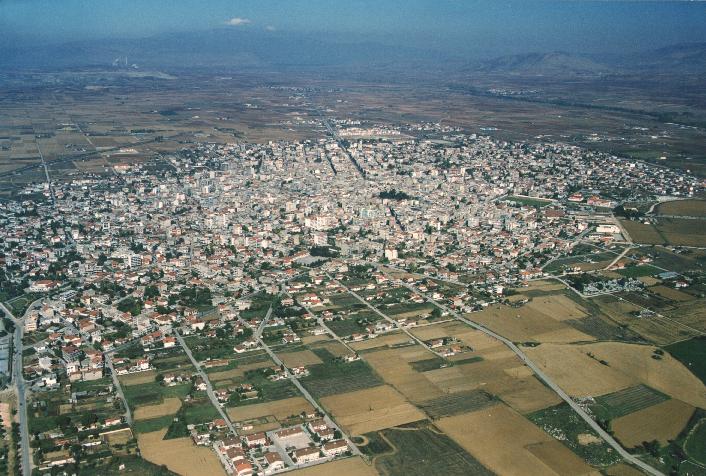
Ptolemaida (Greek: Πτολεμαΐδα, romanizedPtolemaïda, Katharevousa: Πτολεμαΐς, Ptolemaïs) is a town and a former municipality in Kozani regional unit, Western Macedonia, Greece. Since the 2011 local government reform it is part of the municipality Eordaia, of which it is the seat and a municipal unit.[2] It is known for its coal (lignite) mines and its power stations.

Key Information

Name

[edit]

During the Ottoman period the city was called Kayılar (English: Kailar, German: Kajilar), rendered into English as Kaïlar.[3] This name was retained in Greek as Kailaria (Καϊλάρια) until 1927.[4] Kayılar refers to the Kayı tribe, the tribe of Osman I, the founder of the Ottoman Empire. The modern name Ptolemaida was introduced by decree on January 20, 1927, honoring Ptolemy I Soter, son of Lagus, comrade-in-arms of Alexander the Great and founder of the Ptolemaic dynasty, and his daughter Ptolemaïs, who are said to originate from that region.[5] His statue stands in the central square of the city.

History

[edit]

According to archaeologists, the Ptolemaida region has been occupied since 6000 BC.[6]

Neolithic period

[edit]

Archaeologists, in November 2005, discovered the remains of two farming villages dating back to the Neolithic period. A press report notes that such farming villages were trading centres and had a "developed knowledge of metalworking".[6]

A golden necklace dating to roughly 4500 BC was discovered on February 16, 2006.[6] Associated Press reporter Costas Kantouris describes the item as a "flat, roughly ring-shaped [which] probably had religious significance and would have been worn on a necklace by a prominent member of society."[6]

Lately in the lake Zazari near Ptolemaida there were found 16 houses that belong in the Neolithic era due to archaeologists. These houses were in the lake and were exposed because of the decreased water level of the lake. That particular small settlement gives information about the society and the people in the Neolithic era.

Archaic period

[edit]
Ancient ceramic plate from Ptolemaida
Ancient Macedonian grave in Ptolemaida

In the area of Ptolemaida many archeological findings have occurred in the last 30 years due to mining operations. Ceramic artifacts, dating to the 6th century BC have been found at two sites near Grevena and Ptolemaida. Archaeologists found the artifacts at two prehistoric farming settlements. Two Ancient Macedonian graves have also been found in the area of Ptolemaida, dated from the 5th century BC.

Macedonian Period

[edit]

In 336 BCE the area around Ptolemaida came under the control of expanding Kingdom of Macedon under Philip II. The Land of the Chords and the whole region of Eordea was fully incorporated into Macedon under Philip II and later his successor Alexander. Two of the six generals of Alexander the Great, Ptolemy I Soter, founder of the Ptolemaic Kingdom, and Aristones are claimed to hail from Eordaia. [citation needed]

Hellenistic period

[edit]

With the death of Alexander, his empire was divided and Macedon came under the control of Antigonus I. Macedon remained an important and powerful kingdom during both Wars of the Diadochi and later the Punic Wars with Rome. There were many clashes during the long struggle between the Macedonians and the Romans who tried to enter the basin of Eordea and promote it into mainland Greece, but also because the area was a focal point as a secondary road passed through it. Macedon remained a force to be reckoned with until the Battle of Pydna (22 June 168 BC), in which the Roman general Aemilius Paulus defeated King Perseus of Macedon, ending the reign of the Antigonid dynasty over Macedonia.

Roman period

[edit]

Much historical information exists for the period of Roman times when referring to the region of Ptolemais and Eordaia. The Roman Egnatia highway, which was detached from the main artery after leaving the Straits of the Key, led to present-day Kozani and then, through the Sarantaporos Strait, to Thessaly. In 395, Ptolemaida and all of Macedonia became part of the Eastern Roman Empire.

Byzantine period

[edit]

At various times, Ptolemaida was part of the First Bulgarian Empire, Latin Empire, the Kingdom of Thessalonica, Second Bulgarian Empire, the Empire of Nicaea, the Despotate of Epirus and Serbian Empire.[citation needed]

Ottoman period

[edit]

During the Ottoman period, Ptolemaida was called Kayılar, and it had two parts: Aşağı Kayılar and Yukarı Kayılar. Aşağı Kayılar was Bektaşi[citation needed] and Yukarı Kayılar was Rufai,[citation needed] Hanefi.[citation needed]

Before 1360, large numbers of nomad shepherds, or Yörüks, from the district of Konya, in Asia Minor, had settled in Macedonia; their descendants were known as Konariotes.[3] Further immigration from this region took place from time to time up to the middle of the 18th century. After the establishment of the feudal system in 1397, many of the Seljuk noble families came over from Asia Minor; their descendants may be recognized among the Beys or Muslim landowners around Kayılar.[3] At the beginning of the 18th century, the Turkish population was quite considerable, but since that time until at least the early 20th century it continuously decreased.[3] A low birth rate, the exhaustion of the male population by military service, and a large mortality from epidemics brought about a decline which has lately been hastened by emigration.[3] The Turkish rural population around Kayılar was mainly composed of Konariot shepherds.[3] In the late 19th and early 20th century, Ptolemaida was part of the Manastir Vilayet of the Ottoman Empire.

Modern period

[edit]

Ptolemaida was occupied by the Greek forces on 15 October 1912 during the First Balkan War, and later incorporated into Greece. In 1924, the local Turkish population was exchanged with Greeks from Anatolia and East Thrace following the population exchange between Greece and Turkey. Most of these Greeks came from the former Greek towns of Tiroloi (Τυρολόη, today Çorlu) and Prousa (Προύσα, today Bursa). Since then, Ptolemaida became a majority Greek city once again.

In the 1970s, Greece's largest coal-fired power plants were built in the region of Ptolemaida, these increased pollution and it is expected these will be shut down by the year 2028.[7]

Culture

[edit]
The municipal library

Ptolemaida's football club is called "Eordaikos" (Greek: Εορδαϊκός). Other teams include AE Ptolemaidas. Ptolemaida has schools, lyceums, gymnasia, churches, banks, a post office, a train station (Kozani - Florina), a police station, a water tower, and squares (plateia). There is the potential of a university being established by the state in the near future. The Anthropological and Folklore Museum is based in the town.

Economy

[edit]
Electric power plant of Ptolemaida
Ptolemaida-Florina coal mine

The most important lignite deposits in Greece are located in the north of the country at Ptolemais-Amynteon and Florina (approximately 1.5 billion tonnes) which contribute around 80% of national production. Other than its highly lignite-rich reserves, Ptolemaida is a highly industrialized area. The four power plants in this area produce 70% of Greece's electrical power, using the large local deposits of lignite as fuel. The plants are owned by the Public Power Corporation (DEI), the major employer in the city. The plant was inaugurated by the Prime minister of Greece at that time, Constantine Karamanlis. The other two are in Amyntaio in Florina regional unit and in Agios Dimitrios.

Education

[edit]

The School of Health Sciences of University of Western Macedonia with two departments (Occupational Therapy and Midwifery) based in the city.[8]

Climate

[edit]
Askio mountain near the city

The city, situated in the middle of the Eordaia plain of Western Macedonia, has a humid subtropical climate (Cfa) with continental (Dfa) influences. Summers can be hot with thunderstorms in unsettled spells, whereas winters are among the coldest in Greece. It was here that the absolute low temperature record of Greece was recorded (−27.8 °C (−18 °F) on 27 January 1963).[9]

Demographics

[edit]

According to the 1911 edition of the Encyclopædia Britannica, the first settlers of the city were Turks following the conquest of Macedonia by the Ottoman Empire. The Turks remained the majority until the population exchange of 1924. Between 1924 and 1926, Greeks escaping from Anatolia settled here and became the majority.

The current municipal unit of Ptolemaida is constituted by the city of Ptolemaida and 11 small communities. At the 2021 census, the population of the city was 31,575 residents. The total population of the municipality Eordaia in 2021 was 42,515 residents.[1]

Year Community Municipal unit
1940 7,719 -
1951 8,816 -
1961 12,747 -
1971 16,588 -
1981 22,109 -
1991 25,125 32,775
2001 30,017 36,393
2011[10] 32,142 37,289
2021[1] 31,575 35,334

Geography

[edit]
Train station

The city lies in the valley of Eordaia, between the Askio mountains to the southwest and the Vermio mountains Turkish: Karlıdağ to the northeast. It is located north of Kozani, east of Kastoria, south of Florina, and south-west of Edessa. The municipal unit has an area of 217.901 km2, the community (the city proper) has an area of 57.508 km2.[11] The A27 motorway (Kozani-Florina, part of E65) passes east of the city. Ptolemaida was the seat of the former province of Eordaia.

Friendship towns

[edit]

Ptolemaida is twinned with:[12]

People

[edit]

See also

[edit]

References

[edit]
[edit]
Revisions and contributorsEdit on WikipediaRead on Wikipedia
from Grokipedia
Ptolemaida (Greek: Πτολεμαΐδα) is a town in the Kozani regional unit of Western Macedonia, Greece, serving as the seat of the Eordea municipality. Situated at an elevation of 600 meters above sea level, it had a population of 31,536 according to the 2021 census. The town is a major industrial center, particularly noted for its extensive lignite deposits that fuel thermal power plants responsible for a significant share of Greece's electricity production. The region's economy revolves around open-pit lignite mining and energy generation, with facilities like the Ptolemaida power station complex playing a pivotal role, though recent developments include the commissioning of the 660 MW Ptolemaida V unit amid national efforts to phase out lignite by 2028. This industrial focus has driven population growth and infrastructure development since the mid-20th century, but it has also raised environmental concerns related to air quality and land use from mining operations. Ptolemaida's location in a basin surrounded by mountains contributes to its continental climate, characterized by cold winters and hot summers, influencing both daily life and agricultural activities in the surrounding areas.

Etymology and Naming

Historical Designations

The area of modern Ptolemaida was designated in antiquity as part of Eordaia, an inland district of Upper Macedonia inhabited by the Eordaeans, a Macedonian tribe mentioned in 5th-century BCE Greek historiography as allies or subjects within the Macedonian kingdom. Archaeological evidence indicates organized settlements in the Eordaia basin dating to the Neolithic period (circa 6000 BCE), with Iron Age Macedonian presence solidified by the 7th century BCE, though no specific toponym for the precise site of Ptolemaida survives from classical texts. Medieval designations prior to Ottoman conquest remain sparsely recorded, with Byzantine sources referencing the broader Eordaea region without distinct settlement names, potentially influenced by Slavic migrations that introduced toponyms across Macedonia but yielding no verified Slavic-era name for this locale. Following Ottoman conquest of Eordaea around 1385–1386 CE, the settlement was designated Kayılar (or Kaylar), derived from the Kayı tribe of Oghuz Turks, the ancestral clan of Osman I; the town comprised two quarters, Aşağı Kayılar (lower, associated with Bektashi communities) and Yukarı Kayılar (upper). This Turkic name persisted through the Ottoman period, rendered in Greek as Kailaria until administrative Hellenization post-independence. The etymological basis for the designation Ptolemaida traces to (circa 367–283 BCE), a native of Eordaea who served as a key general under and later founded the in , with the feminine form Ptolemaida evoking "belonging to Ptolemy" in reference to the region's ancient ties.

Contemporary Usage

The official name of the city, Πτολεμαΐδα, was adopted in 1927, replacing the prior designation Καϊλάρια used during the Ottoman period. This renaming occurred via royal decree as part of systematic efforts to align place names with Greek linguistic and historical nomenclature in territories acquired after the of 1912–1913. The name derives from , a Macedonian general under , reflecting an intentional link to ancient Hellenistic heritage. In , the name is rendered as Πτολεμαΐδα, with the trema (ϊ) indicating a approximately as "Pto-le-ma-EE-da." Internationally, it is commonly transliterated as Ptolemaïda in formal contexts preserving the diaeresis, though simplified forms like Ptolemaida predominate in English-language usage and maps. This standardization is evident in all official Greek state records, including those of the Hellenic Statistical Authority for population and administrative purposes, confirming uniform application since adoption. No significant transliteration debates persist in contemporary officialdom, though minor variations appear in non-Greek linguistic adaptations.

Geography

Topography and Location

Ptolemaida is situated in the regional unit of , , within the Eordaia plain at geographic coordinates 40°30′N 21°41′E. The town occupies a central position in the Ptolemaida Basin, a Neogene-Quaternary intermontane sedimentary depression formed through tectonic extension and development. This basin features relatively flat terrain at elevations averaging 600 meters above , with surrounding relief including the Askio Mountains (also known as Siniatsiko) to the southwest, rising to over 2,000 meters, and the Vermio Mountains to the northeast. The basin's geological structure consists of layered sediments conducive to lignite accumulation, with major deposits such as the South Field mine located immediately adjacent to the , spanning several square kilometers of exploitable reserves. Hydrologically, the region is influenced by systems tied to the sedimentary and proximity to the Aliakmon River, which flows eastward through the broader system, contributing to the basin's and soil composition dominated by alluvial and lacustrine deposits. These features, as mapped in regional geological surveys, underscore the basin's role as a tectonic low conducive to resource preservation without significant erosional disruption.

Climate Characteristics

Ptolemaida lies in a basin that experiences a , with pronounced seasonal temperature variations driven by its inland location and topographic enclosure. Average temperatures hover around -1°C, featuring frequent frosts and occasional snowfall, while July averages reach approximately 24°C, with highs often exceeding 30°C. Annual totals roughly 600-700 mm, predominantly falling in autumn and winter months, contributing to a relatively dry summer period. These patterns align with data from regional meteorological observations, reflecting the influence of continental air masses from . The basin topography fosters frequent temperature inversions, particularly during winter, which trap cold air and near the surface, limiting vertical mixing and exacerbating the retention of airborne pollutants from local industrial activities. Hellenic National Meteorological Service records indicate higher incidences of foggy conditions in the Ptolemaida-Amyntaio-Kozani basin, correlating with stagnant atmospheric layers that prolong poor air quality episodes. Such meteorological features intensify during periods of low and high , as observed in historical analyses of particulate matter events. Seasonal extremes impact operations, with winter cold, snow accumulation, and causing equipment limitations and excavation delays, as noted in operational reports from the spanning 1950-2024. Summers bring drier conditions that facilitate overburden removal but increase dust generation risks. These variations necessitate adaptive strategies in open-pit extraction, underscoring the climate's role in the temporal dynamics of resource development without altering long-term output viability.

History

Prehistoric and Ancient Eras

Archaeological excavations in the Ptolemaida basin have revealed evidence of farming settlements dating to approximately 6000 BCE, characterized by pottery fragments, stone tools, and structural remains indicative of early agricultural and pastoral communities adapted to the local wetlands and plains. These discoveries, including two sites from 6000–5500 BCE, contribute to a cluster of over 25 similar habitations in the surrounding area, suggesting sustained human presence reliant on lake resources and rudimentary farming techniques. Nearby lakeside sites, such as those around Lake Zazari, have yielded submerged house foundations and artifacts from the mid-6th millennium BCE, underscoring the region's role in early sedentary life in . In the ancient era, the Ptolemaida area formed part of Eordaia, a highland district in upper Macedonia inhabited by the Eordaeans, a Greek-speaking tribe documented in classical sources as residing west of the River and near Lake Ostrovo (modern Vegoritida). This periphery served as a strategic buffer against northern incursions, with Macedonian forces under Amyntas I incorporating Eordaia around 520–510 BCE, displacing or subjugating local populations to consolidate control. references related tribal dynamics in Macedonia's expansion, though Eordaean specifics emphasize their integration into the Argead kingdom rather than independent urban centers. Settlement patterns remained predominantly rural, with limited evidence of monumental or dense before Philip II's reforms in the mid-4th century BCE; excavations have uncovered tumuli and , including weapons and , pointing to agrarian villages and warrior elites aligned with Macedonian periphery culture. Post-Alexander Hellenistic influences introduced broader Greek koine elements, such as coinage and fortified outposts, but Ptolemaida-specific finds remain sparse, reflecting the area's continued emphasis on over civic development until regional declines in classical records.

Medieval to Ottoman Periods

During the Byzantine era, the area encompassing modern Ptolemaida functioned as a minor rural settlement within the Theme of Thessalonica, a key administrative and military district established in the to counter invasions. Slavic migrations into the , peaking between the late 6th and 9th centuries, led to settlements across Macedonia, including western regions, where Slavic groups displaced or assimilated local populations amid Avar-Slavic raids, as noted in contemporary Byzantine accounts like those of and later chronicles. These movements introduced Slavic linguistic and cultural elements, though the settlement remained peripheral without notable urban development or fortifications. Ottoman forces incorporated the region after conquering Macedonia in the 1390s, renaming the settlement Kayılar after the Kayı tribe of early Turkish settlers, dividing it into Aşağı Kayılar and Yukarı Kayılar quarters. Organized as a small nahiya within the Sanjak of Serfice (Servia), it emphasized agriculture, with tax registers (tahrir defterleri) from the 15th-16th centuries indicating a modest population of around 2,000-3,000 households by the 18th century, reflecting limited growth before a late-1700s decline due to warfare and migration. Under the Ottoman millet system, Christian Orthodox communities maintained relative administrative , fostering stability focused on agrarian output like grains and , with no major battles recorded locally. The witnessed sporadic by local bands and Albanian irregulars, alongside minor revolts tied to tax burdens and autonomy demands, but these were contained without disrupting the nahiya's core structure, as evidenced by archival defters and regional reports.

Modern Incorporation and Development

Ptolemaida, referred to as Kailar during Ottoman rule, was occupied by Greek army units on October 10, 1912, as part of the advance into Western Macedonia following the capture of Servia and the crossing of the Aliákmon River. This military operation occurred amid the First Balkan War, initiated by the Balkan League against the Ottoman Empire on October 8, 1912. The subsequent Treaty of Bucharest in 1913 formalized the incorporation of the region, including Kailar, into the Kingdom of Greece, marking the end of Ottoman control over much of Macedonia. The Greco-Turkish population exchange, mandated by the 1923 Treaty of Lausanne, resulted in the removal of the local Muslim Turkish population from Ptolemaida between 1923 and 1924, with departures concentrated from May to July 1924 in the broader Macedonian context. This compulsory relocation affected thousands across the province, enabling the Greek state to reassign vacated properties to incoming refugees. In parallel, Christian Greek refugees from Asia Minor, Eastern Thrace, and the Caucasus began settling in the area from 1923 onward, rapidly becoming the demographic majority by 1926 and contributing to urban expansion. Administrative reforms followed, with the town renamed Ptolemaida in to evoke ancient Macedonian heritage, replacing the Ottoman-derived Kailaria. This coincided with elevation to full municipal status, supporting governance for the enlarged population, which reached approximately 10,000 by the census due to refugee integration. Interwar infrastructure improvements, including enhanced rail connectivity from central Greece, facilitated trade and migration, positioning the town for subsequent industrialization without significant new construction amid economic constraints.

Post-War Industrialization

The (PPC), established in August 1950, initiated systematic exploitation in , with the Ptolemaida basin emerging as a primary focus due to its extensive deposits, fundamentally shifting the local economy from toward and energy production. In the , PPC developed operations in the region, utilizing technologies such as bucket wheel excavators following the 1959 acquisition of LIPTOL, which facilitated large-scale extraction and transformed Ptolemaida from a small agrarian settlement into an industrial hub. Lignite production in the West Macedonia lignite center, encompassing Ptolemaida mines, surged from 1.4 million tonnes in 1960 to 11.7 million tonnes by 1975, reflecting rapid infrastructure buildup and employment growth that drew thousands of workers to the area, bolstering local economic activity. The Ptolemaida power station's initial unit, with 125 MW capacity, became operational in 1959, followed by expansions in subsequent decades that enabled lignite-fired plants to supply over 50% of Greece's from the through the early . During the and , coinciding with Greece's 1981 entry into the , mining and power infrastructure expanded further, including additional units at facilities like Kardia in 1980-1981, with output reaching 27.33 million tonnes by 1985. These developments correlated with elevated GDP per capita in compared to non-lignite regions, as the sector accounted for a substantial portion of regional economic output, underpinning post-war industrialization.

Demographics

Population Dynamics

The population of Ptolemaida experienced significant growth in the , expanding from a small settlement of roughly 6,000 residents around 1913 to over 25,000 by 1991, largely due to inflows of refugees following the and the 1923 Greco-Turkish population exchange, as well as subsequent linked to development. By the 2021 census, the city proper counted approximately 31,600 inhabitants, while the broader Eordaia , centered on Ptolemaida, reached 42,500, reflecting continued but moderating expansion before regional stagnation set in. Projections estimate the city's population at 37,662 by 2025, implying an average annual growth rate of about 0.5% in recent years amid national demographic pressures. Demographic trends indicate an aging profile, with —encompassing Ptolemaida—showing 32.7% of residents over age 60 in 2021, exceeding the national average of 29.4%, and a age around 45 years driven by low fertility and outward youth migration. The in the region aligns closely with 's national figure of approximately 1.3 children per woman, contributing to natural offset only partially by prior net positive migration until the 2010 economic crisis. Post-2010, net migration turned negative, exacerbating a 10% regional drop from 2011 to 2021, as younger cohorts departed for urban centers elsewhere in or abroad. Urban density in Ptolemaida stands at roughly 550 inhabitants per km² within the city proper's 57.5 km² area, supporting suburban sprawl that accommodated earlier population increases through peripheral residential development. This density, higher than the municipal unit's 162/km² across 218 km², underscores concentrated urban cores amid surrounding rural depopulation, with overall dynamics pointing to stabilization or mild contraction absent renewed inflows.

Ethnic and Social Composition

Ptolemaida's population is overwhelmingly ethnically Greek, aligning with Greece's national composition where ethnic constitute approximately 98% of the populace. Official Greek censuses, conducted by the Hellenic Statistical Authority (ELSTAT), do not collect data on self-declared but record , place of birth, and mother tongue, revealing near-universal Greek and predominant use of Greek as the primary language in the regional unit, which encompasses Ptolemaida. Historical Slavic-speaking communities in , present since medieval Slavic migrations, underwent significant assimilation through state policies emphasizing Greek-language education and national integration following the and , resulting in their identification as Slavophone Greeks rather than a distinct ethnic group under Greek , which recognizes no such minority in the region. The 1923 population exchange with introduced an influx of Anatolian and , further reinforcing ethnic and linguistic homogeneity in Ptolemaida, where a notable proportion of residents descend from these refugees. Minor non-Greek elements include a small Roma community and recent immigrants, estimated at under 2% combined based on national surveys of foreign-born residents and minority groups, with no distinct Slavic or other ethnic enclaves officially documented or self-reported in local data. Claims of unassimilated ethnic minorities, often advanced by external advocacy groups, lack substantiation in ELSTAT records or peer-reviewed demographic studies, which prioritize self-identification and legal citizenship over irredentist narratives. Religiously, over 95% of Ptolemaida's residents adhere to the Greek Orthodox Church, reflecting broader patterns in where Orthodox Christianity dominates, with negligible presence of other faiths per national religious affiliation polls. This uniformity fosters social cohesion, as evidenced by low reported intergroup tensions in regional sociological assessments, underscoring a stable social fabric centered on shared Hellenic identity and Orthodox traditions.

Economy

Lignite Mining Operations

Lignite mining in Ptolemaida is conducted via extensive open-pit operations in the Ptolemaida basin, primarily managed by the (PPC) through its lignite mining units. Key sites include the South Field mine near Ptolemaida, part of the broader Lignite Centre, which facilitates large-scale extraction of low-grade brown deposits. These operations utilize continuous systems, with bucket-wheel excavators deployed since the establishment of mechanized in the following the acquisition of LIPTOL by PPC in 1959. The extraction process involves bucket-wheel excavators for removal and scooping, coupled with conveyor belts for transport over distances up to 96 km in some facilities, enabling efficient handling of vast volumes without reliance on . PPC's Ptolemaida mines feature multiple such excavators—up to 42 in the complex—supporting peak annual outputs exceeding 40 million tonnes in the early , though production declined to 13.1 million tonnes by amid policies. Original lignite reserves in the region were estimated at 5 billion tonnes, with cumulative extraction surpassing 2.2 billion tonnes by , underscoring the scale of resource endowment. Direct in these operations totals around 2,000 personnel as of the 2020s, focused on operation of heavy machinery, maintenance, and site management within PPC's framework for the units. Economic contributions from lignite extraction pre-phase-out were substantial, with production supporting regional GDP through high-volume output valued in the hundreds of millions of euros annually, though precise figures fluctuate with market conditions and output levels. metrics in Greek lignite mining incorporate occupational health assessments integrated with efficiency evaluations, reflecting operational standards comparable to mechanized surface extraction elsewhere in .

Power Generation Infrastructure

The Ptolemaida power stations, operated by Public Power Corporation (PPC), comprise lignite-fired units I through V with a combined installed capacity of approximately 2 GW, serving as key baseload generators in Greece's electricity system. Unit I and II each offer around 300 MW, while units III and IV contribute similar capacities, with the newer Unit V adding 660 MW following its commissioning in the early 2020s. These facilities, operational since the 1950s, integrate into the national grid through high-voltage transmission lines managed by the Independent Power Transmission Operator (IPTO), enabling power dispatch to major load centers including Athens. Lignite generation from Ptolemaida units peaked in contribution during the , forming a substantial share of national supply— overall exceeded 50% of Greece's production from the 1960s through 2005, with Ptolemaida as a primary site. The stations' , particularly in modernized units like V designed as supercritical boilers, reaches approximately 38%, supporting reliable output amid variable renewable inputs. Their dispatchable characteristics provide essential grid stability, acting as controllable reserves to counterbalance intermittent sources during or adverse weather, as evidenced by the role of thermal plants in maintaining supply integrity amid Greece's increasing renewable penetration.

Diversification Efforts

Agriculture in the regional unit, encompassing Ptolemaida, includes cultivation as a traditional sector, with migrant labor supporting production amid labor-intensive processes. farming also contributes, though overall agricultural remains limited to around 10% of the local workforce, reflecting structural challenges in rural economies. Small-scale , such as and textiles, operates through industrial parks aimed at fostering non-energy sectors, but these activities employ a modest share of workers compared to . Tourism holds potential due to nearby lakes like Polyphytos and natural reserves, yet the sector's contribution to regional GDP stays below 5%, hampered by insufficient infrastructure and marketing. Efforts to develop as part of post-lignite strategies have yielded limited growth, with visitor numbers dominated by domestic rather than international arrivals. Post-2010, funding has supported pilots in , including investments in solar and wind projects under national and European programs to pilot diversification beyond . These initiatives, part of broader clean energy pillars, have involved public-private partnerships but represent small-scale experiments rather than transformative shifts. Unemployment in the region hovered around 15-20% through the 2020s, exceeding national averages, with retraining programs under frameworks targeting s for agriculture, , and renewables showing mixed outcomes in job placement and uptake. These programs emphasize but face challenges in aligning with local investor needs and reducing mismatches.

Energy Transition and Environmental Debates

Phase-Out Policies and Timelines

Greece's National Energy and Climate Plan (NECP), revised in line with directives, initially set a target for complete phase-out by 2028 to align with decarbonization goals under the . In April 2021, the state-owned (PPC), which operates the majority of lignite facilities in the Ptolemaida basin, announced an accelerated timeline, committing to cease across all units by 2025, including halting operations at the newly commissioned Ptolemaida V plant after initial runs. This move positioned among European nations advancing exits ahead of broader timelines, with PPC emphasizing progressive mine reductions and unit decommissioning starting from existing plants like those at . Subsequent adjustments arose amid the 2022 energy crisis triggered by geopolitical disruptions, prompting temporary extensions of operations and a 50% increase in output to ensure grid stability, effectively postponing full shutdowns to 2028 under the revised NECP. PPC proceeded with partial decommissioning, achieving 1.9 GW of capacity retired since 2019, including closures of older units between 2021 and 2023, supported by national allocations of approximately €5 billion for transition measures such as repurposing infrastructure and alternative energy development. By 2024, PPC reaffirmed a exit by 2026, with specific timelines for Ptolemaida-area units: 3, 4, and 5 slated for 2025 cessation, while Ptolemaida V—operational since December 2022—would transition from lignite to open-cycle gas turbine (OCGT) configuration by 2027 to maintain baseload capacity amid delays in renewable integration and infrastructure. These extensions reflect dependencies on grid reliability and backup fuels, as ambiguities in strategic environmental assessments (SEAs) for alternative scenarios have questioned the feasibility of abrupt closure without sufficient renewable or gas-fired replacements, per Ministry of Environment and Energy evaluations. EU commitments under the Just Transition Mechanism continue to fund regional adaptations, though national timelines prioritize operational continuity over rigid 2025 targets.

Economic and Social Ramifications

The lignite phase-out in Western Macedonia, encompassing Ptolemaida, endangers over 20,000 jobs across direct mining, power generation, and supply chain activities, with broader knock-on effects potentially affecting an additional 6,000 positions in related sectors. Lignite-dependent industries account for approximately 34% of the regional GDP, underscoring the vulnerability of local economies to abrupt decarbonization without commensurate replacement activities. Estimates from the Institute for Economic and Industrial Research project a €1.3 billion GDP loss in lignite regions due to employment declines and reduced economic output. Local sentiment reflects strong resistance to rapid closure, driven by job insecurity, with surveys indicating heightened support for new facilities among residents prioritizing over environmental gains. The European Union's Fund has approved allocations for , including measures for , yet implementation faces delays in projects and skills retraining, limiting effective absorption and raising concerns over funding efficacy. These shortcomings heighten risks of out-migration to urban centers like and , accelerating depopulation in already strained rural communities. Energy security remains precarious, as supplied about 9.9% of Greece's in 2023, down from prior decades but still critical for baseload amid renewables' , with grid operator data highlighting gaps in reliable alternatives during or low /solar periods. Empirical assessments emphasize that unaddressed transition costs could amplify regional disparities, as alternative sectors like and lack the scale to offset lignite's fiscal contributions immediately.

Pollution Data and Mitigation

Air emissions from lignite-fired power stations in the Ptolemaida basin have historically included elevated levels of (SO₂) and particulate matter (PM), with SO₂ outputs from Greek lignite plants peaking in the range of tens to over 100 kt annually in the pre-2010 period before widespread adoption of . Installation of systems post-2010, mandated by Industrial Emissions Directive compliance, achieved reductions of up to 70-90% in SO₂ emissions at facilities like those operated by the (PPC). PM levels, including PM₁₀ and PM₂.₅, have similarly declined, particularly following partial mine closures and power unit shutdowns since 2019, with monitoring stations in the basin recording concentrations often below annual limits but occasionally exceeding short-term thresholds during peak operations. Health studies link these emissions to respiratory conditions, particularly among children in the region. A cross-sectional survey of 3,559 children aged 9-12 in reported prevalence at 40.3% and infectious at 12.1% in Ptolemaida, rates higher than in less industrialized comparison areas like ( 28.1%, 6.5%). Diachronic assessments indicate partial improvements in these metrics over time, aligning with emission controls, though local rates remain 10-20% above national averages for certain indicators, consistent with WHO air quality guidelines associating PM exposure with elevated respiratory risks. Lignite mining in Ptolemaida has caused localized drawdown, with pit dewatering lowering water tables by 50-100 meters in active areas and introducing risks of acidification or heavy metal leaching into aquifers. PPC mitigation includes progressive backfilling of exhausted pits with and spoils, followed by flooding to form artificial lakes that restore hydraulic balance and support aquatic ecosystems; for instance, reclaimed sites in the Ptolemaida-Amynteo basin have developed habitats hosting increased avian and relative to barren active pits. In comparison to alternatives, lignite's lifecycle (approximately 1,000-1,200 g CO₂eq/kWh) exceed those of combined cycle (400-500 g CO₂eq/kWh) but are comparable to or lower than some or certain solar configurations when including impacts; lignite's localized extraction minimizes upstream emissions from global shipping or , concentrating effects regionally where monitoring and remediation are feasible, unlike dispersed global footprints of imported gas or renewable hardware. Greece's lignite sector contributes under 3% of EU-wide fossil fuel CO₂, with post-scrubber SO₂/PM outputs now aligning with or below averages in other lignite-dependent states like or , underscoring that targeted engineering has curbed excesses without necessitating total phase-out for environmental control.

Governance and Administration

Local Government Structure

The Municipality of Eordea, with Ptolemaida as its administrative seat, was established through the (Law 3852/2010), a comprehensive implemented on January 1, 2011, that merged former municipalities and communities to streamline local administration and bolster fiscal and operational autonomy across . This restructuring consolidated Ptolemaida and surrounding units into a single entity covering 708.8 km², encompassing urban, rural, and industrial areas, under the oversight of the Regional Unit within the Region of . Governance adheres to Greece's standardized municipal framework, led by an elected —currently Panayiotis Plakentas—supported by a municipal council whose size corresponds to the population (typically 27-49 members for mid-sized units), elected every five years via . The council handles legislative functions, including budgeting and policy approval, while auxiliary bodies such as the Financial Committee (overseeing fiscal matters), Quality of Life Committee (addressing social services and environment), and Executive Committee (coordinating daily operations) provide specialized input and execution. Administrative departments, including those for local , technical services, and citizen support, report directly or indirectly to the , facilitating decentralized decision-making in areas like and infrastructure maintenance. The Kallikratis reforms devolved additional competencies to municipalities, empowering Eordea's administration with greater authority over local taxation, project procurement, and , independent of micromanagement, though subject to regional coordination for resource-dependent initiatives such as energy-related revenues. As of the 2021 census, the municipality serves 42,515 residents, enabling scaled services like and public utilities tailored to its lignite-influenced economy.

Political Events and Representation

In November 2019, the Greek government under Prime Minister announced a national plan to phase out lignite-fired power generation by 2028, with over 80% of capacity decommissioned by the end of 2023, as part of the updated National Energy and Climate Plan aligned with decarbonization targets. This decision, affecting thousands of jobs in Ptolemaida's and sectors, sparked immediate local backlash, including a rally by (PPC) workers on November 24, 2019, in the city's main square, where participants decried the closures as the "sudden death" of the state utility and demanded a more gradual transition with worker protections. Subsequent labor unrest from 2019 to 2021 highlighted tensions between rapid phase-out timelines and economic dependence on , which employs around 4,600 directly and supports 11,000 indirect jobs in ; unions and regional stakeholders negotiated for EU-funded mechanisms, including retraining and diversification investments totaling billions of euros via the Just Transition Fund. The 2022 triggered by Russia's invasion of prompted temporary policy adjustments, delaying some closures to ensure supply security and averting blackouts. Parliamentary representation for Ptolemaida falls under the multi-member constituency, which elects eight deputies to the ; these lawmakers, often from center-right New Democracy (ND), have prioritized regional advocacy in energy legislation, pushing amendments for extended plant operations and infrastructure funding during debates on PPC privatization and compliance bills. In the May 2023 national elections, ND secured strong support in amid voter concerns over transition-induced unemployment, reflecting preferences for policies balancing environmental goals with lignite reprieves, such as the February 2023 inauguration of the Ptolemaida 5 unit (660 MW capacity) by Mitsotakis to bolster short-term reliability. Green parties and opposition criticized the move as inconsistent with phase-out commitments, advocating stricter timelines despite local economic risks. Local municipal politics in Eordea (encompassing Ptolemaida) emphasize pro-industry stances, with ND-aligned candidates historically dominant in council seats, focusing on mining extensions and grant negotiations to mitigate job losses estimated at up to 16,000 regionally; these dynamics underscore causal links between lignite policy and electoral outcomes, where promises of "" funding have outweighed pure environmental opposition.

Culture and Heritage

Archaeological Sites and Traditions

The Ptolemaida basin, part of ancient Eordaia, preserves evidence of continuous human occupation from , revealed largely through lignite mining and systematic excavations. Traces of two Neolithic farming settlements, dating to approximately 6000 B.C., were uncovered in the area, indicating early agricultural communities adapted to the wetland environment. These findings include structural remains and artifacts suggestive of sedentary lifestyles in the broader Dispilio-Ptolemaida lacustrine zone. Classical-era discoveries include sherds from the 6th century B.C., unearthed at multiple sites near Ptolemaida, reflecting Hellenistic influences in local production. Further excavations at Mavropigi-Filotsairi, a nearby tell, have yielded over 60,000 fragments from domestic contexts, including pioneering decorated wares that highlight early technological advancements in firing and ornamentation techniques characteristic of Western Macedonia's tradition. An intact Macedonian tomb from the 1st century B.C. was also documented in the Mavropigi vicinity, containing indicative of regional burial customs. These artifacts are displayed in the Paleontological and Historical Museum of Ptolemaida, which curates Eordaia-specific collections spanning to antiquity. Recent efforts by the Greek include ongoing digs at sites like Karmiotissa in Kato Ptolemidia, aimed at clarifying the historical foundations of local Byzantine-era churches through stratigraphic analysis and artifact recovery. Such work underscores preservation initiatives to mitigate impacts on heritage layers. Local traditions, including pre-Lenten agrarian rituals akin to Apokries customs observed across rural Macedonia, echo the basin's ancient farming heritage, with communal feasts and masked processions rooted in seasonal cycles predating industrialization.

Local Customs and Festivals

Ptolemaida's local customs are deeply rooted in Eastern Orthodox Christianity and Macedonian regional traditions, with influences from communities resettled in the area during the early 20th-century population exchanges. Residents observe major religious feasts such as , which involves midnight liturgies, lamb roasting, and red-dyed eggs symbolizing Christ's blood, followed by family gatherings featuring traditional dishes like soup. Name days, tied to saints' feast days, are marked by church services and communal meals, emphasizing kinship ties in this family-centric society where extended households remain common among the mining workforce. A distinctive Pontic custom observed in the Ptolemaida municipality, particularly in Asvestopetra, is Momogeri (or Momoégeri), performed from to Epiphany. Participants don elaborate traditional costumes to portray characters like bears, elderly women, brides, and , engaging in ritual dances and processions that reenact tales of resilience and renewal, drawing crowds for and feasting to preserve amid modernization. Autumn distillation, known regionally as kazanemata, unites families and neighbors in villages near Ptolemaida, such as Tetralofos, where grape from wine production is boiled in to yield the potent spirit (40-45% ABV). This multi-day event features continuous feasting with , live music like hasapiko dances, and tasting, serving as a social rite that reinforces community bonds before winter, with yields supporting household economies. Throughout the year, Ptolemaida hosts festivals celebrating local produce like wine and , often in surrounding villages, blending religious observance with secular entertainment to highlight agricultural and artisanal identities. Cultural associations, including those preserving Vlach and Pontic traditions, organize these events to maintain ethnographic continuity, though participation has declined with and industrial shifts.

Infrastructure and Connectivity

Transportation Networks

Ptolemaida benefits from road connections via the A27 motorway, which branches northward from the A2 Egnatia Odos at , extending to Ptolemaida, , and the Niki border crossing with . This infrastructure enables direct linkage to the east-west Egnatia Odos corridor, facilitating freight and passenger movement across . Travel to , roughly 140 kilometers east, typically takes 1.5 hours by car along national roads paralleling the rail line. Rail services operate through Ptolemaida station on the line, supporting both passenger trains to and freight transport, including lignite-related shipments. The network integrates with broader routes, though services remain infrequent compared to bus options, with connections extending to and . The nearest airport, Filippos (KZI) in , lies 34 kilometers south of Ptolemaida, offering regional flights primarily to and seasonal European destinations, with road access via the A27 taking about 30 minutes. Lignite mining operations rely on specialized haul roads within open-pit sites south of the city, managed by the (PPC) for transporting and to nearby power stations; these unpaved routes handle heavy traffic but generate fugitive during dry conditions. Public transit is constrained, with intercity KTEL buses providing the primary option to (every four hours) and other regional centers, while local bus networks serve urban needs inadequately for mine-dependent commuting; rail passenger frequency limits broader accessibility.

Education and Public Services

Ptolemaida's primary and follows the national Greek system, with multiple public schools operating under the regional directorate, including kindergartens, elementary, and high schools serving the local population of approximately 37,000. rates in the area align closely with Greece's national figure of around 98-99%, reflecting high educational attainment supported by compulsory schooling up to age 15. Higher education is available through the Ptolemaida campus of the University of Western Macedonia, which offers undergraduate and postgraduate programs in fields such as and environmental sciences, tailored to the region's and sectors following the merger of former technological institutes. Healthcare services are centered on the Bodossakeio General Hospital of Ptolemaida, a modern facility completed in the 1980s with philanthropic support, providing secondary and tertiary care including pediatrics, internal medicine, and emergency services to Western Macedonia residents, with a focus on occupational health needs from lignite mining activities. The hospital participates in national efficiency evaluations, maintaining operational standards amid Greece's public health challenges, such as post-COVID resource allocation. Public utilities include and managed by the Municipal Enterprise for Water Supply and Sewerage of Ptolemaida (DEYA Ptolemaidas), which handles distribution and treatment for the municipality while addressing regional infrastructure debts. Electricity provision falls under the (PPC), leveraging local lignite-fired plants for grid stability and high reliability in supply to households and industries, though transitioning toward renewables with planned investments exceeding €5 billion by 2030. Additional services encompass the Municipal Library of Ptolemaida, established in 1988 and housed in the old town hall, offering public access to books and cultural resources.

Notable Individuals

Historical Figures

Ptolemy I Soter (c. 367–283 BC), born in the ancient region of Eordaea encompassing modern Ptolemaida, emerged as a key Macedonian military leader under . As one of Alexander's childhood companions and trusted generals, he participated in the conquests across Persia and , commanding the elite and later the foot guards (). Following Alexander's death in 323 BC, Ptolemy secured as and, by 305 BC, proclaimed himself , founding the that ruled until Cleopatra VII's demise in 30 BC. His origins trace to , a noble from Eordaea, though some ancient accounts speculated an illegitimate link to . Records of other pre-20th-century figures from Ptolemaida remain sparse, reflecting the area's rural and peripheral status through antiquity, Byzantine, and Ottoman periods. Ancient Eordaean chieftains existed as local rulers within the Macedonian tribal confederacy but left no individually prominent legacies in classical sources beyond integration into the Argead kingdom by the . Byzantine-era clerics or administrators from the vicinity are undocumented in surviving chronicles, likely due to the region's marginal role amid imperial centers like . Ottoman tax registers from the 16th–19th centuries list local landowners in Kayılar (the for Ptolemaida) but identify no nationally notable aghas or beys, underscoring its agrarian obscurity until industrialization.

Contemporary Contributors

Panagiotis Plakentas, born in Ptolemaida in 1968 to refugee parents, graduated from the city's Second and pursued studies in before entering local and . Elected of the of Eordea (encompassing Ptolemaida) in 2019, he has overseen municipal efforts to address the socioeconomic challenges of lignite phase-out, including infrastructure upgrades and advocacy for regional diversification amid Greece's decommissioning by 2028. Preceding mayors have also influenced energy-related transitions; Paraskevi Vryzidou, serving from 2003 to 2010, advanced early municipal measures in the power plant-dependent area, while Grigoris Tsioumaris (1999–2002) prioritized seismic safety enhancements following local assessments. These leaders contributed to Ptolemaida's adaptation to national shifts, with the municipality pioneering Greece's entry into the Covenant of Mayors for energy efficiency in 2008 under prior administrations. In scientific domains, researchers at the Centre for Research and Technology Hellas (CERTH)'s Green Energy and Environmental Applications Lab in Ptolemaida have advanced post-lignite remediation, focusing on renewable integration and from mining sites, supporting empirical data for regional ecological recovery.

References

Add your contribution
Related Hubs
User Avatar
No comments yet.