Hubbry Logo
Puff-puffPuff-puffMain
Open search
Puff-puff
Community hub
Puff-puff
logo
8 pages, 0 posts
0 subscribers
Be the first to start a discussion here.
Puff-puff
Puff-puff
from Wikipedia
Puff-puff
TypeDoughnut
CourseSnack
Place of originNigeria[1]
Main ingredientsFlour, yeast, sugar, salt, butter, water, eggs, vegetable oil
VariationsBoflot, kala, mikate, togbei, beignet dougoup
  •   Media: Puff-puff

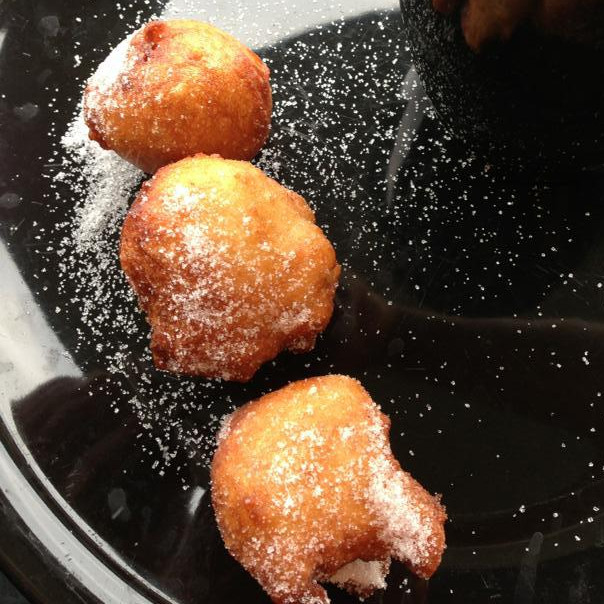
Puff-puff is a traditional snack made of fried dough and eaten across Africa, especially in the west of the continent. The name "puff-puff" is from Nigeria; as listed below, many other names and varieties of the pastry exist.

Puff-puffs are generally made of dough containing flour, yeast, sugar, butter, salt, water and eggs (which are optional), and deep-fried in vegetable oil to a golden-brown color. Baking powder can be used as a replacement for yeast, but yeast is a better option.[2] After frying, puff-puffs can be rolled in sugar. Like the French beignet and the Italian zeppole, puff-puffs can be rolled in any spice or flavoring such as cinnamon, vanilla and nutmeg. They may be served with a fruit dip of strawberry or raspberry.

Varieties and other names

[edit]

In Francophone West Africa it is known as gato in Guinea and Mali (from the French gateau) and beignet in Senegal and Cameroon, as well as in The Gambia. A common Senegalese variety uses millet flour rather than wheat.[3] Cameroonians accompany beignets with beans.[2]

Other names for the dish include buffloaf (or bofrot) in Ghana, botokoin in Togo, bofloto in the Ivory Coast, mikate in Congo, micate or bolinho in Angola, fungasa in Chad, legemat in Sudan, kala in Liberia, and vetkoek, amagwinya, or magwinya in South Africa, Botswana and Zimbabwe, and burmasa in Burkina Faso. The prominence of this dish stretches even to the southern and eastern edges of Africa, where it is mostly known as mandazi.[4]

A similar dish can be found in Tonga, where it is known as keke‘isite (literally, yeast cake).[5] The recipe is almost identical to that of puff-puff; however, it is sometimes fried in shortening or drippings instead of vegetable oil.

See also

[edit]

References

[edit]

Further reading

[edit]
Revisions and contributorsEdit on WikipediaRead on Wikipedia
from Grokipedia
Puff-puff is a traditional West African snack made from deep-fried balls of yeast-leavened , typically prepared with , , , , salt, and often flavored with or other spices, resulting in a golden-brown exterior with a soft, fluffy interior. It is widely enjoyed as a and across countries including , , , and , where it is known by various names such as bofrot in and mikate in parts of . Originating in , puff-puff reflects shared culinary traditions in the region, with its popularity tied to colonial influences that may have introduced similar techniques from European settlers, such as the Dutch in the Gold Coast. However, it has been fully adapted and localized, becoming a staple in Nigerian and Cameroonian cuisine since at least the mid-20th century, as evidenced by family recipes passed down across generations. In broader African contexts, it shares similarities with East African , suggesting influences from routes, though puff-puff remains distinctly West African in its sweet, spiced profile. Preparation involves mixing the ingredients into a batter, allowing it to rise for 1 to 2 hours, and then small portions in hot until puffed and crisp, often at around 350°F for even cooking. Variations include adding eggs or for richness, coating in or , or serving savory versions with pepper sauce; nutritional studies have explored blends with to enhance protein content while maintaining traditional texture and flavor. Culturally, puff-puff holds significance as an accessible, affordable treat sold by street vendors and featured at parties, celebrations, and everyday meals, symbolizing community and convenience in West African foodways. It is often paired with cold drinks or stews, contributing to its role in social gatherings, and has gained global recognition through diaspora communities in places like the United States and Europe. Public health research notes its prevalence as a fried snack in diets linked to hypertension risks in West Africa, prompting innovations in healthier formulations.

Origins and History

Etymology and Naming

The name "puff-puff" derives from the action of the dough expanding and puffing up when fried in hot oil, a characteristic feature of this Nigerian snack. The term emerged within Nigerian English, influenced by British colonial language, as a descriptive label for the snack's light, airy texture achieved through yeast-leavened dough. Across West and Central Africa, puff-puff is known by various regional names that highlight local linguistic adaptations. In , it is commonly called bofrot or togbei, while in the , it is referred to as mikate in , a Bantu language with influences extending to East African contexts. In French-speaking countries like and Côte d'Ivoire, the term is often used, drawing parallels to similar colonial-era fried doughs in European cuisines, such as French beignets or American doughnuts. These naming variations underscore the snack's shared West African roots while adapting to indigenous and colonial languages, with oral traditions in regions like preserving descriptive terms tied to the frying process before widespread written documentation.

Historical Development

Puff-puff likely originated during the colonial period (17th–19th centuries) along West African coastal trade routes, where indigenous techniques for dough-based foods merged with European deep-frying methods introduced through , British, and Dutch colonial contacts. This fusion created a simple, yeast-leavened fried that adapted local ingredients like and sugar to colonial culinary influences, such as Dutch oliebollen variants brought to the Gold region. Puff-puff's popularization is tied to broader trends in West African , coinciding with rural-urban migration and economic shifts during the colonial and post-colonial eras. By the post-independence period in the , it had become integrated into urban diets in amid increased urbanization. Economic factors, including the affordability of ingredients, contributed to its resilience as a during periods of prosperity and hardship, such as the and the 1980s recession, supporting informal vending networks in growing cities. Early documentation of similar snacks appears in mid-20th-century and media, illustrating the transition from colonial-era influences to a culturally embedded treat.

Preparation

Ingredients

The core ingredients for traditional Nigerian puff-puff consist of as the primary base, active dry for leavening and creating a light, airy texture, granulated for sweetness and to promote during , salt to balance flavors, warm water or for hydration and dough consistency, and for deep-frying. Optional additions include eggs to enrich the and yield a softer crumb, or for added tenderness, and spices such as ground or ginger to impart a subtle aromatic note characteristic of Nigerian preparations. Typical proportions in a basic involve about 2 to 3 cups of all-purpose , 1 to 2 teaspoons of , 1/4 to 1/2 cup of (with a small portion reserved for proofing the ), 1/2 teaspoon of salt, and 1 to 1.25 cups of warm or a water-milk mixture, while frying requires 4 to 6 cups of neutral heated to 350–375°F. Palm oil may be used as an alternative for deep-frying.

Cooking Process

The cooking process for puff-puff begins with preparing the as a thick, sticky batter. In a large bowl, combine the dry ingredients—typically , , , salt, and optional —before gradually incorporating warm (around 100-110°F or 38-43°C) to activate the and form a smooth, lump-free mixture using a or ; this takes about 2-3 minutes of stirring. The batter should resemble a thick cake batter consistency, neither too dry nor overly runny, to ensure proper rising and structure during frying. Once mixed, cover the bowl with a damp kitchen towel or and allow the batter to ferment and rise in a warm, draft-free environment for 1 to 2 hours, or until it doubles in volume, develops bubbles on the surface, and emits a slightly sweet, yeasty aroma; this step is crucial for achieving the characteristic spongy, puffed texture. For frying, heat in a deep pan, , or to 350-375°F (175-190°C), ensuring at least 3 inches of oil depth to allow the batter balls to float and cook evenly; test the oil's readiness by dropping in a small bit of batter, which should sizzle and rise immediately without browning too quickly. Using a , cookie scoop, or oiled hands, drop spoonfuls (about 1 each) of the risen batter into the hot oil, forming rough balls and spacing them to avoid overcrowding—typically 6-7 per batch—to prevent the oil temperature from dropping, which could result in greasy or undercooked puff-puff. Fry for 3-5 minutes per side, flipping once or occasionally with a or until the exterior turns deep and the balls puff up. After , remove the puff-puff with a and drain on a paper towel-lined plate or wire rack to absorb excess oil, allowing them to cool slightly; optionally, dust with granulated or while warm for added sweetness and shine. To ensure authenticity and optimal texture, maintain consistent oil heat by frying in small batches.

Varieties and Regional Adaptations

West African Variations

In , puff-puff manifests in distinct regional forms, each adapted to local ingredients and preferences while retaining its core identity as a deep-fried yeast-leavened snack. In , it is typically prepared as spherical balls, mildly sweet from added sugar, and fried in to achieve a crispy exterior and fluffy interior. These bite-sized orbs are often enjoyed plain, though variations may incorporate or for subtle flavor enhancement. In Cameroon, known locally as puff-puff or beignet, it closely resembles the Nigerian version in its spherical shape and mildly sweet profile, often served as a street food. Ghanaian bofrot, also known as togbei, shares the round shape but tends to be larger and denser, particularly in egg-free versions common in northern and central regions, resulting in a crispier texture. It features a higher sugar content for pronounced sweetness and is influenced by coastal market traditions, where it is sold as a street food alongside porridges or teas. While the base recipe mirrors Nigerian puff-puff, the omission of eggs in some preparations yields a chewier bite. In and , adaptations maintain the essence but vary in naming and subtle preparations: Sierra Leoneans refer to it as puff-puff, similar to the Nigerian style in its spherical form, while Liberians call it kala, often with a comparable fluffy profile. These versions emphasize the snack's versatility, sometimes rolled in or post-frying for added flavor. Across rural West African areas, a common trait is the use of naturally fermented as a in place of commercial , imparting a tangy undertone and tying the dish to traditional practices.

International Influences

In the and the , Nigerian communities have played a key role in adapting and popularizing puff-puff beyond , often through entrepreneurial ventures that blend tradition with local preferences. In the UK, Nigerian sisters Ope and Teni Igho launched Puff Puff Ministry in August 2020, drawing from their mother's recipes to introduce the to a wider audience via nationwide delivery and pop-up events. Their version adheres closely to the classic , , , and but incorporates vibrant toppings to enhance visual appeal and flavor variety, selling nearly 6,500 units in the first three months and filling a notable gap in accessible West African street foods. Similarly, in the , Oakland-based Gourmet Puff, founded by Nigerian-American Chidera in April 2020, offered innovative takes on puff-puff to evoke cultural nostalgia while attracting diverse customers until its closure around 2023. Anyanwu's lighter, chewy iterations included cinnamon-sugar dusted exteriors and fillings like or caramel, available through delivery platforms such as , priced from $6 for six pieces to $24 for eighteen. These sweeter, dusted adaptations emerged amid limited Nigerian eateries in the area, serving as a bridge for connections at gatherings like weddings and parties. Puff-puff's global reach extends to fusions, particularly in multicultural settings. In communities blending Nigerian and Indian influences, rare spiced variations incorporate for an aromatic twist, as seen in recipes by Nigerian-American Yewande Komolafe, which infuse the dough with green cardamom pods to complement the snack's subtle sweetness. Vegan recipes—facilitated by the dish's often egg-free base—have gained traction post-2010 on culinary platforms.

Cultural and Culinary Role

Significance in Nigerian Culture

Puff-puff serves as a cornerstone of Nigerian culture, readily available from vendors at bustling markets and lively parties across the country, where it provides an affordable source of delight and communal enjoyment. Its presence in everyday urban life underscores the vibrancy of scenes, fostering moments of quick satisfaction amid daily routines. In festive contexts, puff-puff holds a prominent place during celebrations such as weddings, Eid, and , where it is frequently served as a welcoming treat to guests, often alongside beverages like zobo for added refreshment. These occasions highlight its role in marking joy and togetherness, transforming simple into a symbol of that brings people closer. Symbolically, puff-puff reflects shared culinary heritage across , including , with its simple ingredients highlighting regional food traditions. It evokes childhood memories and a bonding, serving as a nostalgic link to familial and for many . Economically, the production and sale of puff-puff bolster small-scale vendors, particularly women entrepreneurs who engage in home-based or street-side operations to generate income through accessible . This activity contributes to local job creation and supports informal economies in urban settings, enabling for participants in a competitive market. In other West African countries, puff-puff (or variants like bofrot in ) plays similar roles in community gatherings and festivals, underscoring its regional cultural importance.

Consumption and Serving Practices

Puff-puff is commonly served hot immediately after frying to preserve its soft, fluffy texture and is enjoyed as a versatile snack or breakfast item across . In daily settings, it is often paired with hot or , providing a comforting contrast to the warm, sweet dough balls, or with bean cakes for a savory combination. It can also accompany fresh fruits or chilled drinks for a lighter refreshment, enhancing its appeal in social gatherings. Portion sizes vary by context, with small, bite-sized balls ideal as finger foods or "small chops" at events and parties, where they are typically arranged on platters alongside other appetizers. Larger portions suit or substantial . Street vendors frequently sell them fresh from portable fryers, wrapping portions in paper for on-the-go enjoyment to absorb excess oil while maintaining crispness. While best consumed fresh on the day of preparation, puff-puff can be stored in an airtight container at for up to one day or refrigerated for up to five days to extend . Reheating options include a quick refry in hot oil for restored crispiness or warming in an oven to avoid sogginess, practices common among home cooks and vendors alike. As a dough-based without animal products in its basic form, puff-puff is inherently vegetarian and halal-friendly, making it widely accessible in Muslim communities in northern , with simple vegan adaptations by omitting any optional dairy like .

Nutritional Profile

Composition and Calories

A standard 100-gram serving of puff-puff provides approximately 300-350 calories, reflecting its status as a deep-fried snack enriched with . This value is derived from USDA data on comparable products, adjusted upward to account for the higher content typical in West African puff-puff recipes. The macronutrient composition includes 45-50 grams of carbohydrates, mainly sourced from and , 10-15 grams of fat absorbed during frying in , and 5-7 grams of protein from the base. Micronutrients are present in modest quantities, with small amounts of iron and B-vitamins such as , , and folic acid contributed by the . Recipe variations may introduce additional (up to 20-30 mg per serving) if eggs are incorporated, or trace antioxidants from spices like . For serving size context, a single puff-puff ball weighs about 50 grams and delivers 150-175 calories, making it a moderate-energy portion.

Health and Dietary Considerations

Puff-puff, being a deep-fried , is high in trans fats, particularly when prepared with partially hydrogenated oils or reused frying oils common in Nigerian preparation, which can contribute to and cardiovascular diseases if consumed excessively. These trans fatty acids elevate levels and promote , increasing the risk of heart disease and . Additionally, its reliance on refined results in a high of approximately 80, leading to rapid blood sugar spikes that may exacerbate and risk. On the positive side, puff-puff provides quick energy from its content, making it a suitable short-term source for active individuals in moderation. The process involving may produce metabolites with potential digestive benefits, though high-temperature limits activity. For dietary adaptations, low-sugar versions using alternative sweeteners and baked alternatives reduce fat content by up to 43% and lower the to around 56, making them more suitable for diabetics by minimizing blood sugar fluctuations. Portion control is recommended, with guidelines suggesting limiting intake to 2-3 small pieces per serving to manage caloric and load. In Nigeria's urban areas, concerns over puff-puff and similar fried snacks have risen since the 2000s amid increasing and heart disease rates, prompting campaigns by organizations like NAFDAC to promote healthier frying oils and limit trans fats to 2g per 100g of fat. These efforts, aligned with WHO guidelines, aim to reduce diet-related mortality through policy enforcement and consumer education.

References

  1. https://www.[researchgate](/page/ResearchGate).net/publication/230440936_Protein_contents_physical_and_sensory_properties_of_Nigerian_snack_foods_cake_chin-chin_and_puff-puff_prepared_from_cowpea_-_Wheat_flour_blends
Add your contribution
Related Hubs
User Avatar
No comments yet.